Tag: Europe

  • European migrant crisis spurs UAS maritime surveillance testing

    European migrant crisis spurs UAS maritime surveillance testing

    Maritime operations have been brought into focus in Europe by the unprecedented migrant crisis. As part of the response to this crisis, the EU border patrol agency Frontex is in the planning phase of adding remotely piloted aircraft to its existing portfolio of satellite and sensor technologies for monitoring vessel traffic and migrant flows.

    The AR5 Life Ray UAS, developed by Tekever, has been selected by the European Space Agency (ESA) and the European Maritime Safety Agency (EMSA) to demonstrate the first European maritime surveillance system where drones are integral to operations.

    The first demonstration will be performed this summer over the Maltese waters of the Mediterranean sea, said Pedro Sinogas, Tekever CEO.

    “During the demonstration in Malta, Tekever’s systems will be deployed from land and will perform operations across a range of maritime scenarios during the 4-6 weeks of testing,” Sinogas said.

    This project is demonstrating the benefits of deploying unmanned aircraft in the dual roles of pollution monitoring and search and rescue.  The project has developed the business case to deploy unmanned aircraft to augment, or even replace, existing assets such as satellites, manned aircraft and ships.

    Tekever is working with maritime authorities from across the EU, coordinated with EMSA and will demonstrate operations in the Atlantic Ocean, the North Sea and the Mediterranean Sea across a wide range of environmental conditions.

    AR5-Light-Ray-W

    The AR5 Life Ray UAS platform is a mature system, in the market since being presented at Farnborough in 2014. AR5 was conceived to be a system capable of delivering the endurance and payload of a larger system in a compact and flexible package. The Rapsody programme has seen this system be prepared for maritime missions, while maintaining a small logistics footprint.

    With a wingspan of 4.3 meters and a payload of 50 kg, AR5 delivers performance of 8 to 12 hours missions. Typically systems in this class don’t offer Satellite Communications or on-board SAR. By delivering these capabilities the AR5 Life Ray UAS delivers unprecedented flexibility for maritime missions.

    “Tekever is now working with specialist sensor manufacturers to increase the capability of the system as new technologies mature, offering increased capability for our customers. We are working to allow AR5 to operate from onboard a ship in the future, delivering a capability organic to the vessels existing tasks. There is also a planned increased wingspan AR5 variant, with increased endurance and payload to match, while remaining within the existing logistics footprint,” Sinogas said.

    Tekever owns the entire technology stack within the AR5 Life Ray platform, allowing combined sensor modalities, data fusion and intelligent on board algorithms. This automates functionality and creates an excellent tool to support maritime missions.

  • The need to clarify Galileo’s legal basis of time

    The need to clarify Galileo’s legal basis of time

    One new potential wrinkle for Galileo was hinted at during the Munich Satellive Navigation Summit session in March on legal issues around GNSS timing. A recent GPS timing issue caused numerous problems for digital broadcasters and financial networks around the world on Jan. 26, when a data upload went slightly awry. This introduced a 13.7 millisecond error in one of the timing signals: the static offset for GPS time compared to Coordinated Universal Time (UTC). It led to some receivers exhibiting “different and unwanted behaviour” — a very polite description!

    Located in a square near the centre of the Czech capital, the Prague Astronomical Clock was among the world’s most accurate timepieces in medieval times. It was put in place back in 1410, incorporating various astronomical and religious details, and is still working to this day.
    Located in a square near the centre of the Czech capital, the Prague Astronomical Clock was among the world’s most accurate timepieces in medieval times. It was put in place back in 1410, incorporating various astronomical and religious details, and is still working to this day.

    Fortunately the issue was resolved swiftly, and correct data uploaded. The extent of any financial losses and how any legal proceedings (if any) to recover damages might pan out are still unclear. However ,what is clear is that while GPS time has a clear link to legal time, Galileo does not. Dr. Andreas Bauch from the German Physikalisch-Technische Bundesanstalt (PTB) — one of Germany’s “Time Lords” — described the underlying legal basis of GNSS time.

    U.S. GPS time is traceable and legally defined to national time and UTC through the National Institute of Standards and Technology (NIST). In Europe most Member States, but not all, have legal time defined in legislation. Galileo System Time (GST) is not linked to a single institution but to an average derived from a network of European standards institutions including PTB. From the presentations it was not clear to me if GST currently has a water-tight legal definition.

    Talking to legal and technical experts after this session, it became clear that the legal basis for GST does need to be clearly defined in European legislation — and soon — if Galileo PNT services are to be a commercial reality in the near future. The commission needs to get on the case for this one pronto.

  • Galileo Space-Borne, Industry Land-Bound

    Galileo Space-Borne, Industry Land-Bound

    Galileo’s latest pair of full operational capability (FOC) satellites now orbit proudly in space, “performing beautifully.” The first two FOC birds may soon shift their focus from navigation to gravity experiments instead.

    Meanwhile, as the European Space Agency tries to fly, European industry seeks firmly grounded support in the form of an industrial policy and economic stimuli, expressing concern that the current situation “might jeopardize the achievement of the main objections of the European GNSS programmes.”

    Alba and Oriana (aka Galileo satellites 9 and 10), launched on Sept. 11, are drifting towards their target orbital positions. Thruster firings will resume around the end of October to stop their drift and achieve fine positioning in orbit. Their control now rests in the electronic hands of the Galileo Control Centre in Oberpfaffenhofen, Germany.

    Gravity Probe. The two satellites launched last September have not fared so well. Injected into the wrong orbit by a faulty Soyuz rocket, they were moved to a “usable” orbit in December 2014, reducing orbit eccentricity and avoiding the high radiation doses in the Van Allen belts, but still not high enough to function fully as navigation satellites. The European Commission (EC) and ESA remain convinced that Doresa and Milean (satellites 5 and 6) will be able to contribute in some limited fashion to Galileo’s PNT solutions, but they are also preparing alternate roles for the pair.

    Together with Sytèmes de Référence Temps Espace (SYRTE, or Time-Space Reference Systems department) of the Observatoire de Paris and the Center of Applied Space Technology and Microgravity (ZARM) at the University of Bremen, ESA has explored taking advantage of the combination of Dorena’s and Milesa’s eccentricity (about 0.15 in the corrected orbits), the passive hydrogen maser (PHM) on-board clocks’ high accuracy-stability (~10−14 per day), and high orbital precision to perform a measurement of the gravitational redshift. The redshift or Einstein shift is a process by which electromagnetic radiation originating from a source that is in a gravitational field is reduced in frequency, or redshifted, when observed in a region of a weaker gravitational field. The three organizations believe that the two satellites can help measure this effect with a superior accuracy compared to today’s state of the art, based on Gravity Probe A, an experiment performed in 1976.

    These tests are noted to have a high scientific relevance, as many alternative theories of gravitation predict violations of the Einstein Equivalence Principle at some level of accuracy. Two parallel research activities, with SYRTE and ZARM, will be launched by ESA to assess this potential in greater detail.

    See What the Future Brings. Two further Galileo satellites are scheduled for launch by end of this year. Next year the deployment of the Galileo system will be boosted by the entry into operation of a specially customized Ariane 5 launcher that can double, from two to four, the number of satellites that can be placed into orbit by a single launch.

    GalileoMustSucceed

    We Want What They Got. Earlier this month, the 29-company Galileo Services association, made up of European chipset and receiver suppliers and associated service providers, issued a position paper calling for “a coordinated industrial policy to support the European economy,” specifically that portion of the economy based on satellite positioning, navigation and timing. The companies jointly complain that in the United States, Russia, China and Japan, dedicated national strategies, including “massive funding” for both R&D and manufacturing, support GNSS downstream industries — but in Europe, no such backing exists. The un-level playing field imperils European commercial activity.

    “As things stand, in a few years, it will be difficult or nearly impossible for European industry to survive in the highly competitive GNSS global market,” the position paper reads. “Unless an effective and long-term strategy is put in place during the Galileo early services exploitation phase (2016–2020), the window of opportunity for European industry to benefit from the current GNSS market boom will soon be closed.”

    “Europe Must Succeed in the Global Navigation Market Race” (the full document is available here) calls upon European governments to devise and adopt a strategic plan to support Galileo’s downstream suppliers and manufacturers. The desired strategy connotes money and favorable regulations.

    Europe governmental hands may be a bit tied by a U.S.-European agreement that neither will put up barriers discriminating against each other’s satnav systems. China and Russia have not signed the agreement and so are not bound by its restrictions; the two countries can freely make “massive procurements equivalent to several billions of euros from the public sector, as anchor customer, which radically boosts private investment,” according to the Galileo Services paper. Further, the United States can step around the agreement’s terms via military contracts to U.S. manufacturers, leveraging their commercial ventures.

    Thirty-three or Bust. The report continues to reference the magic number 33 percent, the traditional European global market share in any high-tech sector. European industry partners estimate they hold 20 percent of the worldwide satnav currently, if even that, and, ominously, they see that share declining. They cast U.S. manufacturers in the dominant role: “80 percent of well-established market owners are of U.S. origin.” This is not the same as an 80 percent market share, but it still sounds scary to European ears. Meanwhile, “the size and growth of Chinese industry, which has already in just a few years outperformed European industry in the field of telecommunications, is particularly worrying” to satnav concerns.

    Section Two of “Europe Must Succeed” defines the strategic plan that the industry partners would like to see:

    • quantitative objectives in terms of market share, revenue, and job creation;
    • clear support actions in terms of public procurement and regulations;
    • key performance indicators to assess progress towards set milestones.

    Section Three lays out a series of recommended key support actions for public institutions to undertake, and Section Four proposes a Galileo Services Forum, a permanent and formal arena for discussions between the European Commission, the European GNSS Agency, and the European Space Agency on the one hand, and European GNSS downstream industry on the other.

    Interestingly, while the report in an earlier section calls out a number of promising application and service markets — basically all the usual suspects, from connected vehicles to offshore infrastructure — it singles out one, “the leading position of Europe in GNSS security and resilience,” for particular attention. It “should be strengthened, as it is critical for today’s and tomorrow’s markets.”

    The report also makes a pointed allusion to European industry’s “strong reputation for quality and reliability.” This note is not sounded elsewhere in the paper, suggesting a fear that price trumps quality in today’s marketplace. A well-founded fear.

    Galileo Services represents more than 180 members. Its most active and representative GNSS players include: Airbus Defence & Space, Ansaldo STS, CGI, European Satellite Services Provider (ESSP), Eutelsat, France Developpement Conseil, Fugro, GMV, Guide, Hertz Systems, Honeywell, Indra, Ineco, JAVAD GNSS, Kayser-Threde, Kongsberg, M3 Systems, NavCert, NLR, NovAtel, Nottingham Scientific Limited, OHB, QinetiQ, Septentrio, Catapult, Sogei, Spirent, Thales and Veripos.


  • Next-Generation Tracker Debuts

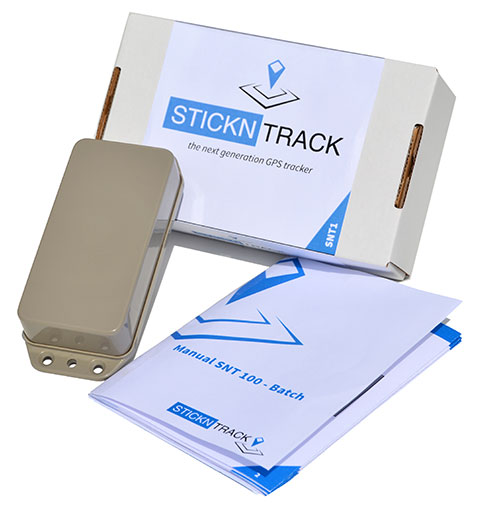
    Photo: StickNTrackStickNTrack — an award-winning low-power tracker from Sensolus — is now active in eight European countries.

    StickNTrack guards and tracks position, journeys, motion and status of any non-powered asset without the hassle of charging batteries, managing SIM cards or an intrusive installation, Sensolus said.

    StickNTrack’s web-based service platform is tailored for low-power asset tracking communicating over the French-based Sigfox. Because Sigfox is an ultra low-power communication network, it significantly reduces StickNTrack’s power needs so that it consumes up to 40 times less power and lowers life-cycle costs by 50 percent compared to existing compact GPRS/GPS products, Sensolus said.

    The tracker’s power can last up to five years. In the third quarter, an upgraded version will be released with extended battery lifetime up to nine years, according to Kristoff Van Rattinghe, who developed StickNTrack along with Laurence Claeys, Johan Criel and Koen Van Vlaenderen.

    Users can access the StickNTrack web portal with any smartphone running Android OS or iOS. The full feature set can be accessed on a tablet or laptop. Features include interactive timelines, intuitive geofencing, email alerting and optimized energy savings.

    The ruggedized, waterproof StickNTrack is 120 x 50 x 25 millimeters and weighs 255 grams. It can track assets on the water, such as yachts or buoys, providing automated logbooks, alerting users when assets enter or exit specific zones (such as harbors), and providing real-time journey information for those at home.

    StickNTrack’s developers took third place in the 2014 European Satellite Navigation Competition, after taking first in the Flanders regional competition. It also won the European Space Agency’s Innovation Award.

    Dubbed a “distruptive innovation” by the European Satellite Navigation Competition (ESNC), StickNTrack “opens up an abundance of new business opportunities in tracking trailers, containers, machinery, tools, bikes and more. Future accuracy and availability improvements based on GNSS will trigger additional advancements, such as by automating supply chains for packages and their delivery. Ultimately, stickNtrack is a next-generation location tracker that significantly lowers the barriers to embedding even more GNSS technology into our daily lives.”

    “Every day new types of non-powered assets are being connected to our service platform,” Van Rattinghe said. In the coming years, Sigfox aims to provide global coverage.

  • GSA Flight Event Celebrated, Demonstrated EGNOS

    GSA Flight Event Celebrated, Demonstrated EGNOS

    GSA-EGNOS-flight-event-O
    Screenshot from GSA video. See full GSA Flight Event 2015 video below.

    News from the European GNSS Agency

    Since its certification for civil aviation in 2011, EGNOS — the European satellite-based augmentation system — has been making flights in Europe safer, greener and more efficient. To celebrate this achievement and further promote EGNOS, the European GNSS Agency (GSA) in collaboration with the European Commission, invited the media and European aviation stakeholders for a unique EGNOS Flight Event in Toulouse, France, May 6-7.

    Today, more than 140 airports in 15 countries across Europe benefit from EGNOS — with many more preparing for implementation. 171 LPV (localizer performance with vertical guidance) and 86 BARO approaches are already certified for use.

    To highlight this impact, the EGNOS Flight Event, organized in collaboration with the European Commission, ESSP, ATR and Airbus, brought together aviation media and other sector stakeholders for a comprehensive briefing and demonstration of EGNOS, how it works and its significant benefits for the aviation sector. Along with flight demonstrations, the event assembled a unique array of EGNOS-experienced players — from pilots to operators, service providers and air traffic managers – to discuss how EGNOS is reshaping the future of air transportation in Europe.

    Across-the-Board Benefits

    Commercial, business and general aviation are all key market segments for EGNOS. For example, business and general aviation operators need to get to meetings as quickly and efficiently as possible, often requiring landing at smaller airports where Instrument Landing System (ILS) or other expensive ground-based navigation aids are simply not feasible. Thus, the implementation of EGNOS-based procedures at these airports significantly improves accessibility. “EGNOS, Europe’s first satellite navigation system, already has a good success story to tell,” says GSA Executive Director Carlo des Dorides. “EGNOS delivers continuous integrity protection in compliance with ICAO standards, allowing Cat I approaches with over 99 % availability. Today, 142 airports across Europe are benefitting from EGNOS — and the number is growing steadily.”

    According to GSA Head of Market Development Gian Gherardo Calini, the Agency has the capacity to support airports and operators wanting to benefit from EGNOS. For example, this year the Agency has allotted €6 million to co-fund projects to implement EGNOS in aviation. A similar amount had also been allocated in 2014.

    Airborne with EGNOS

    Demonstrations of EGNOS included a briefing on EGNOS for rotorcraft and with the presentation of the GARDEN project. The project is using EGNOS to enable increased safety and better access for helicopters, for example, enabling air ambulances to access city centre hospitals. Participants were also given a first-hand look at EGNOS implementation in the cockpit of an Airbus H175 rotorcraft.

    EGNOS in action was demonstrated by a series of flights using EGNOS for landing procedures with an ATR 42-600 turboprop, which was equipped with additional avionics in the main cabin so invited media could witness the technology at work. The flight demonstration took off from the Blagnac Airport in Toulouse, the venue for the EGNOS event, for a 15 minute circuit around Toulouse beforedemonstrating an EGNOS LPV approach and landing.

    EGNOS for A350

    A highlight on the tarmac was the Airbus A350WXB. Participants were given a tour of this new, state-of-the-art wide-bodied airliner — including a simulation of an EGNOS-enabled LPV landing in the cockpit. Airbus test pilot Jean-Christophe Lair described the A350’s new Satellite-based Landing System (SLS) that works with Satellite Based Augmentation Systems (SBAS) such as EGNOS. This is the first time such a system has been installed on a wide body airliner and will be supplied as a standard feature to customers.

    According to Lair, EGNOS is fully integrated into a common, harmonised landing system interface on the A350 – the SLS. This allows the pilot to fly precision approaches like an ILS with geometrical vertical guidance down to 200 feet. This new navigation system will provide Airbus operators a wider range of solutions to optimise operations and increase accessibility without any compromise to safety.

    EGNOS Expansion

    The potential for expansion of EGNOS/SBAS is huge both in terms of global coverage and potential for use in Europe.

    GSA Head of EGNOS Exploitation, Jean-Marc Piéplu, outlined the future upgrade of the system from the current Version 2 to EGNOS Version 3. “Version three will feature new capabilities, including dual frequency and dual-constellation with both GPS and Galileo,” he said.

    This extension could potentially widen EGNOS/SBAS global coverage for aviation to over 90%. When asked about the timescale for this extension of coverage, Piéplu indicated that if the political will was there to implement, then this could be accomplished in 10 years as there were no outstanding technical issues.

    According to International Council of Aircraft Owner and Pilot Association (IAOPA) Senior Vice President Martin Robinson, there is a huge potential for growth in Europe. Currently there are 4,649 aerodromes in Europe and some 50,000 general aviation aircraft operating. Compared to the US, only a fraction of these are SBAS enabled. In the US, the larger uptake of WAAS is due to a deliberate government-led industrial policy.

    “Europe still lags behind the United States and there’s definitely room for growth,” said Robinson. “EGNOS will help to provide greater access to aerodromes throughout Europe and improve safety — but we need to be quicker if we are to realize these benefits sooner.”

  • LizardTech Extends Global Reach with Partnerships

    LizardTech, a provider of software solutions for managing and distributing geospatial content, has expanded its global presence with several new business partnerships and product purchases during the first half of 2015.

    During the last six months, national governments, energy organizations and infrastructure owners and operators have all bought LizardTech software in countries such as Canada, Sweden, Norway, Germany, United Kingdom, Spain, South Africa, Saudi Arabia, Turkey, Oman, Australia and the Philippines.

    New partnerships established this year include EMi Grup in Turkey, Beijing Space Eye Innovation Technology Co. in China, Esri Muscat in Oman, and the Cuminas Corporation in Japan. Additionally, Sani International of Canada re-committed to LizardTech product distribution in Canada and the Caribbean. LizardTech’s international relationships outside of the Americas are managed by the geospatial sales and marketing agency, Quarry One Eleven, based in Guildford, UK.

    “We are delighted with the progress we have made in promoting LizardTech’s remarkable MrSID-based software throughout the European, African and Middle Eastern market places and beyond into Asia Pacific,” said Quarry One Eleven Founder Alistair Maclenan. “LizardTech is a great client that understands the power of marketing and in-region representation. Their support has been a huge factor in the partnership and sales successes we have seen for their image compression, preparation and distribution products.”

    “We have had an exciting first half of the year which illustrates that our products are in demand all over the world,” said Jeff Young, who directs Global Business Development at LizardTech. “These sales validate the sustainability of LizardTech over the last 23 years through partnerships in multiple continents. We take pride in our customer’s loyalty and continued commitment to our MrSID image compression format.”

  • Fifth Galileo Colloquium Planned for October

    Fifth Galileo Colloquium Planned for October

    Galileo satellite signals. (Image credit: ESA)
    Galileo satellite signals. (Image credit: ESA)

    The fifth International Colloquium on Scientific and Fundamental Aspects of the Galileo Programme will be held in Braunschweig, Germany, Oct. 27–29.

    Since 2007, the worldwide scientific community has met every two years to discuss the scientific possibilities of Galileo and other Global Navigation Satellite Systems (GNSS).

    This colloquium will bring together members of the European scientific community and their international partners involved in the use of GNSS signals in their research, specifically Galileo signals. Major academic players will meet with institutional and industrial executives to share innovative ideas and influence the future evolution of Europe’s own GNSS.

    The colloquium focuses on four major areas of research:

    • Scientific applications in meteorology, geodesy, geophysics, space physics, oceanography, land surface and ecosystem studies, using either direct or reflected signals, differential measurements, phase measurements, radio occultation measurements, using receivers placed on the ground, in aircraft or on satellites.
    • Scientific developments in physics, dealing with future GNSS, particularly in testing fundamental laws in astronomy and in quantum communication. Relativistic reference frames and relativistic positioning will be addressed — also taking into account the scientific opportunities in tracking the first two Galileo Full Operational Capability satellites in their elliptical orbits.
    • Aspects of metrology such as reference frames, onboard and ground clocks, and precise orbit determination.
    • Scientific aspects of satellite navigation and positioning such as signal propagation, tropospheric and ionospheric corrections and the means to model and mitigate multipaths and interference.

    The various possibilities to use navigation satellites such as Galileo for scientific purposes will be reviewed, and the contribution of scientific applications to making the most of the present systems and defining their evolution will be scrutinized.

    For those interested in submitting papers, online submission of abstracts opens May 15 through the colloquium website, where other details of the event can also be found.

  • New Report Considers GNSS Market Outlook 2015-2020

    Research and Markets has added the report “Global Navigation Satellite Systems Market Outlook 2020” to its offerings. The global core GNSS market is forecast to grow at a CAGR of 9 percent during 2015-2020.

    In the report, the analysts have identified and deciphered the market dynamics in important GNSS industry segments, highlighting the areas offering promising possibilities for companies to boost their growth, according to Research and Markets. The report studies the market by sectors including location-based services (LBS), transportation (further divided into road navigation, rail navigation, air navigation and marine navigation), surveying and agriculture. The GNSS application market is further studied by region: North America, Europe, Asia-Pacific, and Rest of World.

    The report provides a complete overview of the GNSS market globally. All the current trends and drivers, coupled with potential growth areas of the GNSS industry, have been evaluated in the report. Furthermore, the report provides information on opportunities in the industry for different companies in the chapter titled Opportunity Assessment.

    Additionally, to provide an exhaustive knowledge of the prospects for GNSS players on the geographical front, the report provides comprehensive knowledge of the 10 most worthwhile GNSS markets around the world (U.S., Canada, UK, France, Germany, RussiaJapan, China, South Korea and India). It includes information about the present state and future outlook of the LBS and telematics markets in these countries along with information about their personal navigation systems such as GPS, BeiDou,Galileo, GLONASS, QZSS and IRNSS.

    The report also looks into the competitive landscape covering business overviews, key financials, product analyses, recent developments and strengths and weaknesses of each of the players.

    Key trends considered in the report include:

    • Driverless Car: New GNSS Technology Use
    • Indoor GNSS Positioning Poised for Growth
    • People, Pets and Thing Finder: The Next Attraction
    • GNSS Based Products: A Burgeoning Market Opportunity
    • GNSS Jamming Gaining Attention

    Companies mentioned include:

    • AgJunction
    • CSR
    • Furuno Electric Co Ltd.
    • Garmin Ltd.
    • MiTAC International Corp.
    • Raytheon Company
    • Rockwell Collins
    • TomTom NV
    • Topcon Corporation
    • Trimble Navigation Ltd.


  • EuroGeographics, EuroSDR to Join on European Spatial Research

    EuroGeographics and EuroSDR have announced that they will work together to provide a framework for European spatial data research and development.

    The cooperation agreement will further the development of the EuroSDR Research Plan and the activities of the EuroGeographics Knowledge Exchange Networks. As a result, members of both not-for-profit organizations will benefit from greater opportunities for professional development. They will also be able to take part in joint projects and hand over tasks more appropriate to the other organisation’s expertise.

    “We have a common interest in carrying out and applying relevant research and developments in the field of geographic information and spatial data infrastructures,” said Ingrid Vanden Berghe, president of EuroGeographics, the membership association of the European National Mapping, Land Registry and Cadastral Authorities.

    “With rapid technological advances generated by a digital information society, the time from research via development to operation has never been faster. This agreement will ensure our members remain up to date with and understand the possibilities presented by new technologies and methodologies so they can react more quickly to user demands.”

    Martin Salzmann, president of EuroSDR, which links national mapping, land registry and cadastral authorities with research institutes and universities in Europe, added: “Achieving synergy in our activities benefits both our members and society by strengthening research and development, sharing results of common interest and making these operational. At the same time, we will foster and stimulate a vibrant research community with which to capitalise on future technologies and to be responsive to user demands. By working together we also avoid the risks of duplication of work between us and our member organisations.”

    EuroGeographics and EuroSDR are both committed to supporting wide range of initiatives that will benefit people across Europe, the companies said. These include the European Spatial Data Infrastructure, Copernicus, Galileo, Horizon2020, European Location Framework and the European Digital Single Market.

  • Installed Base of Fleet Management Systems to Reach 7.1M in Europe by 2018

    According to a new research report from the analyst firm Berg Insight, the number of active fleet management systems deployed in commercial vehicle fleets in Europe was 3.65 million in Q4-2013. Growing at a compound annual growth rate (CAGR) of 14.2 percent, this number is expected to reach 7.10 million by 2018.

    A group of international aftermarket solution providers have emerged as the leaders on the European fleet management market. Masternaut reported an active installed base of close to 350,000 units in July 2014, mainly in France and the UK. TomTom Telematics was the fastest growing vendor also in 2014 and has now surpassed 400,000 subscribers in August 2014.

    The two companies share the number one spot in terms of active installed base in Europe. Digicore has also joined the exclusive group of fleet management providers in Europe having more than 100,000 active devices in the field. Transics is number one in the heavy trucks segment with an estimated 85,000 active units installed.

    A major trend in the past three years has been the announcements of standard line fitment of fleet management solutions among the HCV manufacturers. Scania, Daimler, Volvo and MAN now experience fast growth of telematics subscribers thanks to these initiatives. FleetBoard by Daimler, Dynafleet by Volvo and Scania Fleet Management are the most sold systems with cumulative shipments of 150,000 units, 135,000 units and 100,000 units respectively as of Q4-2013.

    A recent trend is that LCV manufacturers increasingly work together with aftermarket players to offer fleet management solutions. PSA Peugeot Citroën has for instance launched a new fleet management service on the French market in partnership with Orange Business Services in April 2014. Ford and Telogis recently partnered to deliver fleet management solutions to Ford customers in Europe. Teletrac has moreover for a long time collaborated with OEMs on the UK market, including Citroën and Mercedes Benz.

    M&A activities on this market continued with full force in 2014. “Seven major mergers and acquisitions have so far taken place this year among the vendors of fleet management systems in Europe,” said Johan Fagerberg, Senior Analyst, Berg Insight. At the beginning of 2014, Qualcomm finally divested also the majority of the European arm of its fleet business to Astrata Group, a fleet management company headquartered in Singapore.

    Later in February, WABCO acquired Transics and the transaction valued the company at about €100 million. Lysanda acquired UK-based TRACKER Network in February and plans to establish Tantalum Corporation from the combined business.

    In April, TomTom also acquired the French FM provider DAMS Tracking, adding another 27,000 subscriptions to the installed base. Francisco Partners, moreover, divested Masternaut to Summit Partners and FleetCor in the same month.

    In July 2014, Zucchetti Group acquired a majority share of Macnil from its founders. The latest transaction was done in October 2014 when Finder acquired its Polish competitor Autoguard to form the largest FMS provider in Poland. Fagerberg anticipates that the market consolidation of the still overcrowded industry will continue in 2015.

    Download the report brochure.

  • EUROGI Conference to Be Held in Conjunction with InterGeo

    EUROGI Conference to Be Held in Conjunction with InterGeo

    imaGIne2014 ConferenceLogo_1000_465

    The European-focused imaGIne conference will provide attendees with an opportunity learn what is going on in the geospatial sector and to network with important decision-makers. EUROGI’s “imaGIne: Opportunities Everywhere” Conference will be held October 8-9 in Berlin, Germany.

    The imaGIne conference will take place at the same venue and at the same time as the InterGeo trade fair.

    A key aim of the conference is to showcase the best that Europe has to offer in the geospatial field, thus the conference subtitle “Geographic Information Expertise: Made in Europe.” The aim has guided EUROGI and its member associations in the selection of themes and speakers, organizers said.

    Plenary Sessions and Keynotes

    During the plenary sessions, presentations will be given by top European and global experts.

    • Roberto Viola, deputy director, Directorate General CONNECT, European Commission, will provide an outline of the European Union’s Digital Agenda Europe, with particular emphasis on geospatial aspects.
    • Detlef Dauke, director general, German Federal Ministry for Economic Affairs and Energy will speak on behalf of the German vice-chancellor, who is the patron for the conference.

    Two speakers will provide a view of the state of the European geospatial industry from a global perspective, highlighting its strengths, weaknesses, opportunities and threats. Other issues which will be covered in the plenaries include the Internet of Things (billions of interlinked sensors across Europe), Linked Data (joining up data which was otherwise unconnected) and Big Data (massive amounts of data from diverse sources and across many fields).

    In addition to the plenary sessions, there will be 15 parallel sessions of 90 minutes each, each of which has a specific thematic focus. The themes include Job Creation and Economic Growth, Energy, Environment, Demography, Smart Cities, Copernicus (Europe’s Earth Observation initiative), Open Data, Big Data, and Insurance. The sessions will not only provide interesting insights, but will also feature panel sessions with discussions of pertinent issues, as well as opportunities for audience engagement.

    The European Commission’s Joint Research Centre will provide an opportunity to discuss the European Union Location Framework, a set of policies and measures which aim to facilitate the integration of geospatial information into e-government services and to increase alignment in and between existing and future EU policies.

    InterGeo Fair. InterGeo is the world’s leading trade fair for geodesy, geoinformation and land management. With over half a million event website users, over 16 000 direct visitors each year from 92 countries and more than 500 exhibitors, it is one of the key platforms for business dialogue in the geospatial information sphere.

    Registration for EUROGI’s imaGIne conference will automatically entitle delegates to visit the fair.

    More information about the conference can be found at www.imagine2014.eu. The website also provides the opportunity to register. An early-bird discount rate will be available until August 31.

    The Geospatial Sector — Huge and Growing Fast

    Geospatial information, also often referred to as geographic information, is any information that has a location/position “tag.” The tags can take many forms, including for example, postal codes, street addresses, words that have a location/place reference (such as Barcelona, the Rhine, Slovenia, etc.), north/south coordinates, and more. Organizing and managing tags enables vast amounts of otherwise disparate information to be integrated and new and innovative insights and services to be provided.

    According to a report published last year by Oxera, a leading UK economic research firm that was commissioned by Google, at $150-270 billion annually the geospatial sector globally was one third the size of the global airline industry. (See “What is the Impact of Geospatial Services?”)

    The report states, “Geo services are making an important contribution to the global economy and to future productivity. The efficiency gains they create are helping to facilitate future economic activity and generate additional consumer welfare.”

    Everyone is aware of the airline industry, but very few are aware of the geospatial industry, an industry that to a very large extent operates out of direct public view, but that produces products and services that impact on billions of people worldwide on a daily basis. The insurance, automotive, telecommunications, navigation, marine, agriculture, energy, utilities, tourism, and recreation and media industries are just some of sectors that rely heavily on geospatial products and services.

    Apart from the enormous size of the sector, another key point highlighted in the Google-sponsored research report is that the sector is growing globally at about 30 percent annually. With overall global economic growth taking place in the lower single-digit range, growth of this nature can truly be described as explosive, conference organizers said.

  • Europe Weighs Mandate of Galileo Chips in Mobile Phones

    The European Commission is considering a requirement for mobile phones, and perhaps other portable devices such as tablets, to be equipped with Galileo receivers that would automatically send location data as part of any emergency call to 112.

    E112 is a location-enhanced version of the 112 universal European emergency services number via telephone, equivalent to 911 in the United States, in which the telecoms operator receiving the call for help transmits location information to the emergency dispatch center, which has further connection to police, firefighters, medical, and other emergency services.

    A European Union Directive on E112 requires all mobile phone networks to provide emergency services with available information on the location of the caller. Currently this data is the cell id, which is of limited use in localising a call as, for example, in rural areas where the mobile cell may have a radius of two to twenty kilometres — not very helpful for police or medical emergency crews in finding someone in distress.

    Whether the Commission (EC) should mandate Galileo, or take a different option, is currently the subject of consultation.  The EC convoked a public hearing  in Brussels in May to chew over the pros and cons.

    Legal Obligation

    The Commission has a legal obligation to look at potential activities that can maximise the societal benefits of Europe’s huge investment in satellite navigation technologies such as Galileo and EGNOS. It is also tasked to assess how these technologies could reinforce Europe’s economic infrastructure. To me, the E112 mandate is a low-hanging fruit ready to be picked, and the majority of stakeholders who voiced an opinion at the hearing evinced great enthusiasm for the proposal.

    Interestingly, the regulatory route to achieve a mandated use of Galileo for E112 would be via a delegated act; the relevant radio equipment and telecommunication directives are already effectively in place. This means that if the Commission decides to mandate, it can do so without the need for further regulation.

    Mandating a specific GNSS system for a regional service of this type is not a new idea. Russia and China have both done so. As Richard Catmur of Spirent Communications put it: “We are not seeing Galileo being pushed like GLONASS and Beidou in the market. We need input from this forum.”

    Justyna Redelkiewicz of the European GNSS Agency (GSA) outlined some technical reasons for mandating Galileo. Over and above (yet to be fully proved) improved accuracy, availability. and a faster time to first fix, the likely inclusion of signal authentification in the Galileo open service would reduce any impact of spoofing — a very useful characteristic in what is essentially a safety-critical system.

    Johannes Vallesverd, who chairs the group within the European Conference of Postal and Telecommunications Administrations, Electronic Communications Committee tasked with delivering harmonisation of the 112 number across Europe, was also very positive: “We need to talk about how we could be saving lives Europe.” He advocated a proactive and rapid decision.

    This was reinforced by Gary Machado, CEO of the European Emergency Number Association (EENA). He estimated the annual economic cost of the delays induced by inaccurate location data at more than €4 billion across Europe. In contrast, the cost of implementing a system to relay GNSS location from equipped smart phones was of the order of €250 million. Economically, it is a no-brainer.

    Bruno Gagnou from Thales Alenia also thought that GNSS — and specifically Galileo — gives the right answer for E112 positioning. “The technology is reliable and accurate,” he said, “with obvious benefits for society. Lives will be saved, the security of citizens enhanced due to quicker intervention, and European industry will be supported.” He noted that this was also the experience in the United States when the enhanced 911 regulation was introduced.

    Gagnou thought that Galileo should be mandated in order to ensure a harmonised approach across Europe and avoid an anarchic, non-compliant deployment of technologies for E112. “EU emergency services should rely on EU technology,” he concluded. “EU citizens deserve the best E112 emergency service.” Galileo should be favoured, all mobile devices should be addressed, but this will require mandating. It seems to me that the Commission will agree with him.

    Quantum Navigation: Ultra-Cold Alternative to GNSS?

    Some potential future tech! The Quantum Timing, Navigation and Sensing Showcase at the UK’s National Physical Laboratory (NPL) in mid-May highlighted the possible use of quantum technology for highly accurate timekeeping and advanced, GNSS-independent, navigation. This so-called second quantum revolution’\ could make a big impact on the field of Timing, Navigation and Sensing (TNS) through technology based on ultra-cold, laser-cooled atoms.

    The meeting was organised by the UK’s Defence Science and Technology Laboratory (DSTL). It presented a number of research projects including a table-top quantum accelerometer designed to provide ultra-precise, highly reliable positional data for submerged submarines.

    As we know, GNSS does not work well underwater, so submarines navigate using accelerometers to register every twist and turn of the submerged vessel relative to its last surface GNSS fix.

    “Today, if a submarine goes a day without a GPS fix, we’ll have a navigation drift of the order of a kilometre when it surfaces,” said Neil Stansfield of DSTL. “A quantum accelerometer will reduce that to just one metre.”

    Once chilled to an ultra-cold state, the rubidium atoms in the accelerometer achieve a quantum state that is easily perturbed by an outside force. Another laser can then be used to track these perturbations and calculate the size of the outside force, and therefore the relative position.

    At present, such devices are only found in the laboratory, but research is pushing past classical physical limits towards optimal performance, as scientists investigate miniaturisation and the potential use of new materials to reduce costs and increase the practicality of the devices. Following land trials in late 2015, it is anticipated that a sea-going version will be demonstrated in a British sub during 2016.

    ”The defence industry often acts as a pioneer in the development of new technologies. The potential benefits of a future in which we can navigate by inner space rather than outer space will impact both the military and civilian world,” commented Neil Stansfield.

    Bob Cockshott from NPL said: “Whilst the most immediate applications are in the defence field, future quantum navigation technologies could also have significant civilian applications across a wide variety of activities, covering high frequency trading, network synchronisation, robust and ubiquitous navigation, geo-surveying, and mineral prospecting. With the first applications potentially ready for market in five years, now is the critical moment time to consider the opportunities provided by quantum.”

    Cockshott points out that chip-scale atomic clocks using similar principles are here now from Microsemi in the United States —  indeed, they have been integrated with GPS in some U.S. military applications — and can provide low-power, low-cost hold-over for timing applications. He expects to see European designs on the market within five years and a steady improvement in capability thereafter.

    “Cold atom accelerometers may also appear in high-value (probably military) applications within five years. These could form the basis of a quantum compass,” he predicts .

    GPS-like progression. He envisages something like the progression seen in GPS receivers from expensive military equipment to high-value professional users and then mass-market. DSTL and the UK’s Technology Strategy Board are working hard to get industrial suppliers of support equipment and of quantum devices working as quickly as possible to get these technologies to market, and consumer devices are certainly the ultimate aim.

    “I would see these technologies as complements to GNSS, at least in the short and medium term, providing hold-over in poor GNSS environments (such as urban canyons etc) and capability where GNSS will never work — in tunnels, for example,” comments Cockshott.

    Of course companies like Google would like to guide city dwellers through urban underground metro systems, switching seamlessly to GNSS when they step out into the open air. “The quantum compass will not of course provide position fixes, only information about positional changes from a known starting point,” he points out.

    However, in the long term, such gravity sensors combined with detailed maps of the Earth’s gravitational field may be able to provide GNSS-free positioning and navigation. Militaries are interested in this option because there is no known physics that could jam or spoof such sensors. “But it’s hard to see them matching the precision available from GNSS,” he concludes.

    Galileo First Fixers

    The European Space Agency (ESA)  handed out certificates to the first 50 global citizens to determine their position using only the Galileo system. They got responses from around the world.

    While half the applications for certificates came from Galileo’s home continent, Europe, others first-fixers came from Australia to Canada, Egypt to Vietnam.

    The first positioning fix using only Europe’s civil-owned navigation system took place at ESA’s Navigation Laboratory in Noordwijk, the Netherlands, on March 12,2013.

    The Galileo team knew of fixes being performed on an informal basis, so to mark the anniversary of the first positioning fix they decided to issue commemorative certificates to groups who had picked up the signals to perform their own fixes. Teams were asked to include details of the receiver they used, the start and finish of the fixes in Universal Time Coordinated (UTC), and a plot of their latitude/longitude positioning overlaid on a map.

    Italy turned out to be the single best represented country in Europe, with six separate fixes, followed closely by Germany and the UK with five  each. Several groups had achieved fixes on the same day as ESA in 2013.

    Most of the employed receivers were software-based radio systems, with signal processing performed by software on a computer linked to a radio-frequency front end. Professional receivers were also customised for the job.

    “Most of the applications were obtained with static receivers and simple position fixes with Galileo’s Open Service signals,” explains Galileo engineer Gaetano Galluzzo.

    Belgium’s Royal Military Academy performed Galileo’s first position fix at sea, aboard Belgian frigate Leopold-I, while sailing along the Norwegian coast.

    A German telecom company made use of the satellite signals for timing and network synchronisation – one of the most important applications of Galileo will be as a nanosecond-scale time source, enabling the effective synching of financial, power and data networks around the globe.

    Finally

    Talking of fixes – has anyone heard anything from Galileo GSAT0104 recently? According to the European GNSS Service Centre, the fourth IOV satellite is “unavailable until further notice.” The setting of unavailability may be due to in-orbit validation testing, as the website implies may be the case, but no further official statement has appeared, nor active user notifications (NAGUs) at http://www.gsc-europa.eu/system-status/user-notifications.

    There have been a number of NAGUs over the past couple of months concerning outages and, at different times, one or more of the Galileo satellites have been off line while this extended period of testing takes place.

    A bientôt, as they say in these parts.