Tag: FAA

  • Epson, DJI partner on AR smart glasses for piloting UAVs

    Epson, DJI partner on AR smart glasses for piloting UAVs

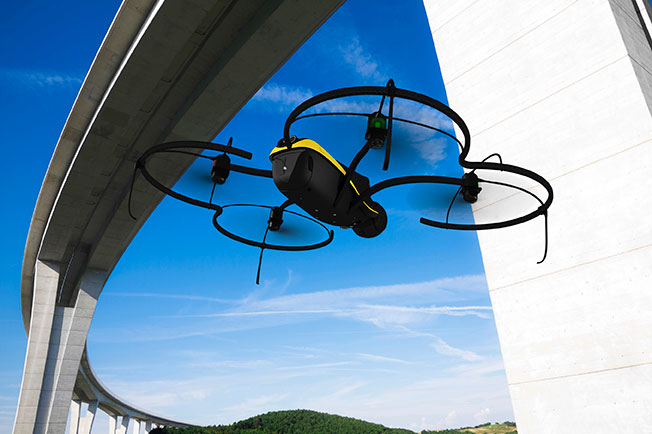
    epson-uav-smartglasses-pilot-wEpson, providers of the Moverio augmented reality (AR) smart eyewear platform, is partnering with DJI, maker of unmanned aerial vehicles (UAVs).

    The companies are creating new solutions for the Epson Moverio smart glasses and DJI’s suite of products and software development kit (SDK) that enhance the safety, productivity and capabilities of UAVs for both hobbyists and professionals.

    As one of the first initiatives of the partnership, DJI will optimize the DJI GO app for the Epson Moverio BT-300 AR smart glasses, shipping late Q4.

    With the app and the Moverio glasses, drone pilots will be able to see crystal clear, transparent first-person views (FPV) from the drone camera while simultaneously maintaining their line of sight with their aircraft. The DJI GO app works with the DJI Phantom, Inspire and Matrice series flying platforms as well as the Osmo handheld gimbal and camera.

    The two companies will co-market the Moverio BT-300 as a compatible DJI accessory. The Epson smart glasses will be available for purchase on DJI.com while the DJI GO app will be available for download from the Moverio Apps Market.

    https://www.youtube.com/watch?v=TJNJOw34p_o

    The Epson/DJI partnership arrives as newly streamlined FAA regulations for UAVs have taken effect, making it easier for businesses to expand the use of drones for a variety of aerial photography and videography purposes. Construction, real estate, insurance, agriculture, emergency response, conservation, academic research, film and video production and numerous other fields that benefit from UAVs have embraced the relaxed rules. However, the FAA has maintained the rule that UAVs must remain within the visual line-of-sight (VLOS) of the remote pilot, reinforcing the relevance of the Epson and DJI partnership.

    “The Moverio BT-300 marks an impressive advance in performance for the platform and will make flying and filming safer and help users stay in compliance with federal regulations,” said Michael Perry, director of strategic partnerships, DJI. “We are excited to see the incredible applications that can be built with the BT-300 and the recently relaunched DJI SDK — the possibilities truly are endless.”

    DJI maintains a 70 percent market share of the $2 billion consumer drone market, and its aerial platforms are used by two­-thirds of businesses approved by the FAA to operate commercially. More than 600,000 UAVs are expected to be in use in 2017.

    epson-uav-smartglasses-w“We believe this partnership with DJI will revolutionize how UAV pilots operate their aircraft in this fast-growing industry, now and into the future,” said Eric Mizufuka, product manager, New Ventures for Epson America. “In addition to validating Epson’s investment in its Moverio line, this is the first time AR smart glasses will be widely available for a mass-market consumer application, marking an historic milestone in the evolution of the category.”

    In addition to making drone piloting safer, the goals of the partnership include providing pilots and film-makers with new AR tools for enhanced productivity when using a UAV. Epson and DJI will also work together to create entirely new experiences for the fast-growing number of UAV hobbyists and businesses, as well as conduct joint sales and marketing efforts worldwide.

    Launching its first-generation smart glasses in 2011, the Epson Moverio BT-300 represent the world’s lightest binocular, transparent smart glasses with an OLED display. Combining breakthrough silicon-based OLED digital display technology and Android OS 5.1, the Moverio BT-300 enables truly transparent mobile AR experiences.

    The Epson Moverio BT-300 will be available in late Q4 and may be pre-ordered at Epson.com/Moverio. Epson will be demonstrating the DJI GO app on the Moverio BT-300 in booth No. 81 at InterDrone 2016, which is being held Sept. 7-9 in Las Vegas, Nevada.

  • New FAA rules for small unmanned aircraft now in effect

    The first operational rules for routine commercial use of small unmanned aircraft systems, announced June 21, officially take effect today.

    “People are captivated by the limitless possibilities unmanned aircraft offer, and they are already creating business opportunities in this exciting new field,” said U.S. Transportation Secretary Anthony Foxx. “These new rules are our latest step toward transforming aviation and society with this technology in very profound ways.”

    “The FAA’s role is to set a flexible framework of safety without impeding innovation,” said Administrator Huerta, Federal Aviation Administration (FAA). “With these rules, we have created an environment in which emerging technology can be rapidly introduced while protecting the safety of the world’s busiest, most complex airspace.”

    The provisions of the new rule — formally known as Part 107 — are designed to minimize risks to other aircraft and people and property on the ground. A summary is available.

    Effective today, the FAA has several processes in place to help users take advantage of the rule:

    Waivers. The agency is offering a process to waive some of the rule’s restrictions if an operator demonstrates the proposed flight will be conducted safely under a waiver. Users must apply for these waivers at the online portal.

    The FAA is issuing more than 70 waivers today, based on petitions for Section 333 exemptions. These waivers will be posted on September1. The majority of the approved waivers were for night operations under Part 107.

    Airspace Authorization. Users can operate their unmanned aircraft in Class G (uncontrolled) airspace without air traffic control permission. Operations in Class B, C, D and E airspace need air traffic approval. Users must request access to controlled airspace via the electronic portal at www.faa.gov/UAS.

    The FAA will evaluate airspace authorization requests using a phased approach. Operators can submit their requests starting today, but air traffic facilities will receive approved authorizations, if granted, according to the following tentative schedule:

    • Class D & E Surface Area: Oct. 3, 2016
    • Class C: Oct. 31, 2016
    • Class B: Dec. 5, 2016

    The FAA will make every effort to approve requests as soon as possible, according to the agency, but the actual processing time will vary, depending on the complexity of an individual request and the volume of applications the FAA receives. The agency is urging users to submit requests at least 90 days before they intend to fly in controlled airspace.

    The FAA will use safety data from each phase to ensure appropriate mitigations are in place as small UAS operations are integrated into controlled airspace.

    Aeronautical Knowledge Test. Testing centers nationwide can now administer the Aeronautical Knowledge Test required under Part 107. After an operator passes the test, he or she must complete an FAA Airman Certificate and/or Rating Application to receive a remote pilot certificate.

    It may take up to 48 hours for the website to record that the applicant has passed the knowledge test. The FAA expects to validate applications within 10 days. Applicants will then receive instructions for printing a temporary airman certificate, which is good for 120 days. The FAA will mail a permanent Remote Pilot Certificate within 120 days.

    In the future, the FAA also will address operations not covered by Part 107 without a waiver, including operations over people, beyond line of sight operations, extended operations, flight in urban areas, and flight at night.

    Part 107 does not apply to model aircraft. Model aircraft operators must continue to satisfy all the criteria specified in Section 336 of Public Law 112-95 (which is now codified in part 101), including the stipulation they be operated only for hobby or recreational purposes. Click here for more information on hobby or recreation uses.

  • FAA clarifies changes before small drone rule takes effect

    The Federal Aviation Administration’s (FAA) new small drone rule — formally known as Part 107 — is effective on Monday, Aug. 29. The FAA has released information to help drone users understand the new requirements.

    Below is information on Part 107’s effect on Section 333 waivers, along with how to obtain a Part 107 waiver.

    Section 333 vs. Part 107: What works for you?

    The biggest question is whether you are better off flying under the provisions of Part 107, or should continue using your existing exemption? The video below explains what happens to your Section 333 exemption grant or petition for exemption.

    Your exemption is valid until it expires — usually two years after it was issued. Even after Part 107 becomes effective, you may choose to fly following the conditions and limitations in your exemption.

    However, if you want to operate under the new Part 107 regulations, you’ll have to obtain a remote pilot certificate and follow all of the rule’s operating provisions. You must apply for a waiver if some parts of your operation don’t meet the rule’s requirements.

    If you already have a Certificate of Waiver or Authorization (COA) under your Section 333 exemption, you can continue to fly under the COA limitations until it expires. If you don’t already have a COA, you probably won’t need one when the new drone rules go into effect.

    However, if you want to fly in controlled airspace, you will need permission from FAA air traffic control. Details about obtaining that permission will be online at www.faa.gov/uas when the small drone rule is effective on Aug. 29.

    If you applied for a Section 333 exemption but haven’t received it yet, you should have received a letter from the FAA with specific information about the status of your petition. Generally, if your petition is pending and falls within the provisions of the rule, you should follow the steps outlined in the rule.

    Whether you choose to fly under your exemption or under the new small drone rule is your choice, depending on how you want to operate your aircraft. You’ll have to compare the conditions and limitations in your exemption to the operating requirements in the rule to determine which one best addresses your needs.

    Applying for a waiver under the new drone rules

    Part 107 allows for some expanded operations based on technology mitigations if you can make the safety case for a waiver of some provisions. Operators can apply for waivers to operate at night, beyond line of sight, above 400 feet and other specific types of operation.

    Here’s what you need to know about the waiver process:

    • Under Part 107, you may request a waiver of certain provisions starting Aug. 29 if your operations don’t quite fit under the rule’s provisions. On Aug. 29, the FAA will have an online portal you can use to request waivers of applicable Part 107 regulations at www.faa.gov/uas.
    • The FAA won’t grant waivers automatically, and processing your waiver request may take time. The exact length of time will depend on the volume of requests the agency receives and the complexity of the waiver application. You should submit your waiver requests to the FAA as early as possible, at least 90 days before you plan to fly.
    • If you have a Section 333 exemption grant, and we previously said you could operate under Part 107 with a waiver, you will receive a letter notifying you that we have granted you a 0waiver or that we need additional information for you to make your safety case. (See above section.)

    Information on the regulations potentially eligible for a waiver is here. Below is a short video on the waiver process.


  • Unmanned update: Government and industry join to resolve issues

    Unmanned update: Government and industry join to resolve issues

    The White House has joined in to support continued growth of the emerging unmanned aerial vehicle (UAV) industry. Unmanned aircraft systems (UAS) technologies are powering a revolution in unmanned flight.

    Already used by government, by research organizations, and by industry for more efficient and safe applications, drones are now becoming a developing part of the United States economy. A new initiative by the Office of Science and Technology Policy (OSTP) brought together 150 UAS community leaders for a recent workshop at the White House. The event was held to find out more about the UAS industry, where it’s headed, and to seek ideas for how government might contribute.

    Given that the current administration has only limited time remaining, the group proposed some significant issues that could be launched, or at least where there should be focus. The only short-term goal that could be achieved by the end of the year is the release by the Federal Aviation Administration (FAA) of a Notice of Proposed Rulemaking for UAV operations over people.

    One principle objective should be for the Federal Communications Commission (FCC) to develop rules in concert with industry for licensing allocated frequency spectrum. While the FAA has yet to develop rules for higher altitude, larger-UAV operations, the UAS industry requires spectrum for command and control of aircraft at high altitudes and for beyond visual line of sight operations. The FAA and FCC regulations should be developed in parallel.

    The group felt another problem that should be tackled is UAS Traffic Management (UTM). While NASA has been investigating prototype UTM options and various industry leaders have been advocating a number of different approaches, the group seemed to indicate that unless government took some form of leadership role, a number of different, incompatible solutions might be developed.

    Finally, there was discussion about how a number of states are implementing local UAS regulations, while the FAA believes it has responsibility for all U.S. airspace. However, large numbers of small UAS (sUAS) are expected to operate at lower altitudes, so local authorities believe they should assert more control, even though they were comfortable in the past ceding control of manned aviation to the FAA. However, nationwide, uniform safety regulations appear to be just as critical for UAS as for manned aircraft, which seems to imply that the FAA should lead the effort.

    So, some good issues were identified that need serious work to enable UAS operations, but it’s always a problem when someone else gets stuck with the responsibility to find solutions — which will be the case when the administration changes. Hopefully the new guys will also believe how beneficial UAS will be for the economy and will chase down and help overcome these barriers.

    Package Delivery

    Meanwhile, on the package delivery front, Google’s Project Wing has been approved by FAA to begin testing, albeit within the confines of Northern Plains UAS test site in North Dakota. The heavier Google delivery drones will be tested from the ground up to 29,000 feet with external loads, and efforts will be made to fly them beyond line of sight without chase aircraft. Google will also prototype a low-altitude airspace management system for the tests that uses inexpensive comms and data technologies.

    While authorization in the U.S. was still pending, Google went looking for somewhere to test its prototype drone delivery system, and in August 2014 undertook testing in Queensland, Australia. At that time Google was using a vertical take-off UAV system — they delivered portable radios and water bottles to farmers.

    Google tests delivery drones in Australia.
    Google tests delivery drones in Australia.

    Word is that Google is now looking at fixed-wing UAVs and cargo slung from them — maybe for transporting heavier packages.

    Google’s new delivery drone?
    Google’s new delivery drone?

    And further North in Ontario, Canada, Drone Delivery Canada (DDC) is moving forward with the development and implementation of a commercial drone delivery platform for retailers, service organizations and government agencies. In remote parts of Canada, access to some communities can be difficult to impossible for conventional means. DDC expects to add additional sites later this year for beyond visual line of sight (BVLOS) testing, working with the Canadian government towards obtaining its operator status. DDC also just announced an agreement with a Canadian retailer to test and integrate its drone system with the retailer’s existing depot-to-depot delivery logistics.

    DDC prototype drone delivery system.
    DDC prototype drone delivery system.

    And not to be left out of this picture, 7-Eleven has been working with drone manufacturer Flirtey to test autonomous delivery of convenience store items. Dispatched from a Nevada 7 Eleven store, two deliveries were completed to a local customer’s house using precision GPS, where the Flirtey drone hovered and gently lowered each package of goodies.


    Flirtey drone delivers 7-Eleven goodies.
    Flirtey drone delivers 7-Eleven goodies.

    So, while the White House now seems to be actively engaged in supporting the introduction of UAS into commercial operations in the U.S., we still have many significant obstacles to overcome  not least are access to control frequencies, the development and introduction of drone traffic-control systems, and the coordination of federal and state rule-making. But this apparently has not deterred several organizations, including Google, DDC, Flirtey/7-Eleven, Amazon, Walmart and others, to trial drone package delivery. U.S. states have also recognized the promise of everything connected with UAVs and their operations, and are collaborating with the FAA to establish large swaths of the airspace for UAV testing.

    What with the White House and states already on the UAV bandwagon, surely it won’t be long before we crack the nut and get significant commercial operations approved and underway.

    Tony Murfin
    GNSS Aerospace

  • 7-Eleven, Flirtey make first FAA-approved drone delivery to home

    Convenience retailer 7-Eleven and Flirtey, an independent drone delivery service, completed the first fully autonomous drone delivery to a customer’s residence to advance research toward integrating drones into the National Airspace System.

    The July 22 delivery to a Reno, Nevada, home is the first time a U.S. customer has received a package to a residence via drone — a historic milestone in both U.S. and global commerce. The delivery was conducted in celebration of the convenience store chain’s 89th birthday.

    The goal of advancing drone deliveries as well as further refining Flirtey’s delivery technology and packaging were highlighted when Flirtey teamed with the Nevada Institute for Autonomous Systems (NIAS) for the delivery.

    “This delivery required special flight planning, risk analysis, and detailed flight procedures ensuring residential safety and privacy were equally integrated,” said Chris Walach, director of operations for NIAS.

    From a Reno 7-Eleven store, two deliveries were successfully completed. 7-Eleven merchandise — including hot and cold food items — were loaded into a unique Flirtey drone delivery container and flown autonomously using precision GPS to a local customer’s house.

    Once at the family’s backyard, the Flirtey drone hovered in place and gently lowered each package. The purchases were delivered to the family in the span of a few minutes.

    Products included Slurpee drinks, a chicken sandwich, donuts, hot coffee and 7-Select candy. In the future, both companies expect drone packages to include “everyday essentials” such as batteries and sunscreen.

    “My wife and I both work and have three small children ages 7, 6 and 1. The convenience of having access to instant, 24/7 drone delivery is priceless,” said Reno resident Michael, who received the Flirtey delivery. “It’s amazing that a flying robot just delivered us food and drinks in a matter of minutes.”

    The deliveries also mark Flirtey’s largest commercial relationship to date and bring the drone delivery startup even closer to its vision of reinventing the delivery process for humanitarian, online retail and food delivery industries.

    “We’re absolutely thrilled to have 7-Eleven, the largest convenience chain in the world, embracing new technologies and working with us at Flirtey to make drone delivery a reality for customers all over the world,” said Flirtey CEO Matt Sweeny. “This is just the first step in our collaboration with 7-Eleven. Flirtey’s historic drone deliveries to date have been stepping stones to store-to-home drone delivery, and today is a giant leap toward a not-too-distant future where we are delivering you convenience on demand.”

    Building on this initial collaboration, the two companies have plans to expand drone delivery tests and work closely together, according to 7-Eleven EVP and Chief Merchandising Officer Jesus H. Delgado-Jenkins.

    “Drone delivery is the ultimate convenience for our customers and these efforts create enormous opportunities to redefine convenience,” said Delgado-Jenkins. “This delivery marks the first time a retailer has worked with a drone delivery company to transport immediate consumables from store to home. In the future, we plan to make the entire assortment in our stores available for delivery to customers in minutes. Our customers have demanding schedules, are on-the-go 24/7 and turn to us to help navigate the challenges of their daily lives. We look forward to working with Flirtey to deliver to our customers exactly what they need, whenever and wherever they need it.”

    “I congratulate Nevada-based company Flirtey on making history yet again – this time by collaborating with the world’s largest convenience retailer to complete the first store-to-home drone delivery in Reno, Nevada,” said Nevada Governor Brian Sandoval. “Through our FAA Test Site designation, Flirtey has cemented Nevada’s position as the leader in the commercial Unmanned Aerial Vehicles (UAV) industry and I look forward to seeing them continue to grow and bring jobs to our region.”

  • Unmanned Aircraft Navigation

    Sponsored by: Hemisphere GNSS
    Original Broadcast Date: Thursday, November 21, 2013
    Moderator:
    Tony Murfin, Editor, Professional OEM newsletter
    Speakers: Olivier Casabianca,
    Business Area Manager, Trimble GNSS OEM; Hal Adams, Co-founder/Chief Operating Officer, Accord Technology; Neil Gerein, Defense Product Manager, NovAtel; Eric Brewer, Senior Systems Engineer, Rockwell Collins; and Howard William Loewen, President, MicroPilot, Inc.
    Summary:
    In recent years, there has been explosive growth in the Unmanned Aerial Vehicle (UAV) market segment, with most on-board navigation systems relying on GNSS or GNSS with inertial aiding. As military budgets decline, interest in civilian commercial applications is growing rapidly.  The FAA recently awarded special type certification to two UAVs for commercial Arctic operations, and the industry is now poised for the opening of the regulation floodgates to address a growing commercial demand. In this webcast, we will hear from some of the industry leaders in GNSS-based navigation for UAVs, in both the military and civilian sectors: they will tell us what they are doing in UAV navigation and where they see this exciting market going.

  • FAA awards NextGen contract to Lockheed Martin

    The Federal Aviation Administration (FAA) has awarded a contract to Lockheed Martin worth $344 million to develop and implement a new NextGen technology that will improve the efficiency of departures and arrivals, as well as the movement of aircraft on the ground.

    The new technology is expected save time for the flying public and lessen the impact on the environment by reducing emissions and noise.

    Terminal Flight Data Manager (TFDM) will replace the paper flight strips that air traffic controllers currently use at most airports to share flight plans with electronic flight strips that will enable faster and more informed tactical decisions. The electronic strips will improve work efficiency, making it easier for controllers to accommodate traffic volume changes, bad weather and other evolving situations.

    With TFDM, the digital flight plans used to estimate arrivals, gate push-backs, routings, departures and overall airport demand will be shared in real time among air traffic controllers, aircraft operators and airports to improve the handling of more than 40,000 flights each day.

    The shared awareness of aircraft on the ground and in the air will enable arrivals, departures and surface flow to be managed more efficiently, providing accurate, predictive modeling tools to improve flight efficiency from gate to gate.

    Other benefits include improved aircraft traffic flow on the ground, which maximizes airport efficiency, reduced taxi-time delays, and enhanced safety through an increase in controllers’ heads-up time.

  • FAA just gave US commercial drone industry major shot in the arm

    Mark June 21, 2016, on your calendar.

    This will be known as the day in geospatial history that the floodgates were opened for small drones to be used for business. On that day, the Federal Aviation Administration (FAA) officially introduced new rules (so-called Part 107) that allow businesses to fly small (under 55 pounds) unmanned aerial vehicles (UAVs) in the U.S. airspace for business purposes.

    There are still a few rules that need to be adhered to, but no longer do “wannabe” UAV pilots need to go through the painful FAA 333 Exemption process to begin flying UAVs for business purposes. The FAA has created a pilot certificate specifically for UAV pilots called the “Remote Pilot Certificate” that does not require any manned aircraft training.

    Previously, UAV pilots authorized by the FAA were required to at least have an FAA Sport Pilot Certificate, which required at least 20 hours of manned flight training, among other things. Deployment of the new Remote Pilot Certificate will begin just two months from now, in August 2016, according to this announcement by the FAA.

    In a nutshell, following is the operating environment under the new Remote Pilot (Part 107) rules:

    • Remote Pilot Certificate.
    • Be at least 16 years old. Pass a three-hour aeronautical knowledge test at an FAA Knowledge Test Center, requiring about 20 hours of study. Pay a $150 fee. The certificate is valid for two years.
    • Complete FAA Form 8710-13.
    • Maximum operating altitude is 400 feet AGL, or 400 feet AGL (above ground level) from a structure (e.g. building, roof).
    • Visual observer (VO) is now optional (was required under 333 Exemption) except if the pilot uses First Person View technology, then a VO is required.
    • UAV must weigh less than 55 pounds.
    • UAV must fly less than 100 miles per hour.
    • You can’t fly over anyone who is not directly participating in the operation, and not under a covered structure.
    • You can pilot a UAV from a moving vehicle in “sparsely populated” areas, but otherwise must be stationary (e.g. no piloting from other aircraft).
    • Daylight-only operations.
    • Pilot can only operate one UAV at a time.
    • Operations in Class G airspace are allowed without air traffic control (ATC) permission. Operations in Class B, C, D and E airspace need ATC approval. See description of US airspace here.
    • Operator does not have to be a certificated pilot if a certificated pilot is along side the operator.
    • Pilot must maintain VLOS (visual line of sight) of the UAS at all times.

    If you have a requirement that exceeds one of more of the above restrictions, the FAA says that as long as you can show that your operation can be carried out in a safe manner, you can request a waiver (Certificate of Waiver and Authorization – CoA) via an FAA portal.

    Links to key FAA documents on the new ruling:

    The remaining major hurdle for commercial operations is the requirement to maintain VLOS, which still is required under the new rules. With a rotary UAV (e.g. quad-copter) like what I fly, this requirement is easy to adhere to since the UAV isn’t traveling very fast and if you simply let go of the control sticks, it will hover. With a fixed-wing (conventional airplane airframe) UAV, this is not so easy. A fixed-wing can travel 30 to 40 mph, and can be out of VLOS within one minute, and it’s always moving. Nonetheless, even with the VLOS rule still in place, the new Part 107 rules grant a new, easily accessible and powerful tool to collect high-precision geospatial data.

    The good news for geospatial professionals is that more UAV companies are focusing on the professional marketplace.

    In 2009, 3D Robotics started targeting the DIY (do-it-yourself) UAV market, then the consumer market, and now are focusing on the professional markets like GIS, construction, etc.

    [Related: 3DR demos Site Scan at Esri UC]

    Because the rules have opened up to a much broader audience, expect more vendors to offer more products and services for professional UAV operators. For example, at the Esri International User Conference this week in San Diego, Esri showcased its Drone2Map software product that allows Esri software users to process and consume UAV data into the ArcGIS ecosystem.

    It’s no longer hype, folks. UAVs are here to stay, and they are becoming an increasingly powerful tool in the geospatial toolbox. The great news is that will all the UAV hype over the last few years, there’s many different vendors offering UAV hardware and softwares for you to choose from. All that competition will be reflected in the quality and price of UAVs on the market, benefitting the consumer.

    Thanks, and see you next month.

    Follow me on Twitter at @GPSGIS_Eric.

  • FAA just gave US commercial drone industry major shot in the arm

    Mark June 21, 2016, on your calendar.

    This will be known as the day in geospatial history that the floodgates were opened for small drones to be used for business. On that day, the Federal Aviation Administration (FAA) officially introduced new rules (so-called Part 107) that allow businesses to fly small (under 55 pounds) unmanned aerial vehicles (UAVs) in the U.S. airspace for business purposes.

    There are still a few rules that need to be adhered to, but no longer do “wannabe” UAV pilots need to go through the painful FAA 333 Exemption process to begin flying UAVs for business purposes. The FAA has created a pilot certificate specifically for UAV pilots called the “Remote Pilot Certificate” that does not require any manned aircraft training.

    Previously, UAV pilots authorized by the FAA were required to at least have an FAA Sport Pilot Certificate, which required at least 20 hours of manned flight training, among other things. Deployment of the new Remote Pilot Certificate will begin just two months from now, in August 2016, according to this announcement by the FAA.

    In a nutshell, following is the operating environment under the new Remote Pilot (Part 107) rules:

    • Remote Pilot Certificate.
    • Be at least 16 years old. Pass a three-hour aeronautical knowledge test at an FAA Knowledge Test Center, requiring about 20 hours of study. Pay a $150 fee. The certificate is valid for two years.
    • Complete FAA Form 8710-13.
    • Maximum operating altitude is 400 feet AGL, or 400 feet AGL (above ground level) from a structure (e.g. building, roof).
    • Visual observer (VO) is now optional (was required under 333 Exemption) except if the pilot uses First Person View technology, then a VO is required.
    • UAV must weigh less than 55 pounds.
    • UAV must fly less than 100 miles per hour.
    • You can’t fly over anyone who is not directly participating in the operation, and not under a covered structure.
    • You can pilot a UAV from a moving vehicle in “sparsely populated” areas, but otherwise must be stationary (e.g. no piloting from other aircraft).
    • Daylight-only operations.
    • Pilot can only operate one UAV at a time.
    • Operations in Class G airspace are allowed without air traffic control (ATC) permission. Operations in Class B, C, D and E airspace need ATC approval. See description of US airspace here.
    • Operator does not have to be a certificated pilot if a certificated pilot is along side the operator.
    • Pilot must maintain VLOS (visual line of sight) of the UAS at all times.

    If you have a requirement that exceeds one of more of the above restrictions, the FAA says that as long as you can show that your operation can be carried out in a safe manner, you can request a waiver (Certificate of Waiver and Authorization – CoA) via an FAA portal.

    Links to key FAA documents on the new ruling:

    The remaining major hurdle for commercial operations is the requirement to maintain VLOS, which still is required under the new rules. With a rotary UAV (e.g. quad-copter) like what I fly, this requirement is easy to adhere to since the UAV isn’t traveling very fast and if you simply let go of the control sticks, it will hover. With a fixed-wing (conventional airplane airframe) UAV, this is not so easy. A fixed-wing can travel 30 to 40 mph, and can be out of VLOS within one minute, and it’s always moving. Nonetheless, even with the VLOS rule still in place, the new Part 107 rules grant a new, easily accessible and powerful tool to collect high-precision geospatial data.

    The good news for geospatial professionals is that more UAV companies are focusing on the professional marketplace.

    In 2009, 3D Robotics started targeting the DIY (do-it-yourself) UAV market, then the consumer market, and now are focusing on the professional markets like GIS, construction, etc.

    [Related: 3DR demos Site Scan at Esri UC]

    Because the rules have opened up to a much broader audience, expect more vendors to offer more products and services for professional UAV operators. For example, at the Esri International User Conference this week in San Diego, Esri showcased its Drone2Map software product that allows Esri software users to process and consume UAV data into the ArcGIS ecosystem.

    It’s no longer hype, folks. UAVs are here to stay, and they are becoming an increasingly powerful tool in the geospatial toolbox. The great news is that will all the UAV hype over the last few years, there’s many different vendors offering UAV hardware and softwares for you to choose from. All that competition will be reflected in the quality and price of UAVs on the market, benefitting the consumer.

    Thanks, and see you next month.

    Follow me on Twitter at @GPSGIS_Eric.

  • FAA: Commercial drone use to take flight

    FAA: Commercial drone use to take flight

    Today, the Federal Aviation Administration (FAA) has finalized the first operational rules for routine commercial use of small unmanned aircraft systems (UAS), opening pathways towards fully integrating UAS into the nation’s airspace.

    These new regulations work to harness new innovations safely, to spur job growth, advance critical scientific research and save lives, the FAA said in a press release.

    “We are part of a new era in aviation, and the potential for unmanned aircraft will make it safer and easier to do certain jobs, gather information, and deploy disaster relief,” said U.S. Transportation Secretary Anthony Foxx. “We look forward to working with the aviation community to support innovation, while maintaining our standards as the safest and most complex airspace in the world.”

    According to industry estimates, the rule could generate more than $82 billion for the U.S. economy and create more than 100,000 new jobs over the next 10 years.

    The new rule, which takes effect in late August, offers safety regulations for unmanned aircraft drones weighing less than 55 pounds that are conducting non-hobbyist operations.

    The rule’s provisions are designed to minimize risks to other aircraft and people and property on the ground. The regulations require pilots to keep an unmanned aircraft within visual line of sight. Operations are allowed during daylight and during twilight if the drone has anti-collision lights. The new regulations also address height and speed restrictions and other operational limits, such as prohibiting flights over unprotected people on the ground who aren’t directly participating in the UAS operation.

    The FAA is offering a process to waive some restrictions if an operator proves the proposed flight will be conducted safely under a waiver. The FAA will make an online portal available to apply for these waivers in the months ahead.

    “With this new rule, we are taking a careful and deliberate approach that balances the need to deploy this new technology with the FAA’s mission to protect public safety,” said FAA Administrator Michael Huerta. “But this is just our first step. We’re already working on additional rules that will expand the range of operations.”

    Under the final rule, the person actually flying a drone must be at least 16 years old and have a remote pilot certificate with a small UAS rating, or be directly supervised by someone with such a certificate. To qualify for a remote pilot certificate, an individual must either pass an initial aeronautical knowledge test at an FAA-approved knowledge testing center or have an existing non-student Part 61 pilot certificate. If qualifying under the latter provision, a pilot must have completed a flight review in the previous 24 months and must take a UAS online training course provided by the FAA. The TSA will conduct a security background check of all remote pilot applications prior to issuance of a certificate.

    Operators are responsible for ensuring a drone is safe before flying, but the FAA is not requiring small UAS to comply with current agency airworthiness standards or aircraft certification. Instead, the remote pilot will simply have to perform a preflight visual and operational check of the small UAS to ensure that safety-pertinent systems are functioning property.  This includes checking the communications link between the control station and the UAS.

    Although the new rule does not specifically deal with privacy issues in the use of drones, and the FAA does not regulate how UAS gather data on people or property, the FAA is acting to address privacy considerations in this area. The FAA strongly encourages all UAS pilots to check local and state laws before gathering information through remote sensing technology or photography.

    As part of a privacy education campaign, the agency will provide all drone users with recommended privacy guidelines as part of the UAS registration process and through the FAA’s B4UFly mobile app. The FAA also will educate all commercial drone pilots on privacy during their pilot certification process; and will issue new guidance to local and state governments on drone privacy issues. The FAA’s effort builds on the privacy “best practices” the National Telecommunications and Information Administration published last month as the result of a year-long outreach initiative with privacy advocates and industry.

    Part 107 will not apply to model aircraft.  Model aircraft operators must continue to satisfy all the criteria specified in Section 336 of Public Law 112-95 (which will now be codified in Part 101), including the stipulation they be operated only for hobby or recreational purposes.

    Visit the FAA website for more information on the FAA and UAS.

    Reaction

    Brian Wynne, president and CEO of the Association for Unmanned Vehicle Systems International (AUVSI), issued the following statement:

    “Today’s release of the final small UAS rule by the FAA is a critical milestone in the integration process, and a long-awaited victory for American businesses and innovators. It establishes a clear regulatory framework and helps to reduce many barriers to civil and commercial operations, allowing anyone who follows the rules to fly in the national airspace.

    “Accelerating civil and commercial UAS operations will not only help businesses harness tremendous potential of UAS, it will also help unlock the economic impact and job creation potential of the technology. Once UAS are fully integrated into the national airspace and become more widely used, the industry will continue to grow as a job creator and generate significant economic impact.

    “Our economic report projects that the expansion of UAS technology will create more than 100,000 jobs and generate more than $82 billion to the economy in the first decade following integration. Whether it’s aiding search and rescue missions, advancing scientific research, responding to natural disasters, or helping farmers care for their crops, UAS are capable of saving time, saving money and most importantly, saving lives.

    “The final rule allows for many uses of small UAS and a streamlined waiver process to expand applications. We are looking forward to additional rulemaking which has already begun with AUVSI’s support, to enable more complex operations. We need to make sure we are doing all we can to support the UAS industry’s growth and development; otherwise we risk stunting a still-nascent industry and restricting the many beneficial uses of this technology.”

    National Association of Realtors (NAR) President Tom Salomone called the rules a win for the industry.

    “We’ve worked hard to strike a responsible balance that protects the safety and privacy of individuals, while also ensuring Realtors can put drones to good use,” said Salomone, broker-owner of Real Estate II Inc. in Coral Springs, Florida. “That effort just took another big step forward. The rules unveiled today will help more real estate professionals take flight, making the efficiency and innovation that drones have to offer available to a much broader base of operators.”

    The FAA’s announcement marks a long-fought victory for Realtors. Since early 2014, NAR has worked with the FAA and industry partners to integrate drones into the national airspace for commercial use. NAR wrote to the FAA on numerous occasions to weigh in on the final Small UAS Rule, and testified before Congress to support the use of drones in real estate.

    Despite eliminating the requirement that operators hold a pilot’s license, anyone looking to fly drones commercially will still have to comply with strict requirements designed to protect people on the ground.

    Drones are useful in a number of real estate-related applications, including marketing properties, assisting with appraisals, facilitating insurance claims and overseeing utility work. While many real estate professionals with pilot’s licenses have already put drones to use in these arenas, the new rules are expected to open the door for additional operators to do the same.

    Despite the significant progress made in the FAA’s final rule, NAR’s work on this issue will continue. NAR is calling for eased restrictions on a “micro” category of drones; drones in this category weigh less than four pounds and present a much smaller safety risk than certain drones in the under-55 pound category covered by the rule released today.

    NAR also believes there is an ongoing need for a drone strategy that allows for “beyond visual line-of-sight” flights, or those where the operator cannot physically see the drone throughout the entire operation. These flights are particularly important for aerial photography across large buildings or tracts of land.

    Salomone praised the FAA for their efforts in crafting the rule.

    “Getting here wasn’t easy, and the FAA is to be commended for listening to the concerns of real estate professionals throughout the rulemaking process,” he said. “We’re entering a new stage of drone use in real estate, and no doubt there will be additional questions and challenges ahead. NAR will continue educating its members on issues important to the safe, responsible use of drones so they can grow their business and better serve their clients.”

    The National Association of Realtors, “The Voice for Real Estate,” is America’s largest trade association, representing more than 1.1 million members involved in all aspects of the residential and commercial real estate industries.

  • FAA issues GPS interference flight advisory

    FAA issues GPS interference flight advisory

    [[Editor’s note: After this story was posted, and after the Navigate! enewsletter containing it was sent out to 27,128 subscribers, GPS World received notice that in fact the U.S. Navy  canceled plans to jam GPS signals in the vicinity of the China Lake, California, Naval Air Weapons Station. The Aircraft Owners and Pilots Association (AOPA) had raised concerns about the impact on civilian air traffic and the size of the affected area. The Navy did not reveal the cause of the cancellation, other than to say the reason was “internal.”]]

    According to a June 4 Federal Aviation Administration advisory, GPS testing is scheduled several days this month that may affect GPS reception on the West Coast of the U.S. with an unreliable or unavailable GPS signal.

    The time periods discussed in this advisory may be reduced or cancelled with little or no notice. Pilots are advised to check NOTAMs frequently for possible changes prior to operations in the area. NOTAMs will be published at least 24 hours in advance of any GPS tests.

    GPS Interference testing this June on the West Coast of the United States.
    GPS Interference testing this June on the West Coast of the United States.

    Location: The location is centered at 360822N1173846W or the BTY VOR 214 degree radial at 059 NM.

    Dates and times

    7 JUN 16 1630Z – 2230Z
    9 JUN 16 1630Z – 2230Z
    21 JUN 16 1630Z – 2230Z
    23 JUN 16 1630Z – 2230Z
    28 JUN 16 1630Z – 2230Z
    30 JUN 16 1630Z – 2230Z

    Duration: Each event may last the entire requested period.

    NOTAM INFO:

    NAV (CHLK GPS 16-08) GPS (including WAAS, GBAS and ADS-B) may not be available within a  476 nautical mile radius centered at 360822N1173846W (BTY 214059) FL400-UNL DECREASING IN AREA WITH A DECREASE IN ALT DEFINED AS:
    432NM RADIUS AT FL250
    375NM RADIUS AT 10000FT
    340NM RADIUS AT 4000FT AGL
    253NM RADIUS AT 50FT AGL

    THIS NOTAM APPLIES TO ALL AIRCRAFT RELYING ON GPS. ADDITIONALLY, DUE TO GPS INTERFERENCE IMPACTS POTENTIALLY AFFECTING EMBRAER PHENOM 300 AIRCRAFT FLIGHT STABILITY CONTROLS, FAA RECOMMENDS EMB PHENOM PILOTS AVOID THE ABOVE TESTING AREA AND CLOSELY MONITOR FLIGHT CONTROL SYSTEMS DUE TO POTENTIAL LOSS OF GPS SIGNAL.

    Affected Centers: Pilots are encouraged to report anomalies only when ATC assistance is required.

  • FAA offers ADS-B rebates to aircraft owners

    The Federal Aviation Administration (FAA) is offering a $500 rebate for aircraft to install Automatic Dependent Surveillance – Broadcast (ADS-B) surveillance technology ahead of a 2020 deadline.

    Today on a national press call, U.S. Transportation Secretary Anthony Foxx and Deputy Administrator Michael G. Whitaker announced the $500 rebate incentive for General Aviation (GA) aircraft owners who equip their aircraft with required avionics technology.

    Accelerating compliance is critical to ensuring that pilots, manufacturers and retail facilities have adequate time and capacity to equip aircraft ahead of a 2020 regulatory deadline, the FAA said.

    ADS-B is a foundational element of the FAA’s NextGen program, which consists of a suite of technologies that are modernizing the nation’s air traffic control system. ADS-B transforms aircraft surveillance using satellite-based positioning.

    “This announcement signals our commitment to NextGen, which has played an important role in ensuring that our airspace is safe and efficient for the American people,” Secretary Foxx said. “We are focused on achieving its full potential, and by working with our General Aviation community, I’m confident we can successfully integrate aircraft and technology into the national airspace system.”

    The rebates will be available this fall, and the FAA will announce the specific date soon.

    In the meantime, the FAA has published information regarding the goals and structure of the program and is encouraging aircraft owners to look at the available equipment on the market and to schedule an installation appointment with a qualified installer starting in the fall of 2016. Aircraft owners will only qualify for the rebate if the installation is scheduled after the FAA begins offering the rebates.

    The FAA published a final rule in May 2010 mandating that aircraft flying in certain controlled airspace be equipped with ADS-B by Jan. 1, 2020. That airspace is generally the same busy airspace where transponders are required. Aircraft that fly only in uncontrolled airspace where no transponders are required, and aircraft without electrical systems, such as balloons and gliders, are exempt from the mandate.

    “We’re calling on all aircraft owners who plan to fly in busy airspace to equip with ADS-B before the deadline,” Administrator Huerta said. “Owners who wait too long to equip may not be able to get an installation appointment before the deadline. This limited-time rebate provides an incentive for early retrofitting, and will help draw attention for the urgent need for owners to comply so that they can continue to fly their aircraft in 2020.”

    The $500 rebate will help offset an owner’s cost to equip U.S.-registered, fixed-wing, single-engine piston aircraft with avionics that comply with FAA technical standard orders and meet the rule requirements. The FAA is not offering rebates for software upgrades for aircraft already equipped, for new aircraft or for aircraft for which the FAA already has paid or committed to upgrade.

    The FAA will be able to distribute 20,000 rebates — one rebate per aircraft owner. The FAA is encouraging owners of fixed-wing, single-engine piston aircraft to apply as soon as the program is launched this fall because the rebates are available on a first-come, first-served basis for one year, or until all 20,000 rebates are claimed, whichever comes first. The FAA estimates that as many as 160,000 aircraft need to be equipped by the deadline.

    “ADS-B provides the General Aviation community with increased safety, efficiency, and situational awareness,” said Whitaker. “We’re getting closer to the 2020 deadline, and we need 100 percent equipage in the required airspace to realize the full benefits of this NextGen technology.”

    (Image from jatcaonline.com.)
    (Image from jatcaonline.com.)

    General aviation and air taxi aircraft equipped with ADS-B Out enjoy more efficient spacing and optimal routing in some non-radar environments, including busy airspace in the Gulf of Mexico, mountainous regions of Colorado, and some areas in Alaska. ADS-B improves life-saving search-and-rescue with accurate and timely last-reported positions. General aviation pilots may also benefit from air traffic control services outside radar coverage.

    The FAA is continuing to work with stakeholders such as the Aircraft Electronics Association, the Aircraft Owners and Pilots Association, the General Aviation Manufacturers Association, and others to inform and educate the aviation community about the ADS-B requirements.

    Aircraft are required to be equipped with ADS-B by January 2020 as part of the agency’s effort to implement the satellite-based NextGen system to improve the nation’s air traffic control.

    ADS-B technology, which costs around $2,000 to install, can save lives because it improves situational awareness, allows real time weather and traffic updates and improves communication where radar is limited. It also has the ability to improve route efficiency and air traffic.

    Learn more about equipping aircraft and the rebate program.

    Airplane taking off from Dallas/Fort Worth International Airport with the air traffic control tower behind. (Photo: Wikipedia CC BY-SA 4.0)
    Airplane taking off from Dallas/Fort Worth International Airport with the air traffic control tower behind. (Photo: Wikipedia CC BY-SA 4.0)