Tag: GIS

  • Leica Offers New ScanStation, Software for 3D Laser Scanning

    Leica-scan-station_p40-p30-p16_07-W

    Leica Geosystems has announced a group of six major new products for terrestrial laser scanning: three new laser scanners and three new point cloud software products. Together, thes products raise the industry’s bar for laser scanning data quality and productivity, both in the field and the office, Leica said.

    Leica ScanStation P40, P30 and P16 Laser Scanners. Leica ScanStations P40, P30 and P16 feature advances in LIDAR and digital imaging as the eighth-generation of Leica Geosystems’ high-performance laser scanners. These new, ultra-high-speed scanners increase field and office productivity, while simultaneously grabbing users’ attention with strikingly sharper, crisper scans and HDR true color images — even under many conditions traditionally difficult for scanning, the company said.

    Users will be able to capture more useful data from a single set-up, which translates into fewer instrument setups and greater productivity. Three models meet different user needs: the Leica ScanStation P40 and P30 add survey functionality, longer range capabilities (to 270m for P40), and advanced scanner controls for additional versatility and productivity while the Leica ScanStation P16 is a short-range introductory model.

    Point Cloud Software. In addition to the major new software releases Leica JetStream and TruView Global products, Leica Geosystems is now offering Leica CloudWorx for Navisworks — a popular design review application from Autodesk — as its newest family member of CloudWorx plug-ins for CAD and VR applications.

    leica-cloudworx

    JetStream is a combined project data vault and high-performance data streaming server that takes Cyclone data and serves it up in a high-performance format that enables a CloudWorx user to be up to 40 percent more productive when working with point clouds. Much of that gain comes from instantaneous loading and navigation of point clouds — eliminating traditional “waiting times” long associated with point cloud office work.

    Lastly, TruView Global greatly increases anyone’s access to TruViews — Leica Geosystems’ application for viewing and measuring scans. Shaking free from prior constraints, TruViews will be accessible within any Internet browser on any mobile device or computer, with no app or plug-in to install.

    Taken together, advances in the new scanners and software elevate laser scanning to a new performance and data quality level, Leica said. The new scanners are all ultra-high speed (up to 1 million points/sec) and can capture more useful data from a scene. In addition, increased user access to TruViews plus good HDR digital images will encourage users to publish TruViews even more frequently.

    All of these factors drive users to create more dense scans and larger data sets. With the complementary Leica JetStream software, users have the ability to handle these larger data sets with astonishing ease.

    The Leica ScanStation P40, P30 and P16 are immediately available. Leica JetStream, Leica TruVeiw Global and Leica CloudWorx for Navisworks are planned for release Q2 2015.

    Photos: Leica Geosystems

  • Caliper Offers Congressional Districts, Census Data for Use with Maptitude

    maptitude-congressional-districts-income-map

    GIS software company Caliper is offering 114th Congressional Districts data for the United States for its Mapitude software. The data package is aimed at corporate legislative affairs departments, lobbyists, political consultants, political parties, and anyone else involved in political affairs.

    The 114th Congressional Districts data contains a nationwide area database with boundaries of the 114th (January 2015-January 2017) Congressional Districts. It also includes demographic data from the 2010 Census and from the 2013 American Community Survey (ACS) five-year estimates.

    Country Packages

    Also available are eight new 2015 Country Packages for Maptitude. The 2015 Country Packages include fourth-quarter 2014 map content. Updated map layers, such as refreshed streets and landmarks are provided for each country. In addition, postal boundaries, postcode points, and demographics are included where available. For detailed information on each Package, including those for countries not mentioned here, visit the Maptitude Included Data page.

  • DT Research Rolls out Mapping and GIS Tablets

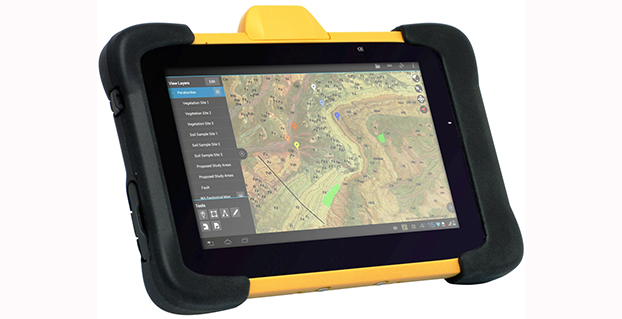
    The DT391GS tablet.
    The DT391GS tablet.

    DT Research Inc. has launched a new line of rugged tablets with the GNSS modules for surveying and mapping applications. The DT391GS, DT395GS and DT307GS rugged tablets feature integrated high-accuracy GNSS receiver modules with built-in antenna for seamless data capture, the company said.

    Built to travel and provide reliable operations in the real world, the tablets are designed for field work in mapping, geographic information systems (GIS), and accurate synchronization, tracking and networking.

    The DT391GS combines a 9-inch sunlight-readable, capacitive touch display with an energy-efficient Intel dual-core processor in a compact, durable package. With the high-accuracy GNSS module options (Hemisphere or Trimble), the foldable antenna, and Windows or Android operating system. The DT391GS also offers protection in demanding environments with IP65 and MIL-STD-810G ratings for dust and water, and shock and vibration resistance.

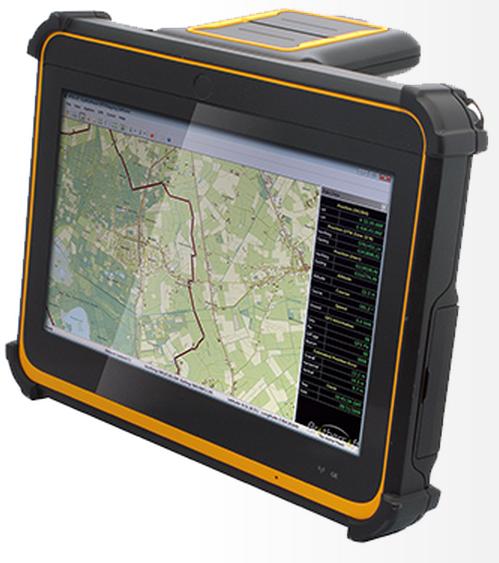
    The DT395GS tablet.
    The DT395GS tablet.

    The DT395GS offers a 9-inch sunlight-readable capacitive touch screen, an energy efficient Intel dual-core processor, and a choice of Windows or Android operating systems. The GNSS positioning module has u-blox GNSS module. The IP65 rating, and military-standard MILSTD-810G and MIL-STD-461F ratings, as well as wide temperature range, make the DT395GS reliable even in harsh, mission-critical environments.

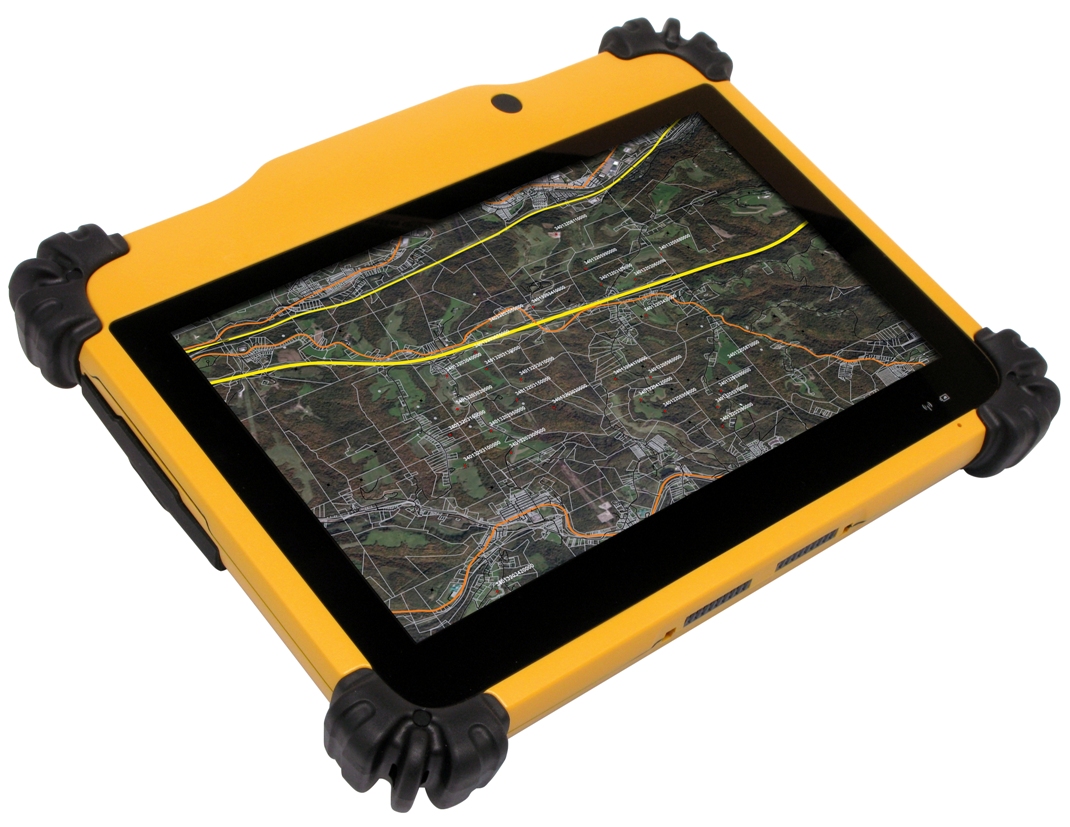
    The DT307GS GNSS tablet features a brilliant 7-inch capacitive touch screen and a quad-core, energy efficient processor with a built-in, high-accuracy u-blox GNSS module. The size and weight of the DT307GS make this tablet portable for long-term handling in the field, DT Research said.

    The DT307GS tablet
    The DT307GS tablet

    All of the DT Research Rugged GS Tablets offer hot-swappable batteries for continuous operation, enabling real-time project efficiency between staff in the field and in the office. With wireless support for Bluetooth, 802.11, WCDMA and HSPA+ connectivity and optional GSM networking, the tablets keep staff connected from any location.

    The DT391GS and DT395GS have Trusted Processing Module (TPM) encryption for security support, and a choice of Microsoft Windows Embedded Standard 7 or 7 Professional, or Android operating system making these tablets flexible to integrate with existing applications.

    An optional 5-megapixel camera offers another data capture tool to record visual information, and an optional 3G cellular data module provides data connectivity for navigation and real-time data transfer, DT Research said.

    The DT391GS, DT395GS, and DT307GS are available now, form more information, contact DT Research at [email protected].

  • DT Research Rolls out High-Accuracy GNSS Tablets

    DT Research Rolls out High-Accuracy GNSS Tablets

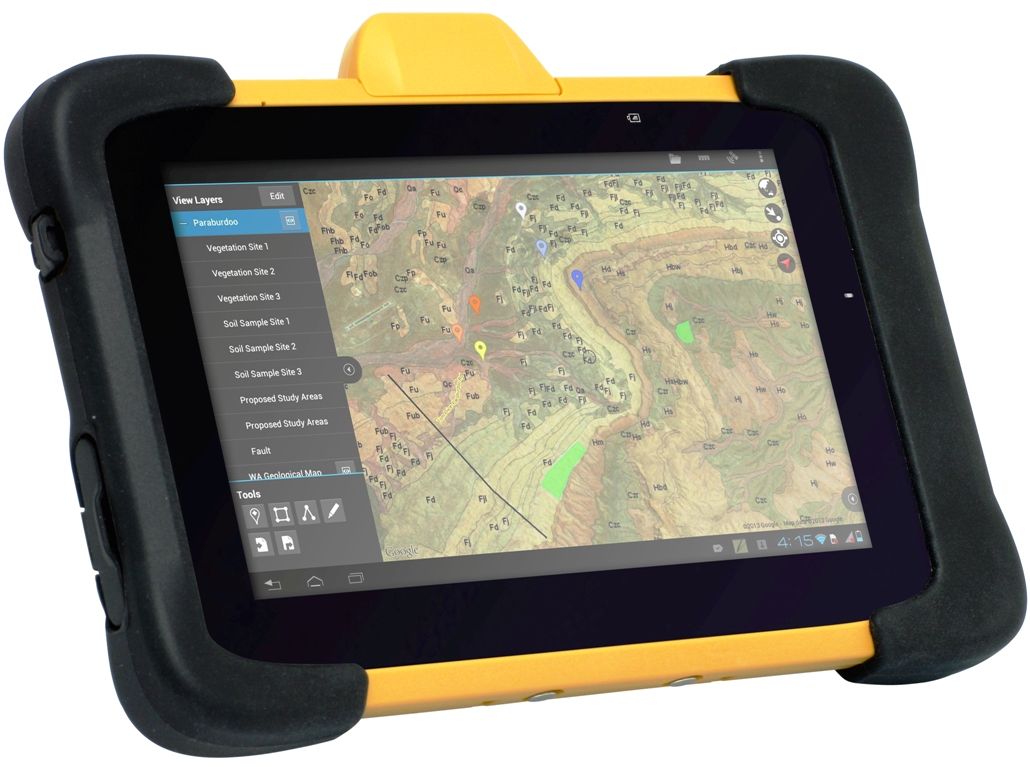
    The DT391GS tablet.
    The DT391GS tablet.

    DT Research Inc. has launched a new line of rugged tablets with the GNSS modules for surveying and mapping applications. The DT391GS, DT395GS and DT307GS rugged tablets feature integrated high-accuracy GNSS receiver modules with built-in antenna for seamless data capture, the company said.

    Built to travel and provide reliable operations in the real world, the tablets are designed for field work in mapping, geographic information systems (GIS), and accurate synchronization, tracking and networking.

    The DT391GS combines a 9-inch sunlight-readable, capacitive touch display with an energy-efficient Intel dual-core processor in a compact, durable package. With the high-accuracy GNSS module options (Hemisphere or Trimble), the foldable antenna, and Windows or Android operating system. The DT391GS also offers protection in demanding environments with IP65 and MIL-STD-810G ratings for dust and water, and shock and vibration resistance.

    The DT395GS tablet.
    The DT395GS tablet.

    The DT395GS offers a 9-inch sunlight-readable capacitive touch screen, an energy efficient Intel dual-core processor, and a choice of Windows or Android operating systems. The GNSS positioning module has u-blox GNSS module. The IP65 rating, and military-standard MILSTD-810G and MIL-STD-461F ratings, as well as wide temperature range, make the DT395GS reliable even in harsh, mission-critical environments.

    The DT307GS GNSS tablet features a brilliant 7-inch capacitive touch screen and a quad-core, energy efficient processor with a built-in, high-accuracy u-blox GNSS module. The size and weight of the DT307GS make this tablet portable for long-term handling in the field, DT Research said.

    The DT307GS tablet
    The DT307GS tablet

    All of the DT Research Rugged GS Tablets offer hot-swappable batteries for continuous operation, enabling real-time project efficiency between staff in the field and in the office. With wireless support for Bluetooth, 802.11, WCDMA and HSPA+ connectivity and optional GSM networking, the tablets keep staff connected from any location.

    The DT391GS and DT395GS have Trusted Processing Module (TPM) encryption for security support, and a choice of Microsoft Windows Embedded Standard 7 or 7 Professional, or Android operating system making these tablets flexible to integrate with existing applications.

    An optional 5-megapixel camera offers another data capture tool to record visual information, and an optional 3G cellular data module provides data connectivity for navigation and real-time data transfer, DT Research said.

    The DT391GS, DT395GS, and DT307GS are available now, form more information, contact DT Research at [email protected].

  • Global Aerospace to Showcase UAS SOP Manual at AUVSI Show

    Global Aerospace has made available a standard operating procedure (SOP) manual for small unmanned aircraft system (UAS) operations through its partnership with the Unmanned Safety Institute (USI). Global Aerospace will be exhibiting at booth 745 at the AUVSI’s Unmanned Systems 2015, held May 4-7 in Atlanta.

    The “Visual Line of Sight SOP” outlines general operating procedures for UAS and will be made available to qualified Global Aerospace customers. USI is a subsidiary company of Global’s SM4 program partner, Waypoint Global Strategies.

    Through the SM4 program, Waypoint and USI provide Global’s UAS customers with discounted consulting and data analytics services and access to flight training.

    “Standard procedures are the foundation of safe operations,” said Alex Mirot, president of USI. “We are excited about offering this SOP manual to Global Aerospace customers as a way to promote safety and reduce errors.”

    USI offers its clients customized workshops, assistance in drafting and adopting policy and procedures, risk assessment and management, safety assurance, and safety promotion.

    Chris Proudlove, senior vice president and team leader, complex risks at Global Aerospace said, “Global Aerospace continues to develop products and tools for the rapidly growing sector of UAS. This comprehensive manual will provide an excellent resource for operators of small UAS.”

  • MB&G Upgrades MobileMap App for GIS Data Organization

    MB&G_MobileMap

    Mason, Bruce & Girard Inc. (MB&G), a natural resource consulting firm, has released version 2.0 of its mobile mapping application, MobileMap.

    MB&G MobileMap provides GIS capabilities to field staff. It focuses on supporting large datasets and integrating information from diverse sources. The app provides data visualization, analysis and editing while operating in disconnected environments.

    MobileMap supports an unlimited number of base maps and feature types, and allows users to quickly switch between data by turning layers on and off. Version 2.0 of MobileMap provides flexibility in how data is organized on a device, and by supporting Esri’s shapefile format, users can define the map symbology of shapefiles.

    By targeting the Android platform, MobileMap takes advantage of a large range of device options as well as capabilities unique to Android such as support for MicroSD cards, which greatly enhance storage capacity while dramatically reducing data transfer speeds for large datasets.

    A major component of this release is improved data sync capabilities. MobileMap leverages enterprise GIS technology from Esri by enabling seamless sync with ArcGIS Server and ArcGIS Online feature services. Users will always have data that is backed up and up-to-date. By establishing a Wi-Fi connection, data can be synced to a secured service. In order to provide greater control over this process, MobileMap allows users to separate sync into separate upload and download tasks.

    According to MB&G, MobileMap 2.0 provides improved measurement and navigation capabilities; users can now measure both distance and area of features and can choose the appropriate map units for each parameter.

    MobileMap 2.0 displays the distance and direction to any selected feature, allowing field staff to navigate to management areas, survey plots or specific assets. Another new capability is the ability to perform offline search of features. While other mapping tools use internet connections to search for relevant data, MobileMap supports the ability to search offline data to identify where particular attributes or conditions exist in the landscape. When features are discovered, they are highlighted and the map zooms to their extent. These capabilities provide field staff with a valuable tool for discovering data and locating areas of interest.

    MobileMap’s data capture also has been improved. Previous versions supported GPS tracking of a travel path and the ability to define new features using GPS coordinates, or by tapping to create points or vertices in lines and polygons. Users now can collect lines and polygons by tracing the desired shape in a single motion.

    Data entry has been improved by supporting additional business rules, such as range domains and required fields. Data managers can carefully specify data integrity rules using Esri data models, and MobileMap will respect and enforce those rules in the field. This functionality helps to ensure that MobileMap users will collect high quality data thereby minimizing the need for data editing back in the office.

  • CoreLogic Introduces Proprietary Wind Verification Technology

    CoreLogic has introduced wind verification technology that will improve the accuracy and timing of insurance claims related to severe wind damage. The new technology combines proprietary three-dimensional storm models, storm-tracking models and artificial intelligence models with radar data, on-the-ground observations and actual damage reports to analyze wind conditions.

    The scientific and observation-based Wind Speed Maps and Wind Verification Reports from CoreLogic provide updated wind activity analysis at the property level every hour, drawing from data going back as early as 2006. CoreLogic Wind Speed Maps and Wind Verification Reports provide granular wind speed magnitudes that allow insurance professionals to verify if and when severe winds were detected at or near a specific location in order to make more precise damage assessments and, in some cases, avoid an on-site inspection.

    Previously, insurers relied on airport-based and private weather observation station measurements, which can lead to significant ambiguity, as these observations represent a single stationary location and are not representative of activity at the property level. Instant report delivery, as well as custom workflow integration, enhances the ability of insurers to reduce time for claims decisions and processing, CoreLogic said.

    To help adjusters verify what the loss was during a particular policy period and corroborate policyholders’ claims, the Wind Verification Reports provide data on every severe windstorm event dating back to January 2006, including hurricanes, thunderstorms, straight-line winds, Chinooks, Santa Ana winds, coastal lows and “derechos,” which are widespread, long-lived straight-line wind storms. The reports include estimated maximum wind speed magnitudes within one, three and ten miles of a location enabling accurate assessment of when and where severe winds likely impacted properties.

    More timely and accurate wind data, together with the new technology, will help mitigate against fraudulent claims which have traditionally been prevalent with wind-related storms given the broad geographic assessments of wind activity that were previously relied upon.

    “Insurance carriers and adjusters are responsible for making difficult decisions, and it helps to have an objective source to guide the decision-making process, whether it’s for evaluating entire books of business or processing individual wind-related claims,” said Lindene Patton, global head of hazard product development for CoreLogic. “This unique technology provides an element of quality assurance that simply hasn’t been available to the industry before now. Wind verification through scientific observation is going to mean more efficient and effective claims, which will reduce time, mitigate fraud and improve bottom-line results for claims adjusters.”

    Wind and hail claims are one of the largest categories of property damage expenses each year. In fact, $30 out of every $100 collected for a homeowner’s insurance premium goes toward wind and hail claim payments, with the majority of claims involving roof damage. From 2007 to 2011, the average claim was $7,177, according to the Insurance Information Institute.

    “Wind is one of nature’s most difficult hazards to measure, and for the past century, the industry has depended on unreliable sources,” Patton said. “Wind speeds and direction reported from an airport weather vane can be 20-100 miles away from where a specific wind event occurred and do not represent actual conditions and storm impact at the property level. Wind speeds can vary dramatically over very short distances because of variance in topography and land use, so it’s important to evaluative activity at the granular level.”

  • Esri Releases Nighttime Flow Analysis Solution for Water Loss

    NightTimeFlowImage2
    A view of Esri’s Nighttime Flow Analysis shows a sub-district metered area outside Naperville, Illinois. The viewer helps decision makers compare flow in expected and actual gallons per minute to help identify leaks.

    Esri has released its Nighttime Flow Analysis solution. The COTS (commercial off-the-shelf) configuration of Esri’s ArcGIS platform helps water utilities identify areas with underground leaks and other sources of non-revenue water loss.

    “This solution really highlights how ArcGIS can be used in a holistic workflow at a utility,” said Michael Miller, Esri solutions manager. “Utilities can quickly show a return on investment from managing an accurate asset database.”

    Esri says the return on investment from Nighttime Flow Analysis comes from utilities finding and fixing underground leaks and other sources of water loss that could go undetected, sometimes for months.

    “Over the long term, Nighttime Flow Analysis improves the utility’s operations and capital planning through narrowing down the areas of high water loss,” Miller said. “This can cut repairs from months to weeks or even days, and it can even prevent service disasters.”

    Nighttime Flow Analysis works by using an optimal time to analyze for leaks, which typically at night when household water consumption is significantly low. At the lowest point, the observed GPM from the area is entered into the solution. By comparing this observation to the expected flow, the utility can iterate through different Sub-DMA configurations without creating permanent DMA’s to determine potential nonrevenue water loss, or water that flows somewhere but isn’t reaching a meter.

    Learn more about Esri’s ArcGIS for Water Utilities here.

  • Topcon Updates 3D Mobile Mapping System

    IP-S3_Topcon

    Topcon Positioning Group has announced the latest edition of its 3D mobile mapping system. The IP-S3 ­is on display at the SPAR International 3D Measurement and Imaging Conference, held March 30-April 2 in Houston, Texas. The system employs the integration of an inertial measurement unit (IMU) and GNSS receiver with a vehicle’s onboard electronics to offer high-density mobile digital imaging.

    “The IP-S3 is more compact, lightweight, and scans at a rate of up to five times faster than previous models,” said Charles Rihner, vice president of the Topcon GeoPositioning Group. “Weighing in at 39 lbs. (18 kg), it’s light enough that a single person could mount it on a car, truck or SUV without any assistance from anyone else.”

    Scanning at 700,000 points-per-second, the rotating LiDAR sensor captures the 360-degree environment with 32 internal lasers. The IP-S3’s six-lens digital camera is designed to provide data-rich results with its 30 MP panoramic imagery.

    The system pairs with Topcon Mobile Master Field and Office software suite to perform all post-processing functions in a single application.

    “The software suite offers a complete all-in-one processing workflow, turning raw sensor data collected by the IP-S3 system into rich and precise point clouds and images,” Rihner said.

  • Geofeedia and IDV Solutions Form Technical Partnership

    idvsolutions_visual_command_center
    IDV Solutions’ Visual Command Center is a physical security and risk visualization (PSRV) software that unites data from external sources, enterprise systems and internal devices into a real-time, common operating picture of risk and security.

    IDV Solutions, a corporation that specializes in business intelligence, physical security and risk visualization software, has formed a technical partnership with Geofeedia, producer of a cloud-based social media monitoring platform. Through the partnership, Geofeedia’s location-based social media monitoring data will now be integrated into IDV Solutions’ Visual Command Center Enterprise Risk Visualization (ERV) software.

    The companies say the combination of the two technologies enables security, supply chain and business continuity teams to gain instant intelligence from multiple social media networks for a myriad of risk events — from a political demonstration to a natural disaster. The location-based visualization filters out excess noise to show important social media posts in the context of locations of interest, such as facilities, employee locations, supply routes or traveling executives.

    “Companies are looking for ways to efficiently gain actionable intelligence from social media,” said Ian Clemens, chief technology officer and co-founder of IDV Solutions. “The immediacy of social media combined with the alerting and locational context offered by Visual Command Center enables organizations to make more effective use of social media to protect employees, facilities and business continuity.”

    The Visual Command Center provides a real-time, common operating picture of assets, personnel and operations in relation to potential threats to those assets. It unites information on global sources of risk — such as weather, terrorism and natural disasters — with data from internal data stores and physical security systems on an interactive map and timeline. When a risk is detected near an asset or employee location, the Visual Command Center automatically generates an alert and provides tools to assess whether the risk is a threat and take immediate action to mitigate the impact of the threat.

    The Geofeedia integration complements the Visual Command Center’s Twitter Visualization and Alerting Module by providing information from more social media networks and visualizing all posts within a selected area.

    Geofeedia enables organizations to filter and analyze social media content by location in real time across multiple sources. Users search for a city, address or location name, draw a virtual perimeter around the specific area of interest,and access geo-tagged social media content from within those boundaries.

    “Location resolves the challenge of monitoring the massive amounts of cluttered data to identify meaningful, real-time on-the-ground intelligence when and where it matters most,” said Phil Harris, CEO and co-founder of Geofeedia. “We are thrilled to be able to help more organizations take advantage of our real-time, geotagged social media data to prevent, protect and respond to valuable intelligence.”

  • MAPPS and NSPS Announce 2015 Conference General Sessions

    MAPPS and the National Society of Professional Surveyors (NSPS) have announced a program of general sessions for their joint surveying, mapping and geospatial conference, Collaboration: The Map to the Future, to be held April 13-16 at the Hilton Hotel in Crystal City Arlington, Va.

    “These sessions will provide attendees and members perspectives on some of the major issues facing the profession,” said John Palatiello, MAPPS executive director, and Curtis Sumner, NSPS executive director. “Our goal from the beginning was to provide conference sessions that are distinct from what surveyors experience at their state conferences. These presentations will give conference attendees and members new insights on the geospatial profession, particularly in the commercial market.”

    The speakers for Monday, April 13, are listed below, along with the session name.

    • Michael Anderson, POB magazine, “POB Top 100″
    • Bryan Baker, Leica, “What You Need to Know Before Starting Up Your Unmanned Aircraft System (UAS) Department”
    • Pam Nobles, Rob Garster, “What Is Surveying? A Discussion of Infringing Technologies”

    The speakers for Wednesday, April 15, are listed below, along with the session name.

    • Rhonda Rushing and a panel from Berntsen Inc., “Smart Markers for the Nation’s Land & Infrastructure Assets”
    • Ted Naak, Certainty 3D, “Establishing Requirements, Extracting Metrics and Evaluating Quality of LiDAR Data”
    • Neil Sandler and a panel from xyHT magazine, “Are You Prepared for Change?”

    The overall conference will serve as an umbrella to include plenary sessions, an exhibit hall, and social and networking activities designed to create synergy among the many vertical segments. It will also feature a “conference within a conference” format, in which participating organizations will hold their own meetings and sessions.

    MAPPS will host its annual Federal Programs Conference April 14-15. Presentations by federal agencies, the Obama Administration and members of Congress will include briefings on programs, budgets and requirements for the acquisition of geospatial services, data and products by contract from the private sector.

    NSPS will host the finals of its annual Student Competition on April 13. The 2014-15 competition will, for the first time, include not only student teams from four-year degree programs, but also teams from two-year degree programs. The NSPS annual General Membership meeting and other business meetings will be scheduled throughout the week in order to allow NSPS leadership to more fully participate in conference activities.

    MAPPS and NSPS members will visit some 200 Congressmen and Senators at the U.S. Capitol, advancing a common agenda of legislative issues that serve the public and engage the surveying and mapping community.

    Also on the program will be an invitation-only USGS 3DEP stakeholders meeting, a summit by the National Geodetic Survey (NGS) of the National Oceanic and Atmospheric Administration (NOAA) and a licensed geospatial data forum by the Geospatial Management Office (GMO) of the Department of Homeland Security (DHS).

    Detailed information on the event can be seen in the GPS World events calendar.

  • Esri Launches AppStudio for ArcGIS App Challenge

    Esri launched the beta version of its AppStudio for ArcGIS and is requesting submissions for its App Challenge by May 1.

    With AppStudio for ArcGIS, users can build their own ArcGIS native apps that will automatically run on Android, iOS, Windows, OS X and Linux platforms. Existing ArcGIS can be made into consumer-friendly apps for the Google Play and Apple app stores. There also are app templates to create map galleries and crowd-sourcing apps.

    To enter the contest, email the video to Esri with a short write-up, company name and signed official rules. The builder of the best app will be announced by Esri on Twitter, Facebook and Instagram, and may be featured on the Esri website.

    Since AppStudio for ArcGIS leverages the power of the ArcGIS Runtime, users can build their own native apps featuring advanced GIS capabilities such as offline visualization, editing, querying and analysis. It also includes a utility called AppStudio Player that will enables users to easily share their own apps within their organizations or companies.

    AppStudio for ArcGIS Beta was introduced at Esri’s 2015 Developer Summit, held March 10-13 in Palm Springs, Calif.