Orbit GeoSpatial Technologies will showcase Orbit UAS Mapping Pro, version 11.0, at InterGeo, October 7-9 in Berlin.
“Orbit’s UAS Mapping Pro 11.0 is an impressive product for all professional UAV systems engaged in mapping,” said Peter Bonne, CEO at Orbit GT. “Based on our seven-year experience in high-precision UAS mapping, this software covers the complete UAS workflow for mapping purposes.”
Orbit UAS Mapping Pro includes preflight setup, post-processing, orthocreation, dense DEM creation, creation of contour lines, extraction of profiles, calculation of volumes and stereo-viewing. It also includes digitizing tools to convert raw data to 3D vector data ready for GIS or CAD.
Orbit’s approach to continue support for photogrammetric techniques joins with detailed user control over processing tools. Reports list the results in high detail for professional use.
Orbit GeoSpatial will exhibit in booth E2-038 in Hall 2.1.
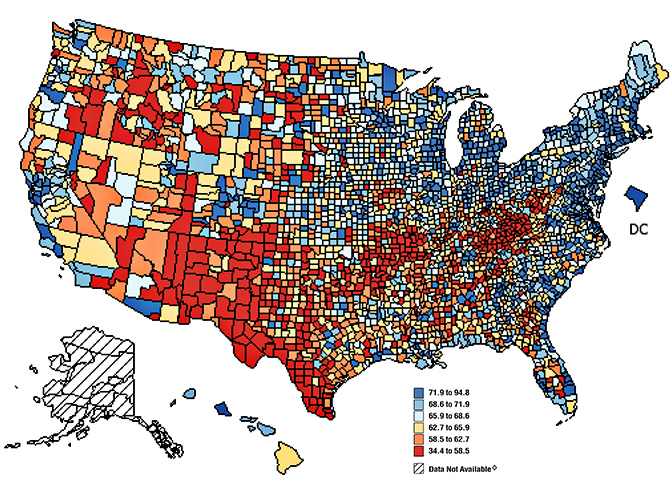
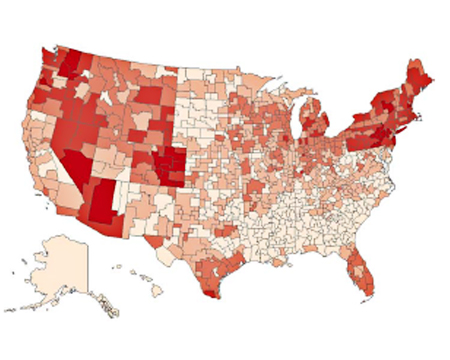
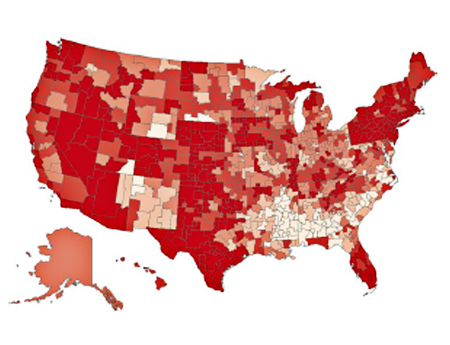
Figure 1. Mammograms in last two years; percent of respondents, by counties.
Trends Discerned in the National Cancer Institute’s Geospatial Databases Carry the Fight Forward
Location matters in cancer, as in many other things. The National Cancer Institute (NCI) recognized this fact more than 40 years ago, and its researchers have been investigating striking geographic differences in many cancers ever since. Most studies have found that these differences were due to lifestyle differences, such as levels of smoking and diet, although research into possible environmental causes are hampered by a lack of exposure data during the relevant period, 20–30 years prior to diagnosis.
Geospatial tools serve NCI in a variety of applications, including:
the identification and display of the geographic patterns of cancer incidence and mortality rates in the U.S. and their change over time,
the creation of complex databases for the study of cancer screening, diagnosis, and survival at the community level,
environmental exposure assessment through satellite imagery,
spatial statistical models to estimate cancer incidence, prevalence, and survival for every U.S. state,
communication of local cancer information to the public and public health professionals through interactive web-based tools,
the identification of health disparities at the local level through the comparison of cancer outcomes across demographic subgroups, and
development of new methods of displaying geospatial data for clear communication to the public and for examination of complex multivariate data by researchers.
Division of Cancer Control and Population Sciences
The Epidemiology and Genomics Research Program (EGRP) and the Surveillance Research Program (SRP) support grant research to use GIS in cancer research and the development of methodologies to accomplish this research. EGRP also funded the development and maintenance of a geographic information system for breast-cancer studies on Long Island (LI GIS). The LI GIS is available to researchers and can be used to study other types of cancer and conditions as well.
Surveillance Research Program
The Statistical Methodology and Applications Branch (SMAB) contributes to GIS research by developing statistical methods for the analysis, display, and web-based communication of geo-referenced cancer data.
The Surveillance Systems Branch (SSB) oversees the Surveillance, Epidemiology, and End Results (SEER) program, an integrated, comprehensive, multiple population-based reporting system of cancer registries covering 26% of the U.S. population. Cancer incidence information is provided at the state, county, and census-tract level. Investigators in SEER’s Rapid Response Surveillance Studies (RRSS) are exploring and applying GIS technology in several areas.
Division of Cancer Epidemiology and Genetics
The Epidemiology and Biostatistics Program (EBP) has a long history of publishing the NCI cancer atlases.
The Occupational and Environmental Epidemiology Branch (OEEB) has an active research program in using satellite imagery to estimate the potential exposure to cancer-causing environmental agents by individuals living in agricultural areas.
As to the finer granularity customarily seen in GIS databases by professionals using them in mapping, natural resource and asset management, utilities, and other sectors, researcher Linda Pickle of Pennsyslvania State University and StatNet Consulting comments:
“The SEER program at NCI does get the census-tract identification from the registries, but you have to get permission to use it. Mortality is only reported to NCHS at the county level. Therefore, all nationwide maps of cancer rates (incidence or mortality) must be at the geographic level available for all states, that is, county. Each state has the option to present its own data at smaller levels.
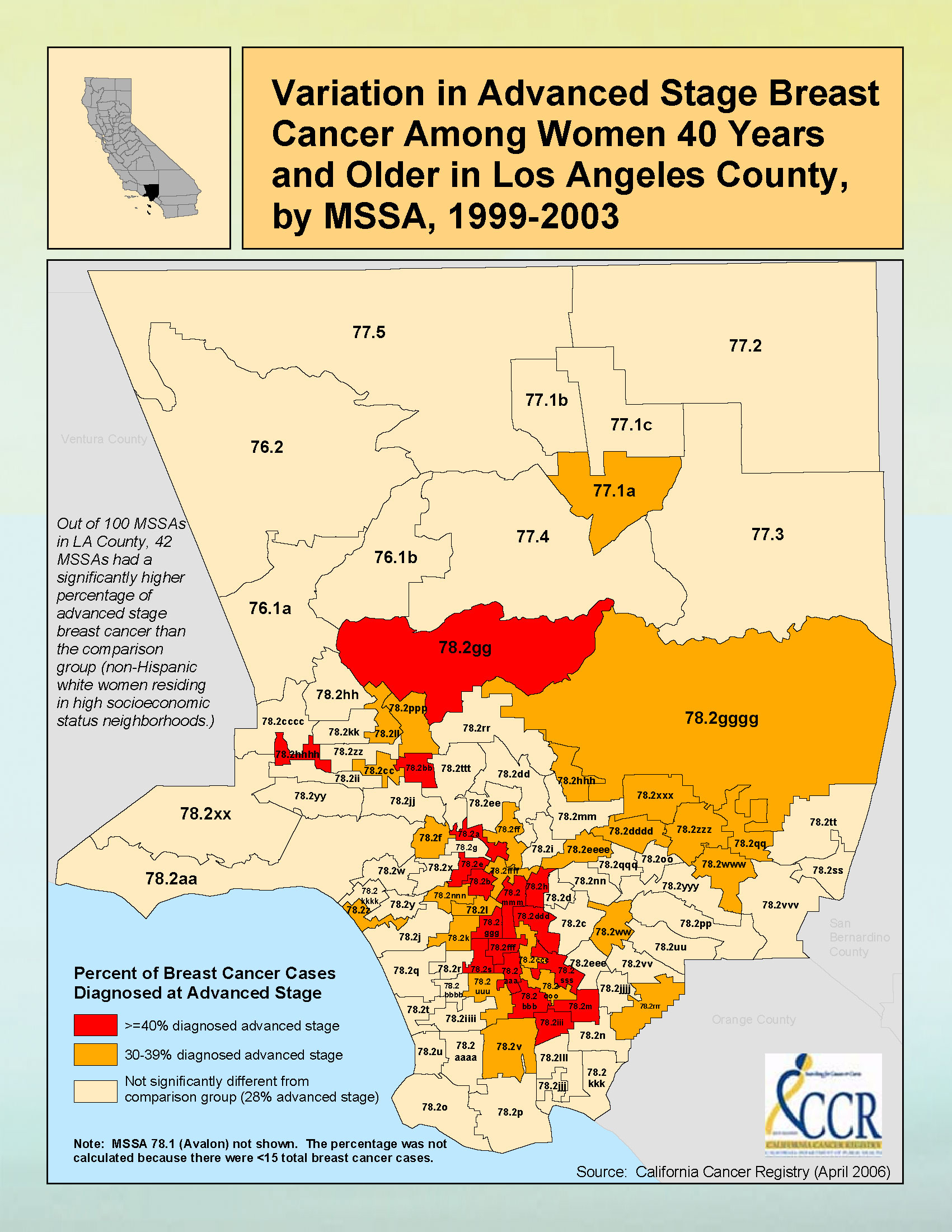
“Figure 2 gives an example of sub-county maps published by California Cancer registries. California is densely populated in many counties, and so the state has defined aggregations of census tracts for their maps. Some of California is in the SEER program; other parts have registries funded by the Centers for Disease Control (CDC).”
Figure 2. Breast cancer data for Los Angeles County.
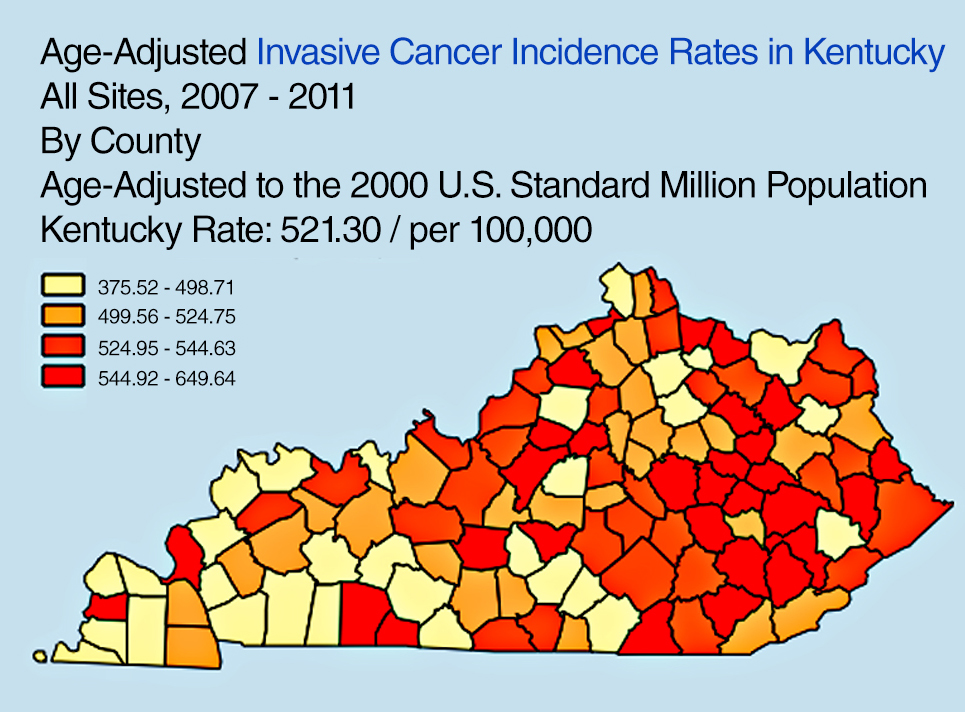
“Another state example: the Kentucky SEER registry has developed a useful online tool to explore Kentucky cancer patterns,” Pickle said. “See Figure 3. This design has been used by CDC for an online U.S. cancer atlas and by other states.”
Figure 3. Cancer incidence rates in Kentucky.
FURTHER READING
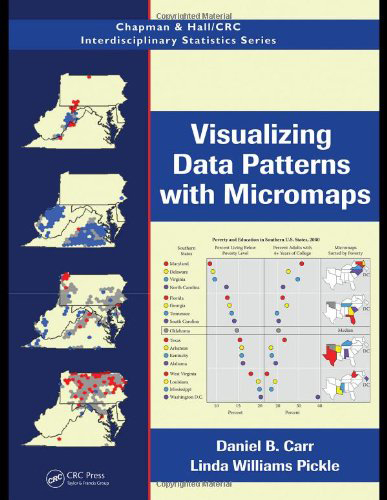
Visualizing Data Patterns with Micromaps By Daniel B. Carr and Lindia Williams Pickle
Cancer surveillance — an assessment of the number and type of cancer cases that occur in an area and in a specified population — provides critically important information needed for determining geographic variations in cancer rates and for planning cancer control intervention programs.
By Li Zhu, Linda W. Pickle, Zhaohui Zou, and James Cucinelli
This article is about projecting from the data that were available from surveillance/data-collection efforts to get estimates of the number of new cancer cases that would occur in the upcoming calendar year. That is, we used data from up to four years previous (because of the time it takes to find cases, process data, and so on) to get a current estimate of the number of cases.
We developed the statistical model to do this in 2006, then validated it, modifying the temporal projection method a few years ago. This method was then adopted by the American Cancer Society to produce the numbers of new cases published in their annual Cancer Facts & Figures reports, the most cited cancer reference in the world.
Since the models did not break out childhood cancers, we repeated the modeling process to do that, resulting in the paper cited here.
The method requires first a spatiotemporal prediction across the extensive years of data, since not all cancer registries have data for every year, and secondly a four-year temporal projection from the most current data point to the current calendar year. Here we use this same process applied only to childhood cancer data.
The generalized linear mixed effects model is applied to observed childhood cancer case counts reported to the North American Association of Central Cancer Registries over 1995– 2006 to predict case counts and incidence rates for every U.S. state and the U.S. total (for patients aged 0 to 19 and for major cancers among childhood). Covariates included in the model are measures of income, education, housing, urban/rural status, health insurance coverage, smoking, obesity, and cancer screening. Temporal trends and spatial distribution patterns are compared among childhood cancers for males and females.
Results. A total of 15,168 new cancer cases was projected for the 0–19 age group, with 10,032 childhood cancer cases younger than age 15, and 5,136 cases in the 15–19 age group, in the United States for 2010. There are more male cancer cases than female cases in all three age groups for most cancer sites. The order for the most common malignancies diagnosed in children differs by age group and sex. The study also identifies differences in the geograhic patterns at a small geographic area level by gender, and temporal trends by gender and subsites of childhood cancer incidence.
Conclusions. The resulting set of predictions provides annual estimates for states that did not provide data at all, and projections ahead in time to the current calendar year for every U.S. state and the United States in total. These projections fill in the data gaps for recent years of diagnosis and state registries to provide complete count and rate estimates for childhood cancers for all states, regions, and the U.S. in total for the current calendar year.
(The full article, “Trends and patterns of childhood cancer incidence in the United States, 1995–2010,” appears in Statistics and Its Interface, Volume 7 (2014), pp. 121-134.)
Figure 1. Rates, Ages 0–19 of All Childhood Cancers at HSA Level, 1995–2006, Female. From lightest to darkest: 10.0–14.5,14.6–15.5,15.6–16.5,16.6–17.5,17.6–22.2 per 100,00.Figure 2. Rates, Ages 0–19 of All Childhood Cancers at HSA Level, 1995–2006, Male;
Urban Sprawl, Obesity, and Cancer Mortality
Cross-Sectional Analysis and Methodological Challenges
By David Berrigan, Zaria Tatalovich, Linda W. Pickle, Reid Ewing, and Rachel Ballard-Barbash
Urban sprawl has the potential to influence cancer mortality via direct and indirect effects on obesity, access to health services, physical activity, transportation choices, and other correlates of sprawl and urbanization.
Methods. This paper presents a cross-sectional analysis of associations between urban sprawl and cancer mortality in urban and suburban counties of the United States.
A major focus of our analyses was to adequately account for spatial heterogeneity in mortality. Therefore, we fit a series of regression models, stratified by gender, successively testing for the presence of spatial heterogeneity. Our resulting models included county-level variables related to race, smoking, obesity, access to health services, insurance status, socioeconomic position, and broad geographic region, as well as a measure of urban sprawl and several interactions.
Results. Total cancer mortality rates were higher in less sprawling areas and contrary to our initial hypothesis; this was also true of obesity-related cancers in six of seven U.S. regions (census divisions) where there were statistically significant associations between the sprawl index and mortality. We also found significant interactions between region and urban sprawl for total and obesity-related cancer mortality in both sexes.
Conclusions. Despite higher levels of obesity in more sprawling counties in the U.S., mortality from obesity-related cancer was not greater in such counties. Identification of disparities in cancer mortality within and between geographic regions is an ongoing public health challenge and an opportunity for further analytical work identifying potential causes of these disparities. Future analyses of urban sprawl and health outcomes should consider exploring regional and international variation in associations between sprawl and health.
“Urban sprawl, obesity, and cancer mortality in the U.S.: cross-sectional analysis and methodological challenges,” in International Journal of Health Geographics, January 2014.)
GPS-Measured Physical Activity in Non-Small-Cell Lung Cancer
By C.L. Granger, L. Denehy, C.F. McDonald, L. Irving, R.A. Clark
Physical activity (PA) is increasingly recognized as an important outcome in non-small-cell lung cancer (NSCLC). We investigated PA using GPS, tracking individuals with NSCLC and similar-aged healthy individuals.
Methods. Fifty individuals with NSCLC and 35 similar-aged healthy individuals without cancer were included. Primary measures were triaxial accelerometery (steps/day) and GPS tracking (outdoor PA behavior). Secondary measures were questionnaires assessing depression, motivation to exercise, and environmental barriers to PA.
Results. Individuals with NSCLC engaged in significantly less PA than similar-aged healthy individuals and had higher levels of depression and lower motivation to exercise. Daily outdoor walking time and distance traveled away from home were not different between groups. Individuals with NSCLC spent less time outdoors in their local neighborhood area. A greater number of steps per day was seen in patients who were less depressed or had better access to nonresidential destinations such as shopping centers.
(The full article, “Physical Activity Measured Using Global Positioning System Tracking in Non-Small Cell Lung Cancer: An Observational Study,” appears in Integrative Cancer Therapies, July 2014.)
Avenza Systems, producers of MAPublisher cartographic software for Adobe Illustrator and the PDF Maps mobile app, has released Geographic Imager 4.5 for Adobe Photoshop. The latest update is compatible with Adobe Photoshop Creative Cloud 2014 for both Windows and Mac. Also, the Geographic Imager panel has been refreshed to provide easier access to tools, image information and features.
“We’ve been working diligently on this release of Geographic Imager to allow users to work with their spatial imagery and data in Adobe Photoshop Creative Cloud 2014,” said Ted Florence, president of Avenza. “Geographic Imager is an excellent add-on to Photoshop and proves to be a competitive geospatial image editing platform for many GIS professionals in the industry. We’re looking forward to continuing to develop new tools for the Creative Cloud platform to improve productivity and to streamline workflows.”
Additional Geographic Imager 4.5 features
Compatible with Adobe Photoshop Creative Cloud 2014
Refreshed Geographic Imager panel for easier access to tools, image information and features
Various bug fixes and user experience enhancements
Geographic Imager is software for Adobe Photoshop that leverages its image editing capabilities and transforms it into a powerful geospatial production tool. Users can work with satellite imagery, aerial photography, orthophotos, and DEMs in GeoTIFF and other major GIS image formats using Adobe Photoshop features such as transparencies, filters, and image adjustments while maintaining georeferencing and support for hundreds of coordinate systems and projections.
Geographic Imager 4.5 is immediately available and free of charge to all Geographic Imager Maintenance Program members and at US$319 for non-maintenance upgrades. New fixed licenses start at US$699. Geographic Imager Basic licenses start at US$199. Academic, floating and volume license pricing are also available. Geographic Imager 4.5 is compatible with Adobe Photoshop CS5, CS5.1, CS6, CC and CC 2014.
MAPPS, the national association of private sector geospatial firms, has been selected as a member of a Federal Aviation Administration (FAA) working group on unmanned aircraft systems (UAS). MAPPS is the only representative of the geospatial, aerial survey, and remote-sensing community on the committee.
“As an association representing the many private sector businesses that are anxious to use unmanned aerial systems for commercial geospatial applications, we are honored to participate on this important committee,” said John Palatiello, MAPPS Executive Director, who will sit on the committee. “The geospatial community has been safely flying aircraft for decades and understands the safety implications of introducing a new technology in the national airspace. Our members see a great opportunity to utilize UAS to provide new geospatial data and applications benefiting the citizens of the United States.”
The Aviation Rulemaking Committee (ARC) Beyond Visual Line of Sight (BVLOS) user working group will hold its first meeting today. FAA has tasked the committee to provide input from users or potential users of UAS on immediate, near, and long-term issues for integrating UAS into the national airspace system.
The committee is co-chaired by Michael Toscano, Association for Unmanned Vehicle Systems International (AUVSI), Melissa Rudinger, Aircraft Owners and Pilots Association (AOPA), and Mark Reed, Air Line Pilots Association (ALPA). According to Jim Williams, Manager of the UAS Integration Office in FAA, the associations represent “a diverse group of potential UAS users in certain key industries, such as agriculture, mapping, photography, energy, public safety, cargo, communications, and others.
Palatiello has been MAPPS Executive Director since 1987. He was an original member of the federal government’s National Geospatial Advisory Committee (NGAC) and currently serves on the Virginia Geographic Information Network (VGIN) Advisory Board. He is president of John M. Palatiello & Associates, Inc., an association management and public affairs consulting firm, where he is a national government affairs consultant to the National Society of Professional Surveyors, Executive Director of the Maryland Society of Surveyors, and Administrator of the Council on Federal Procurement of Architectural & Engineering Services (COFPAES). Palatiello was named one of the ten most influential people in the geospatial community by Directions Magazine.
Bentley Systems, Inc., a company dedicated to providing comprehensive software solutions for sustaining infrastructure, has acquired Blueridge Analytics, provider of SITEOPS – a site design optimization “software at your service.” SITEOPS uses cloud-based computing techniques to empower site development professionals to move beyond engineering to “optioneering,” which enables the exploration of engineering alternatives and their costs. This substantially improves the choices considered for any site development, including commercial, industrial, institutional, campus, and residential projects.
Blueridge Analytics is based in Charlotte, North Carolina.
SITEOPS enables civil engineering professionals, real estate developers, and land planners to:
perform site configuration simulations that fully assess millions of layout, parking, grading, and drainage options for a site within hours instead of spending months evaluating a handful of options,
produce preliminary cost estimates and conceptual designs faster,
optimize site designs through advanced optioneering, and
minimize overall costs while ensuring engineering quality.
Users of SITEOPS include Stantec, Horrocks Engineers, Langan Engineering and Environmental Services, Timmons Group, and WSP.
“During the past few years we’ve been tracking SITEOPS technology and its performance in order to authoritatively validate its breakthrough capabilities,” Bentley Systems CEO Greg Bentley said. “Feedback we’ve received from engineering teams and owners has substantiated SITEOPS’ tremendous potential in enabling site development teams to deliver new value to owners. Through the power of site optioneering, owners can be confident that their engineers have considered the best choices and arrived at the most cost-effective solutions for the constraints of their respective sites. Hence, I’ve become convinced that site engineering should no longer be done any other way.”
“To date, the development of SITEOPS technology has focused on continuous improvement to conceptual designs,” said Mike Detwiler, formerly president and CEO of BLUERIDGE Analytics and now Bentley vice president of SITEOPS product development. “Now, within Bentley’s comprehensive portfolio, SITEOPS’ BIM advancement can contribute throughout project delivery. Accordingly, an initial priority will be to complete the end-to-end workflows that Bentley is uniquely able to offer — from site development through detailed design and construction modeling.”
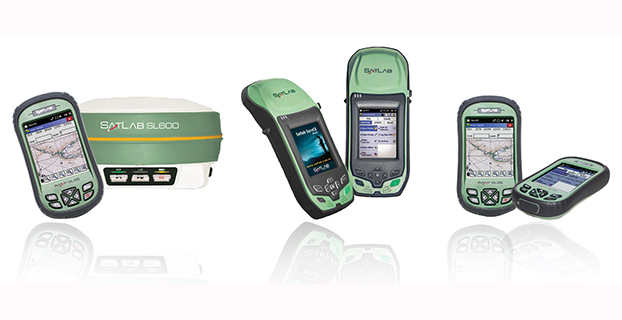
Satlab products include (from left) the SL600 6G GNSS receiver, the SL300 6G GNSS receiver, and the SL55 controller. Photo: Satlab Geosolutions AB
Swedish-based survey and GIS equipment maker Satlab Geosolutions AB has expanded into the U.S. and Americas with the creation of a new sister company Satlab Geosolutions (USA), Inc., based in Scottsdale, Arizona. Phil Gabriel has been named managing director of the USA office.
Setting up a formal base of operations in the U.S. will allow Satlab to better service their clients and expand their customer base in the U.S., Canada, Mexico and Latin America, a company release said. As past president of Hemisphere GNSS, Gabriel brings to the team his many years of experience in the survey, GIS, GNSS, machine control, marine and navigation industries, Satlab said.
The U.S. location will sell, support and service the new product lineup being introduced at InterGeo in Berlin, Germany, on October 7. Satlab is seeking dealers to expand its business throughout the Americas.
“The addition of a U.S. office is an exciting next step for us, after successful expansion into Turkey and the Czech Republic in the last few years,” said Bjorn Agardh, CEO of Satlab Geosolutions AB.
“Our products have been well received and continue to perform extremely well,” added Birol Gucluer, CTO and partner of Satlab.
“I’m excited to join Bjorn and Birol, extending their success by ensuring their high standards in customer service are maintained here in the Americas,” Gabriel said.
Satlab invites Survey and GIS dealers to meet the expanded team at InterGeo October 7-9 in Berlin, where they will be introducing several new models of their popular receivers and handhelds.
More than 50 million people in the United States live in poverty. Explore the Poverty in America maps to learn more about the levels of poverty in your state and city.
Through the use of storytelling, videos, and interactive maps, Esri’s map provides a look at one method of measuring global poverty. This measure, called the Multidimensional Poverty Index (MPI), addresses poverty through an integrative approach.
Icaros Inc., a provider of advanced aerial remote sensing and 3D visualization solutions, will demonstrate the Icaros Measurement Tool (IMT) at the 2014 InterGeo Conference in Germany. Designed for use with oblique aerial imagery, IMT is a simple but powerful photogrammetric visualization application based on ArcGIS technologies, the company said.
To view a demonstration of the IMT, visit Icaros in stand #A4.009 Hall 4.1 at the InterGeo Conference and Trade Fair being held in Berlin on October 7-9.
The IMT is a universal oblique measurement tool. It enables customers working within Esri’s GIS environment to view and measure structures in oblique aerial imagery captured by any commercial oblique sensor system, including those from Pictometry, Vexcel/Microsoft, IGI, Leica, and Midas. IMT works equally well measuring images captured by oblique sensors mounted on unmanned aerial vehicles (UAV).
“Icaros is opening the oblique market to all GIS users by enabling them to purchase imagery from any of the growing number of aerial oblique data providers,” said Richard Baumgartner, vice president of Business Development at Icaros. “For too long, the purchase and use of oblique imagery have been limited by proprietary collection systems and metadata formats.”
Access to additional oblique vendors will reduce data costs in the long run, Icaros said. In addition, IMT lets users unlock the full potential of their imagery by combining 3D analysis capabilities with their GIS data. The tool is specifically designed to make highly accurate vertical and horizontal 3D measurements of structures and surfaces, including calculating distances, areas, slopes, and azimuths in complex 3D features.
Baumgartner explained that oblique imagery is already used extensively in tax assessment and public safety applications, but many other markets are waiting to be served by off-nadir image data. The Icaros vision is to expand the use, visualization and analysis of oblique aerial images into the entire spectrum of GIS markets. Oblique analysis of structures can be beneficial to a host of new applications such as facility management, pipeline corridor infrastructure monitoring, energy audits, economic development, and asset management.
“Asset and facility management are the next big applications for oblique imagery within the emerging 3D GIS market,” said Baumgartner.
As GIS users continue the move to 3D, oblique imagery will be critical for constructing accurate image-based realistic 3D models. IMT enables users to manipulate and view oblique imagery while leveraging other geospatial data layers within their GIS environment. This capability allows users to navigate multi-image scenes in three dimensions while zooming and panning.
The IMT software also provides an optional Icaros Digitizer Tool (IDT) for generating 3D models. “IDT provides additional tools to extract physical building structures and digitize them into open format models, such as Collada, Obj, and Ply, textured from the source imagery,” Baumgartner said. “Automated 3D model generation from oblique imagery is at the intersection between imagery and GIS.”
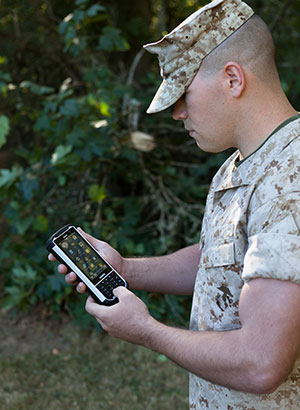
Handheld Group, a manufacturer of rugged mobile computers, has launched the Nautiz X8 rugged PDA. The Nautiz X8 is a handheld computer with superior processing power, screen performance and battery life, the company said. It is built for tough field conditions primarily in GIS, land surveying, public safety, forestry and the military.
The Nautiz X8 is built to enable efficient and reliable data collection in tough environments. It has an IP67 ingress protection rating, which means it offers complete protection against dust and sand and can withstand immersion in water. It also meets stringent MIL-STD-810G military test standards for overall durability and resistance to humidity, shock, vibration, drops, salt and extreme temperatures.
The Nautiz X8 features a high-performance Texas Instruments 4470 dual-core 1.5 GHz processor. It has 1 GB of RAM, 4 GB of iNAND Flash and a 5200 mAh Li-ion battery that lasts up to 12 hours on a single charge. It comes with a choice of operating systems — Android 4.2.2 or Windows Embedded Handheld 6.5.3.
The device has a large 4.7-inch ultra-bright capacitive multi-touch screen with chemically strengthened Asahi Dragontrail glass, offering users brightness and protection in any field condition. The unit has an ergonomic design and weighs 490 grams (17.3 ounces).
The Nautiz X8 has a dedicated u-blox GPS receiver, Bluetooth 2.0 and 802.11b/g/n WLAN functionality, as well as connectivity through GSM/UMTS or CDMA phone data transmission. A built-in 8-megapixel camera with autofocus and an LED flash lets users capture visual data quickly and easily. This handheld also features an open architecture and an extension cap system that allows for additional hardware connections such as sensors, radios and other add-ons.
Orders for the new Nautiz X8 can be placed immediately. First deliveries will begin in November.
The Nautiz X8 rugged handheld will be shown first at WEFTEC in New Orleans, followed by InterGeo in Berlin.
Handheld Group, a manufacturer of rugged mobile computers, has launched the Nautiz X8 rugged PDA. The Nautiz X8 is a handheld computer with superior processing power, screen performance and battery life, the company said. It is built for tough field conditions primarily in GIS, land surveying, public safety, forestry and the military.
Photo: Handheld Group
The Nautiz X8 is built to enable efficient and reliable data collection in tough environments. It has an IP67 ingress protection rating, which means it offers complete protection against dust and sand and can withstand immersion in water. It also meets stringent MIL-STD-810G military test standards for overall durability and resistance to humidity, shock, vibration, drops, salt and extreme temperatures.
The Nautiz X8 features a high-performance Texas Instruments 4470 dual-core 1.5 GHz processor. It has 1 GB of RAM, 4 GB of iNAND Flash and a 5200 mAh Li-ion battery that lasts up to 12 hours on a single charge. It comes with a choice of operating systems — Android 4.2.2 or Windows Embedded Handheld 6.5.3.
The device has a large 4.7-inch ultra-bright capacitive multi-touch screen with chemically strengthened Asahi Dragontrail glass, offering users brightness and protection in any field condition. The unit has an ergonomic design and weighs 490 grams (17.3 ounces).
The Nautiz X8 has a dedicated u-blox GPS receiver, Bluetooth 2.0 and 802.11b/g/n WLAN functionality, as well as connectivity through GSM/UMTS or CDMA phone data transmission. A built-in 8-megapixel camera with autofocus and an LED flash lets users capture visual data quickly and easily. This handheld also features an open architecture and an extension cap system that allows for additional hardware connections such as sensors, radios and other add-ons.
Orders for the new Nautiz X8 can be placed immediately. First deliveries will begin in November.
The Nautiz X8 rugged handheld will be shown first at WEFTEC in New Orleans, followed by InterGeo in Berlin.
A bill to establish a “Digital Coast” program whereby the National Oceanic and Atmospheric Administration (NOAA) develops a coordinated and comprehensive national mapping effort for coastal, state and territorial waters of the United States, has been introduced in the U.S. Senate, earning praise from MAPPS (the national association of private sector geospatial firms).
More than half of all Americans, 153 million people, live on or near a coast, and an additional 12 million are expected to move to the coasts over the next decade. Yet, despite this population density and economic development, much of the 95,000 miles of U.S. shoreline does not have current, accurate maps and geospatial information; moreover, much of what does exist pre-dates the 1970s.
“The Digital Coast Act is needed to realize the concept of a Digital Coast as recommended by the National Academy of Sciences (NAS),” said MAPPS Executive Director John Palatiello. “The Digital Coast Act provides an opportunity to help America’s ocean, coastal and shoreline areas by addressing issues raised by the U.S. Oceans Commission, the Pew Commission, as well as several NAS reports, all of which have highlighted the need for surveying, charting, remote sensing, and geospatial data of America’s coasts, harbors, ports, shorelines and ocean resources critical to the nation’s most basic economic and recreational activities, to smartly conserve a fragile environment.”
“Greater emphasis has been paid to monitoring sea-level rise, coastal conservation and emergency preparedness and response in the wake of natural and manmade disasters,” MAPPS President Jeff Lower, said. “This Digital Coast Act will coordinate the pooling of resources from multiple agencies (federal, state, and local) and other stakeholders to map the various needs once, and then utilize and apply the high-quality data and products numerous times, thus reducing taxpayer waste while maximizing the return on investment for all stakeholders.” The Digital Coast is a geospatially enabled program to improve coordination and support work with stakeholders to identify geospatial priorities; improve coordination of coastal mapping and management activities; use standards and standardized methods for data acquisition, processing, and distribution to ensure broadest utility of data; promote best practices when applying geospatial data for coastal decision making; and contract for the collection and creation of quality non-navigation feature data sets to include: shoreline change, satellite and aerial imagery, land use and land cover maps, benthic habitat mapping, terrestrial topography, shallow water bathymetry, and submerged aquatic vegetation.
U.S. Senator Tammy Baldwin of Wisconsin introduced the Digital Coast Act of 2014 on September 18. The bill compliments a bipartisan effort in the U.S. House of Representatives by C.A. “Dutch” Ruppersberger (D-MD) and Don Young (R-AK), cosponsors of Digital Coast Act, H.R 1382.
The Esri User Conference has issued a call for papers for its 2015 event, scheduled for July 20-24 at the San Diego Convention Center. “Every year, ArcGIS users tell stories of inspired solutions, insightful best practices, time-saving apps, and game-changing maps,” conference organizers said in a statement. “The most innovative and influential GIS work comes into focus at the Esri User Conference. You could tell your GIS story at the 2015 Esri UC. This is a chance to show your peers what you can do.”
The 2015 call for papers covers 90+ session topics highlighting GIS solutions today and in the future. The user sessions combined with the UC plenary and lightning talk presentations will bring more than 900 speakers together covering more than 260 sessions dedicated to the success and advancement of geospatial technology.
Paper sessions help attract peer recognition and provide valuable feedback, organizers said. “As an Esri UC presenter, you will gain recognition and exposure to over 16,000 Esri users who represent over 26 unique and diverse fields, coming together with the common goal of answering today’s challenges with tomorrow’s GIS to create a better world.”