Tag: GNSS-denied

  • As GNSS disruptions rise, infiniDome moves toward mission continuity

    As GNSS disruptions rise, infiniDome moves toward mission continuity

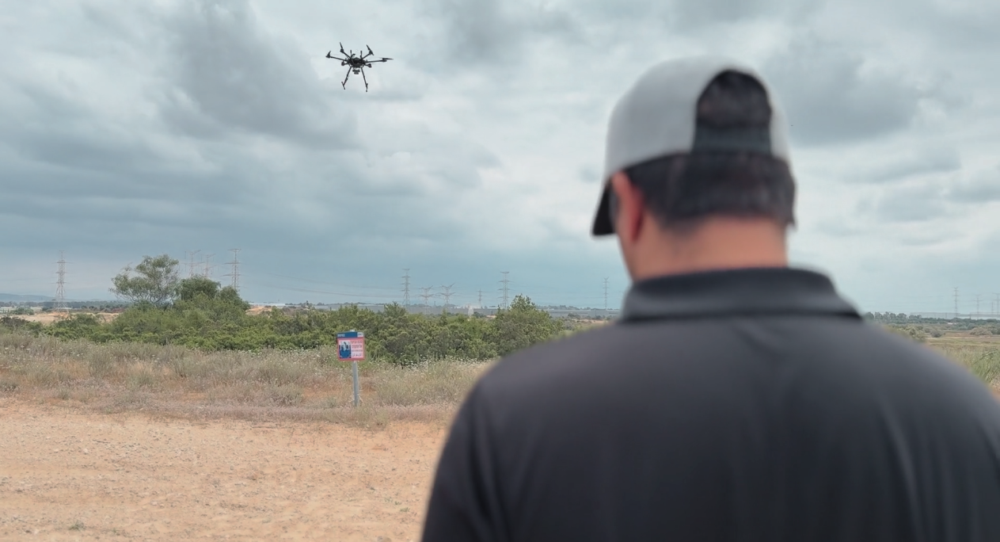
    The rapid growth of autonomous military systems is creating a new challenge for the defense industry, working to keep equipment operating when navigation becomes unreliable.

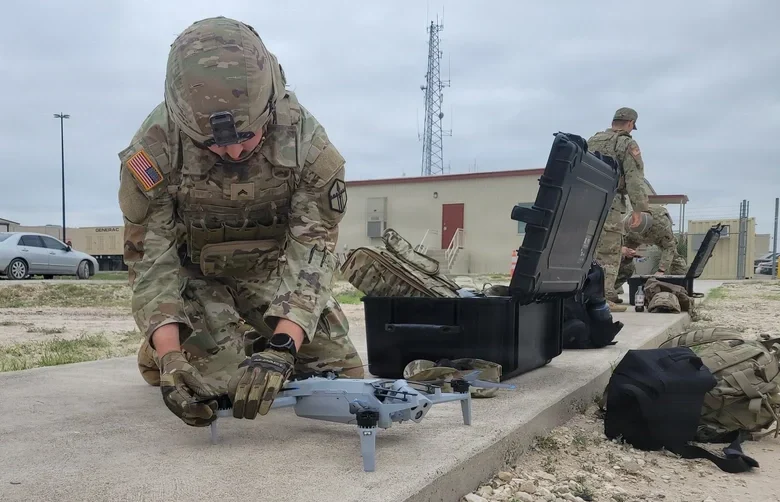
    Across recent conflict zones and contested regions, GNSS disruption is affecting UAVs, loitering munitions, ISR platforms, maritime systems and autonomous ground vehicles.

    At the upcoming International Drone Show, infiniDome will present what it describes as an evolution of its vision.

    “InfiniDome is expanding its vision beyond GNSS protection, toward a future of mission continuity and navigation awareness in contested environments,” the company stated.

    The statement reflects a broader trend across the defense autonomy sector. While anti-jamming technologies were once treated primarily as protective add-ons, many military programs are now integrating navigation resiliency into wider autonomy architectures. The result is a growing shift in how autonomous systems are evaluated.

    Rather than focusing solely on navigation accuracy or platform performance, defense organizations are increasingly asking whether autonomous systems can maintain operational continuity under degraded or denied conditions. Industry observers note that this transition is particularly evident in the loitering munition and tactical UAV sectors, where survivability in contested environments is becoming a baseline operational requirement.

    At the same time, low-SWaP anti-jamming capabilities are becoming more common across the market, increasing pressure on companies to differentiate beyond hardware alone.
    That pressure appears to be accelerating a broader industry movement toward what some describe as “navigation awareness,” the ability not only to withstand interference, but also to understand and react to the electromagnetic environment in real time.

    International Drone Show demonstration

    The International Drone Show takes place June 3-4 in Odense, Denmark.

    InfiniDome is expected to demonstrate this direction during the exhibition through IroNav, developed jointly with Wonder Robotics. The demonstration will include autonomous operation streamed live from a jammed environment in Israel, showcasing navigation resilience capabilities under active interference conditions.

    The live demonstration comes as European defense programs continue increasing investments in autonomy, tactical drones, and resilient battlefield systems amid growing concerns surrounding electronic warfare and GNSS vulnerability.

  • ArkEdge Space study examines system for non-GNSS LEO PNT

    ArkEdge Space study examines system for non-GNSS LEO PNT

    ArkEdge Space Inc. has completed a study commissioned by the Japan Aerospace Exploration Agency (JAXA) on “Elemental Technologies and Systems for a Dedicated, GNSS-Independent LEO-PNT Satellite System.”

    Positioning, navigation and timing derived from GNSS is increasingly subject to interruption and interference, both through environmental and security challenges. Finding methods to protect PNT information against such interference is of paramount importance for governments and commercial actors alike.

    The ArkEdge/JAXA project addressed such challenges by examining and categorizing the necessary elemental technologies — signal design, receiver technology, ground infrastructure, satellite sensors, and the overall system architecture — required to realize a LEO-PNT system capable of providing PNT without reliance on traditional GNSS.

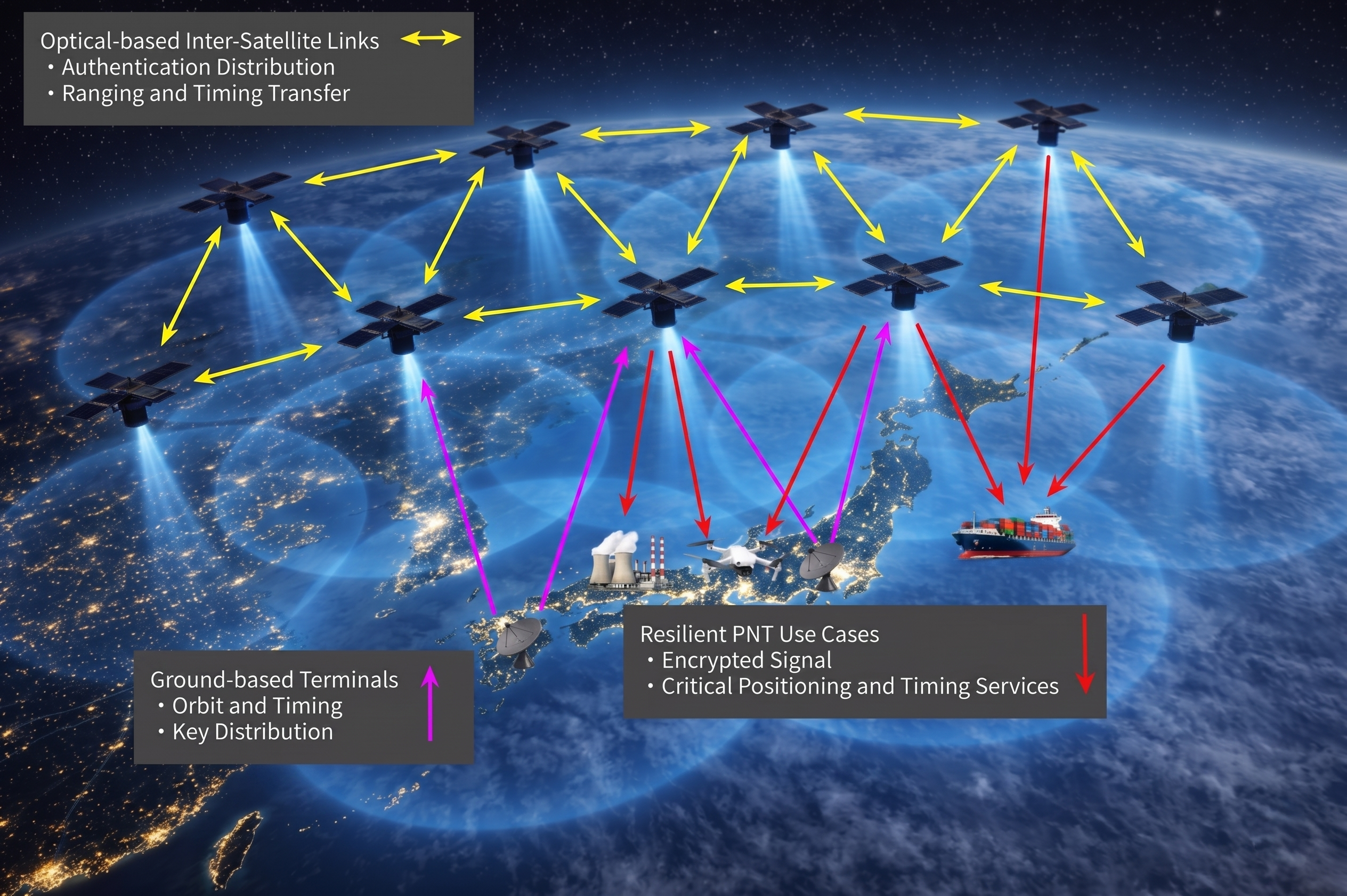
    The study’s focus included achieving satellite orbit determination and time synchronization without GNSS, one of the key challenges facing alternative PNT providers. It explored a new architecture for onboard time determination that avoids the need for large atomic clocks. Instead of onboard clocks, the system transmits precise timing information from combinations of ground-based reference clocks, pseudolites and inter-satellite optical links to disseminate information and enable on-orbit ODTS.

    Concept art of the LEO-PNT satellite constellation. (Credit: ArkEdge Space)
    Concept art of the LEO-PNT satellite constellation. (Credit: ArkEdge Space)

    The study considered diverse frequencies to strengthen anti-jamming measures. It also looked at novel signal design, receivers, encryption and signal authentication methods, and their suitability for LEO-PNT satellites. Results of the study will contribute to the next stage of development for a GNSS-independent LEO-PNT concept.

    “This study is critical to advancing our understanding of Japan’s future relationship with PNT,” said ArkEdge Space Chief Strategy Officer Tomoaki Yasuda. “Across the world, users are facing denial of GNSS services, and that can have critical consequences for sectors including the economy, transport and emergency services, among others. We look forward to progressing the GNSS-independent LEO-PNT concept with the support of our partners.”

    “Due to the prevalence of GNSS interference, alternative PNT systems are becoming increasingly important to protect users and assets such as critical national infrastructure,” said Masaya Murata, JAXA. “Following the successful conclusion of this GNSS-independent LEO-PNT study with ArkEdge Space, our investigation into a robust and resilient LEO-PNT system continues. We are also emphasizing international cooperation with other LEO-PNT providers to maximize users’ PNT experience and continue to engage in collaborative discussions.”

  • BAE Systems GXP, Vantor fight EW with high-accuracy targeting for drones

    BAE Systems GXP, Vantor fight EW with high-accuracy targeting for drones

    BAE Systems Geospatial eXploitation Products (GXP) and Vantor will be providing advanced intelligence and targeting capabilities for contested electronic warfare environments.

    The delivery integrates part of Vantor’s Raptor, a vision-based software suite that enables autonomous systems to navigate, orient and extract accurate ground coordinates without relying on GNSS, with the GXP software ecosystem, ensuring intelligence continuity when sensors are degraded.

    In modern conflict zones, the proliferation of inexpensive unmanned aerial systems (UAS) with equally low-quality sensors, in addition to widespread GPS spoofing and jamming, have rendered traditional drone video collection unreliable. Significant metadata drift in tactical video feeds leads to “targeting paralysis”: high-quality imagery is available, but the underlying geographic coordinates are too inaccurate for precision activities.

    To solve this, Raptor Sync georegisters the full-motion video feed from the drone’s on-board camera with Vantor’s 3D terrain data in real time, enabling downstream GXP intelligence fusion, multi-domain interoperability across different sensors, and accurate ground coordinate extraction at a demonstrated absolute accuracy of <3 m. The system enables previously impossible intelligence and targeting workflows.

    “In contested environments, the sensor’s imagery and video collections are only half the battle; the accuracy of the data it produces is what determines mission success,” said Kurt de Venecia, senior director of Product Development at BAE Systems GXP. “By including Raptor directly into our GXP intelligence workflows, we are providing analysts with the ability to maintain absolute targeting confidence, even when the platform’s systems or inertial sensors lack high absolute accuracy.”

    Injecting corrected key-length-value (KLV) metadata from Raptor directly into the drone’s video stream at the edge enhances accuracy prior to exploitation in GXP software. This overrides inaccurate telemetry, enabling analysts using GXP solutions to extract weapon-quality coordinates and execute intelligence and targeting missions in real time.

    “Analysts cannot afford to lose confidence in where a target actually is,” said Paul Millhouse, senior director ofRaptor Products at Vantor. “By using Raptor to correct video before it enters the GXP Ecosystem, we’re enhancing the performance of existing and new drone fleets. The result is a more resilient workflow for extracting accurate ground coordinates and maintaining operational tempo.”

    These capabilities will be highlighted at GXP360° Professional Exchange & Workshop in San Diego, California (May 18-20).

  • Elistair’s Khronos Tethered DroneBox takes part in France’s largest joint military exercise

    Elistair’s Khronos Tethered DroneBox takes part in France’s largest joint military exercise

    Elistair, manufacturer of tethered drones for security applications, participated in Orion 2026, France’s most ambitious joint military exercise in decades. In the exercise, Elistair contributed its Khronos automated tethered DroneBox, used for ISR and tactical communications missions.

    Running from February to April, ORION 2026 mobilized up to 12,500 military personnel across the country in a high-intensity, multi-domain scenario involving land, sea, air, space, cyber and electromagnetic domains. More than 1,200 drones of all types were deployed throughout the exercise.

    Elistair participated in Phase O4 (April 7–30) following its fisrt contribution during Phase O2 in February, which demonstrated France’s ability to fully integrate into a NATO command structure for collective defense scenario. During the week of April 27, forces conducted offensive exploitation operations, river crossings, retaking of key positions, and live-fire exercises.

    The Khronos system

    Forces need real-time situational awareness in contested and GNSS-denied environments. The Khronos system provides continuous aerial surveillance from fixed or mobile platforms. It does not depend on GNSS, radio frequency infrastructure, or battery-limited free-flying aircraft.

    Khronos deploys from a transportable DroneBox in under two minutes. The system can deliver continuous day and night imagery for up to 24 hours, making it a “pocket watchtower” for tactical units.

    The tethered drone operates in GPS- and RF-denied conditions through a secured tether and advanced positioning system. Elistair targets armed forces, law enforcement, civil security agencies, and private security operators in more than 70 countries. The company runs operations from France and North Carolina.

  • NorthStrive acquires patented GPS-denied autonomous drone navigation tech option

    NorthStrive acquires patented GPS-denied autonomous drone navigation tech option

    Patented software visual-inertial cooperative navigation technology has potential to target defense, counter-drone (C-UAS), electronic warfare, and autonomous unmanned aircraft systems markets

    NorthStrive Defense Tech LLC has secured a license option in connection with a proprietary U.S. patented autonomous navigation technology through an exclusive option agreement with a corporation.

    The technology is designed to enable autonomous positioning and navigation for unmanned aircraft systems and drones operating in GPS-jammed, GPS-spoofed and GPS-denied environments, addressing a core capability gap identified by the U.S. Department of Defense (DoD) and allied defense programs worldwide.

    NorthStrive Defense Tech LLC is a wholly-owned subsidiary of PMGC Holdings Inc.

    The option agreement provides NorthStrive Defense Tech with an exclusive option, within the aerospace and defense technologies field, to obtain an exclusive license as to certain patent rights for U.S. Patent No. 12,277,716 B2, covering a cooperative navigation system for unmanned aircraft systems, also known as drones, operating in GPS-denied and GPS-degraded environments.

    The option is also for a non-exclusive license in the field as to certain know-how connected to these patent rights, as further set in the option agreement. On NorthStrive Defense Tech’s exercise of this option, the parties will enter into negotiations for a definitive license agreement.

    The technology has the potential to enable drones to navigate accurately without GPS by using onboard cameras and inertial sensors to estimate position relative to the local environment. The approach applies visual-inertial odometry (VIO) and sensor-fusion techniques, including an Extended Kalman Filter (EKF) for real-time state estimation and cooperative multi-vehicle data sharing, which together represent foundational building blocks of next-generation autonomous systems.

    When multiple drones operate, they share positional data in real time to collectively improve each vehicle’s accuracy, with performance formally evaluated under real-world GPS-denied conditions.

    GPS-denied navigation has emerged as one of the most urgent challenges in modern drone operations. Conflicts in recent years have demonstrated that GPS signals cannot be relied upon in contested environments, where jamming and spoofing are routinely deployed to disable unmanned systems.

    Vulnerabilities in GNSS signals have made anti-jamming and anti-spoofing capabilities a top priority within U.S. defense modernization programs, the Pentagon, the DoD and allied NATO forces. That operational reality has driven substantial investment across the defense sector, with the GPS-denied drone navigation market projected to grow at a CAGR of 31.7% through 2030, according to Technavio.

    Key potential capabilities include:

    • Vision and inertial-based navigation requiring no GPS signal (visual-inertial odometry / VIO with Extended Kalman Filter (EKF)-based state estimation)
    • Cooperative swarm localization through inter-vehicle range sharing, a foundational capability for drone swarm and counter-drone (C-UAS) operations
    • Scalable architecture supporting operations from individual drones to full swarms, with an architecture positioned for integration with AI-enabled autonomous systems
    • Technology formally evaluated for accuracy and performance under real-world GPS-denied conditions.

    The system’s modular design keeps flight-critical estimation onboard each drone while requiring minimal data exchange between vehicles, making it practical for contested environments where communications bandwidth is limited or actively degraded.

  • Belgium company Agilica offers UWB-based local positioning for UAVs

    Belgium company Agilica offers UWB-based local positioning for UAVs

    Belgium company Agilica is offering a GNSS-independent onboard positioning system using ultra-wideband (UWB) technology. The system enables precise, autonomous drone navigation and landing, even in dynamic, GNSS-denied environments or on moving targets.

    The company says the system achieves centimeter accuracy in real time, enhancing safety and precision. It supports multiple drones and mobile assets in dynamic conditions.

    Developed in 2018 as a research and development initiative at the Royal Military Academy in Brussels, Agilica has evolved into a company focused on developing high-accuracy positioning and navigation solutions for drone and robotic applications.

  • Milanion products to feature NovAtel inside

    Milanion products to feature NovAtel inside

    At World Defense Show 2026 in Riyadh, Saudi Arabia, Milanion Group signed memorandum of understanding (MOU) with NovAtel to integrate assured positioning, navigation and timing into its unmanned land, maritime and air platforms, reports Global Defense News.

    A second MOU was signed with Elistair to introduce tethered unmanned aerial systems into Milanion’s ground and maritime architecture.

    The agreements focus on maintaining operational capability in environments affected by electronic warfare, GNSS denial, jamming, spoofing and cyber interference, with technical integration work scheduled to begin after the exhibition and demonstrations planned for later in 2026.

    The agreement with NovAtel covers land, maritime and air domains and focuses on operations in contested environments where electronic warfare, GNSS denial and cyber interference are present.

    Milanion linked the partnerships to requirements raised by defense delegations at WDS 2026 for unmanned systems that remain operational without dependence on vulnerable networks and that support sovereign-ready integration.

    Technical integration discussions with both companies are scheduled to begin immediately after the exhibition. Joint development pathways and capability demonstrations are planned later in 2026 as part of a broader connected autonomy architecture.

    Milanion Group was founded in 2020 and is headquartered in the UK, with manufacturing in Abu Dhabi. The company develops autonomous and optionally manned systems for military and security missions across land, sea, and air. 

    The MOU with NovAtel will embed NovAtel assured-PNT and anti-jam technologies into Milanion assets to maintain navigation accuracy and mission integrity during GNSS denial or interference. The integration supports secure routing, guidance stability, and targeting precision even when GPS signals are degraded or disrupted. This capability is relevant for unmanned ground vehicles, maritime conversions, and airborne systems operating in electronically contested theatres. Milanion links the functionality to survivability and operational continuity during electronic warfare and cyber-disruption scenarios.

    By combining assured navigation with persistent ISR and resilient communications, the company aims to maintain autonomous mission performance across multi-domain deployments. The approach integrates sensing, navigation, and communications into a unified architecture to address contested-environment requirements identified at WDS 2026.

  • Inertial Labs launches IRINS LEO-aided inertial navigation system

    Inertial Labs launches IRINS LEO-aided inertial navigation system

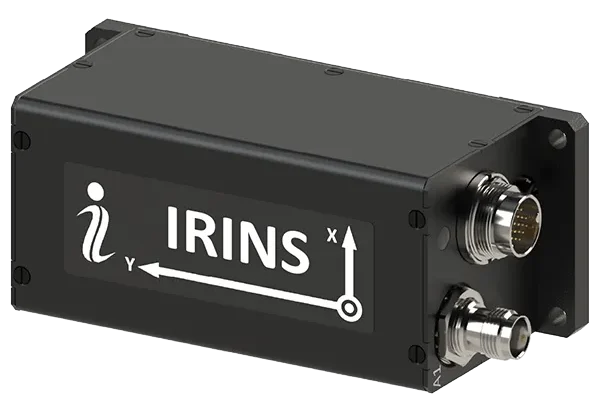
    Inertial Labs, a Viavi Solutions Inc. company, has announced IRINS, a low Earth orbit (LEO)-aided inertial navigation system (INS) designed to allow full operation across land, air and sea in GNSS-denied, -degraded and -disrupted space operating environment .

    Combining the capabilities of an INS, an altitude and heading reference system (AHRS) and a LEO PNT receiver, this platform marks a major milestone in Viavi’s portfolio for assured positioning, navigation and timing by bringing together the INS capabilities of inertial labs and the timing expertise of Jackson Labs.

    The IRINS embedded system has been developed to counter the exponentially rising number of spoofing and jamming attacks that have affected military and critical infrastructure. Now, resilient LEO-based PNT and inertial navigation are available within a fully integrated system from a single vendor.

    The system combines an INS, an AHRS and the GNSS-independent STL-2600 LEO Iridium receiver module. These capabilities enable the system to calculate altitude, position, velocity and time data, as well as minimize bias from causing drift. To help detect and eliminate attack signals, the device additionally integrates a GNSS receiver with a controlled reception pattern antenna (CRPA) port.

    “The IRINS is the first fruit borne of VIAVI’s visionary strategy to mitigate vulnerabilities in positioning, navigation and timing, bringing together resilient satellite-based timing with tactical-grade IMUs to deliver the most precise PNT for GNSS-denied environments,” said Jamie Marraccini, vice president, Inertial Labs Products, Viavi. “By tightly coupling inertial sensing, LEO-based timing and navigation and anti-jam GNSS technologies into a single platform, the IRINS provides unmatched continuity, accuracy and trust for operations in contested and denied environments.”

    “Assured access to PNT is critical for operations in contested environments,” said Maynard Porter, Director, Government PNT Business, Iridium. “Integrating Iridium PNT alongside VIAVI’s INS and AHRS provides users with an exceptionally resilient source of time and location data to maintain operational effectiveness when GNSS signals are disrupted.”

    The IRINS is certified for IP67 and MIL-STD-810G environmental requirements. It is based on the company’s fully calibrated tactical-grade MEMS 3-axis accelerometer, gyroscope and clock. These are combined with embedded barometers, magnetometers and an optional onboard air-data computer as part of its AHRS.

    Satellite communication is provided through the company’s STL-2600 receiver, which links to the Iridium LEO constellation. All capabilities are housed within a compact 126.5 × 49.3 × 53.3 mm enclosure. 

  • AeroVironment expands Puma visual navigation system kit to Puma LE

    AeroVironment expands Puma visual navigation system kit to Puma LE

    AeroVironment has integrated its visual navigation system (VNS) kit with the Puma Long Endurance (LE) small unmanned aircraft system, delivering GNSS-denied navigation capability to ensure mission success.

    First introduced in 2022 for the Puma 2 AE and Puma 3 AE, the VNS kit uses advanced computer vision and onboard processing to deliver precise, GNSS-independent navigation. Its integration into Puma LE now extends this capability across the full Puma family for greater flexibility and resilience in degraded or denied environments.

    “Assured navigation is critical to the mission, especially as GNSS becomes an increasingly vulnerable resource,” said Jason Hendrix, Vice President of Small Uncrewed Systems for AV. “By fusing visual and inertial data in real time, the system enables uninterrupted flight paths, accurate geolocation, and mission continuity in unreliable GNSS regions.”

    Using a suite of downward-facing sensors, cameras and onboard computing, the VNS kit performs visual inertial odometry (VIO) to capture and analyze terrain imagery, estimating true aircraft position in real time. The system fuses continuous visual data from the cameras with motion inputs from onboard inertial sensors to calculate precise position, velocity, and orientation — allowing the aircraft to know where it is and where it is going when GNSS is not available. It automatically transitions between GNSS-enabled and GNSS-denied modes with zero pilot input, ensuring uninterrupted mission continuity in contested environments.

    In September, AV announced several upgrades to the Puma LE platform that include the integration of a Laser Target Designator and the release of the Universal Gimbal Kit, enhancements that evolve Puma LE beyond ISR into a cutting-edge precision-engagement system.

    “Every upgrade to Puma LE, including the addition of the VNS kit and our new laser designator and gimbal capabilities, is driven by one goal: giving the warfighter greater confidence, flexibility, and capability,” said Trace Stevenson, president of Autonomous Systems at AV. “These recent releases are a great example of AV constantly evolving our platforms to ensure they are at the forefront of technology and providing best in class capability to the warfighter.”

    The VNS Kit is designed as an add-on option for new Puma 3 AE or Puma LE system orders and as a retrofit kit allowing existing Puma 2 AE, Puma 3 AE, and Puma LE customers to upgrade fielded systems. The compact two-piece add-on installs into existing Pumas with minimal impact on performance and fits within the standard Puma cases for efficient mission packout. The standard Puma LE system weighs 23.8 pounds and offers 6.5 hours of endurance, a 60-kilometer range, is inaudible at 500 feet and features tool-free payload swaps for seamless transitions between intelligence, surveillance and reconnaissance (ISR), targeting, and other mission sets.

  • Pathfinder provides signal-resilient autonomy in navigation

    Pathfinder provides signal-resilient autonomy in navigation

    Aero Drop Systems (ADS) has developed Pathfinder, a proprietary autonomous navigation framework designed to reduce dependence on GNSS-based positioning. Pathfinder is signal-resilient, capable of maintaining precision even in complete GNSS dead zones and unaffected by deceptive interference.

    At the core of Pathfinder lies an array of sensors and advanced self-regulating logic driven by machine learning. Unlike traditional systems that treat GPS as a singular source of truth, Pathfinder fuses a constant stream of information from multiple internal and external domains and dynamically rebalances itself in real time as it evaluates, cross-verifies, and refines its positional understanding based on an algorithm that classifies the trustworthiness of each data stream.

    The result is a self-correcting navigation intelligence that can anticipate changing conditions, isolate false data, and continue to perform when other systems cannot. This allows Pathfinder to sustain highly accurate navigation during satellite connection or radio frequency outages or when being targeted with jamming or spoofing.

    Designed as a modular framework, Pathfinder can be integrated across a range of fully autonomous platforms operating on land, at sea, or in the air. Its flexible architecture makes it suitable for both commercial logistics and defense applications, where navigation integrity is critical to mission success.

    Currently in the testing phase, Pathfinder is part of ADS’s broader initiative to develop resilient, autonomous logistics technologies capable of performing in contested and complex environments. ADS has confirmed that Pathfinder will serve as the core navigation technology for the platform Aerocrate. Aerocrate is a disposable, autonomous aerial delivery system that enables precise, reliable resupply without requiring recovery operations, staging areas, or active communication with the platform.

  • Silicon Sensing, Psionic partner to advance GNSS-denied navigation

    Silicon Sensing, Psionic partner to advance GNSS-denied navigation

    Silicon Sensing gyro to support GNSS-denied navigation from Psionic SurePath system

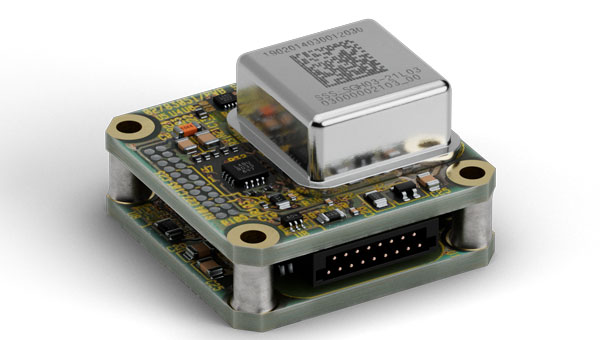
    Silicon Sensing Systems has been contracted by Psionic Inc. to supply the CRH03 tactical-grade gyroscope to equip its SurePath navigation system.

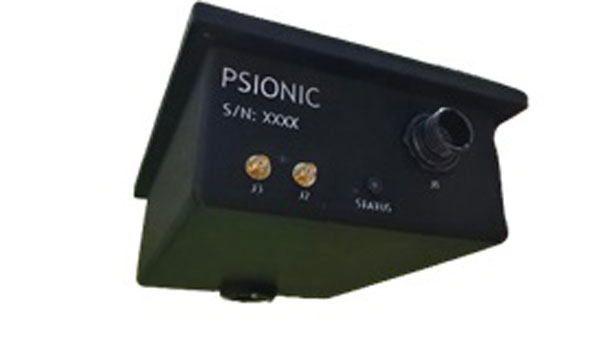
    SurePath is a completely self-contained navigation solution developed to solve the growing issue, across many platform types, of effective navigation over extended periods in GNSS-denied or contested environments. SurePath’s navigational capability is based on proprietary doppler laser technology, developed initially by NASA, to support autonomous lunar navigation and landing. Able to capture real-time 3D velocity to precisely determine location, SurePath’s unique, mission-critical operational capabilities render it RF invisible and undetectable – it cannot be jammed, spoofed, or defeated.

    Photo:
    The Surepath navigation solution

    The Silicon Sensing CRH03 gyro will serve as an ultra-precise heading sensor, providing constant azimuth data to the SurePath solution filter and bringing critical improvements to heading calculations over time. 

    “Precise azimuth control and sensor data are crucial for accurate navigation and overall system functionality in GNSS-denied and contested situations,” said Sean McCormack, senior vice president at Psionic. “SurePath will integrate the data from the CRH03 into our proprietary filtering techniques to deliver enhanced capability to our end user.”

    The CRH03 is a tactical-grade, stand-alone, micro electro-mechanical system (MEMS) gyroscope that delivers exceptional bias instability, angle random walk and low noise performance. Available in five rate ranges:  ±10°/s, ±25°/s, ±100°/s, ±200°/s, ±400°/s, this all-silicon unit has comparable bias characteristic to far larger and less rugged fibre-optic (FOG) and dynamically-tuned gyroscopes (DTG).

  • Quantum magnetometer could solve GNSS-denied navigation problems

    Quantum magnetometer could solve GNSS-denied navigation problems

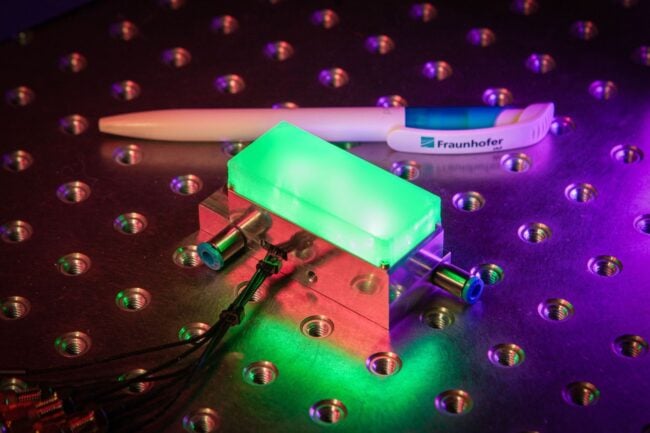
    Fraunhofer IAF presented the latest version of its compact integrated quantum magnetometer at World of Quantum in Munich. The diamond-based system is characterized by its robustness, high integration density, and measurement sensitivity. It offers new measurement possibilities for a wide range of applications, including navigation.

    The highly integrated vector magnetometer developed by the Fraunhofer Institute for Applied Solid State Physics IAF is based on nitrogen vacancies (NV) in diamond and provides access to the smallest magnetic fields with a previously unattainable degree of flexibility and precision. The miniaturized measuring system offers new possibilities in applications that require precise measurement with minimal interference, such as in biochemical measurements of nerve pathways or in microelectronics.

    “What makes the diamond-based NV vector magnetometer so special is its native and intuitive functionality, which enables it to precisely measure the vector components of the Earth’s magnetic field under most operating conditions,” explained Michael Stoebe, Business Unit Manager for Quantum Devices at Fraunhofer IAF. “This makes the sensor not only a technical innovation, but also a significant advance in sensor technology,”

    The unique properties of the NV center on the diamond lattice, which is arranged along the four crystal axes, enable all vector components of the magnetic field to be detected with a single sensor chip using <100> diamond. This reduces the calibration effort and opens up new possibilities for applications that were previously limited by the restrictions of conventional magnetometers. This sensor represents a significant step toward more precise and efficient measurement techniques, according to Fraunhofer.

    Safe navigation without GNSS

    Despite their high precision and coverage, today’s navigation systems are often prone to interference and are not available everywhere. Alternative navigation methods that function independently of GNSS are therefore gaining in importance. The Earth’s magnetic field is a promising basis for this, as it exhibits regional differences that can be used as an invisible map for autonomous navigation, especially in areas where GNSS signals are disrupted or difficult to receive.

    The quantum sensor developed at Fraunhofer IAF makes it possible to create comprehensive magnetic field maps and provide reliable navigation based on them. The vector magnetometer offers an autonomous, interference-free method for global positioning and navigation. It complements satellite-based navigation and also works without satellite signals, for example underwater, in canyons, underground, in buildings, or in tunnels.

    Increased integration density and sensitivity

    Researchers at Fraunhofer IAF have succeeded in reducing the size of their integrated quantum magnetometer by a factor of 30 in just one year. The sensor head now has a compact size comparable to conventional and industrially used optically pumped gas cell magnetometers (OPMs) with high sensitivity in the picotesla range. The diamond-based system stands out from competing technologies thanks to its high robustness and wide measuring range, which allows it to be used flexibly in a wide variety of measurement scenarios with extremely low calibration requirements.

    “We are striving for even greater integration density, while increasing sensitivity. Our goal for the coming year is to reduce the size of the sensor by a factor of 5 again, while further increasing sensitivity to enable measurements in the sub-picotesla range,” emphasizes Dr. Michael Stoebe.

    The special feature of the integrated quantum magnetometers developed by Fraunhofer IAF is their optional water cooling, which ensures robust and reliable measurement of magnetic fields even under the difficult operating conditions. This flexibility in design and integration is what sets the latest sensor prototypes from the Freiburg-based institute apart.

    “We take an application-oriented approach to the continuous development of our sensor systems and respond to the individual requirements placed on our systems,” said Michael Kunzer, project manager at Fraunhofer IAF.

    In addition to further developing the system, the core element of the sensor — its nitrogen-vacancy (NV)-doped diamond sensor head — is also being improved at Fraunhofer IAF. The synthetic diamond is grown at the institute in special reactors and further processed into quantum devices through the controlled exchange of carbon atoms with nitrogen atoms. The wafer sizes of the ultra-pure diamond are to be further developed next year from the current two inches to industrially scalable four-inch wafers.

    Geological measurements quickly and contact-free

    The quantum magnetometer developed by Fraunhofer IAF enables precise, contact-free localization of underground mineral deposits, thereby providing access to valuable resources. It can also detect unexploded ordnance over large areas, significantly reducing the risk to people in affected areas. Using the same principle as in navigation, the composition of the Earth’s crust and its magnetic field can be used to draw conclusions about geological formations. Magnetic anomalies such as ore deposits or metallic objects such as unexploded ordnance can thus be detected.

    The collected data can be converted into magnetic maps that show the locations of suspicious objects and provide information about their depth, shape, and size. This method enables comprehensive and non-invasive exploration of affected areas and the location of even deep-lying objects.

    World of Quantum 2025

    At the World of Quantum 2025 June 24-27 in Munich, Fraunhofer IAF presentsthe latest prototype of its NV vector magnetometer n Hall A1, Booth 439-3, on the Quantum Future Boulevard.