Tag: Google

  • Parkinson talks to Google about ‘GPS for Humanity’

    Parkinson talks to Google about ‘GPS for Humanity’

    Steve Malkos, Android Context Group, Google
    Steve Malkos, Android Context Group, Google

    We’ve come a long way since the inception of GPS. Today, location often is taken for granted, but that’s true of every mainstream technology.

    It’s absolutely remarkable how far the technology has evolved. From receivers that were as big as backpacks to tiny chipsets supporting multi-constellation dual-band GNSS receivers in smartphones with antennas that are etched into the body of cell phones, it’s really an amazing technology.

    I’ve had the privilege to work on GPS in phones since before “smart” appeared in front of them. And it’s truly amazing to see how “GPS has revolutionized our day-to-day lives.” But this is not my quote.

    In January at the Google campus in Mountain View, California, we hosted Dr. Brad Parkinson (widely known as the Father of GPS) who gave a talk on this subject. He was the one who called this a revolutionary technology, and that had been a stealthy revolution. Frank van Diggelen secured Brad to come to Google to give this talk.

    His talk was titled “GPS for Humanity.” In the talk, available on YouTube (see below), Brad goes over first hand how, over the past 30 years, this new utility came into being. It came into the fabric of our worldwide society, creating dependencies that did not exist before.

    He detailed how GPS was created, what technologies were essential to its success, all the various ways that GPS keeps crucial processes intact, and how it supports a $1.4 trillion economic impact that this system brings us today.

    It was a privilege and honor to have Brad give a candid and timely talk, and I hope you enjoy it as much as we did!

    To watch his talk, search for “Brad Parkinson Talks at Google” on Google or YouTube. Or follow the link


    Steve Malkos is the lead technical program manager in the Android Context Group at Google.

  • National Geographic Society needs help building living map of world

    logoThe National Geographic Society, working with partners at Google and World Resources Institute, is building a living map of the world.

    National Geographic is calling on the community of land cover and photo interpretation experts by September to help annotate and curate Sentinel-2 satellite imagery needed by machine learning algorithms. Experts who can spend 20-40 hours on this task in the next 6-8 weeks should send their resumes to [email protected].

    “Our vision is to produce the world’s first open global time series map of land cover and land use at 10-meter resolution with annual updates using public satellite imagery,” the society said in a statement.

    A living map of the world is a foundational dataset for knowledge products driving understanding and forecasting of the world as a system and enabling data-driven conservation, resource management and policy making for sustainable development.

    Simultaneous advances in global satellite imagery, super-computing on demand in commercial cloud, and powerful open source machine learning algorithms in high-performance software frameworks, combine to enable production of a global time series map of land cover and land use at a scale, speed and cost that is within reach for large NGOs and global governments.

    The major roadblock to production of a global time series map is availability of a large quantity of high-quality annotated data (hundreds of millions of labeled pixels) required to train algorithms to automate production of the map time series.

    National Geographic is aiming to create an initial training dataset of densely annotated tiles of Sentinel-2 imagery before September, following an expert-defined land cover taxonomy. This expert-labeled tile set will be used to train a large non-expert crowd to produce tens of thousands of additional labeled scenes, which will then be used to train the machine learning algorithms that produce maps.

  • ION GNSS+ 2018 plenary keys in on Emergency Location Service in Android

    ION GNSS+ 2018 plenary keys in on Emergency Location Service in Android

    Reflecting the dramatic changes and advances that have taken place in the applications of positioning technology over the last decade, the plenary session of the 37th meeting of the Institute of Navigation’s Satellite Division did not discuss satellites at all. Instead, two keynote speakers elaborated upon the application of positioning to emergency response services and to airborne mapping with lidar technology.


    Emergency Location Service (ELS) in Android

    Steve Malkos, technical program manager at Google, told the audience of approximately 800 that the new emergency location service “is our passion project at Google. Just last week we announced the expansion of ELS into the U.S. It’s here and it’s ready today. But the work isn’t done yet because of various challenges.” Google’s goal is 1-meter location accuracy for all 911 calls placed on cell phones. The algorithms discussed at ION this week, Malkos said, are part of what is driving Fused Location Provider (FLP)
    toward this future.

    In FLP, locations are computed directly on the handset as opposed to the older method, which computes on the carrier’s cell network. Google’s indoor solution consists of wi-fi augmented by network information.

    Recently released statistics show emergency call usage has flipped from what it was only a decade ago. Now, only 20 percent of emergency calls are placed on landlines. Eighty percent are placed on wireless devices.

    Malkos replayed audio from a call made recently, prior to activation of ELS, that generated a location on Miami’s emergency services of 500 meters away from the basement ballroom of the conference hotel.

    Domino’s Pizza, Uber ride service and Facebook all now use the hybrid derived location from cell phones, while emergency services typically use the location computed on the carriers’ network, and relying on cell-tower positioning. Cells range from 100s of meters to kilometers in size.

    ELS has been live in the U.K. since June 2017. Since its activation, British Telecom’s mean radius accuracy on emergency calls went from 2 kilometers to 43 meters 85 percent of timeION20.

    Malkos discussed the challenges of privacy, altitude (Z-axis) and the related difficulties in the urban high-rise landscape of floor determination and infering floor labels.

    Overall, he said, statistics show that each 1 minute sooner of arrival of emergency services translates to 10,000 saved lives.

    A Lidar History

    Paul LaRocque, vice president of special projects at Teledyne Optech gave an overview of light detection and ranging (lidar) development through the lens of a one-company centric history, that of Teledyne.

    Lidar got started in 1969, within a decade of the invention of the first laser. It began with early work in marine mapping and bathymetry from onboard ships. Airborne lidars developed in the late 1970s, looking at icefields in the Arctic, and was done at first with no absolute positioning to aid in analyzing the results..

    Early on, developers discovered that airborne lidar can get to the bare earth, penetrating under forest canopy. This eventually led to the recent dramatic discoveries of long lost Mayan cities, covered by jungle.

    In the early 1990s, GPS and inertial technologies converged, with some miniaturization, to enable building of integrated technology systems that added absolute positioning to the lidar toolbox.

    LaRocque provided a quick look at the National Geographic story, based on data from a three-wavelength Teledyne Optech Titan, one of several current machines that are generating data at millions of shots per second. Increasingly, it’s the software processing that brings out the accuracy, for example, centimeter accuracy surveyed from a kilometer up in the air.

    Challenges enumberated:

    • the speed of light is not fast enough.
    • the Earth is not flat enough.

    Teledyne developed PulseTRAK technology to cope with the “blind zones” generated by these two challenges, so as to not lose data in any gaps.

    The new frontier is spaceborne lidars. Teledyne is involved in a project tenerating lidar data from the surface of Mars on a Canadian space agency mission. This led previously to the discovery of snow in the atmosphere of Mars. The OSIRIES-Rex mission now on its years-long voyage to a very-far off asteroid represents the furthest adventure of lidar in space. The project will collect data on the asteroid’s surface and beam it back to Earth, as well as eventually returning some core samples.

  • Android, lidar experts to deliver addresses at ION GNSS+

    Android, lidar experts to deliver addresses at ION GNSS+

    Steve Malkos
    Steve Malkos

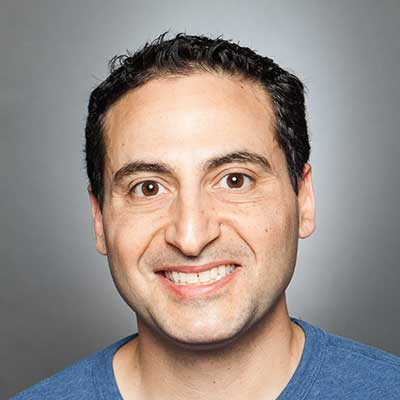
    Steve Malkos of Google, and a GPS World contributor, will address the ION GNSS+ plenary session at the technical meeting and showcase, to be held Sept. 24-28 in Miami.

    Malkos will address “Emergency Location Service in Android.” When emergency services get a call, they need to know the caller’s location to send help and save lives. More than 80 percent of calls to emergency services come from mobile phones, but locating these mobile callers can be a major issue.

    Current emergency solutions rely on cell tower location (which can have a radius of several kilometers) and, in some countries (like the U.S. and Japan), on A-GNSS. But A-GNSS can fail with weak signal reception, in urban canyons and indoors.

    Malkos will discuss how Emergency Location Service in Android is delivering more accurate location (computed from fusion of Wi-Fi, cell, GPS and sensors) to emergency services when an emergency call is detected.

    Photo: Teledyne Optech
    Paul LaRocque

    Also speaking is Paul E. LaRocque, Teledyne Optech‘s vice president of Special Projects. In his presentation, “A Lidar History: From Ship to Air to Space,” LaRocque will give a historical review of the airborne laser mapping systems that Teledyne Optech has designed and built over the years.

    Optech has been active in laser radar systems beginning with marine lidars and later moving to airborne and spaceborne systems. Navigation has been an important subsystem in these developments, and its role will be described as part of this story.

    LaRocque has been involved in the development of Optech’s lidar systems since the late 1980s. Dr. LaRocque was instrumental in the design of Optech’s airborne lidar bathymeters, airborne lidar terrain mappers (ALTM), and waveform digitizers, as well as other special lidars.

    Both Malkos and LaRocque will speak during Session P: ION GNSS+ Plenary Session on Tuesday, Sept. 25, 6:30-8:30 p.m.

    Read more ION GNSS+ news.


  • GPS.gov helps with wrong addresses on personal devices

    Members of the public often turn to GPS World and Geospatial Solutions for help when their personal device gives them incorrect mapping information.

    GPS.gov has set up a page that points users to the correct place to report problems, by walking them through a series of steps.

    As our readers know, the problem isn’t with the satellites, but in the mapping software used by the devices and apps. Links are provided to mapping companies Google, Waze, TomTom, HERE, OpenStreetMap, Garmin and Apple.

  • Location and context advances in Android

    Location and context advances in Android

    Plus access to raw GNSS measurements for all

    By Steve Malkos
    Technical program manager, Google

    Google’s annual developers conference in May, Google I/O, featured many announcements, accomplishments and 2017 plans. Of particular interest, the Android Location and Context Team’s talk “Android Sensors & Location: What’s New and Best Practices,” is available online.

    This followed a keynote by CEO Sundar Pichai on solving problems at scale with deep neural networks, machine learning algorithms and artificial intelligence (AI). He also spoke about a shift from a mobile-first model to AI-first. Google is doing this across every product area, applying AI and machine learning. Other keynotes updated Assistant, Photos, YouTube, Superchat, Android and VR (virtual reality).

    The Android Location and Context team — Marc Stogaitis, Wei Wang, Souvik Sen and myself — spoke about background location, location accuracy, activity recognition, Android sensor hub, Android sensors, and the future of location and context.

    Discussing why battery life is so important, we showed detailed graphs on the costs of accessing different parts of the phone subsystems like WiFi, GNSS and making data connections.

    Then we introduced Background Location Limitations (at the 4:30 point in the posted video) coming with Android’s latest operating system in Android O. These limits will prevent applications from misusing Android’s APIs in the background, thus saving its user’s battery. There were examples on how to make your app background ready for these upcoming changes.

    We showed plans for location accuracy improvements (12:50) coming later this year and comparisons of existing vs. upcoming solutions for the positioning algorithm.

    We covered the tools to help analyze GNSS measurements. How strong are the individual measurements? How accurate are the range measurements? With these tools, developers now have direct insight into the lowest layers of a GNSS receiver. Then came activity recognition algorithms (15:40) and how deep neural networks will improve the precision of these algorithms and help advance the field in activity recognition.

    I spoke spoke about the Android Sensor Hub (20:27), how Google is leveraging the capabilities of an always-on low-power processor in Android phones. The sensor hub allows Google to port algorithms such as Activity Recognition, Geofencing and Gestures from the main application processor into the low-power sensor hub. We then went into detail around the new sensor features (25;55) and improvements around the compass (28:34).

    Finally, we looked into the future (33:28). I covered Project Elevation, Accurate Indoor Location, and dual-frequency GNSS. Closing thoughts were around how more signals are going to be added into the low-power always-on compute domains so that the phone is more aware and intelligent, simplifying users’ interactions, augmenting human memory and knowledge, and assisting users understanding of themselves and the world around them.

    Access to Raw GNSS Measurements

    In related news, our new web page is up and operational!  This site provides all the details around GNSS Raw measurements in Android along with our analysis tools for anyone to download. Our previous site was accessible to people who signed up as a partner with Google, but now we have opened up this site to everyone.

    Android GNSS Analysis Tool: Shows how you can select and run the analysis on a per satellite basis. This tool now supports multi-constellation and dual frequency (L1+L5) by default

    Android apps typically access GNSS chipsets through a filter, which improves the GNSS location output for the majority of use cases. Filters use additional sensors, such as motion sensors, to improve the end user experience. However, filtering is not appropriate for some applications used by professionals such as researchers and original equipment manufacturer (OEM) developers. The Android Framework provides access to raw GNSS measurements on some Android devices. The page lists Android devices that support raw GNSS measurements as well as tools that help you log and analyze GNSS data.

    For more on Android and raw GPS measurements, see the GPS World Innovation article Precise positioning using raw GPS measurements from Android smartphones.

  • Google updates progress on Android GNSS measurements

    Google updates progress on Android GNSS measurements

    Nearly a year ago, Google debuted GPS measurements in Android.

    “Since then, we’ve made a lot of progress,” Steve Malkos, Google technical program manager, told GPS World.

    Frank van Diggelen and Mohammed Khider joined Malkos in hosting a half-day tutorial at ION GNSS+ 2016 in September that detailed how to access and use GPS measurements from Android devices.

    “We (Google) launched a new website around our efforts with GNSS Measurements that has the latest updates about all things GNSS, such as supported devices, collection tools and analysis tools,” Malkos said.

    The Android GNSS Analysis Tool shows how users can select and run the analysis on a per-satellite basis. This tool now supports multi-constellation and dual frequency (L1 and L5) by default. (Credit: Google)
    The Android GNSS Analysis Tool shows how users can select and run the analysis on a per-satellite basis. This tool now supports multi-constellation and dual frequency (L1 and L5) by default. (Credit: Google)

    Also, many devices releasing this year will support multi-constellation raw GNSS measurements for the first time. The Phone section on Google’s website shows the latest phones that support multi-constellation measurements. “Google also has launched a device with this capability, one of the first in the world,” Malkos said.

    Android O, the next version of Android, will include new GNSS measurement features, such as true multi-constellation support with GNSS measurements (API supported constellations include GPS, SBAS, GLONASS, QZSS, BeiDou and Galileo), measurement support on multiple frequencies (including L1 and L5) and reported AGC (accumulated gain control) jamming detector.

    This plot shows the generated output from the Android GNSS Analysis Tool: Signals strengths for the top four satellites per constellation, Skyplots, C/N0 plots, clock continuity or discontinuity, WLS output, PRR and PRR residuals. (Credit: Google)
    This plot shows the generated output from the Android GNSS Analysis Tool: Signals strengths for the top four satellites per constellation, Skyplots, C/N0 plots, clock continuity or discontinuity, WLS output, PRR and PRR residuals. (Credit: Google)

    Google hosts ION GNSS tutorial

    Google is hosting a full-day tutorial, “Raw GNSS Measurements from Android Phones,” at ION GNSS+ 2017, which will be held Sept. 25–29 in Portland, Oregon.

    The interactive course covers:

    • The Android Software Stack. Learn how GNSS measurement data flows through the Android software stack. Google will also show attendees where to find the definitions of the different data structures and identify which ones are available at the Application layer.
    • Updates to Android O. Preview the new GPS-related changes that are slated for Android O.
    • Description of the available data. Review the data that is accessible in Android, the definitions of the different types of GNSS measurements, their physical meaning and how to use them for analysis and location.
    • Using the data. Collect GNSS measurements outside and download the data from a provided test device to do some processing. Google will provide software tools that allow participants to log data from an Android Nougat or Android O device, view the raw measurements, and complete basic measurement analysis and position computation.
    • Examples. Finally, Google will give those who attend specific examples of research projects and applications that users can develop with the tools and knowledge obtained in the class, such as how to build a GNSS data analysis app or how to build a crowd-sourced jammer detector.

    To help the Android Measurements team tailor this tutorial to your needs, fill out this form with additional items you’d like covered in the class.

  • Taoglas launches street-view-ready GPS performance certification services

    Taoglas launches street-view-ready GPS performance certification services

    Taoglas, a provider of Internet of Things (IoT) and GNSS antenna products, has released two new GPS certification testing services for Google and its device partners. The services are required for devices to meet Google’s new Street View auto-ready standard.

    Auto-ready certification distinguishes 360-degree cameras that deliver accurately positioned 360 video, even at high speeds. Taoglas worked with Google to develop the performance requirements, as well as the test methodology used to establish a basic minimum level of GPS receiver performance.

    The services are available at any of Taoglas’ design centers and labs in the United States, Ireland, Germany and Taiwan.

    Compact wireless devices such as digital cameras with built-in GPS receiver systems contain complex electronic systems that can emit unwanted RF signals that can impact radio receiver performance. The effect of this RF noise can be combated with critical design decisions like the antenna, low noise amplifier, filters, and transmission line choice and implementation.

    Taoglas’ new services will help device manufacturers objectively measure real-world performance to understand any GPS performance issues with their products. With this information, product manufacturers will know if their performance is optimized and will meet or exceed user expectation for the application at hand, as well as how it compares with their competitors.

    “Google Street View provides people with a 360-degree view of the world, and to enable these services, we require highly accurate location data,” said Charles Armstrong, product manager at Google. “By working with Taoglas to establish a standardized compliance process, we’re helping device manufacturers understand our requirements for GPS performance and quickly deliver products that match and exceed those high performance standards.”

    Taoglas is offering two levels of certification testing:

    Street View Auto-Ready Conformance Testing (GSA.31) provides a quick verification of minimum performance (in a pass/fail manner) required to achieve Street View certification. Taoglas uses its GPS constellation simulator and anechoic chamber to verify that radiated tracking and acquisition sensitivity meet a minimum performance standard at 15-degree intervals in one hemisphere.

    From these test results, manufacturers will be able to clearly see if the device’s GPS is performing adequately for basic location capabilities. The condensed period needed to run this test provides device manufacturers the best value to answer the question, “Is the GPS working optimally?”

    A street view image of Guatemala. (Credit: Google)

    Street View Auto-Ready Performance Testing (GSA.32) provides an absolute level of testing to assess the GPS receiver performance according to the optional Google Street View Assessment test procedures.

    Taoglas uses its GPS constellation simulator and anechoic chamber to measure radiated tracking and acquisition sensitivity at 15-degree intervals in one hemisphere. These optional tests provide more insight into how well a device performs, providing absolute receive sensitivity performance data.

    Testing results for both services include suggestions on next steps to resolve identified issues.

    “This partnership with Google to deliver GPS testing solutions for Google Street View compliance is an excellent example of how we’re working successfully with the world’s biggest companies to delivering high-quality, reliable antenna solutions,” said Dermot O’Shea, co-CEO of Taoglas. “By certifying their products through Taoglas, device manufacturers will also be able to take advantage of Taoglas’ deep RF expertise, achieving success quickly and reducing time to market.”

    “Street view” of the Ambrym Volcano, Vanuatu. (Credit: Google)
  • Airbus selects Google Cloud for One Atlas basemap

    Airbus Defence and Space has launched One Atlas, a new basemap streaming service delivering access to its satellite imagery over the world, fully refreshed within a 12-month period. It is powered by Google Cloud Platform.

    This service is a major leap forward for enabling access to satellite imagery for customers by leveraging the power of Google Cloud Platform and Airbus Defence and Space technologies, Airbus Defence said.

    A new approach in data storage, hosting and dissemination has been implemented using Google Cloud Platform to ingest the several hundred Terabytes of data annually required by One Atlas. This will bring value to clients for a wide range of applications such as infrastructure preparatory studies, land management, agricultural lands and crop-species mapping or even tree cover change detection in regions prone to deforestation.

    “Our team at Google Cloud is dedicated to helping businesses find success with public cloud and innovative technologies, such as cloud machine learning. We’re excited to collaborate with Airbus Defence and Space to create new products and transform existing business models through the power of Google Cloud Platform,” said Carl Schachter, vice president of Google Cloud Platform.

    Image from TerraSAR-X, a radar Earth observation satellite. (IMAGE: Airbus Defense and Space)
    Image from TerraSAR-X, a radar Earth observation satellite, of Barra da Tujica, Rio de Janeiro, Brazil. (IMAGE: Airbus Defense and Space)

    Google Cloud Platform was selected from seven public cloud providers because of its high-end technology, security resilience and strategic fit with Airbus Defence and Space’s business and development roadmap.

    “All satellite data collected each day are automatically processed and made readily-accessible in a global imagery library that is stored in Google Cloud Platform,” said Bernhard Brenner, head of the Intelligence Business Cluster at Airbus Defense and Space. “Google Cloud Platform’s global scale, low latency and infrastructure capacities in Europe give us the required performance, flexibility and scalability for current and future data volumes, ensuring a high level of service for our customers.”

    Additional investigations into the use of Google Cloud Platform and other Google tools are ongoing at Airbus Defence and Space, such as the integration of other datasets like TerraSAR-X radar data and WorldDEM into One Atlas, or the development of analytics services such as change detection and automatic object extraction. Very promising results have already been obtained from using Tensor Flow, an open source library for machine learning, and Cloud Machine Learning for automatic cloud detection.

  • Google rolls out emergency service

    With more than 70 percent of calls to emergency services coming from mobile phones, getting necessary help — fast — to the caller can be challenging if they don’t know where they are or can’t communicate for any number or reasons related to the emergency. Current emergency solutions rely on cell-tower location, with a location radius of up to several kilometers, or assisted GPS, subject to errors indoors and unable to establish a floor level in tall buildings.

    The U.S Federal Communications Commission estimates “improved location accuracy which results in reducing wireless E911 response time by one minute can result in saving over 10,000 lives annually.”

    Google has created and rolled out in two European countries the Emergency Location Service in Android, with other regions to follow. The feature, when supported by the caller’s network, sends location from phone to emergency services when an emergency number is dialed. The feature is solely for the use of emergency service providers, and the caller’s precise location is never seen or handled by phone apps, integrating Wi-Fi, GPS, and cell towers to produce a more reliable emergency location indoors and outdoors.

    Emergency Location Service is supported by more than 99 percent of existing Android devices (version 2.3 out and upwards) through Google Play services. The service activates when supported by the mobile network operator or emergency infrastructure provider.

    The new geographical location system can identify the source of a mobile phone emergency call to typically within 0.003 square kilometers (less than half the size of a football field) instead of an average of around 12 square kilometers.

    According to a British telecomm communiqué, “We see 84 percent being less than 50 m radius, with 16 percent up to 9 meters, 27 percent between 10 and 19 meters’ radius and 41 percent with 20–49 meter radius.”

    When an emergency call is made with an enabled Android smartphone, the phone automatically activates its location service and sends its position by text message to the 999 service. This usually takes less than 20 seconds. This text message is not visible on the handset and is not charged for.

    The text is automatically matched to the voice call and compared to the network’s cell-based information to ensure it is valid. The location is then made available to the appropriate emergency service, supplementing the cell-based information.
    Because Google has tweaked its core Android Play Services software, it no longer needs each handset manufacturer to modify their handsets. Instead they can all be enabled as part of Google’s regular updates to its Android mobile operating system. This means the service will reach more handsets much more quickly.

  • Google to provide raw GNSS measurements

    Google to provide raw GNSS measurements

    User location takes center stage in new Android OS

    Raw GNSS measurements from Android phones. Yep, they are coming. At Google we have been working with our GNSS partners to give application developers access to raw GNSS measurements from a phone.

    This is really exciting, and marks a new era for our GNSS community. At Google I/O in May, we announced that raw GNSS measurements are available to apps in the Android N operating system, which will be released later this year. This means you can get pseudoranges, Dopplers and carrier phase from a phone or tablet.

    When can you get it? Well, it will take some time to proliferate throughout the ecosystem, but the first phone that will provide raw measurements will be the Nexus phone that we will launch later this year, and then next year you will see new Android handsets start to support it, as it will become a mandatory feature in Android.

    Tutorial. At the Institute of Navigation’s ION-GNSS+ conference this September, Frank van Diggelen and I will teach a tutorial where you can learn to access and use these raw measurements. This will be a hands-on course where you collect, view and process raw measurements. You will leave the class with the data, Google software tools, and the knowledge of how to use them.

    This tutorial is open only to ION-GNSS+ attendees. To register for the conference, visit www.ion.org/gnss/registration.cfm.

    Then, to tailor this tutorial to your own needs, visit this online form and let us know what you’d like us to cover in the class.

    The keynote presentation at Google I/O 2016, held May 12-20 at Shoreline Amphitheater in Mountain View, California.
    The keynote presentation at Google I/O 2016, held May 12-20 at Shoreline Amphitheater in Mountain View, California.

    More from Google I/O

    Finally, I’d like to give you some highlights from Google I/O, the annual developer-focused conference held by Google in the San Francisco Bay Area.

    During the keynote, Google CEO Sundar Pichai made many references to location, context and places. This was really exciting to see. We are innovating and working on a lot. It is amazing, even to me, after more than 13 years in the field of location, arriving at Google just under two years ago, to see how location and a user’s context are at the center of our connected world.

    At Google, we are exposing as much as we can to the ecosystem so that innovation can thrive around us.

    Sundar Pichai’s keynote address shows that user’s location is at the center for the knowledge graphs that we are building.

    Conversational examples were shown on Google Assistant and on how it can be used to get things done in the world. Sundar spoke on how location and context are the key to this future, noting that a user standing next to a famous sculpture can simply ask: “Who designed this?”

    All Google I/O talks from the Android Location and Context Team can be found at these YouTube links :

  • Google opens up GNSS pseudoranges

    Google opens up GNSS pseudoranges

    Google has announced that raw GNSS measurements will be available to apps in the Android N operating system, which will be released later this year. This means pseudoranges, dopplers and carrier phase will be obtainable from a phone or tablet computer.

    The announcement came during Google’s I/O 2016, its three-day developer conference which was held May 18-20. The specific announcement occurs during a video summary of the conference, shown below.

    “This is groundbreaking,” says Steve Malkos, a technical program manager at Google. “It is the first time in history that a mobile application will have access to the raw GPS measurements. This is beneficial to many, but especially the phone makers, because they can use these measurements to help them in their performance testing. And if you ever had a bright idea on how to use GPS measurements, now’s your time to shine.”

    Malkos co-wrote “The Fashion Demands of Always-On: Ultra-Low-Power, High-Accuracy Location for Wearable GNSS Devices: From Host-Based to On-Chip” in the December 2014 issue of GPS World, and “Putting the (ultra-low) Power in GeoFence” in the November 2013 issue. His blog post in the upcoming July 2016 issue will include more information about the new Google development, including a hands-on demonstration course to be offered at ION-GNSS+ 2016 in Portland, Oregon in September.

    For a brief background and context of this development for application developers and chip-makers, see “OS providers: 800-pound gorillas in PNT jungle” from the current (June) issue of GPS World. Contributing editor for geospatial Eric Gakstatter has also written on this topic in “Mobile Device Operating System Wars: Android vs. iOS vs. Windows Mobile “ (April 2012) and “Mobile Device Operating System Wars: Ver. 2.0” (April 2014). “The BYOD (Bring Your Own Device) trend has been hot for a few years due to the growing popularity of iOS and Android devices.”

    Android N is the codename of an upcoming release of the Android operating system. It was first released as a developer preview on March 9, with factory images for current Nexus devices, as well as with the new Android Beta Program which allows supported devices to be upgraded directly to the Android N beta via over-the-air update.  The stable release of the operating system is expected in mid-2016.

    Google I/O is an annual developer-focused conference held by Google in the San Francisco Bay Area. It features technical, in-depth sessions focused on building web, mobile, and enterprise applications with Google and open web technologies such as Android, Chrome, Chrome OS, APIs, Google Web Toolkit, App Engine, and more. Google I/O began in 2008. The “I” and “O” stand for input/output, as well as the slogan “Innovation in the Open.”