
Tag: Google

  • Google and Facebook Eye Waze as Potential Purchase

    waze_logoSince the recent CTIA conference wasn’t the buffet of location news, one potential deal could really set the industry on fire going into the summer months. Google and Facebook both are rumored to be in talks to purchase Waze. Some say this would mean Facebook would transform into a mobile advertising company, with local ads, if it were the winning bidder. Google’s rumored interest would block the social media giant’s momentum in that marketplace.

    by Kevin Dennehy

    In what could be one of biggest deals in the location industry, both Google and Facebook have been rumored to be interested in buying Israel-based mapping and navigation company Waze. Published reports indicate the deal could be worth $1 billion.

    Some industry analysts are skeptical that a deal could be valued that high, which would place it in the same realm as Facebook’s $1 billion purchase of photo-sharing service Instagram.

    “We really do not know if Facebook is willing to spend a billion dollars on Waze, but if the deal happens, (Facebook) must have considered its options. How could this be? First, I suspect that Facebook is certain it will grow beyond its current boundaries to become the world’s most valuable company,” said Mike Dobson, Telemapics president. “Operating under this mindset, a billion dollars is peanuts, and they will not care if everyone else thinks they overpaid. In other words, Facebook might not be basing its calculation on the same ‘time-value of money’ that the rest of us are using. Second, if the economics do not really matter to Facebook, the more important question is ‘What advantages would Facebook accrue by acquiring Waze?’”

    Dobson believes that Waze map databases are not competitive with Google or such commercial providers as Nokia or TomTom. “In essence, Waze does not offer competitive map coverage, competitive data quality, competitive data attributing, or a useful source of POI data. More importantly, I suspect that the Waze database will be a major league headache if Facebook plans to use it as the basis for its mapping activities supporting local search,” he said. “Further, I doubt that Waze understands enough about local advertising to help Facebook realize its most important goal of becoming a powerhouse ad agency capable of creating its own captive local search market, comparable or exceeding that enjoyed by Google.”

    Another industry insider, Marc Prioleau of Prioleau Advisors, said that quality and coverage of the maps would make the deal successful — if it really is going to happen. “The rumor mill on Waze seems to be quite active so it is hard to know if there is substance there. Waze has built a very innovative traffic application, and they use the user data to build a digital map data set,” he said. “The value of the company would be tied largely to the quality and coverage of that data set and the perceived ability of a big platform like Facebook to build that out into a truly serviceable worldwide map.”

    Waze is a mapping company built through crowdsourcing map and traffic data over mobile phones, which is the “magic” Dobson believes Facebook finds beguiling about the company.  While Waze claims 45 million users, its active base is more likely around 10-15 million, Dobson said. “Conversely, if you stop to consider the amount of data you could generate if all of Facebook’s mobile users were gathering mapping data through an app built on Waze, then the company might be willing to gamble on the acquisition,” he said. “Providing analytics on the behavior and location of its mobile users to advertisers and other interested parties could be a huge opportunity. On the other hand, there are numerous paths to this endpoint, not just Waze.”

    Dobson said if he were to advise Facebook on the acquisition, a suggested course of action would be that the company write their own crowdsourcing application and build a good quality map database through licensing and direct and indirect map compilation techniques.  “My off-the-cuff estimate is that this could be done for less than the cost of the Waze acquisition. Beating Waze into a quality map database is going to be an expensive — well beyond the acquisition cost — and time consuming effort. Perhaps the most glaring lack in the potential Waze acquisition is the absence of a suitable POI database, which, in my opinion, is the most critical need that Facebook will have in local search.”

    Dobson said he suspects that Facebook’s competitors are not concerned about the company’s potential acquisition of Waze. “Those who already in the mapping business — Google and Apple — will anticipate that it is likely that Waze could become a significant distraction for Facebook and delay the company effectively competing in the local search market. As far as the competitors are concerned, the longer it takes Facebook to mobilize its efforts in local search, the better,” he said. “In business, as in life, strange choices are made. Perhaps Facebook sees a future in Waze that depends on strategies being implemented by the company that we know nothing about. I hope so, as a good dose of innovation is just what the local search market needs.”

    Distinguishing itself is another reason Facebook may be interested in Waze. Providing mapping and traffic capabilities may bring more consumers to its mobile users.

    The company is also is redesigning its mobile pages platform to enable local merchant information, according to published reports. These new improvements may even challenge Foursquare and Yelp.

    There were questions whether the deal with Facebook will go through as published reports indicated that Waze’s research and development activities would remain in Israel rather than go to California, where Facebook’s headquarters are based.

    Google Interested in Waze to Cut off Facebook at the Location Pass?

    The rumor mill is heating up as Internet giant Google and Apple are said to also be interested in Waze.  “I saw a report indicating that Google was interested. If so, it would seem that this would be a move to deny Facebook access to Waze,” Dobson said.  “Google already derives a significant amount of information from passive crowdsourcing — recording the GPS traces of the devices of their users — and I am not sure that the acquisition would provide them any opportunities that they are not already exploiting. Of course, we might remember that Garmin, who had no intention of buying TeleAtlas, made a bid and significantly raised the price that TomTom paid for the mapping company.”

    Other analysts say while there have been several news articles on why Google should buy Waze, it all could be poorly informed speculation. Others say that the Israel tech press is quick to spread rumors. One analyst said, “I hear that the talks are legit, but my guess is that the deal in discussion is not $1 billion.”
  • skobbler Launches GPS Navigation & Maps for Android, Competes with Google Maps

    skobbler-map-T
    Skobbler app

    skobbler brings together hybrid online and offline worldwide maps and full turn-by-turn navigation in a low-priced app with the launch of GPS Navigation & Maps for Android.

    skobbler is looking to exploit the weaknesses of established Android navigation alternatives with the fully featured GPS Navigation & Maps, which offers an improved experience compared to both Google Maps and high-priced third-party alternatives, skobbler said. GPS Navigation & Maps is effectively two apps in one, with both online and offline turn-by-turn navigation and digital mapping for smartphones.

    Using open-source digital map OpenStreetMap and powered by the skobbler NGx map engine, GPS Navigation and Maps has full online and offline capability. The £1 price includes worldwide online functionality as well as an installable map of one country of choice for offline use. From here, users have the option to in-app purchase individual cities, states, countries and continents to use offline, and worldwide maps are available as standard for online use. Existing users of ForeverMap 2 will receive a free upgrade to GPS Navigation & Maps. New users can either purchase the full app or try GPS Navigation & Maps’ free app with unlimited online functionality and a 14-day navigation trial.

    While Google Maps is free to download and use, its offline functionality is restricted. Users cannot perform any searching or routing tasks without an Internet connection, which means that when abroad or in low signal areas they either have to pay expensive roaming costs or spend a significant time without map coverage, limiting its usability while traveling, skobbler said. Expensive alternatives such as Co-Pilot Live or TomTom UK & Ireland/Europe do offer premium features and offline navigation, yet none of them give users a choice of which areas they want to use online and which offline. Most premium sat nav apps generally cannot be used as travel apps at all, as their pure map functionalities are limited at best. GPS Navigation & Maps is the perfect blend. Offering the best of both worlds for a fraction of the price, it can be relied upon to deliver any place, at any time, and being two great apps in one offers a fantastic cost-to-benefit ratio and unbeatable flexibility for consumers, skobbler said. Individuals can build their own navigation and maps app depending on what resources they use the most, and more effectively manage the limited storage space on their devices, skobbler said.

    GPS Navigation and Maps has full turn-by-turn navigation, worldwide mapping and all features of the software accessible both online or offline. This unique move, and market first, is made possible thanks to skobbler’s NGx map engine, which delivers a seamless browsing experience with ultrafast real-time rendering and stunning map visuals, skobbler said. NGx also offers a range of unique map styles to, for example, accentuate color density for outdoor use to improve clarity. Maps are highly customizable with control over features such as online/offline functionality, map display (style and zoom), routing, map matching and more.

    “We’re very proud to launch the first navigation product utilising our powerful NGx mapping engine,” said skobbler CTO Philipp Kandal. “Being the first and only company on the Android platform to offer full online and offline capability for both mapping and navigation, we hope both new users and our existing customers will be won over by the high performance and flexibility GPS Navigation & Maps offers. We’re already working on future updates and have a few powerful additions lined up to improve the app’s functionality and flexibility even further in the coming months.”

    Additional maps beyond the free map provided will be available via in-app purchases for offline use. In keeping with the low price for the initial app purchase, add-ons are similary competitive and are priced at £0.77 for cities, £1.11 for states, £2.22 for a whole country, £4.44 for a continent and just £7.77 for the entire planet, so users can quickly and easily supplement their map coverage as they see fit.

    skobbler is committed to providing regular updates to users to keep maps fresh and accurate, and promises a range of new premium features in future updates. GPS Navigation & Maps is now available from the Google Play Store, with existing ForeverMap 2 users able to upgrade for free.

    The full version of GPS Navigation & Maps, including one free offline country map, can be downloaded.

  • FairSearch Files European Commission Complaint on Google’s ‘Anti-Competitive’ Mobile Strategy

    FairSearch.org has filed a complaint with the European Commission laying out what it sees as Google’s anti-competitive strategy to dominate the mobile marketplace and cement its control over consumer Internet data for online advertising as usage shifts to mobile.

    The complaint says Google uses deceptive conduct to lockout competition in mobile. Google’s Android is the dominant smartphone operating system, running in 70 percent of units shipped at the end of 2012, according to Strategy Analytics. Google also dominates mobile search advertising with 96 percent of the market, according to eMarketer.

    “Google is using its Android mobile operating system as a Trojan Horse to deceive partners, monopolize the mobile marketplace, and control consumer data,” said Thomas Vinje, counsel to the FairSearch coalition. “We are asking the commission to move quickly and decisively to protect competition and innovation in this critical market. Failure to act will only embolden Google to repeat its desktop abuses of dominance as consumers increasingly turn to a mobile platform dominated by Google’s Android operating system.”

    FairSearch is an international coalition of 17 specialized search and technology companies whose members include Expedia, Microsoft, Nokia, Oracle, and TripAdvisor.

    Google achieved its dominance in the smartphone operating system market by giving Android to device-makers for “free.” Android phone makers who want to include must-have Google apps such as Maps, YouTube, or Play are required to pre-load an entire suite of Google mobile services and to give them prominent default placement on the phone, the complaint says. This disadvantages other providers, charges FairSearch, and puts Google’s Android in control of consumer data on a majority of smartphones shipped today.

    The FairSearch complaint comes at a time when users are increasingly switching from desktop to mobile platforms. Mobile Internet usage is expected to overtake desktop usage as soon as 2014, according to MindCommerce.

    The European Commission is already considering how to remedy concerns that Google may be abusing its dominance in desktop search advertising, in particular Google’s search bias that favors its own services in search results.

    Meanwhile, in April, six European data protection authorities began coordinating efforts to force Google to comply with European Union privacy laws they say Google violated by consolidating its privacy policies. Google paid a record fine to the U.S. Federal Trade Commission in August 2012 to settle charges it gave misleading privacy promises to Safari Internet browser users.

    “European consumers deserve a rigorous investigation of Google’s mobile practices, and real protections against further abuses by Google,” said Vinje. “Given Google’s track record of ignoring the law, mobile Internet users should be very concerned.”

  • Futuristic Heads-up Glasses with GPS Go to App Developers

    Futuristic Heads-up Glasses with GPS Go to App Developers

    Google-glass-nav-image

    Vuzix Corporation today announced that it has begun shipping M100 Smart Glasses to the first of its Gold developer partners — enabling them to start creating and testing their apps on the real hardware.

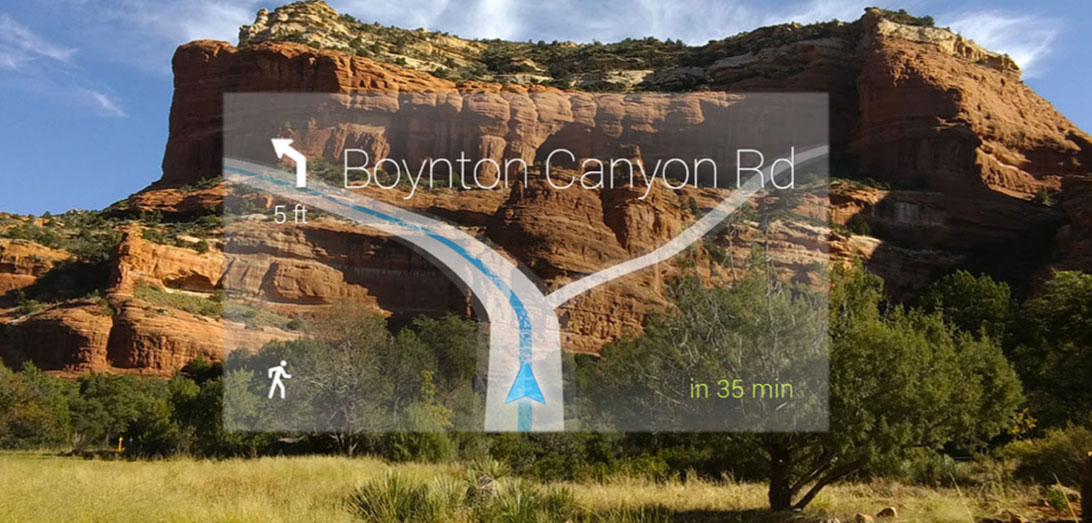
    The M100 Smart Glasses are a smart hands-free display and communications device for mobile data access, once paired to a smartphone and connected to the Internet. The glasses include an integrated head tracker and GPS for spatial and positional awareness.

    Vuzix is a supplier of Video Eyewear products in the consumer, commercial and entertainment markets.

    Google glass.
    Google Glass

    The M100 is in competition — and a race to market — with Google Glass, a similar wearable device. Google recently held a contest to provide sample sets of the glasses to non-developers willing to pay $1,500 — which encouraged Internet and media buzz.

    M100 Smart Glasses
    M100 Smart Glasses

    Google Glass could be released to the mass market by the end of the year. Google Inc. already sold an unspecified number of the glasses to developers who also paid $1,500 apiece at a company conference in June 2012. The mass-market version of Google Glass is expected to cost less than $1,500, but more than a smartphone.

    Like the M100, Google Glass is intended to perform many of the same tasks as smartphones. The glasses include a little display screen attached to a rim above the right eye, run on Google’s Android operating system, and respond to voice commands, which is intended to make it easier for people to take pictures or record video wherever they might be (such as skydiving or riding a rollercoaster). Here is a video showing the glasses in action:

    When he demonstrated the glasses at last June’s company conference, Google co-founder Sergey Brin acknowledged the company was still working out bugs and trying to figure out how to extend the product’s battery life.

    Privacy Concerns. The ease of taking pictures and recording video with the glasses is causing some to question whether privacy will be affected.  zdnet blogger Ben Woods writes, “These glasses can instantly capture and store every move of everyone around the person wearing them. Remember that drunken argument you had with your partner? Well, now Google Glass will mean you have no possibility of forgetting it. If it’s entertaining enough, or you’re well-known enough, the video of that argument could well be on YouTube before you get home. Do you do a lot of business on the phone while out and about or while sitting in coffee shops? Will you continue to, if you know that every call could be recorded by the stranger sitting at the table opposite, staring innocently at the picture on the wall behind your head?”

    Google first began developing the glasses in 2010 as part of a secretive company division now known as Google X.

    How the M100 is worn.
    How the M100 is worn.

    Vuzix Showstopper. Displayed at Mobile World Congress in February as a “Showstopper,” the M100 contains a near-eye micro display with an integrated camera and powerful processor running an Android OS. It connects wirelessly to a user’s smartphone (iOS or Android) or other compatible device via Bluetooth or Wi-Fi, can connect directly to the Internet, and run applications and games on its own. Working in harmony with a user’s smartphone, the M100 enables access to a vast array of existing and future text, video, GPS, and audio applications, Vuzix said.

    With the glasses, users can answer the phone using a visual address book, record video and run applications, including basic augmented reality apps. Interactive tracking and an integrated camera, combined with newly developed applications on the M100 and a wireless link to the Cloud, enable the merging of virtual information with the real world. An integrated camera enables video recording, still image capture and the potential for powerful augmented reality applications.

    Industry, Medical. “Although we are seeing applications developed in most every market, there has been a strong focus on the industrial and medical markets,” said Paul J. Travers, chief executive officer.

    “Our Company has a focus on developing the fundamental tools that enable applications from training to warehousing,” said Pete Wassell, president of Augmate Corporation, one of the first M100 Gold developers. “This new category of device is going to revolutionize many markets by injecting cloud-connected, hands-free and geospatially accurate information to applications that desperately need it. The M100 does a great job of delivering on that promise.”

    The Vuzix developer program offers early access to the M100 smart glasses, technical support and advice. The M100 software developers kit is available in two versions, Gold and Silver. These SDKs are being delivered in stages and include frequent updates, hardware advances when released, and access to the developer center to provide technical and developer community support.

    Because the demand is strong, Vuzix is delivering the first smart glasses on a first-come, first-served basis with custom-built prototypes going exclusively to its Gold Developers.

  • Agreement Gives GE Utility Customers Access to Maps Platform

    An agreement announced today between GE and Google will integrate Google Maps data into GE’s Smallworld electrical, telecommunications and gas applications.

    GE, a provider of geospatial analytical tools and insight, and Google will help utilities increase productivity based on the ability to visualize and analyze their data with GE’s Smallworld product suite. The combined solution will enhance the existing network visualization capabilities and will allow utility customers to receive incremental efficiency and productivity of operations in the field. By enhancing the ability to visualize data on a map, utility customers will be able to quickly provide their end-use customers with important information such as outage restoration times and will help to more efficiently manage their network assets.

    “We are relentlessly looking at ways to bring value to our customers and this agreement brings together two world-leading solutions providers to help improve productivity,” said Bryan Friehauf, product line leader—software solutions for GE’s Digital Energy business. “Millions of people are already familiar with Google Maps as seen on their computer screens in the office or on mobile devices in the field. Now we’re able to bring that familiarity to our Smallworld products so that our customers can use a platform that’s completely customized for their assets and networks.”

    GE developed a set of small focused applications for the Web, mobile devices and desktops. Google’s rich mapping content will form an integral part of GE’s solutions, strengthening the existing geospatial capabilities of GE’s Smallworld products by providing out-of-the-box base mapping as well as visualization and analytics capabilities, the companies said.

    GE’s Distribution Management Systems and Outage Management Systems also will use Google’s mapping content in the context of operational control of electricity networks. Notably, for field operators, GE will utilize Google’s Android platform to augment its existing portfolio of mobile products. The new portable solution will integrate Google Maps, providing better contextual information to users in the field.

    “By using Google Maps and our API offering, GE is providing its customers with the advantage of a simple and intuitive user interface. Because so many people already know how to use Google Maps, this allows GE’s Smallworld technology to be an even more powerful enterprise solution,” said Tarun Bhatnagar, director, Google Geo Enterprise. “Both GE and Google have a heritage of innovation, and we look forward to working together to provide new ways to use and visualize data on a map.”

    GE’s Smallworld geospatial solutions design and model complex network infrastructures while supporting asset management life-cycle processes and producing solutions for companies with complex network asset management problems. The agreement will deliver those solutions for applications such as business intelligence, engineering, Web clients, schematics, corridor management and enterprise gateway.

    “We believe together, GE and Google will utilize their unique combination of technical talent and capabilities to significantly enhance the efficiency of their operations in a wide array of applications,” said Friehauf. “Ultimately, our customers will notice significant benefits from this new agreement.”

  • Report Looks at Indoor Location Positioning and Mobile Markets

    In December 2011, Grizzly Analytics released its first comprehensive report on indoor location positioning technology, predicting that indoor location services were ready to revolutionize the mobile market. The five months that followed have shown how true this was, with new initiatives announced on a regular basis and numerous demonstrations at industry conferences, Grizzly Analytics says.

    In a fully revised and updated 163-page report, Grizzly Analytics gives an up-to-date analysis and comprehensive overview of indoor location positioning R&D. Included is information on the research activity of all the major mobile companies — Google, Microsoft, Samsung, Apple, Nokia, RIM, Cisco, Qualcomm, Broadcom, STMicroElectronics, Sony Ericsson and others — and also more than 30 start-up companies that are actively bringing indoor location services to market.

    “These technologies are poised to revolutionize smartphone usage by enabling GPS-style mapping, navigation, local search, check-ins, location-sharing and other location-based services to work indoors in malls, megastores, offices, airports, casinos and other big indoor places,” according to a statement by Grizzly Analytics. “Indoor location will also transform commerce, enabling searching for items on store shelves, sending deals and promotions to nearby customers, advertisements for nearby stores in malls, and more. Location services are also entering the enterprise, with indoor asset tracking, employee search, and more.

    “In this updated technology trend report, Indoor Location Positioning: Research Pipelines, Start-ups and Predictions, Grizzly Analytics answers the questions you have about this new technology. What approaches are being researched by different companies? Which companies have mature research? What are the gaps in each company’s research that they are likely to fill by acquiring start-up companies? Which start-up companies are likely to be acquired or to emerge successful in the market? What areas of technology are not yet addressed by start-ups, and remain open to new entrepreneurs and investors?”

    A related report, Indoor Location Solutions and Services: Challenges, Opportunities and Market Outlook, is also available from Research and Markets.

  • Will Fragmentation Hurt Location Business?

    Get out of the way, GPS. Wi-Fi is elbowing in on the location game. Wi-Fi operators are tracking people and offering retailers and marketers access to customers’ behavior and location. Traffic patterns emitted by smartphone Wi-Fi signals let network operators keep tabs on what shoppers are doing. Heat maps are being created with data from Wi-Fi points to map out aggregated customer behavior. Nearbuy Systems offers stores software that will let them track the website that a shopper is viewing, overlaid by where the shopper is within the store. However, beware of companies’ hyped up claims on indoor location. Another worry is the deployment of proprietary location systems which reduce overall usefulness. And some offerings are simply PowerPoint aspirations. In other news, Apple and Google are kings of the hill; in-vehicle mapping belongs to Nokia; and location privacy of a different sort.

    Fragmented Indoor Location. If proprietary indoor location systems are developed, the market will be hampered. Ben Rodilitz of Level8 noted that, while attending GPS Wireless last March, he was bemused by the excitement regarding indoor location as manifested in a number of one-off, proprietary systems. If Home Depot used its own system, an airport used another, and a shopping mall implemented a third, ubiquitous indoor location would be problematic. “I know companies like Qualcomm, Broadcom, and SiRF/CSR were building competing platforms; one would hope this is a vehicle for best-of-breed choices for service providers,” says Rodilitz. I am glad to see the formation of the In-Location Alliance and the players who are supporting it.”

    Other Complications. The nuts and bolts of indoor location aren’t easy peasy. “For detailed location pinpointing in places like malls, a high density of Wi-Fi radios need to be deployed and it isn’t super cheap to do so,” says Joseph DeStasio of Boingo Wireless. Stores may want to deploy a denser Wi-Fi system than in the outer mall. But it can be a clunky transition between two different Wi-Fi systems. DeStasio estimates that true mobile retail location-based advertising/couponing at malls is still 18 months away.

    Mapping in Vehicles. Nokia may be battered, but the mapping it acquired years ago from its acquisition of Navteq is shining bright. Companies have long fought over “ownership” of the in-dash navigation market, and Navteq lords over the market, powering four out of five systems. Nokia has deals with many car makers, including BMW, Hyundai, Mercedes, and Volkswagen, as well as with Pioneer and Garmin.

    Wireless Data Privacy and Mooching. There is always an interesting mobile location privacy case. In Pennsylvania, police obtained a warrant to search the house where child pornography was being downloaded. Police determined that the offender was a neighbor who had been free-loading on the house’s wireless Internet. The suspect was found with Moocherhunter, an app to identify wireless moochers. The suspect argued that police needed a warrant to use the app to locate him. The court ruled that he “could have no reasonable expectation of privacy in the signal he was sending to or receiving” from the wireless router.

    More on Wi-Fi. Towerstream is building wholesale Wi-Fi access points across some urban regions, including Manhattan, with 1,000 access spots arranged in a giant dense honeycomb across the Big Apple. Before you equate this with previous municipal wireless disasters, know that these networks are several times fasters and don’t involve local government.

    Towerstream is granting users four hours use with no charge if the user will interact with a location specific advertisement. These deals may be targeted to within dozens of feet of the user. Since service over Wi-Fi doesn’t count against U.S. mobile data limits, usage is particularly appealing to 18-34 year olds, who may be wallet constrained and open to viewing location-based ads in exchange for streaming video at high speeds.

    Oligopoly! Google’s Android and Apple’s iOS continue to wipe the floor with their competition. Together they controlled 87.9 percent of the U.S. smartphone market in October, according to comScore. Android ended October with 53.6 percent nationwide smartphone share, increasing 1.4 percentage points over July. iOS grew its U.S. market share from 33.4 percent in July to 34.3 percent in October, a 0.9 percent improvement.

    Tweet This. Use of social media and social networking is growing rapidly. Consumers continue to spend more time on social networks than on any other category of site—roughly 30 percent of total time online via mobile, reports Nielsen and NM Incite. Facebook remains the top social network, followed by Twitter and Blogger, but new social media sites continue to emerge.

    Foursquare Wants Money. The tepid, if not poor, performances of social media IPOs has made investors skittish. The fates of Facebook, Zynga and GroupOn stocks have weighed heavily on this category. Foursquare, which pioneered location check-ins and is now succeeding with target location couponing, is having difficulty attracting added investment, reports the Wall Street Journal. Foursquare counts more than 25 million registered users, with only about 8 million accessing the app monthly. Some investors believe the company is moving too slowly to monetize.

  • Apple Maps Debacle Top Location Story of 2012

    Kevin Dennehy
    Kevin Dennehy

    Looking back at 2012, and this is our last column of the year, a number of stories in the location industry spring to the front. The rise of indoor positioning as a potential lucrative market is one. Another is perhaps Samsung’s purchase of CSR to give a major consumer electronics manufacturer even more location capability. Or the continued story of Google as the 800-pound gorilla in the location room. But, resoundingly, the top story probably has to be the controversy surrounding Apple Maps, which caused a shake-up at the company and industry. The incident made manufacturers realize that digital maps are a very important feature for smartphones. It also made many of these giant companies, who believe that location isn’t that big of a deal, sober up to the fact it is hard to make quality maps.

    The top location industry story of 2012 may be a cautionary one for the industry. The big story was the release of Apple Maps in September, which was criticized by consumers for inaccurate driving directions, among other problems.

    Apple had replaced Google Maps on its iPhone 5. But the criticism for the phone’s maps forced Apple CEO Tim Cook to apologize and even tell consumers to use such competitor’s maps as Waze, MapQuest or Microsoft’s Bing.

    The controversy plagued Apple Maps app.

    Since the last LBS Insider column, Apple fired Richard Williamson, who oversaw the company’s Maps team, according to Bloomberg. The initial report indicated that Eddy Cue, Apple senior vice president, is looking for a new management team to replace Williamson. The company is putting pressure on Apple partner TomTom to update mapping data and consulting with third-party mapping experts.

    Marc Prioleau, managing director of Prioleau Advisors, said there are two basically two key points surrounding Apple Maps: “Maps are really hard to do. Maps were deemed to be an important asset for a major platform to own versus rent from Google.”

    So what does that mean for Facebook, Amazon, Twitter and others dabbling in the location industry? “Can they get [quality] by using a potential competitors maps/local search or do they have to build their own? And if they build their own, how do they avoid the problems Apple has had?” Prioleau said.

    The Apple Maps fiasco proved how important maps and navigation are to users of mobile phones, said Mike Dobson, TeleMapics president and author of an industry blog, which received huge readership during the incident. “In doing so, the company generated more ill will than I thought was possible when dealing with maps and navigation,” he said.

    Industry Expert Looks Back on 2012

    There were two significant trends in LBS in 2012, Dobson said. “The first was that the industry has transformed from a domain of specialists who seemed to be working underground to an industry that has caught the world’s eye as one of the most important technology families now in existence. It is a rare year when The Economist magazine writes an analysis that is focused on location as it did in its 2012 Technology and Geography Special Report,” he said.

    Economist’s Annual Innovation Awards were dominated by people in the location industry, Dobson said. Computing and Telecommunications awards went to Jack Dangermond (ESRI) and John Hanke (Google), while Gary Burrell and Min Kao (both from Garmin) won awards for Consumer Products, he said.

    “The second biggest trend in 2012 was the inexorable rise of Google to the top of the location chain. While Google quietly improved its databases, tools and location services, most other players in the location industry were slipping further behind, apparently involved in a frenzy of disorganization prompted by a lack of skills in strategic planning,” Dobson said. “What this torpor has led to is an apparent inability to produce market-leading products, as Apple has shown with Apple Maps and Nokia has shown with its negatively received mapping service. I suppose the rumor that the company is considering renaming the service ‘Here?’ is untrue.”

    Through hard work related to early disappointments with the accuracy of its mapping products, Google has managed to learn a number of important lessons related to map compilation and data quality, Dobson said. “Perhaps the greatest lesson it had to learn was that algorithms used in mapping and navigation often need the intervention of an operator who understands geography, mapping and navigation. In addition, map compilation systems often need the assistance of a human with local knowledge to prioritize data solutions. Put simply, Google has confronted map accuracy issues and is rounding the curve on improved product quality.” To most everyone else, the main exception being ESRI, Dobson said he awards a hearty “shame on you.”

    A final 2012 trend is that numerous capable leaders who led the “Location Revolution” are now on the sidelines or out of the industry completely, Dobson said. “For example, the majority of the ‘brain trust’ from Navteq, those contributors who understood the nature of mapping and navigation, are no longer with Nokia, a company that appears rudderless in the location marketplace. Just as it shows that most of the people who understood mapping and navigation at Tele Atlas are no longer with TomTom,” he said. “Other acquisitions produced similar results, as they always do. However, the crucial issue here is that losing history often means losing perspective and I am concerned that LBS is on this destructive path. While we always would like to think that as an industry we have institutionalized or memorialized personal contributions, problem-solving methods and other individually oriented contribution to products, this is never really true.

    “While each new management team should have the right to rearrange the pebbles on the beach and say that the new organization of pebbles solves the problems of the previous organization, this is rarely the case. Innovation, not reorganization, are what makes a difference in all industry segments. As 2012 closes, I am tempted to ask, “Where are these market-making innovations in LBS?”

    2013 and Beyond

    While it was a big part of the LBS landscape in 2012, Dobson believes the current emphasis on indoor location is both overblown and being overhyped, but it will remain the focus of the industry in 2013. “This is yet another example of smaller players in the location world trying to find something new that they feel might help to get them acquired, while the larger players are hoping it is something that might provide a sustainable competitive advantage over Google,” he said. “I suspect that Nokia and Apple might now know what Microsoft knows — that in order to catch Google in location, you need to have a search engine that can successfully perform local queries that is tied to a source of revenue such as mobile advertising. My belief is that Google will continue forward integrating location as part of its effort to dominate advertising globally and locally. Until the other players catch on to this differentiator and field a powerful advertising-based competitor, they cannot be considered in the same league as Google.”

    As a final shot, Dobson said he brought a lump of coal for those who enjoy “free” maps and navigation services. “My belief is that within the next decade mapping and navigation services will be fee-based. The addition of all the bells and whistles to online mapping services, in addition to other negative factors, are making the game too expensive to continue to give the product away for free,” he said. “Consider this bit of history. In the United States, before the Arab oil embargo of the 1970s, paper maps were given away free at gas stations. Also forgotten by many is the fact that someone pumped the gas, cleaned the car’s windows, checked the engine oil level and inflated tires to their proper pressure.

    “After the oil embargo, price increases helped to beat the profit out of the system, as well as all of the other services it once offered such as free maps. Issues of net neutrality, telecom’s desire to recover infrastructure costs related to providing Internet services, indoor location infrastructure, and the decline of competition in the world of map and navigation data will inexorably lead to maps and navigation services that we will be required to pay for with real money, at least if we want the premium blend with all the bells and whistles.”

    2013 Will Be a Big Year for Indoor Positioning

    Because “outdoor” map solutions may be done because solutions only tell consumers how to get from Point A to Point B, indoor positioning is the future for LBS, said Kris Kolodziej, aisle411 vice president of location services. “Google already has about 10,000 maps worldwide. Aisle411 has 10,000 in the United States alone. It shows that retailers/indoor venues are using LBS and maps to engage the consumers and fight off the likes of Amazon,” he said. “Finding things indoors, inside stores and malls like products and offers. Retailers will need to get even more engaged and relevant if they want the consumer to shop at their store versus Amazon.”

    Indoor positioning will be the big deal in 2013, said Mike Flom, LBS/Wireless App Consulting managing director. “Given its incorporation by major OS/smartphone manufacturers in their maps products and at least some progress on indoor location precision and quality, the usage growth and indoor map quality and coverage improvements should be exponential by year end,” he said. “A runner up to indoor positioning is built-in rich wireless maps and navigation for automobiles. There’s probably a higher expectation from consumers due to smartphones than delivery by automakers, but since when has the auto industry operated at consumer electronics speed?”

    Smartphone Market Still Going to Drive LBS

    The biggest trend of 2012 was the adoption of wireless GPS maps and navigation as a standard and differentiated feature on smartphone operating systems, said Flom, who believes that Apple’s introduction of their own free maps and navigation on iOS was the biggest event of 2012, along with Microsoft’s use of Bing Maps/Nokia Maps on Windows Phone 8.

    “Why is this important? Approximately 85 percent to 90 percent of the U.S. smartphone OS market now has access to exceptionally rich, free wireless voice navigation. Penetration is similar in developed and growing fast in many developing countries,” Flom said. “The enormous penetration of smartphones means wireless voice navigation has gone from a crude novelty in 2002 to a sophisticated service with widespread penetration in under 10 years. The implication is all tablets, an extraordinarily fast growing product, now has rich, location-based map support. While only a small percentage currently have precision location functionality, such as a GPS chip or bluetooth GPS receiver, this is destined to change over time. Now that the basics are in place, more sophisticated features and content have a huge path to an enormous market,” Flom said.

    Flom does not believe that the industry has been overhyped. “Given the extraordinary expense Google, Apple and Microsoft have gone to generate their own maps and voice navigation features, and the high rates of adoption, the hype was if anything too low. Each OS manufacturer could have simply let third parties continue to offer an app in their store,” he said. “The decision not to give third parties including Google the traffic indicates the importance of location and maps. The Apple Maps quality debacle, which eclipsed almost every controversy in the smartphone world, including patent wars and Siri limitations, showed that great maps are difficult and expensive. Apple’s adoption of their own map product cemented Google’s introduction of wireless GPS navigation as an essential and differentiated standard feature of smartphones.”

    Mobile Advertising Still Looking for Market Share

    Mobile advertising still is searching for a successful business formula, Prioleau said. “Every year it gets better but there is no sense that that has been cracked, at least if you look at advertising spend on mobile. The mismatch between time spent on mobile and ad spend on mobile has been well documented, but the gap isn’t closing fast,” he said.

    In terms of location context, many companies don’t get it, but some do, Prioleau said. “It’s not just about where you are, and what’s nearby, but what does your location tell you about why you’re there, what you’re doing, and what or who you might be interested in,” he said. “Many companies are working on using location, along with other signals, to define context and from that pushing interesting information to the user — Highlight, PlaceIQ, Niantic, etc. It is early and it isn’t clear that anyone has got it right, but this will be an area of evolution going forward.”

    In other LBS news:

    • Sprint Nextel rolled out its in-vehicle platform, Velocity, which allows auto manufacturers to offer buyers navigation, security, remote diagnostics, emergency services and infotainment. The unit, which was rolled out at the 2012 Los Angeles Auto Show, will be available worldwide to allow network providers to add connectivity, the company said. Sprint has been getting into the auto arena in a big way this year with its partnership with Chrysler Group’s Uconnect voice-activated vehicle communications system.
  • Apple CEO Apologizes for Faulty Maps App

    After the September 12 launch of the Apple iPhone 5, which comes equipped with Apple’s own Maps application, users soon found their efforts to navigate thwarted by mislabeled cities, misplaced landmarks, lack of’ transit directions, and strange satellite imagery.

    Today, Apple Inc. Chief Executive Tim Cook apologized to customers for the flaws in the Maps app in a letter posted on Apple’s website. The Maps app replaced Google Maps as the standard iPhone mapping application, but Cook is now suggesting customers use the online Google Maps or download other mapping applications while Apple works to fix its application. Google Maps was standard on previous versions of the iPhone. Apple’s newest mobile operating system, iOS 6 doesn’t support Google Maps, so users would have to use that application through the Internet.

    Here is the text of Cook’s letter:

    To our customers,

    At Apple, we strive to make world-class products that deliver the best experience possible to our customers. With the launch of our new Maps last week, we fell short on this commitment. We are extremely sorry for the frustration this has caused our customers and we are doing everything we can to make Maps better.

    We launched Maps initially with the first version of iOS. As time progressed, we wanted to provide our customers with even better Maps including features such as turn-by-turn directions, voice integration, Flyover and vector-based maps. In order to do this, we had to create a new version of Maps from the ground up.

    There are already more than 100 million iOS devices using the new Apple Maps, with more and more joining us every day. In just over a week, iOS users with the new Maps have already searched for nearly half a billion locations. The more our customers use our Maps the better it will get and we greatly appreciate all of the feedback we have received from you.

    While we’re improving Maps, you can try alternatives by downloading map apps from the App Store like Bing, MapQuest and Waze, or use Google or Nokia maps by going to their websites and creating an icon on your home screen to their web app.

    Everything we do at Apple is aimed at making our products the best in the world. We know that you expect that from us, and we will keep working non-stop until Maps lives up to the same incredibly high standard.

    Tim Cook
    Apple’s CEO

  • iOS, Android Adoption 10 Times that of PCs

    Janice Partyka
    Janice Partyka

    We are making history. The rate of iOS and Android device adoption has surpassed adoption rates for any other consumer technology in recent history, reports analytics firm Flurry. Android and iOS devices are being adopted at a rate 10 times faster than the rate of PC adoption during the 1980s. Smart device adoption is growing twice as fast as Internet adoption during the 1990s, and three times faster than that of recent social network adoption. Flurry estimates there were more than 640 million Android and iOS devices in use as of July 2012. The U.S., followed by China, has the most active iOS and Android devices. However, China had the fastest growth of active devices last year and its active user base will soon overtake the U.S. Other news this month includes security concerns with LBS offerings, developments in the indoor location market, voice navigation for bikes, and unusual election activities.

    With cause, people are concerned about the security of location-based applications. In a poll focused on LBS security, a quarter of 1,000 Americans surveyed indicated both concerns about third-party use of personal information for marketing purposes and strangers knowing too much about personal activities. Surprisingly, about 20 percent indicated a concern for their actual personal safety. The poll was conducted by the non-profit security group, ISACA. Nearly one-third of consumers in ISACA’s survey use location-based apps more than they did a year ago.

    It isn’t just LBS that carries security risks. Smartphones themselves are inherently vulnerable. “Every smartphone subscriber end-point is a potential threat to the mobile network and creates hundreds of millions of points of network vulnerability,” says Jeff Orr of ABI Research. Currently, protection is focused on hardware and end-user application security. To more ably face threats, defensive security measures will grow more sophisticated and encompass contextual information about usage, location, and user. Perversely, this is the same information sought by mobile advertisers. Today, carriers are focused on 4G roll-out and delivering the hottest handset, but they need to be just as concerned about security.

    A Whiff of Hyperbole in the Indoors. The indoors location market is going to be big, but I think that ABI Research’s forecast of indoor maps and services reaching more than $2.5 billion by 2017 is overstated. I agree with their assertion that business models are changing with the most significant indoor mapping companies increasing their scope to include more revenue enhancing activities. These still focus on indoor location, but include application development, location technologies, analytics, and advertising.

    Indoor Location Club. The In-Location Alliance has been formed by 22 companies, including Nokia, Qualcomm, and Samsung, to pursue high-accuracy indoor positioning and related services. One of their goals is to ensure a multi-vendor environment by promoting open interfaces and a standard-based approach. Members are encouraged to execute their own pilots and present their data to the Alliance. The primary solutions will be based on enhanced Bluetooth 4.0 low-energy technology and Wi-Fi standards using relevant existing or upcoming features of those technologies. Pre-commercial pilots and business model verifications will start in 2012, while 2013 is expected to bring mobile handset-based implementation, enabling the first consumer applications in the indoor mobile environment.

    Enterprise GPS Doing Well Approximately 5.5 million GPS/wireless devices are used to manage fleet vehicles, trailers, construction equipment, and mobile workers, estimates C.J. Driscoll & Associates. By 2015, this market will expand to more than nine million units and annual hardware and service revenues will grow to over $3.0 billion, predicts Driscoll. Growth is expected to be strongest in the local GPS fleet tracking market, which is expanding at a rate of 15-20 percent per year.

    Listen to Your Bike. Google has added turn-by-turn voice-guided navigation for bike riders in 10 Nordic and European bike loving countries. Bikers can either listen to the voice or view the route on a phone. In the U.S. and Canada, a beta version will be available. Google maps contain more than 330,000 miles of biking lines. These are color classified as either dedicated bike trails with no motor vehicles, streets with bike lanes, or other streets recommended for biking. Users can use Map Maker to add bike routes.

    Election Coverage. You may have heard that a group called Crossroads GPS spent $5.3 million to run ads to defend Governor Romney’s proposed tax plan. Crossroads GPS is not a new faction of the LBS industry. Crossroads GPS (Grassroots Policy Strategies) is a conservative organization with an unlikely acronym.

    Save the Date. I’ll be moderating a panel debate, “Opening up the Indoors for Location Services,” at MforMobile’s Location Business Summit 2012, being held in San Jose October 16-17. TheWhereBusiness and NFC Insight are now MforMobile.

  • Companies Uniting to Expand Indoor Positioning Market…But Where Are Google and Apple?

    Kevin Dennehy
    Headshot: Kevin Dennehy

    Naysayers still exist when talking about the emerging indoor positioning market. They say that the market is still too nascent — and the technology is sub par and not there yet. However, there are just too many atmospherics, and big companies getting involved in indoor positioning development, to brush it off as another technology fad. The recent announcement that 22 companies are combining to come up with standards is a good example. Mainstream media articles touting the new market also are spearheading development and consumer interest. Still, how can you start an industry group and talk standards and markets without the two largest players?

    In a move that indicates that there is a strong market, 22 companies recently partnered to create the In-Location Alliance. The new group, which includes Nokia, Qualcomm, Samsung Electronics and Sony Mobile, aims to improve and expand indoor positioning and related services.

    Google, which has been the dominant player in location markets, was noticeably absent. Google has partnered with large retail chains and has mapped many indoor malls, airports and other facilities to help drive the market with its Google Maps for Android 6.0.

    Another company apparently not part of the alliance is Apple, which recently ended its location data partnership with Google. Apple is launching its iOS 6 operating system update, called Maps for iOS, which features 100 million business listings and Yelp recommendations.

    In a prepared statement, the group said it welcomes the addition of any new member “who is ready to further investigate business opportunities in indoor location-based services and sees value and benefits in industry collaboration.”

    The In-Location Alliance says it will go after both the consumer and enterprise location markets, even though both have technical and market limitations for indoor positioning. The group said services it will focus on include real-time navigation inside buildings, directions to personalized products and promotions inside retail stores and malls, asset and employee location, customer identification, and security solutions.

    Because the technology is widely available on smartphones, the alliance will focus its products on enhanced Bluetooth 4.0 technology and Wi-Fi to develop mobile services as a starting point.

    The allied companies say they will conduct pre-commerical pilot programs and business model verifications later this year in order to launch handset-based applications next year.

    Other members of the In-Location Alliance include Broadcom, CSR, Dialog Semiconductor, Eptisa, Geomobile, Genasys, Indra, Insiteo, Nomadic Solutions, Nordic Semiconductor, Nordic Technology Group, NowOn, Primax Electronics, RapidBlue Solutions, Seolane Innovation, TamperSeal, Team Action Zone and Visioglobe.

    Nokia also has been developing indoor positioning systems that use 3D models, rather than 2D floor plans. Broadcom released a chip that supports indoor positioning through Wi-Fi, Bluetooth and even NFC.

    Mainstream publications such as the Wall Street Journal and USA Today have written articles about indoor positioning as a potential burgeoning market. The articles say such big brands as Target, Walgreens and Home Depot are implementing indoor positioning and marketing strategies. Walgreens is partnering with Aisle411, which offers an application with 9,000 store maps.

    Mapping Services Now on New Kindle Fire       

    The next model of Kindle Fire, Amazon’s tablet, will have mapping services installed as part of a deal with Nokia. What is noticeable is that it does not have location technology from Google, which is strange as it is the Android mobile operating system that powers the Kindle Fire. Published sources say Amazon will announce the agreement this month.

    As our sister publication Wireless Pulse reported, Competitor Barnes & Noble recently adopted OpenStreetMap, through Berlin-based Skobbler’s ForeverMap 2 app, to allow developers to create Nook applications with location functionality later this year, according to published sources.

    While the Nook line of products are Wi-Fi enabled, they lack pure play GPS capability. Although Nook devices don’t have 3G or 4G access of smartphones, it is a step toward developing location capability.

    A basic version is free on the Nook, and a premium version costs $4.99. The Nook units with the location capability include the Nook Color and Nook Tablets.

    Both the Kindle and Nook have one common thread — their parent companies opted not to go with Google Maps. Is the location giant taking notice?

    20 Years of Covering Location Technology

    September 2012 marks my 20th year of writing about the business of location technology. In 1992, the big GPS companies (Trimble, Garmin, Ashtech, Sony, Magellan, Rockwell) were trying to develop consumer applications that were evolving from their military technology developed for the recently concluded Gulf War.

    Most of the news back then was in the form of government contracts, and some survey agreements, or evolving policy about GPS. It turns out that the consumer side was being developed not by the GPS industry, but intelligent transportation industry providers through the digital mapping companies Etak (now TomTom) and Navigation Technologies (now Nokia).

    While the terms “telematics” and location-based services were not being used in 1992, some companies saw the potential for big dollars incorporating positioning technology into mobile phones. I wrote an article in October 1992 headlined “Rockwell Says GPS in Cellular Phones Means Big Business.” I quoted a few industry consultants at that time who said that they had doubts that it would be a big market because of the cost and size of the GPS chipset, antenna issues, and consumer acceptance. The big deal about putting GPS into cell phones was to meet an FCC enhanced 911 requirement, but that happened a few years later.

    Such companies as Motorola brought the name “telematics” to North America and attempted to jump-start the market here. At least one industry executive never liked the word telematics, saying it was a “Stalinist” word.

    While companies have come and gone, and the technology has evolved to a point that commoditization is pervasive, the promise of location technology and markets will still be strong. Companies and individuals have made fortunes and lost them in the location industry, but one thing for sure — it has never been boring covering and writing about the business and people.

  • Google Maps Has Schedules for One Million Public Transit Stops

    Since 2005, Google has collaborated with hundreds of transit authorities around the world to make a comprehensive resource for millions of riders to find out which bus, train, subway, or tram can take them to their next destination. Today, Google Maps reports it has public transportation schedules for more than one million transit stops worldwide, in nearly 500 cities, including New York, London, Tokyo, and Sydney.

    In support of the database, Google is releasing an update to the Google Maps for Android app (version 6.10). Google said it has made some changes to the Transit Lines layer, so that the user can select a specific mode of public transportation (train, bus, tram, or subway) to display on the mobile map, hiding the other modes. This is helpful in areas where there is a tight concentration of several types of public transit, Google said.

    Left: Mobile map with all modes of public transit shown; Right: Transit Lines layer in Subway mode (Source: Google)

    Google also reported an update to the layout of station pages to be more useful. Users open it by tapping on the name of the station on your mobile map.

    Updated station pages show departure times, lines serving the station and the distance to nearby stations


    In addition to these new transit features, Google has updated region highlighting, My Places, and Location History displays in Google Maps for Android:
    • When a user searches for a city or postal code, the borders of that region are highlighted.
    • Under My Places are new tabs that help users access information from a single place.
    • If Location History is enabled, users can browse the places they’ve been on a daily basis with an updated Location History dashboard.
    Update to the latest version of Google Maps for Android in the Google Play store.