Tag: IMU

  • Sensonor supplies IMUs for NASA’s Raven and asteroid Scout

    Sensonor supplies IMUs for NASA’s Raven and asteroid Scout

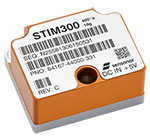
    082913novatel-stim300-TSensonor AS is partnering with NASA to supply current and future low- and near-Earth orbit space missions with inertial and gyroscope modules.

    The Norway-based company first began supplying its standard inertial measurement unit (IMU) and gyroscope modules for low Earth orbit (LEO) space applications in 2012, beginning with the launch of the NASA-sponsored AeroCube-4 satellite. Sensonor’s STIM300 and STIM210 inertial products are now a standard part in many spacecraft similar to the AeroCube-4.

    Current NASA projects using STIM inertial systems include the Raven technology demonstration and Near Earth Asteroid (NEA) Scout.

    Raven, which launches to the International Space Station in September, will test key elements of an autonomous relative navigation system. Its technologies may one day help future robotic spacecraft autonomously and seamlessly rendezvous with other objects in motion, such as a satellite in need of fuel or a tumbling asteroid.

    The concept image above shows the NEA Scout CubeSat with its solar sail deployed as it characterizes a near-Earth asteroid. (NASA)
    The concept image above shows the NEA Scout CubeSat with its solar sail deployed as it characterizes a near-Earth asteroid. (NASA)

    The NEA Scout is a robotic reconnaissance mission that will be deployed to fly by and return data from an asteroid representative of NEAs.

    NASA, in conjunction with the Aerospace Corp., spearheaded the use of STIM products in space, and many other commercial launch and satellite companies have since followed NASA’s lead. In fact, more than 30 companies around the world use Sensonor inertial products in various space applications, with several satellites successfully flying with STIM gyroscope modules for over three years.

    The STIM gyroscope modules are often used in combination with GPS or a Star Tracker and Kalman Filter to orient and stabilize the satellite, as well as to provide feedback on satellite motion induced by its reaction wheels. In some applications, the gyroscopes are used to stabilize satellite- to-satellite communications.

    Being a supplier illustrates the trust NASA and others place in Sensonor, further solidifying the company’s role in this market. “We look forward to continuing to serve the international space community with our inertial offerings as standard commercial off-the-shelf (COTS) products. By serving the space market on equal terms with our other customers, we can help to reduce the cost of manufacturing and launching space payloads,” said Hans-Richard Petersen, Sensonor’s vice president of sales and marketing. “Our STIM products are the lowest size, weight, and power for their performance level in the market, with 5 to 10 times lower weight than the next-best alternative with similar performance. This makes them a very cost-effective and attractive solution.”

    Sensonor will continue to improve its gyroscope module and IMU product performance and features, and is actively working with the space community to enhance its standard commercial-off-the-shelf (COTS) parts. Following the tremendous interest from the space community, Sensonor has initiated a space-optimized version of its STIM gyro module.

  • Systron Donner talks SDI500 tactical grade MEMS IMU at AUVSI’s Xponential 2016

    David Hoyh of Systron Donner Inertial talks about the company’s SDI500 tactical grade MEMS IMU at the Association of Unmanned Vehicles International‘s Xpontential 2016 show, held May 2-5 in New Orleans. The company also featured its INS/GPS SDN500 for use in GPS-denied situations.

  • Sensonor exhibits MEMS-based inertial products at AUVSI’s Xponential 2016

    Sensonor‘s Shaun McGuigan, Ph.D., highlights the company’s MEMS-based IMUs and gyro modules at the Association of Unmanned Vehicles International‘s Xpontential 2016 show, held May 2-5 in New Orleans.

  • KVH highlights line of IMUs for unmanned systems at AUVSI’s Xponential 2016

    Sean McCormack, director of FOG/OEM sales for KVH Industries, talks with GPS World Contributing Editor Tony Murfin about the company’s line of inertial measurement units (IMUs) during the Association for Unmanned Systems International‘s Xponential show, held May 3-5 in New Orleans.

  • VectorNav launches tactical series of IMUs at AUVSI show

    VectorNav launches tactical series of IMUs at AUVSI show

    VectorNav's new Tactical Series includes the VN-110 IMU/AHRS, the VN-210 GPS/INS and the VN-310 dual-antenna GPS/INS.
    VectorNav’s new Tactical Series includes the VN-110 IMU/AHRS, the VN-210 GPS/INS and the VN-310 dual-antenna GPS/INS.

    VectorNav Technologies, manufacturer of embedded navigation solutions, has introduced the Tactical Series, a next generation family of high-performance Inertial Navigation Systems (INS).

    The announcement was made at AUVSI’s Xponential 2016, being held this week in New Orleans, Louisiana.

    Built on a common tactical grade proprietary MEMS inertial sensing core, the Tactical Series includes the VN-110 inertial measurement unit and attitude heading reference system (IMU/AHRS), the VN-210 GPS-aided INS (GPS/INS), and the VN-310 dual-antenna GPS/INS.

    The Tactical Series leverages VectorNav’s navigation algorithm expertise and extensive experience in integrating its industrial series products into a broad range of airborne, marine and ground-based platforms. As a result, the Tactical Series offers the same functionality and features as Industrial Series for integrators of SWaP-C (size, weight, power and cost) constrained manned and unmanned systems.

    Designed and engineered at VectorNav’s headquarters in Dallas, Texas, the Tactical Series takes advantage of the latest developments in solid state MEMS technology to incorporate a 3-axis gyro with <1˚/hr in-run bias stability, leading to an attitude accuracy of 1 to 2 mrad. In addition to the improved IMU core, the Tactical Series enclosure is designed to DO-160G standards and rated IP68 for deployment in harsh and extreme environments.

    “The Tactical Series is the culmination of many years of development effort and collaboration with systems integrators across a broad range of industries,” said VectorNav President John Brashear. “We have combined our digital filtering expertise and experience in solving the challenging navigation requirements of customers worldwide to develop what is truly a next generation navigation solution.”

    The Tactical Series addresses navigation needs for a variety of unmanned applications and will be on display at VectorNav’s booth (#1043) at XPONENTIAL 2016 in New Orleans, May 3-5.

  • KVH looks to self-driving cars with inertial sensor plans

    KVH looks to self-driving cars with inertial sensor plans

    KVH Industries is developing a fiber optic gyro (FOG)-based, low-cost inertial sensor for self-driving cars.

    The company also released a Developer’s Kit to assist design engineers with integrating FOG technology into driverless car control systems.

    KVH’s high-precision FOG is key to a driverless car’s performance. In this photo, the red illumination represents light moving through the FOG’s optical circuit of coiled fiber; this circuit is the FOG’s sensing unit — it is mounted with power and processing electronics within a driverless car to provide precise data for the car’s navigation systems.
    KVH’s high-precision FOG is key to a driverless car’s performance. In this photo, the red illumination represents light moving through the FOG’s optical circuit of coiled fiber; this circuit is the FOG’s sensing unit — it is mounted with power and processing electronics within a driverless car to provide precise data for the car’s navigation systems.

    FOGs and FOG-based inertial measurement units (IMUs) are key parts of the sensor mechanisms that are essential for highly accurate autonomous car performance, KVH said. For example, FOGs provide precise azimuth measurements that an autonomous car’s logic processing unit and control systems need to determine motion through a curve.

    An IMU — which includes FOGs and accelerometers in one compact package — also provides highly accurate 6-degrees-of-freedom angular rate and acceleration data to precisely track the position and orientation of the car even when GPS is unavailable, helping the car stay on course.

    As a manufacturer of high-performance sensors and integrated inertial systems for defense and commercial guidance and stabilization applications, KVH Industries has experience in autonomous vehicle prototype programs and unmanned applications.

    “Extremely precise heading based on fiber-optic gyro technology is absolutely essential for autonomous vehicle performance,” said Martin Kits van Heyningen, KVH’s chief executive officer. “This is something we learned from having been involved with more than a dozen driverless car development programs over the years.”

    “What we are seeing now is that each driverless vehicle concept in development around the world is being designed in a unique way,” said Kits van Heyningen. “With so many different possibilities, developers can accelerate their progress by working with a proven technology such as KVH’s FOGs and FOG-based IMUs and leveraging our experience to ensure their success.”

    Developer’s Kit. The new Developer’s Kit includes the user interface software and all components needed to connect a KVH FOG or FOG-based IMU to a computer to configure, analyze and test a unit. “The kit is designed to help engineers get up and running in minutes, making it easier to run diagnostics and accelerate their system development,” said Roger Ward, KVH’s director of FOG product development.

    Driverless cars represent one of the fastest areas of autonomous-systems development. Transportation experts, automotive manufacturers and engineers alike predict that driverless cars will be commonplace soon.

    An updated policy concerning automated vehicles will soon be published by the National Highway Traffic Safety Administration (NHTSA), which is part of the U.S. Department of Transportation. “The rapid development of emerging automation technologies means that partially and fully automated vehicles are nearing the point at which widespread deployment is feasible,” NHTSA said.

    “We have successfully produced more than 90,000 fiber-optic gyros for an extensive range of unmanned applications, in part because of our ability to tailor size, performance, and cost to meet different design needs,” said Jeff Brunner, KVH’s vice president for FOG operations. “Controlling the entire FOG design and manufacturing process gives us that advantage, and makes it possible to produce a low-cost sensor when driverless cars enter full-scale production.”

    KVH’s FOGs and FOG-based IMUs are in use in prototype programs not only for autonomous cars, but also for production programs for underwater unmanned vehicle navigation and rail/track geometry measurement systems, to name just a few.

    KVH1750-T
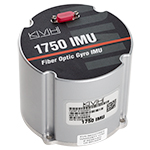
    The KVH 1750 IMU.

    In addition, KVH’s inertial products have been widely adopted for commercial applications such as land-based street mapping platforms, unmanned aerial systems, camera stabilization systems and remotely operated subsea systems.

    As more and more programs and platforms use KVH’s inertial products, they are becoming the reference standards of the unmanned world. For example, KVH’s 1750 IMU was an integral part of 11 of the 23 humanoid robot finalists in last year’s DARPA Robotics finals, a competition designed to showcase robots capable of intervening for and even replacing humans in high-risk situations such as fires, earthquakes, and other natural disasters.

    “Our IMUs and inertial sensors have already been used in a wide range of products and applications, and we know that it’s just the beginning,” said Kits van Heyningen. “We are thrilled to play a role in these exciting developments and emerging applications that are literally changing everyday life.”

  • Topcon releases 3D dozer machine control system

    Topcon Positioning Group has released a new 3D dozer machine control system — 3D-MCMAX. The system is driven by dual IMUs (inertial measurement unit) designed to increase on-grade performance where speed and blade response is maximized, while eliminating the need for a mast on the blade.

    The system uses Topcon 3D-MC2 technology with the dual IMU sensors and new, unique algorithms to deliver an integrated solution that locates the sensitive GNSS technology safely inside the cab instead of out on the harsh environment of the blade.

    “The 3D-MCMAX is the next generation of dozer grading solutions that redefines the concept of machine control,” said Jamie Williamson, executive vice president and general manager of the Topcon Precision Automation Group. “It provides high-accuracy elevation, slope, and blade rotation sensing in an integrated configuration resulting in maximum speed, maximum control and maximum grading performance.”

    3DMCMAX_Topcon-W

    The system is designed to let operators work confidently in rough or fine grade applications, slope conditions, and in restricted sight environments without the visual obstruction of masts or risks to hanging cables.

    “This advanced system is a result of our clear understanding of how technology is driving the evolution of the construction world, and focusing our improvements on smart algorithms in our firmware and software to increase the productivity of the hardware — a full systems approach,” said Williamson. “The added bonus is a clean integration onto the equipment. Gone is the need for daily installation and removal of antenna, cables, and mast. With 3D-MCMAX, the operator just climbs on and gets to work — downtime is minimized.”

    3D-MCMAX is available for Caterpillar dozers.

  • KVH Inertial Solutions Showcased at ION GNSS+

    KVH Inertial Solutions Showcased at ION GNSS+

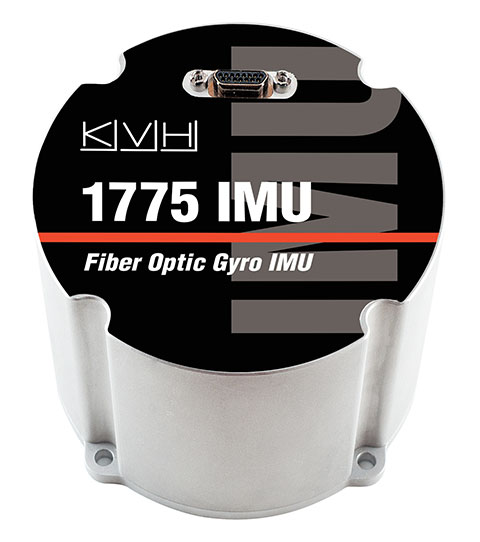
    KVH_1775_IMU-WKVH is a fiber optic gyro (FOG) manufacturer that controls every aspect of its fiber-optic technology — from drawing its own specialized polarization-maintaining fiber to building precision FOGs and FOG-based inertial systems.

    KVH will be showcasing its FOG-based inertial measurement units (IMUs) at this year’s ION GNSS+ conference, taking place Sept. 14-18 in Tampa, Fla.

    Many of today’s demanding applications require high-performance inertial sensors that provide consistent and reliable accuracy — and strike the right balance between performance, size/weight, power consumption, and price, KVH explained. The company offers three IMUs:

    • 1775 IMU – Premium performance for critical applications
    • 1750 IMU – Advanced performance and versatility
    • 1725 IMU – Superior performance at MEMS prices

    KVH will be at booth 516 in the ION GNSS+ Exhibit Hall.

    Below is a video tour of KVH’s high-performance fiber-optic gyro manufacturing facility, which shows how precision, quality and accuracy are built into each KVH sensor.

  • Xsens Adds Active Heading Stabilization to IMU

    In the latest update of its Motion Tracker product portfolio, Xsens has added active heading stabilization (AHS) to its core sensor fusion algorithms on the MTi 10-series and MTi 100-series. Both series are MEMS-based inertial measurement units (IMU), attitude and heading reference systems (AHRS), and vertical reference units (VRUs).

    The AHS algorithm delivers fundamentally improved heading tracking accuracy, Xsens said. The improved robustness in heading tracking is particularly evident in Xsens’ line of vertical reference units (MTi-20 and MTi-200). These products now provide actively stabilized heading tracking, delivering 20x less drift than pure gyroscope dead reckoning for most application scenarios. This means heading tracking drift as low as 1 degree after one hour for many applications, while remaining fully immune to magnetic distortions.

    Xsens said this characteristic makes the MTi line of products a highly accurate, but cost-effective solution for robotic/indoor navigation, camera stabilization, satellite communication, directional drilling, borehole/pipeline inspection and pedestrian navigation applications, Xsens said.

    “Customers are already choosing our MTis because of their accurate heading tracking capabilities, but this algorithm will bring the accuracy to a whole new level, enabling more applications and creating new markets. The 12 cm2 MTi comes with an easy-to-use library, so that integrating the solution is straight-forward,” said Marcel van Hak, Product Manager of Industrial Applications for Xsens.

    AHS is available immediately as a free firmware upgrade to all MTi customers as part of the just-released MT Software Suite 4.3.

    The following video shows a demonstration of the Active Heading Stabilization, with the Xsens MTi is mounted on a robotic vacuum cleaner.

  • MWC 2015: InvenSense to Ship Positioning Software for Smartphones

    InvenSense Inc. is making available its InvenSense Positioning Library (IPL) software, designed to provide sensor-assisted positioning in places where GNSS alone cannot provide desired accuracy. Invensense is a provider of intelligent sensor system on chip for motion and sound in consumer electronic devices.

    InvenSense made the announcement at Mobile World Congress, taking place in Barcelona, Spain March 2-5.

    The IPL incorporates advancements in sensor-assisted positioning algorithms that allow use of inertial sensors to improve GNSS positioning in urban areas where satellite signals are either blocked or distorted by multipath, enabling continuous location availability while driving in underground parking lots, tunnels, or walking in urban canyons. The IPL enables continuous and accurate position, velocity and orientation in challenging operating environments.

    These sensor-assisted positioning algorithms have been designed to operate under normal pedestrian and driving use without restrictions on the device orientation. Supported pedestrian use includes handheld, hand swinging, in pocket, call mode and belt holster. The algorithms also allow any use within the vehicle, such as in cradle, cup holder or simply left on a seat. The software was designed in a way to maximize accuracy and minimize constraints on the user.

    The IPL is designed to operate with an IMU and GNSS receiver as minimum hardware. Integration with a magnetometer, barometer, and vehicle speed sensor is also available, which provides additional heading integrity as well as height and velocity accuracy for sensor-assisted positioning.

    IPL is designed for smartphones using Android, iOS, Windows and general Linux operating systems and has already started shipping commercially. The underlying navigation technology comes from years of development at Trusted Positioning Inc., which was acquired by InvenSense this past summer.

    “With more consumers using their smartphones for turn-by-turn navigation on foot or in vehicle, one of the most frustrating user experience issues is losing your GPS (GNSS) signal in an unfamiliar location or being re-routed erroneously due to multipath errors,” said Ali Foughi, vice president of Marketing and Business Development at InvenSense. “With IPL technology, high-accuracy location guidance is always available and provides smartphone OEMs with a differentiated user experience and consumers with a more reliable navigation solution.”

    The InvenSense Positioning Library is available immediately.

    InvenSense is exhibiting in booth #D61 in Hall 7 at Mobile World Congress.


  • Oxford Technical Launches Board Set for System Integrators

    Oxford Technical Launches Board Set for System Integrators

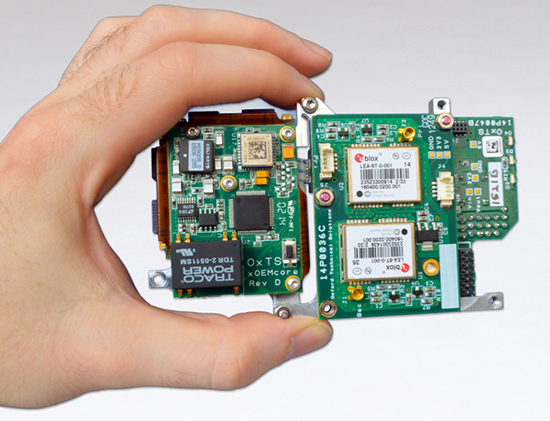
    OxTS_xOEM500-W Photo: Oxford Technical Solutions
    Photo: Oxford Technical Solutions

    Oxford Technical Solutions (OxTS) has announced the latest addition to its OEM line of inertial navigation systems, the xOEM500. The OxTS is a high-performance GNSS/INS system embedded on a single compact board set. It offers dual GNSS receivers and a high-grade MEMS IMU (inertial measurement unit) to system integrators in an easy-to-integrate 120-g package.

    With attractive prices for volume sales, the xOEM500 is one of the world’s smallest tactical-grade INSs available.

    OxTS is exhibiting at InterGeo. Visit stand B4.002 or visit the company website.

  • KVH Introduces Fiber-Optic Gyro IMUs for Demanding Applications

    KVH Introduces Fiber-Optic Gyro IMUs for Demanding Applications

    KVH_1775_IMU-W KVH Industries, Inc.
    Photo: KVH Industries, Inc.

    KVH Industries, Inc., has introduced the 1725 Inertial Measurement Unit (IMU) and the 1775 IMU, advanced sensors designed to be integrated into the most demanding stabilization, pointing, and navigation applications. These two new products complement KVH’s successful 1750 IMU and create a complete range of choices for advanced six-degrees-of-freedom (DOF) sensors with enhanced performance. All three products utilize the E•Core ThinFiber technology of KVH’s DSP-1750 fiber-optic gyro (FOG).

    “With these three products, system designers and integrators now have a high-performance solution for every application — ranging from manned and unmanned commercial and defense platforms, optical equipment stabilization systems, and pipeline inspection equipment, to autonomous vehicle control and navigation,” said Jay Napoli, KVH’s vice president of FOG/OEM sales. “This line satisfies the performance, size, and price parameters for IMUs in a way that no competitor can match due to KVH’s control over the design and manufacturing process, from creating the fiber to integrating all of the IMU components into the final design. Maintaining complete control of this process, combined with our proprietary technologies, allows KVH to offer a winning combination of innovative solutions, superior quality, and affordable options for nearly every stabilization or guidance application.”

    The 1725 IMU features a flexible user interface, with user programmable data output rates from 1 to 1000 Hz. It delivers excellent FOG performance and stability at a price comparable to competitive MEMS-based IMUs. The 1725 IMU is designed for all platforms and navigation or stabilization systems where low cost, high-performance, and high bandwidth are critical for success.

    The 1775 IMU is a premium sensor designed to deliver the highest level of performance to meet the demands of platforms requiring superior performance in the most challenging environments. Providing ease of integration for designers of high-level inertial navigation, guidance, or stabilization systems, the 1775 IMU offers a flexible interface with user-programmable data output rates from 1 to 5000 Hz. It includes three axes of magnetometers for automatic gyro bias compensation even in the presence of strong magnetic fields. The 1775 IMU is designed for sophisticated systems and applications where very high bandwidth, low latency, and extreme stability are critical.

    Like KVH’s 1750 IMU, introduced in 2012, the 1725 IMU and the 1775 IMU incorporate three axes of KVH’s DSP-1750 FOG, a tiny high-performance FOG integrated with three axes of advanced accelerometer technology. All three IMUs provide excellent shock, vibration, and thermal performance, as well as a compact form factor, KVH said.

    KVH controls the entire production process, from creating its own specially designed polarization-maintaining optical fiber to packaging its gyros together in advanced systems for inertial measurement, inertial navigation, and attitude heading reference. As a result, KVH’s open-loop fiber optic gyros offer outstanding accuracy and excellent durability at a lower cost than competing systems, the company said.