Tag: internet of things

  • Sierra Wireless Offers Internet of Things Platform with GNSS

    Sierra Wireless Offers Internet of Things Platform with GNSS

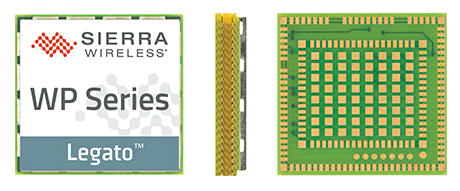
    The Sierra Wireless AirPrime WP Series.
    The Sierra Wireless AirPrime WP Series.

    Sierra Wireless has introduced its next generation of the AirPrime WP Series of smart wireless modules for the development of connected products and applications for the Internet of Things. The WP Series provides an integrated device-to-cloud architecture enabling IoT developers to build a Linux-based product using a single module that sends valuable user and product data to the cloud.

    AirPrime WP is part of Sierra’s new AirPrime smart portfolio, which includes:

    • AirPrime WP Series offering an application processor, GNSS receiver, and cellular modem with an optional ultra-low power mode that reduces power consumption by 200 times, opening up new use-case possibilities for cellular connectivity.
    • Legato Linux-based platform integrated directly into the application processor of the WP modules providing an open-source application framework and  professionally maintained Linux distribution.
    • Project mangOH open hardware reference design for the WP modules offering wireless, sensor, and cloud connectivity out-of-the-box to rapidly build prototypes.
    • AirVantage cloud and connectivity services providing device, application, and connectivity management as well as an IoT data platform securely integrated into the WP.

    “With the introduction of the new AirPrime WP Series modules, we have launched a powerfully integrated device-to-cloud architecture to make it easier for our customers to innovate,” said Dan Schieler, senior vice president, Embedded Solutions for Sierra Wireless. “With an application processor running the open source Legato platform, along with the AirVantage cloud for device and application management, and a new open hardware reference design, the latest WP Series modules enable developers to quickly build connected products using a single module to run all their applications.”

    The WP Series is interchangeable and completely footprint-compatible with the AirPrime HL Series, and is available in 3G and 4G LTE variants with 2G fallback on certain modules. Like the HL Series, the new WP Series modules can be soldered down or used with a socket, for flexibility in manufacturing and inventory management. The form factor, called CF3 (common flexible form factor), will be supported by Sierra Wireless through multiple generations of both WP and HL Series product lines, providing a secure migration path for customers through multi-year deployments.

    The next-generation AirPrime WP Series offers industry-leading ultra-low power mode for applications that need to prioritize power management over constant connectivity. This deep-sleep mode is designed for industrial solar- or battery-powered applications where constant connectivity is not required, opening up new use-cases for cellular connectivity where it was previously impractical.

    For OEMs and developers, the integration of processors and device software with wireless functionality can be complex and time-consuming, even more so when modifications are required for each region and each generation of the product. If location-based services are required, a GNSS receiver must be integrated as well. Furthermore, the data from the wireless connection, the connected asset, and its location must be aggregated and delivered to enterprise applications.

    The next-generation AirPrime WP Series is designed to address all of these issues. It offers an integrated processor and a GNSS receiver, reducing the number of components, integration time, and cost for developers. The Linux-based Legato platform running on the module’s processor provides the modem services needed to get the module communicating on a cellular network, plus an application framework and secured processing space to run third-party applications. Through Legato, AirPrime WP modules are pre-integrated with the AirVantage cloud for simple, secure configuration and management of the device and its data once deployed.

  • OriginGPS Unveils Multi-GNSS Module with Antenna for Wearables

    OriginGPS Unveils Multi-GNSS Module with Antenna for Wearables

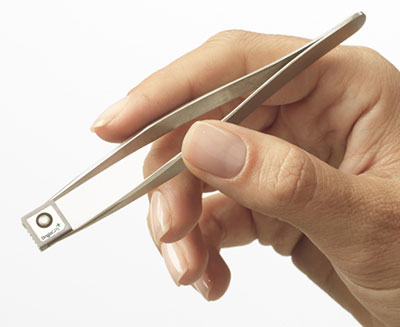
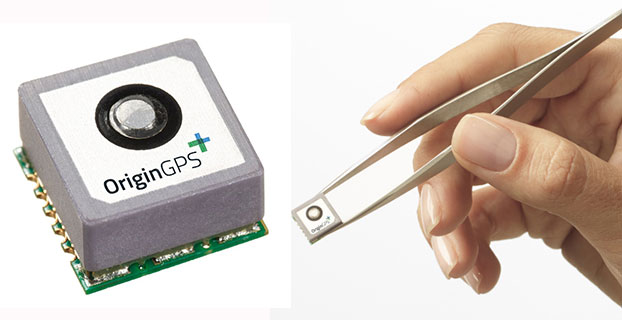
    The Multi Micro Hornet by OriginGPS was designed small with wearables in mind.
    The Multi Micro Hornet by OriginGPS was designed small with wearables in mind.

    OriginGPS has launched the Multi Micro Hornet, a tiny fully integrated multiple constellation antenna module. The innovative architecture packs functionality and high-quality components in a small space to improve wearables’ fashion and function, the company said.

    “A recent study by the European Global Navigation Satellite Systems Agency (GSA) showed that multi-constellation is becoming a standard feature in today’s user equipment,” said Gal Jacobi, CEO of OriginGPS. “Developers of wearables need modules with these features in the smallest size possible to be competitive in a market the GSA predicts will reach 14 million by 2023.”

    GPS World reported on the GSA market report in its April issue, and held a webinar on the report on April 16, which can be viewed for free.

    The Multi Micro Hornet is designed for devices that require a small form factor, low power consumption, and high sensitivity. In keeping with the company’s “Mini + Mighty” corporate mantra, OriginGPS has reduced the total volume in size by over 68 percent of other GNSS antenna modules without sacrificing performance, the company claims.

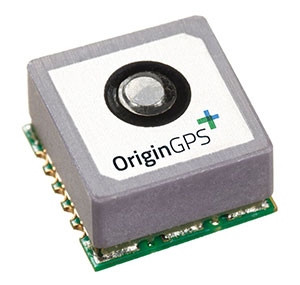
    The Multi Micro Hornet by OriginGPS.
    The Multi Micro Hornet by OriginGPS.

    The Multi Micro Hornet has features that will improve the navigation experience of wearables and other Internet of Things devices, including:

    • Small size, high performance: Despite its miniature outline of 10 x 10 mm and height of 5.9 mm, the Multi Micro Hornet module offers superior sensitivity and outstanding performance, achieving rapid Time To First Fix (TTFF) of less than one second, accuracy within as little as one meter, and sensitivity at -165 dBm by tracking both GPS and GLONASS constellations simultaneously.
    • High sensitivity and noise immunity: The Multi Micro Hornet continues to leverage OriginGPS’ patented and proprietary Noise Free Zone NFZ technology to ensure high sensitivity and noise immunity even under marginal signal conditions.
    • Reduced power consumption without compromising connectivity: It detects changes in context, temperature, and satellite signals to achieve a state of near continuous availability. By opportunistically updating its internal fine time, frequency and satellite ephemeris data, the Multi Micro Hornet is able to stay connected while consuming mere microwatts of battery power.
    • An intelligent design that shortens time to market: The Hornet family of GPS / GNSS antenna modules integrates a GNSS receiver and patch antenna in a single module. As a cornerstone of the OriginGPS portfolio, the Multi Micro Hornet’s pin-to-pin compatibility with the Micro and Nano Hornet modules ensures a seamless migration from GPS to GNSS and gives developers the ability to create new product offerings in the shortest time to market while minimizing costly design risks. Developers can connect it to a power source on a single layer PCB and be off and running.

    Additionally, the Multi Micro Hornet module combines OriginGPS’ proprietary low-profile GPS+GLONASS antenna with a dual-stage LNA, RF LDO, SAW filter, TCXO, RTC crystal and RF shield with SiRFstarV GNSS system on chip.

  • The Internet of Everything: It’s All in the Timing

    40th Annual NIST Time and Frequency Metrology Seminar

    There were four of us, mature males who all remember having a crush on Annette Funicello, were seated around a table avidly discussing deviant behavior with a sometimes rapt mixed-gender audience. The four of us, loudly discussing deviant, and only occasionally aberrant behavior, were doctors: David Allan the world renowned creator of Allan Deviation or variance fame, Judah Levine, world renowned nuclear physicist and Father Time of NIST (National Institute of Standards and Technology), Neil Ashby, former chair and currently Professor Emeritus of Physics at UC Boulder, also from NIST, along with yours truly representing GPS World magazine and the Institute for Defense Analyses. Our ever-changing audience was composed of the 40+ members from around the globe attending the 40th Annual NIST Time and Frequency (T&F) Metrology Seminar, held June 2-5 in stunningly beautiful Boulder, Colo.

    Of course, the numerous deviant behaviors under discussion had more to do with the sometimes-fickle performance of various atomic reference systems than they did anatomy. And we were speaking loudly because that is what most men of our age do. Dr. David Allan frequently threw in quotes and anecdotes from his recently published book on time, It’s About Time, about which you will read more later.

    The NIST T&F Metrology Seminar is truly one of a kind, easily the best in the world for time and frequency metrology. I have been fortunate enough to attend numerous times. I can truly say I have never found it repetitive or boring. There are so many exciting discoveries concerning time, which David Allan staunchly maintains is a purely human construct, and how time applies to our everyday lives, especially to GPS — all PNT systems actually — that it is impossible not to be constantly fascinated.

    NIST Mission

    NIST Boulder is all about research and development for timing standards, which is a benign way of saying NIST SMEs (subject matter experts) are the world’s foremost authorities on time and metrology. To wit, NIST has produced no less than four Nobel Prize winners in metrology, the last being awarded in 2012. The atmosphere at NIST and the University of Colorado Boulder campus is such that you can’t help but feel certain there are more Nobel Prizes for NIST on the horizon.

    David Howe (Ph.D.), my NIST host and group leader of the Time and Frequency Metrology Division, explained that his organization, which sponsors the seminar, is an operating unit of the Physical Measurement Laboratory of the National Institute of Standards and Technology (NIST), an agency of the U.S. Department of Commerce. The NIST T&F Division is located in Boulder at the NIST Boulder Laboratories, just across from the street from the University of Colorado. Many of the NIST researchers are also University of Colorado professors, adjuncts or graduate students.

    The NIST mission includes:

    • Maintaining the primary frequency standard for the United States
    • Developing and operating standards of time and frequency
    • Coordinating United States time and frequency standards with other world standards
    • Providing time and frequency services for United States clientele
    • Performing research in support of improved standards and services

    Precise time and frequency information is required by electric power companies, radio and television stations, telephone companies, air traffic control systems, participants in space exploration, computer networks, scientists monitoring data of all kinds, and navigators of many types. These users need to compare their own timing equipment to a reliable, internationally recognized standard. NIST provides this standard for the United States.

    Of course one of the largest distribution networks for timing data is through the Global Positioning System (GPS), which provides this data globally to more than 4+ billion users and millions of timing systems everyday, numerous times per day. The number of times GPS time is utilized per day is almost impossible to calculate, but most certainly resides in the trillions.

    The NIST Time and Frequency distribution system delivers NIST Internet time over the Internet at the rate of 8 billion requests per day from servers at 25 locations across the United States.

    The frequency stability provided by classic Cesium and Rubidium atomic reference systems onboard GPS payloads have historically been on the order of 1 x 10-14. While this is the stability provided by the GPS IIF rubidium clocks, currently the rubidium clocks being prepared for GPS III are achieving frequency stability on the order of 1 x 10-15 under laboratory conditions, an order of magnitude better than the current on-orbit clocks.

    This is actually an amazing feat. For those of you who don’t deal in scientific notation on a daily basis, this means — since it is on a logarithmic scale — that the frequency stability of GPS III’s atomic clocks have the potential to be 10 times as stable as the IIF clocks, which are currently the most stable and accurate GPS clocks on orbit to date.

    Where atomic reference systems are concerned, we routinely speak of frequency stability and not clock accuracy. It is the stability over measured epochs, short and long, that matters most. Indeed, it is the oft-misunderstood frequency stability uncertainty expressed as delta f/f = 1 x 10-16 that produces the clock accuracy to within one standard (SI) second in three hundred (yes, 300) million years — a statistic that is obviously not directly observable, but reasonably predictable. Hence, as Judah Levine often says, where stability is concerned you are an historian, but where accuracy is concerned you are a prophet. NIST defines an SI second as the duration of 9,192,631,770 cycles of the cesium hyperfine transition.

    Tom O’Brian, the current chief of the NIST Time and Frequency Division, explained that this level of precision is equivalent to measuring the distance from the Earth to the Sun, a distance of 150 million kilometers, to the uncertainty of 15 microns or 1/10 the thickness of a human hair. While that is impressive, the best is yet to come. NIST is currently working on research-grade optical clocks, which we could reasonably expect to see on orbit one day in future GPS payloads, with an optical frequency stability equivalent to delta f/f = 2 x 10-18 or accuracy equal to 1 second in 15 billion years. Again this is the equivalent of measuring the distance from the Earth to the Sun to an uncertainty of 0.3 micron or the size of a virus.

    So What?

    Many of you may be asking why, as a GPS user, or merely as a user of technology, you should care about accurate and stable time reference systems. Marc Weiss, a long-time acquaintance and noted researcher at NIST (now in semi-retirement), very eloquently put his thoughts about time in an introduction to a recent timing white paper*, which has been slightly edited for length, current trends and readability. [Ed. So as to not be accused of putting words or opinions in the authors’ mouths, we have provided a reference for the unedited paper at the end of the referenced section]. Marc and several other metrology luminaries express their feelings concerning the future of time and why we should all care:

    We stand at the advent of a revolutionary new economy fueled by the global Internet of Everything (IOE). The IOE is a combination of traditional telecom systems with a growing need for wireless technology, and the emerging Internet of Things (IOT) including Machine-to-Machine (M2M) technology. Several current technology providers predict there will be a trillion global endpoints connected to the Internet by 2022, with $14.4 trillion in value at stake.

    One fundamental enabler of this revolution is a marriage of timing signals and data that breaks through existing barriers. Currently, optimal use of data in computing and networking is anathema to optimal use of timing signals. Computer hardware, software and networking all isolate timing processes, allowing the data to be processed with maximum efficiency due in part to asynchrony. Yet, the coordination of processes, the time stamping of events, latency measurements and optimal use of precious spectrum are all enabled by ever more accurate and stable timing.

    Timing is critical for the future development of and improvements to several high-value applications. For example, in smart transportation systems the exchange of information between vehicles, highways, and civil authorities depends on a robust ubiquitous timing system to ensure the rapid, accurate synchronization and provenance of data. Similar requirements are found in the operation of power grids, especially now that wind farms, solar arrays and the like require different control strategies, which are a critical part of the system. Modern medical applications such as tele-surgery and real time integrative online medical conferences, as well as applications in financial systems are all important examples that require accurate and stable timing signals and may well affect us all.

    There are three different types of timing signals for dependable synchronization: frequency, phase, and time. Frequency can be supplied by an individual clock, such as a commercial (atomic) Cesium or Rubidium standard, though practicality drives the use of local oscillators that require calibration and active reference signals. [Ed. Many of these local reference systems and oscillators are routinely updated by GPS signals.] By contrast, phase and time synchronization always require the transport of timing signals plus data. Timing signals are physical, they occur on the physical layer of networks. Indeed the IoT has many devices and applications that require frequency, time and/or phase synchronization. Frequency, time and phase all need to cross layers, boundaries, and networks from their sources in accurate clocks. Requirements for these transfer systems include parameters that create different, perhaps orthogonal, demands on systems. Accuracy, stability, integrity and even non-repudiability requirements are realized with varying demands on different systems….

    To facilitate the massive growth of the IoE, data processing and networking require new designs at fundamental levels, allowing integration with precise and verifiable time, frequency and phase signals.

    Timing performance is fundamentally dependent upon an underlying oscillator, or ensemble of oscillators and the clocks constructed based on these oscillators.

    However, it is apparent to us that many of the researchers and developers of the various time aware systems operate independently of each other. They attend different conferences, read different literature, and in general do not interact sufficiently to achieve the breakthroughs needed. In our minds this calls for a dedicated and collaborative “across the stack” research collaboration focused on two or three comprehensive challenge problems.

    * Time-Aware Applications, Computers, and Communication Systems (TAACCS), A White Paper, Feb. 15, 2015. Available from http://nvlpubs.nist.gov/nistpubs/TechnicalNotes/NIST.TN.1867.pdf

    Fortunately, this is what researchers, scientists, analysts and metrology experts do at NIST and what we learned about during the T&F Metrology Seminar. The bottom line is many perturbations affect timing signals from atomic reference systems and even local quartz oscillators (clocks). The more these perturbations are understood, the easier they are mitigated and the more stable and accurate our timing signals will be and the faster technology — PNT (position, navigation and timing), clock and otherwise — advances.

    For many traditional timing applications and developing “post-timing” applications, stability is more important than accuracy; just as for most advanced technology applications, frequency is more important than time of day.

    NIST clearly states its Time and Frequency Metrology Group has the world’s most advanced measurement and calibration facilities for characterizing noise components in oscillators and frequency synthesizers. NIST engages in numerous research and development activities to determine the cause of various types of noise for the purpose of isolating and reducing it, leading to improved components, instruments, techniques and results that are often critical in modern applications. In other words, you have to thoroughly understand a clock issue before you can begin to mitigate issues affecting it. NIST, a synecdoche for understanding time, does that better than any other metrology laboratory in the world today when it comes to atomic reference systems.

    What Is Time and Why Does It Matter?

    Accurate timing and synchronization are a crucial part of the world’s critical national infrastructure and of modern technology in general, especially the timing signals from GPS satellites, which are used by billions of users continuously every day — although most users remain unaware of the importance and impact that accurate and stable timing has on their everyday lives.

    Tom O’Brian reminded us that even St. Augustine of Hippo wondered about time. In circa 400 he wrote:

    “What then is time? If no one asks me, I know.
    If someone asks me to explain, I know not.”

    Then, just 1500 years later in 1930, Albert Einstein had this to say about time:

    “Space and time are modes by which we think, not conditions under which we live.”

    Therefore, I agree with David Allan when he posits that time is a human invention with which only humans struggle. Be that as it may, it is still a condition we live under, and when you consider all the forces, minute to infinite, that affect atomic reference systems and clocks in general, it is amazing our clocks function as well as they do.

    Consider that atomic clocks, and even quartz clocks to some extent, are affected by the following elemental and environmental forces and more in the laboratory:

    • Motion
    • Acceleration
    • Gravity – Earth, Moon and planetary
    • Changes in elevation
    • ~23 different types of noise
    • Temperature
    • Magnetic fields
    • Earth’s Poles
    • Tides
    • Light (including lasers)
    • Electricity
    • General and Special Relativity
    • Radiation

    The United States Air Force then takes these delicate clocks, atomic (Rubidium and Cesium) as well as quartz VCXOs and OXOs, and launches them (with violent maneuvers) into space in a Medium Earth Orbit that regularly intersects the Van Allen radiation belt. Once on orbit, the clocks routinely experience every one of the listed forces and more on both a regular and changing basis. Of course, we expect the GPS clocks to operate at the same standards and with the same stability and accuracy they displayed in the laboratory. Not asking much are we?

    The amazing fact is that thanks to the dedicated scientists and physicists at NIST and other timing laboratories, the clocks work as advertised and continue to do so sometimes for more than 20 years. The current GPS III Rubidium clocks being tested and aged at NRL (Naval Research Laboratory) and other locations around the U.S .are posited to be the first 30-year Rubidium standards with nominal frequency stability of 1 x 10-15. This should provide GPS with another nanosecond of timing accuracy and another 12 inches of positioning accuracy. There will be three of these extremely stable Rubidium clocks on board each GPS III satellite — no Cesium clocks for this family of satellites. Horologists around the world are hoping it is truly a 30-year tube and that only one Rubidium will be required. Only time will tell.

    Little Known Factoid (LKF): The first family of GPS satellites on orbit made use of a General and Special Relativity switch that could be set in one of three positions: neutral, plus or minus, depending on whether the universe was relatively static, expanding or shrinking in size. Guess where the switch was set initially and (hint, hint) it could be changed via software from the ground. Drop me a line @ [email protected] and let me know what you think — posit or know, as the case may be.

    Thanks

    My thanks to David Howe, Judah Levine, Neil Ashby, David Allan (Ph.D.s all) and Danielle Lirette, who made my visit to NIST such a wonderful experience.

    It’s About Time

    Earlier I mentioned physicist David Allan’s wonderful book, published in 2014. It’s About Time: Science Harmonized with Religion. Allan is about science harmonized with religion and where we are in God’s time. I am halfway through the 402-page tour de force on time, and it is a fascinating read. It is a 50-year biography and history of atomic reference systems, since the first atomic clock only came about in 1949. You’ll be amazed how that happened. Based on what I have read so far, I highly recommend this scientific tome, which is very readable and understandable even for the lay reader. I promise a full review in a future column.

    Until then, Happy Navigating! I hope to see many of you at ION JNC (Institute of Navigation Joint Navigation Conference) in Orlando, Fla., June 21-26. There will be a classified day on Thursday, June 25 and a Warfighters Panel as well. Hope you can join us. Remember, GPS is brought to you courtesy of the United States Air Force.
  • Telit, Agnik Join on IoT Apps, Big Data for Smart Devices

    Telit Wireless Solutions and Agnik are collaborating on Internet of Things (IoT) applications and Big Data analytics for connected devices in the auto, home and health industries. Agnik’s solutions expand the quality and quantity of integrated IoT apps and analytics available to customers and ecosystem partners of the industry-leading deviceWISE AEP.

    The rapid proliferation of smart devices and products makes it challenging to aggregate and manage all these different data sources and also requires that this trove of data is harnessed and analyzed to extract valuable insights that help companies make more informed business decisions. The Internet of Things is already starting to transform businesses around the world. For example, in the automotive industry Big Data analytics provide a better understanding of vehicle performance, automotive business, automotive risk management, and connect with customers at a deeper level to improve efficiency and brand-loyalty. In the home, Big Data solutions are helping to manage energy consumption, maintain security while allowing entry to repair services while the homeowner is away. Individuals are wearing quasi healthcare devices on their bodies night and day.

    Telit and Agnik are providing technology and analytics designed to make it easy for large and small companies to get onboard with the Internet of Things — reducing cost, time-to-market, complexity and risk versus trying to engineer a fragmented solution in house. At the core sits Telit’s Cloud-based deviceWISE, an application enablement platform for data acquisition, data and device management and data integration. In turn, Agnik converts the data from thousands of connected things into actionable business intelligence, delivered on custom web-based and mobile apps, and dashboards.

    “We are honored to welcome Agnik as a deviceWISE business partner. Agnik’s leading IoT apps and Big Data Analytics further expand the number of off-the-shelf deviceWISE Ready solutions that are available to customers, MNOs and partners worldwide,” said Gideon Rogovsky, SVP, sales and marketing of deviceWISE platform at Telit. “Telit is creating a growing ecosystem of world-class IoT solution providers — ranging from the device side to applications and analytics.”

    “We are pleased to collaborate with Telit and offer Agnik’s analytics-driven ecosystem of products and services to the deviceWISE AEP community,” said Hillol Kargupta, president of Agnik. “Agnik offers a comprehensive analytics platform for connected devices powered by our patented, onboard data-stream mining technology and wide range of distributed cloud-based analytics for consumer and commercial applications in connected environments.”

    Agnik’s suite of analytics software products provide a wide range of powerful onboard and cloud-based tools that transform data about vehicle performance and user experience into valuable insights, according to the company. The analytics help companies in the automotive industry connect with car owners at a deeper level.

    Agnik has also embarked upon a deep analytics driven path in the connected world of devices and products for industrial environments, home and health. Its collaboration with Telit will blend Agnik’s predictive data analytics capabilities with Telit’s device management infrastructure to develop a patchwork of insights into a holistic quilt of knowledge, from what would appear to be on the surface unrelated sources of information, devices, and products.

  • Autonomous Vehicle Ambitions Behind HERE Suitors?

    Autonomous Vehicle Ambitions Behind HERE Suitors?

    Kevin Dennehy
    Kevin Dennehy

    A number of large companies are making bids to acquire Nokia’s HERE digital mapping company. At least one analyst believes the interest is fueled by future autonomous ambitions. In other location industry news, a new location-based analytics product hits the market.

    Signaling the need to control a major location industry segment, Nokia’s HERE digital mapping company is attracting big-name suitors for as much as $3 billion. According to published reports, the bidders include Uber, Audi, BMW, Mercedes, Chinese search engine giant Baidu — and even Facebook.

    However, at least one industry insider believes the hoopla for HERE, which is found in a majority of in-dash navigation units worldwide, is being driven by the continued interest in autonomous vehicles.

    “Google has been openly working on the concepts required to support AVs for several years and Apple has a skunkworks where they are working on prototypes for an Apple AV. The German luxury car makers realize the bind they could find themselves in — as do all vehicle manufacturers — if Google is able to produce a popular AV-oriented OS that is preferred by owners of AVs over an OS produced by the vehicle manufacturers,” said Mike Dobson, TeleMapics principal, who writes about the topic at www.telemapics.com. “I suspect that Google is really focused on an operating system for autonomous vehicles that can help promote Google’s interest in advertising, but will produce a prototype car to show how the system should work, although avoiding large-scale production. Apple, on the other hand, may be considering producing a vehicle that runs on their OS. So while Google is regarded as a more immediate concern for the automobile industry, the company may also become the vehicle manufacturers’ best friend and trusted supplier, if Apple enters the autonomous vehicle market as a vehicle manufacturer.”

    While Dobson believes Uber, which bought mapping company deCarta in March, is playing with fire by bidding for HERE, he says they are clearly concerned what the world of autonomous vehicles might mean for their business. “Within 10 years, Uber will be producing its own fleet of AVs. While owning a map company might be beneficial to them, they might be better off licensing map databases,” he said.

    Facebook Not a Good Match

    Dobson said that while Facebook, rumored to also be a bidder, can afford the billions to buy HERE, there does not appear to be a significant strategic advantage for them in doing so. “While (Facebook) is experimenting with geographical databases, it is unclear to me that they would significantly benefit from owning a spatial database, as opposed to licensing the data, although their concern may be driven by a fear that the data might not be freely licensed after the company is acquired, say, by a competitor,” he said.

    The problem with the automotive consortium and Uber that have surfaced in the quest for HERE, the company once called Navteq — and acquired by Nokia for more than $8 billion in 2007 — is that none are data companies — with the background and nuances of creating spatial databases,” Dobson said.

    “From my perspective, that means none of the current bidders are ideal candidates to manage the company. Like Nokia, these companies may not actually know what to do when they win the auction,” he said. “During the eight years that Nokia has owned HERE, the mapping asset has been devalued and improperly positioned for growth. I do not know how much more mismanagement the team at HERE can take before the company and its navigation databases becomes non-competitive.”

    Dobson says that Uber, Facebook, Baidu, and the German car manufacturers do not yet understand the expense of upgrading and maintaining HERE’s mapping database for the demands of the autonomous vehicle market. “Buying HERE for ‘internal’ use only would be a significant mistake, so any potential buyer is going to need to continue to sell data to all channels, even those owned by potential competitors. This simple reality will cause any of the buyers who have surfaced so far a lot of heartburn in the future,” he said.

    Dobson says the clear winner for the future of HERE is the German automotive consortium of Audi, BMW and Mercedes, with its reported alliance with Baidu. “I do not regard this combo as an optimal owner, but the mix of interest may help keep HERE at the forefront of producing high-accuracy navigation databases — although the extent of map coverage may be a casualty of this ownership team,” he said.

    New Location Analytics Product Hits the Market

    A new location analytics product is hitting the market in a more and more crowded indoor-positioning field. The differentiator, says Cloud4Wi about its new Fogsense product, is that the unit constitutes the location industry’s smallest Internet of Things Wi-Fi device that is tailored to retail outlets, coffee shops, restaurant chains and shopping malls with presence analytics and location-based services.

    The device, which contains Broadcom’s WICED chip, will feature Bluetooth low-power technology in the new version in (the fourth quarter), said Elena Briola, Cloud4Wi’s chief marketing officer. The new BLE version will enable Apple iBeacon and location-aware mobile applications.

    “We not only track the position of visitors and customers in the venue, we aggregate this data in valuable analytics and we provide applications to deliver targeted localized services based on these analytics,” she said.

    The device is also USB-powered, allowing businesses to scale its integration with both single and small venues, where Fogsense receives power from laptops and point-of-sale (POS) devices, the company said.

    “Customers increasingly expect Wi-Fi to be available wherever they go. Businesses can collect valuable data about their customers, better understand their behavior and deliver more personalized marketing initiatives,” Briola said.

    Like many location analytics companies, Cloud4Wi believes the new product will enable businesses to design push-targeted, localized marketing and advertising messages based on an assessment of the customer’s behavior at the venue.

    The company evokes the much-quoted ABI Research statistics that more than 1 million location retail deployments will occur by 2020.


  • Cap-XX Launches 0.6mm Thinline Supercapacitors for Wearables

    Cap-XX Launches 0.6mm Thinline Supercapacitors for Wearables

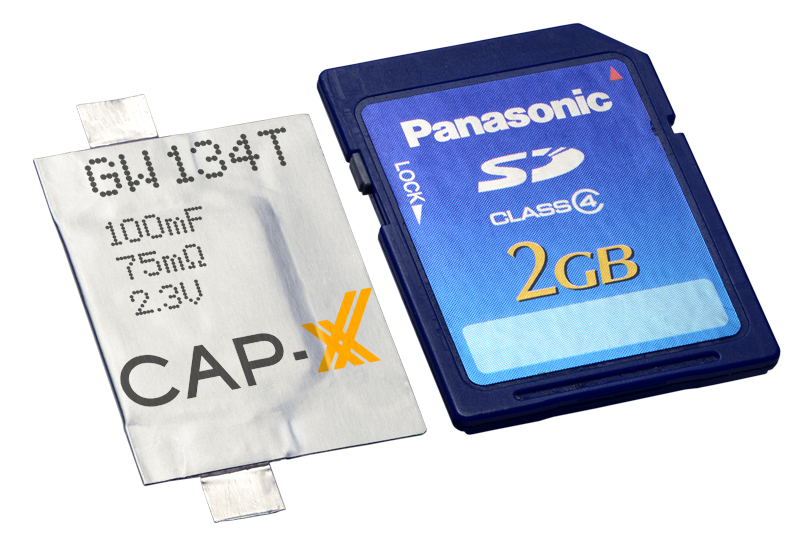
    Cap-XX Thinline Supercapacitor shown with an SD card.
    Cap-XX Thinline Supercapacitor shown with an SD card.

    Cap-XX, developer of flat supercapacitors for burst and back-up power in space-constrained electronic devices, has launched its Thinline series of single-cell supercapacitors. The thin (0.6-mm) supercapacitors were developed to address the size, weight and cost challenges of designing thin, sometimes disposable electronic devices for the Internet of Things (IoT).

    Examples include wearables (medical, fitness and health monitors, smartwatches, drug delivery systems), portables (active credit cards, smartphones, RFID tags), and connected electronics (smart homes and smart buildings, electronic shelf labels, wireless sensor networks).

    To reduce thickness and manufacturing costs, CAP-XX increased the power and energy density in its electrode materials to deliver equivalent performance in about half the volume, and eliminated the folded edges and copper terminals that contribute to thickness in its standard line supercapacitors. (For comparison, CAP-XX’s thinnest traditional single-cell supercapacitor is 1.10 mm.)

    Cap-XX Thinline supercapacitors support power requirements in IoT devices including GPS acquisition, wireless communication (Bluetooth, Bluetooth Smart, Zigbee, Z-Wave, Ant, active RFID), electronic paper and OLED displays, haptic or tactile feedback, vibration alerts, and injection or inhalation system delivery.

    Cap-XX supercapacitors benefit from a nanotechnology construction that stores electrical charge in engineered carbon electrodes on aluminium foil, to minimize resistance and maximize capacitance. The electrode construction packs the highest energy and power densities possible into thin, prismatic packages, the company said.

    Supercapacitors can handle peak power events, supporting batteries and energy harvesters configured to provide low-power current at maximum efficiency. This architecture allows designers to use smaller, cheaper, low-power batteries and extend their run-time and cycle life, or use intermittent ambient energy sources such as solar photovoltaic. Supercapacitors also enable ultra-quick device charging and wireless power transfer, and provide the backup needed for graceful shutdown and “last gasp” transmissions in mission-critical applications.

    The Thinline idea was born while working with a customer designing a disposable insulin pump. “We figured out how to eliminate materials and change some processes to reduce costs and thickness,” explained Anthony Kongats, Cap-XX CEO.

    Thinline works with thin-film, solid-state, and other low-power batteries such as coin cells/button cells, energy harvesting modules (solar, vibration/kinetic, RF, and other ambient energy sources), as well as inductive/wireless and cable/cradle fast-charging systems.

    Features of Thinline include:

    • Extremely thin, flexible packaging from 0.6mm (600µm) thick
    • Best-in-class power density and power output (up to 117kW / litre)
    • Ultra-low resistance, even at low temperatures (ESR from 16mΩ, 2x nominal at -40°C)
    • Excellent energy storage to support ambient/intermittent sources (up to 0.8Wh / litre)
    • High cell voltages to facilitate integration with primary batteries (up to 2.75V continuous)
    • Wide operating temperature range (from -40°C to +85°C)
    • Very low leakage current to maximize battery life and minimize losses (typically < 1µA)
    • Virtually unlimited charge-discharge cycle life

    Cap-XX Thinline supercapacitors are available in three footprints:

    • “A” series: 19.5mm x 20.0mm x 0.6 – 0.9mm thick, 60 – 180 mF, 45 – 200 mΩ
    • “W” series: 28.0mm x 20.2mm x 0.6 – 0.9mm thick, 100 – 300 mF, 24 – 120 mΩ
    • “S” series: 39.0mm x 20.2mm x 0.6 – 0.9mm thick, 180 – 540 mF, 16 – 75 mΩ

    Suggested retail price for all 0.6-mm cells is less than US$1 in large volumes. The 0.7 mm and 0.9 mm cells in each series have higher C/lower ESR and cost slightly more. All parts are available in a 2.3V / 70°C, or 2.75V / 85°C configuration. They can be assembled by soldering or welding (ultrasonic, laser or spot).

  • Antenova’s Tiny Weii Antenna Designed for Consumer Applications

    Antenova announces its first antenna for consumer applications — the tiny Weii 2.4-GHz ceramic antenna. Measuring 1 mm x 0.5 mm x 0.5 mm, the company believes the Weii could be the smallest antenna in the world.

    The new Weii miniature ceramic antenna is designed for 2.4-GHz, Bluetooth, Wi-Fi, Zigbee and industrial, scientific and medical (ISM) applications.

    While all of Antenova’s antennas and antenna module products are small surface mounted devices, this antenna is the smallest that Antenova has created so far. It is designed specifically for the consumer, Internet of Things (IoT) and machine-to-machine (M2M) markets.

    Colin Newman, Antenova’s director and vice president of sales, explains how Antenova has miniaturized the antenna. “Ceramic antennas offer low dielectric losses and high isolation. Our engineers have used this technology to greatly reduce the antenna volume without sacrificing performance. The challenge in building antennas for today’s small consumer devices is to achieve high isolation and frequency selectivity while maintaining good efficiency. This antenna is resistant to detuning from environmental effects, and combining this with its ultra-small size, makes it ideal for today’s wearable products.”

    The Weii is an omni-directional, surface-mount device (SMD) mounted dielectric antenna that can be used to add wireless connectivity to any small electronic device, such as wearables, headsets, medical devices, personal navigation devices, dongles and sensors.

    A ceramic antenna offers several advantages for these emerging applications. Its tiny footprint is designed for the new, scaled-down printed circuit boards (PCBs) that are being developed for consumer devices in M2M. It offers a highly efficient antenna that is powerful over indoor ranges, and that performs well when sited close to the human body, Antenova said.

    Antenova says it takes a unique approach to the design of antennas, which it calls “Design For Integration” (DFI). Because the antennas are always embedded within a customer’s design, the successful operation of the customer’s device depends upon obtaining the correct performance from the antenna when it is placed on the PCB; therefore, Antenova is designing its antennas with this difficult RF integration in mind.

    The Weii is designed to be easily integrated into all kinds of PCB designs and various ground plane sizes — it has been engineered so that it can simply be dropped into the design, using CAD footprint files, which are provided free of charge. To ensure that customers can harness the antenna successfully and achieve the optimal performance of the antenna, Antenova provides engineering assistance along with advice on RF design layout and the integration of the antenna, and customer support.

    The antennas are available through distributors worldwide. See www.antenova-m2m.com for more details, or to request a sample board for the Weii antenna.

  • Mobile World Congress Sees Rise in Indoor Location Companies

    Kevin Dennehy
    Kevin Dennehy

    This year’s Mobile World Congress in Barcelona was the biggest ever, with 95,000 attendees and thousands of booths, conferences and people with sore feet walking a cavernous exhibition hall. While the Geneva Auto Show ran close to the same dates, connected vehicle companies and technology were prominently featured. What was interesting, however, was the rise of indoor positioning companies and mobile advertising agencies with interest in location.

    BARCELONA — Joining the 95,000 or so Mobile World Congress attendees were about three dozen companies who are offering indoor location and location advertising services. These companies have exhibited at previous conferences, but not in the numbers this year.

    At the huge Fira convention center where MWC was held March 2-5, Los Altos, Calif.-based Pole Star installed more than 600 beacons for indoor location. Visitors were able to be guided to booths and other areas through an interactive map. “Business was good in 2014, we sold 10,000 beacons. We are making money,” said Christian Carle, Pole Star CEO.

    One analyst said that the big change at MWC wasn’t the number of indoor positioning companies and demos, but the maturity and breadth of the technology. “Intel announced indoor positioning capabilities in their Wi-Fi chip, and had a demo that was very impressive. Many smaller companies that in past years were showing raw technology were showing polished solutions this year, such as Quuppa, MTI and Sensewhere, said Bruce Krulwich, Grizzly Analytics president, who has authored a report identifying 150 indoor positioning companies. “I definitely see a shake-out coming up, but it won’t be one technology prevailing over another. Different technologies meet different needs in the industry, and different technologies fit different sites. There are technologies that deliver universal indoor positioning, without any infrastructure or preparation, such as Wi-Fi multilateration and sensor fusion.”

    Krulwich said that there is a shake-out that’s already started because there are too many companies working on similar technologies. “Start-ups in the area that don’t have differentiating innovation, don’t have integration into retail or other back-end systems, and don’t have market penetration, are already finding themselves in a challenge. But companies with clear innovations and commercial deployments will do fine,” he said.

    United Kingdom-based Sensewhere is using crowdsourcing in its indoor positioning software. The software uses radios to scan for Wi-Fi and Bluetooth to allow an IP location to reference the sources and form a location database.

    “It’s what we call the universal indoor positioning versus venue specific indoor positioning, which can work anywhere — we just need a crowd of people. Our target partners are handset manufacturers, network operators, social media, social network providers, and also chipset guys as well,” said Rob Palfreyman, Sensewhere CEO. “So, there are obviously a lot of companies like Google looking at venues; there is Micello and TomTom looking at add-ins in the indoor location, which is great news, but it just needs to have a technology that can drive the blue dot on their map, and we feel that Sensewhere is the right place to provide that blue dot because of the crowdsourcing global nature of our approach.”

    One company, which has developed a popular mobile game, is using its network to attract advertisers for its location-based ad platform. “We already have the infrastructure in place because of our mobile game. With our platform, we can allow advertisers to launch campaigns using our beacon signals and geofencing,” said Pedro Jahara, CEO of Brazil-based RevMob.

    New location technology like the ability to track SIM cards was rolled out at MWC. W-Locate, which is partnering with Morpho in Thailand, is tracking SIM cards with its XimLoc product, which the company said is more accurate indoors than other technology.

    Even such companies as Geotab, which is a strong player in the fleet market, are leveraging MWC to continue a foothold in the European market. The company displayed its IOX-CAN system that can send data from a mobile device to the MyGeotab system, which can be viewed an analyzed by fleet managers, said Maria Sotra, Geotab marketing manager.

    Geotab also partnered with Telefonica in November 2014 to focus efforts in Spain, Germany and the United Kingdom, Sotra said.

    At MWC, location-based advertising market is gaining traction as advertisers are seeing the benefit of locating and attracting customers. New York-based xAd said it has doubled its revenue for the second year. “We have billions of mobile ads processed and billions of ad impressions. The company is profitable,” said Dipanshu Sharma, xAd founder and CEO.

    He said the company has expanded into France and Germany and added China to its global ad network.

    Another company that is using location technology as a differentiator is Airpush, which had another big presence at MWC. The company’s Abstract Banners was a big draw to attendees. Location, particularly geofenced areas, have created a call to action for consumers, which is attractive to advertisers, said Cameron Peeples, Airpush vice president of marketing.

    Connected Car Still Big Opportunity at MWC

    Although the Geneva Auto Show was starting as the MWC was ending, there were still several big announcements by connected car companies in Barcelona. Even the well-publicized Samsung S6 and S6 Edge and HTC One M9 handset rollouts included Mirrorlink, the connected vehicle standard from the Connected Car Consortium.

    In another big announcement, Audi and AT&T said that all 2016 model vehicles equipped with Audi connect will come with the carrier’s 4G LTE or 3G coverage. This increase in services is big because the auto giant just rolled out 4G AT&T service in Audi A3s last year.

    AT&T selected Airbiquity to provide end-user registration and device management connected vehicle services for select customer programs. “Airbiquity will deliver these services to AT&T using our Choreo cloud-based connected vehicle services delivery platform and project management, engineering, and operations teams,” said David Jumpa, Airbiquity chief revenue officer. “This is a ‘white label’ agreement whereby AT&T will integrate Airbiquity’s service delivery capability into AT&T’s connected vehicle customer solutions.”

    Another location company is making huge inroads in connected vehicle markets with its Glympse for Autos product. Glympse will be installed in select Volkswagen and Peugeot models through MirrorLink, said Bryan Trussel, company co-founder and CEO.

    The app allows users to share location from their vehicle by setting the recipient and timer, and hitting send. The company has a similar app for Gogo inflight aviation networks to allow a person on the ground to know where an airplane is for picking up passengers.

    In other connected car news, Accenture is providing Fiat Chrysler Automobiles the capability of in-car, Internet-based services. Starting with the new Fiat 500X, Uconnect Live services, which was co-developed by Accenture, will power an infotainment system that offers music and news services, social network access, the ability to monitor driving style and a range of diagnostic services.

    Accenture also partnered with Visa for an IoT-based connected car commerce test. At MWC, the company tested a scenario where drivers could order food from the car using cellular, Bluetooth and beacon connectivity. Accenture deployed a similar system with BMW’s ConnectedDrive, which allows customers to choose services in real time for a vehicle.

    Health Market Even Has Location Potential

    Niche location applications are growing as Internet of Things, or IoT, markets start to grow. One company taking advantage of the mobile market is Annapolis, Md.-based TCS, which featured its VirtuMedix platform in its MWC booth.

    The platform is tailored to emergency physicians as part of the growing market for video telemedicine products and mobile health, said Jay Whitehurst, TCS commercial software group president. “It’s already saving lives,” he said of the platform, which combines encryption, navigation, mapping and messaging.

    While the product, now being rolled out in a North Carolina emergency medicine group, provides patients with an alternative to urgent care centers and emergency rooms, it also can be used for longer term cases such as assisted living and rehab centers, the company said.

    Whitehurst said TCS has made several company acquisitions that have played a part in new product rollouts, which include the company’s Trusted Location. The application allows financial firms, online gaming companies and others to identify and prevent credit-card fraud. The application identifies and validates a device’s location worldwide.

    In other Mobile World Congress news:

    • Spirent said its simulators have the capability to evaluate Wi-Fi Offload and Wi-Fi performance of mobile devices on its test framework. The new product allows companies to test multiple devices on a single unit to cover Wi-Fi/LTE mobility and interoperability. The testing is important in light of wireless carriers’ strategy to extend VoLTE in areas where cell coverage is limited, said Saul Einbinder, Spirent vice president, venture development.
    • Google Waze said its Google Mobile Service (GMS) will be available as a preinstall option on mobile devices. OEMs and carriers can preinstall the app on their handsets so consumers can use the service immediately, the company said.
    • Trimble’s ALK said its ALK Maps and route visualization software is now available in Europe. ALK Maps, launched in the United States in 2012, allows users to overlay routing, geocoding points, weather and other features, the company said.
  • Topcon Acquires Precision Ag Company Digi-Star

    Topcon Positioning GroupDigiStar_Logo_clr has acquired Digi-Star, an international provider of agricultural solutions involving weight sensors and control systems for feeding, planting, fertilizer and harvest equipment manufacturers.

    “After several years of working on development projects together, we are delighted with this acquisition,” said Ray O’Connor, president and CEO of Topcon Positioning Group. “Digi-Star and Topcon Precision Agriculture are a perfect fit, bringing complementary technologies and distribution channels to our rapidly growing precision agricultural division. At a time when many companies are decreasing their investment in agricultural markets, we are increasingly optimistic about their growth based upon our strong commitment to developing management systems and solutions that bring the power of the Internet of Things (IoT) to every farm.”

    Based in Fort Atkinson, Wis., Digi-Star supplies electronic equipment, precision sensors, optical yield and feed management sensors, displays, position verification and software used by farmers and other equipment operators to precisely measure and analyze valuable data from critical farming processes. Digi-Star has expertise in the livestock and grain equipment markets, according to a news release from Topcon.

    Mac Moore, president and CEO of Digi-Star, said, “Topcon and Digi-Star have numerous synergies with electronics, sensors, and integration of specific user interfaces for the agriculture and industrial markets that will complement each other’s customers. Both companies will benefit from the expanded product lines and solutions that progressive customers depend upon for maximum profitability.”

    In 2012 Digi-Star purchased RDS Technology, a United Kingdom-based company, which possesses similar technology for agricultural and construction applications, adding engineering, development and manufacturing facilities in Europe.

    “We are very enthusiastic about the opportunity of combining these companies. In addition to expanding our reach into the farm market segment, this will further extend our scope of field solutions to help us continue strong growth while serving an expanded customer base for Topcon Precision Agriculture, for the aftermarket and original equipment manufacturer (OEM) clients,” said Albert Zahalka, president of Topcon Precision Agriculture. “We are also excited to add the skilled employees and world-class facilities located in the Midwestern United States, the United Kingdom and the Netherlands to our global agricultural family.

    Digi-Star currently employs more than 220 employees in its three locations, with approximately half located in the United States or Europe.

  • Report Looks at Feeding Growing Global Population with Precision Farming, IoT

    A new report by Beecham Research examines how the agricultural sector is embracing precision farming to face challenges raised by an increasing worldwide population and the impact of climate change.

    The United Nations predicts the global population will reach 8 billion by 2025, and 9.6 billion by 2050, meaning food production must increase by 70 percent by 2050.

    The report explores how agricultural operations are changing through the Internet of Things (IoT) and related smart and connected farms concepts, including precision agriculture guided by GPS. It provides a geographic analysis discussing public policies, adoption drivers and barriers, and opportunities for the M2M/IoT community.

    The Executive Summary of the report, “Towards Smart Farming: Agriculture Embracing the IoT Vision,” is available here.


  • SpaceCurve to Display Spatial Data Platform at Esri Federal GIS

    spacecurve_tablet_350SpaceCurve, developers of a platform built for organizing and enabling the analyses of large-scale spatial data, will exhibit at the Esri Federal GIS Conference, held Feb. 9-10 in Washington, D.C.

    SpaceCurve fuses geospatial, sensor, Internet of Things (IoT), social media, location and other streaming and historical data and makes the data immediately available for analytics and operational intelligence.

    spacecurve_map_350SpaceCurve enables Esri users to seamlessly deploy spatiotemporal data analytics initiatives, across billions of records in real-time, within their existing Esri environment. All spatial records can be accessed from a single silo, and without latency, for true real-time queries of those records as they stream in real time, according to SpaceCurve. It also eliminates common PostGIS or SDE geodatabase issues within Esri by speeding up access to that data.

    SpaceCurve partners include AirSage, Esri and L-3, and with customers in government, defense, transportation, location analytics and telecommunications.

  • SkyTraq Offers Multi-GNSS Receiver Module for Wearables

    SkyTraq Offers Multi-GNSS Receiver Module for Wearables

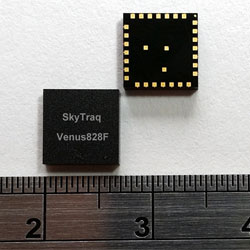
    The SkyTraq Venus828F GNSS receiver module. Photo: SkyTraq Technology
    The SkyTraq Venus828F GNSS receiver module. Photo: SkyTraq Technology

    SkyTraq Technology has introduced a stand-alone multi-GNSS receiver module in a compact 7 x 7 millimeter form factor, the Venus828F, designed with a sensor hub function for wearable and “Internet of Things” (IoT) applications.

    The Venus828F is capable of communication with multiple satellite systems and tracking up to 28 satellites concurrently, SkyTraq said. The compact LGA module integrates all the necessary components for wearables and IoT, forming a complete working GNSS receiver, including GNSS chipset, 0.5ppm TCXO, Flash memory, LDO regulator, DC/DC switching regulator, and passive components. It only requires external antenna and power supply to output accurate position, velocity, and time information in standard NMEA-0183 format, enabling ease of use and fast time to market, Skytraq said.

    The Venus828F features low power consumption, a 29-second cold start TTFF, -165 dBm tracking sensitivity, 10 nsec 1 PPS timing accuracy, on-board geofencing, 8 Mbit – 512 Mbit external SPI Flash data logging, and an industrial operating temperature range of -40C +85C. It has an UART and I2C interface for flexible connection to the host processor.

    Via SPI and I2C connection, data from MEMS sensor can be calculated by Venus828F using sensor-hub-enabled firmware, offloading computation from the host processor. Engineers can concentrate on their wearable and IoT applications instead of spending hundreds of hours reinventing the wheel developing sensor-fusion algorithms, according to SkyTraq.

    “Fast-acquisition high-sensitivity multi-GNSS chipset hardware are just becoming available in recent years, the internal firmware supporting multi-GNSS typically are not as fully optimized as GPS-only firmware that has matured for more than a decade to allow ROM codification with optimal performance for any existing GNSS chipset vendors; the multi-GNSS firmware is still being continuously improved over time,” said Michael Chung, VP of sales and marketing, SkyTraq. “By offering Venus828F multi-GNSS receiver module with Flash memory, it’s shipped with the latest, best-performance firmware. It is also later upgradeable in the field if the customer’s design allows. Targeting very high volume, cost-sensitive wearable and IoT applications, Venus828F is offered at price comparable to crystal-based ROM GPS modules on the market, setting a new benchmark in terms of performance, size, and cost for multi-GNSS receiver modules.”

    An engineering sample, datasheet, and reference design for the Venus828F are available now.