Tag: Israel

  • UAV updates: Attack drones deployed in the Iran conflict and autonomous boats at RoboBoat 2026

    UAV updates: Attack drones deployed in the Iran conflict and autonomous boats at RoboBoat 2026

    The war between Israel, the United States and Iran has dominated headlines since it began with surprise attacks launched by Israel and the U.S. on the last day of February. Significant damage has since been inflicted on Iran as the allies seek to end the country’s nuclear capabilities and bring about regime change — removing those responsible for worldwide terrorism through its proxy groups, including Hezbollah, the Houthi movement in Yemen, various Iraqi Shiite militias, Hamas and Islamic Jihad, all of which have targeted Western countries and Israel.

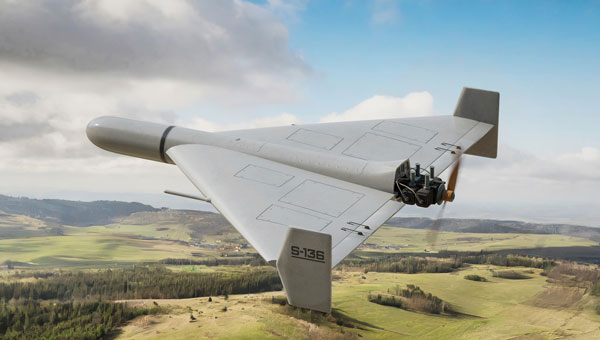
    Iran maintains a formidable military with more than 600,000 active-duty personnel, an estimated 2,000 to 3,000 ballistic and shorter-range missiles, and a significant offensive drone capability. The Shahed series and Mohajer-6 drones have emerged as low-cost kamikaze weapons central to Iran’s arsenal. The Shahed-136 in particular has been supplied in large quantities to Russia for use in its ongoing war against Ukraine and is now also manufactured by Russia, or a version of it is. The Shahed drone has several variants, including the jet-powered, long-range Shahed-238.
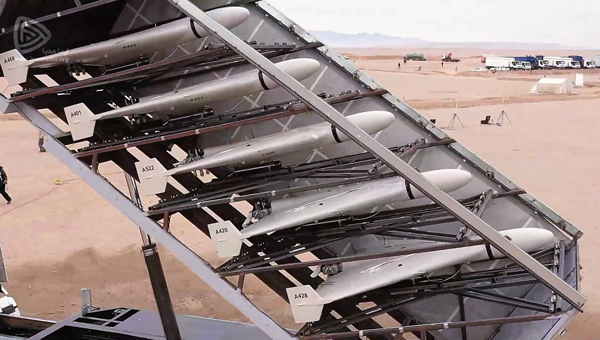
    Iranian Shahed-136 attack drones, read for launch. (Photo: IMA Media)
    Iranian Shahed-136 attack drones, read for launch. (Photo: IMA Media)

    With a range of 800 miles to 1550 miles, the Shahed-136 carries an 88-pound warhead which can punch very large holes in buildings, disable oil tankers or warships, destroy equipment on the ground, and kill and injure lots of personnel. It’s possible that those six US servicemen killed and others injured during the early hours of the conflict in Port Shuaiba, Kuwait, were victims of a Shahed kamikaze drone attack.

    This is not all bad news: the U.S. has analyzed captured downed Shahed-136 drones and has quickly replicated its own version, the Low-cost Unmanned Combat Attack System (LUCAS), admittedly with a shorter range but just as deadly. It’s reported that the Iranians can build and mass-produce thousands of drones for between $20 and $50,000 each. Nevertheless, the U.S. has now been producing large volumes of LUCAS, and has them to fight in Iran.   
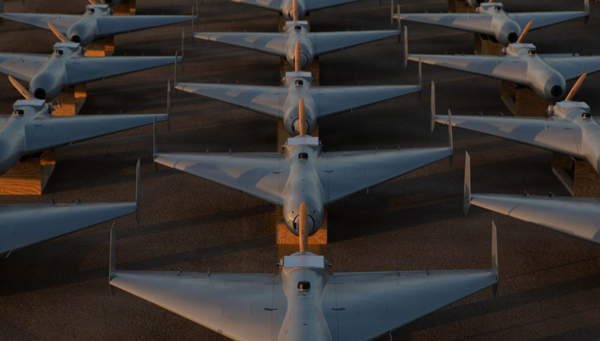
    LUCAS is already in US volume production. (Photo: US Central Command)
    LUCAS is already in US volume production. (Photo: US Central Command)

    Spektraworks, based in Phoenix, was awarded a $30 million contract, and within 18 months, a redesigned, hardened and autonomously coordinated attack drone — manufactured in the U.S. at a cost of approximately $43,000 per unit — became available in significant quantities and was fielded to U.S. Central Command’s newly formed drone task force, Task Force Scorpion Strike.

    The unit was responsible for the Shahed-like drones seen flying over Baghdad in early television coverage as the U.S. offensive got underway.

    It marks a notable achievement — delivering similarly designed attack drones, and the destruction they carry, back to Iran, a country that has exported terror to numerous nations for more than 50 years.


    Meanwhile, the 2026 RoboBoat Competition took place at Nathan Benderson Park near Sarasota, Florida, drawing 37 high school and university teams. The event challenges students to demonstrate progress in developing autonomously operating marine systems installed on model boats. Benderson Park features a large rowing lake that has hosted Olympic rowing and canoe trials, making it a fitting venue for RoboBoat competitors and spectators.

    Teams arrived with a wide variety of model boat designs and technical approaches, navigating through a series of in-water obstacle courses while gaining hands-on experience relevant to future careers. Volunteer support was plentiful, and each team brought cheering crews and technical assistance. Typical tasks included restoring simulated harbor operations, assessing underwater infrastructure and supporting exploration scenarios.

    After watching more than 2 hours of posted videos, it is clear that the competition is run by a volunteer student organization. The final-round objectives were not clearly defined, and without commentary, it was difficult to determine whether any team successfully completed the obstacle course — though several boats did navigate between narrow red and green buoys after avoiding a series of posts in the water.
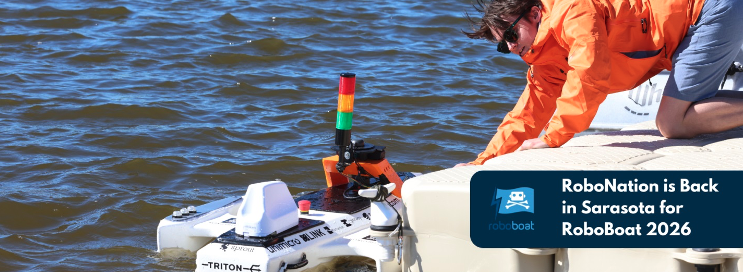
    RoboBoat 2026
    RoboBoat 2026

    Nevertheless, it was great to see the whole gathering, many from overseas, and the level of enthusiasm. One guy told the story of how the team’s heavy equipment had survived a long-distance shipment from overseas and arrived almost intact. But during the competition, the quite heavy demo boat sank; it was just a minor setback for him — we’ll learn something and keep going!  — was his mantra. As everyone in the industry knows, having your tested, verified, and 100% reliable set-up actually function at a trade show is a major hurdle we’ve all had to overcome. So, it’s good to see these young men and women learn firsthand what it takes to get a prototype to work when it becomes absolutely essential – and of course, to actually make progress and extend their reach towards autonomous robotics.


    The U.S. military has been throwing Shahed-like kamikaze weaponized drones back at the country that had not only invented them, but also spread the technology to and through other antagonists, yet now feeling their impact on their own capital city — a significant success for the initial U.S. attack on Iran. And growing and supporting the latest wave of students and their autonomous aspirations at RoboBoat 2026 in Florida. One aspect of UAVs is warlike and deadly, while another is encouraging young engineering candidates towards their dreams of maritime robotic autonomy.
  • UK’s Watchkeeper drone program nears the end:  What went wrong and what’s to come

    UK’s Watchkeeper drone program nears the end: What went wrong and what’s to come

    We usually look for what’s new, with innovative drones emerging and gaining traction in commercial and military applications, but this month, news of the termination of a leading UAV program has sparked interest.

    The British Army’s Watchkeeper drone program has long been the subject of criticism over development delays, cost overruns and poor performance. Recent reports that the Watchkeeper fleet could be retired as early as 2025 — though that timeline may now slip to 2027 — have renewed scrutiny of the troubled effort. Perhaps a review of the story behind this drone adventure may be in order.

    The UK has been involved with drone operations going back into the 1960s, giving this military force deep experience and expertise in the field. Political support has enabled significant investment over time. When the Watchkeeper program was rolling in 2004-05, the US was moving toward the MQ-9 Reaper project, and military forces around the world were building their own mil-spec UAVs, mostly for surveillance to support military ground operations.

    At that time, few commercial drones existed beyond radio-controlled model aircraft flown by hobbyists. The idea was growing in China at that time for DJI and quad-copters, so these multi-use UAVs eventually emerged, and have led to a multitude of outfits elsewhere also making commercially available drones.

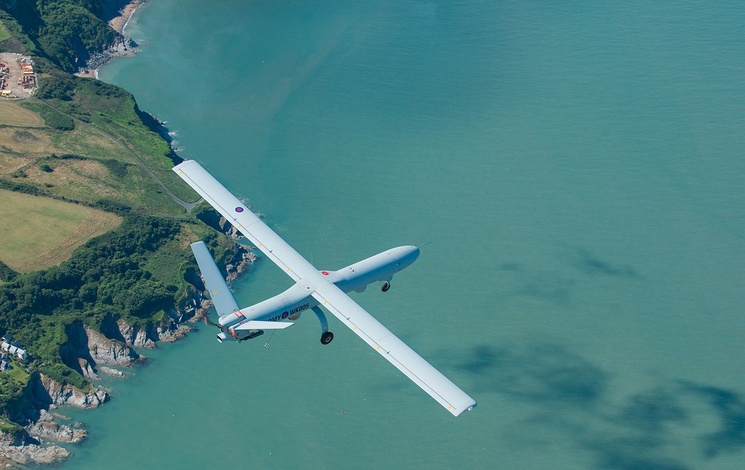
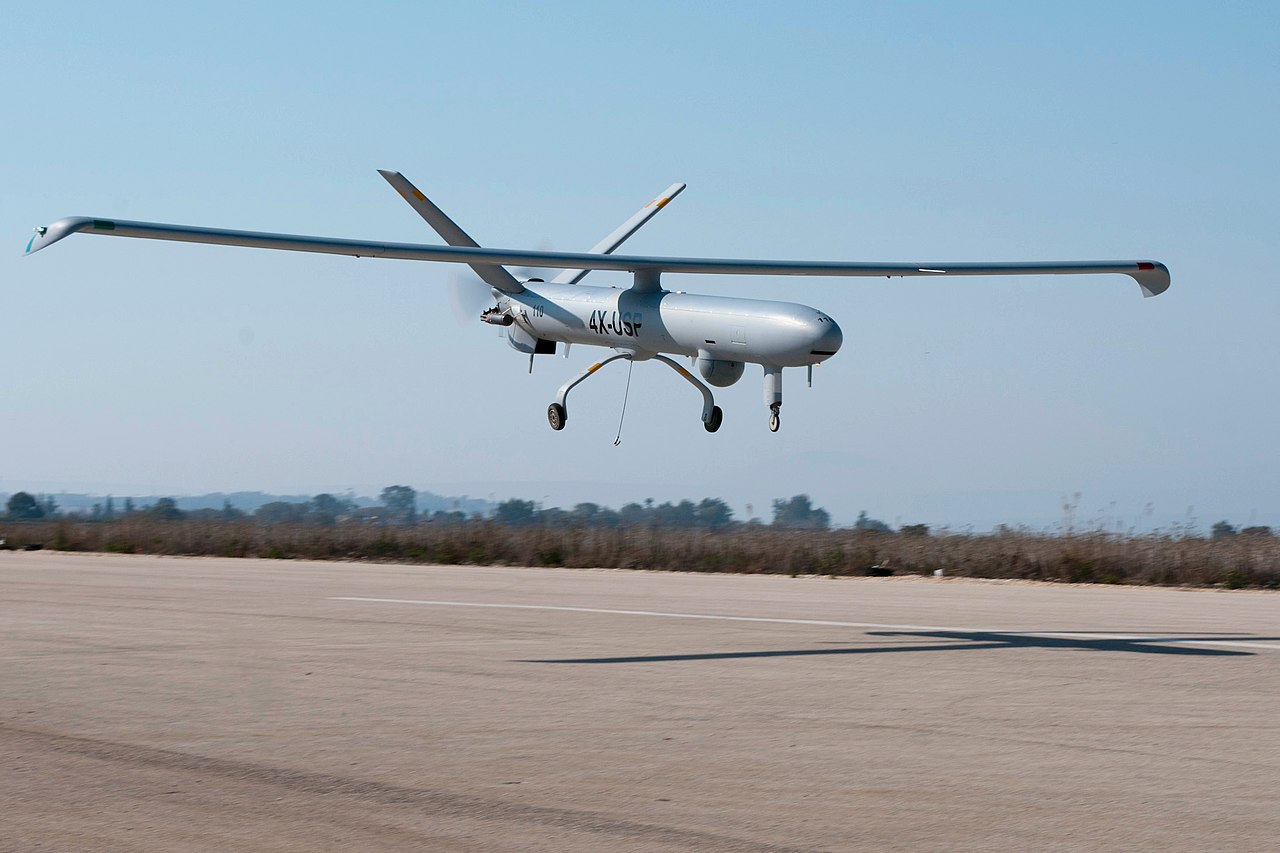
    When the Watchkeeper program took shape in 2004, developing a custom platform was essentially the only way for the UK to obtain a medium-altitude ISTAR intelligence, surveillance, target acquisition and reconnaissance (ISTAR) drone tailored to its requirements. The Ministry of Defence identified Israel-based Elbit Systems, which produced the Hermes 450 military drone, as a close match. The program was built around an extensively modified version of that aircraft, with the goal of bringing production to the UK

    Hermes 450 (Photo: Nehemia Gershuni-Aylho)
    Hermes 450 (Photo: Nehemia Gershuni-Aylho)
    Watchkeeper-X export version (Photo: U-tacS)
    Watchkeeper-X export version (Photo: U-tacS)

    In 2005, the U.K. Ministry of Defence awarded a £775 million contract to U-TacS, a joint venture between Thales UK and Elbit Systems, for the design, manufacture and support of 54 Watchkeeper WK-450 drones. The modifications involved making the UAV all-weather capable, including Thales integrated radar/GPS system for automated landing and take-off (Magic-ATOLS), Thales MASTER SAR/GMTI radar, dual electro-optical/IR cameras, laser designator, and tweaks to the Line-of-Sight radio system, with a satellite link option. Nevertheless, the range of the radio limits operation to within less than 100 miles of the mobile base-station, but it did provide a high-bandwidth, secure, direct, unobstructed wireless link for control and real-time video and targeting data back from the vehicle.

    Cost overruns and delays pushed the first flight to 2008 in Israel. Production of the WK-450 was then established at Thales UK, formerly Racal Electronics. The technology transfer between the two companies, separated by more than 2,000 miles, operating across different corporate cultures and exchanging proprietary material, proved more difficult and time-consuming than anticipated.

    The program delivered its first aircraft in 2014. Four drone systems flew in Afghanistan during the British troop withdrawal, logging a total of just 140 flight hours. Performance fell short of expectations, particularly the system’s all-weather capability, which proved inadequate in Afghan conditions. The U.S. military encountered similar challenges with sand contamination of helicopters and fixed-wing aircraft during early operations in Iraq and Afghanistan.

    As time rolled by, Watchkeeper found some use in Cyprus and in the UK, mostly for training, but problems continued. Between 2014 and 2022 eight vehicles crashed, and most have presumably been written off. Others have apparently experienced unplanned ‘contact with ground’ in more recent times. Faith in the now pretty old drone system has waned with the British forces — even recent political pressure to hand over the remaining fleet to Ukraine has been rebuffed by the Army — maybe too many problems with which to coach Ukraine troops. Watchkeeper is apparently now dismantled for the UK, along with the whole £1 billion investment. But not without gaining a lot of knowledge and operational experience, however an expensive lesson none the less.

    The UK has operated MQ-9A Reapers in Afghanistan, Iraq and Syria for more than 18 years, but after the Royal Air Force’s success with this US drone, these too have been retired in favor of the new MQ-9B Protector. The Protector has been customized and brought up to civilian certification standards by the manufacturer General Atomics. There have been similar sad programs with many ground, marine, and air projects around the world, but this has been such a visible and unhappy tale, it’s sad to see it end, but it’s probably a good thing so that other newer, more promising projects can get funding and become successful.

    Almost in the same breath, another UK company has already been supplying unmanned cargo aircraft to Ukrainian forces for more than three years. Windracer ULTRA is a twin-prop aircraft that can lift 330 lb for up to 620 miles, with 10 hours of endurance at a ceiling of up to 13,000ft. A newer version can reportedly travel twice as far with more payload.

    In Ukraine, the drone has been supplying front-line troop emplacements on a regular basis. The UK has been using ULTRA for surveillance and parachute drop re-supply, middle-mile parcel and cargo delivery to remote destinations, and for aerial surveys in Antarctica and elsewhere.

    So, a commercial start-up got there on its own, no direct government funding other than contracted support, and apparently no JV with another company!  So does 100% government funded development work better than setting up on your own, borrowing a bunch of cash, and doing it yourself? Mil-spec stuff is special with a limited market, so it’s unlikely that governments will ever be able to pick up finished products that fulfil all needs, but as the U.S. is proving with its bulk buy of off-the-shelf small one-way UAVs, these can meet many requirements.

  • New mini UAV designed for border patrol

    New mini UAV designed for border patrol

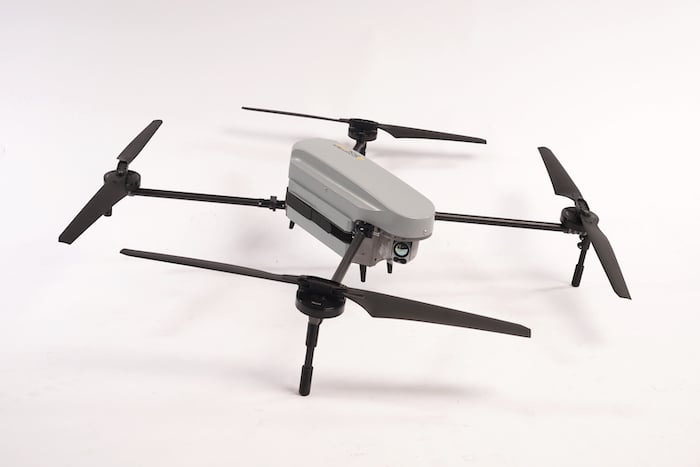
    CopterPIX, an Israeli developer and manufacturer of autonomous multi-rotor UAV solutions, has unveiled its newest platform: the ERE95 Mini.

    CopterPIX made the announement at UVID Dronetech 2025, which took place Nov. 26 at Expo Tel Aviv.

    The ERE95 Mini is designed as an operational platform for border protection, long-range surveillance, and ISR missions. It is fully capable of GNSS-denied missions and integrates a long-range, anti-jamming communication system supporting distances of over 20 km.

    According to the company, the ERE95 Mini has an endurance of 2 hours and can carry up to 5 kg of payload for up to 1 hour. It also has integrated daylight and thermal imaging for advanced surveillance. With a fully foldable frame, the platform collapses into a compact backpack-sized kit, making it suitable for rapid mobility and field operations.

    Its modular “puzzle” architecture allows quick adaptation of SDR modules, optical payloads, and navigation solutions, enabling mission-specific configurations with unprecedented flexibility. To support rapid field deployment, the ERE95 Mini features a mechanical and electrical quick-connect interface, allowing operators to switch payloads in seconds and maintain continuous operational readiness across all missions.

  • When GPS is under attack, we need back-ups

    When GPS is under attack, we need back-ups

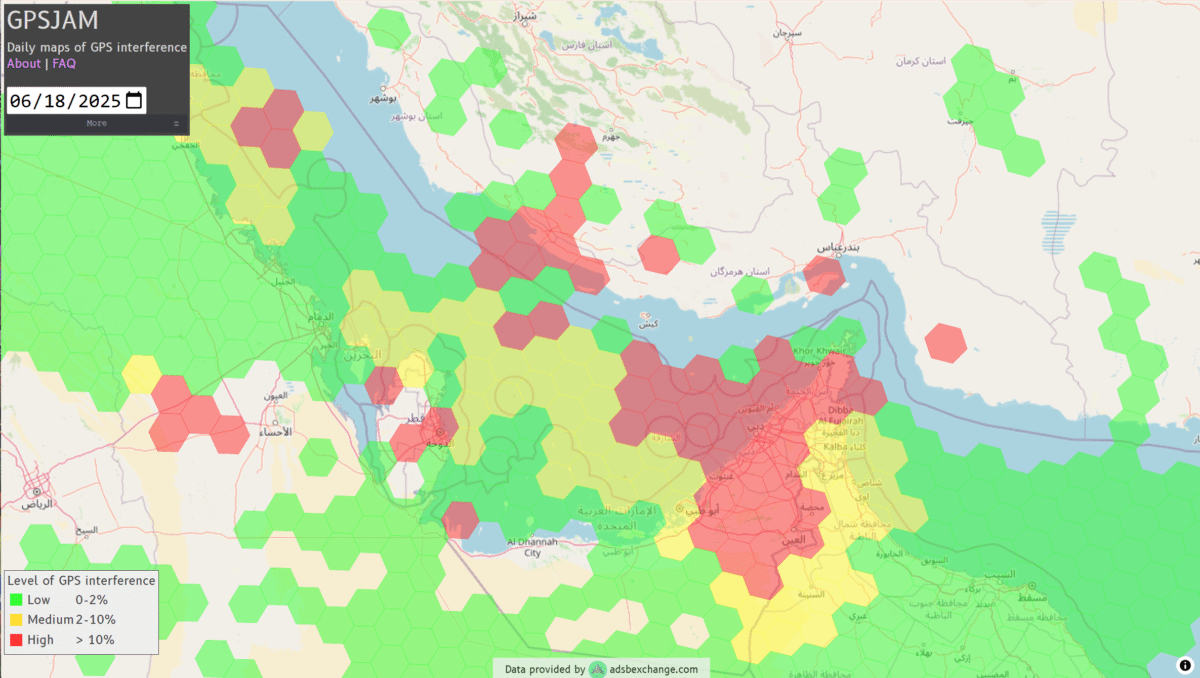
    On June 13, following reports of Israeli airstrikes on Iran, interference rates in the Strait of Hormuz spiked. GPSJam.org, a service that tracks satellite signal interference, now reports medium-level disruption (between 2% and 10%) across the Gulf region. This is no isolated blip, but part of a pattern: electronic warfare is increasing in global hotspots. It’s also a warning.

    Modern warfare is no longer about guns and bombs. Jamming, spoofing and using ever-more sophisticated cybertricks to disrupt GNSS are now regular tactics used to sow disorder. They are cheap, deniable, and often highly effective. But they also expose a dangerous weakness in how we navigate, communicate, and coordinate. If GPS is the backbone of global positioning, we are learning just how brittle it can be.

    Strait of Hormuz Under Threat

    The Strait of Hormuz is a narrow channel through which around one-fifth of the world’s oil passes, and here, ships are now at risk not only from pirates and mines, but from corrupted satellite signals. Spoofers can broadcast false GPS positions to nearby vessels. In recent years, we have seen ships appear to sail across runways, airports, and deserts, thanks to malicious signal interference. In aviation, spoofed or jammed GNSS signals have led to aircraft turning around mid-air or being diverted. These are real and growing threats.

    As someone who has worked in naval intelligence and the defense industry for decades, I have seen how quickly technology evolves, and how slow we can be to protect our own systems. But there are solutions to the problem I’ve described. One is laser-based optical communications.

    The Need for Resilient PNT

    Laser communication is very difficult to jam or spoof. Unlike the low-power radio frequencies used by GPS, a laser beam is narrow, focused, and nearly impossible to intercept without being detected. And because lasercom is optical, not radio, it isn’t vulnerable to the same types of interference. That makes laser communication ideal for high-security communications and low latency support in contested environments.

    Optical ground station networks, when paired with optical satellite links, also offer vastly higher data transfer capacity than conventional RF systems. Optical links can now carry 1,000 times more data than their RF counterparts. At a time when threats are growing quickly and data needs are exploding, that kind of capacity is essential.

    This will make you wonder why lasercom isn’t more widely used. The answer is that only in recent years has it become mature and able to be deployed rapidly. Systems that once seemed exotic or experimental are now proven, reliable, and ready to scale. Many space agencies and defense organizations, including the US Department of Defense and NATO, are investing in them.

    To be clear, optical comms will not replace GPS or radio. But they can supplement and support it, especially in high-risk areas where GNSS is under attack. Just as militaries don’t rely on one radar or one radio channel, governments shouldn’t rely on a single source of truth for navigation and timing.

    Escalating Threats to Critical Infrastructure

    When you depend on precise location data for everything from logistics to drone strikes to the safe passage of oil tankers, the idea that one bad actor with a spoofer can throw you off course is a real concern. When the threat can be made a reality without firing a shot, you can be sure it will be used more and more often.

    Just as satellites offer a way to monitor subsea cable sabotage, they also offer a chance to future-proof our navigation and communication networks. The same technology that is being used to track ships and sense underwater disruptions can be adapted to create robust, high-speed, interference-proof backup channels. Governments that invest in this infrastructure now will be in a far stronger position to deter attacks, respond quickly, and maintain operational clarity when others cannot. We wish it were otherwise, but the world is becoming more dangerous, and attacks will accordingly become more common.

    If the last year has taught us anything, it’s that infrastructure is no longer neutral. It’s considered a legitimate target, particularly by those whose aim is to create confusion and disorder. GNSS isn’t immune to this trend. In fact, because of it’s importance, it’s a prime target. We have to stop assuming that what worked in peacetime will work at a time of conflict. That, sadly, is the reality of this moment.

  • GNSS jamming widespread in Strait of Hormuz, ships collide

    GNSS jamming widespread in Strait of Hormuz, ships collide

    GNSS jamming is causing confusion for ships traveling through the Strait of Hormuz, reports gCaptain. The regional threat levels are labeled “significant” because of air strikes between Iran and Israel, according to the Joint Maritime Information Center (JMIC). Maritime threat levels are marked as “elevated”.

    The JMIC highlighted GNSS jamming problems around the Port of Bandar Abbas and throughout the Strait of Hormuz and Persian Gulf regions. Nevertheless, commercial shipping traffic has continued at normal rates.

    Naivgational error is considered the cause of a collision June 17 between two tankers in the Gulf of Oman. The Very Large Crude Carrier (VLCC) Front Eagle, with 2 million barrels of Iraqi crude bound for China, hit the Suezmax tanker Adalynn 15 nautical miles off Fujairah. There was fire on both ships, but no injuries. The Front Eagle appeared to be onshore in Iran days before the collision.

    Nearly 1,000 ships in the Gulf have been affected by mass interference since the start of the Iran-Israel conflict on June 12, according to shipping analysis firm Windward. Recent tracking data has shown unusual positioning errors, with vessels appearing to be in impossible locations.

  • Zephr.xyz to enhance GNSS resilience for US military operations

    Zephr.xyz to enhance GNSS resilience for US military operations

    The Air Force Research Laboratory selected Zephr.xyz — a company specializing in augmented position, navigation and timing technologies — to receive a $1.74 million Small Business Innovation Research Direct-to-Phase II contract. Under the contract, Zephr.xyz aims to develop a system for real-time detection of GPS/GNSS jamming and spoofing in contested environments while also geolocating the sources of these attacks.

    The company’s Networked GNSS technology, which converts standard mobile phones into a high-fidelity GNSS receiver network, will undergo extensive testing in Ukraine and various U.S. military exercises. Following these trials, the system is set to be integrated with the Department of Defense’s Tactical Assault Kit and the Department of Homeland Security’s Team Awareness Kit.

    Zephr.xyz has conducted field research in conflict zones in Ukraine and Israel, revealing limitations in current GNSS interference detection and localization techniques. The company’s solution aims to address these challenges by leveraging distributed mobile devices to create a decentralized sensor network. This network collects raw GNSS measurements to identify electronic attack indicators, which are processed in real time for detection and classification.

    The technology also aims to enhance positioning accuracy on TAK devices by integrating GNSS measurements from multiple devices with Position, Velocity, Attitude and Timing data. Zephr.xyz plans to make its detection and classification capabilities available as a software development kit, enabling mobile applications to alert users and improve positioning accuracy in electronic warfare scenarios.

  • Propeller Drones secures contract for BVLOS UAV inspections in Israel

    Propeller Drones secures contract for BVLOS UAV inspections in Israel

    Propeller Drones has secured a $7 million contract with the Israel Electric Corporation (IEC) to conduct fully autonomous UAV operations for electrical infrastructure inspection. This project marks an advancement in beyond visual line of sight (BVLOS) drone operations in Israel, as it represents the first government approval for pre-approved BVLOS flights using an unmanned traffic management (UTM) system.

    Under the collaboration, Propeller Drones and FlightOps will partner to enhance AI flight capabilities that meet IEC requirements and regulatory standards. Airwayz, a company specializing in low-altitude UTM solutions, has been selected to provide the UTM system for managing drone operations.

    Airwayz’s UTM system, developed by experienced air traffic controllers, integrates real-time weather and location data to optimize airspace usage and manage multiple drone fleets simultaneously. This technology allows for efficient rerouting of unmanned vehicles in case of unexpected incidents.

    The collaboration seeks to address long-standing regulatory challenges in the UAV industry by demonstrating the ability to conduct large-scale autonomous operations safely and efficiently. According to Propeller, this project has the potential to open up new opportunities for drone applications across various industries, particularly for inspections in hazardous or hard-to-reach areas.

    As the system accumulates flight hours and data, it is expected to contribute to the advancement of autonomous BVLOS UAV operations, potentially influencing future regulatory approvals and industry standards. Propeller shared that the success of this project could pave the way for broader adoption of autonomous drone technologies in Israel and potentially serve as a model for other countries.

  • US investigates leaked intelligence on Israel’s planned Iran strike

    US investigates leaked intelligence on Israel’s planned Iran strike

    The United States has begun investigating the unauthorized release of two highly classified intelligence documents detailing Israel’s preparations for a potential retaliatory strike against Iran. These documents, reportedly prepared by the National Geospatial-Intelligence Agency, are marked as top secret and intended for distribution only among the U.S. and its “Five Eyes” intelligence partners: Australia, Canada, New Zealand and the United Kingdom.

    The leaked files, which first surfaced on the messaging app Telegram, were shared by an anonymous user known as “Middle East Spectator.” According to CNN reports, the leaked files include a satellite imagery analysis of Israeli military asset movements from Oct. 15-16, 2024, as well as defense plans made by the Israeli Air Force and Navy.

    The first document is titled: “Israel: Air Force Continues Preparations for Strike on Iran and Conducts a Second Large-Force Employment Exercise.” The second is titled: “Israel: Defense Forces Continue Key Munitions Preparations and Covert UAV Activity Almost Certainly for a Strike on Iran.”

    When asked about the leak during an interview with CNN, House Speaker Mike Johnson said an “investigation (is) underway, and I’ll get a briefing on that in a couple of hours. We are following it closely.” The New York Times reported that officials privately acknowledged that the documents were authentic but that they likely only represent a portion of the information the U.S. has on its close ally’s planning.

    The FBI, Pentagon and U.S. intelligence agencies are collaborating on the investigation, focusing on determining who had access to the documents and assessing whether the leak was intentional or the result of a hack.

    U.S. officials have acknowledged the documents’ authenticity but suggest they may represent only a portion of the information the U.S. possesses regarding its ally’s plans.

    The incident has raised concerns about the security of classified information within the U.S. government.

    Combatting electronic warfare and emerging threats

    From swarms of lurking UAVs to breaches of federal privacy, we are witnessing a new era of electronic warfare and security challenges. As evidenced by a series of concerning incidents in recent years, the U.S. is actively seeking ways to defend against and secure its airspace from unauthorized UAV incursions and breaches of privacy.

    In 2021, the U.S. experienced a record 1,862 data breaches, a 68% increase from previous years. In 2023, Langley Air Force Base in Virginia reported multiple sightings of unidentified UAVs flying above the facility. These incidents raised significant security concerns among military officials and lawmakers. The situation escalated in October 2024 when U.S. officials confirmed similar drone swarm observations near Edwards Air Force Base in Nevada. The Department of Defense (DOD) has not publicly identified the source behind these surveillance drones.

    The DOD has launched Replicator 1 and Replicator 2 programs, allocating significant funding to enhance drone warfare capabilities. Replicator 1 focuses on increasing the production of attack UAVs, while Replicator 2 aims to improve defenses against enemy drone attacks.

    Outside of the U.S., c-UAV systems and operations have become a critical component of modern warfare and security. While we typically focus on GPS jamming and spoofing as important aspects, they represent only a portion of this style of warfare.

    The ongoing advancements in electronic warfare underscore the need for continued research, development, and policy adaptation to address the complex challenges posed by UAV technology in modern warfare and security operations worldwide.

  • Israeli air base identified as alleged source of GPS disruptions in Mideast

    Israeli air base identified as alleged source of GPS disruptions in Mideast

    Photo: Sauce Reques / Royalty-free / iStock / Getty Images Plus
    Photo: Sauce Reques / Royalty-free / iStock / Getty Images Plus

    Researchers from the University of Texas at Austin have identified an Israeli air base as a large source of widespread GPS disruptions affecting civilian airline navigation in the Middle East, reported The New York Times. 

    The spoofing disruptions involve the transmission of manipulated GPS signals, which can cause airplane instruments to misread their location. Lead researchers Todd Humphreys and Zach Clements stated they are “highly confident” that Ein Shemer Airfield in northern Israel is the source of these attacks. The Israeli military declined The New York Times request for comment. 

    The research team utilized data emitted by the spoofer and picked up by satellites in low-Earth orbit (LEO) to determine its location. They then confirmed their calculations using ground data collected in Israel.  

    Spoofing, along with GPS jamming, has significantly increased over the past three years, especially near war zones such as Ukraine and Gaza. In these areas, militaries interfere with navigation signals to redirect aerial attacks. 

    The Middle East has emerged as a hotspot for GPS spoofing, with The New York Times reporting that a separate analysis estimates more than 50,000 flights have been affected in the region in 2024 alone. Researchers from SkAI Data Services and the Zurich University of Applied Sciences, analyzeding data from the OpenSky Network and, found that these attacks have led pilots to mistakenly believe they were above airports in Beirut or Cairo. 

    Swiss International Air Lines told The New York TimesNYT that their flights are spoofed “almost every day over the Middle East.” 

    The issue extends beyond the region, with Estonia and other Baltic nations having blamed Russia for disrupting signals in their airspaces. Additionally, in April 2024, Finnair temporarily suspended flights to Tartu, Estonia, amid the rise of GPS jamming in the region affecting civilian air travel.  

    The attacks have not led to significant safety risks as pilots can use alternative navigation methods. However, they do raise concerns. 

    Jeremy Bennington, vice president of Spirent Communications, told The New York Times, “Losing GPS is not going to cause airplanes to fall out of the sky. But I also don’t want to deny the fact that we are removing layers of safety.” 

    The spoofing attacks may cause false alerts about planes being too close to the ground, leading to navigation confusion and possibly compromising flight safety. 

    As these disruptions continue to affect large areas far from active conflict zones, the aviation industry and international authorities are under increasing pressure to address this emerging threat to air travel security. 

  • Unmanned systems updates

    Unmanned systems updates

    Have you been to the gas station this week?

    The ongoing conflict between Hamas and Israel, along with the unrest in various universities across the United States in support of Gaza Palestinians, and the continued aggression by the Houthi rebels in Yemen against shipping, are impacting several aspects of our lives, including the rising cost of gasoline.

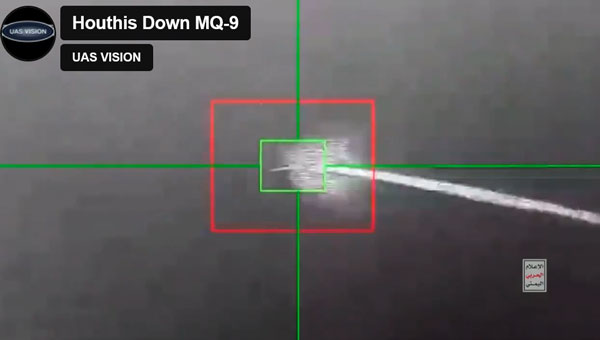
    Since the United States began seeking out Houthi strongholds, it is now being reported that another MQ-9 Reaper drone has been shot down – making an apparent total of five such expensive U.S. UAVs lost over and around Yemen, according to US military reports.

    Screenshot of a Houthi-released video of the downing of the MQ-9 Reaper drone (Photo: UAS Vision)
    Screenshot of a Houthi-released video of the downing of the MQ-9 Reaper drone (Photo: UAS Vision)

    At $30 million each, compared to about $2 million for a surface-to-air missile, the Houthis are apparently ahead on cost. With a 50,000 ft ceiling, the Reaper is capable of avoiding short-range surface-to-air missiles. However, more visual or infra-red (IR) low-level detail may have been sought on this mission. In response, the U.S. military reported the downing of five Houthi UAVs over the Red Sea.

    According to a Defense Intelligence Agency (DIA) report, Iran is supplying the Houthis with attack UAVs and longer-range missiles, which are often, if not always, re-assembled, repainted and re-named locally. The DIA said that one of the favorite Kamikaze UAVs used is the Iranian Shahed-136/Houthi Waid-2, which is reported to have a range of almost 1,600 miles. Neither side has yet acknowledged which drones were brought down by the United States.

    Shahed-136 (Photo: bbsferrari / iStock / Getty Images Plus / Getty Images)
    Shahed-136 (Photo: bbsferrari / iStock / Getty Images Plus / Getty Images)

    However, around the same time, it was reported that perhaps two Houthi missiles hit the MV Andromeda Star oil tanker with reportedly little damage — no casualties were reported on the ship as it continued towards its destination Vadinar, India. Another ship, the MV Maisha, avoided a third missile. The missile landed nearby in the water, but the vessel put some distance between itself and the MV Andromeda, continuing safely.
    The US/UK forces operating in the Red Sea have countered the more than 100 Houthi attacks on shipping with several airborne strikes on Houthi facilities. This renewed Houthi action over the weekend is thought to have been possible because they were restocked with weapons following the US/UK airstrikes, which slowed their attacks on shipping.

    Hence the renewed threat to oil tanker traffic in the Red Sea has raised the already high threat level, and increased oil and gas prices at the pump are one of the consequences.


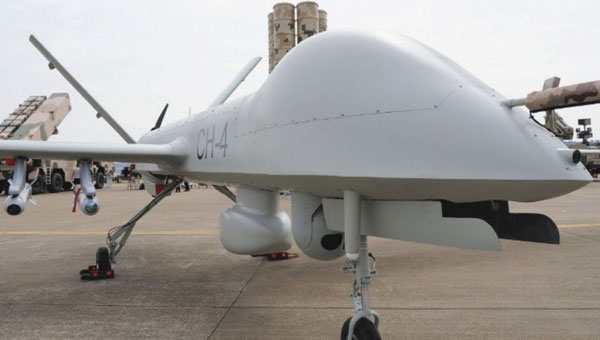
    Meanwhile, Pakistan has bought 10 additional Chinese Caihong-4, which reportedly look and perform very similarly to the MQ-9 Reaper.

    (Photo: OE Data Integration Network (ODIN))
    Caihong-4 looks very similar to the General Atomics MQ-9 Reaper
    (Photo: OE Data Integration Network (ODIN))

    The CH-4 can be used for both attack and reconnaissance. It features a flight endurance of 30 to 40 hours, a range of 2,200 to 3,100 miles and can carry up to six weapons.

    This brings Pakistan’s complement to 20 CH-4 UAVs. The new purchase may be to offset India’s purchase of 31 General Atomics MQ-9s, which is included in a huge, recently approved $3.99 billion weapons purchase from the United States. The two countries continue to feud over the contested Kashmir region.


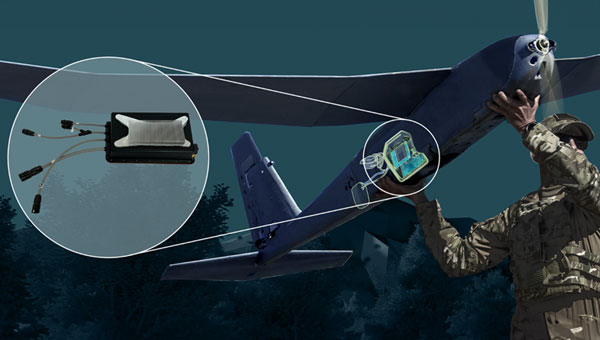
    AeroVironment (AV) has developed an add-on for fielded Puma class hand-launched reconnaissance UAVs, which brings autonomy and machine-learning to a worldwide, mostly military fleet of thousands of air vehicles. Referred to as the Autonomy Retrofit Kit (ARK), with AVACORE software, the new update allows operators to command and control one or more vehicles autonomously. This provides computer vision capabilities and enables connection to a distributed, mobile comms network to access data for several separated operating groups.

    ARK retrofit kit for Puma 3AE and LE UAVs (Photo: AV)
    ARK retrofit kit for Puma 3AE and LE UAVs (Photo: AV)

    According to AV, autonomous operating tasking is possible when communications are jammed and the UAV is then still able to execute its mission without manual input. Updated computer vision allows finding, classifying, positioning and daylight or nighttime tracking of objects such as people, vehicles, aircraft and ships. AVACORE includes several software interfaces for different autopilots, sensors and radios to provide integration flexibility.

    A neat way to provide significantly enhanced capability for already fielded airborne vehicles when they have some downtime.


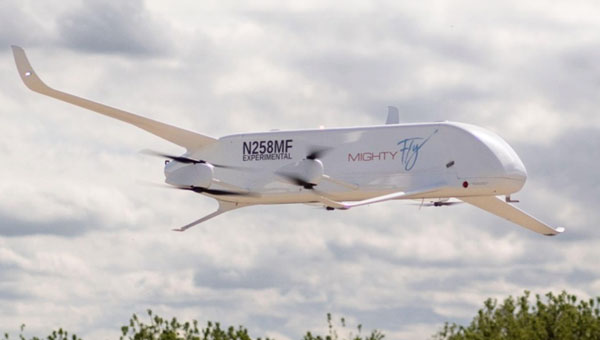
    Finally, we have a short introduction to a new transport UAV being put together by a California company called MightyFly. The company is led by a woman who was highly instrumental in the success of the flight controls for the Zipline UAV, which is still blazing drone delivery trails overseas and now in North America — with more than one million deliveries. With advisory input from a retired FedEx exec, the team at MightyFly seems well on their way with both a Federal Aviation Administration (FAA) approved Part 135 application and a 20 mile ‘point-to-point’ flight corridor approval for test flights.

    Cento gen 3 cargo drone (Photo: MightyFly)
    Cento gen 3 cargo drone (Photo: MightyFly)

    The MF-100 prototype made its first flight and demonstration delivery in April 2021, while the third-generation Cento flew for the first time in December 2022. Cento has a 6’ x 1’ x 1’ cargo hold that can accommodate 96 small USPS packages, weighing up to 100lb and Cento and later models are expected to have a range of 600 miles at up to 150 mph. While their UAVs are currently all-electric, the plan is to add a gas/rotary engine to charge batteries to achieve this forecast range for the drone.

    MightyFly has significant support from the U.S. Air Force Agility Prime program and the Air Mobility Command, who continue to invest in autonomous cargo developments as an alternative to leasing helicopters to transport parts, medical supplies and more. MightyFly came up with an auto-loading capability, which resolves the issue of a potentially changing weight and balance of a last-mile cargo drone.

  • GPS disruptions in Tel Aviv as Israel braces for possible Iranian attacks

    GPS disruptions in Tel Aviv as Israel braces for possible Iranian attacks

    Photo: Oren Kfir / iStock / Getty Images Plus / getty Images
    Photo: Oren Kfir / iStock / Getty Images Plus / Getty Images

    On April 4, residents of Tel Aviv, Israel, noticed that map applications on their phones such as Waze, Google Maps and the taxi pickup app Gett were placing them in Lebanon’s capital, Beirut, 130 miles to the north. Cab drivers could not navigate and food-delivery apps were temporarily out of service, reported The Wall Street Journal.

    The spoofing was a result of the Israeli military tampering GPS signals to brace for possible retaliation by Iran or one of its allied militias after a suspected Israeli airstrike on an Iranian diplomatic building in Syria. The attack killed a senior Iranian general, Mohammad Reza Zahedi, and six other military officials. It has marked an escalation of the yearslong conflict between Israel and Iran.

    According to WSJ, analysts say a direct Iranian strike on Israel is unlikely. However, one day after Israel drafted reservists to boost air defenses, the Israeli military said it would pause all leave for combat units “in accordance with the situational assessment.”

    Israel has withdrawn some of its ambassadors and evacuated its embassies in multiple locations. With tensions and uncertainty rising, several Israeli municipalities near Tel Aviv put out announcements to calm residents and refresh guidance for emergencies.

    According to the Israeli military, the GPS spoofing — which can be used to confuse targeting systems for military weapons — was part of an effort to protect the country. “Today we initiated GPS disruption in order to neutralize threats,” said Israeli military spokesman Daniel Hagari. “We are aware that this disruption causes discomfort, but this is an essential and necessary tool in our defense capabilities.”

    Israel has ramped up GPS jamming and spoofing since the start of its war with Hamas in early October 2023, but mainly in the north of the country, where the Iranian-backed Hezbollah militia has rockets to strike Israeli towns and military bases, according to Reuters.

    The military has scrambled signals in southern Israel, mainly around the city of Eilat, the target of missile and UAV attacks by Iranian-backed Yemeni and Iraqi militias, according to Yigal Unna, former director general of the Israel National Cyber Directorate.

    The GPS disruptions have intensified since the most recent strike and have spread to central Israel where a local taxi driver shared that his map application had located him at the Rafic Hariri International Airport in Beirut. In the south of the country, and in Jerusalem and the occupied Palestinian West Bank, GPS devices placed users in Cairo, residents told WSJ.

    Mohammad Abdelhalim, founder of the Palestinian navigation app Doroob, said that signal interruptions have occurred regularly on various platforms that rely on GPS since the Oct. 7 Hamas-led attacks on Israel, ranging from a few minutes to several hours at a time.

    Spoofing can pose risks beyond being a nuisance for citizens. Distorting signals can create challenges for civilian and commercial planes that use GPS signals for navigation. Spoofing can also throw guided missiles off their trajectory, which poses unpredictable risks to civilians.

    The ramifications of the widening GPS blackouts remain unclear. Beyond the hassles for civilian drivers, there are safety concerns for emergency responders and commercial transit unable to reliably track locations.

    The recent spoofing in Tel Aviv is one of countless reminders that the country’s active military actions are only miles away and can have cascading effects on aspects of daily life.

  • 3 US troops killed, up to 34 injured in Jordan UAV strike linked to Iran

    3 US troops killed, up to 34 injured in Jordan UAV strike linked to Iran

    Image: NiseriN/ iStock / Getty Images Plus/ Getty Images
    Image: NiseriN/ iStock / Getty Images Plus/ Getty Images

    Three U.S. service members were killed and dozens wounded during a UAV attack on U.S. forces stationed in northeastern Jordan near the Syrian border, President Joe Biden and U.S. officials said on January 28.

    Biden blamed Iran-backed groups for the attack, the first deadly strike against U.S. forces since the Israel-Hamas war erupted in October 2023 and sent shock waves throughout the Middle East.

    “While we are still gathering the facts of this attack, we know it was carried out by radical Iran-backed militant groups operating in Syria and Iraq,” Biden said in a statement.

    At least 34 personnel were being evaluated for possible traumatic brain injury, a U.S. official told Reuters, speaking on the condition of anonymity. Two officials said some wounded U.S. forces were medically evacuated from the base for further treatment.

    The Islamic Resistance in Iraq – an umbrella organization of Iran-backed militant groups — claimed attacks on three bases, including one on the Jordan-Syria border.

    The attack is a major escalation in the already tense situation in the Middle East, where war broke out in Gaza after the Palestinian Islamist group Hamas attacked Israel on October 7, killing 1,200 people. Israel’s subsequent assault on Gaza has killed more than 26,000 Palestinians as of January 2024, according to the local health ministry.

    Since then, U.S. forces have come under attack more than 150 times by Iran-backed groups in Iraq and Syria. U.S. warships have also been fired at by Iran-backed Houthi forces in Yemen, who are regularly attacking commercial ships passing through Red Sea waters off Yemen’s coast.

    While the United States has maintained an official line that Washington is not at war in the region, it has been retaliating against the Iran-backed groups in Iraq and Syria and carrying out strikes against Yemen’s Houthi military capabilities.

    Referring to the fallen soldiers, in his statement released by the White House Biden said: “We will carry on their commitment to fight terrorism. And have no doubt — we will hold all those responsible to account at a time and in a manner of our choosing.”