Tag: June 2026

  • First Fix: The key to unlocking GPS World

    First Fix: The key to unlocking GPS World

    Your subscription to GPS World unlocks relevant and timely coverage with unmatched print and digital design.

    GPS World strives to captivate, educate and continuously inform readers like you by focusing on technical, practical and ever-changing applications.

    For the past 36 years, our market-segmented topic areas, deep-dives, as well as broad bird’s-eye-view industry coverage is what makes it a valuable resource for professionals in every tech field.

    Your GPS World subscription offers:

    ■ The long-standing monthly print GPS World magazine

    ■ The regularly updated GPSWorld.com website, with plenty of free content and unlimited access, plus premium features available free to account holders

    ■ An interactive, downloadable and browser-based flip-through GPS World digital edition format

    ■ The breaking news and industry overview weekly Navigate! e-newsletter, conveniently delivered regularly to the email inboxes of professionals worldwide

    ■ Several market-sector e-newsletters focusing on specific topic areas such as autonomous, defense and surveying technologies

    You can update your subscription anytime. Whether you want to change your address, sign up for e-newsletters or update your contact information, all you need is your subscription account number. Rest assured, when you subscribe to GPS World, your information will never be shared or sold.

    Subscribe here

    Update your information here

    Keeping your information up to date will ensure you won’t miss an issue.

    Our editorial team reports on current, relevant industry topics — including the latest disruptive tech and current events affecting the industry — in print and online.

    They also cover positioning, navigation and timing (PNT) technology and developments, which work with GNSS to achieve greater accuracy, availability, integrity and robustness. These include inertial sensors, eLoran, lidar, electronic compasses, cellular signal positioning, video signal positioning, odometers, wheel-speed sensors, ultra-wideband, RFID, Bluetooth and more. Coverage not only includes the U.S. Global Positioning System, but it also chronicles the development of GLONASS, BeiDou and Galileo, as well as regional sysems, including QZSS and NavIC.

    In this current era of heightened GNSS interference, we are also staying on top of the numerous groundbreaking projects to complement GNSS or provide alternative PNT methodologies. From new ways to process signals to additional constellations in low-Earth orbit, we are your companion to sharing this critical information (see Converging on the Jammer).

    Uses of GPS have spread across the landscape, the seas, into air space, into outer space, driven by designers and engineers crafting new solutions for challenging problems. Wherever the industry is heading, GPS World will be there to cover it.

  • Launchpad: New surveying & mapping systems, airborne lidar and more

    Launchpad: New surveying & mapping systems, airborne lidar and more

    Read a roundup of recent products in the GNSS and inertial positioning industry from the May/June 2026 issue of GPS World magazine.

    GNSS receiver

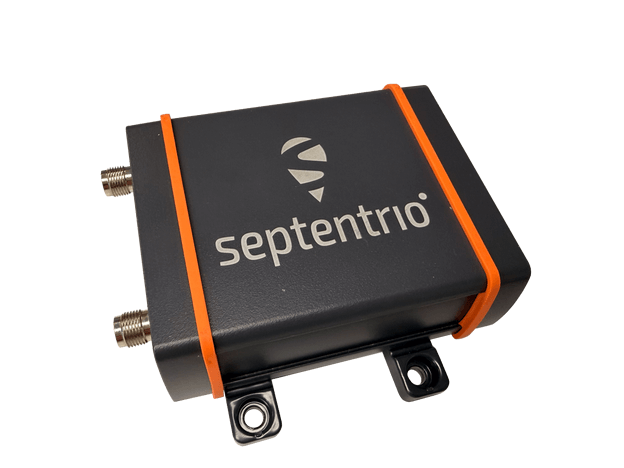
    Enclosed multi-frequency boxed receiver

    Septentrio

    The AsteRx EB GNSS receiver. (Credit: Septentrio)
    The AsteRx EB GNSS receiver. (Credit: Septentrio)

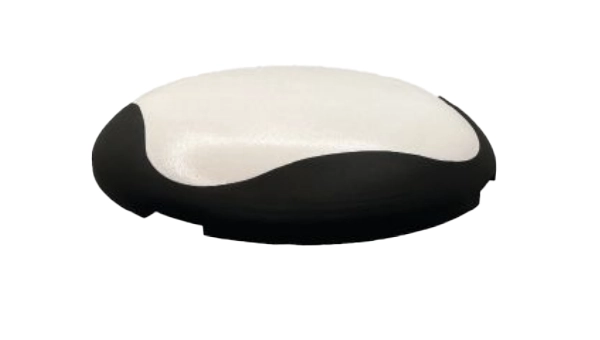
    The AsteRx EB offers high-accuracy positioning and GNSS heading for industrial robots, port logistics, marine and scalable automation applications. Its IP67 enclosure protects the receiver from harsh weather conditions, while built-in advanced GNSS+ algorithms ensure reliable operation in environments challenging for GNSS, such as areas with foliage or near GNSS interference sources. The RAIM+ integrity monitoring system ensures truthful positioning — essential for autonomous navigation. The compact enclosure of AsteRx EB enables easy installation, reducing time-to-market. In a dual-antenna configuration, AsteRx EB delivers sub-degree GNSS heading for systems that require orientation in addition to RTK positioning. The built-in AIM+ anti-jamming and anti-spoofing technology protects the receiver from intentional or unintentional GNSS interference.

    GNSS RTK platform

    Real-time kinematic delivers CM-level measurements

    SparkPNT

    Image: SparkPNT
    Image: SparkPNT

    The Facet FP is a high-precision GNSS receiver designed to deliver centimeter-level accuracy with a focus on long-term flexibility, ease of use and open-source innovation. It combines multi-band, multi-constellation GNSS support with fully open-source firmware — the platform can adapt as technologies advance. Built to last, all models are contained in a robust waterproof cast-aluminum housing, with an internal structure designed for compatibility with the company’s Flex system of GNSS modules. This gives users the choice between three different modules, plus the choice of having tilt-compensation, offering six different options with a range of price points, securities and accuracies for various needs and applications.

    GNSS antenna

    High-precision, high-accuracy, robust

    Hemisphere GNSS, Calian Group Ltd.

    Image: Hemisphere GNSS
    Image: Hemisphere GNSS

    The A65 GNSS antenna delivers exceptional accuracy, interference protection and robust GNSS tracking performance. Designed as a drop-in replacement for the widely deployed A45 antenna, the A65 offers users a seamless upgrade path to the latest precision technology. The industry collaboration reflects a shared focus on combining advanced RF design with real-world application insight to address increasingly complex GNSS operating environments, with both teams working closely from the earliest stages of development to meet demanding original equipment manufacturer (OEM) performance requirements. The antenna architecture, including the stacked patch quad feed element and RF front end, provides Calian’s XF Filtering. Hemisphere GNSS contributed application expertise, system integration requirements and performance validation within real-world machine control, agriculture, marine and survey environments.

    Airborne Lidar

    Long-range for UAV mapping and aerial surveillance

    CHC Navigation

    AlphaAir 6 is mounted on the X500 UAV during an urban mapping mission. (Credit: CHC Navgation)
    AlphaAir 6 is mounted on the X500 UAV during an urban mapping mission.
    (Credit: CHC Navgation)

    The AlphaAir 6 airborne lidar system is designed for UAV-based laser scanning, drone lidar mapping and aerial surveying in high-relief and complex terrain. Combining prism scanning technology with a high-grade inertial navigation system (INS), the AlphaAir 6 delivers a maximum ranging capability of up to 2,100 m and supports efficient data capture at typical flight altitudes of 400 m to 600 m above ground level. It integrates an upgraded laser engine and a high-grade IMU with 0.3°/h bias stability to improve trajectory accuracy and point cloud quality. This design removes the need for pre-mission IMU calibration and supports stable, efficient data collection for topographic mapping, corridor mapping, and wide-area aerial survey workflows. It is available in single-camera and dual-camera configurations.

    GNSS mapping app

    Makes smartphones data-collection tools

    Image: Fastxy
    Image: Digital Mapping Group

    Digital Mapping Group

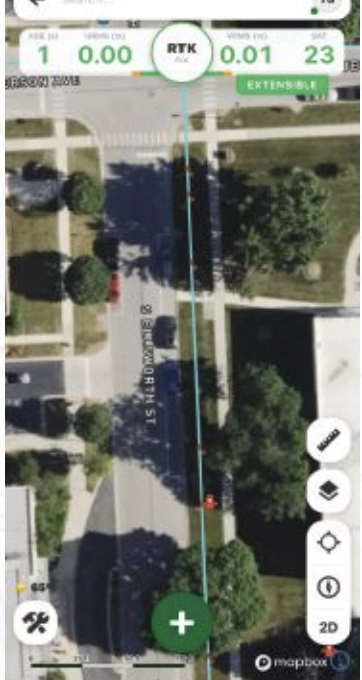
    The FastXY mapping application for iOS and Android enables standard mobile devices to serve as professional-grade data-collection tools for geospatial information system (GIS) and architecture, engineering and construction (AEC) professionals. FastXY allows users to collect point, line and polygon data with devices they already own. It delivers advanced capabilities including 3D basemaps, construction staking, topographic surveying, on-the-fly datum transformations, and survey-grade elevations. A built-in Bluetooth data parser allows users to configure the app to collect data from any instrument supporting BLE Bluetooth or RS-232 — echosounders, radiation sensors, laser rangefinders, barcode scanners — and marry that data with precise GNSS coordinates.

  • Seen & Heard: FAA updates interference resources, measuring Bangladesh’s highest peak and more

    Seen & Heard: FAA updates interference resources, measuring Bangladesh’s highest peak and more

    Interference clocked by the FAA

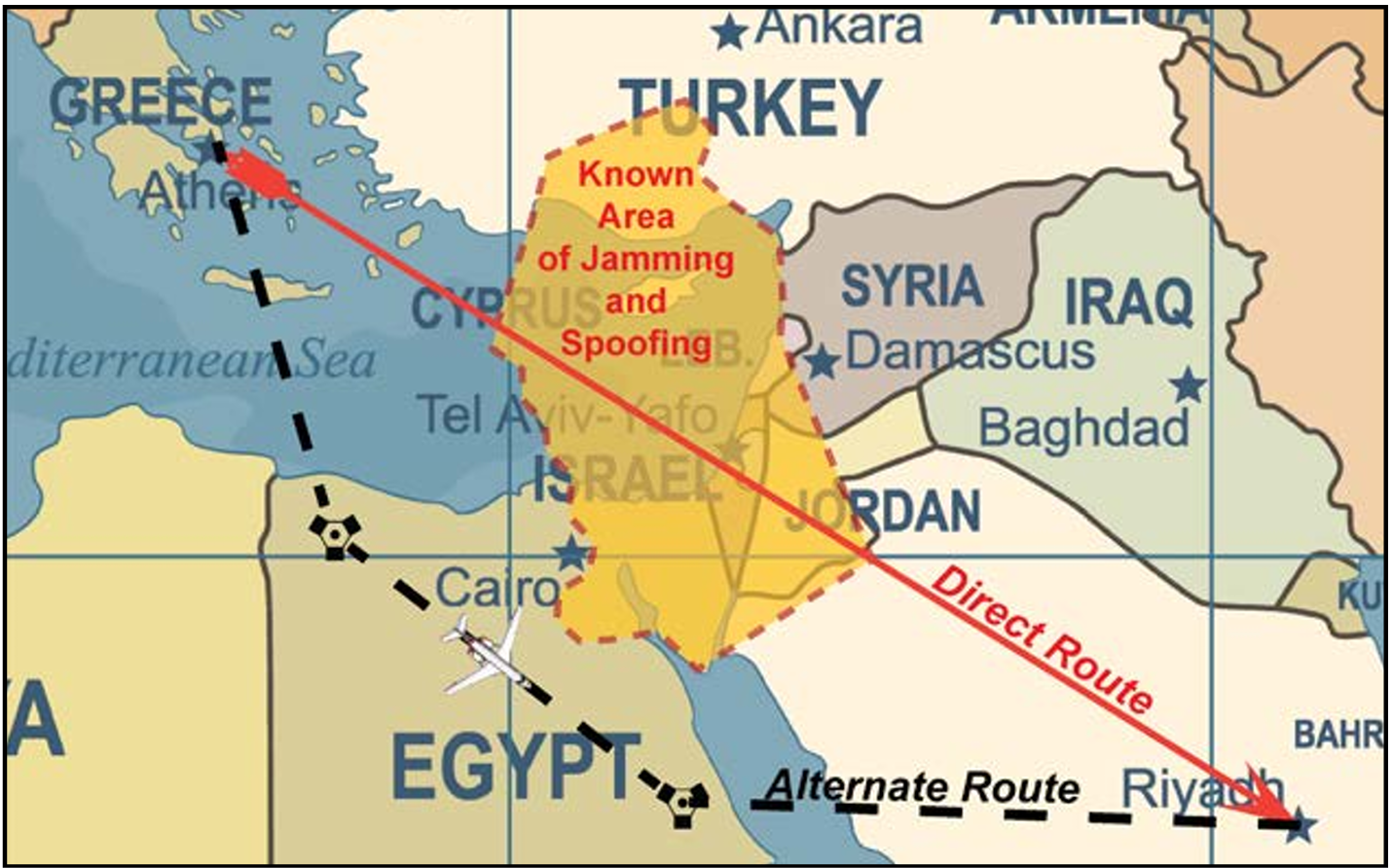
    The U.S. Federal Aviation Administration (FAA) has updated its “GNSS Interference Resource Guide.” The FAA’s Flight Technologies and Procedures Division (AFS-400) developed the guide to provide operators and pilots with current information on GPS/GNSS jamming and spoofing. According to the guide, “As the threat of GNSS jamming and spoofing is constantly changing, the FAA will update this resource guide to provide the best guidance in the rapidly changing environments.”

    Download the guide here.

    UK scientists unite to uncover coastline mysteries

    The research vessel Cefas Endeavour at dock in Lowestoft.(Credit: Cefas)
    The research vessel Cefas Endeavour at dock in Lowestoft.(Credit: Cefas)

    The UK Centre for Seabed Mapping (UK CSM) conducted a survey to explore and map the seabed along the United Kingdom’s southwest coastline. For four weeks, a team of 26 maritime scientists collected hydrographic, geological and environmental data. According to UK CSM, the survey represents an unprecedented level of collaboration within the maritime sector. The team aimed to collect and share high-quality marine data and make advances in how the seabed is mapped, understood and managed. The findings will support a wide range of applications including offshore energy and infrastructure, marine ecosystem science, safety at sea, marine policy, and defense.

    Bangladesh at the top

    Credit: MD Maruf Hassan/E+/Getty Images
    Credit: MD Maruf Hassan/E+/Getty Images

    In April, field teams for the Survey department under the Ministry of Defense
    conducted field work in the remote hill areas of Bangladesh to determine the
    highest peak. Surveyors used modern geodetic methods and advanced GNSS
    technology in the Bandarban district, and followed international standards to
    determine the height of the country’s highest peak above mean sea level (MSL)
    with centimeter-level accuracy, including latitude, longitude and elevation.

    Turbulence shrinks Antartica’s Ross Ice Shelf

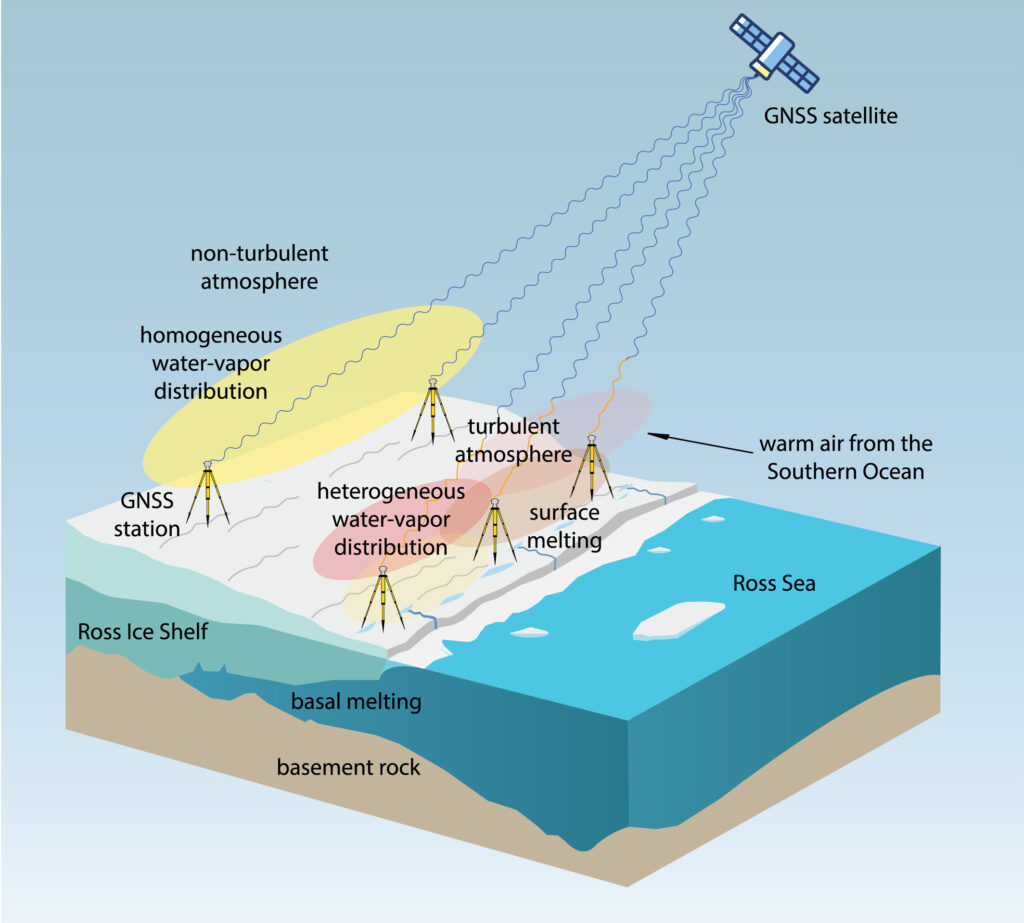
    Sketch (not to scale) of GNSS sensitivity to atmospheric turbulence in Antarctica. GNSS stations can probe the spatiotemporal distribution of water vapor in the lower atmosphere because water vapor induces a measurable signal propagation delay. Water-vapor distribution is spatially homogeneous for a non-turbulent atmosphere and heterogeneous when the atmosphere is turbulent. (Credit: MIT)
    Sketch (not to scale) of GNSS sensitivity to atmospheric turbulence in Antarctica (Credit: MIT)

    GNSS observations suggest a major melting event at Antarctica’s Ross Ice Shelf was
    linked to atmospheric turbulence. While the shelf typically melts underneath from warm ocean water, an unusual surface melting episode occurred in January 2016. Researchers from MIT Haystack Observatory used data from existing GNSS stations, with 13 stations installed on the shelf, to examine atmospheric turbulence. Wind, water vapor and temperature variations drawn in by warm and humid air caused the surface to melt, with turbulence four times greater than usual.