Tag: NovAtel

  • NovAtel Announces MEMS IMU for Pairing with OEM6 Receivers

    NovAtel Announces MEMS IMU for Pairing with OEM6 Receivers

    NovAtel Inc., supplier of OEM GNSS components and subsystems, has announced the addition of a new commercially exportable MEMS IMU to its line of SPAN GNSS/INS products. Available for immediate shipping, this custom Analogue Devices MEMS inertial sensor is exclusive to NovAtel, and can be paired with an OEM6 receiver card to provide continuously available position, velocity and attitude (roll, pitch, yaw) in a small, single-unit form factor.

    SPAN tightly couples NovAtel’s precise GNSS technology with highly accurate inertial measurement technology to provide a robust, stable and continuous 3D navigation. The new OEM-ADIS-16488 sensor is designed to be coupled with NovAtel’s OEM6 receivers via the MEMS Interface Card (MIC), providing integrators with a  compact, powerful GNSS/INS engine, NovAtel said.

    The OEM-ADIS-16488 features low noise gyros and accelerometers in a small, lightweight form factor.  This IMU enables precision measurements for applications that require low cost, high performance and rugged durability.  Tight-coupling of the two technologies enables continuous robust positioning in difficult environments where satellite signals are unreliable or unavailable for short periods of time.

    The OEM-ADIS-16488 is now available for order and immediate shipment.

  • Hemisphere GPS Sells Precision Business to Chinese UniStrong

    On January 31, Hemisphere GNSS Inc., a subsidiary of Beijing UniStrong Science & Technology Co. Ltd., purchased the Precision Products business and related GNSS technology and intellectual property from Hemisphere GPS Inc. for $15 million US. In a related press release, Hemisphere GPS Inc. has announced the intention to change its company name to AgJunction.

    As part of the transaction, Hemisphere GNSS acquired all of the high-precision GNSS product lines, all related intellectual property rights and the Hemisphere GPS trademarks and brands. The Precision Products segment generated revenues of approximately $13.3 million in 2012 serving marine, land survey, construction, mapping, and OEM segments.

    Hemisphere GNSS will operate its business headquarters out of Scottsdale, Arizona, and will maintain its operations in Calgary, Alberta, Canada.

    Phil Gabriel has been appointed president of Hemisphere GNSS Inc. and will also serve as a board member. Gabriel has more than 15 years of experience with Hemisphere GPS, serving for the past six years as the vice president and general manager of the Precision Products business.  “We are truly excited about our future growth prospects as a fully focused GNSS products and technology provider,” Gabriel said. “I would like to assure all our global distribution partners, suppliers and customers that it remains business as usual as we take our first steps forward with the strong backing of UniStrong.”

    With this acquisition, UniStrong is expanding its capabilities in the high-precision GNSS business and also expects to promote commercial applications of China’s BeiDou Navigation System. UniStrong is listed on the Shenzhen Stock Exchange under ticker 002383.

    Business analysts have reported in China that this is the first acquisition of an internationally renowned enterprise initiated by a domestic enterprise in China’s satellite navigation industry and represents an important milestone in the development of the industry. “The acquisition will create an international route enabling UniStrong to expand its global business outlook, enhance our ability to attract international talent, and lay the foundation for international growth and profitability,” stated Xingping Guo, president and CEO of UniStrong.

    As part of the agreement, Hemisphere GNSS and AgJunction have formed a strategic alliance and a collaborative business relationship covering supply chain management, customer support, technology development and cross-licensing. “Having already established a relationship with UniStrong as one of our resellers made our new alliance a win-win for both parties,” said Rick Heiniger, president and CEO of AgJunction. “I am very pleased to be working together in this close technology-sharing relationship.”

    Hemisphere GNSS’s newly appointed board of directors brings additional GNSS industry experience to the company. The board is chaired by Jonathan W. Ladd, former president and CEO of NovAtel Inc. Also joining the board is Werner Gartner, former executive vice president and CFO of NovAtel Inc.

    “Hemisphere’s talented team will leverage its core GNSS capabilities and product marketing knowledge with UniStrong’s high quality, low cost GNSS product design and development resources,” said Ladd. “Hemisphere’s existing and future customers and partners will most certainly benefit from the resulting rapid, cost-effective product innovation across multiple product lines.”

    Beijing UniStrong is focused on GNSS industry, with R&D, production, engineering, sales and service facilities. Its technical solutions and products cover GPS/GLONASS/COMPASS receivers, multi-system navigation and positioning, high-accuracy surveying, GNSS data post-processing, and system integration.

    The re-branding of Hemisphere GPS as AgJunction is an integral part of the strategic re-focusing of the company’s resources on precision agriculture, and part of the restructuring initiated in September 2012. The company maintains ownership of its key patents and leading agricultural brands including AgJunction, Outback Guidance, and Satloc.
  • MEMS IMU for OEM Receivers

    NovAtel-adis-1(NB)
    Photo: NovAtel

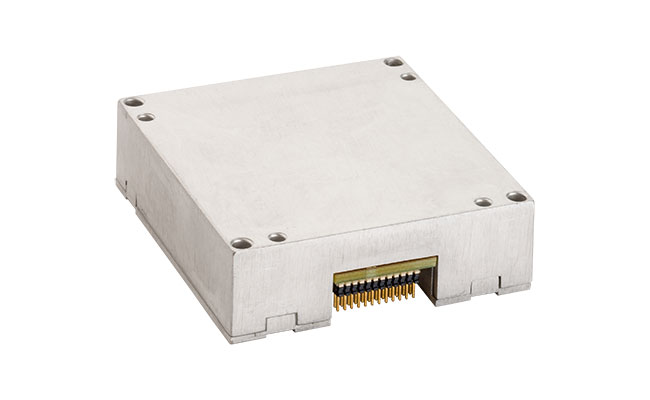
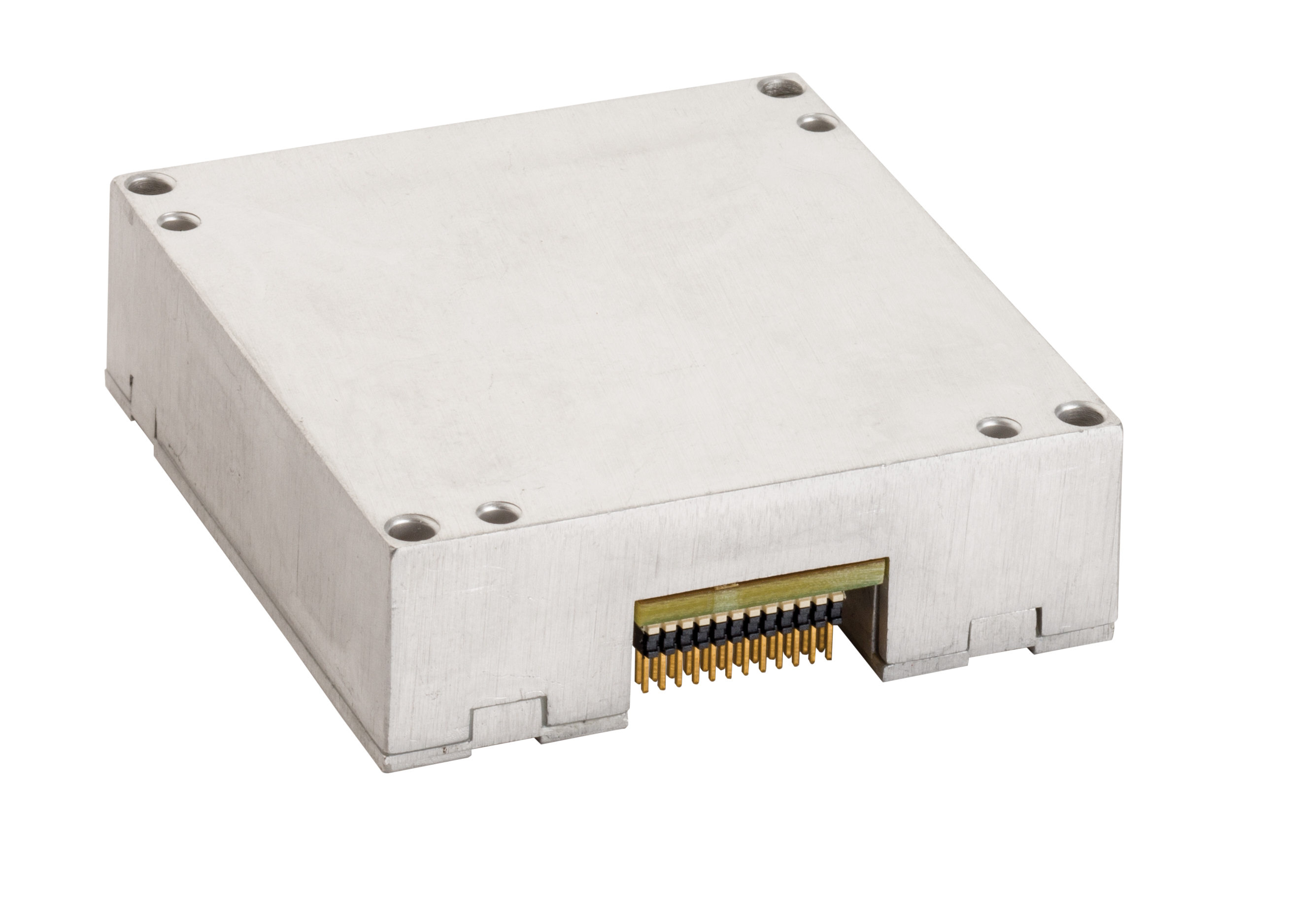
    The ADIS16488 is a Micro Electromechanical System (MEMS) Inertial Measurement Unit (IMU) from Analog Devices. It features low noise gyros and accelerometers in a rugged, environmentally sealed enclosure. The ADIS16488 enables precision measurements for applications that require low cost, high performance, and rugged durability.

    At 71 x 46 x 11 millimeters, the OEM-ADIS-16488 features low noise gyros and accelerometers in a small, lightweight form factor. The custom device is designed to be paired with a NovAtel OEM6 receiver card to provide continuously available position, velocity, and attitude (roll, pitch, yaw).

    SPAN tightly couples NovAtel’s precise GNSS technology with highly accurate inertial measurement technology to provide robust, stable, and continuous 3D navigation. Tight coupling of the two technologies enables continuous robust positioning in difficult environments.

  • NovAtel GNSS Receivers Provide BeiDou Support

    NovAtel announces support for the BeiDou Navigation Satellite System on its OEM6 family and select OEMStar GNSS receivers.

    The long-anticipated BeiDou Navigation Satellite System (BDS) Interface Control Document (ICD) release is a significant milestone that facilitates global acceptance of BeiDou into the growing range of satellite-based positioning applications, NovAtel said.

    NovAtel has a long-standing partnership with several Chinese GNSS system manufacturers. This partnership has allowed NovAtel to verify B1 and B2 signal tracking on its latest generation receivers. The company has been supplying GNSS receivers that include the BeiDou constellation since Q4 2010.

    “We are excited to see what performance improvements BeiDou will provide to our AdVance RTK, GL1DE and SPAN GNSS/INS positioning algorithms,” said Pat Fenton, NovAtel CTO.

    BeiDou positioning has been available through NovAtel’s Chinese partners utilizing the receiver Application Programming Interface (API) feature. With the BeiDou ICD made available to the public, NovAtel is now able to offer BeiDou positioning on its receiver products directly.

    Firmware updates for the OEM6 and OEMStar receivers will enable tracking of the BeiDou signal in conjunction with GPS, GLONASS, Galileo and QZSS signals that are currently supported. Over the coming months NovAtel will be working with early-adopter customers to optimize their receiver positioning engines to support the BeiDou signals.

    Customers interested in trialing BeiDou functionality on their receivers should contact NovAtel Customer Support at [email protected].

  • Leadership Awards 2012: Terrestrial-Based Signals

    A GPS Look-Alike to Compensate for Poor Indoor, Urban Availability

    Editor’s Note: This article reproduces the acceptance speeches given by the winners of GPS World’s 2012 Leadership Awards, at the Leadership Dinner in Nashville in September. The Leadership Dinner was sponsored by Lockheed Martin and Deimos Space.


    Remarks by Waldemar Kunysz

    Senior Staff Engineer, winner in the Services category. He works on Wide-Area Positioning System (WAPS) design and implementation in the continental United States. He spent the  previous 16 years with NovAtel, Inc., working on various research projects and novel antenna designs.


    I am much honored to receive this award and recognition. It means a lot to me.

    I would like to thank the people who made a difference in my career. Without them it would not be possible for me to be here.

    First I am grateful to Dr. Maurice Meyer, former MIT professor. He taught me the black magic of antenna engineering. I am quite sure that his spirit guided me when I invented the GPS/GNSS Pinwheel antenna when working at NovAtel, for which I received six patents.

    I also would like to thank Prof. Gerard Lachapelle and Dr. AJ Van Dierendock for teaching me GPS technology and Dr. Phillip Ward for providing very useful insight on the subject of interference. That knowledge saved me countless hours when troubleshooting some system-level issues while designing current and past GPS/GNSS products.

    Currently I am working at NextNav LLC, developing technologies related to NextNav’s new terrestrial based Wide Area Positioning System (WAPS). Founded in 2008 and based in Sunnyvale, California, NextNav has designed a new positioning system that is being initially deployed across the United States, although we anticipate taking our technology to global markets in the future. In its short life, in addition to developing the technology necessary for a timing-based, high-accuracy terrestrial positioning system, NextNav has already established a network presence in 40 of the largest U.S. metropolitan areas. This system allows the reception of a GPS-like signal in the areas where satellite coverage is weak or non-existent, such as indoors or in dense urban developments, that is, downtowns, urban canyons, and so on. We already have completed a fully-deployed service capability in the San Francisco Bay area that enables consistently accurate indoor and outdoor positioning anywhere from San Francisco to San Jose, and we are growing our network footprint across the United States. We are also very excited to have developed a height system that has demonstrated consistent floor-level accuracy, a feature that is particularly valuable indoors.

    As we know, all major terrestrial systems, such as Loran, Omega and Decca, have been shut down in the past several years. We have become very dependent on satellite-based services such as GPS and GLONASS without any terrestrially-based back-up. Any major solar storm in the future could be very disruptive to this service, so having a terrestrial-based system that is in sync with the satellite-based system will fill that void. And of course, a terrestrial system can be maintained and improved on a significantly shorter schedule, with significantly lower cost, than a space-based system. NextNav really provides an excellent complement to GPS.

    The future looks very bright for the positioning service industry. In my opinion, by 2020 it will become another ubiquitously-available utility such as phone or power. I’d like to agree with my other awardee and predict that in 2020 we will be able to have a carrier-based positioning accuracy anywhere and anytime, available from any devices including handheld units. You will know where all your assets are and you won’t need to post a question to your wife: “Honey, did you see where my tie is?” Your personal digital assistant will locate it for you.

    Thanks again.

  • NovAtel Announces New SPAN MEMS Enclosed Receiver

    Photo: NovAtel
    Photo: NovAtel

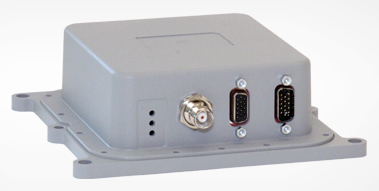
    Today at Intergeo, NovAtel Inc., NovAtel announced the addition of a new commercially exportable single-enclosure SPAN MEMS receiver to its line of SPAN GNSS/INS products. Available in the first quarter of 2013, the low-power, lightweight SPAN MEMS enclosure incorporates a diminutive Micro Electromechanical Systems (MEMS) Inertial Measurement Unit (IMU) and a NovAtel high-precision OEM615 GNSS/INS SPAN receiver to provide continuously available position, velocity and attitude (roll, pitch and yaw) in a small, single-unit form factor, the company announced.

    “This product ensures we meet crucial price/performance and size/weight requirements for our customers,” Jason Hamilton, director of Marketing at NovAtel, said. He added, “By integrating this IMU with our powerful OEM6 GNSS/INS SPAN engine, which provides many advanced positioning options such as AdVance RTK, ALIGN heading technology and RAIM, we are able to offer a GNSS/INS solution for a wide range of applications.”

    The lightweight SPAN MEMS enclosure provides a rugged housing for demanding applications. Serial and USB communication interfaces plus several I/O options support additional peripherals. An embedded wheel sensor interface is also available to enhance GNSS outage bridging capabilities. Tight coupling of the GNSS and inertial technologies enables continuous, robust positioning in difficult environments where satellite signals are unreliable or unavailable for short periods of time.

    This product will be available as an integrated single-enclosure SPAN solution, enclosed standalone IMU for use with external SPAN-enabled receivers, and as an OEM component.

    Shipments of the new receiver start Q1 2013 with OEM availability Q4 2012. A limited supply of enclosure evaluation units will be available in Q4 for integrators looking to get a head start on their projects.

  • GPSWorldTV – Novatel at ION GNSS

    GPSWorldTV talks with Jason Hamilton, Director of Marketing for Novatel, Inc. at the ION GNSS 2012 conference.

  • SPAN GNSS/INS Technology Now on NovAtel’s OEM6 Receiver Products

    NovAtel Inc. announced  at ION the addition of SPAN GNSS/Inertial Navigation System (INS) technology to its OEM6 GNSS receiver platform. NovAtel’s SPAN technology tightly couples precision GNSS receivers with robust inertial measurement units (IMUs) to provide reliable, continuously available, position, velocity and attitude (roll, pitch, yaw), even during short periods of time when satellite signals are blocked or unavailable.

    The release of SPAN on OEM6 provides SPAN OEM customers with new features and functionality previously unavailable on NovAtel’s OEMV based SPAN platform, including ALIGN GNSS heading determination, API, RAIM, and GPS+GLONASS positioning.

    Jason Hamilton, director of Marketing at NovAtel, stated, “SPAN on OEM6 builds on our core GNSS platform, taking features and functionality from our six series and adding them to our SPAN technology.” He added, “SPAN on OEM6 improves positioning performance in difficult GNSS environments over NovAtel’s past generations of products, greatly improving the ability to bridge GNSS outages, and allowing users to operate with higher confidence in challenging environments.”

    NovAtel’s SPAN technology will be supported on OEM615 and OEM628 board level receivers, and the FlexPak6 receiver which gives integrators a rugged enclosed platform that can be paired with the company’s complete range of IMU sensors.

    The OEM615 and 628 boards replace NovAtel’s legacy OEMV receivers to provide integrators a new platform for developing and embedding SPAN into their applications. Existing OEM6 customers can now upgrade their receiver to become full GNSS/INS SPAN platforms.

    Interested parties can visit NovAtel at Booth “F” at ION 2012 to learn more about this new product offering. Shipments of OEM6 SPAN enabled receivers will begin September 2012. Further information can be found on the company’s website at novatel.com or through a company representative which can be located under the “Where to Buy” tab of the company website.

  • NovAtel SAASM to See First Action in Aerial Drones

    The new OEM625S Selective Availability Anti-Spoofing Module (SAASM) GNSS receiver from NovAtel, launched in a cooperative effort with SAASM expert L-3 Interstate Electronics Corporation (IEC), will get its first applications in the unmanned aerial vehicle (UAV) sector. NovAtel has brought forth the new product in part to meet requirements of UAV manufacturers who are now mandated to have SAASM onboard as well, for in-theater operations in areas of military activity.

    “The new SAASM regulations meant that integrators were looking at having to incorporate another receiver alongside their NovAtel unit, complicating user interface factors and increasing onboard space requirements,” said NovAtel Product Manager Neil Gerein. “The OEM625S gives our customers a drop-in form factor that easily replaces their existing NovAtel OEM receiver.”

    “NovAtel has supplied UAV integrators on the civil scientific side almost since our inception,” Gerein said, adding, “the military has become more and more involved in this market in recent years for budget and various other strategic reasons.” He mentioned that in its 20-year history selling GPS products, for the last 17 years NovAtel has provided receivers and expertise to U.S. and Canada defense contractors, and to defense research labs in Allied countries. Antcom, a wholly-owned NovAtel subsidiary specializing in antennas and microwave products, makes the majority of its sales into military areas.

    Examples of such products in this area — not necessarily from NovAtel customers, who remain unidentified — include hand-launched mini-UAVs like the Aerovironment RQ-11 Raven and Elbit Skylark I, and runway-capable tactical UAVs such as Textron RQ-7 Shadow, Aeronautics DS Aerostar, IAI Searcher II, and InSitu’s ScanEagle UAV system, quickly evolving into a mainstay with the U.S. Navy and its allies thanks to a partnership with Boeing.

    The InSitu ScanEagle was first developed to track dolphins and tuna from fishing boats, to ensure that fish labeled “dolphin-safe” actually are so. The same characteristics needed by commercial fishing boats — low infrastructure launch and recovery, small size, 20-hour long endurance, automated flight patterns — are key for naval operations from larger vessels, and for battlefield surveillance.

    At present the OEM625S, combining a commercial dual-frequency NovAtel GNSS receiver with an L-3 IEC XFACTOR SAASM, provides single-point positioning with SAASM for authorized defense customers. The SAASM position is provided via a dedicated communication port, as well as through NovAtel’s software command protocol, allowing for maximum flexibility. The small form factor and low power consumption expands range of potential defense applications requiring robust SAASM GPS positioning.

    The OEM625S measures 60 x 100 x 9.1 millimeters, and runs on field-upgradeable software. NovAtel will accept orders for the OEM625S from authorized customers starting in Q3 2012.

  • JNC Live Coverage: SAASM and M-Code Receiver Test

    News from the ION Joint Navigation Conference.

    NovAtel and L-3 Receiver Slated for UAV

    The new OEM625S Selective Availability Anti-Spoofing Module (SAASM) GNSS receiver from NovAtel, launched in a cooperative effort with SAASM expert L-3 Interstate Electronics Corporation (IEC), will get its first applications in the unmanned aerial vehicle (UAV) sector. NovAtel has brought forth the new product in part to meet requirements of UAV manufacturers who are now mandated to have SAASM onboard as well, for in-theater operations in areas of military activity.

    “The new SAASM regulations meant that integrators were looking at having to incorporate another receiver alongside their NovAtel unit, complicating user interface factors and increasing onboard space requirements,” said NovAtel Product Manager Neil Gerein. “The OEM625S gives our customers a drop-in form factor that easily replaces their existing NovAtel OEM receiver.”

    “NovAtel has supplied UAV integrators on the civil scientific side almost since our inception,” Gerein said, adding, “the military has become more and more involved in this market in recent years for budget and various other strategic reasons.” He mentioned that in its 20-year history selling GPS products, for the last 17 years NovAtel has provided receivers and expertise to U.S. and Canada defense contractors, and to defense research labs in Allied countries. Antcom, a wholly-owned NovAtel subsidiary specializing in antennas and microwave products, makes the majority of its sales into military areas.

    Examples of such products in this area — not necessarily from NovAtel customers, who remain unidentified — include hand-launched mini-UAVs like the Aerovironment RQ-11 Raven and Elbit Skylark I, and runway-capable tactical UAVs such as Textron RQ-7 Shadow, Aeronautics DS Aerostar, IAI Searcher II, and InSitu’s ScanEagle UAV system, quickly evolving into a mainstay with the U.S. Navy and its allies thanks to a partnership with Boeing.

    The InSitu ScanEagle was first developed to track dolphins and tuna from fishing boats, to ensure that fish labeled “dolphin-safe” actually are so. The same characteristics needed by commercial fishing boats — low infrastructure launch and recovery, small size, 20-hour long endurance, automated flight patterns — are key for naval operations from larger vessels, and for battlefield surveillance.

    At present the OEM625S, combining a commercial dual-frequency NovAtel GNSS receiver with an L-3 IEC XFACTOR SAASM, provides single-point positioning with SAASM for authorized defense customers. The SAASM position is provided via a dedicated communication port, as well as through NovAtel’s software command protocol, allowing for maximum flexibility. The small form factor and low power consumption expands range of potential defense applications requiring robust SAASM GPS positioning.

    The OEM625S measures 60 x 100 x 9.1 millimeters, and runs on field-upgradeable software. NovAtel will accept orders for the OEM625S from authorized customers starting in Q3 2012.


    L-3 Announces First-Ever Successful Gun Firing of Next-Generation M-Code GPS Receiver

    L-3 Communications announced  that its Interstate Electronics Corporation (L-3 IEC) business successfully completed multiple test firings of its next-generation Military Code (M-Code) GPS receiver technology. The milestone represents a significant breakthrough in GPS receiver modernization and validates the unit’s survivability and performance in extreme, guided munitions environments, according to the company.

    L-3’s gun-hardened, next-generation M-Code GPS receiver prototype was fired from a 155-mm howitzer and tracked the M-Prime signal from several modernized satellites to successful target impacts. This represents the first-ever use of the M-Code GPS technology in a weapon system, and provides critical validation of the hardware and software performance in a projectile.

    The successful test supports a Congressional mandate to implement M-Code technology on all future and existing U.S. Department of Defense (DoD) platforms and their objectives for technical innovations capable of offsetting future threats. L-3’s new design presents a flexible hardware and software configuration for GPS integrators and is capable of tracking legacy and modernized signals. The receiver will be applicable on a variety of host platforms, including guided munitions, unmanned aerial systems, soldier systems and ground mobile systems.

  • NovAtel SAASM to See First Action in Aerial Drones

    The new OEM625S Selective Availability Anti-Spoofing Module (SAASM) GNSS receiver from NovAtel, launched in a cooperative effort with SAASM expert L-3 Interstate Electronics Corporation (IEC), will get its first applications in the unmanned aerial vehicle (UAV) sector. NovAtel has brought forth the new product in part to meet requirements of UAV manufacturers who are now mandated to have SAASM onboard as well, for in-theater operations in areas of military activity.

    “The new SAASM regulations meant that integrators were looking at having to incorporate another receiver alongside their NovAtel unit, complicating user interface factors and increasing onboard space requirements,” said NovAtel Product Manager Neil Gerein. “The OEM625S gives our customers a drop-in form factor that easily replaces their existing NovAtel OEM receiver.”

    “NovAtel has supplied UAV integrators on the civil scientific side almost since our inception,” Gerein said, adding, “the military has become more and more involved in this market in recent years for budget and various other strategic reasons.” He mentioned that in its 20-year history selling GPS products, for the last 17 years NovAtel has provided receivers and expertise to U.S. and Canada defense contractors, and to defense research labs in Allied countries. Antcom, a wholly-owned NovAtel subsidiary specializing in antennas and microwave products, makes the majority of its sales into military areas.

    Examples of such products in this area — not necessarily from NovAtel customers, who remain unidentified — include hand-launched mini-UAVs like the Aerovironment RQ-11 Raven and Elbit Skylark I, and runway-capable tactical UAVs such as Textron RQ-7 Shadow, Aeronautics DS Aerostar, IAI Searcher II, and InSitu’s ScanEagle UAV system, quickly evolving into a mainstay with the U.S. Navy and its allies thanks to a partnership with Boeing.

    The InSitu ScanEagle was first developed to track dolphins and tuna from fishing boats, to ensure that fish labeled “dolphin-safe” actually are so. The same characteristics needed by commercial fishing boats — low infrastructure launch and recovery, small size, 20-hour long endurance, automated flight patterns — are key for naval operations from larger vessels, and for battlefield surveillance.

    At present the OEM625S, combining a commercial dual-frequency NovAtel GNSS receiver with an L-3 IEC XFACTOR SAASM, provides single-point positioning with SAASM for authorized defense customers. The SAASM position is provided via a dedicated communication port, as well as through NovAtel’s software command protocol, allowing for maximum flexibility. The small form factor and low power consumption expands range of potential defense applications requiring robust SAASM GPS positioning.

    The OEM625S measures 60 x 100 x 9.1 millimeters, and runs on field-upgradeable software. NovAtel will accept orders for the OEM625S from authorized customers starting in Q3 2012.

  • NovAtel, L-3 Interstate Electronics Partner on Civil RTK and SAASM Receiver Card

    NovAtel Inc. today announced the development of its OEM625S Selective Availability Anti-Spoofing Module (SAASM) GNSS receiver, a collaborative effort between NovAtel and L-3 Interstate Electronics Corporation (IEC).

    System integrators have come to rely on the centimeter-level positioning accuracy made possible with real-time kinematic (RTK) commercial GPS receivers. Many authorized defense customers rely on access to the Precise Positioning Service (PPS) for single-point positioning. The OEM625S will combine a commercial dual-frequency NovAtel GNSS receiver with an L-3 IEC XFACTOR SAASM in a single card solution, reducing overall size and power requirements for end customer applications.

    The OEM625S will maintain NovAtel’s OEMV-2 form factor, ensuring a successful drop-in replacement and backward compatibility for existing customers. Integrators can continue to use their existing user interface, which will be enhanced with OEM625S logs and commands for SAASM functionality.

    NovAtel’s well-established, comprehensive set of software commands facilitates system integration, NovAtel said. The SAASM position is provided via a dedicated communication port, as well as through NovAtel’s software command protocol, allowing for maximum flexibility.

    “For the past 17 years NovAtel’s customers have enjoyed great success in integrating our OEM family of high-precision receivers into a wide array of defense applications,” stated Graham Purves, executive vice president of NovAtel. “Adding the L-3 XFACTOR SAASM to our receiver card will allow defense customers to continue to use our products in the most demanding military environments.”

    Ric Pozo, general manager of L-3 IEC’s Navigation Systems business unit, commented, “We are pleased to collaborate with NovAtel and provide the warfighter this highly flexible and capable GPS SAASM product. Our combined teams are looking forward to bringing this one-of-a-kind solution to market.”

    NovAtel will accept orders for the OEM625S from authorized customers starting in the third quarter of 2012.