Tag: OEM

  • GPS Satellite Simulator

    CAST Navigation of Tewksbury, Massachusetts introduced its SGX GPS Satellite Simulator. With its compact size — 7 × 11× 3 inches — and weighing in at just over 4 pounds, the SGX is CAST’s newest and smallest fully capable simulator to date.
    The new SGX replaces the CAST-SIMCOM Simulator which was a 17-inch, 50-pound simulator. The SGX lightweight portability operates on AC or battery power, features 16 channels of L1 C/A and P codes, and is extremely accurate and repeatable, according to the company.
    Features include touch screen, individual satellite power control, and start and stop scenarios with a touch of a button.
    The CAST-SGX is portable, affordable, lightweight and utilizes CAST long standing proven technology.
    CAST has been in the GPS simulation and support business for more than 25 years, designing, developing, manufacturing, and integrating innovative GPS/INS simulators and associated equipment for government, military, prime vendor, and consumer markets.

    CONTACT INFO

    Company: CAST Navigation
    Country: United States (USA)
    Email: [email protected]
    URL: http://www.castnav.com

  • Compact Modules for RTK GNSS

    Hemisphere GPS announces the Eclipse P300 and Eclipse P301 OEM modules — its next-generation high‑performance compact modules for RTK GNSS applications. Based on new Hemisphere GPS multi-function application firmware and Eclipse GNSS multi‑constellation technology, P300 and P301 provide the ability for tracking commercially available GNSS signals for precise positioning.

    P300 is a drop-in board replacement for Hemisphere GPS’ successful Crescent L1 board as well as the first‑generation miniEclipse P200 GPS-only OEM board. P301 is the company’s 20‑pin OEM module configured as a drop-in replacement for a different industry standard interface. Eclipse P300 and P301 improve GNSS positioning performance, particularly with RTK applications, through Hemisphere GPS’ patent-pending SureTrack technology. Benefits include extended and more robust RTK solutions as the rover RTK receiver will process all available signals even if they are not common with the base receiver. RTK solutions are therefore better maintained in challenging environments, with baselines of up to 50 km, and reacquisition times are improved resulting in more robust overall performance, the company said.

    P300 and P301 are designed for OEM system integrators who demand the highest level of multi-frequency positioning, accuracy, fast initialization time, and GNSS RTK solutions. Hemisphere GPS’ miniEclipse series includes a single frequency L1 GPS + L1 GLONASS model named P202. Both series are designed for developing integrated high-precision and control applications for geomatics, survey, machine control, and unmanned vehicle solutions.

    “P300, P301, and P202 all improve upon our already successful miniEclipse OEM modules adding GNSS support to our most compact modules for excellent accuracy and affordability,” said Phil Gabriel, vice president and general manager, Precision Products, for Hemisphere GPS. “System integrators have a wider range of Hemisphere GPS solutions from which to choose to develop world‑class high‑precision products.”

    Measuring 71 mm long and 41 mm wide, miniEclipse allows for easy integration, especially for integrators who are accustomed to Hemisphere GPS’ Crescent and miniEclipse OEM module performance and footprint.

    All miniEclipse modules are available through the Hemisphere GPS Precision Products global dealer network.

  • Core Positioning Receiver Chip

    u-blox is launching the u-blox 7, its next-generation core positioning technology platform. Supporting all deployed as well as soon-to-be deployed GNSS, the platform is based on the UBX-G7020 multi-GNSS receiver integrated chip with low power consumption.

    With 7 mW power consumption during continuous navigation, u‑blox’ UBX-G7020 is designed for small portable and power-sensitive devices requiring long battery life, high sensitivity, small size, and fast positioning. GPS, GLONASS, Compass, Russian, QZSS, and Galileo satellite positioning systems plus all satellite-based augmentation systems (SBAS) are supported.

    “As the satellite systems expand beyond GPS, u-blox 7 is an important step for our customers to design systems that work with all available global navigation standards, particularly GLONASS which is now fully operational. Our multi-GNSS UBX-G7020 integrated circuit does exactly that while achieving two of the most important features that our customers demand: minimum power consumption and small size,” said Andreas Thiel, executive vice president of R&D Hardware and co-founder of u-blox.

    The chip has been designed to support the lowest cost stand-alone solution via minimum eBOM; only eight external components are required resulting in a receiver occupying only 30 mm2 on a two-layer PCB. Standard crystal and TCXO are supported. The chip also provides low-power, autonomous log data output of position, velocity, and time. Support for A-GPS and u-blox’ CellLocate hybrid GNSS/cellular positioning technology is embedded to facilitate advanced telematics applications including indoor positioning. Standard and automotive grade are supported.

    First samples of the multi-GNSS receiver chip UBX-G7020 are available for customer evaluation. Shortly afterwards, module customers can migrate to the MAX, NEO, and LEA form factors, u-blox’ module series which will all be upgraded to the new u-blox 7 platform.

    u-blox 7 maintains software compatibility with u-blox 5 and u-blox 6, and modules provide drop-in compatibility. Both previous generation platforms remain fully supported, the company said. u-blox’ capability of delivering GNSS technology in both integrated circuit and module form provides maximum design flexibility for a wide variety of applications. To evaluate the performance of the u-blox 7 multi-GNSS platform, evaluation kits supporting all u-blox 7 based chips and modules can be ordered.

  • Multi-Channel RF Recorder

    Averna, developer of test solutions and services for communications and electronics device makers, announces the availability of a field-ready multi-channel RF Recorder for RF applications covering 330 MHz to 2.5 GHz.

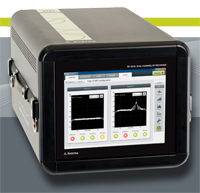
    The Averna RP-5300 RF Recorder is an advanced tool for both field testing and performance testing, Averna said. With 50 MHz of recording bandwidth at 16-bits, it can record multiple GNSS signals in up to two bands (L1, L2, L5), such as GPS or GLONASS. Its compact size and integrated display was designed for field operation.

    Wireless products need to perform well in the complicated and difficult-to-predict RF environments found in the real world. Simulators can bring the design up to a certain point in the development process, but Averna’s RF Recorder captures all the multi-path, interference and general degradation of signals that end-users will experience. Capturing the segment of spectrum of interest, from minutes to hours, allows a technician to return to the lab with data necessary to diagnose and solve the problem, while building a library of environments to harden their products for the future, Averna said.

    “Recording live, impaired, RF signals of interest in the field, without demodulation or alteration, reduces the need for traditional field-testing of RF receivers,” said Brendan Wolfe, director of product management at Averna. “We are thrilled to bring to the GNSS market a portable and high-fidelity multi-channel RF recorder designed for the optimal capture of real-life RF environments.”

    The RP-5300 comes preloaded with Averna’s RF Studio Recorder. RF Studio is workflow software for making trouble-free RF recordings, managing collected data, and analyzing or playing back collected RF environments. With RF Studio Recorder, the intended signals are captured during and after a recording session without the need for RF experts on site, Averna said.

    Key features include:

    • 50 MHz recording bandwidth to capture multi-GNSS signals
    • Two channels to capture signals operating at different frequencies
    • Up to 11 hours of recording time with external RAID (2×50 MHz channels @ 16-bit-depth)
    • Field-ready with an integrated touchscreen display, ruggedized chassis and compact size
    • Simple field setup, intuitive user interface and test-case profiles

    For customers interested in a complete solution of RF recording to playback, Averna recommends the Averna RP-5300 Series be paired with the Averna URT-5000, a world-class RF Player and Signal Generator.

  • Averna Introduces Portable, Multi-Channel RF Recorder for GNSS Applications

    Averna Introduces Portable, Multi-Channel RF Recorder for GNSS Applications

    Photo: AvernaAverna, developer of test solutions and services for communications and electronics device makers, announces the availability of a field-ready multi-channel RF Recorder for RF applications covering 330 MHz to 2.5 GHz.

    The Averna RP-5300 RF Recorder is an advanced tool for both field testing and performance testing, Averna said. With 50 MHz of recording bandwidth at 16-bits, it can record multiple GNSS signals in up to two bands (L1, L2, L5), such as GPS or GLONASS. Its compact size and integrated display was designed for field operation.

    Wireless products need to perform well in the complicated and difficult-to-predict RF environments found in the real world. Simulators can bring the design up to a certain point in the development process, but Averna’s RF Recorder captures all the multi-path, interference and general degradation of signals that end-users will experience. Capturing the segment of spectrum of interest, from minutes to hours, allows a technician to return to the lab with data necessary to diagnose and solve the problem, while building a library of environments to harden their products for the future, Averna said.

    “Recording live, impaired, RF signals of interest in the field, without demodulation or alteration, reduces the need for traditional field-testing of RF receivers,” said Brendan Wolfe, director of product management at Averna. “We are thrilled to bring to the GNSS market a portable and high-fidelity multi-channel RF recorder designed for the optimal capture of real-life RF environments.”

    The RP-5300 comes preloaded with Averna’s RF Studio Recorder. RF Studio is workflow software for making trouble-free RF recordings, managing collected data, and analyzing or playing back collected RF environments. With RF Studio Recorder, the intended signals are captured during and after a recording session without the need for RF experts on site, Averna said.

    Key features include:

    • 50 MHz recording bandwidth to capture multi-GNSS signals
    • Two channels to capture signals operating at different frequencies
    • Up to 11 hours of recording time with external RAID (2×50 MHz channels @ 16-bit-depth)
    • Field-ready with an integrated touchscreen display, ruggedized chassis and compact size
    • Simple field setup, intuitive user interface and test-case profiles

    For customers interested in a complete solution of RF recording to playback, Averna recommends the Averna RP-5300 Series be paired with the Averna URT-5000, a world-class RF Player and Signal Generator.

  • The System: Commercial GPS in Combat

    Partnership Council Affords Insight, Drama

    By Alan Cameron

    This year’s GPS Partnership Council provided among other highlights a discussion of the tensions between commercial off-the-shelf (COTS) receiver systems used in tactical combat operations versus official military GPS user equipment (MGUE), and an enthralling warfighters’ panel that revealed much of those COTS/MGUE dilemmas. The event, held May 1–2 in El Segundo, California, drew an enthusiastic and involved audience, including many GPS veterans. I was struck by the graying of the clan as well as the practiced and confident presentations of current civilian and military program staffs.

    Keynote speaker Brig. Gen. Martin Whelan, Director of Requirements, Headquarters Air Force Space Command, emphasized that ideas for improvement of the system would be hard sells under current budget realities, but good ideas for lower cost would be welcome. Referring to the three segments — space, ground, and user — he recommended that the segments should talk with each other and challenge requirements. In effect, he implied that the separate segments could reduce overall costs, rationalize requirements, and cooperate better in optimizing the resilience and flexibility of the system, including — this is my interpretation — taking advantage of the “competitive” GNSSs to effect user satisfaction.

    According to Whelan, resiliency of the space segment is a top priority; smaller satellites, hosted payloads, and net-centric designs were highlighted. He commented that multiple GNSSs should be employed in such a way that the user does not know the difference.

    Regarding the upcoming budget, he told us that Department of Defense will be cut by 22 percent, the Air Force will drop 9 percent — but the AF space budget only 1.5 percent. A notable exception to the generally favorable overview was his comment that the MGUE segment, from a distance, looked uncoordinated. Much more along this line came up later during both days of the Council.

    Widespread COTS. There was an air of defensiveness about the user segment, and many comments on both the success and the risks associated with the widespread use of COTS user equipment. We heard further commentary on the very infrequent use of SAASM keys, due to the difficulty of procedures to obtain and employ them, and due to the perception of very low risk of jamming and spoofing threats in current combat deployments.

    A session on “The Future Military Receiver” enlisted two panels of government experts and contractors from Deere-NavCom, Garmin, IEC, Johns Hopkins Applied Physics Labs, Raytheon, and Rockwell-Collins. Although the unclassified nature of the presentations limited the level of detail, it clearly emerged that many tactical, in-combat deployments of COTS GPS receiver systems had occurred and continue to occur.

    A video compared the jamming resistance of a Garmin receiver with that of approved GPS User equipment receivers. It showed a screen of the Garmin receiver losing satellites at greater distances from the jammer and losing lock at closer distances. Directorate employees and officers made several references to the risks from dependence upon COTS receivers, and related with considerable candor the difficulties with large, expensive, power-hungry MGUE, both mobile and platform-mounted, models of which were held up during the presentations — often to laughter from some in the audience.

    More on this followed in Day Two’s dramatic warfighters’ panel, which many people felt was by itself worth the price of admission. These experienced users of GPS under fire — from Coast Guard search and rescue to Air Force forward controllers calling in air strikes within range of small-arms fire — related direct personal experience in a broad array of critical applications. They clearly knew how to use COTS equipment to good advantage and described the operational protocols developed from hard and sometimes painful experience.

    Manipulation of multiple screens in a heavy device, which requires initialization or synchronization before dismounting, was often simply not an option. Translation of such experience into qualified requirements is a major challenge for the Air Force and Army. Overdependence on the anecdotal but very valid combat experiences would weaken a design against an enemy with even rudimentary jamming and spoofing capability.

    An astute questioner asked “Have you seen any evidence that the enemy (in Afghanistan) has changed tactics because of our technology?”

    The answer came “Not yet,” with a comment that the enemy’s early warning systems are very sophisticated and the target of a mission to capture a high-value individual (HVI) frequently knows that such a mission is underway; his support network spirits him away and attacks the mission with the advantage of surprise denied to our forces, abetted by the advantage of favorable terrain and numbers accruing to the enemy.

    The Puck. The Army-led MGUE program status was described as being at technology readiness level (TRL) 6.0; the request for proposals was released on April 16. The key to the success across platforms of this “system of systems” was said to be the Common GPS Module (CGM), also referred to as the Puck. This module is M, P, and C/A code-capable and SAASM-capable but has flexible interfaces and “emulates commercial.” The module itself is a system-on-chip (SoC) that can be integrated across many platforms. Depending upon the level of integration employed, it can be as small as chips found in smartphones or somewhat larger.

    The program schedule was defended as having only been funded two years ago and having very complex security and platform interfaces. This program presentation drew a large number of questions and commentary from the audience, much of it politely skeptical and showing impatience with the bureaucratic aspects of the program. Well-informed former military field-grade officers in the audience questioned its real availability. The answer that it would be available in quantity sometime in 2017 did not please the questioners.

    In short, procurement regulations appeared to be the highest barrier to a rapid, flexible program for a net-centric, open-architecture system development.

    Currently, the circuit boards for the MGUE are classified secret, but it is hoped to have these at a confidential or unclassified level for deployment by handling the encryption exclusively in software. The leader of this presentation indicated that software receivers were the ideal but were not available, so reduction in size, power consumption, and complexity in hardware was the goal.

    Trumping Military. One almost nostalgic comment hearkened back to the time when military systems were regarded as the height of technological excellence, whereas it is now generally perceived that commercial systems trump the military in sophistication. Garmin claimed to have developed SAASM receivers in the lab but found little interest from business leaders at that time.

    The CEO of Mayflower Communications, which makes and sells miniaturized SAASM receivers, pointed out that anybody could make a SAASM receiver employing a Sandia crypto-chip approved by the U.S. National Security Agency (NSA) but pointed out, as did several others, that the availability of certifications and authorizations was very limited, and that volume drove cost. Implicitly, NSA’s requirements and protocols got blamed for the limited distribution and use of SAASM receivers.

    Day Two

    The second day of the GPS Partnership Council comprised The Nation and The Warfighter. In the latter group came an outline of the Army’s COTS vision and — the hit of the entire conference — the Warfighter panel with a keynote introduction by a USAF colonel warrior now at the GPS Directorate.

    The Nation. Tony Russo, director of the National Coordination Office for Space-Based Positioning, Navigation, and Timing, disabused those who thought that the apparent demise of the LightSquared threat had eliminated that subject from his agendas; he still deals with it often. He provided entertaining and informative examples of non-obvious and valuable applications of GPS, from assessing rugby players’ game performance through detection of clandestine underground nuclear tests to a social application of matching available part-time and temporary workers with jobs when labor demand surges and a roster shows where the closest qualified candidates are.

    John Merrill of the Department of Homeland Security (DHS) identified 18 critical infrastructures that depend upon GPS integrity and showed the cascading effect of taking out sites like SCADA (Supervisory Control and Data Acquisition) systems. He related a threat-illustrative story of a DHS agent who required constant contact via his agency smart phone but who could not get reception while attending mass in church. The pastor later and very proudly showed him the mobile phone jammer in the sacristy; he had given up on asking parishioners to turn off their cell phones off during services.

    James Miller of the National Aeronautics and Space administration noted that only 5 percent of space missions lie outside the GPS coverage envelope (3,000 kilometers to geostationary altitude of 35,800 kilometers is the space service volume). Reducing the burden on spacecraft tracking networks is a highly profitable application for GPS.

    Warfighters Panel. These real-life experiences from combat and other vital operations could easily justify an entire article of their own. The following examples will illustrate the life-saving force multiplication of GPS, particularly the ubiquitous civil GPS technology in the current combat environment.

    •  An Air Force Special Operations Major described a mission to snatch an HVI, giving great detail on battlefield terrain, combat conditions, and how he worked between a COTS GPS receiver and a COTS handheld computer with Google Earth-like facilities to bring JDAMs (GPS-equipped smart munitions) onto an ambush mounted by defenders of the HVI, who were alerted to the raid by their extensive and sophisticated early-warning network consisting of sympathizers with cell phones. His description of the heroics of individual forward controllers, their injuries and fatalities, and the symbiosis of man and machine in a relatively benign electromagnetic interference but relatively malign electromagnetic propagation environment, and overtly and covertly hostile indigenous population, was dramatic and compelling.

    Clearly, unsophisticated  and easily-available  high-power jammers rapidly alter such situations to reduce our technological advantages. Also clear was the need to design user equipment, not just to reject interference but to minimize time and the inevitable ambiguities in actual combat situations.

    •  A Coast Guard lieutenant described the search-and-rescue missions he flies out of local airports to Pacific Ocean sites. Again, COTS equipment, aided by the near-ubiquity of commercial GPS equipment, along with VHF marine radio on boats and ships, enhances these mission results over those flown with standard USCG-issued navigation equipment.

    •  An Air Force tanker pilot major now attached to the GPS Directorate described three personal experiences. He once had to ask his boom operator to retrieve the Garmin receiver issued in the survival kit in order to navigate the tanker for rendezvous with tactical aircraft needing fuel when the tanker’s standard equipment failed.

    When tasked to fly into an airport in Afghanistan with unreliable navaids, under suddenly occurring zero-zero conditions, the onboard GPS enabled him to land safely.

    In a third instance in Iraq, he observed a downed airman being approached by gunmen. The gunmen with AK-47s were being targeted by drone operators. The major was able to discern that these gunmen were friendly forces moving to rescue the downed airman and avert a friendly-fire disaster. The downed airman’s ability to send his exact coordinates were key to the ability of the observer to get close enough to direct rescue efforts and to avoid a fatal error.

    • A Navy surface warfare lieutenant commander and a CWO Riverine or small boat skipper cited instances in which GPS was essential to missions and ways in which user equipment design could improve their operations — for example, by making it float.

    All the veterans repeated, during or after their accounts of ways in which GPS saved lives or enabled missions, “thank you for what you do,” addressed to the audience, the presenters, and their leaders. Going into denied territory places a high premium on user friendliness, battery life, robustness, size, and weight. In the future, inevitably, jam and spoof resistance will be an object of gratitude, as well.

    Final Review. We all know these things, intuitively and by doctrine, but hearing reports from people in harm’s way or retrieving comrades from harm’s way was a great addition to the usual program and technology descriptions by the development teams.

    I was particularly impressed with the very articulate, sophisticated, and focused presentations of these combat veterans. It is highly incumbent on the industry and the government GNSS leaders to translate these experiences into design requirements quickly, so that future systems are less dependent on individual ingenuity and on commercial gap-fillers.

    Much of this progress depends on truly incorporating the applications focus of commercial product development and on use of other GNSS systems for robustness, flexibility, and affordability — often quoted as mission goals by the leaders of this enterprise.


    MBOC Signal Furor

    A subsidiary of the UK Ministry of Defence has taken a UK patent on the new Galileo/GPS III MBOC signal design, the product of lengthy and cooperative negotiations between U.S. and European scientists. The patent, in the names of two UK engineers who participated in the project, is being used by a legal firm to demand royalty fees from receiver manufacturers, causing considerable controversy.

    LightSquared Bankrupt

    LightSquared, the company that mounted a powerful threat to GPS signals from November 2010 through February 2012, filed for bankruptcy protection on May 14 after losing a protracted battle in the court of the Federal Communications Commission. The war is not over, however. Exploding sprectrum demand for mobile data use makes it likely that future challenges to GPS and GNSS spectrum will emerge.

    Compass Muscling Up

    Two mid-Earth orbit (MEO) Beidou/Compass satellites were launched April 29. Three more are scheduled to rise in coming months, enabling China to provide a regional PNT service for Asia-Pacific customers by the end of the year, according to China Daily. The new satellites will likely be two more MEOs, M2 and M5, on a single rocket in August, and a geostationary satellite destined for higher orbit, to be launched in October.

  • Spirent Launches Entry-Level Multi-GNSS Simulator

    Spirent Launches Entry-Level Multi-GNSS Simulator

    Photo: Spirent Communications

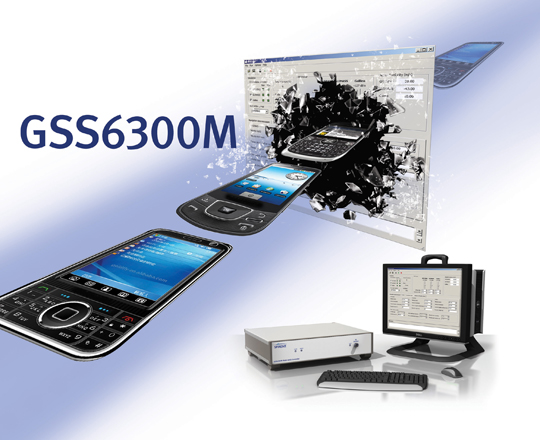
    Spirent Communications today announced the launch of its new GSS6300M Multi-GNSS simulator designed for integration, verification, and production testing where a quick and accurate functional test is needed. The platform supports simulation of signals from individual or combined GPS/SBAS, GLONASS, and Galileo constellations, with eight satellites per constellation.

    The GSS6300M supports two modes of operation — integrated into an Automated Test Equipment (ATE) environment or using Spirent’s SimCHAN software. For automated operation, the GSS6300M can be synchronized with other equipment and controlled remotely over Ethernet, IEEE-488 (GPIB), or RS232 interfaces. The SimCHAN software interface supplied with the GSS6300M enables the user to create unlimited scenarios and specify parameters such as user position, date, and time. Both modes support precise user control over power level and atmospheric effect selection.

    “The GSS6300M is designed for customers who want an affordable, easy-to-use multi-GNSS test system with the quality, reliability and support that is expected from Spirent,” said Rahul Gupta, product manager with Spirent’s Positioning Technology business. “The GSS6300M enables testing of fundamental receiver functionality including time to first fix, sensitivity, and accuracy.”

    The GSS6300M is now available for order. A field upgrade pack is available for existing Spirent GSS6300 customers who want to leverage the multi-channel capabilities of the GSS6300M.

  • MBOC Signal Furor

    A subsidiary of the UK Ministry of Defence has been granted a UK patent on the MBOC signal design, which was a product of lengthy and cooperative negotiations between U.S. and European scientists.

    The UK patent, taken in the names of two UK scientists participating in the project, is being used by a legal firm to demand royalty fees from receiver manufacturers. This is causing considerable controversy. GPS World will provide more context and details in an upcoming story.

  • Trimble Introduces New DR+GPS Module for Vehicle and Asset Tracking Applications

    Trimble has introduced the Aardvark DR+GPS module that combines dead reckoning (DR) with GPS technology on a single, compact board. The Trimble Aardvark DR+GPS module provides positioning information when GPS signals are limited or not available, such as in urban canyons and tunnels. The Aardvark DR+GPS module is being marketed as a solution for system integrators or OEMs who are adding dead reckoning capabilities to vehicle navigation, fleet management and asset tracking systems.

    Dead reckoning estimates position based on heading and distance traveled since the last known position. The more accurate the speed, time and heading inputs, the more accurate the dead reckoning. GPS contributes to accuracy by continuously calibrating the gyro and speed sensors to produce optimal dead reckoning.

    The 19 x 19 millimeter surface-mount module has an on-board gyro and collects speed and forward/reverse data from the vehicle’s sensors. Its DR+GPS algorithm automatically calibrates the gyro and external sensors’ inputs and blends this information with GPS measurements to produce accurate position and velocity outputs in hostile GPS environments such as urban canyons.

    The Aardvark DR+GPS module is available in two configurations: model number 88788-30 for flat installations; and model number 88788-50 with a feature supporting variable mounting installations. The 88788-50 self-determines the module’s orientation allowing the ultimate in installation flexibility.

  • Indoor Positioning May Need Several Solutions, Says IMS Research

    A range of solutions are vying to replicate what GPS does outdoors in an indoor environment, from Wi-Fi to Bluetooth to “terrestrial” GPS, plus many others. Which one is likely to be successful? IMS Research (recently acquired by IHS Inc.) said the answer will not simply be just “one.” Locating a smartphone in an outdoors environment is straightforward, with more than 90 percent of smartphones providing GPS functionality. However, GPS becomes less useful in built-up areas and can be useless indoors, reports IMS Research.

    Indoor location enables a number of exciting applications that may previously have been considered impossible, for both the consumer and the venue owner, said IMS Research. Not only can it provide analytics, tracking footfall and understanding consumer behavior, but also improve the shopping experience, helping the consumer to find a particular store or product. Whilst these examples are useful, the real benefit and revenue generation is likely to arrive in the shape of advertising.

    Bluetooth in Nokia’s HAIP variety can provide accuracies claimed to be less than one meter, making it suitable for “aisle level” positioning. NextNav is beginning to roll out a technology described as “terrestrial GPS” in the United States, using transmitters based on the ground, and the existing GPS chipsets found in many smartphones. Other solutions include the IMES system in Japan and cellular-based solutions from companies such as Path Intelligence.

    While the roll out of commercial solutions has only recently begun, Wi-Fi has, to date, been the primary technology used. “Its high penetration in smartphones, combined with an existing infrastructure of access points, in venues such as shopping malls and airports etc., means minimal additional investment is required to support some level of positioning solution,” noted Alex West, Connectivity and Location research director at IMS Research. “For this reason, a range of different companies from Google, to Qualcomm and CSR, to Qubulus, all have solutions incorporating Wi-Fi.” Current location accuracies through Wi-Fi make it suitable for “store-level” positioning but less so for product or aisle-level, although IMS Research forecasts that consumers’ exposure to store-level accuracy will drive demand for aisle/product-level accuracy.

    In reality, it is unlikely that one solution will meet all requirements, and among recent announcements is CSR’s SiRFusion platform, which uses not only Wi-Fi, but also cellular and MEMS sensors such as accelerometers and gyroscopes, to provide a hybrid solution. MEMS sensors, which are becoming increasingly common in smartphones, are expected to play a bigger part in positioning, not only improving accuracy levels but also aiding in cutting down power consumption.

    Other leading IC suppliers, including Broadcom and Qualcomm, have announced solutions incorporating these technologies, and Bluetooth in some cases, with the necessary software. As such, a more accurate indoor positioning service is expected to be included on smartphones over the next 12 months, and is expected to provide the platform for the many apps and services that are being developed utilizing indoor location, according to IMS Research.

  • Racelogic Wins Two Queen’s Awards for Enterprise

    Simulator company Racelogic, based in the United Kingdom, has been honored with two 2012 Queen’s Awards for Enterprise. The awards were given April 21 to 209 companies to mark Queen Elizabeth’s birthday. Racelogic was one of four companies to be honored with the awards for both Innovation and International Trade.

    Racelogic won the Innovation award for advances in GPS/GLONASS test simulation, with customers such as Broadcom, ST-Ericsson, and Telefonica using LabSat to test their devices.

    Almost 90% of Racelogic’s sales are now to countries other than the UK, with customers in 92 countries around the world. Racelogic received the International Trade Award to recognize this achievement.

    “We are extremely proud to be named as a winner of these two awards, with many highly reputable companies in the UK competing for these honors,” Racelogic’s CEO, Graham Mackie, said. “As a company we continue to grow and now employ more than 50 people in the UK alone. We have distributors located all over the world who help us to market and sell our systems to a wide variety of markets and customers.”

    All winners will be invited to collect their awards at a reception hosted by the Queen in Buckingham Palace later this year.

  • Spectracom Releases Dual-Frequency Multi-GNSS Constellation Simulator

    GSG-62 simulator

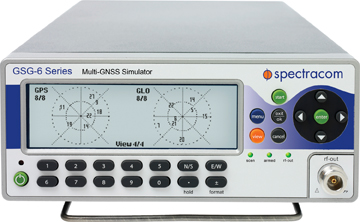
    Spectracom announced its new L1+L2 dual-frequency 32-channel multi-GNSS simulator, the GSG-62. The GSG-62 offers multiple frequency band operation, multiple GNSS constellation simulation, and expansion capability for more frequency bands and channels, the company said.

    The new simulator provides expanded capabilities for those who are testing more than GPS L1, according to the company. “We understand the challenges our customers have in fast-paced development, migration and delivery of products with ever changing embedded GNSS receivers,” said John Fischer, Spectracom CTO. “As such, we are excited to introduce this next-generation multi-signal instrument that allows for real-time scenarios, is intuitive to understand, quick to deploy and, given its design to support upgrades to L2C, L5, and future GNSS frequencies and systems, protects our customer’s investment in test gear.”

    Fischer continued, “In addition to a wide variety of technical challenges, we also understand our customers must balance the ability to quickly develop solutions and improve cost performance in their operations. We believe the price, unique features, and form factor of the GSG-62 will allow them to do both.”

    The GSG-62 is designed for manufacturing and development testing with its ability to simulate all the visible satellites for the receiver under test. With 16 channels for L1 frequency and 16 channels for L2 frequency, channels can be assigned to GPS or GLONASS, P-code or C/A code. Channels may also be used for SBAS simulation of EGNOS, WAAS, GAGAN, or MSAS satellites, or for multipath and interference signals.

    The GSG-62 incorporates all the features of Spectracom’s previous models, including compatibility with GSG StudioView PC software for creation and editing of simulation scenarios via Google Maps.

    Spectracom is a business of the Orolia Group and provider of practical test solutions for GPS and GNSS devices and systems.