Tag: OEM

  • HxGN LIVE Global: New mining solutions, award winners announced

    HxGN LIVE Global: New mining solutions, award winners announced

    HxGN LIVE Global 2022, taking place this week in Las Vegas, is a cross-industry conference showcasing the latest technologies and innovations from Hexagon.

    The first two days brought numerous announcements and demonstrations. Here are a few highlights.

    Hexagon unveils mining smart platform

    The new Power of One platform is a holistic, life-of-mine smart solution connecting sensors, software, infield apps and cloudware. Available and ready to implement, the technology connects the mine to the boardroom via a single onboard ecosystem. Harnessing data from multiple sensors in a simple and consolidated software architecture, the platform helps mines to become situationally aware, self-learning and autonomously connected in the field and in the cloud.

    For the customer, the platform offers an effortless experience with a seamless UI/UX and consistent functionality. Reduced cost of ownership, reduced deployment and training time, reduced supply chain complexity and increased operator adoption are just some of the platform’s many benefits.

    “The Power of One platform is a landmark enabler for next-generation autonomy,” said Nick Hare, Hexagon’s Mining Division president. “It offers mines a uniquely intelligent approach based on open architecture to autonomously connect key mining ecosystems, such as exploration, planning, drill and blast, material movement and mine monitoring. “It’s the scalable, platform-agnostic answer to challenges previously addressed by point solutions and multiple vendors.”

    HxGN LIVE Global visitors can learn more about the Power of One platform during this week’s Intelligent Mining Summit.


    Ola Rollén, President and CEO of Hexagon., delivers the keynote address at HxGN LIVE 2022. (Photo: Hexagon)
    Ola Rollén, president and CEO of Hexagon, delivers the keynote address at HxGN LIVE 2022. (Photo: Hexagon)

    Hexagon and Fujitsu announce strategic partnership

    Hexagon’s Safety, Infrastructure & Geospatial division and Fujitsu Limited will partner to accelerate the development and promotion of use cases to solve societal challenges and contribute to the realization of the “Trusted Society” — a sustainable, resilient place where people can live together in peace and prosperity.

    Hexagon and Fujitsu will work together to provide joint use cases leveraging digital-twin technologies and solutions from both companies, including sensors, data processing, data analysis and advanced data visualization in the cloud and high-performance computing infrastructure. The partners will deploy these technologies to develop joint solutions that deliver richer information and deeper insight to customers in government, the public sector, transportation and utilities to help reduce emissions, increase safety, optimize operations and more.

    “Our goal at Fujitsu is to realize our vision for a ‘Trusted Society’,” said Yoshinami Takahashi, EVP and vice head of Global Solution Business Group, Fujitsu. “Partnering with Hexagon will allow us to extend our reach and provide even greater value to cities and regions around the world.”

    “Cities are playing a leading role in solving global challenges, from addressing climate change to eliminating traffic fatalities,” said Steven Cost, president, Hexagon’s Safety, Infrastructure & Geospatial division. “Our partnership with Fujitsu can help cities put data to work to solve these pressing problems and meet sustainability and safety goals.”

    The new global partnership builds from the companies’ work to solve urban sustainability challenges in Europe, including efforts to better manage and understand the impacts of shared mobility services in Germany, including a project with the City of Munich.

    The Hexagon mascot peruses a map during HxGN LIVE 2022. (Photo: Hexagon)
    Hex-E, the Hexagon mascot, peruses a map during HxGN LIVE 2022. (Photo: Hexagon)

    HxGN EAM asset management software leads in Green Quadrant

    HxGN EAM from Hexagon’s Asset Lifecycle Intelligence division was named a leader in the enterprise asset management (EAM) market in the Green Quadrant: Enterprise Asset Management Software 2022 report from Verdantix.

    Verdantix is an independent research and advisory firm with expertise in digital strategies.

    HxGN EAM received the highest weighted score for the technical capabilities of the platform. The report assessed 14 EAM software vendors across their product functionality, user interface and market momentum.

    Verdantix estimates that global spending on EAM will reach $5.4 billion in 2026, compared to $3.6 billion in 2021, and states that acquisitions and funding are reshaping the EAM market. This comes just after Hexagon’s $2.8 billion acquisition of Infor’s EAM software business to form HxGN EAM in 2021.

    “HxGN EAM’s growth ambitions align with the market outlook and Hexagon’s vision to be the world leader in digital realities and autonomous solutions,” said Kevin Price, vice president, Enterprise Asset Management Portfolio Segment, Hexagon’s Asset Lifecycle Intelligence division. “Asset visibility is the first step in proactive maintenance and the prevention of the breakdown of critical functions, and we’re proud that HxGN EAM’s wide availability of services matches the growing needs of our customers. It’s an honor to be classified as a leader in the EAM market.”

    The Hexagon mascot gets excited about his reflection at HxGN LIVE 2022. (Photo: Hexagon)
    Hex-E gets excited about his reflection at HxGN LIVE 2022. (Photo: Hexagon)

    Hexagon Elite Awards recognize customers

    Hexagon’s Asset Lifecycle Intelligence (formerly PPM) division  announced the recipients of the 2022 Hexagon Elite Awards, which honor Asset Lifecycle Intelligence division customers who are champions of progress and innovation using Hexagon solutions.

    “As we expand our portfolio and capabilities through acquisitions, our customers’ designs and animations using Hexagon solutions for this competition continue to amaze,” said David Cryer, Senior Vice President & Chief Marketing Officer, Hexagon’s Asset Lifecycle Intelligence division. “It’s an honor to recognize this year’s winners and we want to thank all of our customers who submitted entries.”

    This year’s awards were presented in six categories:

    • Best in Design recognizes the most innovative and well-executed uses of Intergraph Smart 3D, Intergraph Smart Review and/or CADWorx: Fandy Maulana, Reformer Petrochemical Plant, PT Rekayasa Industri (Rekind).
    • Best in Automation rewards the most innovative automation ideas for Intergraph Smart 3D, Intergraph Smart P&ID, Intergraph Smart Electrical and/or Intergraph Smart Instrumentation: Petrobras – Surface Systems Engineering.
    • Best in Analysis recognizes innovative applications of CAESAR II, PV Elite and/or GT STRUDL that helped successfully complete a project and meet design and engineering goals: Chengwen Wang, Wuhuan Engineering Co. Ltd.
    • Best in Operations highlights customers who are true champions of progress and continue to move their company and industry forward in digital transformation in the Operations and Maintenance segments: Sudharshan Nambiar, Engineering Data Management – Systems, Petronas.
    • Best in Project Performance recognizes customers who use Asset Lifecycle Intelligence division and EcoSys solutions to successfully complete a project or improve project performance: Yann Guyot, Cost Control & Risk Management, Technip Energies.
    • Best in Procurement, Fabrication & Construction Management honors the most innovative and well-executed uses of the Asset Lifecycle Intelligence division’s PF&C solutions to successfully complete a project or move the company and industry forward in digital transformation: Jingwei Zhang and Zhifang Li, Zhengzhou Coal Mining Machinery Shuyun Intelligence Technology Co. Ltd.

    Submissions for the 2023 Hexagon Elite Awards competition will be accepted starting Nov. 1.


    Photo: Hexagon
    Photo: Hexagon

    Hexagon and Mineral Resources partner on automated road-train solution

    Hexagon’s Autonomy & Positioning and Mining divisions announced the development of an automated road-train solution with mining services company Mineral Resources Limited (MRL). To be deployed on MRL’s haulage fleet, the solution integrates drive-by-wire technology with an autonomous management system to orchestrate vehicle movement in road-train haulage.

    The automated road-train solution focuses on safety, productivity and sustainability for MRL operations and will be phased in over the next two years. Both companies are confident that progressive automation will profoundly change the safety and economics of mining where macroeconomic challenges, including commodity prices and labor shortages, impact the feasibility of projects.

    The automated road-train solution improves the safety of long-range haulage, provides cost-efficiencies and reduces emissions to assist companies in lowering their carbon footprint. Beyond mining, this innovative solution will also benefit bulk haulage in many other off-road primary industries.

    “Autonomous vehicles are revolutionizing the way we work today and into the future, and Hexagon is very proud to be part of this revolution,” said Ola Rollén, president and CEO of Hexagon. “Our agreement with MRL further solidifies Hexagon’s commitment to autonomous mobility and fulfilling our customer’s safety and productivity requirements.”
  • Quectel launches high-performance GNSS positioning module

    Quectel launches high-performance GNSS positioning module

    Photo: Quectel
    Photo: Quectel

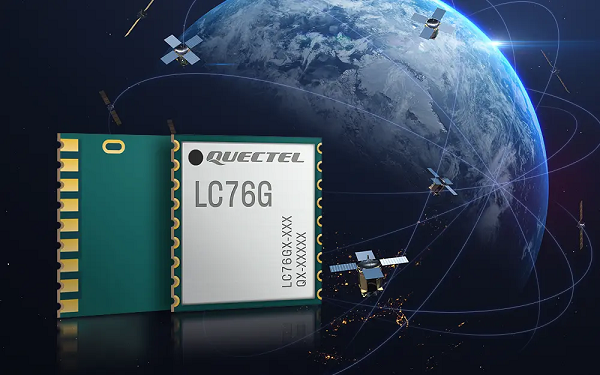
    Quectel Wireless Solutions, a global IoT solutions provider, has released the LC76G module, a single-band compact GNSS module featuring fast and accurate location performance as well as ultra-low power consumption.

    The LC76G is on display at Embedded World Nuremberg, Booth No 171, Hall 5, June 21- 23.

    The LC76G has already entered mass production with sufficient supply to meet the needs of the global positioning market. Based on the Airoha AG3352 platform, the LC76G can concurrently receive and process signals from all four global constellations and the regional QZSS.

    The LC76G module can receive signals from up to 47 satellites and achieve 1.5 m (CEP50 open-sky) positioning accuracy representing a 40% improvement over previous generations of devices.

    Available in a cost-optimized version as well as a low-power version, the LC76G low-power version consumes less than 9 mA@3V with all four constellations enabled, allowing for a 72% reduction in power required compared to what was previously possible.

    This makes the LC76G suitable for battery-operated devices such as wearable personal trackers, wildlife and livestock tracking, toll tags, portable container trackers and a host of traditional markets such as shared mobility and low-cost asset trackers.

    Featuring an internal SAW filter and integrated LNA, the LC76G can be connected directly to a passive patch antenna and provides filtering against unwanted interference, ensuring excellent performance even while driving through dense urban canyons.

    EPO and EASY improve TTFF

    Integrated assisted-GNSS technology Extended Prediction Orbit (Quectel’s EPO) is supported on the LC76G module. EPO reduces the time to first fix (TTFF) with a hot start taking less than 1 second, a warm start within 2 seconds, while the cold start can obtain accurate tracking fixes within 15 seconds. The faster GNSS fixes make it possible to use accurate positioning and navigation services anytime and anywhere with a smaller power budget than previously possible.

    While EPO requires manual download of predicted orbits, the LC76G also supports the Embedded Assist System (EASY), where predicted orbit information is collected directly from the satellites and provides for up to three days of accelerated fixes.

    Both EPO and Easy are available for each constellation, allowing for faster TTFF and reduced dependency on any particular constellation.

    Featuring an LCC form factor and an ultra-compact size of 10.1 × 9.7 ×2.4 mm, the footprint of the LC76G is compatible with other industry solutions as well as Quectel’s legacy L76 and L76-LB modules, allowing for a smooth migration of existing designs to the latest low-power GNSS technology.

    In addition, Quectel offers a wide range of off-the-shelf and customized high-performance antennas which boost wireless connectivity significantly. The C76G can be combined with a selection of GNSS L1 antennas to enable various positioning requirements. Customized connector type and cable length as well as comprehensive antenna design and test support are also available.

  • OriginGPS showcases new modules, tracker at Embedded World

    OriginGPS showcases new modules, tracker at Embedded World

    New products include a low-profile GPS module, a new-gen dual-frequency GNSS module and a super-mini IoT tracker

    Photo: OriginGPS
    Photo: OriginGPS

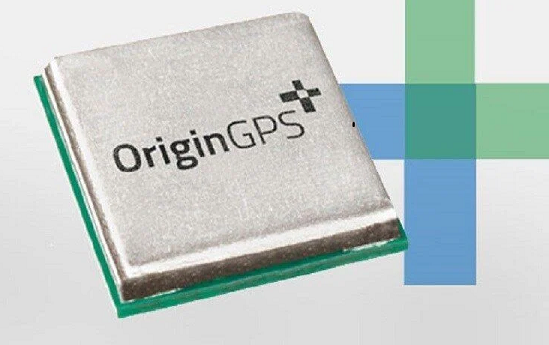
    OriginGPS will showcase new GPS and GNSS modules and a tiny tracker at Embedded World, Nuremberg, June 21-23, and at Electronica, Munich, Nov. 15-18.

    Among products exhibited are:

    • the 7 x 7 mm ORG4572-MK05 GNSS module with a 10-Hz update rate
    • the new generation dual-frequency L1+L5 ORG4600, which provides centimeter-level accuracy with RTKLIB and NMEA with raw data in parallel
    • a low-profile GPS antenna module, the ORG1511-MK05
    • a new waterproof super-mini tracker measuring 4.9 x 2.7 x 1.4 cm and equipped with magnetic charging
    • high-performance solutions for a myriad of industries, from fish finders and oil and gas monitors to cargo tracking and gun control.

    OriginGPS specializes in miniature GNSS modules and cellular internet of things (IoT) systems. Its high-performance solutions are suitable for every type of device designed to monitor and track valuable assets, whether stationary, in motion or both.

    OriginGPS today offers a broad range of high-efficiency solutions, including traditional miniature GNSS modules and cellular IoT systems and devices to dramatically shorten time to market.

    “When we realized that the component shortage was here to stay a while, we revisited our roadmap and added two GNSS modules, the ORG1510-MK05 and the ORG4572-MKO5,”said Amir Benyamini, vice president of research and development, OriginGPS. “These new models are based on available chipsets and boast a lead time of just 12 weeks. We also offer a similar lead time for our dual-frequency module.”

  • oneNav to open European office in Finland

    oneNav to open European office in Finland

    Advanced GNSS digital receiver IP core developer seeks to add expertise to global engineering team with the establishment of new subsidiary oneNav Finland Oy

    oneNav logoSilicon Valley, California-based technology company oneNav is opening its first European office in Tampere, Finland.

    oneNav Finland Oy will be led by Florean Curticapean, director of position engineering. He has more than two decades of professional experience in GNSS and mobile communications.

    oneNav is developing a next-generation GNSS receiver for smartphones, wearables and tracking and augmented reality (AR) devices. The oneNav pureL5 GNSS solution was built from the ground up to fully leverage the modernized E5/L5/B2 signaling band deployed on multiple constellations including GPS, Galileo and BeiDou.

    The new E5/L5/B2 signal has considerable benefit over the legacy L1 signal that has been used since the 1980s, according to oneNav. E5/L5/B2 enables higher precision and better multipath mitigation, improves coverage and reliability, and is a unified signal, ensuring global interoperability.

    The oneNav pureL5 system utilizes machine learning and artificial intelligence to improve its solution by removing reflected signal errors that most commonly cause GNSS inaccuracy in deep urban environments.

    Devices powered by oneNav’s technology will produce high accuracy in challenging signal conditions while benefiting from reduced component bulk and complexity, oneNav said.

    “Talent is the key to attract such investments, but this does not appear overnight or by accident. Our businesses are benefitting from many years of research and education at Tampere University, more specifically in the Electrical Engineering Unit, in fields such as GNSS, system-on-chip, network-on-chip, embedded processor architecture, software-defined radio and more,” said Oliver Hussey, senior business advisor for the Tampere subsidiary.

    Tampere is the host of the ICL-GNSS Conference, welcoming a global audience to address the latest research on wireless and satellite-based positioning techniques to provide reliable and accurate position information with low latency.

  • U-blox launches its smallest GPS module, the MIA-M10

    U-blox launches its smallest GPS module, the MIA-M10

    Photo: u-blox
    Photo: u-blox

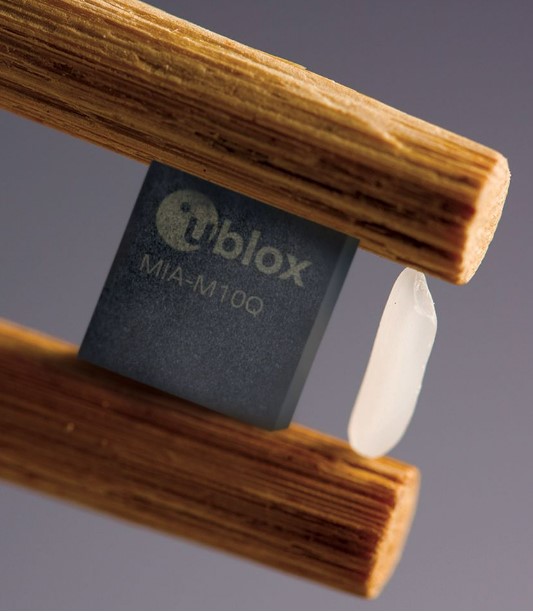
    U-blox has announced its smallest GNSS module series to date, the u-blox MIA-M10.

    Built on the ultra-low-power u-blox M10 GNSS platform, MIA-M10 offers a power-efficient solution for size-constrained battery-powered asset tracking devices. The module targets an expanding market for people, pet and livestock trackers, as well as industrial sensors and consumer goods.

    The 4.5 x 4.5-mm form factor of the M1A-M10 allows developers to design more attractive and comfortable solutions, further driving the adoption of positioning technology in consumer and industrial solutions. The module offers ultra-low power consumption without compromising GNSS performance, the company said. Moreover, its power-save modes can double the battery life by optimally balancing position accuracy and power consumption.

    Like all u-blox M10 modules, the MIA-M10 concurrently receives four GNSS constellations (GPS, Galileo, BeiDou and GLONASS) for maximum satellite signal availability. Combined with its superior RF sensitivity, the module offers robust positioning performance for solutions with small antennas as well as for devices operating in weak signal environments such as deep urban canyons.

    Support for u-blox AssistNow assisted GNSS service, which delivers orbital data via the internet, cuts the time it takes the MIA-M10 to determine its initial position at startup, allowing it to immediately track satellites without having to wait for slow satellite data downloads to complete. And applications requiring extra-long power autonomy can use u-blox’s CloudLocate service, which extends the life of internet-of-things applications by offloading power-hungry position calculation to the cloud.

    The chip-sized, ready-to-use GNSS module requires no external components, reducing engineering and testing efforts, saving costs and resources, and speeding time to market.

    Two Variants

    MIA-M10 is available in two product variants.

    • The MIA-M10Q is for a growing market of highly size-constrained battery-powered tracking devices, wearable devices and highly dynamic applications such as small drones, cameras, bike computers and battery-powered sensors.
    • The MIA-M10C targets customers requiring more flexibility to combine the module with an active or custom antenna circuit.

    The MIA-M10 will be on display at the Sensors Converge and Embedded Technologies trade show in San Jose, California, at booth 1228. First samples will be available in July.

  • New Telit GNSS receiver provides advanced power modes

    New Telit GNSS receiver provides advanced power modes

    Photo: Telit
    Photo: Telit

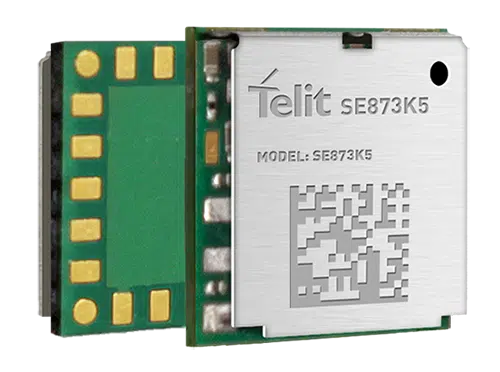
    Telit has released the SE873K5 multi-constellation GNSS receiver in the L1 band. The SE873K5 simultaneously tracks and navigates all four GNSS constellations — GPS, Galileo, GLONASS and BeiDou — providing GNSS information over a UART, I2C or SPI interface serial port using the NMEA protocol.

    Based on the AG3335 system-in-package from Airoha, the SE873K5 is the latest addition to Telit’s SE873 family of modules and the natural migration path from SE873 and SE873Q5.

    The module is a 7mm x 7mm x 2.25mm QFN-like semiconductor package with embedded SPI flash, RTC and TCXO. With its compact size, the latest generation chipset and the advanced power modes, the SE873K5 has the benefits of low cost, small form factor and good electrical and thermal performance — suitable for wearables, fleet tracking, drones and more.

    The SE873K5 low-power processing core delivers customizable power-saving modes. It optimizes current draw at module wake-up by supporting both local- and server-based assisted GNSS (A-GNSS) for improved time to first fix, while satellite-based augmentation system (SBAS) corrections from WAAS, EGNOS, MSAS or GAGAN increase positioning accuracy.

    The internal flash memory allows firmware updates and customization, as well as ephemeris predictions storage.

    Features of the SE873K5 include:

    • Frequency bands: GPS L1, GLONASS L1, Galileo E1, BeiDou B1, QZSS L1
    • Standards: NMEA
    • SBAS (EGNOS, WAAS, GAGAN and MSAS) or QZSS L1S capability
    • Real-time clock for efficient power management
    • Low-power modes
    • Jammer rejection
    • Local and server-based A-GPS/A-GNSS
    • RoHS compliant
    • RED/UKCA certification
  • Trimble deploys custom Applanix positioning system for autonomy

    Trimble deploys custom Applanix positioning system for autonomy

    Customizable system provides robust positioning without added site infrastructure for IHI Corp.

    Photo: Trimble
    Photo: Trimble

    Trimble has announced the first deployment of its map-based localization system for land-based autonomous vehicle applications.

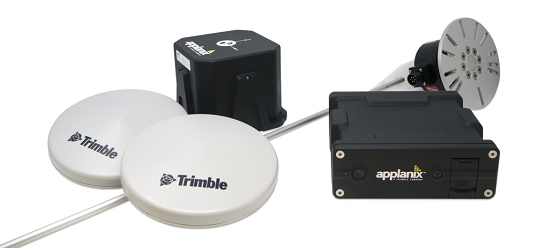
    IHI Corp., a heavy industry manufacturer based in Japan, will retrofit its existing container and haulage trucks with a customized Applanix POS LV system as part of its broader autonomy capabilities for the transport of goods around industrial facilities.

    Map-based localization provides precise positioning and orientation estimation, augmenting GNSS/inertial data, which is critical for safe and efficient autonomous vehicle operations. The ability to provide IHI Corp. a full workflow and real-time data ensures seamless integration into IHI’s truck design.

    The custom-built, locally supported system leverages Trimble’s engineering capabilities and technology to provide reliable performance across a variety of challenging environments, the company said. Using this system, IHI Corp. can provide robust positioning for its autonomous fleet without additional site infrastructure, lowering capital expenditure costs and improving scalability.

    Tailoring POS LV to work within IHI’s unique specifications and existing autonomous platform, the map-based localization system couples an inertial navigation system (INS) with simultaneous localization and mapping-based (SLAM) capabilities, and works with several types of sensors, including lidar. POS LV provides an accurate base map using post-processed data and localizes vehicle positioning in real time, enabling the reliable and safe autonomous operation of industrial vehicles.

    IHI continually enhances its work environments, while also compensating for varying labor scenarios and personnel shortages. This makes the need to automate transportation critical to operations. The complexities of the evolving industrial manufacturing environment require solutions that can be tailored to a customer’s specific application requirements.

    By partnering with Trimble, IHI can develop a retrofit system that addresses two major challenges — affordability and reliability — within the autonomous operation of large-scale industrial equipment.

  • Inertial Labs releases new versions of Kernel inertial measurement units

    Inertial Labs releases new versions of Kernel inertial measurement units

    Photo: Inertial Labs
    Photo: Inertial Labs

    Inertial Labs has announced new versions of its Kernel inertial measurement units (IMUs).

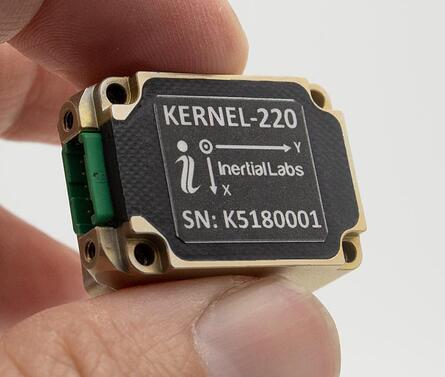
    The Kernel 110, 120, 210 and 220 are a set of compact, self-contained, strapdown industrial-grade (100 series) and tactical-grade (200 series) IMUs that measure linear acceleration and angular rates with three-axis micro-electromechanical (MEMS) accelerometers and three-axis MEMS gyroscopes.

    Fully calibrated, temperature compensated, mathematically aligned to an orthogonal coordinate system, the Kernel 210 and 220 contain 1 deg/hr bias in-run stability gyroscopes and 0.005 mg bias in-run stability accelerometers.

    The new Kernel 110 and 120 IMUs will be superseding the existing Kernel 100 IMU. The Kernel 210 and 220 are  miniaturized versions of the company’s IMU-P (Professional) tactical unit.

    The Kernel series of inertial measurement units are a fully integrated inertial solution that combines the newest MEMS sensors technology. This seamless integration allows Inertial Labs to provide an inertial system with high performance while maintaining a high-value price point. With its compact design and low power consumption, the Kernel IMUs easily integrate in a wide range of higher order systems while consuming very little space and power.

    With continuous Built-in Test (BIT), configurable communications protocols, electromagnetic interference (EMI) protection, and flexible input power requirements, the Kernel 110, 120, 210 and 220 are built to be used in a wide variety of environments and integrated system applications. Units have been thoroughly tested to perform in large variations in temperature, high vibration, and shock.

    Designed to be used in air, marine and land environments, the Kernel series can be integrated into motion reference units (MRU), attitude and heading reference systems (AHRS) and GPS-aided inertial navigation systems (INS). As a result, Kernel IMUs are suitable for a wide variety of applications such as autonomous vehicles, antenna and line-of-sight stabilizations systems, as well as buoy or boat motion monitoring.

    “The new Kernel IMUs represent the innovative approach at Inertial Labs,” said Jamie Marraccini, president and CEO of Inertial Labs. “The high performance and the flexibility to integrate into different systems and applications is what we have striven to provide to our clients with the new Kernel IMU release.”

  • Launchpad: Mobile mapping, surveillance system, airborne lidar

    Launchpad: Mobile mapping, surveillance system, airborne lidar

    A roundup of recent products in the GNSS and inertial positioning industry from the June 2022 issue of GPS World magazine.


    SURVEYING & MAPPING

    Base/Rover

    For survey-grade GNSS accuracy anywhere

    Photo: Bad Elf
    Photo: Bad Elf

    A base/rover feature built upon the Flex GNSS receiver brings affordable centimeter-level accuracy to surveyors and geospatial professionals working anywhere in the world. The solution consists of two Flex GNSS receivers and two UHF radios, allowing customers to perform high-accuracy field data collection in areas where traditional real-time kinematic (RTK) corrections or cellular coverage is not available. Existing Flex customers can upgrade by adding Flex radio kits (pictured). The Bad Elf Flex enables data collection either as a standalone receiver or paired with apps on iOS or Android phones and tablets.

    Bad Elf, bad-elf.com

    Mobile Mapper

    Preserves privacy with artificial intelligence

    Photo: Leica Geosystems
    Photo: Leica Geosystems

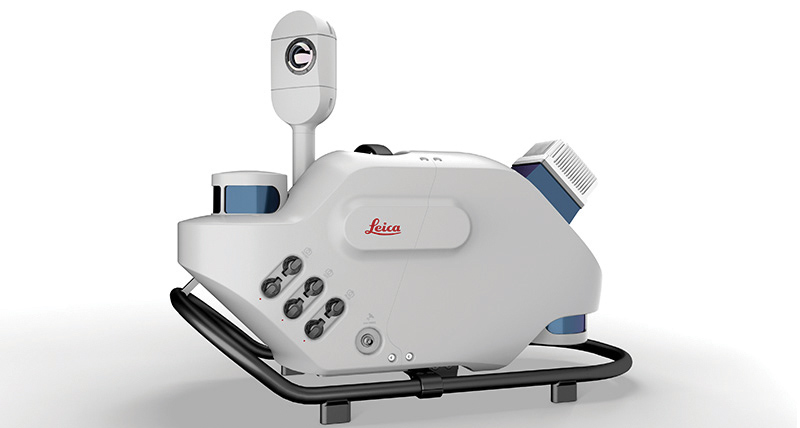
    The Leica Pegasus TRK reality-capture mobile-mapping system features artificial intelligence (AI), autonomous workflows and intuitive interfaces. To comply with privacy regulations, its AI can identify and blur identifiers, such as people and vehicles, in real time. Features include advanced dynamic laser scanning and an expandable imagery system for recording, measuring and visualizing. It enables long-range mobile mapping for asset management, road construction, rail, critical infrastructure, utilities and more. The system also can create high-definition basemaps for autonomous vehicles.

    Leica Geosystems, leica-geosystems.com

    Imaging System

    Delivers colorized products with high accuracy

    Photo: GeoCue
    Photo: GeoCue

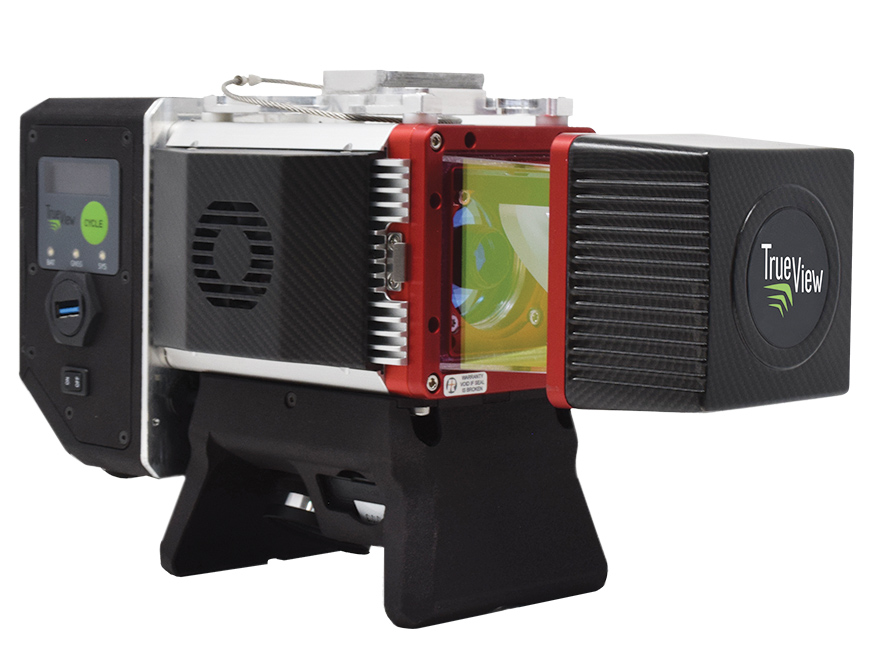
    The True View 645/650 is the latest 3D Imaging System (3DIS) from GeoCue. Combined with the True View EVO data-processing software suite, it includes the full post-processing software workflow and directly integrates with Applanix POSPac. EVO supports the creation of project deliverables including ground classified point clouds, surface models, contours, digital elevation models (DEMs), volumetric analysis and wire extraction. The system delivers colorized lidar deliverables with accuracy better than 3 cm root-mean-square-error (RMSE) for the True View 645, and better than 2 cm for the True View 650.

    GeoCue, geocue.com


    OEM

    Front-End Receiver

    Software-defined receiver front-end

    Photo: IP-Solutions
    Photo: IP-Solutions

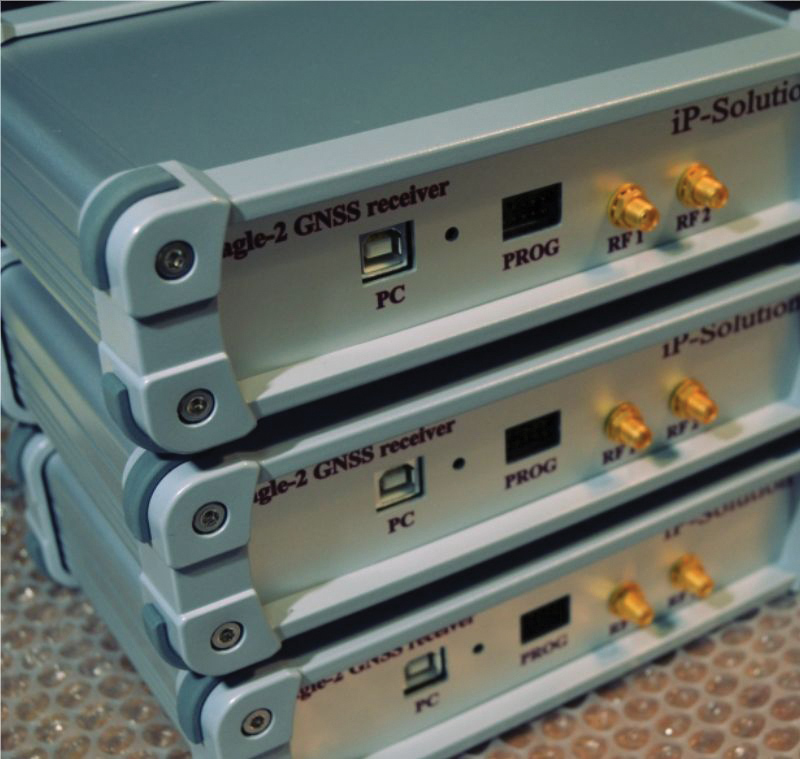
    The Eagle-2 works with software-defined receivers in real time or records GNSS signals for post-processing. For post-processing, Eagle-2 supports most third-party receivers, such as MATLAB and C/C++ receivers. The front end allows a user to work with two perfectly synchronized channels connected to two antennas. The Eagle-2 supports GPS, Galileo, GLONASS , BeiDou, QZSS and SBAS.

    IP-Solutions, www.ip-solutions.jp

    Helical Antennas

    Feature extended filtering of interference

    Photo: Tallysman
    Photo: Tallysman

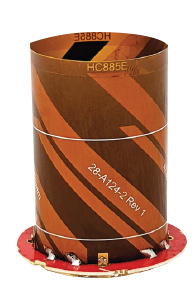
    The housed HC885XF and embedded HC885EXF dual-band eXtended Filtering (XF) antennas receive GPS/QZSS L1/L5, GLONASS G1/G3, Galileo E1/ E5a/b, BeiDou B1/B2/B2a and L-band corrections services. They have been tuned to provide optimal support for the entire L1/G1/E1/B1/L-band correction and L5/G3/E5/B2 bands. The housed version, HC885XF, weighs ~42 g and is enclosed in a robust, military-grade IP67 plastic enclosure. The embedded version, HC885EXF, weighs ~8 g and is easily mounted with an embedded helical mounting ring.

    Tallysman Wireless, tallysman.com

    Converter

    Sets performance benchmarks for harsh environments

    Photo: Analog Devices
    Photo: Analog Devices

    The AD9213S-CSH is a highly integrated RF analog-to-digital converter that handles 12-bit, 10.25-giga-samples per second. It is the company’s fastest ADC available for the space environment. The AD9213-CSH enables the next generation of software-defined systems for satellite communications, radar and remote sensing. The high sample rate and integrated post-processing enable further performance gains for narrow-band applications.

    Analog Devices, www.analog.com


    UAV

    Ebook

    Provides guidance to achieve corporate buy-in

    Photo: Skyward
    Photo: Skyward

    Skyward has published a free ebook, Adding Drones to the Enterprise, to provide guidance on establishing a corporate drone program. According to Skyward, the most efficient and effective drone programs are the lowest risk and most compliant. Topics covered include how to present the business value of a drone operation to corporate executives; how risk managers can optimize the workflow to ensure maximum safety; best practices for risk mitigation and regulatory compliance; tips for collaborating with legal and compliance teams on a general operating manual; and how to provide full transparency to corporate stakeholders.

    Skyward, https://go.skyward.io/adding-drones-to-the-enterprise-ebook.html

    Enterprise System

    Includes drone, fleet software and charging dock

    Photo: DJI
    Photo: DJI

    DJI’s all-in-one solution for professional drone operators includes the DJI Matrice 30 (M30) drone integrated with DJI FlightHub 2 fleet-management cloud software and DJI Dock for autonomous docking and recharging. The integrated solution is suitable for Enterprise drone users such as public safety agencies, infrastructure inspectors and energy operators. The M30 model is designed for rugged professional uses, while the fact that it fits in a backpack makes transportation and setup fast. The DJI Dock is an autonomous takeoff, landing and charging station allowing fully automatic, programmed flights with the DJI M30 Series (Dock Version). After setup, the fully charged M30 drone can take off from the dock through FlightHub 2 programmed automatic missions anywhere within a seven-kilometer radius.

    DJI, www.dji.com

    Airborne Lidar

    Easily installed on various UAV platforms

    Photo: CHC Navigation
    Photo: CHC Navigation

    The AlphaAir 1400 (AA1400) and AlphaAir 2400 (AA2400) lidar systems are lightweight, compact airborne scanners easily installed on various UAV platforms or small survey aircraft and helicopters. They are adapted to high-density point-corridor mapping applications, day or night, under leaf-on and leaf-off conditions or with dense vegetation to provide reliable results. Combined with industrial-grade GNSS receivers and high-precision inertial measurement units (IMUs), the AA1400 and AA2400 provide 2 cm to 5 cm survey-grade accuracy. They also integrate Riegl VUX lidars with waveform-lidar technology, allowing echo digitization and online waveform processing.

    CHC Navigation, chcnav.com

    Autopilot

    Provides built-in redundancies

    Photo: UAV Navigation
    Photo: UAV Navigation

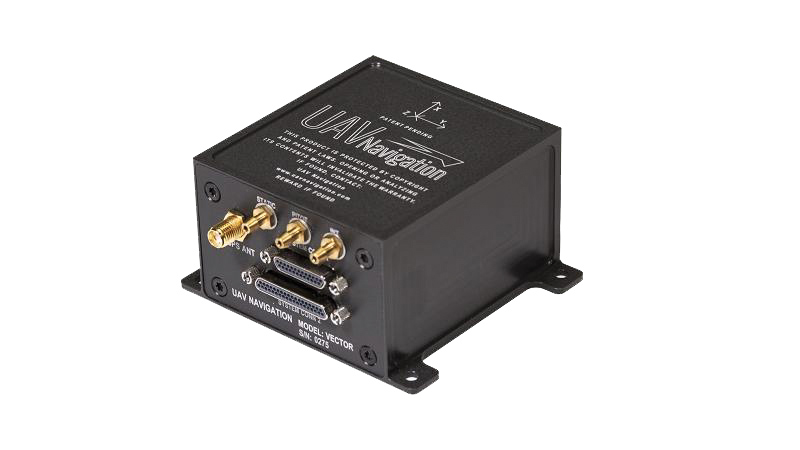
    The VECTOR-600 is a robust, dependable autopilot with built-in physical and logical redundancy, allowing it to survive all individual sensor failures while maintaining accurate estimates of attitude and position. It works for fixed-wing, rotary-wing and vertical-take-off-and-landing UAVs. It provides exceptional performance in GNSS-denied environments and when there is a jamming threat. The VECTOR-600 features high quality components and an electromagnetic-resistant design tested to MIL-STD 461.

    UAV Navigation, uavnavigation.com

    Surveillance System

    Ground-based solution enables safe operations

    Photo: Iris Automation
    Photo: Iris Automation

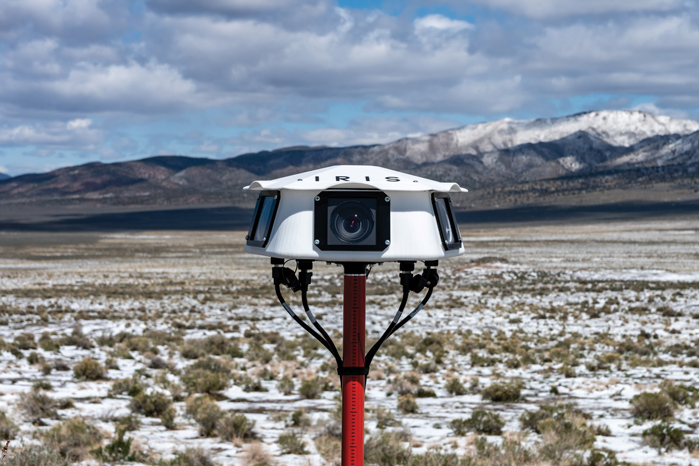
    Casia G is a ground-based detect-and-avoid surveillance solution that provides 360° optical detection with alerts. It enables operators to avoid both cooperative and non-cooperative aircraft for safe beyond-visual-line-of-sight (BVLOS) flight. Casia G creates a perimeter of monitored airspace for UAVs to perform work safely, without additional payload. It is suitable for operations in fixed or temporary locations, supporting drone-in-the-box operations and augmenting or replacing human visual observers. Casia G sees the entire sky, with uniform probability and resolution, 10 times per second, covering a majority of small UAS use cases.

    Iris Automation, irisonboard.com

  • Anello Photonics offers GNSS/INS evaluation kit for autonomous applications

    Anello Photonics logoThe company is engaged in trials with customers in mapping, surveying, robotics, construction, trucking, defense, aerospace and autonomous vehicle applications

    Anello Photonics has made available an optical gyroscope and GNSS/inertial navigation system (INS) evaluation kit (EVK) for autonomous applications.

    Powered by Anello’s optical gyroscope solution and sensor-fusion engine, the Anello EVK can maintain centimeter accuracy in conditions where far more expensive ground-truth positioning and localization systems degrade.

    The Anello EVK is accurate in extended full GNSS-denied operation and is stable over wide temperature ranges and under extreme vibration.

    “We are actively engaged with many customers to drive new technology adoption and explore how by providing high precision, highly scalable, optical gyro-based solutions we can accelerate and improve position accuracy for a wide range of autonomous use cases,” said Mario Paniccia, CEO of Anello Photonics. “We see a lot of interest around our unique and innovative integrated silicon photonics technology and our product roadmap, and are excited to be working with many industry leaders looking for cutting-edge innovation.”

    The Anello EVK is designed to be easy to use while enabling seamless navigation and positioning in challenging GNSS-denied environments where accuracy is paramount.

    “Anello’s optical gyroscope solution is perfect for our offerings due to its performance compared to other MEMS solutions currently available and used by the industry. The Anello solution provides ease of installation together with high accuracy and reliability,” said Sean Kish, CEO of Psionic. “Through our work with Anello, we’re seeing significant improvements in the performance of our SurePath product for long-range precision navigation in GNSS-denied environments.”

  • OSNMA anti-spoofing tech now on PolaRx5 GNSS reference receivers

    OSNMA anti-spoofing tech now on PolaRx5 GNSS reference receivers

    The Septentrio PolaRX5. (Photo: Septentrio)
    The PolaRX5 GNSS reference receiver. (Photo: Septentrio)

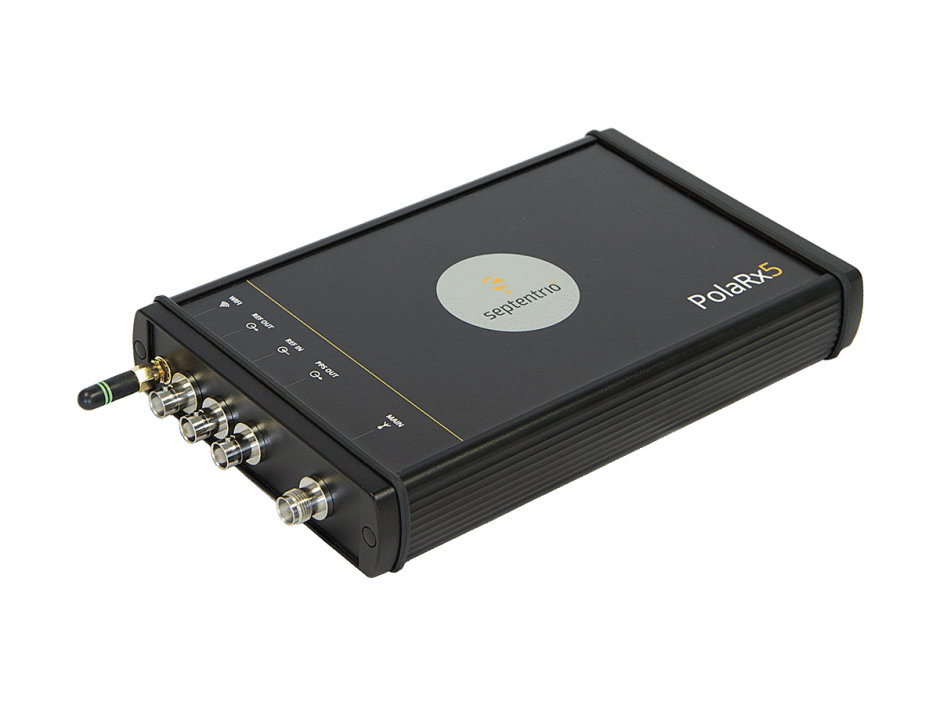
    Septentrio, a leader in high-precision GNSS positioning solutions, has launched Open Service Navigation Message Authentication (OSNMA) on its high-end PolaRx5 reference receiver series.

    OSNMA offers end-to-end authentication on Galileo’s civilian signals, protecting receivers from GNSS spoofing attacks. OSNMA adds another layer of security to Septentrio’s existing AIM+ anti-jamming and anti-spoofing technology.

    This high level of resilience is especially important for reference receivers in applications that require assured PNT as well as in stationary critical infrastructure, which is especially vulnerable to GPS spoofing.


    The Septentrio PolaRx5 receiver with OSNMA technology will be showcased in booth 220 at the ION Joint Navigation Conference, taking place June 6-9 in San Diego.


    “We are excited to offer OSNMA anti-spoofing technology now in our scientific and reference GNSS receivers,” said François Freulon, head of product management at Septentrio. “The addition of OSNMA to Septentrio’s already strong anti-jamming and anti-spoofing technology takes our receivers to a new level as resilient positioning and timing solutions for industrial applications and critical infrastructure.”

    Septentrio has also updated the PolaRx5 product range with the latest RINEX format to support version 3.05 as well as version 4.0. With these updates, PolaRx5 becomes a leading scientific and reference receiver family supporting all of the new GNSS technologies introduced in 2022, Freulon said.

    The OSNMA authentication mechanism is also available on the mosaic GNSS module family and on Septentrio’s latest OEM boards.

  • Nestwave white paper considers power consumption for IoT devices

    Nestwave white paper considers power consumption for IoT devices

    Nestwave logoNestwave has released a white paper that considers the challenges associated with integrating accurate geolocation into compact, battery-powered, low-cost internet of things (IoT) nodes.

    The technical paper “Minimizing Power Budgets to Enable Geolocation on Every IoT Device” is targeted at engineers and developers looking to add accurate positioning functionality to IoT technologies where power requirements must be kept to an absolute minimum.

    Topics covered include:

    • why conventional tracking architectures are not suitable for many IoT implementations
    • the importance of factors such as time-to-first-fix (TTFF)
    • the number of fixes and levels of integration in determining power consumption.

    The paper introduces new ways of handling positioning signal acquisition, ranging and tracking, and proposes solutions that eliminate the need for a separate GNSS-integrated circuit and that offload energy-intensive computation to the cloud.

    “Tracking will be an important element in the evolution of the IoT, which means making accurate geolocation viable for every single IoT node is absolutely critical,” said Ambroise Popper, Nestwave CEO. “This paper explains why traditional solutions are too power-hungry, too large and too expensive to meet the energy, form factor and cost constraints of most IoT devices and introduces solutions for addressing the challenge.”