Tag: partnership

  • RoGO partners with AugSense on edge AI analytics for first responders and military

    RoGO partners with AugSense on edge AI analytics for first responders and military

    RoGO Communications, the creator of the DropBlock satellite communications platform for cellular-denied environments, is partnering with Augmented Sense Technologies (AugSense) to integrate artificial intelligence capabilities into RoGO’s communications infrastructure.

    RoGO was founded to develop lifesaving technology for wildland firefighters and first responders. It’s product DropBlock is a ruggedized, portable satellite communications platform that provides real-time GPS tracking, weather telemetry, IoT sensor data, and tactical messaging in cellular-denied and remote environments.

    The partnership will develop edge AI-powered sensor fusion, Team Awareness Kit (TAK) ecosystem development, and predictive analytics to firefighters, disaster recovery, military and other first responders and remote operators, including All Hazards emergencies such as hurricanes, earthquakes and floods. Last month, RoGO and AugSense presented the combined capabilities at the annual convention for Special Operation Forces (SOF Week) in Tampa.

    Wildland firefighters, search-and-rescue teams, and military personnel routinely operate in remote terrain where conventional communications infrastructure does not exist. RoGO’s DropBlock technology has proven its ability to deliver real-time GPS tracking, weather data, IoT sensor telemetry, and tactical messaging over satellite links in these environments—deployed today by wildland fire agencies. As missions grow more complex and sensor-rich, operators increasingly need more than raw data. AI can deliver intelligence at the edge, delivered in real time, without dependence on connectivity.

    Through this partnership, RoGO will enhance its platform with AugSense’s edge AI engine, a modular, platform-agnostic system that processes and fuses multi-modal sensor data directly on devices, without requiring a cloud connection. The AI-enriched intelligence products will  transform raw sensor feeds into actionable decisions, such as predictions for the spread of a wildfire or other threats to safety.

    Edge AI Capabilities

    Edge AI Processing: AugSense’s engine runs AI workloads directly on edge devices using neuromorphic and spiking neural network architectures, achieving greater energy efficiency than conventional approaches. This means intelligence processing in power-constrained environments — no cloud, no data center, no latency.

    Multi-Modal Sensor Fusion: AugSense’s fusion engine synthesizes data from diverse sensors (RF, weather, geospatial, physiological, and chemical/biological) into a single actionable intelligence picture at the edge.

    TAK Integration & Development: Purpose-built plugins for the Android Team Awareness Kit (ATAK) and broader TAK ecosystem that overlay AI-fused intelligence onto the common operating picture, enhancing coordination across distributed teams connected through RoGO’s DropBlock network.

    Predictive Analytics: Machine learning models that transform raw sensor telemetry into forward-looking predictions such as anticipating weather shifts, equipment failures, threat patterns, and fire behavior.

    Immediate Applications

    The combined solution targets several high-impact use cases.

    • In wildland firefighting, the integration enables AI-predicted wind shifts and fire behavior models to reach incident commanders via RoGO’s satellite network—critical for crew safety decisions.
    • For search-and-rescue operations, fused sensor data and intelligent mapping overlays allow distributed teams to coordinate effectively through the DropBlock network without relying on cellular infrastructure.
    • In defense and special operations, the partnership delivers fused multi-sensor intelligence and TAK-integrated common operating pictures over satellite backhaul in contested and communications-degraded environments.

    A new RoGO mobile phone app coming in the third quarter enables point-to-point communications among DropBlocks and firefighter crews and displays the location of firefighting assets along with fire weather data.


  • Hemisphere GNSS and Calian produce new high-precision antenna

    Hemisphere GNSS and Calian produce new high-precision antenna

    Hemisphere GNSS, a brand of CNH, together with Calian Group Ltd, have released the A65 GNSS antenna, a jointly developed, next-generation solution engineered to deliver exceptional accuracy, superior interference protection, and robust GNSS tracking performance.

    The A65 is designed as a drop-in replacement for the widely deployed A45 antenna, offering users a seamless upgrade path to the latest precision technology.

    The collaboration reflects a shared focus on combining advanced RF design with real‑world application insight to address increasingly complex GNSS operating environments, with both teams working closely from the earliest stages of development to meet demanding original equipment manufacturer (OEM) performance requirements.

    The antenna architecture itself, including the stacked patch quad feed element and RF front end, was engineered by Calian, and provides Calian’s XF Filtering. Hemisphere GNSS contributed application expertise, system integration requirements, and performance validation within real-world machine control, agriculture, marine and survey environments.

    The result is a precision antenna that delivers:

    • outstanding multipath suppression
    • highly consistent phase center variation
    • accurate tracking across GPS (L1/L2/L5), Galileo (E1/E5/E6), BeiDou (B1/B2/B3), GLONASS (G1/G2/G3), NavIC L5, QZSS, and L-band correction services
    • lower power consumption and broad voltage compatibility

    Together, Hemisphere and Calian ensured the A65 meets demanding field requirements while exceeding the performance benchmarks of the A45.

    Calian XF Filtering for Interference Rejection

    A major advancement of the A65 is the integration of Calian’s XF Filtering. The interference mitigation system rejects out-of-band energy at the antenna level, significantly improving signal quality in RF-challenging environments.

    Calian XF Filtering provides protection against:

    • 4G / 5G cellular transmissions
    • Ligado and adjacent band interference sources
    • broadband marine and aviation systems
    • industrial and urban RF noise

    By combining Calian’s advanced filtering technology with Hemisphere GNSS’s application-level expertise, the A65 delivers cleaner signals, improved reliability, and more stable performance in harsh real-world environments.

    Engineered for rugged field use

    Validated through Hemisphere GNSS field testing and Calian engineering qualification, the A65 includes:

    • IP69K environmental protection
    • High-impact LEXAN radome and robust metallic base
    • Low noise amplifier (LNA) with high gain (2.5 dB NF, 28-30 dB gain)
    • 15 kV electrostatic discharge (ESD) protection
    • -40°C to +85°C operating range

    These specifications are designed to ensure the A65 provides long-term performance across agriculture, survey, machine control, marine and fixed-reference installations.

    The A65 GNSS antenna is available now through Hemisphere GNSS. OEM module versions based on the same Calian engineered design are also offered for integrators requiring embedded solutions.

  • ProStar, Tersus partner on precision mapping for utilities

    ProStar, Tersus partner on precision mapping for utilities

    ProStar Holdings is partnering with Tersus GNSS, a global manufacturer of patented GNSS technologies. ProStar is the developer of PointMan Precision Mapping Solutions and the LinQD enterprise integration platform.

    The collaboration will deliver a complete precision mapping solution to the utility and critical infrastructure industries worldwide, the companies announced.

    The partnership is designed to integrate Tersus’s survey-grade GNSS receivers with ProStar’s PointMan, providing an affordable, field-ready solution available through Tersus’s international distribution network. Tersus GNSS has operations in China, the United States, and Australia, and is recognized for its innovation in GNSS receiver and base station technology for high-precision positioning applications.

    The collaboration represents the latest step in ProStar’s strategy to expand its partnerships through the LinQD open API integration platform, delivering its technologies in one connected precision mapping solution.

    ProStar’s LinQD platform is designed to enable seamless interoperability between emerging technologies and legacy systems, creating a robust global ecosystem for geospatial intelligence. By uniting equipment manufacturers and service providers under this initiative, ProStar continues to strengthen PointMan’s position as a premier mapping solution for the critical infrastructure industry worldwide.

  • Quectel-Swift partnership now includes RTK corrections

    Quectel-Swift partnership now includes RTK corrections

    Quectel Wireless Solutions is partnering with Swift Navigation to deliver Quectel’s Real-Time Kinematic (RTK) Correction Solution, which enables cost-effective, centimeter-level positioning accuracy for a new generation of IoT applications.

    In January, the companies announced integration of Swift’s Skylark Precise Positioning Service with Quectel’s high-precision GNSS modules.

    The collaboration allows Quectel to simplify the complexities of high-precision GNSS by bundling its RTK modules and antennas with Swift’s Skylark Precise Positioning Service, offering equipment manufacturers a streamlined, end-to-end solution for RTK adoption and deployment.

    Partnering with Swift enables Quectel to tailor solutions for specific applications, helping equipment manufacturers simplify the complexities of RTK adoption and deployment. The Quectel RTK Correction Solution is designed to support a wide range of mass-market applications, including robotics, automotive, micro-mobility, precision agriculture, surveying, and mining.

  • Juniper partners with Point One for cm-level accuracy

    Juniper partners with Point One for cm-level accuracy

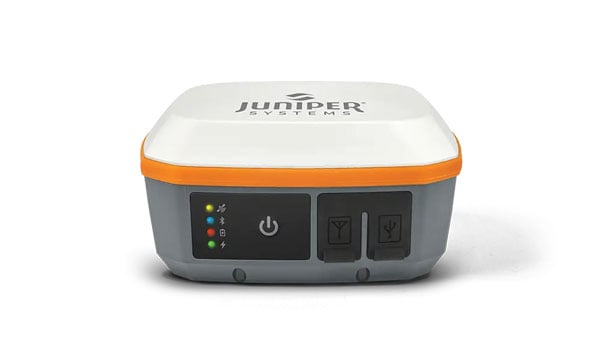
    Juniper Systems is partnering with Point One Navigation to enable Juniper’s Geode GNSS receivers to achieve seamless, centimeter-level accuracy through Point One’s Polaris RTK corrections network.

    The partnership will deliver integrated, field-ready computing and high-precision positioning solutions for demanding industries across the U.S., Europe and globally. By combining Juniper’s rugged mobile devices with Point One’s professionally managed Polaris RTK corrections network, users will benefit from unparalleled accuracy, increased field uptime, and reliable operation even in harsh conditions, the companies said.

    Point One’s Polaris RTK corrections network, with thousands of actively monitored base stations, provides critical positioning in applications such as environmental sciences, utilities, construction and geospatial mapping. When integrated with Juniper Systems’ Geode GNSS receivers, the result is a reliable solution for collecting highly accurate data in remote locations, the companies said.

    The partnership is already underway, with collaboration on new product packages, regional support, and joint outreach initiatives planned throughout 2025. Customers will benefit from coordinated service, expert guidance, and access to bundled solutions tailored to their operational needs.

  • ESA, EnSilica partner to enable resilient GNSS

    ESA, EnSilica partner to enable resilient GNSS

    In partnership with the European Space Agency (ESA), EnSilica, a maker of mixed-signal application-specific integrated circuits, will design and develop a key silicon component to enable resilient multi-band global navigation satellite system (GNSS) capabilities. These are vital to ensuring the world’s critical infrastructure and services remain robust and secure in the face of evolving global threats, according to the company.

    The ESA NAVISP Element 2 program helps to increase the competitiveness of participating European states in the global market for satellite navigation and enables these countries to be positioned to capitalize on emerging market opportunities across positioning, navigation and timing (PNT) technologies and services.

    “As we and our infrastructure become ever more dependent on PNT services in everyday life, it is important to have highly integrated, resilient and precise technology sourced in Europe and the UK,” said Paul Morris, vice president of RF and communications business unit at EnSilica. “This collaboration will allow us to accelerate such technology, starting with a next-generation radio design enabling our partners to focus on integrating their custom algorithms.”

    EnSilica has a growing satellite communications market footprint and is working with support from ESA and the UK Space Agency (UKSA), with the latter organization awarding the company £10.38 million ($12.8 million) in February 2025 for a development project under its Connectivity in Low-Earth Orbit program. Part of the company’s expertise is in architecting and implementing systems-on-chip with high-performance RF, including mmWave, and complex baseband processing.

    Ian Lankshear, CEO of EnSilica, added, “I am extremely proud of our team to have been secured this agreement under the ESA NAVISP Element 2. This project will enable us to further enhance GNSS technology and continue to develop commercial solutions that are critical for resilient and reliable satellite navigation. We are grateful for the ongoing support from ESA and the UKSA, and we continue to focus on PNT and the broader satellite communications market as a key growth driver of our business.”

  • Tallysman and Mouser Electronics partner to distribute GNSS antennas

    Tallysman Wireless has announced a distribution partnership with Mouser Electronics, a global authorized distributor of electronic components and semiconductors.

    Under the agreement, Mouser Electronics will offer Tallysman’s full range of GNSS antennas, including the Accutenna, VeroStar and helical antennas, to its users worldwide.

    These antennas feature advanced technology for enhanced precision and signal quality, making them suitable for demanding applications in industries such as automotive, aerospace, defense, surveying and precision agriculture.

    For more information about the Tallysman GNSS antenna solutions offered at Mouser Electronics, click here.

  • Xplore and UP42 partner to bring satellite data to geospatial customers

    Xplore and UP42 partner to bring satellite data to geospatial customers

    Xplore's multi-sensor XCRAFT satellite. (Image: Xplore)
    Xplore’s multi-sensor XCRAFT satellite. (Image: Xplore)

    The agreement will enable direct access to Xplore’s satellite tasking and archive of high-resolution data

    Xplore Inc., a commercial space company providing space as a service, has signed a partnership agreement with UP42, a geospatial developer platform and marketplace. The agreement will enable direct access to Xplore’s satellite tasking and archive of high-resolution data.

    Xplore’s XCRAFT satellite platform is engineered to collect data with multiple instruments including still and video imagery, hyperspectral, ultraviolet and infrared spectroscopy. Xplore’s satellite is capable of achieving user-defined video flyovers.

    Data generated with Xplore’s diverse sensors will address a wide variety of use cases across the Earth observation industry including agriculture, forestry, oil and gas, maritime, change detection and intelligence, and creative media content. Additionally, customers can obtain more informative, rich layers of data from Xplore’s data-fusion products.

    The combined power of bringing Xplore’s high-value imagery products to market via the UP42 platform will accelerate the commercial use of private remote-sensing data, according to Xplore.

  • Swift Navigation to provide South Korean telecom with precision positioning

    Swift Navigation to provide South Korean telecom with precision positioning

    Swift Navigation logoKT Corp., a major South Korean telecommunications company, has partnered with Swift Navigation Co., a San Francisco-based technology firm, to commercialize an ultra-precision location data service, reports The Korea Economic Daily.

    The companies on June 29 signed a precise-positioning business partnership agreement that KT hopes will enable precision location services for autonomous vehicles, drones and urban air mobility.

    Swift Navigation’s precise-positioning platform improves location accuracy from several meters to centimeters, enabling safer driving, improved efficiency for last-mile delivery and commercial transport operations, and enhanced accuracy for mobile devices.

  • TomTom and SWARCO enter strategic partnership for urban mobility

    TomTom and SWARCO enter strategic partnership for urban mobility

    TomTom logoTomTom and SWARCO have entered a strategic partnership to enable customers to improve their mobility-management operations by using floating car data-based traffic services to complement physical sensor hardware already installed in the field.

    The high-quality traffic services from TomTom, generated from millions of anonymously collected GPS data from apps, cars and devices, are now integrated and available for public entities via SWARCO’s urban mobility management suite MyCity. This data source will enable SWARCO to offer a high-value enhancement to the traffic information it already provides to its customers.

    Benefits to MyCity customers include:

    • real-time travel times for user-defined routes
    • historical reports on travel time to enable data-driven decision making and impact analysis
    • triggering strategies based on real-time floating car data to automatically adjust signal plans, reroute traffic or take other traffic management actions
    • filling potential blind spots between existing roadside sensors to get a complete picture of the traffic situation.

    The strategic partnership between SWARCO and TomTom also includes a joint thought leadership program to educate the market further, regular alignments about new features and product updates, and intensified collaboration on funded research projects.

    Experts from both companies are available to take city officials, traffic managers, consultants and partners on a test drive of the newly available solutions as well as offer free trials.

  • Septentrio and SBG Systems partner on Qinertia post-processing

    Septentrio and SBG Systems partner on Qinertia post-processing

    Septentrio now offers Qinertia post-processing software from SBG Systems on AsteRx-i3 D Pro+, AsteRx-i3 S Pro+ and AsteRx SBi3 Pro+ receivers

    Septentrio will now offer post-processing solutions for its GNSS/INS (inertial navigation system) receivers, using SBG Systems’ Qinertia software.

    The AsteRx-i3 Pro+ receivers are fully compatible with Qinertia post-processing software, so no data manipulation is required before the post-processing step.

    Land or aerial mapping applications, which do not have access to real-time GNSS corrections, benefit from post-processing software for higher positioning and orientation (heading, pitch and roll) accuracy. With the addition of post-processing, Septentrio GNSS/INS products cover the full mapping workflow.

    “As a result of our cooperation with SBG Systems, Septentrio’s mapping customers who use GNSS/INS are benefiting from a quicker and more reliable workflow,” said Danilo Sabbatini, product manager at Septentrio. “The intuitive user interface of Qinertia software makes it easy for users to further improve their positioning and orientation accuracy in the post-processing step.”

    In case of GNSS outage or correction link failure, post-processing recovers accuracy for recorded positioning and inertial data.

    After the mission, Qinertia gives access to real-time kinematic (RTK) corrections from more than 8,000 base stations to deliver centimeter level accuracy. Trajectory and orientation are greatly improved by post processing GNSS and IMU data forward and backward. The Qinertia GNSS/INS post-processed kinematic (PPK)  solution provides accuracy, reliability, advanced quality-control indicators, and a modern application programming interface (API).

    Qinertia recently added an image geotagging feature, and specific outputs dedicated to photogrammetry.

    Qinertia post-processing software will be used on Septentrio receivers. (Photo: SBG Systems)
    Qinertia post-processing software will be used on Septentrio receivers. (Photo: SBG Systems)

  • Aceinna, Point One Navigation partner for precise positioning

    Aceinna, Point One Navigation partner for precise positioning

    Photo: Aceinna
    The Aceinna OpenRTK330. (Photo: Aceinna)

    Aceinna, a developer of inertial-based guidance and navigation systems for autonomous vehicles and devices, has partnered with Point One Navigation, which delivers precise positioning for the next generation of transportation.

    According to the companies, the partnership enables a streamlined positioning platform that combines Point One’s Polaris GNSS cloud correction service with Aceinna’s OpenRTK330 hardware and software solution for developers in agriculture, construction, mapping, surveying, robotics and trucking.

    OpenRTK330, designed for use in Level 3 ADAS and other high-volume applications requiring precise position information, is a GNSS receiver with a built-in RTK engine and triple redundant inertial sensors. According to Aceinna, it includes a multi-band RTK/GNSS receiver coupled with redundant inertial sensor arrays to provide centimeter-level accuracy, enhanced reliability and superior performance during GNSS outages. OpenRTK300 is supported by Aceinna’s open-source tool chain.

    Through backend server synchronization between the companies, activation and authentication will be streamlined. In addition, true centimeter-level accuracy will be attainable and powered by the integration of Point One’s coast-to-coast Polaris network and Aceinna’s OpenRTK platform, the companies said.

    “This partnership between Aceinna and Point One harnesses and combines each of our distinct strengths, to offer a solution platform that makes high performance positioning accessible to a variety of industries and applications,” said Yang Zhao, chairman and CEO of Aceinna. “We are thrilled to work with Point One’s technical expertise and execution to advance this technology to the next level of precision.”

    The combined offering will be available for purchase beginning December 2020.

    Aceinna is headquartered in Andover, Massachusetts, and Point One Navigation is headquartered in San Francisco.