Tag: Spectra Precision

  • Spectra Precision Launches Central Cloud Service, New Software Versions

    Spectra Precision Launches Central Cloud Service, New Software Versions

    Spectra Precision introduced a new cloud computing service for Spectra Precsion applications. The company also announced new road modules for version 5.5 of its Survey Pro software and for Spectra Precision Survey Office.

    The announcements were made at InterGeo 2014, being held this week in Berlin.
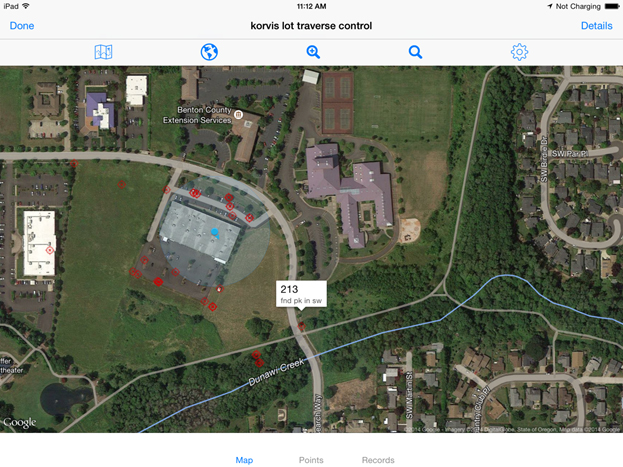
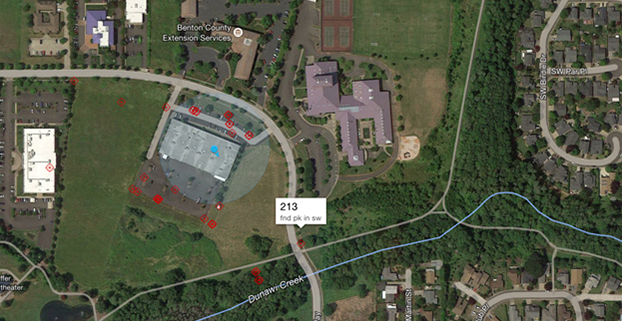
    Spectra Precision Central Screen Shot Photo: Spectra Precision
    Spectra Precision Central is a new cloud computing service. Photo: Spectra Precision

    Spectra Precision Central. A dedicated cloud computing service for Spectra Precision survey applications, Spectra Precision Central offers survey teams in the field and office the ability to rapidly exchange survey and project data with team members when and where it is needed.

    “Spectra Precision Central is a straightforward and uncomplicated solution that offers significantly improved data management efficiency for virtually any size land survey firm,” said Olivier Casabianca, Spectra Precision business area director. “Field crews can store project data to a Central account in the cloud using a data collector with Survey Pro, a connected computer or most smartphones and have the data immediately available to other work groups in the field or office. All data is synchronized for either online or offline use by any connected office computer and data collector.”

    As part of the Spectra Precision Central service, users can download Survey Pro Central, a free smartphone app, which enables iOS and Android devices to connect directly to the Spectra Precision Central system. Survey Pro Central provides another easy way to access documents, upload and download files, and manage survey data. Survey Pro Central also supports a coordinate viewer, a raw data viewer, and a map display that can also use Google maps. Whatever sensor is being used, a total station or GNSS receiver, the Spectra Precision Central system provides the hub to permit crews to transfer and share data through their Central cloud account.

    A one-year Spectra Precision Central license is included with the purchase of any model Spectra Precision data collector with Survey Pro. Each Central account can have as many users and logins as the business requires. Maintaining the Survey Pro extended warranty annually automatically renews the license. Data in the account is always available, even if the subscription expires, by simply synchronizing the data in the Central cloud to the office computer.

    Survey Pro Version 5.5. Spectra Precision Survey Pro version 5.5 now includes a new road module and integration with Spectra Precision Central. Survey Pro version 5.5 is the latest release in 20 years of continuous development.

    Survey Pro version 5.5 is fully integrated with the new Spectra Precision Central cloud system. Files can be automatically or manually synchronized to the cloud which then synchronizes data back to the office or smart phones. This new feature provides access to a user’s data whenever they need it and provides an off-site backup service for valuable data.

    The new road module is used for importing, managing, and staking roads. The module directly supports the data from the new version of Spectra Precision Survey Office. Now roads can be designed in Survey Office, exported to Survey Pro on the data collector, and staked in the field providing a complete system. The new system includes a number of improved and enhanced features as well as new graphic and data views.

    Other features include a new GNSS interface to improve workflows, a new multi-point backsight setup routine, and many other enhancements.

    The new version will be available for all customers who are current with a maintenance plan. Customers who are not current can purchase a new maintenance plan to get the latest updates including a Spectra Precision Central account.

    Spectra Precision Survey Office. Spectra Precision Survey Office (SPSO) now includes support for advanced roading that allows for allows for the creation, import, export and edit of corridors and roads.

    The new roading module allows users to create cross-sections, create points at intervals, add in material layers and the ability to create and edit templates. This allows for the integration of Survey Pro field software and SPSO office software for a complete solution.

    In addition to roading, the SPSO software now includes traverse adjustment, importing of Esri Shapefiles, additional geoid modules, smooth curve feature code and import and export functionality for FAST survey job files.

  • Spectra Precision’s MobileMapper 20 Extends GIS Capabilities in the Field

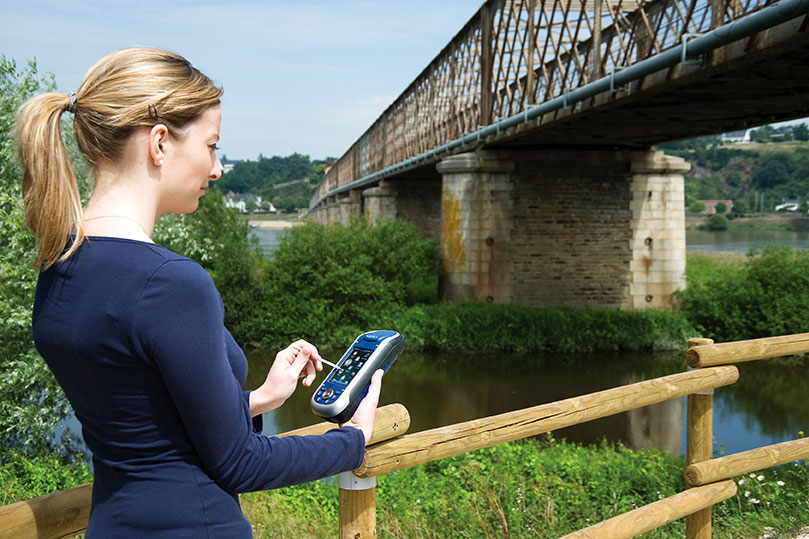
    Spectra-Precision-MobileMapper-20-App-O

    Spectra Precision has introduced the MobileMapper 20 GIS handheld. In the same form factor as the current MobileMapper 10 handheld, MobileMapper 20 offers enhanced capabilities: a new bright VGA color touch screen display, a 5-MP camera for higher resolution images, doubled memory capacity and 3.5G cellular performance.

    The Spectra Precision MobileMapper 20 provides real-time GPS accuracy of better than 2 meters and post-processed accuracy of a half-meter using MobileMapper Office software. Mapping professionals can also take advantage of Spectra Precision’s optional MobileMapper Field software for data collection, maintenance and inspection.

    MobileMapper 20 GIS handheld.
    MobileMapper 20 GIS handheld.

    MobileMapper 20 incorporates a variety of communication technologies, including Bluetooth, Wi-Fi and a 3.5 G cellular modem, to keep mobile workers connected and more efficient while in the field. With a compact lightweight design, large display and long battery life (typically more than 20 hours), the easy-to-use handheld is ideal for intensive data collection. The MobileMapper 20 runs Windows Embedded Handheld 6.5 and offers the flexibility to support a broad range of third-party software applications.

    “Building on the popular MobileMapper 10 handheld and responding to our customers’ evolving needs, we have significantly increased the power and functionality of our entry-level MobileMapper product portfolio,” said Olivier Casabianca, business area director of Trimble’s GeoInstruments. “With the introduction of MobileMapper 20, Spectra Precision is further extending the GIS capabilities of our customers in the field, while simultaneously providing them with the peace-of-mind of a standard two-year warranty.”

  • Indoor GNSS Positioning Research Employs Spectra Precision Equipment

    Researchers at Telecom SudParis are working on a solution to provide indoor continuity for GNSS positioning. The idea is to deploy a minimal transmission infrastructure in order to allow a standard receiver to measure pseudo-ranges and carrier phases, thus leading to an indoor accurate positioning. The infrastructure consists of a few antennas fed through optical fibers with a GNSS-like signal.

    Based in Paris, Telecom SudParis is a part of the Institut Mines-Telecom, an education and research institution in the fields of information and communication technology.

    Nel Samama
    Nel Samama

    To achieve positions accurate to a few decimeters, the locations of the various indoor antennas had to be accurately known.  This was achieved with the Spectra Precision FOCUS 8 total station in a local reference frame. In addition, in order to calculate the indoor positioning in WGS84 format, to achieve full compatibility with current outdoor GPS, a Spectra Precision ProMark 800 GNSS receiver was used to link the local reference frame and the GPS.  “ The accuracies of the FOCUS 8 and the ProMark 800 and their ease of use were invaluable to us,” said Nel Samama, lead researcher and Professor at the Institut Mines-Telecom.

    The International Conference on Indoor Positioning and Indoor Navigation (IPIN) 2012 and 2013 published the first results of the research, and the latest results will soon be published in a paper, “Repealite Based Indoor Positioning System Performance.”  The papers propose a new approach to indoor positioning: the repealite system. It aims at providing continuity of the positioning service through the use of GNSS-like signals, thus leading to a single technological means: a GNSS receiver, for both outdoors and indoors. A few error sources have been dealt with in order to reach sub-meter accuracy indoors, among which one has to cite multipath and near-far effects. The paper describes a way to reach indoor sub-meter accuracy and the practical current implementation of the system.

  • Spirent’s SimSAFE Fights Signal Vulnerability

    Spirent’s SimSAFE Fights Signal Vulnerability.
    Spirent’s SimSAFE Fights Signal Vulnerability.

    By Tracy Cozzens

    Spirent Communications now offers SimSAFE, a software solution that simulates legitimate GNSS constellations along with spoofed or hoax signals to evaluate receiver resilience and help develop counter measures.

    Hoax or spoofing attacks work by mimicking genuine GNSS signals, which mislead GNSS receivers.  The military and critical infrastructure — such as wireless networks, banking, and utilities — are especially interested in being able to detect and reject spoofing attacks.

    “GNSS signal vulnerability is becoming a significant issue,” said John Pottle, marketing director of Spirent’s Positioning Division.  “The industry is beginning to talk more about vulnerability and how we actually think about categorizing the threat — what approaches are there to evaluate performance in the presence of interference signals? If you’re a developer, what approaches are there to clean up your performance? You’ll see us at Spirent being quite a bit more vocal about these areas in the coming months.”

    SimSAFE was developed in conjunction with Qascom, a small organization of half a dozen GNSS signal security and authentication experts headed by Oscar Pozzobon, who served as the chief solutions architect for SimSAFE. Pozzobon contributed his knowledge of GNSS security and vulnerabilities, which were then integrated into the SimSAFE system.

    SimSAFE provides a means of emulating a spoofing attack, and then monitoring a receiver under attack to evaluate mitigation strategies and countermeasures.

    “SimSAFE really gets into details on how a receiver reacts in the presence of the hoax signals,” Pottle said. “By really understanding that, really getting into how is the receiver is acting and reacting, you can understand better how your receiver is likely to behave, and tune it up.”

    The SimSAFE laboratory-based test solution is fully controllable, so that users can evaluate a receiver’s response to a wide range of spoofing attacks. As Pottle put it, when fed both authentic and spoofed signals, “What’s the receiver going to see? It’s going to see the authentic signals, it’s going to see a couple of spoofed signals. And you can play around with the spoofed signals — that’s the controllable bit. While this is happening, the detector module within SimSAFE monitors and reports the receiver’s response to the attacks. At its most simple, that’s the power of SimSAFE.”

    SimSAFE is aimed not only at receiver developers, a core audience of Spirent’s, but at anyone trying to build a system that may be subject to intentional interference, such as in the military or critical infrastructure. “Those people are starting to ask questions about what should I be worried about? What kind of an attack might I be open to? How can I be sure, if I’ve got a choice of three or four receivers, that I’m going to choose one that meets my needs in terms of resilience to intentional interference?” Pottle said. “Our belief is that SimSAFE will allow people to evaluate different receivers and strategies for mitigating spoofing attacks, and therefore help them to build the right level of resilience in their systems.”

    SimSAFE is available in two variants. SimSAFE Simulated uses the simulator for all signals, both satellite and spoofed, using one or more channels for the spoofed signal.

    Instead of a simulator, SimSAFE Live pulls authentic signals from sky with an antenna, so the user has the full power of the simulator to generate a much broader range of spoofing attacks. “The clever bit is aligning the spoofed signal with the real signal, getting the timing and frequency synced up,” Pottle said.

    Spirent is also working on other technologies to mitigate spoofing, including work with interference signals from ground-based transmitters, adaptive antenna lab-based tests, and integration with inertial sensors, such as in military jets.

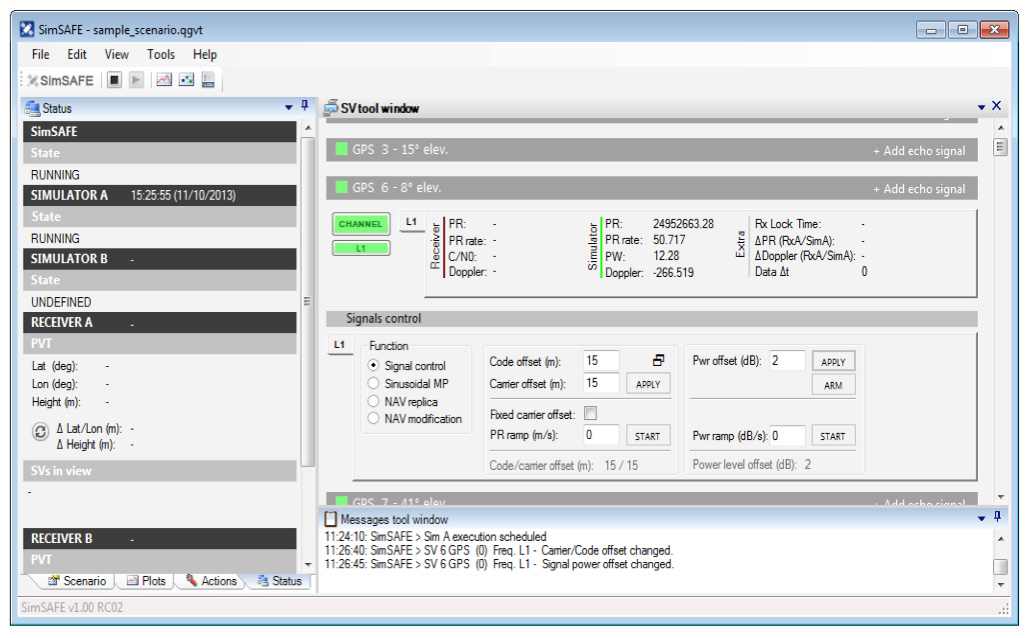
    SimSAFE’s signal control capabilities.
    SimSAFE’s signal control capabilities.
  • Spectra Precision’s Latest Survey Receiver Uses Six GNSS Systems

    Spectra Precision’s Latest Survey Receiver Uses Six GNSS Systems

    Spectra-Precision-SP80-GNSS-Receiver-River-W

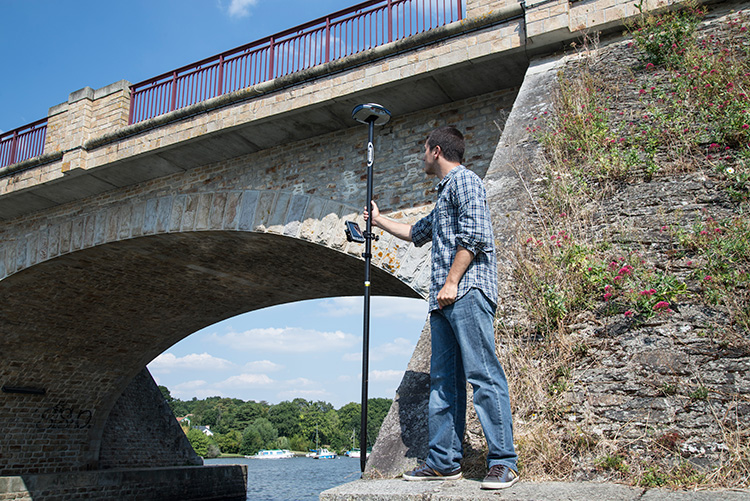
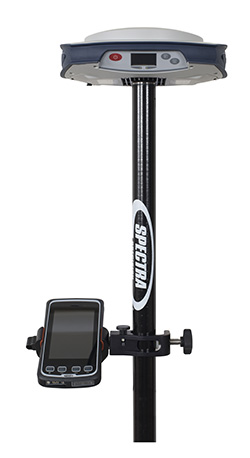
    Spectra Precision introduced today its next-generation Spectra Precision SP80 GNSS receiver. Designed to meet the evolving needs of the survey market, the new SP80 combines GNSS technology and a combination of communication capabilities with an ergonomic design, the company said. The SP80 is specifically designed for mainstream surveying and construction applications such as cadastral, topographic, control, stakeout and network RTK.

    Spectra Precision SP80 features Spectra Precision’s Z-Blade GNSS-centric technology running on a new-generation, 240-channel 6G chipset. The SP80 is capable of fully utilizing all six available GNSS systems (GPS, GLONASS, BeiDou, Galileo, QZSS and SBAS), but can also be configured to use only selected constellations in an RTK solution (GPS-only, GLONASS-only or BeiDou-only).The SP80 is also compliant with the new RTCM 3.2 standard, including the recently approved MSM RTCM messages, which means it supports all available GNSS corrections.

    SP80-GNSS-Front-with-Antenna-Pole-WThe extended communication capabilities of the SP80 receiver provide a combination of a 3.5G GSM/UMTS modem, Wi-Fi and Bluetooth connectivity, and an optional transmit UHF radio. The receiver’s built-in Wi-Fi and 3.5G modem can provide an Internet connection for RTK corrections and also send SMS or e-mails with system alerts. The SP80 features a unique anti-theft technology to safeguard the receiver and can detect if it is has been disturbed while in the field (for example, when operating as a GNSS base). The anti-theft protection feature informs the surveyor via SMS or e-mail if the SP80 receiver is moved and can provide its position to facilitate recovery.

    The Spectra Precision SP80 is rugged and waterproof, yet compact, lightweight and ergonomic for ease of use in the field, Spectra Precision said. When the UHF transmit radio module is used, its UHF antenna remains protected inside the rugged rod, extending the radio range performance. Powered with dual hot-swap batteries for typical all-day operation, the SP80 receiver is an ideal tool for any surveyor.

    “The Spectra Precision SP80 introduces several major enhancements and innovations, including the new 6G GNSS ASIC with enhanced Z-Blade technology, unique SMS and e-mail messaging and patented inside-the-rod mounted UHF antenna,” said Olivier Casabianca, business area director of Trimble’s Spectra Precision Division. “In addition, SP80 was designed as an extremely reliable receiver, making it suitable for a variety of challenging surveying projects.”

  • Spectra Precision Shows off New and Updated Products for Surveying

    Spectra Precision Shows off New and Updated Products for Surveying

    Photo: Spectra Precision
    Photo: Spectra Precision

    Spectra Precision introduced at Intergeo this week new and updated products to expand its portfolio of solutions addressing the needs of the mainstream surveying and construction markets. Intergeo 2013 is a geodesy, geoinformatics and land management trade event being held in Essen, Germany.

    “Earlier this year, we introduced a new reflectorless entry-level total station, the lightweight ProMark 700 RTK Network Rover and the Layout Pro construction layout software suite. With our latest additions, the Spectra Precision portfolio continues to evolve to meet the changing needs of our users,” said François Erceau, general manager of Spectra Precision’s GeoInstruments Business Unit. “Spectra Precision now offers one of the broadest and most complete portfolios of survey and construction products in the industry — from construction lasers and total stations to survey GNSS receivers and GIS handhelds — all from a single supplier that customers can trust.”

    New and updated Spectra Precision products include:

    • Spectra Precision EPOCH 50 firmware 4.81 – now supports RTK positioning using the Chinese BeiDou open service GNSS satellite signals. Adding the BeiDou constellation to the full range of GPS and GLONASS signals already tracked by EPOCH 50 further boosts the capabilities of this GNSS receiver to enable faster initialization and performance, even in conditions where satellite visibility is obstructed due to tree canopy or tall buildings.
    • MobileMapper 120 Decimeter Edition this new kit, based on the MobileMapper 120 handheld GNSS receiver, includes the Flying RTK, GLONASS tracking and NTRIP correction options. With accuracy of 20cm or better, the Decimeter Edition kit is a competitively priced solution for precise Mobile Mapping applications.
      • ProFlex 800 firmware version 1.9 – now supports GLONASS-only mode and tracking of QZSS signals to meet the needs of specific markets (Russia and Japan, respectively). This updated firmware also improves RTK performance in VRS networks, particularly in challenging GNSS environments, through Z-Blade technology enhancements.
    • Layout Pro Field and Office software – a recent release of the Layout Pro field software added support for the FOCUS 30 Robotic Total Station, offering the highest level of productivity and accuracy in a construction layout solution. The Layout Pro version 2.1.1 update now includes language packs for major markets worldwide, in addition to many other minor enhancements. Customers with a current Layout Pro maintenance agreement are eligible to download this update from www.spectraprecision.com.
    • Survey Basic software for total stations – further enhancements to this entry-level software application make for the simplest starting point, with workflows that mirror the familiar Nikon-style FOCUS 6 user interface in a modern full-color touch-screen instrument (FOCUS 8). Further language packs have been added, including Czech, Traditional Chinese, Korean and Polish.
    • Survey Pro Field software version 5.4 –  the latest release of this award-winning survey field software includes many new features and enhancements such as:
      • Updated Digital Terrain Model (DTM) features and interface
      • Support for new GNSS constellations and an improved GNSS workflow
      • Additional Active Map enhancements that make it easier than ever to work directly from the map screen
      • Updated point staking routines and a new interface for building design point lists
      • A new Plane and Vertical Angle Offset routine
      • A new electronic compass display in various map screens
      • Enhanced total station and GNSS setup routines
      • An improved Code/Description entry and display system

    Customers with a current Survey Pro maintenance agreement are eligible for this update and can download the software from .

    • Spectra Precision Survey Office software v3.10 and v2.95 ­– both versions are companions to Survey Pro 5.4 field software and FAST Survey field software, and offer enhanced baseline processing with more reliable outlier detection and improved accuracy statistics. Additionally, version 3.10 features a new customized ribbon UI and is optimized for 64-bit PCs (with notably faster processing).

    These new and updated Spectra Precision products are now available for order through the Spectra Precision global reseller network.

  • Spectra Precision at the ESRI International Users Conference

    GPS World magazine interviews at the ESRI International User Conference 2012, talking with Joe Sass of Spectra Precision.

  • On the Edge: Mapping the Delta

    By Tracy Cozzens

     Surveyors install and configure a base and rover for a 13,000-hectare survey of the Plains Kogoni in Mali.
    Surveyors install and configure a base and rover for a 13,000-hectare survey of the Plains Kogoni in Mali.

    In the heart of landlocked Mali, between the Atlantic Ocean 800 miles to the south and the Sahara desert to the north, lays the extraordinary Inner Niger River Delta, also known as the Macina, a 1.8 million hectare oasis of lakes and floodplains with a vast potential for hydro agriculture.

    CIRA, a major West African consulting engineering firm, working on behalf of the Office du Niger, a quasi-governmental Mali company charged with managing more than100,000 hectares of irrigated delta land, has completed surveying an additional 25,000 hectares for hydro-agriculture development.

    map

    Created in 1991, CIRA is an engineering and applied research consulting firm working in transportation, hydraulics, civil engineering and the environment. Based in Bamako, Mali, the firm works in more than 15 African countries, primarily in West Africa, Central Africa and East Africa.

    In the course of two months during the dry season, two CIRA survey teams, each equipped with three Spectra Precision ProMark 500s, a base station, and two rovers connected via UHF, completed the entire 25,000 hectare survey collecting four points in x, y, and z per hectare to produce a digital model. The model enabled the production of rough pre-study with all plans and a detailed pre-project CAD drawings for drainage, irrigation canals, and related infrastructures.

    A very short eight-month contractual time set to complete the different studies meant that the land survey study would have to be completed as quickly as possible. The first thought was to use aerial photography combined with LIDAR, but setting this up would have taken too long, according to a CIRA spokesperson. Instead, CIRCA chose to employ differential GNSS, using base and rovers working in real-time kinematic. CIRA’s experience suggested the firm would achieve reliable results much quicker using only optical total stations. CIRA elected to use Ashtech ProMark 500 GNSS receivers for the project. From experience, they knew the models were easy to set up and use, lightweight, offered long battery life in the field, and field to office data transfer would be easy. Their expectations were met, and the job was completed within two months and on time.

    The ProMark 500 RTK survey system provides short time to fix, long-range RTK and solution reliability. Its BLADE technology provides multi-constellation signal processing with the use of SBAS and GLONASS ranging signals to strenghten the GPS solution.

    Trimble acquired Ashtech in 2011, making it part of Spectra Precision.

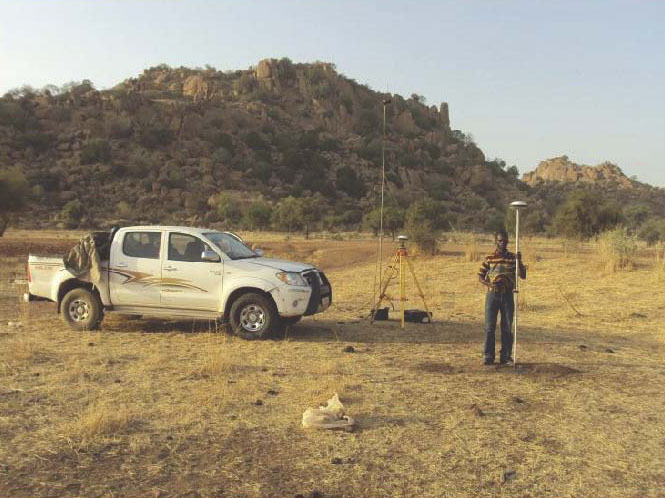
     Setting up bitter points for calibration of satellite images on the corridor Sarh - Abeche in Chad (800km).
    Setting up bitter points for calibration of satellite images on the corridor Sarh – Abeche in Chad (800km).
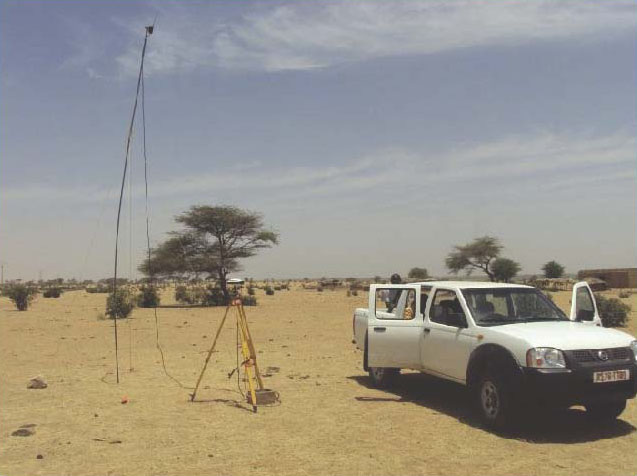
     Reference station during the survey topo Richard Toll road - N Dioum (120 miles) in Senegal.
    Reference station during the survey topo Richard Toll road – N Dioum (120 miles) in Senegal.
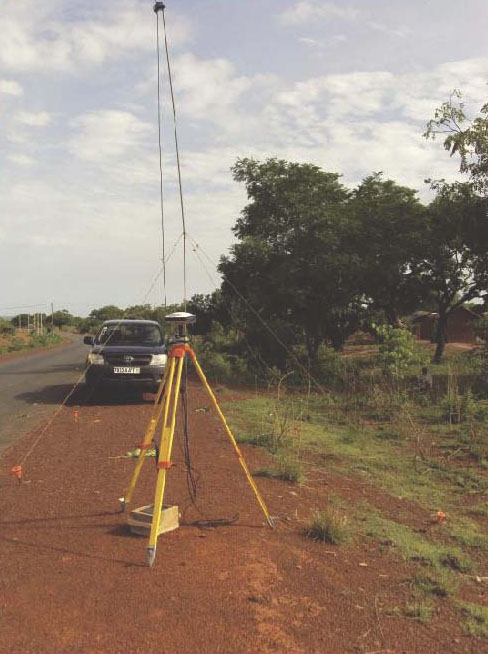
     A reference station during the survey topo Zégoua Sikasso road (95 km) in Mali.
    A reference station during the survey topo Zégoua Sikasso road (95 km) in Mali.
  • Spectra Precision Introduces GNSS Receiver

    Spectra Precision Introduces GNSS Receiver

    Photo: Spectra Precision

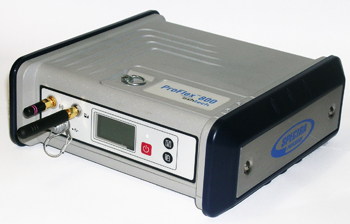
    Spectra Precision introduced the new ProFlex 800, a GNSS solution with Z-Blade GNSS-centric technology. The ProFlex 800 delivers fast and reliable RTK positioning, even in environments where GNSS signals may be difficult to acquire, Spectra Precision said. Rugged and IP67 rated, the ProFlex 800 is built to withstand harsh operating conditions for a variety of positioning applications.

    “The ProFlex 800 is an ideal solution for customers wanting a single GNSS receiver for multiple applications,” said François Erceau, general manager of Trimble’s Spectra Precision, Nikon and Ashtech Business Area. “It offers a unique design with a range of mounting and communications options.”

    Used as a backpack rover or reference station, the ProFlex 800 with Z-Blade technology is a flexible GNSS solution for land surveying. Its innovative design also makes it ideal for hard-mounted survey applications such as coastal work, dredging, bathymetry or offshore vessel operations.

    The weatherproof, high-impact-resistant molded aluminum housing allows the ProxFlex 800 to operate in harsh conditions.

    In addition to a 3.5G internal cellular modem, the ProFlex 800 can use a variety of internal or external UHF modules, providing stable and reliable wireless communications. It can be used as a rover or a base without additional accessories in the field. Its Z-Blade long-range RTK capability combined with industry-leading UHF options help to ensure maximum productivity while in the field.

    With its built-in Ethernet capability and embedded web server, users can access the ProFlex 800 from any computer connected to the Internet. This capability allows instant real-time multi-data streaming over an Ethernet connection to build an RTK corrections server without any additional software or equipment, the company said.

    Spectra Precision ProFlex 800 CORS Receiver. The Spectra Precision ProFlex 800 is also available as a Continuously Operating Reference Station (CORS). This configuration is an optimal solution when collecting, storing and transferring high-quality GNSS raw data for post processing surveys, geodetic and other applications. Automatic sessions programming, a user-friendly Web-interface, an embedded RINEX converter, FTP push functionality and many other advanced CORS features make the ProFlex 800 CORS a powerful, robust and easy-to-use GNSS solution.

    Advanced Ashtech Z-Blade Technology. Z-Blade is a new GNSS centric signal processing technology. Z-Blade uses all of the available satellite signals equally, without preference to any particular satellite constellation, maximizing the user’s ability to obtain reliable GNSS positions in tough conditions. Z-Blade allows users to receive and maintain RTK positioning even if GPS coverage is insufficient. In many work locations, just a few GPS and GLONASS satellites may be visible due to obstacles such as trees or buildings.

    The ProFlex 800 is now available through the Spectra Precision global dealer network. For more information visit: www.spectraprecision.com and www.ashtech.com or email: [email protected]

  • Trimble Releases DDS300 Depth Display System for Construction

    Trimble introduced a new version of the Spectra Precision Laser DDS300 Depth Display System, a laser-referenced grade control solution targeted for compact machines. The DDS300 version 3.0 introduces a new environmentally-rated control box and new level of productivity for mini-excavators and backhoe loaders used for excavation and trenching work for basements, footers, utility lines and conduit. Cable-free components, simple installation and an affordable price make the DDS300 system ideal for contractors who want to improve accuracy, fuel usage and safety of their excavation operations.

    According to the announcement, the DDS300 system utilizes wireless communications, a laser receiver and angle sensors to provide dynamic positioning information for the excavator or backhoe bucket at all times. Real-time grade guidance is displayed on the 7-inch in-cab display, allowing the operator to work faster and with better accuracy. Accurate positioning of the bucket also improves the safety of excavation by eliminating the need for a grade checker to work in the trench or machine swing area.

    The new waterproof and sunlight-readable CB310 Control Box display is included in the DDS300 system and is rated IP-64, making it suitable for use in bright sun or inclement weather.