Tag: surveying

  • PD Ports Uses GIS in New Ways for Hydrographic Surveys

    PDPorts-hydrographic-GIS-1

    PD Ports is streamlining the way it shares hydrographic data by using GIS software from British software developer Cadcorp. PD Ports is a port, shipping and logistics company headquartered in Middlesbrough, UK, where it owns and operates Teesport — a major deep-water complex and one of the largest container ports in the North of England.

    Teesport is a major deep-water complex and one of the largest container ports in the North of England, handling around 40 metric tons of cargo per year, according to Captain Jerry Drewitt, Harbor Master for Teesport and Hartlepool. “Our first priority is to ensure the safe movement of the considerable amount of river traffic handling this cargo. We rely a lot on hydrographic survey charts which provide an up-to-date record of the depth of the river in berths, approaches, and channels.

    “Until recently, our survey department not only carried out hydrographic surveys, but also produced the associated charts. This is changing as we have come to recognize that having surveyors spend time on creating cartography was an unnecessary step in the sharing of hydrographic data, and was actually delaying data publication.“

    Drewitt continues, “Hydrographic charts don’t only depict depth data. They also show topography and contextual data about features and boundaries along the river. The position of these features and their attributes, tend to be relatively stable — certainly when compared to the constantly changing topography of the riverbed. We wanted the survey department to concentrate on recording this more dynamic hydrographic data.”

    PDPorts-hydrographic-GIS-2“The less dynamic data — topography, assets, boundaries, Admiralty Charts, Ordnance Survey MasterMap, and aerial photography — can be managed as separate overlays in our GIS, Cadcorp SIS Map Modeller,” Drewitt said.

    “We now create composite hydrographic charts by displaying the hydrographic data the surveyors capture, against whatever reference layers are appropriate for a task in hand,” Drewitt said. “This is done in the knowledge that all features will be represented in their true location. We now take XYZ soundings directly from the survey department; drag and drop this data into the Cadcorp GIS, and pass it through a simple filter to indicate three categories of depth zones. Red indicates where the river is too shallow, blue where it is OK, and white where it too deep. “

    The outcome of these changes allows the harbor master to share information with the Vessel Traffic Service and pilots much more quickly than before. For example, whenever there is suspected slippage in the river bed, the survey department can be alerted to make a new survey of the affected area. The outcome of their echo-soundings will exported as XYZ files to Map Modeller. The GIS is used to delineate any areas which are deemed to be out of bounds. It is then a simple matter to insert a map into a Word document as a “Shoaling Notice” that can be distributed by email.

    Drewitt hopes his deputy harbor masters and pilots eventually will be able to accept map data from Teesport directly in digital form and in real time. However, for the moment, GIS is playing a transitional role somewhere between a map creator and a map viewer. This can be seen in current project where Captain Drewitt is using GIS to match vessels to available berths. He uses the GIS to create and display templates of vessels originally designed as DWG files in AutoCAD. By superimposing these templates, along with tugs and towlines, over maps and charts, it becomes possible to assess the maximum size of vessels that can be accommodated in different berths.

    “It is easy to generate a family of templates, and a simple matter to superimpose them against maps,” Drewitt said. “While I can’t yet share them online, I can take map representations to meetings, where the serve an important evidential role.”

    “GIS applications don’t have to be complex to deliver real business benefit,” said Mike O’Neil, CEO of Cadcorp. “Teesport have shown this. Their use of GIS isn’t about intricate analysis and modelling. On the contrary, it is about the value you get by bringing together different data sets, quickly and easily. The combined value of these different data sets is often much greater than the sum of its parts.”
  • Leap Second Implementation Confuses Some Receivers

    The United States Civil GPS Service Interface Committee (CGSIC) has issued a notice about a problem some receivers are having implementing the correct time. The U.S. Coast Guard Navigation Center has received reports of synchronization issues since the implementation of a leap second on Jan. 21. Users experiencing this problem should contact the receiver manufacturer for a firmware or software update.

    Below is the text of the CGSIC notice:


    All CGSIC: 2015 GPS Future Leap Second Implementation

    The GPS 50 bit-per-second navigation message transmitted by each GPS satellite (specifically Page 18, subframe 4) includes the parameters needed to relate GPS time to UTC (Coordinated Universal Time).  That relationship is maintained through leap second implementation transitions by IS-GPS-200 compliant user equipment.  For leap second transition, user equipment must utilize the notice regarding a scheduled future delta time due to leap seconds (ÄtLSF), together with the week number (WNLSF) and the day number (DN), at the end of which the leap second becomes effective.

    On or about Jan. 21, 2015, those GPS navigation messages began to include future leap second data which indicates an increase in the leap second to become effective at the end of June 2015.  IS-GPS-200 revision H, dated 24 Sep 2013 paragraph 20.3.3.5.2.4 Coordinated Universal Time (UTC), documents the appropriate algorithm details to ensure correct utilization of the parameters above (including all potential truncated week number transitions and variations in time of processing relative to satellite upload timing near the future leap second effectivity).

    The data upload for the June 30 leap second, initiated with SVN48/PRN07 at 18:33:56z on Jan. 21, was correctly executed. However, there are several receivers brands/models that seem to be mishandling this information and applying the leap second now. This is creating a negative one-second offset in faulty receivers. The U.S. Coast Guard Navigation Center has reports of these receivers causing synchronization issues with radios, computer systems, and data logging equipment.

    Users experiencing issues with GPS receivers that began on Jan. 21 should contact the receiver manufacturer to determine if the latest firmware or software patch can correct the issue.

    V/R Rick Hamilton
    CGSIC Executive Secretariat GPS Information
    Analysis Team Lead USCG Navigation Center
    703-313-5930

  • Rextorm Rugged Tablet Designed for Field Work

    RuggON-tablet
    Photo: RuggON 

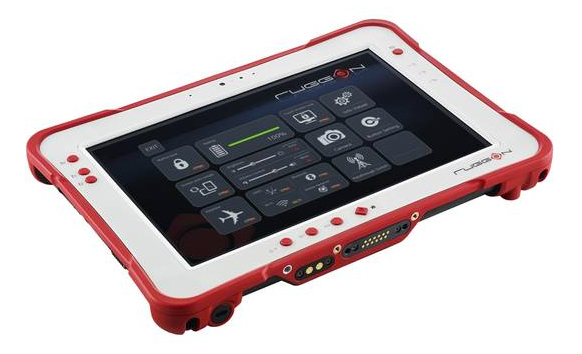
    Taiwan-based company RuggON is launching the Rextorm series of rugged tablets. With an ultra-bright 1000 Nit optically bonded display, high speed 802.11ac connectivity, hot swappable dual-battery design, and capacitive glove touch capability, the 10.1-inch fully ruggedized tablets are ready for use in the field.

    With the latest communication technology including GNSS Positioning (GPS/GLONASS/Beidou), 802.11 ac, Bluetooth 4.0 and optional 4G LTE, mobile workers can experience precise positioning, fast processing, broad coverage and more stable data transfer even around buildings or trees, RuggON said. For in-vehicle usage, a dual pass-through port allows users to connect via vehicle dock for improved GNSS, WLAN, or WWAN reception. Standard I/O ports include USB 3.0, 2.0, RS232, RJ45, Micro-HDMI, and Micro-SD.

    The Rextorm series is a fully ruggedized tablet that meets and exceeds MIL-STD-810G standards for shock and vibration, offers IP65 rating, wide operating temperature range and superior drop resistance of 5 feet on to a concrete surface.

    Using the Intel Core i5 Haswell processor, the PX-501 has the fastest processor of the series and is a rugged workstation that can be taken to the field. High-capacity 120GB or 240GB SSDs are available, as well as 4GB or 8GB of DDR3 RAM. A precision digitizer allows accurate input for illustrations and technical work in the field. Windows 7/8 Pro as well as Windows Embedded 7/8 are available.


  • Kickstarter Launched for NMEA Dongle to Connect GPS, iOS

    Kickstarter Launched for NMEA Dongle to Connect GPS, iOS

    NMEA-dongle-W
    Photo: NMEA

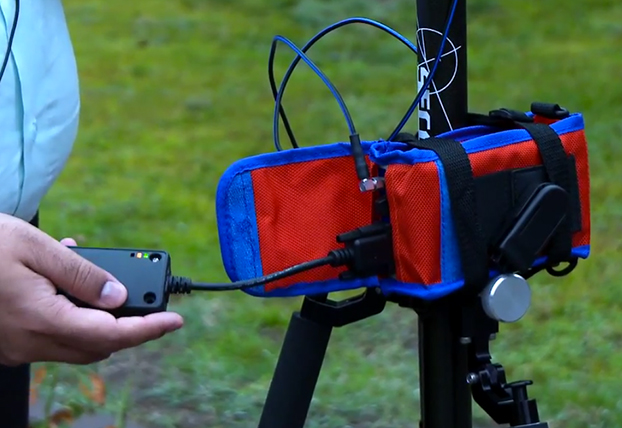
    kickstarter campaign has launched for an NMEA dongle that connects any existing GPS receiver to iOS devices. The device connects and communicates with high-accuracy GPS/GNSS devices and other field sensors that emit NMEA data to iOS devices over Bluetooth, allowing users to collect data on an iPad or iPhone using one or more sensors in the field.

    Primary functions include:

    • overriding the internal GPS on iOS device with the location data coming from the external GPS so all existing apps using internal location services can benefit from the increased accuracy without any changes to the app.
    • providing the ability to connect with other field sensors that emit NMEA-format data (such as underground cable locators, lasers, resistographs, and audiographs) simultaneously with a GPS so data from multiple sensors can be incorporated into the data-collection application.

    Garg explained the need for the dongle on his Kickstarter page: “The accuracy and precision of the internal GPS on iPads and iPhones is highly unreliable — it works fine for navigational purposes but fails miserably for mapping and asset management applications. The accuracy varies in range from a few meters to a few hundred meters depending on operating conditions, and there is no easy way to reliably ascertain that. Tests have proven that the accuracy rating on the location data returned by Apple is more of a general estimate than a reliable metric.”

    The NMEA dongle is business-card-sized, and has an internal battery and a long-range Bluetooth. The dongle plusg into an existing GPS receiver’s serial port or connects via bluetooth to transmit the GPS data to the iPad. This allows users to feed RTK/NTRIP data to their iOS device.

    “We have tested our solution with most of the leading brands of GPS receivers available in U.S., including Trimble, Topcon, John Deere, Altus, Geneq, EOS, CHC,” developer Sharad Garg told GPS World, “on most of the popular networks that we could get access to, including the Leica, Trimble, MyWayRTK, a few state-run networks and of course Unavco. Our solution is compatible with all of them, so its a very generic product at this point compatible with just about all the different solutions out there.”

    Garg said his team also designed the dongle so that it allows users to connect to sensors such as laser range finders, valve exercising machine, Resistographs or agricultural sensors that emit data in NMEA format. The National Marine Electronics Association (NMEA) specification defines the interface between various pieces of marine electronic equipment, a standard that permits marine electronics to send information to computers and to other marine equipment.

    “We have actually improved the design very significantly to be very modular and be compatible with all sorts of GPS connections that might be offered by the different vendors out there,” Garg said.

    This YouTube video shows the dongle’s RTK functionality.

    GPS World published general articles on NMEA and RTK in Innovation:

    NMEA 0183: A GPS Receiver Interface Standard

    RTK GPS

  • CES: Hobbico Demonstrates Drone System for Aerial Photos

    The Hobbico ORA, a new drone system for aerial photographers, is being demonstrated at the 2015 International CES, running January 6-9 in Las Vegas. The camera-equipped drone displays captured aerial images on a seven-inch touchscreen integrated into the transceiver. With a 370-mm diameter and an onboard 1080p HD camera, the ORA also delivers high-quality images, reliability and long range through its recording method and choice of radio frequencies.

    Designed for taking aerial views of action sports, outdoor weddings, real estate, vacation vistas and more, the ORA delivers out-of-the-box aerial photo and video capture with no need for radio-control piloting experience. All images are recorded on an SD card built into the drone, providing higher resolution than systems that use the transceiver for data capture, Hobbico said. Use of the 5.8-GHz radio band instead of the typical 2.-4GHz or Wi-Fi ensures a robust connection and a 500-meter flight control and video signal range.

    The seven-inch first-person view touchscreen built into the ORA transceiver displays what the UAV’s onboard camera sees in real time, eliminating the need to use a cell phone, tablet or other third-party device to view captured images. Users can frame scenes exactly as they want them filmed by remotely controlling the camera gimbal. One-, two- and three-axis gimbal options are available, each designed also to accept GoPro cameras.

    The transceiver has an integrated Android device for programming ORA functions through the touchscreen. A separate OLED telemetry screen displays flight data such as GPS coordinates, altitude and battery power status.

    Other highlights include:

    • 30 minutes of flight time per battery charge
    • Built-in GPS programming that puts flight routes, speed and altitude on auto-pilot
    • Support for 32 separate GPS waypoints to execute complex flight patterns
    • The ability to hold a steady altitude and position via GPS to film desired scenes
    • The option to save coordinates and fly the identical path again any number of times.

    Selecting “Return to Home” brings the ORA back to its pilot with a single command. An “Actual Direction” option prevents control reversal confusion during manual flight — when activated, the quad always moves in the same direction as the control sticks. Additional failsafe systems watch for dangers such as low-battery power and automatically bring the ORA and camera home for safe landing.

    The Hobbico ORA is scheduled for early 2015 release at an MSRP of $1,500-$2,000 depending on the battery, gimbal and camera configuration. The package will include the drone, 10-channel touchscreen transceiver, gimbal, batteries and charger.

    The drone is on display at CES Booth #25214 in the Unmanned Systems Marketplace at the Las Vegas Convention Center’s South Hall 2.

  • China’s FOIF Offers A50 GNSS Survey Receiver

    A50 GNSS receiver.
    A50 GNSS receiver. Photo: FOIF

    Chinese company FOIF is offering a new survey receiver, the A50. FOIF said that with the A50, the company focused on developing a smart design for a receiver to make it lightweight, yet powerful, making it easy to use for fieldwork. Besides Bluetooth, wireless radio, and mobile network (2G and 3G), Wi-Fi feature was added to broaden data communications for GNSS. The A50 is designed to provide excellent performance, with a high-sensitivity GNSS module.

    According to FOIF, the A50 has not only sophisticated onboard software, but also optional application programs such as FOIF FieldGenius and Carlson SurvCE, providing multiple field solutions.

    The A50’s features include:

    • Wi-Fi to achieve quick and long distance parameters settings and data transferring;
    • Tracking of GPS, GLONASS, Galileo, BeiDou satellites on 220 channels;
    • An industry-standard GNSS engine (Trimble, NovAtel) that can access local CORS;
    • horizontal real-time accuracy (rms) of 10mm+1ppm, and vertical of 20mm+1ppm;
    • OLED display with superior brightness and temperature range
    • Rugged design, with an IP67 rating;
    • Voice messaging.
    RTK<30km

    H:8 mm + 1 ppm

    V:15 mm + 1 ppm

    DGPS H:0.25 m + 1 ppmV:0.50 m + 1 ppm
    SBAS 0.5m (initialization time < 10s, initialization reliability > 99.9%)
    Static

    H:±(2.5+1×10⁻⁶×D) mm

    V:±(5+1×10⁻⁶×D) mm

  • Absolute Software Uses Google Maps Geolocation API to Track Devices

    Computer security company Absolute Software Corporation is extending its products to use Google Maps to provide improved device geolocation tracking in its Absolute Computrace product. The partnership will provide Absolute customers with improved global coverage and more accurate geolocations.

    “The location of a device is an important factor in assessing the risk of a data loss event and measuring compliance with corporate policies. The accuracy of the geolocation data we present in our products is critical to our customers,” said Bill Gordon, vice president, engineering and development at Absolute Software. “Using Google Maps technology allows our customers to track devices and be alerted of risks with the highest accuracy.”

    The geolocation capabilities of Absolute Computrace include recent and historical location information for a device, as well as the ability to build geofences to contain devices within a specific geographical area. If a device goes beyond the bounds of a geofence, IT is alerted so they can investigate and determine if the device and the data on it is at risk.

    “Our customers rely on our solutions to provide timely and accurate information regarding the health and safety of their endpoints and the data they contain,” said Geoff Haydon, CEO of Absolute Software. “Google Maps will ensure we are delivering the most accurate results, from every device, for all of our customers worldwide.”

  • Trimble Introduces ProjectSight for Cloud-Based Construction Management

    Trimble announced today Trimble ProjectSight, a cloud-based solution for construction field management that Trimble says simplifies the creation, access and sharing of project information between the field and the office. The new solution provides mobile workers with access to up-to-date project information and smart workflows for increased productivity and more informed decision making. Trimble ProjectSight allows contractors to lower software costs while enabling a wide team of collaborators to access the information they need.

    Trimble ProjectSight is designed for contractors and construction managers who want an easy-to-use and cost-effective field management application. Accessible via a web browser or an iPad app, ProjectSight features a simple, intuitive user interface overlaying smart, project-based workflows to keep teams in sync. Access to centralized data provides users with up-to-date information related to material tracking, issues reporting, information requests and critical project drawings, models and documents. Fully functional offline capabilities allow information to remain available during unconnected sessions commonly encountered on construction sites.

    ProjectSight joins other solutions in Trimble’s portfolio for managing construction project logistics, budgets, estimates, schedules, coordination and change in both 2D and 3D datasets. ProjectSight leverages the new Trimble Connect collaboration environment for design, engineering and construction firms. Trimble Connect enables teams to access and manage any data via a cloud platform and specifically allows ProjectSight users to access and share project management data with Trimble Connect users across the design-build-operate lifecycle.

    “Effective project management is critical to the profitability of any construction project,” said Mark Sawyer, general manager of the General Contractor / Construction Manager Division of Trimble Buildings. “With Trimble ProjectSight, we now offer a solution that addresses the core functions of project management in a very easy-to-learn, easy-to-use and easy-to-deploy system. ProjectSight ensures workers have access to accurate, up-to-date information and it puts that information in the hands of highly distributed teams at very low cost.”

  • Eos Positioning Launches Arrow High-Accuracy GNSS Receiver

    Eos Positioning Launches Arrow High-Accuracy GNSS Receiver

    ipad-iphone-samsung-arrow-O Photo: Eos Positioning Systems
    Photo: Eos Positioning Systems

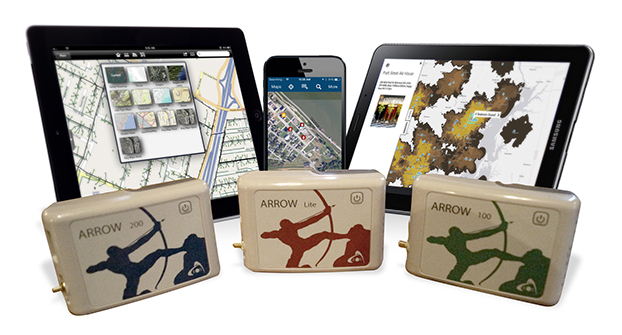
    Eos Positioning Systems has introduced a new line of high-accuracy GNSS receivers for smartphones and tablet computers, including both sub-meter and RTK performance for all mobile platforms: iOS, Android, and Windows.

    Eos’s entry-level product, the Arrow Lite, is Bluetooth compatible with all mobile devices.

    The Arrow 100 is Eos’s advanced real-time, sub-meter GNSS receiver that utilizes both GPS and GLONASS, and is expandable to Galileo, Beidou and QZSS. It offers superior tracking under tree canopy, around buildings and in rugged terrain, the company said. In addition to supporting SBAS in North/Central America, Europe, Northern Africa, Japan, India and Russia, the Arrow 100 also supports OmniSTAR’s worldwide, real-time sub-meter service.

    The most advanced Arrow receiver is the Arrow 200, a dual-frequency, multi-constellation RTK GNSS receiver capable of 1-cm accuracy in real time. The Arrow 200 is an iOS-compatible RTK and OmniSTAR receiver that works with all models of iPads and iPhones via wireless Bluetooth connection. An iOS NTRIP app that allows the user to log into any available RTK network. The Arrow 200 will provide quality RTK performance for years to come because it supports current and future satellite constellations: GPS, GLONASS, Galileo, BeiDou and QZSS, the company said. It also supports OmniSTAR’s G2, XP and HP real-time worldwide decimeter services.

    “After spending more than 12 years designing high-accuracy Bluetooth GNSS receivers, I believe Eos has set the new standard for high- accuracy GNSS receivers that work across all mobile platforms, no matter if it’s iOS, Android or Windows,” said Chief Technology Officer Jean-Yves Lauture.

    All Arrow receivers employ long-range (1-km) universal Bluetooth connectivity so the user can interface to any brand of smartphone or tablet, whether it’s iOS, Android, or Windows-based. A variable-power Bluetooth implementation allows the Arrow receivers to communicate up to one kilometer from the mobile device.

    Arrow receivers have been optimized to run all day on battery power. The battery pack is field-replaceable and rechargeable separately. It contains smart charging logic so expensive battery chargers are not needed.

    All Arrow receivers have been designed to meet IP-67 specifications for immersion in water and are completely dust-proof so they will survive in the harshest environments.

    The Arrow receiver product line is targeted at high-accuracy applications like GIS, environmental, agriculture, electric/gas/water utilities, surveying, machine control, and federal/state/local government.

  • FAA Grants UAS Exemption to Trimble Navigation

    FAA Grants UAS Exemption to Trimble Navigation

    The Trimble UX5. Photo: Trimble
    The Trimble UX5. Photo: Trimble

    The Federal Aviation Administration (FAA) today granted five regulatory exemptions for unmanned aircraft systems (UAS) operations to four companies representing several industries that promise to benefit from UAS technology, including Trimble Navigation Ltd.

    The four companies that received exemptions want to fly UAS to perform operations for aerial surveying, construction site monitoring and oil rig flare stack inspections.

    “Unmanned aircraft offer a tremendous opportunity to spur innovation and economic activity by enabling many businesses to develop better products and services for their customers and the American public,” Transportation Secretary Anthony Foxx said. “We want to foster commercial uses of this exciting technology while taking a responsible approach to the safety of America’s airspace.”

    The commercial entities that received exemptions today are Trimble Navigation, VDOS Global, Clayco, and Woolpert (two exemptions). The FAA earlier granted exemptions to seven film and video production companies. This is the first exemption granted to a leading GNSS firm.

    Secretary Foxx found that the UAS in the proposed operations do not need an FAA-issued certificate of airworthiness because they do not pose a threat to national airspace users or national security. Those findings are permitted under Section 333 of the FAA Modernization and Reform Act of 2012.

    The firms also asked the FAA to grant exemptions from regulations that address general flight rules, pilot certificate requirements, manuals, maintenance and equipment mandates. In their petitions, the firms said they will operate UAS weighing less than 55 pounds and keep the UAS within line of sight at all times.

    The exemption will allow Trimble to conduct commercial operation of its UX5 Aerial Imaging Solution. The UX5 is an unmanned fixed-wing aircraft targeted at the surveying, agriculture, oil and gas, mining, construction, environmental industries. The system autonomously captures a series of high-resolution images during flight, which is typically up to 50 minutes covering as much as 2.3 square kilometers (approximately 1 square mile) when flying 120 meters (approximately 400 feet) above the ground. Using Trimble Business Center Aerial Photogrammetry software, images are used to easily generate 2D and 3D deliverables such as orthomosaic images, three-dimensional point clouds and contour maps. The Trimble UX5 enables the collection of large amounts of data, often faster than traditional surveying or mapping technologies.

    The Trimble UX5 surveys a construction site. Photo: Trimble
    The Trimble UX5 surveys a construction site. Photo: Trimble

    “We are pleased to be among the first companies to receive an exemption from the FAA authorizing commercial operation of UAS,” said Erik Arvesen, vice president of Trimble’s Geospatial Division. “This decision reflects Trimble’s efforts to responsibly operate its UAS business in the U.S. while the FAA addresses air safety issues in opening the NAS for commercial UAS operations on a broader scale. Trimble will continue its efforts to support the FAA’s decision-making process and to provide opportunities for our customers to safely use the UX5 to capture accurate geospatial data for a wide range of applications such as surveying, oil and gas, mining, construction and many more.”

    “In the agriculture market, the FAA exemption moves Trimble one step further with the opportunity to provide a solution for safe and legal UAS operations that can benefit growers, ranchers, water management contractors, agronomists and other ag service providers,” said Joe Denniston, vice president of Trimble’s Agriculture Division. “High-speed aerial imaging is a powerful tool that can quickly and easily capture aerial images for scouting and monitoring crop health, locating cattle and their available forage over large areas, measuring crop height, and generating topographic maps and models for land leveling and drainage applications. As a result, the system can be a powerful data collection tool that can aid with recommendations to improve farming operations.”

    In granting the exemptions, the FAA considered the operating environments and required certain conditions and limitations to assure the safe operation of these UAS in the National Airspace System. The agency also will issue Certificates of Waiver or Authorization (COAs) that mandate flight rules and timely reports of any accident or incidents..

    “The FAA’s first priority is the safety of our nation’s aviation system,” said FAA Administrator Michael Huerta. “Today’s exemptions are a step toward integrating UAS operations safely.”

    As of today, the agency has received 167 requests for exemptions from commercial entities.

    You can view the FAA’s exemption grants here. Also, read more about the exemptions in Eric Gakstatter’s Geospatial Solutions column. Below is the Trimble exception document.

    Trimble_Navigation_Limited_11110.pdf

  • L’Avion Jaune Selects Septentrio’s RTK Technology for UAV Laser Scanner

    L’Avion Jaune Selects Septentrio’s RTK Technology for UAV Laser Scanner

    NR_Yellowscan_Ax-m_picture Photo: L’Avion Jaune
    Photo: L’Avion Jaune

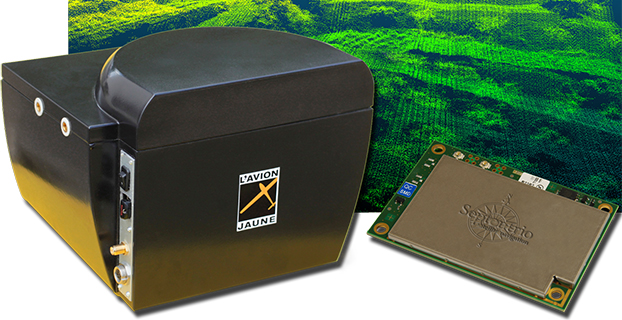
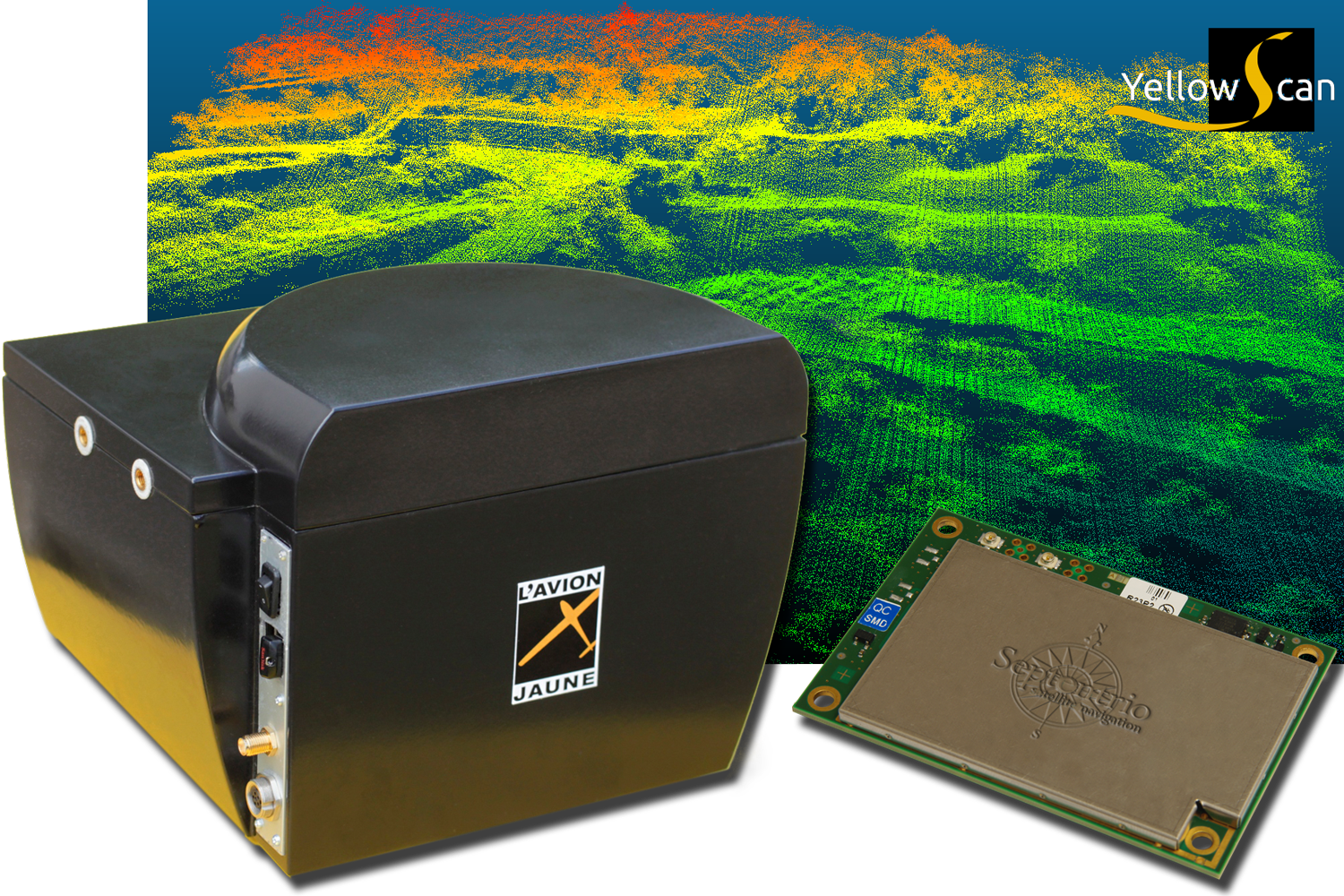
    L’Avion Jaune, a service provider and airborne sensors integrator in the field of aerial surveys, has selected the Septentrio AsteRx-m to equip its YellowScan unmanned aerial system. L’Avion Jaune chose the AsteRx-m for its robustness and low-power consumption, Septentrio said.

    YellowScan is the a lightweight all-in-one solution designed to deliver quality aerial surveys carried out using a LiDAR sensor aboard UAVs. The self-contained system integrates into a small package all the necessary equipment for conducting airborne surveys: a 3D laser scanner, an AHRS, a controller, an autonomous power supply module and the AsteRx-m, a high-performance precision GNSS receiver.

    The AsteRx-m provides a compact and low-power solution for precise positioning in difficult environments where the tracking of both GLONASS and GPS satellites allows the receiver to improve the availability and robustness of a positioning solution. Septentrio’s newest RTK models optimally adapt to situations where GNSS signals can be distorted by reflective surfaces and feature unique countermeasures to disturbances, maintaining accurate and stable measurements wherever and whenever centimeter-level accuracy is needed, the company said.

    “The easy-to-integrate AsteRx-m has proven to deliver the most reliable and stable RTK performance of all, in a compact and exceptionally low-power consumption module,” said Michel Assenbaum, CEO of L’Avion Jaune. “The AsteRx-m allows us to extend the operational range and capabilities of the YellowScan, a fully autonomous surveying solution dedicated to UAVs. We have tested the solution in various environments across the world and have never seen it falter.”

    “We are delighted that L’Avion Jaune, a respected expert in designing unmanned-aerial remote sensing solutions, has validated the excellent performance of our ultra-compact GNSS receiver,” said Jan Van Hees, head of business development at Septentrio. “We are impressed to see how much interest YellowScan has drawn since its introduction and we are very proud to be contributing to the success of a best of breed solution in this highly competitive market.”

  • Leica’s GNSS Unlimited Allows Upgrades for Reference Receivers

    Leica Geosystems has extended its Spider product family with the new GNSS Unlimited for the Leica GR10 and GR25 GNSS receiver series, allowing receivers to be upgraded to the latest technology standards at any time. Both receivers are designed for Continuously Operating Reference Stations (CORS) infrastructure and monitoring applications, supporting GPS, GLONASS, Galileo, BeiDou and QZSS.

    Also, the classic Leica GRX1200+GNSS has been enhanced to support the Chinese BeiDou navigation system.

    The Leica GR10 and GR25 Unlimited are scalable reference receiver and server solutions designed for permanent and semi-permanent GNSS network installations and monitoring applications such as RTK and static networks, single base stations, field campaigns, structural monitoring, atmospheric and seismic studies and offshore positioning.

    One customer, the Michigan Department of Transportation (MDOT), took advantage of the future proof concept to provide cost-efficient and reliable data products for all its CORS users. MDOT has been working with Leica Geosystems since the beginning of 2000.

    “Leica Geosystems’ customer commitment and promise of future proof hardware guarantee has always ensured our investment remains current,” said Shawn Roy, statewide survey equipment development manager at MDOT. “Their promise has allowed MDOT to upgrade, modernize, and expand our network from the early GRX1200’s (GPS-only) in 2005 to the latest GRX1200+GNSS. The company’s continuous development for hardware and software on our GRX1200 family of devices has helped MDOT over the past 10 years to provide cost-efficient and reliable data products for all the users of the Michigan Spatial Reference Network and other affiliated partners, such as NGS and its data products.”

    GNSS Unlimited. High-precision GNSS users are faced with an ever-changing GNSS space segment, due to its modernization. According to Leica, the GR10 and GR25 receivers provide a safe and long-term investment for CORS operators and fully support the Chinese BeiDou and Japanese QZSS systems, as well as GPS, GLONASS, and Galileo. The GNSS Unlimited series includes an upgrade to more than 500 channels that will serve the users’ needs well beyond 2020.

    Both receivers allow an upgrade of all key hardware parts, such as tracking, memory, power and communications. This enables customers to always keep up with the latest technology advances at minimum cost and only when really needed. The GNSS reference receivers act just like a data center server that satisfies all needs for a reliable operation, such as backup power supplies, redundant data communications, secured access and an easy way to monitor all the servers’ activities.

    GRX1200+GNSS. First introduced a decade ago, the GRX1200 series is an example of Leica’s future-proof design with a newly released option to track the signals of the Chines BeiDou navigation system. Since 2004, customers have relied on the sensor’s innovation, allowing them to maintain and increase the value of their initial investment, Leica said.