Tag: Telit

  • PayGo’s Auto Insurance Solution to Be Based on Telit GSM/GPRS Tech

    Telit Wireless Solutions and PayGo Systems, an Israel-based telematics service provider (TSP) have announced that PayGo’s new TTM Type B family of PAYD solutions will include Telit’s ultra-compact GSM/GPRS cellular module, the GE865-QUAD. The solutions include self-contained consumer installable data collection devices for high-growth application area — UBI/PAYD — in the automotive insurance industry. PayGo and Telit plan to expand connected automotive data collectors into new and existing markets made possible by PayGo’s self-powered product concept.

    The TTM Type B is a self-powered peel-and-place product family with a multi-year internal battery power source. Smart energy consumption algorithms in conjunction with Telit’s energy efficient GE865-QUAD module, which is fully certified by mobile network operators worldwide, allow PayGo to deploy the TTM Type B family in any regional market its customers offer auto insurance, Telit said.

    The TTM Type B family incorporates a feature set designed to address specific insurance industry application requirements beyond basic UBI including distance traveled, minutes of use, trip start and end time and geo-zones where vehicle was driven in a continuous data collection stream. It is also able to notify appropriate service centers in real time about crashes and crash location, and to provide trip summaries (time, distance, etc.) via text message for each trip as well as curfew violations (time and geo-zone). The PayGo device is packaged in a cellphone-size enclosure requiring no external wires and  is ready to be affixed, out of the box, to the inside of the car’s windshield like a traditional toll-pass module. The unit is self-powered and completely independent of any vehicle system, including power. To meet requirements from the insurance industry, the TTM Type B senses and reports installation of the device as well as tampering or post-installation removal. The products are fully FCC and CE certified.

    The GE865-QUAD isfor embedded cellular applications where small size and energy efficiency are crucial. Measuring 22 x 22 x 3 miilimeters, the GE865-QUAD is significantly smaller than most cellular modules in the industry. It features an optimized power consumption profile with very low standby current compared to the majority of current competing products. Because of its extremely compact form factor and a rich set of features, including an on-board Python interpreter, it is well positioned for vertical application areas such as telemetry, mobile asset tracking telematics and telemedicine.
  • Hyundai Heavy Industry to Track Equipment with Telit

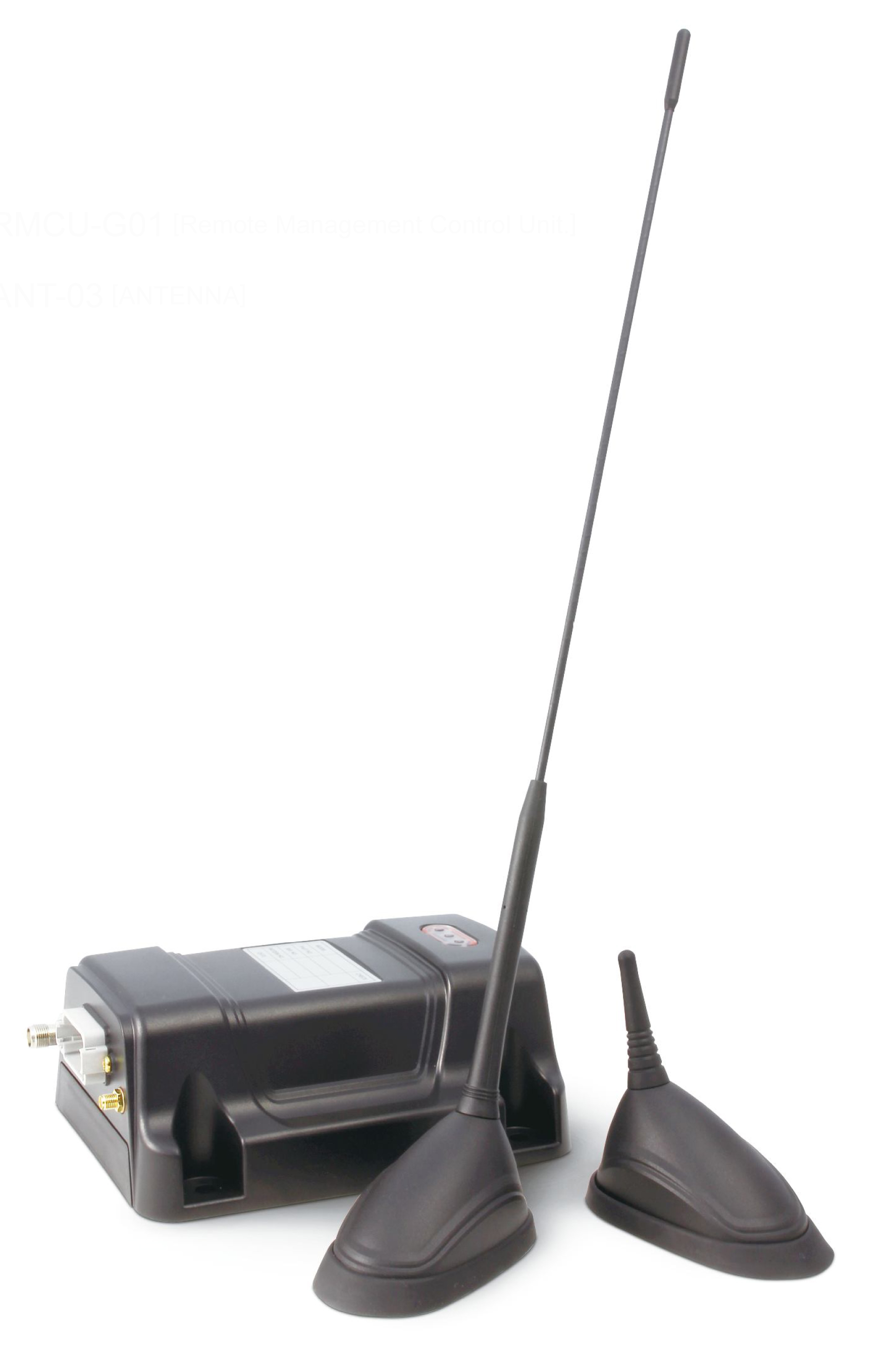
    3.20.13_Taeha_TH- RMCU_ ANTENNA-1.jpgTelit Wireless Solutions will provide the M2M communication module for the Taeha Mechatronics Remote Monitoring System (RMS). Taeha Mechatronics is a South Korean-based provider of electromagnetic control solutions for healthcare and industrial devices.

    The Taeha Mechatronics TH-RMCU, a remote management control unit, integrates Telit’s HE910, HSPA+ module, which delivers 14.4 Mbps downlink data rates. The solution has obtained SK Telecom certification, and will be used for tracking the location of Hyundai Heavy Industry’s global assets. This is the first such authorization by SK Telecom for a system to be used locally and globally. As a result the device can be used in other countries simply by roaming without need for additional regional variants, Telit said. This move is expected to allow more Korean companies to operate more easily abroad.

    The HE910 supports a large number of WCDMA frequency bands (850/900/1700/1900/2100 MHz), making it possible for it to be used in all countries with 3G networks via simple roaming, with no need for production of regional variants to address local frequency band availability, Telit said.

    Hyundai Heavy Industry installs an RMS device, composed of the control unit and antenna, into various types of heavy equipment in the field. It uses the solution to trace equipment location with the integrated GPS which transfers the related data to a server in real-time. With that the company looks to prevent theft and loss of its assets. Also, with the monitoring function, the company can effectively manage fuel consumption of their equipment, actively using it to reduce carbon emissions, Telit said.

    HE910 is a RoHS-compliant module that combines GSM, GPRS, EDGE and HSPA+ network compatibility with digital telecommunication service access. It is world’s smallest (28.2×28.2×2.6 mm) LGA form factor, and ideal for applications that process high-capacity multimedia data, such as e-readers, PDAs and real-time location tracing devices. The HE910 HSPA+ transmission speed is 14.4 Mbps on the downlink, and 5.7 Mbps on the uplink. It supports high-speed serial port, receive antenna diversity, with optional embedded high-sensitivity GPS; and simultaneous voice and data.

    “Solutions developed solely by Korean companies needed to go through many different testing processes to be able to be provided to global customers. By adapting Telit’s standard-based module, we were able to not only reduce cost, but also reduce time for development. We are planning to expand the usage of this solution from location tracing for asset management to other areas,” said Sang-hee Lim, CEO of Taeha Mechatronics.

    “As the interest grows in security and safety globally, tracking solutions are also becoming smarter, in particular for the manufacturing industry, which uses various types of equipment. Companies can dramatically improve management efficiency and productivity simply by deploying cutting-edge monitoring systems. We expect to see continued demand for M2M,” said Derick Tsang, APAC manager of Telit.

  • Powelectrics and Telit Expand Cooperation in Wireless Telemetry Market

    Powelectrics and Telit Expand Cooperation in Wireless Telemetry Market

    Telit Wireless Solutions and Powelectrics Ltd. today announced collaboration in the wireless telemetry application market with the launch of Powelectrics’ Telit-based product Metron2.

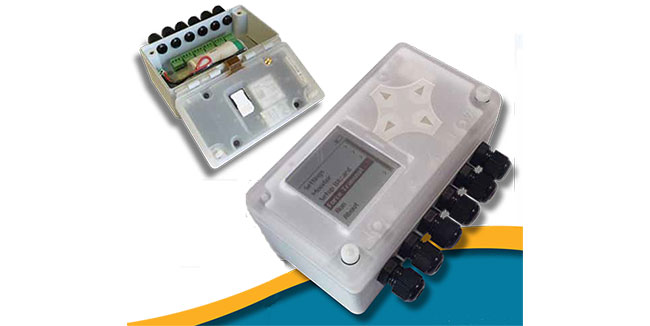
    The Metron2 is a multi-function cellular-connected telemetry device capable of making remote fill-level readings in tanks containing liquids and gases.  The device’s integral display allows the unit to be used also as a local gauge and for system set up and testing. An optional pulse-counter board allows the device to take external meter readings.

    The Metron2 is wide-area-network connected with the Telit GE864-QUAD V2 cellular module and self powered from an internal battery. The Metron2 can be powered from different sources, including an internal battery or an external 6-24Vdc source. It is often not economically feasible to run power to the site for remote telemetry installation, the companies said, such as the cryogenic gas monitoring segment where it is important that the device be on and available to be polled any time, day or night. For this market, Powelectrics developed a solar-powered system.

    The solar-powered telemetry system allows the unit to remain always on and connected to the GSM/GPRS network so the server can make contact at any time with instant reading requests. Equipped with the Metron2, a tanker truck can be dispatched to best matching customer locations according to volume available in the tanker and volume required by customers, efficiently exhausting the tanker’s full supply of product instead of transporting it back to base saving fuel and removing the risk of the returned product contaminating the storage or process facility, the companies said.

    Knowing how much product is in the customer’s tanks makes it possible to plan when and which truck should make deliveries. This translates into fewer miles driven to deliver the same amount of product and therefore a significant reduction in costs. There is also a dramatic reduction in CO2 emissions. There are also accompanying operational benefits, including fewer emergency shipments, reduced customer service organization and reduced sales resources. These benefits translate into a balance sheet boasting reduced levels of finished goods and raw materials inventory.

    The European Chemical Industry Council (CEFIC) has been encouraging more extensive use of Enterprise Resource Planning (ERP) tools to improve supply chain efficiency. According to the Department for Transport in the UK, by 2015, total traffic on the roads will have grown by over 30 per cent compared to 2000 levels and the CBI has estimated that road congestion currently costs the UK up to £20 billion annually.

    Telit’s GE864-QUAD V2 ultra-compact, low-power, quad-band GSM/GPRS 3GPP Release 4 module integrated in Powelectrics’ Metron2 has one of the industry’s broadest certification profiles in its class, making it easily deployable anywhere in the global market, Telit said.  Modules in this family are capable of data rates of 48Kbps GPRS Class 10 also supporting 9.6Kpbs Circuit Switch Data (CSD) transfers ensuring connectivity in poor coverage areas. The GE864-QUAD V2 family features one of the market’s most compact Ball Grid Array (BGA) package measuring 30 x 30 x 2.8 mm and an extended operating temperature range of -40°C to +85°C, making it suitable for outdoor-environment mobile applications such as the Metron2.

    “The last couple of years have seen a dramatic upturn in demand for our product as users of telemetry become comfortable with the reliability and more aware of the benefits that telemetry brings. We continue to develop our already well proven solutions helping drive down the total cost of ownership and therefore reducing the payback time. Telemetry has never been so affordable,” said David Oakes, sales director, Powelectrics. “We realize the need to be flexible in what we offer. Some customers want a complete solution from us encompassing hardware, hosted software and SIM cards whereas others just want the hardware. It’s also vital that data is delivered where it is needed which often means us providing some form of automated interface into the clients systems, delivering data in a customized format.”

  • GPS Module

    The Jupiter SE880 by Telit Wireless Solutions is a small, ultra sensitive 48-channel GPS module that features an advanced 3D technology that improves time to first fix and brings indoor location fix to reality with cold start and tracking sensitivity down to -148 dBm and -165 dBm. The turnkey solution enables the design of ultra-compact applications, requiring minimal external BOM and a footprint of less than 40 millimeters compared to conventional PCB technology.

    The Jupiter SE880 is designed for high-volume GNSS ultra-compact mobile / tracking devices as well as advanced consumer devices such as sport watches and cameras.

  • Telit Introduces Qualcomm-Based HSPA Modules for Global M2M Markets

    Telit Wireless Solutions today introduced the UE910 V2 HSDPA (High Speed Downlink Packet Access) and HE910 V2 HSPA+ (High Speed Packet Access) modules based on Qualcomm Technologies, Inc. chipsets, each to be banded for European and North American markets.

    The MDM6200-based HE910 V2 supports both GPS and GLONASS location technologies, is fully digital audio capable, and provides full-duplex PCM input and output. With these features — combined with the up to 14.4Mpbs downlink and 5.76Mbps uplink data rates — the HE910 V2 is designed for applications such as video surveillance and security, and emerging applications areas such as healthcare, Smart Home, and Smart Grid.

    Both products feature dual-band 3G and GSM/GPRS/EDGE support. The entry-level 3G UE910 V2 is based on Qualcomm Technologies’ QSC6270 chipset and delivers a top 3.6Mbps downlink data rate.

    The new products are fully compatible with Telit’s xE910 family and can be easily dropped into existing or planned designs for xE910 modules requiring no additional rework. Positioned at entry-level and mid-range respectively, the new Qualcomm Technologies-based UE910 V2 and HE910 V2 modules enable the Telit xE910 family to enhance cross-technology compatibility with its other popular global air-interface technologies. The application of the Qualcomm Technologies chipsets improves interchangeability between CDMA (1xRTT, EV-DO) and UMTS (HSDPA, HSPA+) variants making the adaptation of customer applications to regional technical requirements quick and easy, minimizing time to market and total cost of ownership.

    The QSC6270-based UE910 V2 is to be positioned as a 2G to 3G migration path product, and includes high-value features such as analog audio, making it ideal for applications from home and commercial security and surveillance systems, to asset monitoring, logistics, and mass-transit monitors. Telit is planning a UE910 V2 variant based on QSC6270-Turbo with additional support for Java J2ME 3.2 and eCall.

    Both the UE910 V2 and HE910 V2 will be available in local band-group variants as required for all major carriers and partner networks in North America and Europe. The Qualcomm Technologies-based products will be available in North America with 850/1900MHz and in Europe with 900/2100MHz dual-band combinations. Both regional variants will be available in data-only as well as data & voice variants.

    “The Qualcomm Technologies-based entry-level 3G UE910 V2 and mid-range HE910 V2 are Telit’s new 3G products launched in response to increasing demand for dual-band HSDPA, and HSPA+ modules,” said Dominikus Hierl, chief marketing officer at Telit Wireless Solutions. “They come to address the need from application areas and regions requiring easy interchangeability between CDMA or UMTS lines of air interface technology, particularly in United States, Europe and key opportunities.”

    “Qualcomm Technologies’ fully-integrated QSC6270, QSC6270-Turbo and MDM6200 chipsets support the bandwidth and feature requirements of a broad range of M2M applications, and we are pleased to enable  HSDPA, and HSPA+ products in the xE910 family,” said Nakul Duggal, vice president of product management for IOE, Qualcomm Technologies. “By using Qualcomm Technologies’ Gobi 3G solutions in its xE910 product family, Telit will be able to offer its customers the technology flexibility to address M2M products and drive 2G to 3G migration in Europe and North America.”