Tag: timing

  • Orolia technology synchronizes black hole photo telescopes

    Image: Event Horizon Telescope Collaboration
    Image: Event Horizon Telescope Collaboration

    Atomic clocks support world’s first black hole photo

    Orolia, through its joint venture company T4Science Inc. in Switzerland, supported the ground-breaking scientific initiative to capture the world’s first photo of a black hole, conducted by the Event Horizon Telescope (EHT) project.

    As a leader in maser atomic clock technology, Orolia provided the critical timing solution to synchronize telescopes around the world and create a virtual telescope the size of Earth to observe this deep space, supermassive object.

    Some of the world’s most advanced telescopes, located at challenging high-altitude sites, were synchronized with T4Science Masers to capture the sharpest image possible. Locations included volcanoes in Hawaii, Arizona mountains, the Spanish Sierra Nevada, the Chilean Atacama Desert and Antarctica.

    T4Science masers deliver ultra-precise time synchronization in the most challenging environments on Earth and in Space.

    The EHT project uses very long baseline interferometry (VLBI). This technology requires synchronization, phase stability and phase coherence between different telescopes within a few femto-seconds, and leverages the Earth’s rotation to form one Earth-size telescope.

    VLBI enables the EHT to achieve an angular resolution of 20 micro-arcseconds — enough to read a newspaper in New York from a sidewalk café in Paris.

    Orolia delivers this critical VLBI technology through its T4Science iMaser-3000 hydrogen masers. The iMaser-3000 is a VLBI atomic clock, supporting other mission-critical timing programs such as military and commercial satellite applications.

    “Orolia has been a proud supporter of space research and missions for more than forty years,” said Orolia CEO Jean-Yves Courtois. “As the world leader in resilient positioning, navigation and timing solutions, we develop precise, ultra-reliable technology for environments where failure is not an option.”

    Orolia’s proven timing solutions support many space agencies and research institutes worldwide, including ESA, NASA, Jet Propulsion Laboratory, SpaceX, the Centre National d’Étude Spatiales (CNES France), the National Physics Laboratory (UK), Deutsches Zentrum für Luft-und Raumfahrt (DLR Germany) and the Japan Aerospace Exploration Agency (JAXA), among others.

  • GPS Directorate to test legacy receivers in February

    GPS Directorate to test legacy receivers in February

    U.S. Coast Guard issues testing notice on GPS Week Number Rollover.

    The GPS Directorate has released a Federal Register Notice announcing plans to execute a test in February to investigate legacy receiver week roll-over behavior and analyze any off-nominal behavior exhibited, according to a U.S. Coast Guard notice.

    Photo: andrey_l/Shutterstock.com
    Photo: andrey_l/Shutterstock.com

    The GPS week number rollover occurs in the GPS legacy navigation (LNAV) message every 1024 weeks due to the GPS week number being represented by only 10 bits within the LNAV message.

    The next GPS week number roll over will occur 18 seconds prior to the 0000Z boundary (Coordinated Universal Time) between April 6/7 2019.

    In most cases, any negative response from a GPS receiver caused by a problem accounting for the 10-bit week number roll over would likely affect the calendar conversion from GPS time to UTC date/time and could result in the GPS receiver thinking it had jumped backward in time by 1024 weeks to 21/22 August 1999.

    To participate in the test, submit the answers to the nine questions in the Federal Register Notice to the SMC/GPE mailbox by Feb. 4. After the submission of the questionnaire, the team will schedule individual meetings with interested civil vendors to further discuss their participation in the test in more detail.

  • Prepare today for timing disruptions tomorrow

    Prepare today for timing disruptions tomorrow

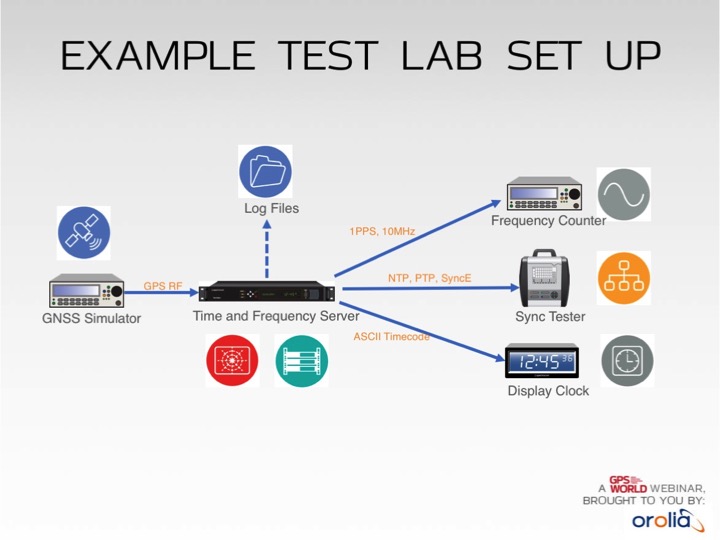
    When a Pennsylvania county’s 911 system suddenly went down without warning, garbled messages across the network impacted fire and police agencies’ ability to respond to emergency messages. The issue was traced to a firmware malfunction on communications equipment, related to provision of GPS timing. The firmware had not been updated for 19-1/2 years. Why should it have been?  Everything was working fine — until it didn’t.

    Test lab set-up. Photo: Orolia
    Test lab set-up. Photo: Orolia

    In addition to increased jamming and spoofing threats, GPS has a “week rollover event” set to happen in April 2019. If the GPS receivers found at the heart of many critical systems do not handle this properly, any number of failures can occur.

    Without GPS timing, everything slows down, has less capacity and becomes more dangerous.

    This Thursday, a complimentary webinar outlines test plans for GNSS equipment used in critical timing applications, discusses the need for assured access to accurate timing across financial institutions, industrial automation, telecommunications, transportation, the power grid and elsewhere — and defines just what “assured” access means and how crucial the “assured” part is — and finally reviews some recent mishaps and near-disasters caused by interrupted or inaccurate timing.

    Speaking on the 1-hour webinar are Lisa Perdue, product manager and applications engineer, Orolia; Stefania Römisch, leader, the Atomic Standards Group at the National Institute of Standards and Technology; and Dana Goward, president, Resilient Navigation and Timing Foundation.

    Following each speaker’s 12- to 15-minute slide presentation, a live Q&A period with the audience will explore particular issues and concerns.

    The webinar, taking place 1 p.m. ET Nov. 15, is sponsored by OroliaRegister here (free).

  • New GPS receiver uses multipath for better time synchronization

    New GPS receiver uses multipath for better time synchronization

    A new receiver for GPS and other GNSS improves time-synchronization accuracy in areas with severe reception conditions, such as among buildings and in mountainous areas.

    The receiver was developed by Nippon Telegraph and Telephone Corporation (NTT) and Furuno Electric Co. Ltd.

    Furuno plans to begin sales of the new GF-88 series time synchronization GNSS receivers in April 2019, and to deploy it widely in fields such as 4G/5G mobile base stations, financial trading, power grids and data centers.

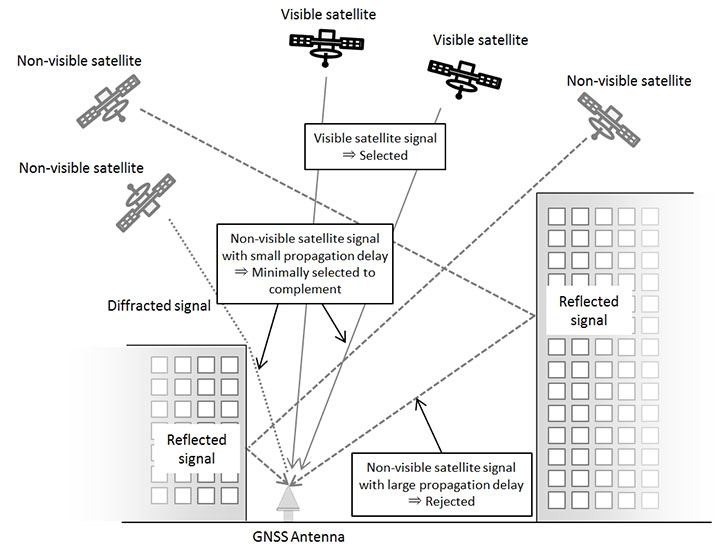
    The GF-88’s new algorithm makes use of multipath signals, those reflected or diffracted from buildings and other structures, which previously inhibited accuracy of time synchronization.

    By integrating a new satellite signal selection algorithm developed by NTT into Furuno’s time synchronization GNSS receiver, in addition to signals from satellites in line-of-sight locations, multipath signals can be used to reduce time error, the companies said.

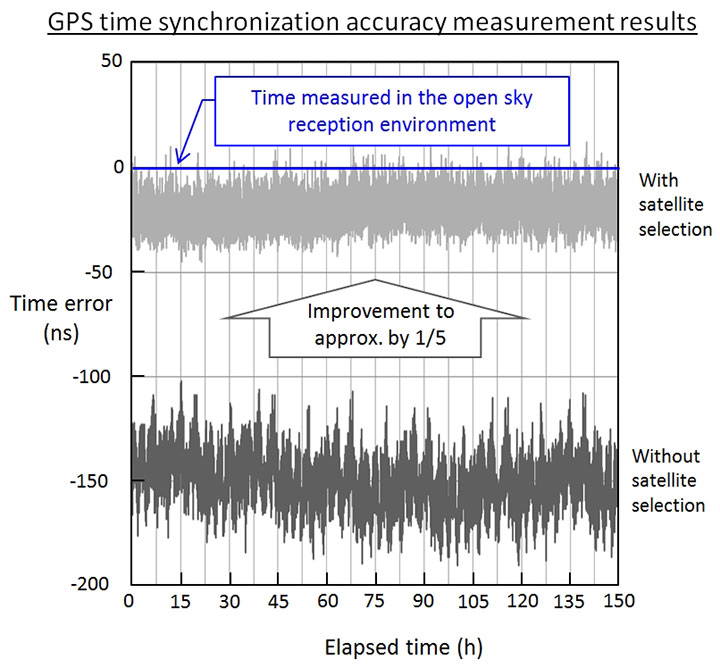
    In a real multipath reception test environment, time error was reduced to approximately one fifth of earlier values.

    The remarkable result promises to enable time synchronization accuracy close to that obtained in open-sky reception environments with no obstructions, even in environments previously considered poor and unsuitable for accurate time synchronization, such as among buildings or in mountainous areas.

    The companies will exhibit the results at Tsukuba Forum 2018 Oct. 25-26, and at ITSF 2018, in Bucharest, Romania, Nov. 5-8.

    More information is available here.

    Satellite selection algorithm. (Image: NTT/Furuno)
    Satellite selection algorithm. (Image: NTT/Furuno)
    GNSS receiver prototype performance test results, (Image: NTT/Furuno)
    GNSS receiver prototype performance test results, (Image: NTT/Furuno)
  • Teledyne helps build new generation of atomic clocks

    Teledyne helps build new generation of atomic clocks

    Teledyne e2vAs a member of the European Quantum Technologies Flagship, Teledyne e2v will collaborate with a team of science and industry experts on the iqClock project to commercialize high-precision atomic clocks. This is one of the first of 20 projects being funded by the European Commission.

    According to Teledyne e2v, clocks are a critical component of modern society, especially in scientific and engineering applications where precision time measurement is vital. Teledyne e2v’s role in this project is to build the atomics package including the vacuum and control system. Teledyne e2v’s Quantum Group, which is comprised of more than 30 scientists and engineers, will be taking on the project.

    The iqClock consortium is made up of both academic and industrial partners who share the same goal of bringing optical clocks closer to the market. Teledyne e2v’s partners include Chronos and British Telecom in the United Kingdom, Toptica in Germany, NKT Photonics in Denmark and Acktar in Israel. Its academic partners include the University of Amsterdam, University of Birmingham, Nicholas Copernicus University Torun, University of Copenhagen, TU Wien (Vienna) and Innsbruck University.

    “Optical atomic clocks are the most precise time-telling tools known to man,” said Ole Kock, technical authority for Quantum Technologies at Teledyne e2v. “The challenge is their size and complexity that restricts them to laboratory use. Now, by using superradient laser technology we can help bring optical atomic clocks into the everyday world.”

    According to Teledyne e2v, project has received funding from the European Union’s Horizon 2020 research and innovation program under grant agreement No. 820404.

  • U.S. Army establishes new requirements for GPS receivers, PNT solutions

    U.S. Army establishes new requirements for GPS receivers, PNT solutions

    The U.S. Army is drafting new rules for the use of GPS receivers in weapon systems to combat spoofing and jamming attacks, as well as signal loss in GPS-denied environments, according to news reports.

    The six- to seven-page capabilities requirements document is awaiting a signature from Army leadership, according to Willie Nelson, director of the assured PNT (positioning, navigation and timing) cross-functional team. Nelson spoke to reporters Oct. 9 at the Association of the U.S. Army annual meeting in Washington, D.C.

    The Army has been trying for years to complete a GPS requirements document, a “system of systems architecture for assured PNT.” But with virtually every device equipped with GPS, the document would have been too big and too broad, Nelson said.

    (Photo: U.S. Army)
    (Photo: U.S. Army)

    The approach now is for separate sets of requirements: one for mounted equipment (now complete and awaiting the signature), a dismounted requirement, and situational awareness.

    The difficulty facing the Army is the plethora of PNT systems in use. For instance, an armored personnel carrier may have five to seven unconnected GPS receivers, some with encryption, some without. The weakest receiver could negatively affect the vehicle, Nelson said.

    With the new requirements, Army vehicles will have a consolidated, networked, software-based PNT solution. Dismounted receivers used by soldiers will have similar requirements.

    Industry will be asked for specific solutions within each of the PNT sectors rather than an “all of the above” solution.

    The Army is also expected to create a training program for soldiers that operate PNT systems.

  • Skydel releases precise clock for GNSS systems

    Skydel releases precise clock for GNSS systems

    Skydel has released a new clock distribution module for the GNSS industry.

    Photo: Skydel
    Photo: Skydel

    Designed in a PCIe card format, the CDM-5 is a compact and precise clock intended for use with GNSS and other RF systems. It can synchronize up to five devices and can be integrated into custom hardware systems.

    Skydel’s CDM-5 provides 10-MHz and 1-PPS signals for up to five devices that need tight and precise synchronization. It is suitable for PCIe-based software-defined radios (SDR) installed in rackmount or desktop PCs, and also can be used for any other applications that require a precise PC-based timing reference.

    Skydel’s CDM-5 clock distribution module features two operating modes—internal or external— that are selected with the bracket-mounted switch.

    In internal mode, the CMD-5’s internal clock signal is extracted from the onboard high-grade oven-controlled crystal oscillator (OCXO).

    When operating in external mode, CDM-5 accepts input signals in the form of 10-MHz and 1-PPS, which are then redistributed via five matched-length traces. Split signals are amplified to maintain the power level across all distributed paths.

    Additionally, CDM-5 will regenerate 1 PPS from an external 10-MHz-only source if a 1-PPS source is not available.

    The CDM-5 can be integrated into a custom assembly by removing the bracket plate and powering the board through its 12V DC connector. When the bracket is removed, the operating mode can be toggled using the onboard switch.

    Key features:

    • Timing and frequency source with five-way distribution of 10-MHz and 1-PPS signals
    • PCIe form factor for rackmount or desktop PC
    • Two operating modes: internal clock (OCXO) or external clock (10MHz and 1PPS)
    • Supports standalone operation with 12V DC power supply
  • ITSNT to explore navigation and timing topics

    ITSNT to explore navigation and timing topics

    The International Technical Symposium on Navigation and Timing, also known as the ITSNT, will be held Nov. 13–16 in Toulouse, France.

    ITSNT is an annual event organized by the French space agency CNES and Ecole Nationale de l’Aviation Civile for professionals and researchers working with or interested in navigation and timing technologies and their use.

    The ITSNT preliminary program is now available, with experts discussing PNT resilience, multi-sensor navigation, autonomous/automated vehicles and much more. Also included are tutorials, exhibits and networking opportunities.

    For more information, visit www.itsnt.fr or email [email protected].

  • Oscilloquartz launches enhanced PRTC system for 5G network timing

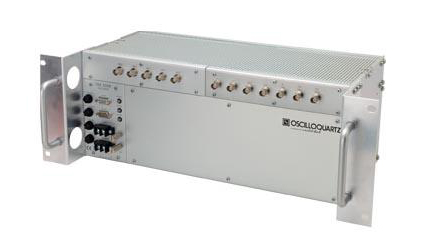
    Oscilloquartz has launched its enhanced primary reference time clock (ePRTC) system to enable unprecedented timing accuracy and stability, even when the GNSS signal is lost.

    The system provides a timing source for mission-critical transport systems, such as utility networks, government infrastructure and radio access networks, and provides the strict synchronization needed for LTE-A and 5G applications, the company said.

    The Oscilloquartz 3230B.

    Featuring the OSA 3230B ePRC atomic cesium clock connected to an Oscilloquartz clock combiner and grandmaster, the new solution offers the extremely stable frequency of a cesium clock with the UTC-traceable signal provided by GNSS.

    When combined with the OSA 5430, the OSA ePRTC system provides full hardware redundancy and multiple fan-out options including PTP over 10Gbit/s.

    “With our ePRTC system, we’re taking reliability and accuracy to the next level. This solution meets the requirements of next-generation mobile networks, offers the precise synchronization needed by many of today’s industries and removes vulnerability to GNSS outages,” said Gil Biran, general manager, Oscilloquartz.

    The Oscilloquartz OSA 5430.

    “Combining our advanced multi-constellation GNSS receiver with our atomic cesium clock technology creates an outstandingly accurate source of time with guaranteed holdover performance,” Biran said. “This provides vital protection against loss of satellite signal due to jamming, which can be a major problem.

    “With the flexibility and redundancy of our OSA 5430, operators can deploy a precise, secure and robust UTC-traceable time and frequency source with high capacity. What’s more, the Syncjack sync probing and assurance technology embedded in our ePRTC enables detection and reporting of inconsistencies between the different references provided to the ePRTC as well as detection of the GNSS spoofing.”

    GNSS interference concerns

    The dangers of reliance on GNSS alone have become a serious concern across a wide range of industries. Without backup, loss of signal would have a profound impact on critical infrastructure, financial institutions, and military capabilities.

    PTP packet-based mobile networks are also highly susceptible to outages unless they are able to hold time and maintain accuracy when GNSS is unavailable.

    The OSA ePRTC system removes this vulnerability while delivering higher performance levels than standard PRTC systems and giving operators control of their network synchronization.

    The solution comprises two OSA devices: an OSA 3230B ePRC cesium clock compliant to G.811.1 ePRC, which is connected to either an OSA 5421 or OSA 5430 clock combiner and grandmaster clock compliant to G.8272.1 ePRTC. This provides phenomenal holdover accurate to UTC within +/-100 nanoseconds for up to two weeks, ensuring resilience and optimized performance.

    “Our OSA ePRTC system is about leveraging the advantages of both timing methods, ensuring the long-term accuracy of GNSS alongside the stability of a cesium beam atomic clock. It even provides major benefits when locked to GNSS by delivering a three-fold improvement in timing accuracy,” said Nir Laufer, product line director, Oscilloquartz.

    “In recent years, we’ve seen a big increase in GNSS vulnerabilities due to deliberate spoofing and jamming attacks as well as the natural threats of solar flares and space weather events,” Laufer said. “From global data centers to government institutions, there’s now an urgent need to move away from reliance on GNSS alone. Ensuring backup is now a mandatory step towards secure synchronization. And with our OSA ePRTC, this can be achieved without adding a lot of cost and complexity. We’re giving operators peace of mind and the power to do more with existing infrastructure.”

  • Orolia to supply clocks for 12 more Galileo satellites

    Orolia to supply clocks for 12 more Galileo satellites

    Orolia’s atomic clock solutions have been selected for the Galileo Global Navigation Satellite System (GNSS) under contracts totaling 26 million euros for an additional 12 Galileo satellites.

    This latest initiative builds on Orolia’s long-standing role in providing precise timing technology for satellite programs, including Galileo.

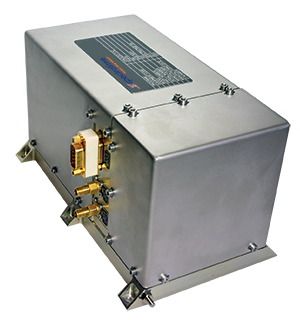
    Each satellite will carry two rubidium atomic clocks and two passive hydrogen masers, considered the most stable clock in the world. Under these contracts, Orolia will supply its Spectratime Rubidium Atomic Frequency Standard and its passive hydrogen masers physics package.

    Orolia's Space Rubidium Atomic Frequency Standard. (Photo: Orolia)
    Orolia’s Space Rubidium Atomic Frequency Standard. (Photo: Orolia)

    “We’re honored to continue supporting the European Commission with precise timing for Galileo,” said Orolia CEO Jean-Yves Courtois. “These new contracts further emphasize Orolia’s position as the world’s leading provider of resilient positioning, timing and navigation (PNT) solutions.”

    In addition to serving as Europe’s independent PNT source, Galileo can also serve as a secondary signal source for systems such as GPS, GLONASS or BeiDou in the event of service disruption. Galileo’s quadruple clock redundancy designed into each satellite ensures that even if a failure occurs, overall system performance will not be compromised.

    More than 150 Orolia Spectratime atomic clocks are flying to support Galileo, IRNSS, BeiDou, GAIA and other missions, some for more than 10 years. Orolia provides the expertise necessary to design solutions for highly reliable space applications.

    Orolia is a designer and manufacturer of a full range of high-performance, low-cost GNSS synchronized crystal solutions, rubidium and maser sources, smart integrated GNSS reference clocks, rugged PNT devices, GNSS simulation and clock testing systems. Orolia’s PNT solutions support a variety of critical applications including defense, government, space, maritime, enterprise networks, aviation and telecommunications.

  • Homeland Security provides info about 2019 GPS rollover event

    The U.S. Department of Homeland Security (DHS) has released a memorandum about a GPS rollover event coming in April 2019.

    The memorandum, U.S. Owners and Operators Using GPS to Obtain Time, is intended to provide an understanding of the possible effects of the April 6, 2019, GPS Week Number Rollover on Coordinated Universal Time (UTC) derived from GPS devices.

    DHS recommends that critical infrastructure and other owners and operators prepare for the rollover. They should:

    • investigate and understand their possible dependencies on GPS for obtaining UTC;
    • contact the GPS manufacturers of devices they use to obtain UTC;
    • understand the manufacturers’ preparedness for the ollover;
    • understand actions required by CI and other owners and operators to ensure proper operation through the ollover, and
    • ensure that the firmware of such devices is up to date.

    The memorandum is sponsored by the Department of Homeland Security’s National Cybersecurity and Communications Integration Center in coordination with the Department of Homeland Security’s Science and Technology Directorate, the Department of Homeland Security’s National Protection and Programs Directorate Office of Infrastructure Protection and the National Coordination Office for Space-Based Positioning, Navigation and Timing.

    GPS World discussed in-depth the previous rollover event in an Innovation column.

  • NIST explores timing alternatives for smart grids

    The National Institute of Standards and Technology (NIST) has published a 33-page special publication reporting on the results of a workshop convened to recommend research and development priorities for alternatives to GPS time distribution in electrical power systems.

    “If timing is to become mission critical, redundant means of distributing timing information is essential,” according to NIST.

    NIST hosted the “Time Distribution Alternatives for the Smart Grid Workshop” at its Gaithersburg, Maryland, campus on March 21. The information gained will inform future NIST, U.S. Department of Energy, national laboratories and private sector technical programs and strategic planning.

    The workshop consisted of experts on both electrical power and wide-area time distribution. The experts came from industry, utilities, academia and government.

    The findings cover desired future characteristics, targets, challenges and barriers to adoption of time distribution alternatives; and priority R&D areas for time distribution alternatives.

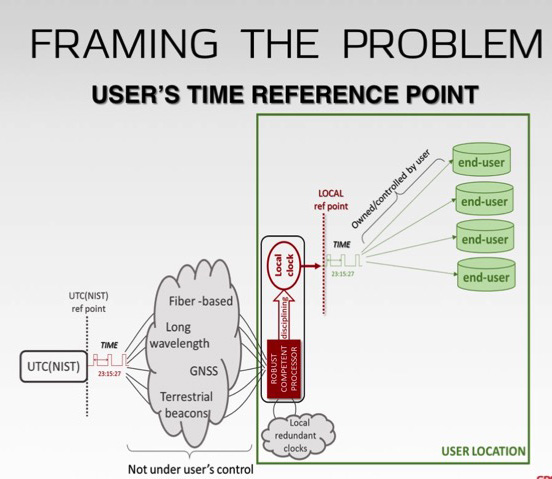
    Potential alternatives to wide area distributed time synchronization include Enhanced WWVB (radio signal broadcasting), eLoran (hyperbolic radio navigation) and the IEEE Wide Area Precision Time Protocol (PTP – master slave clock synchronization).

    Results of the workshop illustrate the need for alternatives to existing GPS timing systems as well as backup systems and many of the challenges that need to be addressed to develop and implement alternatives. Some of the overarching themes that emerged include the following:

    • While a number of potential alternative exist, they will require further infrastructure, research and concerted investment to implement and demonstrate their potential to replace, supplement, back up, or fill gaps in existing GPS systems.
    • Potential alternatives may need to be combined in ensembles to fill gaps, create the needed redundancies, and supplement GPS-based timing.
    • Future alternatives to GPS will need to have the same or better levels of accuracy, resilience, security, trustworthiness, and availability to supplant existing systems; a diversity of timing distribution systems may be needed (terrestrial, communication-based, wireless, etc.).
    • Dependency on space-based systems is currently strong due to their perceived reliability; there is limited awareness of the possible adverse impacts of timing failure events in such systems (and few backups exist).
    • Developing and using existing alternatives and new technologies, and integrating these with legacy systems will require standards and use cases to enable new technology, architectures, and interoperability among systems.
    • Better understanding of attack and failure threat modes is needed to estimate and demonstrate the true consequences of timing failures in systems based entirely on GPS.