Tag: u-blox

  • Acquisition of Fastrax Expands u-blox’ GNSS Portfolio

    u-blox has acquired privately owned, Finnish-based Fastrax Oy, a company that specializes in a broad range of GNSS positioning and antenna modules. The company brings additional products to u-blox’ portfolio, including software GNSS solutions used for consumer and industrial applications, and advanced GNSS modules that include an integrated antenna.

    “Over its 12 year history, Fastrax has established itself as a successful player in the global positioning markets worldwide,” said Thomas Seiler, u-blox CEO. “Their modules exploit the best features of four leading GNSS chip vendors and include advanced antenna modules. These products are an excellent complement to our existing portfolio, and will benefit from u-blox’ economy of scale in terms of our advanced R&D capabilities, semiconductor technologies, global sales channels, established supply chain, and high-volume manufacturing resources.”

    “Combining our leading GNSS products and technologies will give our customers a more attractive choice, while streamlining our operations and lower costs,” said Fastrax CEO, Taneli Tuurnala. “This merger brings together two recognized, profitable GNSS technology leaders with broad market base; the sum of this acquisition is significantly larger than its parts.”

    The acquisition entails purchase of 100% of the shares of Fastrax Oy at a price of 13.0 million Euros. Certain pay-out rules apply to Fastrax management members, u-blox said in a statement. The company expects revenue of about CHF 2 million and an EBIT of CHF 0.1 million for the remainder of 2012, and revenue of CHF 13 to 15 million with an accretive EBIT margin of 15-20% for 2013.

  • u-blox Launches u-blox 7 GPS, GLONASS and QZSS Modules

    u-blox, the Swiss positioning and wireless module and chip company, has announced its latest multi-GNSS receiver modules MAX-7, NEO-7 and LEA-7 in u-blox’s form factors. They support all satellite positioning systems in operation today: GPS, GLONASS, QZSS and SBAS. The modules target telematics applications such as asset and fleet management as well as portable tracking devices.

    “Each MAX-7, NEO-7 and LEA-7 variant delivers fast, accurate and reliable GLONASS and GPS positioning with the industry’s lowest power consumption.” said Daniel Ammann, executive VP of positioning product development at u-blox. “Both GPS AND GLONASS modes perform even better than combined GPS/GLONASS solutions available on the market today.”

    All u-blox 7 generation modules are pin-to-pin compatible with previous u-blox 6 and u-blox 5 families allowing easy upgrade from existing designs. Each module is available in cost-effective variants (such as MAX-7C; NEO-7M) as well as performance optimized variants (MAX-7Q, MAX-7W, NEO-7N, LEA-7N).

    u-blox 7 modules use GPS/GNSS chips qualified according to AEC-Q100 and are manufactured at ISO/TS 16949 certified sites. Each module is intensively inspected and tested during production. The modules are fully qualified according to ISO 16750 – “Environmental conditions and electrical testing for electrical and electronic equipment for road vehicles” to provide high durability and reliability.

    All modules comply with green/halogen free standards.

    First variants available will be NEO-7N (November 2012) and MAX-7C (December 2012).

  • Acquisition of Cognovo Gives u-blox Own 4G Chip Technology

    u-blox, a positioning and wireless semiconductors, announces the acquisition of UK-based Cognovo Ltd., a company specializing in software defined modem (SDM) chip development technology. The acquisition extends u-blox’ chip design capabilities to create differentiated products for strategic markets that require 4G communications combined with global positioning.


    “This is a very exciting acquisition for u-blox as it positions us as an agile and cost-effective supplier of high-speed wireless modem products based on our own chip IP. This allows us to meet market demand for connected systems that require positioning, connectivity and application-specific functionality on a single integrated circuit,” said Thomas Seiler, u-blox CEO. “This new foundation broadens our serviceable market, and will increase our margins in the automotive, consumer, and industrial sectors. Our first 4G product is planned for 2013.”


    Cognovo’s Software Defined Modem (SDM) technology and development tools quickly translate complex radio modem designs into fully characterized low-power semiconductor chips, u-blox said. The combination of technologies from Cognovo and the recently acquired 4M Wireless will result in a new wireless modem platform based on IP owned by u-blox.


    Cognovo has already demonstrated its SDM baseband chip running high-speed 4G cellular functionality working with the LTE protocol stack from 4M Wireless at Mobile World Congress. With these acquisitions, u‑blox lays the groundwork for establishing a leading position in 4G wireless modems similar to the strategy that u-blox followed to become a market leader in GPS/GNSS modules, u-blox said. The market for 4G modems used for machine-to-machine (M2M) applications is predicted to grow rapidly, surpassing 20 million units by 2016.


    “We are very pleased to deploy our SDM technology within u-blox,” said Gordon Aspin, Cognovo CEO. “With over 300 man-years of R&D invested in our SDM technology, this acquisition brings together the industry’s most advanced software modem development platform with some of the best IC design and GNSS engineers in the world. This will be an unbeatable team.”


    Key terms of the transaction include:

    • Acquisition of 100% of the shares of Cognovo Ltd at a price of 16.5 million US.
    • Acquisition of key intellectual property and software.
    • Integration of the Cognovo business and 30 employees into u-blox’ organization.
  • Core Positioning Receiver Chip

    u-blox is launching the u-blox 7, its next-generation core positioning technology platform. Supporting all deployed as well as soon-to-be deployed GNSS, the platform is based on the UBX-G7020 multi-GNSS receiver integrated chip with low power consumption.

    With 7 mW power consumption during continuous navigation, u‑blox’ UBX-G7020 is designed for small portable and power-sensitive devices requiring long battery life, high sensitivity, small size, and fast positioning. GPS, GLONASS, Compass, Russian, QZSS, and Galileo satellite positioning systems plus all satellite-based augmentation systems (SBAS) are supported.

    “As the satellite systems expand beyond GPS, u-blox 7 is an important step for our customers to design systems that work with all available global navigation standards, particularly GLONASS which is now fully operational. Our multi-GNSS UBX-G7020 integrated circuit does exactly that while achieving two of the most important features that our customers demand: minimum power consumption and small size,” said Andreas Thiel, executive vice president of R&D Hardware and co-founder of u-blox.

    The chip has been designed to support the lowest cost stand-alone solution via minimum eBOM; only eight external components are required resulting in a receiver occupying only 30 mm2 on a two-layer PCB. Standard crystal and TCXO are supported. The chip also provides low-power, autonomous log data output of position, velocity, and time. Support for A-GPS and u-blox’ CellLocate hybrid GNSS/cellular positioning technology is embedded to facilitate advanced telematics applications including indoor positioning. Standard and automotive grade are supported.

    First samples of the multi-GNSS receiver chip UBX-G7020 are available for customer evaluation. Shortly afterwards, module customers can migrate to the MAX, NEO, and LEA form factors, u-blox’ module series which will all be upgraded to the new u-blox 7 platform.

    u-blox 7 maintains software compatibility with u-blox 5 and u-blox 6, and modules provide drop-in compatibility. Both previous generation platforms remain fully supported, the company said. u-blox’ capability of delivering GNSS technology in both integrated circuit and module form provides maximum design flexibility for a wide variety of applications. To evaluate the performance of the u-blox 7 multi-GNSS platform, evaluation kits supporting all u-blox 7 based chips and modules can be ordered.

  • Core Positioning Receiver Chip

    u-blox is launching the u-blox 7, its next-generation core positioning technology platform. Supporting all deployed as well as soon-to-be deployed GNSS, the platform is based on the UBX-G7020 multi-GNSS receiver integrated chip with low power consumption.

    With 7 mW power consumption during continuous navigation, u‑blox’ UBX-G7020 is designed for small portable and power-sensitive devices requiring long battery life, high sensitivity, small size, and fast positioning. GPS, GLONASS, Compass, Russian, QZSS, and Galileo satellite positioning systems plus all satellite-based augmentation systems (SBAS) are supported.

    “As the satellite systems expand beyond GPS, u-blox 7 is an important step for our customers to design systems that work with all available global navigation standards, particularly GLONASS which is now fully operational. Our multi-GNSS UBX-G7020 integrated circuit does exactly that while achieving two of the most important features that our customers demand: minimum power consumption and small size,” said Andreas Thiel, executive vice president of R&D Hardware and co-founder of u-blox.

    The chip has been designed to support the lowest cost stand-alone solution via minimum eBOM; only eight external components are required resulting in a receiver occupying only 30 mm2 on a two-layer PCB. Standard crystal and TCXO are supported. The chip also provides low-power, autonomous log data output of position, velocity, and time. Support for A-GPS and u-blox’ CellLocate hybrid GNSS/cellular positioning technology is embedded to facilitate advanced telematics applications including indoor positioning. Standard and automotive grade are supported.

    First samples of the multi-GNSS receiver chip UBX-G7020 are available for customer evaluation. Shortly afterwards, module customers can migrate to the MAX, NEO, and LEA form factors, u-blox’ module series which will all be upgraded to the new u-blox 7 platform.

    u-blox 7 maintains software compatibility with u-blox 5 and u-blox 6, and modules provide drop-in compatibility. Both previous generation platforms remain fully supported, the company said. u-blox’ capability of delivering GNSS technology in both integrated circuit and module form provides maximum design flexibility for a wide variety of applications. To evaluate the performance of the u-blox 7 multi-GNSS platform, evaluation kits supporting all u-blox 7 based chips and modules can be ordered.

  • New u-blox 7 GNSS Chip Supports GLONASS, Galileo, Compass

    u-blox is launching the u-blox 7, its next-generation core positioning technology platform. Supporting all deployed as well as soon-to-be deployed GNSS, the platform is based on the UBX-G7020 multi-GNSS receiver integrated chip with low power consumption.
     
    With 7 mW power consumption during continuous navigation, u‑blox’ UBX-G7020 is designed for small portable and power-sensitive devices requiring long battery life, high sensitivity, small size, and fast positioning. GPS, GLONASS, Compass, Russian, QZSS, and Galileo satellite positioning systems plus all satellite-based augmentation systems (SBAS) are supported.
     
    “As the satellite systems expand beyond GPS, u-blox 7 is an important step for our customers to design systems that work with all available global navigation standards, particularly GLONASS which is now fully operational. Our multi-GNSS UBX-G7020 integrated circuit does exactly that while achieving two of the most important features that our customers demand: minimum power consumption and small size,” said Andreas Thiel, executive vice president of R&D Hardware and co-founder of u-blox.
     
    The chip has been designed to support the lowest cost stand-alone solution via minimum eBOM; only eight external components are required resulting in a receiver occupying only 30 mm2 on a two-layer PCB. Standard crystal and TCXO are supported. The chip also provides low-power, autonomous log data output of position, velocity, and time. Support for A-GPS and u-blox’ CellLocate hybrid GNSS/cellular positioning technology is embedded to facilitate advanced telematics applications including indoor positioning. Standard and automotive grade are supported.
     
    First samples of the multi-GNSS receiver chip UBX-G7020 are available for customer evaluation. Shortly afterwards, module customers can migrate to the MAX, NEO, and LEA form factors, u-blox’ module series which will all be upgraded to the new u-blox 7 platform.
     
    u-blox 7 maintains software compatibility with u-blox 5 and u-blox 6, and modules provide drop-in compatibility. Both previous generation platforms remain fully supported, the company said. u-blox’ capability of delivering GNSS technology in both integrated circuit and module form provides maximum design flexibility for a wide variety of applications. To evaluate the performance of the u-blox 7 multi-GNSS platform, evaluation kits supporting all u-blox 7 based chips and modules can be ordered.

  • Digital Matter Embedded Introduces GPS Log Book Based on u-blox Technology

    Digital Matter Embedded Introduces GPS Log Book Based on u-blox Technology

    Photo: Digital Matter Embedded

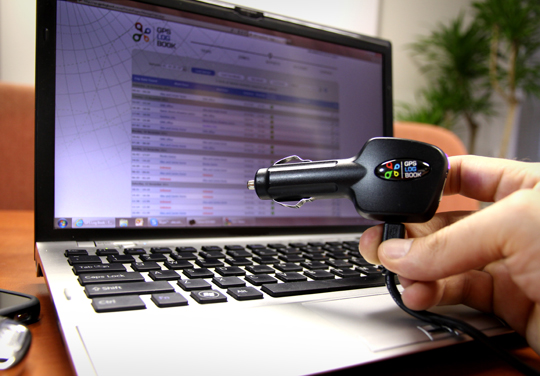
    Digital Matter Embedded, a South African based provider of innovative technology providing electronic and software solutions for a wide range of Industry applications, has launched a compact GPS logging device which plugs into any vehicle’s cigarette lighter. The device, the GPS Log Book, is designed around u-blox’ NEO GPS receiver module to provide an easy way for drivers to automatically keep an accurate travel log book which can be securely accessed later from anywhere via a web interface. Information logged includes route, speed, and distance traveled. The device is targeted at businesses where tracking of vehicle usage is an important part of their cost control and accounting: taxi, emergency, and delivery services, as well as for traveling sales personnel.

    “The GPS Log Book takes advantage of u-blox’ extremely sensitive GPS receiver technology to provide a simple and useful way to keep an accurate overview of vehicle usage,” said Alex Soldatos, general manager at Digital Matter Embedded. “The GPS Logbook provides a simple, cost-effective way for businesses to keep track of one of their most valuable assets: their cars.”

    “The GPS Log Book takes full advantage of u-blox’ leading positioning technology: it requires fast satellite acquisition and re-acquisition speeds, small module size, and high sensitivity to allow the use of a very small GPS antenna,“ said Huub Robroek, regional sales manager at u-blox. “Basing their design on our NEO GPS module has resulted in an impressive, compact device that delivers useful and reliable vehicle usage data.”

    The GPS Log Book uploads its log data on both PC or Mac via USB where a web interface application allows users to manage their devices, view trips, and add locations as well as many other useful functions including creating powerful, informative reports. Most notably, the log book can be generated for use with income tax return for individuals. Data is stored for more than five years and can be viewed at any time if required.

  • u-blox Acquires 4M Wireless for LTE Technology

    u-blox, fabless provider of positioning and wireless semiconductors, software and solutions, will acquire 4M Wireless, a company that designs and develops software and test solutions for developing fourth-generation (4G) mobile wireless devices based on the latest Long Term Evolution (LTE) standards.

    The acquisition will give u-blox ownership of advanced protocol stacks that are licensed to chipset vendors whose products enable 4G user equipment for applications with needs for high-speed data connectivity such as smartphones, tablet computers, notebooks, and any other high-speed wireless modems, u-blox said. Also a variant of the products is licensed to manufacturers of 4G test equipment. 4M Wireless was founded in 2006 and has headquarters in the UK and operations in Lahore, Pakistan.

    Key terms of the transaction include acquisition of 100% of the shares of 4M Wireless at a price of approximately $9 million US, depending on earn-out; intellectual property and software in the area of LTE wireless technology; and integration of the 4M Wireless business and employees into u-blox’ organization.

    LTE is a unifying technology for almost all mobile operators around the world. All GSM/UMTS operators as well as most CDMA operators have agreed to evolve to LTE. Currently, there are 35 commercially available LTE networks in more than 20 countries, and 48 manufacturers have already announced 197 different LTE end-devices. 300 Million LTE subscribers are expected by 2015.

    The acquisition is subject to customary closing conditions and pending regulatory approval. Closing is expected by September 2012.

  • u-blox, Rohde & Schwarz Successfully Simulate Galileo with u-blox Platform

    u-blox and Rohde & Schwarz (R&S), a supplier of test and measurement equipment, have successfully concluded a simulation of the European Galileo satellite positioning system. The test, carried out with the R&S SMBV100A vector signal generator and its GNSS simulation options, verified the u-blox proof-of-concept and the compatibility of u-blox receiver technology with the Galileo transmission protocol.

    The cooperation with R&S is also being extended to the Russian GLONASS satellite system, which is targeted to be fully operational with 24 satellites in 2012.

    “Our close cooperation with R&S has proven to be a valuable and strategic asset, allowing us to develop advanced satellite receiver technology well before the actual satellites are available” said Clemens Bürgi, vice president of software development at u-blox.

    “u-blox, with its depth of expertise in GNSS technologies, has helped us to validate our satellite simulator technology,” said Andreas Pauly, head of R&D Signal Generators Baseband at Rohde & Schwarz. “Now we have developed cutting-edge test equipment that simulates the protocol and physical layer.”