Tag: u-blox

  • u-blox Releases Improved Sub-Meter GPS Positioning Module NEO-7P

    u-blox Releases Improved Sub-Meter GPS Positioning Module NEO-7P

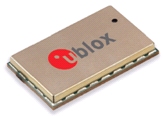
    NEO-7P
    The NEO-7P sub-meter GPS positioning module with Precise Point Positioning (PPP) and Differential GPS.

    Swiss-based u‑blox has introduced the NEO-7P, an improved, low-power, compact, high-precision GPS module. While remaining backwards compatible with its predecessor NEO-6P, the new module achieves standalone sub-meter precision based on single-frequency precise point positioning (PPP) technology.

    Fully autonomous sub-meter performance can be realized for most outdoor applications within coverage of Satellite Based Augmentation Systems (SBAS) throughout North America (WAAS), Europe (EGNOS), and Japan (MSAS).

    In areas where SBAS is unavailable, the NEO-7P achieves high-accuracy based on Differential GPS (DGPS) positioning as an alternative to PPP. DGPS uses RTCM correction messages (correctional data defined by the Radio Technical Commission for Maritime Services) from a local reference station or aiding network to cancel out measurement error introduced by atmospheric distortion and variances in satellite orbits and clocks.

    “The NEO-7P addresses many requirements for precise positioning used in surveying, mapping, marine, and clear-sky recreational applications,” said Thomas Nigg, VP product marketing at u-blox. “The solution delivers sub-meter positioning performance based on two techniques at a fraction of the cost of other high precision solutions. The solution is compact, requires no external base station, and uses a single frequency receiver.”

    The device comes in u-blox’ compact NEO Leadless Chip Carrier (LCC) module form factor. A UART, USB and I2C interface provide flexible connections to a host processor. It can also communicate directly with u‑blox’ SARA 2G, LISA 3G and TOBY LTE cellular modules.

    The NEO-7P also provides complete GPS satellite raw data allowing further accuracy improvement based on post processing by an external host. Internal Flash memory allows simple firmware upgrades. The NEO-7P also supports Russian GLONASS Japanese QZSS positioning standards.

    The module is suitable for vehicle, industrial and consumer applications.

    Detailed information about the NEO-7P can be found on the u-blox website.

     

  • Leica Camera Integrates u-blox GPS into M-System Series

    Swiss-based u-blox has been chosen by Leica Camera as provider of GPS technology for its premium M-System camera and accessory series.

    Leica, which makes high-end and professional cameras, has integrated u-blox’ NEO GPS module into its new Multifunctional Handgrip M. The geotagging feature injects location data directly into each photo’s Exif header (Exchangeable image file format), allowing photos to be filed and retrieved according to where they were taken. The accessory is compatible with the new flagship Leica-M rangefinder digital camera series.

    The Multifunction Handgrip M connects directly to a computer via an integrated USB socket, allowing full remote control of the camera and image access using the Leica Image Shuttle software package. The handgrip also facilitates the safe and steady handling of the camera, particularly when shooting with heavier telephoto lenses.

    The handgrip’s features include a supplementary flash connector, a socket for an external power supply, and a sync socket for studio flash systems. An optional supplementary power source is also available.

    “Leica focuses on providing the highest quality photographic equipment on the market,” said Stefan Daniel, director of product management at Leica Camera.“When a customer purchases a Leica, they realize they are making an investment in a robust, high-performance camera that delivers outstanding results. To meet these expectations, we design with only the best mechanics, optics and electronics. For global positioning, we chose u-blox.”

    “We are proud to have been selected for our GPS technology by such a prestigious brand as Leica,” said Jochen Steinhauer, u-blox sales manager. “When you pick up a Leica camera, you immediately see and feel the high quality of every component. It is designed for perfection, a philosophy that u-blox also follows in our design of the world’s highest-quality global positioning modules.”


  • Microdrone Navigates over the Alps with u-blox GPS

    Microdrone Navigates over the Alps with u-blox GPS

    microdrones, a German manufacturer of light-weight Vertical Take Off and Landing Vehicles (VTOLs), has successfully demonstrated a high-precision aerial journey over the Alps from Switzerland towards Italy with its 5-kg md4-1000 quadrocopter microdrone. Precise GPS coordinates and elevation, crucial for navigating obstacles and completing the flight in punishing weather conditions, was provided by an onboard u-blox GPS satellite receiver module.

    Equipped with a high-resolution video camera, the autonomous microdrone completed 18 pre-programmed flight segments, mapping designated landmarks along the way. Here is a video showing it in flight.

    “This successful journey of our microdrone demonstrates the robustness, reliability, and versatility of our autonomous drone technology which is being increasingly used for aerial mapping, surveying, search and rescue, security, utilities inspection, and aerial photography,” said Sven Juerss, microdrones CEO. “The md4-1000 was faced with intense wind and temperature fluctuations during its flight. It also had to navigate around power lines and a cable car during its more than 12 kilometer trip, which included a 1,600-meter change in altitude. This autonomous flight would not have been possible without the robust, ultra-precise, real-time satellite positioning technology from u-blox.”

    “Fully automated devices are increasingly used to do tasks that are too costly and dangerous for human operators,” said Herbert Blaser, VP Business Marketing at u-blox. “The microdrone is a perfect example of a cost-effective, versatile, location-aware machine that allows people to collect important information at high altitudes from a safe, ground-based control center. This is an application that exploits all the features of our satellite navigation modules; fast, accurate-fix, low-power consumption and reliable operation in extreme environmental conditions.”

    Several sponsor companies took part in the preparation and realization of this remarkable endurance test: Daimler AG made four Mercedes-Benz AMG support vehicles available, Sony Germany, Carl Zeiss AG and GPS/GNSS and wireless hardware and software developer u-blox contributed their audio, video and satellite navigation technologies to the project.

    microdrone’s md4-1000 is able to fly autonomously for up to 88 minutes, and carry a payload of up to 1.2 kg.

  • u-blox Introduces High-Performance Parallel GPS/GLONASS Module

    Swiss u-blox introduces the surface-mount MAX-M5Q, a compact satellite positioning module that supports GPS and GLONASS, as well as Japanese QZSS satellite GNSS systems. High-performance GPS/GLONASS parallel operation is also supported to enhance positioning speed and accuracy.

    Designed for use in rugged environments and wide temperature range, MAX-M5Q is intended for industrial machine-to-machine (M2M) applications as well as Russia’s ERA-GLONASS emergency call system. MAX-M5Q enhances positioning in poor GNSS satellite visibility conditions as well as in high latitude and polar regions, u-blox said.

    “With parallel GPS/GLONASS operation, MAX-M5Q is able to track all 50 and more U.S. and Russian satellites to deliver incomparable speed, accuracy, and positional availability,” said Thomas Nigg, vice president of Product Marketing at u-blox, “Its compact size and high-reliability makes it an ideal positioning solution for mobile resource management and ERA-GLONASS emergency call applications.”

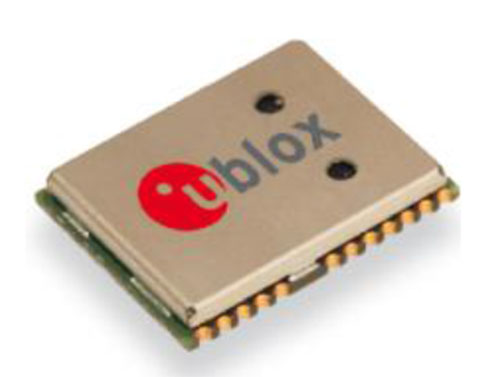
    With dimensions of 9.7 x 10.1 x 2.5 mm, MAX-M5Q is the newest member of u-blox’ MAX GNSS LCC module series. Additional features include autonomous A-GPS that reduces warm start TTFF by as much as 90%, and an embedded data logger which can store location information to internal Flash memory for up to 16 hours at 15 second intervals.

  • u-blox Collaborates with Intel on Dedicated HSPA

    u-blox and Intel collaborate on a 3G-only module to lower design, test and certification costs.
    u-blox and Intel collaborate on a 3G-only module to lower design, test and certification costs.

    Swiss-based u-blox, a provider of wireless and positioning semiconductors, software and solutions, announced that the company is collaborating with Intel Corporation to bring a small, cost-effective 3G-only HSPA module to the market.

    Based on Intel’s XMM 6255 HSPA modem platform, the chipset will be packaged in a compact, low- cost module that maintains layout compatibility with u-blox’ SARA 2G and LISA 3G module series, the company said. u-blox’ 2G-3G-4G nested design philosophy allows product designers to offer tailored solutions to their target markets based on a single PCB design. This facilitates product diversity and easy migration while keeping price at a minimum through reduced design, test, logistics and certification costs, u-blox said.

    “As operators start to sunset their GSM/GPRS services, we have partnered with Intel to bring the cost of 3G connectivity down,” said Nikolaos Papadopoulos, president of u-blox America. “For 3G-only M2M devices, our compact  HSPA-only module, which is about the size of a quarter, is layout compatible with our popular SARA GSM/GPRS wireless module series. This is the perfect combination for the North American market.” The modem supports full HSPA connectivity and low power consumption in an ultra-small form factor.

    “The XMM 6255 platform is latest innovation by Intel and specifically designed for M2M,” said Horst Pratsch, head of product line modules and M2M at Intel Corporation. “Integrating the 3G power amplifier in the transceiver delivers the smallest possible size and lowest number of components enabling new applications of 3G in machine-to-machine applications. Intel is pleased to work with u-blox in bringing this solution to the market.”

    Based on Intel X-GOLD 625 digital- and analog- baseband with integrated Power Management Unit and the Intel SMARTi UE2p transceiver for 3G, the Intel XMM 6255 platform is the smallest available HSPA modem chipset. Its compact size and powerful HSPA performance enables u-blox to create the world’s smallest dedicated 3G modem module dedicated to operation over 3G networks worldwide.

  • Vodafone Certifies u-blox LISA 3G Modules for M2M

    u-blox, provider of  wireless and positioning semiconductors, software and solutions, announces that its LISA-U200 and LISA-230 6-band UMTS/HSPA+ module series as well as LISA-U270 dual band module has achieved Certified M2M Hardware status by Vodafone, the world’s second largest mobile telecom company. Vodafone owns and operates networks in more than 30 countries and has partner networks in over 40 additional countries.

    The certification allows global customers to design LISA-U2 modems into M2M devices operating over Vodafone’s extensive 3G network in Europe, Asia, Africa, Australasia and the Americas. Main applications include vehicle and asset tracking, industrial automation, metering, and security devices.

    The LISA-U2 series is a multi-band 3G module series in LCC package delivering high data-rates (5.76 Mb/s uplink and up to 21.1 Mb/s downlink) with voice and data capabilities. They are compatible with consumer, automotive and industrial applications. For telematics applications such as fleet and asset management, the module provides easy integration with u-blox GPS, GLONASS and QZSS receivers. The modules are compatible with all UMTS bands used worldwide.

  • Sprint Selects u-blox for Long-Term CDMA Network Support

    Sprint and u-blox have expanded their collaboration in support of Sprint’s commitment to the 2G (1xRTT) CDMA network. As a carrier committed to network choice, Sprint believes M2M customers should be able to choose or combine 2G, 3G and 4G LTE capabilities, depending on their particular requirements, u-blox said.

    Sprint expects to maintain its 2G network capability for the long term as part of its overall network vision strategy. Both companies believe 2G remains an important network option for business customers, including those that deploy machine-to-machine (M2M) solutions as part of their service or product offerings.

    This collaboration will allow business customers to extend the product lifetime of their existing 2G M2M devices by seamlessly migrating to the CDMA network with minimal effort. Those customers concerned about the continued availability of 2G GSM networks in the U.S., can now select from a variety of affordable u-blox modems tested for compatibility on Sprint’s CDMA 1xRTT network. The u‑blox FW75-C200 modem, a pin-compatible replacement for widely used GSM modem MC75i and its variants, is well suited to continue on 2G without having to migrate to much more expensive 3G and 4G modems.

    “Now is the opportune time for any customers migrating off GSM or designing new products for telematics, telemetry, automotive, and security applications to take advantage of Sprint’s 2G platform,” said Wayne Ward, vice president, M2M Group, Sprint. “Sprint’s network vision strategy enables ongoing 2G connectivity with the security and performance advantages of CDMA, while also supporting a smooth path to CDMA 3G and LTE 4G for customers who choose that transition. We are pleased to collaborate with u-blox to bring these options to 2G-embedded M2M customers.”

    Sprint’s network vision supports network choice for our customers nationwide. As with 3G, Sprint Network Vision is expected to improve Sprint 2G coverage, capacity, and reliability. M2M and other emerging solutions can involve widely varying data transmission speeds. Sprint expects to be able to provide all these network platforms for the long haul as part of a continuing portfolio of technology options.

    “We are proud to have been selected as the preferred provider by Sprint. It will allow customers to leverage Sprint’s impressive CDMA coverage in the US. Forced migration from 2G GSM to HSPA can now be avoided, given Sprint’s commitment to 2G longevity of the CDMA network,” said Nikolaos Papadopoulos, president of u-blox America. “Should customers still want to offer their devices in 2G and 3G, we at u-blox have already prepared for this parallel track with our nested-design module philosophy for 2G/3G platforms, where customers can select the inexpensive CDMA SMT modem LISA-C200.”

    u-blox CDMA module series consists of the FW75 CDMA 1xRTT module in an industry-standard package, as well as the LISA and PCI-express form factors. In addition to technical support, reference designs, evaluation kits, firmware and free module samples, Sprint and u-blox will soon announce nationwide hands-on seminars focusing on GSM to CDMA modem migration.

  • Handheld’s Ruggedized Computers and Smartphones Have u-blox GPS Inside

    Swedish-based Handheld, maker of mobile computers designed for extreme environments, has integrated u-blox’ GPS modules in four of its most popular products: the Algiz 7 and Algiz 10X tablets, Algiz XRW notebook, and Nautiz X1 smartphone. These tough computers are designed for and used in demanding environments such as polar expeditions, marine exploration, and rescue operations, as well as outdoor industrial applications such as utility maintenance and logistics. The devices depend on u‑blox’ LEA, NEO, and AMY families of compact, high-performance GPS modules to provide reliable navigation and positioning in challenging conditions.

    “Handheld is proud to have achieved an industry-leading position for dependable, ruggedized mobile computers that can be trusted to work in the most hostile environments” said Jerker Hellström, CEO Handheld Group, “To achieve this extremely high-level of performance, we only select components with the highest reliability on the  market. GPS positioning is one of the most important functionalities of our products. For this mission-critical feature, we chose u-blox.”

    Handheld’s lineup of rugged PDAs and mobile computers is specifically developed for use in tough environments in industries such as geomatics, logistics, forestry, public transportation, construction, mining, field service, utilities, maintenance, public safety, military and security.

  • Bryton Enhances Sports Monitoring Equipment with u-blox GPS

    bryton

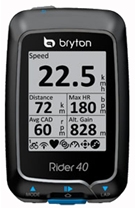
    Bryton Incorporated has chosen to integrate u-blox’ UBX-G6010 GPS single chip to give its sports electronics products location-aware features. Founded in 2009, Taiwan-based Bryton has established a brand of GPS-enabled sports monitoring devices dedicated to four main activities: cycling, fitness, outdoor adventure and athletic training.

    “At Bryton, we understand the mindset of sport enthusiasts, and know exactly what they are looking for when they shop for electronic equipment to enhance their exercise experience: it must be smart, small, attractive, accurate, dependable, and packed with interesting and useful features that make their workouts more fun and informative,” said Wolf Lin, President at Bryton Inc.

    “u-blox’ extremely small GPS chip solution requires very few external components, meaning we don’t need to allocate much space in our products to achieve state-of-the-art, extremely sensitive GPS positioning capability,” added Lin. “Another primary feature is long battery life. Thanks to u-blox’ low power chip design with sophisticated power saving modes, the GPS receiver, which must be active much of the time, requires only a small fraction of the device’s power.”

    Bryton evaluated leading vendors of GPS technology and selected u‑blox’ GPS single-chip based on four key product features: small size, high sensitivity, low-power consumption, and upgradability.

    Bryton markets its products under two main product categories:

    Rider. An extensive line of waterproof bike computers that provide navigation while monitoring location, distance, elevation, route history as well as heart rate and calories usage.

    Cardio. Smart sports watches for runners with integrated GPS that delivers accurate time, pace, distance, stride, lap information and much more.

  • u-blox Demonstrates Navigation Using BeiDou

    Swiss-based u‑blox, a provider of GPS/GNSS and wireless semiconductors, has achieved successful satellite positioning using China’s BeiDou Navigation Satellite System. According to u-blox, the technical achievement establishes u-blox as the first GNSS component vendor to demonstrate compatibility with all globally deployed positioning systems: GPS, GLONASS, Galileo, QZSS and now BeiDou.

    However, NovAtel has also announced support for the BeiDou Navigation Satellite System on its OEM6 family and select OEMStar GNSS receivers.

    Customer demonstration of the u-blox technology will begin during Q1 2013.

    “We are thrilled to have achieved this milestone only three weeks after the BeiDou specification was published,” said Thomas Seiler, u-blox CEO. “China will become the world’s most important single market for devices relying on embedded satellite navigation, and u-blox plans to be a major player in this market.”

    BeiDou-2 currently has 15 satellites in orbit, offering navigation and positioning services to users in China and Southeast Asia. It will ultimately consist of 35 satellites providing worldwide positioning capability over its open service to within 10 meters accuracy.

    u-blox will be demonstrating BeiDou compatibility with their latest GNSS platform at embeddedworld 2013 February 26-28 in Nuremberg, Germany, stand 4A-325.

  • Medical Alert System to Have u-blox GPS and 2G/3G GPS

    u-blox, the Swiss positioning and wireless chip and module company, has been chosen for global positioning and embedded 2G/3G wireless technologies by MobileHelp, an American provider of M-PERS (Mobile-Personal Emergency Response System) technology. Based on u-blox’ LISA 2G/3G wireless modem and MAX GPS modules, the comprehensive system includes compact, portable alert devices that function in and around the home, and while traveling.

    “As the population ages, more and more people are choosing to remain independent for as long as possible” said Robert Flippo, President of MobileHelp. “With the help of u-blox’ reliable, low-power positioning and wireless technologies, our MobileHelp medical alert systems are giving a whole generation of people the freedom to live in their homes and travel independently knowing that simple and fast emergency assistance is just a push-button away.”

    Unlike traditional 911 direct dial services, MobileHelp devices deliver instant positional information as well as personalized medical data to an emergency response center at the touch of a button. The system is integrated with nationwide wireless voice, data and satellite GPS technology to provide real-time medical monitoring services, location tracking, and instant voice contact with trained emergency response operators. MobileHelp also offers Caregiver Tools, an innovative event notification and online tracking platform that keeps families and caregivers informed of an emergency event. With AT&T as connectivity partner, the devices work in 97 percent of the inhabited areas of the USA.

    MobileHelp comes in three configurations, “Classic” for home-monitoring over fixed line telephone, “Solo” for travelling and at homes without a fixed line telephone connection, and “Duo,” for travelling and at homes that have a fixed line telephone connection.

    MobileHelp’s alert products have been developed with Singapore-based Daviscomms, a design and manufacturing partner providing advanced engineering services to customers in the consumer and industrial markets worldwide.

  • u-blox Introduces Small Multi-GNSS Module with Built-in Antenna

    u-blox, the Swiss positioning and wireless module and chip company, announces UC530M, a tiny parallel GPS/GLONASS module with built-in antenna. The antenna module can be embedded in space-restricted environments because of its tiny footprint of 9.6 x 14.0 x 1.95 millimeters. The highly integrated SMT design reduces the need for external components and minimizes manufacturing costs, u-blox said.

    “Location-aware functionality in ever-smaller consumer and industrial devices is a clear market trend. This presents an increasing challenge to OEMs,” said Thomas Nigg, vice president of product marketing at u-blox. “Manufacturers are confronted with the difficult task of providing fast and accurate positioning in compact devices, while time-to-market and price pressure call for minimal R&D effort and low cost. The new UC530M is built to address these requirements: a complete low-power, high performance multi-GNSS receiver with integrated antenna. The module is easy to integrate in a wide variety of devices cost-effectively.”

    With high sensitivity, -165 dBm in tracking, and very low power consumption, typically only 66 mW average power consumption, the UC530M can be directly connected to a lithium battery, eliminating costly voltage regulators. Advanced low-power modes are also supported along with three days self-assistance support. Additional functionality includes a logger function which stores location information in internal memory. With a typical log interval of 15 seconds, log capacity can be up to 16 hours.

    The integrated antenna of the UC530M exhibits significantly better radiation efficiency than small patch antennas, and performs well against larger and heavier patch antennas. Its circular radiation pattern brings flexibility to hardware designs, u-blox said. The optional connectivity to an external antenna extends the applicability of the module to a wider range of devices from handheld computers to asset tracking systems. The module is drop-in compatible with the UC530 GPS antenna module announced in June 2012.

    Engineering samples of the UC530M modules are available in December 2012.