Tag: UAV

  • Five New FAA Commercial UAV Exemptions — What Do They Mean?

    Aeryon SkyRanger
    The Aeryon SkyRanger.

    UPDATE: 1 p.m. US Pacific Time, Dec. 12. See statement from Trimble Navigation below.

    In a major step towards allowing unmanned aerial systems (UAS, UAV, drones) to be used for commercial purposes in the United States, the Federal Aviation Administration (FAA) granted five exemptions to four companies this week, allowing commercial UAS operation with an extensive list of conditions and limitations.

    If you recall from previous articles such as this one, the FAA says it’s illegal to operate a UAS for commercial purposes in the United States.

    But, take a look at this article: FAA Says Commercial Drone Operations Are Illegal… Public Says So What?

    Then, when the FAA attempted an enforcement action against a person (Pirker) using a UAS for commercial purposes, an NTSB (National Transportation Safety Board) administrative law judge sided with the person, not the FAA.

    Clear as mud?

    Of course, the FAA appealed the NTSB opinion v. Pirker, and won. Click here to see the documents explaining the decision. Essentially, the NTSB ruled that a UAS is considered close enough to a manned aircraft that UAS fall under similar rules, and that the FAA is within its rights to apply the rules of careless or reckless operations to UAS as it does with manned aircraft.

    So, after some legal wrangling, the rules seem to be as the FAA has stated: no commercial UAS operations. However, under order from the Obama Administration, the FAA is working on developing rules to allow commercial UAS operation in the U.S. The deadline for those rules to be released is September 2015, but there is much speculation that this deadline will not be met.

    That said, the FAA is not waiting until September 2015.

    Airbotix-T

    In June 2014, the FAA issued the first UAS commercial use CoA (Certificate of Waiver or Authorization) to BP (British Petroleum) to allow commercial use of a particular UAS for surveying roads, pipelines and equipment in Alaska.

    Then, in September 2014, the FAA issued CoAs to six aerial photo and video production companies in the film and television industry.

    It should be noted that each CoA includes an extensive list of conditions and limitations, which are not necessarily the same, but similar (more on that below).

    That brings us to yesterday, December 10, 2014. On that day, the FAA announced it has issued exemptions to four companies for commercial UAS operations: Trimble Navigation, VDOS Global LLC, Clayco, and Woolpert.

    Looking at these four companies, it’s interesting that three of them are service providers and one is a manufacturer of UAS: Trimble. One might assume that, since Trimble is a manufacturer of UAS, the FAA exemption might carry over to its customers. After checking in with several people on this, the exemption appears to be only for Trimble owned-and-operated UAS, not customers. However, it doesn’t appear that the operator must be a Trimble employee (as opposed to a contractor). In that case, Trimble, as a manufacturer, could potentially deploy UAS under this exemption and have contract pilots operating Trimble-owned UAS.


    Following is a statement from Todd Steiner, Trimble’s marketing director for geospatial imaging solutions:

    “In the near term, Trimble will use this exemption to begin conducting research activities, sales demonstrations, and flight training with our partners and customers within the U.S. We will also initiate commercial activity as we pursue follow on steps with the FAA.

    “In addition, we are working to determine how this exemption might be further leveraged to help our partners and customers. With Trimble’s authorization in place, we can directly support their needs where that is appropriate. Our customers and partners will also be able to apply for authorization to operate our UAS under the conditions of our exemption.

    “We believe that these authorizations will be available on a more streamlined basis now that Trimble has received its exemption. We will communicate to our partners and customers as more information is available.”


    The exemptions are valid until December 31, 2016, unless rescinded or superceded.

    Conditions and Limitations

    For each FAA exemption granted, there’s a long list of conditions and limitations for each grantee. You can read the detailed list of these at the bottom of each document issued to the specific company.

    Trimble

    VDOS Global LLC

    Clayco

    Woolpert #1, Woolpert #2

    Although the conditions and limitations vary with each exemption issued, there are some common to all:

    • UAS must operate below 400 feet above ground level.
    • UAS must obey the speed limit (varies by UAS).
    • UAS must be within VLOS (visual line of sight) at all times by pilot in command.
    • All operations must have a second person, a VO (visual observer).
    • Pilot in command must possess at least an FAA private pilot certificate (some exemptions require a commercial certificate) and a third-class airman medical certificate.

    There are many more conditions and limitations, but this gives you an idea of what is required. The Trimble exemption contains 35 such items, so before you get too excited, take a look at the complete list of conditions and limitations. It’s not a simple endeavor.

    On a positive note, the FAA is making an effort and making progress. For an agency that has a reputation of moving very slowly and methodically, this is near lightning speed.

    Thanks, and see you next month.

    Happy Holidays!

    Follow me on Twitter at https://twitter.com/GPSGIS_Eric

  • FAA Grants UAS Exemption to Trimble Navigation

    FAA Grants UAS Exemption to Trimble Navigation

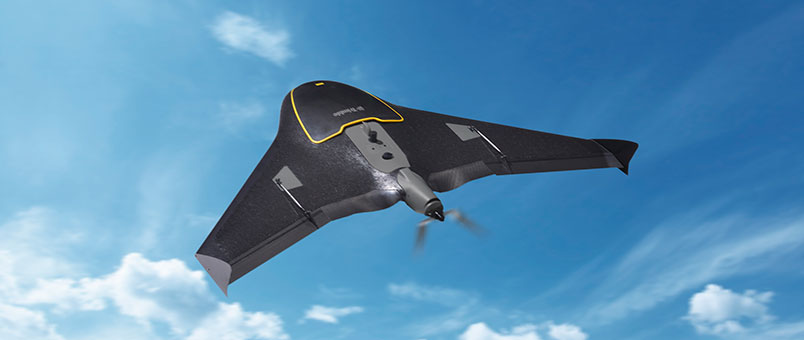
    The Trimble UX5. Photo: Trimble
    The Trimble UX5. Photo: Trimble

    The Federal Aviation Administration (FAA) today granted five regulatory exemptions for unmanned aircraft systems (UAS) operations to four companies representing several industries that promise to benefit from UAS technology, including Trimble Navigation Ltd.

    The four companies that received exemptions want to fly UAS to perform operations for aerial surveying, construction site monitoring and oil rig flare stack inspections.

    “Unmanned aircraft offer a tremendous opportunity to spur innovation and economic activity by enabling many businesses to develop better products and services for their customers and the American public,” Transportation Secretary Anthony Foxx said. “We want to foster commercial uses of this exciting technology while taking a responsible approach to the safety of America’s airspace.”

    The commercial entities that received exemptions today are Trimble Navigation, VDOS Global, Clayco, and Woolpert (two exemptions). The FAA earlier granted exemptions to seven film and video production companies. This is the first exemption granted to a leading GNSS firm.

    Secretary Foxx found that the UAS in the proposed operations do not need an FAA-issued certificate of airworthiness because they do not pose a threat to national airspace users or national security. Those findings are permitted under Section 333 of the FAA Modernization and Reform Act of 2012.

    The firms also asked the FAA to grant exemptions from regulations that address general flight rules, pilot certificate requirements, manuals, maintenance and equipment mandates. In their petitions, the firms said they will operate UAS weighing less than 55 pounds and keep the UAS within line of sight at all times.

    The exemption will allow Trimble to conduct commercial operation of its UX5 Aerial Imaging Solution. The UX5 is an unmanned fixed-wing aircraft targeted at the surveying, agriculture, oil and gas, mining, construction, environmental industries. The system autonomously captures a series of high-resolution images during flight, which is typically up to 50 minutes covering as much as 2.3 square kilometers (approximately 1 square mile) when flying 120 meters (approximately 400 feet) above the ground. Using Trimble Business Center Aerial Photogrammetry software, images are used to easily generate 2D and 3D deliverables such as orthomosaic images, three-dimensional point clouds and contour maps. The Trimble UX5 enables the collection of large amounts of data, often faster than traditional surveying or mapping technologies.

    The Trimble UX5 surveys a construction site. Photo: Trimble
    The Trimble UX5 surveys a construction site. Photo: Trimble

    “We are pleased to be among the first companies to receive an exemption from the FAA authorizing commercial operation of UAS,” said Erik Arvesen, vice president of Trimble’s Geospatial Division. “This decision reflects Trimble’s efforts to responsibly operate its UAS business in the U.S. while the FAA addresses air safety issues in opening the NAS for commercial UAS operations on a broader scale. Trimble will continue its efforts to support the FAA’s decision-making process and to provide opportunities for our customers to safely use the UX5 to capture accurate geospatial data for a wide range of applications such as surveying, oil and gas, mining, construction and many more.”

    “In the agriculture market, the FAA exemption moves Trimble one step further with the opportunity to provide a solution for safe and legal UAS operations that can benefit growers, ranchers, water management contractors, agronomists and other ag service providers,” said Joe Denniston, vice president of Trimble’s Agriculture Division. “High-speed aerial imaging is a powerful tool that can quickly and easily capture aerial images for scouting and monitoring crop health, locating cattle and their available forage over large areas, measuring crop height, and generating topographic maps and models for land leveling and drainage applications. As a result, the system can be a powerful data collection tool that can aid with recommendations to improve farming operations.”

    In granting the exemptions, the FAA considered the operating environments and required certain conditions and limitations to assure the safe operation of these UAS in the National Airspace System. The agency also will issue Certificates of Waiver or Authorization (COAs) that mandate flight rules and timely reports of any accident or incidents..

    “The FAA’s first priority is the safety of our nation’s aviation system,” said FAA Administrator Michael Huerta. “Today’s exemptions are a step toward integrating UAS operations safely.”

    As of today, the agency has received 167 requests for exemptions from commercial entities.

    You can view the FAA’s exemption grants here. Also, read more about the exemptions in Eric Gakstatter’s Geospatial Solutions column. Below is the Trimble exception document.

    Trimble_Navigation_Limited_11110.pdf

  • UAV Creates 3D Model of Largest Mosque in Turkey

    UAV Creates 3D Model of Largest Mosque in Turkey

    Turkey-mosque_adana_W
    Photo: Leica

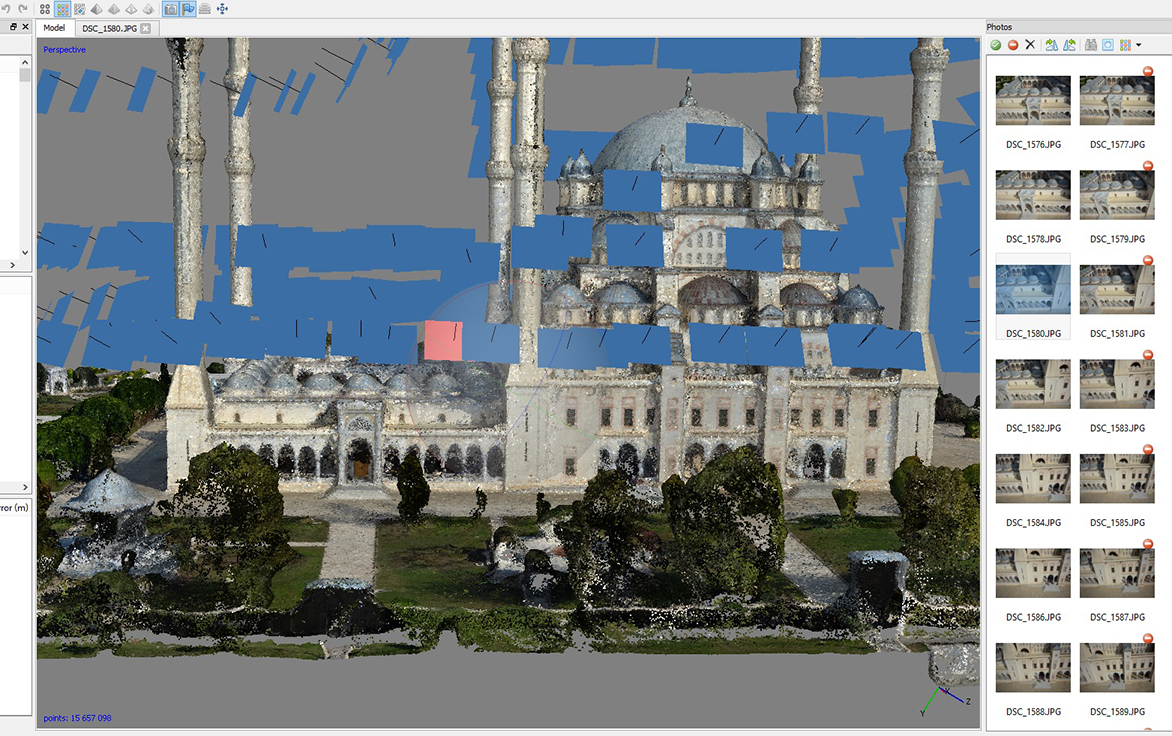
    The Sabancı Merkez Mosque in Adana, Turkey, has been inspected and mapped by an unmanned aircraft system and a detailed 3D model created. The work was carried out by SISTEM A.S. (the Turkish distributor of Leica Geosystems), NRJ Engineering and Aibotix.

    Sabancı Merkez Mosque is the largest in Turkey, with six minarets, four of which are 99 meters high. The largest of its five domes is 32 meters in diameter and 54 meters high, so determining the actual state of the building using conventional methods would be time consuming and costly. Instead, the authorities commissioned a UAV inspection.

    “We needed only three flights to cover all relevant areas and generate comprehensive data,” said SISTEM A.S. employee Bora Yavuz, who has been working with terrestrial laser scanning systems for the past five years. “Compared to laser scanning, collecting the data from the top sections of this huge building by UAV was extremely easy, since nobody had to climb up to the minarets or dangerous places on the domes and wait for the machine to scan. Furthermore, alongside the data registration the generation of point clouds runs automatically.”

    During the flight over the roof of the mosque, the UAV followed a defined route that had been planned on the computer beforehand. The pilot then steered the UAV manually in two more flights around the building.

    The Aibot X6 was carrying a Nikon Coolpix A digital camera and created high-resolution photos with an 80 percent overlap. Using live images from the UAV’s perspective that were sent directly to the screen of a ground station, the pilot could make sure that all relevant areas were captured, and achieve the best possible results by adjusting the camera to the optimum angle during the flight.

    The data was subsequently processed to create an accurate 3D model of the mosque with a precision down to 1-2 centimeters. The high-resolution photos are linked to the model so that damage can be located accurately, with GPS information synchronized with the images for fast post-processing. The images and the model will now be used as the basis for maintenance and repairs.

    Turkey-mosque_adana_2-W Photo: Leica
    Photo: Leica
    Turkey-mosque_adana_3-W
    Photo: Leica
  • Amazon to FAA: Loosen Laws or Moving Research Abroad

    Amazon.com is warning the Federal Aviation Administration (FAA) that it will move its drone research abroad if it doesn’t get permission soon to test-fly in the United States, reports The Wall Street Journal. Amazon has already begun researching drone flights in the United Kingdom.

    “Without the ability to test outdoors in the United States soon, we will have no choice but to divert even more of our [drone] research and development resources abroad,” wrote Amazon’s vice president of global public policy Paul Misener in a letter to the FAA, according to The Wall Street Journal. “I fear the FAA may be questioning the fundamental benefits of keeping [drone] technology innovation in the United States,” Misener wrote.

    Current laws restrict the commercial use of unmanned aircraft in the United States. Amazon announced its intention to develop a drone delivery service in 2013.

    The FAA is required by U.S. Congress to frame a “safe integration” plan for the commercial use of UAS by Sept. 30, 2015. Changes in the law could restrict users of commercial UAVs by requiring licenses, with licenses issued to users only after many hours in the cockpit of a manned aircraft, comparable to traditional pilot licenses. The new rules would also limit flights to under 400 feet and within sight of the person at the controls, which is the current rule for hobbyists.

    One of the FAA’s concerns is conflicts with manned aircraft. FAA data shows dozens of dangerous encounters around the country over the past six months, according to the Washington Post. Since June 1, commercial airlines, private pilots and air-traffic controllers have alerted the FAA to 25 episodes in which small drones came within a few seconds or a few feet of crashing into much larger aircraft. Many of the close calls occurred during takeoffs and landings at the nation’s busiest airports, presenting a new threat to aviation safety after decades of steady improvement in air travel.

    Read one blogger’s account of a close call using a drone, partly caused by loss of the GPS signal.


  • L’Avion Jaune Selects Septentrio’s RTK Technology for UAV Laser Scanner

    L’Avion Jaune Selects Septentrio’s RTK Technology for UAV Laser Scanner

    NR_Yellowscan_Ax-m_picture Photo: L’Avion Jaune
    Photo: L’Avion Jaune

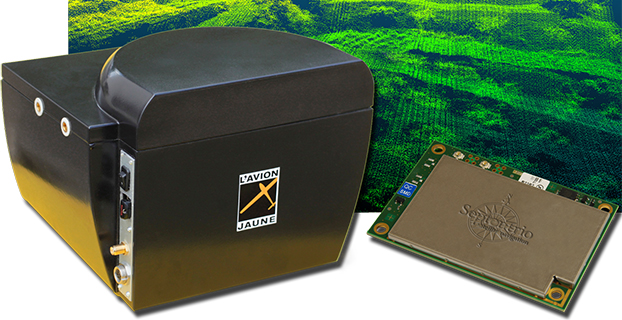
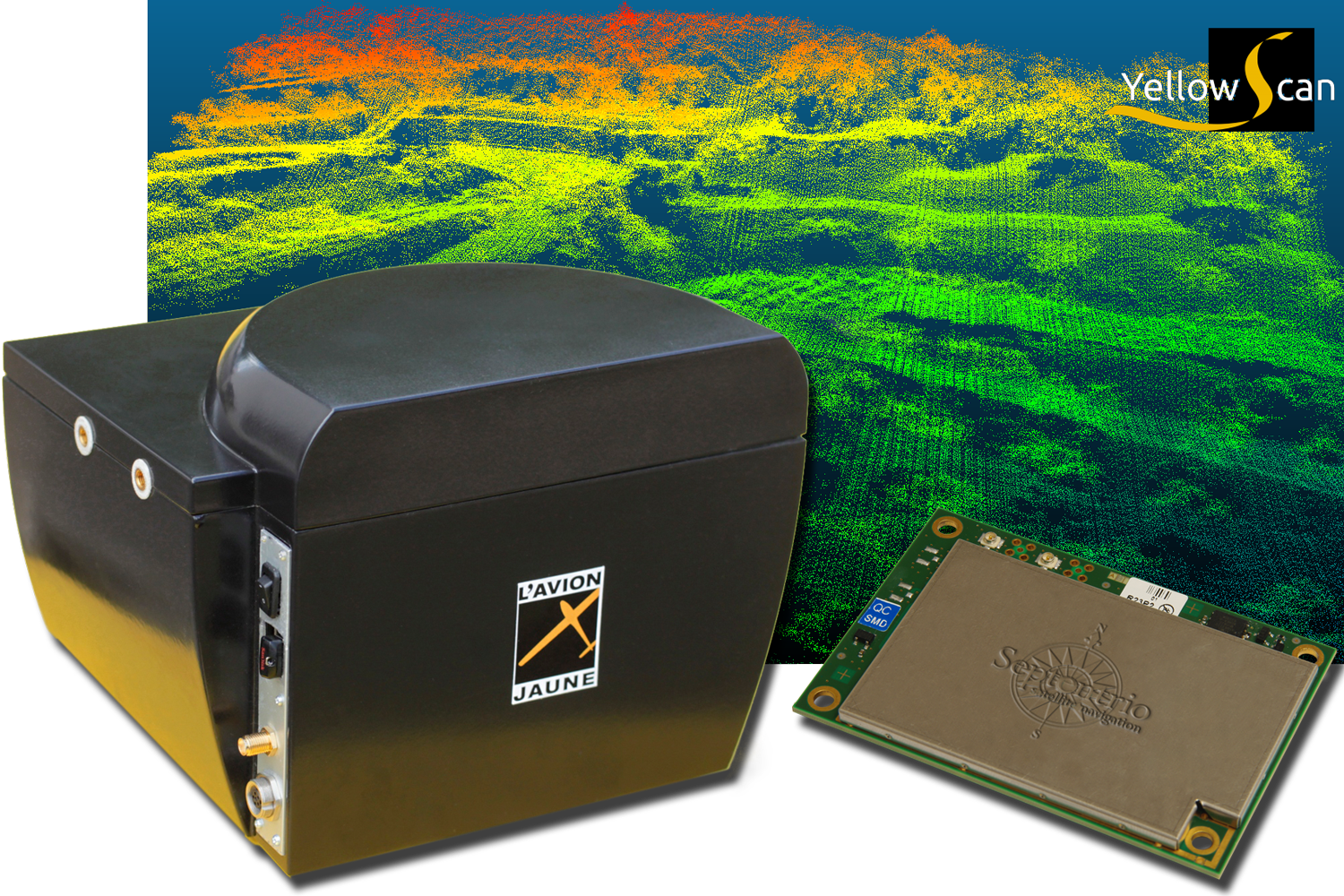
    L’Avion Jaune, a service provider and airborne sensors integrator in the field of aerial surveys, has selected the Septentrio AsteRx-m to equip its YellowScan unmanned aerial system. L’Avion Jaune chose the AsteRx-m for its robustness and low-power consumption, Septentrio said.

    YellowScan is the a lightweight all-in-one solution designed to deliver quality aerial surveys carried out using a LiDAR sensor aboard UAVs. The self-contained system integrates into a small package all the necessary equipment for conducting airborne surveys: a 3D laser scanner, an AHRS, a controller, an autonomous power supply module and the AsteRx-m, a high-performance precision GNSS receiver.

    The AsteRx-m provides a compact and low-power solution for precise positioning in difficult environments where the tracking of both GLONASS and GPS satellites allows the receiver to improve the availability and robustness of a positioning solution. Septentrio’s newest RTK models optimally adapt to situations where GNSS signals can be distorted by reflective surfaces and feature unique countermeasures to disturbances, maintaining accurate and stable measurements wherever and whenever centimeter-level accuracy is needed, the company said.

    “The easy-to-integrate AsteRx-m has proven to deliver the most reliable and stable RTK performance of all, in a compact and exceptionally low-power consumption module,” said Michel Assenbaum, CEO of L’Avion Jaune. “The AsteRx-m allows us to extend the operational range and capabilities of the YellowScan, a fully autonomous surveying solution dedicated to UAVs. We have tested the solution in various environments across the world and have never seen it falter.”

    “We are delighted that L’Avion Jaune, a respected expert in designing unmanned-aerial remote sensing solutions, has validated the excellent performance of our ultra-compact GNSS receiver,” said Jan Van Hees, head of business development at Septentrio. “We are impressed to see how much interest YellowScan has drawn since its introduction and we are very proud to be contributing to the success of a best of breed solution in this highly competitive market.”

  • Sen. Warner Sends FAA Letter on UAS Regulations

    U.S. Sen. Mark R. Warner (D-VA) sent a letter on Dec. 4 to the FAA administrator regarding the agency’s efforts to design effective regulations for unmanned aerial systems (UAS).

    Virginia is part of a multistate consortium that is one of six FAA regional test sites for studying the safe integration of unmanned aerial vehicles into the existing airspace.

    In his letter, Sen. Warner argues against requiring a pilot’s license for the operation of these vehicles, and urges the FAA to make development of a UAS regulatory framework a top priority in the new year.


  • New Commercial UAV Expo Set for October 2015

    SPAR Point Group will hold its first Commercial UAV Expo, October 5-7, 2015, at Caesars Palace in Las Vegas, Nevada. The event will feature an exhibit hall of UAV manufacturers, component and sensor manufacturers, software providers and service companies.

    Organizers expect upwards of 1,000 attendees and 80 exhibits in 2015. Las Vegas was selected for proximity to key players on the West Coast and an affordable and accessible location for the entire market. A two-day conference program will feature programming tracks including commercial applications, hardware and software options, cost considerations, the regulatory environment and data management and integration.

    SPAR Point Group are organizers of 3D technology events in North America, Europe and Asia. “We have been listening to our customers and watching the market for some time,” said Lisa Murray, director. “While it is well known that the unmanned aerial vehicle is a game-changing technology, the regulatory environment and concerns over safety have kept commercial growth to a minimum. Given the potential benefits of approved commercial UAV use and global market projections of $12 billion for commercial UAVs over the next decade, the time is right to launch this event.”

    “Moving forward, it is vital that the industry has an event dedicated to commercial UAV use,” saidDave Henderson, Topcon’s director of geospatial sales. “SPAR Point Group is uniquely qualified to host such an event given their history and expertise delivering top-notch business and technology events for 3D precision measurement and imaging. They already have established relationships with providers and potential users in key market sectors eager to integrate UAV systems.”

    “We are excited to connect the UAV community with potential customers in surveying and mapping, civil infrastructure, mining, construction, process, power and utilities, precision agriculture, law enforcement, security and emergency response,” Murray said. “These are natural markets for commercial UAVs, and ones in which we have established contacts. Seasoned professionals in aerial, mobile and terrestrial data capture technology are particularly interested in the business benefits UAVs provide, including potential cost savings, ease of use, immediacy of data delivery and increased accessibility.”

    “In speaking with providers in the UAV sector, it is clear an event focused on industries suited to small UAVs is needed,” Murray said. “While the overall UAV sector is currently dominated by defense and military applications, it is hard to imagine any industry that will not be affected by UAV adoption. Our customers rely on our technology events to deliver the latest innovations on the market. They want to see what’s new and what’s next. Clearly, what’s next is the UAV, and we are excited to showcase this next wave of innovation at Commercial UAV Expo next year.”

  • Drone Close Calls Cause Problems for Aircraft

    New data from the Federal Aviation Administration shows dozens of dangerous encounters around the country over the past six months, according to the Washington Post. Since June 1, commercial airlines, private pilots and air-traffic controllers have alerted the FAA to 25 episodes in which small drones came within a few seconds or a few feet of crashing into much larger aircraft. Many of the close calls occurred during takeoffs and landings at the nation’s busiest airports, presenting a new threat to aviation safety after decades of steady improvement in air travel.

    Portland International Airport (PDX) is one airport that has experienced a surge in near-collisions with small drones, including several close calls as reported by pilots, reports KGW-TV. Oregon Senators Ron Wyden and Jeff Merkley called on the Federal Aviation Administration (FAA) to develop rules for drone technology.

    According to KGW, one pilot was flying his Piper Archer II just south of downtown Portland on September 20 when a small drone buzzed by his private airplane at 3,000 feet. In another incident on July 7, a Hawker Beechcraft BE35 reported passing an unmanned aircraft while flying near PDX at 2,200 feet.

    On September 11 and September 18, Port of Portland Police were notified by federal agents that someone was flying a drone 150-200 feet above their building. The FBI building sits just one-half mile from an airport runway. According to FAA reports, air traffic controllers at PDX could see the unmanned aircraft from the tower.

    Also, FAA data shows two incidents involving drones were reported in Medford, Oregon, on September 27 and October 24.

    Watch the video news story on the KGW-TV website.

  • Sensors in Motion Launches MEMS-Based Inertial Nav System

    Sensors in Motion Launches MEMS-Based Inertial Nav System

    SIM-MEMs-based-Inertial-Navigation-System-W
    Photo: SIM

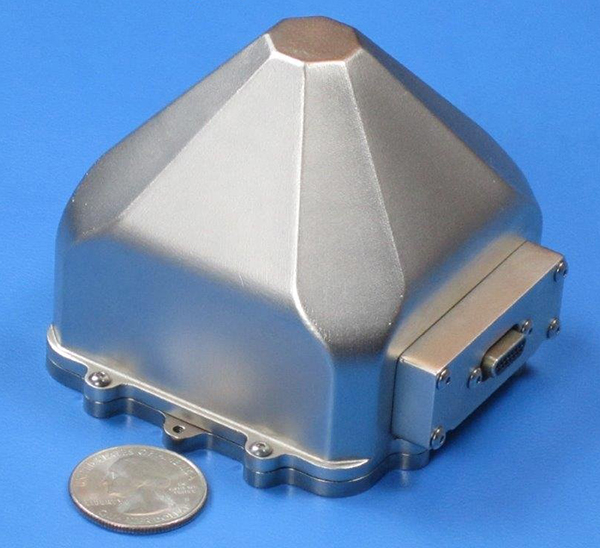
    Sensors in Motion (SIM) has introduced  a MEMS (micro-electro-mechanical) navigation-grade inertial system (INS) that it says could transform the $8 billion/year inertial market with new products by offering price and performance specifications better than those currently available.

    The first INS devices have been delivered to the Army CERDEC Night Vision Electronic Sensors Directorate (NVESD).

    SIM, a spinout from NASA’s Jet Propulsion Laboratory and California Institute of Technology, is developing a family of high-accuracy MEMS gyroscopes, accelerometers and inertial measurement unit ( IMU) solutions. It says it has perfected unique MEMS structures using volume silicon wafer processing techniques to produce gyroscopes having ARW (angle random walk) less than 0.0035 degree/root-hour and bias instability less than 0.01 degree/hour with extraordinary vibration and temperature immunity, a performance comparable to ring laser (RLG) and fiber optic (FOG) gyros that are 20 times larger and 100 times more expensive.

    These features are mandatory for numerous applications where location is not available from GPS or vehicle position accuracy is required including autonomous vehicles, drones, mining asset tracking, dead reckoning, agricultural seed placement, oil and gas directional drilling, self-driving autos, firefighter navigation, optical image stabilization, industrial equipment azimuth, aerospace and defense products and most GPS-denied environments, in addition to new applications.

    Current devices would have a vehicle position off as much as 1 foot per second at 45 miles per hour.

    “We see this technology opening an additional $2B sensor market needing size, weight, power, cost and performance that does not exist today. “ said David Smukowski, CEO of SIM.

    With adequate resources the company says further performance gains are possible, even while shrinking the devices smaller for better economics.

  • Whatever Happened to SketchUp? — Trimble Dimensions

    Earlier this month, I attended the Trimble Dimensions conference in Las Vegas. More than 4,000 attendees made it the largest Dimensions conference to date. Since Trimble has been on a corporate acquisition binge for the last 10+ years, one has to pick an area of interest to focus on; otherwise, it’s easy to be overwhelmed with their wide offering of geospatial technology. In my Survey Scene newsletter earlier this month, I focused on Trimble’s satellite-based GNSS augmentation services. In this month’s GSS Monthly newsletter, I’d like to touch on Trimble’s activities in the geospatial software arena.

    If you recall, Trimble bought SketchUp from Google a couple of years ago. SketchUp is software for 3D modeling used for a wide range of apps from interior/exterior architectural design to video game design. It’s not hard to understand why Google would want to sell SketchUp. Google products like Google Earth and Gmail are everyday consumer-friendly products that have mass appeal to a huge audience. SketchUp is a product that takes a higher level of geospatial user knowledge and time investment to use. It seems to be a perfect fit for a geospatial-oriented company like Trimble.

    I used to be involved in a lot of 3D modeling projects in the landscape architecture area. I know how labor-intensive it is to generate high-quality 3D models and 3D video fly-throughs. I also understand the value that 3D models offer in bringing a proposed design to life. For example, look at the following photo taken of an unimproved site:

    SH12_BeforeSH12_BeforeSH12_Before_Small-SketchUp-W

    To visualize the golf course architect’s design, following is a 3D model of a proposed golf hole overlaid on an image of the unimproved land:


    SH12_Small-SketchUp-W

    Imagine how much more effective it is to show a client this sort of visualization, rather than trying to explain this using a 2D set of architectural or engineering plans.

    This is the kind of visualization that SketchUp is designed to address, but more structure (building) oriented. The impact on the the client is the same, bringing 3D and color to design ideas. In fact, SketchUp goes further than just helping designers visualize their ideas for their clients. In some cases, it can produce a list of materials to construct the building. At a short briefing I received at Dimensions, Trimble said that the following structure was designed, and a list of building materials was generated, using SketchUp.


    SketchUp_Dome-W

    OK, it’s not a high-rise building and SketchUp can handle more complex designs than this, but this illustrates where the technology is headed and that the fundamental workflow exists. Also, it shows that this type of technology is becoming available to a wider audience. I recall that 10 years ago, we needed a lot of computing horsepower, sophisticated software (such as 3D Studio Max), very specialized technicians, and a lot of time to generate 3D visualizations. SketchUp brings this capability to a wider audience.

    For geospatial professionals, there’s obviously a lot of applications for SketchUp. A simple, yet powerful task is bringing Google Map imagery and topography data into SketchUp to give your buildings context. Following is a five-minute video describing how to import a Google Map into SketchUp:

    To learn more about SketchUp (free and Pro versions), a number of YouTube videos are available, as well as videos of SketchUp’s annual conference called SketchUp 3D Basecamp.

    Seven Best New Features of SketchUp 2014 (five-minute video):

    Lastly, following is a collection of YouTube videos from SketchUp 3DBasecamp 2014 (60 minutes) for you to peruse if you’re interested:


    Unmanned Aerial Systems (UAS)

    Of course, UAS are still all the rage. While Trimble showed off its UAS product lineup (a la its 2012 acquisition of GateWing), last month in Reno, Nevada, there was a conference entitled UAS Mapping 2014 that was focused on UAS for mapping. More than 500 geospatial professionals attended to view the UAS technology demonstrations. We’ll have a report on this conference in next month’s GSS Monthly newsletter. UAS technology is still in the early stages of development (and, of course, still not legal to use commercially in the U.S., according to the Federal Aviation Administration) so a lot is happening.

    There’s certainly a push toward using low-end UAS for GIS mapping. The UAVs themselves are becoming so inexpensive that the image-processing software ends up costing more than the UAV. For example, one image-processing company I hear about quite a bit is Pix4D. The company recently announced its Pix4Dmapping app that will turn a $900 DJI Phantom 2 Vision UAV into a 2D mapping and 3D modeling system. If you’re interested in the capabilities of this low-cost UAV mapping system, take a peek at the following 60-minute webinar from Pix4D.

    Thanks, and see you next month.

    Follow me on Twitter at https://twitter.com/GPSGIS_Eric
  • Trimble Details UX5 UAS at Trimble Dimensions 2014

    Boris Skopliak, product manager for Trimble, gives an overview of the Trimble UX5 while at the 2014 Trimble Dimensions User Conference, held Nov. 3-5 in Las Vegas, Nevada. The UX5 unmanned aircraft system (UAS) for mapping and surveying captures imagery and can generate point clouds, digital terrain models and orthomosaics.

  • Trimble Updates Aerial Imaging Application

    Trimble Access Aerial Imaging 3

    Trimble has added enhancements to its Trimble Access Aerial Imaging 2.0 application to make it more robust, intuitive and easier to use. Part of the Trimble Access field software suite of applications, the Aerial Imaging application is a software tool used with the Trimble Tablet Rugged PC for planning aerial missions, performing pre-flight checks, and monitoring flights for the Trimble UX5 Aerial Imaging Rover.

    The software enhancements include a full redesign of the user interface for a streamlined workflow, and major upgrades to flight design and control. These improvements provide greater flight planning flexibility in applications such as boundary and topographic surveying, mining assessment and exploration, heavy construction modeling and much more.

    The announcement was made at Trimble Dimensions.

    Trimble Access Aerial Imaging 2.0 enhanced user interface enables Trimble UX5 pilots to prepare a flight in minutes and quickly begin collecting data, such as orthophotos, point clouds or surface models. The full interface redesign simplifies the user experience for flight planning by using a step-by-step, tabular navigation to guide the user through the flight process from planning to completion.

    Project management is also easier with new project overview thumbnails and detailed project properties. These interface enhancements are designed to save time in the field, and provide users with an optimal flight planning and monitoring experience.

    The new Trimble Access Aerial Imaging 2.0 functionality optimizes flight times and enables corridor mapping along rivers, roads, and railways that have areas not connected to each other. Pilots can now import multiple map layers, such as georeferenced background maps, ground control point locations, and areas of interest. The software also enables users to fly irregular shaped areas, cover multiple areas and heights in a single flight, and plan multiple takeoff and landing locations. Once a plan has been established, users can perform flight simulations to confirm the flight plan, give a demonstration to clients and aviation authorities, and export the flight plan to a KML file to check terrain clearances. These new enhancements benefit pilots by saving time in flight planning, increasing safety, and meeting requirements of their mission through customized planning before takeoff, Trimble said.

    New features with in flight control build an additional level of viewing options and safety for landing when air traffic or weather conditions suddenly change. Pilots can now check flight settings, view or hide map layers, adjust landing properties, select an alternative landing, and execute pre-programmed interventions while the system is in-flight.

    “Delivering the premium UAV experience for trained geospatial professionals means we need to have the most advanced flight planning and inflight control capabilities to offer, and Trimble Access Aerial Imaging 2.0 shows our commitment to doing just that,” said Phil Sawarynski, business area director of Imaging Solutions for Trimble’s Geospatial Division. “Our customers can feel confident that we are committed to providing tools to streamline flight operations and automate capabilities for safe and successful use of their Trimble UAV systems.”

    Trimble Access Aerial Imaging 2