Tag: UAV

  • Swinglet CAM Used to Map Lava Flow in Hawaii

    A high-resolution aerial photo captured by the senseFly swinglet CAM over an advancing flow breakout heading towards Pāhoa, Hawai‘i, on October 22.
    A high-resolution aerial photo captured by the senseFly swinglet CAM over an advancing flow breakout heading towards Pāhoa, Hawai‘i, on October 22.

    Using an unmanned aerial vehicle equipped with a camera, a team from the University of Hawaii is mapping the active lava flow front of the Kilauea Volcano on Hawaii Island.

    On October 22, a flight team from the UH Hilo Spatial Data Analysis and Visualization (SDAV) Laboratory used a senseFly swinglet CAM professional GIS drone to map the active flow front. The high-resolution still images captured by an RGB camera payload were then merged into a full orthomosaic for use by Civil Defense emergency planners. The flight was a collaborative partnership with Hawaii County Civil Defense and the U.S. Geological Survey Hawaiian Volcano Observatory.

    As of October 29, the lava flow is headed toward the town of Pāhoa in the district of Puna, threatening to cut off the main highway and other access roads, isolating an area of about 10,000 residents from the rest of the island. The flow is advancing at 10 yards an hour and is 280 yards from Pahoa Village Road.

    The researchers plan to fly again and continue supporting relief operations with quick aerial assessments when needed. Sensefly representatives are closely monitoring and supporting the team’s mapping relief effort and are ready with additional equipment as needed.

    The UH Hilo flight team includes Ryan Perroy, assistant professor of geography and environmental science; Nicolas Turner, SDAV cyber computer programming analyst; and Arthur Cunningham, consultant for aeronautical science.

    “The lava flow has already impacted the lives of many residents in Puna,” Perroy said. “Our UAV support can provide quick and accurate information to emergency responders.”

    The team closely monitored the flight performance of the swinglet CAM UAV as it traveled over the lava and noted minor turbulence as it crossed the thermally dynamic environment. A county helicopter provided support with an air observer on board from the UAV team during flight operations.

    The Unmanned Aircraft Systems Integration Office of the Federal Aviation Administration worked closely with the Hilo research team on approval of their Certificate of Authorization. The flights are in direct support of disaster-relief operations in the area, and the FAA and flight team worked together to make sure all safety concerns were met.

    The lava flow advances directly behind researchers (from left) Matt Patrick and Frank Trusdell, geologists at the U.S. Geological Survey Hawaiian Volcano Observatory; Asia Addlesberger, GIS specialist with the County of Hawai‘i; Tim Orr, head geologist at HVO; and UH Hilo researchers Ryan Perroy, assistant professor of geography and environmental science; Nicolas Turner, cyber computer programming analyst; and Jonathan Price, associate professor of geography.
    The lava flow advances directly behind researchers (from left) Matt Patrick and Frank Trusdell, geologists at the U.S. Geological Survey Hawaiian Volcano Observatory; Asia Addlesberger, GIS specialist with the County of Hawai‘i; Tim Orr, head geologist at HVO; and UH Hilo researchers Ryan Perroy, assistant professor of geography and environmental science; Nicolas Turner, cyber computer programming analyst; and Jonathan Price, associate professor of geography.


  • Eric Gakstatter Gives InterGeo 2014 Synopsis

    Eric Gakstatter, contributing editor for GPS World and Geospatial Solutions, gives an overview of InterGeo 2014, held October 7-9 in Berlin.

  • Riegl Launches RiCopter UAV at InterGeo

    At InterGeo 2014, James Van Rens, chief executive officer of Riegl, explains the launch of the RiCopter UAV with LiDAR integration, and its designer gives a live demonstration of the UAV in flight. The show was held October 7-9 in Berlin.

    The unmanned aerial vehicle is a survey-grade unmanned scanning platform for a variety of demanding applications, such as corridor, power line, or railway mapping.

    The high-performance UAV can be equipped with the Riegl VUX-1 survey-grade LiDAR sensor to offer a fully integrated turnkey solution. The RiCopter platform design includes a fully integrated Riegl VUX LiDAR sensor, IMU/ GNSS unit with antenna, control unit, and up to four optional cameras providing measuring characteristics of a 330-degree field of view, 500,000 measurements per second, and 10-millimeter accuracy.

    The class 1 unmanned aircraft system can be flown at a maximum operating altitude of 550 meters with a maximum take-off mass of up to 25 kg and a maximum payload of 16 kg, providing a long flight endurance of 30 minutes.

    RiCopter flight characteristics are smooth and stable in hovering positions, as well as on demanding flight maneuvers under challenging conditions.

    See more InterGeo videos at GPS World’s YouTube Channel.

    Another video of the RiCopter in action comes from Riegl:

  • Leica, Aibotix, and Headwall Offer Airborne Sensor Solution

    The Airbotix X6.
    The Aibotix X6.

    Leica Geosystems, Aibotix and Headwall Photonics are offering an integrated high-performance airborne sensor solution using a hyperspectral imager and the Aibot X6 unmanned aerial vehicle (UAV). The Nano-Hyperspec sensor is optimized for size, weight and power to enable aerial acquisition of all spectral and spatial data within the scene of interest. A UAV with integrated Headwall sensor has been successfully flown and was presented at InterGeo 2014, held last week in Berlin.

    Precision agriculture, forestry, geological research, and environmental monitoring are application areas that can benefit from the airborne hyperspectral imaging solution, the companies said. Equipped with the hyperspectral imager, the Aibot X6 can, for example, take pictures of fields or vineyards to determine the chlorophyll content, plant health, and invasive species, and offer farmers information on the state of the plants and harvest. By means of UAV and hyperspectral imager, farmers can measure before harvest, where the grain is driest or should be mowed first. Or, they can determine where rain has washed away fertilizer and where they must re-fertilize.

    For geological mapping, landfills and open mine sites can be overflown to quickly and efficiently track precious metals or minerals. Environmental monitoring and research to derive contamination of soil or water can be determined spectrally from the air quickly using the Aibotix UAV and Nano-Hyperspec sensor.

    The Nano-Hyperspec sensor measures 76.2 x 76.2 x 119.4 millimeters and weighs less than 0.68 kg. The sensor is integrated with a high-speed data processor and high-capacity flash storage. It collects image data across 640 spatial bands and 270 spectral bands with a Visible-Near-Infrared (VNIR) range of 400-1000 nm. The field of view is exceptionally wide, meaning that flight swath efficiency is maximized to cover as much territory as possible while the UAV is aloft. Further, it delivers crisp image data not only directly underneath the flight path but off to the edges.

    The integrated data storage is 480 GB, which will yield more than two hours at a frame-rate collection rate of about 100 fps, which is matched to the actual performance of the UAV itself. The direct-attached GPS with IMU yields the ability to generate ortho-rectified imagery data products.

    The Nano-Hyperspec comes pre-loaded with an airborne version of its Hyperspec III application software that manages sensor operation, image acquisition, and sensor performance while aloft. Hyperspec III software is designed to work in a complementary fashion with the GPS/IMU as well as incoming LiDAR data to collect spectral data and generate a completely integrated hyperspectral data cube.

  • Data Mapper Offers Cloud-Based UAV Software for Imagery

    Data Mapper, an enterprise aerial data software by PrecisionHawk, will expand its cloud-based platform to process data collected by a wider network of unmanned aerial vehicle (UAV) providers. The application provides the ability to upload, store, process and share aerial imagery and is equipped for detailed, automated analysis.

    Previously the company was known under the name PrecisionMapper, and the software could only be used when collecting aerial data with the PrecisionHawk UAV platform Lancaster HawkEye Mark III.

    “As we began to collect data with the PrecisionHawk UAV across data intensive industries, we discovered a clear gap in the market for an end-to-end, enterprise level solution,”said Christopher Dean, CEO of Data Mapper. “The creation of Data Mapper was a way for us to ensure that what matters most to our customers, the ability to transform aerial data into actionable information, was available quickly and cost effectively.”

    The platform is accessible on numerous devices and allows a user to see data in real time, long before a processed orthomosaic is available. Post processing is automated, and processed data can be shared across devices or analyzed using sophisticated algorithms. Data Mapper geospatial experts have been working closely with university partners across the nation to determine the most pressing algorithms for the agriculture industry such as plant height, weed detection, plant counting and canopy cover.

    Because of its early integration with the PrecisionHawk platform, Data Mapper has a strong client base that includes Fortune 500 companies, global agriculture companies, education and research institutions and individual agricultural producers, PrecisionHawk said.

    As the UAV industry quickly expands, data intensive markets such as agriculture can be equipped with a streamlined, information delivery structure that fits into an everyday workflow. Engineers have bootstrapped the technology to ensure seamless integration with workflows that rely heavily on accurate information to support business practices, PrecisionHawk said.

    “UAVs are an extremely effective and efficient means for collecting data, but the value of this technology goes far beyond an aircraft,” said Andrew Slater, VP of software development for Data Mapper. “Data Mapper is a tool designed to close the gap between a service that UAVs provide and the value of that service, which isinformation delivery to the right person at the right time.”

    The company has worked with data sets across a variety of industries including agriculture, oil and gas, emergency response, forestry and insurance, and will continue to extend its analysis capabilities to different markets. Data Mapper will significantly grow its employee base, hiring geospatial analysts, software engineers and embedded software engineers to work towards a generalized ingestion method for all UAV data in 2015.

  • Icaros to Unveil Versatile Nadir/Oblique Aerial Mapping System at InterGeo

    Icaros, Inc., a provider of aerial remote sensing and 3D visualization solutions, will unveil the IDM 1000 digital oblique mapping system next week at the 2014 InterGeo Conference in Germany. The versatile Icaros Digital Mapper (IDM) 1000 combines a high-accuracy photogrammetric nadir camera with four high-quality oblique sensors in a modular airborne imaging package.

    “Icaros developed the IDM 1000 for mapping organizations that want to maximize their investment in an aerial sensor system,” said Tom Bosanko, CEO of Icaros. “The IDM 1000 can be configured to meet the geospatial application needs of traditional photogrammetric imaging as well as 3D oblique mapping, all in one flexible system.”

    Icaros will display the IDM 1000 in booth #A4.009 Hall 4.1 at the InterGeo Conference and Trade Fair being held in Berlin October 7-9.

    The modular IDM 1000 package is built around the IDM 200 nadir camera with a new mount supporting up to four 45-degree oblique sensors. The standard IDM 1000 configuration includes an 80-megapixel (MP) nadir natural-color (RGB) sensor, four 36-MP oblique RGB sensors, modular mount, embedded GPS/INS, flight planning and management system, and the Icaros Photogrammetric Suite (IPS) of software tools.

    “Clients have the option of purchasing the IDM 1000 as a complete solution,” said Bosanko. “Or they can buy and operate the IDM 200 as a stand-alone unit and add the oblique cameras and mount later as their mapping offerings expand to include 3D modeling and oblique visualization.”

    The IDM camera family offers eight sensor-design alternatives, including near infrared and thermal infrared imaging. Each IDM camera delivers sub-pixel accuracy, high-dynamic range and true-color pixel collection. Depending on altitude, the pixel GSD ranges from 1 cm to 100 cm in nadir or oblique operations. The IDM 1000 can be flown on rotor or fixed wing aircraft and modified for flight on some UAVs.

    Aerial oblique imagery is used extensively in tax appraisal and assessment, and its applications are expanding rapidly into facility management, infrastructure monitoring, building energy audits, public safety and other GIS markets that benefit from creation of accurate 3D models and elevation data sets. The IDM 1000 is considered ideal to serve in the energy, utility, oil & gas, mining, urban development, security and defense markets.

    “The IDM 1000 package includes all of the software needed to process nadir and oblique imagery and perform advanced photogrammetric measurements,” said Bosanko. “The new Icaros Measurement Tool (IMT) is included.”

    The IMT is a universal oblique measurement tool. It enables customers working within Esri’s GIS environment to view and measure structures in oblique aerial imagery captured by any commercial oblique sensor system, including those from Pictometry, Vexcel/Microsoft, IGI, Leica, and Midas. IMT works equally well measuring images captured by oblique sensors mounted on unmanned aerial vehicles (UAVs).

    As GIS users continue the move to 3D, oblique imagery will be critical for constructing accurate image-based realistic 3D models. IMT enables users to manipulate and view oblique imagery while leveraging other geospatial data layers within their GIS environment. This capability allows users to navigate multi-image scenes in three dimensions while zooming and panning.

    The IMT software will also be demonstrated in the Icaros booth at InterGEO.


  • Trend- and Media-Forum at InterGeo Features Innovation, China

    The Trend- and Media-Forum at InterGeo 2014, held October 7-9 in Berlin, showcases international trends and visionary presentations. Highlights include the daily JobSHAKER career event and the first cooperation with Chinese media platform 3sNews.

    The InterGeo Trend- and Media-Forum works with renowned companies and publishing houses to explore interdisciplinary questions and initiate dialogue and debate. With a range of presentations, workshops, award ceremonies and panels, the forum is a catalyst for innovation and drives trends. The presentations focus on topics such as business processes involving geointelligence, UAVs, mobile solutions, cloud environments, 3D applications and e-government strategies.

    JobSHAKER. In 2014, the topics of careers and young professionals will once again be at the heart of the InterGeo Trend- and Media-Forum. The well-established JobSHAKER career event brings together InterGeo employers and jobseekers. Attractive employers such as Leica Geosystems, Trimble Germany, Riegl Laser Measurement Systems, ALLSAT and the German armed forces use the Trend- and Media-Forum to showcase job opportunities and career profiles in their particular field. Conversations and discussions are very much encouraged at this event. JobSHAKER will take place daily from 12:30 to 2 p.m. as part of the Trend- and Media-Forum at InterGeo.

    Dialogue with China. In a highlight of this year’s Trend- and Media-Forum, China will be entering into dialogue with the rest of the world. Gold media partner 3sNews, one of the largest media platforms for geoinformation in China, will be present. Sarah Long from 3sNews describes the significance of this cooperation with InterGeo: “We are looking forward to innovative, highly developed products and inspiring presentations, and plan to establish partnerships for the future. As the world’s largest and most influential exhibition for the geoinformation industry, InterGeo is an absolute must for us. It’s an opportunity for us to find out all the latest news and communicate it to China — our news about InterGeo will be broadcast throughout the world.”

    GSS at InterGeo. GPS World/GSS staff will be reporting from InterGeo October 7-9. The massive trade show, held this year in Berlin, is considered the world’s leading conference trade fair for geodesy, geoinformation and land management. With more than 16,000 visitors from 80 countries, it is one of the key platforms for industry dialogue. Staff members attending include GPS World Editor and Publisher Alan Cameron, Survey/GIS Editor Eric Gakstatter, and Digital Editor Joelle Harms. All three are accepting meeting invitations for companies interested in discussing their products and services. Contact [email protected].

  • Orbit GT Showcases UAS Mapping Pro at InterGeo

    Orbit GT_AS-MappingPro11

    Orbit GeoSpatial Technologies will showcase Orbit UAS Mapping Pro, version 11.0, at InterGeo, October 7-9 in Berlin.

    “Orbit’s UAS Mapping Pro 11.0 is an impressive product for all professional UAV systems engaged in mapping,” said Peter Bonne, CEO at Orbit GT. “Based on our seven-year experience in high-precision UAS mapping, this software covers the complete UAS workflow for mapping purposes.”

    Orbit UAS Mapping Pro includes preflight setup, post-processing, orthocreation, dense DEM creation, creation of contour lines, extraction of profiles, calculation of volumes and stereo-viewing. It also includes digitizing tools to convert raw data to 3D vector data ready for GIS or CAD.

    Orbit’s approach to continue support for photogrammetric techniques joins with detailed user control over processing tools. Reports list the results in high detail for professional use.

    Orbit GeoSpatial will exhibit in booth E2-038 in Hall 2.1.

  • MAPPS Chosen for FAA Working Group on UAS

    MAPPS, the national association of private sector geospatial firms, has been selected as a member of a Federal Aviation Administration (FAA) working group on unmanned aircraft systems (UAS). MAPPS is the only representative of the geospatial, aerial survey, and remote-sensing community on the committee.

    “As an association representing the many private sector businesses that are anxious to use unmanned aerial systems for commercial geospatial applications, we are honored to participate on this important committee,” said John Palatiello, MAPPS Executive Director, who will sit on the committee. “The geospatial community has been safely flying aircraft for decades and understands the safety implications of introducing a new technology in the national airspace. Our members see a great opportunity to utilize UAS to provide new geospatial data and applications benefiting the citizens of the United States.”

    The Aviation Rulemaking Committee (ARC) Beyond Visual Line of Sight (BVLOS) user working group will hold its first meeting today. FAA has tasked the committee to provide input from users or potential users of UAS on immediate, near, and long-term issues for integrating UAS into the national airspace system.

    The committee is co-chaired by Michael Toscano, Association for Unmanned Vehicle Systems International (AUVSI), Melissa Rudinger, Aircraft Owners and Pilots Association (AOPA), and Mark Reed, Air Line Pilots Association (ALPA).  According to Jim Williams, Manager of the UAS Integration Office in FAA, the associations represent “a diverse group of potential UAS users in certain key industries, such as agriculture, mapping, photography, energy, public safety, cargo, communications, and others.

    Palatiello has been MAPPS Executive Director since 1987.  He was an original member of the federal government’s National Geospatial Advisory Committee (NGAC) and currently serves on the Virginia Geographic Information Network (VGIN) Advisory Board.  He is president of John M. Palatiello & Associates, Inc., an association management and public affairs consulting firm, where he is a national government affairs consultant to the National Society of Professional Surveyors, Executive Director of the Maryland Society of Surveyors, and Administrator of the Council on Federal Procurement of Architectural & Engineering Services (COFPAES). Palatiello was named one of the ten most influential people in the geospatial community by Directions Magazine.

  • u-blox Rolls Out New Module, Outlines Marketing Strategy

    Thomas Seiler, u-blox CEO, holds a drone with GPS embedded.
    Thomas Seiler, u-blox CEO, holds a drone with GPS embedded.

    Several companies at CTIA Super Mobility Week, held in Las Vegas September 9–11, are attempting to find niche opportunities in the crowded machine-to-machine market — and Switzerland-based u-blox is no exception. The company is focusing on the mobile, industrial and consumer-location markets, said Thomas Seiler, u-blox CEO.

    While Seiler says there is no one dominant market for u-blox, the fleet market has been very good for the company. In addition, asset tracking has been a good market, he said.

    “We are also seeing consumer markets such as e-bikes, golf carts, commercial helicopters and drones growing,” Seiler said.

    While many location companies are fretting about government regulation, u-blox is taking the position that most agency requirements have actually helped build the market. “Regulatory requirements have been driving business for us. The [National Highway Traffic Safety Administration] proposes that vehicles report location, speed and direction,” said Nikolaos Papadopoulos, u-blox America president. “The collision avoidance regulations have helped to create an ecosystem that drives business.”

    The company recently rolled out its ODIN-W160 multi-radio module for automotive, industrial, medical and security applications.

    Nick Papadopoulos, president of u-blox America, tells CTIA Super Mobility Week show-goers what they should see at the u-blox booth.

  • Unmanned Systems Take Flight at 2015 International CES

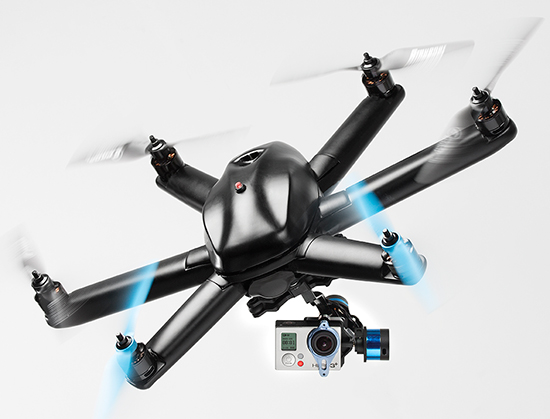
    HEXO+, an autonomous flying camera system, by Squadrone Systems will exhibit at CES 2015. Photo: Squadrone Systems
    HEXO+, an autonomous flying camera system, by Squadrone Systems will exhibit at CES 2015. Photo: Squadrone Systems

    The Consumer Electronics Association today announced the debut of the Unmanned Systems Marketplace at the 2015 International Consumer Electronics Show (CES). Owned and produced by CEA, the International CES is a gathering place for those who thrive on the business of consumer technologies. The 2015 CES is scheduled to run January 6-9, 2015, in Las Vegas, Nevada.

    The Unmanned Systems Marketplace highlights the burgeoning technology in drones, unmanned aerial vehicles (UAVs), and other unmanned systems controlled by onboard computers or remotely from the ground. In its first year at the CES, the Unmanned Systems Marketplace is expected to cover 6,500 square feet of exhibit space with room for about 16 high-end commercial and consumer UAV technology companies.

    According to CEA research, the global market for consumer drones will approach $130 million in revenue in 2015, increasing by 55 percent from 2014, with unit sales of consumer drones expected to reach 400,000. The revenue from drone sales is expected to easily exceed $1 billion in just five years.

    “Drones and unmanned systems are being used to assist in a variety of applications, from aerial coverage for sports and real estate, to assistance in search and rescue and disaster relief missions,” said Karen Chupka, senior vice president, International CES and corporate business strategy, CEA. “We’re excited to introduce the Unmanned Systems Marketplace at the 2015 CES and witness how these unique tools are revolutionizing the way we capture and monitor our world.”

    The Unmanned Systems Marketplace will be located at CES Tech East, in the Las Vegas Convention and World Trade Center (LVCC), South Hall 2. Tech East includes the LVCC, the Westgate Las Vegas , and Renaissance Las Vegas. Major exhibitors located within the Unmanned Systems Marketplace include AirDog, Squadrone, Trace, DJI, iRobot, Trace, Torquing Group DBA ZANO, Ecovacs, EHang, Autel, Pelican Products, and other brands.

    The 2015 CES will feature 20 category-specific marketplaces highlighting innovation across diverse product areas. Companies interested in exhibiting in the Unmanned Systems Marketplace should contact Oleg Burdo at [email protected] or 703-907-5257.

    Registration for the 2015 CES is open. For more information on the 2015 CES, visit CESweb.org.

  • Icaros to Demonstrate Measuring Tool for Oblique Imagery at InterGeo

    Icaros_Intergeo

    Icaros Inc., a provider of advanced aerial remote sensing and 3D visualization solutions, will demonstrate the Icaros Measurement Tool (IMT) at the 2014 InterGeo Conference in Germany. Designed for use with oblique aerial imagery, IMT is a simple but powerful photogrammetric visualization application based on ArcGIS technologies, the company said.

    To view a demonstration of the IMT, visit Icaros in stand #A4.009 Hall 4.1 at the InterGeo Conference and Trade Fair being held in Berlin on October 7-9.

    The IMT is a universal oblique measurement tool. It enables customers working within Esri’s GIS environment to view and measure structures in oblique aerial imagery captured by any commercial oblique sensor system, including those from Pictometry, Vexcel/Microsoft, IGI, Leica, and Midas. IMT works equally well measuring images captured by oblique sensors mounted on unmanned aerial vehicles (UAV).

    “Icaros is opening the oblique market to all GIS users by enabling them to purchase imagery from any of the growing number of aerial oblique data providers,” said Richard Baumgartner, vice president of Business Development at Icaros. “For too long, the purchase and use of oblique imagery have been limited by proprietary collection systems and metadata formats.”

    Access to additional oblique vendors will reduce data costs in the long run, Icaros said. In addition, IMT lets users unlock the full potential of their imagery by combining 3D analysis capabilities with their GIS data. The tool is specifically designed to make highly accurate vertical and horizontal 3D measurements of structures and surfaces, including calculating distances, areas, slopes, and azimuths in complex 3D features.

    Baumgartner explained that oblique imagery is already used extensively in tax assessment and public safety applications, but many other markets are waiting to be served by off-nadir image data. The Icaros vision is to expand the use, visualization and analysis of oblique aerial images into the entire spectrum of GIS markets. Oblique analysis of structures can be beneficial to a host of new applications such as facility management, pipeline corridor infrastructure monitoring, energy audits, economic development, and asset management.

    “Asset and facility management are the next big applications for oblique imagery within the emerging 3D GIS market,” said Baumgartner.

    As GIS users continue the move to 3D, oblique imagery will be critical for constructing accurate image-based realistic 3D models. IMT enables users to manipulate and view oblique imagery while leveraging other geospatial data layers within their GIS environment. This capability allows users to navigate multi-image scenes in three dimensions while zooming and panning.

    The IMT software also provides an optional Icaros Digitizer Tool (IDT) for generating 3D models. “IDT provides additional tools to extract physical building structures and digitize them into open format models, such as Collada, Obj, and Ply, textured from the source imagery,” Baumgartner said. “Automated 3D model generation from oblique imagery is at the intersection between imagery and GIS.”