Tag: UAVs

  • Report on cities and drones released by National League of Cities

    Report highlights crucial information cities need when regulating drones

    The National League of Cities (NLC) has released Cities and Drones, a new report that provides cities with insight on the recently released Federal Aviation Administration (FAA) rules relating to drone operation.

    The report also provides suggestions for how local governments can craft their own drone ordinances to encourage innovation while also protecting their cities.

    In 2015, world sales of drones hit 4.3 million. Cities are using drones in a variety of ways, including for law enforcement and firefighting, as rural ambulances, and for inspections, environmental monitoring and disaster management. Commercial uses include precision farming, aerial photography, and — in the near future — package delivery.

    “This report serves as a primer on drones for local officials,” said National League of Cities (NLC) CEO and Executive Director Clarence E. Anthony. “Whether they are revolutionizing search and rescue capabilities or helping realtors show off their homes, drones are lowering the cost and increasing the reach of airborne services. As our skies are becoming more crowded, cities must be able to decide how and when they want to see drones used in their communities.”

    According to NLC, city officials must tackle three spheres of drone activity: private use, public use and commercial use. “To protect communities, promote innovation and avoid preemptive regulatory action, cities should focus on the following issues when enacting a drone related ordinance: using land use and zoning powers to designate when and where drones may take off, land and operate, as well as any operational limitations or criteria; creating an ordinance that punishes operators for operating an unmanned aircraft in a manner that recklessly endangers persons or property while considering appropriate enforcement infrastructure.”

    The National League of Cities (NLC) is dedicated to helping city leaders build better communities. NLC is a resource and advocate for 19,000 cities, towns and villages, representing more than 218 million Americans. www.nlc.org

  • Commercial drone services could reach $8.7 billion annually by 2025

    According to a new report from Tractica, by the end of the next decade, annual revenue from drone-enabled services will be more than double the revenue from sales of commercial drone hardware units themselves.

    The market intelligence firm forecasts that global commercial unmanned aerial vehicles (UAVs) services revenue will grow from $170 million in 2015 to $8.7 billion by 2025.

    UAVs are gaining significant traction in a variety of industries, including oil and gas, insurance, public safety, film and media, and agriculture. While the number of drones being shipped for commercial markets is often the most visible trend, the largest revenue opportunity in the sector lies in the various services that these drones will enable.

    The largest service applications will be mapping, aerial assessment and prospecting, but smaller opportunities for drone services will also include disaster relief, early warning systems, data collection and analytics, environmental monitoring, package delivery, and filming and entertainment.

    “Commercial drone operators around the world are quickly realizing the potential for UAVs to be harnessed for a variety of services in a more efficient manner than can be achieved using conventional means such as satellites or aircraft,” said managing director Clint Wheelock. “Most commercial applications for drones are related to aerial imaging or data analysis, taking advantage of low-cost components and ever-increasing sensor capabilities.”

    Wheelock added that, while regulatory and business barriers remain to the more widespread use of drones for commercial purposes, the path ahead is becoming steadily clearer as business models and policy frameworks continue to be refined in countries around the world.

    Tractica’s report, “Drones for Commercial Applications,” examines the market trends and technology issues surrounding the commercial drone industry and presents a comprehensive analysis of the drivers and inhibitors of market development, the regulatory landscape, business models and supply chain considerations.

    The report includes a 10-year forecast for drone hardware unit shipments and revenue, segmented by industry, airframe type and world region, in addition to drone-enabled services by application area. An Executive Summary of the report is available for free download on the firm’s website.

  • Quanergy announces new lidar sensor at Xponential

    Quanergy Systems, a provider of lidar sensors and smart sensing solutions, is offering a new sensor.

    Quanergy's S3 lidar sensor
    Quanergy’s S3 lidar sensor

    The S3-Qi is a miniature solid-state lidar sensor that is 15 percent the size of the previous solid-state model, the S3. Quanergy is displaying the new sensor along with its other products in Booth 767 at AUVSI’s Xponential May 3-5 in New Orleans.

    The S3-Qi, offered four months after the original S3, has a smaller 1 inch by 1.5-inch footprint, weighs about 100 grams and has low power consumption. The small form factor, combined with a cost-effective design, makes the S3-Qi well suited for applications such as drones, intelligent robotics, security, smart homes and industrial automation.

    Mass production of the S3-Qi is targeted for the first quarter of 2017.

    “We are excited to raise the bar, once again, with the expansion of our product portfolio,” said Louay Eldada, Quanergy CEO. “We continue to push the boundaries on behalf of our customers. The S3-Qi is a testament to our focus on the user and our investment in innovation for game-changing smart sensing solutions offered at price points that make their use ubiquitous. In drones, payload and battery runtime benefit greatly from our compact sensors.”

    Quanergy’s lidar sensors have applications in more than 30 market verticals including security, transportation, terrestrial and aerial mapping, and industrial automation.

  • Live from AUVSI’s Xponential 2016

    UnmannedSystemsLogoThe GPS World and Geospatial Solutions staff is reporting live from the Association for Unmanned Vehicle Systems International‘s (AUVSI’s) Xponential 2016 May 2-5 in New Orleans. The event convenes the global community of commercial and defense leaders in intelligent robotics, drones and unmanned systems.

    More than 8,000 industry leaders and professionals from more than 55 countries are discussing the latest innovations in the unmanned systems market this week. Hundreds of educational sessions are providing information about the future of unmanned systems policy, regulations and technology. Also, the show’s Startup Showdown has $15,000 in cash prizes and mentorship opportunities for start-up companies.

    Award-winning journalist Miles O’Brien, the science correspondent for PBS NewsHour, is hosting the event. Keynote speakers include Michael P. Huerta, administrator of the Federal Aviation Administration (FAA); Gen. David G. Perkins, commander of the U.S. Army Training and Doctrine Command; Gur Kimchi, co-founder and vice president of Amazon Prime Air; and John Chambers, executive chairman of the board of Cisco Systems.

    A panel of industry thought leaders, moderated by AUVSI’s president and CEO Brian Wynne, are discussing the future of unmanned systems: U.S. Rep. Frank LoBiondo, chairman of the House aviation subcommittee; Frank Kelley, deputy assistant secretary of the U.S. Navy for Unmanned Systems; Marke Gibson, senior advisor for UAS integration at the FAA; and John Cavolowsky, Ph.D., director of NASA’s Airspace Systems Program.

    Check back throughout the week for event updates, including news, photos, videos, tweets and more.

    NEWS

    Trimble offers GNSS module for system integrators (5/5)

    FAA establishing advisory committee on UAV integration (5/4)

    DJI, PrecisionHawk partner on UAV remote sensing for agriculture (5/3)

    SOAR Oregon backs UAS FutureFarm for digital agriculture (5/3)

    IMSAR sells UAV detect-and-avoid radar tech to Fortem (5/3)

    FLIR launches radiometric thermal camera for commercial drones (5/3)

    VectorNav launches tactical series of IMUs at AUVSI show (5/3)

    Commercial drone services could reach $8.7 billion annually by 2025 (5/2)

    Quanergy announces new lidar sensor at Xponential (5/2)

    Echodyne offers detect and avoid radar for small UAS (5/2)

    Arcturus VTOL UAS deployed with the Mexican Navy (5/2)

    uAvionix debuts pingRX receiver for small drone collision avoidance (5/2)

    Insitu to focus on new commercial division at Xponential 2016 (5/2)

    VIDEO PLAYLIST

  • Registration now open for May webinar on UAVs

    Unmanned aerial vehicles (UAVs) — both their design and their many applications — are the topic of GPS World‘s May webinar. The free webinar is scheduled for Thursday, May 19, at 1 p.m. EDT. Register here.

    The webinar, sponsored by Septentrio, will engage you in discussions involving:

    • Self-generated radio-frequency interference aboard UAVs.
    • An autonomous relative navigation tool for in-air UAV refueling.
    • Sensor integration for a UAV designed for industrial environments.
    • Considerations for multi-GNSS integration onto UAV platforms.

    Speakers include:

    • Dennis Akos, a professor at the University of Colorado at Boulder.
    • Joshua Stubbs, a Ph.D. candidate.
    • Jeff Fayman, CTO, Geodetics.
    • Roy Jeunen, founder, AiRobot.
    • Jan Leyssens, product manager, Septentrio.

    Read the full details of each of the speakers’ presentations below.

    Dennis Akos, Professor, University of Colorado at Boulder
    Dennis Akos, Professor, University of Colorado at Boulder

    Subtopic 1: GNSS Robustness for Unmanned Aircraft Systems
    Presented by Dennis Akos, professor, University of Colorado at Boulder, and Joshua Stubbs, Ph.D. candidate
    When siting the antenna of a GNSS receiver or designing a GNSS-based navigation system, electromagnetic compatibility is an important concern. This is particularly true for airborne platforms. Akos discusses how radio-frequency interference can impact GNSS equipment on unmanned aircraft systems and how robustly the equipment can navigate those systems.

    Joshua Stubbs, Ph.D. candidate
    Joshua Stubbs, Ph.D. candidate

    Subtopic 2: Autonomous Relative Navigation
    Presented by Dr. Jeff Fayman, CTO, Geodetics
    Future UAVS will require relative navigation capability to fulfill a broad range of assisted manned and unmanned missions. A new approach, demonstrated in application to aerial refueling, provides access to accurate relative time-space positioning information (R-TSPI) between platforms.

    Subtopic 3: UAV Operation in Industrial Environments
    Presented by Roy Jeunen, founder, AiRobot
    The distance from an in-flight UAV to the industrial asset that it is observing or inspecting obviously has critical importance for safety, data precision and cost-effectiveness. The AiRobot Ranger counters this problem by displaying the distance between the UAV and the object of interest on multiple smart phones or tablets, ensuring the extra situational awareness that is crucial for professional UAV operations.

    Jan-Septentrio
    Jan Leyssens, Product Manager, Septentrio

    Subtopic 4: Practical Tips on How to Avoid Problems While Integrating High-Accuracy GNSS Receivers Aboard UAVs
    Presented by Jan Leyssens, product manager, Septentrio

    Register today. If you can’t attend the live event, you are invited to still register — you will be sent the on-demand version 24 hours after the event concludes. The on-demand version will be available until May 19, 2017.


  • Unlicensed UAV services threaten survey profession


    Unless one has lived under a rock for the past few years, it is hard to miss the influx of unmanned aerial vehicles (UAV), otherwise known as drones. Once considered expensive toys for hobbyists, these vehicles have become the hottest ticket in town for gathering aerial photography and video with professionals and amateurs alike.

    Miniaturization of cameras, batteries and GPS receivers has allowed these former toys to become important tools for many different users. Like so many other pieces of equipment that have become more affordable to the general public, it still requires trained and licensed experts to produce data and deliverables from the UAV and applicable software. The trouble with all this rapid growth in technology is finding truly qualified users who understand that UAVs are just another tool to compete a task and not a replacement for the trained and licensed professional.

    Surveyors are facing this challenge every day as technology races ahead. The market for UAVs in the surveying environment seems to have blossomed along with the worldwide boom. Services utilizing UAVs by the unlicensed and non-professional vendor is becoming the largest threat to the surveying profession. Firms advertising “eliminate expensive survey crews” are becoming more visible in print publications and on the Internet as cheaper alternatives to the licensed professional surveyor.

    To fully understand the hazard these individuals and firms are presenting to the public, we shall first look at the laws that govern the surveying profession. For example, from my home state is an excerpt of Illinois Professional Land Surveyor Act of 1989 (225 ILCS 330/) referring to measurements to be performed by the professional land surveyor (see excerpt at the end of this column.)

    This act defines the tasks that are to be undertaken by the licensed surveyor. Like most professions, the surveyor is required to obtain a bachelor’s degree with a specific number of surveying classes along with four years of responsible charge of surveying duties. Illinois State Statutes also declare that those who offer these services without the proper licensing or training can be charged with Class A misdemeanor for a first offense, and guilty of a Class 4 felony for a second or subsequent offenses.

    Part of being a professional surveyor is also utilizing the proper tools of the trade. For the past 20 years, GPS has become the single greatest asset to the surveyor. It has allowed many tasks to be completed in greatly reduced time with more accurate results. The surveyor now has several different GPS tools to choose from, depending on the task. In my last column, “Data is the crop — GNSS used by surveyors and farmers,” I wrote of the varying levels of GPS receivers used by land surveyors and mappers for different types of data collection. Here is a brief review:

    Mapping Grade GPS (>= 3 meters)
    This handheld unit is primarily used for mapping utilities and improvements that don’t require high accuracy.

    Differential GPS (<= 1 meter)
    These systems are used by hydrographic surveyors for use in mapping lake and river bottoms as well as surveyors working in open pit mines producing existing condition maps and volumetric surveys.

    Real time kinematic (RTK) (<= 2.5 centimeters)
    RTK systems range from base station/rover/radio combination to virtual reference systems (also known as “real time networks” or RTN) over cellular networks. These systems are prevalent with today’s surveyor as standard measuring equipment.

    While using any of these GPS types, surveyors have procedures for measuring and checking their results in a precise and particular manner. Most surveyors primarily use RTK or RTN-based systems for all of their work and require continuous data verification throughout the collection process. Control points and monuments are utilized for quality checks and verification in order to assure the work being performed meets the required accuracy standards.

    The integrity of the data is closely guarded by the surveyor as their duty to performing the job correctly and efficiently. These policies and procedures are also paramount to the work being performed remotely by a UAV under the direction of a surveyor, so the service being provided is professional.

    The consumer (and small business) side of the UAV industry, however, is much different. The costs vary from $100 and up, depending on rotors, batteries and camera capability. One of the main advances has been the implementation of GPS receivers but with much lower accurate positional information.

    Like the dashboard GPS screens in cars and now GPS on every smartphone, John Q. Public assumes that the geographic positions provided by the UAV receivers are very accurate and have little to no error. On the contrary, most GPS receivers in these units provide autonomous positions with horizontal accuracies in the 2-5 meter range (at best) and can follow a preset flight path created on a smartphone or tablet.

    Also, these UAVs and software have also opened the door to new opportunities for entrepreneurs everywhere. The high-definition cameras with capabilities including 4K video and 15-20 megapixel images allows the tech-savvy user to fly and collect aerial photography and video that rivals companies with a fleet of aircraft and expensive cameras. These images are used with software that stitches multiple shots together based upon GPS location and common elements in each image to create 3D models for terrain analyzation. No “on the ground” data verification or survey measurements are utilized to confirm the image’s integrity or scale.

    Many vendors are also offering verification of quantities in gravel pits and mining operations utilizing the volume calculation modules within the software. These images may be a pretty picture but for surveying purposes, they don’t pass the sufficient accuracy tests.

    In contrast, survey-specific UAVs and software will cost $25,000 and up, but are designed to provide the necessary accuracy required to perform a professional surveying task. Flight planning with state plane coordinate systems are most common, as these systems directly relate to the surveys being performed in conjunction with the aerial flights. Panel points are set for identification within the images to verify known distances and accuracy checks.

    Volume quantities can also calculate with greater accuracy based upon these methods and procedures. Surveyors are also using the technology to perform ongoing as-built conditions in order to provide construction sites progress reports of installation of improvements. All of these tasks are possible with the higher accuracy capability of the survey-grade UAV under the direction and guidance of the professional surveyor.

    The surveyor, with the professional knowledge of geographical and state plane coordinates, also understands the boundaries of “no fly zones” and the use of geofencing by the U.S. government and the UAV manufacturers. As these zones become more prevalent, knowing how to honor and adapt to them is already a staple in the surveyor’s tool bag.

    The State of Illinois is currently drafting rules for UAV operation that will coincide with the proposed rules due from the FAA in June 2016. While most concern from the public is in regard to privacy and public safety, I am concerned as a professional surveyor that the current trend of use of UAVs by unlicensed professionals for surveying and engineering services will harm the public as much as the other issues combined. Engineering designs that are based upon data collected by unlicensed professionals should not be accepted by governing bodies in an effort to protect the public. Licensed surveyors, utilizing the proper tools (including survey grade GPS and UAVs), provide the accurate data for these designs.

    Technology has made the UAV an exciting toy for most and a new tool for some industries, including surveying. Like any tool, proper use and instruction is necessary for the safety of the operator and the public. The UAV does not make its owner a surveyor, just as buying a pipewrench doesn’t make its user a plumber.

    For more information on UAV use and procedures, go to Know Before You Fly.


    Excerpt of Illinois Professional Land Surveyor Act of 1989

    (225 ILCS 330/5) (from Ch. 111, par. 3255)
    (Section scheduled to be repealed on January 1, 2020)

    Sec. 5. Practice of land surveying defined. Any person who practices in Illinois as a professional land surveyor who renders, offers to render, or holds himself or herself out as able to render, or perform any service, the adequate performance of which involves the special knowledge of the art and application of the principles of the accurate and precise measurement of length, angle, elevation or volume, mathematics, the related physical and applied sciences, and the relevant requirements of law, all of which are acquired by education, training, experience, and examination. Any one or combination of the following practices constitutes the practice of land surveying:

    (a) Establishing or reestablishing, locating, defining, and making or monumenting land boundaries or title or real property lines and the platting of lands and subdivisions;

    (b) Establishing the area or volume of any portion of the earth’s surface, subsurface, or airspace with respect to boundary lines, determining the configuration or contours of any portion of the earth’s surface, subsurface, or airspace or the location of fixed objects thereon, except as performed by photogrammetric methods or except when the level of accuracy required is less than the level of accuracy required by the National Society of Professional Surveyors Model Standards and Practice;

    (c) Preparing descriptions for the determination of title or real property rights to any portion or volume of the earth’s surface, subsurface, or airspace involving the lengths and direction of boundary lines, areas, parts of platted parcels or the contours of the earth’s surface, subsurface, or airspace;

    (d) Labeling, designating, naming, or otherwise identifying legal lines or land title lines of the United States Rectangular System or any subdivision thereof on any plat, map, exhibit, photograph, photographic composite, or mosaic or photogrammetric map of any portion of the earth’s surface for the purpose of recording the same in the Office of Recorder in any county

  • Micro module designed for UAVs, wearables

    GNSS module maker OriginGPS has launched the new Multi Micro Spider, which has a fully integrated and highly sensitive multi-GNSS module, with support for GPS, Glonass, BeiDou and Galileo.

    The Multi Micro Spider is designed for applications that require quick movement, minimal power consumption and ultra-small form factors, such as wearables and drones.

    Like its predecessor, the Multi Micro Hornet (ORG1510-MK), the Multi Micro Spider’s (ORG4033) module utilizes MediaTek’s MT3333 chip and its onboard flash memory to achieve a rapid update rate and positioning speed of up to 10 Hz.

    “With the Multi Micro Spider, we’re breaking new ground in what’s possible with GNSS footprints,” said Gal Jacobi, CEO of OriginGPS. “It’s a plug-and-play solution that will enable developers to easily improve performance of products while shortening time to market. Because of its size, low power consumption and high performance, the Multi Micro Spider is the perfect GPS and GNSS solution to power the location services for a wearable out on the go to a UAV tracking action sports.”

    Key features include:

    • Peak performance with ultra-small size — At just 5.6 mm x 5.6 mm, with a height of 2.65 mm, the Multi Micro Spider packs in a sub-one second Time To First Fix (TTFF) and sensitivity of -165 dBm for two simultaneous constellations. All of this achieved using less than 9 mW of power.
    • OriginGPS’ Noise Free Zone (NFZ) — The ORG4033 utilizes OriginGPS’ patented and proprietary NFZ technology for continued noise immunity and razor-sharp sensitivity even in poor signal conditions.
    • Onboard flash for market-leading update rate — With an onboard flash memory and an update rate of up to 10Hz, the Multi Micro Spider breaks the market’s standard update rate benchmark of 5 Hz for positioning, accurate to within 2.5 meters.
    • Intuitive design that facilitates shorter time to market — The Multi Micro Spider makes use of a developer-friendly design that allows for seamless migration from GPS to GNSS pin-to-pin compatibility. This both reduces overall development costs for new products and shortens their time to market.
    • Easy integration with OriginGPS’ miniature GNSS antenna solutions — The Multi Micro Spider can be easily integrated with the ORG12-4T-GNSS miniature patch antenna to get the best performance out of a compact form-factor.
  • Commercial drone sales to rise by 84 percent in 2016

    A new study from U.K.-based Juniper Research has found that annual revenues from commercial drones sales are expected to reach $481 million this year, up 84 percent from last year’s figure of $261 million.

    The new research — “Drones: Consumer & Commercial Applications, Regulations & Opportunities 2015-2020” — found that a low price point had significantly reduced the barrier to entry in many sectors, with high-performance models now available for less than $3,000. It claimed that the reduction in drone price points had in turn resulted in their commercial application within an array of new fields including mapping, inspection and monitoring.

    Agriculture to Lead Growth. The research argued that strongest growth would occur within the agricultural sector, which Juniper expects to account for 48 percent of all commercial drone sales this year. Here, UAVs (unmanned aerial vehicles) help save time and costs over other methods, such as walking fields on foot and using planes for fly-over filming. Furthermore, the ease of use of a UAV created for the sector allows for more regular crop surveying.

    Film and Television. The research also found that demand for UAVs in the film and television sectors is soaring. Drones provide a much cheaper and more flexible alternative to the use of helicopters and other methods to capture footage for the film and TV industry, particularly for action sequences.

    Delivery Drone Concerns. The research cautioned that a raft of privacy, safety and security concerns mean that the usage of drones for delivery purposes is likely to be severely constrained or even prohibited within built-up areas.

    According to research co-author Windsor Holden, regulators would be extremely wary of allowing planned services such as Amazon Prime Air and Google’s Project Wing to be offered, except as a means of delivering to isolated rural communities.

    “Regulators are understandably concerned that the deployment of delivery drones in inner cities would significantly increase the risk of potentially fatal collisions with cars or even pedestrians,” Holden warned.

    Terrorist Concerns. The research also claimed that there was a danger that delivery drones could be hacked by terrorists, conceivably delivering an explosives payload into areas where they would be capable of causing high levels of civilian casualties.

    According to Juniper Research, the report:

    • details and segments the various UAVs available in the market.
    • assesses how drone development will proceed in light of stringent safety and privacy concerns and regulatory hurdles.
    • analyses key market drivers, technological trends and challenges that currently influence market potential.
    • determines scenarios that will impact future demand.
    • provides in-depth forecasts across a range of key metrics.

    Also, a new white paper, “Game of Drones,” is available to download from the Juniper website together with further details of the full research and the attendant Interactive Forecast Excel (IFxl).

  • Intel to acquire German drone company Ascending Technologies

    Intel CEO Brian Krzanich demonstrated the broad capabilities UAV technology during his keynote presentation at the 2016 Consumer Electronics Show Jan. 5, in Las Vegas. Krzanich showcased the Yuneec Typhoon H with Intel RealSense Technology. (Photo: Intel)
    Intel CEO Brian Krzanich demonstrated the broad capabilities UAV technology during his keynote presentation at the 2016 Consumer Electronics Show Jan. 5, in Las Vegas. Krzanich showcased the Yuneec Typhoon H with Intel RealSense Technology. (Photo: Intel)

    Intel has signed a definitive agreement to acquire Ascending Technologies, a drone company located in Krailing, Germany, that produces drone auto-pilot software and algorithms.

    Intel has already partnered to combine Ascending Technologies’ sense-and-avoid algorithms with Intel RealSense technology’s real-time depth-sensing capability. These technologies can improve drone safety, helping them avoid obstacles and collisions.

    With Ascending Technologies, Intel gains expertise and technology to accelerate the deployment of Intel RealSense technology into the fast-growing drone market segment. The Ascending Technologies team is expected to continue supporting its current customers while also collaborating with Intel’s Perceptual Computing team to develop unmanned aerial vehicle (UAV) technology that can help drones fly with more awareness of their environments.

    “Drones are quickly emerging as an important computing platform of the future, writes Josh Walden on an Intel blog. “With practical applications ranging from disaster response, to infrastructure inspection, to delivery of goods, UAVs offer an incredible opportunity for innovation across a multitude of industries. As a result, Intel is positioning itself at the forefront of this opportunity to increasingly integrate the computing, communications, sensor and cloud technology required to make drones smarter and more connected.”

  • Expert Opinions: FAA UAV registration requirement

    Q: What do you think of the FAA requirement that all UAV purchasers register their devices?

    Lydia Bock President and CEO Geodetics Inc.
    Lydia Bock
    President and CEO
    Geodetics Inc.
    A: We need a pragmatic and sensible response to the integration of UAVs into the civil airspace, balancing safety of civil aviation and the economic benefits associated with the emerging markets and applications of UAV technologies.

    Clearly maintaining flight safety in the national airspace is critical. A balanced approach would include registration of UAVs, education for hobbyists and FAA flight certifications for commercial operations.

    New technologies for automated sense-and-avoid should be investigated, and their certification for use should be streamlined.


    John Studenny Director System Engineering Esterline - CMC Navigation Systems
    John Studenny
    Director System Engineering
    Esterline – CMC Navigation Systems
    A: Registration of all radio-controlled (RC) aircraft or UAVs upon purchase may be too broad or harsh, and may conflict with current freedoms already enjoyed by hobbyists.

    However, as capabilities (altitude, speed, flight duration, payload capacity) increase beyond what today’s RC aircraft or UAVs can deliver, regulations and registration may be required.

    It comes down to UAV capability and how the UAVs are used. That needs to be the focus of any regulation or enforcement.

  • UAV Registration Requirement Announced, Task Force Formed

    UAV Registration Requirement Announced, Task Force Formed

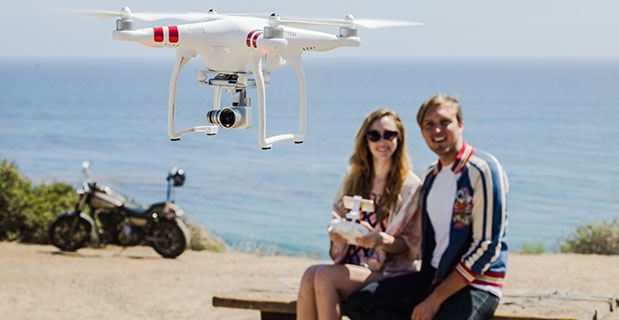
    The popular DJI Phantom 3. (Photo credit: DJI)
    The popular DJI Phantom 3. (Photo credit: DJI)

    New Task Force to Develop Recommendations by Nov. 20

    WASHINGTON — U.S. Transportation Secretary Anthony Foxx and FAA Administrator Michael Huerta today announced the creation of a task force to develop recommendations for a registration process for Unmanned Aircraft Systems (UAS).

    The task force will be composed of 25 to 30 diverse representatives from the UAS and manned aviation industries, the federal government and other stakeholders. The group will advise the department on which aircraft should be exempt from registration due to a low safety risk, including toys and certain other small UAS.  The task force also will explore options for a streamlined system that would make registration less burdensome for commercial UAS operators.

    The task force may make additional safety recommendations as it deems appropriate.  Secretary Foxx directed the group to deliver its report by Nov. 20.

    “Registering unmanned aircraft will help build a culture of accountability and responsibility, especially with new users who have no experience operating in the U.S. aviation system,” Foxx said.  “It will help protect public safety in the air and on the ground.”

    Every day, the FAA receives reports of potentially unsafe UAS operations. Pilot sightings of UAS doubled between 2014 and 2015.  The reports ranged from incidents at major sporting events and flights near manned aircraft, to interference with wildfire operations.

    “These reports signal a troubling trend,” Huerta said.  “Registration will help make sure that operators know the rules and remain accountable to the public for flying their unmanned aircraft responsibly. When they don’t fly safely, they’ll know there will be consequences.”

    While the task force does its work, the FAA will continue its aggressive education and outreach efforts, including the Know Before You Fly campaign and No Drone Zone initiatives with the nation’s busiest airports. The agency also will continue to take strong enforcement action against egregious violators. At the same time, it will continue working with stakeholders to improve safety to ensure further integration and innovation in this promising segment of aviation.

    Secretary Foxx was joined by representatives from the following stakeholder groups:

    Read statements in support of today’s announcement.

    Read our earlier story about the announcement, U.S. Will Require Registration of Drones.

  • Amazon Delivery Drone Plans Include Tiered Flight Zones

    Amazon has announced a plan for its package-delivery drones, according to NBC News.

    The proposal includes tiered flight zones that would limit small unmanned aircraft systems (sUAS) to slow speeds in airspace below 200 feet and allow them to fly faster for long-distance travel between 200 and 400 feet.


    Commercial aircraft are governed by the Federal Aviation Administration’s (FAA’s) Air Traffic Control, and in Amazon’s vision, there would be a similar central command and control network that takes in data about the position of each drone and shares it with every other vehicle connected to the network. The command and control network would also have vehicle-to-vehicle communication, similar to networks proposed for autonomous automobiles.

    Amazon’s plan would be to use the space below 500 feet — minus a 100-foot buffer — for small drones such as its Prime Air vehicles.

    Access to the various layers of the airspace would be governed by how well a drone can communicate with its pilot, the command and control network and other drone, according to The Verge website. “Everyone can have access to the airspace,” said Gur Kimchi, who heads up Amazon’s Prime Air program. “It doesn’t matter if you’re a hobbyist or a corporation. If you’ve got the right equipment, you can fly.”

    Someone operating a radio-controlled quadcopter with no Internet connection would be relegated to the area below 200 feet.