Sales of smart glasses, smart watches and wearable fitness trackers reached 8.3 million units worldwide in 2012, up from 3.1 million devices in the previous year, according to researchers at Berg Insight. Growing at a compound annual growth rate of 50.6 percent, total shipments of wearable technology devices are expected to reach 64.0 million units in 2017.
According to the announcement, today wearable fitness and activity trackers constitute the vast majority of the shipments. By the end of the forecast period, smart watches are predicted to incorporate much of the functionality of these and will then be the largest wearable device segment. “A perfect storm of innovation within low power wireless connectivity, sensor technology, big data, cloud services, voice user interfaces and mobile computing power is coming together and paves the way for connected wearable technology,” said Johan Svanberg, senior analyst, Berg Insight.
The first generation of products appeal to specific markets and certain use cases, but refinement in design, technology and connectivity will broaden application areas and speed up market adoption. Initially, the wrist is the most attractive location for wearable devices, which is shown by the success of the Pebble smart watch and the popularity of wristband activity trackers such as the Nike Fuelband and the Fitbit Flex.
“However, today’s devices need to evolve into something more than single purpose fitness trackers or external smartphone notification centers in order to be truly successful,” continues Svanberg.
Berg Insight predicts that wearable technology will shift from being smartphone accessories into becoming proper stand-alone computing devices. Furthermore, closeness to the body and always aware capabilities will enable them to be more than merely miniaturized smartphones. Google, Sony and Samsung have already launched products and other major players such as Apple and LG are expected to soon enter the market. Wide market availability of wearable devices also raises privacy concerns. “It is still uncertain where lines should be drawn, but as in the case with most new technology, individual users and solution providers have the responsibility not to misuse the capabilities enabled by wearable tech,” concludes Svanberg.
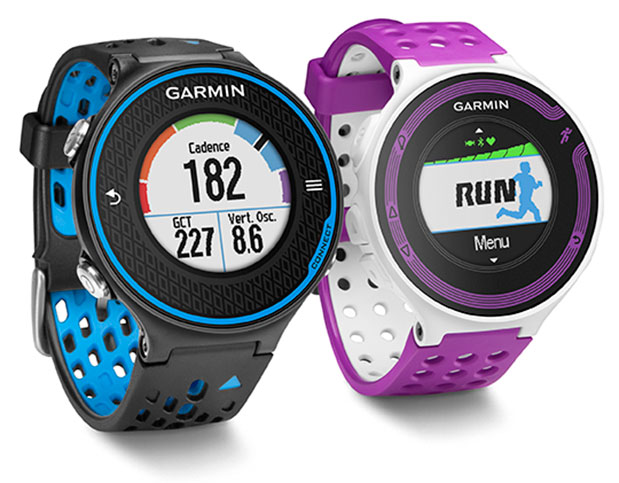
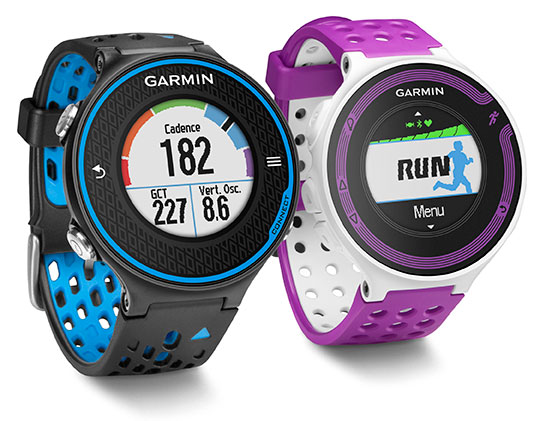
Garmin International Inc., a unit of Garmin Ltd., the global leader in satellite navigation, is now offering the Forerunner 620 and Forerunner 220 GPS running watches, both of which have color displays. The Forerunner 620 offers advanced features like recovery advisor, race predictor and VO2 max (maximal oxygen uptake) estimate to help runners train and achieve race goals. When used with the new HRM-Run (heart rate) monitor, the 620 also provides feedback on running form.
For indoor training, such as on a treadmill, the 620 and 220’s built-in accelerometer tracks distance and pace, so runners don’t need a separate sensor. Both models boast Garmin’s unique one-inch Chroma color display to easily interpret data.
“Whether running indoors or out, Forerunner 620 and 220 will change the way runners look at training,” said Dan Bartel, Garmin vice president of worldwide sales. “Advanced features in the 620 such as recovery advisor, VO2 max estimate, race predictor and stats on running economy, combined with connected features and training plan options found in both the 620 and 220, make these watches must haves for runners of all levels. To keep runners motivated the watches also notice if runners hit any personal records on that run, like their fastest mile, 5k, 10k, half or full marathon or their longest run to date.”
Regardless of a runner’s experience, motivation, or how far or fast they go, they likely want to know how they can improve and objectively measure their fitness. Forerunner 620 does just that by estimating runners’ VO2 max, which is a good indicator of athletic capability. Previously, the only way to accurately obtain VO2 max was by paying for a lab test.
When used with a heart rate monitor, the 620 incorporates several pieces of data, like running speed, beats per minute and heart rate variability, into an advanced algorithm to estimate runners’ VO2 max. The number itself indicates the maximum volume of oxygen a runner can consume per minute, per kilogram of body weight at their max performance. Theoretically, the more oxygen runners can use during high-level exercise, the more energy they can produce. A color gauge on the watch display shows how a runner’s VO2 max data compares to other individuals of their gender and age range. Based on the VO2 max estimate, the 620 can predict a runner’s race time for several distances. This can give runners a time target for their next race, assuming they’ve completed proper training.
When wearing HRM-Run, Forerunner 620’s recovery advisor and recovery check take the guesswork out when it comes to planning recovery time between hard workouts. Just like a coach, it learns the runner and their physiology based on heart rate data, so it factors this against their last workout and then shows how much time before they are fully recovered and ready for their next hard running workout. Color-coding on the high-resolution Chroma display gauge makes it easy to interpret — green means they are good to go. When runners see red on the display and a recovery time of more than three days, they might consider taking a rest day or just doing a light recovery run.
HRM-Run also has an accelerometer in the module that measures torso movement in order to calculate 3 different running metrics:
Cadence — the number of steps per minute. It displays the total steps (right and left combined)
Vertical oscillation — the bounce in runners’ running motion. It displays the vertical motion of a runners’ torso, measured in centimeters.
Ground contact time — the amount of time in each step that you spend on the ground while running, measured in milliseconds.
Thanks to their Bluetooth Smart wireless upload capabilities, Forerunner 620 and 220 can send runners’ run data to the Garmin online community, Garmin Connect, without being connected to a computer. It can transfer the data through the Garmin Connect Mobile app on their compatible smartphone. Additional connected features include live tracking, which allows runners’ friends and fans to follow along and see their stats in real-time. Runners must have their phone paired with their 620 or 220 throughout the run to use the LiveTrack feature. Victories, goals achieved and successes can be shared on runners’ social media sites by posting updates through the Garmin Connect Mobile app.
With the growing popularity of the run/walk training method in the distance running community (example: a runner runs for five minutes, walks for one minute and repeats for the duration of the course), Garmin has included a run/walk alert. This alert allows Forerunner 620 and 220’s other features, such as, Auto Lap and Auto Pause, to remain active during a run/walk session.
Both Forerunner 620 and 220 are water-resistant to 50m and can stand up to much more than rain, sweat and splashes. The Forerunner 620 has a touchscreen display responsive enough that it can be operated with running gloves, while the 220 is operated with easy to push buttons. Both models have rechargeable batteries lasting up to six weeks in watch mode and up to 10 hours in training mode.
GTX Corp, which specializes in putting GPS technology in consumer products, and Atlantic Footcare have signed a manufacturing and distribution agreement to develop and launch GPS embedded insoles. Under the agreement, Atlantic Footcare will be making an investment of $200,000 to advance the development of the new GPS SmartSoles.
Atlantic Footcare, headquartered in Rhode Island, has been a designer and manufacturer of insoles for more than twenty years and supplies many of the major athletic and shoe companies, national retail chains, and the U.S military with high-quality and comfort insoles. Atlantic Footcare has experience in embedding electronics inside insoles through other partnerships and alliances and has completed the first prototypes of the GPS SmartSoles, which are undergoing testing.
“This relationship and investment with GTX is a great opportunity to couple technology with an insole, enabling us to produce a truly innovative and cost effective solution to meet today’s growing personal tracking needs. We are very excited at the opportunity to be at the forefront of wearable GPS tracking technology,” said Charlie Sipes, Atlantic Footcare president.
GTX Corp had been researching ways to further miniaturize its GPS module to penetrate new markets and expand current ones. “Compared to our existing module, this next gen is approximately 30 percent smaller, thinner, and lighter; 20 percent less expensive; and has 200 percent more battery life. It is equipped with a motion sensor and advanced A-GPS technology for pinpoint accuracy and rapid time to first fix,” said GTX Corp CEO Patrick Bertagna. “The opportunity to partner with Atlantic Footcare opened up and with this latest next generation device, embedding the module inside an insole was a natural next step.”
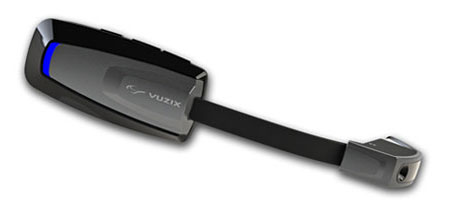
Vuzix Corporation today announced that it has begun shipping M100 Smart Glasses to the first of its Gold developer partners — enabling them to start creating and testing their apps on the real hardware.
The M100 Smart Glasses are a smart hands-free display and communications device for mobile data access, once paired to a smartphone and connected to the Internet. The glasses include an integrated head tracker and GPS for spatial and positional awareness.
Vuzix is a supplier of Video Eyewear products in the consumer, commercial and entertainment markets.
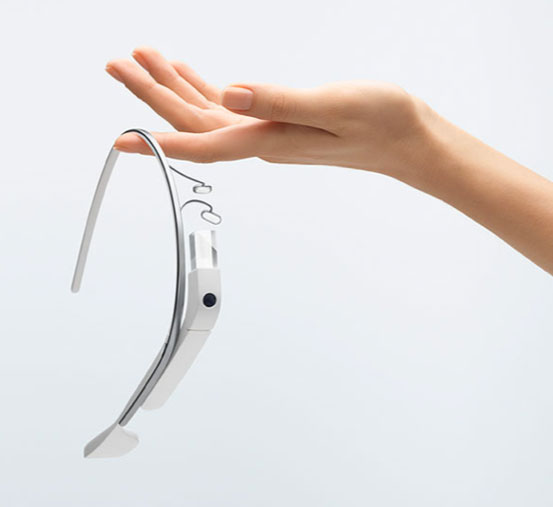
Google Glass
The M100 is in competition — and a race to market — with Google Glass, a similar wearable device. Google recently held a contest to provide sample sets of the glasses to non-developers willing to pay $1,500 — which encouraged Internet and media buzz.
M100 Smart Glasses
Google Glass could be released to the mass market by the end of the year. Google Inc. already sold an unspecified number of the glasses to developers who also paid $1,500 apiece at a company conference in June 2012. The mass-market version of Google Glass is expected to cost less than $1,500, but more than a smartphone.
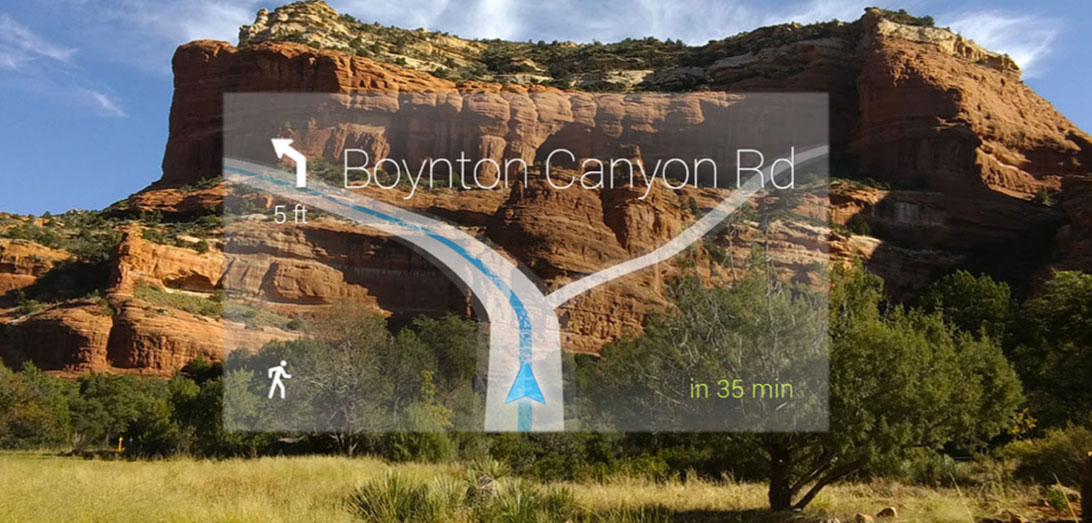
Like the M100, Google Glass is intended to perform many of the same tasks as smartphones. The glasses include a little display screen attached to a rim above the right eye, run on Google’s Android operating system, and respond to voice commands, which is intended to make it easier for people to take pictures or record video wherever they might be (such as skydiving or riding a rollercoaster). Here is a video showing the glasses in action:
When he demonstrated the glasses at last June’s company conference, Google co-founder Sergey Brin acknowledged the company was still working out bugs and trying to figure out how to extend the product’s battery life.
Privacy Concerns. The ease of taking pictures and recording video with the glasses is causing some to question whether privacy will be affected. zdnet blogger Ben Woods writes, “These glasses can instantly capture and store every move of everyone around the person wearing them. Remember that drunken argument you had with your partner? Well, now Google Glass will mean you have no possibility of forgetting it. If it’s entertaining enough, or you’re well-known enough, the video of that argument could well be on YouTube before you get home. Do you do a lot of business on the phone while out and about or while sitting in coffee shops? Will you continue to, if you know that every call could be recorded by the stranger sitting at the table opposite, staring innocently at the picture on the wall behind your head?”
Google first began developing the glasses in 2010 as part of a secretive company division now known as Google X.
How the M100 is worn.
Vuzix Showstopper. Displayed at Mobile World Congress in February as a “Showstopper,” the M100 contains a near-eye micro display with an integrated camera and powerful processor running an Android OS. It connects wirelessly to a user’s smartphone (iOS or Android) or other compatible device via Bluetooth or Wi-Fi, can connect directly to the Internet, and run applications and games on its own. Working in harmony with a user’s smartphone, the M100 enables access to a vast array of existing and future text, video, GPS, and audio applications, Vuzix said.
With the glasses, users can answer the phone using a visual address book, record video and run applications, including basic augmented reality apps. Interactive tracking and an integrated camera, combined with newly developed applications on the M100 and a wireless link to the Cloud, enable the merging of virtual information with the real world. An integrated camera enables video recording, still image capture and the potential for powerful augmented reality applications.
Industry, Medical. “Although we are seeing applications developed in most every market, there has been a strong focus on the industrial and medical markets,” said Paul J. Travers, chief executive officer.
“Our Company has a focus on developing the fundamental tools that enable applications from training to warehousing,” said Pete Wassell, president of Augmate Corporation, one of the first M100 Gold developers. “This new category of device is going to revolutionize many markets by injecting cloud-connected, hands-free and geospatially accurate information to applications that desperately need it. The M100 does a great job of delivering on that promise.”
The Vuzix developer program offers early access to the M100 smart glasses, technical support and advice. The M100 software developers kit is available in two versions, Gold and Silver. These SDKs are being delivered in stages and include frequent updates, hardware advances when released, and access to the developer center to provide technical and developer community support.
Because the demand is strong, Vuzix is delivering the first smart glasses on a first-come, first-served basis with custom-built prototypes going exclusively to its Gold Developers.
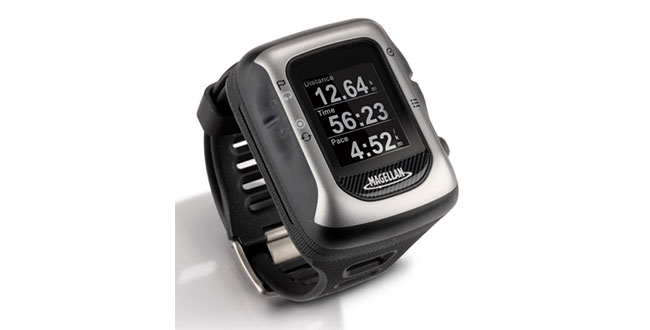
Magellan today announced that it has expanded the worldwide availability of the Magellan Switch Series of crossover GPS watches to Europe for athletes who run, bike, swim or participate in a variety of outdoor activities. The Magellan Switch and Switch Up watches are available this month from select retailers and through Magellan’s European distribution network.
To support its European users, Magellan has also expanded its Magellan Active website with additional languages including French, Spanish, German, Italian and Dutch as well as English. Magellan Active makes it convenient for multisport athletes who record their performance data on Magellan’s Switch Series to easily upload and track data online with intuitive charts, maps and metrics, from a single location, Magellan said.
“Magellan is continuing to further enrich the lives of multi-sport athletes worldwide with best-in-class fitness watches and innovative tools to help them take control of their active lifestyles,” said Clark Weber, Senior Director of Fitness Products for Magellan. “The Switch Series is rapidly gaining popularity with fitness enthusiasts, and we are pleased to work with our European distribution partners to make our GPS watches available to consumers throughout Europe.”
Both Switch watches include features such as an Activity Pacer that shows runners if they are on target with their goal, and provides specific targets to attain the desired result. The Switch GPS watch, designed primarily for runners, includes nine customizable sport profiles, high-resolution display, eight hours of battery life, a high-sensitivity GPS receiver, 50-meter water resistance, and compatibility with ANT+ sensors. The Switch Up GPS watch has the same features as the Switch GPS watch but includes a barometric altimeter for precise elevation data, a thermometer to monitor and capture outside temperature, vibration alerts for notification in louder environments, and a quick-release mounting system to transition between sports.
The Magellan Switch Series is available from Magellan’s European distribution partners serving UK, France, Germany, Turkey, Spain, Italy, Austria, Switzerland and Benelux.
Developer API Program. Magellan also is making available its Magellan Active Developer API program. Third-party websites and applications can now access activity data from Magellan Active and import data into their websites once customer permission has been granted. A Magellan Active Web Widget can be embedded in any website for uploading activities and gives users the ability to upload activities and perform device software updates from within a personal website or HTML Widget/Gadget.
The “vibrobelt,” proven successful in early tests, uses vibrating actuators that indicate left, right, backward and forward turn directions. Developed by Haska Steltenpohl of the Intelligent Systems Lab at the University of Amsterdam, the Netherlands, the system aims to give cyclists a “heads-up” navigator, allowing them to keep their eyes on the road after they have chosen their destination on a GPS smartphone.
The researchers plan to reveal their system and research results at the annual Intelligent User Interfaces conference in Santa Monica, California, in March.
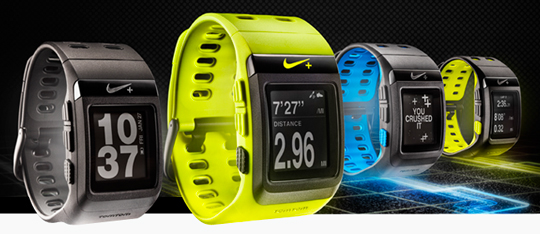
TomTom and Nike have unveiled a new range of the Nike+ Sportwatch, coinciding with the launch of a brand new Nike+ website. The range includes several editions and color combinations, and introduces a starter product for those new to running. Whether they own an original or new edition, all Nike+ Sportwatch users can now access Nike’s intelligent measure of athletic ability, Nikefuel. This converts a runner’s mileage into universal units that measure movements in a wide variety of different sports. As a result, it’s easy for people to compare their performance against that of athletes in other sports, and share their achievements with friends, the companies said. ”Our extended range of products will be very useful to those adding running into their exercise regime. And the new NikeFuel measurement brings added motivation, allowing people to share and compare their performance with friends in other sports,” says Corinne Vigreux, managing director, TomTom. The new Nike+ Sportwatch colors have been chosen to match Nike’s apparel and shoe ranges. They include black/anthracite, anthracite/blue glow, and high-impact volt green. The anthracite/blue glow edition is available as a starter product, priced at €149.
CONTACT INFO
Company: TomTom
Country: United States (USA)
URL: http://www.tomtom.com
TomTom and Nike today unveil a new range of the Nike+ Sportwatch, coinciding with the launch of a brand new Nike+ website www.nikeplus.com. The range includes several editions and color combinations, and introduces a starter product for those new to running.
Whether they own an original or new edition, all Nike+ Sportwatch users can now access Nike’s intelligent measure of athletic ability, Nikefuel. This converts a runner’s mileage into universal units that measure movements in a wide variety of different sports. As a result, it’s easy for people to compare their performance against that of athletes in other sports, and share their achievements with friends, the companies said.
“Our extended range of products will be very useful to those adding running into their exercise regime. And the new NikeFuel measurement brings added motivation, allowing people to share and compare their performance with friends in other sports,” says Corinne Vigreux, managing director, TomTom.
The new Nike+ Sportwatch colors have been chosen to match Nike’s apparel and shoe ranges. They include black/anthracite, anthracite/blue glow, and high-impact volt green. The anthracite/blue glow edition is available as a starter product, priced at €149.