Blog

  • Cavli CQM220 5G RedCap Module designed for next-gen IoT applications

    Cavli CQM220 5G RedCap Module designed for next-gen IoT applications

    Cavli Wireless offers the CQM220 5G RedCap module as a key part of its C-Series portfolio. Built on 3GPP Release 17 standards, the CQM220 brings the benefits of 5G reduced capability (RedCap) technology to internet of things (IoT) applications that require higher data rates, lower latency, and improved efficiency compared to traditional LTE solutions, while maintaining a cost- and power-optimized design.

    Cavli Wireless is an end-to-end IoT solutions provider specializing in cellular IoT hardware, connectivity, and software.

    For location-centric and mobility-driven use cases, the CQM220 integrates multi-constellation, dual-band GNSS with L1 and L5 support, including GPS, GLONASS, Galileo, BeiDou, NavIC, QZSS and SBAS. Dual-band positioning improves accuracy, reduces multipath interference, and enhances reliability in dense urban environments, industrial corridors, ports, mining zones, and other signal-challenged areas. This advanced GNSS architecture enables consistent, high-precision location awareness for mobile and geographically distributed IoT assets operating in dynamic conditions.

    The CQM220 supports data rates of up to 220 Mbps downlink and 120 Mbps uplink under 5G RedCap, with LTE Cat 4 fallback for backward compatibility with 4G networks. This combination enables reliable operation across diverse network environments and ensures seamless migration toward 5G for OEMs and solution providers.

    Designed in a compact LGA form factor and additionally offered in an M.2 form factor, the CQM220 provides flexibility for both embedded designs and standardized expansion-slot implementations. The LGA variant measures approximately 28.0 mm x 25.5 mm x 2.7 mm, making it well-suited for compact device architectures while still offering rich peripheral and interface support.

    At the core of the CQM220 is an Arm Cortex-A7 processor clocking up to 1.9 GHz, paired with flexible memory configurations and the OpenWrt operating system. This architecture provides a robust platform for developers to build and deploy applications, while Cavli’s SDK enables custom application development directly on the module. By supporting on-module processing, the CQM220 reduces reliance on external microcontrollers, lowers the bill of materials, and simplifies overall system architecture.

    The combination of precise GNSS and high-throughput 5G RedCap connectivity enables a new class of performance-driven and monitoring-intensive IoT applications. The CQM220 is well-suited for real-time fleet and asset tracking with continuous telemetry, smart logistics platforms with route optimization and cargo condition monitoring, industrial automation systems that rely on uninterrupted sensor data streams, HD and multi-camera smart surveillance deployments requiring sustained uplink bandwidth, and Industry 4.0 environments where low-latency data exchange and edge intelligence are critical to operational efficiency and predictive maintenance. These capabilities make the module an ideal foundation for solutions that demand both accurate location intelligence and sustained high data performance at scale.

    In addition, the availability of the CQM220 in an M.2 form factor makes it an ideal choice for routers, industrial gateways, and customer premises equipment. The standardized M.2 interface enables seamless integration into existing networking hardware platforms, reducing development complexity and accelerating time to market. For industrial gateways, it provides a high-performance 5G RedCap backhaul option to aggregate field device data and securely transmit it to cloud platforms. In enterprise and retail routers, it enables reliable primary or failover WAN connectivity with enhanced throughput. For customer premises equipment in residential, enterprise, or remote deployment scenarios, the M.2 variant supports scalable 5G broadband access with simplified installation, efficient thermal design, and compatibility with modular network architectures.

    The module also offers a wide range of interfaces, including USB 2.0, PCIe Gen2, I2C, UART, SPI, SDIO, I2S, ADC, and multiple antenna interfaces for main, diversity, and GNSS. With support for global and regional 5G and LTE bands, the CQM220 is designed for worldwide deployments, enabling OEMs to build a single hardware platform for multiple markets.

  • Emesent offers SLAM, lidar, RTK and 360° imagery mobile scanner

    Emesent offers SLAM, lidar, RTK and 360° imagery mobile scanner

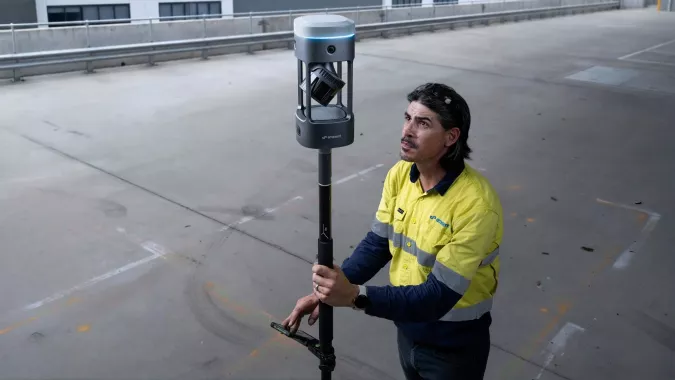
    Emesent has launched its GX1 all-in-one mobile scanning system at Geo Week 2026 in Denver.

    The GX1 is an integrated, highly accurate all-in-one mobile scanning system combining simultaneous localization and mapping (SLAM), lidar, real-time kinematic (RTK) georeferencing, cameras and software. The product marks a breakthrough for the autonomous mapping technology company.

    The GX1 supports a seamless workflow, from capture to validated deliverable. It not only brings Emesent’s proven SLAM technology to everyday surveying applications, but also eliminates the longstanding trade-off faced by survey firms and players in the architecture, engineering and construction (AEC) industry between mobile scanning speed and dependable survey-grade accuracy.

    According to Emesent, the GX1 can reduce the time required to survey a site by up to 95%, reducing what once took weeks into a single day of scanning. Meanwhile, the independently validated global accuracy of 5-10 mm delivers the precision needed for use cases across topographic and road surveying, scan to building information models, construction progress tracking and more.

    These capabilities are supported by integrated RTK georeferencing with real-time quality monitoring, four 20MP cameras for 360° panoramic imagery, and Emesent’s proven SLAM algorithm. This technology — which also powers the Emesent Hovermap product — was developed and validated in extreme real-world environments, including GPS-denied, underground locations to ensure repeatable accuracy and reliability both indoors and out. Accuracy validation reports are produced quickly and easily in the Aura processing software.

    With four purpose-built deployment modes — backpack, survey pole, vehicle mount and supported handheld — and integrated batteries for cable-free management, the GX1 offers a high degree of versatility. In addition, surveyors can capture data using RTK in the field or using ground control points and checkpoints in post-processing. This flexible georeferencing minimizes the risk of having to return to a site for redo.

    “With the introduction of the GX1, we’ve answered the call we’ve heard echoing throughout the surveying industry to end the tug-of-war between fast and accurate,” said Dr Stefan Hrabar, chief strategy officer and co-founder of Emesent. “By putting the power of SLAM into the hands of the everyday surveyor, the GX1 raises the bar for mobile scanning accuracy and keeps critical projects on track.”

    The launch of the GX1 comes at a pivotal moment for survey firms and the AEC industry. They are grappling with a shortage of experienced surveyors, while also facing mounting pressure from clients demanding faster, cheaper and better results without compromising on quality. The GX1 has been designed to be simple enough for junior surveyors to train on and deploy in a matter of days. At the same time, it is powerful enough to meet — and, according to Emesent, exceed — the real-world needs of professionals in the field.

  • Iridium launches next-generation IoT platform

    Iridium launches next-generation IoT platform

    Iridium Communications has unveiled the Iridium 9604, a compact, three-in-one internet of things (IoT) module that integrates Iridium short burst data satellite service, LTE-M cellular connectivity, and GNSS positioning into a single platform.

    By combining these features in one device, the Iridium 9604 reduces solution complexity, lowers costs, and accelerates time to market, making dual-mode IoT connectivity viable for price-sensitive, high-volume deployments.

    The Iridium 9604, built on the u-blox SARA-R5 platform, delivers a compact 16 x 26 x 2.4 mm form factor, best for dual-mode IoT deployments previously cost-prohibitive across industrial, infrastructure, and mobility applications.

    “By integrating cellular, GNSS and Iridium satellite into a single, power-efficient module, we’re giving customers the flexibility to design and deploy lower cost, smaller, power-efficient, and location-aware solutions without the burden of integrating multiple components,” said Tim Last, executive vice president, Iridium.

    The Iridium 9604 beta program, which launched earlier this year and was oversubscribed by a select group of companies, has generated positive industry feedback highlighting:

    • Lower costs, simplified design, and enabling of location-aware network selection
    • Savings of 60 percent or more in board space with the 3-in-1 module, Iridium’s smallest form factor
    • Easy-to-use developer resources.

    “Our customers require essential data and real-time intelligence to operate with confidence anywhere in the world,” said Dean Welten, CEO, Everlink. “By integrating the Iridium 9604 with our secure cloud platform, we can now enable global connectivity, greater operational efficiency, and measurable impact at scale.”

    A unified connectivity architecture

    Representing the next phase of Iridium’s IoT strategy, the Iridium 9604 is moving the company beyond traditional satellite-only modules to a unified, multi-mode connectivity architecture. The Iridium network now offers customers three IoT service paths:

    • Iridium SBD packaged with cellular and GNSS in the Iridium 9604 or SBD/Iridium Burst dedicated modules.
    • Iridium NTN Direct for standards-based direct-to-device using third-party chips.
    • Iridium Messaging Transport-based (IMT) for industrial-scale, larger payload capabilities with the Iridium Certus 9704.

    Commercial availability begins in June, with the Iridium 9604 Development Kit made available for testing satellite and cellular services.

  • Seekr launches beta for dual-use geospatial reasoning engine

    Seekr launches beta for dual-use geospatial reasoning engine

    Seekr has launched the beta testing of SeekrGeo, a geospatial reasoning engine. SeekrGeo provides advanced geospatial intelligence to enterprises and government agencies, accelerating actionable insights with launch partner Wyvern to deliver hyperspectral imaging capabilities.

    Wyvern, a hyperspectral imaging and Earth observation data company, provides a comprehensive licensing agreement as Seekr’s inaugural data partner. The alliance accelerates enterprise access to scalable, high-resolution hyperspectral imaging powered by AI-driven analysis that can reason, detect changes over time, and identify meaningful patterns in activity for both national security and commercial use cases including wildland fire management, supply chain intelligence, and countless other actionable VLM-based insights.  

    As geospatial intelligence (GEOINT) grows to a projected $63B market by 2030, the gap between data availability and usable intelligence continues to widen. Bringing together Wyvern data and Seekr technology fills the gap in the market, giving enterprises and government customers a way to both access multimodal hyperspectral data, and synthesize intelligence and actionable insights with SeekrGeo’s Remote Sensing Foundation Model built for multimodal understanding, contextual reasoning, and autonomous analysis.

    “Our first SeekrGeo customers required the use of Hyperspectral imaging to solve the most complex recognition problems. We recognized Wyvern for their best-in-class Hyperspectral LEO constellation and are very pleased to be working with them,” said Rob Clark, Seekr president.

    “The biggest barrier to hyperspectral adoption has never been the data, it’s been the difficulty of turning that data into applications,” said Chris Robson, Co-Founder and CEO of Wyvern. “Seekr’s geospatial foundation model changes the equation entirely. Instead of needing months of specialized development work, our customers will be able to build new applications in a fraction of the time at scale.”

  • Advanced Navigation provides navigation for underground mines following 2025 demo

    Advanced Navigation provides navigation for underground mines following 2025 demo

    Advanced Navigation has released a product for navigating underground mines, based on its technology demonstration in October 2025.

    Chimera Land is a 3D laser velocity sensor (LVS) designed to solve the primary challenge for underground mining: maintaining precise vehicle positioning in deep, dark, and unmapped environments where GPS cannot reach.

    When fused with an Advanced Navigation inertial navigation system (INS), Chimera Land allows underground vehicles to maintain stable navigation over extended distances and time. Instead of needing to “ask” an external beacon or satellite for its location, the sensor uses specialized lasers to measure a vehicle’s ground-relative 3D velocity with high accuracy. By feeding this precise data into the vehicle’s INS, the sensor eliminates the drift that typically comes with standalone INS.

    This integration uses AdNav Intelligence, the company’s proprietary software. Drawing on adaptive algorithms, the fusion engine dynamically weights the input from each sensor, adjusting reliance in real time based on their reliability scores, environmental conditions, and operational context.

    The result is a resilient, high-performance, infrastructure-light positioning solution that excels in the high-dust, zero-light conditions typical of underground mines.

    Chimera Land was demonstrated in Europe’s deepest underground mine as part of BHP’s Deep Mining Call. When integrated with Advanced Navigation’s high-performance Boreas D90 INS, the solution achieved a position accuracy of 99.9% of distance traveled. Crucially, this performance was maintained without relying on any fixed positioning infrastructure, pre-existing maps, or external aiding.

    Key performance benchmarks:

    • Precision at depth. The system delivered a final position error of 15.9m over a 22.9km transit (approx. 52 ft over 14 miles) at 1.4km underground.
    • INS drift reduction. Chimera Land actively reduced the drift rate to a mere 0.07% per distance traveled.
    • Repeatable accuracy. Validated across five separate runs, the system consistently hit an accuracy of better than 0.1%.
    • Infrastructure-light. Enables full vehicle autonomy even where fixed networks and infrastructure end.

    As mines move deeper and into more hostile geological frontiers, the cost of installing fixed infrastructure becomes prohibitive. Chimera Land is engineered to maintain high-confidence estimation in total darkness, heavy dust, and high-vibration mining environments.

    It allows for “infrastructure-lite” operations across the value chain.

    • Autonomous haulage systems (AHS). Enables continuous high-speed tramming in development areas without the need for pre-surveyed beacons.
    • High-Precision machine guidance. Provides the sub-decimeter velocity accuracy required for automated drill rig alignment and robotic scaling.
    • Dynamic Fleet Management. Real-time, sovereign localization allows for precise asset tracking and ore reconciliation, even in the deepest “dead zones.
    • Predictive collision avoidance. High-fidelity 3D velocity data improves the “time-to-collision” calculations for safety systems, reducing nuisance alarms.
  • Jammertest 2026 seeks applications for GNSS resilience demonstrations

    Jammertest 2026 seeks applications for GNSS resilience demonstrations

    Organizers of Jammertest, a large-scale trial of GNSS resilience technologies, is now open to applications. Jammertest 2026 will take place Sept. 14-18 in Norway.

    Application deadline is April 6. 

    Jammertest is an annual event held at Andøya, recognized as the largest open PNT/GNSS resilience testing event in the world. The event provides a unique opportunity to test the robustness of navigation and positioning systems. 

    For the fifth consecutive year, the Norwegian Public Roads Administration, Norwegian Communications Authority, Norwegian Defense Research Establishment, Norwegian Metrology Service, Norwegian Space Agency, Norwegian Mapping Authority, Avinor and Testnor will be organizing the event.

    Due to high demand, there will be an application process, and selected participants will be invited to attend. Jammertest partners reserve the right to select participants based on Norwegian national interest and needs.

    The application pertains to the entire organization and is not individual. This means that each organization only needs to submit one application.  

    To learn more about the application process, visit the Jammertest website.

  • CHC Navigation launches RS7 Handheld SLAM Scanner

    CHC Navigation launches RS7 Handheld SLAM Scanner

    Designed for BIM, indoor surveying and reality capture

    CHC Navigation announced the RS7, a new handheld SLAM (simultaneous localization and mapping) scanning solution, unveiled at the 2026 CHCNAV Connect Partner Conference.

    Built for BIM documentation, indoor surveying, renovation planning and complex spatial analysis, the CHCNAV RS7 is designed to help professionals capture high density 3D data efficiently and convert it into practical deliverables through CHCNAV’s software and cloud ecosystem.

    “Customers no longer evaluate hardware in isolation. They expect an end-to-end solution that shortens the path from 3D data capture to deliverables,” said Byron Yuan, senior vice president of CHCNAV. “CHCNAV RS7 combines high performance mobile scanning with an integrated workflow to support efficient operation in complex indoor environments.”

    High-density capture with multi-sensor fusion

    CHCNAV RS7 integrates a next generation lidar scanner capable of measuring up to 1.15 million points per second. Its wide field of view (360° x 189°) supports comprehensive coverage of floors, walls and ceilings, helping reduce the need for repeated passes and complex capture maneuvers in tight or cluttered spaces.

    RS7 also includes a high-precision inertial measurement unit with bias stability better than 0.5°/h. By combining lidar and inertial data, the system is designed to maintain stable motion estimation and consistent point-cloud quality in environments that challenge many mobile workflows, including long corridors, repetitive structures, and feature limited interiors.

    Integrated field-to-office workflow with cloud processing

    RS7 is supported by CHCNAV software ecosystem that covers scan setup, data review, and post processing. With integration to CHCNAV CoCloud, teams can adopt a “Cloud + Terminal” workflow for centralized management of projects and data. Field datasets can be uploaded for automated processing to generate common deliverables such as registered point clouds and mesh models.

    By automating key processing steps, the workflow can reduce turnaround time and lower the technical threshold required to convert raw capture into outputs suitable for design review, documentation, and downstream CAD or BIM tasks.

    High-fidelity visualization with 3D gaussian splatting outputs

    Beyond geometric data, CHCNAV RS7 is designed to support realistic visualization for communication and review. It features dual 12-megapixel cameras optimized for low light capture. Using the CHCNAV HPGS 2.0 engine, the workflow supports 3D gaussian splatting (3DGS) outputs that deliver photorealistic scene rendering while retaining spatial context. These outputs can help stakeholders understand conditions on site, support progress tracking, and improve collaboration across surveying, engineering, and construction teams.

  • NovAtel joins GPS Innovation Alliance

    NovAtel joins GPS Innovation Alliance

    Hexagon | NovAtel has joined the GPS Innovation Alliance (GPSIA) as its newest member.

    NovAtel develops positioning, navigation and timing (PNT) products for land, sea and air applications, with users in agriculture, defense, autonomous mobility and marine sectors. The company’s portfolio includes high-precision GNSS receivers, correction services, sensor fusion systems, GNSS anti-jam technology and post-processing solutions.

    GPSIA Executive Director Lisa Dyer said the addition comes at a critical time for PNT infrastructure.

    “NovAtel brings world-class expertise in high-precision GNSS, inertial integration, and anti-jam capabilities that help protect critical services people rely on every day, from transportation and public safety to the supply chains and infrastructure that power the world’s economy,” Dyer said. “Their leadership will strengthen GPSIA’s work to protect GPS and complementary PNT technologies from harmful interference and to accelerate the innovation that underpins the decades-long reliability of these systems.”

    Jonathan Auld, president of NovAtel’s Positioning Division at Hexagon, said the company plans to use its membership to raise awareness of PNT’s role in critical industries.

    “From precise positioning and correction services to resilient solutions that help mitigate interference, we support customers operating in mission- and safety-critical environments,” Auld said. “We look forward to working with GPSIA to heighten awareness of the role these technologies play in innovation, critical infrastructure, and economic growth.”

    NovAtel joins existing GPSIA members Apple, Garmin, Deere & Company, Lockheed Martin, Trimble and TrustPoint, along with organizations participating in the alliance’s affiliates program. GPSIA describes its mission as protecting, modernizing and advancing GPS, GNSS and complementary PNT technologies.

  • SparkFun unveils quad-band GNSS rover with Galileo HAS support

    SparkFun unveils quad-band GNSS rover with Galileo HAS support

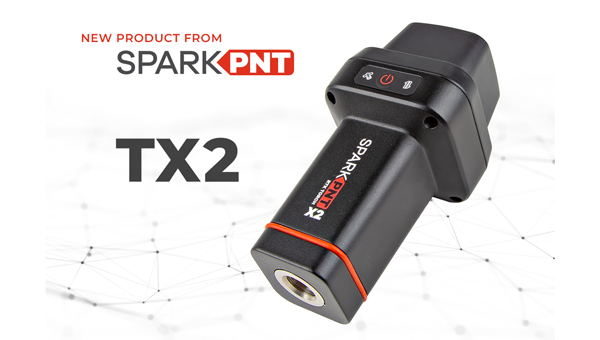
    SparkFun Electronics has released the SparkPNT TX2, a quad-band GNSS rover that combines an IP67-rated aluminum enclosure with support for Galileo’s High Accuracy Service (HAS) and standard RTK correction workflows.

    The receiver is built around the Quectel LG290P quad-band GNSS engine and supports multi-constellation tracking. Galileo HAS support provides sub-20 cm accuracy globally without subscription-based correction services, while RTK workflows via NTRIP or u-blox PointPerfect can achieve centimeter-level positioning.

    Battery life is rated at 50-plus hours, positioning the TX2 for multi-day field campaigns without recharging. The unit connects to iOS and Android devices via Bluetooth and Wi-Fi, with compatibility reported for common GIS and data-collection applications.

    A notable design choice is the open-source firmware, which gives users visibility into how positioning data is processed and allows for customization and third-party integration. SparkFun has positioned this as an alternative to closed GNSS ecosystems where firmware and processing pipelines are not user-accessible.

  • Historical photos find their places

    Historical photos find their places

    Michigan Technological University library and department of social sciences are examining 11,000 historical images of Michigan’s Upper Peninsula (Copper Country), to find precisely where a photographer stood to take the photo.

    The location will provide richer information about a place’s surroundings, especially in circumstances where structures or environmental landmarks are no longer present.

    The project also will transform how people search for historical images, according to Bob Cowling, the school’s geographic information system (GIS) data librarian. Searching by keyword terms relies on accurate metadata. If there isn’t good data governance from the organization managing the images, then the metadata could be missing important fields.

    Donated historical images often arrive without any dates or location information attached to them., but now will be easier to find on a map, making it possible to visualize what was there in the past compared to today.

  • Dubai Municipality joins International GNSS Services

    Dubai Municipality joins International GNSS Services

    First UAE government entity to join global geospatial organization

    Dubai Municipality has become the first government entity in the United Arab Emirates to join the International GNSS Services (IGS), a global organization specializing in satellite-based geospatial systems, precision surveying, and global reference frameworks.

    The IGS supports optimization of GNSS, plate tectonics monitoring, and the calculation of International Terrestrial Reference Frames (ITRFs).

    This recognition reflects Dubai Municipality’s continued efforts to strengthen its surveying infrastructure and geospatial capabilities to support urban development, infrastructure planning, and construction. It also underscores the municipality’s commitment to advancing research in geodesy and hydrographic mapping, developing digital navigation maps, and contributing to global knowledge-sharing in the geospatial field.

    By joining IGS, Dubai Municipality gains access to the GNSS service and the international reference framework used in scientific, commercial and educational applications. The IGS brings together more than 200 research institutions, universities and agencies from more than 100 countries, offering precise satellite orbit data and enabling high-accuracy positioning and mapping.

    “Dubai Municipality’s accession to the International GNSS Services represents a major milestone that reinforces the position of Dubai and the UAE as global hubs for scientific innovation and geospatial excellence,” said Maryam Al Muhairi, CEO of the Buildings Regulation and Permits Agency at Dubai Municipality. “This membership enables collaboration with more than 350 members worldwide, including major scientific organizations and international institutions specializing in navigation, climate studies, Earth dynamics, and advanced surveying applications.”

    She added that the membership would contribute to the implementation of Dubai Municipality’s strategic goals by enhancing surveying operations and 3D mapping, integrating research insights into infrastructure and urban planning projects, and promoting a smarter, more sustainable construction sector. It also supports Dubai’s digital twin ecosystem and the emirate’s vision for a globally leading, high-quality urban environment.

    Membership will also facilitate collaboration in a range of specialized research fields, including coordinate system referencing, tectonic plate monitoring, Earth rotation studies, navigation systems development, and climate impact modeling.

  • Building GNSS you can trust: Lessons from testing in Germany and Japan

    Building GNSS you can trust: Lessons from testing in Germany and Japan

    Crowded cities with stacked road systems and reflective architecture may offer impressive skylines, but for GNSS receivers, they create some of the harshest conditions on Earth. For technologies that depend on stable, trustworthy positioning, real-world testing in these challenging environments is essential. Here, Jez Ellis-Gray, product manager at Focal Point Positioning, a provider of GNSS positioning software, examines what recent field deployments reveal about the future of reliable GNSS.

    Urban environments present unique constraints that no laboratory or simulation can perfectly replicate. A lab test may miss the thousands of variables that influence signal behaviour in a living, breathing city or a dense forest road. This matters most for automotive applications, where positioning must remain stable and trustworthy to support driver assistance and higher levels of automation. That is why we conducted field trials across Germany and Japan, evaluating FocalPoint’s S-GNSS Auto software running on STMicroelectronics’ Teseo GNSS receivers in challenging real-world conditions.

    This testing demonstrated that GNSS performance in the real world is often determined not by peak accuracy under ideal conditions, but by the system’s reliability when satellite signals are distorted, reflected or partially obstructed.

    This distinction — between accuracy and reliability — is becoming increasingly important for sectors where positioning plays a safety-critical role, including automotive.

    Understanding the complexity of real environments

    Germany’s combination of modern architecture and medieval street layouts made it a good place to test GNSS upgrades against standard technology. A city like Frankfurt offers a nice mix of glass facades, narrow streets and tall buildings – conditions that tend to create multipath interference.

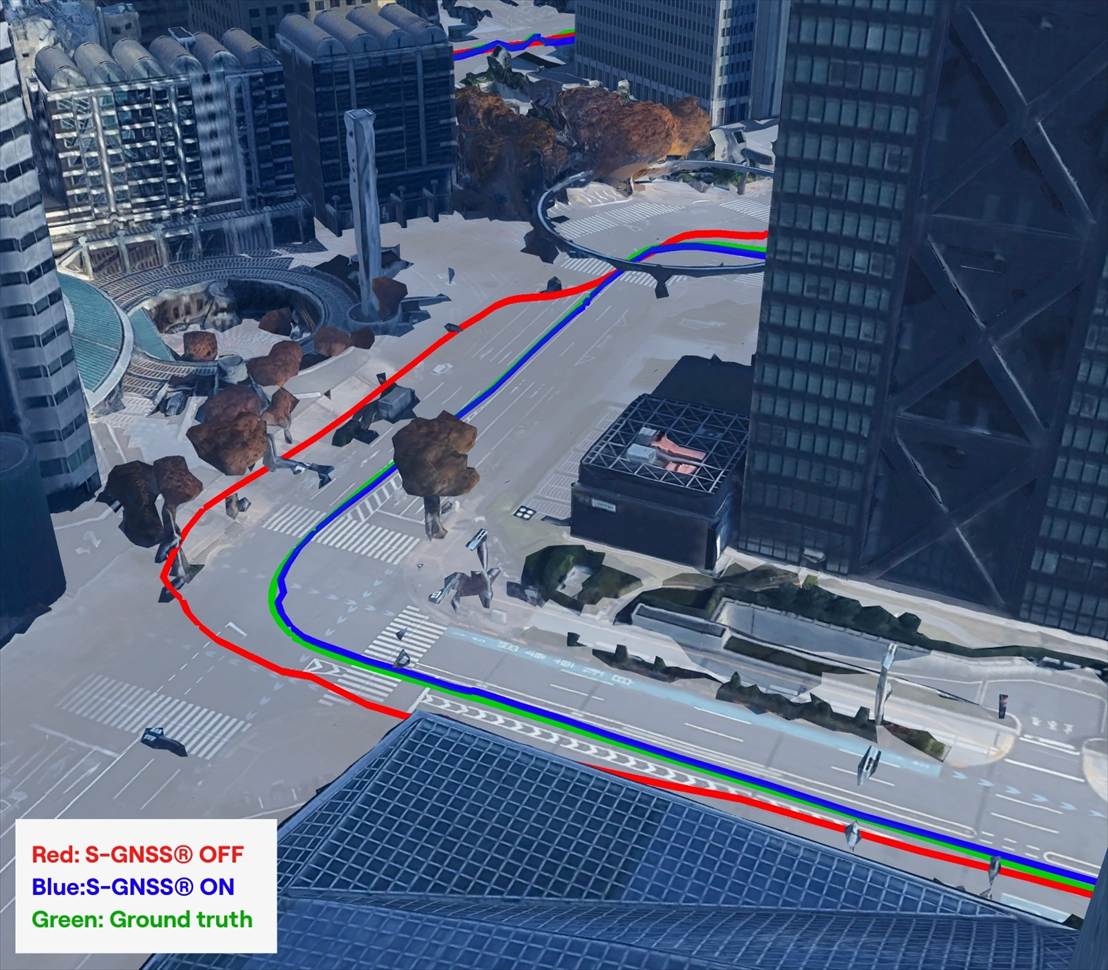
    During our recent field testing, conventional GNSS receivers frequently suffered from severe degradation of position accuracy when compared to a state-of-the-art ground truthing system. The standard receiver positions will often drift away from the travelled path, often through buildings or even onto parallel roads.

    As accuracy deteriorates, the receiver can usually tell that the input information is poor, and output a warning for a larger estimate of error.  This is a useful warning flag for AVs and allows for safe handover back to the human driver. However, in some cases, the reflected signals cause the miscalculation to be assumed correct. This “confident but wrong” GNSS is a much greater threat to autonomous driving, as the vehicle may make a dangerous decision based on this false information.

    In contrast, the S-GNSS Auto enhanced receiver was able to maintain lane-level accuracy far longer, even in areas where intense reflections would normally overwhelm the satellite data. In multipath-heavy environments, S-GNSS on Teseo receivers showed an accuracy improvement of up to 4x. These findings reinforced our belief that, as automation increases, consistency and reliability will be more valuable than peak accuracy.


    A navigation system that performs well on open motorways but struggles on urban roads will not scale safely to higher levels of vehicular automation. This is particularly relevant as the industry transitions from Level 2 to Level 3 autonomy, marking the point at which a vehicle takes full responsibility for the driving task in defined conditions, allowing the driver to disengage temporarily while the system manages safety-critical decisions.

    This shift is expected to unlock significant commercial value. A 2023 report by McKinsey predicted that advanced driver assistance and autonomous driving features could generate between $300 billion and $400 billion in annual revenue by 2035, driven by software services and subscription-based functionality that depend heavily on reliable positioning.  Unlocking this potential will depend on the next generation of vehicles having robust positioning systems, as users are unlikely to pay ongoing subscriptions to systems that repeatedly require human intervention or where safety concerns linger.

    Japan: one of the world’s most challenging environments

    If Germany represents a demanding test bed, Japan pushes GNSS to the extreme. Tokyo offers some of the toughest conditions anywhere in the world due to its towering buildings, multilevel road networks and narrow corridors that create intense multipath environments, so it was a natural choice for our next field test.

    The results showed that in particularly dense districts such as Shinjuku, standard GNSS receivers often struggled to maintain a coherent position solution. Reflections from glass towers, elevated highways and rail lines produced non-line-of-sight signals that overwhelmed conventional algorithms.

    S-GNSS Auto, integrated onto STMicroelectronics’ Teseo receivers, demonstrating improvements in vehicle positioning accuracy. (Data from Shinjuku, Tokyo)
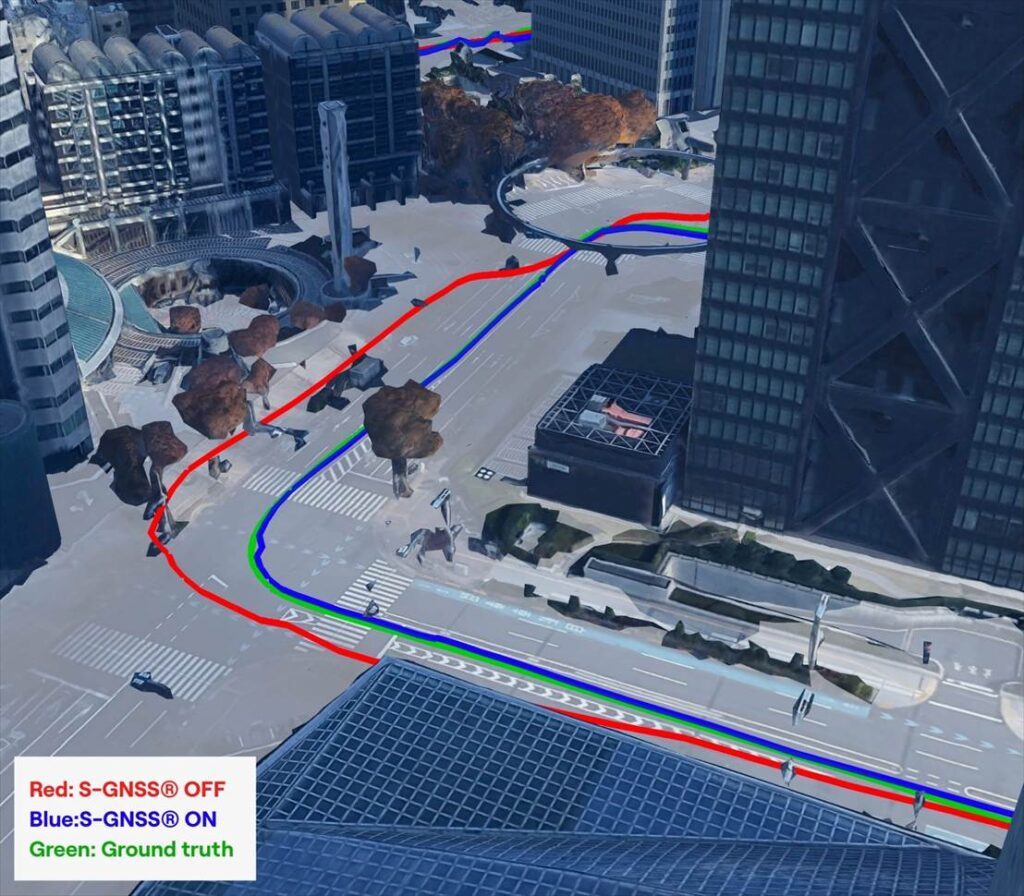
    S-GNSS Auto, integrated onto STMicroelectronics’ Teseo receivers, demonstrating improvements in vehicle positioning accuracy. (Data from Shinjuku, Tokyo)

    However, receivers equipped with S-GNSS’s advanced signal-processing techniques demonstrated significantly improved performance. These upgraded devices maintained a stable positioning where traditional systems faltered, avoiding errors that would cause an automated system to disengage or provide dangerously erroneous positions

    This improved reliability has direct implications for safety and user experience, which vehicle OEMs will no doubt welcome. In driverless vehicles, GNSS problems that trigger sudden driver handovers or interruptions to hands-free modes, are likely to erode trust and reduce the likelihood of subscription renewals, as the end user will judge the product less by its peak performance and more by its dependability in everyday situations.

    Field testing and the future of positioning technology

    As cities evolve, buildings grow taller and mobility systems become more congested, the challenges facing GNSS will only increase. As such, automotive OEMs are rightly starting to demand real world results, not just in ideal conditions (static, open sky) but in the worst conditions.

    Manufacturers increasingly recognise that positioning is now a foundational technology that underpins safety, automation and customer experience. Investments in more reliable GNSS systems are therefore not marginal enhancements but essential enablers of future services. For companies developing navigation and sensing technology, real-world testing offers a unique opportunity to understand how systems react to chaotic, imperfect environments. It provides granular insight into where and why positioning fails, and how these software-based enhancements can bridge the gap. By validating these solutions in the world’s toughest GNSS environments, developers can offer manufacturers greater confidence in deploying advanced features across global markets.  


    You can request an evaluation kit here or download the full results report of our latest testing here.