Blog

  • Implementing assured PNT for static and dynamic applications

    Implementing assured PNT for static and dynamic applications

    Position, navigation and timing (PNT) services, derived primarily from GNSS constellations, have become a critical element underpinning the global economy, with a vast range of sectors depending on these signals.

    This includes coordinating financial transactions, stabilizing power grids as well as navigation, with supply chains set to become more reliant on the technology as autonomous vehicles become prevalent. However, GNSS is a vulnerable technology, with faint signals from medium-Earth orbit (MEO) satellites being susceptible to disruption.

    In this article we’ll look at how both static and dynamic applications can achieve resilient PNT, with strategies and sensor fusion techniques that allow operational capability when GNSS is denied.


    Seven hundred. That’s the number of GPS interference events such as jamming and spoofing that take place every single day, according to the U.S. government. And this number is increasing across North America and Western Europe, with it being especially prevalent in or near war zones.

    Indeed, in August, the navigation system of a plane carrying the EU President, Ursula von de Leyen, was reportedly targeted by a GPS jamming attack as it was due to land in Bulgaria — forcing pilots to rely on paper maps. And GPS interference has been linked to the crash of Azerbaijan Airlines flight J2-8243, which was shot down on Christmas Day, 2024.

    Relying on a single source for PNT is no longer a viable strategy and developing a resilient PNT ecosystem that can function in D3SOE (denied, degraded, and disrupted space operational environments) has become essential.

    While navigation is the most commonly understood application of PNT, the timing component is critical in so many of the static systems we rely on — not just finance and power (as listed above) but for AI data centers, asset tracking systems and communication networks — which require precise and stable time references to ensure data integrity, and need these to be synchronized across global networks.

    For such systems, the consequences of getting timing off by even the smallest amount can be seen in the 2016 decommissioning of the SVN23 GPS satellite. During this, a software error created a 13.7 microsecond anomaly across the entire constellation that, according to a UK government report caused issues with digital radio broadcasts and communication networks. The event is also seen by some as a warning for the financial sector and in particular for high-frequency trading (HFT), where trades take place in millionths and studies have suggested that a 1 ms advantage in trading applications could be worth $100 million a year to a major brokerage firm.

    By subtly altering timing signals used by trading systems, malicious actors can effectively see and use market data “from the future” and enact transfers worth billions of dollars.

    Similarly, a timing attack on the phasor measurement units (PMUs) used to measure real-time stress in power grids could trigger major blackouts. The effect of such an attack can be seen in 2003’s (pre-PMU) Northeast Blackout, in which a sagging power line touched tree and caused a series of cascading outages that affected 55 million people across the U.S. and Canada. 

    And further putting the importance of protecting PNT in context, in 2020 the U.S. defined 16 critical infrastructure sectors as part of its Executive Order 13905. Of these 14 (88%) of these are reliant on PNT for their safe operation. Going beyond the energy and finance examples above, this includes sectors like communications, transportation, and agriculture. In short, PNT resilience is essential across virtually the entire economy.

    Detecting a Compromised GNSS Signal

    Of course, the first stage in protecting a PNT signal is in the identification of an attack, and several techniques can be used to identify inconsistencies that point to jamming or spoofing.

    These range from the analysis of the signal’s Doppler shift (transmissions from nearby terrestrial spoofer will have a near-zero Doppler shift) to techniques like RAIM (receiver autonomous integrity monitoring), which continually recalculates position while excluding one satellite each time to see if the results are consistent.

    Cryptographic methods, such as Galileo’s Open Service Navigation Message Authentication (OSNMA), are also available to verify a satellite’s digital signature and confirm the data’s authenticity.

    However, relying on cryptographic authentication alone still comes with risks. Notably, authenticated signals are susceptible to meaconing attacks, where a legitimate signal is recorded and replayed later to mislead a receiver. It is, however, possible to counter these attacks using a secure, out-of-band verification layer for all GNSS constellations. This involves the independent delivery of authentication data with hash authentication transmitted via encrypted L-band correction signals from geostationary (GEO) satellites.

    This approach can also be retrofitted to older equipment using PNT by using an RSR transcoding device (see below).

    For dynamic systems, an additional level of validation can be gained by inertial sensors, comparing their output against PNT data to detect both sudden large jumps in position and continual slight deviations that can be characteristic of a sophisticated spoofing attack.

    Timing in Static Applications

    The timing architecture of such systems must go beyond simply identifying a threat and validate incoming data. This requires the integration of alternative PNT sources through an intelligent sensor fusion framework. To achieve this level of resilience in a fixed location, a multi-source, zero-trust approach is necessary. This involves augmenting or replacing GNSS with a layered defense of terrestrial and alternative space-based signals that can be authenticated and trusted.

    Modern PTP grandmasters utilize the latest sub-microsecond accuracy Precision Time Protocol (PTP) and the more common millisecond-range Network Time Protocol (NTP) to ensure compatibility with nearly all standard IT equipment.

    High-speed 25G PTP Ethernet connections are also being implemented to support high-performance AI data centers and financial exchanges without creating data bottlenecks. To ensure continuous operation during extended GNSS outages, these systems can draw synchronization from terrestrial sources like a network PTP feed or an optional atomic caesium clock.

    Furthermore, it is also possible to use encrypted L-Band signals from geostationary (GEO) satellites, such as those from Inmarsat, which create an enhanced timing service with built-in GNSS authentication and anti-spoofing features to deliver timing accuracy of sub-5 ns.

    Figure 1: VIAVI’s Inertial Labs division has developed a Visual-Inertial Navigation System (VINS) that combines 3D vision aided mapping with inertial accelerometers to enable positioning in D3SOE environments – shown in prototyping stage
    Figure 1: VIAVI’s Inertial Labs division has developed a Visual-Inertial Navigation System (VINS) that combines 3D vision aided mapping with inertial accelerometers to enable positioning in D3SOE environments — shown in prototyping stage.

    Navigation Without a North Star

    While static applications can utilize fixed terrestrial infrastructure for backup, dynamic systems do not have this luxury.

    The inherent weakness of RF signals makes them easy to overpower through deliberate jamming by hostile actors. As such, navigation systems onboard UAVs and autonomous vehicles, as well as manned commercial and military vehicles require self-contained navigation capabilities that can function reliably when GNSS signals are compromised. This has driven significant advances in inertial navigation.

    Sensors like accelerometers and gyroscopes have become a critical source for orientation and direction data that remains available at all times. The development of micro-electromechanical systems (MEMS) has been crucial, enabling the integration of inertial navigation into even the smallest systems.

    These sensors aren’t an alternative to PNT satellites. By their very nature they will accumulate errors over time, with sensor bias causing drift and random-walk deviations allowing random noise in each measurement to accumulate. However, recent years have seen significant gains in their accuracy, allowing navigation to continue for short periods after GNSS data is compromised.

    Combining these inertial sensors with sensor fusion techniques also allows each element in a multi sensor system (using magnetometer; and accelerometers/ gyroscopes for roll, pitch and yaw…) to be continually verified by the others for further improvements in accuracy, reducing overall level of error. Data from these IMUs can also be fused with signals from alternative satellite constellations like those in LEO.

    LEO satellite signals are less accurate for timing than GNSS (around 80 ns vs. sub-15 ns) but are significantly stronger. For example, the Iridium LEO STL signal is c.1,000 times stronger than GNSS, making these signals both more resistant to jamming and harder to undertake a (successful) denial of service.

    More recently, techniques using downward-facing camera to track fixed identifiable landmarks have been developed as an alternative / additional data validation method for dynamic systems.

    These external sources provide absolute reference points that can be used to correct the inertial system’s calculations, dramatically improving accuracy and enabling reliable navigation for much longer periods.
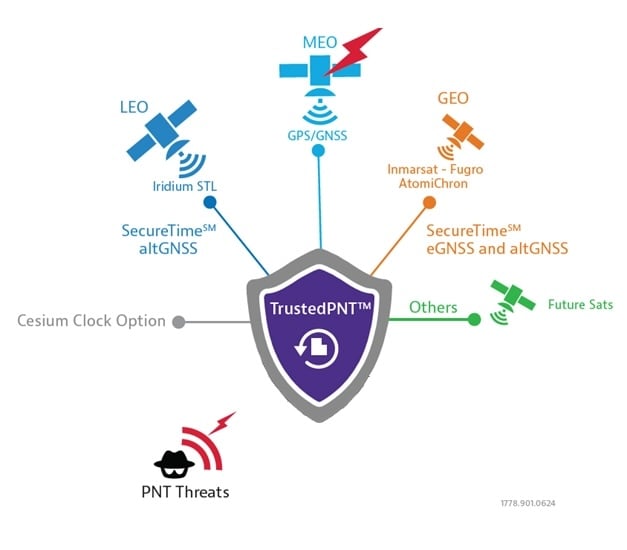
    Figure 2: VIAVI’s SecureTime uses GEO and LEO constellations to provide positioning and timing signals that are resilient to attacks.
    Figure 2: VIAVI’s SecureTime uses GEO and LEO constellations to provide positioning and timing signals that are resilient to attacks.

    Sensor Fusion Gives Resilience

    The limitations of individual PNT sources — whether the vulnerability of GNSS or the inherent drift of inertial sensors — mean they cannot depend on a single technology. The most effective strategy is often a hybrid one, combining a high-accuracy inertial sensor unit with inputs from other sensors.

    As we touched on above, adding data sources improves the ability to detect and counter PNT attacks. For example, the EU has confirmed it will deploy additional LEO satellites to bolster its ability to detect GPS interference. And vision cameras can also be used as part of a Visual-Aided Inertial Navigation System (VINS), which provides a powerful method for maintaining an accurate position in the complete absence of GNSS signals.

    This technique was developed in 2025 by VIAVI’s Inertial Labs division, with VINS combining processing with multiple inertial sensors to maintain position. This is reinforced with, and calibrated by a 3D vision-based positioning algorithm that compares visual patterns captured by an onboard camera (either daylight or infrared) with pre-loaded, satellite-imagery-derived 3D maps to track against known landmarks. In a GNSS-denied environment, a VINS system can maintain a horizontal position within 35 m, a vertical position within 5 m, and a desired velocity within 0.9 m/s.

    Conclusion: Bridging the Legacy Gap

    While modern systems can be designed from the ground up with a multi-layered, sensor-fusion PNT architecture, there is still the problem of the huge number of legacy systems that are very much prone to attack.

    These legacy PNT systems are still widely used, including in military conflicts where D3SOE attacks are prevalent. To address this vulnerability, resilient signal retransmission technology has been developed to cost-effectively upgrade these older systems. This approach uses RSR transcoders (constellation simulators) to take a trusted PNT signal, derived from multiple assured inputs, and convert it into the standard GPS format that legacy equipment is designed to receive. This set up – in which the GNSS aerial is replaced with the input from the RSR transcoder – allows the existing systems to operate with state-of-the-art resilience without requiring replacement.

    But, as we’ve seen in the above, a single, invulnerable replacement for GPS is simply not possible, so integrating multiple trusted sources is therefore essential. The path to assured PNT relies on a multi-layered ecosystem of diverse signals and sensors and applying this approach to both modern designs and legacy-system upgrades ensures all assets can maintain uninterrupted PNT access.

    viavisolutions.com

  • Artec 3D launches 3D data capture and processing software

    Artec 3D launches 3D data capture and processing software

    Artec 3D, a global 3D scanning lprovider, introduced its latest data capture and processing software, Artec Studio 20.

    The all-in-one platform for 3D scanning, photogrammetry, reverse engineering and quality inspection now includes workflows that enable faster, fully automated data processing pipelines for digitization, design iteration and bulk product analysis.

    The update includes enhancements across Artec’s scanner range. The Artec Spider II now features Live Scan Decimation, which produces high-detail, lightweight models for rapid prototyping and 3D modeling. The Artec Micro II adds support for HD Mode and 3-axis scanning, achieving higher resolution and more complete scans of small objects.

    Refined masking in AI Photogrammetry produces ultra-realistic, artifact-free 3D models requiring minimal editing for computer-generated imagery, visual effects, forensics and other applications.

    “Our last release turned Artec Studio into a complete package, with practically anything a user could need to capture a 3D model,” said Art Yukhin, CEO of Artec 3D. “Artec Studio 20 raises the bar in every way possible.”

    Workflow automation

    Users can customize workflows to their specific needs by queuing algorithms and processing captured data into 3D models with one click. The automation makes data processing up to 70% faster while allowing users to complete other tasks simultaneously.

    Parameters can be adapted to different datasets within Artec Studio, but settings no longer need reconfiguration each time. Annual subscription holders can use scripting to set up workflows that import, process and export data to third-party software, enabling batch processing and fully autonomous file transfer.

    Scanner upgrades

    Artec Spider II now offers Real-time Fusion, previously exclusive to Artec Leo, which provides detailed live previews for reliable data capture. The newly integrated Autopilot streamlines the scanning process, particularly for new users. Improved reconstruction delivers more complete datasets for realistic, watertight models used in heritage preservation, education and medical applications.

    The Artec Micro II desktop scanner now includes HD Mode, capturing four times more data points per scan. Three-axis integration provides greater surface coverage, allowing the scanner to capture complex, obscured areas and recreate complete objects.

    The Artec Point industrial laser scanner features better visualization for twice-faster data capture. The wireless Artec Leo and long-range Artec Ray II benefit from a redesigned Fusion setting and workflow automation. Ray II users can now access Street View and panoramas through the updated app.

    AI-powered photogrammetry

    Refined masking in Artec Studio 20 produces realistic, artifact-free 3D models, while masking for texturing prevents objects from blurring with backgrounds.

    Multi-camera support accelerates photogrammetry data capture and opens the software to various hardware combinations, including drones, smartphones, handycams and DSLR cameras. Sharp image prioritization ensures only the best frames from uploaded photos or videos are selected. GPU Memory Optimization customizes settings to individual hardware for peak efficiency.

    Enhanced integration

    New integration features make Artec Studio 20 more effective across applications. A new interface simplifies access to ZEISS Inspect advanced analysis tools and allows for scripting automation. Enhanced USD file support improves functionality for CGI and visual effects users. RCP file support adds compatibility with building information modeling platforms like Autodesk Revit.

    Distance and intensity export filters optimize data for downstream processing. The software includes UI improvements with enhanced tools and scanning panels for more intuitive navigation and control.

  • LuGRE mission: NASA and ASI release lunar experiment navigation data

    LuGRE mission: NASA and ASI release lunar experiment navigation data

    During a public workshop at the Italian Space Agency on Oct. 14-15, the Lunar GNSS Receiver Experiment (LuGRE) project team celebrated the closure of the project and released the data collected to the scientific community. 

    LuGRE, developed in partnership by NASA and the Italian Space Agency (ASI), flew to the Moon a GNSS receiver manufactured by the Italian company Qascom. The receiver was hosted aboard the Firefly BGM1 mission.

    LuGRE demonstrated that signals from GNSS satellite constellations can also be used for positioning, navigation and timing (PNT) on the Moon.

    The Navigation Signal Analysis and Simulation of the Dept. of Electroncis and Telecommunications of Polytechnic University of Turin processed the data received during the mission and contributed to all the science team activities, including the validation of the data and the processing of the initial set of scientific results.

    The full set of data collected during the space mission, which took place between Jan. 16 and March 16, is now available.

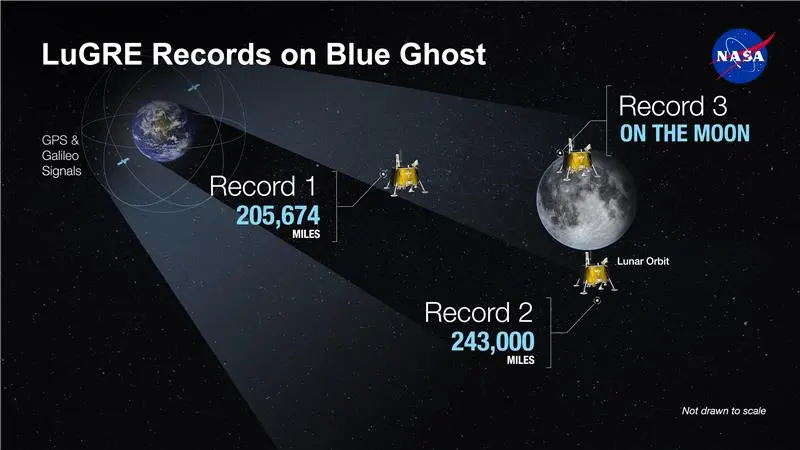
    An artist’s concept of the LuGRE payload on Blue Ghost and its three main records in transit to the Moon, in lunar orbit and on the Moon’s surface. (Image: NASA/Dave Ryan)
    An artist’s concept of the LuGRE payload on Blue Ghost and its three main records in transit to the Moon, in lunar orbit and on the Moon’s surface. (Image: NASA/Dave Ryan)

    Launched on Firefly Aerospace’s Blue Ghost lander in January, LuGRE became the first payload to use Earth’s GNSS to calculate a navigation fix on the lunar surface and in lunar orbit. The experiment set a series of distance records on its journey to the Moon, demonstrating that GNSS technology can complement other navigation tools as far as 247,520 miles (398,350 km) from Earth.

    These results point to a future where lunar astronauts, rovers and spacecraft can rely on the same satellite-based navigation systems we use every day to augment their navigation capabilities.

    “It is a very important milestone for the satellite navigation community,” said Fabio Dovis, Politecnico di Torino, Italian Space Agency, of the project. “For the first time we have the recording of signal of the GPS and Galileo constellation collected in space and on the Moon surface. Already during the LuGRE mission we proved the feasibility of using satellite systems originally designed to be used on Earth up to lunar distances. Now the entire scientific community can use them to ‘re-play’ the space environment as well as analyze them in depth, for example, to retrieve information about the Earth atmosphere crossed by the signal themselves.”

    Artistic rendering of LuGRE and the GNSS constellations. In reality, the Earth-based GNSS constellations take up less than 10 degrees in the sky, as seen from the Moon. (Image: NASA/Dave Ryan)
    Artistic rendering of LuGRE and the GNSS constellations. In reality, the Earth-based GNSS constellations take up less than 10 degrees in the sky, as seen from the Moon. (Image: NASA/Dave Ryan)

    The data release includes the actual GPS and Galileo radio signals LuGRE captured during its journey and on the lunar surface. The raw recordings — called in-phase and quadrature (I/Q) samples — allow researchers to analyze GNSS signal strength, noise and interference under lunar conditions for the first time. Engineers and scientists will use these results to model and refine the next generation of GNSS-based signal receivers and improve our understanding of how navigation signals operate at the Moon.

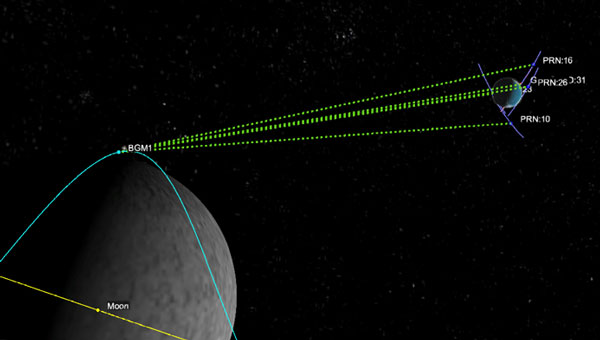
    Graphic representation of the relative geometry of Earth-Moon- acquired GNSS satellites. (Photo: Agenzia Sapaziale Italiana)
    Graphic representation of the relative geometry of Earth-Moon-acquired GNSS satellites. (Image: Agenzia Sapaziale Italiana)
  • Iridium gets USDOT contract for complementary PNT services

    Iridium gets USDOT contract for complementary PNT services

    Iridium Communications is working with T-Mobile to on a broad network deployment of positioning, navigation and timing (PNT) services, starting with live-site activations across the United States. The deployments will deliver 5G network complementary timing synchronization to strengthen the cellular network’s resilience and help ensure reliability for customers.

    The project follows Iridium’s selection by the U.S. Department of Transportation (DOT) for an award through its Complementary PNT Action Plan Rapid Phase Award II. 

    The U.S. Department of Transportation CPNT Action Plan is designed to evaluate mature and commercially available CPNT technologies to strengthen PNT resilience and enhance the safety of critical infrastructure, like 5G networks. DOT is the U.S. government’s civil lead for PNT.

    Under the contract, T-Mobile will expand its installation of Iridium PNT receivers to 90 additional live 5G network sites in geographically diverse locations. Iridium PNT will help protect against GPS disruptions that cause downtime and compromise the data integrity and performance of 5G networks, which rely on coordinated, precise timing to deliver the necessary speed, capacity and reliability of service to end-users.

    T-Mobile will also perform nominal and adverse user equipment exercises at its indoor testing range. It has the necessary wireless infrastructure for DOT, Iridium, and T-Mobile to observe and record results.

    Capable of sub-100-nanosecond accuracy — better than a millionth of a second — and secured using cryptographic techniques, Iridium PNT signals are 1,000 times stronger than GNSS systems like GPS and work inside buildings with no need for an outdoor antenna. The service is delivered by Iridium’s low-Earth orbit (LEO) satellite constellation, which provides global weather-resilient L-band connectivity.

  • MediaTek, China Telecom and Xiaomi bring RTK positioning to urban environment

    MediaTek, China Telecom and Xiaomi bring RTK positioning to urban environment

    MediaTek, China Telecom and Xiaomi have announced an upgrade to its real-time kinematic (RTK) high-precision positioning technology. The joint development integrates 5G connectivity, advanced chip design and Xiaomi’s smart technology.

    RTK technology is usually found in professional surveying tools, but will now be available for location and positioning in smartphones, cars and city networks, according to the companies.

    The newly upgraded RTK system enables outdoor positioning with sub-meter accuracy and fast response times. Leveraging 5G network infrastructure, smart data transmission, and close chipset-mobile software coordination, the system could be widely implemented on smart city infrastructure, autonomous driving, and smart transportation.

    This partnership is part of Xiaomi’s growth beyond smartphones into urban development and smart mobility technologies under the Xiaomi HyperConnect banner.

    The improved collaboration between MediaTek’s cutting-edge chipsets, China Telecom’s network, and Xiaomi’s hardware-software ecosystem enables an optimized RTK performance model that can potentially redefine how smart devices interact in real-world environments.

  • GeoMax launches Zenith55 GNSS smart antenna and radio

    GeoMax launches Zenith55 GNSS smart antenna and radio

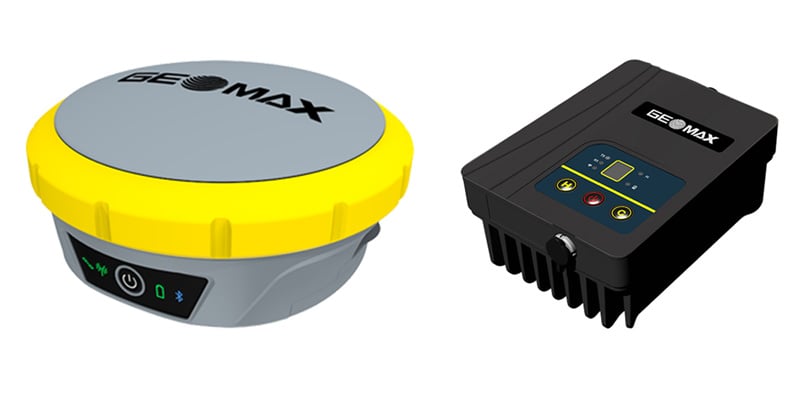
    GeoMax has released its Zenith55 GNSS smart antenna and TRU35 high-power UHF radio for construction and surveying professionals. 

    The Zenith55 offers advanced features, efficient workflows that generate a strong return on investment, and warranty support.

    Integrated into the GeoMax ecosystem, the Zenith55 works seamlessly with GeoMax robotic total stations, field controllers and the X-PAD field software for a comprehensive solution that ensures dependable precision and boosts productivity.

    Zenith55 key features
    • Multi-frequency – Resilient to high solar activity
    • Multi-constellation – GPS, Glonass, Galileo, BeiDou, QZSS, NavIC
    • Calibration-free tilt compensation
    • GNSS board with 600+ channels
    • Integrated LTE phone modem and UHF radio modem
    • IP68 protection against dust and water
    • Withstands 2 m pole topple-over
    • Internal memory and microSD card storage
    • GeoMax X-PAD field software

    The TRU35 is an IP67-rated 30W UHF radio modem with 410-470 MHz tuning range and 12.5/25 kHz channel spacing. Buttons and LCD display allow users to select predefined configurations created with the Zenith Manager tool for Android.

    The TRU radio extends the UHF RTK range up to 14 km (in favorable conditions) and is compatible with GeoMax Zenith smart antennas with base station support.

    TRU35 key features
    • 410 – 470 MHz frequency range
    • 10 / 30 W output power
    • 12.5 / 25 kHz channel spacing
    • Up to 19200 bps data rate
    • Protocols: Satel, TrimTalk
    • Modulation: GMSK, 4FSK
    • -30°C to +60°C operating temperature
    • IP67 dust and waterproof
    • Up to 14 km range (in favourable conditions)

    The Zenith55 and the TRU35 are both available and ready for delivery.

  • European Commission proposes expanding defensive drone wall

    European Commission proposes expanding defensive drone wall

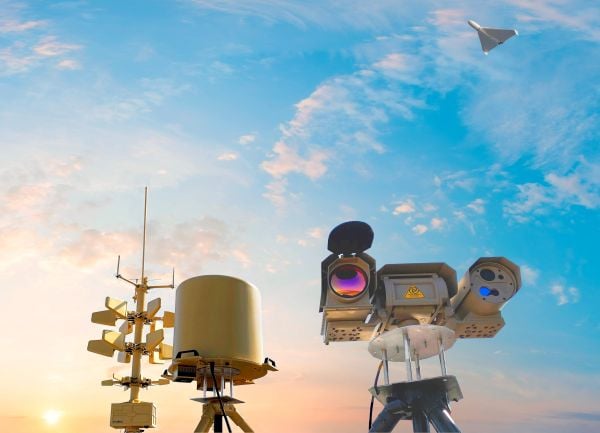
    The European Commission plans to expand its drone wall on Europe’s eastern borders because some regions said they felt left out after an initial “wall”, reports Reuters. The idea is to counter drone incursions with a network of sensors, electronic jamming systems and weapons stretching from the Baltic states to the Black Sea.

    The European Drone Defence Initiative proposal is included in the commission’s Defence Readiness Roadmap 2030 issued Oct. 16. Commission President Ursula von der Leyen proposed the drone wall after 20 Russian drones entered the airspace of EU and NATO member Poland in September.

    Eastern European states welcomed her proposal, but countries in southern and western Europe said it neglected drone threats in their part of the continent.

  • Huber+Suhner Syncro family simplifies optical timing integration

    Huber+Suhner Syncro family simplifies optical timing integration

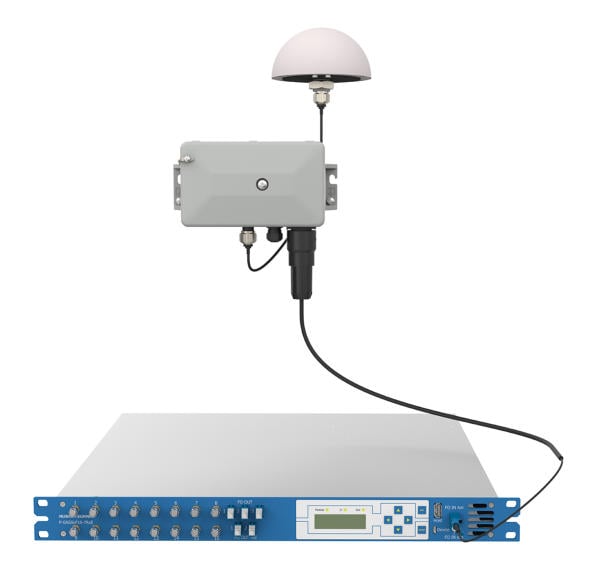
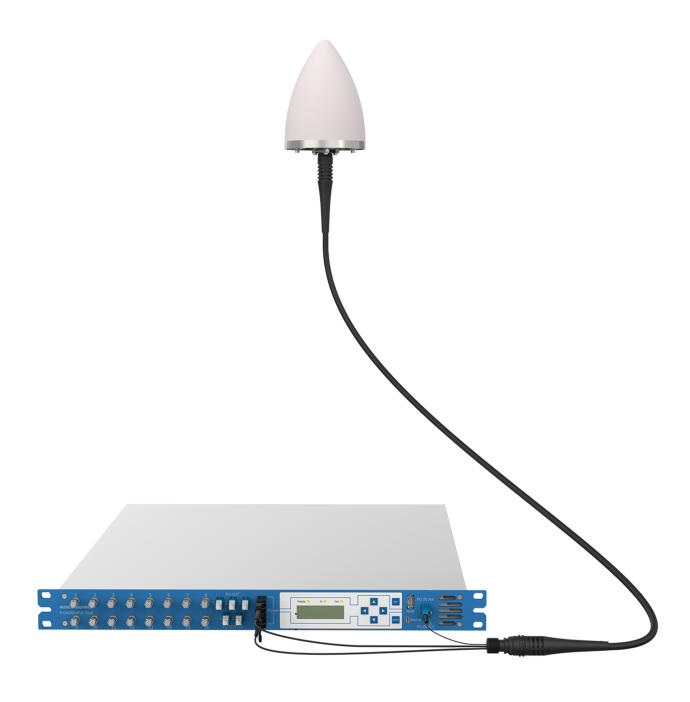
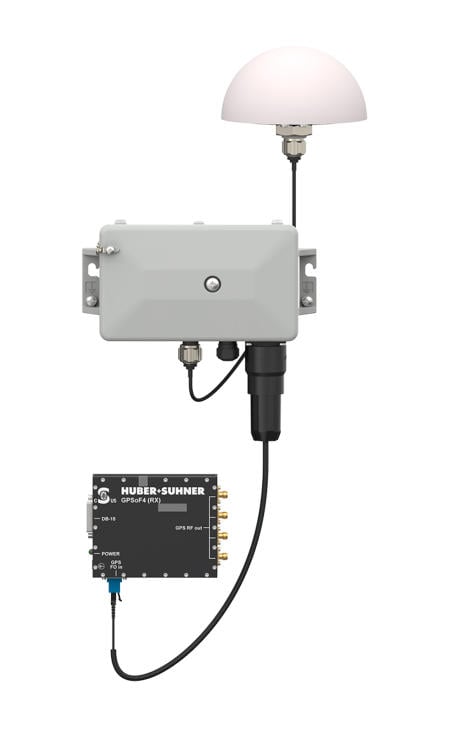
    Huber+Suhner is offering the Syncro family for nanosecond-accurate time synchronization — essential for global trade, stock exchanges, mobile communications, navigation and geodesy. With Syncro, data center operators requiring precise time synchronization can integrate optical timing into existing fiber architectures, enhancing performance and reducing costs.

    The Syncro family is an integrated, modular timing and GNSS distribution portfolio designed for rapid deployment and reliable performance by extending transmission distances, reducing the number of required GNSS antennas and eliminating many limitations of coaxial cabling.

    Syncro is available in three customizable product sets so customers can select the right balance of power, monitoring and redundancy for their operations. The Syncro Max provides full PoF capability and signal expansion, monitoring and redundancy for the most demanding deployments. Syncro Eco delivers the signal expansion and monitoring features of the Max without PoF for customers that do not require remote powering. Simpler applications that do not require PoF or redundancy can use the Syncro Mini, which still maintains monitoring and signal expansion capabilities.

    GNSS provides the reference time used across modern networks and critical infrastructure. GNSS signals originate from satellites carrying atomic clocks, with the extreme stability of those clocks acting as the basis for international timekeeping and enabling nanosecond synchronization when distributed correctly.

    Building on previous GNSS and power-over-fiber (PoF) offerings, Syncro delivers secure, precise timing synchronization over fiber, while preserving nanosecond accuracy across an operator’s network. PoF is a key advantage of the Syncro approach as optical fiber carries both the GNSS timing signal and required energy to remote antenna assemblies, allowing rooftop or remote antennas to be powered without separate electrical wiring. Crucially, Syncro integrates seamlessly into an operator’s existing fiber network, reusing optical infrastructure to deliver both signal and safe, centrally managed power to remote GNSS antenna locations.

    By moving timing distribution onto fiber, Syncro eliminates many installation constraints and reduces planning overhead. The plug-and-play design removes the transmission distance limits of coaxial cabling, reduces the need for reinforced ducting and extensive grounding to protect against lightning surges, and allows longer secure transmission between antennas and receivers.

  • SeRo Systems offers integrated air and ground GNSS interference monitoring

    SeRo Systems offers integrated air and ground GNSS interference monitoring

    Combines airborne and ground-based GNSS interference monitoring in a single integrated system for unified situational awareness.

    SeRo Systems, a leader in air traffic surveillance security and monitoring solutions, has introduced a new ground-monitoring capability to its SecureTrack solution, enabling unified air- and ground-based detection of GNSS interference, including jamming and spoofing. This comprehensive feature delivers real-time detection, analysis and visualization of jamming and spoofing activity across all GNSS frequency bands and constellations in a single integrated solution.

    Compliant with the latest EASA and ICAO monitoring recommendations, it also offers data archival and analytics capabilities for detailed reporting. The company started rolling out this feature to users in Eastern Europe and the Baltics in mid-October.

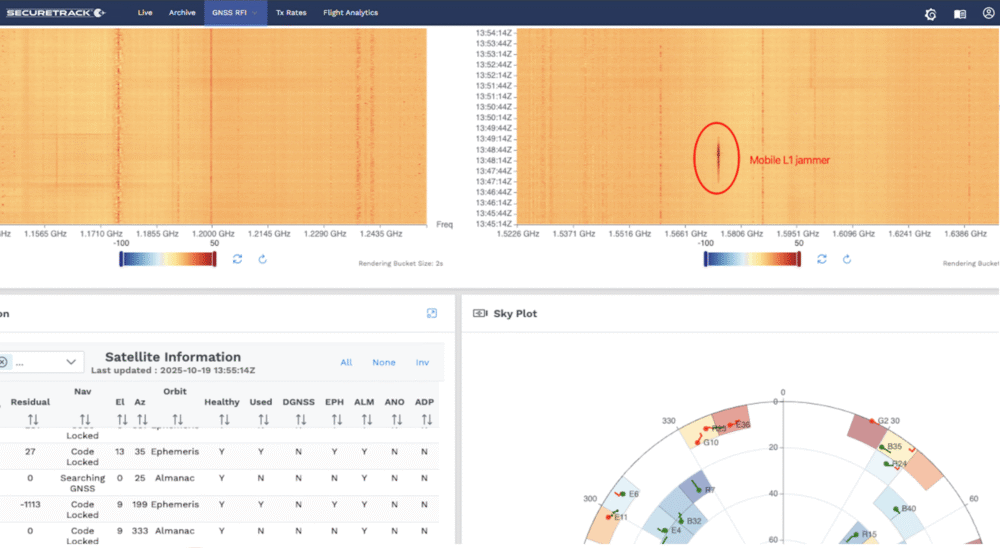
    Designed for use by Air Navigation Service Providers (ANSPs), airport operators, spectrum regulators and other government agencies, this capability uses a dedicated and controlled deployment of SeRo’s GRX receivers to display continuous, high-resolution power spectral density data (spectrogram) covering an RF band over 318 MHz wide.

    Through advanced spectrum visualization and data aggregation, users gain valuable insights into the spectral fingerprint, enabling them to identify when interference occurs, which frequencies are affected, and distinguish between unintentional interference and targeted attacks.

    “With this release, our customers get the highest level of protection a single system can provide,” said Matthias Schäfer, CEO of SeRo Systems. “Until now, authorities had to rely on fragmented data from different systems to monitor air and ground operations. SecureTrack now provides a unified view of live and historical GNSS interference activity in an easy-to-use interface for faster incident detection and improved system integrity. This offers an intuitive and efficient way to visualize complex RF spectrum and signal data collected by our sensors in areas that are critical to GNSS operations. It’s the perfect solution for ANSPs, airport operators, and spectrum regulators who need comprehensive situational awareness in a single integrated tool.”

    With the system’s new continuous ground monitoring functions, users can view live spectrum activity or perform historical analysis over customizable time ranges. Data is displayed on intuitive waterfall and line charts that show signal amplitude over time, with color-coded intensity scales that make jamming and spoofing events immediately visible.

    Its upcoming automatic alerting feature will provide real-time warnings of potential jamming or spoofing incidents by detecting unexpected positioning, navigation and timing (PNT) signals as well as anomalous spectrum activity.

    The integrated Sky Plot offers additional insight into satellite positioning and antenna performance, helping users optimize installation geometry and, in the event of spoofing, understand which satellites and constellations are affected.

  • FreeGNSSNetwork: Sateliot launches project with ESA to break GNSS dependency

    FreeGNSSNetwork: Sateliot launches project with ESA to break GNSS dependency

    Sateliot, a leading satellite telecommunications operator in 5G IoT connectivity, will test a pioneering system that allows its satellites to connect with IoT devices without relying on GNSS. The breakthrough opens new opportunities in sectors such as defense and security, where Europe’s technological autonomy and operation in GNSS-denied environments are strategic priorities.

    Low-Earth orbit (LEO) satellite constellations, such as the one developed by Sateliot, provide coverage in areas beyond the reach of terrestrial networks — over half of the planet’s surface. However, until now, they depended on GNSS, increasing both the energy consumption of devices and terminal costs.

    The FreeGNSSNetwork project, signed with the European Space Agency (ESA) and led jointly with GMV, eliminates this dependency using advanced algorithms that enable devices to calculate their position directly from the satellites’ signals. This maintains a stable and accurate connection even under complex conditions such as wartime scenarios.

    According to the company, this project represents a paradigm shift and lays the groundwork for developing 6G technology, in which Sateliot actively contributes within the 3GPP framework.

    The FreeGNSSNetwork enables device positioning with an accuracy of approximately 10 meters and provides extremely precise time synchronization services of 50 nanoseconds, the equivalent of 0.00000005 seconds.

    The system is being tested in laboratories that replicate real satellite communication conditions and will be demonstrated in orbit with prototype satellites and terminals, sending positioning, navigation, and timing (PNT) data directly to IoT devices.

  • Locus Lock teams with General Dynamics on software-defined PNT for U.S. Army

    Locus Lock teams with General Dynamics on software-defined PNT for U.S. Army

    Locus Lock, a leader in software-defined GNSS technology for precise position, navigation and timing (PNT) solutions, has teamed up with General Dynamics Mission Systems to deliver software-defined precise PNT capabilities for the U.S. Army. 

    General Dynamics Mission Systems, a provider of mission-critical solutions to defense, intelligence, and cyber-security customers across all domains, brings extensive expertise in mission-critical systems integration to ensure seamless deployment across Army platforms.

    Locus Lock’s software-defined GNSS technology enables rapid deployment and procurement of advanced multi-frequency, multi-constellation GNSS capabilities, providing essential signal diversity in contested radiofrequency (RF) environments to advance the Army’s modernization objectives. 

    The collaboration with Locus Lock and General Dynamics enhances the resilience, precision and reliability of Army navigation systems operating in complex and contested environments. 

  • A new generation in real-time situational awareness

    A new generation in real-time situational awareness

    Real-time situational awareness (RSTA) is crucial in numerous fields, particularly in public safety, transportation and emergency management. It enables decision-makers and first responders to quickly assess situations, select appropriate actions and implement plans effectively, ensuring timely assistance and resource allocation.

    RTSA is a process of continuously monitoring and analyzing information to understand what is happening in a given environment. Virtually every owner or operator has a need for this, although the data that may be relevant varies.

    RTSA refers to the ability to understand your environment and act appropriately. This will enable response to events as they unfold, using integrated data from various sources to enhance decision-making and operational efficiency. [1]

    While real-time situational awareness is desired by various entities, it should be noted that it does not come from a single data point, as a single data point is not sufficient. There need to be locational, temporal and informational elements present to draw reasonable conclusions. One promising tool enabling this improved decision-making is the geographic information system.

    Real-Time Geographic Information System

    GIS is a technology that connects data to a map, integrating location and descriptive information. GIS helps users understand patterns, relationships and locational context, and supports decision-making in various industries.

    A real-time GIS can create situational awareness because of its ability to simultaneously ingest, integrate, analyze and display streaming data from most any sensor, device and social media. GIS and location-based analytics can automatically refine and focus real-time data to accomplish the mission with up-to-the-minute intelligence on what’s happening in the field and across agencies and governmental jurisdictions. That’s why police, fire and emergency management organizations at all levels of government use real-time GIS capabilities in their operations and dispatching centers.

    Building Robust New Layers is Key

    As the duration — or reach and impact — of an emergency event increases, so does the number of agencies involved in responding to and mitigating that event. This requires communication systems to scale accordingly, ensuring seamless information exchange and communication among those agencies.

    A significant obstacle to this essential communication is the lack of interoperability, with data interoperability playing a critical role. Data interoperability is the ability of different systems, devices or organizations to share digital information so they can communicate and work together effectively. Without this interoperability, organizations face delays in decision-making, reduced response efficiencies and challenges in coordinating incident management.

    The Cybersecurity and Infrastructure Security Agency published the Information Sharing Framework as an approach to address the data interoperability challenge. It puts forward a three-layer framework that presumes:

    • a data layer, which resides with an individual agency in its nonsharable silo;
    • a presentation layer, which is the end user who needs to see the data in context for real-time situational awareness and decision-making;
    • and sandwiched in between is an integration layer, which does the necessary translation between the data and presentation layers in which the data is discovered, accessed, exchanged, analyzed and transported to the end user. [2]

    For RTSA, the system must be able to access the relevant information in the data layer, to transform and standardize that data such that it can be augmented with other data to create actionable information that can be pushed or pulled into the presentation layer to inform the end user. This information will answer myriad questions about the situation such as when, where, who and what.

    Radio Frequency Real-Time Situational Awareness

    In today’s world of autonomous vehicles and swarms of drones, the electromagnetic spectrum is becoming a critical part of situational awareness. Both in knowing what spectrum is available for use and what spectrum needs to be defended or excluded due to willful interference.

    Even in the context of space, RF spectrum data can help monitor satellite communications and detect anomalies, providing a more comprehensive understanding of the space environment and its potential threats.

    The RF spectrum frequencies range from 3 kilohertz to 3 THz (which spans 3 KHz up to 3 billion KHz). Radio waves, part of the RF spectrum, are regulated by national laws and coordinated by the International Telecommunication Union to prevent interference between different users.

    Radio frequency real-time situational awareness involves the use of radio frequency data and sensors to monitor, analyze and understand this environment. It is crucial for operational planning where the electromagnetic spectrum is a critical domain.

    Its ability to provide real-time awareness of radio frequencies is critical to building an actionable picture of what are very dynamic environments. For example, recognizing the critical nature of an incident as it escalates from a local situation to a regional one.

    Under the Hood

    Effective spectrum monitoring devices rely upon modern developments in software-defined radio (SDR) technology that facilitate rapid reconfiguration and adaptation for various tasks. These include significant enhancements not only to computing capabilities but to the neural processing unit capacity as well. In part, to facilitate RF bandwidth pattern of life technical capability including time frame to gain specific insights.

    Various capabilities are also expected to emerge in the coming years associated with situational awareness that may have a significant impact on the effectiveness, safety and health of especially the first responder community. The internet of things, cameras, data from other applications and networks, and sensors continue to produce increasing amounts of data. Artificial intelligence and data analytics are envisioned to be increasingly important mechanisms to assist in enabling timely and more informed decisions.

    Multipurpose Remote Sensors

    RF devices used for assured positioning, navigation and timing (A-PNT) most naturally are able to provide RF mapping for situational awareness. The same RF spectrum mapping that gives operators the tools to see real and potential frequency interference and usage. Just as GIS helps provide real-time situational awareness in the physical world, spectrum mapping provides RF real-time situational awareness in the virtual world. Different data, different tools, but the same need and general approach.

    Such multipurpose devices could further contribute to helping build RF situational awareness to include information about emitter identification and locations core to RF mapping. Or RF-based sensors could be able to use signals such as those used by tactical radios, once their location is established.

    This fulfills the vision that these RF devices, for example, could be positioned to support RF multiple aspects of situational awareness when not performing their primary mission.

    This requires RF real-time situational awareness to be integrated into operational frameworks to allow for better decision-making, improved safety and enhanced capabilities in both military and civilian applications. By leveraging RF data in multiple ways, organizations can fill gaps in traditional monitoring techniques, leading to a more robust understanding of the operational landscape. RF real-time situational awareness is a critical capability that enhances operational effectiveness using advanced sensing technologies and data analysis, particularly in complex environments.

    Poised for a New Generation

    A key element for the aforementioned presentation layer is to provide the same data to many, although specific locations, referred to as narrowcasting (think narrow multicasting). A new company, EdgeBeam Wireless, is building a next generation broadcast system to provide these services largely referred to as datacasting. Powered by the broadcast industry’s latest ATSC 3.0 standard, this new service will make its datacasting compatible with standard IP networks, fiber networks and mobile 3GPP networks. It could be used for very efficient geolocation delivery of all real-time situational awareness data to many specific locations. [3]

    A good example of an RF-based terrestrial platform is MerlinTPS. This terrestrial positioning system provides 100% terrestrial, RF-based assured positioning, navigation and timing. As part of its operation, the system naturally makes a spectrum map within the radius of each of its reference units. For example, coverage of the entire U.S. would take about 200 reference units, plus about 100 backup units. This RF spectral map is updated with one-second iterations, keeping the data up to date for any unfolding spectral and terrestrial events.

    The MerlinTPS platform is based on modern-day SDR technology, ideal for flexibility of RF spectrum presence, as well as the growing use of AI. This feature then naturally could be used to create and maintain a total spectrum map and pattern of life.

    The platform supports high-precision time transfer of plus or minus 10 ns, critical to A-PNT today, along with positioning and navigation services. The platform can also provide geolocation data for modern real-time GIS features needed for this new generation of real-time situational awareness.

    The combination of MerlinTPS with use of the ATSC 3.0 pending EdgeBeam Wireless service could provide the highly full-featured capabilities to fuel the newest generation of real-time situational awareness networks.


    References

    1. “The Importance of Real-Time Situational Awareness in Public Safety and Transportation,” John Contestabile, Director, Public Safety Solutions,The Importance of Real-Time Situational Awareness in Public Safety and Transportation | Skyline Technology Solutions
    2. “Approach for Developing an Interoperable Information Sharing Framework,” Version 1.7 Publication: August 2021, Cybersecurity and Infrastructure Security Agency  Approach for Developing an Interoperable Information Sharing Framework, version 1.7, August 20212
    3. EdgeBeam Wireless, ( https://www.linkedin.com/company/edgebeam/about/ )