Author: Allison Kral

  • ION names 2021 Executive Committee, Council and Standing Committee Chairs

    ION names 2021 Executive Committee, Council and Standing Committee Chairs

    Logo: ION

    The Institute of Navigation (ION) has announced the new members of its Executive Committee, Council and Standing Committee Chairs following its Annual Awards during the ION International Technical Meeting and Precise Time and Time Interval Systems and Applications Meeting, both held virtually Jan. 25-28.

    The ION Executive Committee, Council and Standing Committee Chairs will serve a two-year term.

    “ION has a distinguished and passionate group of positioning, navigation and timing professionals in key positions to advance the goals of the organization.” said Lisa Beaty, executive director at ION.

    The new members include:

    ION Executive Committee
    • President: Frank van Diggelen, Google
    • Executive Vice President: Sherman Lo, Stanford University
    • Treasurer: Frank van Graas, Ohio University
    • Eastern Region Vice President: Jason Rife, Tufts University
    • Western Region Vice President: Tim Murphy, The Boeing Company
    • Satellite Division Chair: Patricia Doherty, Boston College
    • Military Division Chair: John Langer, The Aerospace Corporation
    • Immediate Past President: Y. Jade Morton, University of Colorado at Boulder

    Council members
    • Eastern Council Member-at-Large: Seebany Datta-Barua, Illinois Institute of Technology
    • Eastern Council Member-at Large, Sanjeev Gunawardena, Air Force Institute of Technology
    • Western Council Member-at-Large: Paul McBurney, OneNav
    • Western Council Member-at-Large: Jihye Park, Oregon State University

    Technical representatives
    • Fabio Dovis, Politecnico Di Torino, Italy
    • Christoph Gunther, German Aerospace Center, Germany
    • Allison Kealy, RMIT University, Australia
    • Nobuaki Kubo, Tokyo University of Marine Science & Technology, Japan
    • Alexander Mitelman, AMM Technical Consulting
    • Madeleine Naudeau, Air Force Research Laboratory
    • Laura Norman, NovAtel, Canada

    Standing Committee Chairs
    • Awards Chair: Michael Meurer, German Aerospace Center, Germany
    • Bylaws Committee: Deborah Lawrence, Federal Aviation Administration
    • Ethics Chair: Heidi Kuusniemi, University of Vaasa & Finnish Geospatial Research Institute, Finland
    • Fellow Selection Chair: Terry Moore, United Kingdom
    • Finance Chair: Gary McGraw, Collins Aerospace
    • Meetings Chair: Jeff Martin, Spirent Federal Systems
    • Membership Chair: Okuary Osechas, German Aerospace Center, Germany
    • Nominating Chair: Y. Jade Morton, University of Colorado at Boulder
    • Publications Chair: Richard B. Langley, University of New Brunswick, Canada
    • Technical Committee Chair: Sherman Lo, Stanford University

  • ION announces 2020 Annual Awards winners

    ION announces 2020 Annual Awards winners

    Logo: ION

    The Institute of Navigation (ION) presented its Annual Awards during the ION International Technical Meeting and Precise Time and Time Interval Systems and Applications Meeting, both held virtually Jan. 25-28.

    The ION Annual Awards Program recognizes individuals making significant contributions or demonstrating outstanding performance relating to the art and science of navigation.

    Robert Odolinski received the Per Enge Early Achievement Award for development of multi-GNSS models for precise real-time kinematic positioning and for the sustained dedication to the research community, future surveyors and navigation professionals. The Per Enge Early Achievement Award is presented in recognition of outstanding contributions made early in one’s career.

    Capt. Andrew P. Zimmerman received the Superior Achievement Award for validating critical navigation processes and collaborating with Air Force tacticians to provide the highest standards of navigation and protection for the Air Force’s premier electronic attack asset. The Superior Achievement Award is presented to recognize an individual who has demonstrated an outstanding performance as a practicing navigator of any vehicle, in any medium — marine, land, air, undersea and space.

    Michael A. Lombardi received the Distinguished PTTI Service Award for system development and leadership in the successful delivery of the U.S. time and frequency standards signals to a variety of domestic and international PTTI users. The Distinguished PTTI Service Award is presented to recognize outstanding contributions related to the management of PTTI systems.

    Jennifer E. Donaldson, Joel J. K. Parker, Michael C. Moreau, Dolan E. Highsmith and Philip D. Martzen received the Dr. Samuel M. Burka Award for their paper “Characterization of On-orbit GPS Transmit Antenna Patterns for Space Users.” Their paper was published in the Summer 2020 issue of Navigation, Journal of The Institute of Navigation, Vol 67, No. 2. The Dr. Samuel M. Burka Award recognizes outstanding achievement in the preparation of a paper advancing the art and science of positioning, navigation and timing.

    Charles K. Toth received the Captain P. V. H. Weems Award for significant contributions to the development and implementation of multi-sensor integrated navigation systems and for demonstrated excellence as an academic mentor and professional leader. The Captain P. V. H. Weems Award is presented to individuals for continuing contributions to the art and science of navigation.

    Karen L. Van Dyke received the Norman P. Hays Award for her significant contributions to civil GPS applications, for her lead role directing the Adjacent Band Compatibility study, and for her commitment to international PNT coordination. The Norman P. Hays Award is given in recognition of outstanding encouragement, inspiration and support contributing to the advancement of navigation.

    Mingquan Lu received the Thomas L. Thurlow Award for significant and sustained contributions to the BDS-3 signals design and BDS-3/GNSS interoperable receivers development. The Thomas L. Thurlow Award recognizes outstanding contributions to the science of navigation.

    Finally, Y. Jade Morton received the Distinguished Service Award for extraordinary service to The Institute of Navigation. The Distinguished Service Award recognizes extraordinary service to The Institute of Navigation.


    ION also announced the new members of its Executive Committee, Council and Standing Committee Chairs following its Annual Awards during the ION International Technical Meeting and Precise Time and Time Interval Systems and Applications Meeting. Find out who they are here.

  • TCarta unveils Global Satellite Derived Bathymetry product line

    Image: TCarta
    Image: TCarta

    TCarta Marine has introduced a Global Satellite Derived Bathymetry (G-SDB) product line developed with a new seafloor depth measurement technique that leverages Machine Learning and NASA ICESat-2 laser data. According to the company, this G-SDB offering covers the entire Red Sea, with additional sets rolled out through the end of this year.

    The commercial TCarta G-SDB data sets and the seafloor measurement workflow that produces them were made possible through a Small Business Innovation Research Grant from the National Science Foundation (NSF).

    According to TCarta, G-SDB data sets contain bathymetric measurements to depths of more than 30 meters, depending on water clarity, at 10-meter resolution. The depth values for every 10-meter pixel are the combined result of numerous measurements, resulting in accuracy within 10% of depth or less, and providing a seamless water bottom surface map. G-SDB will be available globally for all oceans and seas, as well as large freshwater lakes where water conditions permit.

    “The new satellite-derived bathymetry technology extracts seafloor measurements by integrating multiple SDB algorithms and sensor types at scale and over broad geographic areas with a degree of confidence in data accuracy not previously possible,” said TCarta president Kyle Goodrich.

    TCarta launched Project Trident with NSF funding in 2018 with the goal of refining traditional satellite-derived bathymetry technology to extend its application into areas where it had not typically been successful, usually due to the turbidity or clarity of the water column. TCarta developed the new method using machine learning to iteratively evaluate Sentinel 2A/B multispectral satellite images, and even individual pixels within images, to select the sharpest and clearest ones for application of SDB extraction.

    “Thanks to the power and speed of cloud computing, we run the extraction algorithm repeatedly and on multiple satellite images acquired over the same geographic area on different dates. This dramatically increased the accuracy confidence in each depth measurement and minimizes data gaps,” Goodrich said.

    To further enhance the accuracy of the SDB measurements, TCarta developed an artificial intelligence-based technique for leveraging ICESat-2 data to train the SDB algorithm and validate results. Designed for polar ice elevation and tree canopy measurements, the ICESat-2 satellite carries a laser that captures remarkably accurate bathymetric data, the company said.

    TCarta Marine is a global provider of hydrospatial solutions. The TCarta product lines include high-resolution satellite-derived water depth and seafloor map products as well as 90- and 30-meter GIS-ready bathymetric data aggregated from numerous information sources.

  • Intergeo 2021 to feature live, virtual formats

    Intergeo 2021 to feature live, virtual formats

    Logo: Intergeo 2021

    Those attending Intergeo 2021 will have the option to attend either virtual or in person. The show will be taking place Sept. 21-23 in Hanover, Germany.

    According to show organizers, their most important concerns are a guarantee of implementation, the best possible planning and security for exhibitors, their employees and their customers.

    “A clearly defined hybrid concept ensures from the outset that you will be able to reach your customers and markets with the Intergeo platform under all conceivable conditions without taking any risks,” show organizers said in a press release. “According to much feedback from Intergeo partners, enabling personal exchange live and digitally scalable offers the greatest possible acceptance.”

    Show organizers also said the event will feature a generous, hygienic and modularized layout.

    “Both a well thought-out hygiene-compliant and modularized hall plan in the spacious exhibition center in Hanover and a targeted further development of the digital platform will provide the geo-community with a valuable and future-oriented opportunity for dialog,” they said.

    The main topics covered at Intergeo 2021 will include drones (imperial solutions), smart city solutions and BIM for infrastructure.

  • Topcon Positioning Group launches point creation software

    Topcon Positioning Group launches point creation software

    Photo: Topcon Positioning Group
    Photo: Topcon Positioning Group

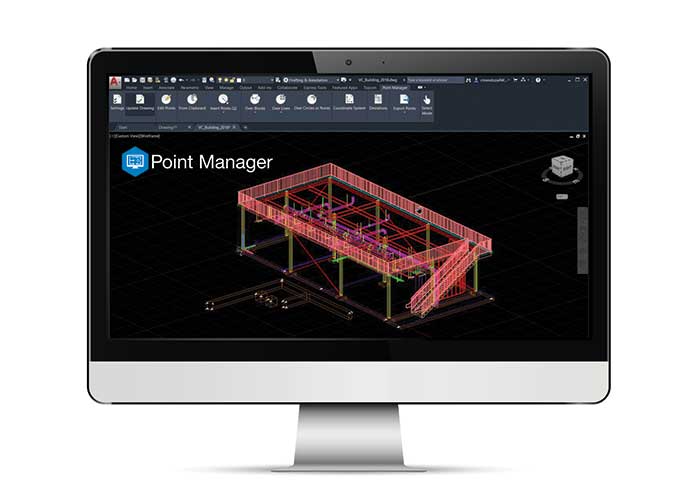
    Topcon Positioning Group has released Topcon Point Manager, a point creation software that’s available as a plug-in for Autodesk AutoCAD and Autodesk Revit users in the U.S. and Canada.

    According to Topcon, the solution is designed to automate point creation and easily import and export layout files to and from a robotic total station. It’ll also simplify the BIM-to-field process with a faster, more seamless point creation experience from within the design platform, reducing the time and cost of layout, Topcon added.

    “Unlike standalone point creation software, which requires the user to leave their particular design environment, users of these two widely used Autodesk technologies will be able to access the solution as a plug-in component to their design package,” said Ray Kerwin, director of Topcon global product planning. “Users will benefit from the ability to automatically create multiple points on BIM objects and 2D/3D drawings from within the Autodesk environments. Just as importantly, however, they will see an increase in their quality assurance and control efforts through easily generated point and deviation reports; a likely reduction in on-site personnel (key during these challenging times), and, with the simplified processes, avoid costly construction errors and rework — the goal of most any operation working in today’s highly competitive construction environment.”

    Photo: Topcon Positioning Group
    Photo: Topcon Positioning Group

    In addition, Topcon MAGNET users can wirelessly send points to the field for layout and completed layout files can be sent back to the office to update the model to match as-built conditions.

    “With the cloud-connected MAGNET workflow, BIM personnel or CAD teams can immediately share information to and from the field crew using a layout device. Doing so can prove invaluable, as any conflicts in point data can be quickly identified, keeping production levels up and eliminating costly rework,” Kerwin added.

    Topcon Positioning Group designs, manufactures and distributes precision precision measurement and workflow solutions for the global construction, geospatial and agriculture markets.

  • Golden Software releases updated 3D surface mapping package

    Image: Golden Software
    Image: Golden Software

    Golden Software has improved visualization and other functionality in the new version of its Surfer gridding, contouring and 3D surface mapping package. Surfer users now have a greater number of options for displaying their scientific data in the new version, the company said.

    Surfer enables users to model data sets, apply an array of advanced analytics tools and graphically communicate the results in ways anyone can understand, Golden Software added.

    “In the new Surfer release, we worked on making it easier for users to gain insights into their data sets by providing additional visualization tools,” said Kari Dickenson, Surfer product manager. “New display options also enable users to more easily communicate the information extracted from their data.”

    The updated Surfer

    In its latest version of Surfer, Golden Software has added the peaks and depressions layer type. This layer type automatically identifies and outlines closed high and low areas, or peaks and depressions, in a grid file. In addition, a statistics report is generated for the areas, including information such as length, width, depth, volume and orientation. The feature also allows high and low areas to be colorized, annotated and displayed on their own.

    The company also added four new capabilities to 3D Views: color scale bars can be added to explain the elevation, concentration or other data values depicted by colors; VRML file format exporting enables users to export their 3D Surfer model into another 3D software package or to a 3D printer; anti-aliasing makes axes and grid lines inside the 3D model appear smoother and more professional; and improved 3D PDF exporting has reduced the PDF file size and made the file exporting process faster.

    In addition, Golden Software added several existing capabilities to the automation function so that users can write scripts to automate certain workflows. Automated features now include base from data layer type, vector base map symbology, new scale bar options, new legend options and new grid data options. Finally, the new Surfer version allows users to identify objects in vector base maps, such as polygons, polylines or points, by automatically renaming them based on any attribute, as well as select multiple polygons and choose to calculate their statistics, areas or volumes either as a single combined polygon or as individual polygons.

    Surfer Beta

    Golden Software released a Beta version of Surfer simultaneously with the new version to give customers a chance to try out new features while they are still in development. The three features the company plans to release for the spring/summer 2021 release of Surfer include 3D base maps, contour volume/area calculation and more automated features.

    The 3D base maps feature allows .DXF, .SHP and other file formats to be imported with their 3D geometry (3D polylines, polygons and polymeshes) and displayed as three-dimensional features in the 3D View.

    A new shortcut also will enable users to calculate volumes and areas above, below or between contour lines with just a few clicks of the mouse, the company said. Finally, additional functions that have been added to automation include point sample, grid project, new classed post layer options and label options for the degrees-minutes-seconds label format.

    Golden Software, headquartered in Golden, Colorado, develops 2D and 3D scientific modeling packages.

  • Protected: GPS World COVID-19 Social Media Campaign

    This content is password-protected. To view it, please enter the password below.

  • Hemisphere GNSS presents Phantom, Vega GNSS OEM boards at Intergeo 2019

    Hemisphere GNSS’ Miles Ware gives GPS World an overview of the company’s Phantom and Vega series GNSS OEM boards at Intergeo 2019, which took place in Stuttgart, Germany.

  • Bluesky launches international MetroVista city mapping service at Intergeo 2019

    Bluesky International launched its international MetroVisa city mapping service for Europe at Intergeo 2019, which took place Sept. 17-19 in Stuttgart, Germany.

  • Leica Geosystems launches one app for terrestrial laser scanning portfolio

    Photo: Leica Geosystems
    Photo: Leica Geosystems

    Leica Geosystems has extended its Leica Cyclone FIELD 360 mobile-device app to all Leica Geosystems 3D terrestrial laser scanners for in-field data acquisition and visualization.

    With the push of a button from the mobile-device app, all Leica Geosystems’ laser scanner users can capture high-quality data and verify registration directly in the field, Leica said.

    The Leica ScanStation P-Series, Leica’s survey-grade 3D laser scanners, can now benefit from the existing workflow of the Cyclone FIELD 360 mobile-device app. With the integrated Cyclone FIELD 360 mobile-device app, users can capture and document projects quickly and accurately, view all field workflows, quality control and prepare scan data for downstream use, Leica added.

    “Integrating the ScanStation P-Series laser scanners into the Cyclone FIELD 360 mobile-device app workflow adds in-field visualisation and dataflow benefits, directly linking in-field projects to the Cyclone ecosystem,” said Gerhard Walter, senior product manager at Leica Geosystems. “Customers who own our entire laser scanning portfolio will find it much easier to combine their scan data and not have to buy more equipment as the app can be used on their chosen mobile device to operate the scanners.”

    Leica Geosystems, part of Hexagon, provides scene capture solutions for public safety applications.

  • ION changes date for 2021 Joint Navigation Conference

    ION changes date for 2021 Joint Navigation Conference

    Logo: ION JNC

    The Institute of Navigation (ION) has changed the dates for the 2021 Joint Navigation Conference (JNC) to Aug. 24-27 at the Northern Kentucky Convention Center in Covington, Kentucky.

    The conference will be hosted by the Military Division of the Institute of Navigation for the Department of Defense and Department of Homeland Security. Its theme will be “Enhancing Dominance and Resilience for Warfighting and Homeland Security PNT.”

    The FEDCON U.S.-only sessions will take place at the Northern Kentucky Convention Center in Covington, Kentucky, Aug. 24-26; and the U.S.-only secret sessions will be held at the Air Force Institute of Technology, WPAFB in Dayton, Ohio, Aug. 27. The JNC 2021 exhibit hall will be open Aug. 25-26.

    This decision to change the date and host the conference in person was made in consideration of the forecasted Spring 2021 global accessibility of the COVID-19 vaccine.

    “We have made this decision to ensure our attendees feel safe gathering at ION events,” said Lisa Beaty, executive director at ION. “There appears to be good reason for optimism that our military PNT community will be able to gather again soon.”

    According to ION, JNC is the largest U.S. military positioning, navigation and timing (PNT) conference of the year with joint service and government participation. The event focuses on technical advances in PNT with emphasis on joint development, test and support of affordable PNT systems, logistics and integration.

  • GEO Business 2021 moved to the fall

    GEO Business 2021 moved to the fall

    Logo: GEO Business 2021

    Diversified Communications, organizer of the GEO Business 2021 event, announced that the show will be moved from May 19-20 to Nov. 24-25. It will still take place at ExCel London.

    GEO Business connects the data holders and processors with the people who benefit from the applications and insight, which geospatial information provides.

    “Although all the signs are positive for a restart for large scale events from Easter, we feel May could be a little early to give everyone the best possible chance for a great show,” said Diversified Communications. “So after consulting with the geospatial community, we’ve made the tough decision to push GEO Business back to the autumn for one year.”

    GEO Business will give attendees the opportunity to explore the latest geospatial technology, learn from industry experts, try technology before they it buy, grow their professional work and boost their careers, organizers added.