Author: Eric Gakstatter

  • Kickstarter Comes to GPS; Plus, Jammers and Field Technology Conference

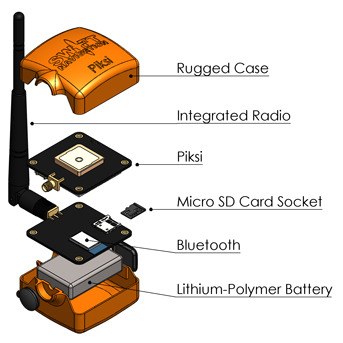
    $2,000 for an RTK base and rover? Yes, it’s real. Well, at least it seems real.

    For $2,000, you can order an RTK base and rover set named Piksi, including radios.
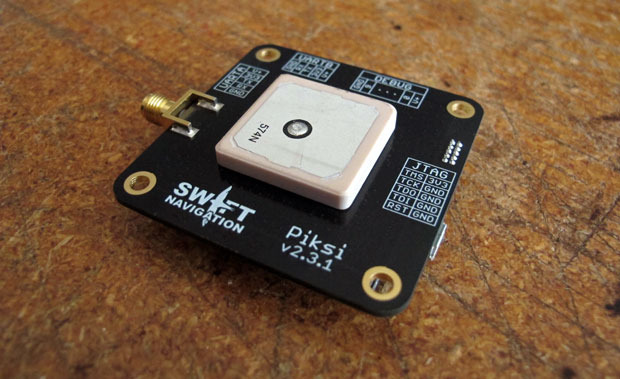
    Photo: Piksi (Swift Navigation)  Piksi_rugged

    It’s an intriguing opportunity, and might be the first brush stroke of the picture I’ve been painting (metaphorically speaking) for the past few years about inexpensive RTK receivers forthcoming. But, before you get really excited, read on.

    Besides the attractive price, something else that makes Piksi interesting is the way the company is financed. The way that a typical company funds new product development is through its own cash flow or financing. The company designs and produces a product, then announces it to potential buyers (you), who then touch, feel and use the product to understand how it performs…all before making the decision to purchase. Piksi (Swift Navigation) doesn’t follow that model.

    Piksi is using a new-age, crowd-sourced funding model called Kickstarter. With Kickstarter, a group of people (creators) offer to design and produce a certain product if they can recruit enough “investors” to fund their endeavor. The “investors” aren’t traditional venture capitalists, nor people who would own stock in said company. The investment is simply a commitment to buy the product based on the specifications provided by the creators, before the product is finished. If the company has enough commitments from “investors,” the creators commit to designing, building and delivering the product.

    Furthermore, there are certain levels of investment available for Piksi, from $7 which will get you a Swift Navigation micro-USB cable, to $2,000, which will get you a ruggedized version of the complete RTK kit, including base, rover, XBee radios, Bluetooth and SD card storage. So far, Swift Navigation has raised $161,369 towards the project with today, September 4, being the last day. That’s far more than the $14,000 goal it set.

    The caveat is that the product is not complete yet, at least the RTK portion. According to Swift Navigation:

    We have already built a small batch of Piksi receivers that are ready to ship and have locked down all part sourcing and manufacturing for further batches, so there are unlikely to be any unanticipated delays in the delivery of Piksi hardware.

    However, it’s difficult to know exactly how long the RTK functionality will take to implement — software development schedules seem to always run over their anticipated delivery dates, even when you take into account Hofstadter’s Law. We feel the goals we’re proposing to accomplish with this campaign are reasonable — adding a new set of software functionality (which we successfully implemented on a previous platform) upon an existing base of stable hardware and software.

    The gamble that the investor takes is that Swift will be able to finish the product, produce it, and meet the performance specifications. However, that’s only part of the battle. I spent better than 10 years of my life managing the design and production (somewhat) of GPS-based hardware and software for mapping and surveying. There are a million details. A major part of developing a hardware/software product like this is making it reliable. What I mean by reliable is that it behaves the same way every time you push the ON button, and works consistently and reliably all day until you press the OFF button. That’s not easy to achieve without a lot of sophisticated testing in different environments, and nothing can fix a poor reliability design (except a redesign).

    The guys behind the Piksi don’t seem to be total GPS-rookies, but do lack substantial real-world experience. Click here and then click on Bios to read about their backgrounds. But who knows? Maybe that’s an advantage, not being conditioned to “follow the rules.”

    One last note, and an important one. It’s only an L1 system, so don’t get too excited. L1 means that you really can’t use an RTK network (practically speaking) and that the baseline distance needs to be pretty short. The RTK initialization and re-initialization times will be measured in minutes, not seconds, and that’s assuming they get the RTK algorithms correct (and reliable).

    Sorry to burst your bubble.

    Actually, the concept of an inexpensive, bootstrapped L1 RTK system is not difficult to envision. The GPS OEM boards are readily available, as well as the GPS antennae, wireless comms and the rest of the components. At the risk of sounding pompous, I could put that kind of project together. The trickiest part of the project would be developing/implementing reliable RTK software.

    No matter what, it will be interesting to hear about what these guys come up with. In the words of the late Steve Jobs, “stay hungry, stay foolish.”

    GPS jammers are cheap, but don’t get caught using one.

    Even though they are illegal to market, sell and operate in the U.S., Americans are buying cheap GPS jammers, via Internet stores, from companies operating outside of the U.S. Operating one of these devices in the U.S. is a risky venture (as you’ll read below).


    Although they don’t seem to be a serious threat yet, they could become a threat as GPS receivers become more ubiquitous and concerns about privacy continue to ramp up.

    The Federal Communications Commission (FCC) is responsible for enforcing the U.S. laws enacted that prohibit the use of GPS jamming devices. If you look at the FCC’s enforcement history here, you’ll see that there isn’t much enforcement activity. However, a recent enforcement action was imposed on a guy in New Jersey who made the mistake of driving by the Newark International airport with his GPS jammer turned on. Uh oh. The FCC tracked down the offender and issued a Notice of Apparent Liability for Forfeiture that included a fine of nearly $32,000. Whoa, that’s a lot of dough. Wonder if he is trying to sue the company he bought it from? Not likely, as they are most certainly outside of the U.S. and out of reach of the U.S. judicial system. Caveat emptor.

    You can be assured that if jamming reports increase, there will be more jamming detection and location equipment deployed to hold people accountable, like this new, handheld GPS jammer detector and locator from Chronos:
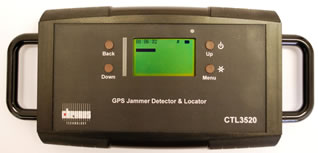
    Chronos_ctl3520

    You might want to visit this GPS.GOV website on GPS jamming. It contains a lot of information about the U.S. regulations surrounding the marketing, sales and use of GPS (and cell phone) jamming devices.

    Third annual Field Technology Conference

    FTC2013_logo

    In 2010, I, along with two colleagues, put together a conference here in Portland, Oregon, and named it the Field Technology Conference. We created the conference to focus on geospatial technology hardware and software used in the field. It’s the essence of what a conference should be, a group of people gathering to share ideas of common interest. It’s mostly devoid of commercial interests, save a few really neat (and valuable) giveaways and a few exhibit booths. You probably haven’t heard about the conference because we have a very small marketing budget, and the organizers (three of us) can only spend a few hours a month brainstorming, finding speakers, and organizing the event.

    This year, our third, will focus on existing and emerging technologies: GPS/GNSS, UAVs, 3D printing, mobile devices, imagery and geospatial software. Our outdoor demonstration area was very popular last year so we’ll offer that again, as well as a UAV demonstration. We’re also planning an on-site demonstration of 3D printing. Can you imagine 3D printing a topographic survey?

    Something new this year is our association with the CGSIC (Civil GPS Service Interface Committee). CGSIC is co-locating a regional event with our conference. What that means is that speakers from the U.S. government (Air Force, State Deptartment, DOT, etc.) will make GPS-centric presentations. CGSIC events are the only live communication channel between the U.S. Air Force GPS operations personnel and civilian GPS users. This is your chance to ask Air Force personnel questions, in person, that you’ve always wanted to know about GPS. If you’re unable to travel to Portland for the conference (October 23-24), GPS World magazine is planning on streaming the CGSIC presentations live over the Internet, as well as posting the recording on its website.

    Although the conference is organized by the Western Forestry and Conservation Association (which organizes a lot of conferences), take a look at the agenda and you’ll see the content will be of interest to anyone involved with geospatial data collection and processing technology, not just foresters and environmental scientists. For conference details, click here.

    Thanks, and see you next month.

    Follow me on Twitter at https://twitter.com/GPSGIS_Eric

  • Agency9 Releases 3D Models and 3D Cities for City Planners

    Aency9-Acute3D
    Aerial imagery Courtesy of InterAtlas

    Agency9, a provider of web-based 3D visualization solutions, announces support for 3D models and cities generated with Smart3DCapture from Acute3D. Municipalities, authorities, and private organizations can now use the photo-realistic 3D models in Agency9 CityPlanner to easily create web applications for planning, GIS, tourism and security, Agency9 said.

    According to the announcement, Acute3D’s Smart3DCapture is a software solution enabling data providers and distributors to easily produce true-3D models of cities from aerial and terrestrial imagery, without any human intervention. Agency9 has streamlined a process to support large-scale 3D models from Acute3D Smart3DCapture for web deployment. CityPlanner users can easily edit the Smart3DCapture data, such as demolish buildings, modify terrain, export exerts of data, as well as upload vector data, images, 3D models in order to create stunning interactive illustrations for public consultation or exhibition phases in planning or tourist oriented applications.

    “Agency9 has a vision to web enable any type of 3D terrain and city models in value adding applications. Agency9 is thrilled by the partnership with Acute3D and the potential it creates. Photorealistic 3D models are requested in many applications and Smart3DCapture is definitely one of the sharpest on the market. With CityPlannerOnline Agency9 uniquely offer data providers and users to publish Acute3D data online at a cost starting as low as 5,000 EUR per year without need to invest in IT infrastructure,” said Håkan Engman, CEO at Agency9.

    “The interoperability of our Smart3DCapture solutions is a very important topic at Acute3D, and the partnership with Agency9 opens exciting perspectives in the diffusion of large 3D models through online applications,” said Jean-Philippe Pons, CEO at Acute3D.

    Agency9 CityPlanner is a web-based service for 3D visualization of projects within urban development, infrastructure and energy. CityPlanner provides 3D web planning tools for widespread access and collaboration. It is created for urban planners, communicators, consultants and GIS technicians to easily create, share and publish project and spatial information from a normal web browser. CityPlanner is used by municipalities internationally in their daily work with master and local planning, also involving stakeholders and citizens in the planning process by enabling web publishing of 3D plan visualizations.

  • DigitalGlobe Reportedly Pushing the U.S. Government to Ease Limits on Satellite Imagery Resolution

    Breaking Defense is reporting that DigitalGlobe has requested that the National Oceanic and Atmospheric Administration (NOAA) relax the 41-cm limit currently in place.

    Walter Scott, DigitalGlobe’s founder and now executive VP and chief technical officer, tells Breaking Defense there is “significant demand” for quarter-meter resolution from the international market. And that’s why the company applied for a change to the resolution they can be licensed for from half a meter to a quarter meter.

    NOAA is responsible for managing remote sensing satellite licenses in the U.S. View the Commercial Remote Sensing Regulatory Affairs website here.

    Current NOAA license holders (per NOAA website)  are listed below:

  • Esri Releases Android Mapping App to Open Source Community

    Esri announced in a blog post that they have released an Android-based mapping app, based built entirely on the ArcGIS Runtime SDK for Android V 10.1.1,  to the open source community.


    Today we are proud to announce the app has been released to the open source community on Github.  There have been some design changes and updates to the app since it’s debut including some of the following:

    • Portal API to populate a gridview with basemaps available to change in the map
    • Reverse Geocoding class
    • PopUp API to view and edit popups from a WebMap.

    This is a great starting point for developers who want to create mobile mapping apps like Google Maps & MapQuest.  Some features available now include:

    And there is more to come.  We encourage developers to collaborate with us as we use Github to continue developing this app together with our developer community.  Anyone and everyone are welcome to contribute.  We will review/accept pull requests, submit/fix issues, & use milestones for updates.  Four things you can do now include:

    1. Get Involved
    2. Report Issues/Enhancements
    3. Contribute code
    4. Improve documentation

  • Microsoft to Acquire Nokia’s Devices & Services Business

    Microsoft Corporation and Nokia Corporation today announced that the Boards of Directors for both companies have decided to enter into a transaction whereby Microsoft will purchase substantially all of Nokia’s Devices & Services business, license Nokia’s patents, and license and use Nokia’s mapping services.

    HERE-pod-3-920-USA-jpg

    Under the terms of the agreement, Microsoft will pay EUR 3.79 billion to purchase substantially all of Nokia’s Devices & Services business, and EUR 1.65 billion to license Nokia’s patents, for a total transaction price of EUR 5.44 billion in cash. Microsoft will draw upon its overseas cash resources to fund the transaction. The transaction is expected to close in the first quarter of 2014, subject to approval by Nokia’s shareholders, regulatory approvals and other closing conditions.

    Building on the partnership with Nokia announced in February 2011 and the increasing success of Nokia’s Lumia smartphones, Microsoft aims to accelerate the growth of its share and profit in mobile devices through faster innovation, increased synergies, and unified branding and marketing. For Nokia, this transaction is expected to be significantly accretive to earnings, strengthen its financial position, and provide a solid basis for future investment in its continuing businesses.

    “It’s a bold step into the future – a win-win for employees, shareholders and consumers of both companies. Bringing these great teams together will accelerate Microsoft’s share and profits in phones, and strengthen the overall opportunities for both Microsoft and our partners across our entire family of devices and services,” said Steve Ballmer, Microsoft chief executive officer. “In addition to their innovation and strength in phones at all price points, Nokia brings proven capability and talent in critical areas such as hardware design and engineering, supply chain and manufacturing management, and hardware sales, marketing and distribution.”

    “We are excited and honored to be bringing Nokia’s incredible people, technologies and assets into our Microsoft family. Given our long partnership with Nokia and the many key Nokia leaders that are joining Microsoft, we anticipate a smooth transition and great execution,” Ballmer said. “With ongoing share growth and the synergies across marketing, branding and advertising, we expect this acquisition to be accretive to our adjusted earnings per share starting in FY15, and we see significant long-term revenue and profit opportunities for our shareholders.”

    “For Nokia, this is an important moment of reinvention and from a position of financial strength, we can build our next chapter,” said Risto Siilasmaa, Chairman of the Nokia Board of Directors and, following today’s announcement, Nokia Interim CEO. “After a thorough assessment of how to maximize shareholder value, including consideration of a variety of alternatives, we believe this transaction is the best path forward for Nokia and its shareholders. Additionally, the deal offers future opportunities for many Nokia employees as part of a company with the strategy, financial resources and determination to succeed in the mobile space.”

    “Building on our successful partnership, we can now bring together the best of Microsoft’s software engineering with the best of Nokia’s product engineering, award-winning design, and global sales, marketing and manufacturing,” said Stephen Elop, who following today’s announcement is stepping aside as Nokia President and CEO to become Nokia Executive Vice President of Devices & Services. “With this combination of talented people, we have the opportunity to accelerate the current momentum and cutting-edge innovation of both our smart devices and mobile phone products.”

    Nokia has outlined its expected focus upon the closing of the transaction in a separate press release published today.

    TERMS OF THE AGREEMENT

    Under the terms of the agreement, Microsoft will acquire substantially all of Nokia’s Devices and Services business, including the Mobile Phones and Smart Devices business units as well as an industry-leading design team, operations including all Nokia Devices & Services-related production facilities, Devices & Services-related sales and marketing activities, and related support functions. At closing, approximately 32,000 people are expected to transfer to Microsoft, including 4,700 people in Finland and 18,300 employees directly involved in manufacturing, assembly and packaging of products worldwide. The operations that are planned to be transferred to Microsoft generated an estimated EUR 14.9 billion, or almost 50 percent of Nokia’s net sales for the full year 2012.

    Microsoft is acquiring Nokia’s Smart Devices business unit, including the Lumia brand and products. Lumia handsets have won numerous awards and have grown in sales in each of the last three quarters, with sales reaching 7.4 million units in the second quarter of 2013.

    As part of the transaction, Nokia is assigning to Microsoft its long-term patent licensing agreement with Qualcomm, as well as other licensing agreements.

    Microsoft is also acquiring Nokia’s Mobile Phones business unit, which serves hundreds of millions of customers worldwide, and had sales of 53.7 million units in the second quarter of 2013. Microsoft will acquire the Asha brand and will license the Nokia brand for use with current Nokia mobile phone products. Nokia will continue to own and manage the Nokia brand. This element provides Microsoft with the opportunity to extend its service offerings to a far wider group around the world while allowing Nokia’s mobile phones to serve as an on-ramp to Windows Phone.

    Nokia will retain its patent portfolio and will grant Microsoft a 10-year license to its patents at the time of the closing. Microsoft will grant Nokia reciprocal rights to use Microsoft patents in its HERE services. In addition, Nokia will grant Microsoft an option to extend this mutual patent agreement in perpetuity.

    In addition, Microsoft will become a strategic licensee of the HERE platform, and will separately pay Nokia for a four-year license.

    Microsoft will also immediately make available to Nokia EUR 1.5 billion of financing in the form of three EUR 500 million tranches of convertible notes that Microsoft would fund from overseas resources. If Nokia decides to draw down on this financing option, Nokia would pay back these notes to Microsoft from the proceeds of the deal upon closing. The financing is not conditional on the transaction closing.

    Microsoft also announced that it has selected Finland as the home for a new data center that will serve Microsoft consumers in Europe. The company said it would invest more than a quarter-billion dollars in capital and operation of the new data center over the next few years, with the potential for further expansion over time.

    NOKIA LEADERSHIP CHANGES

    Nokia expects that Stephen Elop, Jo Harlow, Juha Putkiranta, Timo Toikkanen, and Chris Weber would transfer to Microsoft at the anticipated closing of the transaction. Nokia has outlined these changes in more detail in a separate release issued today.

    EXTRAORDINARY SHAREHOLDERS MEETING

    Nokia plans to hold an Extraordinary General Meeting on November 19, 2013. The notice of the meeting and more information on the transaction and its background are planned to be published later this month.

    PRESS CONFERENCE

    Nokia will host a press conference today, Tuesday, Sept. 3, at 11 a.m. EEST in Dipoli, Espoo (Otakaari 24). Registration will start at 10 a.m., and the doors will open at 10.40 a.m. Due to space constraints, only media who show valid press credentials at the registration will be admitted. Media are encouraged to watch a live webcast of the press conference at:http://press.nokia.com/

  • Intergraph Mobile Alert App Enables Citizen Crowdsourcing

    Intergraph released Intergraph Mobile Alert, a new mobile application for crowdsourcing incident information. Intergraph Mobile Alert simplifies reporting for citizens. Cities benefit by enlisting the masses to help define and pinpoint issues, such as road or utility line damage. With crowdsourcing to collect data about city infrastructure growing in popularity, Intergraph’s Mobile Alert allows citizens with GPS-enabled smartphones to play an active role in their regions by immediately sending incident information to authorities.

    Intergraph Mobile Alert App on iPhone

    “This new offering is designed to enable local governments to foster more citizen involvement in community improvement efforts,” said Vince Smith, Product Line Executive – GIS, Intergraph. “Now, citizens can simply take a photo of an asset or an event and send it to a hosted system where it can be acted upon in near real-time by their local government authorities.”

    Interested citizens can register issues involving anything from graffiti and illegal trash dumping, to road problems such as potholes, missing streetlights, or broken signage. The app, downloadable from app stores like iTunes and Google Play, has an intuitive interface that allows users to complete a report and send it to the appropriate authorities in just a few minutes.

    For resource-thin public works agencies, Mobile Alert offers a reliable, cost-effective means of collecting actionable data from any citizen source. Local government agencies and utility companies simply subscribe to receive the crowd-sourced information by email or through OGC web services.

    According to the announcement, originally developed in collaboration with local governments in Europe, the Mobile Alert client app has already been downloaded by more than 30,000 people worldwide and was ranked #1 on the Danish iTunes store for utility apps.

  • Esri Releases Yosemite National Park Rim Fire Perspectives Map

    Esri has released an interactive map illustrating the the Rim Fire near Yosemite National Park in California. The Rim Fire is currently threatening many communities near Yosemite National Park and poses a potential risk to several ranger stations and sequoia groves. It has become one of the largest fires in state history since it started on August 17.

    Rimfire

    Click here to open the interactive map. Click through the tabs on the left side of the map to explore various perspectives about the fire. Click any feature on the map to learn more about each point of interest.

    One available map shows historic fires for comparison, such as the 1987 Complex fire.

    Chart Courtesy of Esri


  • Esri Press Releases The GIS 20: Essential Skills, Second Edition

    Esri Press released The GIS 20: Essential Skills, Second Edition, by Gina Clemmer, a workbook that helps readers master the top 20 skills necessary to become proficient in using ArcGIS software. It is a direct result of a survey that Clemmer conducted with GIS professionals to determine the primary skills needed to be a successful GIS user.

    gis-20-essential-skills-workbook-helps-users-master-arcgis-sm

    According to the announcement, the book is a quick read and presents step-by-step instructions, illustrations, and practical tips on how to perform the fundamental skills needed to effectively use GIS. These skills include finding and editing data, querying GIS maps, creating reports, and sharing and publishing maps. The second edition offers nine bonus topics to further advance GIS skills, exercise data on an accompanying DVD, and ArcGIS 10.1 for Desktop software (180-day use) to work through the exercises.

    “The purpose of the book is to provide a focused approach to learning GIS by offering clear, easy-to-follow exercises for the most commonly used GIS skills in the industry today,” says Clemmer, “It is written for professionals with no time for classroom training and can be used for independent study or an as-needed reference.”

    Clemmer is president of the research and training company New Urban Research, Inc. Over the years, she has trained thousands of GIS users throughout the United States. Clemmer holds a master’s degree in urban planning from the University of Iowa.

    Graphic: Esri Press

  • U.S. Census Bureau Releases 2013 TIGER/Line Shapefiles and TIGER Geodatabases

    The Geography Division of the U.S. Census Bureau has released two sets of Topologically Integrated Geographic Encoding and Referencing products: the 2013 TIGER/Line shapefiles and the TIGER geodatabases. Both are extracts of the Master Address File/TIGER database and can be used with Geographic Information System software to map census geographic areas and features such as roads and rivers.

    The TIGER/Line shapefiles are updated yearly, and this version includes a new coastline feature. The TIGER geodatabases include national- and state-based files often requested by customers and provide the ability to download multiple layers in a single file. Both the 2013 TIGER/Line shapefiles and the TIGER geodatabases can be downloaded from the website.

    • Shapefiles are released in one of three types of coverages:
      • Nation-based
      • State-based
      • County-based
    • The table below lists each type of geography and the coverage(s) at which each is available.
    2013 TIGER/Line Shapefiles Availability
    Layer
    Nation-Based Files
    State-Based Files
    County-Based Files
    Note that not all files exist for all states or all counties.
    Shapefiles – Boundaries
    Alaska Native Regional Corporation

    X

    American Indian Tribal Subdivision

    X

    American Indian/Alaska Native/Native Hawaiian Areas

    X

    Block

    X

    Block Group

    X

    Census Tract

    X

    Combined New England City and Town Area

    X

    Combined Statistical Area

    X

    113th Congressional Districts

    X

    Consolidated City

    X

    County and Equivalent

    X

    County Subdivision

    X

    Elementary School District

    X

    Estates

    X

    Metropolitan Division

    X

    Metropolitan/Micropolitan Statistical Area

    X

    New England City and Town Area

    X

    New England City and Town Division

    X

    Place

    X

    Public Use Microdata Area

    X

    Secondary School District

    X

    State and Equivalent

    X

    State Legislative District-Lower Chamber

    X

    State Legislative District-Upper Chamber

    X

    Subbarrio (Subminor Civil Division)

    X

    Tribal Block Group

    X

    Tribal Census Tract

    X

    Unified School District

    X

    Urban Areas

    X

    5-digit ZIP Code Tabulation Area

    X

    Shapefiles – Features
    Address Range-Feature

    X

    All Lines

    X

    All Roads

    X

    Area Hydrography

    X

    Area Landmark

    X

    Coastline

    X

    Linear Hydrography

    X

    Military Installation

    X

    Point Landmark

    X

    Primary and Secondary Roads

    X

    Primary Roads

    X

    Rails

    X

    Topological Faces (Polygons With All Geocodes)

    X

    Relationship Files
    Address Range-Feature Name

    X

    Address Ranges

    X

    Feature Names

    X

    Other Identifiers

    X

    Topological Faces-Area Landmark

    X

    Topological Faces-Area Hydrography

    X

    Topological Faces-Military Installations

    X

  • Smartphone Market to Fragment in Emerging Markets

    New findings from leading hi-tech analysts, Juniper Research, has revealed that the Smartphone OS market will see new emerging players, such as Asha, Sailfish and emerging HTML 5 based OS players begin to gain ground in niche areas. The market globally however is expected to continue to be dominated by Android and iOS.

    The report argues that these new contenders will take away important niches – focusing on cost innovation and utilising local knowledge – in synergy with the next generation of consumers. This may begin the slow decline of the current global OS elite.

    Global Smartphone Dichotomy

    In terms of smartphone shipments, Apple and Samsung will continue to dominate the global market, shipping 17% more smartphones in 2018 than were shipped globally by all vendors in 2012. The new Juniper report found that Apple and Samsung’s global smartphone shipments will hit nearly 800 million by the end of 2018, compared with 677 million last year.

    Apple’s New Horizons

    Juniper’s latest report, ‘Smartphone Futures: Differentiation Strategies & Emerging Opportunities 2013-2018’ forecasts sustained growth for Apple in the emerging markets over the forecast period, with Apple expected to announce a diversification in its product portfolio shortly. It notes that this brings Apple closer to the Samsung model of catering to diverse set of markets utilising different models which will maintain the current global dichotomy.

    New Region New Rules

    The new report noted that significant growth is expected across emerging markets such as the Indian Subcontinent and China. These areas will see particular growth in the Ultra-Economy and Economy sectors, with heavily localised handsets. Slower growth is forecast for the Ultra-Premium and Premium smartphone sectors, but only if they can offer clear differentiation within a crowded market.

    Other Key Findings Include:

    •         There will continue to be a lack of short and medium term diversity within the OS market.
    •         The Average Selling Price of a smartphone will fall as new lower income demographics are exploited.

  • Fleet Management Market worth $30.45 Billion By 2018, Study Says

    MarketsandMarkets announced they recently conducted a study on the Fleet Management Marketwhich analyzed and studied the major market drivers, restraints, and opportunities in North America, Asia-Pacific, Europe, Latin America, and Middle East and Africa. The study observes that the fleet management market is expected to grow from $10.91 billion in 2013 to $30.45 billion by 2018, at an Compound Annual Growth Rate (CAGR) of 22.8% from 2013 to 2018.

    According to the announcement, intelligent fleet management solutions based on technologies such as Global Positioning system (GPS)-based telematics are helping fleet operators to enhance operational efficiencies in terms of improving vehicle performance and mileage, enhancing operational reliability and safety, maintenance planning, driver control, and optimizing navigation and routes. The growing competitiveness among the transportation service providers, CO2 emission control norms, and rising fuel prices are making the Fleet Management System (FMS) an essential component for the business operation of the fleet vehicle operators.

    The number of vehicles is increasing globally with a major boom in the emerging economies; this has a positive impact on the fleet management industry. Asia-Pacific is expected to exhibit the highest growth rate in the fleet management market revenue out of the various regional markets. There are also government endeavors to mandate the incorporation of GPS tracking features in all the new vehicles to be sold and operated in their specific regions, which clearly shows the opportunities for fleet management business growth. Organizations from public transport, service sectors, logistics, and retail industries are expected to bring huge business opportunities for the fleet management vendors.

    The key strategies followed by many of the leading companies in the fleet management market are new technology, customized solution, and acquiring relatively small domain expert players. Some of the major players in this market are Accenture, Motorola Solutions, TomTom, Qualcomm, Masternaut, Trimble Navigation Ltd., Garmin International, Fleetmatics, Pointer Telocation Ltd, Verizon Networkfleet, among others.

    This MarketsandMarkets report provides key insights into the market dynamics, industry trends, and adoption trends in the fleet management market. It explores business potential of fleet management solutions across varied industry verticals such as academia, government and waste management, public transport, utilities, retail, logistics, construction, mining, oil, gas and chemicals, service sectors, and others. The report talks about revenues expected from the fleet management solutions and services offered to different types of vehicles.

    The report analyzes market sizes and revenue forecasts across different regions. The report also draws the competitive landscape of the fleet management market, providing an in-depth comparative analysis of the technological and marketing strategies that the key players are adopting in order to gain an edge over their competitors.

  • AIDSVu Releases Map that Depicts Impact of HIV/AIDS in the US

    The Rollins School of Public Health at Emory University launched its annual update of AIDSVu, including new interactive online maps that show the latest HIV prevalence data for 20U.S. cities by ZIP code or census tract. AIDSVu also includes new city snapshots displaying HIV prevalence alongside various social determinants of health – such as poverty, lack of health insurance, and educational attainment.

    Aidsvu
    Chart: http://aidsvu.org/map/

    According to the announcement, AIDSVu is the most detailed publicly available view of HIV prevalence in the United States and is a compilation of interactive online maps that displayHIV prevalence data at the national, state and local levels and by different demographics, including age, race and sex. The maps pinpoint areas of the country where the rates of people living with an HIV diagnosis are the highest, including urban centers and in the Northeast and the South, visualizing where the needs for prevention, testing and treatment services are the most urgent.

    “Our National HIV/AIDS Strategy calls for reducing new HIV infections by intensifying our efforts in HIV prevention where the epidemic is most concentrated. AIDSVu provides a roadmap to identifying those high-prevalence areas of the HIV epidemic and showing where the local testing resources are located,” said Patrick S. Sullivan, PhD, DVM, Professor of Epidemiology at Emory University’s Rollins School of Public Health, and the principal researcher for AIDSVu. “The addition of new city data means that  AIDSVu now displays data from 20U.S. cities. This expanded city information is critical because most HIV diagnoses in the United States occur in cities.”

    The free, interactive online tool’s new data and features include:

    • National maps displaying 2010 data at the state-and county-level, the most recent national HIV prevalence data available from the U.S. Centers for Disease Control and Prevention (CDC).
    • Interactive maps of HIV prevalence data by census tract for Atlanta, Philadelphia, and Washington, D.C.
    • New ZIP code level maps for five U.S. cities – Memphis, Orlando, San Diego, Tampa and Virginia Beach; and updated ZIP code maps for Atlanta, Chicago, Dallas, Detroit, Ft. Lauderdale, Houston, Los Angeles County, Miami, New Orleans, New York City, Palm Beach, Philadelphia, San Francisco, San Juan, and Washington, D.C.
    • HIV prevalence maps alongside social determinants of health – poverty, lack of health insurance, median household income, educational attainment and income inequality – in side-by-side map views for 20 cities, in addition to the existing state views.

    AIDSVu maps illustrate the geographic variations in the HIV epidemic across the United States:

    • The national map shows significantly higher rates of people living with HIV in the Northeast and the South than in much of the rest of the country. AIDSVu’s city maps demonstrate that, in many cities, there is a pattern of heavily impacted urban cores with relatively lower impact in areas further from city centers.
    • The data on AIDSVu’s maps can be viewed by race/ethnicity. AIDSVu shows that HIV disproportionately affects black and Hispanic/Latino Americans, and that these disparities exist in both major metropolitan areas and rural areas.
    • AIDSVu also provides downloadable and printable resources – including slide sets of the various map views available on the site – to help those who work in HIV prevention and treatment educate others about the U.S. epidemic.

    AIDSVu and National HIV Testing Day:

    This year’s update of AIDSVu is being launched in conjunction with National HIV Testing Day.

    • Currently, more than one million Americans are living with HIV, and an estimated one in five people with HIV do not know their status.
    • Information about HIV prevalence at the local level – as shown on AIDSVu – can help individuals  understand the impact of HIV in their communities and the importance of getting tested. The AIDSVu testing locator helps users find a place in their community to get tested for HIV.

    The state- and county-level data displayed on AIDSVu were obtained from the CDC and compiled by researchers at the Rollins School of Public Health at Emory University. Data on HIV prevalence at the ZIP code and census tract data were provided directly by state, county and city health departments, depending on the entity responsible for HIV surveillance, and were also compiled by Rollins researchers. The project is guided by an Advisory Committee and a Technical Advisory Group with representatives from federal agencies, state health departments and non-governmental organizations working in HIV prevention, care and research. Financial support for AIDSVu was provided to Emory University by Gilead Sciences, Inc.