
Author: Jesse Khalil

  • Research roundup: Advancing space and lunar navigation

    Research roundup: Advancing space and lunar navigation

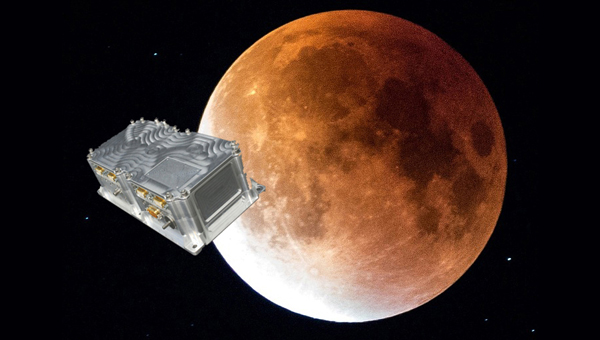
    SpacePNT and European Engineering and Consultancy (EECL) delivered the final presentation of the European Space Agency (ESA)-funded project, “Earth Moon GNSS Spaceborne Receiver for In-Orbit Demonstration.” This project aims to develop the NaviMoon GNSS receiver for lunar applications. (Photo: SpacePNT)
    SpacePNT and European Engineering and Consultancy (EECL) delivered the final presentation of the European Space Agency (ESA)-funded project, “Earth Moon GNSS Spaceborne Receiver for In-Orbit Demonstration.” This project aims to develop the NaviMoon GNSS receiver for lunar applications. (Photo: SpacePNT)

    GNSS researchers presented hundreds of papers at the 2024 Institute of Navigation (ION) GNSS+ conference, which took place Sept. 16-20 in Baltimore. The following papers focused on lunar and space applications. The papers are available here.

    Clock and Orbit Determination for LEO Satellites

    More than 50 years after the Apollo program, there is a growing interest in establishing a sustainable human presence on the moon, with various missions being planned in different lunar orbit regimes to support lunar exploration. To address the challenges of navigation in the lunar environment, researchers have proposed a technique leveraging time-differenced carrier-phase (TDCP) measurements from GPS satellites, which offer millimeter-level accuracy when integer ambiguities are correctly fixed.

    The proposed framework utilizes an extended Kalman filter that combines intermittently available terrestrial GPS TDCP values with gravitational accelerations predicted by an orbital filter. To handle the unique challenges of the lunar environment, such as weak gravity and strong third-body perturbations, the researchers implement an adaptive state noise compensation algorithm and introduce an augmented state vector to address time correlations across TDCP measurements. Through Monte Carlo simulations of lunar satellites in various orbits, the technique demonstrates improved positioning and onboard timing accuracy compared to pseudorange-only navigation solutions.

    Keidai Iiyama, Sriramya Bhamidipati and Grace Gao, “Precise Positioning and Timekeeping in a Lunar Orbit via Terrestrial GPS Time-Differenced Carrier-Phase Measurements.”

    Satellite Ephemeris Parameterization for Lunar Navigation

    This paper explores the development of satellite ephemeris parameterization methods for lunar navigation systems. As space agencies plan to establish satellite networks around the moon for communication and positioning, navigation and timing (PNT) services, the authors investigate optimal techniques for efficiently and accurately broadcasting satellite ephemeris data to lunar users. They propose a framework that directly approximates satellite position and velocity in the inertial frame, using signal-in-space-error requirements as constraints to guide the search for the best ephemeris parameter set.

    The study evaluates different methods based on ephemeris prediction precision, fit interval and message size. It demonstrates the framework’s ability to approximate satellite ephemeris for both low lunar orbits and elliptical lunar frozen orbits while meeting signal-in-space-error requirements. The research considers polynomial and Chebyshev basis types for surrogate models and evaluates performance based on precision and orbital coverage. By quantifying the broadcast message’s fit interval and size, the authors aim to guide the selection of optimal parameterization methodologies for lunar navigation systems.

    Marta Cortinovis, Keidai Iiyama and Grace Gao, “Open Access Satellite Ephemeris Parameterization Methods to Support Lunar Positioning, Navigation, and Timing Services.”

    Improving Navigation Accuracy in GEO

    The authors introduce a new approach to improving the accuracy of satellite position determination in geostationary equatorial orbit (GEO). They propose integrating a regional navigation satellite system (RNSS) with GNSS. Specifically, they suggest using RNSS signals, such as those from the Quasi-Zenith Satellite System (QZSS), to complement the signals provided by GNSS for GEO satellites.

    The research addresses the challenges faced by GEO satellites in using GNSS signals, including poor dilution of precision (DOP) and significant radial errors due to limited observability. By incorporating RNSS signals, the researchers aim to improve the diversity of signal directions and enhance navigation precision. The paper demonstrates the feasibility of receiving QZSS signals across a substantial range in GEO through link budget analyses. Two comprehensive simulations were conducted: a point solution and an extended Kalman filter-based orbit determination. The results confirm the anticipated improvement in navigation precision indicated by the DOP analysis.

    While RNSS signals can be received from any longitude in GEO, enhanced navigation precision depends on the distance between the satellite and the RNSS. The authors suggest that this concept can be adapted to various longitudes within GEO by selecting appropriate RNSS options and promoting stable, high-precision navigation.

    Yu Nakajima and Toru Yamamoto, “Enhancing Navigation Accuracy in a Geostationary Orbit by Utilizing a Regional Navigation Satellite System.”

    Integrating Orbit and Attitude Precision for CubeSat Positioning

    This research paper addresses ways to enhance CubeSat capabilities for demanding missions, particularly in low Earth orbiting positioning, navigation and timing (LEO-PNT) systems. The authors propose an array-aided combined precise orbit and attitude determination model that offers an optimal solution to improve orbital accuracy and provide reliable attitude information. By utilizing multi- and affine-constrained models for precise attitude determination and reconstructing highly precise observations for an antenna array, the method addresses the challenges of higher orbital accuracy and reliable attitude information required for advanced applications.

    The authors recorded significant improvements in orbital accuracy and attitude determination. Validation results show that reconstructed observations outperform original ones, leading to improved orbital components with a three-dimensional root mean square (RMS) of 4.1 cm. Additionally, observation residuals are smoother, with an RMS of 6 mm, half of that obtained via a single antenna. The results show a promising solution for enhancing CubeSat capabilities, particularly for applications requiring high-precision orbit and attitude information.

    Amir Allahvirdi-Zadeh and Ahmed El-Mowafy, “Array-Aided Precise Orbit and Attitude Determination of CubeSats using GNSS.”

  • Swift Navigation partners with CHCNAV on precise positioning solutions

    Swift Navigation partners with CHCNAV on precise positioning solutions

    Swift Navigation has collaborated with CHC Navigation (CHCNAV) to integrate Swift’s Skylark Precise Positioning Service with CHC Navigation’s GNSS receivers.

    Skylark is a cloud-based GNSS corrections service designed to improve the accuracy of standard GNSS from several meters to a few centimeters. Built to meet stringent standards for automotive safety (ISO 26262), Skylark supports more than 10 million advanced driver-assistance systems (ADAS)-enabled and autonomous vehicles globally. It can be used in a variety of applications, such as autonomous vehicles, robotics and surveying equipment.

    Example integration

    The CHC CGI-220 Pro is a high-precision, automotive-grade GNSS/INS tightly coupled navigation system designed for applications requiring robust and accurate positioning, such as autonomous driving, ADAS and intelligent transportation systems. When integrated with Skylark, the CGI-220 Pro offers:

    • Centimeter-level accuracy: Skylark enhances the CGI-220 Pro’s precision, delivering reliable, real-time positioning even in challenging environments.
    • Seamless integration: The CGI-220 Pro’s compact design and compatibility with various vehicle systems allows for straightforward integration into automotive platforms.
    • High reliability: Engineered to meet stringent automotive standards, the CGI-220 Pro offers consistent performance under demanding conditions.
  • Mysterious drone sightings surge across US; military bases on alert

    Mysterious drone sightings surge across US; military bases on alert

    Unidentified UAVs over military installations have sparked security concerns across the United States. Numerous sightings of suspected drones have been reported over residential areas, restricted sites and critical infrastructure, including reservoirs, electric transmission lines, rail stations, police departments and military bases. These incidents have prompted federal agencies to investigate and address increasing public concerns.

    Government response

    John Kirby, the White House national security spokesperson, provided an update regarding the recent drone sightings across the United States. According to Kirby, more than 5,000 drone sightings have been reported in recent weeks, but only about 100 of these required further investigation.

    Kirby said the sightings have included a combination of lawful commercial drones, hobbyist drones and law enforcement drones, as well as some crewed aircraft and stars mistaken for drones.

    However, the U.S. government is implementing precautionary measures. UAV detection and tracking systems are being installed at Picatinny Arsenal and Naval Weapons Station Earle in New Jersey. The FBI is spearheading investigations into the sightings, and local law enforcement agencies are conducting their own inquiries as well, CNN reported.

    Several military installations have reported drone activity, including:

    • Wright-Patterson Air Force Base in Ohio temporarily closed its airspace due to drone sightings.
    • Picatinny Arsenal in New Jersey confirmed 11 unauthorized drone flights over its airspace.
    • Naval Weapons Station Earle in New Jersey has also reported drone sightings.
    • Ramstein Air Base in Germany experienced drone activity in early December 2024.

    In an interview with ABC News, Alejandro Mayorkas, head of the Department of Homeland Security, said, “There’s no question that drones are being sighted.”

    Impact on daily operations

    The drone sightings have affected civilian infrastructure as well. Stewart International Airport in New York temporarily closed its runways for about an hour due to reported drone activity. Residents in several East Coast states have also reported seeing hovering and low-flying bright lights at night.

    While the increase in sightings has raised concerns among residents and lawmakers alike, federal authorities maintain that most of these incidents do not pose a significant threat to public safety or national security.

  • Hexagon | NovAtel introduces anti-jamming solution

    Hexagon | NovAtel introduces anti-jamming solution

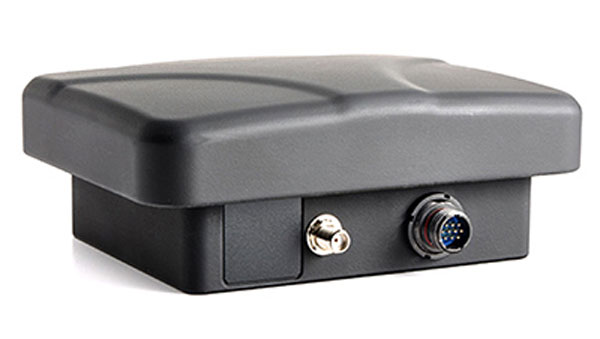
    Hexagon | NovAtel has released its lowest size, weight and power (SWaP) GNSS anti-jamming technology (GAJT), the GAJT-310. The GAJT line is a battle-proven solution for assured positioning, navigation and timing (A-PNT) designed to protect against hostile radio frequency interference for land, air and sea applications.  

    The new GAJT-310 features advanced anti-jam technology with minimal latency within a compact device. The reduced latency allows the GAJT-310 to protect signals immediately with no additional setup. It can be either an integrated enclosure or a federated option with a separate electronics card and controlled reception pattern antenna (CRPA). The device offers enhanced protection for GNSS signals on both L1 and L2 bands. The GAJT-310’s commercially exportable technology makes it accessible worldwide, allowing for broader implementation across various industries and regions.

    “We’ve taken everything we learned from the successful in-theatre deployment of the GAJT-710 and GAJT-410 for NATO forces worldwide and built it into the GAJT-310,” stated Neil Gerein, vice president of product, aerospace and defense at Hexagon’s Autonomy & Positioning division. “Regarding assured positioning, navigation and timing, we believe every platform in any industry should be protected.”

  • VIAVI strengthens portfolio with acquisition of Inertial Labs

    VIAVI strengthens portfolio with acquisition of Inertial Labs

    VIAVI Solutions has signed an agreement to acquire Inertial Labs for $150 million. The acquisition, subject to certain regulatory approvals and customary closing conditions, is expected to close in the third quarter of fiscal 2025 and has a potential for up to $175 million in contingent payments throughout the next four years. 

    This acquisition is expected to significantly boost VIAVI’s financial performance, with projections indicating an increase of approximately $50 million to the company’s Network and Service Enablement (NSE) annual revenue in 2025. Inertial Labs brings to VIAVI a comprehensive portfolio, including inertial measurement units (IMU), inertial navigation systems (INS), assured positioning navigation and timing (APNT), GNSS tracking, lidar scanning, alternative navigation (ALTNAV) and visual navigation solutions. These offerings complement VIAVI’s existing PNT and other aerospace and defense solutions.

    According to VIAVI Solutions, the acquisition is designed to open up new opportunities for VIAVI in emerging markets. Inertial Labs’ expertise in utility inspection through lidar and photogrammetry algorithms, as well as smart system navigation for airborne and autonomous ground vehicles, is expected to accelerate VIAVI’s entry into industrial and autonomous delivery and transportation end markets.

    “With a highly complementary product portfolio focused on alternate navigation solutions, this transaction supports VIAVI’s strategy to expand our presence in domestic and international aerospace and defense segments and accelerates our entry into autonomous air, land and sea systems in the military and industrial end markets,” said Oleg Khaykin, president and CEO of VIAVI.

    “We are excited that our expertise, precision solutions and resources provide expansion opportunities for VIAVI in high growth markets and applications such as drone-based lidar and camera systems,” said Jamie Marraccini, president and CEO of Inertial Labs.

  • EUSPA awards GMV for Galileo Emergency Alert System upgrade

    EUSPA awards GMV for Galileo Emergency Alert System upgrade

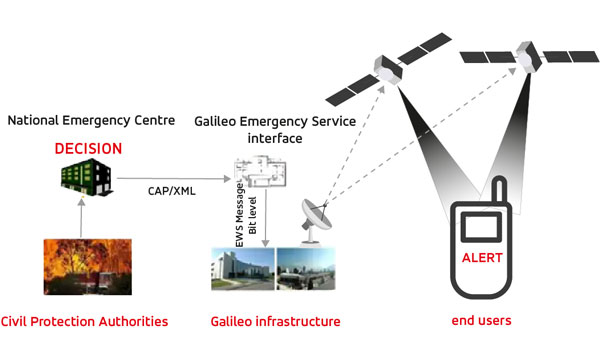
    The European Union Agency for the Space Programme (EUSPA) has awarded GMV a framework contract to deliver new Galileo functionalities under the EmeRgency Alerting System (ERAS). This four-year contract, valued at approximately $6 million, will enable significant advancements in Europe’s disaster response capabilities. The GMV-led consortium includes Ineco, ALTEN Spain and Kineton as subcontractors.

    ERAS will primarily allow Member States’ National Civil Protection Authorities to broadcast emergency warning messages directly to populations in at-risk or affected areas. These alerts will be transmitted via Galileo satellites to smartphones and other Galileo-enabled devices. According to EUSPA, the messages will contain crucial information about the hazard, including its type, severity, affected area, expected onset and duration, as well as guidance for appropriate responses.

    The Galileo Emergency Warning Satellite Service (EWSS) and ERAS seek to enhance Galileo by offering resilience and complementarity to existing public warning systems, independence from terrestrial and mobile networks, rapid communication with global reach and particular benefits for remote areas with limited mobile coverage.

    The system is designed to provide a robust and versatile solution for emergency communications, ensuring that critical alerts reach populations even in challenging scenarios. ERAS is expected to be fully operational in the first half of 2026.

    The implementation of ERAS comes at a critical time, as highlighted by the State of the Climate in Europe (ESOTC) report for 2024. Europe has experienced numerous extreme weather events in recent years, including heat waves, forest fires, floods and droughts. The continent is warming at approximately twice the global average rate, emphasizing the urgent need for effective warning systems and robust climate policies, GMV shared.

    The joint use of Galileo ERAS and the Copernicus Emergency Management Service seeks to enhance the European Union’s and its Member States’ disaster management capabilities. This integration will provide a comprehensive approach to alerting populations about risks such as the recent disasters in Valencia, Spain and other parts of Europe.

  • Launchpad: New surveying and mapping products,  MEMS sensors and more

    Launchpad: New surveying and mapping products, MEMS sensors and more

    A roundup of recent products in the GNSS and inertial positioning industry from the December 2024 issue of GPS World magazine.


    Mapping

    Photo: SPH Engineering
    Photo: SPH Engineering

    GPR System
    For terrestrial and airborne applications 

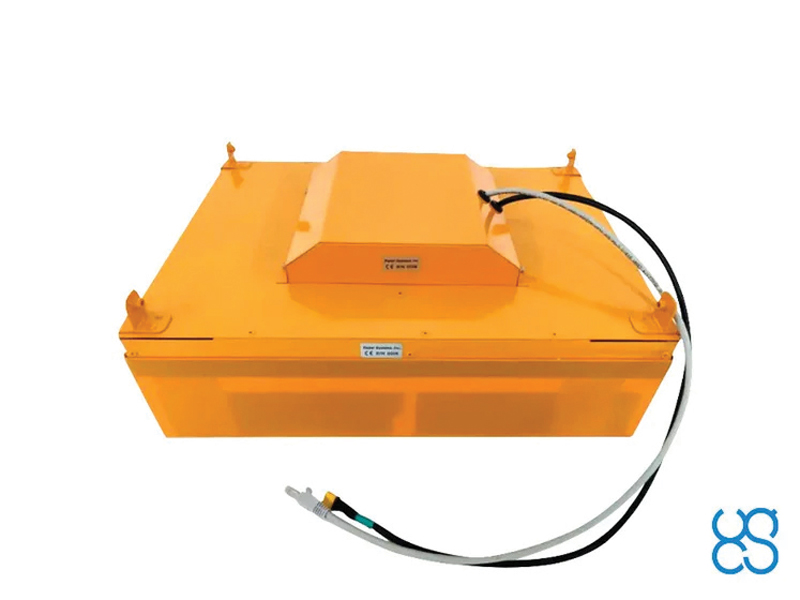
    The Zond Aero 500 NG is a versatile ground penetrating radar (GPR) system designed for both terrestrial and drone-mounted surveys, suitable for applications such as utility scanning, sinkhole detection, glaciology and geological studies. It operates in dual mode, allowing for ground-based and airborne surveys, enhancing data collection flexibility. Key specifications include a center frequency of 500 MHz, an operating bandwidth of 200 MHz – 900 MHz, a sampling rate of 25,600 samples per second and a scan rate of 50 scans per second, with depth penetration up to 4 meters in average soil conditions. The system features advanced electronics for real-time data collection, which can significantly improve the signal-to-noise ratio. It is compatible with DJI Matrice 300/350 UAVs for airborne applications.

    SPH Engineering, sphengineering.com

    Photo: DeltaQuad
    Photo: DeltaQuad

    Streamlined Lidar Mapping
    YellowScan’s Surveyor Ultra integrated with DeltaQuad Evo

    Integrating YellowScan’s Surveyor Ultra with the DeltaQuad Evo platform allows users to collect high-precision, high-density data across 1,200 hectares in a single flight while simultaneously capturing lidar and RGB data.

    DeltaQuad Evo’s long-range flight capabilities and efficient vertical take-off and landing (VTOL) design, paired with the Surveyor Ultra’s lidar technology, allow users to streamline their workflows to reduce time spent in the air and on post-processing tasks, making it particularly beneficial for large infrastructure projects, forestry analysis and environmental monitoring. The system can be used for surveying, construction, forestry and environmental research.

    DeltaQuad, deltaquad.com

    Photo: RIEGL
    Photo: RIEGL

    Airborne Mapping System
    With a ‘cross-fire’ scan pattern

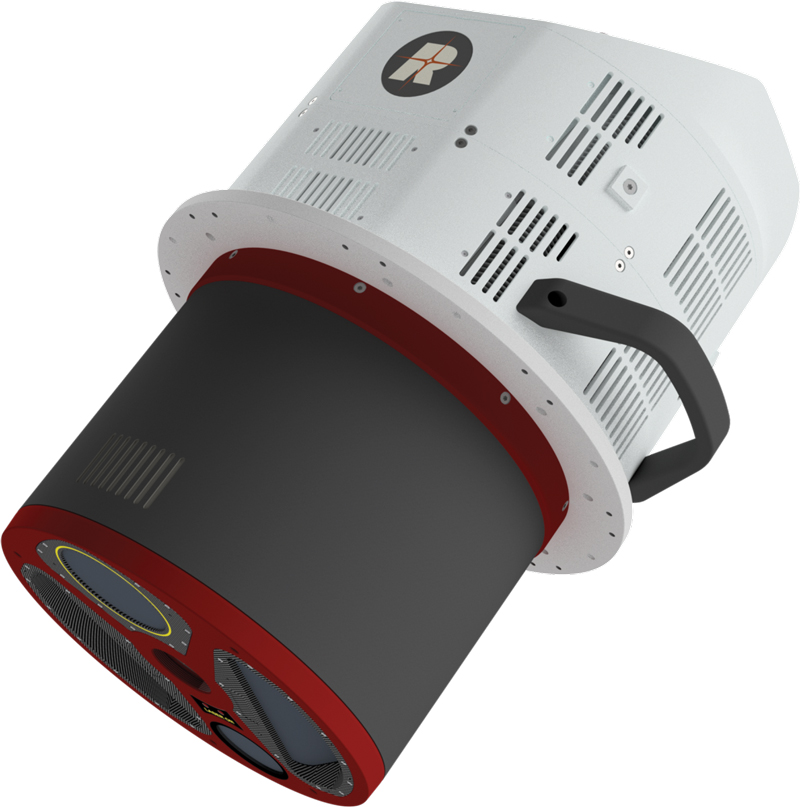
    The VQ-1560 III-S is a dual-channel laser scanning system designed for airborne mapping applications. Its “cross-fire” scan pattern allows for simultaneous forward and backward viewing at the edges of the swath, along with a nadir view in the center. This configuration optimizes point distribution for effective target sampling. With pulse repetition rates reaching up to 4.4 MHz, the VQ-1560 III-S can operate at altitudes of up to 1,600 m above ground level (AGL). At a lower pulse repetition rate of 560 kHz, it can function at altitudes as high as 3,900 m AGL.

    The system features inertial measurement unit (IMU) and GNSS integration, with the option to include one or two high-resolution RGB/NIR cameras. It is ideal for professionals in fields such as urban planning, forestry and environmental monitoring.

    RIEGL, riegl.com

    Photo: Teledyne Optech
    Photo: Teledyne Optech

    Coastal Mapping Solution
    Features a lidar sensor

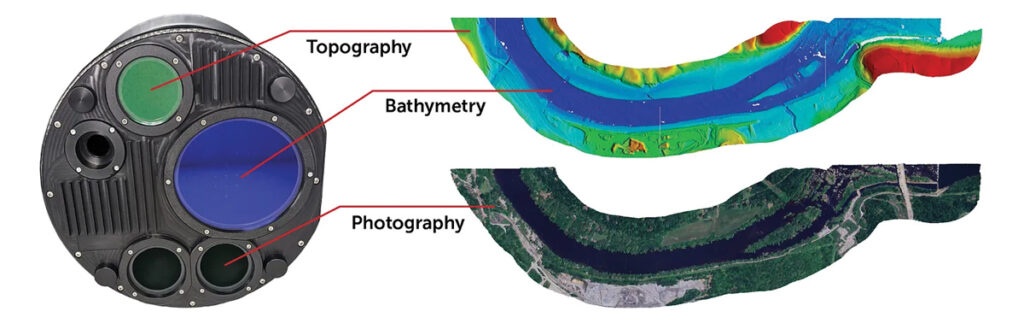
    This bathymetric lidar system is designed for coastal and inland water mapping. It combines high-resolution topographic and bathymetric capabilities, allowing for seamless data collection across land and sea. It can be used for coastal zone management, environmental monitoring, infrastructure planning and more.

    Fathom delivers data quickly by leveraging real-time quality control with Onboard and scalable processing with a CARIS workflow. It also includes a built-in topographic lidar and a multispectral camera for coastal surveys at a coverage of 50 km2/hour.

    Teledyne Optech, teledyneoptech.com

    Photo: Juniper Systems
    Photo: Juniper Systems

    Mounting Accessory
    Designed for mobile mapping 

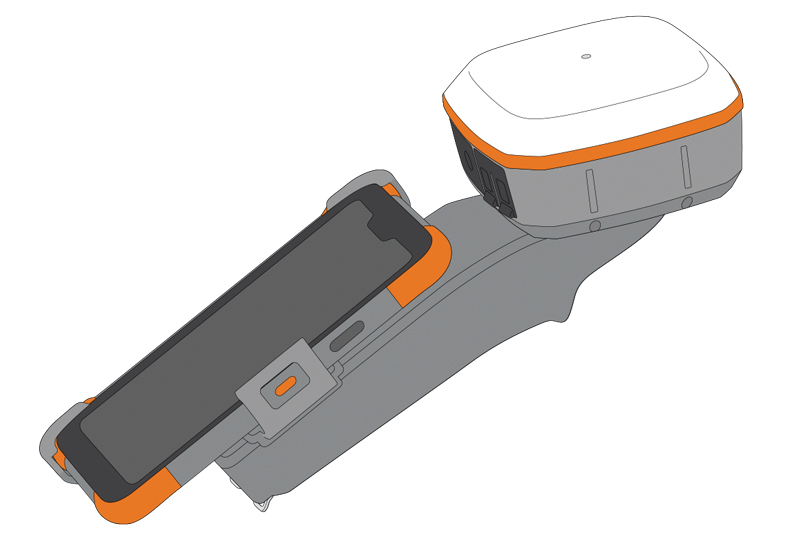
    The Geode Grip is a mounting accessory featuring a specialized bracket. It allows users to securely attach smartphones directly to Juniper’s Geode GNSS receivers, offering an integrated and streamlined data collection solution.

    The Geode Grip is a tool designed for professionals in surveying, mapping and geographic information systems (GIS) to enhance mobile data collection. It replaces the traditional survey pole with a handheld setup that aims to improve ergonomics. It is ideal for field projects that require precise location data and mobile data collection, such as environmental research, land surveying, agriculture and infrastructure engineering. 

    Juniper Systems, junipersys.com


    Mobile

    Photo: Quectel Wireless Solutions
    Photo: Quectel Wireless Solutions

    New Product Bundle  
    For high-accuracy GNSS applications  

    Quectel Wireless Solutions has unveiled a new product bundle designed to facilitate the development of high-accuracy GNSS applications. The bundle includes the LG290P GNSS module, which is a quad-band, multi-constellation device capable of receiving signals from various satellite systems, including GPS, GLONASS, Galileo, BDS, QZSS and NavIC. The LG290P is engineered for high precision and supports RTK positioning, allowing for centimeter-level accuracy even in challenging environments. It can be used in diverse applications, such as autonomous vehicles, precision agriculture and surveying.

    In addition to the LG290P module, the bundle includes options for either the YEGN103W8A geodetic antenna or the YEGD006U1A patch antenna. Both antennas are designed to operate within the same frequency bands as the GNSS module and are compliant with environmental regulations such as RoHS. This pre-integrated solution simplifies developers’ procurement and integration process by providing a one-stop solution that combines antennas with GNSS modules and RTK correction services.

    Quectel Wireless Solutions, quectel.com


    Surveying

    Photo: Inertial Labs
    Photo: Inertial Labs

    Lidar Camera Payload
    For surveying and mapping applications 

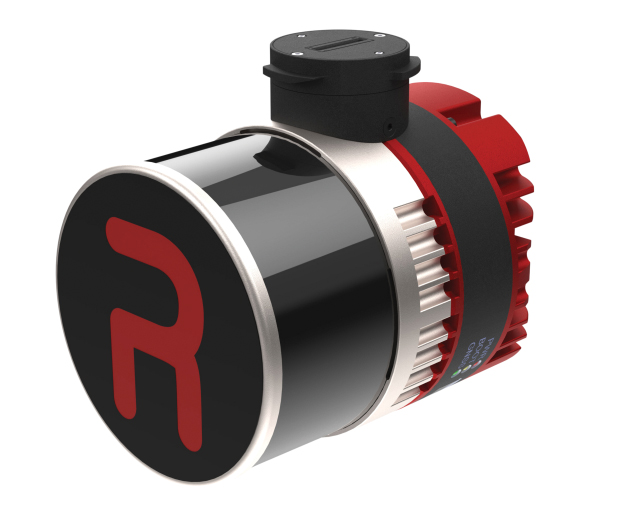
    The RESEPI Ultra LITE is a lightweight payload combining lidar and camera technology for advanced surveying and mapping applications. The system integrates the XT-32 lidar scanner to offer users advanced data accuracy and point density across various operational modes.

    It has a compact design with a 5MP colorization camera, making it ideal for small unmanned aerial systems (SUAS) with strict volume constraints. It can be used for aerial and ground-based applications, including utility mapping, construction volumetrics, precision agriculture, forestry, site surveying and mining. Designed for seamless integration, the system is compatible with a wide range of platforms such as Freefly, WISPR, DJI, Sony and mobile setups. Inertial Labs’ proprietary SnapFit adapters ensure quick and secure mounting to enhance the system’s adaptability.

    Inertial Labs, inertiallabs.com

    Photo: Leica Geosystems
    Photo: Leica Geosystems

    RTK Rover
    With tilt compensation 

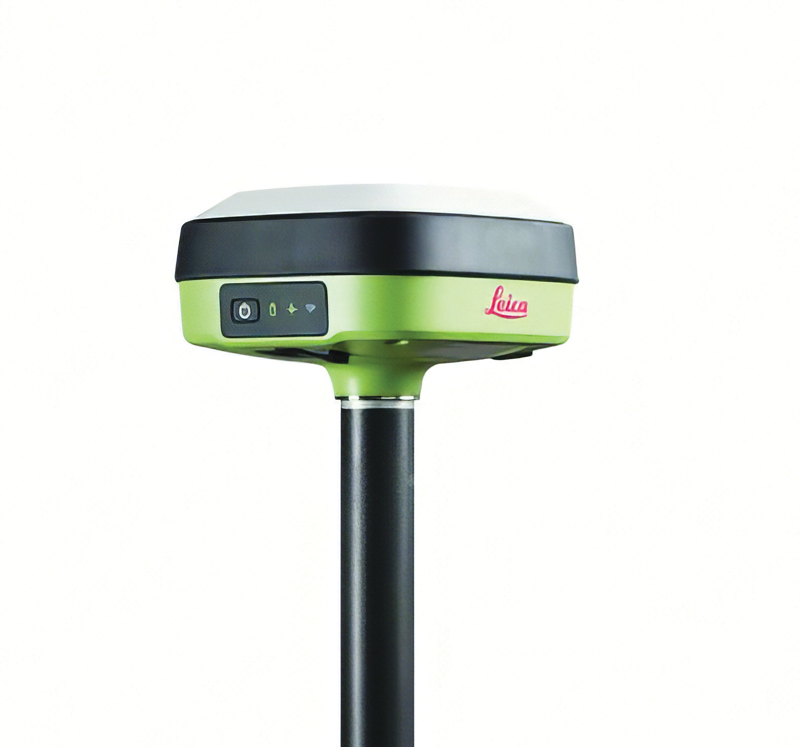
    The Leica GS05 is a compact and lightweight GNSS smart antenna designed for surveying tasks, featuring calibration-free tilt compensation. This robust device allows for accurate measurements even when the survey pole is tilted up to 30°, enhancing data collection in challenging environments. Its integration with Leica Geosystems’ portfolio, including Leica Captivate software and total stations, seeks to maximize efficiency. The GS05 can function as both a base and an RTK rover, supporting single base stations and RTK networks such as Leica SmartNet.

    Leica Geosystems, leica-geosystems.com

    Photo: Teledyne Marine
    Photo: Teledyne Marine

    GNSS/INS
    For marine surveying applications 

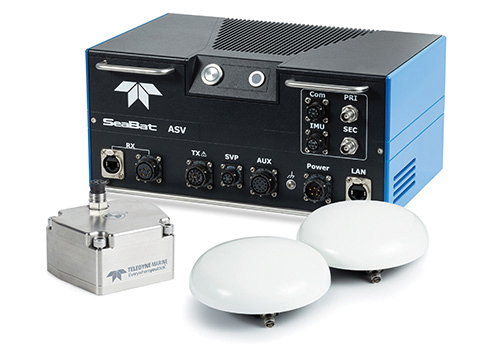
    Intrepid is a GNSS/INS system integrated with the SeaBat T20-ASV processor and includes a compact IMU and two GNSS antennas, ensuring reliable and precise positioning.

    It can automatically stream data to third-party software. This eliminates the need for manual sensor interfacing and reduces downtime. The Intrepid GNSS/INS benefits users in marine surveying applications by providing the precise navigation necessary for operational efficiency. Its intuitive design allows for simple configuration.

    Teledyne Marine, teledynemarine.com


    OEM

    Photo: Inertial Labs
    Photo: Inertial Labs

    Miniature MEMS Sensor-Based IMU
    Can withstand high shock and vibrations

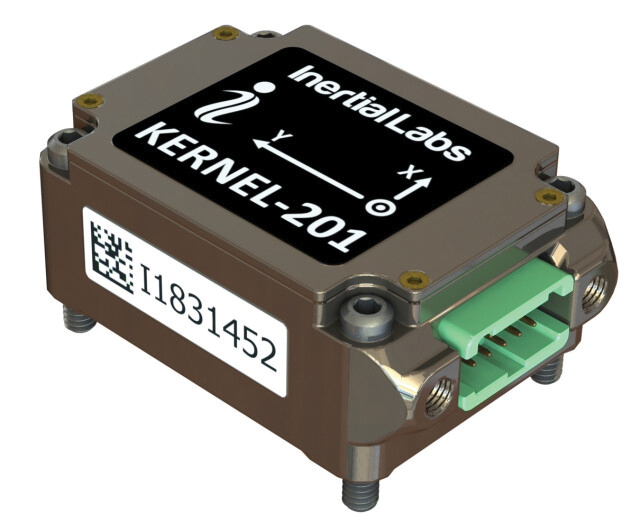
    The KERNEL-201 features three-axis MEMS accelerometers and gyroscopes that offer ultra-low noise, high bandwidth and minimal latency. These characteristics make it ideal for applications such as pointing, stabilization and navigation in systems where performance and size are critical. Its volume of 0.38 cubic inches offers a high dynamic range.

    Fully calibrated and temperature-compensated, the unit offers consistent, precise measurements even in challenging environments. It features an in-run bias stability of up to 0.7 deg/hr for gyroscopes and 0.005 mg for accelerometers, along with a low angular random walk (ARW) of 0.065°/√hr and velocity random walk (VRW) of 0.015 m/sec/√hr.

    The unit is designed to withstand high shock and vibration while maintaining peak performance, making it suitable for a wide range of challenging applications. The KERNEL-201 can be integrated into various high-level systems, such as motion reference units (MRUs), GPS-aided inertial navigation systems (INS) and attitude and heading reference systems (AHRS). It offers continuous built-in testing (BIT), customizable communication protocols and flexible power options.

    Inertial Labs, inertiallabs.com

    Photo: Calian GNSS
    Photo: Calian GNSS

    Smart Choke Antenna
    Offers comprehensive GNSS signal reception

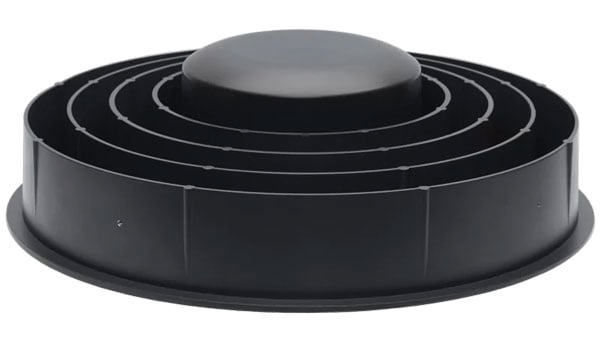
    The VCS6000XF full band smart choke antenna is engineered for CORS applications. It combines Tallysman Verachoke antenna elements with Septentrio’s Mosaic X5 full-band receiver to offer an integrated solution for OEM CORS systems.

    The VCS6000XF offers comprehensive GNSS signal reception, including GPS/QZSS L1/L2/L5, GLONASS G1/G2/G3, Galileo E1/E5a/E5b/E6/E5 AltBoc, BeiDou B1/B2/B2a/B3, NavIC L5, SBAS and L-Band correction services.

    The antenna features a 0.5 mm phase center variation and utilizes Calian’s eXtended filtering for near-band signal interference mitigation. The integrated Septentrio Mosaic X5 receiver provides capabilities such as anti-jamming, anti-spoofing, scintillation mitigation and receiver integrity by combining the antenna and receiver in the choke ring antenna.

    Calian GNSS, calian.com

  • China increases investments in BeiDou constellation

    China increases investments in BeiDou constellation

    China’s BeiDou satellite navigation system (BDS) has secured approximately $1.78 billion in funding for new projects, positioning itself to compete more effectively with its primary rival, GPS. This significant financial boost was announced at the Third International Summit on BDS, coinciding with the system’s 30th anniversary.

    The investment package includes $1.1 billion, which is designated for adopting BeiDou in both industrial and consumer applications, according to Hunan Daily. Part of the funding has been allocated to an Indonesian disaster prevention agency for the development of an early warning system.

    China’s Ministry of Industry and Information Technology has also selected 39 pilot cities for large-scale BDS applications. These cities are expected to increase BDS usage rates as the system transitions into its third-generation phase. This aims to expand BeiDou’s domestic footprint and showcase its capabilities on a broader scale, according to China’s Ministry of Industry and Information Technology.

    BeiDou is gaining traction in Africa and Southeast Asia, which could challenge GPS’s long-standing dominance. As more countries adopt the Chinese system as their primary GNSS, BeiDou’s prominence increases compared to GPS. China launched two new satellites in Sept. 2024, bringing the total number of active satellites in the BeiDou constellation to 50. These newly launched satellites, part of the third-generation model, represent the second batch placed into medium-Earth orbit (MEO) since the system was declared operational in July 2020. With 64 satellites launched, China continues to expand and enhance the BeiDou system.

  • NOAA to replace three major vertical datums

    NOAA to replace three major vertical datums

    My previous newsletter highlighted the Fall HSRP meeting that discussed how The Ohio State University and Michigan State University have made great progress in developing useful tools for the development and implementation of the new, modernized National Spatial Reference System (NSRS) in 2025. This newsletter will highlight the updates to vertical datums that The National Oceanic and Atmospheric Administration (NOAA) is working on.

    My last newsletter described some of the activities of the National Ocean Service (NOS) program offices at the 2024 Hydrographic Survey Review Panel (HSRP) Fall Meeting. As I mentioned in last month’s newsletter, the Hydrographic Survey Review Panel is a federal advisory committee that provides NOAA with advice. The National Ocean Service program offices – National Geodetic Service (NGS), the Center for Operational Oceanographic Products and Services (CO-OPS), the Office of Coast Survey (OCS), as well as the University of New Hampshire’s Joint Hydrographic Center and Center for Coastal and Ocean Mapping, provide updates related to navigation services. 

    Below is an excerpt of the agenda for the material that I will highlight in this newsletter. As I mentioned in my last newsletter, the HSRP website provides links to reference documents, presentations and recordings. I would encourage everyone to download the presentations or listen to the recordings to obtain all the details.

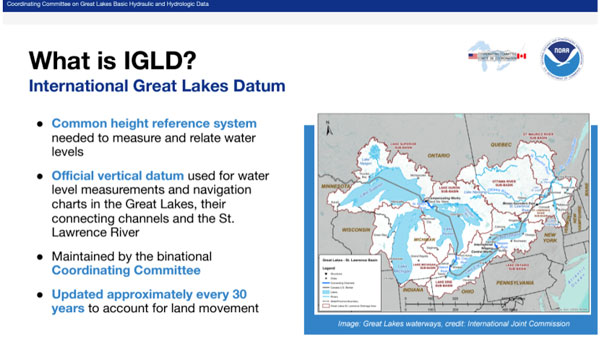
    This newsletter will highlight the session on the vertical datums, including the International Great Lakes Datum (IGLD).

    Excerpt from HSRP Fall Public Meeting

    Agenda: https://www.nauticalcharts.noaa.gov/hsrp/meetings/2024/fall-2024.html

    Reference materials and links: National Geodetic Survey, A Tale of Three Datums

    Presentations: Sept. 25, 2024;

    1. Vdatum

    2. International Great Lakes Datum (IGLD)

    Webinar recordings:

    NGS has created a website that provides brief explanations with additional links for detailed information on the National Tidal Datum Epoch (NTDE), International Great Lakes Datum (IGLD) and Gravity for the Redefinition of the Vertical Datum (GRAV-D). The site highlights that NOAA is currently working on three major updates to vertical datums: the 1983-2001 NTDE, the International Great Lakes Datum of 1985 (IGLD 85), and the North American Vertical Datum of 1988 (NAVD 88). The site provides information on why the datums need to be updated.

    Photo:
    Photo:
    Excerpt from NTDE. (Photo: NOS website)
    Photo:

    The box titled “Excerpt from NTDE“ provides information about the NTDE.  It explains what the NTDE is, what NOS is doing, and why the NTDE needs to be updated.  If you click on the link titled “National Tidal Datum Epoch update” on the right side of the webpage, it provides more information and links about the NTDE update, such as how will the NTDE update impact you. 

    The following is an exerpt from the National Tidal Datum Epoch update:

    National Tidal Datum Epoch

    The National Tidal Datum Epoch (NTDE) is a 19-year time period established by the National Ocean Service for collecting observations on water levels and calculating tidal datum values (e.g. mean sea level, mean lower low water). The NTDE needs to be regularly revised to account for long-term effects of land movement, sea level rise, and changes in tidal constituents. Tidal datums and their data are used to generate products and services necessary for safe navigation, coastal hazard mitigation, ecosystem research, coastal engineering and marine boundary demarcations.

    The NTDE Update: New Tidal Datums are Coming!

    NOAA currently utilizes the 1983-2001 National Tidal Datum Epoch. This epoch is now undergoing revision and will be replaced by the fifth iteration of the NTDE. Measurements for the update will be based on water level data spanning the years 2002-2020. Once all data has been collected, NOAA will review, analyze, and generate revised datums. The current proposed release date for new NTDE products is after 2026.

    The website also highlights two other NOS projects – the International Great Lakes Datum and the Gravity for the Redefinition of the Vertical Datum (GRAV-D). Again, if you click the “International Great Lakes Datum update” link on the right side of the webpage, it provides more information and links about the IGLD update such as how will the IGLD update impact you. Clicking the “Gravity for the Redefinition of the Vertical Datum” link on the right side of the webpage provides some more information and links about vertical datums.

    Photo:
    Photo: MOS website
    Photo:
    Photo:
    Photo: NOS website

    On the second day of the meeting, Jacob Heck, NOAA National Geodetic Survey (NGS), and Sierra Davis, NOAA Center for Operational Oceanographic Products & Services (CO-OPS), gave a presentation providing details on the update to the International Great Lakes Datums of 1985 (IGLD 85). The presentation addressed the following topics:

    • Define IGLD
    • Significance of the Great Lakes and need for a common water level datum
    • Binational coordination and mandates
    • Why IGLD needs to be updated
    • Updating the datum
      • Crucial observational infrastructure
      • Differences in IGLD (1985) and IGLD (2020)
      • Future of accessing the datum
      • Status of IGLD (2020) development
      • Project milestones to roll-out
    • Unresolved questions: low water datum
    • Outreach efforts underway

    I have provided a few slides highlighting parts of the presentation.  Again, the HSRP website provides links to reference documents, presentations, and recordings.  I would encourage everyone to download the presentation or listen to the recording to obtain all the details.  The presentation of the IGLD starts at 1:34:00 on the recording.

    Photo:
    Photo: HSRP website

    They explained the importance of the requirement for the coordination of water levels on the Great Lakes between Canada and the United States and the reason for establishing an international datum.

    Photo:
    Photo: HSRP website

    Due to land deformation, the IGLD is periodically updated, typically every 25 to 30 years.  That is, an uplift in the northern region and subsidence in the southern region of the Great Lakes.  See the box titled “Land Deformation in the Great Lakes.”

    Photo:
    Land deformation in the Great Lakes. (Photo: HSRP website)

    The IGLD was updated in 1955 and then again in 1985.  This update is overdue by a few years.  That said, it will be aligned with the new modernized NSRS and allow for more seamless updates in the future.

    Photo:
    Photo: HSRP website

    The presentation highlighted that the expected changes between the old datum, IGLD 85, and the new datum (IGLD 2020) will range from 30 cm to 65 cm.

    Photo:
    Photo: HSRP website

    The IGLD community measures hydraulic heads for water management using dynamic heights, not orthometric heights. The presentation explained why IGLD uses dynamic heights and how GNSS technology will be used to estimate IGLD dynamic heights. 

    Photo:
    Photo: HSRP website
    Photo:
    GNSS-derived dynamic heights. (Photo: HSRP website)

    The IGLD team have been working on getting the message out to the user community.  The September 2024 HSRP presentation is just one example.  Here’s a summary of the recent and future outreach activities:

    Recent engagements:

    • All-Interested Congressional briefing (May 2024)
    • Canadian Hydrographic Conference (May 2024)
    • Canadian Geophysical Union Conference (May 2024)
    • IAGLR (May 2024)
    • Soo Locks Engineers Day (June 2024)
    • Michigan Sea Grant briefing (Jan 2024)
    • Illinois Coastal Management Program briefing (Sept 2024)

    Upcoming:

    • Coordinating Committee’s ESG (TBD)
    • Boards of Control (Spring 2025)
    • 2024 Great Lakes Conference, Chicago, IL
    • US Hydro 2025, Wilmington, NC
    • IAGLR 2025

    The slide titled “Key Takeaways” summarized the essence of their presentation.

    Photo:

    Click here to view the full presentation.

    Resources

    This newsletter highlighted NOS’s Tail of Three Datum website.  The website provides brief explanations with additional links for detailed information on the National Tidal Datum Epoch (NTDE), International Great Lakes Datum (IGLD), and Gravity for the Redefinition of the Vertical Datum (GRAV-D).  The site highlights that NOAA is currently working on updating the 1983-2001 NTDE, IGLD 85, and North American Vertical Datum of 1988 (NAVD 88).  The newsletter also discussed the presentation on the International Great Lakes Datum (IGLD) 2020 that was given at the 2024 Fall HSRP meeting.  Again, the HSRP website provides links to reference documents, presentations, and recordings.  I would encourage everyone to download the presentations or listen to the recordings to obtain all the details.

  • DOD unveils counter-drone strategy amid increasing threats

    DOD unveils counter-drone strategy amid increasing threats

    The U.S. Department of Defense (DOD) has unveiled a comprehensive classified strategy for countering unmanned systems. This strategy, signed by Secretary of Defense Lloyd J. Austin III, seeks to address the evolving threats posed by unmanned systems in both current and potential future threats.

    Key components of the strategy

    This strategy is based on various DOD initiatives, such as the Joint Counter-Small UAS Office, the Warfighter Senior Integration Group, and the Replicator 2 initiative. It also appoints NORTHCOM and INDOPACOM as the lead coordinators for counter-UAS operations, promoting a unified effort in domestic and international airspace.

    The strategy identifies five primary objectives:

    1. Improving the detection and characterization of unmanned system threats.
    2. Disrupting and weakening the networks to facilitate the proliferation of unmanned systems.
    3. Defending U.S. interests by incorporating counter-unmanned systems into essential warfighting capabilities.
    4. Providing solutions that enhance speed, adaptability, and scale.
    5. Prioritizing counter-unmanned systems in the design and development of future joint forces.

    To achieve these objectives, the DOD plans to launch deliberate campaigns to counter threat networks in partnership with other U.S. departments and agencies, enhance both active and passive defenses, clarify authorities and embed defense measures across military doctrine, training and policy. Additionally, it aims to leverage rapid acquisition approaches and partnerships with industry and allies.

    A key component of this strategy is the Replicator 2 initiative, announced in September 2024. This effort focuses specifically on countering small drone threats to critical installations and force concentrations. The Pentagon aims to seek funding for Replicator 2 in the fiscal 2026 budget request, with the goal of fielding improved counter-drone capabilities within 24 months of receiving congressional funding.

  • Raytheon receives Space Force GPS OCX contract extension

    Raytheon receives Space Force GPS OCX contract extension

    The U.S. Space Force’s Space Systems Command (SSC) has awarded Raytheon a $196.7 million contract extension for the GPS Next Generation Operational Control System (OCX) program — despite being years behind schedule. This latest award brings the total OCX contract value to nearly $4.5 billion since its inception in 2010. However, according to the U.S. Government Accountability Office (GAO), the total amount is approaching $8 billion.

    The OCX program, designed to enhance GPS infrastructure, has faced significant setbacks. It is currently about seven years behind the original schedule, with the GAO reporting that the system of 17 ground stations was not ready by its October 2024 deadline. Further testing is required for the system to be operational by December 2025.

    Despite these challenges, OCX remains critical for modernizing GPS capabilities. The system will enable full M-Code capabilities, providing jamming-resistant GPS signals for military operations in contested environments. OCX is also designed to improve cybersecurity for both military and civilian applications significantly. Once operational, OCX will command all modernized and legacy GPS satellites, managing all civil and military navigation signals.

    The program has faced scrutiny due to its delays and cost overruns. The GAO has flagged the program’s delays as a risk to the GPS enterprise, while lawmakers have expressed frustration over the delays and budget increases. Despite this, the Space Force continues investing in the program to enhance GPS capabilities for military and civilian users. OCX is expected to provide improved accuracy, availability and resistance to jamming compared to the previous ground control segment. The system will also support the launch and operation of GPS III satellites.

  • Ligado moves forward with lawsuit against DOD

    Ligado moves forward with lawsuit against DOD

    The U.S. Court of Federal Claims has allowed Ligado Networks to proceed with its $39 billion lawsuit against the federal government, marking a significant development in a long-standing dispute over 5G spectrum usage and property rights.

    Judge Edward Damich partially favored Ligado by acknowledging the company’s case for property interest in the spectrum allegedly used by the Department of Defense (DOD) while rejecting its claim that the FCC license constituted a property right subject to federal taking.

    The controversy stems from the FCC’s 2020 decision granting Ligado exclusive authority over spectrum near GPS frequencies, raising concerns about potential interference with GPS systems. Ligado’s October 2023 lawsuit accuses the U.S. government of conducting a “multiyear misinformation and disparagement campaign” to conceal its activities and misappropriate Ligado’s licensed spectrum for DOD systems without permission or compensation.

    The government attempted to dismiss the lawsuit in January 2024, arguing lack of jurisdiction and that Ligado couldn’t establish a cognizable property interest in its FCC license. However, Judge Damich’s ruling allows the case to proceed.

    At the core of this dispute is the proximity of Ligado’s L-band spectrum to GPS frequencies, raising concerns about potential interference with critical GPS signals used for navigation, timing and various applications essential for national security and economic stability. The DOD, GPS companies and industry officials have strongly opposed Ligado’s plans for a terrestrial 5G network, arguing it could cause harmful interference to GPS receivers.