Author: Jesse Khalil

  • ESA’s Celeste LEO-PNT demonstrator mission set to launch in December

    ESA’s Celeste LEO-PNT demonstrator mission set to launch in December

    The European Space Agency (ESA) has confirmed plans to launch the first two satellites in its low-Earth orbit (LEO) positioning navigation and timing (PNT) constellation in the second half of December 2025. The launch will use a Rocket Lab Electron Vehicle, marking Europe’s first venture into LEO-based satellite navigation.

    The LEO-PNT in-orbit demonstrator mission, called Celeste, aims to test satellite navigation capabilities in LEO and evaluate its integration with existing medium-Earth orbit (MEO) systems.

    Celeste features a constellation of ten satellites that will fly close to Earth to test innovative signals across various frequency bands. The first two Celeste satellites, built in parallel by GMV and Thales Alenia Space, are set to launch in the coming months.

    The dedicated Electron rocket launch will place both satellites in orbit at 510 km altitude. The launch window extends for three months beginning in mid-December 2025, with operations conducted from Rocket Lab’s New Zealand facility.

    ESA Director of Navigation, Javier Benedicto, said, “We are thrilled to see the LEO-PNT demonstration advancing so quickly, with less than two years between mission kick-off and launch. This launch ensures the first European LEO-PNT satellites are in space before spring 2026, crucial for bringing the frequencies into use in compliance with the International Telecommunications Union.”

    Galileo’s “Daughter Mission”

    The name Celeste pays homage to Maria Celeste, Galileo Galilei’s daughter, as the two shared a strong emotional and intellectual bond, with the daughter honoring her father’s astronomical interest. This symbolic connection links the pioneering work of the father of modern astronomy to contemporary navigation systems, with Celeste serving as a bridge between Galileo’s groundbreaking discoveries and today’s satellite-based positioning technology.

    The demonstrator satellites for Galileo, launched in 2005 and 2008, were called GIOVE, after the Italian word for Jupiter. This name also paid tribute to Galileo’s achievements in discovering the planet’s four largest Moons which were used to determine longitude from anywhere on Earth.

    System Advantages

    The initial Pathfinder A satellites are CubeSats measuring 12U and 16U formats, comparable to suitcase size and weighing approximately 20 kg to 30 kg. These satellites will broadcast in L-band and S-band frequencies and operate for at least six months following orbital commissioning.

    The larger, more complex Pathfinder B satellites will follow, incorporating additional payloads to test innovative signals across multiple frequency bands and demonstrate expanded services.

    LEO-PNT satellites will supplement existing GNSS constellations by providing enhanced coverage in challenging environments. The system aims to improve navigation services in deep urban areas, under heavy foliage, in polar regions and potentially indoor locations where current MEO satellites face limitations.

    The complete demonstrator constellation, expected to be operational by 2027, will assess how LEO navigation systems can integrate with existing GNSS infrastructure. The mission will also test interoperability with 5G and 6G communication standards.

    Preparing for Launch

    Satellite integration and testing of Pathfinder A hardware and software continues ahead of the December launch. ESA and industrial teams plan to complete testing during summer 2025, with qualification and acceptance reviews scheduled for autumn.

    “Pathfinder A satellites have already paid off, even before launch,” said Roberto Prieto-Cerdeira, ESA’S LEO-PNT project manager. “The experience gathered during their development is helping to identify critical technologies, system design trade-offs, design choices and optimised approaches and processes, paving the way for future phases of LEO-PNT. Having them in orbit and validating their signals and algorithms is a major additional achievement.”

    Future Plans

    Following the demonstrator mission, ESA plans to propose an in-orbit preparatory phase at the agency’s November Ministerial Council meeting. This phase would focus on technology development and industrialization, potentially leading to an operational system integrated with EU GNSS infrastructure.

    The Celeste demonstrator is part of FutureNAV, an ESA Navigation program designed to maintain Europe’s position at the forefront of satellite navigation technology.

    The mission receives backing from 15 ESA member states: Austria, Belgium, Finland, France, Germany, Hungary, Italy, Norway, Poland, Portugal, Romania, Spain, Sweden, Switzerland and the United Kingdom. More than 50 entities from 14 countries participate in the two development consortia awarded contracts in 2024.

  • Transport Canada approves Volatus Aerospace automated drone service

    Transport Canada approves Volatus Aerospace automated drone service

    Transport Canada has issued a Special Flight Operations Certificate (SFOC) to Volatus Aerospace Inc., authorizing the company to conduct beyond visual line of sight (BVLOS) drone operations using MatrixSpace’s radar technology integrated with Kongsberg Geospatial’s IRIS Terminal platform.

    The certification allows Volatus to use MatrixSpace‘s compact, low-power radar system that can detect smaller aircraft including other drones. The technology is integrated with Kongsberg’s airspace awareness software and operated through Volatus’ remote Operations Control Center.

    The system enables automated drone-in-a-box networks, distributed monitoring operations and autonomous services that require continuous detect-and-avoid capabilities. Market research indicates the global drone-in-a-box sector was valued at approximately $1 billion in 2024 and is projected to reach $5 billion to $9 billion by the early 2030s, representing annual growth rates of 20% to 23%.

    Volatus previously held nationwide SFOCs for BVLOS operations in low-risk airspace, atypical airspace, high-altitude missions and nighttime operations. The new certification expands the company’s ability to provide automated drone services for infrastructure security, utilities monitoring, industrial inspection, forestry operations, wildfire monitoring and environmental oversight.

    The company has previously conducted approved BVLOS medical delivery operations at Halton Healthcare in Ontario. According to the comapny, the new certification builds on those capabilities by incorporating the detect-and-avoid system for broader commercial deployment.

  • SPH Engineering launches multibeam echosounder payload for UAVs

    SPH Engineering launches multibeam echosounder payload for UAVs

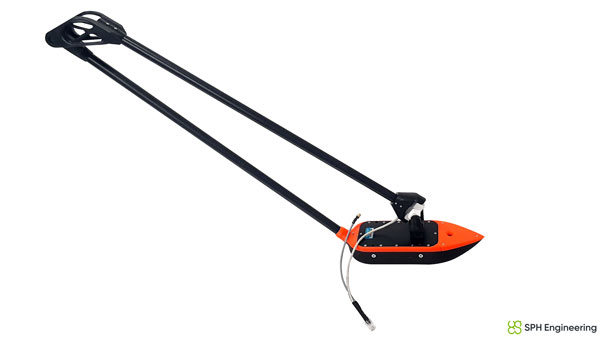
    SPH Engineering has released a multibeam echosounder system for UAVs that uses the Cerulean Surveyor 240-16, a compact bathymetric sensor designed for shallow-water mapping.

    The system expands drone-based hydrographic surveying capabilities by providing high-resolution bathymetric data collection over shallow waters. The Surveyor 240-16 operates at 240 kHz with a measurement range of 0.5 m to 50 m, targeting inland waterways, reservoirs, ports and environmental monitoring locations.

    The multibeam system generates an 80° cross-track swath with a 16-element receive array and 1° angular resolution, allowing operators to map wider bottom coverage compared to traditional single-beam payloads.

    The payload integrates with SPH Engineering’s UgCS flight planning software and SkyHub onboard computer for automated missions. Weighing 2.4 kilograms with all components and consuming 15 watts of power, the system works with UAVs including DJI M300, M350 and M400 models, as well as Inspired Flight IF800 and IF1200 aircraft.

    SPH Engineering conducted field validation at Titutga Lake in Latvia in August 2025. Survey flights operated at an average speed of 1.2 m per second, balancing data collection density with UAV battery endurance.

    Testing compared the multibeam system’s performance against single-beam payloads, which engineers noted remain useful for quality control verification of multibeam datasets. The combined approach demonstrated capabilities for high-resolution mapping in areas previously difficult to access with boat-based systems.

    Software compatibility includes full support in BeamworX, with Hydromagic integration planned for future releases.

    “The payload based on Cerulean Surveyor 240-16 represents a milestone in drone-based bathymetry,” said Alexey Dobrovolskiy, CEO of SPH Engineering. “By combining multibeam technology with UAV platforms, we are enabling hydrographers to collect dense bathymetric datasets at a fraction of the time and cost of conventional systems. This integration opens new opportunities for surveying reservoirs, lakes, and coastal areas that were previously inaccessible or unsafe.”

  • UAV Navigation, Septentrio to enhance anti-jamming capabilities for UAVs

    UAV Navigation, Septentrio to enhance anti-jamming capabilities for UAVs

    UAV Navigation-Grupo Oesía has collaborated with Septentrio, a division of Hexagon, to enhance navigation resilience for unmanned aircraft systems. The partnership focuses on ensuring compatibility between UAV Navigation’s guidance, navigation and control systems and Septentrio’s GNSS receivers.

    The collaboration integrates Septentrio’s high-precision real-time kinematic (RTK) capabilities with AIM+ anti-jamming and anti-spoofing technology. The anti-spoofing protection utilizes the Galileo Open Service Navigation Message Authentication (OSNMA) service alongside Septentrio’s proprietary algorithms to defend against signal interference and manipulation.

    UAV Navigation’s flight control system now automatically detects when a Septentrio OSNMA-enabled receiver is connected and prioritizes its data within the navigation logic. This integration demonstrates the interoperability capabilities of the Spanish company’s systems while providing enhanced protection against GNSS jamming and spoofing threats.

    Both companies seek to advance secure, reliable and high-precision navigation solutions for unmanned systems operating in challenging electromagnetic environments. The integration aims to maintain navigation accuracy and mission effectiveness when traditional GNSS signals face interference or manipulation.

  • Advanced Navigation introduces compact navigation system for military applications

    Advanced Navigation introduces compact navigation system for military applications

    Advanced Navigation has released the Boreas 50 series, marking the company’s smallest fiber-optic gyroscope (FOG) inertial navigation system (INS).

    The new product line consists of two devices, the A50 attitude and heading reference system and the D50 strategic-grade INS. Both units feature north-seeking gyrocompasses designed to determine true north without relying on GPS signals or magnetic references.

    The 50 series weighs 910 g and incorporates Advanced Navigation’s sensor fusion technology, which processes data from multiple sensors to maintain accuracy during GPS outages or interference. The system can detect Earth’s rotation to establish directional orientation within minutes of activation.

    An optional Electronic Counter-Countermeasure capability is available for the D50, designed to detect and counter GPS jamming and spoofing attempts. The feature targets operations in contested electromagnetic environments where adversaries may attempt to disrupt satellite-based navigation.

    “The modern battlefield is no longer defined by only physical boundaries, but by electromagnetic dominance,” said Maximilian Doemling, head of product at Advanced Navigation. “Assuming navigation will ‘just work’ is a mission-critical oversight.”

    Performance Specifications

    The system achieves heading accuracy of 0.5° secant latitude through gyrocompassing, with roll and pitch accuracy of 0.03°. Positional accuracy reaches 0.01 m circular error probable at 50% confidence level when GPS is available.

    The devices meet military standards for shock and vibration testing, addressing requirements for platforms operating in harsh environments. The compact form factor enables integration into space and weight-constrained systems.

    Defense applications for the 50 series span multiple domains. Military pointing platforms, including radar systems, can use the technology for target tracking and identification while mobile or stationary. The system’s rapid stabilization capabilities support accurate targeting despite motion and environmental interference.

    The Boreas 50 series is Advanced Navigation's most compact FOG INS. (Credit: Advanced Navigation)
    The Boreas 50 series is Advanced Navigation’s most compact FOG INS. (Credit: Advanced Navigation)

    Counter-unmanned aircraft system platforms benefit from the precise heading and stabilization features when tracking aerial threats. The north-seeking gyrocompass enables rapid target acquisition and tracking in dynamic operational environments.

    Maritime vessels operating under GPS-denied conditions can maintain navigation capabilities and threat identification through the system’s independent positioning features. The technology aims to preserve tactical advantages when satellite signals are unavailable.

    Intelligence, surveillance and reconnaissance platforms, along with unmanned aircraft systems, can address navigation failures and targeting errors caused by electronic warfare and sensor drift. The compact design accommodates both new and legacy aircraft integration requirements.

    Ground vehicles, whether autonomous or crewed, gain protection against electronic interference that could compromise navigation and situational awareness. The anti-jamming and anti-spoofing capabilities maintain consistent positioning data during operations.

    Advanced Navigation‘s defense division consists of military veterans who collaborate with system integrators, program offices and end-users to develop tailored solutions. The company plans to double its defense team size within the year.

    The firm’s vertically integrated manufacturing approach aims to reduce production lead times compared to industry standards. Products carry a three-year warranty, and the 50 series provides a direct upgrade path for users of the company’s existing Spatial FOG Dual system.

    The technology represents ongoing development in assured positioning, navigation and timing systems as military operations increasingly face electronic warfare threats targeting GPS-dependent systems.

  • California updates its spatial reference network

    California updates its spatial reference network

    The California Spatial Reference Center (CSRC) modernized the California Spatial Reference Network (CSRN) on July 31, 2025. The new California Spatial Reference Network is denoted as CSRN Epoch 2025.00. 

    These coordinates changes affect California geospatial users, but the transition process to the new epoch is something that others should understand to prepare for the new, modernized National Spatial Reference System (NSRS), which is expected to be adopted in 2026. As I mentioned in my August 2025 newsletter, NSRS users should proactively assess their geospatial data dependencies and evaluate how adoption of the new datum will affect workflows, datasets and operational decision‑making. 

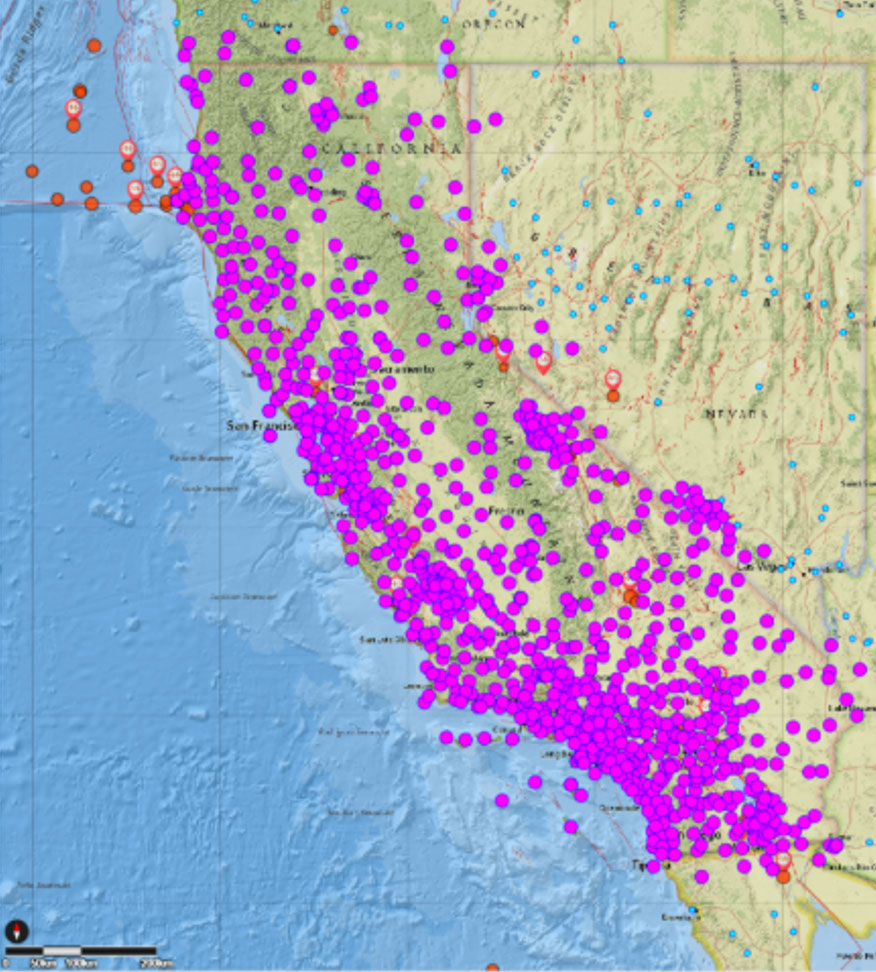
    The California Spatial Reference System (CSRS) is the official geodetic datum in California, as published by the California Spatial Reference Center (CSRC) according to Public Resources Code (PRC) §§8850–8861. The image below depicts the CSRN. It is rigorously aligned to the current definition of the National Spatial Reference System (NSRS) through a set of coordinate transformations from ITRF2020 to NAD83(2011) as published by the NOAA/NOS National Geodetic Survey (NGS). The California Spatial Reference System (CSRS) is realized by the geodetic coordinates and uncertainties of the CSRN on the date of 2025.00 (January 1, 2025; GPS week 2347, day 3) of 1068 GNSS stations (881 active and 187 defunct stations) in California and at the borders of Arizona, Nevada, Oregon and Baja California. CSRN Epoch 2025.00 NAD83(2011) replaces the previous CSRS Epoch 2017.50 NAD83(2011).

    The latest hybrid geoid model GEOID18 published by NGS was used to compute Global Navigation Satellite System (GNSS)-derived orthometric heights (DCOH) on the North American Vertical Datum of 1988 (NAVD 88) datum in accordance with the California PRC §§8890-8902 (California Orthometric Heights).

    Plot of CSRN (Credit: SOPAC)
    Plot of CSRN (Credit: SOPAC)

    As previously mentioned, the new CSRC Epoch 2025.00 (NAD83 (2011) replaces the previously published CSRC Epoch 2017.5 NAD83 (2011). Readers can obtain the project report that provides technical information about the new realization at the following link: https://sopac-csrc.ucsd.edu/index.php/csrn-epoch-2025-00/ . The website provides web-links to the project report and a table of stations that includes information about the coordinates.  See the image captioned “Excerpt from CSRC Epoch 2025.00 Web Page” for the links to the reports and tables.  The CSRC Epoch 2025.00 realization is aligned with NAD83 2011, Epoch 2010.0.  See the image captioned “Excerpt from Project Report V2” for the summary from the report. I have highlighted some sections of the summary that I thought others would find of interest.

    Excerpt from CSRC Epoch 2025.00 web page.
    Excerpt from CSRC Epoch 2025.00 web page.

    Excerpt from Project Report V2

    Summary

    This report, prepared under California Department of Transportation (Caltrans) Contract No. 52A0157, Task Order 1, documents the modernization of the California Spatial Reference Network (CSRN) by the California Spatial Reference Center (CSRC). This updated realization aligns the CSRN with the North American Datum of 1983 (NAD83 2011, epoch 2010.00).

    The new reference frame, effective on January 1, 2025 (GPS Week 2347, Day 3), is called CSRN Epoch 2025.00 NAD83(2011), referred to for short as CSRN Epoch 2025.00. It replaces the previous adjustment at Epoch 2017.50 and remains a core component of the California Spatial Reference System (CSRS).

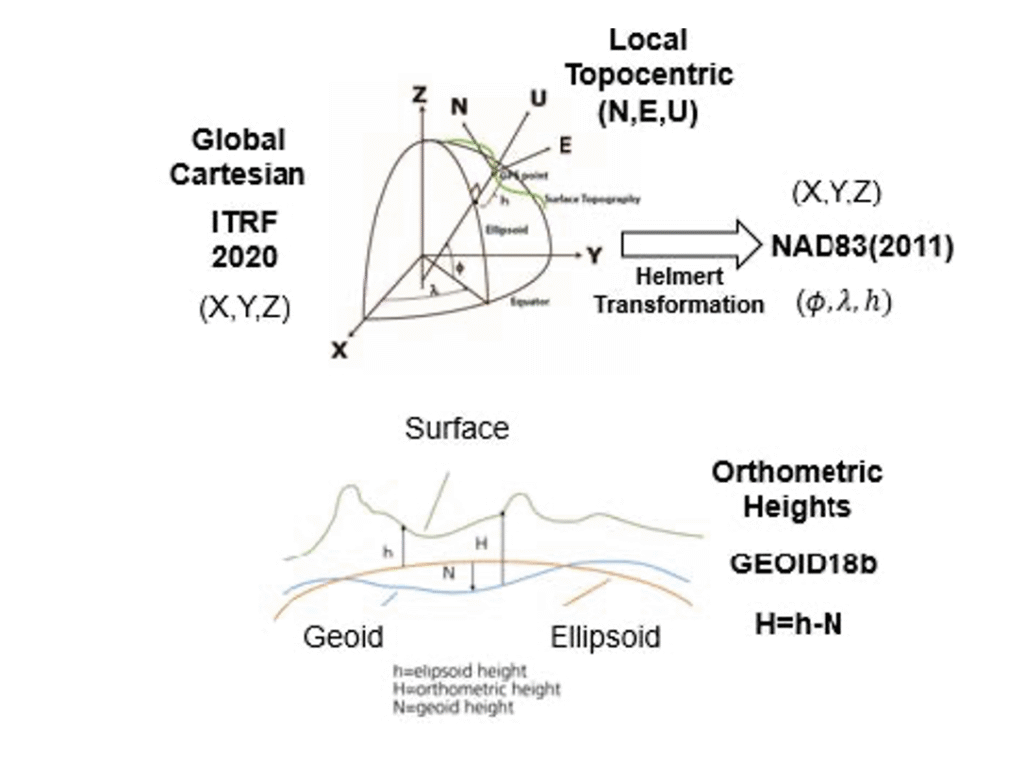
    The CSRN is defined by the geodetic coordinates and uncertainties (Table 1) of 1,068 continuous GNSS stations881 active and 187 inactive or decommissioned—located throughout California and bordering regions in Arizona, Nevada, Oregon, and Baja California, Mexico. As California’s official geodetic reference network under Public Resources Code (PRC) §§8850–8861, all Caltrans surveys using the California Coordinate System of 1983 (CCS83) must reference CSRN control stations or comply with CSRN specifications. The definition and use of CCS83 are governed by PRC §§8801–8819. This new realization is fundamentally tied to the International Terrestrial Reference Frame 2020 (ITRF2020) through the IGb20 coordinates adopted by International GNSS Service (IGS) Analysis Centers. All multi-year processing for this project was performed within this state-of-the-art global reference frame. Furthermore, the CSRN Epoch 2025.00 is rigorously aligned with the National Spatial Reference System (NSRS) maintained by the National Geodetic Survey (NGS). Epoch 2025.00 geodetic coordinates are transformed from ITRF2020 to NAD83(2011) using the NGS Horizontal Time-Dependent (HTDP) utility (Figure 1). The ITRF2020 coordinates (X,Y,Z) of the 1068 CSRN stations are transformed into geodetic coordinates (latitude, longitude and ellipsoidal height), using the GRS80 ellipsoidal parameters (semi-major axis, a = 6378137 m and inverse flattening, 1/f = 298.257 222 101).

    CSRC submitted to the European Petroleum Survey Group (EPSG) definitions for datums, transformations, and coordinate reference systems for Epoch 2025.00 to facilitate unique terminology with associated metadata.

    GPS data (phases and pseudoranges contained in RINEX data files) collected at the CSRN stations from June 10, 1992 to May 17, 2025, and about 300 global tracking stations of the IGS network were re-analyzed in the ITRF2020 reference frame. The complete set of RINEX data and metadata are accessible from the Scripps Orbit and Permanent Array Center data archive.

    The latest hybrid geoid model GEOID18 published by NGS is used to interpolate geoid heights for each of the CSRN stations as the basis of Global Navigation Satellite System (GNSS) derived California Orthometric Heights (DCOH) on the NAVD 88 datum in accordance with the California PRC §§8890-8902 (California Orthometric Heights).

    Figure 1. Reference frames for CSRN Epoch 2025.00 NAD83(2011).
    Figure 1. Reference frames for CSRN Epoch 2025.00 NAD83(2011).

    As provided in the summary of the report, a diagram noted that the ITRF 2020 cartesian (XYZ) coordinates were transformed into NAD83 (2011) cartesian (XYZ) coordinates, and then into local topocentric coordinates (NEU) to obtain the CSRC Epoch 2025.00 NAD83 (2011) coordinates. 

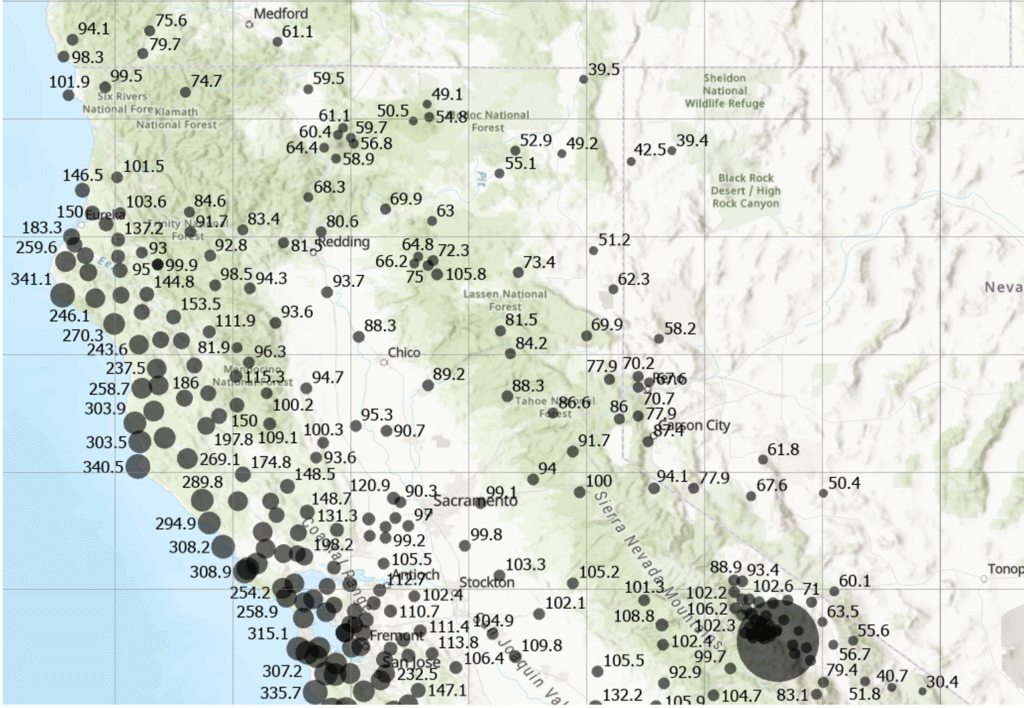
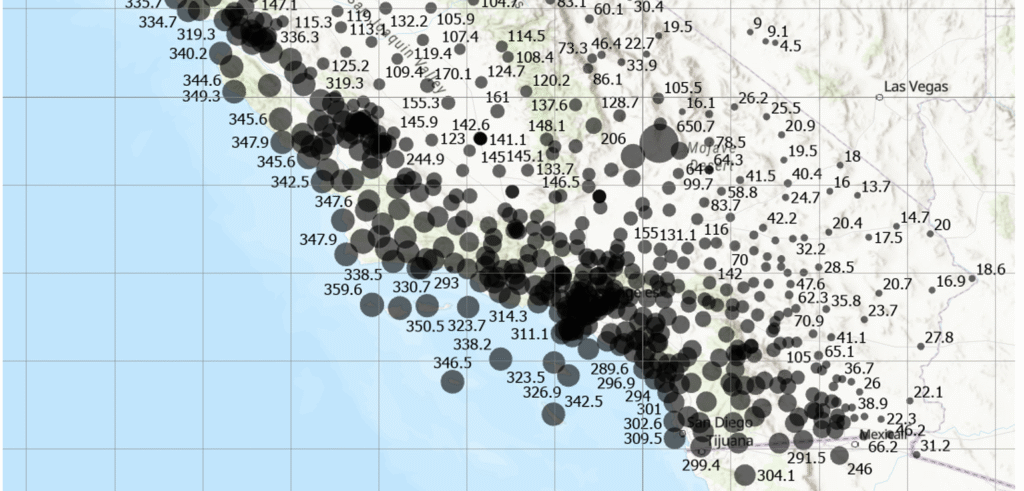
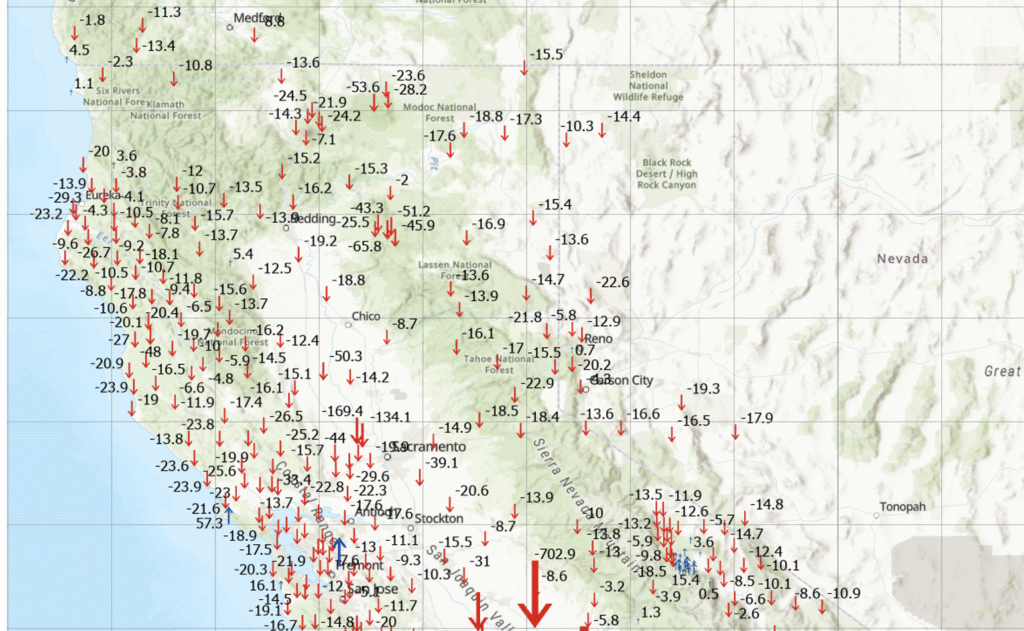
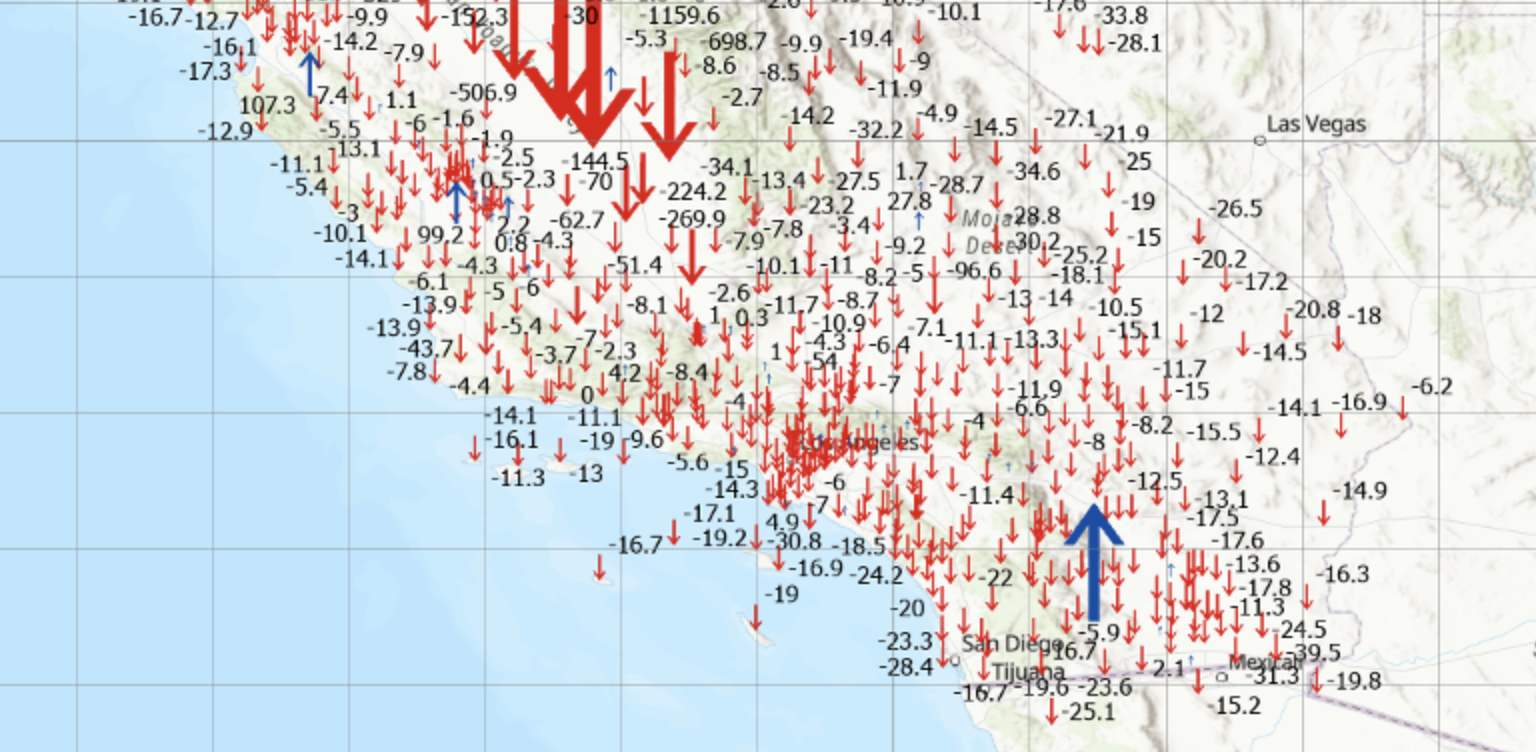
    I downloaded the table of stations with their various coordinates and plotted the differences between the new CSRC Epoch 2025.00 NAD83 (2011) and the previous CSRC Epoch 2017.50 (NAD83 (2011) for stations that were designed as operational stations in 2025.  The following plots depict the difference in coordinates between Epoch 2025.00 and Epoch 2017.50.  One can see that there’s a reason that California needs to periodically update the coordinates of the California Spatial Reference Network.  Some of the horizontal coordinates have changed over 300 mm or around one foot.  The vertical coordinate changes are not as large, but some do shift more than 4 cm.

    Note: The plots do not include newer stations with less than 6 months of solutions (no velocities estimated) and defunct stations (stations in Epoch 2017.50 but no data before January 1, 2025.

    Differences in horizontal coordinates (N, E) between Epoch2025.00 and Epoch 2017.50 northern section.
    Differences in horizontal coordinates (N, E) between Epoch2025.00 and Epoch 2017.50 (northern section).
    Differences in horizontal coordinates (N, E) between Epoch2025.00 and Epoch 2017.50 southern section.
    Differences in horizontal coordinates (N, E) between Epoch2025.00 and Epoch 2017.50 (southern section).
    Differences in vertical coordinates (U) between Epoch2025.00 and Epoch 2017.50 (northern section)
    Differences in vertical coordinates (U) between Epoch2025.00 and Epoch 2017.50 (northern section).
    Differences in Vertical Coordinates (U) between Epoch2025.00 and Epoch 2017.50 (southern section)
    Differences in Vertical Coordinates (U) between Epoch2025.00 and Epoch 2017.50 (southern section)

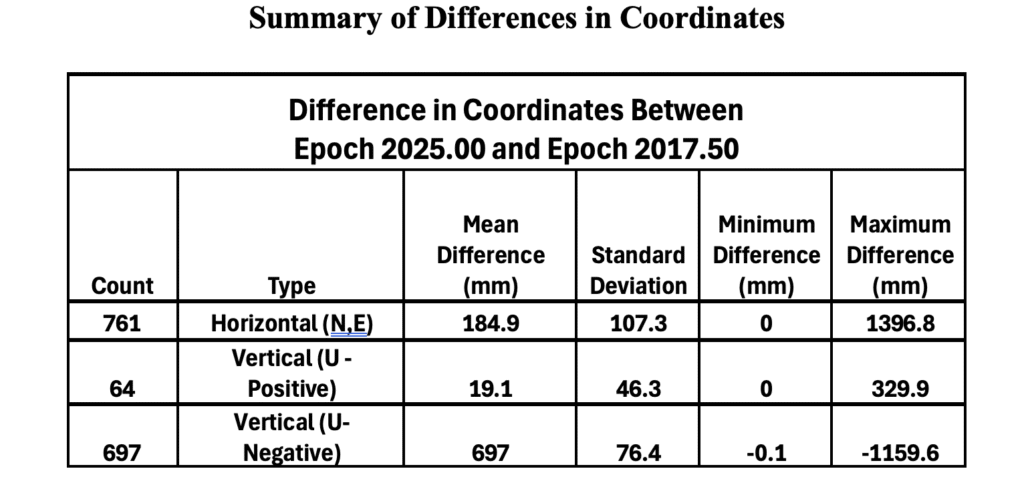
    The image below provides some statistics about the differences in coordinates between Epoch 2025.00 and Epoch 2017.50.

    Photo:
    Notes: (1) Only includes operational stations in 2025 (2) Does not include newer stations with less than 6 months of solutions (no velocities estimated). (3) Does not include defunct stations: in Epoch 2017.50 but no data before January 1, 2025.

    This newsletter highlighted that the CSRC has adopted a new Public Resources Code–compliant geodetic datum (reference frame) for California: CSRN Epoch 2025.00 NAD83(2011), which replaces CSRN Epoch 2017.50 NAD83(2011). The updated datum incorporates secular (linear) tectonic motions across the North America–Pacific plate boundary, transient motions (such as coseismic and postseismic deformation and fault creep), vertical land motion (subsidence and uplift), and data from new stations established since Epoch 2017.50. Additionally, the new vertical datum provides a comprehensive set of California Orthometric Heights on the NAVD88 datum for all CSRN stations.

    In essence, the CSRC has released three new datums. The first is tied to ITRF2020, the second to NAD83(2011), and the third to NAVD88. Transformation parameters are available between the first two datums. The NAD83(2011)-based datum satisfies California’s Public Resources Code requirements and is the recommended standard for geodetic control in the state. The NAVD88-based datum provides GNSS-derived California Orthometric Heights of 1988 (COH88).

    These new datums will be added to the European Petroleum Survey Group (EPSG) database, the worldwide standard for coordinate reference systems (CRSs) and transformations. Each will receive a unique EPSG code, making it easy to reference and use. This will ensure that CSRN Epoch 2025.00 NAD83(2011), CSRN Epoch 2025.00 (ITRF2020), and COH88 Epoch 2025.00 (NAVD88) can be seamlessly integrated into industry software.

    The CSRC report also noted that NGS has released a beta version of the modernized horizontal and vertical datums for the NSRS: NGS New Datums.

    Once the modernized NSRS is fully published, and in response to the needs of California’s user community, CSRC will continue working to secure resources that support its partnership with NGS and ensure ongoing compatibility with national programs.

  • SBG Systems expands IMU product line

    SBG Systems expands IMU product line

    SBG Systems has announced the upcoming release of the Pulse-20 inertial measurement unit (IMU) and the commercial availability of the Pulse-80, expanding its IMU product portfolio to three performance levels.

    The Pulse-20, described as a sub-miniature, industrial-grade IMU, will be available before year-end. The company now offers three IMU models designed for different performance requirements: the Pulse-20, Pulse-40 and Pulse-80.

    Pulse-20 IMU
    Pulse-20 IMU

    The Pulse-20 features built-in magnetometers for nine-degree-of-freedom measurements and includes CAN communication alongside serial connectivity. The compact unit targets applications requiring high performance in limited space.

    The Pulse-40 represents tactical-grade performance, while the Pulse-80 delivers what the company calls FOG-level performance without the size, weight and cost associated with traditional fiber-optic gyroscopes.

    All three models share the same software interface and undergo temperature calibration and qualification testing, according to the company.

    The IMUs target multiple industries including unmanned vehicles, munitions guidance and navigation, electro-optical systems, mobile and surveying applications.

    The Pulse-80 is currently available worldwide. The Pulse-20 will become commercially available later this year.

  • ArkEdge Space selected for QZSS utilization demonstration project

    ArkEdge Space selected for QZSS utilization demonstration project

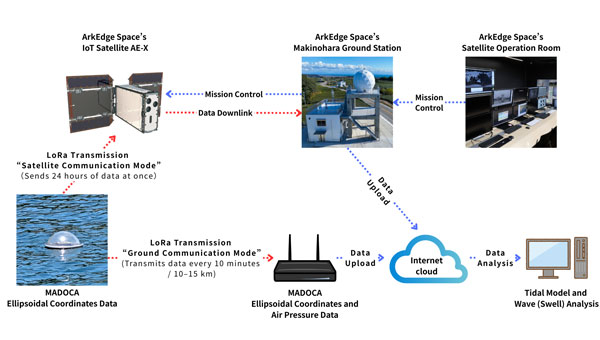
    ArkEdge Space Inc. has been selected for Japan’s fiscal 2025 QZSS Utilization Demonstration Project. The initiative is jointly organized by Japan’s Cabinet Office and Quasi-Zenith Satellite System Service Inc.

    The company will deploy next-generation tide monitoring buoys across island nations in the Asia-Pacific region. The buoys will use MADOCA-PPP, a high-precision GNSS augmentation service provided by Japan’s Quasi-Zenith Satellite System known as Michibiki. The devices will collect sea level data and transmit information through ArkEdge Space’s Internet of Things satellites.

    ArkEdge Space specializes in designing, developing and operating micro-satellites while integrating communications technologies including IoT and VDES (VHF Data Exchange System) for observation and positioning applications. The company plans to use this demonstration project to address challenges in developing regions related to disaster preparedness, tsunami and storm surge monitoring, port infrastructure development and climate change adaptation.

    Field operations are scheduled to begin in November 2025. The company plans to host a regional seminar at the Asia-Pacific Regional Space Agency Forum. Additional announcements regarding buoy deployment and project updates will be made separately.

    The project aims to promote global adoption of Japan’s Michibiki satellite positioning technology and advance sustainable marine observation infrastructure using IoT-enabled satellite services.

    The QZSS Utilization Demonstration Project is a public initiative conducted by Japan’s Cabinet Office and Quasi-Zenith Satellite System Service Inc. to promote early adoption of commercial services and products using Japan’s QZSS Michibiki system.

    MADOCA-PPP is a real-time high-precision positioning augmentation service developed by Japan’s Cabinet Office and the Japan Aerospace Exploration Agency. The service delivers centimeter-level accuracy of 10 centimeters or less both horizontally and vertically via the L6 signal of the Michibiki constellation and is compatible with multi-GNSS receivers.

    VDES is a next-generation maritime communication system that extends the functionality of the Automatic Identification System to enable high-speed, bidirectional data exchange. In Japan, ArkEdge Space is part of the Satellite VDES Consortium with IHI Corporation and Japan Radio Co. Ltd. In July 2025, the company launched a test satellite and began in-orbit demonstrations of VDES technology.

  • Plane carrying EU president hit by alleged Russian GPS jamming

    Plane carrying EU president hit by alleged Russian GPS jamming

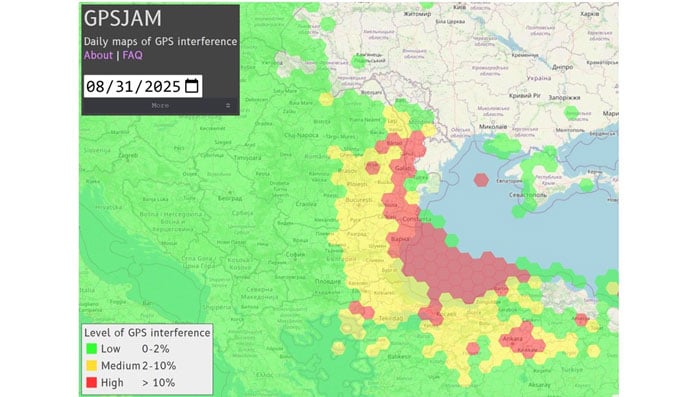
    A plane carrying the European Commission President Ursula von der Leyen was targeted by GPS jamming while attempting to land at Plovdiv International Airport in Bulgaria on Aug. 31, according to a European Commission spokesperson.

    Bulgarian authorities suspect Russia was responsible for the interference, European Commission Deputy Chief Spokesperson Arianna Podestà told CNN.

    The Kremlin has denied the allegation. Spokesperson Dmitry Peskov told The Financial Times, which first reported the story, that the information was incorrect.

    The plane landed safely despite the GPS disruption, with pilots reportedly using paper maps to navigate, according to a source familiar with the situation.

    Von der Leyen was traveling as part of a seven-country tour of the European Union’s frontline states to rally support for Ukraine. The incident occurred as her charter flight approached the southern Bulgarian airport during her diplomatic mission to reinforce the bloc’s commitment to defending against Russian aggression.

    Podestà told CNN that the incident highlighted the urgency of von der Leyen’s current trip to frontline member states, where she has witnessed daily threats from Russia and its proxies. The spokesperson noted it remained unclear whether attackers specifically targeted the flight or if it was caught in broader GPS interference operations.

    Expert Insights: Searching for Resilience

    This latest incident comes amid a dramatic surge in GPS jamming and spoofing attacks across the region since Russia’s invasion of Ukraine, creating an increasingly challenging environment for critical navigation systems.

    European Commission President Ursula von der Leyen’s current tour through Poland, Bulgaria, Finland, Estonia, Lithuania, Latvia and Romania takes her directly through many of the continent’s GPS disruption hot spots. These nations have experienced some of the most severe interference with GNSS, making the timing of her defense-focused diplomatic mission particularly significant.

    According to GPS World Editorial Advisory Board Member Mitch Narins, the current crisis represents the culmination of concerns that have been raised for more than twenty years. “Concerns and warnings regarding interference to GNSS have been raised for over two decades,” Narins explains. “Despite these concerns, attempts to install and upgrade alternative or complementary PNT systems on the ground and in aircraft have failed and resulted solely in increased investment in satellites and their signals, all of which are extremely low-power by design and vulnerable to interference.”

    “Regrettably, the substantial financial resources required to fund these satellite projects have pushed for discontinuance of resilient ground-based alternatives and to consider them ‘cost offsets,’” he notes. The economic incentives have favored satellite constellation expansion over diversification, despite the vulnerabilities of space-based systems.

    When it comes to alternative options, Narins explains, “For the cost of building and launching a single GNSS medium-Earth orbit (MEO) satellite, one could fund the replacement or installation and operation of many resilient ground-based systems for many years.”

    The current approach to PNT systems represents a departure from fundamental systems engineering principles, according to Narins. “When initiating a customer need analysis, a systems engineer does not begin with the solution and work backwards,” he emphasizes.

    Instead, the focus should be on meeting actual requirements: PNT systems must “always” provide the accuracy, availability, integrity and continuity of services necessary to support safety, security and economic well-being across thousands of use cases spanning every critical infrastructure sector.

    “Therefore, resilience must be a critical part of a PNT system’s performance if it is to be considered a potential solution,” Narins said. Rather than pursuing interoperability between GNSS constellations — which still leaves users dependent on inherently weak satellite signals — the industry should have prioritized diverse solutions from the outset.

    He added, “This is not a simple problem with a single, simple solution, but it is time to start thinking about resilience first and leaving the identification of solutions to a proper system engineering process.”

    New Ways to Counter EW Threats

    The dangerous GPS jamming of the plane carrying carrying European Commission President Ursula von der Leyen can be alleviated with advanced technology, according to Michael Biercuk, CEO of Q-CTRL, developers of quantum-based navigation systems:

    “The incident regarding the European Commission President’s plane has raised GPS denial from inconvenience to a strategic security threat. This is why we’ve focused our quantum tech development efforts on building resilient quantum navigation systems truly immune to jamming and spoofing. This technology is not science fiction – it has been validated in flight to outperform the best existing GPS backups by up to 100X. Through our partnerships with Airbus, Lockheed Martin, and others we’re ready to help build resilience for European transport, defense and commerce.”

    Chris Shaw, CEO and co-founder of Advanced Navigation also spoke on the incident, commenting “The answers to the GPS crisis are already here,” said Chris Shaw, CEO and co-founder of Advanced Navigation, which specializes in anti-electronic warfare navigation technology. “The problem isn’t innovation, it’s stagnation. GPS alone can no longer be treated as a reliable source of truth. What’s needed is a resilient architecture — inertial-centered and fused with multiple sensors — that keeps systems operating even when signals are denied or manipulated.

    “The reality is that adversaries are moving at the speed of code, while government procurement still runs at the speed of bureaucracy. That gap is a national security risk. Unless governments adopt a new model of rapid integration and real-time collaboration with industry, they will continue to be outpaced.

    “This isn’t optional. Survivability in GPS-contested environments depends on prompt deployment of inertial navigation. The companies pushing this forward aren’t just keeping up, they’re rewriting the playbook — and the cost of delay is measured in mission failure and compromised sovereignty.

    “Ukraine has shown what’s possible. By demanding real-time software updates and rapid hardware upgrades in close collaboration with industry, its forces are reshaping autonomy, navigation, drone swarms and integrated defense systems at an unprecedented pace — allowing them to outpace adversaries.

    “So why aren’t we applying this model more broadly beyond the battlefield? The solutions exist, with inertial navigation at the core. The real question is whether we’ll act before the cost of delay becomes irreversible.”

    The GPS Collapse isn’t fiction — it’s a warning of what happens when action is delayed.

  • Silicon Sensing, Psionic partner to advance GNSS-denied navigation

    Silicon Sensing, Psionic partner to advance GNSS-denied navigation

    Silicon Sensing gyro to support GNSS-denied navigation from Psionic SurePath system

    Silicon Sensing Systems has been contracted by Psionic Inc. to supply the CRH03 tactical-grade gyroscope to equip its SurePath navigation system.

    SurePath is a completely self-contained navigation solution developed to solve the growing issue, across many platform types, of effective navigation over extended periods in GNSS-denied or contested environments. SurePath’s navigational capability is based on proprietary doppler laser technology, developed initially by NASA, to support autonomous lunar navigation and landing. Able to capture real-time 3D velocity to precisely determine location, SurePath’s unique, mission-critical operational capabilities render it RF invisible and undetectable – it cannot be jammed, spoofed, or defeated.

    Photo:
    The Surepath navigation solution

    The Silicon Sensing CRH03 gyro will serve as an ultra-precise heading sensor, providing constant azimuth data to the SurePath solution filter and bringing critical improvements to heading calculations over time. 

    “Precise azimuth control and sensor data are crucial for accurate navigation and overall system functionality in GNSS-denied and contested situations,” said Sean McCormack, senior vice president at Psionic. “SurePath will integrate the data from the CRH03 into our proprietary filtering techniques to deliver enhanced capability to our end user.”

    The CRH03 is a tactical-grade, stand-alone, micro electro-mechanical system (MEMS) gyroscope that delivers exceptional bias instability, angle random walk and low noise performance. Available in five rate ranges:  ±10°/s, ±25°/s, ±100°/s, ±200°/s, ±400°/s, this all-silicon unit has comparable bias characteristic to far larger and less rugged fibre-optic (FOG) and dynamically-tuned gyroscopes (DTG).

  • Airbus, Shield AI complete first autonomous logistics connector helicopter flight

    Airbus, Shield AI complete first autonomous logistics connector helicopter flight

    Airbus U.S. Space & Defense completed its first autonomous helicopter test flight using Shield AI’s Hivemind autonomy package in Grand Prairie, Texas. The flight represents a significant step forward in developing the MQ-72C Lakota Connector for the U.S. Marine Corps Aerial Logistics Connector program.

    The test utilized an H145 helicopter to refine mission technology, accelerate development timelines and reduce costs and technical risks. Engineers integrated Hivemind into the aircraft in less than two months, showcasing the system’s modular and platform-agnostic design.

    During the test, Shield AI’s Hivemind autonomy software controlled the H145 directly while collaborating with Airbus’ Helionix system. The integrated software managed the aircraft’s mission systems, executing automated takeoff, landing and other test procedures without pilot input.

    The tested software will be incorporated into the future MQ-72C helicopter design to meet Marine Corps requirements for the ALC program. The MQ-72C Logistics Connector is being developed as an unmanned version of the UH-72 Lakota, a multi-mission platform used across various operations.

    Shield AI‘s software expands the platform’s capabilities through autonomous operations across logistics and operational scenarios. Future test activities and demonstrations will scale the MQ-72C’s autonomy level, leading toward unmanned operations in contested logistics environments.

    Airbus U.S. plans to apply mission autonomy software to add autonomous capabilities to other helicopter variants beyond the MQ-72C. The company is in the second year of the Aerial Logistics Connector Middle Tier of Acquisition Rapid Prototyping Program, which provides aircraft prototypes for operational demonstrations and experiments.

    In May 2024, Naval Air Systems Command awarded Airbus U.S. Space & Defense a Phase I Other Transaction Authority through the Naval Aviation Systems Consortium for its unmanned UH-72 Logistics Connector concept.

    The Aerial Logistics Connector initiative is among several Defense Department programs designed to deliver logistical support in distributed environments during conflicts with peer or near-peer adversaries.

  • Rohde & Schwarz demonstrates counter-drone technology at Defense Expo

    Rohde & Schwarz demonstrates counter-drone technology at Defense Expo

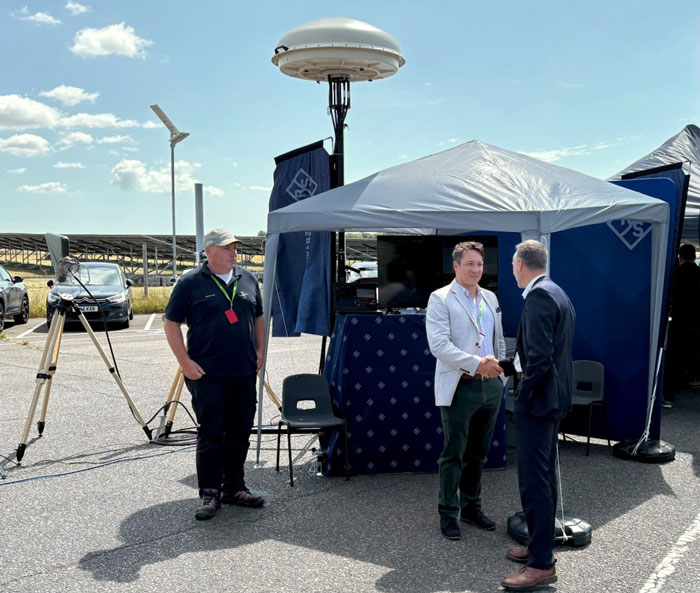
    Rohde & Schwarz has demonstrated its latest advancements in counter-drone technology at CUAS Expo 2025 at Thorney Island. The display featured an integrated system that included the ARDRONIS Wi-Fi detection solution and ARDRONIS Locate Advanced localization solution, along with the newly released ARDRONIS Effect configured as a multiband jammer.

    At the event, Rohde & Schwarz showcased how its comprehensive counter-drone system detects, identifies and neutralizes rogue drones regardless of their operating frequency. The demonstration showed the system’s ability to manage non-cooperative and non-compliant devices operating outside established regulations.

    ARDRONIS Effect in the Multiband Jammer configuration was a key highlight, demonstrating its unique wideband architecture which enables it to simultaneously jam multiple frequency bands, providing unparalleled protection against a diverse range of drone threats. Unlike traditional jamming solutions, ARDRONIS Effect in the Multiband Jammer configuration doesn’t rely on pre-defined frequencies, making it highly effective against drones operating on unconventional or rapidly changing frequencies.

    ARDRONIS Locate Advanced complemented the jammer by providing precise drone detection and localization, allowing attendees to witness the system’s ability to quickly identify the location of drones and enable informed response decisions. The integrated system delivered a comprehensive view of situational awareness and robust protection capabilities.

    Rohde & Schwarz said it received interest from attendees at CUAS Expo 2025 and had conversations about customer requirements. The company is following up with agencies and CUAS system integrators to discuss potential deployments of the ARDRONIS system.

    “Discussions with attendees underscored the growing concern surrounding non-compliant drone activity and the need for adaptable, wideband solutions like ours,” said Christopher Mantle, business development manager for UK Land EW and Communications at Rohde & Schwarz.