Author: Jesse Khalil

  • RF terrestrial-based GPS packs a punch

    RF terrestrial-based GPS packs a punch

    Over time, GPS dependencies have become deeply embedded in much of the nation’s critical infrastructure, as shown in Figure 1 — from emergency services and transportation systems to critical manufacturing and logistics operations. For the past 20 years, however, efforts to protect these assets with a true backup system have stalled, despite the establishment of the U.S. Space-Based Positioning, Navigation and Timing (PNT) Policy in December 2004.

    With the recent Notice of Inquiry from the U.S. Federal Communications Commission (FCC), an updated list of technological options is now on the table. However, most would require building new infrastructure or rely on quantum-based technologies that are still years away from being practical or available.

    U.S. GPS Efforts Separating

    Since its inception in 1977, GPS has drawn from a single technology to serve civil and military sectors. Now, with space — particularly satellites — becoming physically contested in wartime scenarios, the military is embarking on its own approach. This includes pairing GPS with military- grade receivers to improve service and protection for the global GPS layer. And two new layers are being developed as part of a multi-layer approach, deemed the “regional” GPS layer (i.e., per country) and the “local” GPS layer (i.e., per metro).

    Yet, with this new system — although supporting modular, open-systems integration — the Department of Defense (DOD) is now distancing itself from other future endeavors, including supporting civil critical infrastructure. The future DOD PNT system will not follow the same path to civil/military use as was taken by GPS. The PNT capabilities employed by the DOD as such will be increasingly classified. The civil effort has not only been left to fend for itself, but it also has been tragically fragmented across many federal departments and agencies. We can only hope the recent FCC focus will help to solidify the civil GPS efforts.

    Doors Open for New Solutions

    The new orientation of the civil approach opens the door to significant focus on local and regional GPS services. Specifically, a new approach is based on data from the Earth’s “RF geospatial layer,” where geospatial is “relating to or denoting data that is associated with a particular location.” This layer’s data is about available RF signals, which can be used to derive the location of a particular end device anywhere in the blanket of signals. Devices using this new approach will be unencumbered by the intricacies and costs of satellite technology or having to be joint solutions required to meet military standards.

    This also opens the door to the power of solutions available through consortia, which can tap into an order of magnitude more benefits through hearty partnerships. All of which also leads to the much-needed speed-to-market.

    The Biggest Advantage

    In the U.S., more than 110,000 towers transmit a variety of RF signals available to derive PNT. These towers provide a wide range of three-tower geometries needed for PNT calculations and enable strong resiliency (as an adversary cannot disable them all).

    Two systems, in particular, are worthy of close consideration. The broadcast industry’s proposed Broadcast Positioning System (BPS) uses ATSC 3.0 infrastructure along with the existing MerlinTPS adaptive RF signal system. Both these systems take advantage of existing RF infrastructure prevalent in most developed and developing countries.

    Don’t Fall Into the eLoran Trap

    eLoran has been suggested by some as a viable alternative used for deriving PNT. However, this technology has notable shortcomings. The portion of the RF band it uses has several limitations. For example, eLoran is based on a 100 kHz signal, a low-frequency band that is highly susceptible to atmospheric noise.

    Although some propose the use of existing AM towers for the eLoran signal, most are ~300 ft, of which eLoran tends to operate with 1600 ft towers. Attempts to operate eLoran using these shorter towers will make for reduced efficiency. Another misconception is about the proposed use of existing AM tower guidewires for transmission. At these wavelengths, that would restrict the towers to be 900 miles apart, having an impact on maintenance.

    eLoran would require building new infrastructure for U.S. deployment, including 12 new towers and transmitters. The number of installations requiring significant maintenance and this low number can be taken out in physical warfare.

    The eLoran system requires tight synchronization of the signals between each of its towers and the national epoch, requiring additional infrastructure with its attendant maintenance. eLoran supporting position accuracy is rated at 10 m to 20 m CEP, which is not within the FCC requirement of less than 3 m CEP.

    Timing accuracy is +/- 50 ns, which meets today’s precision needs, although it is quickly becoming inadequate as needs in the precision timing market continue to increase.

    Finally, the eLoran service is transmitted on one known frequency and in a published format, making it more vulnerable to jamming.

    GPS RF Systems Pack a Punch

    Given the issues associated with eLoran, other technologies must be considered. One such technology is available today and provided by a commercial company, MerlinTPS, which can transfer market-available, precise timing down to +/- 10ns. Such as precise timing provided by another commercial entity, Hoptroff, for example. Both companies currently provide the necessary components of a viable terrestrial GPS.

    As a consortium, MerlinTPS/Hoptroff could deliver precise timing wirelessly to broadcast TV towers for BPS, while eliminating the need for signal conditioning and additional synchronization equipment at each tower, or any other related infrastructure.

    MerlinTPS combined with BPS could provide all GPS services for primary and backup (not just timing). MerlinTPS can also fill in services for BPS edge cases having poor geometries. These services include portable and mobile devices. MerlinTPS is also able to handle both the enterprise and civil approaches similarly.

    New open doors create freedom to quickly address the urgent national security need for reliable, alternative PNT. The consortium approach, adding commercially available technology to the broadcast infrastructure, allows for collaborative development while preserving individual market opportunities, making it an attractive proposition for all participants.

  • Trimble unveils mobile mapping systems for land and air applications

    Trimble unveils mobile mapping systems for land and air applications

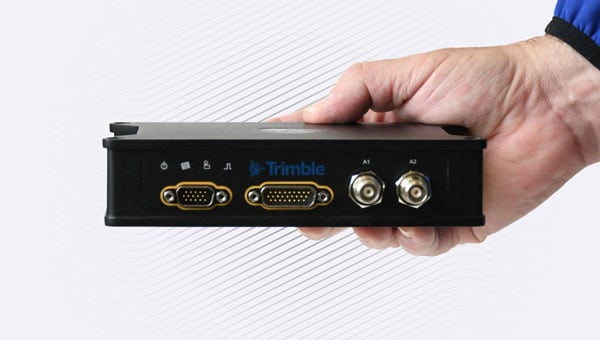
    Trimble has released two positioning system portfolios for mobile mapping and direct georeferencing — Applanix POS LVX+ and Applanix POS AVX RTX — designed to meet evolving demands in the geospatial industry. The solutions are designed to deliver improved accuracy and efficiency for land-based and airborne mobile mapping applications.

    Trimble is showcasing both portfolios at Intergeo 2025, alongside Applanix POSPac Complete advanced post-processing software introduced last week.

    Both portfolios include a one-year subscription to the Trimble CenterPoint RTX correction service and Applanix POSPac Complete for desktop and cloud, which includes post-processed CenterPoint RTX. By integrating real-time and post-processed data, users can achieve global coverage without traditional GNSS base stations, avoiding complications from base stations in different local datums or epochs. Both systems achieve centimeter-level accuracy and support Trimble IonoGuard technology for advanced mitigation against ionospheric disruptions.

    “By bundling both real-time and post-processed RTX into the POS LVX+ land and POS AVX RTX air solutions for mobile mapping, these ready-to-use systems simplify procurement and enable immediate deployment,” said Steve Woolven, president and general manager of Applanix at Trimble. “These portfolios enable our customers to tackle the most complex mapping projects and ensure optimal accuracy for final deliverables.”

    Land-Based Systems

    The POS LVX+ portfolio offers six models with several key features: a smaller, lighter and more cost-effective design with rugged components suitable for diverse users and project types; the Applanix IN-Fusion+ multi-sensor aided inertial engine that maintains performance in challenging environments like urban canyons or tree canopy; suitability for projects using lidar sensors or cameras, plus fleet management and automotive applications; and onboard and external inertial measurement units that enhance reliability and performance.

    Airborne Positioning

    The Applanix POS AVX RTX portfolio includes four variants for mapping at different flying heights through improved orientation accuracy. Key features include over-the-air correction technology achieving positioning, velocity and orientation accuracy up to 0.03 horizontal meters root mean square (RMS) and 0.06 vertical meters RMS without additional setup or infrastructure; robust hardware with advanced inertial measurement units (IMU) and FAA-certified antenna and cabling; and combined real-time and post-processed RTX correction data for time-critical missions, large-scale corridor mapping and projects in remote or inaccessible areas.

    Availability

    The POS LVX+ and POS AVX RTX will be available in the first quarter of 2026 through Trimble Applanix sales channels. After the initial 12-month period, customers can purchase CenterPoint RTX license renewals and POSPac Complete term licenses. For more information or to request a demo, visit https://applanix.trimble.com/en/products/hardware/applanix-avx-rtx or https://applanix.trimble.com/en/products/hardware/applanix-pos-lvx+.

  • Eos Positioning Systems to discontinue four arrow series GNSS receivers in 2026

    Eos Positioning Systems to discontinue four arrow series GNSS receivers in 2026

    Eos Positioning Systems has announced end-of-life planning for four models in its original Arrow Series GNSS receivers, with discontinuation set for March 31, 2026, or when current inventory is depleted.

    The company has began to phase out the Arrow Lite, Arrow 100, Arrow 200 and Arrow Gold receivers on Oct. 2, 2025. The models have been used by mapping professionals and organizations conducting field data collection.

    Eos will maintain technical support for the discontinued models for at least five years following the end-of-life date, according to company officials. Support will be available through the company’s technical team and global distributor network.

    “These products have served our customers well in a variety of field environments that I could not have imagined in the early days of our company,” said Jean-Yves Lauture, chief technology officer at Eos. “While their time in the spotlight is coming to an end, their impact will continue to resonate.”

    The company will continue to offer its Arrow Series plus models, which include the Arrow 100+ and Arrow Gold+ receivers currently in distribution. Eos plans to release two additional models — the Arrow 200+ and Arrow 300+ — though specific release dates were not provided.

    Eos is also developing the Skadi Series, described as precision GNSS solutions for professional applications. Additional product specifications and availability information will be announced at a later date.

    The original Arrow Series receivers have been part of Eos’ product lineup since the company’s early operations. The devices provided GPS and GNSS positioning capabilities for mobile data collection workflows.

  • Trimble launches POSPac complete post-processing software

    Trimble launches POSPac complete post-processing software

    Trimble as released its new post-processing software, Trimble Applanix POSPac Complete.

    The solution combines Trimble ProPoint positioning engine, post-processed Trimble CenterPoint RTX (POSPac PP-RTX) and Applanix IN-Fusion+ multi-sensor aided inertial engine. This integration offers geospatial professionals the ability to deliver accuracy and efficiency in the crewed and unmanned systems, land and marine mobile mapping and surveying industries.

    POSPac Complete will be showcased at INTERGEO 2025.

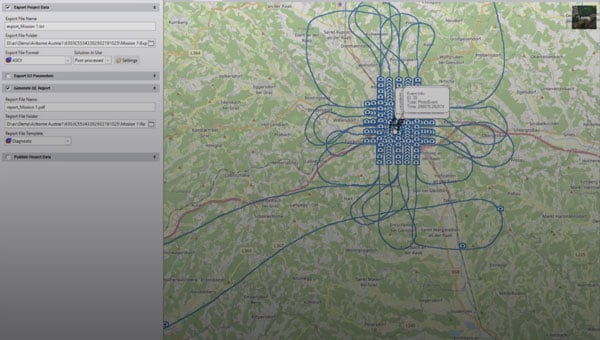
    A redesigned software solution embedded with POSPac PP-RTX, Applanix POSPac Complete is available exclusively as an all-in-one term license that bundles essential GNSS augmentation options — single base, Applanix SmartBase post-processed VRS and POSPac PP-RTX service — into a single, transparent annual fee. This eliminates hidden costs, simplifies budgeting and ensures access to software updates, while Trimble RTX removes the need for base stations and provides global coverage.

    Because Trimble RTX is embedded into the software, users around the world can attain seamless and efficient workflows with centimeter-level accuracy, even in remote or inaccessible areas, increasing productivity in their mapping process. Additional time savings are gained with the elimination of the time-consuming and challenging task of setting up and managing base stations that may be in different local datums or epochs.

    “The new POSPac Complete is more than just a software update; it’s a paradigm shift in how geospatial professionals achieve high-accuracy results because of Trimble’s unique RTX factor,” said Nico Jaeger, product manager at Trimble. “By integrating the power of PP-RTX directly into the software, we’ve eliminated the logistical headaches of base stations and streamlined the entire workflow, making mobile mapping more accessible than ever before. Altogether, it helps new and experienced users to produce survey-grade results with unprecedented speed and simplicity, truly representing the next generation of geospatial processing software.”

    Additional features in the new POSPac Complete include:

    • Modernized user interface: A new look and feel with a background map and a streamlined project wizard for easier and more efficient workflows, and a better user experience.
    • Trimble IonoGuard: Trimble’s latest technology that detects and mitigates the effects of ionospheric scintillation, which is especially important during the solar activity peaks, supported in single base and PP-RTX processing modes.

    Optional add-on features available for purchase:

    • Camera QC tools: The robust successor to CalQC, providing rapid IMU to camera boresight calibration for single-head and multi-head (oblique) camera constellations with minimal user interaction.
    • Lidar QC tools: Trimble’s leading software application for IMU to lidar boresight calibration and trajectory adjustment using SLAM techniques is now enhanced with support for automatic ground control point (GCP) detection, the RIEGL lidar native file format and reduced RAM requirements for faster processing.

    The POSPac Complete solution will be available in November 2025 through the Trimble sales channels. For more information or to request a demo, click here.

  • Inside Galileo HAS: A new era of free high-precision GNSS

    Inside Galileo HAS: A new era of free high-precision GNSS

    Developed by the European Union, Galileo is an independent, global, satellite-based navigation system that provides a range of services. Among its most significant advancements is the Galileo High Accuracy Service (HAS), which aims to offer free, high-precision positioning to users worldwide. This article explores Galileo HAS, covering its history, architecture, implementation phases, performance, limitations, and future prospects. 

    What is the Galileo High Accuracy Service? 

    Galileo HAS is a precision augmentation service leveraging precise point positioning (PPP) to provide corrections to GNSS signals, aiming at a positioning accuracy of less than 20 cm horizontally and 40 cm vertically. Unlike the traditional real-time kinematic (RTK) method, which depends on local reference stations, HAS delivers corrections globally via Galileo satellites using the E6-B signal, as well as over the Internet. The service provides corrections for measurements on multiple frequencies across both Galileo and GPS constellations, enhancing real-time positioning performance. 

    The concept of a high-accuracy service for Galileo was driven by growing demand for decimeter-level accuracy in applications such as precision agriculture and autonomous vehicles. Initially envisioned as a paid service under the Galileo Commercial Service, feasibility studies in 2014 confirmed its potential. In 2018, the European Commission decided to offer HAS free of charge. 

    In the Galileo HAS specifications, two Service Levels are defined. Service Level 1 with global availability and the enhanced Service Level 2 for the European Coverage Area. The Galileo HAS roadmap consists of three phases: Phase 0 (testing and experimentation), Phase 1 (Initial Service), and Phase 2 (Full Service). After extensive internal testing, Phase 1 was officially launched in January 2023, marking a significant milestone in Galileo’s evolution as a leading GNSS provider. Phase 2 is currently in development and expected to launch in the near future. 

    Technical Components 

    Galileo HAS is designed with several key components that enable its high-precision capabilities. One of the most critical aspects involves orbit and clock corrections. These corrections compensate for inaccuracies in satellite orbital positions and clock errors, which are major sources of positioning errors in standard GNSS. Another essential element of HAS is the provision of signal bias corrections to enable precise carrier phase ambiguity resolution, which in turn greatly improves positioning accuracy. In the current Initial Service (Phase 1), Service Level 1 provides only code bias corrections, along with orbit and clock corrections. In Phase 2, Service Level 1 will be upgraded to include both code and phase bias corrections, while Service Level 2 will further add atmospheric (ionospheric and tropospheric) corrections for the European Coverage Area. 

    Capable GNSS receivers decode the high-accuracy corrections broadcast on the E6-B channel for Galileo (E1, E5a, E5b, E5, AltBOC, E6) and GPS (L1, L2, L5) signals and apply them via algorithms to enhance positioning solutions. This refines raw measurements to reduce errors, providing decimeter-level accuracy for use in fields rangiranging from ecological surveys to city infrastructure management and routine mapping tasks. 

    In addition to satellite broadcasts, the corrections are also made available over the Internet via the NTRIP protocol, providing an alternative access method for users with network connectivity. Notably, receiving HAS corrections via NTRIP eliminates the need for a receiver with E6-B capability, but the receiver still needs to implement the PPP algorithm to process the corrections. 

    Architecture 

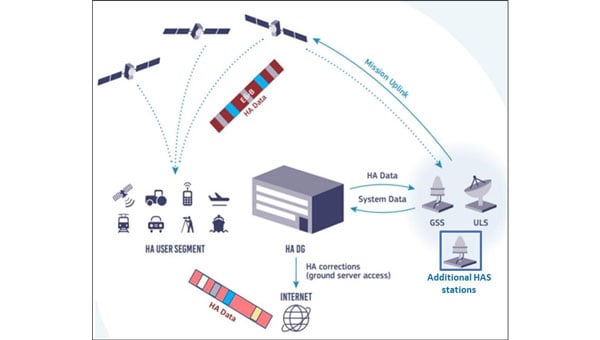
    The Galileo HAS relies on the robust infrastructure already established within the Galileo system. At the foundation of this network are the Galileo Sensor Stations (GSS), a global network of 15 monitoring stations (according to the latest updates). These stations play a vital role by continuously collecting GNSS measurements, which serve as the raw data needed to generate precise corrections. The collected data are then processed by the High Accuracy Data Generator (HADG). This system analyzes the GSS input and produces high-precision corrections for both Galileo and GPS signals. Once the corrections are prepared, they are transferred to Uplink Stations (ULS), which transmit the correction data to the Galileo satellites for distribution via Signal-in-Space, or to an NTRIP caster for distribution over the Internet. In the case of Signal-in-Space distribution, the Galileo satellites themselves serve as the delivery mechanism to users worldwide, broadcasting the corrections globally via the E6-B signal. 

    Galileo HAS high-level architecture. (Credit: Galileo High Accuracy Service (HAS) Info Note”. © European GNSS Agency, 2020)
    Galileo HAS high-level architecture. (Credit: Galileo High Accuracy Service (HAS) Info Note”. © European GNSS Agency, 2020)

    Galileo HAS Roadmap 

    The HAS is being rolled out in three phases, ensuring progressive development and refinement: 

    Phase 0 (2020–2022): Internal Testing 

    • Focused on validating the feasibility of broadcasting HAS corrections via the E6-B signal. 
    • Tests involved internal and external stakeholders, with feedback used to refine the service. 

    Phase 1 (January 2023–Present): Initial Service 

    • Declared operational on January 24, 2023, Phase 1 provides Service Level 1 with global coverage, though with reduced performance compared with the enhanced Service Level 1 expected in Full Service (Phase 2). 
    • Current corrections include orbits, clocks, and code biases. 
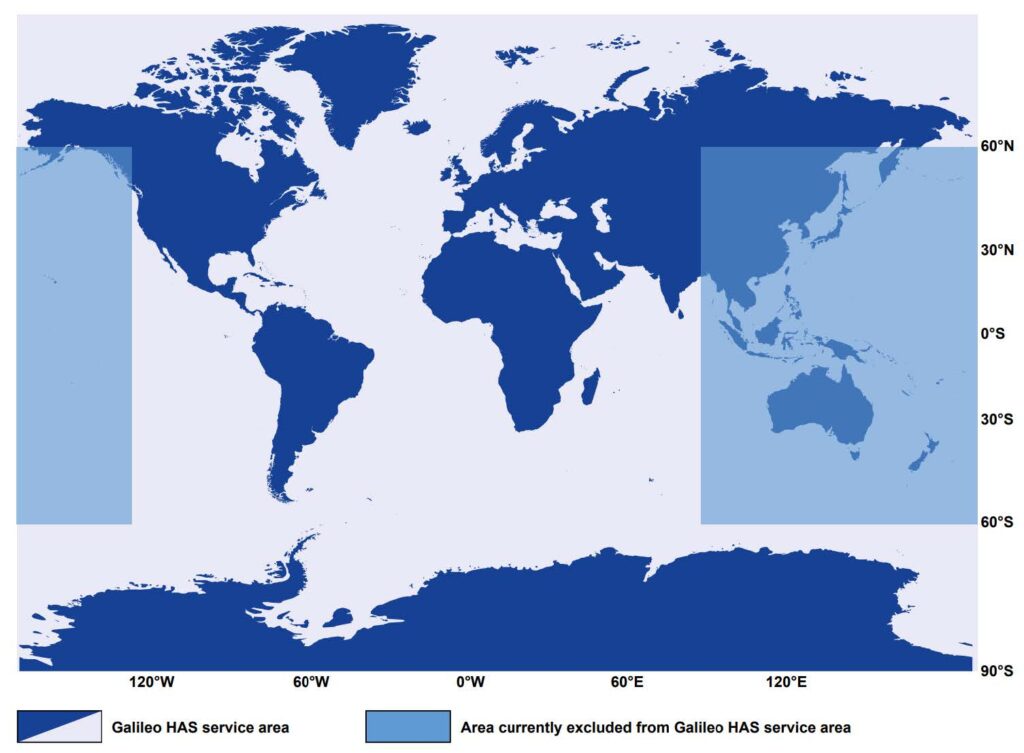
    • The service area excludes certain regions (e.g., parts of the Pacific and Australia) because of infrastructure limitations. 
    • Convergence time is specified as <300 seconds (Service Level 1) or <100 second (Service Level 2), with horizontal accuracy <20 cm and vertical accuracy <40 cm under optimal conditions. Currently, accuracy <20 cm may be achieved with a convergence time up to 60 minutes, owing to the lack of phase bias and atmospheric corrections. 

    Phase 2 (Future): Full Operational Capability 

    • Will provide full Service Level 1 performance globally with horizontal accuracy <20 cm and vertical accuracy <40 cm, adding phase bias corrections for faster convergence <300 seconds. 
    • Will introduce Service Level 2 for regional coverage in Europe with horizontal accuracy <20 cm and vertical accuracy <40 cm, adding phase bias and atmospheric corrections for faster convergence (<100 seconds). 
    • Will include data authentication and enhanced infrastructure for improved reliability and coverage. 

    Challenges and Limitations 

    The current capabilities of Galileo HAS are constrained by several limitations, which are expected to diminish as the system evolves. Global coverage is not yet fully established, with parts of the Pacific region and Australia remaining outside the service area. While users can receive HAS corrections anywhere in the world, the official performance specifications apply only within the service boundaries. However, even within the service area, achieving the specified accuracy presently requires long convergence times, limiting applicability in scenarios that demand rapid solutions. Convergence time is expected to decrease significantly in Phase 2, when phase bias and atmospheric corrections are introduced. 

    As of 2025, relatively few commercial receivers support HAS corrections via E6-B, with availability concentrated in professional and industrial receivers. The lack of integration into mass-market devices limits broader adoption, reflecting both the technology’s ongoing development and the additional hardware complexity required to receive HAS corrections. 

    Finally, while decimeter-level corrections are sufficient for a wide range of applications, many professional domains, such as surveying, demand cm-level accuracy. Even at Full Service, HAS will not provide this level of precision, meaning that certain fields will continue to rely on RTK. However, considering that most RTK vendors require a paid subscription or charge per hour, HAS can still provide great value to surveyors and other professionals through its use in preliminary work or applications where cm-level accuracy is not critical, offering decent accuracy free of charge. 

    Galileo HAS service area. (Credit: Source: “Galileo High Accuracy Service Definition Document (HAS SDD), Issue 1.0” © European Union 2023.)
    Galileo HAS service area. (Credit: Source: “Galileo High Accuracy Service Definition Document (HAS SDD), Issue 1.0” © European Union 2023.)

    The Road Ahead 

    The Galileo constellation was recently reinforced with satellites 31 and 32, which became operational in January 2025, while the ground segment underwent major upgrades in 2024. Despite these improvements, Phase 1 (Initial Service) remains the only operational HAS capability. As of September 2025, Phase 2 remains in active development. In January 2025, it was announced that the European Union Agency for the Space Programme (EUSPA) awarded GMV a 45-month, €12 million contract to develop an enhanced HADG that will support enhanced Service Level 1 globally and Service Level 2 for Europe. The contract’s duration provides an indication of the anticipated timeline for completion. 

    An inquiry regarding the timeline for Galileo HAS Service Level 2 (Phase 2) was submitted to the European GNSS Service Centre (GSC) Helpdesk. Their reply stated that the schedule is not available at this time and will be announced through GSC channels once released. 

    Wider adoption is anticipated as more GNSS receivers capable of receiving and decoding the E6-B signal to process HAS corrections become available, enabling sectors such as autonomous transportation, fleet management, and smart agriculture to capitalize on improved performance. Adoption is also expected to accelerate when Galileo HAS reaches Full Operational Capability with the launch of Phase 2, which will reduce convergence times and broaden the system’s applicability. 

    Ultimately, Galileo HAS is positioned to become a cornerstone of high-accuracy GNSS, democratizing access to professional-grade precision. 


  • Teledyne Optech to showcase mapping and marine technologies at INTERGEO 2025

    Teledyne Optech to showcase mapping and marine technologies at INTERGEO 2025

    Teledyne Optech will showcase its portfolio of solutions designed for topographic and marine mapping and electric utility inspection at Intergeo 2025, taking place Oct. 7-9 in Frankfurt, Germany. The company will exhibit at Hall 12.0, Stand 0C067.

    Featured technologies will include Fathom, a topo-bathymetric airborne lidar system designed for data integration of topo lidar, bathy lidar and a multispectral camera capturing the coastal scene from dry land to below water. Also on display will be EchoONE, Optech’s smallest lidar sensor to date at just 1.65 kilograms, combining long-range performance with NDAA compliance and real-time generation of georeferenced point clouds. Visitors will also see Network Surveyor, powered by Galaxy Edge and designed to meet the time constraints of electric utilities, featuring real-time processing and a software analytics stack for utility operators.

    Visitors are invited to view a new compact lidar sensor designed for integration in modern wing and belly pods. Deployable in lightweight aircraft and helicopters, the sensor delivers high resolution for mapping projects, utility asset management and vegetation monitoring. Teledyne Optech will host a reception Tuesday, Oct. 7, from 4-6 p.m. at the stand.

    The booth will also showcase Teledyne Marine’s sonar and software solutions for marine infrastructure projects, including dredging, offshore wind and port and harbor operations. Live demonstrations of Teledyne FLIR IIS’ spherical imaging camera Ladybug 6, with spatial accuracy of plus or minus 2 millimeters at 10 meters distance, will be available.

    Mike Lee, director of product management at Teledyne FLIR IIS, will speak Tuesday, Oct. 7, from 12:50-1:10 p.m. on “Beyond Resolution: Advancing Mobile Mapping Through Spherical Imaging Innovation.”

    Teledyne Optech is a lidar solutions provider. With operations and staff worldwide, Teledyne Optech offers solutions for topographic and marine mapping, defense and electric utility inspection.

  • Septentrio starts mass production of mosaic-G5 modules

    Septentrio starts mass production of mosaic-G5 modules

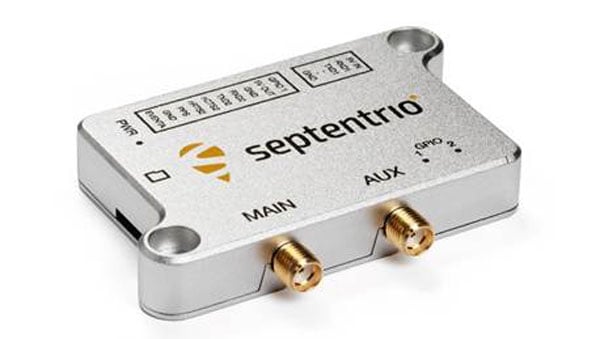
    Septentrio, part of Hexagon, has started volume shipments of its mosaic-G5 modules. Measuring 23 mm by 16 mm and weighing 2.2 g, mosaic-G5 enables reliable positioning without performance compromises for commercial UAVs, robots, geographical information system devices (GIS) and many other size and power-constrained industrial applications. The company’s GNSS technology provides enhanced positioning availability in challenging environments where signals are degraded or obstructed.

    “We have had a lot of interest in the mosaic-G5 module series since its announcement earlier this year. After successful beta testing with various customers, I am pleased to say that we have now started shipping volume orders,” commented François Freulon, director of product management at Septentrio.

     The mosaic family offers users a range of receiver modules to balance performance and cost. The quad-band mosaic-G5 P3 and the triple-band heading module mosaic-G5 P3H provide positioning availability in challenging environments for applications such as mapping or light show UAVs. The modules complement the mosaic product line, including the mosaic-X5 receiver, which the company positions as a benchmark for GNSS open-signal anti-jamming and anti-spoofing² resilience in a small form factor.

    The mosaic-go G5 evaluation kit is available through the Septentrio webshop for testing and prototyping. It offers direct autopilot connections, and the free RxTools user interface assists with setup and evaluation.

    Septentrio will showcase the mosaic-G5 modules at Intergeo in Frankfurt, Germany, Oct. 7-9, in Hall 12, Booth 114.

  • Redefining high-precision GNSS – meet Accutenna 4

    Redefining high-precision GNSS – meet Accutenna 4

    The Accutenna 4 features:

    • Low-profile 4-feed composite patch
    • Full GNSS + L-Band coverage
    • Superior interference mitigation (XF)
    • Housed and embedded models available
    • Lightweight, rugged industrial design

    Click here to learn more.

  • Waypoint post-processing software

    Waypoint post-processing software

    Waypoint software is an industry-leading, professional post-processing portfolio trusted by the companies building maps for the world. Waypoint software leverages Global Navigation Satellite Systems (GNSS) and inertial navigation systems (INS) data to generate a source of truth for post-mission trajectories and mapping. 

    Built on Hexagon | NovAtel’s decades-long legacy in post-processing algorithm development, Waypoint software refines GNSS-only or GNSS+INS data by processing forward and reverse in time, then combining and smoothing the results to maximise accuracy and signal availability for applications across land, air and sea. 

    Click here to learn more.  

  • Are you ready for NSRS modernization? What the upcoming changes mean for your geospatial data

    Are you ready for NSRS modernization? What the upcoming changes mean for your geospatial data

    In my August 2025 GPS World newsletter column, I highlighted that a colleague reminded me that the National Geodetic Survey’s (NGS) new National Spatial Reference System (NSRS) is more than a technical upgrade. It offers a prime opportunity to review and improve current processes and workflows, examine existing products and considerations, and plan strategically for future needs. By auditing geospatial data dependencies now, NSRS users can assess how transitioning to the new datum will affect workflows, datasets and operational decision-making.

    Several organizations have formed working groups to address the new NSRS. The National Society of Surveyors (NSPS) has released a story map to inform the professional surveying community and is developing guidance and case studies. The American Association for Geodetic Surveyor (AAGS) is collaborating with NSPS. The American Society of Photogrammetry and Remote Sensing (ASPRS) has prepared materials available on its website. Additionally, under the leadership of Gary Thompson, the North Carolina Geodetic Survey established the North Carolina 2022 Reference Frame Working Group. The group’s goal is to address issues related to the implementation of the datum change in 2026. It includes representatives from North Carolina agencies involved in producing or using geospatial products and services.

    Agencies Involved in the NC 2022 Reference Frame Working Group
    NC Geodetic SurveyNC DOT HydraulicsNC State Mapping Advisory Committee
    NC Geographic Information Coordinating Council (GICC)NC State, Land Records ManagementNC Geodetic Survey Advisory Committee
    NC Center for Geographic Information & AnalysisNC GICC Local Government CommitteeNC Society of Surveyors
    NC DOT State Location & SurveysNC State Mapping Advisory CommitteeDuke Energy
    NC DOT Photogrammetry UnitNC GICC Local Government CommitteeU.S. National Geodetic Survey

    The organizations participating in the NC RFWG are assessing how changes in the new NSRS may impact their geospatial workflows and evaluating their reliance on NGS products and services. Proactive self-assessment is essential because NGS cannot customize support for each entity’s unique needs and processes. By identifying potential challenges and opportunities early, organizations can adapt smoothly and maintain operational efficiency during the transition. The following were the key action items from the last NC RFWG meeting:

    • Create an information sheet to help local governments prepare for the data change
    • encourage agencies to consult their software vendors on support measures for the new datums
    • establish a rule for when to use the U.S. Survey Foot versus the International Foot
    • review current data files to ensure their metadata includes datum and unit information.

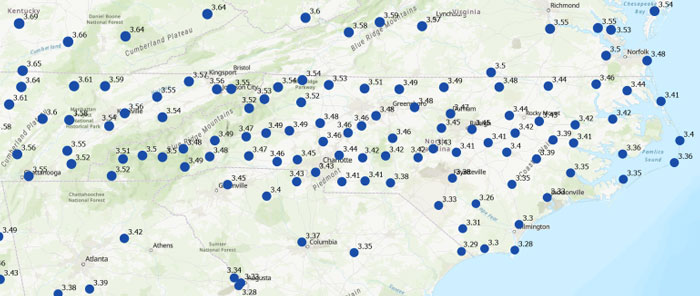
    Many participants of the North Carolina working group expressed interest in understanding how much the coordinates will shift with the new NSRS. While NGS’s website offers diagrams that provide a high-level overview of coordinate and product changes, many users sought more detailed information specific to North Carolina. To address this, I used NGS’s Multi-Year CORS Solution 3 (MYCS3) update of the NOAA CORS Network to ITRF2020, epoch 2020.0, to estimate the changes between the current NSRS — NAD 83 2011 (epoch 2010.0) — and the upcoming NSRS in North Carolina, such as NATRF2022 at epoch 2020.0. This approach offers a more detailed view of the magnitude of shifts in local regions. The figure titled “Approximate Differences Between NATRF2022 (Epoch 2020.0) and NAD 83 2011 (Epoch 2010.0) in NC” illustrates the approximate horizontal coordinate differences between the current NSRS and the future NSRS based on NCN CORS data. (Note that these units are in feet.) For additional information on MYCS3 and regional changes across the United States, refer to my August 2025 GPS World column.

    Approximate differences between NATRF2022 (Epoch 2020.0) and NAD 83 2011 (Epoch 2010.0) in North Carolina. Horizontal change in feet. (Credit: Dave Zilkoski)
    Approximate differences between NATRF2022 (Epoch 2020.0) and NAD 83 2011 (Epoch 2010.0) in North Carolina. Horizontal change in feet. (Credit: Dave Zilkoski)

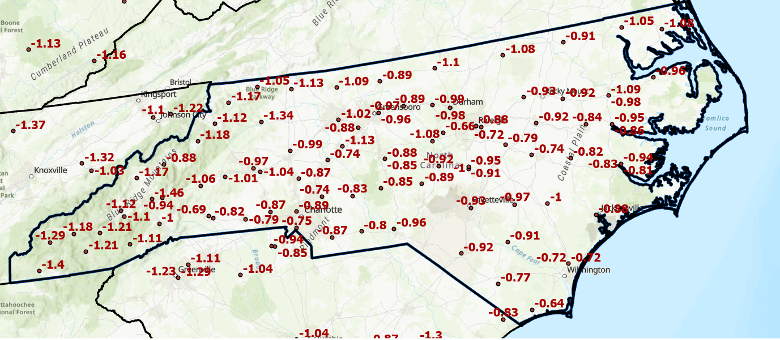
    Differences in orthometric heights between the new NAPGD2022 and the current NAVD 88 are significant for anyone working with FEMA flood maps or preparing flood insurance elevation certificates. I used ITRF2020, epoch 2020.0, ellipsoid heights from NOAA CORS stations along with Geoid2022 values to estimate the NAPGD2022 orthometric heights at the CORS sites. As depicted in the plot, the height differences between NAPGD2022 and NAVD 88 across North Carolina range from about 0.5 feet in the southeastern region to over a foot in the northern and western regions. (Note that the units are in feet.)

    Approximate differences between NAPGD2022 and NAVD 88 in North Carolina. Orthometric height change in feet. (Credit: Dave Zilkoski)
    Approximate differences between NAPGD2022 and NAVD 88 in North Carolina. Orthometric height change in feet. (Credit: Dave Zilkoski)

    This type of information should be shared with managers of real-time GNSS networks(RTN). RTN operators could then establish a parallel beta system to enable users to understand how the new NSRS may affect their products and services. (Note: The North Carolina Geodetic Survey, which manages the NC CORS/RTN system, is considering running a pilot parallel RTN based on the new NSRS.) This data can be valuable for RTN users to assess how coordinate changes might influence their workflows. For example, it can help determine how the shifts in coordinates will affect agricultural activities such as planting, fertilizing and harvesting. Will farmers need to remap their fields, or will a transformation be sufficient?

    Fostering collaboration with stakeholders and constituents will help users better understand how the NSRS modernization impacts their products and services. Developing strategies to align geospatial data management with regulatory requirements and operational objectives will also facilitate a smoother implementation process. NGS is partnering with federal agencies and professional societies to create a self-assessment guide that helps organizations evaluate how the NSRS update affects their geospatial missions. As previously mentioned, the North Carolina 2022 Reference Frame Working Group is working with state and local agencies, as well as surveyors, to proactively address key questions and challenges. This collaboration aims to improve communication with NGS and determine whether their products and services need to be reprocessed, re-surveyed or transformed to suit the new standards.

    Each organization has its own unique geospatial requirements and a thorough understanding of its mission and needs. This is an ideal opportunity to develop a centralized plan for evaluating and managing geospatial workflows during the transition to the modernized NSRS. Challenges include aligning legacy datasets with new reference standards while ensuring data integrity. Organizations should assess the accuracy of their data in relation to the NSRS and document any necessary updates in metadata. By creating a well-structured plan that balances operational constraints, legal compliance and practical considerations, organizations can prioritize accuracy, efficiency and alignment with the updated NSRS.

    To assist others in preparing for the new NSRS, Dana J. Caccamise II, NGS regional geodetic advisor, has developed guidance materials that have been shared with federal agencies — including the FGDC and their team leaders — and professional organizations such as NSPS, ASPRS and AAGS. See the boxes titled “Questions to Guide a Self-Assessment of Your Operation and Products” and “List of NGS Products and Services — Are your workflows dependent on one or more NGS products.” The goal is to help these agencies become ready to implement the new NSRS once it is officially adopted by NGS.

    Questions to Guide a Self-Assessment of Your Operation and Products
    Are you generating or using geospatial data (or doing both)?
    – If so, your workflows are likely dependent on geodetic control tied to one or more NGS products. The upcoming NSRS update will affect these dependencies. (See “List of NGS Products and Services.”)
    Do you know if your mission, project, or datasets depend on NGS products?
    – Identifying whether and how your entity relies on NGS products is a critical first step in assessing potential impacts.
    What are your accuracy, precision, and shelf-life requirements for geospatial data?
    – Understanding your mission’s specific data requirements ensures you can evaluate whether NSRS modernization will meet your operational needs without unnecessary adjustments. This should include plans to accommodate greater accuracy in the future.
    Do you know how your entity accesses and utilizes geospatial data?
    – Are you obtaining it directly from NGS or indirectly through third-party vendors (e.g., RTN systems, GIS platforms, GNSS companies)?
    – Have you considered how updates to NGS products may impact the tools or services you rely on from these vendors?
    – Many entities rely on geodetic control without realizing it. NGS’s foundational data and frameworks are often invisible and seamlessly embedded within the tools and services offered by third-party vendors, such as GIS platforms, survey equipment, and software providers. These vendors, in turn, depend heavily on NGS products like the NSRS to ensure their tools are accurate and functional. Understanding this indirect reliance is crucial for preparing your workflows and ensuring continuity as the NSRS is modernized.
    Where does your entity fit in with the geodetic workflow?
    – Does your entity create integral products (e.g., GNSS data, lidar data) on which other products depend?
    – Does it produce derivative products (e.g., DTM, Topographic Map, Flood Insurance Rate Map (FIRM) and Flood Insurance Study (FIS) Report)?
    – Evaluating these dependencies will help you determine the scope of NSRS modernization impacts.
    What are your project requirements for data accuracy and longevity?
    – Assess whether your data accuracy thresholds and long-term usability align with the modernized NSRS.
    Have you evaluated workflows and identified potential impacts in areas affected by significant ground movement (e.g., regions with tectonic shifts, vertical land motion, and, most notably, subsidence)
    – Identifying potential risk or disruption areas can guide prioritization and help mitigate impacts on critical operations.

    List of NGS Products and Services

    Are your workflows dependent on one or more NGS products

    Products and ServicesExamples
    Geodetic Control Data– Datasheets
    – State Plane CoordinatesSurvey
    – MarksSurvey Data
    National Spatial Reference System (NSRS) Datasets– Horizontal (Geometric) reference frames
    – Vertical (Orthometric / Physical) datums
    – Geoid Models
    NSRS Tools and ResourcesNGS Geodetic Tool Kit
    – NGS PC Software such as ADJUST
    – User-Contributed Software
    – VDatum to convert elevation data
    – Other NSRS Resources such as transformation tools
    GNSS Data and SolutionsOPUS (Online Positioning User Service)
    – CORS (Continuously Operating Reference Stations)
    – Satellite Orbits
    Gravity Data– Gravity for the Redefinition of the American Vertical Datum (GRAV-D)
    – Deflection of the Vertical (DoV)
    Coastal Mapping Products– Topobathy lidar Data
    – Shoreline Mapping Products
    Aerial Imagery and Remote Sensing– NOAA Remote Sensing Division Products such as Emergency response imagery (e.g., hurricane damage)
    Analytical tools– Least squares analysis tool
    – Antenna Calibrations
    GIS and Visualization Tools– Geospatial Data such as Shapefiles and KML files for GIS applications
    – Web Services
    Educational and Reference Materials– Documentation such as NGS technical reports
    – Presentations and Posters
    – User support such as NGS Information Center and Regional Geodetic advisors
    Historical Data Archives– Legacy Products such as Older geodetic survey records and Superseded geoid models and transformation tools
    Standards and Procedures, best practices, data formats– Standards and Procedures such as NOAA Technical Memorandum NOS NGS 92
    – Data Formats such as GVX (Real-time or post-processed GNSS vectors)

    To support the increased awareness of the modernization of the NSRS, under the auspices of the Federal Geodetic Control Subcommittee, NGS will host a meeting with federal geospatial agencies on Oct. 15, 2025, to discuss the NSRS modernization. The primary objectives of this meeting are to:

    • Increase awareness of the NSRS modernization rollout schedule and engagement strategy, including self-assessment and interaction between official departmental working groups.
    • Within other departments, connect decision-makers to those who accomplish NSRS modernization tasks and designate points of contact to interface with NGS capacity building efforts.
    • Share experiences and strategies among federal agencies concerning NSRS modernization self-assessment and preparation.
    • Gather questions, discuss anticipated challenges and identify opportunities to support each other through this transition.

    It is my understanding that this meeting is open to the public (virtually) for listening and observation. See below for more information on the meeting.


    Federal Geodetic Control Subcommittee Meeting

    • Date: Wednesday, October 15, 2025
    • Time: 1:00 PM – 4:00 PM ET
    Photo:

    I recommend that NSRS users consult guidance from NGS and engage with professional societies that have established working groups to analyze the impact of the new NSRS on geospatial products and services. Getting involved now will help ensure you are prepared when NGS officially adopts the updated NSRS. As Dru Smith, NGS NSRS modernization manager, explained in his webinar titled “NSRS Modernization — Big Steps Forward and What Comes Next” on Aug. 14, 2025, once the initial set of products and services of the modernized NSRS is “official,” the new NSRS becomes “The NSRS,” and its implementation then begins.

    Are you prepared to implement the new NSRS once NGS officially adopts it? Do you have the necessary tools and resources in place to support a smooth transition? This newsletter highlighted several actions that users can take now to ensure they are ready to implement the new NSRS when it becomes official.

  • Tackling NavWar and PNT Threats

    Tackling NavWar and PNT Threats

    With Safran Federal Systems

    GNSS simulation has evolved well beyond accuracy testing. It now covers full-spectrum NavWar and PNT validation. Today’s simulators are expected to generate real-time GNSS, LEO signals, inertial measurement units (IMU), alternative navigation sources, jamming and spoofing — all from a single system.

    “The number of signals continues to grow with the rise of multi-PNT sources and advanced threat capabilities,” said Jaemin Powell, senior product manager, NavWar & Simulation at Safran Federal Systems. “Our customers are preparing for GPS-denied operations, validating NavWar responses and ensuring resiliency in contested domains.”

    Powell noted that Safran Federal developed BroadSim Genesis to enable simultaneous streaming of L1, L2, L5 and L6 GNSS and LEO signals with integrated jamming and spoofing — all within a compact 4U platform.

    The company’s strategy is built on a software-defined architecture, allowing for rapid adoption to evolving threats and mission requirements, Powell said. Safran Federal collaborates closely with government stakeholders and defense primes to stay up-to-date with new requirements and incorporate real-world threat vectors, such as spoofing and jamming. The BroadSim platform supports software upgrades for every feature, from adding constellations and LEO signals to enabling hardware-in-the-loop (HIL) support or integrating additional PNT resources.

    While defense and aerospace continue to serve as core markets, rising demand also is coming from space companies, LEO-PNT developers, and advanced electronic warfare laboratories now relying on Safran simulators.

    “These users value the scalability, fidelity and flexibility of our simulation solutions, especially in environments with high dynamics,” Powell said. “They are looking beyond traditional GNSS, and we address that need with a simplified, all-in-one platform.

    Large-Scale Simulation 

    “Large-scale simulation is technically demanding,” Powell added. “Generating thousands of signals across multiple bands with ultra-low latency and 1000 Hz update rates pushes both hardware and software boundaries.”

    Maintaining the intuitive Skydel interface while adapting to evolving NavWar requirements remains a top priority for the company. For example, Safran Federal introduced real-time automated calibration for BroadSim Wavefront, which executes before every scenario. This allows users to power up and immediately begin testing, eliminating recalibration and setup delays.

    “Simulation is more than just signal generation. It is about enabling operational confidence,” Powell said. 

    “Our platform gives users the ability to stress test systems, visualize behavior in real time and adapt quickly without relying on range time or live sky testing…We are enabling teams to meet their toughest NavWar and PNT challenges with confidence and flexibility. If you have demanding requirements, we are ready to deliver a solution that is intuitive, capable and built for the future.” 

  • Frankfurt welcomes INTERGEO 2025 as geospatial tech tackles global challenges

    Frankfurt welcomes INTERGEO 2025 as geospatial tech tackles global challenges

    Geoinformation has evolved from a specialist tool to an essential resource for government, business and civilian use. Whether captured from space or drones, analyzed through artificial intelligence (AI) or 3D visualizations, geographic data now, more than ever, drives critical decisions across industries.

    INTERGEO 2025 exemplifies this transformation. From Oct. 7-9, the Frankfurt Exhibition Center will host the world’s leading conference and trade show for geodesy, geoinformation and land management, featuring more than 500 international exhibitors ranging from innovative startups to industry giants.

    Three-Day Conference Program Features 100 Sessions
    The INTERGEO Conference will present approximately 100 presentations and sessions over three days, drawing speakers from space agencies, United Nations organizations, government ministries and international technology companies.

    Key topics include AI-powered remote sensing, urban digital twins, open data strategies, Earth observation for climate and crisis management and building information modeling (BIM) integration for infrastructure lifecycle management.

    Keynote presentations such as “Earth Observation and Artificial Intelligence” and “Cartography for the Future” will provide forward-looking insights, while panel discussions on digital sovereignty and standardization will address strategic frameworks. Each session demonstrates how geoinformation serves as the critical foundation for climate adaptation, disaster preparedness, urban development and infrastructure protection.

    Opening Day Features Space Technology Focus

    DVW President Prof. Rudolf Staiger will open INTERGEO on Tuesday, Oct. 7, followed by a keynote from Johann Dietrich Wörner, space coordinator for the state of Hesse. His presentation, “Earth Observation and Artificial Intelligence,” will explore how AI transforms massive Earth observation datasets into actionable insights for climate, agriculture and urban planning projects.

    Prof. Serena Coetzee of UNU-FLORES will deliver the German Cartography Congress keynote on Wednesday, Oct. 8, addressing cartography’s evolution amid growing geodata volumes and governance challenges.

    Thursday morning’s panel discussion, “Digital Transformation – Perspectives, Trends and Theses,” will examine the need for reorienting geoinformation management to foster innovation and collaboration.

    Revolutionizing Geospatial Data Analysis

    AI is accelerating the transformation of raw data into actionable insights, fundamentally changing how professionals work with geoinformation. The session “AI-Based Analysis of Remote Sensing Data for Updating the ATKIS Basic DLM” demonstrates practical applications in public administration.

    The Hessian Administration for Soil Management and Geoinformation uses AI methods to automatically detect landscape changes, significantly improving the quality and timeliness of digital landscape models.

    Urban digital twins are rapidly advancing from static models to powerful operational platforms. The session “From Data to Insights: Visualization Technologies for Next-Generation Digital Twins” will showcase how modern visualization makes complex systems accessible and accelerates planning processes.

    The research project “DigitalCities4Us” illustrates practical applications, using high-resolution 3D data to enable barrier-free urban planning and improve accessibility for people with mobility restrictions.

    Additional sessions will examine implementation across administrative levels. “The Digital Twin NRW: A Practical Report” presents a statewide geospatial data infrastructure that is freely accessible and continuously developed. The city of Zurich will demonstrate its transition from traditional geospatial data infrastructures to multifunctional twin platforms.

    Geodata infrastructures, open data and data spaces form the backbone of digital transformation and serve as key prerequisites for digital sovereignty. Multiple sessions will emphasize the importance of stable, future-ready geodata infrastructure.

    Standardization receives particular attention through presentations like “Three Perspectives, One Goal: Digital Sovereignty through Open Standards in BIM and GIS” and the position paper “Official Geodata as a Basis for Digital Processes in Planning, Construction and Operation.” These sessions demonstrate how uniform standards for data exchange between geographic information systems and building information modeling can accelerate planning, construction and operational processes.

    The position paper represents a joint initiative of buildingSMART Germany, the Working Committee of the Surveying Authorities and the Federal Association of Publicly Appointed Surveyors.

    Critical infrastructures require precise, reliable data to minimize risks. The presentation “Regional and Effective Flood Protection in the State Capital of Düsseldorf” demonstrates how geoportals and flood forecasting tools prevent flooding and strengthen urban infrastructure resilience.

    Bringing Innovation to the Exhibition Floor

    Registration is now open at the INTERGEO website. The INTERGEO 2025 team looks forward to welcoming attendees to the Frankfurt Exhibition Center from Oct. 7-9.