Author: GPS World Staff

  • Launchpad: GPS compass, survey rental program

    Launchpad: GPS compass, survey rental program

    OEM

    GPS compass

    Alternative to magnetic-based sensors for manned or unmanned

    VectorNav VN-360 GPS-Compass (PRNewsFoto/VectorNav Technologies)
    VectorNav VN-360 GPS-Compass (PRNewsFoto/VectorNav Technologies)

    The VN-360 OEM GPS-Compass module provides an accurate, True North heading solution for systems integrators seeking a reliable alternative to magnetic-based sensors to improve the capabilities and performance of next-generation manned and unmanned systems. Unlike digital magnetometers that can be affected by ferrous materials, the VN-360 heading solution provides a cost-effective GPS-based alternative. With two onboard GNSS receivers, the VN-360 calculates the relative position between its two GNSS antennas to derive a heading solution an order of magnitude more accurate than a magnetic compass. It supports a variety of GNSS antennas that can be mounted on the host platform with a separation distance from a few centimeters to several meters. Applications include antenna pointing, multirotor UAVs and aerostats, automated agriculture, heavy machinery, ground robots, weapons training, warfare simulation and direct surveying.

    VectorNav Technologies, vectornav.com

    GNSS simulator update

    Synchronize multiple simulators

    Skydel-screenshot-WThe SDX software-defined GNSS simulator is now available in version 16.2. For real-time kinematic application, it is now possible to synchronize multiple simulators using a 10-MHz reference and pulse-per-second (PPS) signal. Users can modify pseudorange from the graphical user interface or the application program interface (API) in real time. Each satellite can be controlled individually or together. Trajectories can be imported from CSV files, and raw datalogging is improved. The navigation message can be changed in real time during the simulation. There is now an alternative to python API with the C++ open source API (other programming languages, such as C#, will be supported in the future.)

    Skydel, www.skydelsolutions.com

    Inertial sensors

    Designed for hydrographic tasks from shallow to deep water

    apogeeum-image-systems-WThe Apogee-M motion reference unit and the Apogee-U inertial navigation system (INS) are both made of titanium and have a depth rating of 200 meters. The Apogee Series is an accurate INS based on robust micro-electro-mechanical systems (MEMS) technology with a high degree of precision — 0.008 degrees in roll and pitch in real time — while delivering a robust and accurate heading from the continuous fusion of GNSS and IMU data. Apogee-M and Apogee-U are designed to mount close to the sonar head for hydrographic tasks in shallow or deep water. They provide a real-time heave accurate to 5 centimeters, which automatically detects the wave frequency and constantly adjusts to it. When wave frequency is erratic or in case of long-period swell, the delayed heave feature can allow survey in rough conditions with a more extensive calculation, resulting in a heave accurate to 2 cm displayed in real-time with a short delay. Apogee sensors can be paired with any survey-grade GNSS receiver or with one offered by SBG Systems.

    SBG Systems, www.sbg-systems.com

    RTK GPS receiver

    For autonomous vehicles, surveying and research

    piksiThe Piksi is a high-performance GPS receiver with real-time kinematic (RTK) functionality for centimeter-level relative positioning accuracy. Designed for integration into autonomous vehicles and portable surveying equipment, it has a fast position-solution update rate and low-power consumption in a small form factor. An open-source architecture with a high-performance digital signal processor on board and a flexible correlation accelerator make it suitable for GNSS research. Features include centimeter-accurate relative positioning (carrier-phase RTK); GPS, GLONASS, Galileo and SBAS signals; 50-Hz position/velocity/time solutions; and integrated patch antenna and external antenna input.

    Swift Navigation, www.swiftnav.com


    SURVEY & MAPPING

    Rental program

    BYOD program offers a range of configurations for a variety of jobs

    Anatum-rental-pgm-WAnatum Field Solutions (AFS) has launched a nationwide Bring Your Own Device (BYOD) submeter GNSS and centimeter real-time kinematic (RTK ) GNSS receiver rental program. AFS rentals target high-accuracy users in GIS, UAV, environmental, engineering, surveying, agriculture, electric/gas/water utilities, pipeline, forestry, mining, transportation, construction, architecture and government markets. AFS offers all mobile GIS devices including Apple iOS, Android, Windows and Windows Mobile/EHH. It also stocks various GNSS receivers such as Eos Arrow (submeter and centimeter), SXBlue (submeter and centimeter), Trimble R1 (1 meter) and BadElf (1–3 meters) in a variety of configurations.

    Anatum Field Solutions, anatumfieldsolutions.com

    Data controller

    For construction and surveying professionals

    Topcon's FC-5000 data controller.
    Topcon’s FC-5000 data controller.

    The FC-5000 field controller, with its 7-inch sunlight-readable display, is designed to provide operators a larger, more versatile and faster handheld computer for the modern construction site. The display has a capacitive touch interface — with finger, glove, small-tip stylus and water-capable options — that is optically bonded to increase visibility. With the press of a key, a user can change the orientation of the screen from portrait to landscape to increase visibility when viewing maps or drawings. The controller is compatible with all Topcon GNSS receivers and total stations, operating MAGNET Field, Site and Layout software. It has two built-in cameras: an 8-MP camera with autofocus and LED flash for field photography, and a 2-MP camera on the front for video meetings. Additional features include 64 GB of flash storage, an optional 4G LTE cellular modem, internal GPS navigation, Bluetooth and Wi-Fi, and a battery life of 10-plus hours.

    Topcon Positioning Group, topcon.com


    UAV

    Quadcopter

    Phantom 4 features obstacle avoidance, active tracking

    Phantom-4-Action-4-WThe Phantom 4 quadcopter uses advanced computer vision and sensing technology to make professional aerial imaging easier. Its onboard intelligence makes piloting and shooting images easier through features such as its Obstacle Sensing System and ActiveTrack functionality. The Obstacle Sensing System features two forward-facing optical sensors that scan for obstacles and automatically direct the aircraft around impediments, reducing risk of collision, while ensuring flight direction remains constant. Obstacle avoidance also engages if the user triggers the drone’s “Return to Home” function to reduce the risk of collision when automatically flying back to its takeoff point. With ActiveTrack, the user can keep the camera centered on a subject. ActiveTrack allows users running the DJI Go app on iOS and Android devices to follow and keep the camera centered on the subject as it moves by tapping the subject on their smartphone or tablet.

    DJI, dji.com

    Photomapping tool

    Delivered as a complete system

    Pteryx-UAV-WThe Pteryx UAV is a photomapping tool designed to help with photogrammetry, land property surveillance, environmental survey, search and rescue, precision agriculture, research, and in the energy sector. With a two-hour flight time, missions can be planned with the endurance reserve needed to overcome the large distances and worst-case changing weather conditions. Pteryx is designed to fly at speeds of about 50 km/h in light or medium wind speeds. The Pteryx can lift up to 1 kilogram of cargo: cameras, camcorders or other research equipment. The payload is housed in a roll-stabilized head on the front of the fuselage. The Pteryx can also accommodate a wide variety of sensors, which are installed in an easy to replace camera head. The Pteryx is delivered with a 16 MPx APS-C (crop sensor) daylight camera and wide lens, with other sensor options available.

    Trigger Composites, www.pteryx.eu

    Infrared camera

    Camera can read license plates from 500 feet away

    M2D_flir_EOIR_THERMAL_CAMERA_GIMBAL_GYRO_STABILIZED_CAMERA-WThe M2-D is a miniature stabilized gyro with electro optical (EO) and infrared imagers. The system is designed for mobile, marine and aerial unmanned applications. The M2-D is compact at 3 inches tall and 2 inches in diameter. The gimbal is fully gyro stabilized and packs sensor technologies previously only available in much larger payloads. The infrared FLIR brand pan-tilt-zoom thermal imaging camera has an optical telephoto zoom in a lightweight 160-gram payload. The high-resolution thermal imaging sensor with digital zoom integration lets users capture stable video in total darkness. For daytime operations, the gimbal has a full-color visual camera with optical 6x zoom to ~4 degrees. The optical zoom is then enhanced with digial zoom integration for stable long-range imaging.

    SPI Infrared, www.x20.org

    Surveying hexacopter

    Surveys large areas or objects to generate fast, precise data

    Aibotix-Aibotx6v2-WVersion 2 of the AibotX6 hexacopter features high-precision (HP) GNSS for surveyors. The system also can be installed in existing AibotX6 hexacopters. With Version 2, the precision and quality of surveying data is significantly improved with RTK technology based on the Leica Geosystems SmartNet correction data service. Post-processing is also possible. The new AibotX6 HP GNSS workflow guarantees precision of up to 2-centimeter position accuracy. Besides allowing the use of existing surveying hexacopters, continuing generation and processing of data can be done with the fully integrated software Aibotix AiProFlight. The Aibot X6 can carry a variety of sensors weighing up to 2 kilograms.

    Aibotix, www.aibotix.com


    TRANSPORTATION

    Reference system

    Integrates GNSS for challenging maritime positioning

    kongsberg-DPS-432The new DPS 432 combines full decimeter accuracy with high integrity and availability of GNSS data, supporting the safety and efficiency of offshore operations that rely on advanced dynamic positioning (DP) systems. It integrates signals from GPS, GLONASS, BeiDou and Galileo, and regional correction signals including SBAS and G4 services from Fugro, to ensure high flexibility for DP operations globally. Suited to complex operations, the system increases satellite availability, improves integrity monitoring and enables more precision under challenging signal tracking conditions. The DPS 432 features a sophisticated engine that runs in a safe mode protected from unintended user operations.

    Kongsberg Maritime, www.km.kongsberg.com

    Portable navigator

    Cost-effective, feature-rich device for aviation

    Garmin aero 660 navigator for pilots.
    Garmin aero 660 navigator for pilots.

    The aera 660 features a 5-inch capacitive touchscreen display that has been optimized for cockpits and various types of flying. It has a built-in GPS/GLONASS receiver and rich, interactive maps that can be viewed in portrait or landscape modes. Cost-effective database options along with Wi-Fi database updating capabilities allow customers to access up-to-date data, including daily U.S. fuel prices. Bluetooth supports the display of ADS-B in traffic and weather from a variety of sources, including the GDL 39/GDL 39 3D, Flight Stream and the GTX 345 ADS-B transponder. The aera 660 withstands the harshest environments, meeting stringent temperature tests and helicopter vibration standards. Depending on settings and external connections, pilots can receive up to four hours of battery life on a single charge.

    Garmin, www.garmin.com

  • Autonomous relative navigation

    Autonomous relative navigation

    planes_opener-W
    Aerial refueling requires highly precise relative navigation. (ILLUSTRATION: Charles Park)

    Future UAVs will require relative navigation capability to fulfill a broad range of assisted manned and unmanned missions. A new approach, demonstrated in application to aerial refueling, provides access to accurate relative time-space positioning information (R-TSPI) between platforms.

    By Shahram Moafipoor, Jeffrey A. Fayman, Lydia Bock and David Honcik

    The advent of unmanned aerial vehicles (UAVs) highlights the importance of precise relative navigation information for safe use of UAVs in many application areas. Future military and civilian UAV applications will increasingly require capabilities such as

    • sense and avoid
    • swarming
    • vehicle-to-vehicle (V2V) platooning
    • docking
    • autonomous landing and
    • autonomous aerial-refueling,

    all of which require access to accurate relative time-space positioning information (R-TSPI) between platforms.

    In this article, we present the foundation for a generic approach to relative navigation capable of meeting the full range of relative assisted manned and unmanned operations. We present a relative extended Kalman filter (R-EKF) that integrates line-of-sight relative observations from GPS as well as non GPS-based onboard sensors measuring relative bearing and/or relative distance. Multi-sensor fusion provides enhanced system integrity and robustness to partial or total lack of GPS-satellite navigation (GPS-denied). The relative navigation system described here uses these technologies, providing up to 100 Hz R-TSPI with an accuracy of up to ±1.0 m (a function of relative distance), ±0.1 m/s velocity and ±0.5º attitude. The system can be applied to a variety of relative navigation applications; here we focus on its use in aerial refueling.

    132d Air Refueling Squadron. A Boeing KC-135R Stratotanker refuels an F-22A Raptor. (Photo: USAF)
    132d Air Refueling Squadron. A Boeing KC-135R Stratotanker refuels an F-22A Raptor. (Photo: USAF)

    AERIAL REFUEL CHALLENGES

    Automated aerial refueling for manned and unmanned platforms is a challenging problem requiring accurate R-TSPI. The Geo-RelNAV system provides a key measurement for aerial refueling: the vector closure rate, the differential velocity between the tanker and refueling aircraft. The closure rate is monitored in real time onboard the tanker. The measurement can be used to:

    • maintain safety-of-flight by ensuring refueling aircraft do not exceed a certain velocity,
    • determine whether or not a refueling aircraft is approaching the tanker with sufficient velocity, and
    • provide data to drogue-control engineers to improve control law design.

    As a GPS/INS system, Geo-RelNAV can produce a relative navigation solution at a faster sample rate than GPS alone. Solutions are available via serial and/or Ethernet (both TCP and UDP) providing input to external systems as well as the tools for analysis engineers to monitor the data in real time using standard monitoring and recording tools. The system provides R-TSPI in different frames, including the body frame of the platforms, local navigation frame (wander-azimuth) and Earth-fixed frame, as well as transferring the solution to arbitrary points of interest on the aircraft such as the refueling aircraft’s refueling probe.

    RELATIVE INERTIAL NAVIGATION

    We use the terms primary and secondary in this article to identify the platforms for which R-TSPI data is being generated. R-TSPI is always provided for the primary with respect to the secondary. Referring to Figure 1, the tanker is considered the primary and the refueling aircraft, the secondary (or vice versa, depending on the location of the control segment). Data is always transmitted through the data link from the secondary to the primary. Figure 1 summarizes the geometric relations, where the primary body frame is labeled p-frame and the secondary body frame is labeled s-frame. The body frame fixed to the primary (P) is shown by (xPp,yPp,zPp), and body frame fixed to the secondary (S) is shown by (xSs,ySs,zSs ).

    Fgure 1. Primary/secondary geometry and corresponding body frames fixed to the vehicle body.
    Fgure 1. Primary/secondary geometry and corresponding body frames fixed to the vehicle body.

    The relative navigation equation is set up for the state of the secondary with respect to the state of the primary in the center of the body frame of the primary, p-frame:

    RF-e1 (1)

    where xPp is the primary position vector established in the p-frame, and xSis the secondary position vector defined in the p-frame. Note that these vectors can also be obtained from the primary/secondary strapdown inertial navigation solutions after transferring to the reference (eccentric) point. Equation (1) represents the fundamental equation, from which the relative navigation equations are derived. Once the relative kinematic model of the position and velocity are established, the next step is to develop the relative attitude kinematic model. The relative attitude, denoted by the quaternion qpS, is used to map vectors in the s-frame to vectors in the p-frame:

    RF-e2(2)

    where qand qare the quaternion attitudes of the primary and secondary with respect to the i-frame, qpis the conjugate of qp, and is the quaternion multiplication operator.

    Hardware for the relative navigation system.
    Hardware for the relative navigation system.

    RELATIVE EXTENDED KALMAN FILTER

    To establish the R-EKF, we must derive the relative inertial error equations. The R-EKF has 21 basic states including nine for relative position, δΔxpPS , relative velocity, δΔvpPS , and relative attitude, Ψpps, and 12 to model the primary’s gyro and accelerometer bias (non-constant) and non-linear scale factors. Since the relative distance between the secondary and primary is small compared to the radius of the Earth, the gravity terms are negligible. Thus, in the linearized terms, the relative gravitational terms are ignored. It should be noted that the secondary states are assumed to be known for retrieving the absolute primary TSPI information. Since Equations (1) and (2) can only provide the general dynamic model for a nonlinear state model, all these equations must be linearized using Taylor series about nominal values (neglecting the higher-order terms). After perturbation state equations are established, they should be discretized from a continuous-time to a discrete-time sequence. The final solution to the state equation can be expressed as:

    RF-e3 (3)

    with:

    RF-e4 (4)

    FPpS is the Jacobian matrix, and the perturbation elements are all related to the primary:

    RF-e5 (5)

    RELATIVE GPS MEASUREMENT MODEL

    When GPS is available, high-accuracy relative positions are derived from the use of carrier-phase differential GPS, a technique commonly used in static positioning applications such as surveying. However, unlike those applications, in this case the reference receiver is not stationary; it is located on a moving platform (secondary) creating a moving baseline. The relative GPS measurement in our system is provided by epoch-by-epoch (EBE) differential carrier-phase processing, which measures accurate relative position between the secondary and primary systems. The EBE relative position has a typical accuracy better than 3 cm (1-sigma horizontal) and 6 cm (1-sigma vertical). Testing of the relative measurement was conducted using two ground vehicles configured with 10-Hz dual-frequency GPS sensors. The mean difference was less than 5 cm. As a conclusion, the GPS relative mode was shown to provide accurate relative positions between the platforms. Once the relative position is measured, the R-EKF observation model can be established as:

    RF-e6 (6)

    The (ΔxpPS )GPS term is the relative position measured by using GPS data, and the term (ΔxpPS)INS is the relative position, which is predicted by using the last updated inertial solutions. Note that in order to use this relative observation, the lever-arm vector between the GPS and IMU of both the primary and the secondary must be accurately measured and applied (see Figure 2).

    Figure 2. Relative observation model.
    Figure 2. Relative observation model.

    Here, the observation model is represented on the condition that the vector of observations has yielded certain values based on an assumed linear relationship to:

    RF-e7 (7)

    Equations (3) and (7) are the fundamental equations of the R-EKF.

    SYSTEM ARCHITECTURE

    Relative navigation is computed and provided at one of the units, designated the primary unit. This requires data from the secondary unit to be transferred to the primary unit over a data link. The primary unit uses this transmitted data to calculate its position, velocity and attitude relative to the secondary unit. Figure 3 summarizes the architecture and data-flow. Mathematically, the data from the secondary unit used in the relative calculations are assumed to be errorless.

    Figure 3. Geo-RelNAV architecture.
    Figure 3. Geo-RelNAV architecture.

    OPERATIONAL ENVIRONMENT

    We distinguish the following three relative navigation stages, illustrated in Figure 4, where each phase utilizes a unique processing mode.

    Fgure 4. Relative navigation phases.
    Fgure 4. Relative navigation phases.

    In the Approach phase, the data link between primary and secondary units is not closed. An autonomous navigation solution for both the primary and secondary units is computed on each platform independently. This information will be later used when the system transitions to the Engagement phase to initialize the R-EKF.

    In the Engagement phase, the data link between primary and secondary units is closed, and the R-TSPI solution is computed between the platforms. Sensor observations are transmitted across the data link from the secondary unit to the primary unit. The primary unit implements the R‑EKF to produce the R-TSPI solution.

    In the Departure phase, the activity requiring R-TSPI (that is, refueling) is complete, and the secondary platform pulls away from the primary platform. In this phase, we transition from the R-EKF back to the autonomous independent navigation system.

    The Approach phase is as important as the Engagement phase in attenuating the initialization error in terms of position, velocity and attitude. To initialize the R-EKF, the autonomous TSPI solution from the secondary unit is transferred to the primary unit, where the initial relative position, velocity and attitude are estimated.

    There are three conditions under which this initialization must occur:

    • upon transition from the Approach phase to the Engagement phase,
    • when in the Engagement phase and the system experiences a data link dropout, and
    • when there is a large latency in the data link. If the data link latency is too large, the data arriving at the primary can no longer be used.

    VALIDATION TESTING

    Several system tests were conducted including static bench testing, dynamic ground vehicle testing and flight testing. We discuss the results for the static and bench testing here.

    For static bench testing, the system was set up on two points with a measured fixed displacement. The sensor configuration included dual-frequency GPS receivers, ring laser gyro-based IMUs, and a data link operating in the 900-MHz frequency band.

    The results show that relative position held to the fixed offset with a standard deviation of less than 0.1 m in North, East and Up. Relative velocity held to zero with a standard deviation less than 0.01 m/s, and relative attitude was also maintained with the accuracy up to the gyro bias stability of the ring laser gyro IMU (1°/hr for a stationary platform).

    The overall performance of the system in static bench test confirms the stability of the hardware and software of the system, when it is not exposed to any dynamics, and the sensors are in close proximity (no data link latency or data dropouts).

    Dynamic Drive Test. In a more realistic test to simulate the operational phases described in Figure 4, the drive test followed a scripted path. As shown in Figure 5, the two platforms left Geodetics’ facility and drove separately (simulated Approach) until they met each other at the Fiesta Island test site, where the data link was closed for the Engagement phase. The primary and secondary navigation systems operated independently during the Approach phase.

    Figure 5. Drive test ground trajectory of the primary (blue) and secondary (red).
    Figure 5. Drive test ground trajectory of the primary (blue) and secondary (red).

    Once the data link was closed at the test site, the R-EKF engaged, using initialization information transmitted from the secondary to the primary platform. To provide a “truth source” for evaluating the performance of the relative navigation solution, both autonomous GPS/IMU systems were fed data from an external reference receiver. Table 1 shows the statistical data analysis in the form of mean and standard deviation for the collected data.

    Average RMS of fit in the relative position, velocity and attitude of approximately 1.0 m, 0.1 m/s and 0.3º, respectively, were computed for the entire relative navigation period. In this dynamic test, we encountered frequent data link dropouts, data link latency, as well as GPS outages, causing discontinuity in the R-EKF measurement updates until GPS was reacquired. During these periods, the R-EKF prediction model, updated with the last calibrated IMU data, provided the R-TSPI. This test help confirm that system performance is at the expected levels, even in the presence of real-world data link and GPS problems.

    Table 1. Statistical analysis of the R-TSPI solution.
    Table 1. Statistical analysis of the R-TSPI solution.

    GPS-DENIED OPERATIONS

    Over-reliance on GPS has exposed vulnerabilities associated with this technology. For example, GPS is easily jammed and spoofed. While spoofing can be addressed with Selective Availability Anti-Spoofing (SAASM) technology, and advances such as M-code will mitigate other vulnerabilities, systems of the future must be robust to partial or total lack of GPS. Advanced sensor-fusion technologies are necessary to provide capabilities in conjunction with, and in the absence of, GPS.

    In the context of aerial refueling, sensors such as active and passive vision systems can be used as complimentary observations by the system, providing a GPS-free relative distance observation in situations where GPS is blocked due to airframe masking, jamming, and so on.

    Data from both active (lidar) and passive (camera) vision sensors were added to the system, providing significant advantages in the process flow. The use of vision sensors provides the relative distance observation in GPS-denied conditions for continuity in R-EKF updating. In addition, vision-based relative distance allows for the detection of outliers by evaluating the redundancy contribution of the measured GPS-based relative distance, and enables the transfer of the R-TSPI solution from the secondary refueling center to the on-the-fly probe-drogue system, as shown in Figure 6.

    Figure 6. Vision sensor aiding increasing the integrity
    Figure 6. Vision sensor aiding increasing the integrity

    For the active vision system, we leveraged a fully integrated lidar mapping payload as shown in Figure 7 (left). For the passive sensor, we utilize a stereo camera. Figure 7 (right) shows the test area and the simulated drogue. Imagery observations from the passive camera and the lidar system were processed with independent algorithms appropriate to each data type and the relative distance between each of the two sensors, and the simulated drogue was measured with an RMS error of less than 10 cm.

    Figure 7. Geo-MMS (left) and its application (right) for measuring relative distance.
    Figure 7. Geo-MMS (left) and its application (right) for measuring relative distance.

    INTEGRITY

    While outside the scope of this article, in addition to supplying a GPS-free relative distance observation, the use of vision sensors was applied to the task of increasing system integrity. This includes, in general, the capability to indicate when the system should not be used for the intended operation. We focused on two aspects: outlier detection (inner reliability), and the effect of undetected outliers (outer reliability).

    To properly address the reliability and integrity requirements, a quality testing mechanism was designed to assess the estimated/predicted relative distance observations before passing them in to the R-EKF module.

    CONCLUSIONS

    An autonomous relative navigation, in its application for the aerial refueling problem, places special attention on system architecture so that it can handle most possible real-world scenarios, including frequent data link dropouts, data link latency and GPS outages. The core of the system is a relative extended Kalman filter, which uses GPS and IMU measurements of the primary and secondary platforms to estimate the relative inertial navigation states. The system is able to provide relative TSPI at the IMU sample rate with an accuracy of ±1.0 m position, 0.1 m/s velocity and ±0.5º attitude.

    An added benefit of the system architecture is the ability to add observation models that do not rely on GPS. Thus, redundancy can be introduced using sensors such as vision systems.


    SHAHRAM MOAFIPOOR is a senior navigation scientist at Geodetics, focusing on new sensor technologies, sensor-fusion architectures, application software, embedded firmware and sensor interoperability in GPS and GPS-denied environments. He holds a Ph.D. in geodetic science from The Ohio State University.

    JEFFREY A. FAYMAN serves as Geodetics’ CTO. He holds a Ph.D. in computer science from the Technion Israel Institute of Technology and has published more than 40 papers in robotics, computer vision, computer graphics and navigation systems.

    LYDIA BOCK serves as Geodetics’ president and CEO. She has more than 35 years of industry experience spanning a variety of high-tech industries including electronics, semiconductors and telecommunications. She has a Ph.D. from the Massachusetts Institute of Technology.

    DAVID HONCIK, Geodetics’ director of engineering, has more than 30 years of experience in software/hardware integration and structured software design for real-time embedded systems, Windows programs, graphics, telecommunications, aerospace, flight simulation and airborne instrumentation.

    The integrated lidar mapping payload referenced is Geodetics’ Geo-MMS system.

  • Leica offers new reference servers, receiver

    Leica offers new reference servers, receiver

    Leica Geosystems released its new generation of reference servers and monitoring receiver, optimized with multi-frequency 555-channel capabilities to connect with current and all anticipated GNSS signals.

    The Leica Geosystems GM30 receiver.
    The Leica Geosystems GM30 receiver.

    The new Leica GR30 and GR50 reference servers and GM30 monitoring receiver are primed  for the constantly changing requirements of GNSS technology, according to the company. The first equipped with 555 channels, the new reference stations and monitoring receivers support all global GNSS constellations, such as GPS, GLONASS, Galileo and BeiDou, as well as regional systems such as QZSS and SBAS.

    The receivers seamlessly work with a multitude of signals so that monitoring professionals, geodetic research and engineering specialists can obtain high-quality data and continuous, uninterrupted accuracy.

    These new reference servers and monitoring receiver are part of Leica Geosystems’ GNSS streamlined solution — with standard open interfaces, they can be seamlessly integrated with other existing systems. According to Leica, maximum benefit with minimum effort is achieved through automated firmware updates, plug-and-play connectivity, simultaneous and multiple communications interfaces, power supply and logging capabilities.

    “When considering a GNSS reference station solution, superior quality and long product life is very important,” said Frank Pache, senior product manager of Leica Geosystems. “Our new reference servers fulfil this demand. In addition, users who have already invested in the previous generation Leica GR10 and GR25 Unlimited solutions can now benefit from the free upgrade to the new Leica GR30 and GR50 reference servers. They can enjoy the peace of mind that comes with being equipped with today’s and tomorrow’s GNSS signals.”

    Thanks to the comprehensive and user-friendly web interface, both GNSS network beginners and highly experienced professionals have complete and easy control. Leica Active Assist’s support team make sure your GNSS projects run smoothly by providing live and secure onboard assistance whenever needed.

    Scientists, researchers and engineers are also provided with detailed information about movements of man-made and natural structures as well as real-time position solutions. Three different modes, specifically designed to work with reference station, structural and network real-time kinematic (RTK) service monitoring continuously provide specialists with real-time precision data.

    The Leica GM30 monitoring receiver is also part of the GeoMoS solution, delivering timely and actionable information to respond quickly and minimize dangerous and costly damages.

    The reference servers and receiver are also part of the Leica Spider family, a suite of software providing RTK services for tailor-made solutions.

  • System of Systems: OCX to Cost More, Come Later

    OCX to cost more, come later

    GPS III program slowed by funds diversion

    The next-generation GPS ground-control system, known as OCX.
    The next-generation GPS ground-control system, known as OCX.

    The White House budget request for the Next Generation Operational Control System (OCX) comes to $393.3 million for fiscal year (FY) 2017.

    The updated OCX budget appears as the Air Force officially acknowledges a two-year delay in the program, which could slide as late as 2023 for implementation.

    The total cost for OCX now amounts to $4.81 billion.

    In a cautionary move meant to span a suddenly yawning gap in ground control capabilities, the GPS Directorate awarded a $96 million contract modification to Lockheed Martin Space Systems to provide GPS III Contingency Operations services (COps).

    By the end of 2019, Lockheed will “modify the current GPS control segment to operate all GPS III satellites that are launched prior to the transition” to OCX, as well as GPS III satellite vehicle simulation modules, a GPS simulator and updates to the GPS Positional Training Emulator.

    Late delivery of OCX Block 1 “puts GPS constellation sustainment at risk since the current control segment cannot operate GPS III satellites,” according to a Pentagon statement.

    The Air Force will “re-phase the GPS III space vehicle procurement profile,” delaying procurement of the 11th and all following GPS IIIs to FY18.

    User Equipment. In contrast, the Pentagon substantially increased its request for developing user equipment to $278.2 million for FY17.

    The added funds for Military GPS User Equipment (MGUE) seek to speed platform integration of M-code capability for munitions, warfighters, armored vehicles, planes and all military platforms: a stronger signal and data authentication capability.


    OCX must navigate latest acquisition reforms

    Acquisition reform mandated by Congress for the U.S. military, and known as Better Buying Power 3.0 guidance and initiatives, poses a tough new challenge for the Pentagon, not least for the Air Force and GPS.

    This comes in the face of an impending (some say already underway) cyberwar targeting core infrastructure, much of it controlled or metered to some extent by GPS.

    Under-Secretary of Defense for Acquisition, Technology and Logistics Frank Kendall stated in 2014 that the United States is “under attack in the cyber world” and “we’ve got to do a better job protecting our things.”

    The cyber realm changes and innovates much faster than the material weaponry realm to which the acquisition cycle is obsolescently tied. Currently, funding, developing and fielding a new capability is a multi-year cycle.

    At the heart of this storm is OCX, a new ground control system for GPS that is meant to be cyber-hardened.

    “The dynamic nature of the cyber threat, the catastrophic implications to attacks on our GPS-related infrastructure, and the relatively slow acquisition cycle demands the Air Force follow through with added funding to OCX,” wrote Robert Newton, a retired Air Force acquisition officer, in Defense News.

    “Consideration of scrapping such an important program may sound politically correct, but would be disastrous and place us years behind an already escalating threat,” Newton said.

    In the longer term, Newton wrote, both the Pentagon and Congress must develop new methods and closer cooperation to quickly anticipate and counter threats before they fully materialize.

    GPS OCX will be a key test of the government’s and the military’s joint sability to function.


    LightSquared testing: The sequel

    The U.S. Department of Transportation (DoT) announced in March that testing for the Adjacent Band Compatibility (ABC) Assessment will start in April. Conducted at the U.S. Army Research Laboratory, White Sands Missile Range, the tests seek to determine power limits for spectrum bands near the GPS L1 signal.

    Later tests will focus on potential interference with the L5 signal and frequencies of other satellite navigation constellations.

    In 2012, after tests at that time demonstrated that the proposed LightSquared network of ground-based transmitters would interfere with GPS, the Federal Communications Commission (FCC) denied LightSquared’s petition while authorizing further tests — never conducted until now.

    Testing will take place across a 200-megahertz band spanning 1575.42 MHz, GPS L1. An interference tolerance mask is defined as the point at which the interference test signal power level causes a one-decibel degradation in the signal-to-noise ratio.

    GPS and GNSS receivers designed for aviation (noncertified), cellular, general location/navigation, precision, timing, network-, and space-based application will be run through the high-powered gauntlet.

    “The Department requests voluntary participation in this study by any interested GPS/GNSS device manufacturers or other parties whose products incorporate GPS/GNSS devices.” the DOT said.

    Ligado, the renamed LightSquared company from 2012, came to separate legal settlements with GPS companies Garmin, Trimble and John Deere in 2015; the terms have not been disclosed.

    “Use of a defined change in the noise floor (1 dB),” wrote a Deere attorney to the FCC, “provides a readily identifiable and predictable metric that all interested parties can take into account now and in the future.”


    Lift-off of IRNSS-1F.(Photo: ISRO)
    Lift-off of IRNSS-1F.(Photo: ISRO)

    IRNSS nears completion

    The sixth satellite in the Indian Regional Navigation Satellite System (IRNSS) launched on March 10, and all subsequent orbital steps proceeded according to plan. IRNSS-1F was injected to an elliptical orbit very close to its intended final orbit.

    The Indian Space Research Organization’s (ISRO’s) Master Control Facility (MCF) at Hassan, Karnataka, took over the control of the satellite. Maneuvers will position the satellite in geostationary orbit at 32.5 degrees East longitude.

    IRNSS-1F is the sixth of the seven satellites constituting the space segment of the Indian regional system. All five previosly launched satellites are functioning satisfactorily from their designated orbital positions.

    A complete constellation of seven is planned for the second half of this year.

    The first IRNSS position fix announced by ISRO, providing longitude, latitude and altitude, took place in April 2015. Since then, position fixes using stand-alone IRNSS receivers have obtained accuracies of better than 15 meters for a minimum of 18 hours in a day over India.

    The regional SBAS broadcasts navigation signals in the L5 and S-band frequencies, and computes user position solutions for a restricted service and a standard positioning service.


    GLONASS special K

    A new-generation Russian GLONASS-K satellite began regular broadcasts on Feb. 15.

    The K model line transmits five navigation signals in the GLONASS L1, L2, and L3 bands and carries a COSPAS-SARSAT payload for international search and rescue.

    K satellites will gradually replace the GLONASS-M generation, bringing with them new CDMA civil signals compatible with GPS and Galileo.

    Eleven new K satellites will take to space starting in 2018, using European and Chinese components as well as those being developed under an accelerated Russian import substitution program.

  • FAA expands online UAV registration to commercial users

    Starting March 31, owners of small unmanned aircraft systems (UAS) used for commercial, public and other non-model aircraft operations will be able to use the FAA’s new, streamlined, web-based registration process to register their aircraft.

    The web-based process will significantly speed up registration for a variety of commercial, public use and other users. Registration for those users is $5, the same fee that model aircraft owners pay.

    “Registration is an important tool to help us educate aircraft owners and safely integrate this exciting new technology into the same airspace as other aircraft operations,” said FAA Administrator Michael Huerta.

    All owners of small UAS used for purposes other than as model aircraft must currently obtain a 333 exemption, a public certificate of authorization or other FAA authorization to legally operate, in addition to registering their aircraft. Before today, the FAA required all non-hobby unmanned aircraft owners to register their aircraft with the FAA’s legacy aircraft registry in Oklahoma City, Oklahoma.

    Those owners who already have registered in the legacy system do not have to re-register in the new system. However, the FAA is encouraging new owners who are registering for the first time to use the new, web-based registration system.

    Owners who register under the new system can easily access the records for all of the aircraft they have registered by logging into their on-line account.

    Small UAS owners who have registered under the web-based system who intend to use their aircraft for purposes other than as model aircraft will also need to re-register to provide aircraft specific information.

    The FAA first opened up the web-based registration for model unmanned aircraft owners on Dec. 21, 2015.

    The agency is expanding that existing website to accommodate owners of aircraft used for purposes other than model aircraft. This registration process includes additional information on the manufacturer, model and serial number, in addition to the owner’s physical and email addresses. Like the model aircraft registration process, a certificate is good for three years, but each certificate covers only one aircraft.

    Register here.

  • South Korea issues warning over suspected North Korean GPS disruption

    South Korea issues warning over suspected North Korean GPS disruption

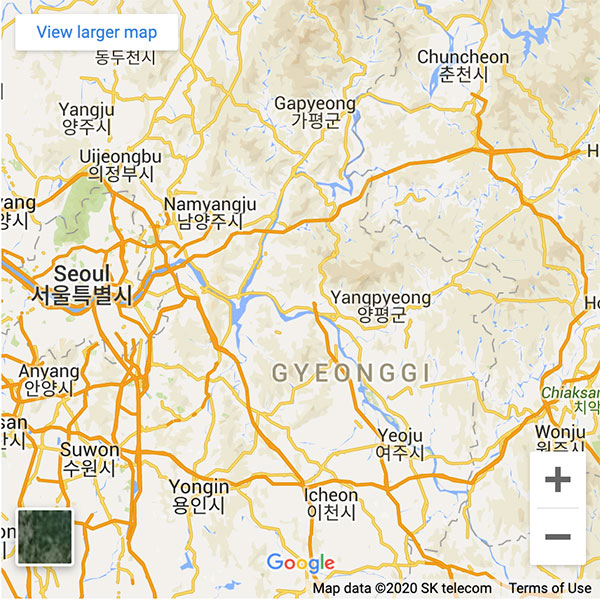
    South Korea issued a warning Thursday after detecting satellite signal disruptions that appeared to be coming from North Korea, according to the Korea Herald. The capital city of Seoul appeared to be the target.

    Officials said North Korea discharged a large amount of radio waves to jam GPS signals in the region.

    “We’ve detected signs that North Korea has been sending radio waves to the capital area since a month ago to disrupt GPS signals,” a senior government official said, speaking on condition of anonymity. “North Korea had been sending test waves since last month, but today, they discharged the largest amount.”

    The warning was issued at 7:30 p.m. in Seoul, the adjacent city of Incheon and the surrounding Gyeonggi and Gangwon provinces.

    The disruptions could cause mobile phones to malfunction and affect planes and ships that rely on GPS for navigation. No damage has so far been reported in the military or among civilians, officials said.

    Since 2010, GPS disruptions have occurred three times in South Korea, and all have been blamed on the North.

  • Free report offered on UAVs in precision agriculture

    Free report offered on UAVs in precision agriculture

    Cover: "Above the Field with UAVs in Precision AgricultureNumerous factors will impact the economics and logistics of how farmers and growers will use drones in 2016 and beyond, according to a new report offered by the Commercial UAV Expo.

    In “Above the Field with UAVs in Precision Agriculture,” author Jeremiah Karpowicz examines factors such as:

    • Potential impact of new FAA regulations
    • Capabilities created or augmented with new sensor technology
    • The best approach to get in the air.

    Download this free report, UAVs in Precision Agriculture and discover how UAVs are set to revolutionize this multi-billion market.

    Farmers and growers are starting to use UAVs to increase both productivity and profitability with real-time data, to improve decision making in areas such as for crop scouting, nutrient management, field mapping and water drainage.

    Visit this page to download the report.


  • KVH delivers TACNAV systems for US Army’s new AMPV Fleet

    KVH delivers TACNAV systems for US Army’s new AMPV Fleet

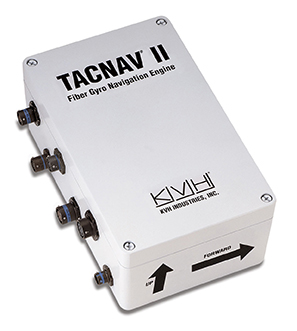
    The KVH TACNAV II.
    The KVH TACNAV II.

    KVH Industries has begun shipping the first order of tactical navigation systems to BAE Systems for a prototype program designed to produce a new fleet of U.S. Army Armored Multi-Purpose Vehicles (AMPVs).

    KVH’s TACNAV systems are designed to provide the vehicles with such critical elements as continuous heading and pointing data output and extremely accurate navigation regardless of GPS availability.

    Deliveries of the tactical navigation systems are part of a recent purchase order that covers the life of the program, which is expected to run through 2020. The initial order of 34 TACNAV II systems is supporting prototype vehicles, and there is potential for an option for additional systems to support the low-rate initial production (LRIP) of the vehicles.

    According to BAE Systems, the $1.2 billion AMPV program is designed to replace the U.S. Army’s Vietnam-era M113s and provide a significant upgrade that increases the service’s survivability, force protection, and mobility while providing for future growth potential.

    M113 Armored personnel carrier n Vietnam, 1966. (Photo: U.S. Army)
    M113 Armored personnel carrier n Vietnam, 1966. (Photo: U.S. Army)

    “KVH is pleased to have been selected by BAE Systems for this important U.S. Army armored vehicle program,” says Dan Conway, executive vice president of KVH’s guidance and stabilization group. “KVH’s tactical navigation solution serves as a crucial resource for navigation and battle management, keeping soldiers safe and out of harm’s way wherever they travel.”

    KVH TACNAV is a proven solution that has been serving soldiers for years in numerous armored vehicle programs, with more than 19,000 units fielded worldwide.

    KVH’s TACNAV military vehicle navigation systems provide unjammable precision navigation, heading, and pointing data for vehicle drivers, crews, and commanders. KVH’s proprietary fiber optic gyro (FOG) technology is a differentiating factor in enabling the TACNAV systems to provide extremely accurate heading and pointing data, which is crucial for situational awareness.

    The Armored Multi-Purpose Vehicle (AMPV) is the U.S. Army’s program to replace the Vietnam-era M113 Family of Vehicles. (Photo: BAE Systems)
    The Armored Multi-Purpose Vehicle (AMPV) is the U.S. Army’s program to replace the Vietnam-era M113 Family of Vehicles. (Photo: BAE Systems)

    The systems feature a compact design and flexible architecture ideal for today’s digital military. In addition, TACNAV is designed to integrate easily with Battle Management Systems (BMS), providing a vital component for effective battlefield management.

    TACNAV systems are in use by the U.S. Army and Marine Corps, as well as many allied customers including Canada, Sweden, Great Britain, France, Germany, Spain, Egypt, Botswana, Australia, New Zealand, Saudi Arabia, Taiwan, Romania, Poland, Turkey, Malaysia, Switzerland, South Korea, Singapore, Brazil and Italy.

  • Mining the magic ‘More’ menu

    Mining the magic ‘More’ menu

    laptop_site-W

    By Tracy Cozzens
    Managing Editor

    In our redesign of the GPS World website, which coincided with our magazine redesign in November 2015, we endeavored to make the website even easier to use. Part of that effort consolidated some of our most popular features under the More dropdown menu. The little word appears at the far right of the menu row under our logo. Within it is a world of data and information to explore.

    For those seeking current and historical data on the satellites in the various GNSS constellations, we have a full Almanac, which we update at least twice a year for the print magazine. If you want to stay on top of Upcoming GNSS Satellites Launches, we provide a handy table that is updated frequently by the one and only Richard Langley, our GNSS guru. Richard also oversees the numerous and informative Innovation columns, all of which are available under the Innovation tab — right there under More.

    Our most current issue can be accessed through the words Digital Edition at the bottom of the page. Or, again under More, go to Magazine Archive for a full collection of every digital issue that reaches back a decade to 2005.

    Other great resources under More are our annual Receiver Survey and Antenna Survey. Both of these products are time intensive to produce, pulling together data and specs from almost 100 companies in an effort to provide a full picture of the products available and their capabilities.

    Similarly, the Buyers Guide link will take you to a special section on our website, allowing you to search manufacturers by product category and subcategory. Our next major update of the Buyers Guide will appear in print in June, but our gathering of the data now takes place year round as companies sign up to take part. If your company isn’t in our Buyers Guide, click on the “Add My Listing” link in the top right corner of the Buyers Guide page.

  • Australia could replace jet fighters with unmanned combat

    Australian Chief of the Defence Force Mark Binskin said that combat drones could take the place of some Joint Strike Fighters (JSFs).

    A defense white paper states that Australia will buy 72 Joint Strike Fighters to replace current fighter planes “Classic” Hornets, six of which are now flying bombing raids over Iraq and Syria. But it leaves open the possibility of not buying a final squadron of roughly 25 JSFs to make up the 100-strong air combat fleet Australia needs.

    Instead, the white paper states that to replace the newer, current squadron of Super Hornet aircraft from about 2030, alternatives will be “considered.”

    Binskin said the department was keeping an open mind given the rapid improvements in armed drones or unmanned combat aerial vehicles, also known as UCAVs.

  • Agriculture moving to customized nitrogen fertilization

    Agriculture moving to customized nitrogen fertilization

    Photo courtesy of Effigis.
    Photo courtesy of Effigis.

    By Yacine Bouroubi
    Effigis Chief Scientist, Earth Observation Division

    Canadian agriculture has an international reputation for being highly productive and modern. It plays a major role in the country’s economy, and contributes to 8 percent of GDP and 12 percent of jobs.

    Everyone involved in Canada’s agricultural sector is aware of the environmental issues associated with farming. To optimize performance and revenue while respecting the environment, for the past few years producers have been counting on a new ally: precision agriculture.

    Using technologies such as GPS, auto-guidance, variable rate technology, yield sensors, satellite images and drones, precision agriculture is now part of the day-to-day life of farmers. The application of agricultural inputs based on the four Rs (the right source at the right rate, in the right place at the right time) must be based on scientific knowledge and technical know-how. Such knowledge and know-how are based on reliable, accurate and complete information, which is often necessary on a global scale, but with a rather fine spatial resolution. Satellite images are the ideal tool to provide much of the information required.

    The SCAN program
    The SCAN program extracts agronomic knowledge related to nitrogen fertilization to make more accurate models. (Image: Effigis)

    Using Satellite Images. For about 15 years now, sensors on very high spatial resolution (VHR) Earth observation (EO) satellites have been offering a source of data that can provide information on soils and crops at adequate spatial scales (around 2 meters using multispectral imagery) with an unbeatable price/quality ratio. Products derived from satellite images for estimating the quantity of nitrogen fertilization to meet plants’ nutritional requirements are a concrete example of an operational use of this data.

    Determining the optimal dose of nitrogen is not easy, since it depends on complex interactions between plants, the soil, weather conditions and management practices. By wanting to avoid performance loss due to nitrogen deficiencies, current practices favor overfertilization, which leads to unnecessary costs as well as serious environmental problems.

    Agriculture and Agri-Food Canada developed a model based on statistical analyses for understanding the direct relationship between the properties that influence nitrogen requirements (soil, growth, weather and management) and the response to nitrogen fertilization, based on a large number of fertilization trials. These relationships were implemented in a system called SCAN (Soil, Crops and Atmosphere for Nitrogen). Satellite imagery acquired at a specific growth stage provides information required for the operation of SCAN.

    SCAN includes two major innovations: extracting agronomic knowledge related to nitrogen fertilization and modeling this knowledge in the form of inference rules in a fuzzy logic system. Work is ongoing to advance these two aspects of SCAN and validate it for various agricultural regions, as well as adapt it to various types of crops.

    A SCAN web platform will be tested by 100 users starting in the summer of 2016, in anticipation of its commercial use in 2017.

    To read Yacine Bouroubi’s full blog, go to www.effigis.com/blog.

  • China launches 22nd BeiDou satellite

    China launches 22nd BeiDou satellite

    China launched the 22nd BeiDou satellite into orbit on Tuesday. BeiDou-22 (or BeiDou-2 I6) was launched at 20:11 UTC (4:11 local time) by a Long March-3A rocket from the Xichang Satellite Launch Center.

    China launched the 21st BeiDou satellite on Feb. 1, the second in a series of BeiDou launches schedule for 2016. The BeiDou constellation is planned to be completed in 2020.

    The new satellite, the sixth BeiDou-2 IGSO, will be used to replenish the current operating regional system.

    The satellite, after entering its designed work orbit and finishing in-orbit testing, will join others already in orbit and improve the stability of the system, preparing for BDS to offer global coverage.

    Video of the launch is provided by CCTV.

    A Long March-3A carrier rocket carrying the 22nd BeiDou satellite lifts off March 30.
    A Long March-3A carrier rocket carrying the 22nd BeiDou satellite lifted off March 30.
    The 22nd BeiDou satellite is one in a series of launches planned this year.
    The 22nd BeiDou satellite is one in a series of launches planned this year.