Author: GPS World Staff

  • JNC 2016 program available online

    The ION 2016 Joint Navigation Conference (JNC) advance program is now available online. The JNC, sponsored by the Military Division of the ION, will be held June 6-8 (FOUO U.S. ONLY) at the Dayton Convention Center, Dayton Ohio; and the U.S. ONLY CLASSIFIED sessions will be held June 9 at the Air Force Institute of Technology on Wright-Patterson Air Force Base.

    JNC 2016 will be the largest U.S. military positioning, navigation and timing (PNT) conference of the year, with joint service and government participation. Registrants can save $200 on conference registration by booking the hotel first, and entering a valid hotel confirmation number from one of the official conference hotels at the start of the registration process.

    JNC 2016 will focus on technical advances in guidance, navigation and control (GN&C) with emphasis on joint development, test and support of affordable GN&C systems, logistics and integration. From an operational perspective, the conference will also focus on advances in battlefield applications of GPS; critical strengths or weaknesses of fielded navigation devices; warfighter PNT requirements and solutions; and navigation warfare.

    PLEASE NOTE: Attendance Restricted
    Conference attendance for both FOUO U.S. ONLY (June 6-8) and U.S. ONLY CLASSIFIED (June 9) sessions will be screened by the Joint Navigation Warfare Center and will be restricted to U.S. ONLY.

  • Ground-based Galileo satellite joins post-launch dress rehearsal

    Ground-based Galileo satellite joins post-launch dress rehearsal

    News from the European Space Agency

    The navigation satellite set to become the 16th in the Galileo constellation has been taken through a Europe-wide rehearsal for its launch and early operations in space.

    Sitting in the cleanroom environment of ESA’s ESTEC technology centre in Noordwijk, the Netherlands, the satellite was last week linked to a trio of sites across the continent: the Galileo control centres in Fucino, Italy and Oberpfaffenhofen, Germany, as well as ESA’s ESOC operations centre in Darmstadt, Germany.

    Galileo's Ground Control Segment (GCS) in the Oberpfaffenhofen Control Centre in Germany is in charge of overseeing the performance of the Galileo satellites. (Photo: ESA)
    Galileo’s Ground Control Segment (GCS) in the Oberpfaffenhofen Control Centre in Germany is in charge of overseeing the performance of the Galileo satellites. (Photo: ESA)

    “These System Compatibility Test Campaigns (STSCs) occur on a regular basis,” explained Liviu Stefanov, lead Flight Operations Director for the next Galileo launch in May. “Last December saw a campaign using one of the two Galileo satellites due to be launched in May, while our February rehearsal used another satellite from the quadruplet being launched by Ariane 5 later this year. So with this most recent task, we have reached a frequency of three system tests in less than four months.”

    A joint team from ESA and France’s CNES space agency oversee Galileo’s Launch and Early Operations Phase (LEOP) – the initial switching on and checking and configuration of satellite systems. LEOP is run from either ESOC or CNES Toulouse, on an alternating basis.

    ESOC will host the LEOP team for the next launch of two Galileo satellites by Soyuz from French Guiana in May. Then the team will switch to Toulouse for the first launch of four Galileo satellites by Ariane 5, scheduled for this autumn.

    Members of the joint Galileo Launch and Early Operations Phase (LEOP) team at work in CNES Toulouse. A joint team from ESA and France’s CNES space agency oversee Galileo LEOPs – the initial switching on and checking and configuration of satellite systems. LEOP is run from either ESOC or CNES Toulouse, on an alternating basis. (Photo: ESA)
    Members of the joint Galileo Launch and Early Operations Phase (LEOP) team at work in CNES Toulouse. A joint team from ESA and France’s CNES space agency oversee Galileo LEOPs – the initial switching on and checking and configuration of satellite systems. LEOP is run from either ESOC or CNES Toulouse, on an alternating basis. (Photo: ESA)

    Liviu added: “From our point of view, this SCTC was a useful final opportunity to try out communications with a satellite that is actually due to fly, before our next Galileo LEOP takes place for real.
    “It is the last end-to-end test of the ground segment with a real satellite before the launch.”

    “Communicating with and controlling satellites still on the ground is one of the essential exercises the LEOP team has to perform before launch,” said Christelle Crozat, lead Spacecraft Operations Manager for the next LEOP.

    “It is an opportunity to test and validate the operational products with a satellite to identify and correct any issues of compatibility with the real hardware while the satellite is still ‘on Earth’. It is always a thrill for the operational engineers to interact with the satellite instead of the simulator.”

    Money spent by European taxpayers on spacecraft operations represents an excellent investment in infrastructure and in high-tech, value-added jobs, with strong benefits flowing back to ESA Member State citizens. (Photo: ESA)
    Money spent by European taxpayers on spacecraft operations represents an excellent investment in infrastructure and in high-tech, value-added jobs, with strong benefits flowing back to ESA Member State citizens. (Photo: ESA)

    In practice, LEOP encapsulates crucial activities such as separation from the rocket’s upper stage, deployment of solar wings and first attitude acquisition, followed by the gradual configuration of the platform system for orbit manoeuvres and the mission to follow.

    ESOC and CNES Toulouse both host their own functionally identical LEOP control centre. New Galileo satellites are launched on a regular basis: bringing them to life is demanding. Pooling this crucial responsibility between two agencies and two locations adds efficiency, delivering greater flexibility and redundancy.

    “This efficiency has been demonstrated by the three successful LEOPs conducted over the course of last year, in March, September and December,” stressed Hervé Côme, Galileo LEOP Service Manager.
    “It is also shown by the capability of CNES/ESOC to support the introduction of one additional Soyuz LEOP on a relatively short four-month notice, for this May.”

    Once each LEOP is completed, control of the satellite platform is passed to the Oberpfaffenhofen control centre, with Fucino overseeing the navigation payloads and the positioning services they enable.

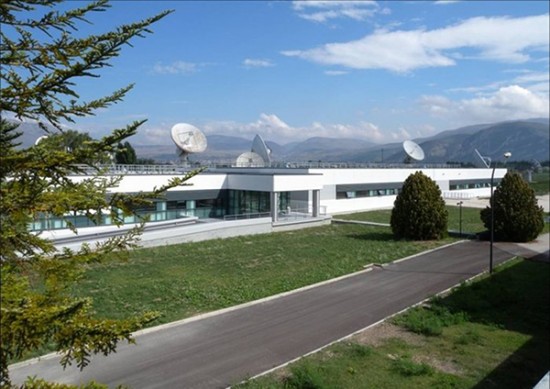
    Galileo’s Ground Mission Segment in the Fucino Control Centre in Italy oversees Galileo navigation services and satellite payload operations.
    Galileo’s Ground Mission Segment in the Fucino Control Centre in Italy oversees Galileo navigation services and satellite payload operations. (Photo: ESA)
  • FAA doubles ‘blanket’ altitude for many UAS flights

    FAA doubles ‘blanket’ altitude for many UAS flights

    After a comprehensive risk analysis, the U.S. Federal Aviation Administration (FAA) has raised the unmanned aircraft (UAS) “blanket” altitude authorization for Section 333 exemption holders and government aircraft operators to 400 feet. Previously, the agency had put in place a nationwide Certificate of Waiver or Authorization (COA) for such flights up to 200 feet.

    The new COA policy allows small unmanned aircraft — operated as other than model aircraft (i.e. commercial use) — to fly up to 400 feet anywhere in the country except restricted airspace and other areas, such as major cities, where the agency prohibits UAS operations.

    “This is another milestone in our effort to change the traditional speed of government,” said FAA Administrator Michael Huerta. “Expanding the authorized airspace for these operations means government and industry can carry out unmanned aircraft missions more quickly and with less red tape.”

    The FAA expects the move will reduce the workload for COA applications for industry UAS operators, government agencies and the FAA’s Air Traffic Organization. The agency also estimates the move will lessen the need for individual COAs by 30 to 40 percent. Other provisions of an FAA authorization, such as registering the UAS and making sure pilots have the proper certification, still apply.

    Under the blanket COA, the FAA will permit flights at or below 400 feet for UAS operators with a Section 333 exemption for aircraft weighing less than 55 pounds and for government UAS operations. Operators must fly under daytime Visual Flight Rules, keep the UAS within visual line of sight of the pilot and stay certain distances away from airports or heliports:

    • Five nautical miles (NM) from an airport having an operational control tower; or
    • Three NM from an airport with a published instrument flight procedure, but not an operational tower; or
    • Two NM from an airport without a published instrument flight procedure or an operational tower; or
    • Two NM from a heliport with a published instrument flight procedure.

    AUVSI releases statement

    “The FAA’s decision to raise the operating altitude of the blanket COA from 200 feet to 400 feet provides greater flexibility to those receiving FAA exemptions and makes it easier for more commercial UAS operators to access the skies,” said Brian Wynne, president and CEO of the Association for Unmanned Vehicle Systems International (AUVSI), in a statement. “While regulation by exemption is not a long-term solution for the many industries waiting to operate UAS for commercial purposes, this is another positive step toward the overall integration of UAS into the NAS.

    “However, the FAA still needs to finalize its small UAS rule as quickly as possible to allow anyone who follows the rule to fly. The new blanket COA altitude remains lower than the operating ceiling of 500 feet proposed in the small UAS rule. In addition, other requirements for UAS operators under the Section 333 exemption process are more onerous than those contemplated in the proposed rule.

    “The UAS industry is poised to be one of the fastest-growing in American history, and we urge the FAA to finalize the small UAS rule without further delay so this technology can truly take off.”

    In May 2014, the FAA announced it would consider granting exemptions for certain low-risk commercial UAS applications under Section 333 of the FAA Modernization and Reform Act of 2012. The agency began granting exemptions in September 2014. To date, the FAA has granted more than 4,200 exemptions.

    According to AUVSI’s report on the first 1,000 exemptions, businesses in more than 25 industries representing more than 600,000 jobs and $500 billion in economic impact now are using UAS technology. The full report can be found here.

    Cover of the AUVSI report on UAV exemptions.
    Cover of the AUVSI report on UAV exemptions.
  • SkyTraq launches low-power RTK receiver

    SkyTraq Technology Inc.Photo: SkyTraq Technology Inc., developer of high-performance chipset and module solutions for the GNSS market, unveiled its new S2525F8-RTK low-power, single frequency RTK receiver for applications requiring centimeter-level accuracy positioning.

    S2525F8-RTK is a multi-constellation GNSS RTK receiver that can use 12 GPS, eight SBAS, six BDS, and one QZSS signal. In situations where an RTK fix is not possible, a Float RTK mode can be used for decimeter-level accuracy positioning.

    A moving-base mode supports a precise heading GPS compass application. The receiver is 25 millimeters by 25 millimeters form factor, weighs 3 grams and consumes 250 milliwatts of power for any outdoor mobile applications requiring high precision RTK positioning, SkyTraq reported in a news release.

    S2525F8-RTK supports both base station and rover modes. As a rover, it receives RTCM (Radio Technical Commission for Maritime Services) 3.0 or 3.1 data from a base station — or raw measurements from another S2525F8-RTK receiver serving as base station — and performs carrier phase RTK processing to achieve relative positioning with 1 centimeter plus 1 part-per-million position accuracy with 10-kilometer baseline. Decimeter-level accuracy for over 10-kilometer baseline can be achieved using the Float RTK mode. Two S2525F8-RTK receivers can be used to form a GPS compass that provides better accuracy and more reliable heading solution than conventional digital magnetometers that’s affected by changes in the magnetic environment, according to SkyTraq.

    A $50 NS-HP evaluation board is available for evaluation and integration into portable survey equipment, unmanned vehicles, machine control applications and robotic guidance applications. The standard NMEA-navsat-driver package of Robot Operating System (ROS) works directly with NS-HP, enabling accessible centimeter-level accuracy positioning for robotic applications, SkyTraq says.

    S2525F8-RTK is now in mass production.

  • Keep your distance: Relative position key to industrial jobs

    Keep your distance: Relative position key to industrial jobs

    Operating in industrial environments, where no margin for error is tolerated, is complex, stressful and delicate. The distance from an in-flight UAV to the industrial asset that it is observing or inspecting obviously has critical importance for safety, data precision and cost-effectiveness. The AiRobot Ranger counters this problem by displaying the distance between the UAV and the object of interest on multiple smart phones or tablets, ensuring the extra situational awareness that is crucial for professional UAV operations.

    The Ranger consists of an add-on sensor module that can be easily attached and detached, a ground station and iOS/Android apps. Everyone involved in an operation can simultaneously log in on the ground station to receive real-time situational feedback. In adition to visual feedback, the Ranger also offers audio feedback, via voice commands, beep tones and adjustable target zones.

    Passive and independent, the system does not require connection with flight controller or other UAV electronics. It can be mounted externally on most industrial UAVs.

    Airborne Ranger (top left) continuously monitors the distance between itself and the silo, transmitting the separation to pilot and payload operator (foreground).
    Airborne Ranger (top left) continuously monitors the distance between itself and the silo, transmitting the separation to pilot and payload operator (foreground).

    Silo Inspection. To gather data concerning defects or damage to an agricultural products silo, a Ranger was employed to take photographs of high surfaces and inaccessible areas. It enabled safe operation and furnished further data enabling calculation of the size of the photographed defects.

    The ranger can be attached directly to the UAV platform (left) without any additional wiring.
    The ranger can be attached directly to the UAV platform (left) without any additional wiring.

    Everyone involved — pilot, payload operator and observer — used the Ranger application on their own iOS or Android device. An audio warning was set to 3 meters. Whenever the UAV came within this geofence around the silo, audio warning signals were generated, ensuring operational safety.

    Camera focus was calibrated at 4 meters. The pilot maneuvered based upon the target audio modus. The target zone was set at 4 meters, with a margin of 50 centimeters. Whenever the pilot was too close or too far, the Ranger respectively indicated “back” or “forward” until the target zone was reached.

    The payload operator monitored everything on the visual interface, next to the camera images. When the UAV was in place, pictures were taken at 4 meters. With the extra depth information, and the fixed lens and zoom settings, the actual sizes of the defects could be calculated.

    The base station, rover, and display of distance-from-object on any iOS or Android device.
    The base station, rover, and display of distance-from-object on any iOS or Android device.

    Man versus Machine. The first flight was performed without the Ranger and with an extra observer, standing at 90 degrees between the UAV and the silo. The observer indicated the distance to the pilot and the payload operator with a two-way radio. The pictures taken were not sharp, but unclear and unusable, since they had been taken from too far away. Because of the lack of situational awareness, the results were insufficient.

    For the next flight, the Ranger was installed on the UAV in combination with an extra observer at the same location. It became clear that the distances indicated by the observer during the first flight were off by a couple of meters.

    Immediately, the added value of the Ranger became clear.

    The last flights were all performed without the observer. The results were more precise, reliable and stable than with the observer.

    In February, the European Satellite Navigation Competition awarded a special prize to AiRobot for the most innovative use of high-precision GNSS positioning in its project:“UAV Flight Path Learning through GNSS.”

    The Flanders Challenge of the ESNC was sponsored by Septentrio; the prize was an AsteRx-m UAS receiver.

    AiRobot uses a form of sense-and- avoid technology to ensure accurate and robust location information when executing waypoint flying. The sensing technology enables the UAV to create a temporary map of its surroundings, ensuring that it will not collide with objects in its path.

    Ranger is now commercially available. Next, AiRobot is developing collision avoidance solutions with GNSS technology.

  • The need to clarify Galileo’s legal basis of time

    The need to clarify Galileo’s legal basis of time

    One new potential wrinkle for Galileo was hinted at during the Munich Satellive Navigation Summit session in March on legal issues around GNSS timing. A recent GPS timing issue caused numerous problems for digital broadcasters and financial networks around the world on Jan. 26, when a data upload went slightly awry. This introduced a 13.7 millisecond error in one of the timing signals: the static offset for GPS time compared to Coordinated Universal Time (UTC). It led to some receivers exhibiting “different and unwanted behaviour” — a very polite description!

    Located in a square near the centre of the Czech capital, the Prague Astronomical Clock was among the world’s most accurate timepieces in medieval times. It was put in place back in 1410, incorporating various astronomical and religious details, and is still working to this day.
    Located in a square near the centre of the Czech capital, the Prague Astronomical Clock was among the world’s most accurate timepieces in medieval times. It was put in place back in 1410, incorporating various astronomical and religious details, and is still working to this day.

    Fortunately the issue was resolved swiftly, and correct data uploaded. The extent of any financial losses and how any legal proceedings (if any) to recover damages might pan out are still unclear. However ,what is clear is that while GPS time has a clear link to legal time, Galileo does not. Dr. Andreas Bauch from the German Physikalisch-Technische Bundesanstalt (PTB) — one of Germany’s “Time Lords” — described the underlying legal basis of GNSS time.

    U.S. GPS time is traceable and legally defined to national time and UTC through the National Institute of Standards and Technology (NIST). In Europe most Member States, but not all, have legal time defined in legislation. Galileo System Time (GST) is not linked to a single institution but to an average derived from a network of European standards institutions including PTB. From the presentations it was not clear to me if GST currently has a water-tight legal definition.

    Talking to legal and technical experts after this session, it became clear that the legal basis for GST does need to be clearly defined in European legislation — and soon — if Galileo PNT services are to be a commercial reality in the near future. The commission needs to get on the case for this one pronto.

  • The year of UAVs for Europe

    The unmanned aerial vehicle (UAVs) sector is a dynamic GNSS-enabled sector globally and Europe is no exception. In January I attended a UAV event at the Royal Military Academy in Brussels. The focus of the two-day meeting was on small commercial and recreational remotely piloted aircraft systems (RPAS) that are rapidly populating Europe’s airspace.

    Currently, there is no European legislation that governs their use in conjunction with general aviation and, typically, national legislation varies across the member states. Regulators are trying to play catch-up.

    One interesting EU project trying to tackle this situation is DroneRules.EU. Philippe Carous of SpaceTec Partners said the project’s main objective was to raise general awareness of the rules governing RPAS across the commercial sector and the general public. Speaking as an occasional drone operator – I own a Parrot 2.0 – I must admit I was oblivious of the legal minefield I am potentially entering every time I fly my ‘Boy’s Toy’ around the garden!

    The project covers three main areas: privacy and data protection; safety and operation; and insurance and liability. The plan is to establish a set of useful tools on a web portal including awareness, training tools and online resource covering rules at national level plus regulatory developments. The website should be available mid-2016 at www.drone-rules.eu.

    Rachel Finn of Trilateral Research, a partner in the DroneRules.eu project, talked about privacy and data protection issues which bring some complex rules and liabilities into play as drones are increasingly becoming data collection devices. The company undertook a survey of users for the European Commission and identified private users as the least regulated and most at risk of breaching the rules. Commercial users were seen as medium risk. “Using the same drone with the same payload in different contexts can raise different or new privacy and data protection issues,” said Rachel. Each mission may need to be individually risk assessed.

    Listening to the discussion here, it seemed to me that privacy issues could effectively turn any urban area into a ‘no-go’ zone for civil drones let alone other considerations on safety and so on.

    The Brussels conference was organised by UVS International, whose president Peter van Blyenburgh is a blunt-speaking and passionate advocate for the civil RPAS operating community in Europe.

    On 4 March a further workshop took place at EUROCONTROL headquarters in Brussels with the purpose of discussing the future working arrangements and work programme for the development of RPAS standards. Peter van Blyenburgh tells me that not a single RPAS operator had been invited to air their views at this forum.

    From the discussions at the workshop it was clear, according to van Blyenburgh, that international, European and national standards organisations are not coordinating their work and consequently there is significant duplication and wasted effort. However it was decided that a single working group will be established to tackle standards work for all sizes of RPAS and terms of reference for this group should be finalised by the middle of June 2016.

    During the workshop  van Blyenburgh expressed his views on the absolute necessity that RPAS operators and new disruptive technology companies must participate in the work on standards and as there was a large number of light RPAS (<25 kilograms) already flying, it was also imperative to tackle the standards applicable to them as a priority.

    Van Blyenburgh takes the view that if the RPAS community is not careful and proactive, their commercial future may be set by standards produced by the traditional airspace players that are not directly involved with their specific community, nor really understand it. It is hard to disagree with his views here.

    “Of course, at the same time, the RPAS communities should both remember that airspace safety is a common responsibility that should be proportionately shared by all RPAS community members,” he adds. “Defining this proportionality will be one of the keys to success.”

    Polish solution?

    If  regulations are lacking, technical solutions are ready to roll. One European initiative based in Poland seems to have a viable monitoring and control system developed for drones/ RPAS: The Drone Monitoring System (PSMD) was presented by Justyna Zdanowska of the Grupa Dron House S.A.

    The Polish solution can monitor drones in near real-time (the company claims a maximum delay of one second) using GSM and/ or GPS technologies and has the ability to manage the drone online through an application. They say this is the first successful development of such technology that is operational and ready for implementation. It has already attracted the interest of some major aerospace players, drone users and the authorities as the system could solve the issue of uncontrolled flights and other problems.

    “We offer a complete, ready-to-use system that will radically improve the safety of air traffic, because the drone market is developing at a dynamic rate in an uncontrolled manner,” says Justyna Zdanowska.

    The technology also has a huge capacity with up to 18 000 devices controlled and/ or monitored by a single base station at a given location. This should allow full monitoring and identification of unmanned devices.

  • US congressmen seek delay to NDGPS closings

    Four U.S. congressman sent a letter to the Department of Transportation asking the DoT to delay shutting down Nationwide Differential GPS (NDGPS) sites, a proposal that was posted in the Federal Register.

    The congressmen are asking for a delay until the “administration has decided upon and implemented a resilient national positioning, navigation and timing (PNT) architecture.”

    Read the full text of the letter below, or download the PDF.


  • iXBlue offers new inertial positioning systems for offshore, ROVs

    iXBlue offers new inertial positioning systems for offshore, ROVs

    iXBlue — a subsea navigation, positioning and imaging systems company — is offering two new positioning sensors.

    Fifth-generation Octans

    Photo: iXBlueiXBlue is offering its customers the opportunity to upgrade their fourth-generation Octans positioning reference system to the fifth-generation system. The fourth-generation Octans was manufactured beginning in January 2014.

    Built on iXBlue’s high-performance fiber-optic gyroscope technology, the Octans is an all-in-one gyro compass and motion sensor (attitude and heading reference system) with features such as IMO/IMO-HSC certification. The upgraded system provides extremely accurate real-time output for roll, pitch, heading and heave, as well as acceleration and rate of turns under challenging GNSS-denied environment.

    Heading measurement accuracy has been doubled over the fourth-generation Octans: with still 0.1° Seclat in stand-alone, the system can now provide 0.05° Seclat with GNSS.

    Moreover, the fifth-generation Octans now offers the ability to align on transit and the extended capability to deliver, in real time, accurate heave for swells up to 30 seconds.

    The offer from iXBlue includes both the upgrade and calibration, backed by a five-year warranty.

    Rovins Nano for remotely operated underwater vehicles (ROVs)

    Photo: iXBlueiXBlue has also launched a new inertial navigation system for the offshore industry, the Rovins Nano.

    Based on iXBlue’s fiber-optic gyroscope technology, the Rovins Nano has been designed for ROV pilots performing maintenance and construction operations. It offers the stability and accuracy of the inertial position, outputting true north, roll, pitch and rotation rates.

    “Rovins Nano is able to directly transmit the ROV’s position with extreme accuracy thanks to its integrated INS algorithm capable of collecting acoustic data,” said Paul Wysocki, iXBlue Rovins Nano product manager. “This is now possible regardless of the depth at which it is located: it is therefore not just an evolution, but rather a revolution for the middle water station keeping.”

    Where the Doppler Velocity Log (DVL) has limitations, especially when operating in middle water, Rovins Nano is now there to guarantee optimal navigation safety.

    “In the future, it will no longer be necessary to use a DVL,” Wysocki said. “Even in ‘sparse array’ LBL fields, with the presence of only one or two beacons, the combination between Rovins Nano and our Ramses acoustic system enables us to reach extremely accurate positioning data.”

    A science ROV being retrieved by an oceanographic research vessel.
    A science ROV being retrieved by an oceanographic research vessel.

    iXBlue provides more flexibility to its customers: by avoiding the use of DVL, operators reduce their operational and associated calibration costs.

    Besides its high level of performance, Rovins Nano adapts itself to the user: the configuration, installation and product’s use have been considerably facilitated, while incorporating a system as complex as the inertial navigation system (INS). The ultimate goal is for the pilot to forget the existence of the product when maneuvering. Moreover, thanks to its compactness, lightness and open architecture with all third-party sensors, Rovins Nano is easy to integrate.

    The French high technology company iXBlue is now offering an expanded range of subsea navigation systems, from ROV navigation to survey applications.

  • Veripos extends Apex service, offers Quantum software

    Veripos, a global supplier of high-precision GNSS positioning services to the offshore oil and gas industries, has extended its ranges of proprietary software with the introduction of Quantum, a new, all-purpose suite of visualization modules providing a state-of-the-art user interface to support next-generation services and features.

    Designed to operate with all current Veripos positioning options including its latest Apex5 multi-constellation PPP service (see below), the new software has been developed with significant input from a wide range of users by way of simplifying any system configuration while easing methods of interpretation. Other advances include integral diagnostic functions for simple identification of operational problems together with indications of likely solutions.

    Visualization modules can also be operated independently without affecting concurrent positioning calculations which might otherwise be feeding critical survey or vessel systems.

    At the same time, the Quantum framework comprises a series of different modules to meet a variety of specific operational tasks such as those necessary for hydrographic and seismic surveying as well as dynamic positioning. Its versatility also extends to providing a basic foundation for accommodating new modules or features.

    Apex5 PPP service launched

    Veripos has extended its Apex service with introduction of Apex5, which is capable of receiving observations from five available satellite constellations comprising GPS, GLONASS, Beidou, Galileo and QZSS.

    Using precise point positioning (PPP) methods for correction or modeling of all GNSS error sources, the new multi-constellation service with its access to increased civilian signals ensures greater power levels via interoperable networks in addition to improved levels of observation and redundancy.  Other advantages include a higher satellite count and position availability, particularly in masked and scintillated environments.

    Calculations are based on Veripos’s own orbit and clock determination system (OCDS) which derives real-time corrections for all available satellite constellations using proprietary algorithms.  The OCDS uses data from the company’s own global network of reference stations with multiple and redundant systems supported by dedicated network control centres in Aberdeen and Singapore.

    Apex5 is broadcast alongside existing Apex, Apex2 and Ultra services via seven geostationary satellites to ensure continuous availability and service redundancy. Typical position accuracies are better than 5cm horizontal at the two sigma (95 percent) confidence level.

  • PLK chooses Telit’s GNSS module for automotive navigation

    PLK Technology has selected Telit’s SL869-V2 GNSS IoT (Internet of Things) module to deliver positioning functionality for Optian, a new product combining the features of an Advanced Driver Assistant System (ADAS) and a high-end automotive black box.

    Telit’s SL869-V2 is a subminiature multi-satellite receiver module that can be installed in vehicles, industrial, wearable and portable digital devices. It delivers a high level of stability for navigation applications by tracking GPS and GLONASS at the same time, relaying accurate and fast-refreshing positioning information.

    PLK’s Optian takes the functionality of a typical black box capable of post-processing accidents, and adds ADAS capabilities to implement accident prevention measures, delivering lane departure warning, forward collision warning and front car departure alert functions. Optian uses the Telit SL869-V2 GPS module to sense displacement, from which it derives speed and distance between cars to warn the driver about the risk of collision.

    ADAS are systems found in modern vehicles designed to automate, adapt and enhance vehicle safety and driver experience. Safety features in ADAS include warnings for collision and accident avoidance which help drivers implement safeguards, and sharpen their focus on control of the vehicle.

    Adaptive ADAS features help by automating lighting, providing adaptive cruise control and autonomous braking, incorporating GPS and traffic warnings, connecting smartphones, alerting drivers about dangerous driving situations, keeping the driver within the lane of traffic and enhancing visibility of the vehicle’s blind spots.

    PLK started in 2000 as an in-house venture firm as part of Hyundai Motor Company and was later spun off in 2003. It specializes in the development and production of ADAS, utilizing camera image sensors to recognize lanes, vehicles, light sources, traffic lights and pedestrians.

    PLK was the first to develop a Lane Departure Warning System (LDWS) based on color image recognition and, in 2006, became the first to line-fit it into vehicles (Hyundai Motor Company).

    PLK systems quickly became widely recognized for their performance and, have since 2009 been equipping 15 models around the world, including in the United States, Europe, the Middle East, China and Australia, in addition to Hyundai and KIA passenger cars.

    “It is rewarding to secure the Optian project for Telit’s GNSS module. The selection process was very stringent and PLK’s choice of the SL869-V2 is a testament to the quality and performance of the product,” said Steven Kim, senior sales director of Telit Korea. “Telit GNSS modules are not only successful in the automotive sector but also in various other industries. We expect that cooperation with PLK will expand as they continue developing innovative systems and products that make driving a safer experience for motorists everywhere.”

  • FAA forecasts sustained growth for UAS

    The U.S. Federal Aviation Administration (FAA) has released its annual Aerospace Forecast Report Fiscal Years 2016 to 2036, which finds a sustained increase in the use of unmanned aircraft systems (UAS) as well as overall air travel.

    A key portion of the forecast focuses on projections for the growth in the use of unmanned aircraft, also known as drones. The FAA estimates small, hobbyist UAS purchases may grow from 1.9 million in 2016 to as many as 4.3 million by 2020.

    Sales of UAS for commercial purposes are expected to grow from 600,000 in 2016 to 2.7 million by 2020. Combined total hobbyist and commercial UAS sales are expected to rise from 2.5 million in 2016 to 7 million in 2020.

    Predictions for small UAS used in the commercial fleet are more difficult to develop given the dynamic, quickly evolving nature of the market. Both sales and fleet-size estimates share certain broad assumptions about operating limitations for small UAS during the next five years: daytime operations, within visual line of sight, and a single pilot operating only one small UAS at a time. The main difference in the high and low end of the forecasts is differing views on how those limitations will influence the widespread use of UAS for commercial purposes.

    Looking at commercial air travel, Revenue Passenger Miles (RPMs) are considered the benchmark for measuring aviation growth. An RPM is one revenue passenger traveling one mile. The FAA forecast calls for system RPMs by mainline and regional air carriers to grow at an average rate of 2.6 percent a year between 2016 and 2036, with international RPMs projected to increase 3.5 percent a year, doubling over the forecast period. Domestic RPMs are forecast to increase by more than 50 percent over the same time. In 2015, system RPMs by U.S. carriers grew from 857 billion to 889 billion, a 3.8 percent increase.

    The FAA’s NextGen program is helping to meet this consistent aviation growth. NextGen focuses on implementing technologies and procedures that utilize satellite-based aircraft navigation and phase out efficiency limitations of the current ground-based radar navigation system. For example, the environmental and economic gains of reduced fuel usage associated with NextGen advancements are projected to achieve a savings of billions of dollars in airline operational costs and achieve sustainable aviation growth.

    Proven economic data that utilize sources such as generally accepted projections for the nation’s GDP are used in the FAA annual forecast, which has consistently made it the industry-wide standard of U.S. aviation-related activities. The report looks at all facets of air travel including commercial airlines, air cargo, private general aviation, and fleet sizes.

    FAA Aviation Forecast Fact Sheet