Author: GPS World Staff

  • University of Georgia Teaches Precision Ag with Corn Maze

    University of Georgia Teaches Precision Ag with Corn Maze

    Vellidis' precision agriculture class helped develop the maze using GPS technology. (Photo courtesy University of Georgia)
    Vellidis’ precision agriculture class helped develop the maze using GPS technology. (Photo courtesy University of Georgia)

    University of Georgia precision agriculture students used GPS to design a corn maze in honor of football coach Mark Richt.

    George Vellidis, a UGA crop and soil sciences professor, gave his precision ag students the opportunity to experience GPS technology firsthand by having them develop a corn maze at a nearby farm.

    “I’ve been teaching precision agriculture at the UGA Tifton Campus since 2003. We’ve been teaching GPS from day one because GPS is a critical part of precision agriculture. Everything we do with precision agriculture has coordinates, so we can collect our data through GPS,” Vellidis told the newspaper. “It’s a great experience for the students to go out and help with the corn maze. They get to do a fun activity while learning how to use GPS.”

    Covering 6.1 acres, the maze is the biggest ever constructed at Rutland Farms, and received national coverage on ESPN.

    Students have been impressed by how easy GPS technology is to use and how beneficial it can be to farmers. “I’ve used it to go back after we’ve already installed moisture sensors earlier in the season and I’ve used it to find the sensors much later in the season,” Sydni Barwick, Vellidis’ student and student worker in irrigation for UGA Cooperative Extension.

    “When, for example, a corn crop is eight feet high, you can’t see across that field, so there’s no way to find the sensors without GPS. Using the (GPS) system is great for things like that because it has an accuracy of about 3 feet,” she said.

    Learn more about the project here.

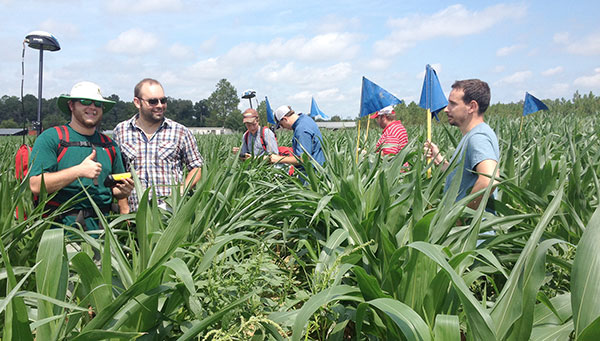
    Students in George Vellidis' precision agriculture class helped develop the corn maze at Rutland Farms.
    Students in George Vellidis’ precision agriculture class helped develop the corn maze at Rutland Farms. (Photo courtesy University of Georgia)
  • U.S. Forest Service Deploys Avenza PDF Maps App for Firefighting

    U.S. Forest Service Deploys Avenza PDF Maps App for Firefighting

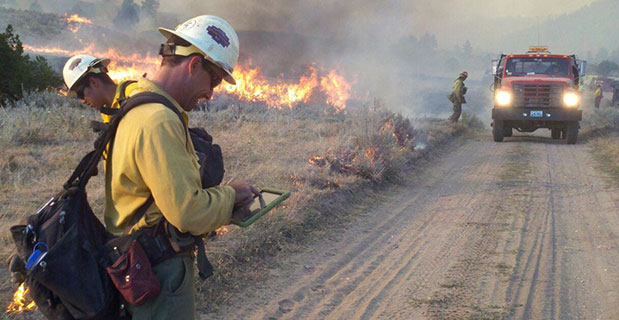
    A San Juan interagency hotshot crew member refers to a map on his iPad as he coordinates execution of their burnout operation.  (Photo credit: Esther Godson)
    A San Juan interagency hotshot crew member refers to a map on his iPad as he coordinates execution of their burnout operation.  (Photo credit: Esther Godson)

    Every year thousands of acres of forests are engulfed in fires. Recognizing the benefits of geospatial technology, the United States Forest Service (USFS) Geospatial Management Office (GMO) is using Avenza System Inc.’s award-winning PDF Maps mobile app to deliver interactive digital maps to firefighters and emergency response teams situated in forests across the United States and its territories.

    The USFS fights wildfires and other natural disasters in more than 155 national forests and 20 national grasslands, totaling an estimated 193 million acres or 30 percent of all federally managed lands. The USFS GMO is responsible for the implementation of the Forest Service geospatial program which includes using technologies such as GIS, remote sensing, cartography, geodesy and GPS.

    The centered blue GPS position on an operations map pinpoints the user’s location. (Photo credit: Carl Beyerhelm)
    The centered blue GPS position on an operations map pinpoints the user’s location. (Photo credit: Carl Beyerhelm)

    With increased use of digital solutions, the USFS benefits from Avenza’s PDF Maps app geospatial technology in enabling its thousands of firefighters and support personnel. The PDF Maps app aids emergency response teams who use digital devices for work in the field.

    The app provides constant access to geographic information and points of interest, with additional interactive features such as measuring, place marking and location tagging. The app operates without the risk of lost reception due to cell tower proximity and does not rely on an Internet connection to use map data. It uses GPS to obtain and display an accurate position on the ground regardless of network connectivity.

    A hardcopy map is compared to its digital counterpart cached on a smartphone. (photo credit: Kari Greer)
    A hardcopy map is compared to its digital counterpart cached on a smartphone. (photo credit: Kari Greer)

    “Accessing maps on mobile devices ensure responders have accurate and current geographic information while they’re out in the field,” said Carl Zulick, Geospatial Information Officer, USFS. “Avenza’s PDF Maps app makes it possible for teams to use any map digitally without requiring a data connection while involved in an emergency situation. Since the maps are location-aware and interactive, we can capture real-time data, photos, and locations. This data can be shared to assess the situation and make necessary strategic changes and improve situational awareness.”

    The PDF Maps app is available now on the iTunes App Store and Google Play Store free of charge for personal recreational use. A Windows version is currently in public beta release. Commercial, government and academic use licensing is available for a nominal annual fee. Pricing of each map is set by the publisher and free maps remain free to users through the PDF Maps app in-app store. Commercial use licensing starts at US$49 per year and drops on a per-device basis as deployment numbers increase.

    Mobile maps help air-tanker pilots avoid the mapped yellow areas, where application of aerial fire retardant is restricted. (Photo credit: Max Wahlberg) 
    Mobile maps help air-tanker pilots avoid the mapped yellow areas, where application of aerial fire retardant is restricted. (Photo credit: Max Wahlberg)
  • UAS Registration Task Force Members Announced

    Federal Aviation Administration (FAA) Administrator Michael Huerta has announced the membership of the Unmanned Aircraft Systems (UAS) Registration Task Force. Earl Lawrence, director of the FAA’s UAS Integration Office, and Dave Vos of Google X will co-chair the group.

    Department of Transportation (DOT) Secretary Anthony Foxx and Administrator Huerta announced the formation of the Task Force on Oct. 19. The Task Force membership represents a range of stakeholder viewpoints, interests and knowledge of the objectives and scope. Task Force membership was by invitation only and participation is voluntary.

    Interested parties who are not members of the Task Force may submit comments to the public docket. The Federal Register notice is available for viewing here.

    Sec. Foxx set a deadline of Nov. 20 for the Task Force to complete its recommendations, and work is already underway. The group will meet formally from Nov. 3-5 before developing recommendations on a streamlined registration process and minimum requirements on which unmanned aircraft should be registered. Given the urgency of this issue, the DOT and FAA will move expeditiously to consider the Task Force’s recommendations.

    Along with the FAA and DOT, the following federal agencies will provide expert support to the Task Force: Department of Commerce, Department of Defense, Department of Homeland Security, Department of the Interior, Office of Management and Budget, National Aeronautics and Space Administration and the Department of State.

    Task Force Members

    Nancy Egan – 3D Robotics
    Richard Hanson – Academy of Model Aeronautics
    George Novak – Aerospace Industries Association
    Chuck Hogeman and Randy Kenagy – Air Line Pilots Association
    Jim Coon – Aircraft Owners and Pilots Association
    Sean Cassidy – Amazon Prime Air
    Ben Gielow–Amazon Retail
    Justin Towles – American Association of Airport Executives
    Brian Wynne – Association of Unmanned Vehicle Systems International (AUVSI)
    Parker Brugge – Best Buy
    Douglas Johnson – Consumer Electronics Association
    Brendan Schulman – DJI
    Paul Feldman – General Aviation Manufacturers Association
    Dave Vos – GoogleX (Co-Chair)
    Tony Bates – GoPro
    Matt Zuccaro – Helicopter Association International
    Mike Fergus – International Association of Chiefs of Police
    John Perry – Management Association for Private Photogrammetric Surveyors (MAPPS)
    Brandon Declet – Measure
    Randall Burdett – National Association of State Aviation Officials
    Sarah Wolf – National Business Aviation Association
    Baptiste Tripard – Parrot
    Tyler Collins – PrecisionHawk
    Gregory McNeal – Small UAV Coalition
    Thomas Head – Walmart

  • GPS IIF-11 Launch Delayed until Saturday

    GPS IIF-11 Launch Delayed until Saturday

    Major General David Thompson announces a 24-hour delay for the launch of the eleventh GPS-IIF satellite.
    Major General David Thompson announces a 24-hour delay for the launch of the eleventh GPS-IIF satellite.

    Major General David Thompson, Vice Commander, U.S. Air Force Space Command, announced this morning that the GPS IIF launch scheduled for today will be delayed for 24 hours due to a water deluge suppression system at the launch site. Launch should only be delayed for 24 hours.

    The water deluge suppression system is a launch site safety issue. Officials made the call on Thursday evening to postpone the launch to correct a leak discovered in a ground support equipment valve for the launch pad water suppression system. The valve will require repair or replacement.

    The 19-minute launch window on Saturday extends from 12:13 to 12:32 p.m. EDT (1613-1632 GMT).

    A United Launch Alliance Atlas V 401 will launch the GPS IIF-11 mission for the U.S. Air Force on Saturday, Oct. 31, from Space Launch Complex-41 at Cape Canaveral Air Force Station, Fla.

    GPS IIF-11 is the second to last of the Block IIF satellites, incorporating improvements to provide greater accuracy, increased signals, and enhanced performance for users.

    The GPS IIF satellites deliver second civil signal (L2C) for dual-frequency equipment, and a new third civil signal (L5) to support commercial aviation and safety-of-life applications. The next generation of GPS satellites is GPS III.

    GPS IIF-11 will be the third GPS mission ULA launches in 2015. GPS IIF-9 launched on a Delta IV in March, and GPS IIF-10 launched in July. This mission will be ULA’s 11th in 2015 and 102nd since the company was founded in 2006.

    To keep up to speed with updates to the launch countdown, dial the ULA launch hotline at 1-877-852-4321 or join the conversation at www.facebook.com/ulalaunch, twitter.com/ulalaunch and instagram.com/ulalaunch; hashtags #GPSIIF11, #AtlasV.

  • Rockwell Demonstrates Next-Gen Military Test Range System

    During the first week in September, Rockwell Collins completed Contractor Test and Evaluation flights at Eglin Air Force Base, Fla., for the Common Range Integrated Instrumentation System (CRIIS). The demonstration included ground-to-air uplink of GPS correction messages and network services from multiple data-link towers.

    In cooperation with the CRIIS System Program Office (SPO), contractors and the University of Iowa Operator Performance Laboratory (OPL), 13 test flights were conducted using an L-29 from the University of Iowa OPL. Throughout the testing, the high reliability of the CRIIS equipment resulted in all test flights being performed as scheduled. Only a single test flight was scrubbed due to bad weather. All the flights were conducted using production form, fit, function airborne and ground equipment.

    The CRIIS program fulfills critical Department of Defense (DoD) requirements to provide Time, Space, Position Information (TSPI) and additional platform test data, while employing a more robust, spectrally efficient data link, including Multiple Independent Levels of Security (MILS). The MILS encryption recently completed certification on the program, and is capable of simultaneously protecting four levels of Top Secret through Unclassified data flowing between aircraft and ground components.

    “These flight tests demonstrate the mature, production ready level that the CRIIS program has reached,” said Tommy Dodson, vice president and general manager of Surface Solutions for Rockwell Collins. “Tests were an end-to-end validation of the complete CRIIS system using production representative hardware and software. This testing validated that the next generation of secure, common test and training instrumentation is mature.”

    Rockwell Collins is the prime contractor and systems integrator for the next-generation military test range system that will replace the Advanced Range Data System (ARDS) currently in use at major U.S. military test ranges. CRIIS equipment will support a variety of platforms, including advanced fifth-generation aircraft, and implements the DoD’s vision of common test and training infrastructure for improved operational realism.

    The following key functions were demonstrated on these flights:

    • End-to-end system validation with production representative hardware
    • High confidence in ability to meet TSPI performance requirements
    • Data-link network ingress after takeoff
    • Ground-to-air uplink of GPS correction messages and network services from multiple data-link towers
    • Air-to-ground downlink of TSPI messages
    • High dynamic scenarios involving a total of 133 dynamic maneuvers representative of flight profiles fighter jets undertake during air combat training

    In addition to the multi-level secure ground equipment, the CRIIS flight hardware is configurable in either a pod mounted package or internally mounted on aircraft. This gives CRIIS the flexibility to adapt to use by a wide range of aircraft from all over the world, and the ability to fully integrate those aircraft into complex training scenarios.

    Following the completion of CT&E, the CRIIS SPO will conduct Government Test and Evaluation (GT&E) later this year to support a planned final Production Readiness Review in the near future.

  • Configuring the TRIUMPH-LS to Receive 5-Hz ‘Beast Mode’ Corrections

    Configuring the TRIUMPH-LS to Receive 5-Hz ‘Beast Mode’ Corrections

    By Matt Johnson

    In a previous article titled JAVAD GNSS 5 Hz “Beast Mode” RTK Base Station Corrections Reduce the Time to Acquire a Fix by 72 Percent, the benefits of RTK base station correction rates greater than 1 Hz were discussed. This article will detail how to configure a JAVAD base station and radio to transmit 5-Hz corrections to a JAVAD TRIUMPH-LS. This process includes the following steps:

    • Update the TRIUMPH-LS firmware and software.
    • Update the Options Authorization File (OAF) of your base station.
    • Update the firmware of your UHF radio.
    • Configure the UHF radio parameters and start the base station.
    • Update the TRIUMPH-LS Firmware and Software.

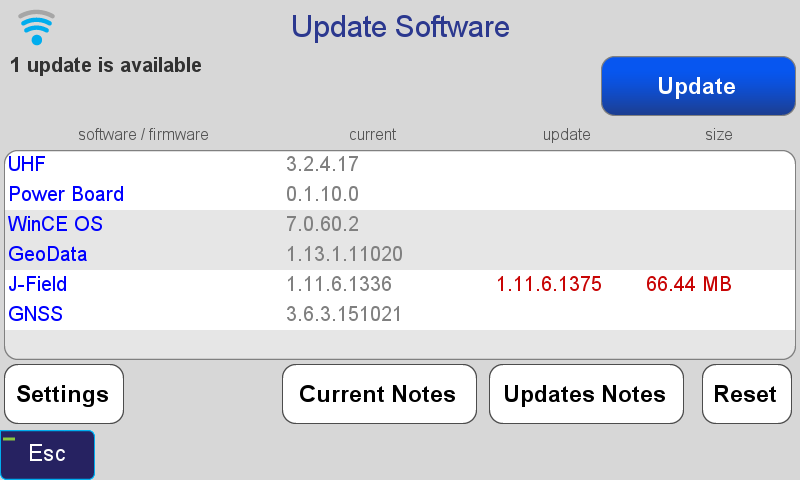
    The first step is to update the TRIUMPH-LS to the latest software and firmware. Javad provides all software and firmware updates free of charge. Updates can be easily downloaded and installed when the TRIUMPH-LS is connected to the Internet through Wi-Fi or with a network LAN cable. Press the Support button found on the home screen and then choose Software Updates to search for updates. If updates are found, press Update to download and install the updates.

    Update Software screen showing that an update of J-Field is available.
    Update Software screen showing that an update of J-Field is available.

    Update the Options Authorization File (OAF) of your base station.

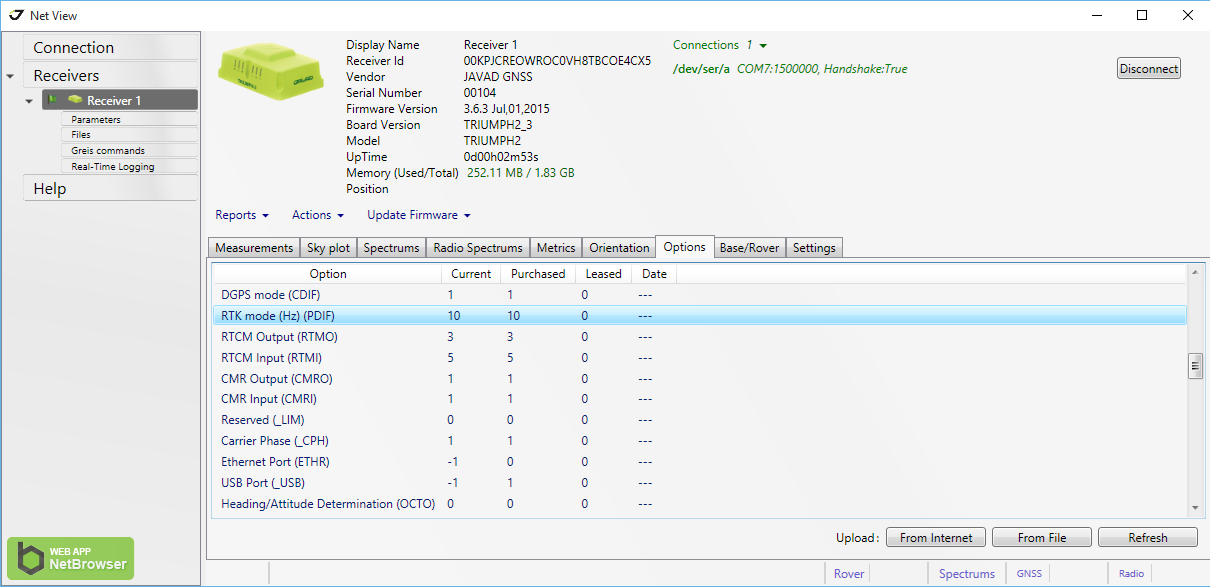
    The next step is to check and update the OAF of your base station. Connect your base station to your PC with a USB cable and connect to it through NetView. Navigate to the Options tab in NetView and check to see if your receiver has the “RTK mode (Hz)” option of 10.

    NetView Option tab showing the RTK mode (Hz) option has a value of 10.
    NetView Option tab showing the RTK mode (Hz) option has a value of 10.

    If you do not have this option, press the Upload “From Internet” button to update your options. JAVAD GNSS is giving this option free of charge to all users who have purchased an RTK receiver.

    Update the Firmware of Your UHF Radio.

    A recent update is needed for the UHF radios to work when a call sign is being broadcast with corrections rates faster than 1 Hz. Download the latest firmware from http://javad.com/jgnss/support/update.html and follow the instructions on this page to install this firmware. When launching ModemVU on your PC, be sure to right click on it and choose “Run as administrator”.

    Configure the UHF Radio Parameters and Start the Base Station.

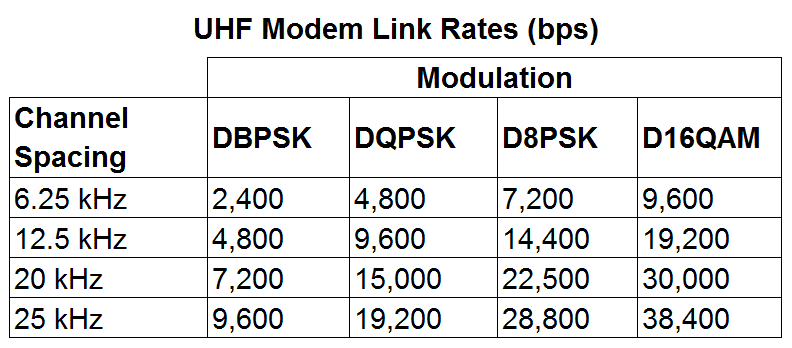
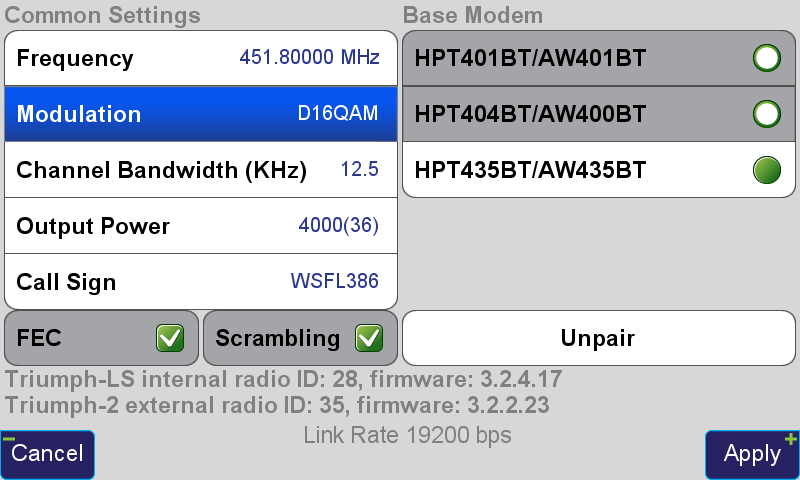
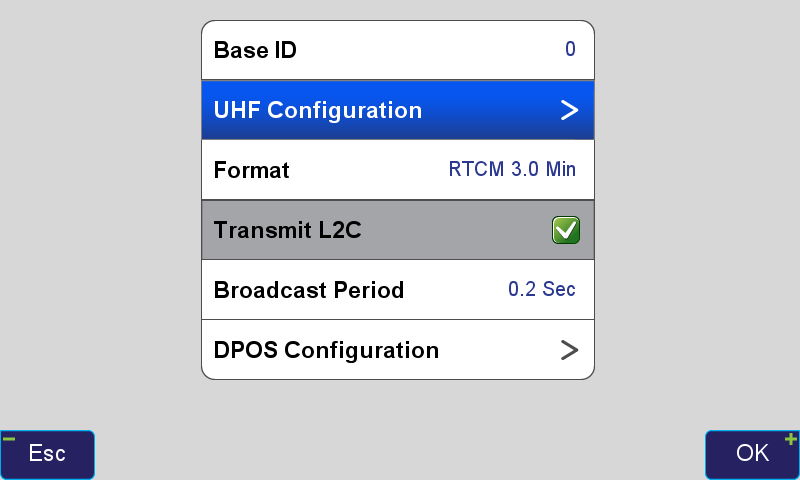
    To start the base with 5-Hz corrections, the Broadcast Period must be changed to 0.2 seconds in the Base/Rover Setup. “RTCM 3.0 Min” should be chosen as the correction format. This format only broadcasts the RTCM messages needed for RTK positioning and excludes information containing signal-to-noise (CNO) and full milliseconds for code observations. A modulation must be selected that has a sufficient link rate to transmit increased data rates with 5-Hz corrections. With the Channel Bandwidth set to the FCC’s limitation 12.5 kHz, the D16QAM modulation must be used. With 2-Hz corrections (0.5 second broadcast period) D8PSK modulation can also be used.

    image005
    UHF Modem Link Rates (bps)

    Modulations with greater link rates have decreased receiver sensitivity to demodulate the signal; the downside to choosing modulations with higher link rates is that they are more subject to interference and data loss when the signal is weak. Field tests have found that D16QAM modulation decreases the working range of the radio approximately 20 percent compared to DQPSK modulation.

    Radio settings for 5-Hz corrections.
    Radio settings for 5-Hz corrections.
    image007
    Radio settings for 5-Hz corrections.

    After these settings in Base/Rover Setup have been modified, press the To Base button to apply them, and then the Start Base button to start broadcasting with the configured setup.

  • OriginGPS Introduces Modules to Support GPS, GLONASS and BeiDou with MediaTek

    OriginGPS has launched a new family of products, the first of which is the ORG1510-MK Multi Micro Hornet, a fully integrated multi-GNSS (GPS, GLONASS and BeiDou) module. The miniature low-power architecture supports an update rate of up to 10 Hz and contains onboard flash. It is designed to provide a GNSS component to devices that require fully featured components with small footprints, such as UAVs designed to follow action sports and other fast-moving activities or wearables.

    OriginGPS released the Multi Micro Hornet (ORG1510-R01) in June, which tracks GPS and GLONASS, but not BeiDou. The ORG1510-R01 uses a SiRFstarV GNSS system on chip.

    The ORG1510-MK contains the MediaTek MT3333 chip, which supports a fast update position calculation rate. The chip also contains an onboard flash memory that does not erase when power is off. It consumes very little power with the use of both standby mode and backup mode, and, in advanced applications, a periodic mode that can turn the device on and off when in backup or standby.

    “The inclusion of MediaTek has enabled the creation of the most powerful GPS module on the market,” said Gal Jacobi, CEO of OriginGPS. “The ORG1510-MK’s tremendously fast update rate, low power consumption, miniature size and reliable accuracy makes it possible to track life’s most exciting and fast-paced activities without delay, battery drain, or clunky devices. It will be a meaningful engine of growth for OriginGPS in Asia Pacific and globally.”

    Key features of the New Multi Micro Hornet include:

    Rapid update rate and superior memory – The Multi Micro Hornet has an update rate of up to 10 Hz and onboard flash, supporting a significantly higher accuracy than the standard update rate of 1 Hz and low power consumption due to the module’s ability to store hours of data.

    Smallest size, highest performance – Despite the Multi Micro Hornet’s tiny size of 10 x 10 mm and height of 6.1 mm, the module offers superior sensitivity and outstanding performance, achieving rapid time to first fix (TTFF) of less than 1 second, accuracy within as little as 1 meter, and sensitivity at -165 dBm for two constellations simultaneously.

    High sensitivity and noise immunity – The ORG1510-MK continues to leverage OriginGPS’ patented and proprietary Noise Free Zone (NFZ) technology to ensure high sensitivity and noise immunity even under marginal signal conditions.

    Continuous connectivity with minimal power consumption – The low power consumption modes aided by MediaTek include a standby mode, during which the RF and baseband enter low power mode, and backup mode, during which the internal PMU turns off and only keeps the VRTC domain alive. For advanced applications, the module can periodically turn its operation on and off when in backup or standby mode.

    An intelligent design that shortens time to market – The Hornet family of GPS / GNSS antenna modules integrates a GNSS receiver and patch antenna in a single module. As a cornerstone of the OriginGPS portfolio, the ORG1510-MK pin-to-pin compatibility with the Micro and Nano Hornet modules ensures a seamless migration from GPS to GNSS and gives developers the ability to create new product offerings in the shortest time to market while minimizing costly design risks. Developers can simply connect it to a power source on a single layer PCB to begin integrating it into their designs.

    The ORG1510-MK module combines OriginGPS’ proprietary low-profile GNSS antenna with a dual-stage LNA, RF LDO, SAW filter, TCXO, RTC crystal and RF shield.

  • NovAtel to Develop WAAS G-III—Galileo Reference Receiver for FAA

    NovAtel to Develop WAAS G-III—Galileo Reference Receiver for FAA

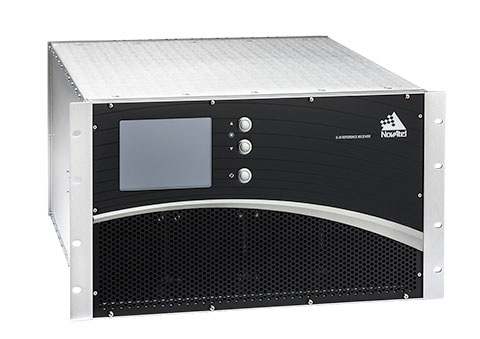
    NovAtel's WAAS G-III—Galileo Reference Receiver.
    NovAtel’s WAAS G-III—Galileo Reference Receiver.

    The U.S. Federal Aviation Administration (FAA) and NovAtel have exercised a bilateral option to produce a Wide Area Augmentation System (WAAS) G-III—Galileo prototype receiver. Maintaining core NovAtel WAAS G-III functionality for GPS and SBAS signal processing, the new receiver will operate in the WAAS reference station test environment to facilitate research on multiple GNSS constellation utilization.

    The prototype receiver will also add functionality to support tracking and demodulating associated navigation data for Galileo satellites including:

    • Galileo E1 and E5a tracking
    • Ephemeris and almanac reporting/processing from E1 or E5a
    • Automatic channel assignments
    • Time solution computed from Galileo
    • Correlator information for signal deformation on Galileo signals

    The WAAS G-III—Galileo prototype receiver will be developed on NovAtel’s existing WAAS G-III receiver hardware and application software, and delivered as a field-loadable firmware package. The WAAS G-III—Galileo receiver will not be qualified to DO-178B Level D as part of this contract.

    NovAtel’s WAAS G-III reference receiver platform was designed with expandability and multi-GNSS SBAS evolution in mind, and can be customized to meet the needs of individual satellite networks. NovAtel has already delivered G-III based reference receivers to several programs worldwide, including the WAAS G-III receiver (US WAAS, FAA), IRIMS G-III receiver (India IRNSS, ISRO),  and QZSS G-III receiver (Japan QZSS, NEC) variants.

    The company’s reference receivers and uplink station equipment have been a central element of the U.S. WAAS since its inception. The WAAS third-generation reference receiver (G-III) uses fully updated hardware, and tracks all GPS signals including the legacy GPS L1 C/A, L2P(Y) (semi-codeless), and the modernized L2C, L5, L1C signals as well as the WAAS L1 C/A and L5 signals.

    The WAAS G-III reference receiver provides a rich set of range measurement data, signal integrity metrics, and logs for processing by the system’s data communication processor, NovAtel said. The WAAS G-III – Galileo prototype receiver is the first G-III platform evolution for the FAA, an important step towards possible GPS + Galileo dual-GNSS SBAS operations in the future.

  • Aeryon Named UAV Partner for Microsoft Video Platform for Police Agencies

    Aeryon Named UAV Partner for Microsoft Video Platform for Police Agencies

    MAPP

    Aeryon Labs is partnering with Microsoft on its new Microsoft Advanced Patrol Platform (MAPP) vehicle. Microsoft has chosen Aeryon’s SkyRanger UAV to demonstrate aerial image and data capture for MAPP.

    Aeryon Labs is a provider of small Unmanned Aerial Systems (sUAS) for military, public safety and commercial operators worldwide.

    “Law enforcement organizations throughout the world rely on Aeryon sUAS to collect aerial intelligence wherever and whenever they need it,” said Dave Kroetsch, president and CEO of Aeryon Labs Inc. “Including SkyRanger within the MAPP vehicle rounds out the comprehensive suite of technologies and highlights the value of aerial intelligence for ground-based personnel.”

    Aeryon Labs' SkyRanger UAV helps law enforcement
    Aeryon Labs’ SkyRanger UAV provides real-time intelligence to law enforcement. (Photo: Aeryon Labs Inc.)

    MAPP will connect its drivers to helpful and easy-to-navigate information, Aeryon said. Currently, patrol officers spend vast amounts of valuable time bound to their cars, clicking between windows on bulky, often dated laptops. MAPP will consolidate the many elements officers must keep track of — providing dispatch information, driving directions, suspect history, a voice activated license plate reader, a missing persons list, location-based crime bulletins and statistics, a feed of shift reports and more.

    For first responders, surveillance teams and investigators, high-quality aerial imagery provides the real-time intelligence needed to assess a situation immediately, ensure safety on the ground, and capture detailed evidence and forensics. By integrating aerial images from Aeryon sUAS with other cutting-edge hardware and software solutions, the MAPP program sets a new technological standard in policing and helps officers operate with better awareness, efficiency, mobility and safety.

    Aeryon Labs is showcasing the integrated solution at the IACP 2015 law enforcement and public safety conference, being held Oct. 25-27 in Chicago.

  • U.S. Army Is Seeking GPS-Denied Technology for UAS

    The U.S. Army’s Armament Research, Development and Engineering Center (ARDEC), located at Picatinny Arsenal in north-central New Jersey, has issued a sources sought notice for technology it can use for a variety of unmanned systems.

    The notice says that technologies developed for the Autonomous Unmanned Systems Teaming and Collaboration In GPS Denied Environments program (AUSTC) could be used for small UAS, underwater vehicles and ground vehicles.

    The center plans to to “identify, invest, mature and transition revolutionary/game-changing autonomous unmanned sensing technologies.”

    “The AUSTC program employs a ‘think-tank’ and modified ‘skunk-works’ approach to identify and determine best path forward for new and game-changing technologies that may be available or in development to achieve U.S. Army RDECOM-ARDEC interest Sensitive Target Site Exploitation (STSE) mission,” the notice reads.

  • JAVAD GNSS TRE-3 Successfully Tracks First Live TMBOC Signal

    JAVAD GNSS TRE-3 Successfully Tracks First Live TMBOC Signal

    The newly launched BeiDou Phase 3 satellites have several new signals. One is extremely similar to the future GPS L1C signal with time-division BOC(1,1) and BOC(6,1) signals. Such a type of modulation is called time-multiplexed binary offset carrier (TMBOC). (Read more about TMBOC in the June 2011 Innovation article “MBOC Signal Options: Performance of Multiplexed Binary Offset Carrier Modulations for Modernized GNSS Systems.”)

    To track the new signals, JAVAD GNSS used the same decoding approach described in the February 2013 GPS World article, “Signal Decoding with Conventional Receiver and Antenna: A Case History Using the New Galileo E6-B/C Signal” by Sergei Yudanov, JAVAD GNSS. As a result, the signal’s structure was decoded and L1C TMBOC tracking has been successfully tested on the JAVAD GNSS TRE-3 receiver.

    In addition, new signals on 1575.42+1.023*14 MHz (B1-2), 1176.45 MHz (E5A) and 1207.14 (E5B) frequencies for three satellites (PRN 32, 33, 34) also have been decoded and tested.

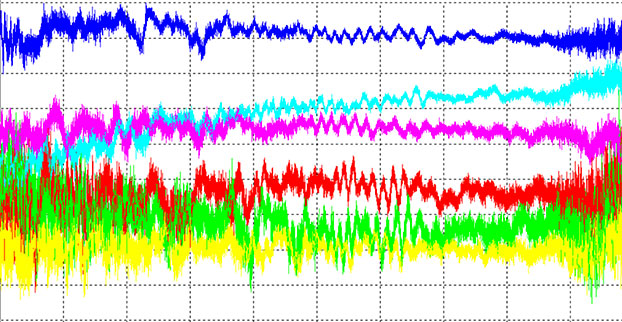
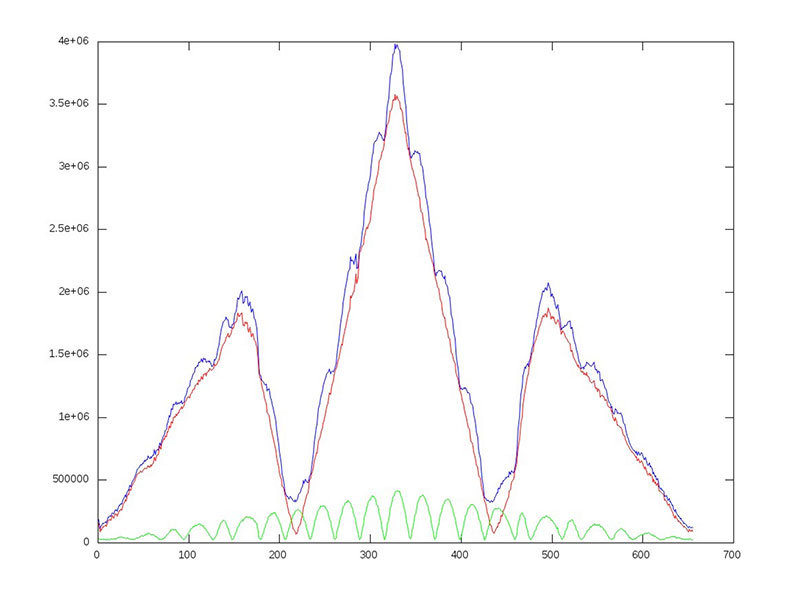
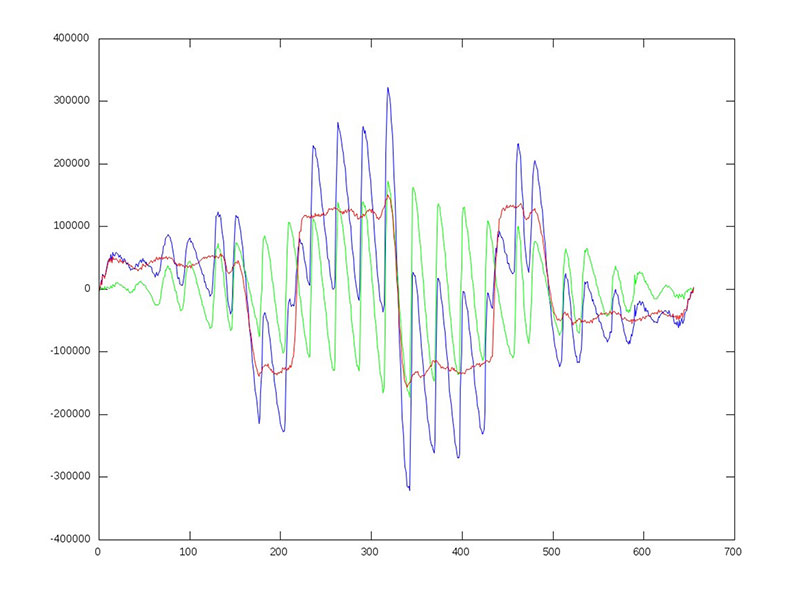
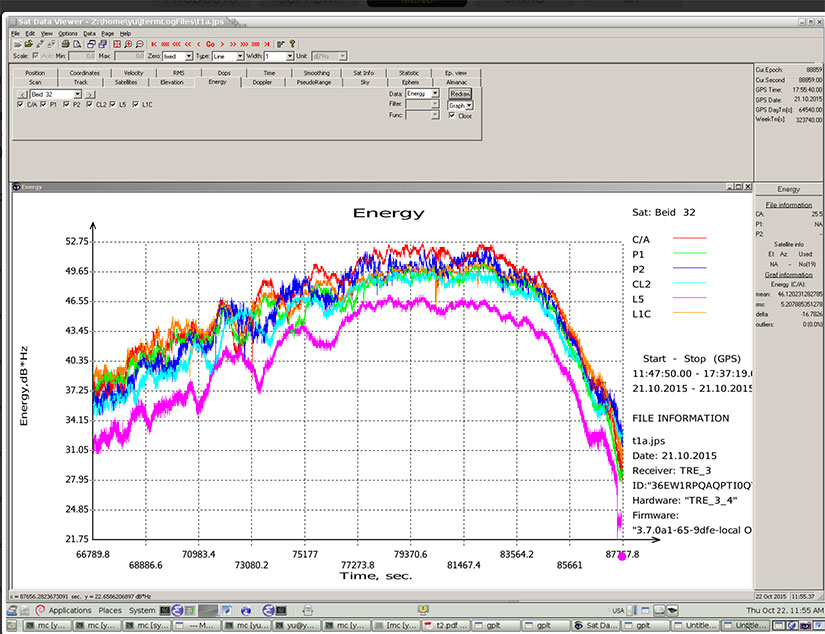
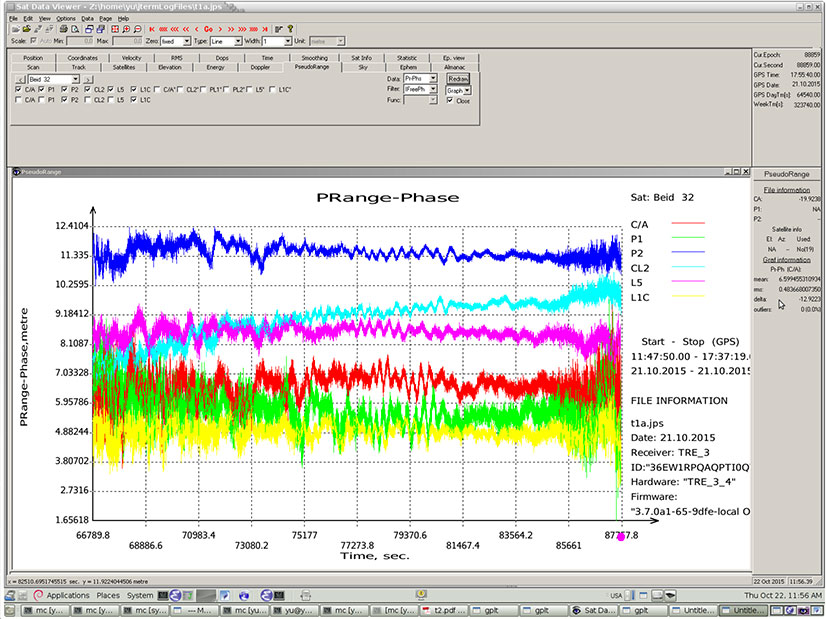
    Here are graphs illustrating the experiment:

    I of BOC(1,1) (red), BOC(6,1) (green) and their sum (blue) vs code shift.

    JAVAD-TMBOC-1

    dI of BOC(1,1) (red), BOC(6,1) (green) and their sum (blue) vs code shift.

    JAVAD-TMBOC-2

    Horizontal axis: 0 – minus one chip shift; 327 – zero shift; 655 – plus one chip shift

    C/NO and iono-free “range minus phase”.

    Slot – Beidou signal
    C/A – B1
    P1 – B1-2
    P2 – E5B
    L2C – B3
    L5 – E5A
    L1C – L1C

    JAVAD-TMBOC-3

    Photo: JAVAD GNSS TRE-3

  • ComNav Releases Receiver and GNSS OEM Board

    ComNav Releases Receiver and GNSS OEM Board

    M300Pro
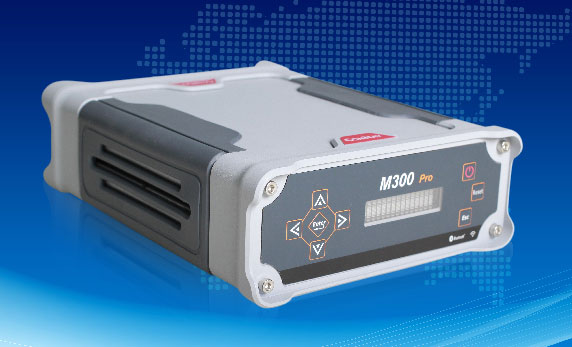
    The M300 Pro CORS receiver.

    ComNav has released the M300 Pro, a CORS GNSS receiver, and the K528G, a new GNSS OEM board for heading.

    Designed for reference stations, the M300 Pro tracks GPS, GLONASS and Beidou (B1, B2, B3), and will track Galileo, QZSS and other coming constellations. Its web server function enables easy and convenient remote control. The M300 Pro is compatible with many kinds of CORS software, using the standard data format RTCM and the various data transfer protocols such as UDP, TCP and Ntrip.

    Raw GNSS observation data can be saved in Rinex format and remotely downloaded. The M300 Pro contains multiple ports, which can configure and connect with external sensors, including but not limited to meteorological sensors, barographs and inclinometers. The PPS output function provides a guarantee for precision timing. The M300 Pro also has the functionality of event mark and external memory.

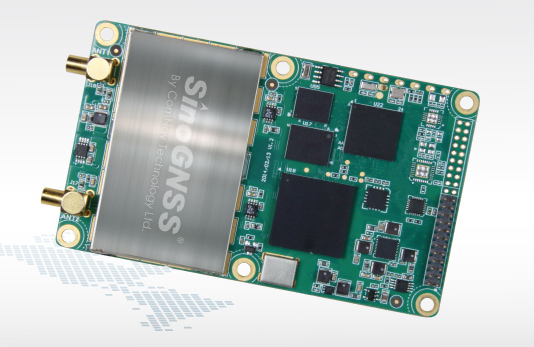
    The K528G GNSS board.
    The K528G GNSS board.

    The K528G is a dual-frequency and multiple constellations GNSS board that provides the highest accuracy in differential positioning. K528G benefits from plenty of constellations signals, due to its advanced tracking performance of both GPS and GLONASS. The K528G can provide positioning and heading information generated by two antennas.

    The K528G is designed for guiding and positioning construction engines, dredges, barges, shipping container cranes, mining equipment and intelligent transportation systems.