Author: GPS World Staff

  • Wildwood eLoran Transmitter Test Operations Continue

    According to UrsaNav Inc., the Wildwood, NJ eLoran transmitter will be continuously broadcasting from 0900 (EST) on 21 October 2016 through 1200 (EST) on 22 November 2016. Wildwood will be broadcasting as 8970 Master and Secondary most of the time but occasionally may operate at other rates.

    In May, Exelis, UrsaNav, the Department of Homeland Security’s Science and Technology Directorate (DHS S&T) and the U.S. Coast Guard entered into a cooperative research and development agreement (CRADA) for testing and demonstration at former Loran-C sites, including Wildwood, N.J.

    The team will evaluate eLoran as a potential complementary system to GPS. The capabilities and potential utilization methods of eLoran will be explored in depth to identify all strengths, capacities, and potential vulnerabilities of the technology.

    The sites are the legacy ground-based radio navigation infrastructure of the decommissioned Loran-C service that could be retained and upgraded to provide eLoran low frequency service.

    Under the CRADA, Exelis will use the former Loran-C assets to put eLoran signals in space for research, test and demonstration of the ability of eLoran to meet precise positioning, navigation and timing (PNT) requirements of government and privately-owned critical infrastructure.

    The first station Exelis is broadcasting from is in Wildwood, N.J. The broadcasts will provide a usable signal at a range up to 1,000 miles.
     

  • Timing, Synchronization Featured in GPS World’s October Webinar

    Timing experts will share their views on timing and synchronization at GPS World’s next seminar, scheduled for Thursday, Oct. 29. Registration is free for “Timing, Time Transfer and Synchronization: New Applications and Techniques,” a GPS World Market Insights webinar sponsored by EndRun Technologies.

    In the webinar, an expert panel will discuss the current efforts behind — and changing demands to — keeping the nation’s timekeeping and synchronization infrastructure up to speed. The speakers will examine why timing has become more critical than ever for the Internet of (Every)thing and the nation’s economy.

    The panel will also shed light on cutting-edge time transfer research, and dive into new applications and techniques for use in metrology, defense, communications and aerospace. In the closing Q&A period, participants will have the chance to receive expert answers to synchronization questions.

    This webinar event will be good preparation for those planning to attend ION’s Precise Time and Time Interval (PTTI) Meeting in January — and for those who can’t make it. Watch for coverage of PTTI and continued timing topics here on GPS World.

    Learn more about the webinar on our webinar page.


  • International Symposium on Navigation and Timing Coming in November


    The International Technical Symposium on Navigation and Timing takes place Nov. 16-17 in Toulouse, France, bringing together experts in positioning, GNSS and air navigation. Registration is free, but mandatory, and the number of seats is limited.

    Site of the symposium is the Ecole Nationale de l’Aviation Civile (ENAC). The symposium is organized by ENAC in cooperation with the Centre National d’Etudes Spatiales Communautés de Compétences Techniques Positionnement et Datation par Satellite (CNES CCT PDS).

    PROGRAMME

    (The full programme can be downloaded.)

    16 Nov. at 13:30: Opening Keynote:

    A. J. Van Dierendonck – AJ Systems, USA

    16 Nov. afternoon: “Positioning in Challenging Environments” (chairman: Olivier Julien, ENAC, France)

    Martin Haueis – Head of Localisation and Data Management, Daimler AG, Germany

    John F. Raquet – Director of the Autonomy and Navigation Technology (ANT) Center, US Air Force Institute of Technology, USA

    Lionel Ries – Head of the Navigation/Location Signals Dept, CNES, France

    Lauri Wirola – System Architect, HERE, Finland

    17 Nov. morning: “GNSS Signals and System Design” (chairman: Christophe Macabiau, ENAC, France)

    Oscar Pozzobon – Founder and Technical Director, Qascom, Italy

    Mark L. Psiaki – Professor, Cornell University, USA

    Francis Soualle – Navigation System Engineer, Airbus Defence and Space, Germany

    Zheng Yao – Ass. Professor, Tsinghua University, China

    17 Nov. afternoon: “Air Navigation” (chairman: Laurent Azoulai, Airbus Operations, France)

    Christopher J. Hegarty – Director for CNS Engineering and Spectrum, MITRE Corporation, USA

    Mikael Mabilleau – Navigation Services Manager, Egis Avia, France

    Mitch Narins (Invited) – Chief Systems Engineer for Navigation Programs, Federal Aviation Authority, USA

    Morton Stakkeland – Development Engineer, Indra Navia, Norway

    FOR MORE INFORMATION

    Visit the symposium website.


    SPONSORS:

  • Topcon YieldTrakk Monitors Yields

    Topcon YieldTrakk Monitors Yields

    Photo: Topcon Precision Agriculture

    Topcon Precision Agriculture has expanded its precision agriculture line of solutions to include a new yield monitoring system — YieldTrakk.

    YieldTrakk is an optical sensing, volumetric solution designed to provide operators with the real-time data collection needed to make intelligent business decisions in the combine cab and afterward. It includes monitoring and mapping of yield (in bushels or tonnes), moisture and cut rate, as well as the total weight of crop during harvest.

    “YieldTrakk provides an excellent solution for data collection, mapping and analysis that ultimately allows operators to reduce input costs and operate more efficiently,” said Brian Sorbe, Topcon Precision Agriculture director of sales, Americas. “The addition of yield monitoring expands the scope of Topcon precision agriculture solutions to meet the full-season productivity demands of modern farming.”

    Photo: Topcon Precision Agriculture

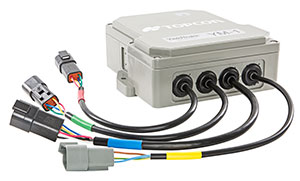
    YieldTrakk works by using non-contact optical sensors installed in the clean grain elevator to calculate accurate live yield data. The ECU (electronic control unit) converts the measurement into a weight for the crop harvested. When the crop travels up to the bubble up auger, a second set of sensors measure crop moisture level and incorporates that into the data along with the yield output. To help optimize accuracy, the ECU also measures slope variations and corrects the signal for any fluctuation in machine angle.

    The system is a universal solution designed to fit nearly every brand of combine on today’s market. It includes retrofit solutions for most combines, a plug-and-play application for CLAAS combines, and a connection using ISO in AGCO Fieldstar II-ready combines.

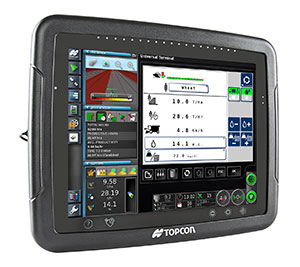
    The new yield monitor system is integrated with the Topcon Horizon software on the Topcon X30 touchscreen console — displaying the yield and moisture levels in separate sets of data to provide the operator a more complete understanding of field and crop conditions.

    YieldTrakk is compatible with most software packages in the industry for further analysis by utilizing industry standard ISOXML and shape file format for data export instead of the proprietary data formats used by most competitors. This information can be used to trace inputs and outputs by precise location and ultimately allows the user to vary seed, fertilizer, chemical or other inputs as-applied.

    “This is a great example of how we’re able to leverage synergies with our recent acquisition of Wachnendorff Elektronik, Digi-Star, RDS Technologies and NORAC to further provide combine owners and our OEMs with the high accuracy precision tools they need,” said Michael Gomes, Topcon Precision Agriculture vice president of business development.

  • Baseband Technologies Granted Patent for Ultra Low-Power GPS Receiver

    Baseband Technologies Inc. has been issued a patent from the United States Patent and Trademark Office for its low-power satellite positioning innovation. U.S. Patent No. 9,116,234, titled “System, Method and Computer Program for a Low Power and Low Cost GNSS Receiver,” describes the technology and processes to significantly reduce the energy required to operate a GPS receiver.

    Baseband’s ultra low-power GPS receiver technology enables consumer electronics manufacturers to integrate its receiver into battery-powered wearable/Internet of Things (IoT) devices using hundreds of times less power than the traditional GPS chipsets.

    “With the wearable market projected to grow multiple times faster than smartphones and with GPS being one of the most requested features, there will be huge rewards for those manufacturers who can offer GPS functionality in their products without impacting the battery life or size,” said Francis Yuen, founder and CEO of Baseband. “For us, innovation is about connecting what is possible with what is valuable to our customers. This patent, in conjunction with others now pending, will enable Baseband to continue to offer ultra low-power positioning capabilities and customer-centric experiences across different market verticals.”

    “It is gratifying that the US Patent and Trademark Office has recognized both our invention and the intellectual property of this very promising technical advancement,” Yuen said. “This newly granted patent will certainly help in our current investment round as well as to fuel continued product development and innovation that will lead to even further advances in ultra low power positioning.”

  • Topcon Secures FAA Exemption to Operate Rotary-Wing Aerial System in U.S. 

    Topcon Secures FAA Exemption to Operate Rotary-Wing Aerial System in U.S. 

    Photo: Topcon Positioning Group

    Topcon Positioning Group has received a Section 333 exemption from the Federal Aviation Administration (FAA) that allows for operation of its Falcon 8 rotary-wing unmanned aerial system (UAS) in the United States.

    The Topcon Falcon 8 — powered by Ascending Technologies — is designed for inspection and monitoring, as well as survey and mapping applications.

    “Along with our exemption for the Sirius fixed-wing system, the Falcon 8 exemption extends the Topcon UAS presence in the rotary-wing solutions market to be an even more powerful resource and provide demonstrations and training,” said Eduardo Falcon, executive vice president and general manager of the Topcon GeoPositioning Solutions Group. “Aerial data collection has a strong future in all the industries we serve, and the possibilities for survey, construction, agricultural, and emerging inspection applications are seemingly limitless.

    “Building on the success the Falcon 8 has already seen in Europe, this exemption allows Topcon to expand on that momentum in the U.S. market,” said Falcon.

  • GPS SmartSole Launches in Germany for Alzheimer’s Monitoring

    GPS SmartSole Launches in Germany for Alzheimer’s Monitoring

    Photo: GPS SmartSole

    GTX Corp, an IoT platform in the personal location GPS wearable and wandering-assistive-technology business, has completed a successful SmartSole pilot program transitioning into a commercial launch in Germany. SmartSoles also launched this month in the United Kingdom.

    GTX Corp has signed a reseller distribution agreement with Way4Net, a solution provider in geo-locating and tracking monitoring services. Way4Net placed its first commercial order, with scheduled delivery dates beginning this month and continuing monthly over the next six months.

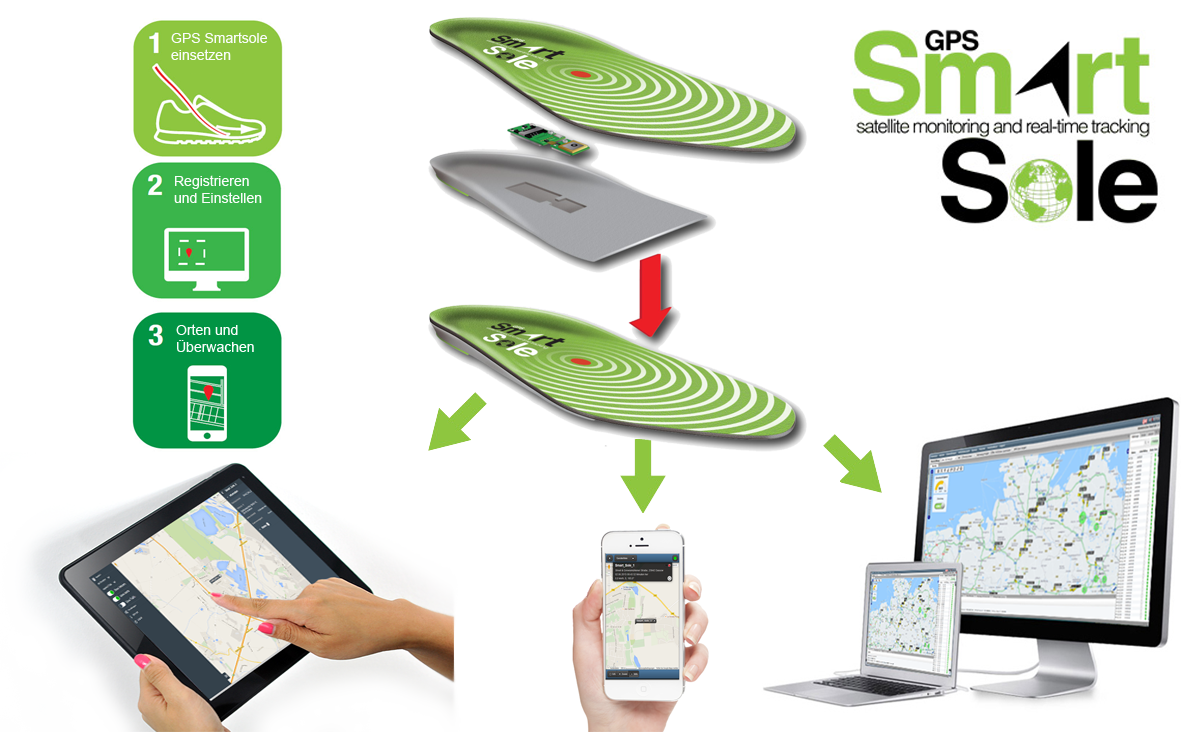
    GPS SmartSoles. GTX Corp’s flagship product, the GPS SmartSoles, are an unobtrusive monitoring and tracking solution for those who suffer from Alzheimer’s, dementia, autism, TBI and other memory disorders and have a tendency to wander.

    The SmartSoles are placed in the wearer’s shoes and contain a GPS tracking chip connected through a cellular network that sends a signal to GTX Corp’s proprietary IoT platform monitoring website or smartphone app, showing the exact location of the individual wearing them. They come in several trim to fit sizes for both men and women, are water resistant, made with the highest-quality electronic components and assembled in Rhode Island, U.S.A.

    The Dementia Problem. Germany has a population of 83 million people with approximately 1.6 million, or 2 percent of its population who are afflicted with dementia and Alzheimer’s. Just this week, German football legend Gerd Muller announced receiving treatment for Alzheimer’s disease. This disease is not limited only to the senior population — 24,000 people ages 45-65 are already diagnosed throughout Germany.

    Many people mistake dementia as a natural consequence of getting older, when it is actually the result of damage to brain cells that affect memory. Dementia affects close to 50 million people worldwide today with no cure for this syndrome on the horizon.

    “For us, the solution of GTX SmartSole is one of the best technologies to increase the quality of life of vulnerable people with the symptoms of dementia, Alzheimer’s, autism and other cognitive memory disorders,” said Eric Gnass, CEO of Way4Net. “We are very pleased to introduce this unique product on the German market.”

    Transition to Commercial Launch. “We are extremely pleased to have another successful pilot transition into a commercial launch and we are proud to partner with a well-entrenched company like Way4Net,” said Andrew Duncan, GTX Corp director of business development. “We are currently investing a lot of resources in Germany, which is where we design and manufacture our GPS and cellular chip, and have recently signed an M2M agreement with Telefonica Germany which will support our connectivity throughout Europe. Between our launch in Germany and launch last week in the U.K., I plan to stay in Europe for another two weeks working with our partners and chip manufactures on our next-gen SmartSole, expected out in early 2016.”

    The patented GPS SmartSoles, which were showcased in Munich at the Telefonica 2015 Innovation Conference Digital Innovation Day, were featured in AARP’s 2015 technology gear guide. They also came in second place — with Microsoft finishing first and Samsung taking third place — in the 2015 Wearables, Health, Fitness & Wellness category at CTIA’s Hot for the Holidays Awards competition.


  • SiTrack:One by Leica Geosystems Makes 3D Point Clouds without GNSS

    SiTrack:One by Leica Geosystems Makes 3D Point Clouds without GNSS

    Photo: Leica Geosystems

    Leica Geosystems has released SiTrack:One, a highly accurate rail track maintenance and refurbishment system incorporating the Leica ScanStation P40 to generate 3D point clouds. 

SiTrack:One by Leica Geosystems ensures complete coverage of an entire rail infrastructure surface without the need to receive GNSS signals for position information, the company said.

    With a new mounting design, the total solution for rail maintenance and refurbishment produces synchronized engineering, survey-grade 3D point clouds for accurate as-built drawings. 
The Leica ScanStation P40 can either be mounted vertically in the centre of the rails or inverted directly over the rail track. Rail bridge sleeper replacements can be measured quickly generating a numbered as-built replacement plan for each individual sleeper on a rail bridge.

    The sophisticated system is equipped with two powerful distance measurement instrument (DMI) or odometers that provide accurate positioning in GNSS-denied areas, such as underground railway tunnels or underground subway networks. The system’s on-site calibration process guarantees permanent alignment of the relative position between the sensors and its onboard inertial measurement unit, guaranteeing position accuracy.

    The German engineering firm Vermessungsbüro Riemenschneider GbR was the first to use the SiTrack:One by Leica Geosystems. When converting existing railway tracks in the course of track maintenance for the Deutsche Bahn AG, the firm required complete, accurate and consistent information on existing tracks, clear structure gauge, route topography and civil engineering works. With the SiTrack:One, Vermessungsbüro Riemenschneider GbR experienced significant workflow gains by leveraging the highly accurate point clouds directly into the engineering process.

    “The SiTrack:One by Leica Geosystems guaranteed  the complete survey of railway sidings with a minimum stay of surveying personnel in the danger zone of rail transport,” said Dipl.-Ing. Andreas Riemenschneider, principal of Vermessungsbüro Riemenschneider. “Thus, the costs of security measures were significantly reduced. The state-of-the-art system conforms efficiently to the demands for survey, visualisation, documentation, evaluation and approval of existing and new routes, all in accordance with rail transportation guidelines.”

    Developed from acquired knowledge 
SiTrack:One is the first solution to be released under Leica Geosystems from the acquisition of the former Technet-Rail 2010 GmbH. Leica Geosystems acquired the previous firm’s specialised knowledge of geospatial big data for rail transportation networks in May to increase its mobile mapping offerings for the rail industry.

    “One of our goals in obtaining this specific know-how was to provide users with a dedicated tool for passenger rail networks monitoring and maintenance, and with the development of SiTrack:One, we are taking the first step on this roadmap,” said Stuart Woods, Leica Geosystems Geospatial Solutions Division vice-president. “Professionals can now trust their measurements on rail are accurate even in the most difficult conditions.”

    SiTrack:One by Leica Geosystems includes software enabling data synchronization, post-processing and feature extraction. This solution is part of the SiRail Suite, which includes the SiRailScan and SiRailManager software solutions.

    SiRailScan allows for a complete extraction of the railway network with engineering accuracy level, while SiRailManager, the database management tool, creates a holistic view of an operator’s railway network from point cloud to geometry and signal layers. The combination of these solutions form the  SiControl platform, which conforms to the requirements of the  European Train Control System and produces complaint rail xml outputs for full train feedback control.

  • Trimble Placer/Spreader Machine Control Offers Improved Paving Productivity, Less Waste

    Trimble’s PCS900 Paving Control System version 2.20 is designed for GOMACO and Guntert & Zimmerman placer/spreader machines. The new version of PCS900 further automates the paving train by enabling contractors to use GNSS-based positioning, in conjunction with a base station, to steer the machine and control the machine’s elevation according to a 3D model. This can significantly improve paving productivity and reduce material waste on concrete road and airport surfaces.

    With the availability of GNSS-based 3D machine control for placer/spreaders, paving contractors can move their Trimble GCS900 Grade Control System display, radio, sensors and GNSS receivers between even more machines in their fleet. By using Trimble grade-control components on their placer/spreader, users can realize a faster return on their investment for Trimble technology, the company said.

    In addition, factory-fit integration between GOMACO and Guntert & Zimmerman placer/spreaders and the Trimble PCS900 system gives contractors an easy-to-learn, seamless paving control solution, Trimble said. Operators can make any necessary adjustments to machine guidance with the onboard 2D system they are familiar with, lowering the training time needed to learn a new system.

    Without machine control, a concrete placer/spreader is controlled manually or by two stringlines, one on each side of the lane being paved. Using the PCS900 system, time-consuming labor spent setting up these stringlines can be eliminated. The Trimble PCS900 uses GNSS-based positioning to keep the placer/spreader on the target alignment, design and slope so contractors can spread material faster and more efficiently while reducing labor costs.

    The Trimble PCS900 system version 2.20 is currently available for GOMACO placer/spreader machines with G22 or G+ machine controllers through GOMACO in North America. PCS900 version 2.20 for the Guntert & Zimmerman placer/spreader machines running the EGON machine control system is available through Trimble’s worldwide SITECH® Technology Dealer Channel.

  • Hexagon Takes Top Honors in the Wichmann Innovations Award

    Hexagon Takes Top Honors in the Wichmann Innovations Award

    The new Leica Geosystems Pegasus backpack wearable mobile mapping solution.
    The new Leica Geosystems Pegasus backpack wearable mobile mapping solution. (Leica Geosystems AG, Switzerland, 2015)

    The top Wichmann Innovations Award has been given to the Leica Geosystems Pegasus:Backpack, a wearable reality-capture technology that combines five high-dynamic cameras and two lidar profilers within an ultra-light and ergonomic carbon-fiber chassis. Leica Geosystems is a brand of Hexagon.

    Companies from around the globe submitted products and applications to participate in the awards, which were presented by publisher Wichmann Verlag at the INTERGEO trade show, held in Germany in September. From hundreds of submissions, a jury of industry leaders selected 10 products and applications to receive votes from the general public. The main criteria for the awards were innovation, user-friendliness and practicality. Wichmann Verlag is known for its expertise in professional magazines and specialist books for geodesy and geomatics.

    The Pegasus:Backpack is a mobile mapping solution that creates a 3D view indoors or outdoors for engineering or professional documentation at the highest level of authority while using SLAM (simultaneous localization and mapping) to determine position in GNSS-denied areas. With a focus on fast and efficient capture, calibrated images and point clouds are quickly generated for applications as diverse as BIM 6D to industrial training and disaster analysis, Leica said.

    “The mobile mapping team has put a lot of hard work into understanding the needs of today’s professionals, and the Leica Pegasus:Backpack ensures they are not limited in how, where or when they collect their data,” said Stuart Woods, vice president of Leica Geosystems Geospatial Solutions Division. “With this achievement, the concept of mobile reality capture has been substantiated at the highest level and ushers in a new era in perception surveying and actionable mobile content.”

    Watch a video about the backpack taken at INTERGEO:

    Second place was awarded to Intergraph Security, Government & Infrastructure’s Green GIS, featuring the patented ECW (Enhanced Compression Wavelet) data compression format and ERDAS APOLLO software. Through the use of Hexagon Geospatial technologies, Intergraph’s solution drastically reduces data volume and minimizes storage demands and energy costs, leading to more efficient and environmentally friendly data centers.

    “Software has a significant influence in terms of the enterprise carbon footprint. Our software-driven Green IT approach is absolutely new and pioneering, and effectively supplements previous environmental and climate protection efforts made by the information and communications technology sector,” said Maximilian Weber, senior vice president, Intergraph Security, Government & Infrastructure EMEA. “Our Green GIS can help lower carbon emissions of our customers’ IT processes.”

  • Lockheed Unveils ICARUS to Counter UAS Threats

    Lockheed Unveils ICARUS to Counter UAS Threats

    Photo: Lockheed Martin

    At this year’s Association of the United States Army (AUSA) Annual Meeting, Lockheed Martin unveiled a new capability that will allow users to detect and counter emerging threats from unmanned aerial systems (UAS). The solution, ICARUS, was designed to operate defensively in various threat environments. The AUSA meeting was held Oct. 12-14 in Washington, D.C.

    “The U.S. government is seeing an increase in the use of commercially available UAS platforms for surveillance and weaponization,” said Deon Viergutz, vice president of Cyber Solutions for Lockheed Martin. “What Lockheed Martin has developed in ICARUS is a system that can detect, recognize and counteract these systems with pinpoint accuracy.”

    Lockheed Martin’s Counter-UAS system has been field tested and demonstrated to several domestic and international customers over the past year. Those tests demonstrated the ability of ICARUS to identify and intercept commercially available unmanned aerial systems.

    The development of the ICARUS software system draws on Lockheed Martin’s history of innovations in electronic warfare, cybersecurity and countermeasures associated with sophisticated threats. It was developed through Lockheed Martin internal investment and combines advanced cyber and cyber electromagnetic activity experience with sensor technology and non-kinetic techniques.

  • Rockwell wins DARPA Contract for GPS Backup Tech

    Rockwell Collins has been selected by the Defense Advanced Research Projects Agency (DARPA) to develop technologies that could serve as a backup to GPS. The research, being conducted as part of DARPA’s Spatial, Temporal and Orientation Information in Contested Environments (STOIC) program, aims to reduce warfighter dependence on GPS for modern military operations.

    Under the terms of the agreement, Rockwell Collins will develop innovative architectures and techniques to enable communication systems that will support time transfer and positioning between moving platforms independent of GPS, with no impact on primary communications functionality.

    “STOIC technology could augment GPS, or it may act as a substitute for GPS in contested environments where GPS is degraded or denied,” said John Borghese, vice president of the Rockwell Collins Advanced Technology Center. “The time-transfer and ranging capabilities we are developing seek to enable distributed platforms to cooperatively locate targets, employ jamming in a surgical fashion, and serve as a backup to GPS for relative navigation.”

    Borghese added that the goal of the STOIC program is to develop positioning, navigation, and timing (PNT) systems that provide GPS-independent PNT, achieving timing that far surpasses GPS levels of performance. The program is comprised of three primary elements that, when integrated, have the potential to provide global PNT independent of GPS, including long-range robust reference signals, ultra-stable tactical clocks, and multifunctional systems that provide PNT information between cooperative users in contested environments.

    For this third technical element, Rockwell Collins is tasked with developing multifunction communication system solutions that yield DARPA STOIC objective picosecond-accurate time transfer and enable GPS-levels of relative positioning accuracy in contested environments.

    “Future applications of STOIC technology could include a variety of precision relative navigation operations, such as autonomous aerial refueling and cooperative navigation and collision avoidance within unmanned aerial vehicle swarms,” said Borghese. “It also could support precise time transfer for networking operations in contested environments.”