Author: GPS World Staff

  • GPSTrackIt.com Adds Playback Feature to Fleet Manager

    gpstrackit_logoGPSTrackIt.com has enhanced Fleet Manager, its vehicle tracking and fleet management system, with new features that control how vehicles are displayed. Fleet Manager can now provide simultaneous playback of multiple vehicle trails as well as controls to turn on and off the display of landmark clusters on the map.

    The playback of multiple vehicle trails makes it possible for fleet managers to visually assess their routes to determine if there are overlaps where one driver’s route is encroaching on another’s. Routes can then be modified to increase operational efficiency.

    If a single vehicle is driven by multiple drivers during the course of a day this feature can display each shift by using different colors.

    “This was another suggestion from one of our customers,” said Eddie Bermudez, GPSTrackIt’s product development manager, in a news release. “We thought it was a great idea and immediately put it into development.”

    Another suggested enhancement from a customer was the ability to turn on and off the display of landmark clusters on the map.

    “We pride ourselves in being responsive to requests for enhancements from customers,” Bermudez said. “This just gives our customers that much more flexibility in configuring how objects on the map are displayed.

  • McMurdo Completes MEOSAR Ground Station in New Zealand

    McMurdo Completes MEOSAR Ground Station in New Zealand

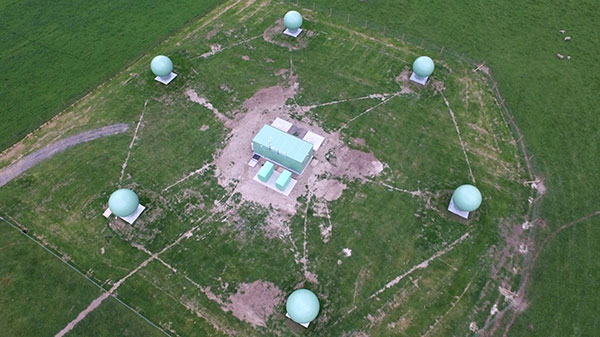
    MEOSAR ground station in New Zealand.
    MEOSAR ground station in New Zealand.

    Emergency readiness and response company McMurdo has completed the installation of a six-antenna next-generation Medium-Earth Orbit Search and Rescue (MEOSAR) satellite ground station system in New Zealand.

    The project, which is part of a joint initiative with Maritime New Zealand and the Australian Maritime Safety Authority, is expected to significantly boost search-and-rescue capability in the New Zealand and Australia search regions and marks the first implementation of MEOSAR in Asia Pacific.

    MEOSAR is the next-generation version of Cospas-Sarsat, the international search-and-rescue satellite system that has helped to save 37,000 lives since 1982. Cospas-Sarsat is in the process of upgrading its satellite system by placing search-and-rescue transponders on new GPS, GLONASS and Galileo satellites. Once qualified as operational, this system augmentation will dramatically improve both the speed and location-accuracy for detecting beacons.

    In a typical satellite-based search-and-rescue scenario, ships, aircraft or individuals transmit distress signals from an emergency location beacon via satellite to a fixed ground receiving station or local user terminal. The ground station receives and calculates the location of the distress signal and creates and sends an alert to the appropriate rescue authorities. Today, the beacon-to-alert process depends on a limited number of low Earth orbit (LEO) satellites and may take several hours before a position is confirmed. With MEOSAR, beacon signals will be received more quickly and beacon locations identified with greater accuracy thereby reducing this time to minutes.

    “Beacons can take the ‘search’ out of search and rescue, and the MEOSAR system will dramatically increase the global search-and-rescue capability,” said Maritime New Zealand Director Keith Manch. “Emergency distress beacons are key equipment for anyone operating at sea, on land and in the air – whether commercially or recreationally — but they can’t operate without sites like this.”

    “This key installation firmly establishes McMurdo as the premier MEOSAR infrastructure provider globally,” said Remi Julien, McMurdo president. “We are committed to partnering with both Maritime New Zealand and the Australia Maritime Safety Authority to ensure that they have the technology, training and long-term support in place to significantly reduce search-and-rescue times and, ultimately, save more lives today and in the future.”

    The New Zealand MEOSAR system, and another being installed in Western Australia, will cover one of the largest search-and-rescue areas in the world — from north of Australia/New Zealand to the Equator and south to the South Pole, east to half way across the Pacific, and west half way across the Indian Ocean. The systems will undergo rigorous testing before being officially brought online in late 2017 by Cospas-Sarsat.

    There are 58,000 emergency distress beacons registered in New Zealand which, without any changes or updates, will be immediately usable by the new systems. It is estimated, however, that an additional 25,000 beacons are unregistered. Due to the high responsiveness of the MEOSAR system, search-and-rescue authorities strongly recommend beacon registration. This will help the unnecessary deployment of search-and-rescue resources due to inadvertent beacon activations. The Rescue Co-ordination Centre New Zealand, part of Maritime New Zealand, responds to 550 beacon alerts a year.

  • Trimble to Acquire AGRI-TREND to Aid Crop Advisors

    Trimble will acquire the assets of privately held AGRI-TREND of Red Deer, Alberta, Canada, which operates the largest network of independent agricultural consultants in North America. The acquisition will enable Trimble to provide agronomists and other crop advisors with a stronger set of brand-agnostic tools they can use to advise growers on how to better manage their operations, Trimble said in a news release.

    The acquisition is expected to close in November 2015. Financial terms were not disclosed.

    AGRI-TREND’s network of more than 200 specialists spread throughout the U.S. and Canada includes 110 independent “coaches” specializing in agronomy, precision farming, crop marketing and farm business management. Coaches are supported by a team of science specialists comprised of 30 Ph.D.s and M.Sc.s providing in-house research, training and insight support for both the coaching network and the AGRI-DATA Solution platform — a proprietary farm data-management solution. As a result, AGRI-TREND’s solutions enable growers to make informed business decisions that better allocate scarce resources to produce safe and environmentally sustainable food.

    “Trimble’s acquisition of AGRI-TREND is another step towards total farm management for the grower. Together with Connected Farm, we will provide growers and their trusted advisors with a combined offering that is unique in the marketplace today,” said Joe Denniston, vice president for Trimble’s Agriculture Division. “AGRI-TREND is a leader in providing expert advice and decision support for growing crops, marketing commodities and managing a farm’s finances. Trimble is a leader in precision agriculture technology that precisely applies those decisions whether it is seed, nutrients or water. Together, Trimble and AGRI-TREND will enable the integration of decisions and execution to give greater control over the outcome, resulting in maximized productivity for the grower.”

    “AGRI-TREND has been working side by side with farmers for over 17 years. With the strength that Trimble provides, we aim to help even more farmers as the move to precision agriculture continues to gain momentum globally,” said Rob Saik, founder of AGRI-TREND. “The combination of our advanced agricultural technical expertise and Trimble’s exceptional precision agriculture tools provides us with a platform that will support production practices that are sustainable both from an environmental and financial perspective for today’s farmers. We’re excited to be a part of the future of agriculture, and we’re pleased to work with the great people at Trimble.”

    Full Farm Support

    Grow the Crop: To assist in optimizing crop growth, AGRI-TREND has a network of experienced agronomists who serve as a personal Agri-Coach to help farm customers assess the performance of every acre on a yearly basis. Agri-Coaches work on the analytics, looking at the cost of production as well as nitrogen and water use efficiency, interpreting the data and making customized recommendations for each field. Recommendations are then followed up with field scouting and performance tracking to ensure farm goals are met.

    Sell the Crop: To maximize crop sales, AGRI-TREND creates a Strategic Marketing Plan that includes business analysis, operational strategy, risk management and a harvest review. This customized plan is developed by an AGRI-TREND Market-Coach who works closely with each farm client to understand the unique situation of their farm and the cost of production for each field. The AGRI-TREND Market-Coach then provides advice on how to best achieve better selling prices, risk mitigation and optimal cash flow for their farm customers.

    Manage the Money: In order to enable farmers to better manage their money, AGRI-TREND provides a network of business-coach professionals, which consists of experts in specialized areas such as accounting, banking, corporate finance and insurance. The business-coach starts by gaining an understanding of the farm business including strengths and weaknesses, measuring the farm’s performance against benchmarks, creating the Strategic Farm Business Plan and then implementing the farmer’s long-term growth plan.

    The AGRI-DATA Solution

    The AGRI-DATA Solution is a complete farm management platform that focuses on the unique agronomic challenges that farmers face every year as they work to maximize yields and profits. This platform is the foundation for AGRI-TREND advisors as they work on crop planning, crop input tracking, soil sampling, tissue testing, manure analysis, fertilizer blending, field scouting, harvest data tracking and more. The platform supports over 75,000,000 legacy acres with over eight million acres added in 2015. Farmers have also adopted the AGRI-DATA mobile applications for both Android™ and iOS devices, preferring to work with their information on the go.

    Trimble Connected Farm Advisor

    Trimble Connected Farm Advisor — a field data management tool for the farmer’s trusted advisor — will be integrated with the AGRI-DATA platform to empower AGRI-TREND coaches with a greater toolset to deliver more services to their growers.

    If you would like to learn how to become an AGRI-TREND coach, visit w3.agritrend.com/join-agritrend. Growers interested in finding an AGRI-TREND coach to work with can visit www.agritrend.com/contact-us/find-a-coach-professional.

     

  • Lockheed Martin advances threat protection on GPS control segment

    Lockheed Martin advances threat protection on GPS control segment

    An artist's concept of a GPS IIR-M satellite in orbit (courtesy of Lockheed Martin).
    An artist’s concept of a GPS IIR-M satellite in orbit (courtesy of Lockheed Martin).

    Security upgrades developed by Lockheed Martin for the GPS ground control system are now fully operational to safeguard data and ensure satellite availability.

    The GPS Intrusion Protection Reinforcement (GIPR) technology refresh is part of the Air Force’s strategy to modernize the current GPS system and to ensure the availability of its services for more than one billion global military, civilian and commercial users daily. GIPR advances the Operational Control Segment’s ability to protect data and infrastructure, enhance the sustainability of the system, and meet future GPS operational requirements. Infusing advanced hardware and software solutions for information assurance provides improved protection against today’s rapidly changing cyber threats, Lockheed Martin said in a news release.

    “The GPS Control Segment Sustainment (GCS) contract is vitally important to the sustainment of positioning, navigation and timing services for our military, government officials and citizens,” said Vinny Sica, vice president of Lockheed Martin’s Space Ground Solutions. “A system this large requires continued security focus and that’s where Lockheed Martin’s information security capabilities are on the cutting edge.”

    Beyond data protection, GIPR resolves many equipment obsolescence issues and increases system maintainability with modern vendor-supported hardware and operating systems. This is the second major technology refresh on the GPS command and control system since the GCS Sustainment contract was awarded.

    The Air Force awarded Lockheed Martin the GIPR engineering modification in 2013, and the system is now fully deployed into the GPS Master Control Station and the Alternate Master Control Station. The project included system design, hardware procurement, software development, network configuration design and technical documentation.

    The Global Positioning Systems Directorate at the U.S. Air Force Space and Missile Systems Center contracted the GIPR upgrade. Air Force Space Command’s 2nd Space Operations Squadron (2SOPS), based at Schriever Air Force Base, Colo., manages and operates the GPS constellation for both civil and military users.

  • Trimble adds apps to TMX-2050 display for precision ag

    photo: Trimble

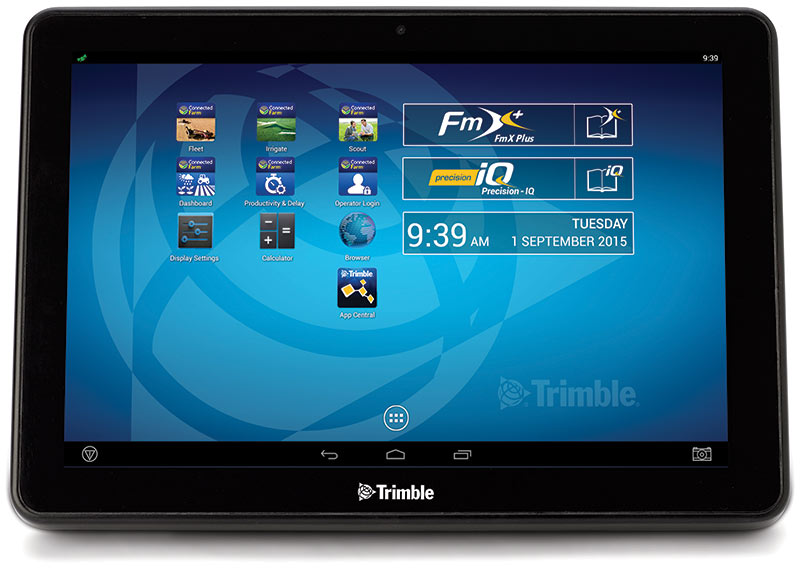
    Trimble has added several new third-party apps to its Android-based Trimble TMX-2050 display for precision agriculture.

    The new apps fall into several categories, including:

    • Diagnostic tools to identify and address implement error codes.
    • Fertilizer calibration charts for various brands of spreaders.
    • Identification of nutrient deficiencies.
    • Planter adjustment recommendations for various planter brands.
    • PDF reader.
    • Work order and documentation-based software applications for agriculture.

    The apps are available for download from App Central marketplace on the TMX-2050 display. App Central provides farmers with enhanced flexibility to install apps, view descriptions and images, report issues, connect with developer partners and stay current with on-demand updates, Trimble says in a news release. Users can search and find the apps most useful to their farm operations, language and regional compliance requirements.

    “As we continue to add third-party apps on our TMX-2050 display, we are providing farmers with more localized choices so they can select the tools that best fit their machines, applications and regional needs,” said Pierre-Andre Rebeyrat, marketing director for Trimble’s agriculture division. “These apps can enable farmers to obtain needed information more easily and quickly, leading to more efficient management of their farm operations.”

    Every new TMX-2050 display solution includes wireless connectivity allowing farmers to view ongoing field activities, real-time commodity prices, real-time weather conditions to guide irrigation and field deployment decisions, and other valuable task information in the Connected Farm dashboard. It also enables wireless data transfer of as-applied maps and other field activities such as planting, spraying or harvesting, simplifying the overall management and transfer of farm data files.

  • Report: Commercial UAV market to reach $2 billion by 2022

    Report: Commercial UAV market to reach $2 billion by 2022


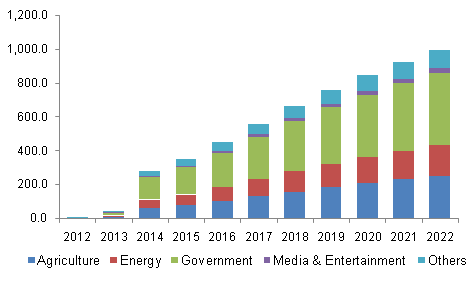
    The global commercial UAV market is expected to reach $2.07 billion by 2022, according to a new study by Grand View Research Inc.

    Increasing applications in agriculture and law enforcement are expected to drive commercial UAV industry growth over the forecast period. Commercial drones are finding applications across various industry verticals globally. Every industrialized country in the world is making investments in drones, thus driving the scope and technological developments for applications in the commercial UAV market.

    Drones are contemporary alternatives for activities where human life cannot be risked. Such drones find applications in various industrial verticals including military, homeland security, retail and agriculture. The demand is significantly higher for military applications, although commercial applications are progressively catching up.

    Aviation regulatory bodies such as the Federal Aviation Administration (FAA) have imposed restrictions on the use of such drones taking into consideration the difficulties in managing such huge air traffic and the safety of the citizens. However, the FAA is known to be undertaking an initiative to accelerate the UAV approval process for public safety agencies and broaden access to civilian organizations for a variety of commercial, industrial and other applications.

    Further key findings from the report suggest:

    • Rotary blade drones accounted for more than 70 percent of the global market share owing to their easy maneuverability and compact design. Moreover, such single and multi-rotor drones equipped with rotary blades have Vertical Take-Off and Landing (VTOL) abilities for applications, where there is limitation of space for fixed blade drones to take off. The development of advanced hybrid UAVs that operate on non-conventional sources of energy and nano, small miniature drones serve multiple applications across various industry verticals.
    • Government applications dominated the global commercial UAV industry constituting more than 40 percent of the market share in 2014. Increasing applications in law enforcement, security and surveillance, R&D activities, infrastructure, disaster management, and environmental studies have led to an increased demand for such unmanned aerial vehicles from the concerned government agencies. Innovative applications across agricultural sector have made it the fastest growing application segment, which is projected to grow at a CAGR of more than 18 percent from 2015 to 2022. Special agricultural drones can take snapshots of fields and help in analyzing crops. In addition, fix winged drones can be used for applications such as watering, spreading seeds, fertilizers, and pesticides over large farm fields that drastically reduce the time required and increase the efficiency.
    • North America is expected to grow at a CAGR of more than 16 percent over the forecast period on account of concentration of major drone manufacturers and increasing applications in the commercial sectors in the region. Governments and technology giants across the world are striving hard to provide internet to the people as a basic necessity. Facebook Inc. recently acquired Ascenta, a drone manufacturer for its pilot project to provide internet in remote areas using drones as movable wireless access points. Relaxation in regulations and increasing use of drones in law enforcement activities in Europe have led to the regional industry growth.
    • Major industry participants include AeroVironment Inc., BAE Systems, DJI, Elbit Systems, Parrot SA, Israel Aerospace Industries, The Boeing Company, and Textron Inc. Manufacturers resort to mergers and acquisitions as their key growth strategy to make their presence felt in the industry. Augmented funding, technological collaborations, and government agencies are expected to emerge as critical success factors for industry growth.

    Grand View Research has segmented the global commercial UAV market on the basis of product, application, and region:

    • Commercial UAV Product Outlook (revenue, USD billion, 2012-2022)
      • Fixed wing
      • Rotary blade
      • Nano
      • Hybrid
    • Commercial UAV Application Outlook (revenue, USD billion, 2012-2022)
      • Agriculture
      • Energy
      • Government
      • Media & Entertainment
      • Others
    • Commercial UAV Regional Outlook (revenue, USD billion, 2012-2022)
      • North America
      • Europe
      • Asia Pacific
      • Latin America
      • MEA

    Learn more about the report here.

  • Galileo satellites set for year-long Einstein experiment

    News from the European Space Agency

    Europe’s fifth and sixth Galileo satellites — subject to complex salvage maneuvers following their launch in 2014 into incorrect orbits — will help to perform an ambitious year-long test of Einstein’s most famous theory.

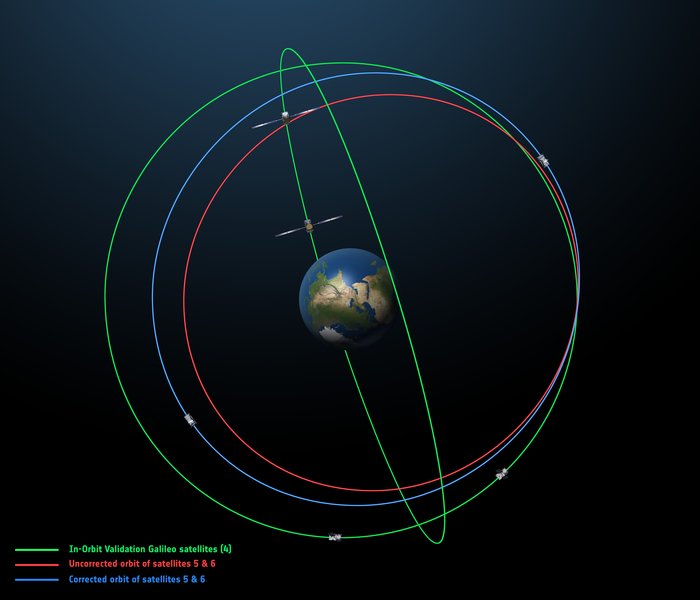
    Galileos 5 and 6 were launched together by a Soyuz rocket on August 22, 2014. But the faulty upper stage stranded them in elongated orbits that blocked their use for navigation.

    ESA’s specialists moved into action and oversaw a demanding set of maneuvers to raise the low points of their orbits and make them more circular. “The satellites can now reliably operate their navigation payloads continuously, and the European Commission, with the support of ESA, is assessing their eventual operational use,” explained ESA’s senior satnav advisor Javier Ventura-Traveset. “In the meantime, the satellites have accidentally become extremely useful scientifically, as tools to test Einstein’s General Theory of Relativity by measuring more accurately than ever before the way that gravity affects the passing of time.”

    The original (in red) and corrected (in blue) orbits of the fifth and sixth Galileo satellites, along with that of the first four satellites (green).
    The original (in red) and corrected (in blue) orbits of the fifth and sixth Galileo satellites, along with that of the first four satellites (green).

    Although the satellites’ orbits have been adjusted, they remain elliptical, with each satellite climbing and falling some 8500 km twice per day. It is those regular shifts in height, and therefore gravity levels, that are valuable to researchers.

    Albert Einstein predicted a century ago that time would pass more slowly close to a massive object. It has been verified experimentally, most significantly in 1976 when a hydrogen maser atomic clock on Gravity Probe A was launched 10,000 km into space, confirming the prediction to within 140 parts in a million.

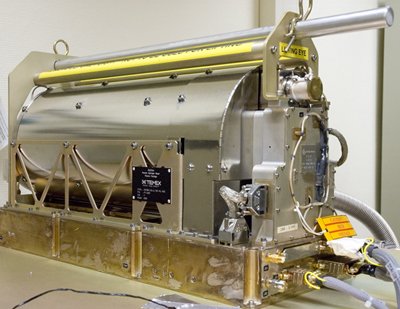
    Passive hydrogen maser atomic clock of the type flown on Galileo, accurate to one second in three million years. (Photo: ESA)
    Passive hydrogen maser atomic clock of the type flown on Galileo, accurate to one second in three million years. (Photo: ESA)

    Atomic clocks on navigation satellites have to take into account they run faster in orbit than on the ground — a few tenths of a microsecond per day, which would give us navigation errors of around 10 km per day.

    “Now, for the first time since Gravity Probe A, we have the opportunity to improve the precision and confirm Einstein’s theory to a higher degree,” comments Javier.

    This new effort takes advantage of the passive hydrogen maser atomic clock aboard each Galileo, the elongated orbits creating varying time dilation, and the continuous monitoring thanks to the global network of ground stations.

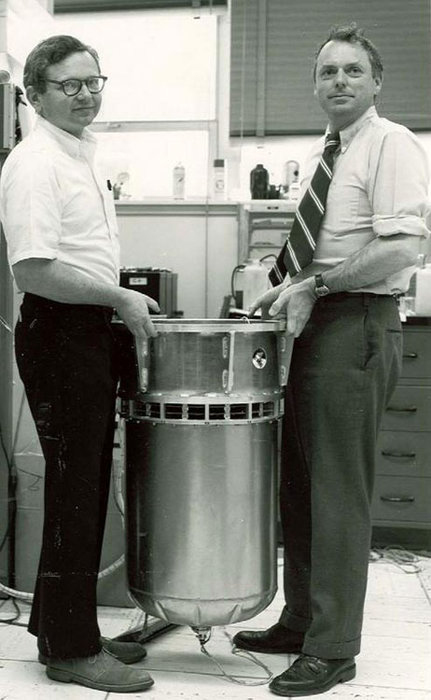
    he Gravity Probe A payload of 1976, flown in a highly elliptic single orbit to measure the ‘gravitational redshift’ of Einstein’s Theory of General Relativity more accurately than ever before, seen with its designers Robert Vessot and Martin Levine of the Smithsonian Astrophysical Observatory. The experiment compared a hydrogen maser clock on Earth with its replica in space as it ascended to about 10 000 km, and confirmed theoretical expectations to an accuracy of 0.02%.
    The Gravity Probe A payload of 1976, flown in a highly elliptic single orbit to measure the “gravitational redshift” of Einstein’s Theory of General Relativity more accurately than ever before, seen with its designers Robert Vessot and Martin Levine of the Smithsonian Astrophysical Observatory. The experiment compared a hydrogen maser clock on Earth with its replica in space as it ascended to about 10,000 km, and confirmed theoretical expectations to an accuracy of 0.02%. (ESA file photo)

    “Moreover, while the Gravity Probe A experiment involved a single orbit of Earth, we will be able to monitor hundreds of orbits over the course of a year,” explained Javier. “This opens up the prospect of gradually refining our measurements by identifying and removing systematic errors. Eliminating those errors is actually one of the big challenges. For that we count on the support of Europe’s best experts plus precise tracking from the International Global Navigation Satellite System Service, along with tracking to centimeter accuracy by laser.”

    The results are expected in about one year, projected to quadruple the accuracy on the Gravity Probe A results.

    The two teams devising the experiments are Germany’s ZARM Center of Applied Space Technology and Microgravity, and France’s SYRTE Systèmes de Référence Temps-Espace, both specialists in fundamental physics research.

    ESA’s forthcoming Atomic Clock Ensemble in Space experiment, planned to fly on the International Space Station in 2017, will go on to test Einstein’s theory down to 2–3 parts per million.

  • Deadline for IGS Workshop Abstracts Is Nov. 25

    IGS Workshop 2016 will be hosted at the University of New South Wales in Sydney, Australia. The IGS invites the GNSS community to participate in a week of presentations, discussions, meetings and events with the theme of “GNSS Futures.”

    Abstracts are being accepted until Nov. 25. In particular, the co-chairs of the session “Scientific uses of IGS data and products” is seeking submissions. Both oral and poster presentations are welcome; oral presentation deadline is Nov. 25, and poster submissions will be accepted until Dec. 16.

    Co-chairs Matt King and Tilo Schӧne offer the following description of the session:

    IGS data and products are now used within a huge range of scientific applications, including studying kinematics of satellites, glaciers, surface reflectometry, ionospheric and tropospheric perturbations, time-transfer and solid Earth deformation over timescales of seconds to decades. This session welcomes presentations focused on the application of IGS data and products to address scientific problems of all kinds. Presentations that consider future needs and applications as well as present applications are especially welcome.

    Workshop website and abstract submission.


  • New Navia GLONASS navigation receiver released

    New Navia GLONASS navigation receiver released

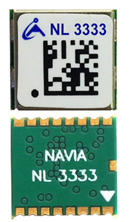
    GLONASS module Navia NL3333The new GLONASS module Navia NL3333 has been released by the EuroMobile Wireless Solutions Company. The module is made in an original 8.7 millimeter by 9.5 millimeter form-factor on the base of MediaTek MT3333 chipset. The manufacturer has achieved reduced dimensions, as well as significant reduction in a power consumption compared with previous Navia modules. In all such significant improvements, according to the manufacturer, the price remains at an accessible level.

    Compared with other modules, the Navia NL3333 has a more flexible power scheme, with an active antenna power supply displayed on the additional output. This allows the customer to save space on the board using a passive antenna or install the necessary RF isolation (inductance) when an active antenna is necessary.

    Though labeled a GLONASS receiver, the Navia uses all of the GNSS constellations: GPS, GLONASS, Galileo, QZSS and BeiDou. NL3333 has high sensitivity and fast time to first fix (TTFF). The module includes a noise reduction 12-step system. The module power range is 2.8 – 4.2 V, which can successfully be used in projects powered by Li-Pol batteries. The module connection is via UART, and the data are issued by NMEA protocol.

    The EuroMobile Wireless Solutions Company will display its latest developments at booth 81В40 at the 2016 Navitech exhibition, which will be held May 10-13 at the Expocentre Fairgrounds in Moscow.

  • Trimble Thunderbolt PTP Grandmaster Clock Designed for Next-Generation Networks

    Trimble has introduced a new grandmaster clock to address the synchronization needs of the fast growing next-generation LTE-Advanced and small cell network market. The Thunderbolt PTP Grandmaster Clock (GC), coming in the first quarter of 2016, was introduced at the ITSF 2015 Time and Synchronization in Telecoms Conference, held in Edinburgh, UK, Nov. 2-5.

    Trimble said it value-engineered the industry-standard grandmaster clock, focusing on the features required in next-generation networks, including dual gigabit Ethernet ports and a small form-factor pluggable module port for optical connections. Its low price point enables network architects to move the timing source from the core to the edge of the network, enabling higher phase and frequency precision at the Precision Time Protocol (PTP) clients.

    “Trimble entered this market to expand on our success in GNSS timing solutions for telecom networks,” said Karen Guldan, general manager of Trimble’s Time & Frequency Division. “The design and development of the GC focused on creating an optimized solution for network providers — at a price point of less than $2,000, it is intended to be a game-changer in small-cell network design. The GC’s features provide superior value to service providers.”

    With flexible network interface protocols and easy integration, Trimble optimized the GC to deliver precise frequency and phase synchronization signals for LTE-Advanced and small cell networks supporting IEEE 1588 PTP, Network Time Protocol (NTP) and Synchronous Ethernet simultaneously. The GC supports up to 250 simultaneous PTP clients and 5,000 NTP transactions per second, and is designed for small- and medium-scale deployment.

    With a small form factor of half rack 1RU, users may deploy the Trimble GC either indoors or outdoors. In a server room, the Trimble GC deploys in a side-by-side configuration to provide timing redundancy. For outdoor applications, the Trimble GMC also features an extended operating temperature range for use in non-typical networking environments such as a telecom cabinet. The Trimble GC configures for AC and DC power.

    The GC was designed to provide continuous availability of traceable time. The GC includes an embedded, multi-GNSS (GPS, GLONASS, BeiDou and Galileo-ready) receiver to generate precise 10MHz and pulse per second outputs. Utilizing the latest in GNSS technology combined with a precision oscillator, the GC provides better than 3 microsecond phase holdover over a 24-hour period.

    The Trimble Thunderbolt PTP Grandmaster Clock is expected to be available in the first quarter of 2016.

  • KVH Awarded TACNAV and Field Service Support Contracts Totaling $2.7M

    KVH Awarded TACNAV and Field Service Support Contracts Totaling $2.7M

    (Photo: KVH Industries)
    With the new contracts, KVH’s tactical navigation (TACNAV) products will be used on more armored vehicles. (Photo: KVH Industries)

    KVH Industries’ guidance and stabilization business has been awarded two contracts totaling $2.7 million:

    • a $1.3 million contract to provide field service representative (FSR) support to an allied country in the Middle East related to KVH’s tactical navigation (TACNAV) systems installed on military vehicles; and
    • a $1.4 million contract for the delivery of TACNAV systems for use by an international military customer in an armored vehicle application.

    KVH’s FSR support will include installation, operations and maintenance of KVH tactical navigation devices purchased by the customer, and full-time technical support throughout the customer’s territory. The $1.3 million contract covers two years of support beginning immediately, with an extension option for three more years and an additional $2.2 million.

    For the $1.4 million contract, KVH will deliver a tactical navigation system designed to help military vehicle crews maintain 100 percent situational awareness with or without GPS; the system is a variant of KVH’s TACNAV TLS and TACNAV Light. The hardware shipments for this order are expected to take place in the fourth quarter of 2015.

    “KVH’s TACNAV solution serves as a crucial resource for navigation and battle management, keeping soldiers safe and out of harm’s way wherever they travel,” said Dan Conway, executive vice president of KVH’s guidance and stabilization group. “This new order reaffirms the value of KVH’s TACNAV products as an important tool for U.S. and allied warfighters, providing precision navigation as well as coordination of vehicles in critical situations, and adds to our backlog for the year.”

    All of KVH’s TACNAV military vehicle navigation systems provide unjammable precision navigation, heading and pointing data for vehicle drivers, crews and commanders. TACNAV can also serve as a heading and position source for situational awareness. The TACNAV system ordered in the new contracts features a compact design, continuous heading and pointing data output, and a flexible architecture that allows it to function as either a standalone navigation module or as the heart of an expanded, multifunctional TACNAV system. The system is designed to integrate with Battle Management Systems (BMS) and is a vital component for effective battlefield management.

    TACNAV systems are currently in use by the U.S. Army and Marine Corps, as well as many allied customers including Canada, Sweden, Great Britain, France, Germany, Spain, Egypt, Botswana, Australia, New Zealand, Saudi Arabia, Taiwan, Romania, Poland, Turkey, Malaysia, Switzerland, South Korea, Singapore, Brazil and Italy.

  • Spirent Issues Ebook on Testing Drones, UAVs

    Photo: Spirent

    Spirent has issued a free new 28-page ebook designed to provide An Introduction to Testing Navigation and Positioning Performance in Drones, UAS and UAVs.

    According to Spirent, “The use of unmanned aerial vehicles (UAVs) is starting to take off in commercial and military sectors. The potential applications of UAVs are many – including survey, mapping, media reporting, delivery, reconnaissance, conservation and search & rescue. What’s more, in some cases the cost of using UAVs has been found to be up to 98.8% cheaper than manned aircraft.

    “But it is still early days, and for designers and developers of UAVs, there are many challenges in bringing viable models to market and putting them to work.”

    The ebook looks at those challenges and sets out the main positioning and navigation considerations that UAV test teams should incorporate into their test regime, Spirent said. It covers:

    • GNSS/GPS performance considerations — how to evaluate positioning capabilities of UAVs
    • UAV design considerations, including where GNSS receivers should be placed, the type of antenna needed and more
    • Which environmental/external factors need to be considered, such as wind, temperature and multipath effects
    • Compliance considerations.

    The ebook can be ordered through Spirent.