Author: GPS World Staff

  • Spectra Precision Introduces New and Enhanced Survey Solutions

    Spectra Precision introduced at INTERGEO this week new and enhanced products in its portfolio of survey solutions. With the new additions, survey and construction professionals have more positioning instrument choices to meet their job requirements, the company said.

    Spectra Precision made the announcement at INTERGEO 2015, the world’s largest conference on geodesy, geoinformatics and land management.

    The new and enhanced products include:

    Spectra Precision FOCUS 35 RX – A new range of motorized total stations providing high-speed, accuracy and precision in measurement. The FOCUS 35 RX robotic instrument moves the power of the observer from the instrument to the range pole, improving efficiency. The speed of observation and precise positioning of the FOCUS 35 RX Robotic Total Station is provided by patented StepDrive motion technology, which controls the horizontal and vertical motion of the motors, eliminating the need for traditional motion locks. The FOCUS 35 RX includes a tracking sensor that uses LockNGo FastTrack tracking technology, enabling the instrument to constantly lock onto the prism.

    The FOCUS 35 RX is available in 2”, 3” or 5” accuracies, features market leading extended operating time with its dual battery system and is controlled externally by Spectra Precision Ranger, Nomad, or T41 data collectors running Spectra Precision Survey Pro or Spectra Precision Layout Pro field software on the Ranger or Nomad.

    “The streamlined design, extremely light weight, very quick turning speed and exceptional battery life enhance the overall value-proposition of the FOCUS 35 RX and make this instrument a very compelling choice for a wide range of survey and construction applications,” said Olivier Casabianca, Spectra Precision Business Area Director. “With the introduction of the FOCUS 35 RX, Spectra Precision continues to expand and improve its portfolio with powerful solutions using new technologies.”

    Spectra Precision Nomad 1050 Data Collector — The Nomad 900 has been updated with new features and capabilities. The Nomad 1050 has more RAM, more Flash and more speed. The base processor is now 1 GHz compared to 806 MHz on Nomad 900 and the Nomad 1050 has 512-MB RAM and 8GB flash storage. The other major enhancement is a new 3.75-G dual-mode GSM and CDMA WWAN modem to provide fast and versatile connectivity for Spectra Precision customers. Also, the new WWAN module uses an internal antenna eliminating the need for an external antenna.

    Spectra Precision Survey Pro 5.7 Field Software — Constant improvement and enhancement continues with Survey Pro. Survey Pro version 5.7 contains significant changes to enable more productive field data collection. Included in this update are new map displays that enable viewing and managing most of the map features that are located on the main map display. The GNSS and robotic staking screens can also display a map view to include background maps along with the standard dynamic guidance control option. The GNSS offsets routine has been updated and now includes a distance-distance option. For those customers who wish to use GNSS and robotic simultaneously, there are now enhanced options for configuration and switching between modes.

    Spectra Precision Survey Office v3.60 Software — Spectra Precision Survey Office now includes enhanced functionality; support for the Spectra Precision FOCUS DL-15 Digital Level and the import of leveling data from any DiNi level; least squares and 5 and 7 parameter Helmert transformations with reports; Geoid 12B support and grouping by country in the Coordinate System Manager; Point Cloud support plus many more additional enhancements.

    Spectra Precision MobileMapper Field GIS Application for Android Devices — A new version of the popular MobileMapper Field GIS application now running on Android devices. This new software is dedicated to GIS data collection and focuses on simplicity to maximize the number of field personnel contributing to the geospatial business. Primarily for MobileMapper 300 users, the application will be the key component of Spectra Precision’s Bring Your Own Device (BYOD) solution. This makes it possible to pair Android tablets and/or smart phones with the MobileMapper 300 GNSS receiver to collect GIS data with survey-grade accuracy.

    “With the introduction of these new and enhanced products into the Spectra Precision portfolio, survey and construction professionals have a wider range of economical choices to get the job done,” said Olivier Casabianca. “These new Spectra Precision optical products complement the ground-breaking line of Spectra Precision solutions, enabling Spectra Precision to offer a complete range of survey products.”
  • Applanix Offers Entry-Level Georeferencing Solution for Airborne Mapping

    Applanix Offers Entry-Level Georeferencing Solution for Airborne Mapping

    POS-LVX_AVX_2-W
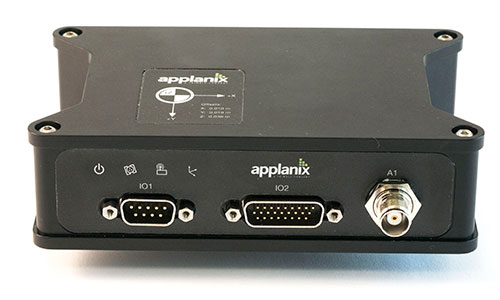
    The POS-AVX 210 by Applanix.

    Applanix Corporation has announced the POS AVX 210, the latest addition to its airborne position and orientation portfolio for direct georeferencing of airborne mapping sensors. Using Applanix’ GNSS and inertial technology, the POS AVX 210 enables airborne surveyors to achieve gains in accuracy, efficiency and productivity for low-altitude or small form factor sensors, when compared to GNSS-only point-matching or aerial triangulation techniques.

    The announcement was made at the INTERGEO 2015 conference and exhibition in Stuttgart, where Applanix is exhibiting in Hall 8, Booth C8.047.

    For photogrammetric applications, the POS AVX 210 delivers highly accurate exterior orientation solutions — reducing the requirement for ground control in assisted aerial triangulation of digital single lens reflex (DSLR) or medium-format photogrammetric imagery. For low-altitude lidar applications, the POS AVX 210 provides the required precision and accuracy of direct georeferencing to enable users to generate point clouds for further refinement in adjustment software.

    The POS AVX 210 is fully compatible with, and supported by, POSPac MMS, Applanix’ post-mission software for direct georeferencing of airborne mapping sensors. It is also features a seamless integration with the NanoTrack system from Track’Air, a leading commercial flight management system designed for highly efficient survey flight operations. Aircraft equipped with the POS AVX 210 and NanoTrack will be able to fly missions with reduced sidelap between flightlines, and a greatly reduced requirement for ground control points. These benefits can reduce costs and improve the efficiency of both data collection and the production of finished data sets for end users.

    “With POS AVX 210, Applanix has answered a need in the marketplace for a small, compact system that enables efficient data gathering from low-cost yet highly effective sensors. These include DSLR and Medium format cameras, low-altitude lidar systems, and other systems,” said Joe Hutton, director of Inertial Technology and Airborne Products at Applanix.

    POS AVX 210 consists of a single rugged enclosure containing a precision GNSS receiver and micro-electro-mechanical-system (MEMS) inertial sensors calibrated with the Applanix SmartCal technology, coupled with on-board data logging capability and interfaces for mapping sensors and flight management systems. POSPac MMS, available as an option with POS AVX 210, is a powerful GNSS-inertial processing software package that includes proprietary advanced capabilities such as the Applanix SmartBase virtual reference station, Applanix InFusion algorithms for increased productivity, and CalQC, a suite of data optimization and quality management tools.

    “POS AVX 210 builds on the technological foundation of our established POS AV portfolio for large format sensors, and brings into play the innovations developed for our unmanned solutions. This combination of experience and innovation enables us to deliver a package that strikes the optimal balance between price and performance for this segment,” Hutton said.

    POS AVX 210 is expected to be available in the first quarter of 2016 through Applanix’ airborne sales channels.

  • Septentrio Launches AsteRx-U and AsteRx-U Marine

    AsteRxU_left_orientation-W

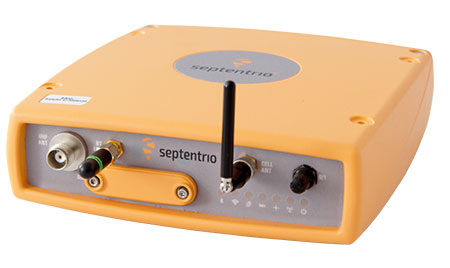
    Septentrio this week is launching two successors to its APS-U: The AsteRx-U and the AsteRx-U Marine multi-constellation dual-antenna receivers. The AsteRx-U will be presented to the public for the first time at two trade shows this week. ION GNSS+ takes place Sept.14-18 in Tampa, Fla., and INTERGEO 2015 will be held in Stuttgart, Germany, Sept. 14-18.

    The AsteRx-U and the AsteRx-U Marine incorporate the latest GNSS tracking and positioning algorithms and interference mitigation. Machine-control users in the agricultural and construction industries, as well as users in marine and mining industries, benefit from a complete system with integrated UHF radio, Wi-Fi, USB, Bluetooth and cellular connectivity and a spectrum analyzer, Septentrio said. All configurations can be done via the on-board web interface.

    The AsteRx-U and AsteRx-U Marine feature a full range of positioning techniques and algorithms to ensure that users have the highest accuracy and reliability. The spectrum analyzer enables users to visualize the RF spectrum. Based on its extensive experience with real-life interference sources and their mitigation, Septentrio has developed interference mitigation technology that automatically counteracts various kinds of ambient intentional and unintentional RF interference.

    The AsteRx-U family of receivers is built around Septentrio’s latest ASIC, GReCo4, which was introduced in 2014. It incorporates built-in jamming detection and countermeasures, multi-path rejection, fast acquisition and other advanced features. Both receivers have more than 500 hardware channels to track all available constellations (GPS, GLONASS, Galileo, Beidou, IRNSS and QZSS) and feature many algorithms: LOCK+ technology to maintain tracking during heavy vibration machine use and IONO+ technology to assure the accuracy of the position even in regions of elevated ionospheric activity.

    The AsteRx-U has decimeter- and centimeter-level RTK positioning including TerraStar. The AsteRx-U Marine also supports Veripos PPP augmentation services. It includes extra anti-jamming technology to counter Iridium and INMARSAT-uplink interference, as well as an extra antenna connector for a dedicated L-band antenna to optimize L-band reception at high latitudes.

    Straightforward to set up and integrate with existing systems, the AsteRx-U and AsteRx-U Marine use any device with a web browser to facilitate usability and configuration for the user.

    “We want to make it easy for our customers to use high-accuracy positioning in their work,” said Jan Leyssens, Septentrio product manager. “Using the integrated communication functionality in the compact and portable AsteRx-U, users won’t have to worry about adding their own modems or UHF radios to get access to corrections.”

    Leyssens continued, “The receiver web interface is available wirelessly on any mobile device. It was designed together with several of our key customers, resulting in an interface that is not only easy to use by field operators, but also provides many useful troubleshooting tools, such as the spectrum analyzer, to solve problems in the field and minimize downtime.”

    Septentrio will be at Booth 318 at ION GNSS+, and at Hall: 4, Booth: D4.014, at INTERGEO.

  • Hemisphere GNSS’ Atlas Makes Trade Show Debut at INTERGEO

    Hemisphere GNSS’ Atlas Makes Trade Show Debut at INTERGEO

    Hemisphere GNSS will be showcasing its new Atlas GNSS global correction service at the INTERGEO 2015 Conference and Trade Fair Fair in Stuttgart, Germany, held Sept. 15-17. Hemisphere GNSS will exhibit at Booth E6.093.

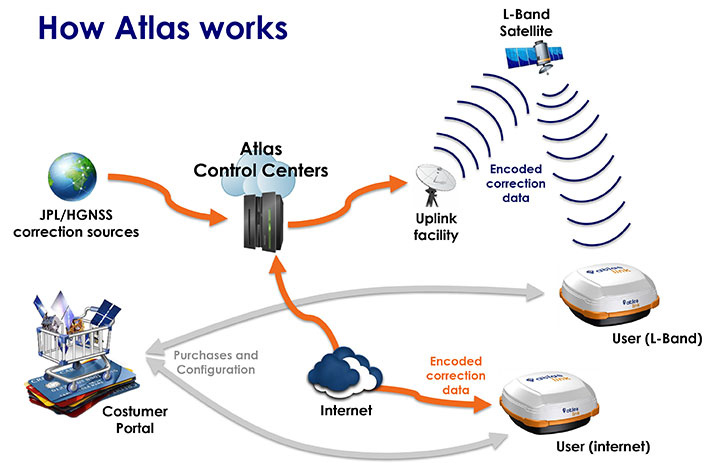
    The Atlas correction service offers innovative and accessible correction service options, providing performance in demanding applications and environments, Hemisphere said. Available through various subscription and bundle options, Atlas is a flexible correction service with correction data delivered via L-band satellites or over the Internet at accuracy levels ranging from meter-level to sub decimeter-level.

    ATLAS-Launch-1-howworks-W

    The Atlas platform offers endless possibilities through hardware, software, and branding integration into various products and customized solutions, the company said. Several new Hemisphere products with Atlas support targeted for specific applications will be on display at INTERGEO, including Hemisphere’s latest AtlasLink GNSS smart antenna. Other Atlas capable products, including R330, V320 and VS330 will also be showcased.

    Photo: AtlasLinkAtlasLink, the multi-GNSS, multi-frequency smart antenna, is preconfigured to receive corrections from the new Atlas platform. The bundled AtlasLink solution provides users worldwide with the easiest way to utilize Atlas corrections — either directly from AtlasLink, or on their existing receivers via innovative new technologies built into AtlasLink.

    “AtlasLink is a game changer” declared Chuck Joseph, Hemisphere GNSS CEO and president. “On its own it is a fantastic smart antenna with industry-leading RTK, connectivity and management capabilities. Further, when you add in the ability to deliver Atlas GNSS corrections to equipment you already own, from any vendor, you have a real powerhouse that will allow you to get much more from your existing GNSS equipment.”

    Live demonstrations of Atlas GNSS global correction service and AtlasLink GNSS smart antenna will be given daily. Contact Hemisphere GNSS to schedule a time or visit booth E6.093 during the show.

  • New Spirent Test Framework Evaluates Threats to GPS, GNSS

    New Spirent Test Framework Evaluates Threats to GPS, GNSS

    GNSS Interference Detector System.
    GNSS Interference Detector System.

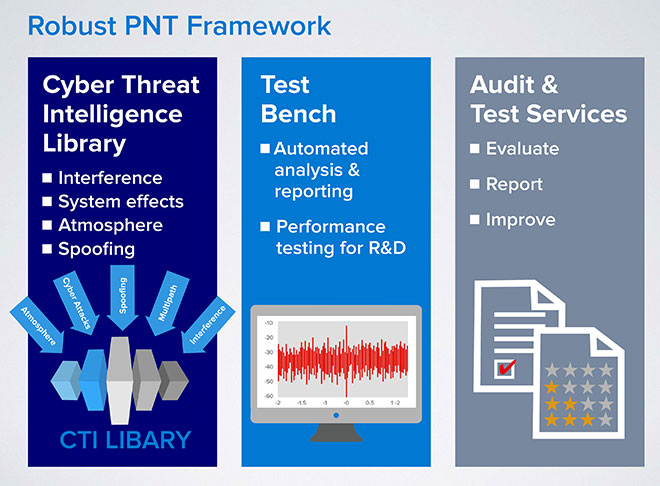
    Spirent Communications has announced a Robust PNT Test Framework that evaluates GPS and GNSS security vulnerabilities for positioning, navigation and timing (PNT) systems.

    Threats to GNSS and related PNT applications are more orchestrated and coordinated, with the motivation to disrupt or cause financial loss. The technology to disrupt GPS has also become much more accessible, resulting in GPS vulnerability gaining attention at hacker conventions.

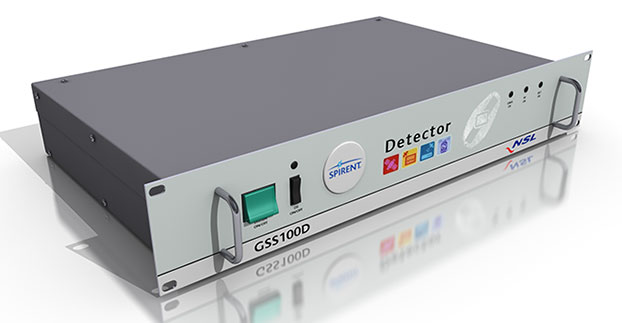
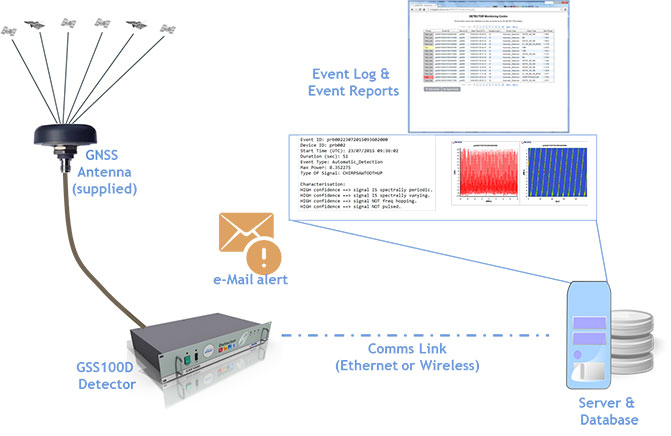
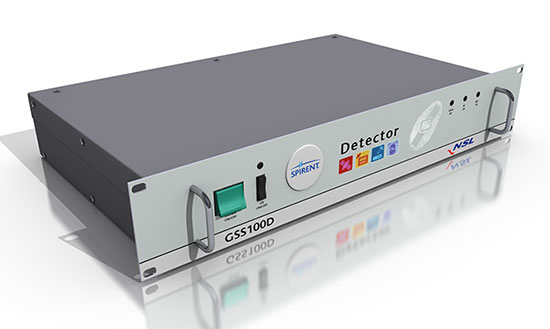
    Spirent’s GSS100D Detector, developed in collaboration with Nottingham Scientific Ltd, enables detection, characterization and analysis of real GNSS threats.
    Spirent’s GSS100D Detector, developed in collaboration with Nottingham Scientific Ltd, enables detection, characterization and analysis of real GNSS threats.

    The Robust PNT Test Framework will be used by technology, system and application developers where PNT is critical. Spirent’s framework enables threats to be detected in the field, taken into the lab and re-synthesized along with GPS and other GNSS signals. In addition, Spirent’s threat intelligence library of actual and typical threats provides a wide range of GNSS segment errors and spoofing attacks, as well as space weather and other vulnerabilities for preventive troubleshooting.

    “Spirent wants to move beyond talking about the increase of GNSS vulnerabilities and offer a pragmatic approach to enable informed decision making when it comes to evaluating the impact of vulnerabilities,” said John Pottle, marketing director of Spirent’s Positioning Technology Division. “Through our Robust PNT Test Framework Spirent is pulling everything together to enable users to readily audit systems and take practical steps to improve resilience.”

    Spirent’s New GSS100D Detector, developed in collaboration with Nottingham Scientific Ltd., enables detection, characterization and analysis of real GNSS threats.

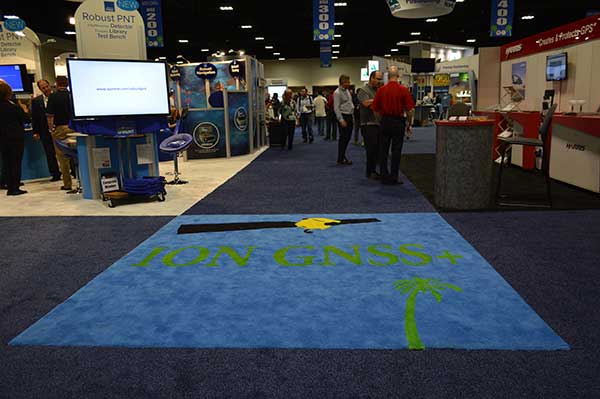
    The Robust PNT test framework is being demonstrated on the Spirent booth at ION GNSS+ 2015 this week.

    Spirent’s Robust PNT Test Framework.
    Spirent’s Robust PNT Test Framework.
  • Why Did Google Scrap Its Location Service?

    Why Did Google Scrap Its Location Service?

    Reasons Cited Include Privacy, Lack of Retail Support

    Kevin Dennehy
    Kevin Dennehy

    Google Here, a proposed beacon-based location service operating within Google Maps, was reportedly cancelled due to a concern by Alphabet CEO Larry Page’s that it would be too invasive by the users of his mapping service. When the location industry has such a dominant player pull out of a nascent, and potentially lucrative, proximity service, does it mean that consumers will now have to wait for a full-scale rollout? Google will remain a major player with its Google Maps app, but where does it go from there?

    Citing privacy issues and lack of retail partners for support, Google scraped its Google Here location service that would have used the company’s Maps technology to send notifications to users when they entered a specific location.

    In a recent Fortune article, Alphabet CEO Larry Page said the company killed the project because it was too invasive to consumers, and the company was uncertain whether retail partners could have helped to roll out the service. Besides being in conflict with an existing location Here name (such as the former Nokia, and now German consortium, mapping service), the service included partnerships with retailers — and would have been available to more than 350 million Android users earlier this year.

    Google makes money off of advertising through its Maps app, but the Fortune article said that the proposed Here location service would have made it even more valuable to advertisers.

    So what does the location industry make of one of the largest players not rolling out a location service? To at least one analyst, it’s a “so what” report considering Google in July rolled out a new agnostic beacon service called Eddystone. “Somewhat curiously, the company appears to be moving forward with location-based advertising under the guise of the Eddystone project, so beacons and their use in location-based advertising seem still of interest — just not beacons combined with messaging that might make Google Maps an uncontrollable nag about shopping opportunities,” said Mike Dobson, Telemapics president.

    Eddystone, a new format for Bluetooth Low Energy beacons, works with Google’s Android operating system along with Apple’s iOS and other platforms that connect through BLE.

    Overall, Dobson believes that Google is approaching middle-age in terms of corporate development. “It is both developing a conscience about how its services really operate, as well as imposing economic constraints limiting how much the company is willing to spend to determine whether a potential market might be a big hit,” he said. “More specifically, it is my opinion that Google is slowly reining in the spending on new innovations for Google Maps, as well as the expenses associated with supporting the lakes in the data reservoir associated with their mapping product. Google may have finally realized that maintaining spatial data is expensive and a cost that is never going to decrease.”

    Dobson also said that the Google Here program was going to be an expensive proposition. “My understanding of the Google Here program was that Google would provide the beacons and infrastructure and control delivery of the service through Google Maps. That’s a lot of beacons and associated support — in other words, more money,” he said. “Conversely, Eddystone appears to offer a standardized, industry-supported approach that is beneficial for Google and companies interested in testing the concept.”

    Dobson said the name “Here” could have caused problems for Google. “Two other issues crossed my mind when I heard the news of the cancellation. First, who at Google forgot trademark law and thought they could combine the name of the well-known mapping company Here with Google?” he said. “Second, if I owned an application as successful as Google Maps is on mobile phones, I sure would not want to push my users to consider switching to a less-invasive mapping app. You know, that Larry Page guy sure seems to know his Alphabet.”

    Big Competitors Getting into Beacons, with Huge Market Expected

    Recent Allied Business Intelligence reports indicate that BLE beacon shipments will exceed 400 million units by 2020. While optimistic, and only five years away, ABI said that pure beacon shipment revenues will break $1 billion this year.

    Google’s July entry into the location-beacon space is significant, if not surprising, to heat up the location market. However, competition is fierce as Apple, Facebook and Twitter now have dedicated BLE resources.

    The location-beacon market is heating up as Gimbal, the Qualcomm spin-off company, installed approximately 1,300 BLE beacons in areas at South by Southwest. Gimbal said it was making its technology available to enable any BLE device to act as a dedicated location beacon.

    Google plans to improve its own products and services through the Eddystone beacon technology, according to a company blog. Earlier this year, the company launched beacon-based transit notifications in Portland that enable users to get faster access to schedules for specific locations.

    With rise in commercial location-based beacon technology comes a cross-over movement in public safety markets. TeleCommunication Systems, which bought Loctronix in July, is developing the indoor public safety and emergency market, along with Longmont, Colo.-based Intrado.

    As detailed in last month’s Wireless LBS Insider column, beacons and Wi-Fi seem to be the lead technologies in use for emergency indoor location. Intrado installed 65 Apple iBeacons at the Washington Convention Center to showcase its developing indoor positioning technology at the APCO trade show.

    It’s not all about beacons in this proximity/contextual location market. The analytical data derived from the beacon information will grow into a huge market. As we reported this summer, a new location analytics product is hitting the market in a more and more crowded indoor-positioning field.

    Such companies as Cloud4Wi, with its Fogsense product, is tailored to retail outlets, coffee shops, restaurant chains and shopping malls with presence analytics and location-based services.

    The device, which contains Broadcom’s WICED chip, features BLE technology in the new version in (the fourth quarter), said Elena Briola, Cloud4Wi’s chief marketing officer. The new BLE version will enable Apple iBeacon and location-aware mobile applications, the company said.

  • Live updates from Intergeo 2015

    intergeo15_pano_WGPS World staff is reporting from Intergeo Sept. 15–17. The massive trade show, held this year in Stuttgart, Germany, is considered the world’s leading conference trade fair for geodesy, geoinformation and land management. With more than 16,000 visitors from 80 countries, it is one of the key platforms for industry dialogue.

    Editorial staff members attending include GPS World Survey/GIS Editor Eric Gakstatter and Senior Digital Editor Joelle Harms. Both are accepting meeting invitations for companies interested in discussing their products and services. Contact [email protected] for more information.

    BLOG

    First Day at INTERGEO: UAVs and RTK GNSS Receivers, by Eric Gakstatter (9/15)

    NEWS

    Nikon-Trimble Introduces Updated Nikon Total Stations (9/15)

    Spectra Precision Introduces New and Enhanced Survey Solutions (9/15)

    Trimble Launches R2 GNSS Receiver at INTERGEO (9/15)

    Applanix Offers Entry-Level Georeferencing Solution for Airborne Mapping (9/15)

    senseFly eXom Drone Capable of Millimeter Accuracy (9/15)

    Topcon Releases Three New GLS Laser Scanners (9/15)

    Carlson SurvCE 5.0 Improvements on Display at INTERGEO (9/14)

    Septentrio Launches AsteRx-U and AsteRx-U Marine (9/14)

    Hemisphere GNSS’ Atlas Makes Trade Show Debut at INTERGEO (9/14)

    Tallysman Introduces VeraPhase 6000 High-Precision GNSS Antenna (9/10)

    Mobile Surveying Solutions from Teledyne Optech Shown at INTERGEO 2015 (9/9)

    SBG, Viametris Present 3D Indoor Scanning System at INTERGEO (9/8)

    YellowScan Lidar for UAVs Aided by Ellipse-E Inertial Navigation System (9/4)

    INTERGEO 2015: Stuttgart Moves Toward Smart City (9/3)

    JAVAD GNSS to Showcase New Technology at INTERGEO (9/1)

    Tallysman Introduces Wideband Embedded GNSS Antennas (9/1)

    Tallysman Launches Higher Gain Dual-Frequency Antenna (8/19)

    Satel Joins with Antenna Maker Welotec at INTERGEO (8/12)

    INTERGEO in Stuttgart Looks to Mapping’s Future (8/4)

    VIDEO PLAYLIST

    PHOTOS

    SOCIAL MEDIA

  • Live from ION GNSS+ 2015

    Live from ION GNSS+ 2015

    Tampa_Waterfront_O

    The GPS World staff reports live from ION GNSS+ in Tampa, Fla., September 14–18, providing news, photos, videos and more. GPS World will be there with a full team, including Editor and Publisher Alan Cameron, Managing Editor Tracy Cozzens, and our market-sector editors. We’ll be providing near-real-time coverage of the show on GPSworld.com and on Twitter.

    GPS World will also video record the indoor navigation demonstrations, and portions will be posted online at the GPS World YouTube channel.

    If you’re attending, be sure to come by the GPS World booth during the exhibit hall reception Wednesday evening to film a video-selfie with Mary Ann, our August cover great white shark. The video-selfies give you 30 seconds to tell us about yourself and will be posted to our YouTube channel.

    Check back throughout the week for updated information from the event.

    BLOGS

    Highlights from the Grand-Daddy of All GNSS Technical Conferences, by Tony Murfin (9/23)

    ION GNSS+ Plenary Navigates to Space, and Beyond, by Tracy Cozzens (9/16)

    ION GNSS+ Preview: UAVs, Indoor Location and a Shark!, by Alan Cameron (8/19)

    NEWS

    Broadcom Offers New GNSS Chip for Internet of Things (9/17)

    Unicore Releases GNSS High-Precision Board (9/17)

    UNAVCO Names Septentrio Preferred Vendor for GNSS Reference Stations (9/16)

    Septentrio Launches AsteRx-U and AsteRx-U MARINE (9/14)

    New Spirent Test Framework Evaluates Threats to GPS, GNSS (9/14)

    KVH Inertial Solutions Showcased at ION GNSS+ (9/9)

    Averna and Skydel Join for Demonstrations at ION GNSS+ (9/9)

    PCTEL to Offer Range of Antennas at ION GNSS+ (9/2)

    TAG’s Military Survey System on Display at ION GNSS+ (9/2)

    ION GNSS+: To Space and Beyond (8/3)

    ION GNSS+ 2015 Technical Program Available Online (4/8)

    VIDEOS

    Alan Cameron, GPS World editor and publisher, explains the importance of ION GNSS+.


    PHOTOS

  • Market Report Assesses U.S. GNSS Industry

    The United States GNSS Industry 2015 Market Research Report, now available from Wise Guy Reports, is a professional and in-depth study on the current state of the GNSS industry.

    The 316-page QYResearch Group report provides a basic overview of the industry including definitions, classifications, applications and industry chain structure. The GNSS market analysis is provided for the United States markets including development trends, competitive landscape analysis, and key regions development status.

    Development policies and plans are discussed as well as manufacturing processes and Bill of Materials cost structures are also analyzed. This report also states import/export consumption, supply and demand figures, cost, price, revenue and gross margins.

    The report focuses on leading industry players in the U.S., providing information such as company profiles, product picture and specification, capacity, production, price, cost, revenue and contact information. Upstream raw materials and equipment and downstream demand analysis is also carried out. The GNSS industry development trends and marketing channels are analyzed. Finally, the feasibility of new investment projects are assessed and overall research conclusions offered.

    With 335 tables and figures, the report provides key statistics on the state of the industry and is directed at companies and individuals interested in the market.

  • Galileo Launch Maintains 2015 Record Pace for Arianespace

    Galileo Launch Maintains 2015 Record Pace for Arianespace

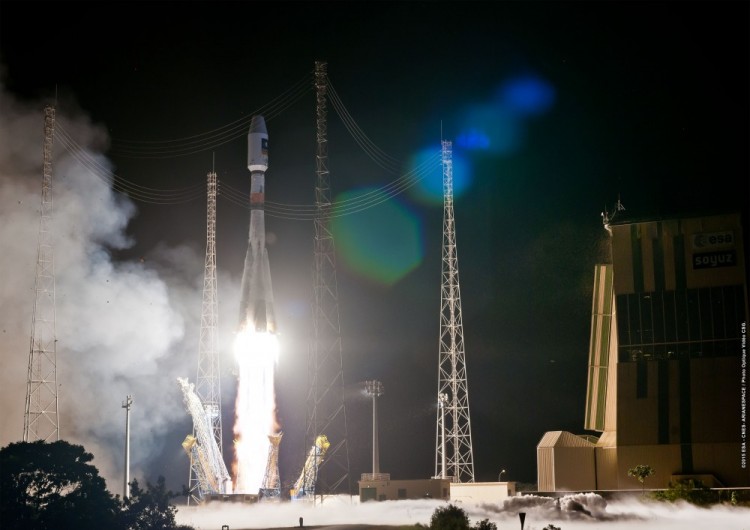
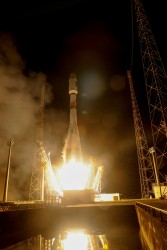
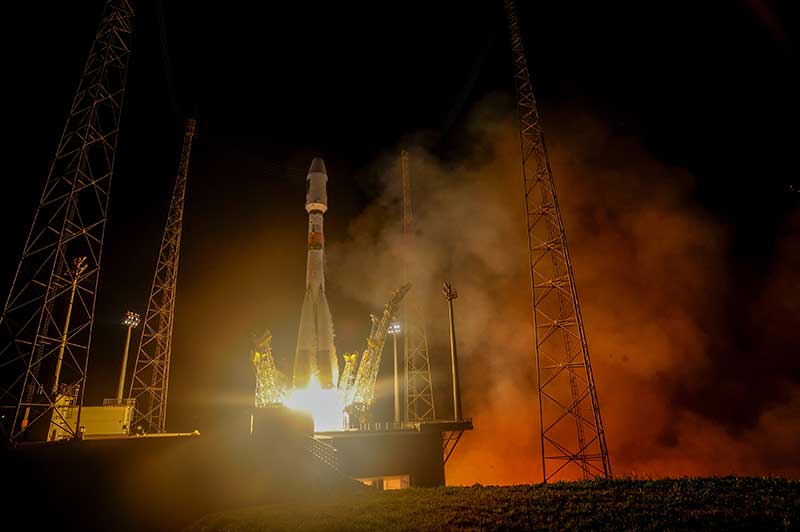
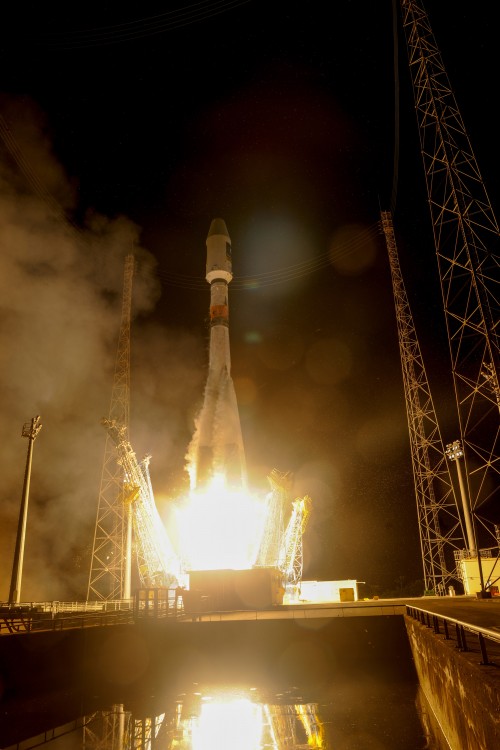
    Soyuz launches Galileo 9 and 10 into orbit on Sept.10. (Credit: Arianespace)
    Soyuz launches Galileo 9 and 10 into orbit on Sept.10. (Credit: Arianespace)

    Arianespace’s 12th Soyuz flight from the Spaceport in French Guiana orbited two more spacecraft for Europe’s Galileo satellite navigation system on Sept. 10.

    2015 is an important year for Arianespace at the service of European institutions, with 11 payloads to be orbited utilizing the company’s family of Soyuz, the heavy-lift Ariane 5 and lightweight Vega, Arianespace Chairman and CEO Stéphane Israël said after the liftoff.

    Departing the Spaceport’s ELS launch complex near the city of Sinnamary at the planned exact liftoff time of 11:08:10 p.m. (local time in French Guiana), Soyuz deployed its two latest Galileo passengers after a flight of just under three hours and 47 minutes. This included the propulsion of Soyuz’ first three stages and two burns of its Fregat upper stage.

    Israël noted these are the ninth and tenth Galileo spacecraft orbited by Arianespace, joining a constellation that ultimately will consist of 30 satellites. The satellites, named Alba and Oriana, are the latest FOC (Full Operational Capability) satellites, which are to operate in Galileo’s Orbital Plane A — one of three orbital planes being populated by the European navigation spacecraft.

    The European Commission is managing and funding Galileo’s FOC phase, during which the network’s complete operational and ground infrastructure is being deployed. Design and procurement agent responsibilities have been delegated to the European Space Agency (ESA) on the Commission’s behalf.

    Arianespace is set to launch two more satellites with Soyuz by year-end, before handing this task over to Ariane 5 beginning in 2016 with a launch carrying four satellites. One more Soyuz and two more Ariane 5s will continue the activity in 2017-2018.

    “Galileo keeps us busy, and Arianespace is very proud to be the reference partner of this European flagship space program,” Israël said.

    After expressing his appreciation to the European Commission and ESA for their confidence, he noted that 2015 is an important year for Arianespace at the service of European institutions, with 11 payloads to be orbited utilizing the company’s family of Soyuz, the heavy-lift Ariane 5 and lightweight Vega.

    “These satellites address all space applications: navigation, Earth observation, science and technology, meteorology and secured communications,” Israël explained. “Thanks to our launcher family, we are fully capable of addressing all needs of European institutions.”

    Soyuz’ flight with Galileo’s Alba and Oriana satellites occurred during the eighth of 12 Arianespace missions planned for 2015 — which will be a new record for the company’s launcher family.  Its preparations at the Spaceport included the first use of the new FCube fueling facility, which is part of improvements in French Guiana to increase launch capacity, flexibility and schedule robustness.

    Israël acknowledged those who contributed to this latest Arianespace success, including the Russian federal space agency, Roscosmos, and the country’s industrial partners; along with the European support companies; the French CNES space agency, and Arianespace own teams.

  • Ten Galileo satellites now in orbit

    Ten Galileo satellites now in orbit

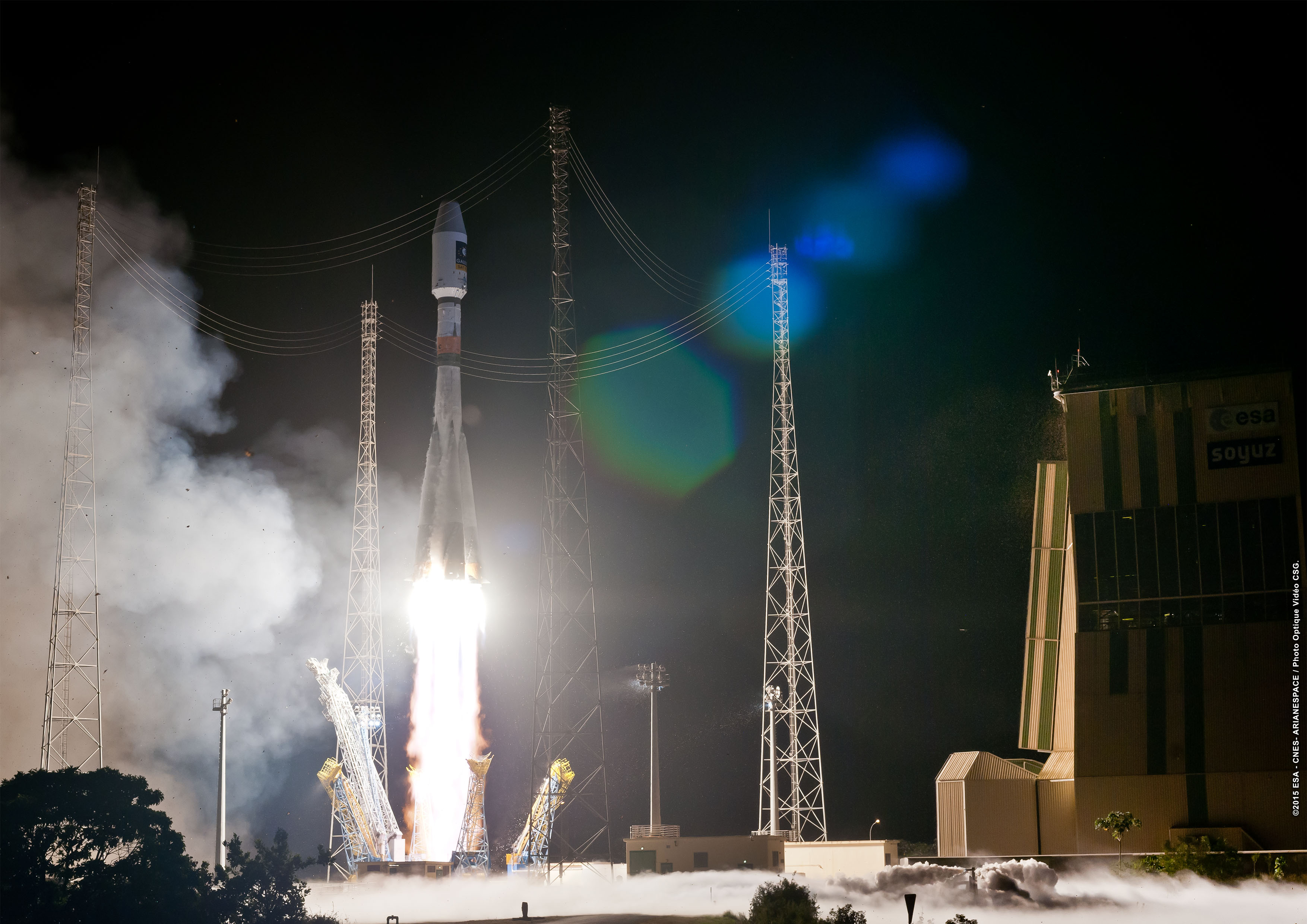
    Galileo 9 and 10 lift off. (Photo: ESA)
    Galileo 9 and 10 lift off. (Photo: ESA)

    News from the European Space Agency

    Europe’s own satellite navigation system has come a step nearer to completion today with Galileo 9 and 10, which lifted off together at 02:08 GMT on Sept. 11 from Europe’s Spaceport in French Guiana atop a Soyuz launcher.

    All the Soyuz stages performed as planned, with the Fregat upper stage releasing the satellites into their target orbit close to 23 500 km altitude, around 3 hours and 48 minutes after liftoff.

    “The deployment of Europe’s Galileo system is rapidly gathering pace,” said Jan Woerner, director general of the European Space Agency (ESA). “By steadily boosting the number of satellites in space, together with new stations on the ground across the world, Galileo will soon have a global reach. The day of Galileo’s full operational capability is approaching. It will be a great day for Europe.”

    Two more Galileo satellites are scheduled for launch by end of this year. These satellites have completed testing at ESA’s ESTEC technical centre in Noordwijk, the Netherlands, with the next two satellites also undergoing their own test campaigns.

    Galileo 9 and 10 lift off. (Photo: ESA)
    Galileo 9 and 10 lift off. (Photo: ESA)

    More Galileo satellites are being manufactured by OHB in Bremen, Germany, with navigation payloads coming from Surrey Satellite Technology Ltd in the UK, in turn utilizing elements sourced from all across Europe.

    “Production of the satellites has attained a regular rhythm,” said Didier Faivre, ESA’s Director of Galileo and Navigation-related Activities. “At the same time, all Galileo testing performed up to now — including that of the ground segment — has been returning extremely positive results.

    “And while the continuing deployment of Galileo remains our priority, along with exploitation of EGNOS — Europe’s already operational satellite navigation augmentation system — ESA is also looking farther ahead.

    “With the European Commission, we are doing the technical work to ensure Galileo goes on forever — locking in continuity of Europe’s navigation services into the long term, to meet performance on a par with the other global satellite navigation systems.”

    Next year the deployment of the Galileo system will be boosted by the entry into operation of a specially customized Ariane 5 launcher that can double, from two to four, the number of satellites that can be inserted into orbit with a single launch.

    Watch a replay of the launch below.

    Watch additional videos here.

  • Second Toulouse Symposium on Navigation and Timing Planned

    The Ecole Nationale de l’Aviation Civile (ENAC) and the French Space Agency’s “Satellite Positioning and Timing” Technical Skills Community (CNES CCT PDS) will hold the second edition of the International Technical Symposium on Navigation and Timing on Nov. 16-17, 2015, at the ENAC premises in Toulouse, France.

    The event is based on the following key elements:

    • Technical presentations on hot topics related to navigation and timing.
    • All presentations given by invited international guest speakers recognized worldwide for their expertise.
    • Round tables to facilitate discussions between the audience and the guest speakers.

    Registration to this symposium is free of charge. The number of seats is limited, so register as early as possible.

    Program

    This year, the symposium is composed of three sessions: “Positioning in Challenging Environments” , “GNSS Signals and System Design” and “Air Navigation.”

    Invited guest speakers are:

    Martin Haueis – Head of Localisation and Data Management, Daimler AG, Germany
    Christopher J. Hegarty – Director for CNS Engineering and Spectrum, MITRE Corporation, USA
    Mikael Mabilleau – Navigation Services Manager, Egis Avia, France
    Mitch Narins (Invited) – Chief Systems Engineer for Navigation Programs, Federal Aviation Authority, USA
    Oscar Pozzobon – Founder and Technical Director, Qascom, Italy
    Mark L. Psiaki – Professor, Cornell University, USA
    John F. Raquet – Director of the Autonomy and Navigation Technology (ANT) Center, US Air Force Institute of Technology, USA
    Lionel Ries – Head of the Navigation/Location Signals Dept, CNES, France
    Francis Soualle – Navigation System Engineer, Airbus Defence and Space, Germany
    Morton Stakkeland – Development Engineer, Indra Navia, Norway
    A. J. Van Dierendonck – AJ Systems, USA
    Lauri Wirola – System Architect, HERE, Finland
    Zheng Yao – Ass. Professor, Tsinghua University, China

    The full program can be downloaded.

    For more information, including preferred hotels and directions to come to ENAC, visit the event website.