Author: GPS World Staff

  • F4Devices Partners with Laser Technology on Custom Flint

    F4Devices, a division of F4 Tech, is partnering with Laser Technology, Inc. (LTI). F4Devices will provide LTI with a custom version of its Flint handheld for use as a controller and data collector for its mobile GIS lasers as well as public safety divisions. This custom version of the Flint S-Series rugged handheld is available through the current LTI distribution channel. It will be branded under BAP Precision. BAP and F4Devices are strategic partners in rugged mobile computing development.

    “We are excited and thankful for the opportunity to partner with LTI, a strong and respected leader in field laser data collection,” said Mark Milligan, president of F4 Tech. “The S-Series offers a cost effective solution that compliments the current product offerings.”

    “Our product management team approached F4 Tech about a data collector solution, and they were quick to respond. The S-Series provides LTI with an ergonomic, rugged and reliable handheld unit for our Professional Measurement and Traffic Safety software solutions. We are excited to bring this solution to our customers,”said Derrick Reish, senior product manager of LTI.


  • RTKLIB Open Source GNSS Precise Positioning Software Supports NV08C Receiver

    RTKLIB, a developer of open source software for standard and precise GNSS positioning, has released its latest RTKLIB software (version 2.4.2), which fully supports NVS Technologies’ BINR proprietary binary protocol and the NV08C GNSS receiver series.

    The use of RTKLIB, in conjunction with NVS Technologies’ NV08C GNSS receiver series, including the highly integrated NV08C-CSM surface mount module with geodetic grade raw data output, enables GNSS system designers and OEMs to develop highly accurate, low cost and compact precision-grade positioning and navigation equipment.

    RTKLIB features include:

    • Full compatibility with NVS Technologies’ NV08C Series GNSS Receivers.
    • A portable program library and several APs.
    • Standard and precise positioning algorithms using GPS, GLONASS, Galileo, QZSS, BeiDou and SBAS.
    • Supports various GNSS based positioning modes, both for real-time and post-processing, including: Single, DGPS/DGNSS, Kinematic, Static, Moving-Baseline, Fixed, PPP-Kinematic, PPP-Static and PPP-Fixed.
    • Positioning mode for real‐time and post‐processing, including Single, SBAS, DGPS, RTK, Static, Moving‐base and PPP.
    • Supports many standard formats and protocols for GNSS, including RINEX 2 & 3, RTCM 2 & 3, BINEX, NTRIP 1.0, RTCA/DO-229C, NMEA 0183, SP3-c, ANTEX 1.4, IONEX 1.0, NGS PCV and EMS 2.0.
    • External communication via Serial, TCP/IP, NTRIP, local log file (record and playback) and FTP/HTTP (auto download).

    Contact NVS Technologies for specific features compatibility. Visit www.rtklib.com for RTKLIB’s latest (ver. 2.4.2) software package download, release note, information, tutorial, manual and support.

  • ITT Exelis Completes Signal Sentry 1000 Product Integration

    An ITT Exelis product that detects and locates GPS interference sources in 3-D by using longitude, latitude and altitude has successfully completed a significant integration milestone.

    Signal Sentry 1000, formerly known as GPS Interference, Detection and Geolocation, may now be deployed to collect actionable intelligence for law enforcement, such as tracking high-value targets and protecting critical infrastructure.

    Signal Sentry 1000 is a proprietary product that leverages GNSS signal domain knowledge; it is based upon patented technology developed by Exelis through many years of designing and fielding electronic intelligence systems, ITT Exelis said.

    “Exelis developed Signal Sentry 1000 to help protect critical infrastructure and to deliver intelligence to law enforcement operations that depend upon GPS availability,” said Kevin Farrell, positioning, navigation and timing general manager for Exelis Geospatial Systems. “Jamming devices can transmit signals capable of disrupting the synchronization of critical infrastructure, such as utility power grids, and timing information of financial transactions. This is why we are continually making improvements in our technology, and the latest milestone achievement is a testament to our goal to deliver actionable interference intelligence to agencies that rely upon GPS operational availability.”

    Signal Sentry 1000 technology is a network of threat-detection sensors, which are part of a centralized server executing Exelis‐developed proprietary location algorithms. These sensors can be strategically located around areas of critical infrastructure, such as shipping ports, utilities and government facilities to automatically sense and locate any intentional or unintentional GPS jamming source. Should a threat be detected, users would receive accurate location information and actionable intelligence in order to determine an interference-mitigation plan.

    “Signal Sentry 1000 builds upon Exelis expertise in the field of GPS and positioning, navigation and timing. Exelis payloads and payload components have been on board every GPS satellite for nearly 40 years,” said Farrell.  “Today, Exelis is involved in GPS modernization initiatives, building tomorrow’s GPS III satellite constellation by developing and integrating the navigation payloads. Exelis is also providing navigation processing components, precision monitor station receivers, and key components of the system security design for the GPS Operational Control System, also known as OCX.”

  • u-blox Collaborates with Intel on Dedicated HSPA

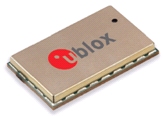
    u-blox and Intel collaborate on a 3G-only module to lower design, test and certification costs.
    u-blox and Intel collaborate on a 3G-only module to lower design, test and certification costs.

    Swiss-based u-blox, a provider of wireless and positioning semiconductors, software and solutions, announced that the company is collaborating with Intel Corporation to bring a small, cost-effective 3G-only HSPA module to the market.

    Based on Intel’s XMM 6255 HSPA modem platform, the chipset will be packaged in a compact, low- cost module that maintains layout compatibility with u-blox’ SARA 2G and LISA 3G module series, the company said. u-blox’ 2G-3G-4G nested design philosophy allows product designers to offer tailored solutions to their target markets based on a single PCB design. This facilitates product diversity and easy migration while keeping price at a minimum through reduced design, test, logistics and certification costs, u-blox said.

    “As operators start to sunset their GSM/GPRS services, we have partnered with Intel to bring the cost of 3G connectivity down,” said Nikolaos Papadopoulos, president of u-blox America. “For 3G-only M2M devices, our compact  HSPA-only module, which is about the size of a quarter, is layout compatible with our popular SARA GSM/GPRS wireless module series. This is the perfect combination for the North American market.” The modem supports full HSPA connectivity and low power consumption in an ultra-small form factor.

    “The XMM 6255 platform is latest innovation by Intel and specifically designed for M2M,” said Horst Pratsch, head of product line modules and M2M at Intel Corporation. “Integrating the 3G power amplifier in the transceiver delivers the smallest possible size and lowest number of components enabling new applications of 3G in machine-to-machine applications. Intel is pleased to work with u-blox in bringing this solution to the market.”

    Based on Intel X-GOLD 625 digital- and analog- baseband with integrated Power Management Unit and the Intel SMARTi UE2p transceiver for 3G, the Intel XMM 6255 platform is the smallest available HSPA modem chipset. Its compact size and powerful HSPA performance enables u-blox to create the world’s smallest dedicated 3G modem module dedicated to operation over 3G networks worldwide.

  • Designing for the Future: Signal Simulation for Expanding GNSS

    Sponsored by: Hemisphere
    Broadcast Date: Thursday, May 16, 2013
    Moderator: Alan Cameron, Editor & Publisher, GPS World
    Speakers: Mark Sampson, LabSat Product Manager, RaceLogic; John Fischer, Chief Technology Officer, Spectracom; Markus Lörner, Product Manager, Rohde & Schwarz; Steve Hickling, Lead Product Manager, Spirent Communications; Mark Wilson, Vice President of Sales, IfEN GmbH

    Simulation and testing experts offer key technical insights on the intricacies and importance of product and signal testing, whether by simulator, record-and-replay, or in the field, in the increasingly complex environment of multiple modernizing and expanding GNSS signals, from GPS III to BeiDou, with Galileo coming on strong and GLONASS a perennial standby.

  • Trimble Adds Photogrammetry to Business Center Software for Surveyors

    Trimble has introduced a new version of its office surveying software — Trimble Business Center Software version 3.00. Trimble Business Center Software version 3.00 is a powerful, next-generation surveying office software suite designed to manage, analyze and process all field survey data, including optical, GNSS and imaging data.

    The new version features photogrammetry enhancements, including the ability to process images from the Gatewing X100 unmanned aerial system (UAS). These enhancements provide surveyors with increased visualization and processing capabilities, allowing them to further maximize productivity and create aerial survey deliverables.

    “Powerful and intuitive, Trimble Business Center and its integration with UAS data introduces new capabilities to surveyors and represents a significant leap in efficiency. Surveyors, engineers and geospatial data managers can increase their productivity, efficiency and quality of deliverables through the software’s aerial data processing capabilities,” said Erik Arvesen, vice president of Trimble’s Survey Division. “Traditional sites, such as large mines, that in the past have taken days to map using conventional methods can now be accurately modeled in just hours.”

    Version 3.00 introduces a new photogrammetry module for importing and working with flight data and images collected from the Gatewing X100 UAS and optical instruments, such as the Trimble S8 with Trimble VISION technology, which integrates calibrated digital cameras to collect survey data, stream video from the perspective of the instrument and capture panoramic still images. Based on software from Inpho, the Trimble Business Center photogrammetry module also provides office surveyors with the capability to process complete mapping projects containing aerial data, GNSS and total station observations. Surveyors can produce deliverables, including georeferenced orthophotos, 3D point clouds and digital surface models directly from Trimble Business Center.

    With the ability to integrate photogrammetry with data collected from GNSS receivers, total stations, and digital levels, surveyors can combine aerial images with GNSS measurements on ground control points and 3D laser scans of buildings to precisely, comprehensively and efficiently map large and complex sites.

    The new version also introduces 64-bit processing. As a 64-bit application, Trimble Business Center allows surveyors in the office to utilize their computer’s RAM, maximizing the productivity of the surveyor’s workstation, to display large images and point clouds for increased visualization functionality. Users can also display large images seamlessly; images “tile” automatically on import and the displayed resolution adjusts seamlessly as users zoom in and out for superior image viewing.

    “Inpho is a proven leader in digital aerial photogrammetry,” said Arvesen. “Trimble has taken that expertise and applied it to the survey market, as we pioneer the development of UAS data integration for surveyors.”

  • First Galileo FOC Satellite Heads to Testing

    In the early hours of May 15, Galileo’s first full operational capability (FOC) satellite left the manufacturer’s integration hall in Bremen, Germany. The satellite, assembled by OHB System AG, is now headed for Noordwijk in the Netherlands, where it will undergo an environmental testing campaign and further system testing at the ESTEC’s Test Center on the premises of the European Space Agency (ESA).

    Before the satellite was shipped, it had successfully completed integration and system testing, according to OHB System.

    Photo credit: OHB System AG.
    The first Galileo FOC satellite. (Photo credit: OHB System AG.)

    Its twin FOC satellite is in the final phase of completion at OHB System. Over the next few weeks, it will also be integrated and tested, after which it will be shipped to Noordwijk. The two satellites are to be placed in orbit on board a Soyuz launcher, which will is planned to lift off from Kourou in French Guyana this fall.

    These two satellites are the first of a series of 22 Galileo FOC satellites manufactured by OHB System and its industrial partners. The FOC phase of the Galileo program is managed and funded by the European Union. The European Commission and ESA have signed a delegation agreement by which ESA acts as design and procurement agent on behalf of the commission.

    At ESA’s test center, thermal vacuum testing will simulate the temperature extremes the satellites must endure in the airlessness of space throughout their 12-year working lifetimes. Without any moderating atmosphere, temperatures can shift hundreds of degrees from sunlight to shadow.

    Other activities on the schedule include shaker and acoustic noise testing — simulating the vibration and noise of launch — as well as electromagnetic compatibility and antenna testing, placing the satellite in chambers shielded from all external radio signals to reproduce infinite space and check that its various antennas and electrical systems are interoperable without harmful interference.

    Each satellite will offer the full range of Galileo positioning, navigation and timing services, plus search and rescue message relays, their accuracy ensured by on-board atomic clocks kept synchronized by a worldwide ground network.

    “The Galileo FOC satellites provide the same capabilities as the previous IOV satellites, but with improved performance, such as higher transmit power,” explained Giuliano Gatti, head of the Galileo Space Segment Procurement Office. “They are to all intents a new design that requires a full checkout before getting the green light for launch. By fully validating this satellite, the second flight model due to follow it here at beginning of June, and the third one due to arrive in ESTEC at middle of July, we gain full knowledge of their characteristics, and the further satellites in the series will require less rigorous functional testing.”

  • GPS Source Releases Mil-Spec GPS Amplifier

    GPS Source, Inc., has released the latest addition to its military product line, a military qualified, in-line GPS amplifier, MA11M.

    The MA11M is a military-grade device used to strengthen the signal and reach of GPS. It is designed for GPS conditions where there is a weak signal. This amplifier is designed to work with an external, active antenna, and is primarily for use by military applications (both ground and air) around the world.

    “GPS Source realizes the importance of protecting our national assets by designing products that can handle rigorous military environmental demands,” said Robert Horton, CEO of GPS Source. “This amplifier has been qualified for temperature, altitude, explosive atmosphere, humidity, vibration, among many other challenging conditions. The qualifications allow the military to use this device without reservation.  Test summaries (MIL-STD-810 and EMI) are available upon request.”

    The ruggedized MA11M GPS amplifier is designed with the thin link margins of satellite navigation systems in mind, and is a single-stage gain block that covers the GPS, Galileo, and GLONASS frequencies. The device features 30 dB of gain and excellent gain flatness of less than 1 dB.

  • Maiden EGNOS Flight Trials Prove Successful in Eastern Europe

    Maiden flight trials have been successfully conducted in Moldova using GMV’s magicSBAS solution. These trials form part of a GMV-led European Commission FP7 collaboration project.

    In 2011 the European GNSS Agency (GSA) awarded GMV the EEGS2 project (EGNOS Extension to Eastern Europe). The main objective of the project is to demonstrate through flight trials the benefits of the European Geostationary Navigation Overlay Service (EGNOS) in areas of Eastern Europe where it is not yet available, such as Poland, Romania, Ukraine, Moldova and Russia, and to prepare the civil aviation authorities and air navigation service providers for future use of the system.

    In the context of this project, after the tests conducted in Spain, the maiden flights have been successfully carried out in Moldova, using the equipment and tools developed by GMV. The Moldova demonstrations have given pilots and service providers a clear idea of the potential benefits of EGNOS and the flying procedures of the near future, GMV said.

    Four flights had previously been conducted in Spain in November, December and February. The satisfactory results of these flights then paved the way for the demonstrations in Moldova.

    The magicLPV system, developed under this project, enables LPV approaches (localizer performance with vertical guidance) to be carried out using the signal generated by the magicSBAS application. This test environment allows any region of the world to analyze the air-navigation benefits to be obtained with deployment of a Space Based Augmentation System (SBAS). This signal is read by Internet and transmitted by radio frequency in the vicinity of the airport, allowing LPV approaches to be made in places where SBAS is either completely unavailable or available only on a very limited basis.

    Eight flights in all were carried out in various Moldovan airports, including Chișinău International Airport. Test results were highly satisfactory, demonstrating the simplicity of equipment configuration and operation, and the performance of the magicSBAS signal, GMV said.

    “These trials are an important milestone for GMV, for the project and, fundamentally, for the use of EGNOS in the countries of Eastern Europe in the near future,” said Miguel Romay, executive director of GNSS–Aerospace.

    GMV will continue with these demonstrations in other countries of Eastern Europe. The next trip in two weeks will be to Romania, where new flights are expected to be just as successful.


  • iTRAK Virtual Fleet Support Manager Aids Cost-Effective Fleet Management

    iTRAK Corporation, a wireless GPS-based tracking, mapping, and fleet reporting company, has made available its iTRAK Virtual Fleet Support Manager service. This service will allow iTRAK customers to use one or a group of expert iTRAK employees who will help to cost effectively manage many of the functions associated with the iTRAK GPS tracking system and fleet management related logistics. This will free the customer to focus on applying the provided information for better and more efficient use of their fleet, iTRAK said.

    This service will provide customers standard or custom reporting, management of alerts and geospatial features such as geofences and landmarks, and monitoring the status of vehicles and tracking devices. The Virtual Fleet Support Manager can also help manage grouping of devices for analysis and supervision by customer associates, reassignment of vehicles, and online review of overspeed and idle alerts, which can help to reduce overall fleet fuel consumption. The professional Virtual Fleet Support Manager (VFSM) team can also help to set up and manage some of the more advanced features of the system, such as maintenance reporting, updates to the cloud-based fleet vehicle or asset database, as well as the online driver database.

    Other activities may be requested by iTRAK customers, such as custom tracking, fuel reports, and alerts for maintenance such as oil, tire, and engine maintenance.

    Additional reminder alerts such as tag and insurance renewal can also be setup and supported as needed. Regular status reports will be provided to iTRAK VFSM customers; the iTRAK team can also provide additional consulting on how their fleet and tracking technology can be further used to optimize fleet efficiency and reduce overall operation costs.

    “Many of the successful fleet based companies we provide services to have reorganized for higher efficiency. As they have subsequently grown many have been lacking the needed bandwidth to oversee or process some of these advanced technical but vital logistical-related activities,” said Craig Gooding, director of sales at iTRAK. “By using our Virtual Fleet Support Manager service, we can help bridge this gap for the customer; while the customer can focus on using the information the system generates in order to help improve their business. They can also be certain that an expert is helping them to use all the features of the system to get the maximum value out of their investment in fleet management information technology. This includes immediate use of new features as soon as they are available.”

  • Everest Summit Beckons 2 SOPS Captain

    An unofficial group of airmen from the United States Air Force (USAF) is climbing the world’s mountains to spread patriotism and pride in the military, and raise funds for military charities. The team has already achieved six of the famed “seven summits” of the world as part of the USAF Seven Summits Challenge. At this moment, they’re pushing toward the final challenge, the summit of Mount Everest.

    Taking part is Capt. Colin Merrin, a GPS operator from the 2nd Space Operations Squadron (2SOPS). Merrin and the USAF Seven Summits Team will climb the Southeast Ridge of Mount Everest via the South Col, a route originally pioneered by Sir Edmund Hillary and Tenzing Norgay in 1953.

    The seven summits are the highest mountains of each of the seven continents. Climbing all of them is regarded as a top mountaineering achievement.

    In the photo above, Merrin is shown standing at Aconcagua base camp in the Andes mountain range in Argentina. His trek up Aconcagua in February 2012 helped prepare him for his Everest climb.

    Air Force Print News Today featured the climbers in its May 8 issue. Follow the team’s progress on their Facebook page, and via GPS tracking.

  • ION GNSS+ 2013 Program and Registration Available Online

    Registration is now open for the Institute of Navigation (ION) GNSS+ 2013 to be held September 16-20 (tutorials September 16 and 17) at the Nashville Convention Center in Nashville, Tennessee.

    ION GNSS+ 2013 is the 26th International Technical Meeting of the ION Satellite Division and the world’s largest technical meeting and showcase of GNSS technology, products and services.

    ION GNSS+ brings together international leaders in GNSS and related positioning, navigation and timing fields to present new research, introduce new technologies, update current policy, demonstrate products and exchange ideas. The addition of “+” to the conference name reflects the growing emphasis on GNSS and the rapidly evolving field of alternative navigation methods.

    This year’s conference will feature pre-conference tutorials September 16-17, policy and panel discussions, commercial and applications oriented sessions, and more than 250 technical papers on a diverse array of topics including:

    • Advanced Inertial Sensing and Applications
    • Advances in Military GNSS Systems and Applications
    • Algorithms and Methods
    • Alternatives and Backups to GNSS
    • Aviation Applications
    • Clock/Timing and Scientific Applications
    • Emerging GNSS (Galileo, COMPASS, QZSS, IRNSS) (both a Panel Discussion and a technical session)
    • Future PNT and Its Applications
    • Geodesy, Surveying and RTK for Civil Applications
    • GNSS Algorithms and Methods
    • GNSS and the Atmosphere
    • GNSS Compatibility, Interoperability, and Interchangeability
    • GNSS Ground Based Augmentation Systems (GBAS)
    • GNSS Simulation and Testing
    • GNSS Space Based Augmentation Systems (SBAS)
    • GNSS-MEMS Integration
    • GNSS Program Updates (Panel Discussion)
    • GPS and GLONASS Modernization
    • High Integrity Systems (Panel Discussion)
    • Indoor Navigation and Timing
    • Interference and Spectrum Issues
    • IP Policies Related to GNSS (Panel Discussion)
    • Land Based Applications
    • Marine Navigation and Applications
    • Multi-Constellation/Portable Navigation Devices
    • Multi-Sensor and Integrated Navigation in GNSS-Challenged Environments
    • New Products and Commercial Services (both a Panel Discussion and a commercial applications oriented session)
    • Next Generation GNSS Integrity
    • Non Traditional PNT Applications
    • Portable Navigation Devices
    • Precise Point Positioning
    • Receiver/Antenna Technology
    • Remote Sensing with GNSS and Integrated Systems
    • Safety Critical Applications
    • Software Receivers
    • Space Applications
    • Standalone GNSS Services in Challenging Environments
    • Timing and Scientific Applications
    • Unmanned GNSS (Panel Discussion)
    • Urban Navigation Technology

    New this year will be two For Official Use Only (FOUO) U.S. only sessions: Multi-Sensor Integrated Navigation and Networked-Related Navigation. These sessions are sponsored by the ION’s Military Division and The MITRE Corporation.