Author: GPS World Staff

  • Brad Parkinson to Discuss GPS at Smithsonian Event

    Brad Parkinson to Discuss GPS at Smithsonian Event

    Dr. Bradford W. Parkinson, professor of Aeronautics and Astronautics Emeritus at Stanford University will discuss “GPS for Humanity — The Stealth Utility” at a special Smithsonian event Thursday, March 21.

    The 8 p.m. ET lecture at the National Air and Space Museum in Washington, D.C.,  follows a 7:15 p.m. viewing of the Imax film Space Junk 3D and commentary on the museum’s new exhibit Time and Navigation: The Untold Story of Getting from Here to There.

    In the 1970s, Parkinson was the chief architect and original program director for GPS. In his lecture, he will present the history, applications, and future of GPS and the GNSS. Central to operation of GPS is the relationship between time and navigation, and GPS will be explored in the Time and Navigation exhibit.

    The Smithsonian Time and Navigation exhibit opens April 12. Don Jewell, GPS World’s contributing editor for Defense, discusses the exhibit in his February column.

    The lecture will be available via webcast and is expected to be available for viewing afterwards. For more information, visit the museum website.

  • NovAtel Releases SMART6-L Integrated GNSS High-Accuracy Antenna

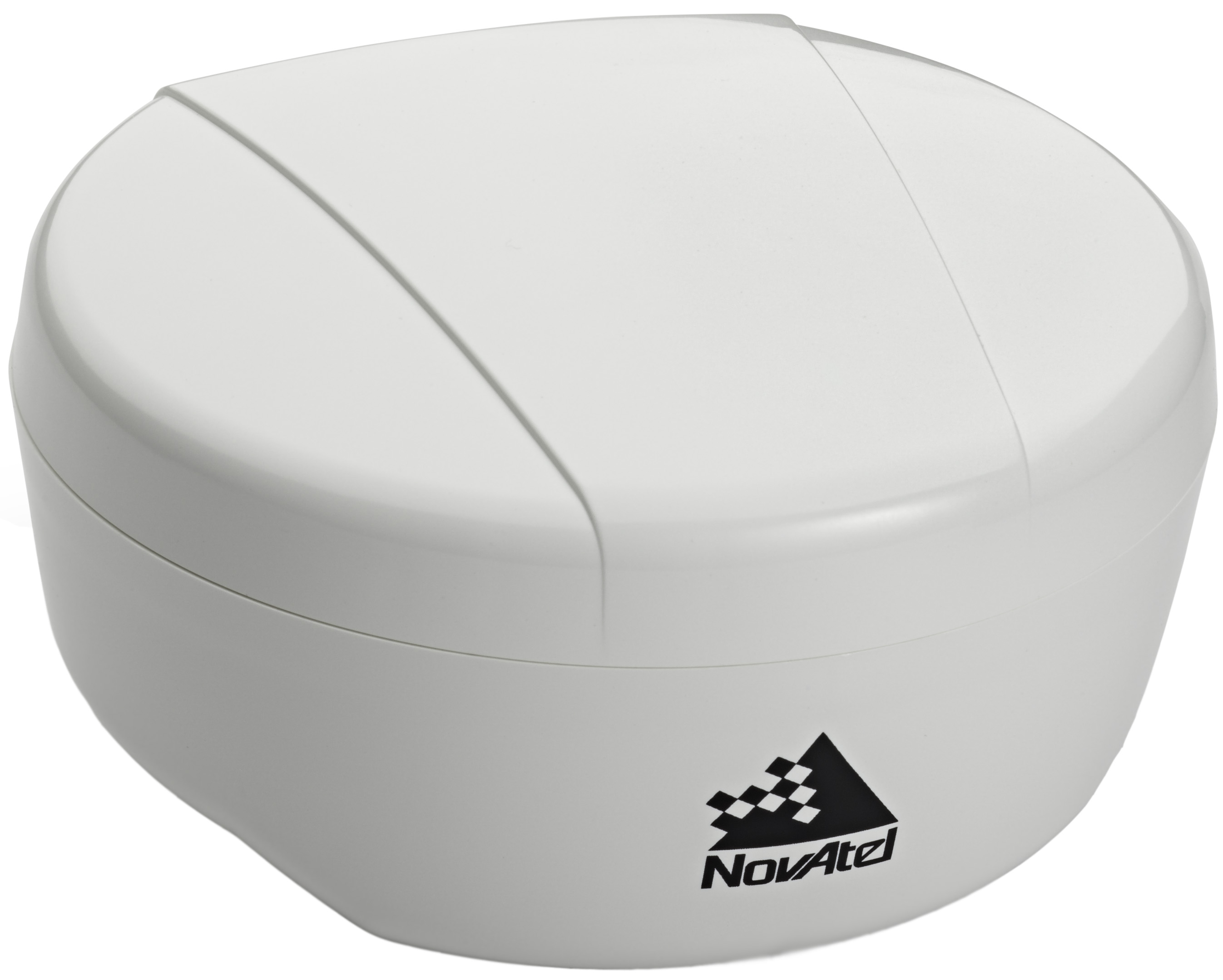
    SMART6-L front (2).jpg

    NovAtel’s new SMART6-L GNSS antenna integrates its OEM6 engine with Pinwheel antenna technology. Tracking L1 and L2 GPS + GLONASS, the SMART6-L delivers scalable performance, from single-frequency GL1DE smoothing performance to centimeter-level accuracy using dual frequency real-time kinematic tracking. Optional L-band tracking improves positioning accuracy outside of L1 SBAS coverage areas.

    The SMART6-L is designed for manual guidance and auto-steer agriculture applications that benefit from ultra-smooth positioning and high pass-to-pass accuracy. The dual-frequency GL1DE firmware enhances the absolute accuracy of the GL1DE position, creating a robust solution and mitigating the effects of high ionospheric activity, NovAtel said. The design of the SMART6-L interface maximizes flexibility with NMEA 0183 compatible RS-232 serial ports and a NMEA2000 compatible CAN port. One PPS output, an event mark input, and three daylight readable status LEDs are also provided. Built-in magnets simplify mounting although fixed mounting options are also available.

    The SMART6-L is available for order starting March 18, with product shipments commencing April 15.

  • Upcoming GNSS Satellite Launches Scheduled

    News courtesy of CANSPACE Listserv.

    Satellites expected to be launched in support of various Global Navigation Satellite Systems are the following:

    GPS
    May 15: Block IIF-4, SVN66, launch window: 17:39-17:58 UTC
    November: Block IIF-5

    GLONASS
    April 26: Single GLONASS-M or -K satellite from Plesetsk
    June 28: Three GLONASS-M satellites from Baikonur

    Galileo
    October: FOC-1 launch (two satellites)

    Indian Regional Navigation Satellite System (IRNSS)
    June (This is the first launch for an expected constellation of seven satellites, some of which will be geostationary. The constellation will provide continuous regional coverage for positioning, navigation and timing services.)


  • TIMEX Expands GPS Portfolio with IRONMAN Run Trainer 2.0

    TIMEX Expands GPS Portfolio with IRONMAN Run Trainer 2.0

    Timex has introduced the Timex IRONMAN Run Trainer 2.0, a next-generation GPS-enabled watch that tracks pace, distance, heart rate, and elapsed time. This upgraded device is a smaller, more refined version of the brand’s signature Timex IRONMAN Run Trainer 1.0 GPS watch and is equipped with a reversible, high-resolution display and advanced interval training capabilities.

    The introduction of the Timex IRONMAN Run Trainer 2.0 marks a further expansion of the Timex GPS portfolio, following the recent launches of Timex Marathon GPS, Timex IRONMAN  Run Trainer 1.0, Timex Cycle Trainer  2.0 and Timex IRONMAN  Global Trainer Bodylink System.

    “We heard from the running community that they wanted a smaller, more comfortable GPS watch,” said Sam Martin, Senior Brand Manager, Sports. “We are excited to deliver on that need with the upgraded Run Trainer 2.0, enabling more efficient training through advanced technology.”

    The Timex IRONMAN Run Trainer 2.0 is designed for athletes who want to maximize the efficiency of their training. The watch offers a crisp, high-resolution display, but is smaller than the Run Trainer 1.0 to better fit a wider variety of wrist sizes. Armed with a chronograph and featuring hands-free split recording capability, the Run Trainer 2.0 includes Interval Training based on distance and time with vibrating and audible alerts. It has an eight-hour Li-ion battery life and is water resistant up to 50 meters.

    Like other Timex downloadable products, this Run Trainer 2.0 is customizable through a computer device agent for all settings and is compatible with TrainingPeaks and MapMyFitness.com, among others. It utilizes ANT+ wireless technology for chest and foot pod sensors to provide heart rate and indoor/cadence-based training data for runners looking to improve their performance.

    The Timex IRONMAN Run Trainer 2.0 will be available later this month in U.S. sports specialty retailers and on Timex.com at $224.95 for Speed + Distance or $274.95 (with Flex Tech Digital 2.4 HRM chest sensor).

  • SNV49 Off the Air?

    News courtesy of CANSPACE Listserv.

    It appears that GPS SVN49, the Block IIR-M satellite with the problematic L5 test transmitter and operating most recently as PRN27, stopped transmitting standard L-band signals on March 13. No International GNSS Service tracking station has observed the satellite since that date.

    The satellite was being used for tests, was set unhealthy, and had not been included in broadcast almanacs.

  • Verizon Launches Fleet Management Solution

    Verizon is rolling out Networkfleet on the Verizon Wireless network, the company announced today. Networkfleet is a fleet-management solution that provides a wide variety of monitoring and management capabilities for increased productivity and improved customer service.

    The Networkfleet solution — part of Hughes Telematics, which Verizon acquired last year — will be combined with the Verizon Wireless network and will debut in Verizon’s U.S. service fleet for improved monitoring, management and route optimization capabilities.

    With this all-Verizon solution as part of the company’s telematics portfolio, Verizon is building on its and Hughes Telematics’ joint capabilities to help fleet, operations and risk managers use technology to improve operations by managing speed, fuel consumption, drivers and vehicles while optimizing vehicle use and routes using vehicle diagnostics to help hold the line on maintenance costs.

    “As one of the largest commercial fleet operators in the United States, Verizon recognizes the challenges and opportunities associated with managing fleets, and we continue to shape our offerings to help customers turn rolling assets into a competitive business advantage,” said David Small, senior vice president and chief platform officer for Verizon Enterprise Solutions. “We see the fleet management space as a tremendous opportunity. We will continue to work with our ecosystem to serve this growing market, and we are committed to innovating in the machine-to-machine space.”

    The Networkfleet telematics solution combines in-vehicle hardware and a web-based application to store, view and analyze data on specific vehicles as well as overall fleet performance. Vehicles are equipped with a GPS device that sends information to the Networkfleet Data Center over a secure wireless network. Key features include GPS fleet tracking, asset tracking, fleet maps, vehicle diagnostics with alerts, roadside assistance, preventative maintenance and other fleet management tools.

    Verizon is deploying Networkfleet to an initial 18,000 company vehicles in its fleet this year to expedite customer service, while increasing productivity and cost efficiencies. The initiative will help Verizon achieve its sustainability goal of decreasing its carbon footprint.

    The Networkfleet solution can be used in a wide variety of industries including:

    • transportation
    • energy and utilities
    • government
    • retail and sistribution
    • construction
    • insurance
    • healthcare
    • media and entertainment.

    The Eastern Municipal Water District in Southern California used Networkfleet to lower fuel costs and increase productivity:

  • Telenav Announces Planned Sale of Enterprise Business

    Telenav, Inc. (NASDAQ: TNAV) has entered into an agreement to sell the Telenav enterprise business unit to FleetCor Technologies Operating Company, LLC, for approximately $10 million in cash, with an anticipated closing date in 30 days. Telenav’s enterprise business allows companies to better manage operations by using the Telenav location-based services (LBS) platform to track status and the location of mobile workers, vehicles and assets deployed in the field.

    “As our consumer, advertising and automotive businesses grow, we have seen a divergence between the strategic direction of these areas and that of our enterprise business,” said HP Jin, president and CEO of Telenav. “This agreement will allow us to focus more and strengthen our strategic growth areas.”

    Telenav will provide certain services after closing to facilitate the transition of the business. Other terms of the agreement were not disclosed; however, the Company noted that as the deal will close near the end of the fiscal third quarter, the financial guidance provided for the quarter will be unchanged. As to the full-year revenue for fiscal 2013, the anticipated range for revenue will now be $190 to $194 million, reflecting the impact on revenue from this sale. Except as noted, the financial impact is not expected to be material to the financial results of Telenav.

  • Plotter Wins Top Award at SXSW Interactive

    Plotter, a social network for maps, won the top award for the social technologies category March 12 at the annual South by Southwest Interactive Festival in Austin, Texas.

    The company won one of six categories at the festival’s fifth annual SXSW Accelerator program, which has previously recognized companies such as Twitter and Foursquare. Unlike Google Maps and Apple’s default maps app, which allow people to search for a place on a map and look up directions, Plotter’s mobile maps app offers the ability to plot multiple locations at once. Users can also create maps of their favorite locations and share them with friends.

    The app was released earlier this month on the Apple iTunes Store.

  • Powelectrics and Telit Expand Cooperation in Wireless Telemetry Market

    Powelectrics and Telit Expand Cooperation in Wireless Telemetry Market

    Telit Wireless Solutions and Powelectrics Ltd. today announced collaboration in the wireless telemetry application market with the launch of Powelectrics’ Telit-based product Metron2.

    The Metron2 is a multi-function cellular-connected telemetry device capable of making remote fill-level readings in tanks containing liquids and gases.  The device’s integral display allows the unit to be used also as a local gauge and for system set up and testing. An optional pulse-counter board allows the device to take external meter readings.

    The Metron2 is wide-area-network connected with the Telit GE864-QUAD V2 cellular module and self powered from an internal battery. The Metron2 can be powered from different sources, including an internal battery or an external 6-24Vdc source. It is often not economically feasible to run power to the site for remote telemetry installation, the companies said, such as the cryogenic gas monitoring segment where it is important that the device be on and available to be polled any time, day or night. For this market, Powelectrics developed a solar-powered system.

    The solar-powered telemetry system allows the unit to remain always on and connected to the GSM/GPRS network so the server can make contact at any time with instant reading requests. Equipped with the Metron2, a tanker truck can be dispatched to best matching customer locations according to volume available in the tanker and volume required by customers, efficiently exhausting the tanker’s full supply of product instead of transporting it back to base saving fuel and removing the risk of the returned product contaminating the storage or process facility, the companies said.

    Knowing how much product is in the customer’s tanks makes it possible to plan when and which truck should make deliveries. This translates into fewer miles driven to deliver the same amount of product and therefore a significant reduction in costs. There is also a dramatic reduction in CO2 emissions. There are also accompanying operational benefits, including fewer emergency shipments, reduced customer service organization and reduced sales resources. These benefits translate into a balance sheet boasting reduced levels of finished goods and raw materials inventory.

    The European Chemical Industry Council (CEFIC) has been encouraging more extensive use of Enterprise Resource Planning (ERP) tools to improve supply chain efficiency. According to the Department for Transport in the UK, by 2015, total traffic on the roads will have grown by over 30 per cent compared to 2000 levels and the CBI has estimated that road congestion currently costs the UK up to £20 billion annually.

    Telit’s GE864-QUAD V2 ultra-compact, low-power, quad-band GSM/GPRS 3GPP Release 4 module integrated in Powelectrics’ Metron2 has one of the industry’s broadest certification profiles in its class, making it easily deployable anywhere in the global market, Telit said.  Modules in this family are capable of data rates of 48Kbps GPRS Class 10 also supporting 9.6Kpbs Circuit Switch Data (CSD) transfers ensuring connectivity in poor coverage areas. The GE864-QUAD V2 family features one of the market’s most compact Ball Grid Array (BGA) package measuring 30 x 30 x 2.8 mm and an extended operating temperature range of -40°C to +85°C, making it suitable for outdoor-environment mobile applications such as the Metron2.

    “The last couple of years have seen a dramatic upturn in demand for our product as users of telemetry become comfortable with the reliability and more aware of the benefits that telemetry brings. We continue to develop our already well proven solutions helping drive down the total cost of ownership and therefore reducing the payback time. Telemetry has never been so affordable,” said David Oakes, sales director, Powelectrics. “We realize the need to be flexible in what we offer. Some customers want a complete solution from us encompassing hardware, hosted software and SIM cards whereas others just want the hardware. It’s also vital that data is delivered where it is needed which often means us providing some form of automated interface into the clients systems, delivering data in a customized format.”

  • Septentrio Makes Galileo and Four-Constellation Position Fixes

    Septentrio Makes Galileo and Four-Constellation Position Fixes

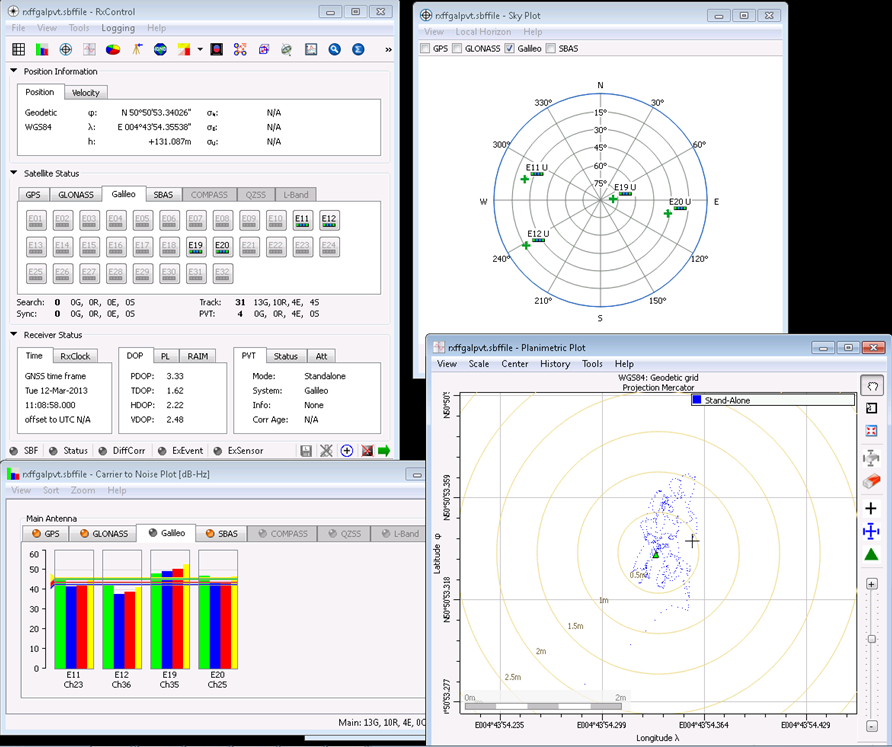
    Septentrio became the first receiver manufacturer to report an autonomous real-time position calculation using Galileo IOV satellites, with its own standard commercial receiver. The company based in Leuven, Belgium announced on March 12 that it performed a first autonomous real-time Galileo position, velocity, and timing (PVT) calculation, based on live Interface Control Document (ICD)-compliant Galileo messages from the four Galileo in-orbit validation (IOV) satellites.

    Galileo-PVT

    The standalone position was calculated from in-orbit navigation messages using a standard PolaRx4 GNSS receiver equipped with commercially released firmware.

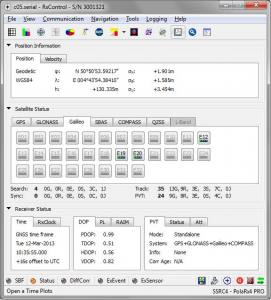
    This achievement followed another recent Septentrio milestone; the announcement of a first GPS+Glonass+BeiDou PVT less than two weeks after the BeiDou2 ICD publication in December — and it was itself followed by a Septentrio release stating performance of what it believes to be the first 4-constellation PVT performed by a standard commercial receiver.

    4-constellation_PVT

    “On Tuesday 12-Mar-2013 at approximately 10:35 UTC we included three Galileo IOV satellites (E12, E19 & E20) in a multi-constellation PVT. The 3D-position fix happened shortly after it was brought to Septentrio’s attention that the Galileo IOV satellites were transmitting, for the first time ever, a fully usable navigation message as part of an ESA experiment.

    “This ability to rapidly incorporate new constellations demonstrates the flexibility of the architecture of Septentrio receivers,” the company statement continued.

    “We are delighted that Septentrio receivers are amongst the first to witness the readiness of the Galileo navigation message to perform a position fix from in orbit signals,” commented Peter Grognard, Septentrio’s founder and CEO. “Septentrio has been involved since 2003 in all major milestones that pave the way for the European constellation genesis.”

  • Star Sensor for GLONASS Satellites to Undergo Testing

    RIA Novosti is reporting that German firm Jena-Optronik GmbH has delivered an advanced star sensor to Russia’s Reshetnev Information Satellite Systems company (ISS), which will test and integrate it on a GLONASS navigation satellite, Reshetnev said on Wednesday.

    The Astro APS sensor is part of the satellite’s altitude and orbit control system. It will help ensure that the GLONASS satellites maintain an accurate attitude in space.

    The sensor will be installed on a GLONASS-M satellite under a 2011 agreement signed between Reshetnev ISS and Jena-Optronik GmbH. It has a single box design with low mass and low power consumption. If tests are successful, it will be integrated on other ISS spacecraft.

  • Federal Steps Taken to Reduce GPS-Caused Bridge Strikes by Oversized Trucks

    The Federal Motor Carrier Safety Administration (FMCSA) will begin issuing official recommendations to members of the commercial trucking industry on the proper uses of GPS devices and incorporate GPS training into new entry-level certification programs for commercial motor vehicle operators.

    U.S. Senator Chuck Schumer, joined by Administrator Anne Ferro of the U.S. Department of Transportation Federal Motor Carrier Safety Administration (FMCSA), held two press conferences in the New York City area on March 11 to alert commercial vehicle drivers to the importance of using updated, professional-quality GPS devices to prevent routes that include height-restricted overpasses and bridges.

    Administrator Ferro also announced the availability of a GPS safety visor card for truck and bus drivers, now downloadable at www.fmcsa.dot.gov (and pictured above).

    Richard Langley of GPS World provided guidelines for consumers in a newspaper article in January about GPS use, which he spelled out in ten helpful tips. The tips also apply to commercial drivers.

    Under the recommendations, commercial drivers will be trained, and reminded, to only use GPS systems designed specifically for the industry. These specialized units take into account the specifics of the truck they’re in — including the height, weight and contents — and will then route the trucks onto appropriate roads. The consumer GPS units too often being used are frequently routing trucks onto inappropriate roads, causing them to crash into low overpasses and bridges.

    In September, Schumer called on the Department of Transportation (DOT) to investigate the dramatic increase in low bridge strikes by commercial trucks across New York State as a result of the growing use of GPS by drivers. According to reports from local police organizations, GPS-related bridge strikes in New York represent more than 80 percent of all such accidents. The accidents, in addition to being life threatening, cause massive delays and impose significant costs on taxpayers.

    In one press conference, Schumer and Administrator Ferro stood at the Eagle Avenue overpass, which spans the Southern State Parkway at exit 18. The overpass has been struck at least 27 times by trucks that are prohibited from driving on the parkway.

    “These education and training campaigns for commercial truck drivers will be the first major steps to thwarting life-threatening bridge strikes that have been causing massive delays and imposing significant costs on taxpayers with increasing frequency in recent years,” said Schumer. “These steps will help to once again make GPS devices an asset to drivers, and not a dangerously misused tool. I am pleased that the DOT heeded my call for reforms and I am confident that the combination of official recommendations and GPS training will limit the number of low-bridge strikes across Long Island. Thank you to FMCSA Administrator Ferro for recognizing the importance of this serious issue and for implementing a proactive approach towards teaching the industry how to eliminate GPS-related accidents.”

    “Even one truck or bus striking an overpass is one too many, which is why we’re taking action to ensure professional truck and bus drivers know the importance of selecting the right navigation system,” said FMCSA Administrator Anne Ferro.

    Commercial truck traffic is prohibited on New York State Parkways such as the Southern and Northern State Parkways on Long Island, the Hutchinson and Saw Mill Parkways in the Hudson Valley, and the FDR and Bronx River Parkway in New York City. Overpasses constructed over these parkways were built, in some cases, over 50 years ago, and at low heights. Although these parkways consist of numerous warning and directional signs alerting commercial drivers of the dangers, basic GPS devices often do not show these restrictions and funnel trucks into major danger zones.

    According to a recent NYS Department of Transportation study, more than 200 bridge accidents per year have occurred in New York since 2005. Of that total, more than 25 percent of these accidents occurred in Nassau, Suffolk or Westchester counties. Major repairs on the Long Island Expressway connected to these types of accidents have cost taxpayers $4.1million in recent years, according to the NYS Department of Transportation.