Author: GPS World Staff

  • Building a Wide-Band Multi-Constellation Receiver

    Building a Wide-Band Multi-Constellation Receiver

    The Universal Software Radio Peripheral as RF Front-End

    By Ningyan Guo, Staffan Backén, and Dennis Akos

    The authors designed a full-constellation GNSS receiver, using a cost-effective, readily available, flexible front-end, wide enough to capture the frequency from 1555 MHz to 1607 MHz, more than 50MHz. This spectrum width takes into account BeiDou E2, Galileo E1, GPS L1, and GLONASS G1. In the course of their development, the authors used an external OCXO oscillator as the reference clock and reconfigured the platform, developing their own custom wide-band firmware.

    The development of the Galileo and BeiDou constellations will make many more GNSS satellite measurements be available in the near future. Multiple constellations offer wide-area signal coverage and enhanced signal redundancy. Therefore, a wide-band multi-constellation receiver can typically improve GNSS navigation performance in terms of accuracy, continuity, availability, and reliability. Establishing such a wide-band multi-constellation receiver was the motivation for this research.

    A typical GNSS receiver consists of three parts: RF front-end, signal demodulation, and generation of navigation information. The RF front-end mainly focuses on amplifying the input RF signals, down-converting them to an intermediate frequency (IF), and filtering out-of-band signals. Traditional hardware-based receivers commonly use application-specific integrated circuit (ASIC) units to fulfill signal demodulation and transfer the range and carrier phase measurements to the navigation generating part, which is generally implemented in software. Conversely, software-based receivers typically implement these two functions through software. In comparison to a hardware-based receiver, a software receiver provides more flexibility and supplies more complex signal processing algorithms. Therefore, software receivers are increasingly popular for research and development.

    The frequency coverage range, amplifier performance, filters, and mixer properties of the RF front-end will determine the whole realization of the GNSS receiver. A variety of RF front-end implementations have emerged during the past decade. Real down-conversion multi-stage IF front-end architecture typically amplifies filters and mixes RF signals through several stages in order to get the baseband signals. However, real down-conversion can bring image-folding and rejection. To avoid these drawbacks, complex down-conversion appears to resolve much of these problems. Therefore, a complex down-conversion multi-stage IF front-end has been developed. But it requires a high-cost, high-power supply, and is larger for a multi-stage IF front-end. This shortcoming is overcome by a direct down-conversion architecture. This front-end has lower cost; but there are several disadvantages with direct down-conversion, such as DC offset and I/Q mismatch. DC offset is caused by local oscillation (LO) leakage reflected from the front-end circuit, the antenna, and the receiver external environment.

    A comparison of current traditional RF front-ends and different RF front-end implementation types led us to the conclusion that one model of a universal software radio peripheral, the USRP N210, would make an appropriate RF front end option. USRP N210 utilizes a low-IF complex direct down-conversion architecture that has several favorable properties, enabling developers to build a wide range of RF reception systems with relatively low cost and effort. It also offers high-speed signal processing. Most importantly, the source code of USRP firmware is open to all users, enabling researchers to rapidly design and implement powerful, flexible, reconfigurable software radio systems. Therefore, we chose the USRP N210 as our reception device to develop our wide-band multi-constellation GNSS receiver, shown in Figure 1.
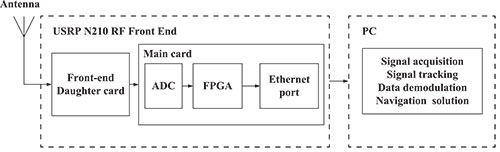
    Figure 1 Custom wide-band multi-constellation software receiver architecture based on universal software radio peripheral (USRP).
    Figure 1. Custom wide-band multi-constellation software receiver architecture based on universal software radio peripheral (USRP).
    USRP Front-End Architecture

    The USRP N210 front-end has wider band-width and radio frequency coverage in contrast with other traditional front-ends as shown by the comparison in Table 1. It has the potential to implement multiple frequencies and multiple-constellation GNSS signal reception. Moreover, it performs higher quantization, and the onboard Ethernet interface offers high-speed data transfer.
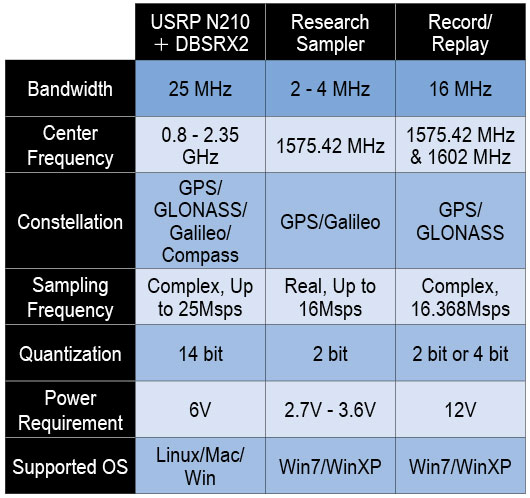
    Table 1. GNSS front-ends comparison.
    Table 1. GNSS front-ends comparison.

    USRP N210 is based on the direct low-IF complex down-conversion receiver architecture that is a combination of the traditional analog complex down-conversion implemented on daughter boards and the digital signal conditioning conducted in the motherboard. Some studies have shown that the low-IF complex down-conversion receiver architecture overcomes some of the well-known issues associated with real down-conversion super heterodyne receiver architecture and direct IF down-conversion receiver architecture, such as high cost, image-folding, DC offset, and I/Q mismatch.

    The low-IF receiver architecture effectively lessens the DC offset by having an LO frequency after analog complex down-conversion. The first step uses a direct complex down-conversion scheme to transform the input RF signal into a low-IF signal. The filters located after the mixer are centered at the low-IF to filter out the unwanted signals. The second step is to further down-covert the low-IF signal to baseband, or digital complex down-conversion.

    Similar to the first stage, a digital half band filter has been developed to filter out-of-band interference. Therefore, direct down-conversion instead of multi-stage IF down-conversion overcomes the cost problem; in the meantime, the signal is down-converted to low-IF instead of base-band frequency as in the direct down-conversion receiver, so the problem of the DC offset is also avoided in the low-IF receiver. These advantages make the USRP N210 platform an attractive option as GNSS receiver front-end.

    Figure 2 shows an example GNSS signal-streaming path schematic on a USRP N210 platform with a DBSRX2 daughter board. Figure 3 shows a photograph of internal structure of a USRP N210 platform.
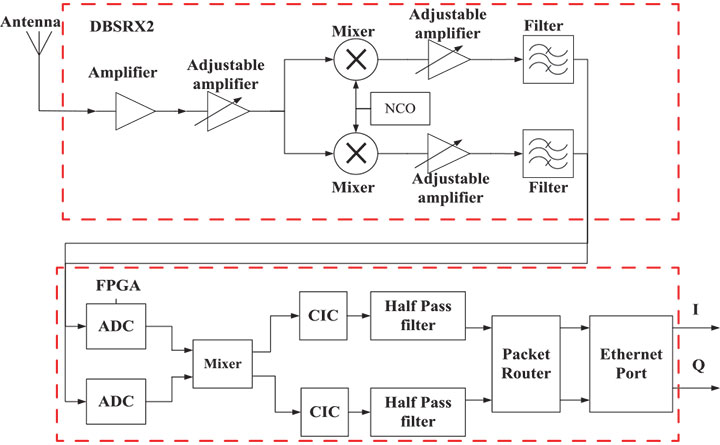
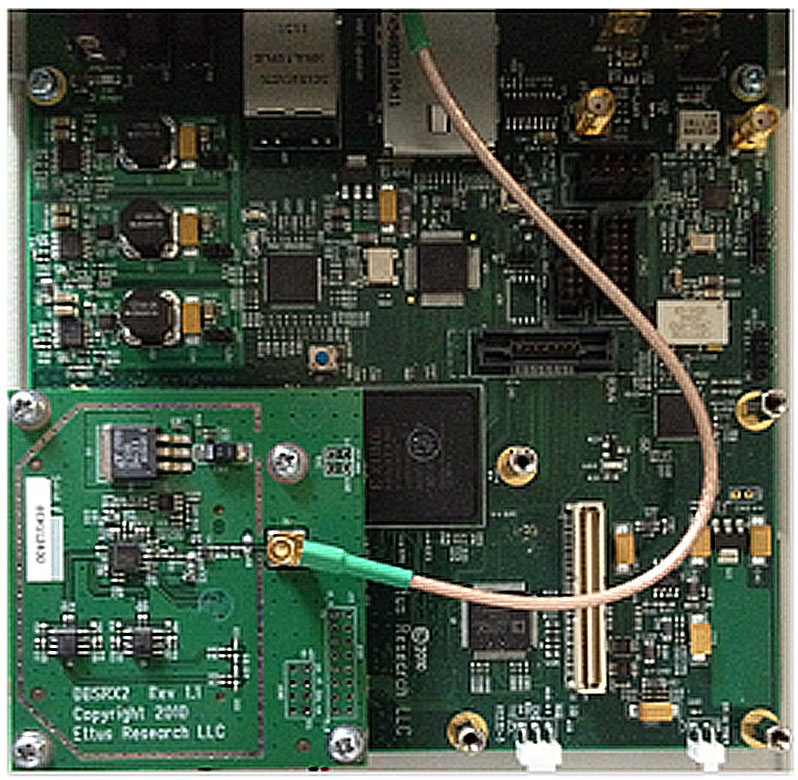
    Figure 2  GNSS signal streaming on USRP N210 + DBSRX2 circuit.
    Figure 2 GNSS signal streaming on USRP N210 + DBSRX2 circuit.
    G-Fig3
    Figure 3. USRP N210 internal structure.

    The USRP N210 platform includes a main board and a daughterboard. In the main board, 14-bit high precision analog-digital converters (ADCs) and digital-analog converters (DACs) permit wide-band signals covering a high dynamic range. The core of the main board is a high-speed field-programmable gate array (FPGA) that allows high-speed signal processing. The FPGA configuration implements down-conversion of the baseband signals to a zero center frequency, decimates the sampled signals, filtering out-of-band components, and finally transmits them through a packet router to the Ethernet port. The onboard numerically controlled oscillator generates the digital sinusoid used by the digital down-conversion process. A cascaded integrator-comb (CIC) filter serves as decimator to down-sample the signal.

    The signals are filtered by a half pass filter for rejecting the out-of-band signals. A Gigabit Ethernet interface effectively enables the delivery of signals out of the USRP N210, up to 25MHz of RF bandwidth. In the daughterboard, first the RF signals are amplified, then the signals are mixed by a local onboard oscillator according to a complex down-conversion scheme. Finally, a band-pass filter is used remove the out-of-band signals.

    Several available daughter boards can perform signal conditioning and tuning implementation. It is important to choose an appropriate daughter board, given the requirements for the data collection.

    A support driver called Universal Hardware Driver (UHD) for the USRP hardware, under Linux, Windows and Mac OS X, is an open-source driver that contains many convenient assembly tools. To boot and configure the whole system, the on-board microprocessor digital signal processor (DSP) needs firmware, and the FPGA requires images. Firmware and FPGA images are downloaded into the USRP platform based on utilizations provided by the UHD. Regarding the source of firmware and FPGA images, there are two methods to obtain them:

    •   directly use the binary release firmware and images posted on the web site of the company;
    •   build (and potentially modify) the provided source code.
    USRP Testing and Implementation

    Some essential testing based on the original configuration of the USRP N210 platform provided an understanding of its architecture, which was necessary to reconfigure its firmware and to set up the wide-band, multi-constellation GNSS receiver. We collected some real GPS L1 data with the USRP N210 as RF front-end. When we processed these GPS L1 data using a software-defined radio (SDR), we encountered a major issue related to tracking, described in the following section.

    Onboard Oscillator Testing. A major problem with the USRP N210 is that its internal temperature-controlled crystal oscillator (TCXO) is not stable in terms of frequency. To evaluate this issue, we recorded some real GPS L1 data and processed the data with our software receiver. As shown in Figure 4, this issue results in the loss of GPS carrier tracking loop at 3.18 seconds, when the carrier loop bandwidth is 25Hz.
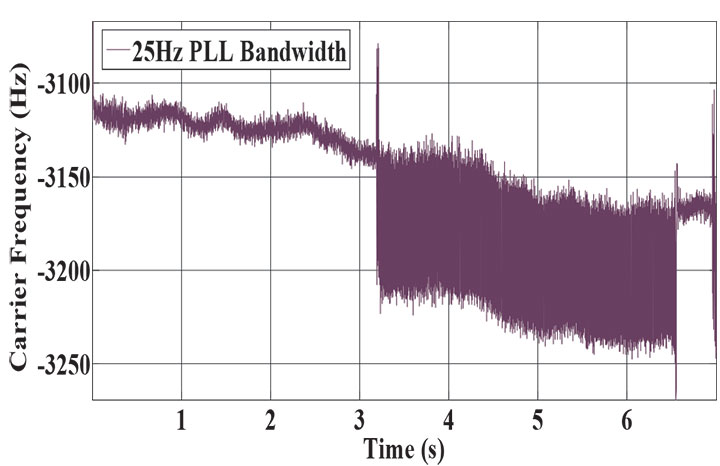
    Figure 4. GPS carrier loop loss of lock.
    Figure 4. GPS carrier loop loss of lock.

    Consequently, we adjusted the carrier loop bandwidth up to 100Hz; then GPS carrier tracking is locked at the same timing (3.18s), shown in Figure 5, but there is an almost 200 Hz jump in less than 5 milliseconds.
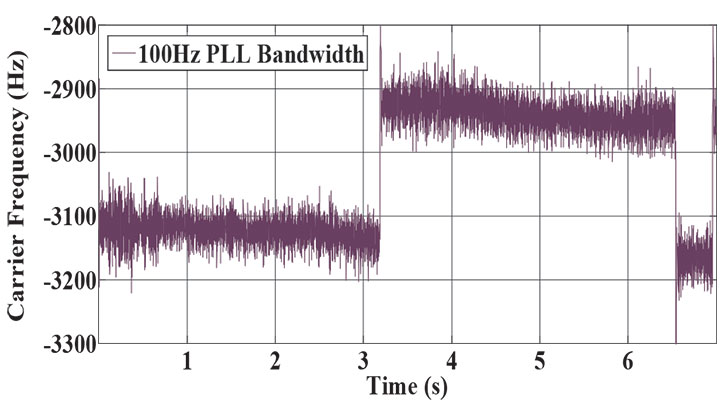
    Figure 5. GPS carrier loop lock tracking.
    Figure 5. GPS carrier loop lock tracking.

    As noted earlier, the daughter card of the USRP N210 platform utilizes direct IF complex down-conversion to tune GNSS RF signals. The oscillator of the daughter board generates a sinusoid signal that serves as mixer to down-convert input GNSS RF signals to a low IF signal. Figure 6 illustrates the daughter card implementation. The drawback of this architecture is that it may bring in an extra frequency shift by the unstable oscillator. The configuration of the daughter-card oscillator is implemented by an internal TCXO clock, which is on the motherboard. Unfortunately, the internal TCXO clock has coarse resolution in terms of frequency adjustments. This extra frequency offset multiplies the corresponding factor that eventually provides mixer functionality to the daughter card. This approach can directly lead to a large frequency offset to the mixer, which is brought into the IF signals.
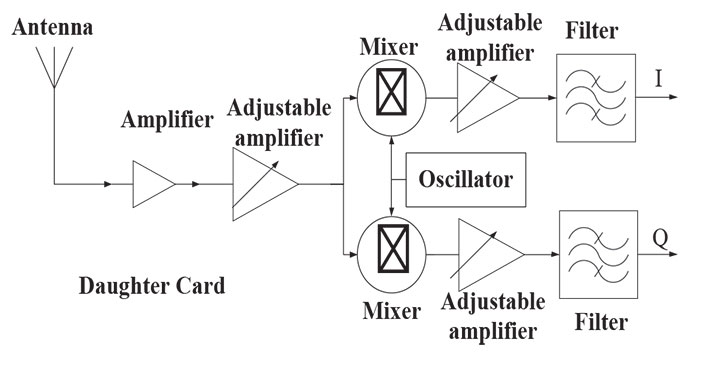
    Figure 6. Daughter-card tuning implementation.
    Figure 6. Daughter-card tuning implementation.

    Finally, when we conduct the tracking operation through the software receiver, this large frequency offset is beyond the lock range of a narrow, typically desirable, GNSS carrier tracking loop, as shown in Figure 4.

    In general, a TCXO is preferred when size and power are critical to the application. An oven-controlled crystal oscillator (OCXO) is a more robust product in terms of frequency stability with varying temperature. Therefore, for the USRP N210 onboard oscillator issue, it is favorable to use a high-quality external OCXO as the basic reference clock when using USRP N210 for GNSS applications.

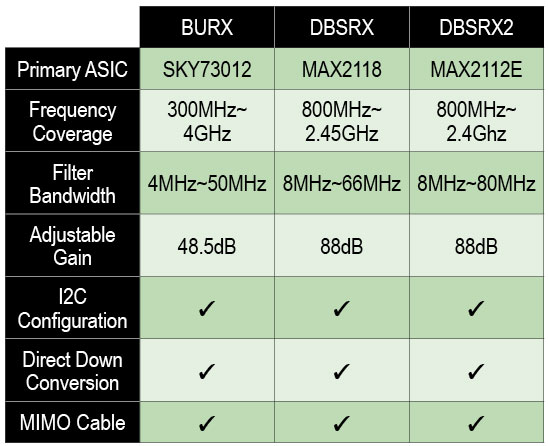
    Front-End Daughter-Card Options. A variety of daughter-card options exist to amplify, mix, and filter RF signals. Table 2 lists comparison results of three daughter cards (BURX, DBSRX and DBSRX2) to supply some guidance to researchers when they are faced with choosing the correct daughter-board.
    G-table2
    Table 2. Front-end daughter-card options.

    The three daughter cards have diverse properties, such as the primary ASIC, frequency coverage range, filter bandwidth and adjustable gain. BURX gives wider radio frequency coverage than DBSRX and DBSRX2. DBSRX2 offers the widest filter bandwidth among the three options.

    To better compare the performance of the three daughter cards, we conducted another three experiments. In the first, we directly connected the RF port with a terminator on the USRP N210 platform to evaluate the noise figure on the three daughter cards. From Figure 7, we can draw some conclusions:

    • BURX has a better sensitivity than DBSRX and DBSRX2 when the gain is set below 30dB.
    • DBSRX2 observes feedback oscillation when the gain set is higher than 70dB.
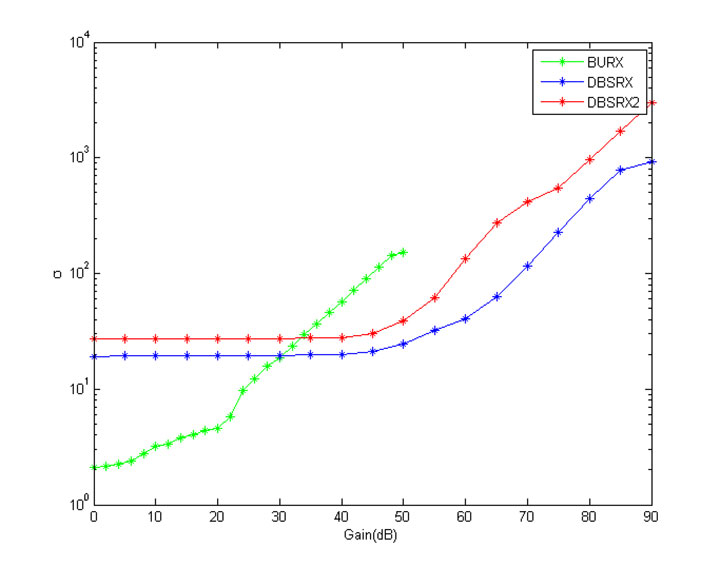
    Figure 7  Noise performance comparisons of three daughter cards.
    Figure 7. Noise performance comparisons of three daughter cards.

    The second experimental setup configuration used a USRP N210 platform, an external OCXO oscillator to provide stable reference clock, and a GPS simulator to evaluate the C/N0 performance of the three daughter boards. The input RF signals are identical, as they come from the same configuration of the GPS simulator. Figure 8 illustrates the C/N0 performance comparison based on this experimental configuration. The figure shows that BURX performs best, with DBSRX2 just slightly behind, while DBSRX has a noise figure penalty of 4dB.
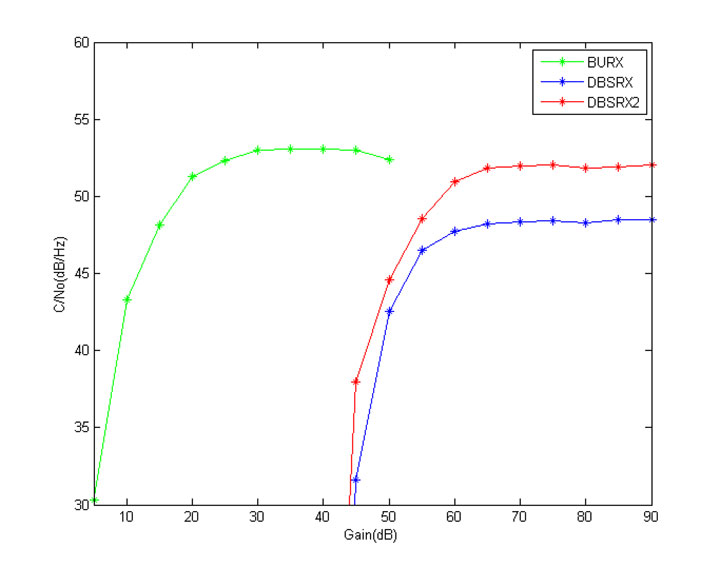
    Figure 8. C/N0 performance comparisons of three daughter cards.
    Figure 8. C/N0 performance comparisons of three daughter cards.

    In the third experiment, we added an external amplifier to increase the signal-to-noise ratio (SNR). From Figure 9, we see that the BURX, DBSRX and DBSRX2 have the same C/N0 performance, effectively validating the above conclusion. Thus, an external amplifier is recommended when using the DBSRX or DBSRX2 daughter boards.
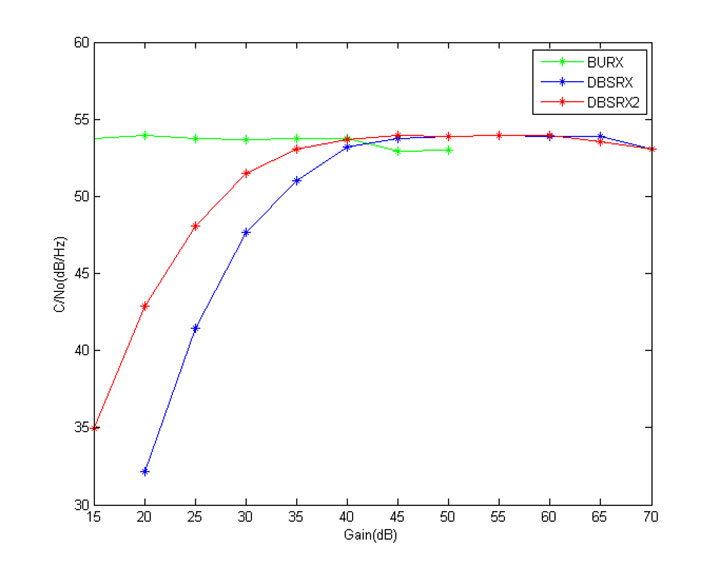
    Figure 9. C/N0 performance comparisons of three daughter cards with an external amplifier.
    Figure 9. C/N0 performance comparisons of three daughter cards with an external amplifier.

    The purpose of these experiments was to find a suitable daughter board for collecting wide-band multi-constellation GNSS RF signals. The important qualities of an appropriate wide-band multi-constellation GNSS receiver are:

    • high sensitivity;
    • wide filter bandwidth; and
    • wide frequency range.

    After a comparison of the three daughter boards, we found that the BURX has a better noise figure than the DBSRX or DBSRX2. The overall performance of the BURX and DBSRX2 are similar however. Using an external amplifier effectively decreases the required gain on all three daughter cards, which correspondingly reduces the effect of the internal thermal noise and enhances the signal noise ratio. As a result, when collecting real wide-band multi-constellation GNSS RF signals, it is preferable to use an external amplifier.

    To consider recording GNSS signals across a 50MHz band, DBSRX2 provides the wider filter bandwidth among the three daughter-card options, and thus we selected it as a suitable daughter card.

    Custom Wide-band Firmware Development. When initially implementing the wideband multi-constellation GNSS reception devices based on the USRP N210 platform, we found a shortcoming in the default configuration of this architecture, whose maximum bandwidth is 25MHz. It is not wide enough to record 50MHz multi-constellation GNSS signals (BeiDou E2, GPS L1, Galileo E1, and GlonassG1). A 50MHz sampling rate (in some cases as much as 80 MHz) is needed to demodulate the GNSS satellites’ signals.

    Meanwhile since the initiation of the research, the USRP manufacturer developed and released a 50MHz firmware. To highlight our efforts, we further modified the USRP N210 default configuration to increase the bandwidth up to 100MHz, which has the potential to synchronously record multi-constellation multi-frequency GNSS signals (Galileo E5a and E5b, GPS L5 and L2) for further investigation of other multi-constellation applications, such as ionospheric dispersion within wideband GNSS signals, or multi-constellation GNSS radio frequency compatibility and interoperability.

    Apart from reprogramming the host driver, we focused on reconfiguring the FPGA firmware. With the aid of anatomizing signal flow in the FPGA, we obtained a particular realization method of augmenting its bandwidth. Figure 10 shows the signal flow in the FPGA of the USRP N210 architecture.
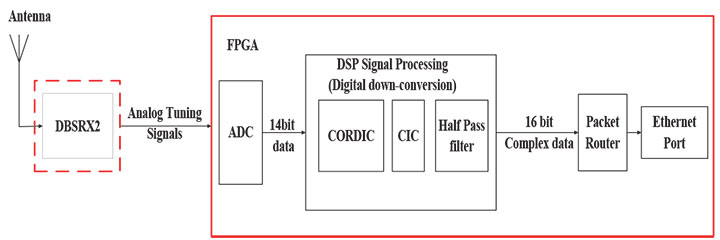
    Figure 10. Signal flow in the FPGA of the USRP N210 platform.
    Figure 10. Signal flow in the FPGA of the USRP N210 platform.

    The ADC produces 14-bit sampled data. After the digital down-conversion implementation in the FPGA, 16-bit complex I/Q sample data are available for the packet transmitting step. According to the induction document of the USRP N210 platform, VITA Radio Transport Protocol functions as an overall framework in the FPGA to provide data transmission and to implement an infrastructure that maintains sample-accurate alignment of signal data. After significant processing in the VITA chain, 36-bit data is finally given to the packet router. The main function of the packet router is to transfer sample data without any data transformation. Finally, through the Gigabit Ethernet port, the host PC receives the complex sample data.

    In an effort to widen the bandwidth of the USRP N210 platform, the bit depth needs to be reduced, which cuts 16-bit complex I/Q sample data to a smaller length, such as 8-bit, 4-bit, or even 2-bit, to solve the problem. By analyzing Figure 10, to fulfill the project’s demanding requirements, modification to the data should be performed after ADC sampling, but before the digital down-conversion. We directly extract the 4-bit most significant bits (MSBs) from the ADC sampling data and combined eight 4-bit MSB into a new 16-bit complex I/Q sample, and gave this custom sample data to the packet router, increasing the bandwidth to 100 MHz.

    Wide-Band Receiver Performance Analysis. The custom USRP N210-based wide-band multi-constellation GNSS data reception experiment is set up as shown in Figure 11.
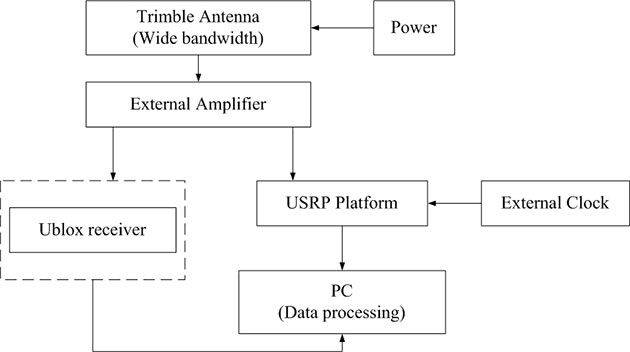
    Figure 11  Wide-band multi-constellation GNSS data recording system.
    Figure 11. Wide-band multi-constellation GNSS data recording system.

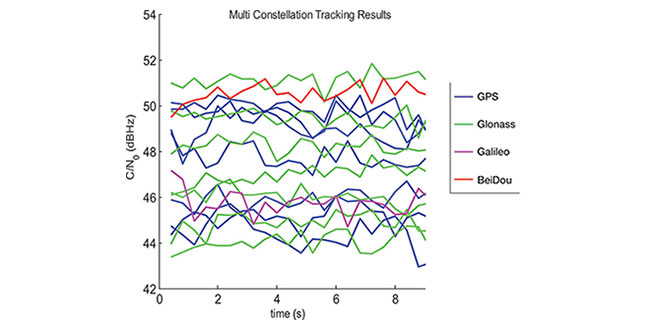
    A wide-band antenna collected the raw GNSS data, including GPS, GLONASS, Galileo, and BeiDou. An external amplifier was included to decrease the overall noise figure. An OCXO clock was used as the reference clock of the USRP N210 system. After we found the times when Galileo and BeiDou satellites were visible from our location, we first tested the antenna and external amplifier using a commercial receiver, which provided a reference position. Then we used 1582MHz as the reception center frequency and issued the corresponding command on the host computer to start collecting the raw wide-band GNSS signals. By processing the raw wide-band GNSS data through our software receiver, we obtained the acquisition results from all constellations shown in Figure 12; and tracking results displayed in Figure 13.
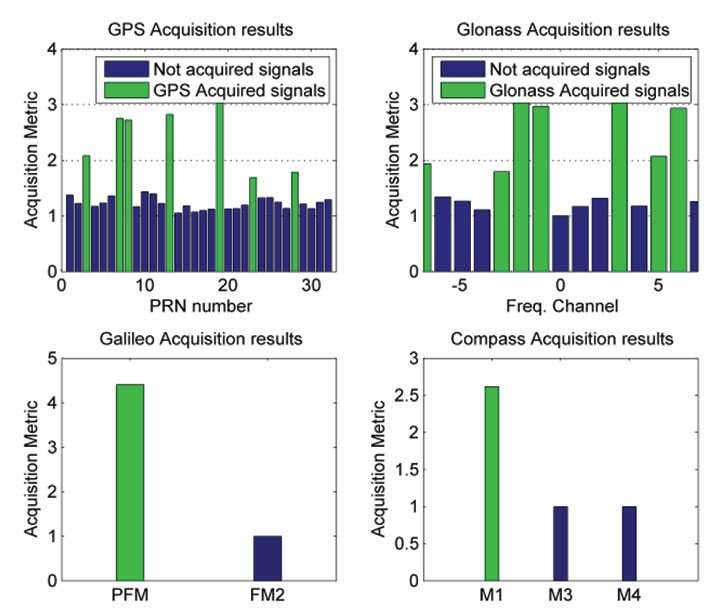
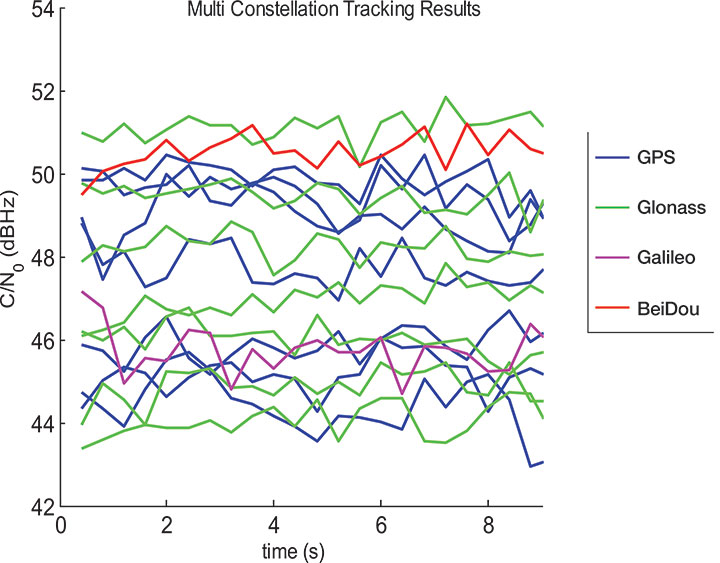
    Figure 12  Acquisition results for all constellations.
    Figure 12. Acquisition results for all constellations.
    Guo_opener
    Figure 13. Tracking results for all constellations.

    We could not do the full-constellation position solution because Galileo was not broadcasting navigation data at the time of the collection and the ICD for BeiDou had not yet been released. Therefore, respectively using GPS and GLONASS tracking results, we provided the position solution and timing information that are illustrated in Figure 14 and in Figure 15.
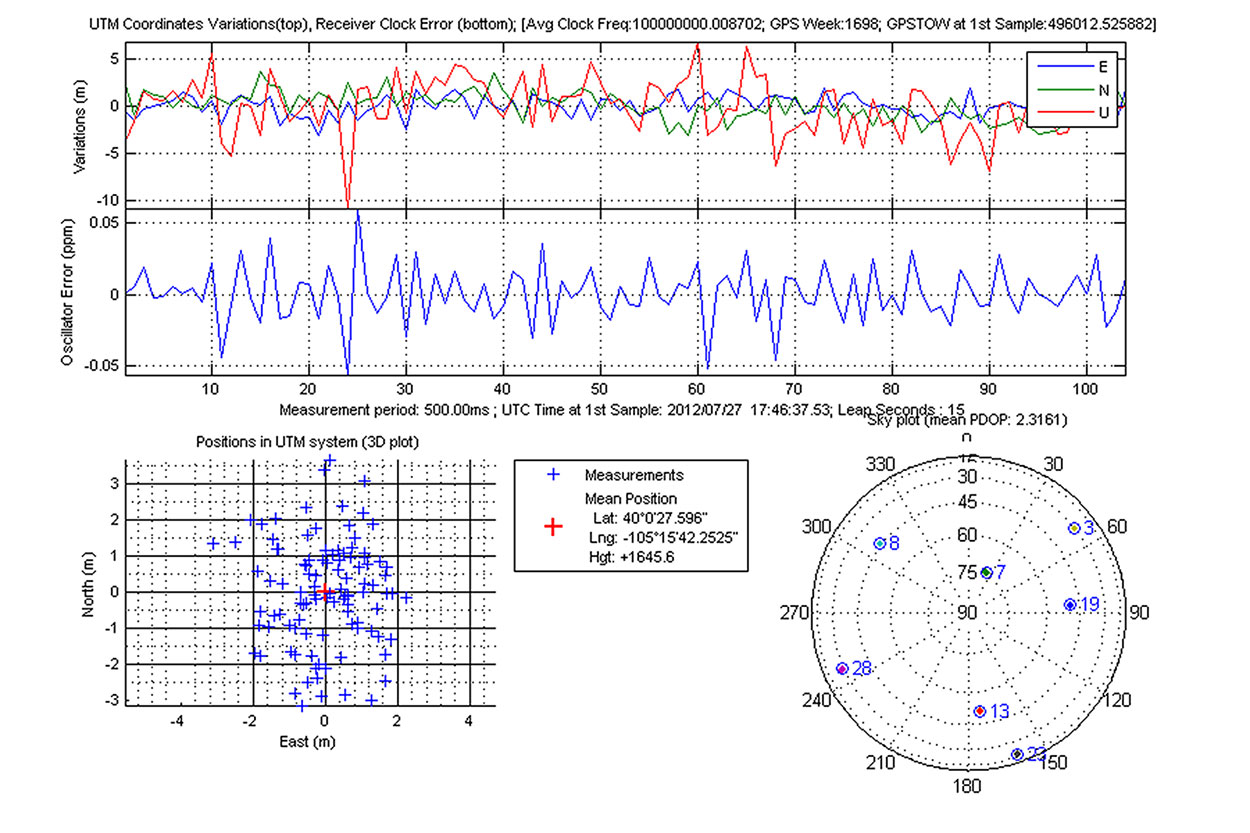
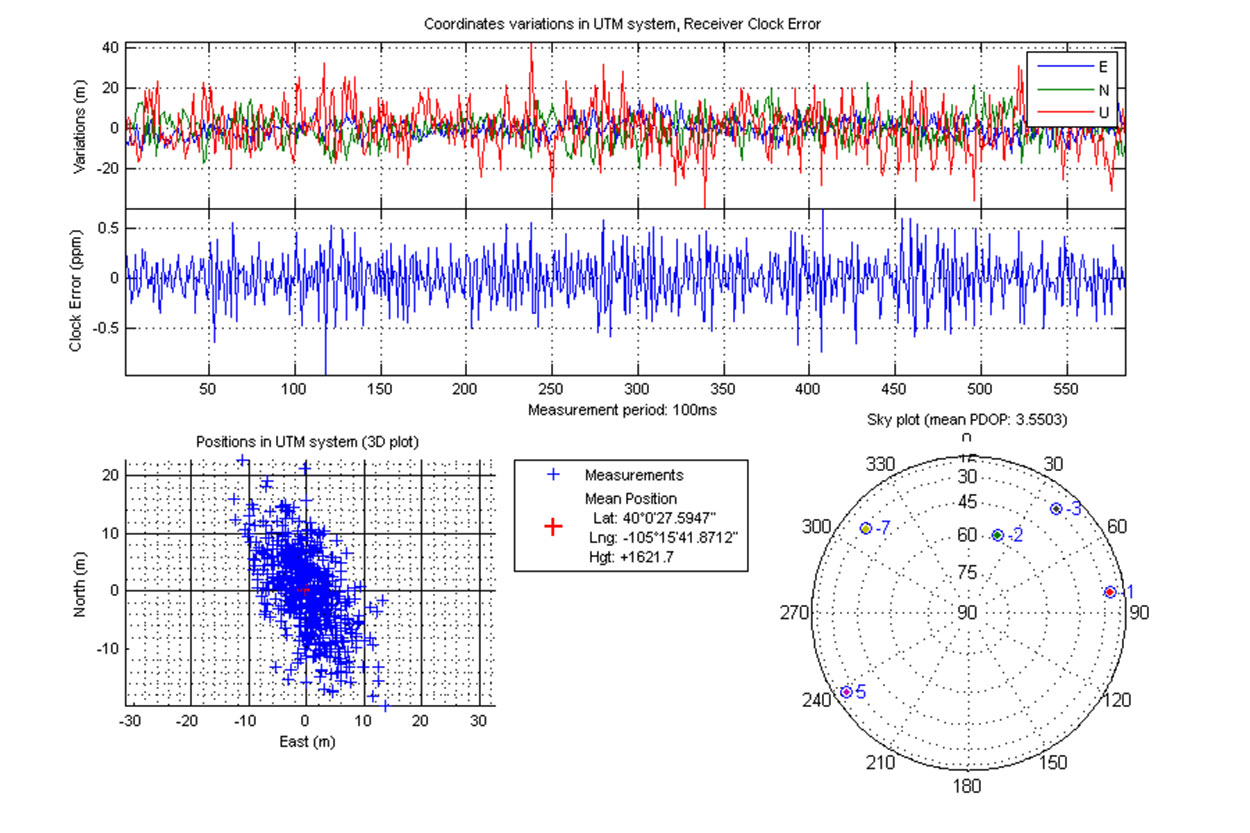
    Figure 13. GPS position solution and timing information.
    Figure 14. GPS position solution and timing information.
    Figure 14. GLONASS position solution.
    Figure 15. GLONASS position solution.
    Conclusions

    By processing raw wide-band multi-constellation GNSS signals through our software receiver, we successfully acquired and tracked satellites from the four constellations. In addition, since we achieved 100MHz bandwidth, we can also simultaneously capture modernized GPS and Galileo signals (L5 and L2; E5a and E5b, 1105–1205 MHz).

    In future work, a longer raw wide-band GNSS data set will be recorded and used to determine the user position leveraging all constellations. Also an urban collection test will be done to assess/demonstrate that multiple constellations can effectively improve the reliability and continuity of GNSS navigation.

    Acknowledgment

    The first author’s visiting stay to conduct her research at University of Colorado is funded by China Scholarship Council, File No. 2010602084.

    This article is based on a paper presented at the Institute of Navigation International Technical Conference 2013 in San Diego, California.

    Manufacturers

    The USRP N210 is manufactured by Ettus Research. The core of the main board is a high-speed Xilinx Spartan 3A DSP FPGA. Ettus Research provides a support driver called Universal Hardware Driver (UHD) for the USRP hardware. A wide-band Trimble antenna was used in the final experiment.


    Ningyan Guo is a Ph.D. candidate at Beihang University, China. She is currently a visiting scholar at the University of Colorado at Boulder.

    Staffan Backén is a postdoctoral researcher at University of Colorado at Boulder. He received a Ph.D. in in electrical engineering from Luleå University of Technology, Sweden.

    Dennis Akos completed a Ph.D. in electrical engineering at Ohio University. He is an associate professor in the Aerospace Engineering Sciences Department at the University of Colorado at Boulder with visiting appointments at Luleå University of Technology and Stanford University
  • Showing Smartphones the Way Inside

    Real-Time, Continuous, Reliable, Indoor/Outdoor Localization

    By Zainab Syed, Jacques Georgy, Abdelrahman Ali, Hsiu-Wen  Chang, and Chris Goodall

    Using a select set of components, a navigation software development kit can easily be configured to fit a variety of mobile and portable devices. Testing on several current devices demonstrates that the kit’s use of sensors already present in smartphones to enable entertainment can provide 3D positioning when satellite signals are degraded or absent, such as in urban canyons or in deep indoor environments. The solution also provides the heading of the user, the 3D orientation of the device, and the user’s velocity, without restriction on device usage. 

    Location-based services (LBS) have evolved to the point that a smartphone is considered incomplete if it does not have navigation functionality. In fact, basic navigation functionalities are no longer sufficient, because of the limited capabilities of traditional solutions. Traditional navigation techniques are usually based on the trilateration of GPS signals. Smartphones use Assisted GPS (AGPS) technology, which utilizes pre-knowledge about the satellite constellation to provide GPS-based positions in urban canyons and indoor environments, a capability once considered impossible. Because GPS signals cannot reach indoor environments, some companies have developed  map databases to provide a positioning solution using available Wi-Fi signals. The concept is simple: to provide absolute positioning where GPS signals are too weak or are unavailable. However, such a solution requires continuous updates of ever-changing Wi-Fi hotspot maps, making this a costly system to manage. Nevertheless, it is an attractive option for positioning in the absence of GPS signals.

    Because LBS demand reliability, continuity, and accuracy in all environments, as well as information about the headings of the device and user, many research groups and technology companies are working to achieve these goals by integrating the aforementioned positioning methods with pre-existing sensors in smartphones. Currently, micro-electro-mechanical systems (MEMS) sensors are used predominantly for entertainment applications in the phone. The orientation of the screen is sensed by the MEMS accelerometers, which switch the display orientation according to the user’s needs. Some applications use the accelerometers and magnetometer to provide an indoor navigation solution starting from a user-defined position, but only if the smartphone is kept in a fixed orientation — an unrealistic assumption. Other recent research works also include gyroscopes for navigation. In general, it has been found that embedded mobile-phone sensors are insufficient for reliable navigation purposes because of very high noise, large random drift rates, and also because it can be assumed that the mobile device is able to freely change orientation with respect to the moving platform (the human body while walking, or a vehicle while driving).

    This article provides the results of using an efficient and high-rate navigation platform with low computational requirements for mobile devices. Known as the Trusted Portable Navigator (T-PN), it utilizes a smartphone’s existing MEMS sensors. Despite some of the challenges with MEMS, the T-PN can provide a real-time, continuous, and reliable navigation solution that works regardless of the motion pattern of the user. Example motion patterns include walking with the smartphone indoors or outdoors; driving in clear sky conditions, downtown, or through tunnels and underground parkades; or a combination of walking and driving in any environment.

    The main challenge with low-cost MEMS sensors in smartphones is that they cannot be used without proper error modeling because of high noise characteristics and bias instabilities. Thus, the T-PN has innovative algorithms that autonomously develop custom error models, turning the available sensors into navigation-capable inertial sensors, without any restrictions on the user or any delay in the navigation solution.

    Current consumer mobile devices can be used in a variety of ways; for example, while texting, on the ear, in pocket, dangling freely while handheld, and on a belt.  The orientation of the phone changes significantly with each use case, which makes accurate sensor-based navigation very difficult to achieve if referenced to the user. The common practice in traditional inertial navigation is to attach and align the device to the moving body. However, it is unrealistic to ask a user to keep their phone in any specific orientation. To solve this problem, the T-PN calculates these orientation angles in real-time and uses them as corrections for the user’s attitude and position.

    The ultimate demonstration of the T-PN’s capabilities is its real-time performance in smartphones and tablets. The tests described here were performed on the commercially-available Android and QNX operating systems in tablets and smartphones. The T-PN was packaged and built at the native level to ensure computational efficiency. Several devices were used in the real time testing, including: the Samsung Galaxy Nexus, the Samsung Galaxy Note, the Samsung Galaxy S III, and the Blackberry Playbook. This device selection is an accurate sampling of the current mobile technologies available today.

    Other manufacturers will have more of these devices running newer versions of Android and other operating systems. All of these devices include tri-axial gyroscopes, tri-axial accelerometers, tri-axial magnetometers, a barometer, and a GPS chipset with AGPS capabilities. All the devices used feature different brands of these low-cost sensors.

    Sensor Calibration

    The sensors need to be calibrated for two different types of errors to ensure a precise and accurate navigation solution. The first type of calibration is known as deterministic errors calibration, which includes the estimation of initial turn-on biases and scale factors of the sensors. For very high-cost systems these errors are usually negligible, but mobile phone-grade sensors show high variations from turn-on to turn-on.

    The second type of calibration is more involved and labor-intensive, as it requires large static datasets. Allan variance curves are calculated to estimate the bias instability and random walk parameters. These parameters are called stochastic error model parameters and are necessary to obtain optimum results for longer periods of standalone navigation. They are also very important when attempting to design a consistent filter.  For very low-cost sensors, these parameters may change from unit to sensor, and over time for the same sensor. This means that individual systems may demonstrate different performances with the exact same integration software.

    The T-PN eliminates the need of any calibration, as it uses a patent-pending technique that automatically completes all the required calibration within 5–10 minutes of the navigation mission. The only requirement is the availability of a good GPS position, velocity, and timing (PVT) solution for at least 5–10 minutes. Starting from generic calibration parameters, artificial intelligence techniques quickly narrow down the search to the most optimum error-model parameters. This makes the T-PN suitable for navigation use with mobile phone-grade inertial sensors.

    Changing Orientations

    Changing orientations cannot be avoided for smartphone-based navigation. While navigating, users will take calls, text, and check their position; therefore it is impractical to request that the user keep the phone fixed to their body. The solution must be robust to provide navigation for these common use-case scenarios.

    The T-PN uses patent-pending techniques to identify the changing orientations as they occur and adjust the user’s navigation solution accordingly. The result is a seamless and robust solution, with or without GPS.

    Mode of Transit

    Mobile phone navigation cannot be restricted to pedestrian-only or vehicle-only cases. The user will be carrying the device wherever they will go, which requires the navigation software to be adaptable for the user’s mode of transit.

    Through a patent-pending technology, the user’s mode of transit is detected. Different modes may include walking, using the stairs, driving, riding an elevator, and static periods related to the above modes.  Once the mode is detected, the appropriate algorithms and constraints are applied to ensure minimal navigation drift, even for long periods of standalone sensor navigation. There is no restriction on modes of transit or any requirement to perform a special task, making the T-PN user-friendly and efficient.

    T-PN Overview

    The T-PN is highly customizable software that converts any quality and grade of inertial sensors into a navigation-capable system. In other words, it can be used on any available smartphone operating system, such as Android. This navigation engine takes any available measurements and improves the navigation results by filtering the updates. GPS is the most common type of external update that provides absolute position and velocity information to the inertial engine and reduces time-related errors.

    Wi-Fi is another absolute update for positioning in deep indoor scenarios, and is also accepted by the T-PN. Wi-Fi measurements are noisy, but the T-PN integrated solution smooths the noise and closely represents the user’s actual position. Wi-Fi updates are optional for T-PN, but they will enhance the solution if long periods of indoor navigation are desired.

    Physical movements of the user, such as pedestrian dead reckoning, zero-velocity updates, and non-holonomic conditions are used as constraints to improve the navigation solution.

    The constraints are also tailored to the user’s mode of transit to ensure the most robust solution for the user. Mode of transit is automatically detected on a continuous basis.

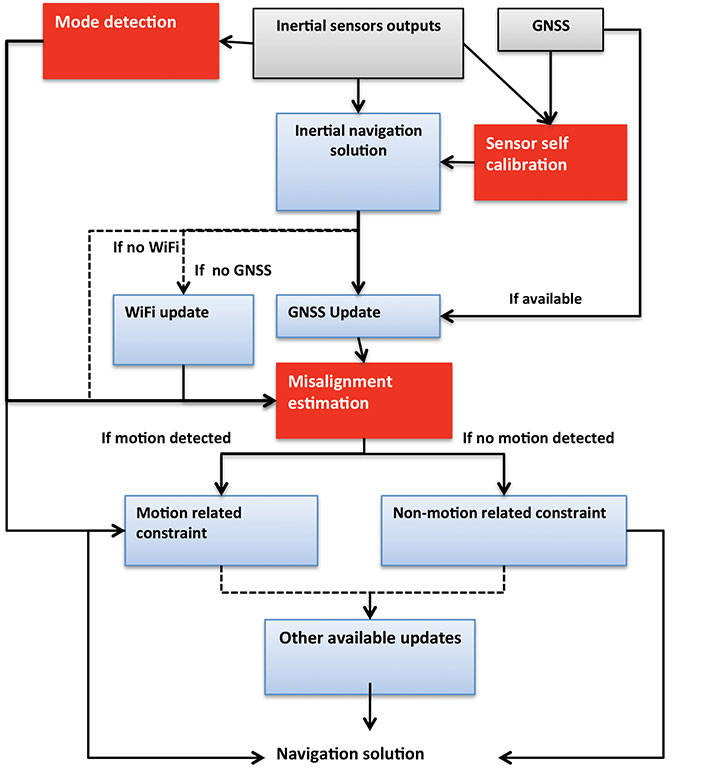
    If additional sensors such as magnetometers and barometers are present and properly calibrated by the T-PN software, their readings can be used as optional updates. Figure 1 shows a complete flowchart of the algorithm for the T-PN. The dashed lines show the optional updates for the T-PN.

    S-chart1
    Figure 1. The T-PN algorithm flowchart.
    Hardware Description and Use Cases

    The test platforms used are smartphones and tablets running different versions of Android and QNX. The opening picture shows some of these units, listed here with their operating systems.

    • MOTOROLA Xoom Wi-Fi MZ604 – Android 3.2
    • SAMSUNG Galaxy Nexus GT-I9250 – Android 4.0
    • SAMSUNG Galaxy Note GT-N7000 – Android 2.3
    • Blackberry 16GB Playbook – QNX 2.0.1.358 (pictured)
    • SAMSUNG Galaxy S III – Android 4.0.4 (pictured)

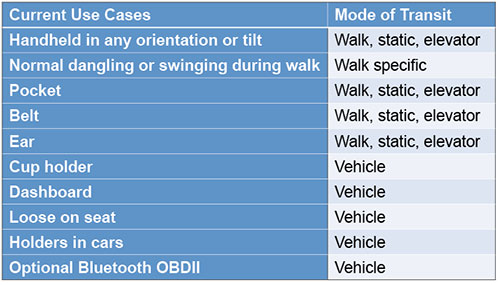
    A variety of use cases, listed in Table 1, are currently supported in the T-PN.

    Table 1. Current supported use cases.
    Table 1. Current supported use cases.
    Results

    The results are divided into three sections:

    • the results for consumer navigation and their respective LBS applications;
    • tracking applications for personnel on-foot and in-vehicle;
    • and driving with or without GPS with the device left on the seat or holder with or without a connection to the on-board diagnostic system (OBDII) of the vehicle.

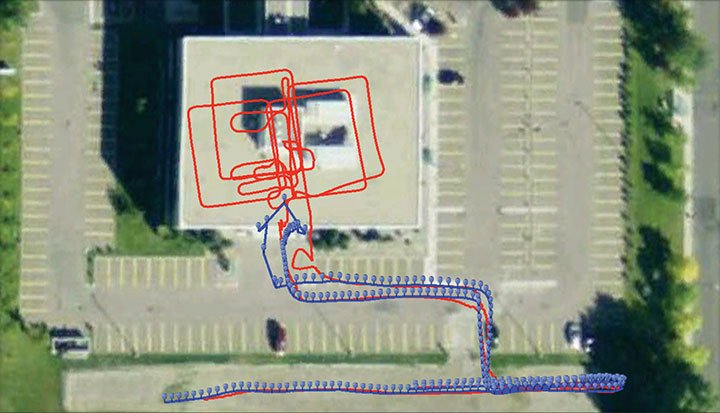
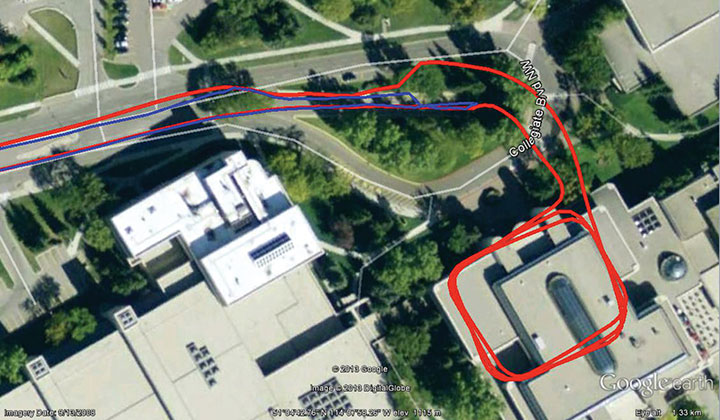
    Consumer Navigation, LBS App. This is a very typical use case. It involves the user starting the navigation after parking his/her vehicle to locate a certain destination in an indoor environment; for example, a specific store in a shopping center or an office inside a building. As the user heads deep indoors, GPS will stop providing any useful positioning information, as illustrated in Figure 2 (blue line). The user started the navigation in texting portrait mode, then held the phone in hand for some time and let it dangle naturally, and then finally puts the phone in his or her pocket. The trajectory in red is the T-PN solution and the blue line shows the available GPS solution. The Samsung Galaxy S III was used in this trajectory, with a maximum error of less than 7 meters for 2 minutes of deep indoor navigation.

    Figure 2 GPS positioning solution in blue is given with T-PN solution in red for a typical outdoor/indoor environment using Samsung Galaxy S III.
    Figure 2. GPS positioning solution in blue is given with T-PN solution in red for a typical outdoor/indoor environment using Samsung Galaxy S III.

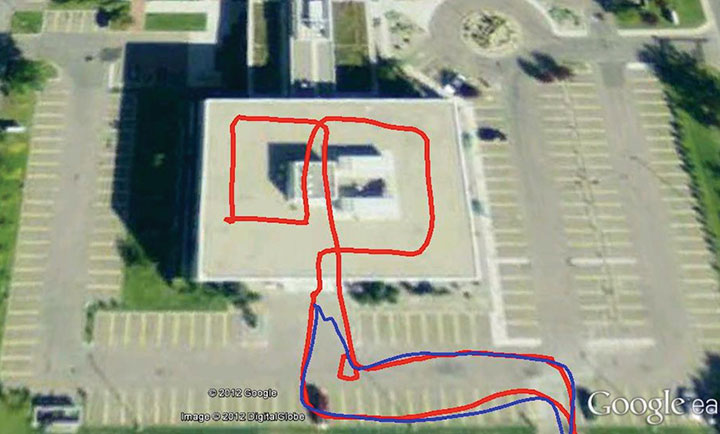
    Figure 3 shows a trajectory collected and processed on an S III with GPS signals (including multipath) in blue provided with the T-PN solution in red. During the navigation, the user was making a phone call with the phone on the ear. The maximum error stayed within 17 meters for 5 minutes of indoor navigation with severe multipath in GPS signals. It has to be noted that the heading solution would have converged better if the user walked outdoor for an adequate time, but here the user went straight indoors a few seconds after starting.

    Figure 3 GPS positioning solution in blue is given with T-PN solution in red for a typical indoor environment with multipathed GPS signals using T-PN on a Samsung Galaxy S III.
    Figure 3. GPS positioning solution in blue is given with T-PN solution in red for a typical indoor environment with multipathed GPS signals using T-PN on a Samsung Galaxy S III.

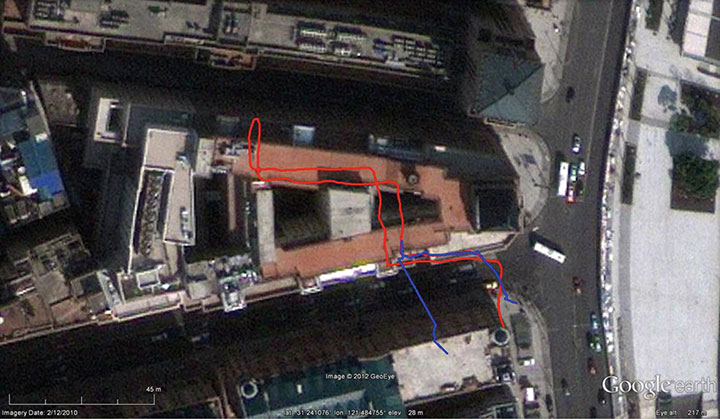
    The trajectory in Figure 4 was collected and processed on a Samsung Galaxy Note. The user was holding the Note in texting portrait mode in Shanghai’s downtown core. When the user entered the building, GPS positioning information became unavailable, and the only positioning information available was from T-PN (as shown by the red line in Figure 4). The maximum error after approximately 2 minutes of indoor trajectory was less than 6m.

    Figure 4 Trajectory collected and processed on a Samsung Galaxy Note in downtown Shanghai China. Red line is the T-PN solution while the blue is GPS solution.
    Figure 4. Trajectory collected and processed on a Samsung Galaxy Note in downtown Shanghai China. Red line is the T-PN solution while the blue is GPS solution.

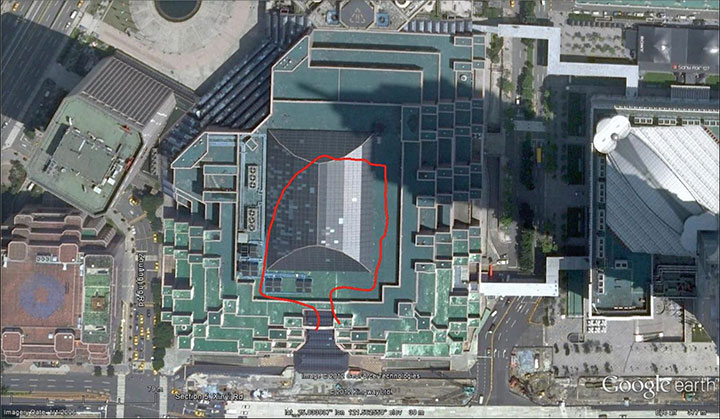
    Figure 5 shows a pure indoor trajectory without GPS, collected and processed on a Samsung Galaxy Nexus. The user walked in a loop for 4 minutes and then returned back to the same location. The maximum error stayed within 13 meters, even with the phone changing orientation with respect to the user. This trajectory was collected at Computex 2012 conference in Taipei.

    Figure 5. Pure indoor trajectory collected and processed on a Samsung Galaxy Nexus phone with different user orientation of the phone.
    Figure 5. Pure indoor trajectory collected and processed on a Samsung Galaxy Nexus phone with different user orientation of the phone.

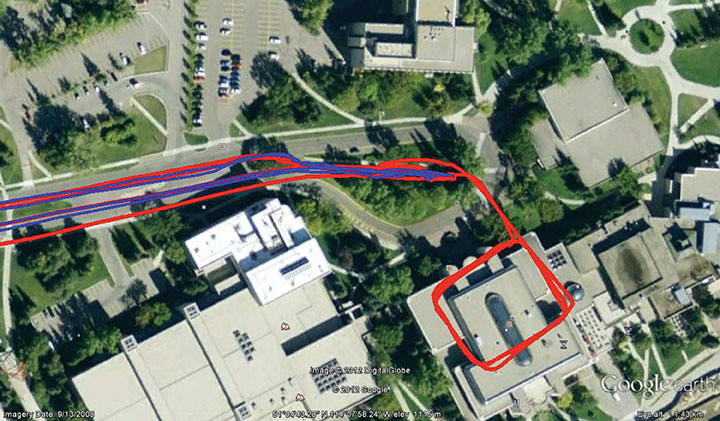
    Tracking Applications. Another usage of T-PN can be related to tracking of personnel such as firefighters. In this case, the tracking device will be attached to the users for a high-accuracy solution. To show the performance, a Samsung Galaxy Nexus was tethered to the user in a chest mount strap. The user took a trajectory that started outdoors and then went indoors for over 9 minutes, covering multiple floors and taking elevators and stairs to access the different floors. At the end of the trajectory, the error was less than 6 meters, or 1.5 percent of the distance traveled. Figure 6 shows the results, with the red line showing the T-PN solution and the blue line showing the GPS solution.

    Figure 6. Samsung Galaxy Nexus running T-PN in real time for tracking application.
    Figure 6. Samsung Galaxy Nexus running T-PN in real time for tracking application.

    Figure 7  shows the result of the tethered chest-mount system that was connected wirelessly with a vehicle’s OBDII while inside that vehicle. The vehicle entered an underground parkade with no GPS availability and completed two full loops inside the parkade before exiting.

    Figure 7 Samsung Galaxy S III running T-PN in real time for tracking application of the personnel inside a vehicle with OBDII.
    Figure 7. Samsung Galaxy S III running T-PN in real time for tracking application of the personnel inside a vehicle with OBDII.

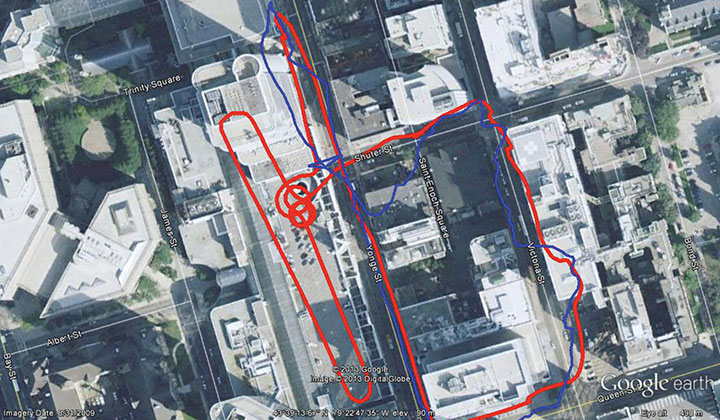
    Consumer Vehicle Navigation. The results of using the T-PN platform on a Blackberry Playbook in real time in the downtown Toronto Eaton Centre parkade appear in Figure 8. The Playbook was left untethered on a seat during the navigation. The T-PN was able to bridge the complete loss of GPS signals (blue line) in the multi-level parkade, and to effectively filter the multipath in the GPS signals in the Toronto downtown core.

    Figure 8 T-PN platform running on a Blackberry Playbook in red is provided against the GPS solution in blue.
    Figure 8. T-PN platform running on a Blackberry Playbook in red is provided against the GPS solution in blue.

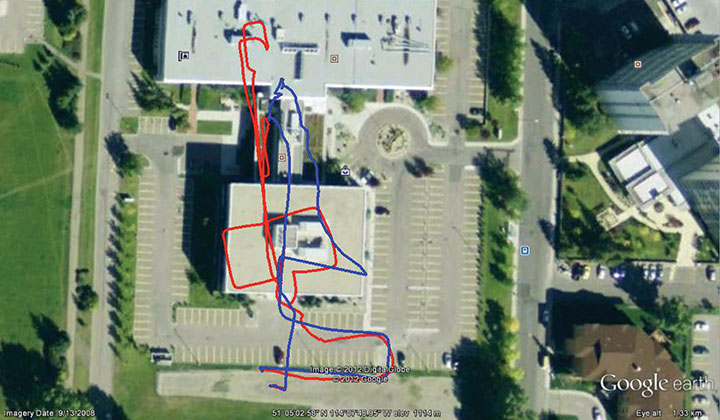
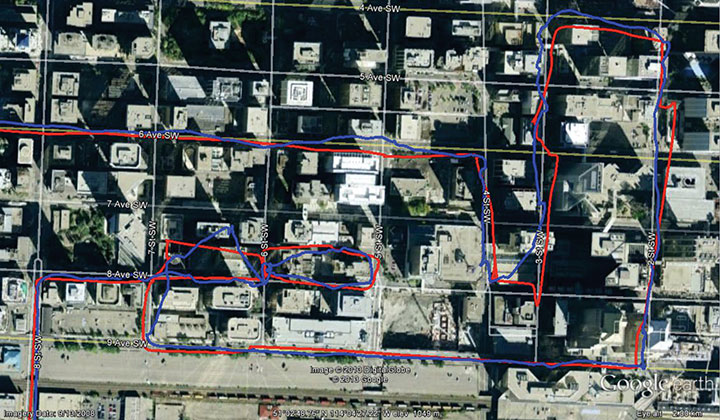
    The next set of results are for a changing misalignment case within the trajectory. In this case, T-PN was running on a Samsung Galaxy S III and evaluated in Calgary’s downtown core. The GPS signals were erroneous due to multipath (as shown by the blue lines in Figure 9), while the T-PN solution was able to provide a proper trajectory, including an almost perfect figure-eight.

    For the final sets of results, a Samsung Galaxy S III was placed (untethered) on a seat in a vehicle with a wireless connection to the vehicle’s OBDII. Despite the misalignment, the T-PN showed the three loops in the parkade almost perfectly, as shown in Figure 10.

    Figure 9 Downtown Calgary trajectory collected and processed on a Samsung Galaxy S III with changing misalignments in a gooseneck cradle. T-PN solution is in red and the GPS is provided in blue.
    Figure 9. Downtown Calgary trajectory collected and processed on a Samsung Galaxy S III with changing misalignments in a gooseneck cradle. T-PN solution is in red and the GPS is provided in blue.
    Figure 10 Underground parkade trajectory with wireless OBDII connection on a Samsung Galaxy S III running T-PN software. T-PN solution is in red and the GPS is provided in blue.
    Figure 10. Underground parkade trajectory with wireless OBDII connection on a Samsung Galaxy S III running T-PN software. T-PN solution is in red and the GPS is provided in blue.
    Conclusion

    Today, mobile phones are used as navigation devices. GPS often fails to provide an accurate positioning solution in urban canyons and deep indoor environments because GPS is either not available in these environments or will provide erroneous positions because of multipath.

    The T-PN provides accurate positioning everywhere by converting the pre-existing inertial sensors of mobile devices (such as tablets and smartphones) into navigators. The results were provided for walking and driving cases where GPS positioning information was unreliable or unavailable. In all these cases, the T-PN solution was able to successfully provide enhanced navigation solution of the user.

    Acknowledgment

    This article is based on a paper first presented at ION GNSS 2012, September 2012, Nashville, Tennessee.

    Manufacturers

    The T-PN was developed by Trusted Positioning, Inc., of Calgary, Alberta, Canada.


    Zainab Syed is a co-founder/VP engineering at Trusted Positioning Inc. She obtained her Ph.D. from the University of Calgary. She has 6 patents pending and more than 50 publications on integrated navigation systems.

    Jacques Georgy is the VP of R&D and a co-founder of Trusted Positioning Inc. He received his Ph.D. in electrical and computer engineering from Queen’s University, Canada. He has 10 filed patents, written a book, and more than 40 papers.

    Abdelrahman Ali is an algorithms designer at Trusted Positioning Inc. He is also a member of the Mobile Multi-Sensor Systems Research Group at the Department of Geomatics Engineering in University of Calgary where he is completing his Ph.D.

    Hsiu-Wen Chang is an algorithms designer at Trusted Positioning Inc. She is also a member of the Mobile Multi-Sensor Systems Research Group at the Department of Geomatics Engineering in University of Calgary where she is completing her Ph.D.

    Chris Goodall is the CEO/co-founder of Trusted Positioning Inc.  Chris has been working in developing, deploying, and evangelizing multi-sensor navigation systems for more than 8 years.  He has more than 40 publications and seven patent applications.

  • Trimble Increases Functionality Across GNSS Survey Portfolio

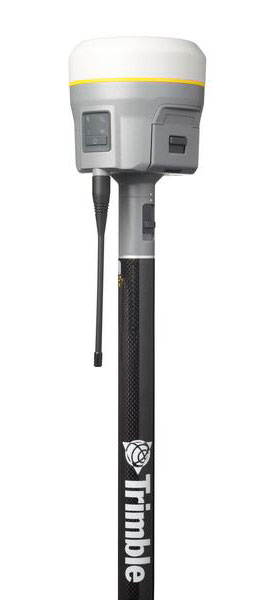
    R10_studio_back_face_right
    Trimble

    Trimble announced today functionality updates to its integrated GNSS survey receiver portfolio, which includes the Trimble R4, Trimble R6, Trimble R8 GNSS systems and is rounded out by the recently released Trimble R10 GNSS System (pictured at right).

    The updates include increased satellite tracking and real-time kinematic (RTK) performance. These improvements modernize the integrated receiver portfolio to add functionality, flexibility and capability as well as more options for surveyors, Trimble said.

    “With the introduction of the next-generation Trimble R10 GNSS system, we felt it was an ideal opportunity to modernize the complete integrated receiver portfolio,” said Erik Arvesen, vice president of Trimble’s Survey Division. “The additional functionality in the Trimble R4, R6 and R8 provide surveyors with more capability, flexibility and additional receiver options to meet their ever-changing business needs.”

    Trimble R8 GNSS System. The Trimble R8 includes integrated Trimble Maxwell 6 ASICs offering 440 channels. Powered by Trimble 360 technology, the Trimble R8 provides consistent and reliable tracking of signals for all existing GNSS constellations and augmentation systems, including GPS, GLONASS, Galileo, BeiDou and QZSS. Using the Trimble R8, surveyors can connect directly to the controller, receive RTK network corrections and access the Internet via comprehensive communication options.

    Trimble R6 GNSS System. Featuring Trimble R-Track satellite tracking technology, a Trimble Maxwell 6 ASIC with 220 channels and support for all GPS and QZSS signals with GNSS upgrade options, the Trimble R6 provides surveyors with a completely scalable and flexible solution. The Trimble R6 supports GPS L1, L2, L2C, and L5 signals and QZSS as standard and offers upgrade options to support GLONASS, Galileo and BeiDou signals. The Trimble R6 delivers the accuracy and reliability required for precision surveying with superior tracking and RTK performance.

    Trimble R4 GNSS System. Designed for use with the new Trimble Slate Controller and Trimble Access field software, the Trimble R4 GNSS System provides a dedicated and reliable GNSS solution that is effective for both real-time and post-processed GNSS surveys. The Trimble R4 now supports GPS L1, L2, and L2C and QZSS signals as standard and also offers GLONASS, Galileo and BeiDou support upgrade options. The system includes Trimble R-Track technology and a Trimble Maxwell 6 ASIC with 220 channels.

    Trimble R10 GNSS System. The Trimble R10 GNSS system is the premier solution of the integrated survey receiver portfolio. Designed to increase  productivity, the Trimble R10 provides powerful functionality, including Trimble 360 receiver technology, precise position capture with Trimble SurePoint technology, the cutting-edge Trimble HD-GNSS processing engine and Trimble xFill bridging technology to “fill in” for RTK corrections in the event of temporary radio or Internet connection outages.

    The updated configurations of the Trimble R4, R6 and R8 as well as the Trimble R10 GNSS system are available now through Trimble’s Survey Distribution Channel.

  • Huawei Brings Connectivity to Vehicles with Telematics Solutions

    Huawei Brings Connectivity to Vehicles with Telematics Solutions

    Huawei, a global information and communications technology (ICT) solutions provider, unveiled a series of products heralding the company’s first foray into telematics solutions at the 2013 Mobile World Congress, being held this week in Barcelona, Spain.

    Huawei showcased its vehicle-compatible 3G and LTE communication modules, MU609T and ME909T, its 3G mobile hotspot, DA6810, and its 3G onboard diagnostic (OBD) box, DA3100. Huawei’s products for vehicles provide stable wireless solutions in diverse environments regardless of weather conditions, terrain, or reliability of power supply, providing new development opportunities for the automotive industry, and unsurpassed convenience for car owners.

    “Huawei is excited to welcome in an era of smart vehicles with the availability of products that integrate wireless communications and automotive electronic technologies,” said Kevin Liu, vice president, Mobile Broadband Division, Huawei Consumer Business Group. “Huawei’s telematic solutions are designed to enable cars and other transportation vehicles to exist in a seamless wireless mobile environment, so that users are truly able to enjoy the benefits brought about by ICT services.”

    The MU609T and ME909T are Huawei’s first 3G and LTE communication modules for vehicles. They are both pin-to-pin compatible, and cater specifically to the working enviroment temperature and power consumption of the automotive industry. The MU609T can support up to 14.4M under the HSPA+ network, and the ME909T can support up to 100Mbps under the LTE network. Both modules are pre-installed with GPS and eCall. In addition, the FOTA remote firmwire upgrade capability makes it possible to integrate new technologies into existing MU609T and ME909T modules. The strengths of MU609T and ME909T have been recognized by leading global car manufacturers, and will be integrated into the wireless communication systems of some of the world’s top vehicles in the near future, the company said.

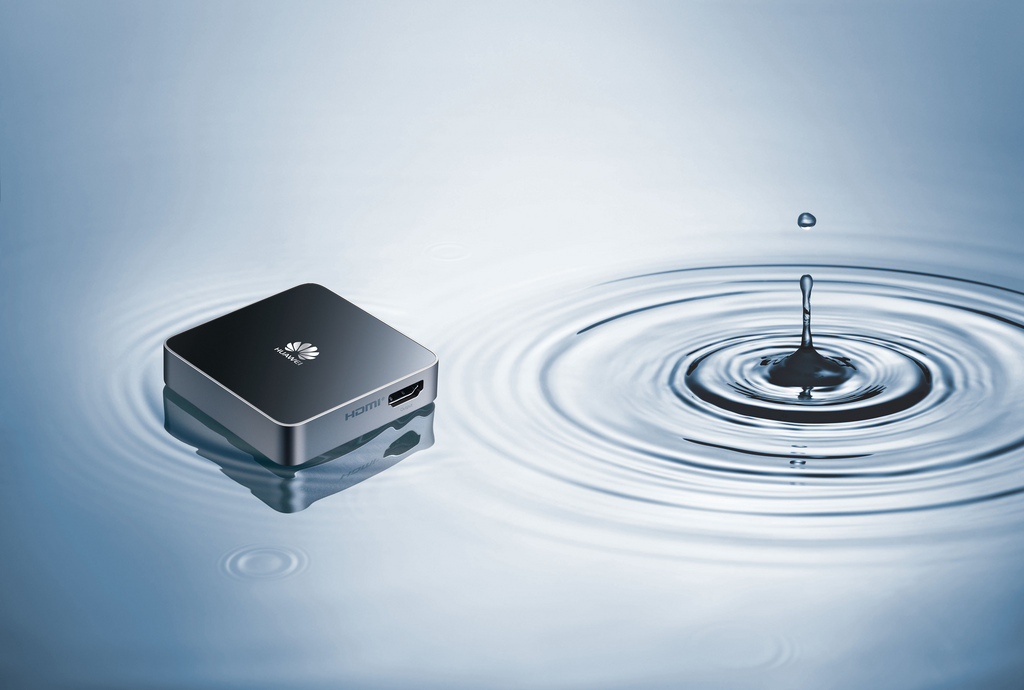
    The DA6810 3G Wi-Fi Box creates 3G Wi-Fi hotspots in mobile environments to provide high-speed internet connectivity on-the-go. Once installed with the HUAWEI DA6810 3G Wi-Fi Box, a vehicle becomes interactive, high-tech and networked, providing owners with a high-speed internet and audio-visual entertainment experience, Huawei said.

    The DA3100 is an on-board diagnistics (OBD) data transferring system that enables insurance providers and fleet management companies to retrieve information such as location, vehicle conditions and driver habits. This in-car system transfers information in real time through a 3G network to the telematics service provider (TSP) platforms of various third-party entities. It also enables vehicle owners to activate the car horn, headlights and windows remotely via smartphone apps. The DA3100 is powerful yet easy to install, is not limited by geographical region or vehicles types, and can be activated upon installation, Huawei said.

  • Janam Announces 3G/4G Cellular Rugged Mobile Computer

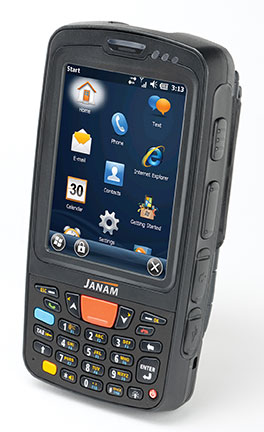
    XT85.NAngle.left.RGB.MR-W
    Photo: Janam Technologies LLC

    Janam Technologies LLC, a provider of rugged mobile computers that scan barcodes and communicate wirelessly, today announced the release of its new XT85, a high-bandwidth wireless rugged mobile computer designed to support demanding enterprise applications in equally demanding outdoor environments.

    Janam’s XT85 offers a complete set of features that enterprises require in a rugged wireless wide area device, at a price point that makes extending enterprise mobility affordable, Janam said. It is equipped with high-sensitivity GPS with anti-jamming technology.

    The XT85 survives multiple 5-foot drops to concrete at temperature extremes (and 6-foot drops at room temperature), offers a 3.5-inch high-transmissivity display that maximizes outdoor readability while minimizing power consumption, offers advanced 4G-ready cellular network connectivity with five-band UMTS for global roaming, and is small and lightweight.

    “Purpose-built mobile computers must appeal to today’s information worker who expects a device that is small, light, fast and highly capable while also serving the business needs of the enterprise for whom the mobile worker is performing mission-critical tasks,” said Harry B. Lerner, CEO of Janam. “Janam’s XT85 is optimized to appeal to both constituencies. It’s much more than a smart phone. It’s a brilliant PDA.”

    In addition to 4G-ready UMTS/HSDPA/HSUPA/GSM wireless wide area network communication, the XT85 is equipped with 802.11 a/b/g/n WLAN with enterprise-grade security and Bluetooth.  It is available with the SE965HP laser engine from Motorola or Honeywell’s Adaptus Imaging technology. Purpose-built to accommodate the realities of work processes and environments, the XT85 is UL-certified for use in hazardous environments, sealed to IP65 standards and available with QWERTY or numeric keypads.

  • Magellan Debuts SmartGPS Apps for Apple and Android Mobile Devices

    Magellan SmartGPS App_iPhone
    screenshot: Magellan SmartGPS App

    Magellan has announced Magellan SmartGPS Apps for iOS and Android mobile devices.

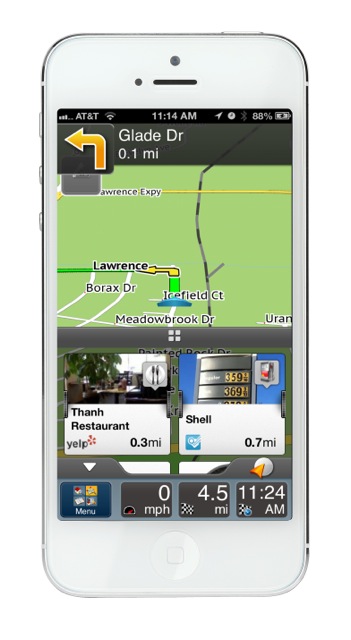
    Following the recent announcement of Magellan’s SmartGPS device, the free Magellan SmartGPS Apps for iOS and Android devices are the next key elements in Magellan’s Smart Ecosystem, a cloud platform that integrates social media and navigation content directly onto a navigation map, the company said. The SmartGPS Apps automatically deliver continually updating reviews and tips for local businesses from social media including Yelp, Foursquare, and other partners to create current, local and personalized driving and pedestrian experiences.

    The Magellan SmartGPS mobile apps display location-relevant information “squares” that graphically flip to show reviews, tips and offers from Yelp and Foursquare for nearby restaurants, stores and services. Users can then navigate to those locations directly from the SmartGPS App without needing to open an additional application or device. The cloud architecture enables new monetization of end users’ mobile search and navigation, and additional social media and content partners.

    “We architected the Smart Ecosystem to integrate with automotive infotainment and mobile network service platforms so users can enjoy a truly mobile, connected car experience now,” said Peggy Fong, president of MiTAC Digital Corporation. “SmartGPS mobile apps connect to the vehicle dash, allowing users to easily search social media and points-of-interest for destinations, and send the locations via Bluetooth or Wi-Fi to SmartGPS-enabled vehicle navigation systems.”

    Magellan’s free iOS and Android SmartGPS apps create a total-solution SmartGPS experience that is truly mobile. Magellan connects the smartphone to the vehicle dashboard, enabling location sync and sharing, hands-free operation and data connectivity. Users can pair their Magellan SmartGPS app with SmartGPS-enabled navigation systems. Using their SmartGPS App, SmartGPS enabled navigation system, or PC, users can search for a location, save the location in Magellan’s Smart Ecosystem cloud, and sync and share the location to any SmartGPS enabled device via Wi-Fi or Bluetooth.

    The free Magellan SmartGPS Apps will be available in North America this Spring, and in Europe this Summer, from iTunes and Google Play. Premium versions of both apps featuring spoken turn-by-turn navigation will also be available.

  • Air Force Awards Lockheed Martin Contracts for Next Set of GPS III Satellites

    The U.S. Air Force has awarded Lockheed Martin two fixed-price contracts totaling $120 million to procure long lead parts for the fifth, sixth, seventh and eighth next-generation GPS III satellites.

    The GPS III program will replace aging GPS satellites while improving capability to meet the evolving demands of military, commercial and civilian users. GPS III satellites will deliver better accuracy and improved anti-jamming power while enhancing the spacecraft’s design life and adding a new civil signal designed to be interoperable with international global navigation satellite systems, Lockheed Martin said.

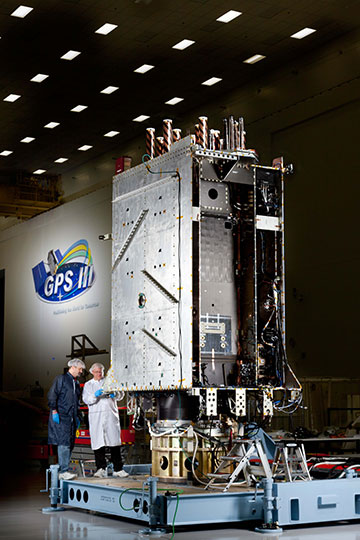
    Lockheed Martin engineers work on the full-sized prototype of the GPS III satellite in the company’s GPS Processing Facility (GPF) near Denver.
    Lockheed Martin engineers work on the full-sized prototype of the GPS III satellite in the company’s GPS Processing Facility near Denver. In November, the team completed thermal vacuum testing for the Navigation Payload Element of the GPS III Non-Flight Satellite Testbed.

    “The GPS III program was laid out at the very beginning to reduce risk early and facilitate affordable satellite production over the long term,” said Lt. Col. Todd Caldwell, the U.S. Air Force’s GPS III program manager. “This most recent award and our team’s ability to convert the contract structure to fixed price is a sign that we are on track to meet the affordability objectives and commitments we originally set out to achieve.”

    Incorporating lessons learned from previous GPS programs, the Air Force initiated a “back-to-basics” acquisition approach for GPS III. The strategy emphasizes early investments in rigorous systems engineering, industry-leading parts standards, and the development of a full-size GPS III satellite prototype to significantly reduce risk, improve production predictability, increase mission assurance and lower overall program costs. These investments early in the GPS III program are designed to prevent the types of engineering issues discovered on other programs late in the manufacturing process or even on orbit.

    “The Air Force’s back-to-basics acquisition strategy and the progress we have already made on our GPS III prototype gives us high confidence in our ability to perform efficient and affordable fixed-price satellite production going forward,” said Keoki Jackson, vice president of Lockheed Martin’s Navigation Systems mission area. “As our world becomes increasingly dependent on GPS technology, the new GPS III satellites will be a critical element of both our national and economic security, and we are committed to achieving mission success for the billions of military, commercial and civilian users worldwide.”

    Lockheed Martin is currently under contract for production of the first four GPS III satellites, and will now begin advanced procurement of long-lead components for the fifth, sixth, seventh and eighth satellites. The Air Force plans to purchase up to 32 GPS III satellites.

    The GPS III team is led by the Global Positioning Systems Directorate at the U.S. Air Force Space and Missile Systems Center. Lockheed Martin is the GPS III prime contractor with teammates ITT Exelis, General Dynamics, Infinity Systems Engineering, Honeywell, ATK and other subcontractors. Air Force Space Command’s 2nd Space Operations Squadron (2SOPS), based at Schriever Air Force Base, Colo., manages and operates the GPS constellation for both civil and military users.

  • Broadcom Introduces Femtocell Chip to Integrate RF and Baseband Modem

    Broadcom Corporation introduced at the Mobile World Congress a highly integrated digital baseband processor and RF transceiver designed for 3G femtocell residential access points, the BCM61630 systems on chip. The Mobile World Congress is being held in Barcelona, Spain, this week.

    The new devices integrate a multiband CMOS RF transceiver with GPS and full-time sniffing capability while maintaining software compatibility with all previous Broadcom WCDMA physical layer and backhauling interface architectures.

    With the new chips, mobile operator OEMs and ODMs have a powerful, low-cost, power efficient device to support small cell strategies and meet growing mobile traffic demands. Embedding a high-speed CPU and Broadcom’s Layer 1 modem and peripherals, these devices provide a complete low-power single-chip solution for residential and small enterprise 3G small cell deployments, the company said.

    “As on-the-go content consumption continues to drive traffic growth, mobile operators must meet consumers’ increasing demand for higher bandwidth without sacrificing quality of service,” said Greg Fischer, Broadcom’s vice president and general manager for Broadband Carrier Access. “Broadcom’s BCM61630 SoCs deliver a low-power, cost-efficient device for residential small cells to leverage existing mobile infrastructure and deliver faster data speeds through a smaller form factor.”

  • SIMcom Launches Modules at Mobile World Congress

    SIMCom Wireless Solutions Ltd. of Shanghai launched its first compact LGA 2G module SIM900E at Mobile World Congress 2013 today. The module’s small size and LGA encapsulation suit M2M applications of all sizes, especially satisfying requirements for slim, compact design, SIMcom said. The Mobile World Congress is being held in Barcelona, Spain, this week.

    With operations from 2002 to 2013, SIMCom has just celebrated its 10th anniversary. The company has developed into a global leader of wireless solutions with the integration of R&D, production, sales and after-sales services, and with products covering technologies such as GPS, GLONASS, GSM/GPRS, WCDMA/HSPA, TD-SCDMA, CDMA EVDO, SRD, and Wi-Fi. The products have been sold in more than 100 countries and regions, involving almost all M2M industries. With the celebration of its 10th anniversary, SIMCom also launched its first company magazine, SIMCom Inside.

    SIMCom launched its module series of 2G/3G, with the same size of 30 x 30 millimeters, including SIM928, SIM968, SIM5310 and more. Integrated with GSM/GPRS and GPS, the SIM928 module is a compact quad-Band GSM/GPRS-enabled module based on the PNX4851 platform. SIM968 is a combo module featuring quad-band GSM/GPRS and combining GLONASS technology for satellite navigation. SIM5310 is a low-cost 3G module that supports WCDMA 384Kbps and single frequency band 2100 MHz. In addition, SIMCom will also introduce the first LTE intelligent module SIM7290.

    The compact module SIM900E released today has an LGA encapsulation of 19.8 x 19.8 x 2.7 millimeters, and its LGA encapsulation is suitable for automatic assembly with SMT equipment, the company said. The configuration of four frequencies of GSM/GPRS — 850/900/1800/1900MHz — and wide temperature range of -40C to +85C is designed for global seamless coverage and various industrial application environments.

  • Ruckus Wireless Offers Wi-Fi Solutions for Rising Data Demands

    Ruckus Wireless, Inc. today outlined its SmartCell architecture for creating carrier class Wi-Fi networks to deal with the densification challenge sweeping the industry. Built on its SmartCell Architecture, Ruckus unveiled a wide range of new carrier-class Smart Wi-Fi products, including the Ruckus ZoneFlex 7782 family, which integrates a GPS receiver. The announcement came at the Mobile World Congress being held in Barcelona, Spain, this week.

    The rapid growth of mobile data services, driven by smartphones, laptops, and tablets has accelerated data-traffic growth to the point where macro cellular networks are no longer sufficient to meet subscriber demand in many high-density indoor and outdoor settings. While new macro cellular technology, such as long-term evolution (LTE), is being introduced to address this capacity crunch, it will provide only partial relief, as traffic volumes continue to grow faster than operators can economically add capacity, Ruckus said.

    Consequently, mobile operators are rapidly adopting Wi-Fi as an additional radio access network (RAN) option to augment mobile capacity. At the same time, fixed line carriers and multiple system operators (MSOs) are also deploying Wi-Fi for public access to enhance their service offerings, reduce subscriber churn and enter new markets such as managed enterprise wireless LAN (WLAN) services.

    For high-capacity outdoor environments, such as stadiums and other public venues, the Ruckus ZoneFlex 7782 outdoor AP Series is a family of four new, high-capacity Wi-Fi access points designed to give service providers unprecedented capacity and performance. With models supporting omni-directional antennas, 120º sectorized, and 30×30º narrow-beam coverage through integrated internal antennas as well as external antenna options, ZoneFlex 7782 APs offer a combination of high performance and flexibility in a sleek, low profile, light form factor essential for meeting the tight mechanical and aesthetic constraints of deployment outdoors, Ruckus said.

    Each Ruckus ZoneFlex 7982 AP is a dual-band, three stream (3×3:3) 802.11n access point enabled for high throughput approaching 900 Mbps. ZoneFlex 7782 APs with integrated antennas support Ruckus-patented BeamFlex adaptive antenna technology for greater signal gain and interference mitigation. Additionally, the Ruckus ZoneFlex 7782 family integrates a GPS receiver, allowing service providers to begin providing location-based services as well as continuous spectrum monitoring features.

  • Qualcomm Announces 4G LTE Advanced Connectivity Platform for Mobile Computing

    Qualcomm Technologies, Inc., has announced the industry’s first 4G LTE Advanced embedded data connectivity platform for mobile computing devices, including thin form factor laptops, tablets and convertibles. The technology, based on Qualcomm Technologies’ Gobi chipsets — the MDM9225 and MDM9625 — is the first embedded, mobile computing solution to support LTE carrier aggregation and LTE Category 4 with peak data rates of up to 150Mbps. The announcement came at the Mobile World Congress being held in Barcelona, Spain, this week.

    The Gobi MDM9x25 embedded platform includes an embedded GPS receiver with GLONASS support for enhanced asset tracking, turn-by-turn navigation and other location-based services.

    The introduction marks the arrival of Qualcomm Technologies’ third-generation 4G LTE embedded chip, extends Qualcomm Technologies’ modem technology leadership in mobile computing, and promises to deliver the fastest 3G and 4G LTE connections worldwide, while offering the broadest multi-region coverage via a single SKU solution, the company said. PC OEM customers can  select from embedded module vendors that support a range of Gobi chipsets, from 3G solutions with speeds up to 42Mbps to cutting-edge 4G LTE Advanced. Coupled with pay-as-you-go, no contract data plans, these products enable thinner, lighter and better connected mobile computing devices running leading operating systems such as iOS, Android, Windows 8 and Windows RT, and support a variety of modules for thin form factors, including PCI Express Mini Card, PCI Express M.2, and Land Grid Array.  Additionally, the Qualcomm RF360 Front End solution, providing expanded active band support integral to Qualcomm Technologies’ single SKU LTE World Mode solution will also be included.

    “Our broad portfolio of Gobi chipsets — including 3G 42Mbps, 4G LTE and 4G LTE Advanced — features industry-leading LTE multiband support for seamless connections to the fastest networks worldwide,” said Cristiano Amon, executive vice president of Qualcomm Technologies and co-president of Qualcomm Mobile Computing. “This latest addition can be easily implemented across enterprise, SMB and consumer industries allowing end users to download and stream rich HD content, access enterprise applications, share large files quickly and connect virtually wherever they are in the world.”

    Qualcomm Gobi MDM9x25 chipsets began sampling to module vendors last November and will enable commercial device launches in the second half of this calendar year.