The EUMETSAT Polar System is considering providing GNSS navigation bit data, should there be sufficient interest in the user community.
“In the framework of the development of the radio occultation data processor for the new EUMETSAT Polar System – Second Generation mission, we envisage a GNSS Navigation Bit Data product,” wrote Riccardo Notarpietro, a remote sensing scientist with EUMETSAT’s radio occultation team, in an email.
“This product will contain the bit stream of each of the GNSS navigation messages which are modulating the open service GNSS signals. We are thinking to provide this product operationally on an hourly base covering the last hour of observations from a dedicated ground-based network of GNSS receivers.”
If there is sufficient interest, the data would be made available from the EUMETSAT data distribution system. Notarpietro invites those who are interested or have questions to contact the team at [email protected].
EUMETSAT is the European Organisation for the Exploitation of Meteorological Satellites. The second-generation of the polar system, also known as EPS-SG, will secure the continuation of meteorological observations from polar orbit in the 2022-2043 timeframe.
The Institute of Navigation (ION) presented its Annual Awards during the ION International Technical Meeting (ITM) and Precise Time and Time Interval Systems and Applications (PTTI) meeting held Jan. 28-31 in Reston, Virginia.
The ION Annual Awards Program is sponsored by The Institute of Navigation to recognize individuals making significant contributions or demonstrating outstanding performance relating to the art and science of navigation.
Seebany Datta-Barua received the Per Enge Early Achievement Award for outstanding contributions to the understanding of the dynamics of the ionosphere and its impacts on satellite-based navigation integrity. The Early Achievement Award is presented in recognition of outstanding contributions made early in one’s career.
Major Clifford Lucas received the Superior Achievement Award for the organization and execution of advanced training scenarios, increasing an aircrew’s joint readiness to navigate and employ in contested and degraded environments. The Superior Achievement Award is presented to an individual demonstrating outstanding accomplishments as a practicing navigator.
Robert L. Tjoelker received the Distinguished PTTI Service Award for systems engineering and technical leadership in the successful delivery of major PTTI systems to NASA’s Deep Space
Network, including trapped-ion atomic clocks. The Distinguished PTTI Service Award is presented to recognize outstanding contributions related to the management of PTTI systems.
Kimia Shamaei and Dr. Zaher (Zak) M. Kassas received the Dr. Samuel M. Burka Award for their paper “LTE Receiver Design and Multipath Analysis for Navigation in Urban Environments,” published in the Winter 2018 issue of NAVIGATION, Journal of The Institute of Navigation, Vol. 65, No. 4, pp. 655-675. The Dr. Samuel M. Burka Award recognizes outstanding achievement in the preparation of a paper advancing the art and science of positioning, navigation and timing.
Chris G. Bartone received the Captain P. V. H. Weems Award for sustained contributions in research, applications and teaching in the areas of electronic navigation, GNSS and antenna technologies. The Captain P. V. H. Weems Award is presented to individuals for continuing contributions to the art and science of navigation.
Marek K. Ziebart received the Tycho Brahe Award for outstanding innovation and leadership in the area of high-precision, physics-based radiation for modeling for spacecraft orbit dynamics. The Tycho Brahe Award is given in recognition of outstanding contributions to the science of space navigation, guidance and control.
Karl W. Shallberg received the Norman P. Hays Award for significant contributions to the FAA’s Wide Area Augmentation System, technical leadership in reference receiver development and anomaly/interference mitigation, and critical support to DOT’s Adjacent Band Compatibility study.
The Norman P. Hays Award is given in recognition of outstanding encouragement, inspiration and support contributing to the advancement of navigation.
Marco Falcone received the Thomas L. Thurlow Award for engineering contributions and leadership integral to the design of equipment used for navigation — the Galileo satnav system. The Thomas L. Thurlow Award recognizes outstanding contributions to the science of navigation.
John Raquet received the Distinguished Service Award for extraordinary service to The Institute of Navigation. The Distinguished Service Award recognizes extraordinary service to The Institute of Navigation.
The Institute of Navigation is a not-for-profit professional organization dedicated to advancing Positioning, Navigation and Timing (PNT). The Institute is a national organization with a worldwide membership.
John Pottle, director of the Royal Institute of Navigation, announced the release of the organization’s Resilient PNT Portal.
“It’s widely understood that satellite navigation has vulnerabilities,” Pottle said. “What is less well understood is how to assess risks and what steps to take to achieve a robust solution, appropriate to the application.
“This resource portal for resilient positioning, navigation and timing brings together key information — background context, risk assessment approaches, data on actual reported events, and guidance on mitigation strategies. The various standards and best practices notes for different sectors have also been included.”
The portal, available at https://rin.org.uk/page/ResilientPNT, has sections devoted to vulnerabilities and impacts, risk assessment, disruptions and reported problems, guidelines and standards, and general guidance.
“Our aim is to enable improved knowledge and thereby build expertise and understanding, in line with the Royal Institute of Navigation’s core objectives,” Pottle said.
The page includes a feedback form to make suggestions or ask questions. Users can also use the form to register for email updates as new information is added.
“We have ideas to improve and add to this resource through 2019 — for example, we are currently working on a white paper discussing various practical steps to mitigate common vulnerabilities,” Pottle said.
He added that the organization welcomes feedback and that there is a feedback link on the website.
The program is open to graduate students (with a first university degree), Ph.D. candidates, early-stage researchers and young professionals willing to broaden their knowledge. The 50 available seats will be given on a first-come, first-served basis.
The mission of the ESA-JRC International Summer School on GNSS is to provide the attendees with a comprehensive overview of satellite navigation. Extensive lab work will provide attendees with hands-on learning opportunities.
Topics covered include:
Basics of satellite navigation
Carrier-phase positioning
GNSS RF link performance
Ionospheric and tropospheric effects on GNSS
and more
The summer school’s objective is to provide attendees with a comprehensive overview on satellite navigation, starting from the GNSS system, its signals, the processing of the observations in a receiver and finally determining the position-navigation-time (PNT) solution.
Lectures on intellectual property rights (IPR) and patents, as well as on business aspects, will be given. The future of satellite systems will also be discussed.
The main emphasis will be on the development of a group project using innovative ideas and covering all aspects, from the initial concept, to a business plan, its technical realization and marketing of the product or service.
Internationally renowned scientists and specialists will give lectures as well as practical exercises and lab work.
Centimeter-accurate, multi-constellation, multi-band, dual-antenna, RTK and affordable GNSS/INS solution
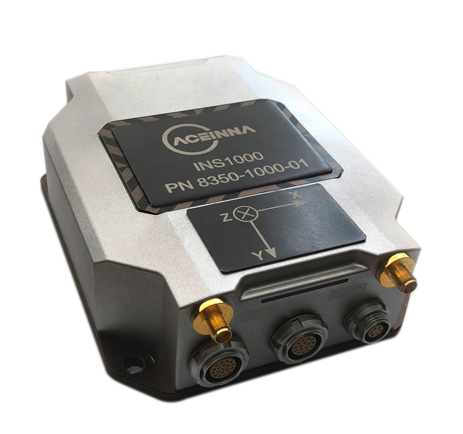
Aceinna is offering the INS1000 high-performance dual-band real-time kinematic inertial navigation system (RTK INS) with built-in inertial sensors for construction, agriculture and automotive applications.
Aceinna has also launched an OpenIMU package for autonomous vehicle guidance and navigation.
INS1o00
Photo: Aceinna
The INS1000 embeds Aceinna’s nine-degree-of-freedom inertial sensor technology to achieve automotive dead-reckoning performance in GNSS-challenged environments like urban canyons, heavily tree-lined roads, tunnels, underpasses and bridges.
The dual-frequency RTK and tight coupling between GNSS and inertial sensors provide centimeter-level accuracy, enhanced reliability, and superior performance during GNSS outages, the company said.
“Without access to satellite delivered guidance and localization information, autonomous vehicles can quickly get off track,” says Mike Horton, CTO of Aceinna. “The INS1000 delivers the essential detailed position and heading accuracy at a price point that is suitable for startups as well as fleet-wide vehicle deployment. As the leading supplier to the precision agriculture autosteer market, Aceinna is focused on driving the cost and complexity out of GNSS/INS solutions to enable widespread adoption in automotive ADAS applications.”
INS1000 is an integrated navigation system consisting of an inertial measurement unit (IMU) and other sensors. It provides the position, velocity and attitude information of the vehicle. A dual-frequency (L1/L2), dual-antenna GNSS receiver is used as the primary aiding sensor. Also supported is a distance measurement indicator (DMI) which can be attached to a wheel of the vehicle/robot to measure the rotation rate of the wheel. Integration of a DMI would give an improved solution in challenging environments: urban canyons, tunnels, warehouses and indoor facilities and campuses.
With horizontal position accuracy of 2cm (RTK), vertical position accuracy of 3cm (RTK), and velocity accuracies of 0.01m/s and 0.02m/s (horizontal and vertical, respectively), the INS1000 provides the precision navigation capabilities required for the automotive autonomous, automotive track testing, precision agriculture, and construction markets.
The INS1000 is compatible with all major global satellite systems (GPS, GLONASS, Beidou, Galileo, SBAS); it supports USB, Ethernet, CAN and RS-232 interfaces; and it supports dual GNSS antennas for accurate heading in static and dynamic scenarios, and difficult magnetic environments.
The easy-to-use embedded software allows extensive configuration and diagnostic capabilities. For optimal flexibility, the tools enable configuration of the output position, initialization of heading, IMU transformation matrix, GNSS antenna lever-arms, and NTRIP client. The control software can log and decode output data from the system or use the web application to plot results on a map.
Open IMU Package
Aceinna also offers an OpenIMU package. Its three key parts are:
a family of IMUs (three high-accuracy accelerometers, three high-accuracy gyros, and a powerful ARM Coretex);
an OpenSource tool chain and reference code for programming the IMU, with everything from basic download and debug to reference implementations of loosely coupled GPS/INS
a full developer site and tools with charting, graphing and algorithm simulation.
United States’ election directors are interested, but “less than halfway,” in terms of implementing GIS to strengthen the nation’s electoral system
The National States Geographic Information Council (NSGIC) has released its findings from its first survey of state election directors, seeking to determine the current status of the implementation of GIS in elections.
A number of states have championed the use of this technology in recent years to strengthen the accuracy and reliability of their electoral systems. NSGIC’s Geo-Enabled Elections project was created to assist states and other election authorities in this process.
According to the new Election Director Report, state election directors indicate knowledge and interest in GIS technology. However, the report’s findings also suggest that most states have a long way to go to fully utilize geospatial information in elections.
Do you have access to GIS maps and shapefiles for each of your voting districts from a government source? (Image: NSGIC)
Five out of six election directors interviewed stated that they are familiar with GIS and have access to a GIS expert. However, fewer than one in three could say with confidence that their voter registration system is capable of supporting GIS data.
Moreover, when asked to assess their state’s degree of progress towards full integration of geospatial data in elections, the answer was four, on average, on a scale from 1 to 10, where 10 represented full GIS integration.
“We’re very encouraged by the interest and enthusiasm we’ve encountered among election directors,” said Molly Schar, NSGIC executive director. “Few state election offices in the United States are fully GIS integrated. However, election directors, on the whole, are motivated to deploy the technology to increase accuracy and gain efficiencies in their election data management processes.”
Why does using geospatial data offer a critical advantage to electoral systems? In short, it ensures that the right ballot is given to the right voter so that voters’ voices are heard in the right electoral contests. Recently, some well-publicized errors in voter placement have undermined the reliability of election results and may have hurt voter confidence.
Additionally, replacing cumbersome voter lists and verbal definitions of voting districts with technology that allows election officials to view voters as pinpoints on a map — and voting district boundaries as geometrical shapes that surround those pinpoints — offers some very concrete advantages.
The verification that voters have, in fact, been placed into the right voting district becomes much easier, as does quality control — both as part of a periodic review and after significant changes, such as the modification of voting district boundaries.
Currently, many states use GIS technology for other matters, such as emergency response systems, land use, or utility management, and often have a Geographic Information Officer (GIO) within state government. Part of the Geo-Enabled Elections project’s mission is to promote a stronger dialogue between GIOs and election directors in state government.
The project’s next steps for furthering the use of GIS in elections include six case studies from states already using GIS in elections, as well as five state-wide pilot studies among states working to expand their GIS integration, with the goal of delivering a set of best practices to support states wishing to start the process towards full GIS integration.
The Geo-Enabled Elections project, phase one, runs from Oct. 1, 2017, to Sept. 30, 2019, with the aim to help strengthen electoral systems by supporting states in the adoption of GIS. Concretely, this means encouraging state governments to replace non-spatial ‘address file’ systems with election precinct and voter data in a GIS format, leveraging that format’s inherent visual and analytical advantages.
Hexagon’s Geospatial division, which offers high-performance geospatial solutions, showcased its defense solutions at DGI 2019, which took place Jan. 28-30 in London.
DGI is Europe’s largest annual gathering dedicated to high-level discussions addressing the major challenges of the defense and government geospatial intelligence (GEOINT) community.
The theme for this year’s conference is “Source, Analyze, Automate, Share,” and will provide senior defense leaders with opportunities to learn about new developments and innovations in geospatial data gathering and analysis.
Whether for planning military operations, analyzing intelligence or determining responses to a natural disaster, Hexagon’s Geospatial division’s innovations shorten the time between data acquisition and real-time information delivery, driving mission success through actionable decision-making.
Located at stand 8, Hexagon’s exhibition at DGI includes solutions from the Power Portfolio, M.App Portfolio and Luciad Portfolio, which improve data integration, access and delivery across the GEOINT enterprise. The following are some of the innovations that will be on display:
Machine Learning Processes Massive Amounts of Data: Understanding the situation on the ground starts with geospatial intelligence. Attendees will learn how ERDAS IMAGINE’s machine learning algorithms can be trained to process massive amounts of data, taking the load off analysts and freeing them up to do the work that humans do best.
M.App X: Rapidly Exploit Imagery: This cloud-based exploitation for defense and intelligence enables System Integrators to provide tools for the exploitation of imagery and the creation of intelligence and reports for their defense customers.
Command and Control: Providing true situational awareness in action, Luciad offers 2D and 3D integration of all data into one visualization tool, including full support for symbols and tactical graphics of the latest military symbology standards.
“With the traditional battlefield expanding beyond land, sea, and air to the electronic, cyber, and social media arenas, today’s global defense and intelligence agencies operate in high-stakes environments where mission success comes down to accessing, analyzing, and sharing real-time visualization data,” said Mladen Stojic, Hexagon’s Geospatial Division president. “We look forward to showcasing our cutting-edge data analytics and visualization solutions that enable success in today’s multi-domain frontier at DGI 2019.”
Hexagon Geospatial’s Director, Defense Sector, Tony Wheeler will also give a presentation on “A Tiered Approach to Analysis — Enabling the COP User,” on Tuesday, Jan. 29, from 2 to 2:20 p.m. The session will explore how technology can enable military staff to better exploit information — creating a new tier of analytical capability to augment that of dedicated intelligence organizations.
SBG Systems has released the Horizon IMU, a FOG-based high performance inertial measurement unit (IMU) designed for highly demanding surveying applications such as high-altitude data collection or mobile mapping in dense areas such as urban canyons.
SBG Systems made the announcement at the International LiDAR Mapping Forum (ILMF) in Denver.
The Horizon IMU joins the Ekinox and Apogee IMUs as options for the Navsight Land/Air Solution. The solution consists of a powerful and ready-to-use inertial navigation solution dedicated to surveyors for mobile data collection.
The new Horizon IMU allows customers to bring the Navsight technology to the most demanding environments such as high-altitude surveying and highly dense areas, as well as application where only a single antenna can be used.
The different levels of accuracy enable the solution to meet various application requirements and can be connected to various external equipment such as odometer, lidar and more. The Ekinox and Apogee MEMS-based IMUs address most surveying markets for camera or lidar motion compensation and data geo-referencing.
The Horizon IMU is based on a closed-loop FOG technology which enables ultra-low bias and noise levels. This technology allows robust and consistent performance even in low dynamics survey.
The Navsight solution is easy to install in a vehicle — the sensor alignment and lever arms are automatically estimated and validated. Once connected to the Navsight processing unit, the web interface guides the user to configure the solution.
A 3D view of the vehicle shows the entered parameters so that the user can check the installation. By choosing the vehicle — a plane or a car, for example — the inner algorithms are automatically adjusted to the application.
The Navsight unit also integrates LED indicators for satellite availability, real-time kinematic (RTK) corrections and power.
Full INS/GNSS Post-Processing Software
Completing the Navsight offer, Qinertia, the SBG post-processing software, gives access to offline RTK corrections from more than 7,000 base stations in 164 countries. The software delivers the highest level of accuracy without having to set up a base station. Trajectory and orientation are then greatly improved by processing inertial data and raw GNSS observables in forward and backward directions.
Navsight is ITAR-free. All models are available for order. Ordering information and delivery time are available from SBG Systems representatives and authorized SBG Systems dealers.
U.S. Coast Guard issues testing notice on GPS Week Number Rollover.
The GPS Directorate has released a Federal Register Notice announcing plans to execute a test in February to investigate legacy receiver week roll-over behavior and analyze any off-nominal behavior exhibited, according to a U.S. Coast Guard notice.
Photo: andrey_l/Shutterstock.com
The GPS week number rollover occurs in the GPS legacy navigation (LNAV) message every 1024 weeks due to the GPS week number being represented by only 10 bits within the LNAV message.
The next GPS week number roll over will occur 18 seconds prior to the 0000Z boundary (Coordinated Universal Time) between April 6/7 2019.
In most cases, any negative response from a GPS receiver caused by a problem accounting for the 10-bit week number roll over would likely affect the calendar conversion from GPS time to UTC date/time and could result in the GPS receiver thinking it had jumped backward in time by 1024 weeks to 21/22 August 1999.
To participate in the test, submit the answers to the nine questions in the Federal Register Notice to the SMC/GPE mailbox by Feb. 4. After the submission of the questionnaire, the team will schedule individual meetings with interested civil vendors to further discuss their participation in the test in more detail.
The Federal Railroad Administration (FRA) has awarded $46,301,702 in grant funding for 11 projects in 10 states to assist with deploying positive train control (PTC) systems.
This marks the second selection of PTC systems deployment projects under the Fiscal Year (FY) 2018 Consolidated Appropriations Act and via the Consolidated Rail Infrastructure and Safety Improvements (CRISI) Program, collectively totaling $250 million in funding.
Photo: gabriel12/Shutterstock.com
“These $46 million in grants will speed up the deployment of positive train control systems, a key element in strengthening safety for both passenger and freight railroads,” U.S. Transportation Secretary Elaine L. Chao said. “Each recipient will be held accountable for achieving specific, measurable outcomes.”
The CRISI Program was authorized by the Fixing America’s Surface Transportation (FAST) Act to provide funding to improve the safety, efficiency, and reliability of intercity passenger rail and freight rail transportation systems. The FY 2018 Consolidated Appropriations Act provided $592,547,000 for the CRISI Program, with $250,000,000 to be made available for PTC system deployment. On August 24, 2018, FRA announced $203.7 million in grant awards for PTC implementation to 28 projects in 15 states.
“These grants not only help railroads continue to make progress implementing positive train control, but they also show that we’re steadfast in our commitment to make investments in passenger rail and rural communities,” said FRA Administrator Ronald L. Batory.
In this second round of FY 2018 PTC CRISI grants, 100 percent of the funds will benefit passenger rail, with about 31 percent — or $14 million — benefiting rural projects. The CRISI grant program directs much-needed critical investment — at least 25 percent of available funds — to rural America.
The awards will fund many aspects of PTC system implementation for intercity passenger or commuter rail and freight rail transportation, including back office PTC systems; wayside, communications, and onboard PTC system equipment; personnel training; PTC system testing; and interoperability.
In 2008, Congress mandated implementation of PTC systems on the main lines of Class I railroads and entities providing regularly scheduled intercity or commuter rail passenger transportation over which hazardous materials are transported, or over which intercity or commuter rail passenger transportation is regularly provided.
In October 2015, Congress extended the original PTC system implementation deadline from Dec. 31, 2015, to Dec. 31, 2018. In addition, Congress requires FRA to approve a railroad’s request for an “alternative schedule” with a deadline for full implementation beyond Dec. 31, 2018, but not later than Dec. 31, 2020, if the railroad demonstrates it has met the congressionally mandated criteria for an alternative schedule.
FRA awarded grants in the approximate amounts below to the following programs and entities:
AK – GPS Precision Upgrade for PTC (Up to $2,530,618) Alaska Railroad Corporation (ARRC)
For this rural project, ARRC will procure a platform with software to improve the accuracy and functionality of the global positioning system (GPS) in ARRC’s locomotives and on-track equipment, and implement the vital functions for its Interoperable Electronic Train Management System (I-ETMS).
CA – PTC Configuration Management and Office Segment Failover (Up to $3,976,560) Peninsula Corridor Joint Powers Board (Caltrain)
To implement Caltrain’s I-ETMS PTC system, this grant will fund the completion of a Caltrain PTC Configuration Management (CM) Plan and PTC Data Management Procedure; development of a CM tool that generates an audit trail for changes to configuration data and CM training on the configuration control and CM process; completion of the backup central control facility (BCCF) and Central Control Facility Failover Design and Test Plan; and completion of the design, test results, and as-built system for an Emergency Operation Center at the existing BCCF in Menlo Park, Calif.
CA – Leveraging PTC to Increase Capacity and Reduce Headways and Alternative Vendor Analysis (Up to $3,150,000) Southern California Regional Rail Authority (SCRRA or Metrolink)
This project will include a study for leveraging PTC to increase capacity and reduce headways, software development, PTC component upgrades, and/or corridor infrastructure upgrades to support the future implementation of Higher Reliability and Capacity Train Control (HRCTC) along Metrolink’s congested Orange County Line from Los Angeles Union Station to Oceanside, Calif.
CO – PTC Installation for the Amtrak Southwest Chief on BNSF Railway Through Colorado and Kansas (Up to $9,157,600) Colorado Department of Transportation (CDOT)
This rural project from CDOT, in collaboration with the Kansas Department of Transportation (KDOT) and BNSF, includes the design, installation, and testing of I-ETMS PTC wayside technology on approximately 179 miles of a predominantly single-track route between Dodge City, Kan., and Las Animas, Colo.
IL – PTC Kits and Spare Parts for 24 Additional Locomotives at Metra (Up to $2,058,163) Commuter Rail Division of the Regional Transportation Authority (Metra)
The project includes purchasing and installing onboard I-ETMS PTC equipment on Metra’s 24 recently purchased locomotives.
MA – MBTA PTC Implementation (Up to $7,548,335) Massachusetts Bay Transportation Authority (MBTA)
This project on the Needham Branch, Franklin Branch, and Worcester Line, includes two components: 1) Testing of Automatic Train Control (ATC), where the previously installed PTC/ATC equipment on each line is already wired, and the software is loaded, connected to the signal system, and activated. The testing is intended to confirm the equipment functions as designed and is ready for testing with a test train. 2) “Completion of Commissioning for the ATC Lines,” where final acceptance testing is performed, including interoperability and ATC system testing.
NC – NCDOT Rolling Stock PTC Commissioning (Up to $584,080) North Carolina Department of Transportation (NCDOT)
The project includes installing, testing, commissioning, and certifying I-ETMS PTC onboard technology on three NCDOT locomotives for operation in the Piedmont intercity passenger rail service, which operates between Raleigh and Charlotte, N.C.
NJ – PTC Installation on Multi-level Cab Cars (Up to $6,542,353) New Jersey Transit Corporation (NJT)
This project will install and test Advanced Speed Enforcement System II (ASES II) PTC onboard equipment on 33 new NJT multilevel cab cars for deployment along the Northeast Corridor, Montclair-Boonton, and Morris & Essex Lines in New Jersey.
NM – New Mexico Rail Runner Express PTC/Wi-Fi Integration Project (Up to $2,496,842) Rio Metro Regional Transit District (Rio Metro)
This rural project will restore the New Mexico Rail Runner Express (NMRX) system’s Wi-Fi network from an end-of-life, proprietary WiMAX system to a cross-compatible Long-Term Evolution (LTE) system, providing a redundant path of communication for its I-ETMS PTC system. The project will install 26 towers along the 96 miles of the NMRX system between Belen, N.M. and Santa Fe, N.M., including approximately 74 miles of the Albuquerque Subdivision and 22 miles of the Santa Fe Subdivision. Nine NMRX cab cars, 13 coach cars, and 15 NMRX stations will be equipped with the Wi-Fi technology necessary for its PTC system.
NY – MTA Metro-North Railroad PTC Communications Testing (Up to $2,300,000) NY Metropolitan Transportation Authority (MTA)
This project will involve PTC system testing to measure communications system performance to predict, identify, and replicate communications issues affecting MTA’s Metro-North Railroad’s operations, as well as develop and validate mitigation approaches to address communications challenges along the Northeast Corridor.
TX – Capital Metro E-ATC PTC Wayside Installation Project (Up to $5,957,151) Capital Metropolitan Transportation Authority (Capital Metro)
This project includes the design, installation, and verification of the Enhanced Automatic Train Control PTC wayside system on the new tracks along Capital Metro’s Red Line in the cities of Austin, Cedar Park, Leander, and the surrounding Texas communities. The new project spans a 21-mile section along the Red Line on Capital Metro’s commuter rail corridor.
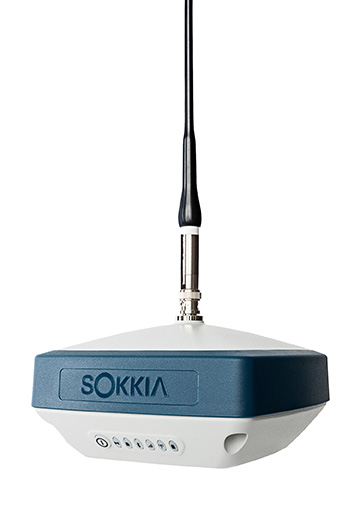
Sokkia introduced the latest addition to its GNSS integrated receiver line — the GRX3. According to the company, the GRX3 is designed to provide a smaller, lighter and fully integrated GNSS solution.
Photo: Sokkia
“The multi-constellation GRX3 receiver is built to offer a complete and versatile solution to provide best-in-class positioning performance for a wide variety of precision applications,” said Alok Srivastava, director of product management.
“Whether using the receiver for GNSS post-processed surveying, or RTK using wireless technologies including network RTK option with a cellular-equipped field computer, a SiteComm RTK rover, or paired with a Sokkia total station for fusion positioning, the GRX3 provides the most advanced and powerful GNSS technology available in a more compact and lightweight housing that can withstand the harshest of environmental conditions. Combine it with one of Sokkia’s data collectors and field software for maximum versatility and convenience, increasing fieldwork efficiency from start to finish.”
The receiver features Sokkia Tilt technology, which includes a 9-axis inertial measurement unit and ultra-compact eCompass designed to compensate for mis-leveled field measurements by as much as 15 degrees.
“The GRX3 is designed as a ‘future-proof’ solution with an advanced GNSS chipset with Universal Tracking Channels technology that automatically tracks signals from all available and planned constellations — including GPS, GLONASS, Galileo, Beidou, IRNSS, QZSS, SBAS,” Srivastava said.
The receiver has been tested to meet IP67 certification for protection against harsh environmental weather conditions.
Topcon Positioning Group released a new workflow bundle designed to modernize concrete FFL (floor flatness and levelness) applications.
A new ClearEdge3D development and sales partnership with a leader and pioneer in 3D laser scanning software for construction QA/QC, Rithm, is prominently advancing the Topcon concrete application offering with a new hardware and software bundle option.
It is part of the Topcon comprehensive approach to modernize core concrete applications such as layout, quality control and concrete screed with the latest capabilities in precise positioning technology.
Implementing Rithm on projects for wet, or dry concrete scanning is designed to allow the opportunity to perform FFL analysis directly from scan data loaded into the Autodesk Navisworks software. Operators can find floor flatness and levelness mistakes in near real time from scan-to-finish. The data Rithm provides allows project teams to easily visualize high and low areas with elevation and deviation heat-maps and contour maps.
“By bundling this software with Topcon’s GLS-2000 scanner, contractors can improve their QA workflows to reduce floor profiling costs by performing FFL analysis in-house in near real time,” said Alok Srivastava, Topcon director of product management. “Through the integration with Navisworks, Rithm provides contractors fast, and detailed ASTM E1155 compliant FFL reports with streamlined floor flatness and levelness analysis, thereby cutting down time on waiting for scanning analysis, increasing productivity.
“The integrated workflow including the GLS-2000, post-processing with MAGNET Collage and QA analysis with Rithm software achieves an optimized end-to-end workflow — from the hardware to software end deliverables,” said Srivastava.
The new real-time FFL application is part of an overarching Topcon approach to modernize concrete applications with precise positioning technology.
Topcon GT series robotic total stations combined with integrated MAGNET software incorporate a BIM-integrated workflow to layout and verify construction quality in the field.
Additionally, Topcon offers machine control systems for robotic concrete screed applications. After importing an easily created 3D model, concrete can be poured and placed more efficiently with advanced screed technology designed to dramatically speed up the screed process and increase quality with precision-guided machine control.
“With our real-time position information constantly updating, you efficiently manage material as it’s placed — delivering the highest quality in a fraction of the time,” Srivastava said.
 News via the CANSPACE Listserv
 The
The