Author: GPS World Staff

  • Sensofusion’s counter-UAS Airfence preps for production with DOD

    Sensofusion’s counter-UAS Airfence preps for production with DOD

    In the spring of 2017, the U.S. Marine Corps Warfighting Laboratory (MCWL) — via the Defense Department’s Defense Innovation Unit Experimental (DIUx) — engaged in a one-year prototype contract with Sensofusion to develop a ground-based mobile counter-UAS solution stemming from Sensofusion’s pre-existing core product Airfence.

    Sensofusion acted as lead integrator and further advanced Airfence to integrate radar and optics systems on board vehicles enabling all systems to work in unison, with Airfence being the core counter-UAS solution by means of RF detection and transmission.

    The DIUx project has been active for more than 12 months, growing and expanding since its late March 2017 launch.

    Airfence is now fully ruggedized, meeting IP67 ruggedization requirements. Furthermore, Airfence has outperformed all tests for range of detection and counterattack capabilities and has also greatly increased the number of drones within its library it can detect, track and defeat yielding zero false positives, Sensofusion said. The system has outperformed range testing at the Marine Corps Base in Quantico, Virginia.

    In addition, Airfence exceeded expectations against a large variety of small UAVs — including fixed wings and rotorcrafts — while Marines operated the technology under extreme weather conditions in Arizona at Yuma Proving Grounds. YPG is the largest U.S. military installation in the world and has been a key site for testing military equipment since World War II.

    Through its work with the U.S. Marine Corps, Sensofusion has brought its system to a single sensor solution, which is beneficial for tactical use in a mobile convoy scenario.
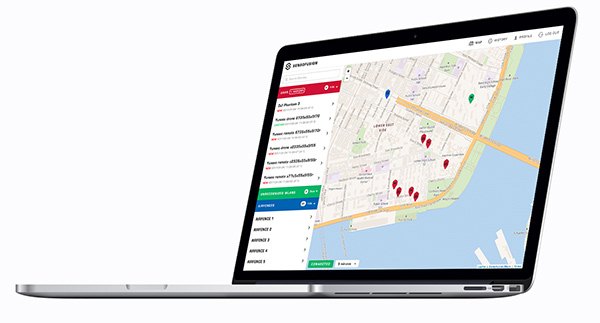
    Airfence also can be used for fixed installations when protecting areas such as military bases, airports, prisons, oil refineries and pipelines, nuclear power plants, power plants, government buildings and border walls.

    Sensofusion has made major leaps in its ability to detect and defeat rogue drones by means of protocol demodulation and manipulation.

    “Our work in the past year with the Marines enables us to meet production readiness with our flagship counter-UAS solution, AIRFENCE, and are now prepping for production with the Departments of Defense and Homeland Security,” said Sensofusion Vice President Kaveh Mahdavi. “We’re now at a point where DoD, DHS — really, any government organization — can order our standardized counter-UAS platform, Airfence, in large quantities. This is a significant advancement within our developing drone defense industry and will act as the benchmark for all future solutions.”

    Extension to Sensofusion-U.S. DoD contract signed. As Sensofusion ramps up production for AIRFENCE across government agencies in America, it continues to align with MCWL, signing a one-year extension to the agreement with the DoD to innovate and implement new capabilities within signal intelligence.

  • Harris Corporation delivers fifth GPS III satellite navigation payload

    Harris Corporation delivers fifth GPS III satellite navigation payload

    Harris Corporation has provided Lockheed Martin with its fifth of 10 advanced navigation payloads contracted for the U.S. Air Force GPS III satellite program.

    The GPS III navigation payload features a Mission Data Unit (MDU) with a 70-percent digital design that links atomic clocks, radiation-hardened computers and powerful transmitters — enabling signals three times more accurate than those on current GPS satellites, the company said.

    The payload also boosts satellite signal power, increases jamming resistance by eight times and helps extend the satellite’s lifespan.

    Lockheed Martin successfully integrated the navigation payload into the fifth GPS III space vehicle (GPS III SV05). Harris is committed to delivering three more payloads by the first quarter of calendar year 2019 for GPS III SVs 06-08.

    Four navigation payloads have already been fully integrated on GPS III SV01-SV04. In September 2017, the Air Force declared the first GPS III satellite Available for Launch (AFL) with launch expected later in 2018.

    In December 2017, GPS III SV02 completed rigorous thermal vacuum testing and is expected to be declared AFL this summer. GPS III SV03 and SV04 are expected to undergo environmental testing this year.

    In November 2017, Harris announced that it completed development of an even more-powerful, fully digital MDU for the Air Force’s GPS III Follow On (GPS IIIF) program. The new GPS IIIF payload design will further enhance the satellite’s capabilities and performance for the Air Force.

    Harris’ expertise in creating and sending GPS signals extends back to the mid-1970s — providing navigation technology for every U.S. GPS satellite ever launched. While the Air Force originally developed GPS for warfighters, millions of people around the world and billions of dollars of commerce now depend on the accurate, reliable signal created and sent by Harris navigation technology.

  • TomTom adopts what3words addressing system

    TomTom and what3words will collaborate to bring what3words addressing to TomTom’s customers globally.

    what3words addressing will roll out to TomTom consumer and automotive customers in the second half of 2018. TomTom made the announcement at TU Automotive Detroit.

    what3words is a simple way to talk about location. The world is divided into a grid of 3 x 3-meter squares, and each square is assigned a unique three-word address. As such, what3words will complement TomTom’s existing maps, allowing people to accurately find any location and share it more quickly, easily and with less ambiguity than any other system.

    The three-word address for TomTom’s head office, for example, can be found at ///pancake.climbing.beaker. The easy-to-use addressing system works well in areas where traditional maps and addressing don’t, including off-road locations and countries without standardized addressing systems such as India and the Middle East, the company said.

    GPS World’s sister site, Geospatial Solutions, first discussed the innovation of what3words in 2015. It has since seen adoption by countries (such as Mongolia, Djibouti and Sint Maarten), and national mapping agencies of countries such as Norway and Switzerland. Sygic also adopted it for its fleet solutions.

    “Whether you’re trying to find an address in the center of Turin, or on the streets of Tuvalu, TomTom wants to get you there quickly and efficiently,” said Antoine Saucier, managing director of TomTom Automotive. “Our collaboration with what3words demonstrates our commitment to embracing new addressing technology that is easy-to-use and integrates simply into our navigation offering.”

    “We are delighted to partner with TomTom, and bring the benefits of more accurate addressing to their customers,” said Chris Sheldrick, CEO and co-founder of what3words. “By using what3words, drivers are able to navigate to any precise location — as specific as a side door, gate or parking spot. Equally, destinations that previously have been unaddressed now have a simple, reliable and easy-to-remember three-word address.”

  • Dewberry to update lidar for Puerto Rico and US Virgin Islands after hurricane

    The U.S. Geological Survey (USGS) has selected Dewberry, a privately held professional services firm, to collect and process Quality Level 1 topographic lidar data of Puerto Rico, including the islands of Culebra, Vieques and Isla de Mona; and the U.S. Virgin Islands of St. Croix, St. John and St. Thomas.

    The new data will be used to identify the impact of Category 5 Hurricane Maria, which struck the territories in September 2017.

    Digital elevation model of El Yunque National Forest produced from 2016 topographic lidar data. (Image: Dewberry)

    The project will be completed under Dewberry’s Geospatial Product and Services Contract with USGS to support the agency’s 3D Elevation Program.

    Dewberry has been performing mapping, mitigation planning and sea-level rise studies in Puerto Rico for more than 10 years, primarily serving the Federal Emergency Management Agency (FEMA).

    In a similar effort, the firm recently collected and processed more than 3,400 square miles of topographic and bathymetric lidar data for USGS, the National Oceanic and Atmospheric Administration and the Commonwealth of Puerto Rico.

    For that project, the data were collected prior to Hurricane Maria’s landfall, and the new data will be assessed in comparison to that dataset to evaluate the storm’s impact. Lidar data have not been collected for the U.S. Virgin Islands in more than 10 years.

    Digital Elevation Model of the Guajataca Lake Dam produced from 2016 topographic lidar data. (Image: Dewberry)

    The new lidar data will be collected, processed and delivered by the spring of 2019. Dewberry will perform all ground surveys and its geospatial team will complete the processing and creation of digital elevation models and other ancillary products. The firm’s subconsultant, Leading Edge Geomatics, will perform the data acquisition using two Riegl VQ1560i sensors.

    “The pre-storm data we had collected and processed under our prior task order was instrumental in assisting FEMA, its partners and the local Puerto Rican government in planning and conducting its post-Maria disaster recovery work,” said Amar Nayegandhi, CP, CMS, GISP, vice president of geospatial and technology services for Dewberry. “The new data are being collected at a higher density to also support the infrastructure community and will show how the storm has altered the terrain.”

  • Microsemi debuts chip-scale atomic clock for space

    Microsemi debuts chip-scale atomic clock for space

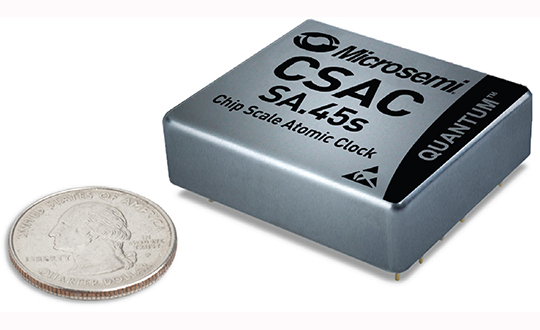
    Microsemi Corporation has launched its SA.45s Commercial Space Chip-Scale Atomic Clock (CSAC), a commercially available radiation-tolerant CSAC suitable for low Earth orbit (LEO) applications.

    The device provides the accuracy and stability of atomic clock technology while achieving significant breakthroughs in reduced size, weight and power (SWaP) consumption, the company said.

    As the newest member of Microsemi’s CSAC product family, the Commercial Space CSAC provides excellent drift performance and built-in 1 pulse per second (PPS) input for GPS disciplining, making the device well-suited for holdover applications.

    It is targeted at several other commercial space and space research applications, including:

    • satellite timing and frequency control;
    • satellite cross linking;
    • assured position, navigation and timing; and
    • Earth observation.

    With many spacecraft manufacturers turning to commercial off-the-shelf (COTS) parts to meet performance, schedule and cost requirements, the Commercial Space CSAC offers a solution for many satellite missions.

    “With the introduction of the Commercial Space CSAC, we now offer a space-deployable atomic precision clock reference with radiation tolerance in support of the space market’s desire to reduce mission costs and design times using COTS devices,” said Peter Cash, director of the clock business unit at Microsemi. “As the first atomic reference clock with low SWaP available for space, our new device is well-suited to applications requiring precise clock synchronization, including a variety of existing and emerging LEO applications.”

    According to a market intelligence report by Euroconsult titled, “Satellites to be Built & Launched by 2026 World Market Survey,” the total revenue for satellite manufacture and launch is expected to be $304 billion between 2017-2026. With revenues of $102 billion, LEO is expected to account for a third of the total market, with 82 percent derived from satellite manufacturing.

    “Harris provides the world’s most advanced sensors, payloads and communications technologies; receiving and information processing systems; and analytics, which provide our customers with the integrated information and actionable intelligence they need for mission and business success,” said Tim Lynch, general manager, Mission Solutions at Harris Corporation’s Space and Intelligence Systems segment. “Microsemi’s latest atomic clock will support Harris in delivering complete mission solutions to our customers.”

    As a stand-alone atomic clock with a 10-megahertz CMOS-compatible output, Microsemi’s Commercial Space CSAC is a timing module providing an impressive short-term stability (Allan Deviation) and frequency stability across the operating temperature (TempCo), the company added.

    A standard CMOS-level RS-232 serial interface is built into the device, which is used to control and calibrate the unit and provide a comprehensive set of status monitors. The interface is also used to set and read the CSAC’s precise internal time-of-day clock.

    Microsemi’s radiation-tolerant ruggedized oscillators also include OCXOs and EMXOs for applications that require higher accuracy and can support higher power consumption.

    Other key features include:

    • Power consumption of less than 120 milliwatts (mW)
    • Less than 17 cubic centimeters volume (1.6 in. × 1.39 in. × 0.45 in.)
    • Radiation-tolerant: 20 krad
    • Single event latch-up (SEL) and single event upset (SEU) tested to 64 megaelectron-volts per square centimeter/milligram (Mev-cm2/mg)
    • Short-term stability (Allan Deviation) of 3.0 × 10⁻¹⁰ at TAU = 1 sec
    • Frequency stability across temperature range (TempCo) less than 5×10⁻¹⁰
    • 1PPS output and 1PPS input for synchronization and time-keeping
    • RS-232 interface for monitoring and control
  • Topcon’s new data controller offers better speed and power

    Topcon’s new data controller offers better speed and power

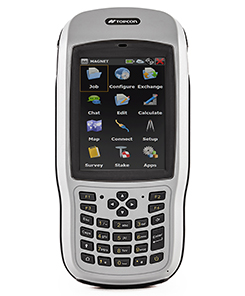
    Topcon Positioning Group has introduced the T-18 handheld controller, which is designed to drive geopositioning, construction, mapping and vertical construction applications.

    The controller includes a 3.7-inch sunlight-readable display with a 1-GHz processor, 1 GB of internal storage and up to 10 hours of battery life, the company said.

    For data collection using Topcon’s MAGNET Field software, the T-18 controller offers a durable ergonomic solution with fast processing, a large screen, excellent connectivity and a long battery life.

    Topcon MAGNET Field software offers a complete field solution for geopositioning professionals, enabling users to collect survey mapping data and perform construction and road layout using total stations, levels and GNSS receivers.

    The T-18 features a 3.5G cellular modem for connectivity with Topcon MAGNET solutions for sending and receiving data to the cloud company account.

    “The cellular option makes it easy to communicate with field crews when projects need to be changed or if important data is required back in the office. Additionally, the modem can be used for RTK (real-time kinematic) correction services,” Kerwin said.

    Other key features include standard Bluetooth and Wi-Fi connectivity, as well as an IP65 rating for dust and water protection in demanding job site conditions.

  • Trimble RealWorks announces performance and UI enhancements

    Trimble RealWorks announces performance and UI enhancements

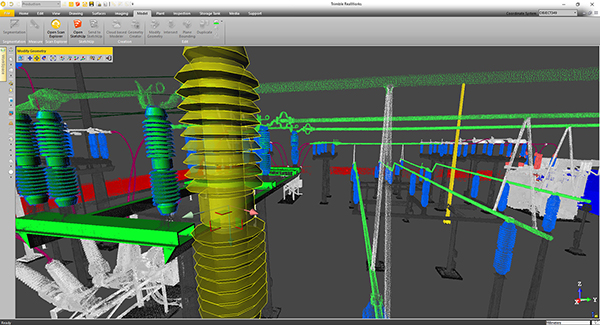
    Trimble will release a new version of Trimble RealWorks, its all-in-one point-cloud software platform. The new version of Trimble RealWorks — featuring performance and user interface (UI) improvements — will be available for download June 19.

    Changes include the following:

    • Batch processing workflows are now available to automate data processing for large datasets saving users time on projects.
    • New visualization and productivity tools include enhanced shading, improved registration automation and geometry editing. According to Trimble, the new tools enable customers to better understand project data and more easily create customer deliverables.
    • Enhanced multi-core processing for modern CPUs and added support for AMD Ryzen-based computers significantly reduces the processing time for registering and extracting scans.
  • Esri location intelligence to integrate with SAP HANA Spatial Services

    Esri location intelligence to integrate with SAP HANA Spatial Services

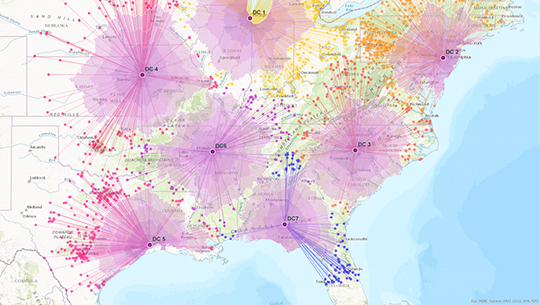
    Esri’s ArcGIS software is being integrated into SAP’s latest cloud-based offering, SAP HANA spatial services, to help customers create location-aware business applications faster, according to spatial analytics company Esri.

    Based on SAP Cloud Platform, the new offering enables businesses to process location data such as complex imagery, as well as visualize and analyze their authoritative data in a geospatial context.

    The new geo-enabled solution from SAP will allow users to deliver their data through consumer-friendly maps and integrate the results into custom business applications, the company said. Customers using SAP software will also be able to create custom models that efficiently process streams of Earth observation data such as water content or soil temperatures and see this data on high-quality basemaps provided by Esri’s ArcGIS Online.

    Most business objectives — such as increasing revenue growth, reducing operational costs or improving customer service — rely on some sort of location data. Unfortunately, many executives lack an accurate and up-to-date understanding of where performance is going well and where improvements need to be made.

    This new offering from SAP, which leverages Esri technology, lets organizations extract high-value business information from satellite, drone and open data sources and then easily discover and share location-based insights.

    “As an SAP global technology partner, we are very excited about this offering, as it demonstrates that SAP and Esri products work better together,” said Chris Cappelli, director of strategic business development at Esri. “Users of SAP HANA spatial services can now achieve native integration of spatial and enterprise data across all business processes. By putting the power of location information into the hands of key stakeholders, businesses can make better-informed decisions with their own data.”

    The integration follows SAP’s announcement on Jan. 24 that Esri supports SAP HANA as an enterprise geodatabase with the release of ArcGIS 10.6 and ArcGIS Pro 2.1.

    Esri and SAP customers can benefit from enhanced performance and scalability as well as full integration of both enterprise and spatial data. Both Esri and SAP continue to deliver new innovations that help lower total cost of ownership and administration costs brought on by the tight integration of IT and geospatial landscapes, Esri said.

    Esri will showcase its new integration of location intelligence technology with SAP HANA spatial services at SAPPHIRE NOW and ASUG Annual Conference in booth #1239.

  • Harxon launches smart eRadio for RTK applications

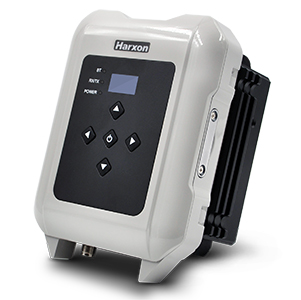
    Harxon has introduced the smart eRadio, a member of its radio modem series. The eRadio is a long-range and power-efficient solution designed to support high-precision GNSS real-time kinematic (RTK) applications in surveying and precision agriculture.

    Harxon eRadio is enabled with intelligent serial baud rate identification for different RTK devices. It can automatically identify RTK serial baud rate with a radio data cable and provide a plug-and-play form for easy connection between the eRadio and RTK, the company said.

    Photo: Harxon
    Photo: Harxon

    Due to its high transmitting power (5-35 Watts), transmission data can be up to 19200 bps/s over a connection distance of 50-80 kilometers, depending on the environment.

    The eRadio offers surveyors an easy-to-use radio modem that provides dependable performance as either a base or repeater working with other Harxon radio modems in challenging environments. In the store and forward operating mode, eRadio receives messages, buffers the received data and transmits further to another substation.

    The user programmable eRadio also supports the Bluetooth of APP to configure data and update radio status. Its diagnostic reporting software can realize the built-in reliability monitoring, such as internal temperature, environment status and battery level and channel inspection. According to the company, these features allow users to both anticipate and deal with potential issues efficiently.

    In addition to compatibility with radio protocols by Trimble and Satel, eRadio is equipped with its unique ETALK communication protocol, which uses Harxon’s exclusive algorithms and advanced processors. Under the same conditions, ETALK protocol can significantly reduce the bit error rate of weak signals and the communication distance can be increased by 20 percent.

    The compact, rugged eRadio is particularly well suited for heavy-duty outdoor use. It is designed for easy mobile use with an organic light-emitting diode display screen for demanding field conditions. The IP67 full metal cover provides dust and water resistance that keeps surveyors working with confidence and efficiency.

  • SXblue offers Toolbox application for GNSS receivers

    SXblue offers Toolbox application for GNSS receivers

    Image: SXblue
    Image: SXblue

    SXblue, also known as Geneq, has introduced its SXblue ToolBox, an Android application for SXblue GNSS receivers.

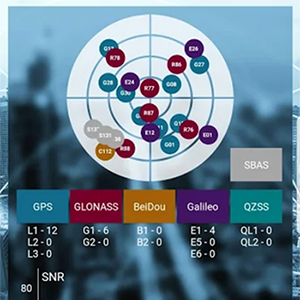
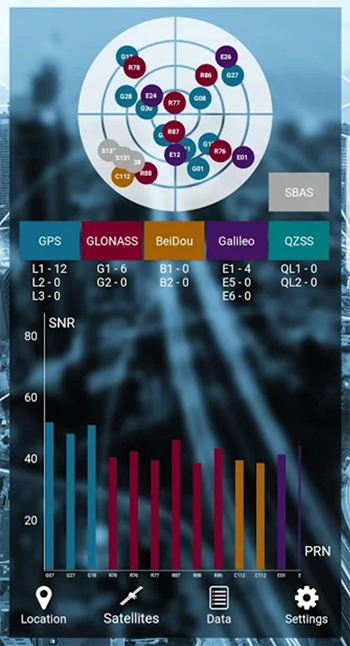
    Using the SXblue ToolBox, receiver users can view and analyze the position data provided by the SXblue receiver and metadata related to its location. The user can send commands that enable or disable some features, including systems in use, mask angle or differential angle, and constellation in use, including GPS, GLONASS, Galileo, BeiDou and SBAS.

    The SXblue ToolBox is also an NTRIP client capable of connecting to a NTRIP server for real-time kinematic (RTK) corrections and thus allow the receiver to issue very accurate location information. The application is able to record, save and transfer the raw data from the GNSS receiver, allowing post-processing activities on computers for surveying and geomatics professionals.

    The application has been developed with special consideration for modern mobile device development and attention to user and dealer feedback, the company said.

    The application includes a series of audible and visual alarms configurable by the user to determine the thresholds of the information provided by the SXblue GNSS receiver.

    Main features of the SXblue ToolBox include:

    • Display of location information and quality of the position data
    • Skyplot of all-in-view constellations: GPS, GLONASS, Galileo, BeiDou, QZSS, SBAS
    • Log raw data
    • NTRIP/DIP client for receiving RTK corrections
    • Terminal to send commands and view the output data of the SXblue device
    • Audible and visual alarms
    • Activation of options and licenses via the application.
  • Hexagon acquires AutonomouStuff for autonomous vehicle solutions

    Hexagon acquires AutonomouStuff for autonomous vehicle solutions

    Hexagon AB has acquired AutonomouStuff, a supplier of integrated autonomous vehicle solutions.

    Founded in 2010, U.S.-based AutonomouStuff is developing turnkey platforms for autonomous vehicle development, robotics and data intelligence innovation. Its turnkey platforms are deployed in pilot programs worldwide representing more than 2,500 customers in the automotive and technology sectors across Silicon Valley, America, Europe and Asia.

    “The acquisition of AutonomouStuff accelerates Hexagon’s ability to move our customers beyond the data impasse of IoT [internet of things],” said Ola Rollén, Hexagon President and CEO. “We’re particularly interested in technologies that are the most disruptive — those capable of leveraging the vast potential of data being generated by connected things, integrating AI [artificial intelligence], edge-cloud orchestration, mobility and data visualization into autonomous connected ecosystems. When combined with our positioning intelligence, mapping and sensing technology leadership, this acquisition creates a nexus of domain expertise that will lead the autonomous mobility industry for years to come.”

    AutonomouStuff began when CEO Bobby Hambrick realized that robotics company representatives were having difficulty gaining access to the technology needed to solve their applications, according to the company. He envisioned a place where they could find the products needed to get their projects up and running. It is headquartered in Morton, Illinois, with offices in San Francisco, Detroit, Germany and China.

    AutonomouStuff has been closely involved in Project Apollo, an autonomous driving ecosystem helmed by Baidu, the so-called “Google of China.”

    Project Apollo seeks to provide an open, comprehensive and reliable software platform for Baidu’s partners in the automotive and autonomous driving industries. Partners can use the Apollo open software platform together with the reference hardware platform to accelerate development of their customized autonomous vehicle solutions.

    AutonomouStuff provides the Apollo Kit to project partners: the hardware, software and services required to begin developing their own autonomous vehicle. NovAtel SPAN GNSS/INS products provide position, orientation and time as a critical component of this kit. A detailed description of the NovAtel (another Hexagon company in the Positioning Intelligence Group) and AutonomouStuff partnership is given in the August 2017 cover story of GPS World, “Autonomy assembled: Driverless kits to hit the road in 2020.”

    At a Baidu conference in Beijing, April 2017, AutonomouStuff kitted out two standard Lincoln MKZ sedans for demonstration drives, with one technician completing each vehicle in about three hours — a task that would normally take a team of workers up to six weeks. The two Lincolns then drove simultaneously, driverless, around a test track.

    The technology has been developed to be transferrable to other vehicles. Each car is modified by adding lasers, camera, radar sensors, GPS and inertial measurement unit (IMU), a drive-by-wire computer interface and computer engine.

    As of August 2017, the kit incorporated a choice, depending on user needs, of a selection of NovAtel GNSS receivers, including the ProPak6 GNSS receiver and the SPAN-IGM-A1 GNSS+IMU combined system, IMUs such as the IMU-ISA-100C incorporating Northrop-Grumman Litef GMBH’s inertial measurement technology, and antennas such as the GNSS-703-GGG-HV high vibration triple-frequency GPS, GLONASS, BeiDou and Galileo antenna. A 64-beam Velodyne lidar sensor and 16-beam HDL-16E provide laser data. Some units may have changed since then.

    Terry Lamprecht, director of products at AutonomouStuff, gave a presentation on verifying proper installation, and creating a baseline data set to benchmark against data collected on autonomous vehicles in real-time, as part of a November 2017 GPS World webinar, “High Accuracy for Autonomous Driving.” Download the free webinar here.

    Completion of the transaction is subject to regulatory approvals, including a voluntary filing to the Committee on Foreign Investment in the United States, and other customary conditions that are expected to be satisfied within the next 90 days.

  • Expert Opinions: How can we make autonomous cars safe?

    Expert Opinions: How can we make autonomous cars safe?

    Q: How can positioning technology ensure safety for passengers of autonomous cars and for others on or near the roadway?

    Paul Perrone, Founder/CEO, Perrone Robotics


    A:
    Satellite-based and local beacon-based positioning technologies offer the best opportunity for reliable and precise location determination of an autonomous vehicle. Alternate solutions like SLAM and lane keeping are decent augmentations, but suffer from the imprecision that comes from sensing in a large dynamic environment. As satellite and local beacon-based positioning technologies become increasingly more pervasive and accurate, this will continue to yield the most reliable and deterministic solution for safe localization of autonomous vehicles.


    Paul Groves, Senior Lecturer, University College London

    A: No matter how good it gets, positioning technology can never ensure the safety of autonomous car passengers and pedestrians. Knowing the position of each car is insufficient; you need to know where everything else is, including children, animals and temporary construction barriers. It is simply not practical to fit everyone and everything with a positioning device that transmits to every nearby vehicle. Collision avoidance therefore needs sensors such as radar and lidar.


    Zoltan Molnar, Functional Safety Manager, NovAtel

    A: Realization of safe autonomy requires the establishment of layers of protection using safety mechanisms without dependent faults. Absolute position provided by precise GNSS and inertial technology provides an independent reference for truth test of positioning solutions obtained with vision-based technologies. Vision-based solutions may incorporate common cause faults like sight obstruction, processing algorithms or similar. Absolute positioning can also contribute to realize near-real-time updated maps.