Author: Tracy Cozzens

  • John Deere recognizes Aceinna in its ‘supplier hall of fame’

    John Deere recognizes Aceinna in its ‘supplier hall of fame’

    Aceinna logoAceinna was recognized as a partner-level supplier for 2019 and was inducted into the Supplier Hall of Fame in the John Deere Achieving Excellence Program.

    Aceinna is a supplier of high-performance inertial sensor modules to John Deere’s operation in Fargo, North Dakota, for autonomous navigation and positioning.

    Hall of Fame status is given after a supplier attains a Partner-level rating for five consecutive years. The Partner-level status is Deere & Company’s highest supplier rating.

    According to John Deere, “Aceinna has earned this award in recognition of its dedication to providing products and service of outstanding quality as well as its commitment to continuous improvement.” Company employees accepted the recognition during formal ceremonies held on Jan. 29 in Davenport, Iowa.

    Suppliers who participate in the Achieving Excellence program are evaluated annually in several key performance categories, including quality, cost management, delivery, technical support and wavelength, which is a measure of responsiveness.

    John Deere Supply Management created the program in 1991 to provide a supplier evaluation and feedback process that promotes continuous improvement.

    “We are honored to be recognized by John Deere for our fifth straight year for the technical merits of our IMU (inertial measurement unit) and our focus on product quality and on time delivery,” said John Newton, vice president for inertial products. “This John Deere award further adds to the industry recognition that Aceinna has earned over the last couple of years, positioning us as one of the industry leaders and innovators in the autonomous vehicles navigation and positioning space.”

  • New Septentrio products to integrate Sapcorda GNSS corrections

    Septentrio has entered into a commercial agreement with Sapcorda, a global provider of sub-decimeter GNSS corrections.

    Through the collaboration with Sapcorda, Septentrio will pioneer an no-hassle corrections integration into a new line of products for the high-accuracy industrial market.

    These new products will consist of Sapcorda’s SAPA Premium corrections integrated directly into Septentrio’s latest GNSS receiver technology. The result is sub-decimeter accuracy, which is available to users right out of the box. This significantly simplifies the user’s GNSS receiver set-up process and eliminates the hassle of corrections service subscription and maintenance.

    Such GNSS receivers acquire corrections via internet as well as via satellite broadcast and deliver reliable, broadly available sub-decimeter positioning to high-volume industrial applications.

    Sapcorda integration program

    Sapcorda release its SAPA augmentation service integration program on May 14, following the launch of its SAPA Premium service. The integration program targets companies integrating GNSS chips or receivers and looking to enable their systems to perform in high-accuracy mode.

    The program offers step by step service integration and proof of concept guidance for upgrading the integrators’ GNSS systems to deliver down to centimeter-level positioning accuracy.

    The program also includes the offering of free service data, used to validate positioning performance on the target application. The program participants also receive commercial support for introducing the correction data on their marketed products.

    The SAPA service is delivered using optimized data format and can be integrated by modern or traditional high-accuracy receivers compatible with open standards such as SPARTN and RTCM.

    Sapcorda’s SAPA services are designed to bring high-precision GNSS positioning to mass market, as well as general industrial and automotive applications. The correction data stream is optimized for homogeneous performance and end-to-end data security with continental coverage in the United States and Europe.

    The service data transmission also provides unmatched low bandwidth consumption, with broadcast transmission via direct IP connection or geostationary satellite signal (L-band).

    Sapcorda was established in 2017 to provide an open approach to a safe, broadly available and scalable corrections service. By adding Sapcorda’s SAPA service to its corrections portfolio, Septentrio begins offering sub-decimeter accuracy with quick convergence time anywhere in the U.S. and Europe.

    Autonomous vehicles, robots

    “This collaboration allows both companies to bring innovative solutions, inspired by the growing market of autonomous vehicles and robots, to the high-accuracy industrial markets,” said Jan van Hees, business development director at Septentrio. “By integrating Sapcorda’s SAPA service into our products, we are completely removing the hassle of managing corrections for the customers. This means faster set-up times and worry-free, always-on high-accuracy positioning throughout the whole receiver lifetime.”

    “At Sapcorda our focus is on providing a high-accuracy service suitable for demanding applications where both performance and safety is critical. This includes land robots, UAVs, logistic applications and autonomous vehicles,” said Botho Graf zu Eulenburg, CEO at Sapcorda. “Septentrio’s field-proven high-precision GNSS receivers and their focus on reliability and robustness aligns perfectly with our mission and the capabilities of our SAPA services.”

    This broadens the range of Septentrio’s existing GNSS solutions, allowing the company to serve a wide range of customers with various requirements in terms of accuracy, operation location and scalability. Read Septentrio demystifies GNSS corrections for more about GNSS corrections and correction methods such as Sapcorda SAPA (PPP-RTK) service.

  • 1 more BeiDou satellite starts operation in constellation

    1 more BeiDou satellite starts operation in constellation

    Photo: Xinhua News Agency
    Photo: Xinhua News Agency

    The 45th satellite of the BeiDou Navigation Satellite System — launched on May 17, 2019 — has started operation in the network after completing in-orbit tests, reports China’s Xinhua news service.

    The satellite will provide services in place of the third BeiDou satellite, a geostationary earth orbit satellite of the BDS-2 system, according to China’s Satellite Navigation System Management Office.

    The replacement will help reinforce the BDS-2 system and support a smooth transition from the BDS-2 system to the BDS-3 system. The third satellite — launched Jan. 17, 2010 — will stay in orbit after the replacement.

  • 32 US senators urge stay on FCC’s Ligado decision

    32 US senators urge stay on FCC’s Ligado decision

    Thirty-two United States senators wrote to the Federal Communications Commission (FCC) on May 15 expressing concerns with the commission’s determination on Ligado Networks. The senators also asked the FCC to address these concerns and stay their order while they were doing so.

    The five-member FCC voted unanimously in April to approve an order to allow Ligado Networks to deploy a low-power nationwide 5G network.

    “The hurried nature of the circulation and consideration of the Order itself — during a national crisis, no less — was not conducive to addressing the many technical concerns raised by affected stakeholders,” wrote the senators.

    The senators continued,

    “With this specific docket item pending before the FCC for almost 10 years, we are concerned with the pace by the Commission to push through an Order first announced on April 16, the approval for which was declared two business days later. We believe this accelerated timeline was not adequate to address the significant stakeholder concerns for an Order of this magnitude….”

    “We are concerned that the FCC has discounted testing and assessments conducted by nine federal agencies in the Interdepartment Radio Advisory Committee process — all expressing concerns that the Ligado plan would interfere with millions of GPS receivers and satellite services across the nation. Further, the FCC did not provide a technical forum to resolve the significant disconnects between this testing and Ligado’s privately funded testing…”

    “For these reasons, we urge the Federal Communications Commission to immediately stay and reconsider their Order on this matter, more fully consider the technical concerns raised by numerous federal agencies and private sector stakeholders, and outline a path forward that adequately addresses these concerns.”

    A Resilient PNT Foundation editorial on the organization’s website says the main problem seems to be misunderstanding about the differences between radionavigation and communication.

    “We share the concerns with the FCC’s actions that are outlined in this letter:

      • After ten years of deliberations a draft order was processed to a final decision within a couple days during a national crisis
      • The FCC discounted the testing done by the executive branch and did not say why
      • No technical forum was held to resolve the differences between Ligado’s and DoD/DoT’s testing
      • There was no public discussion of these differences and how they might be resolved

    “Undoubtedly, a lot of the differences between the FCC and the Executive Branch on this issue boil down to a lack of appreciation of the fundamental differences between wireless communication and radionavigation.” The Resilient PNT Foundation website provides a table outlining the differences.

    “When two parties start from completely different places, they are likely to talk past each other and end up in completely different places.

    “We think the Federal Communications Commission might not have fully appreciated the needs of radionavigation as a safety-of-life utility and wound up in the wrong place.

    “But that’s just us. A lot of folks think differently.

    “That’s why we are urging an independent technical review, with both communications and radionavigation experts, to inform public policy decisions on this before anything moves forward.

    “This is too important to get wrong.”


    Feature photos:
    Capitol building with flag/Andrea Izzotti/Shutterstock.com
    Capitol building at night/Brian Kinney/Shutterstock.com

  • Geospatial Solutions coverage of COVID-19

    Photo: NicoElNino/iStock / Getty Images Plus/Getty Images
    Photo: NicoElNino/iStock / Getty Images Plus/Getty Images

    Geospatial Solutions and GPS World are offering the latest news and updates concerning the coronavirus (COVID-19) pandemic as it affects the geospatial, mapping and GNSS/PNT industries. Read a message from GPS World here.

    NEWS

    GMV leads development of ESA COVID-19 Space Hunting Platformy (7/20/20)
    How is COVID-19 affecting you? Take part in our survey (4/22/20)
    US small business loans a challenge due to COVID-19 (4/20/20)
    Plans to reopen after COVID-19 vary widely (4/20/20)
    Airbus to produce 3D-printed visors in fight against COVID-19 (4/17/20)
    Galileo Masters 2020 open for submissions (4/16/20)
    Martek Marine launches COVID-19 tests for crew changes (4/15/20)
    Robotic Research innovates to help fight COVID-19 (4/15/20)
    New Topcon Talks aimed at professionals at home during COVID-19 (4/9/20)
    Coronavirus delays GPS III SV03 launch until June (4/8/20)
    Schriever stays operational despite COVID-19 (4/3/20)
    PCTEL terminates share repurchase program (4/2/20)
    U.S. Space Force accepts control of GPS III SV02 amidst global pandemic (4/1/20)
    Testing suspended on Galileo Batch 3 satellites (3/30/20)
    GPS tracking shows critical truck deliveries continue despite COVID-19 (3/26/20)
    China adds to BeiDou as satnav service helps fight coronavirus (3/10/20)

    Mapping & geospatial

    Esri offers COVID-19 resources for nonprofits (5/8/20)
    GIS tool provides updates on open businesses amid COVID-19 (4/22/20)
    NSGIC issues joint statement on value of GIS during COVID-19 pandemic (4/17/20)
    How to prepare and organize a fleet during the COVID-19 pandemic (4/13/20)
    Dashboard graphs those working from home during COVID-19 (4/10/20)
    Georgia county provides grocery store app for residents (4/8/20)
    Esri releases resources for businesses during COVID-19 (4/3/20)
    Esri to provide mapping resources to WHO Member States (4/1/20)
    Analysis of satellite imagery shows reduced NO2 in China, Italy (3/23/20)
    Esri supports John Hopkins COVID-19 Design Challenge (3/27/20)
    Genasys releases COVID-19 interactive map layer service (3/19/20)
    Esri ArcGIS map tracks global coronavirus cases (3/13/20)

    Mobile apps & location intelligence

    WGIC: Geospatial analytics at forefront of COVID-19 fight (4/27/20)
    Traxens offers smart-container tracking to manage COVID-19 supplies (4/21/20)
    Radius Telematics sees spike in vehicle theft during coronavirus crisis (4/15/20)
    GPS tracking need not sit out COVID-19 because of privacy laws (4/8/20)
    Esri to provide US school data during COVID-19 pandemic (4/8/20)
    InnerSpace location platform supports public safety, COVID-19 response (4/1/20)
    Sewio helps fight COVID-19 with ‘smart quarantining’ (4/1/20)
    European GNSS Agency provides list of COVID-19 apps (3/30/20)
    19 countries track mobile location to fight COVID-19 (3/26/20)
    Coronavirus and location: Is there a line? (3/23/20)
    WHO Health Alert brings COVID-19 facts to billions via WhatsApp (3/21/20)
    COVID-19: Israel’s citizens now tracked by their smartphones (3/19/20)
    Oxford University explores feasibility of coronavirus tracing mobile app (3/18/20)

    UAVs

    Draganfly conducts pandemic drone tests in US (4/21/20)
    AUVSI report: Demand growing for expanded drone operations (4/21/20)
    UAVOS completes tests for drone delivery of humanitarian relief (4/17/20)
    Kazakhstan uses drones to patrol capital during COVID-19 lockdown (4/9/20)
    Drone Delivery Canada asks for COVID-19 use cases (3/30/20)
    DJI joins with firefighting provider Rosenbauer on digital emergency response (3/30/20)
    ARPAS-UK coordinates COVID-19 drone capability task force (3/30/20)
    Pandemic drones to monitor, detect those with COVID-19 (3/26/20)
    China fights coronavirus with delivery drones (3/6/20)
    Xag creates fund for drones disinfection program to fight coronavirus (2/11/20)

    Show updates

    Esri User Conference goes virtual because of COVID-19 (4/22/20)
    3 more conferences postponed due to COVID-19 (4/20/20)
    ION 2020 Joint Navigation Conference rescheduled over COVID-19 concerns (4/9/20)
    36th Space Symposium rescheduled due to COVID-19 (4/9/20)
    GEO Business 2020 rescheduled amid coronavirus concerns (3/18/20)
    IEEE/ION PLANS Conference canceled due to COVID-19 concerns (3/13/20)
    AUVSI Xponential show postponed until August (3/13/20)
    Munich Satellite Navigation Summit canceled due to coronavirus (3/10/20)
    Mobile World Congress 2020 canceled due to coronavirus concerns (2/12/20)

    Features

    Seen & Heard: Drones and robots fight coronavirus (3/5/20)
    Coronavirus, organ transport top medical drone uses (2/19/20)

  • Altitude Angel releases Scout, an open-source remote ID platform 

    Altitude Angel releases Scout, an open-source remote ID platform 

    Altitude Angel logoAltitude Angel, a London, U.K.-based unmanned traffic management (UTM) technology provider, is releasing an open-sourced project, Scout.

    Scout’s hardware and firmware enable drone manufacturers, software developers and commercial drone pilots to quickly connect to its global UTM.

    Primarily intended for use in commercial and industrial drone applications, Scout provides the capability to securely obtain and broadcast a form of network remote ID, widely seen as a necessary step for enabling routine drone use and flights beyond visual line of sight.

    Because it is open source, both the hardware and the firmware can be enhanced and incorporated into a virtually limitless set of scenarios, according to Altitude Angel.

    Altitude Angel also has made available a surveillance API that allows integrators to both share and receive flight data from a variety of sensors and devices in near real time, providing a comprehensive real-time picture of the airspace. 

    While many remote ID systems are broadcast only, Scout offers two-way communication and is fully open-sourced. The ability to talk back to the drone enables the Altitude Angel UTM service to help the drone avoid collisions with other aerial vehicles, or restricted airspace.

    From launch, Scout will use identifiers obtained freely from Altitude Angel’s GuardianUTM platform. It will work in combination with a pre-flight (flight-plan sharing) service and is supported through integration with Altitude Angel’s Tactical Conflict Resolution Service.

    Scout will enable the drone to report its real-time location using GPS-type sensors and relay this data via a secure, encrypted mobile communications link across 3G, 4G and 5G networks to Altitude Angel. It is powered by an internal rechargeable (via micro USB) lithium battery.

    Altitude Angel has also provided reference design plans for the case that can be 3D printed. Scout has been designed to satisfy emerging network remote ID standards, such as ASTM.

    Because the firmware is open source, the telemetry can be sent to other systems as required by the implementor.

    A two-wire I2C upgrade to the circuit schematics, plus version 2 of the firmware (both scheduled for June), will subsequently enable the full two-way communication between the Scout device and the drone’s onboard systems, allowing the drone to respond directly to information received from the UTM.

    In the interim, early adopters will have the opportunity to begin to integrate with Altitude Angel’s UTM services, test the hardware and test communication. Position data Altitude Angel receives from Scout is then automatically used by its Flight Information Management System (FIMS) to help provide traffic deconfliction.

    Plans, firmware and schematics can be accessed via the Altitude Angel GitHub repositories.

  • Veripos offers LD900 quad-band GNSS receiver for marine environments

    Veripos offers LD900 quad-band GNSS receiver for marine environments

    Photo: Veripos
    Photo: Veripos

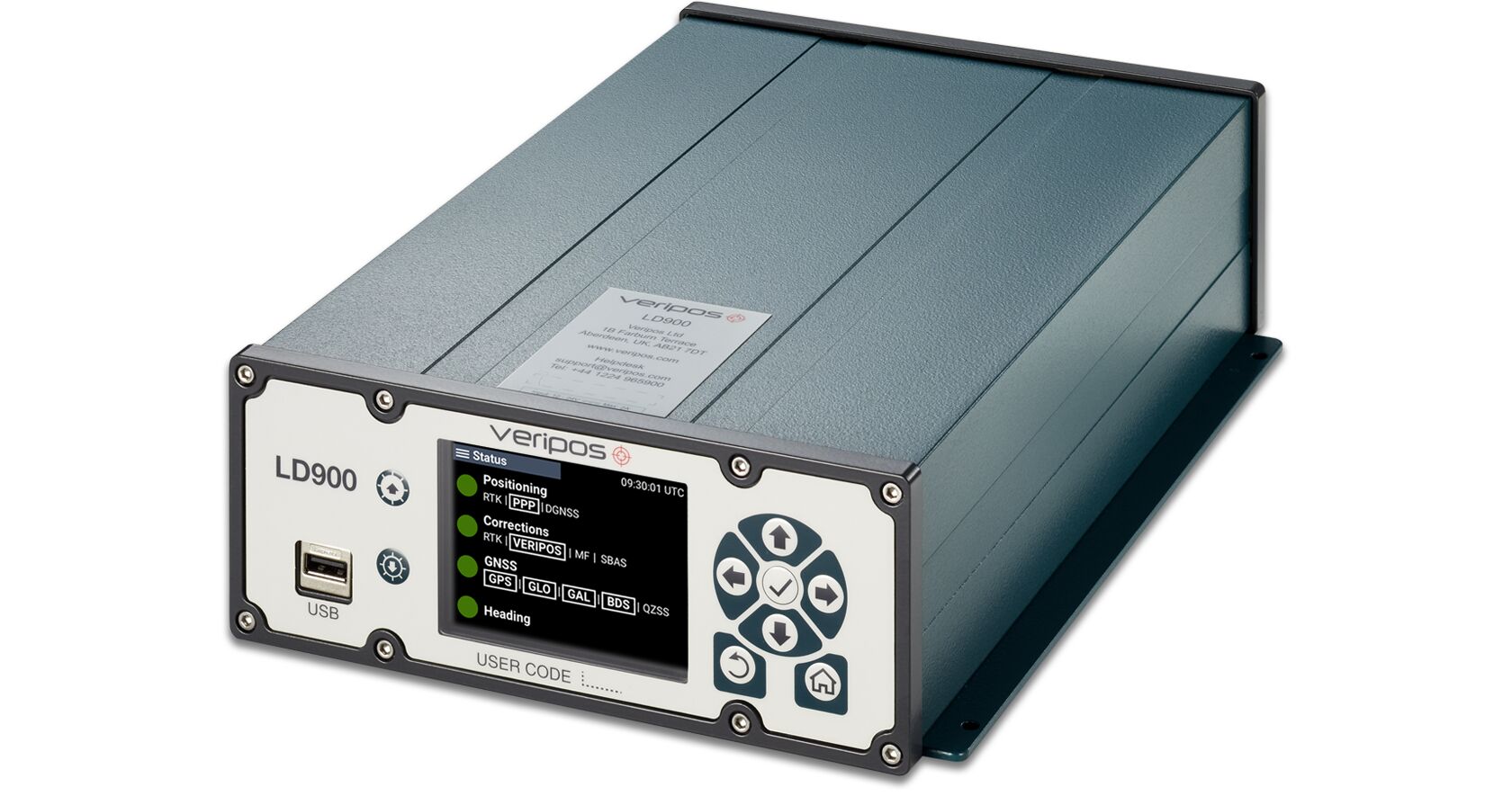
    Veripos has released the LD900, a quad-band GNSS receiver capable of tracking GPS, GLONASS, BeiDou, Galileo and QZSS constellations to provide reliable and accurate positioning. Access to multiple GNSS signals allow for better satellite availability and reduce the impact of satellite masking or blockage, which can affect positioning.

    LD900 also receives L-band signals on multiple channels, providing access to the worldwide independent correction links and services provided by Veripos. With correction data available simultaneously from up to three correction satellites, the impact of satellite masking can be minimized to ensure reliable reception of correction data. Using the independent L-band RF input on the LD900 allows the connection of a dedicated L-band antenna ensuring optimal reception of correction services, especially at high latitudes, the company said.

    Veripos provides accurate and reliable positioning for all marine applications via their redundant positioning and multi-frequency precise point positioning (PPP) Apex and Ultra services.

    The Apex5 correction service utilizes all GNSS constellations delivering 5cm positioning accuracy for use in the most demanding offshore applications. Real-time kinematic (RTK) corrections can be utilized by the LD900 for applications where this service is required.

    The intuitive color display and navigation menu makes setup, configuration and system status monitoring simple. The display also helps troubleshoot issues with the LD900 allowing faults to be quickly diagnosed and resolved. The LD900 can also be configured remotely through the Veripos Quantum software.

    Features and Benefits

    • Supports decimeter-level multi-constellation positioning with Veripos Apex and Ultra PPP correction services
    • Multi-channel L-band allows simultaneous tracking of 3 Veripos correction service satellites
    • Independent L-band RF input
    • Easy-to-use, intuitive, color display for simple configuration and monitoring
    • Advanced signal filtering mitigates the effects of interference from other transmitters
    • Optional ALIGN GNSS heading solution
    • Optional MSK Beacon receives corrections from IALA marine radio beacon network
    • Automatic 72-hour rolling data log for incident support
  • Harxon debuts ruggedized antenna HX-CVX600A for i-construction machining applications

    Harxon debuts ruggedized antenna HX-CVX600A for i-construction machining applications

    Ruggedized GNSS antenna HX-CVX600A. (Photo: Harxon)
    Ruggedized GNSS antenna HX-CVX600A. (Photo: Harxon)

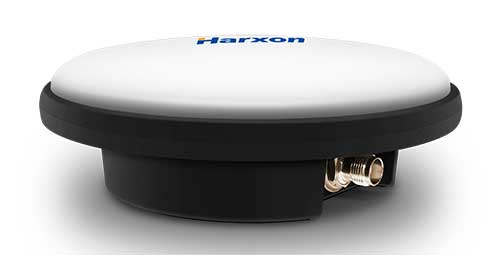
    Harxon has launched a ruggedized GNSS antenna for applications subject to high shock and vibration environments such as i-construction machining applications. Integrated with reliable signal tracking and strong anti-interference performance, the IP69K ruggedized HX-CVX600A antenna provides end users with millimeter accuracy, durability and productivity, the company said.

    I-construction promotes the use of automated machines on construction sites to improve productivity and provide support to workers.

    The Harxon HX-CVX600A offers full support for reliable and consistent satellite signals tracking, including GPS, GLONASS, Galileo and Beidou, QZSS, IRNSS and SBAS, as well as L-band correction services.

    By exhibiting a very stable phase center that adopts multipoint feeding technology, exceptional low elevation satellite tracking with symmetric radiation patterns, high gain with ultra-low signal loss, as well as outstanding wide-angle circular polarization (WACP),  the Harxon HX-CVX600A performs with remarkable positioning accuracy and provides end users with full control of the job site, performing tasks more productively, meeting tighter positioning specifications, and avoiding rework caused by inaccurate positioning.

    The HX-CVX600A GNSS antenna of Harxon also provides superior anti-interference performance. Its advanced low noise amplifier (LNA) excels in improved signal filtering and out-of-band rejection and restrains electromagnetic interference. It also provides strong multipath reduction capacity over all GNSS frequency bands for consistent and reliable GNSS signals, even under complicated environments such as congested urban areas or communication base stations.

    The Harxon HX-CVX600A compact and low-profile antenna is Harxon’s first antenna with exceptionally firmness for hash operation environment as construction industry. The upper cover of the antenna is made of material with excellent chemical and high heat resistance. Its aerodynamic enclosure withstands exposure against dust, rain, splash or sunlight. Screws and pole mounts are both available, offering flexible installation.

    The Harxon HX-CVX600A ruggedized antenna is now open for pre-sale; contact [email protected].

  • Ruptela expands to US with new telematics tracker, platform

    Ruptela expands to US with new telematics tracker, platform

    Photo: Ruptela
    Photo: Ruptela

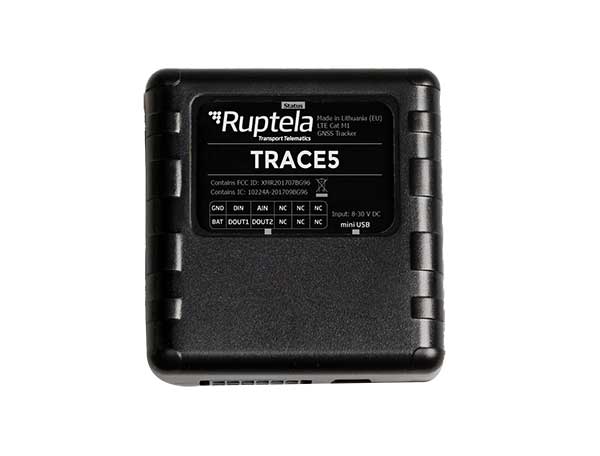
    Fast-growing European transport telematics company Ruptela has expanded its global presence to the United States with a tailored ready-to-use telematics solution, the Trace 5 GPS tracker and multifunctional fleet management platform TrustTrack.

    The Trace 5 plug-and-play GPS-based automatic vehicle location (AVL) tracker has LTE Cat M1 (4G) connectivity and an integrated battery. It is fully certified according to North American requirements and has a two-year warranty.

    TrustTrack is an advanced telematics platform that helps businesses manage their transport resources more efficiently. It connects dispatchers and drivers and enables real-time monitoring and drivers’ management. It also generates trip reports.

    To create the North American solutions, Ruptela’s research and development team analyzed the needs of prospective clients and ran product tests on various roads in the United States.

    Andrius Rupsys, founder and CEO of Ruptela, calls the release of a telematics solution tailored to the U.S. market a significant milestone in the further expansion of the company. “We are entering the U.S. market confident about our solution for businesses eager to improve their efficiency, whether these are delivery, service fleets, vehicle leasing and financing (BHPH) or car rental companies.

    “As a customer-centric company, we always seek to reduce our clients’ efforts by accelerating ease of use, prediction and automation. We believe that with the right measures, less effort can lead to more growth,” Rupsys said.

    “Beyond that, our goal is to provide clients with solutions to the issues they are not even aware of yet. To do so, we offer the full solution including hardware and software manufactured and developed in the European Union, which is completed by cellular connectivity and the highest European quality support valued by Ruptela’s clients across the globe,” Rupsys said.

    Ruptela also offers individual onboarding (covering software and hardware) and free technical support, which ensures that clients can start using the product instantly. Depending on the expressed need, their manufactured hardware can be bought separately.

    For a limited time, first-time users are entitled to a special offer saving them software activation fee and gifting valuable extras.

  • Will Britain launch its own Galileo? Maybe not

    Will Britain launch its own Galileo? Maybe not

    When Brexit happened, many in Britain thought the country should have its own satellite navigation system, because it was no longer going to be a participant in Galileo, created and run by the European Union.

    Now the Telegraph reports that officials have concluded that such plans should be scrapped because the £5 billion project would be a waste of taxpayer funds.

    The Telegraph reports that members of the Cabinet Office and Department for Business are pressing ministers to shut down work on the program, which was set up after Brussels froze the U.K. out of the EU’s Galileo satellite program.

    In 2018, then-Prime Minister Theresa May announced £92m for a feasibility study into the U.K. satnav, reports Engineering & Technology. Much of that money has already been spent, it is believed. In March 2020, it was reported that the project had been delayed for at least six months over concerns about its scope and multi-billion-pound cost.

  • CHC Navigation introduces Apache3 marine drone

    CHC Navigation introduces Apache3 marine drone

    Highly cost-effective autonomous marine drone for bathymetric surveys

    Photo: CHC Navigation
    Photo: CHC Navigation

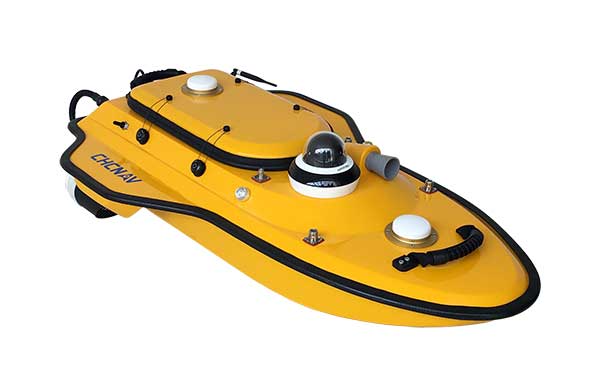
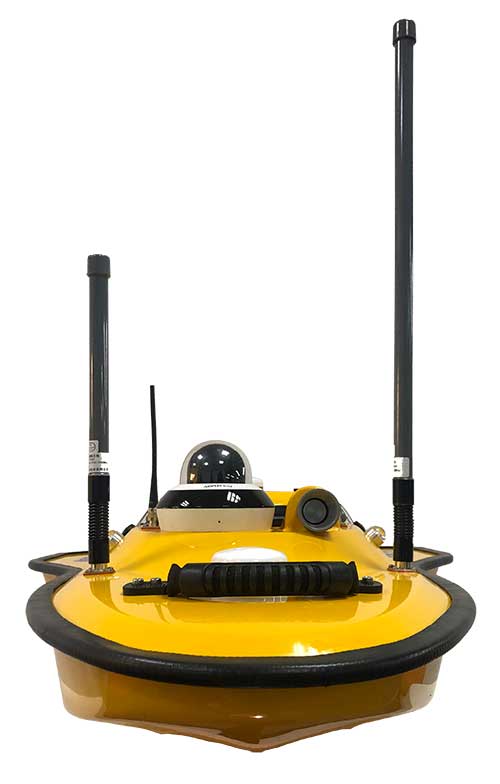
    The new Apache3 Marine Drone — 2020 Edition provides a series of new features and additional enhancements to make lake, river and coastal hydrographic surveys more productive, according to maker CHC Navigation.

    Combining a dual GNSS positioning and heading sensor, a stable and reliable hull attitude and an inertial measurement unit (IMU) sensor, the Apache3 unmanned surface vehicle (USV) allows an uninterrupted survey while passing under bridges.

    Its high-efficiency 8-meters-per-second motors and absolute straight-line technology enable a fully automatic, predetermined course in adverse current conditions.

    The Apache3 features include:

    • GNSS/INS control box to maintain high accuracy during transient GNSS outage
    • Integrated 4G and LAN transmission module
    • Sonic radar for obstacle avoidance
    • Automatic return to base planning
    • 360° PTZ camera (pan, tilt, zoom)
    • Overspeed engines to allow operation in most water conditions

    According to CHC Navigation, the Apache3 — 2020 Edition offers an exceptional feature/price ratio, making it one of the most competitive professional marine UAV solutions for single-beam bathymetric surveys.

    Photo: CHC Navigation
    Photo: CHC Navigation
  • Trimble beta tests new construction OS

    Trimble beta tests new construction OS

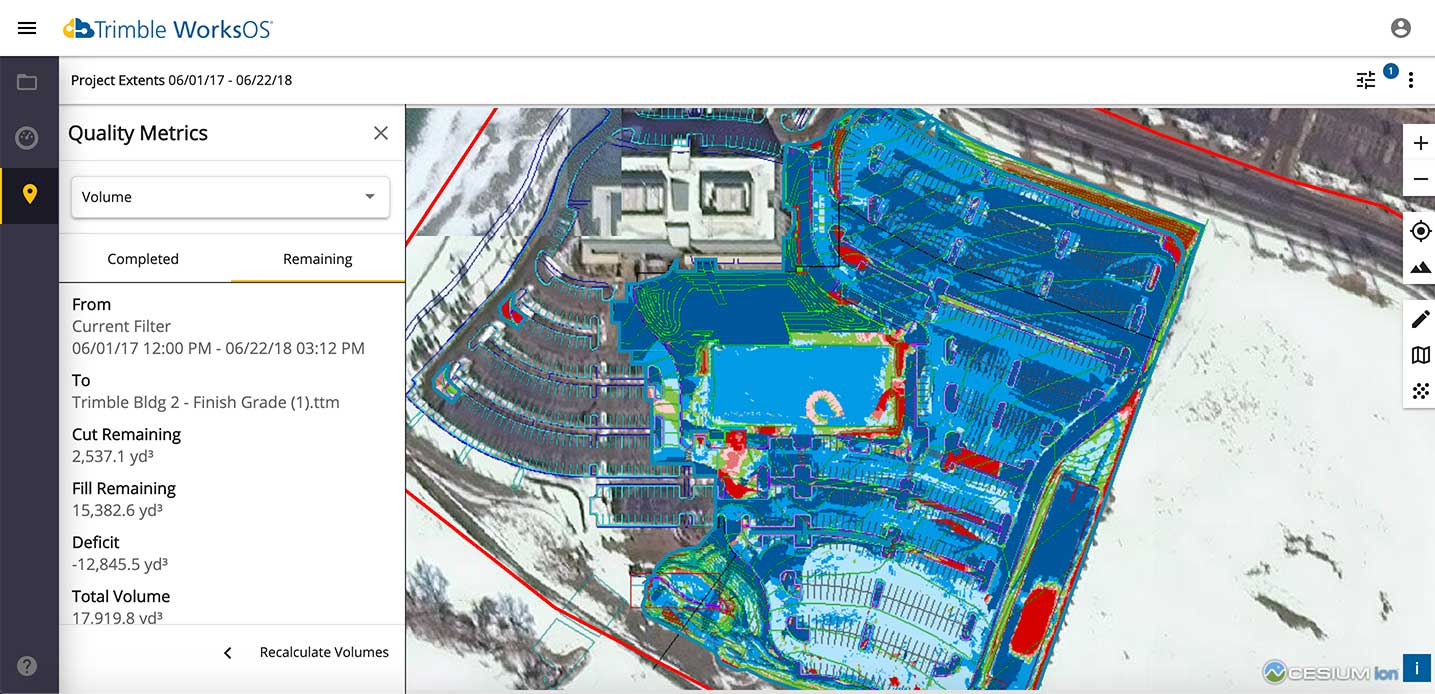
    Trimble WorksOS is an upcoming civil construction software-as-a-service (SaaS) operating system. The cloud-based system will integrate data from Trimble and third-party providers across the entire civil construction project lifecycle, including estimating, scheduling, designs and the field.

    Beta testing is now taking place for WorksOS, before it is released in the third quarter. Users interested in participating can go to WorksOS.trimble.com.

    One-Stop Software. With WorksOS, site supervisors and project managers will be able to log into a single application to track daily production quantities, labor and equipment hours, and equipment maintenance schedules. They will be able to view real-time visibility of cut, fill, volume and compaction data to maximize jobsite productivity.

    A user-friendly dashboard enables key personnel, including site supervisors, to adjust daily work targets to ensure work is progressing to plan. Site supervisors will also gain live daily volume calculations, compaction quality metrics and visibility into which machine is working, to monitor progress and determine if the project is on schedule.

    Software Connections. Connecting workflows, Trimble WorksOS will integrate Trimble Business Center, Trimble WorksManager, Trimble Siteworks Positioning System, Trimble Earthworks Grade Control Platform and Trimble PULSE Fleet and Equipment Management Software.

    Screenshot: Trinble
    Screenshot: Trimble