Author: Tracy Cozzens

  • SES extends EGNOS GEO-1 satellite service to power precise navigation across Europe

    SES extends EGNOS GEO-1 satellite service to power precise navigation across Europe

    The agreement ensures Europe’s satellite-based augmentation continues enhancing navigation for aviation and other critical users and lowering emissions.

    SES, a space solutions company, and the European Union Agency for the Space Programme (EUSPA) have announced an extension of the European Geostationary Navigation Overlay Service (EGNOS) GEO-1 satellite service agreement through 2030, with an option to extend until 2032, helping maintain high-precision navigation services for aviation and other critical users across Europe.

    By improving the accuracy and integrity of satellite positioning signals, EGNOS supports aircraft in landing in low-visibility conditions, as well as planning more efficient routes, reducing fuel burn and CO₂ emissions.

    At the core of the EGNOS service is Europe’s regional satellite-based augmentation system (SBAS) that improves the accuracy and reliability of GNSS signals, such as GPS. Beyond aviation, EGNOS supports maritime navigation and precision-driven agriculture, contributing to efficient operations and sustainability by reducing fuel consumption and emissions.

    Under the extended GEO-1 contract, SES will continue operating an EGNOS-hosted payload on its SES-5 satellite, as well as the ground segment from its facilities in Europe.

    “This extension ensures a robust EGNOS space segment, ready for the transition towards its next version and the development of new services, while safeguarding high-precision navigation for aviation and other critical users across Europe,” said Rodrigo da Costa, EUSPA executive director.

    “EGNOS is a cornerstone of Europe’s aviation and broader navigation applications. The agreement underscores SES’ and EUSPA’s joint commitment to advancing satellite-based services that enable secure, reliable, and sustainable navigation solutions,” said Philippe Glaesener, senior vice president, Global Government at SES. “Thanks to the service, millions of users and operators will benefit from efficient and more reliable air transportation services across all of Europe. This commitment reflects our broader mission of delivering resilient satellite solutions for critical infrastructures.”


  • European PAVE-SCAN project aims to increase transport efficiency, safety

    European PAVE-SCAN project aims to increase transport efficiency, safety

    The European Union PAVE-SCAN project aims to build European GNSS-based and AI-driven technologies to detect and assess roadway pavement problems.

    The proposed project aims for the development to market (TRL8-9) of European GNSS-based integrated low-cost sensor technologies and artificial-intelligence-driven open-architecture software solution — machine learning (ML) and machine vision (MV) — for the detection, classification and georeferencing of roadway pavement surface anomalies, and for the low-cost assessment of roadway pavements using participatory sensing.

    The proposed system is of practical importance because it provides continuous information about roadway pavement surface anomalies — valuable for efficiently monitoring the transport infrastructure and for public safety. The vision for roadway condition assessment using smartphone-like technology is under the hypothesis that such technology can be used for crowd-sourced data collection and analysis in GIS-based pavement management systems (PMS).

    “The developed technology and related transport informatics are disruptive technologies that have the potential to reshape the transport and infrastructure industries,” according to the project description.

    The project is funded under Horizon Europe; with the University of Cyprus Department of Civil and Environmental Engineering serving as a partner.

    The project’s objectives are outlined below.

    Table 1. Project objectives
    #Project ObjectiveWP
    1Near-real-time analysis and classification of roadway anomaliesWP3,WP4,WP5
    2Geospatial mapping of transport infrastructure, roadway anomalies and condition-assessment heatmapsWP3,WP4,WP5
    3Geospatial mapping of transport infrastructure, roadway anomalies and condition-assessment heatmapsWP3,WP4,WP5
    4Improved roadway management practices, prioritisation of public works & lower costsWP4
    5Reduction in the transport-related environmental footprint through improved O&M of transport infrastructure and of mass transitWP4,WP6,WP7
    6Reduction in roadway-assessment costs by utilization of a fleet of vehicles/buses as participatory sensorsWP5,WP6,WP7
    7Integration with national transport initiatives (e.g., National Single Access Point), & with Digital Twin platforms, for dynamically updated roadway-condition models, and improvements in transport safety through roadway improvementsWP4, WP5
    8Open-access data and APIsWP1, WP8
    9Product to market and ‘Product as a Service’ (PaaS) business modelWP8
    10Dissemination of project resultsWP1
  • Eos MDM Configurator designed to streamline deployments

    Eos MDM Configurator designed to streamline deployments

    New web tool exports ready-to-deploy XML files, enabling fast and centralized pre-configuration of Eos Tools Pro GNSS settings.

    Eos Positioning Systems has released the Eos MDM Configurator, a web‑based tool that allows organizations to quickly create and deploy pre-configured Eos Tools Prosettings across large numbers of mobile devices via their third-party mobile device management (MDM) systems.

    Until now, administrators who wanted to deploy Eos Tools Pro through their MDM needed to write an XML configuration file manually — a process that was time consuming and potentially error-prone. The Eos MDM Configurator eliminates manual coding entirely. The tool guides users step‑by‑step through five GNSS categories, supplies a preview of the XML code, and allows the user to export their XML file, compatible with any third‑party MDM solution.

    With the Eos MDM Configurator, organizations can centralize control of Eos Tools Pro settings, standardize GNSS data quality, and save time by eliminating manual app configurations.

    The five categories that can be pre-configured using the tool include differential corrections, altitude and geoid model, datum shifts, alarms and miscellaneous.

    The Eos MDM Configurator is compatible with Eos Arrow Series and Skadi Series GNSS receivers. Support for Skadi Tilt Compensation and the Skadi Smart Handle is in development.

    The Eos MDM Configurator is available at no cost to Eos GNSS receiver users. All that’s required to build a configuration is a desktop browser with Internet access. Deploying the resulting XML file requires a third‑party MDM solution, an Eos GNSS receiver (any model), Eos Tools Pro, and at least one mobile device running iOS or Android.

  • ARK Electronics launches GNSS magnetometer unit for autonomous applications

    ARK Electronics launches GNSS magnetometer unit for autonomous applications

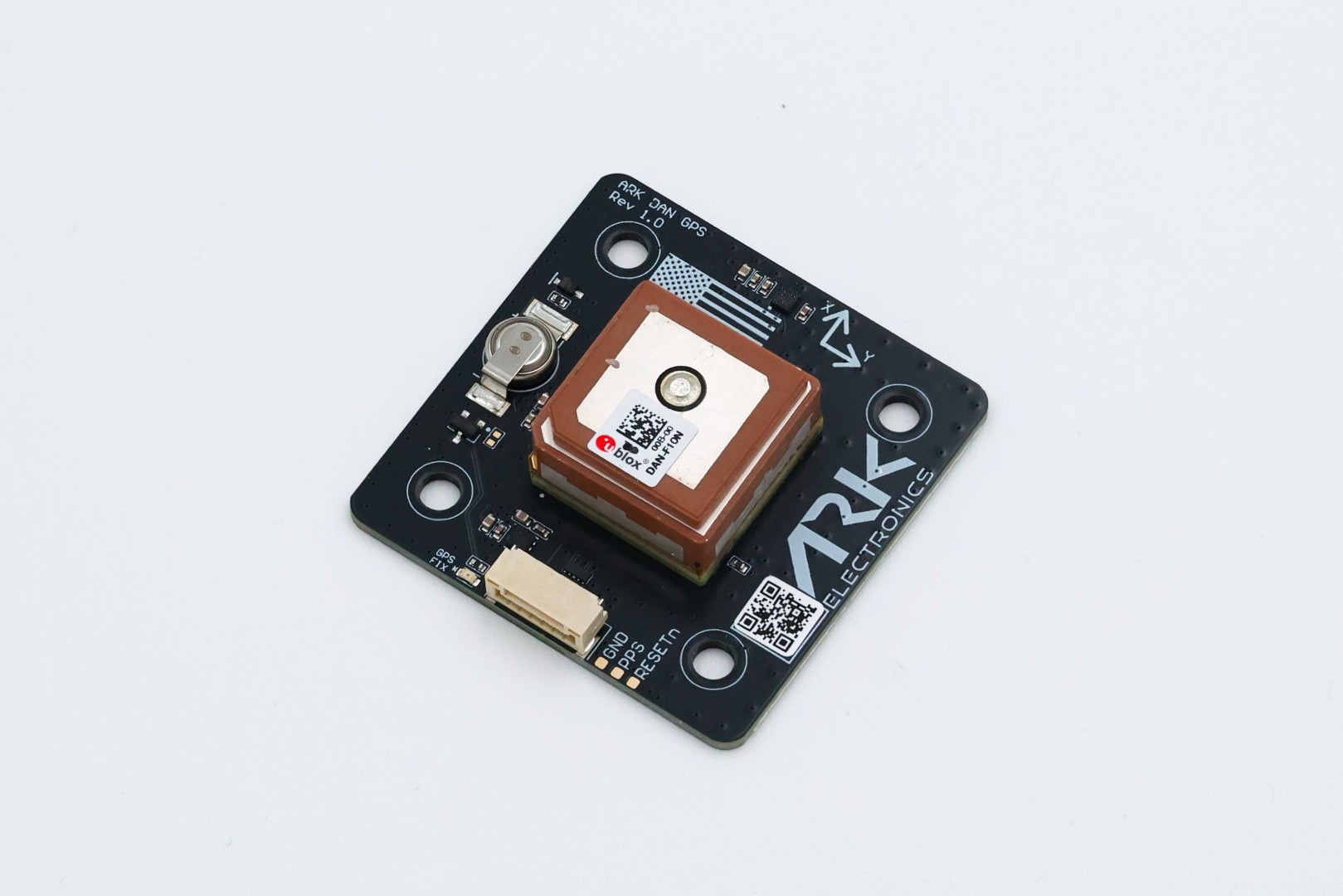
    ARK Electronics has launched the ARK DAN GPS, a U.S.-built dual-band L1/L5 GNSS and industrial magnetometer unit. The ARK DAN is designed for dependable navigation and orientation in professional drone and autonomous platform applications.

    Incorporating the u-blox DAN-F10N receiver, the system delivers resilient signal acquisition across L1, L5, E5a, and B2a frequency bands. Its integrated SAW-LNA-SAW design ensures robust immunity to interference, while proprietary dual-band multipath mitigation enhances positional reliability even in complex environments.

    An onboard ST IIS2MDC magnetometer provides stable heading data, complemented by a compact 4.4 cm × 4.4 cm × 1.3 cm form factor for flexible installation. The Pixhawk-standard UART/I2C interface and 6-pin JST-GH connector simplify integration into existing flight control architectures.

    With an efficient 5 V power draw averaging just 25 mA and a visual GPS fix indicator, the NDAA-compliant ARK DAN GPS combines performance, precision, and compliance in a lightweight, 25 g package.

    Specifications

    • Dimensions: 4.4 × 4.4 × 1.3 cm
    • Weight: 25 g
    • Power: 5V; 25mA average, 44mA max
    • Frequency Bands: L1/L5/E5a/B2a

  • Update: Ninth GPS III successfully launched

    Update: Ninth GPS III successfully launched

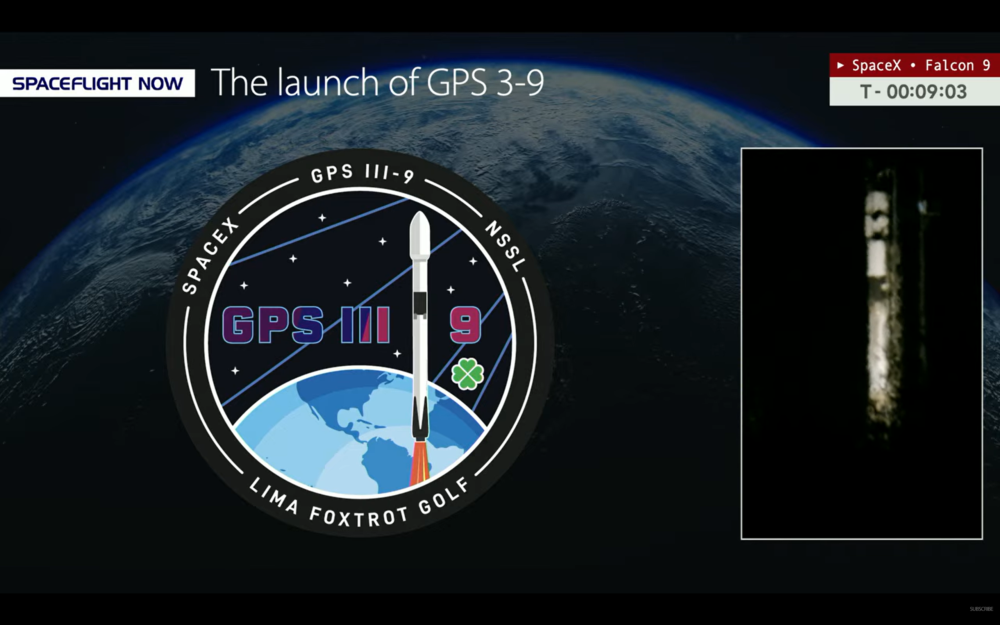
    Update: The ninth GPS III satellite was successfully launched into orbit Tuesday.

    Pre-launch report

    GPS III Space Vehicle SV09 is being prepped for launch from Space Launch Complex (SLC)-40 at Cape Canaveral Space Force Station, Florida, aboard a SpaceX Falcon 9 rocket.

    The launch, delayed from Jan. 25, is now scheduled for 11:38 p.m. ET on Tuesday, Jan. 27.

    A live webcast of this mission from launch to satellite deployment will begin about ten minutes prior to liftoff and can be watched on www.spacex.com/launches. The webcast will be shown on the X TV app, as well as various streaming outlets, including YouTube.com via SpaceFlight Now and NASASpaceflight.com.

    U.S. Space Force’s Space Systems Command (SSC) and Combat Forces Command (CFC) will launch SV09 as the next National Security Space Launch (NSSL). The two field commands are executing this mission using the model established by the Rapid Response Trailblazer launch in December 2024 and GPS III-7 (SV08) launch in May 2025. Being pre-postured with the right equipment has enabled the launch teams to process and integrate the GPS III (SV09) satellite with the Falcon 9 rocket on a shortened timeline, the Space Force said.

    GPS III satellites, equipped with M-code technology, provide the warfighter with a significantly more accurate and jam-resistant capability. Adding another such satellite to the constellation enhances the system’s robustness and ultimately boosts the warfighting lethality of the Joint Force.

    “For this launch, we traded a GPS III mission from a Vulcan to a Falcon 9, then exchanged a later GPS IIIF mission from a Falcon Heavy to a Vulcan,” said USSF Col. Ryan Hiserote, SYD 80 Commander and NSSL program manager. “Our commitment to keeping things flexible – programmatically and contractually –means that we can pivot when necessary to changing circumstances. We have a proven ability to adapt the launch manifest to complex and dynamic factors and are continuing to shorten our timelines for delivering critical capabilities to warfighters.”

    The space vehicle was successfully delivered to Florida over-the-road on July 31, 2025. Now, CFC’s Mission Delta 31 is leading the pre-launch processing of the space vehicle, working alongside Lockheed Martin to integrate it onto the rocket and for launch in a faster timeline than in the past.

    “This mission represents an outstanding collaboration across multiple teams and agencies,” said U.S. Space Force Col. Stephen Hobbs, MD 31 commander. “It foot stomps our ability to rapidly deploy a high-value space asset, in this case, an additional M-Code-capable satellite that brings significant, immediate value to the Joint Force.”

    SV09 is named in honor of Col. Ellison Onizuka, a U.S. Air Force test pilot and NASA astronaut. Onizuka successfully flew on STS-51C, a space shuttle Discovery mission in January 1985. The naming of the satellite also honors his memory as one of the astronauts who perished during the launch of STS-51L aboard the space shuttle Challenger on Jan. 28, 1986.

    With the launch of SV09, the GPS III constellation gains another satellite equipped with significantly enhanced accuracy and jam-resistance, bolstering the capabilities of the Joint Force.

  • Baltic and North Sea states warn of safety risks from GNSS interference

    Baltic and North Sea states warn of safety risks from GNSS interference

    The Coastal States of the Baltic Sea and the North Sea have published an open letter to the international maritime community insisting on the protection of GNSS-based navigtion. The countries point the finger squarely at the Russian Federation for causing disruption in both critical navigation and timing services for sea vessels.

    “Modern maritime transport is fundamentally built on the reliability of satellite-based navigation,” reads the letter. “For over three decades, global shipping has advanced by developing vessel operations to increasingly depend on the position, timing and navigation data provided by satellite systems. This shift has brought great efficiency but has also created a new dependency.

    The letter highlights the importance of GNSS as a critical safety requirement, not only ship navigation but also precise time synchronization vital for systems such as the Global Maritime Distress and Safety System (GMDSS).

    Risks to the Automatic Identification System

    Another GNSS service, the Automatic Identification System (AIS), plays a key role in traffic coordination, situational awareness and emergency response. “Spoofing or falsifying AIS data undermines maritime safety and security, increases the risk of accidents, and severely hampers rescue operations,” the letter states.

    “We are now facing new emerging safety situations due to growing GNSS interference in European waters, particularly in the Baltic Sea region. These disturbances, originating from the Russian Federation, degrade the safety of international shipping. All vessels are at risk.”

    The countries ask for cooperation developing alternative terrestrial radionavigation systems as a GNSS backup. They also want vessels crews properly trained to operate safely during navigation system outages.

    “Maintaining trust in maritime navigation requires more than technology – it demands responsibility, transparency, and decisive action,” the letter states. “We must ensure that our seas remain safe, including when systems fail or face disturbances.”

    The signatories include:

    • Belgium
    • Denmark
    • Estonia
    • Finland
    • France
    • Germany
    • Iceland
    • Latvia
    • Lithuania
    • The Netherlands
    • Norway
    • Poland
    • Sweden
    • The United Kingdom
  • Iran develops its own software for GNSS corrections & processing

    Iran develops its own software for GNSS corrections & processing

    Researchers at the University of Tehran have developed indigenous software for providing real-time corrections for networks, precise positioning service and online processing of GNSS observations.

    According to various news reports, the software is a modern, secure, and intelligent platform for processing observations from global positioning satellites, including GPS, Galileo, BeiDou and GLONASS.

    Developed as a practical tool for surveyors, engineers, researchers and organizations in the field of satellite data monitoring, the software is intended to replace imported software and reduce dependence on foreign technologies. It has been tested by the network of permanent stations of the National Iranian South Oil Company.

    The system processes observations using static, PPK, PPP and SPP methods, as well as observation quality control and enables the implementation of various positioning methods and real-time monitoring of ionospheric and tropospheric effects.

    It supports all GNSS data types and can connect to reference stations in both client and server modes. It supports all existing and future GNSS signals and can handle at least 50 permanent stations and 200 users simultaneously. It also provides phase ambiguity resolution for baselines up to 70 kilometers.

    Other technical features include providing a relative planimetric accuracy of 2 cm and a height accuracy of 3 cm using the static method with a maximum setup time of 15 minutes, a relative planimetric accuracy of 4 cm and a height accuracy of 5 cm using PPK and NRTK methods, and delivering corrections with a maximum permissible latency of 0.5 seconds.

    The software has the capability to connect to reference stations through serial, TCP, and UDP ports, supports NTRIP protocol versions 1 and 2, displays an online map with a Google Map-like background, allows for viewing the location, status and information of CORS stations and active users, and enables generation of KML outputs.

  • JAVAD introduces US-built GNSS board for LEO applications

    JAVAD introduces US-built GNSS board for LEO applications

    JAVAD GNSS has announced the TR-2S LEO, a compact GNSS OEM board designed and manufactured at the company’s headquarters in San Jose, California. The TR-2S LEO delivers high-precision GNSS positioning for low Earth Orbit (LEO) missions.

    Developed for customers requiring high-integrity navigation performance under the demanding conditions of space, the TR-2S LEO integrates radiation-tolerant, space-hardened electronics with patented spoofing and jamming detection to support, secure and protect continuous GNSS operation. The board tracks 874 channels across all major GNSS constellations, enabling robust and real-time position, velocity, time and measurements (PVT) with multi-frequency resilience.

    JAVAD GNSS brings more than two decades of flight heritage, with OEM boards deployed on most commercial launch vehicles worldwide, including the Vega program of the European Space Agency (ESA). The company continues to build upon its experience, now with focused concentration on LEO-based applications with technologies like the TR-2S LEO and the SpaceAnt-G3T OEM GNSS antenna. The SpaceAnt-G3T features a stable phase center and is usable for single-, dual- and triple-frequency applications.

    “The TR-2S LEO reflects our commitment to delivering mission-critical GNSS solutions engineered and manufactured entirely in the United States,” said Tom Hunter, senior vice president, Aerospace and Defense Solutions at JAVAD GNSS. “As commercial space operations expand, our customers need a navigation platform they can trust — one built on proven flight heritage, radiation-hardened design, and the technical support to see their missions succeed. That’s what we deliver.”

    The TR-2S LEO is adaptable to a wide range of commercial launch vehicles, spacecraft and high-dynamic applications.

  • Jammer suspected as cause of Budva drone show disaster

    Jammer suspected as cause of Budva drone show disaster

    Drones planned for a New Year’s light show in Budva, Montenegro, were deliberately shot down, according to an analysis that Croatian company Mirnovec provided news outlet Vijesti.

    Mirnovec’s owner told Vijesti the culprit used an anti-drone jammer, a gun of the type used by security forces.

    The document “GNSS RF interference analysis: Incident during a drone show,” summarizes technical findings related to a loss of GNSS navigation during the show. About 15 seconds after the launch of 600 drones from the parking lot in front of the Port Authority began, they began to return. Some drones fell into the sea and some collided with drones taking off. After 40 seconds, the operator stopped the launch. The drones fell for another 20 seconds.

    Vijesti provides details of the incident and the data gathered and reported.

  • US Space Force cancels smallsat project for Resilient GPS program

    US Space Force cancels smallsat project for Resilient GPS program

    The U.S. Space Force has ended an exploratory effort to add smaller, lower-cost navigation satellites to strengthen the existing GPS constellation, reports Space News.

    The Space Force does not plan to move forward with on-orbit demonstrations of industy-designed smallsats under the Resilient GPS (R-GPS) program, which began in 2024. In September of that year, the Space Force selected Astranis, L3Harris Technologies and Sierra Space to develop concepts for small, cost-effective navigation satellites to increase GPS resilience, using an expedited “quick start” contract process.

    But funding for the next phase of the program was not included in the fiscal year 2026 budget because of higher Department of the Air Force priorities, according to the report.

    R-GPS was part of a broader push by the Pentagon to diversify satellite architectures amid concerns that spacecraft are vulnerable to interference or attack.

    The Space Force has not said whether it plans to pursue alternative positioning, navigation and timing (PNT) efforts in place of R-GPS.

    Lawmakers have repeatedly raised concerns about GPS vulnerability and have called for studies examining commercial low Earth orbit navigation services as potential complements or backups to GPS.

  • Syslogic offers cm-accurate expansion board for embedded computers

    Syslogic offers cm-accurate expansion board for embedded computers

    Syslogic has introduced a GNSS expansion board for its rugged embedded computers. Based on u-blox GNSS technology, the board provides centimeter-level positioning, opening up new applications across industries such as autonomous field management, operation of construction machinery in remote areas, and navigation of automated guided vehicles (AGVs) and autonomous mobile robots.

    All-band, multi-frequency reception and HAS-ready

    Syslogic’s all-band GNSS board is powered by the u-blox X20 receiver, supporting all major GNSS constellations and frequencies, including L1, L2, L5, L6, and L-band. This enables the use of the upcoming Galileo High Accuracy Service (HAS).

    HAS supplements standard Galileo Open Service positioning with correction data transmitted directly over the E6/L6 band. The result is centimeter-level positioning via GNSS signals without the need for traditional RTK base stations, costly reference networks, or 5G connectivity.

    The u-blox X20-based GNSS board also supports simultaneous multi-frequency reception. With additional frequencies compared to previous models, typical GNSS errors, such as multipath effects and signal blockage, are significantly reduced, particularly in urban environments. This is crucial for applications that demand highly precise and reliable positioning, including surveying, autonomous vehicles, agricultural machinery and industrial automation.

    The GNSS board is designed for worldwide use. The integrated u-blox receiver supports modern correction techniques such as RTK, PPP-RTK and PPP. For the first time, it has been fully optimized for PointPerfect Global, u-blox’s proprietary high-precision GNSS correction service, delivering centimeter-level positioning anywhere in the world. This is particularly useful in remote areas without cellular coverage. PointPerfect Global uses advanced PPP-AR technology (precise point positioning with ambiguity resolution), providing corrections via the internet or L-band satellite transmission. The service achieves convergence times of less than two minutes and positioning accuracy within ten centimeters.

    RTK and Heading Capabilities Without Additional Hardware

    The new expansion board is compatible with Syslogic embedded computers, including both Nvidia Jetson-based and x86-based devices. It is available with either one or two receivers, enabling RTK and heading functions without additional hardware.

    Vehicles and machines can be positioned with centimeter-level accuracy. Several Syslogic customers are already using the GNSS functionality in pilot projects, including precision farming and construction machinery monitoring.

    Features of the Syslogic All-Band GNSS Board

    • based on u-blox X20
    • All-band, all constellation GNSS receiver
    • RTK, PPP-RTK and global PPP, cm-level accuracy
    • PPS output to host system (GPIO)
    • Galileo HAS support on L6 band
    • Flexible integration into Syslogic products
    • Extended temperature range from –40°C to +85°C.

  • GNSS and PNT security employed at World Economic Forum

    GNSS and PNT security employed at World Economic Forum

    Dimetor is providing its NAVSentry airspace situational awareness system to the World Economic Forum annual meeting, in support of the Austrian Armed Forces. The meeting is taking place this week in Davos, Switzerland, close to the Austrian border.

    NAVSentry is an AI-powered platform for detecting GNSS disruptions in real time, combining different technology layers and securing position, navigation and timing (PNT) data across autonomous and crewed systems from multiple data sources.

    The system is providing insights into the integrity of GNSS signals to strengthen the Austrian Armed Forces’ ability to monitor, secure and protect the airspace against threats, including including jamming and spoofing attempts targeting the airspace and critical PNT infrastructure.

    The enhanced situational awareness strengthens the ability to detect anomalies, assess potential threats, and coordinate protective measures across both the physical and cyber domains.

    “It’s a compelling example of how modern defense increasingly also builds on trusted civilian–military technology partnerships to safeguard critical events,” said Brigadier-General Friedrich Teichmann, commander, Space Services, Austrian Armed Forces.