Category: Defense

  • EagleView enhances platform for government users

    EagleView enhances platform for government users

    Image: Eagleview Technologies
    Image: Eagleview

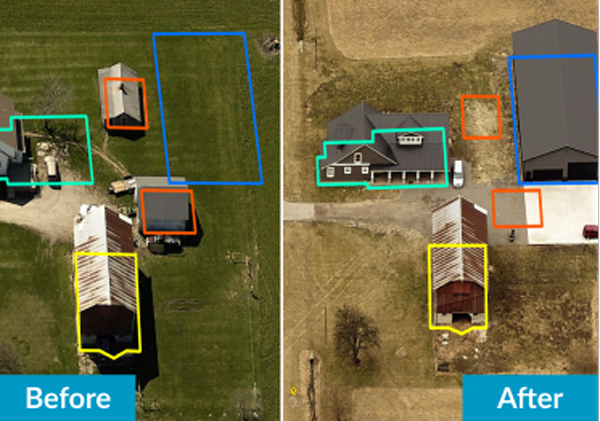
    EagleView Technologies is enhancing EagleView Cloud for government users by adding more imagery options. EagleView Cloud is a resource for government departments including tax assessment, geographic information systems and public safety.
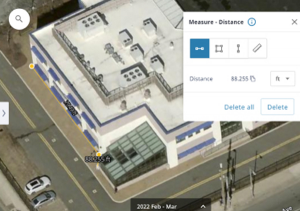
    Image: Eagleview
    Image: Eagleview

    EagleView cloud will now include 1-inch ground sample distance (GSD) aerial imagery. The oblique imagery, usually captured at a 40°- 45° angle, provides enhanced clarity and side-angle views of buildings, homes and properties, enabling government users to view property changes and analyze roads and infrastructure to produce accurate tax assessments.

    The company has also added 3-inch GSD orthogonal imagery to the platform. The orthogonal images help government users identify structural changes to buildings, additions to homes, and the condition of impervious surfaces. The images offer a top-down view and can be delivered annually or multiple times per year.

    Next, EagleView Cloud aims to be available in commercial industries including insurance, construction and solar.

  • SandboxAQ obtains USAF quantum nav research contract

    SandboxAQ obtains USAF quantum nav research contract

    SandboxAQ has been awarded a Direct-to-Phase-II Small Business Innovation Research contract by the United States Air Force. SandboxAQ will test and evaluate its quantum sensor prototype to help protect military navigation resilience.

    Under the contract, SandboxAQ will advance research and development for its quantum navigation system, which is being designed to complement GPS. It will be used for accurate navigation in contested or denied environments where the loss of precision GPS may negatively impact operations.

    SandboxAQ’s AQ-powered quantum sensor prototype will be optimized in close coordination with USAF through identified innovation areas, including live demonstrations aboard USAF aircraft. The sensor prototype also has potential for use in the commercial sector for aviation, unmanned vehicles and more.

  • Brandywine and ADVA partner to provide defense M-code device

    Brandywine and ADVA partner to provide defense M-code device

    Image: ADVA
    Image: ADVA

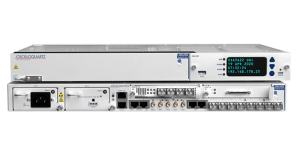
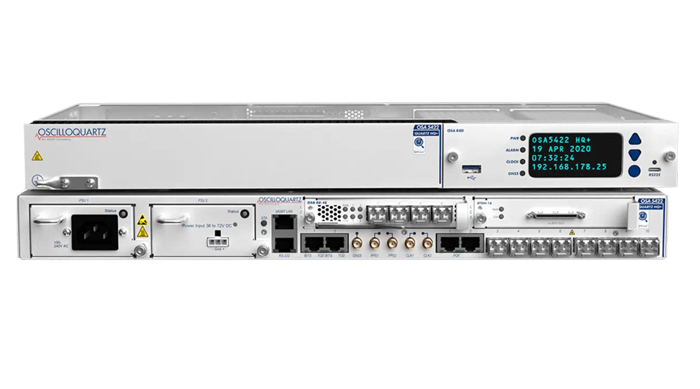
    ADVA and Brandywine Communications have partnered to provide a defense-grade M-code device with advanced timing, the OSA 5422 grandmaster clock, for military applications. ADVA’s OSA 5422 meets key requirements of military networks by providing advanced positioning, navigation and timing (PNT) capabilities and improved resilience.

    ADVA’s OSA 5422 grandmaster clock is integrated with a highly reliable M-code receiver, which meets stringent frequency and phase synchronization needs. The device is equipped with multi-band, multi-constellation GNSS receivers for when M-code is not available. OSA 5422 also has long holdover and precision time protocol backup, which enables it to maintain accurate timing even in the event of M-code disruption.

    The OSA 5422 supports legacy interfaces such as BITS and IRIG and features eight field-upgradable 10G bit/s ports and 1G bit/s interfaces. The device is suitable for most demanding military edge applications.

  • Hawkeye 360 claims contract to monitor GPS interference

    Hawkeye 360 claims contract to monitor GPS interference

    Slingshot Aerospace has awarded to Hawkeye 360 a radio frequency (RF) data provider contract for monitoring GPS interference. Hawkeye 360 will provide data for Slingshot’s space-based monitoring and detection of RF threats and support its Proliferated Low-Earth Orbit (pLEO) Data Exploitation and Enhanced Processing (DEEP) program for the United States Space Force’s Space Systems Command (SSC).

    The partnership between Hawkeye 360 and Slingshot will make it possible to capture, process and characterize the RF signal environment into timely insights for U.S. government space operators.

    Hawkeye 360’s data will support developmental and operational test events, which will ultimately provide information on how to detect early signs of illegal RF activity. The support and capabilities the companies are providing enables the U.S. Space Force to prevent and combat electronic warfare and discover early signs of GPS interference.

  • Abstracts sought for ION Joint Navigation Conference

    Abstracts sought for ION Joint Navigation Conference

    Photo: ION
    Image: ION

    The Institute of Navigation (ION) has opened abstract submissions for Joint Navigation Conference (JNC) 2023, which takes place June 12–15 at the Town and Country Hotel in San Diego, California. JNC 2023 is the largest U.S. military positioning, navigation and timing (PNT) conference of the year with joint service and government participation.

    Abstract selection for JNC 2023 is expected to be competitive, according to ION. All abstracts must be written for public release with intent to present in a Controlled Unclassified Environment (CUI) U.S. Only environment. Abstracts not meeting the established criteria, received by Feb. 3, will not be considered.

    The event will focus on technical advances in PNT with emphasis on joint development, testing and support of affordable PNT systems, logistics and integration. From an operational perspective, the conference will focus on advances in battlefield applications of GPS; critical strengths and weaknesses of field navigation devices; warfighter PNT requirements and solutions; and navigation warfare.

    CUI U.S. only conference attendance will be screened by the Joint Navigation Warfare Center and will be restricted to U.S. only. The exhibit hall (June 13-14) will be open to all conference participants, exhibitors, their employees and related organizations. All materials displayed in the exhibit hall must be publicly releasable after review.

  • JNC 2023 abstract deadline is fast approaching

    JNC 2023 abstract deadline is fast approaching

    Photo: ION
    Photo: ION

    Abstracts for Joint Navigation Conference (JNC) 2023, “Enhancing Dominance and Resilience for Warfighting and Homeland Security PNT,” are due Feb. 3. JNC 2023 is the largest United States military positioning, navigation and timing (PNT) conference of the year with joint service and government participation.

    The Institute of Navigation’s Military Division will host the conference June 12-15 at the Town and Country Hotel in San Diego. The event will be open to all conference participants, exhibitors, their employees and related organizations. All materials displayed in the exhibit hall will be publicly released after review.

    The event will focus on advances in PNT with an emphasis on joint development, testing and support of affordable PNT systems, logistics and integration. Additionally, the conference will cover advances in battlefield applications of GPS, critical strengths and weaknesses of field navigation devices, warfighter PNT requirements and solutions and navigation warfare.

    Abstracts must be written for public release with the intent to present in a Controlled Unclassified Information (CUI) U.S. only environment. Abstracts not approved for public release will not be accepted.

    Interested parties may submit their abstracts at ion.org/jnc.

  • DroneShield completes Defense Innovation Hub project

    DroneShield completes Defense Innovation Hub project

    On Jan. 5, DroneShield announced the completion of its Defense Innovation Hub project. This project resulted in improvements to its optical/thermal AI DroneOptID engine, as well as the development of a multi-sensor fusion artificial intelligence engine (SFAI).

    DroneShield’s DroneOptID is AI powered and designed for autonomous optical detection, classification and tracking of UAVs. This engine can be integrated with command-and-control platforms, such as DroneShield’s DroneSentry-C2, which the new SFAI engine will become a core part this year.

    The $800,000 project was first commissioned in November 2021 by the Australian Department of Defense, under phase two of the Defense Innovation Hub program. DroneShield was contracted to work on AI in multi-domain applications for the counter-unmanned aerial system space and more general military and government agency applications.

  • Iranian UAV downed in Ukraine contains western technology

    Iranian UAV downed in Ukraine contains western technology

    A Ukrainian intelligence assessment obtained by CNN and CBS reported an Iranian UAV downed in Ukraine contained technology from companies in the United States and other western countries. The White House has since launched an investigation as to how the technology — including semiconductors, GPS modules and engines — were obtained by Iran.

    Screenshot: CBS video
    Screenshot: CBS video

    The components removed from an Iranian Shahed-136 UAV totaled 52, 40 of which were manufactured by 13 different U.S. companies. The remaining components were manufactured by other western companies and companies based in Japan, Taiwan and China.The United States monitors exports and imposed restrictions and sanctions to prevent Iran from obtaining components for UAVs. Officials are now looking to enhance enforcement of the sanctions and are encouraging companies to monitor their supply chain, as well as identify third-party distributors who may be re-selling the technology to Iran.

    U.S. companies are not alone in having to closely monitor their supply chains. U-blox, a Swiss semiconductor company, made a statement reinforcing its company policy, which bans the use of its technology in weapons. This was after u-blox GNSS modules were reportedly found in Russian UAVs.

  • Honeywell, U.S. Army to deliver next-gen navigation solution

    Honeywell, U.S. Army to deliver next-gen navigation solution

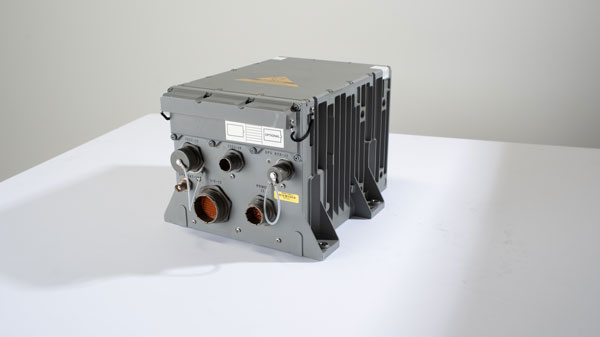
    On Jan. 9, Honeywell announced it is ready to deliver its EAGLE-M Embedded Global Positioning System/Inertial Navigation System (EGI) with M-code capabilities this year, after the United States Army completed the first test flight.

    The Army tested the EGI units with enabled M-code on the MQ-1C Gray Eagle unmanned aerial system and validated it to be deployed on military aircraft. This year, the Army will begin migrating its fleet to the Honeywell EAGLE-M EGI with M-code, as this navigation solution enhances the resiliency of GPS navigation to enemy actions.

    Photo:
    Image: Honeywell

    The defense technology company has delivered more than 300 EGIs with M-code to customers and will deliver qualified units, featuring M-code GPS, to the Army. Honeywell is a leader in EGI for military applications and has provided more than 45,000 EGI units for several different types of aircraft in more than 30 countries.

  • Raytheon receives $207 million counter-UAS contract

    Raytheon receives $207 million counter-UAS contract

    File:Raytheon Technologies logo.svg - Wikimedia Commons

    In October 2022, Raytheon Missiles & Defense, a Raytheon Technologies company, received a $207 million contract from the United States Army for Ku-band radio frequency sensors (KuRFS) and Coyote effectors. The Army plans to equip two of its divisions with KuRFS and Coyote effectors to defend against threats from unmanned aerial systems (UAS).

    The KuRFS precision targeting radar and scaled Ku-720 mobile sensing radar provides 360-degree detection, identification and tracking of airborne threats. Coyote Block 2 kinetic and Block 3 non-kinetic effectors can defeat single UAS and swarms at high altitudes and long ranges.

    The Army’s Mobile-Low, Slow, Small, Unmanned Aircraft Integrated Defeat System, integrates KuRFS and Coyote effectors with Northrop Grumman’s Forward Area Air Defense Command-and-Control system and Syracuse Research Corporation’s electronic warfare system. This creates a mobile deployed system that provides a complete extended-range defense solution.

  • Curtiss-Wright offers VPX3-673A module for A-PNT

    Curtiss-Wright offers VPX3-673A module for A-PNT

    Photo:
    Image: Curtiss-Wright

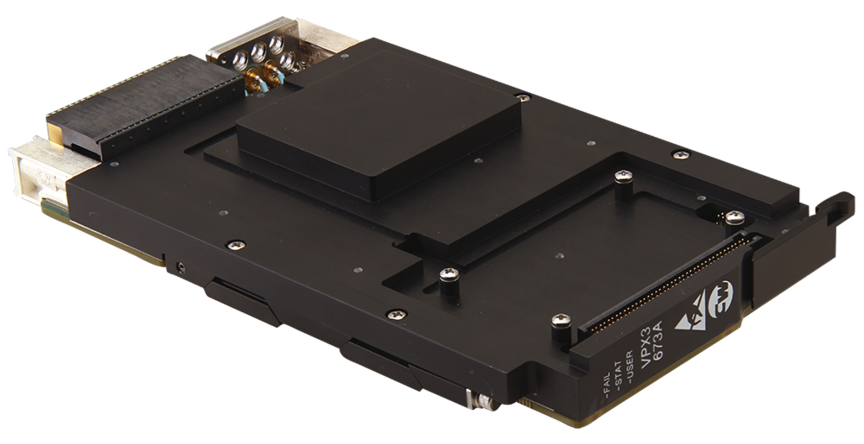
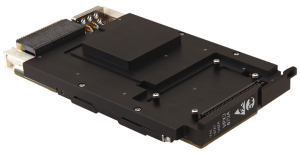
    In October 2022, Curtiss-Wright Corporation’s Defense Solutions division, a supplier of modular open system approach-based solutions, released the VPX3-673A module. This module is the first to deliver assured position, navigation and timing (A-PNT) along with alternative RF navigation and pntOS architecture.

    The VPX3-673A is a rugged, 3U OpenVPX, form factor module, which integrates with existing navigation sensors in vehicles operating in environments with limited or denied access to GPS, to increase assurance in the platform’s PNT solutions. It is designed to ingest positioning and timing data from multiple sensors and output accurate timing and navigation information on the battlefield using VICTORY data messages.

    It is compatible with the United States Army’s C5ISR/EW Modular Open Suite of Standards and aligned with the Sensor Open Systems Architecture Technical Standard 1.0.

    VPX3-673A includes a low noise chip-scale atomic clock with intelligence provided by Xilinx MPSoc, an alternative RF navigation receiver and a 10-degree of freedom IMU. It supports an internal or external GPS module via a front panel connector. Additionally, the VPX3-673A provides processing resources and sensor interface capabilities needed for operability with a variety of external processing and sensor units.

  • U-blox bans the use of its GNSS modules in war

    U-blox bans the use of its GNSS modules in war

    Logo: u-blox

    On Dec. 20, u-blox banned the use of its GNSS modules in military UAVs in the war between Russia and Ukraine. The company had become aware that its GNSS modules were being used in certain Russian reconnaissance UAVs and stated that this use was against company policy.

    U-blox obtained media reports that Russia had stocked up on components in anticipation of war, then integrated products from the company in UAVs it manufactured after attacking Ukraine.

    After Russia began its invasion of Ukraine, the company halted all sales to Russia, Russian territories, and Russian-occupied areas, as it intends its GNSS modules and other products to be used only commercially. U-blox company policy bans the use of its products in weapons, including systems for target identification.

    U-blox is investigating the infringement of its policy and plans to take legal action if it has been violated. The company also condemns the invasion of Ukraine by Russian forces.