Category: Mobile

  • Saelig Introduces Low-Cost SMD Antennas

    Saelig Introduces Low-Cost SMD Antennas

    Saelig-proant-W

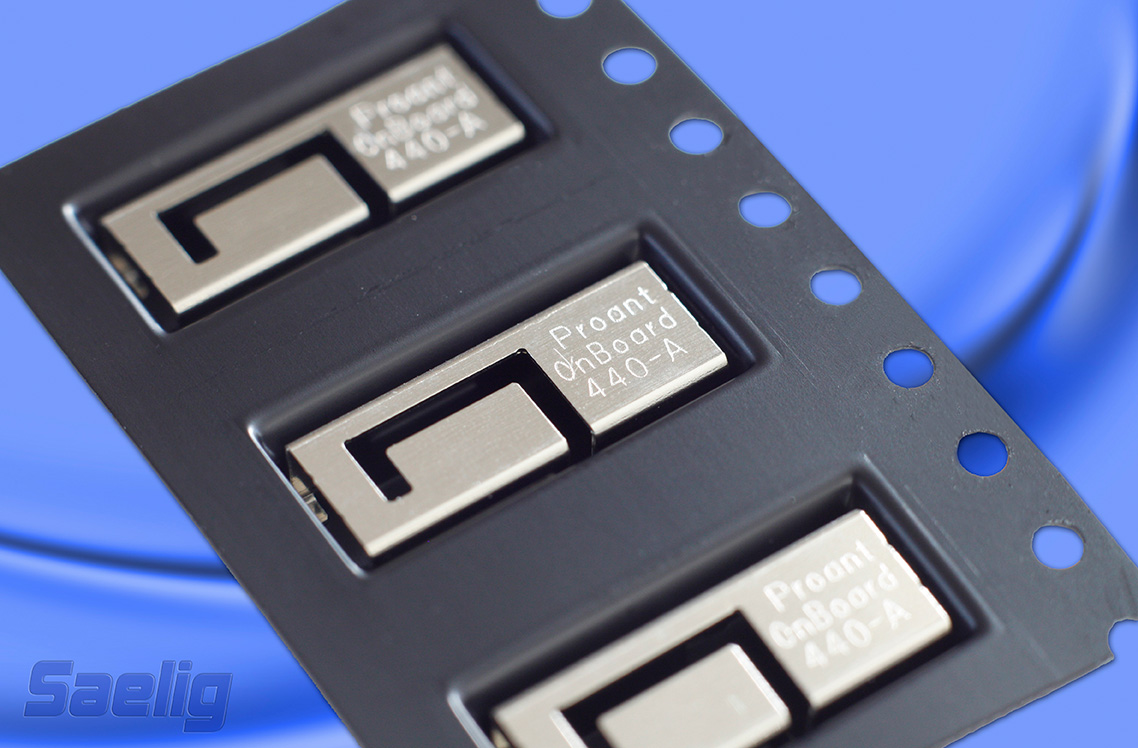
    Saelig Company, Inc., announces the availability of the Proant OnBoard SMD 2400 (2.4GHz band) and SMD GPS (GPS and GLONASS) miniature surface-mount (SMD) antennas for mobile wireless products. The OnBoard series moves embedded antenna integration one step ahead by combining high performance and low cost in this new OnBoard SMD family, the company said.

    Traditionally, small low-cost antennas for printed circuit board assembly have been manufactured with a dielectric substrate as the base for the radiating structure. With this approach, the antenna is normally a rectangular block, which means that the PCB area below the antenna is unavailable for mounting other components. Another drawback is that the substrate itself introduces dielectric losses to the antenna, reducing its total efficiency.

    Proant has taken the concept of small SMD antennas one step ahead by increasing both the antenna performance and design flexibility, and combining this with low cost and manufacturability. The result is the new OnBoard SMD antenna family, which builds on previous OnBoard antennas, but in a surface mounted sheet-metal solution, packaged in tape-on-reel and suitable for high volume manufacturing. One of OnBoard’s key features, which eliminates the need of the dielectric substrate used in other SMD antennas, is the patent-pending capacitively-loaded footprint of the antenna’s supporting pins, which significantly reduces losses and increases the performance.

    The first two products to be launched in this 50 ohm RoHS-compliant family are OnBoard SMD 2400 (2.4GHz band) and SMD GPS (GPS and GLONASS). Future variants will include WLAN dual-band, 868/915 MHz, and GSM versions.

    “We wanted to simplify antenna integration for our customers,” said Tomas Rutfors, CEO of Proant. “The solution was to make a simple product that satisfies both engineering and sourcing needs. With the OnBoard SMD family, we have defined a new product segment, which didn’t exist before.”

    Made in Sweden by Proant AB, a widely respected specialist antenna company in the M2M and wireless market, providing a wide range of embedded and external antennas, OnBoard SMD 2400 (2.4GHz band) and SMD GPS (GPS and Glonass) are available now at under $1 (1000 pcs) from Saelig Company, Inc., the USA technical distributor. A demonstration board is also available at $35.

  • Garmin Introduces GPSMAP 64 Series Outdoor Handheld

    Garmin Introduces GPSMAP 64 Series Outdoor Handheld

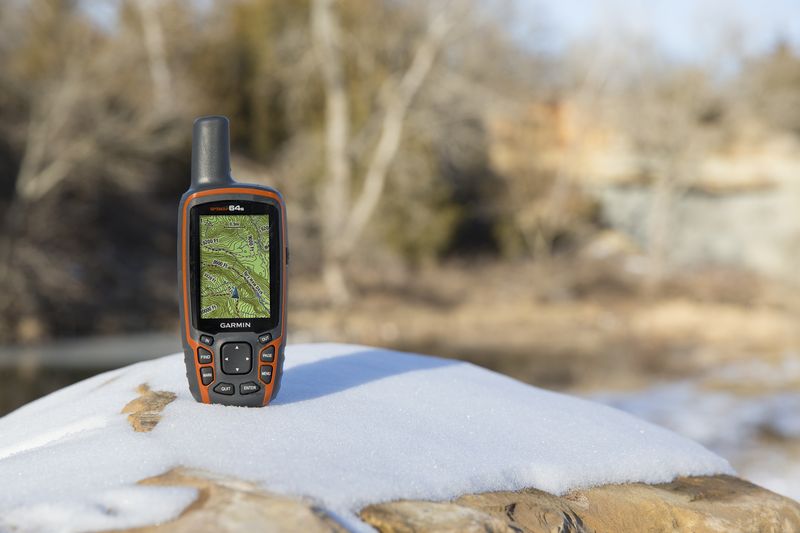
    Garmin's GPSMAP 64 device.
    Garmin’s GPSMAP 64 device.

    Garmin International Inc., a unit of Garmin Ltd., today announced the GPSMAP 64 series of rugged outdoor handhelds. The GPSMAP 64 series brings a dual GPS and GLONASS receiver, preloaded geocaches and smartphone connectivity for LiveTrack and Smart Notification to its product line for hikers, hunters, and geocachers.

    “Building on the popularity of the GPSMAP series, the new GPSMAP 64 series improves functionality to make a top-notch device even better,” said Dan Bartel, Garmin vice president of worldwide sales. “The GPSMAP 64 is ideal for anyone, no matter if it’s their first handheld, or if they’ve used Garmin for years. It combines trusted Garmin technology with the comfort of a device people know and love.”

    The GPSMAP 64 series has a 2.6-inch sunlight-readable transflective color display and a high-sensitivity GPS and GLONASS receiver with a quad helix antenna for superior reception. With the addition of GLONASS satellites, the time it takes for the receiver to lock on to a position is (on average) approximately 20 percent faster than using GPS alone. This allows users to get their position quickly and precisely even in heavy cover and deep canyon.

    The GPSMAP 64 series features three distinct water-resistant (IPX7) models to suit various activities and interests. The basic GPSMAP 64 includes a built-in worldwide basemap with shaded relief, and supports BirdsEye Satellite imagery and TOPO U.S. 24K maps. The GPSMAP 64s adds a 3-axis electronic compass and barometric altimeter. Additionally, the 64s adds wireless connectivity for data transfer between other compatible Garmin handhelds and mobile apps, and for Smart Notification technology. With this, users can receive emails, texts and alerts on the device (when paired with an iPhone 4S and later). This allows users’ smartphones to be safely protected from the elements. The 64s also comes with a one-year subscription of BirdsEye Satellite Imagery. The GPSMAP 64st includes preloaded U.S. 100K topographic maps. With this, users will be able to search for points of interest by name or proximity to their location and view descriptive details for terrain contours, topo elevations, summits and geographical points.

    For outdoor adventurers, the rugged GPSMAP 64 devices are compatible with BaseCamp, a free software download that allows users to view and organize maps, waypoints, routes and tracks. The 64s and 64st models are compatible with the BaseCamp mobile app for data transfer, and the Garmin Connect mobile app, for features such as LiveTrack. With LiveTrack, users can pair their device with the app, and invite friends and family to follow their activity in real time. This provides peace of mind, especially if users are alone. Through ANT+, the 64s and 64st models are also compatible with external sensors such as an external temperature sensor and heart rate monitor. With ANT+, the 64s and 64st models can act as a remote for the new VIRB and VIRB Elite action cameras.

    Each device comes preloaded with the locations of 250,000 geocaches from Geocaching.com. Devices store and display key information to find the hidden containers including the geocache coordinates, terrain rating, its difficulty, hints and descriptions, so users no longer have to manually enter coordinates or print out geocache info. By going paperless, users are helping the environment, and improving their efficiency. If users would like to continue geocaching beyond the preloaded geocaches, when they register their device they can sign up for the free premium membership trial through Geocaching.com, and download more geocaches. The GPSMAP 64 devices can store millions more, so users will no longer have to pick and choose which geocaches they want to load on their device.

    All of the devices in the GPSMAP 64 series have a dual-battery system, where both standard AA batteries and a rechargeable NiMH battery pack (sold separately) can be used. The devices have internal memory (4GB for 64/64s and 8GB for 64st), and a microSD card slot to store additional data and maps.

    The new GPSMAP 64 series will be available this month. The GPSMAP 64 will retail for $299.99, the GPSMAP 64s will retail for $399.99, and the GPSMAP 64st will retail for $499.99.

  • Parsec Antennas Designed for Telit Mini GPS Receiver

    Parsec Antennas Designed for Telit Mini GPS Receiver

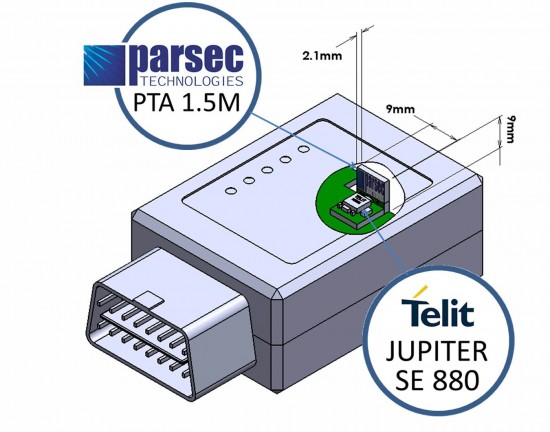
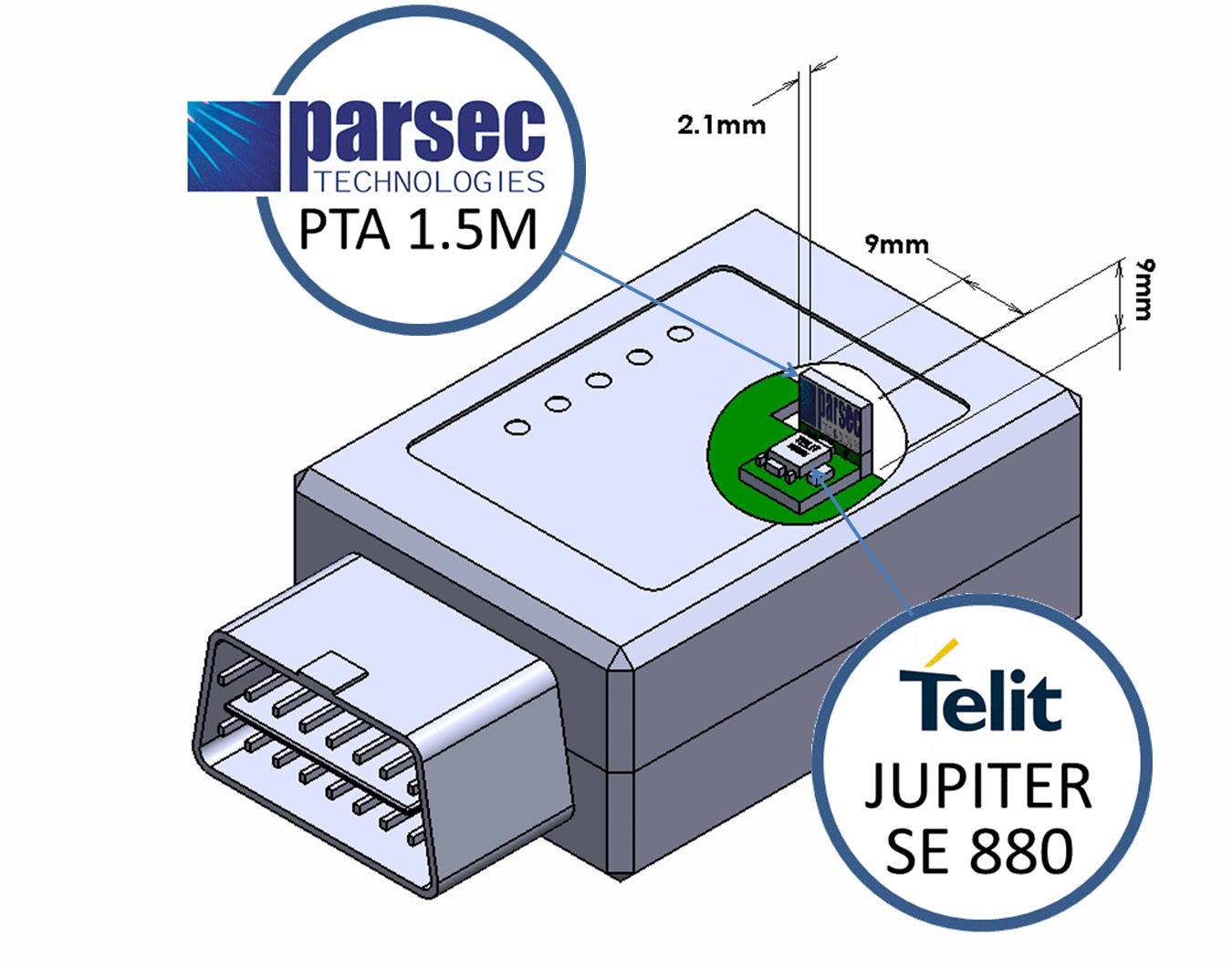
    Telit Wireless Solutions and Parsec Technologies today announced that a combination of the companies’ technologies results in a low profile  companion solution for GPS receiver and antenna. For host devices able to accommodate higher volumetric symmetry, assembly of the components can be made to fit a 6 x 16 x 8 millimeter volume. A flat component arrangement can yield an ultra-low-profile volume of 6 x 16  x 2.4 millimeters.

    ParsecTelitFig1 OBD“Receivers combining the Parsec PTA/PT Family and Telit’s Jupiter SE880 modules deliver good user experience in finished LBS (location-based services) critical products without sacrificing design flexibility, ease of implementation or cost,” said Michael A. Neenan, CEO and founder of Parsec Technologies, Inc. “The combination is ‘bullet-proof’ in providing a rewarding design experience making RF work reliably, passing end-product regulatory compliance testing without re-test.”

    “Miniaturization is a major enabler of new application areas for positioning and M2M,” said Taneli Tuurnala, Vice President and Head of GNSS Division of Telit Wireless Solutions. “With the Parsec antennas, the complete receiver features the industry’s ‘smallest landed footprint,’ making it suitable for use in wearable electronics, UBI devices or adapters for the mobile computing industry.”

    Along with miniaturization, the receiver outperforms top traditional designs, handling a loss of 10 dB or greater in GPS signal reaching, for example, the typical OBD port under a vehicle’s dashboard where many usage-based insurance (UBI) dataloggers are installed. The PTA1.5M active antenna delivers the ultra-sensitive Jupiter SE880 micro receiver over 15 dB of additional gain in the operating frequency range. Both companies are making available complete application notes to simplify the engineering effort for system integrators.

    The miniature 4.7 x 4.7 millimeter LGA (Land Grid Array), SiRFstarIV-based Jupiter SE880 receiver module employs heterogeneous 3D integrated technology to achieve best-in-class performance in all dimensions critical for regular or size-constrained GPS applications. Its RF front-end employs spatially calibrated waveguide-quality radio paths inside the three-dimensional space of its architecture, reducing parasitic impedances characteristic of traditional 2-D RF designs. Inside, a multi-filter system includes not only the traditional SAW filters typical in GPS receiver designs but also a 2.4-GHz notch-filter capable of nullifying the jamming effects of high-energy radio devices such as Wi-Fi hot-spots, Bluetooth systems, cordless phones, and others, which greatly affect a GPS receiver’s ability to resolve timid satellite signals in the hostile radio environment where they need to operate.

    The PTA1.5M, with a gain of 15dB, and PTA1.5x2M, with a gain of 30dB, are tiny GNSS active antenna modules capable of receiving signals down to -192 dBm with frequency centered at 1575.42 (±1.023) MHz. Either model delivers a radiated efficiency greater than 60% when mated to the Jupiter SE880 receiver. Parsec’s PT1233D LNA also has the highest available IP3 at low voltage, helping eliminate interference. Both PTA1.5M and PTA1.5x2M can incorporate the antenna element, an optional SAW filter, the cascadable PT1233D LNA, matching and passives components, on a low cost, easy to integrate 10×16 mm single sided PCBA with “back side” copper clad ground plane. The height of the PTA1.5M and PTA1.5x2M modules vary according to application, allowing their use in even the smallest form factors including Intel’s M.2 Next Generation Form Factor (NGFF) module (23x30x2.4 mm, LxWxH).

  • Connor-Winfield Offers COSPAS-SARSAT TCXO for Emergency Distress Transmitters

    Connor-Winfield Offers COSPAS-SARSAT TCXO for Emergency Distress Transmitters

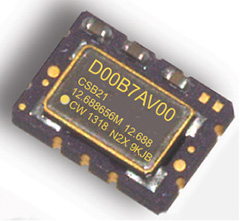
    CSB-Photo-W
    photo: Connor-Winfield

    COSPAS-SARSAT beacons are battery operated emergency distress transmitters for locating ships or persons when time is critical for survival.  The new Connor-Winfield series CSBxx Series are Surface Mount, 5x7mm, 3.3V, LVCMOS or Clipped Sinewave Temperature Compensated Crystal Oscillators (TCXO) designed to be emergency beacon frequency references requiring tight ± 0.2 ppm frequency stability and frequency slope control of only ±0.7 ppb/min.

    The low power dissipation of 6mW allows it to power-up immediately with an accurate frequency. Class 1 devices operate over –40°C to 55°C and Class 2 devices operate–20°C to 55°C. Standard frequencies are 10.0, 12.688375, 12.688575, 12.688656, 12.68875, 16.367, and 20.0 MHz. To save time during the beacon certification process, temperature test data is available from a special on-line URL for each serialized TCXO.

    Features:

    • 3.3 Vdc Operation
    • Frequency Stability: ± 0.20 ppm
    • Mean Slope = ±0.7 ppb/min
    • Temperature Ranges Available:
    • Class I -40 to 55°C , Class II -20 to 55°C
    • LVCMOS or Clipped Sinewave Output
    • Ceramic Surface Mount Package
    • Tape and Reel Packaging
    • RoHS Compliant / Pb Free
    • Each unit is serialized and data is available on-line
  • SkyTraq Seeks Crowdfunding for Location-Sensing Development Board

    SkyTraq Seeks Crowdfunding for Location-Sensing Development Board

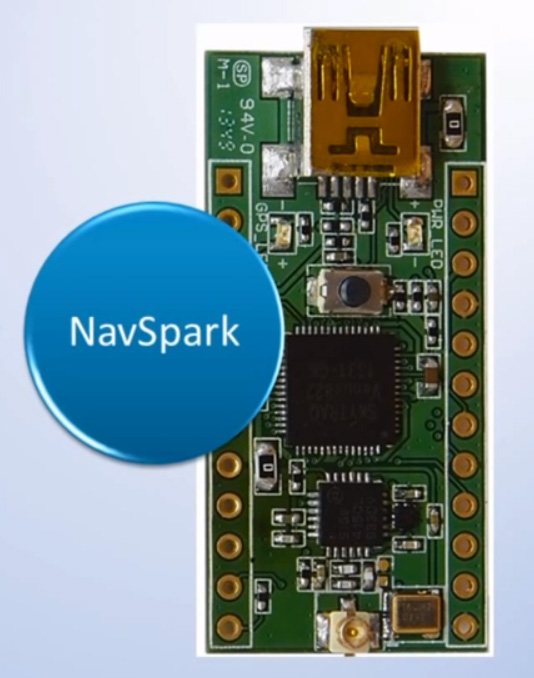
    NavsparkSkyTraq Technology, Inc., a fabless GNSS positioning technology company, is undertaking a crowdfunding campaign on Indiegogo to explore if there is sufficient interest in applying GPS/GNSS processor technology beyond traditional ways by offering NavSpark, a small, powerful, thumb-sized, 32-bit, microcontroller development board with GPS/GNSS receiver as onboard peripheral. With price approaching an 8-bit microcontroller development board, the GPS/GNSS receiver is effectively provided to users free of charge. They are seeking $27,000 in funding until February 6, 2014.

    NavSpark features:

    • 100MHz 32bit RISC Processor with 16Kbyte I-Cache and 2Kbyte D-Cache

    • IEEE-754 Compliant Floating Point Unit

    • 1MByte Flash Memory

    • 212Kbyte SRAM

    • GPS Receiver

    • UART x 2

    • SPI x 2

    • I2C x 1

    • 17 Digital I/O (shared with above functional pins)

    • 1 Pulse Per Sec Timing Reference with +/-10nsec Accuracy

    • Customized Arduino IDE with GPS SDK Seamlessly Integrated

    NavSpark-BD model has a GPS/Beidou receiver onboard, enabling users to use the latest GPS/Beidou navigation technology just as large smartphone makers are beginning to adopt this new technology. The NavSpark-GL model has GPS/GLONASS receiver onboard, enabling users to use dual-satellite navigation technology, GPS/GLONASS as used in high-end smartphones, in their hardware projects. The NavSpark development board makes the latest global navigation satellite technology easily accessible.

    SkyTraq’s 7mm x 7mm QFN56 Venus822 quad-mode GPS/GNSS processor with extended I/O pins is used on NavSpark. Venus822 is designed to simultaneously process 34 GPS/GLONASS/Beidou/Galileo/QZSS/SBAS signals in parallel, thus having much higher computation power and larger memory than conventional 8-bit or 32-bit microcontrollers. Without using GPS/GNSS function, all the 100 MIPS RISC/FPU processing power and 1 MB Flash + 212 Kb RAM memory capacity is available for user application. When just using GPS-only mode or GPS/GLONASS, GPS/Beidou dual-satellite navigation mode, the remaining MIPS and memory still far exceeds what’s available on similar small, low-cost development boards on the market.

    With average price of different model variants plus active antenna in range of $15 ~ $20, NavSpark’s goal is to provide the makers an alternative powerful, small development board with location-sensing capability, and at the same time making latest GPS/Beidou or GPS/GLONASS dual-satellite navigation technology as easily accessible as GPS to the users worldwide.

    NavSpark is low cost enough to leave in small hardware projects. For higher volume projects such as asset tracker, GPS fitness product, sports performance logger, toy quad-copter autopilot, etc., after rapid prototyping using NavSpark, volume usage can later change to 10mm x 10mm x 1.3mm Venus838FLPx module, a miniaturized LGA version of NavSpark. For applications benefiting from NavSpark’s high processing power and large memory without using GPS/GNSS, volume usage can later change to Venus822 chip to lower cost.

    For further information on NavSpark, visit http://bit.ly/1dBpits.

  • 2013: A Positive Year for Location Industry


    2013 was an up-and-down roller coaster of a year for the location industry…and 2014 appears to be more of the same. What was the big story? Google buying Waze? While it is easy to predict what will happen, the harder thing to do is to predict when it will happen. With that in mind, LBS Insider reached out to industry veterans to discuss the big buzz in 2013 in the industry — and what the future holds, next year and beyond.

    It’s that time of year — to assess the big deals and trends — good, bad and ugly — in the worldwide location industry. Some of the stories seem obvious, such as the Google acquisition of Waze for more than $1 billion.

    “The valuation remains a mystery to many in the mapping community, but it is always nice to see a truly great exit in this business.  There haven’t been enough for an industry that is both foundational in mobile and online, and really hard to do well,” said Marc Prioleau, president of Prioleau Advisors.

    Prioleau says one of the big stories of 2013 was the reemergence of Apple Maps.  “For all the flak they took, they’ve worked hard to make them better.  Their default position in iOS has given them traffic, as has the extension to OSX in the Maverick’s release,” he said.  “Last year you saw Apple start to buy companies that could extend the features (like HopStop), a sign that they think they’ve fixed the major problems and are working on moving forward. They are also hiring aggressively and have brought in some very good people.”

    Last year, Prioleau predicted that the combination of data with location to derive better location-based context would be a big thing.  “I think a lot has happened in that area with much more to come.  It’s happening in apps (see Foursquare recommendations), advertising (PlaceIQ and others), CRM (SAP Precision retailing as an example),” he said. “There is a lot more to come here, and we should expect many new applications, most of which will do things badly, but some — likely the ones with the most targeted data — will do things that really change the model.”

    Prioleau says MapBox is making mapping cool again (and Prioleau is a director at the company).  “Just when all was going to be subsumed by the Google Maps juggernaut, MapBox is doing new interesting data visualization work,” he said.

    Crowdsourcing being embraced by the wider mapping community is another big trend Prioleau has identified.  “Everyone knows about OSm, but then you add Waze for crowdsourcing real-time traffic plus map corrections. Google is in deep with MapMaker, and even Nokia is pushing crowdsourced input,” he said.  “It’s no longer the battle between crowdsourced maps and professional maps. It’s how to make the two work together.”

    Prioleau sees the location industry having a few benchmarks in 2014.  “I’ll stick with the same prediction as last year:  Data + location for better location context. Google Now is a great benchmark,” he said. “Break out in location-based ad targeting. The technology is better, and the providers really understand the advertising market now. Complementary ad technologies like Real Time Bidding are maturing, and these will fit in to a model that really works. And if for no other reason, if we keep predicting it, it will be right one year, right?”

    Prioleau believes Google Map domination will begin to show cracks. “Google has a great platform, but as they monetize it more aggressively, more companies will look for alternatives,” he said. “Apple maps will be one. HERE will be another. But solutions from MapBox and others will grow as well.”

    In terms of connected car and other automotive technology, Prioleau says new and interesting applications will come from local search, driver services, and diagnostics — rather than just basic navigation.

    Another industry insider, Mike Dobson, president of TeleMapis, said 2013 was a quiet year for location-based services.  “Even the biggest deal, Google’s acquisition of Waze, does not look as if it will have much impact, other than as a defensive strategy. Perhaps the most interesting aspect of the year was the stream of patents covering LBS and GIS-like applications from both Apple and Google, not to mention those of several start-ups,” he said.

    From his perspective, Dobson said 2013 was yet another year in waiting, but 2014 looks like it might actually be exciting. “It appears that Google will finally make its move into the in-car navigation market. Apple is beginning to play with the idea of allowing its users access to a more GIS-like parsing of its map database,” he said. “Perhaps the biggest change will be a new focus on thematic maps that aim not to be navigation aids, but to perform the function of information devices for travelers and others using directed search technology. I suspect that 2014 will be another slow year for indoor positioning, but maybe it will flourish as a subset of BIM.”

    Indoor Mapping Still Considered Trend for Location Industry

    While many in the location industry have seen new companies and products coming to the indoor positioning market, at least one analyst says that Wi-Fi positioning has been weak.

    “The biggest trend in 2013 was indoor mapping, the beginning of the hockey stick adoption curve in my opinion. Major retailers like Home Depot, Lowes, etc., launched indoor maps with product search/locator,” said industry veteran Kris Kolodziej. “What was overblown was indoor Wi-Fi positioning. The latency and accuracy is not good enough for micro location. It’s good enough to know what store/venue you’re in, but that’s about it.”

    Kolodziej said that the big deal in 2014 will be ibeacons or Bluetooth low energy (BLE) for micro location and proximity services. “BLE solves the many shortcomings Wi-Fi has,” he said.

    Prioleau says that in-door location will be big, but it is where outdoor location was in the early 1990s:  many technologies and technology providers all pushing different solutions — and most will not succeed.

    “Beyond the location technology, the market needs to figure out how the money will flow from beneficiaries of the market (retailers, brands) to the providers of indoor location technology (mostly semiconductor companies and tech companies).  There is no natural connection,” he said.
  • Averna DP-360 DOCSIS Protocol Analyzer Supports 16×4 Channel Bonding

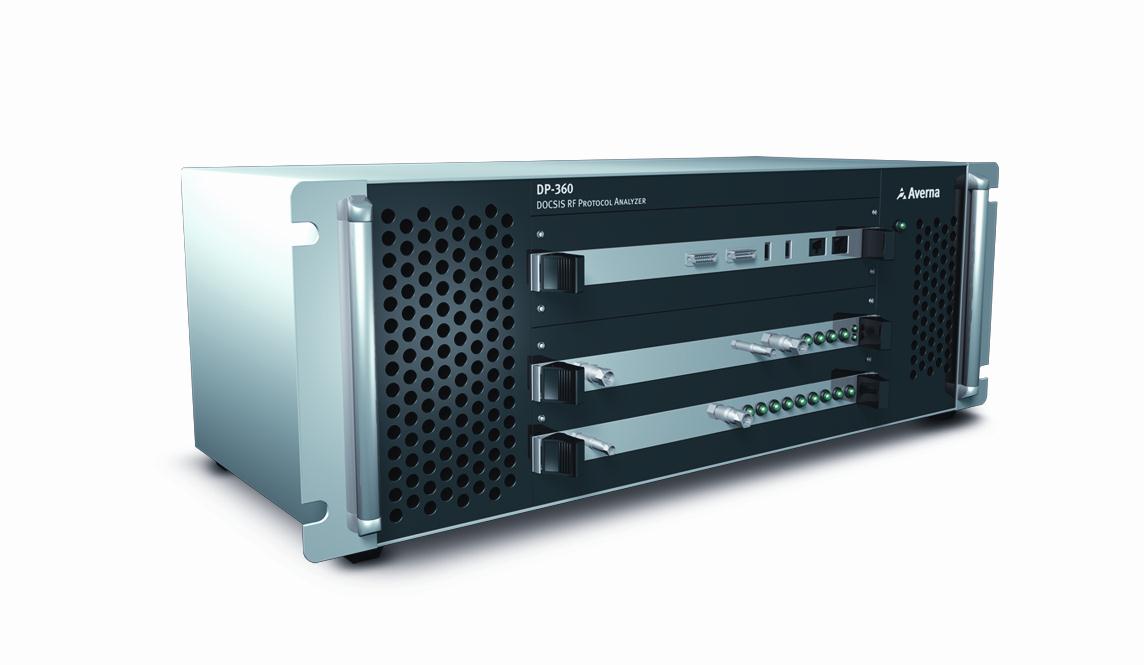
    The Averna DP-360 protocol analyzer.
    The Averna DP-360 protocol analyzer.

    Averna has issued a new software release for the DP-360 DOCSIS Protocol Analyzer, featuring support for 16×4 channel bonding for broadband testing.

    Averna’s DP-360 provides functional DOCSIS and EuroDOCSIS network analysis, allowing for exceptional visibility into all layers of the network, the company said. Multiple system operators (MSOs), chipset manufacturers, product developers and certification bodies use the DP-360 to quickly find and correct trouble spots.

    New DP-360 release highlights:

    • Supports up to 16 single or bonded downstream channels for testing 16×4 configuration.
    • Upstream gain control, MER reading and power reading available in the remote API for automated power adjustment.
    • Automatic detection of modulation type (64-QAM or 256-QAM) and DOCSIS on downstream channels and lock on 4 upstream frequencies for faster setup and analysis.
    • Support for DOCSIS 3.0 Energy Management messages (EM-REQ & EM-RSP).

    DP-360 clients also have access to Averna’s new DOCSIS 3.1 Early Adopter Program, which offers MSOs and equipment vendors a smooth and cost-effective transition to Averna’s next-generation solution for testing their cable equipment based on the new DOCSIS 3.1 standard. Contact us for more details.

    “Our DOCSIS 3.1 Early Adopter Program covers current D3.0 as well as upcoming D3.1 testing needs and is specifically designed to make the technology switch as easy and cost effective as possible for our clients and partners,” commented Alex Pelland, Director of Broadband Test Strategy for Averna. “The DP-360 is the most advanced DOCSIS protocol analyzer available today and, with our forward-looking transition program, it will provide a substantial return on investment for years to come.”

    The new DP-360 software release is available at no cost to customers with a valid DP-360 maintenance and support agreement.

  • skobbler Updates GPS Navigation App for iOS 7

    skobbler has launched a new version of GPS Navigation optimized for iOS 7. The app now includes a travel guide, hyperlocal search, and mapping technology provided by skobbler’s NGx map engine.

    Powered by data from the OpenStreetMap — a free and editable map of the world built by over 1 million voluntary contributors and map enthusiasts — GPS Navigation delivers true “hybrid” functionality, allowing users to switch between online or optional offline access through in-app purchases of downloadable maps, regardless of location or cellular connection, skobbler said.

    Offline functionality allows for fast and reliable results using only a device’s GPS receiver rather than a network connection, meaning turn-by-turn navigation, alternate routing and various search capabilities are provided in full without a data connection.

    GPS Navigation now features a comprehensive in-app travel guide and hyperlocal search via Wikitravel — which provides users with more than 90,000 pages of worldwide travel information in the English language alone — and TripAdvisor integrations.

    Much like GPS Navigation’s online-offline mapping functionality, users can also access travel guide information with or without Internet connectivity, allowing access to the app’s travel features without roaming charges by opting for offline usage.

    GPS Navigation is available for a one-time purchase of $0.99 via the iTunes App Store.

  • Meitrack Offers MT90 Personal Tracker

    Meitrack Offers MT90 Personal Tracker

    The Meitrack MT90.
    The Meitrack MT90.

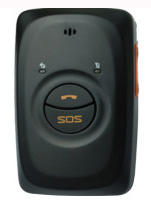
    GPS tracking company Meitrack is offering the MT90, a GPS personal tracker for elderly, children, patients and lone workers. It can be hung around the neck or carried in a pocket or bag. The MT90 weights 65 grams and is 77 x 47 x 20 millimeters in size.

    The MT90 can last 16 hours in normal mode and up to 60 hours in power-saving mode. It is waterproof to IP66 standards, and can handle 5% to 95% air humidity, which ensures it is reliable in the case of unexpected rain or accidents with small children.

    MT90 is Meitrack’s first GPS tracker that works with SiRFStar IV GPS and quad band GSM 850/900/1800/1900 Mhz base station, facilitating bi-module positioning technology. Using this advanced technology, the MT90 can more accurately and precisely track its location.

    Equipped with an SOS button, people using the MT90 tracking device are only one click away from calling the Rescue Service Center for help. In addition, the SOS button can be programmed to call multiple emergency numbers until one picks up. This device can facilitate two-way communication along with the option to listen-in, which can be helpful when discretely trying to locate a missing person.

    The MT90 GPS tracker uses Meitrack’s protocol to track by SMS and GPRS. The MT90 has an built-in motion sensor, built-in battery, GPS blind area alarm, low-battery alarm and speeding alarm.

  • Qualcomm Introduces Chipset with Integrated 4G LTE World Mode for High-Volume Smartphones

    Qualcomm Technologies, Inc., has introduced the Qualcomm Snapdragon 410 chipset with integrated 4G LTE World Mode. According to Qualcomm, the delivery of faster connections is important to the growth and adoption of smartphones in emerging regions, and Qualcomm Snapdragon chipsets are poised to address the needs of consumers as 4G LTE begins to ramp in China.

    Snapdragon 410 chipsets support all major navigation constellations: GPS, GLONASS, and China’s new BeiDou, which helps deliver enhanced accuracy and speed of location data to Snapdragon-enabled handsets.

    The new Snapdragon 410 chipsets are manufactured using 28-nm process technology. They feature processors that are 64-bit capable along with superior graphics performance with the Adreno 306 GPU, 1080p video playback and up to a 13 megapixel camera. Snapdragon 410 chipsets integrate 4G LTE and 3G cellular connectivity for all major modes and frequency bands across the globe and include support for dual and triple SIM. Together with Qualcomm RF360 front-end solution, Snapdragon 410 chipsets will have multiband and multimode support. Snapdragon 410 chipsets also feature Qualcomm’s Wi-Fi, Bluetooth, FM and NFC functionality.

    The chipset supports all major operating systems, including the Android, Windows Phone and Firefox operating systems. Qualcomm Reference Design versions of the processor will be available to enable rapid development time and reduce OEM R&D, designed to provide a comprehensive mobile device platform. The Snapdragon 410 processor is anticipated to begin sampling in the first half of 2014 and expected to be in commercial devices in the second half of 2014.

    Qualcomm Technologies also announced for the first time the intention to make 4G LTE available across all of the Snapdragon product tiers. The Snapdragon 410 processor gives the 400 product tier several 4G LTE options for high-volume mobile devices, as the third LTE-enabled solution in the product tier. By offering 4G LTE variants to its entry level smartphone lineup, Qualcomm Technologies ensures that emerging regions are equipped for this transition while also having every major 2G and 3G technology available to them. Qualcomm Technologies offers OEMs and operators differentiation through a rich feature set upon which to build innovative high-volume smartphones for budget-conscious consumers.

    “We are excited to bring 4G LTE to highly affordable smartphones at a sub $150 ( ~1,000 RMB) price point with the introduction of the Qualcomm Snapdragon 410 processor,” said Jeff Lorbeck, senior vice president and chief operating officer, Qualcomm Technologies, China. “The Snapdragon 410 chipset will also be the first of many 64-bit capable processors as Qualcomm Technologies helps lead the transition of the mobile ecosystem to 64-bit processing.”

    Qualcomm Technologies will release the Qualcomm Reference Design (QRD) version of the Snapdragon 410 processor with support for Qualcomm RF360 Front End Solution. The QRD program offers Qualcomm Technologies’  technical innovation; customization options; the QRD Global Enablement Solution, which features regional software packages, modem configurations, testing and acceptance readiness for regional operator requirements; and access to a broad ecosystem of hardware component vendors and software application developers. Under the QRD program, customers can rapidly deliver differentiated smartphones to value-conscious consumers. There have been more than 350 public QRD-based product launches to date in collaboration with more than 40 OEMs in 18 countries.

  • GPS HUD Windshield Display Helps Drivers Navigate Safely

    GPS HUD Windshield Display Helps Drivers Navigate Safely

    Sygic-HUD-W
    GPS HUD Windshield Display

    Sygic has announced a new product to make driving safer. Sygic’s Heads-up-Display (HUD) product projects navigation information onto drivers’ windshields, so they never have to take their eyes off the road to look down at their navigation software.

    The product comes at a critical time for the holiday travel and shopping season, which is one of the most auto accident-heavy periods of the year. Sygic’s HUD is available as an in-app purchase for $4.99 and doesn’t need an expensive add-on product, as the projection can be emitted right from the Sygic GPS Navigation app on any iOS and Android phone or tablet.

    Using Sygic’s HUD interface is straightforward. Drivers activate the feature from the app’s navigation menu, flip the screen via pop-up menu, and place their phone on their dashboard. The specially optimized interface will then
    reflect clearly on the car’s windshield, displaying navigation information without the need for any expensive accessories. Sygic’s HUD feature gives them the full Sygic experience, complete with features like live traffic and turn-by-turn voice guidance.

    “As we head into the heavy travel season, we hope our HUD will help drivers stay safe on the roads so they can spend more time with their family and friends and less time driving down heavily-trafficked and dangerous winter road conditions,” said Sygic CEO Michal Štencl.

    Features of Sygic GPS Navigation include:
    •       Offline maps that don’t require a cellular data connection
    •       Turn-by-turn voice-guided GPS navigation
    •       3D cities and landscapes
    •       Voice guidance in more than 40 languages
    •       Multi-stop routes and Drag & Drop route editing
    •       Speed limit display and audio warning
    •       SOS/Help to find assistance nearby
    •       Interactive map – tap on any street, POI, or photo to choose action
    •       Robust integration with third party
    services like Groupon and TripAdvisor to find
    things like deals, restaurants, hotels, attractions and more
    •       New speed cameras feature with a
    constantly-updated database of stationary and mobile speed traps

    Unlike other map services, data in Sygic: GPS
    Navigation is stored on the user’s phone instead
    of streamed from the Internet, which means that
    Sygic users don’t have to worry about running up
    against their cellular data caps by using GPS
    navigation or getting lost in an area with poor
    cell reception. When Sygic’s users are online,
    they now have access to other helpful features
    like real-time traffic and road incident sharing with other drivers.

    Sygic GPS Navigation, now upgraded to version
    13.3, is available in the iOS App Store and
    Google Play, while the HUD feature can be
    purchased from within the app for $4.99.
    – See more at:
    http://www.gisuser.com/content/view/31596/2/#sthash.goudUtyE.dpuf

  • u-blox Launches Precision Timing Module for Cellular Networks

    u-blox Launches Precision Timing Module for Cellular Networks

    u-blox module LEA-M8F.
    u-blox module LEA-M8F.

    Swiss-based u‑blox has unveiled the LEA-M8F precision timing GNSS module. The compact, surface-mount module generates a precise 30.72 MHz reference clock crucial for synchronizing industrial data and communication systems such as small, femto and macro-cell mobile networks. High accuracy is achieved by disciplining a local oscillator or other clock source with timing signals received from satellite-hosted atomic clocks.

    To ensure satellite availability, LEA-M8F is able to acquire and track all 50+ GPS, GLONASS and BeiDou satellites. High sensitivity enables quick autonomous start-up even inside structures with limited sky-view.

    “A reliable, compact and cost-effective precision reference clock is a crucial component used in many systems in the Critical Infrastructure and Key Resource sectors (CIKR),” said Thomas Nigg, vice president of product marketing at u-blox. “Our LEA-M8F GPS/GNSS satellite-disciplined timing module enables the proper operation of many mission-critical infrastructure systems including mobile and fixed-line communication networks, power generation and distribution systems, gas and chemical processing plants, banking, postal and goods distribution processes.”

    Measuring 17 x 22 mm, the LEA-M8F module includes a low-noise 30.72 MHz VCTCXO (voltage and temperature controlled oscillator), meeting the master reference requirements for LTE Small Cells while providing 100 parts-per-billion autonomous hold-over accuracy. The module is also suitable for TD-LTE, LTE-Advanced and other applications requiring extended hold-over times when integrated with small cell platforms.

    External sources of synchronization are supported through time-pulse and frequency inputs and a message interface. This allows measurements from macro-sniff, Sync-E or packet timing to be combined with measurements from GNSS to extend the availability of accurate synchronization and in doing so maximize cellular service availability.

    LEA-M8F can track signals from satellites from any two constellations simultaneously (e.g. GPS and GLONASS, GPS and BeiDou, GLONASS and BeiDou). Compatibility with multiple GNSS systems gives the LEA-M8F access to a large number of satellites, allowing synchronization even in urban or indoor areas with limited sky view. For stationary applications, once a location is known, accurate timing can be maintained based on the signal from just a single satellite.

    For more information, download the u-blox whitepaper “GNSS Timing and the Rise of Small Cells”. Detailed information about the LEA-M8F and evaluation kit EVK-M8F can be found on the u-blox website. Samples of the LEA-M8F will be available in Q1 2014.

    Also, the LEA-M8F will be demonstrated at the Small Cells Americas exhibition in Dallas, Dec. 3-4, at u-blox stand number 3.