Category: Applications

  • How navigation data is used for video game development

    How navigation data is used for video game development

    The realistic racetrack in the Assetto Corsa game. (Screenshot: Dronezone)
    The realistic racetrack in the Assetto Corsa game. (Screenshot: Dronezone)

    News from OxTS

    The possible applications for 3D point clouds are almost endless. When you think of lidar, the mind naturally wanders to applications of the autonomous vehicle navigation or geospatial survey type. In fact, navigation and lidar data are useful for all manner of applications—including video game development.

    When a new technology, such as lidar, is first brought to market, a number of factors affect its price. Initially, the cost-per-unit is likely to be high to ensure recovery of research and development costs. However, as technology ages and manufacturers innovate and bring out new versions, price invariably comes down.

    As this process occurs, it puts the technology into the hands of a much wider audience, increasing the number of new and innovative use cases.

    Point clouds are useful for many wide and varied applications. Autonomous vehicle developers may use point clouds to aid object detection and avoidance, while geospatial surveyors could use a point cloud to determine road degradation over time or monitor the rate of coastal erosion.

    These are however some of the more common use cases. But how can navigation data be used in applications such as video game development? Let’s first look at how navigation data works alongside lidar.

    Lidar and Inertial Navigation

    To create a 3D point cloud, users must combine the position, navigation and timing measurements from an inertial navigation system (INS) with raw lidar data. Without accurate INS data, it is impossible to create a point cloud. This is because the lidar sensor needs to know its position in space and time and its orientation.

    To avoid complicated software engineering work, simple-to-use software such as OxTS Georeferencer is available to georeference the lidar data. Once georeferencing is complete, OxTS Georeferencer will create a PCAP file that users can view in many point cloud viewer software applications.

    Enter Dronezone

    As lidar technology becomes more accessible, new and inventive ways to use point clouds are coming to light. OxTS partner Dronezone is one such company finding new uses for lidar.

    Dronezone builds and hires out professional unmanned aerial vehicles (UAVs). They build UAV payloads with Velodyne VLP-16 lidar sensors and OxTS INS devices they sell or rent to customers.

    Cover: Kunos Simulazioni
    Cover: Kunos Simulazioni

    Dronezone’s customers have used the payloads for a variety of projects. One used a payload to scan an aging railway bridge looking for possible weaknesses and deterioration over time. Besides geospatial mapping projects, Dronezone is seeing an increasing need to cater to niche applications.

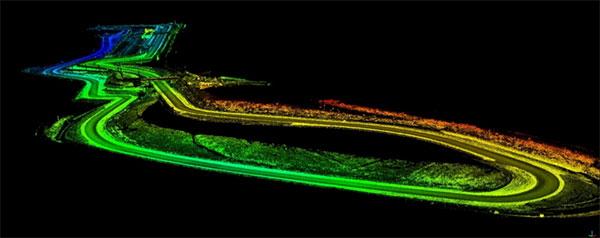
    Dronezone undertook surveying the Transylvania Motor Ring racetrack for a video-game developer Kunos Simulazioni, which publishes racing simulator “Assetto Corsa.” The company wanted an accurate digital representation of the track contours. The results, which you can see in the video and screenshots, are particularly impressive.
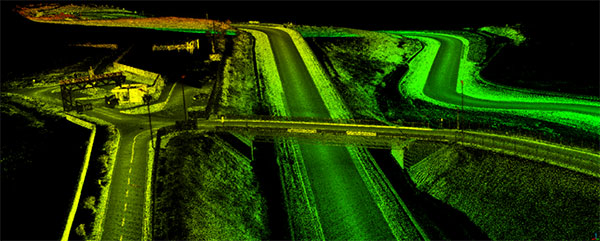
    Point cloud of the Transylvania Motor Ring. (Image: Dronezone)
    Point cloud of the Transylvania Motor Ring. (Image: Dronezone)
    Point cloud of the Transylvania Motor Ring. (Image: Dronezone)
    Point cloud of the Transylvania Motor Ring. (Image: Dronezone)

    Racing Simulator

    For this project, Dronezone moved away from traditional UAV-based mapping. To survey the track precisely, the company used the flexibility of its UAV payload by repurposing the hardware for use on a car. With many off-the-shelf solutions, this wouldn’t have been possible. The setup enabled Dronezone to complete multiple laps of the track and create a high-density point cloud.

    “Using different components to build a UAV payload meant that Dronezone could reuse the hardware and build a different setup suitable for use on a car,” said Paris Austin, head of new product technology, OxTS. “It’s this flexibility that allows Dronezone to serve multiple applications.”

    To further improve results, Dronezone used the Boresight Calibration feature within OxTS Georeferencer to calibrate the coordinate frames of the lidar sensor and INS. This process, which involves a short survey of two retro-reflective targets, increases the clarity of the final results and eliminates blurring and double vision.

    The OxTS INS and lidar payload on an auto for racetrack mapping. (Photo: Dronezone)
    The OxTS INS and lidar payload on an auto for racetrack mapping. (Photo: Dronezone)

    The quality of the data produced has given Dronezone confidence it can win more business from the same customer to map further tracks for the game.

    This is just one example of the new and unique applications we’re developing alongside our customers.


    The original article appears on the OxTS website.
  • Orolia receives Cospas-Sarsat certification for distress locator

    Orolia receives Cospas-Sarsat certification for distress locator

    The approval paves the way for Orolia’s ELT-DT to play essential roles in meeting the aviation industry’s advanced safety mandates worldwide

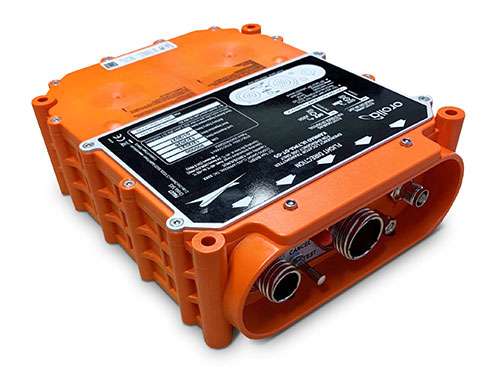
    The Ultima-DT emergency locator. (Photo: Orolia)
    The Ultima-DT emergency locator. (Photo: Orolia)

    Orolia is the first company to receive certification from Cospas-Sarsat and the European Union Safety Agency for its new-generation distress tracking emergency locator transmitter, the Ultima-DT.

    The approval verifies Orolia’s continuous advancements in global beacon technology, including securing a single source, multi-year program contract to supply ELT-DTs for all Airbus aircraft programs.

    Cospas-Sarsat is an international, humanitarian search-and-rescue system that uses space-based technology to detect and locate model 406 emergency beacons carried by ships, aircraft or individuals venturing into remote areas, often inaccessible by GNSS signals. The system consists of a network of satellites, ground stations, mission control centers (MCCs), and rescue coordination centers (RCCs) that work together when a 406 beacon is activated.

    “Being the first company to certify a distress tracking ELT shows again Orolia’s unique ability to provide the industry with the most innovative safety solutions,” said Jérôme Ramé, Orolia’s aviation and military product line director. “With Ultima-DT, we address the EASA-mandated requirement for the location of aircraft in distress, but also the market need for an ELT meeting the most recent safety standards.”

    Orolia developed the Ultima-DT in response to aviation safety mandates to improve global aircraft tracking. As per the ICAO Global Aeronautical Distress and Safety Systems (GADSS) recommendation and European Union mandate, all new aircraft delivered from January 2024 shall be able to autonomously report their location anywhere in the world and determine the end-of-flight location to help rescue teams rapidly locate the aircraft and recover flight recorders.

    Unlike traditional automatic fixed ELTs and stand-alone units, the Ultima-DT is tightly connected to the avionics system. It activates upon detecting a potential distress condition and starts transmitting automatically while the aircraft is still in flight. This next-generation ELT autonomously acquires the aircraft’s location and sends a 406-MHz message in real-time, including the accurate location, to the Cospas-Sarsat distress alert organization.

    The Ultima-DT is also the first ELT to fully comply with the latest EASA/FAA safety requirements for non-rechargeable lithium battery-powered equipment through (E)TSO-C142b. As part of its efforts to support airlines in their regulatory compliance projects, Orolia is also offering its portable Ultima-S ELT, which aims to meet these special conditions.

  • ViaLite GPS links ensure reliable emergency support

    ViaLite GPS links ensure reliable emergency support

    Photo: monkeybusinessimages/iStock/Getty Images Plus/Getty ImagesPhoto:
    Photo: monkeybusinessimages/iStock/Getty Images Plus/Getty Images

    Femtocell cellular base stations used by Global Medical Response (GMR) in their Dallas, Texas, offices are receiving high-accuracy GPS location and timing signals from RF-over-fiber links from ViaLite Communications.

    The GPS signals help GMR provide emergency quality medical care at a moment’s notice, primarily in the areas of emergency and patient relocation services in the United States and around the world.

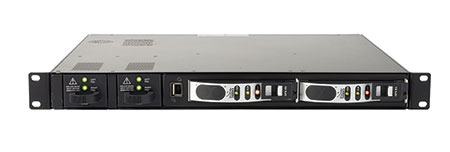
    The Local Integrated GPS Splitter. (Photo: ViaLite)
    The Local Integrated GPS Splitter. (Photo: ViaLite)

    The highly reliable system consists of a ViaLite GPS Link that sends the GPS and timing signals from the rooftop antenna down an optical fiber to a Local Integrated GPS splitter situated in the building. The splitter then distributes the timing data to multiple femtocells.

    “The efficiency of ViaLite’s signal distribution techniques is second to none, and in this emergency support application, when action at a moment’s notice can be vital, our equipment’s reliability and performance are crucial,” explained Craig Somach, ViaLite sales director.

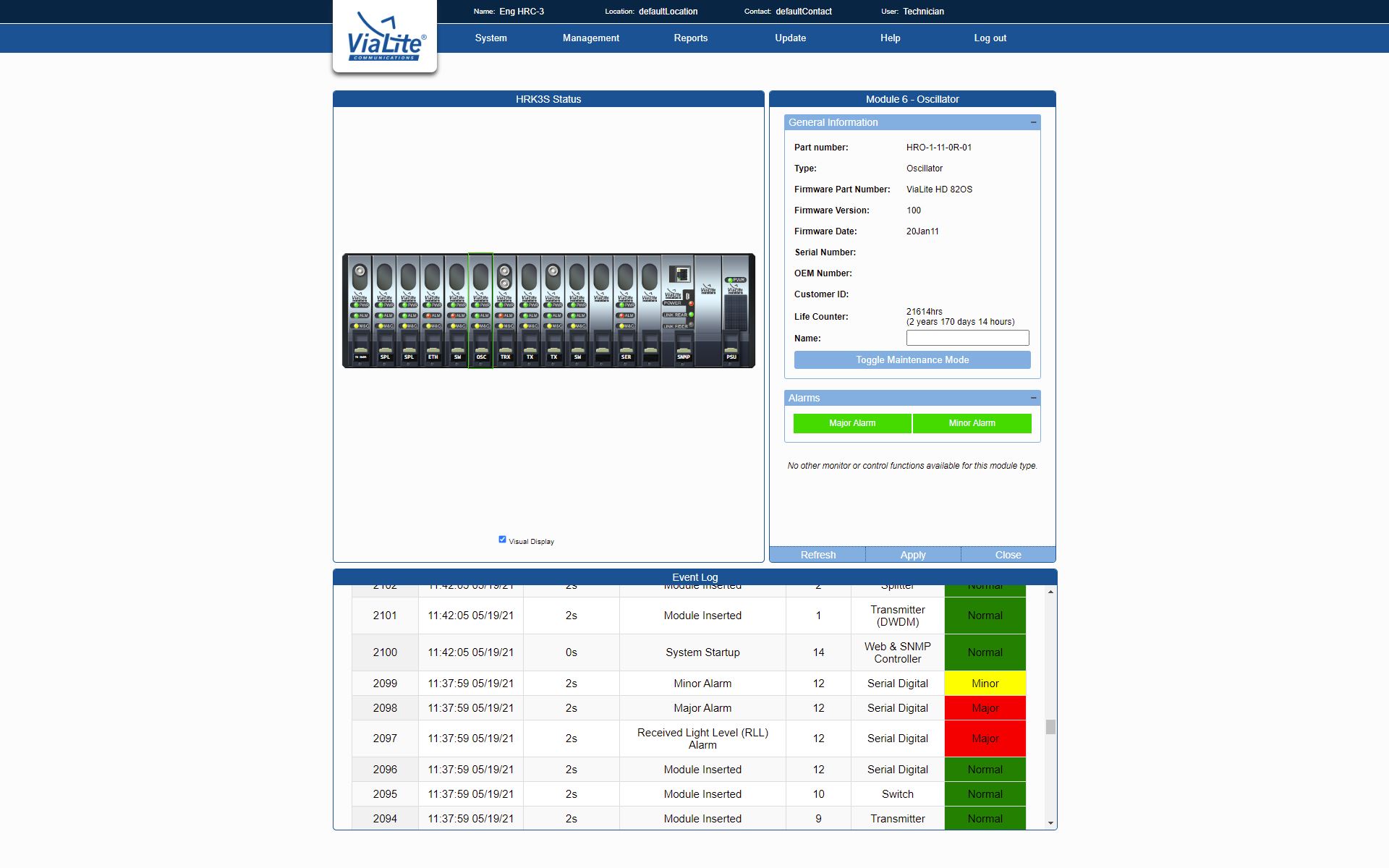
    A monitoring and control module is built into the GPS splitter. (Photo: ViaLite)
    A monitoring and control module is built into the GPS splitter. (Photo: ViaLite)

    Use of the high-tech splitter, which features a built-in monitoring and control module, also eliminates the need to install multiple antennas on the rooftop, avoiding the appearance of an antenna farm.

    “As a first-time customer, we found the deployment was as smooth and simple as ViaLite had promised,” said Dan Cottom, senior manager of communication systems at GMR. “The GPS distribution is working great.”

  • Tallysman introduces full-band, precision GNSS antenna

    Tallysman introduces full-band, precision GNSS antenna

    Photo: Tallysman Wireless
    Photo: Tallysman Wireless

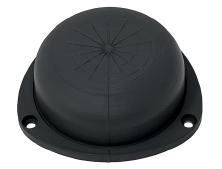
    Tallysman Wireless has added the housed SSL990XF full-band survey-grade GNSS antenna to its line of GNSS products.

    The SSL990XF uses a derivative of Tallysman’s patented VeroStar antenna element to provide full GNSS + L-band corrections frequency coverage.

    The SSL990XF is 63 mm in diameter and 28 mm tall and weighs ~50 grams, making it a very small and light housed full-band precision antenna. It has a very tight average phase-center variation of 4 mm or lower for all frequencies and overall azimuths and elevation angles.

    The full-band SSL990XF antenna supports GPS/QZSS L1/L2/L5, QZSS L6, GLONASS G1/G2/G3, Galileo E1/E5ab/E6 and BeiDou B1/B2ab/B3, as well as L-band correction services. Also supported in the region of operation are satellite-based augmentation systems: WAAS (North America), EGNOS (Europe), MSAS (Japan), or GAGAN (India).

    The SSL990XF is housed in a weatherproof (IP67) enclosure and is mounted using either adhesive tape or a mounting collar that includes a waterproofing O-ring. Two antenna cable connector options are available. The first is a female SMA, and the second is an MCX. It is an ideal antenna for precision UAV and all applications where light weight and precision matter.

    The radio-frequency spectrum has become congested worldwide as many new LTE bands have been activated, and their signals or harmonic frequencies can affect GNSS antennas and receivers.

    In North America, the planned Ligado service, which will broadcast in the frequency range of 1526 to 1536 MHz, can affect GNSS signals. Similarly, new LTE signals in Europe [Band 32 (1452–1496 MHz)] and Japan [Bands 11 and 21 (1476–1511 MHz)] have also affected GNSS signals. Tallyman’s new SSL990XF with eXtended Filtering (XF) technology mitigates the interference effects of these new signals.

  • GNSS-guided Turf Tank employed to paint stadium lines

    GNSS-guided Turf Tank employed to paint stadium lines

    Photo: Turf Tank
    Photo: Turf Tank

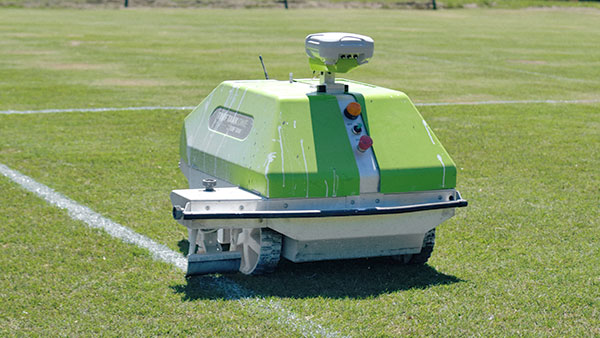
    Turf Tank is an autonomous, GNSS-guided line-marking robot built specifically to paint lines on athletic fields.

    More than 550 Turf Tank robots are deployed across the United States, painting athletic fields at public schools, major colleges and universities, amateur and professional soccer clubs, local parks and recreation departments, and a two National Football League stadiums.

    The Turf Tank robots can paint a full soccer field in less than 30 minutes, compared to two or three hours for manual painting. Similarly, the robot can paint a football field in two or three hours compared to eight to 10 hours to paint a football field.

    The robots are eco-friendly — they’re powered by rechargeable batteries and use far less paint than most older paint machines.

  • AUVSI analyst shares insights from defense conference

    AUVSI analyst shares insights from defense conference

    Military officials from across all branches, federal security personnel, and industry leaders gathered at the AUVSI Defense conference, held Sept. 22 in Alexandria, Virginia, to discuss critical issues surrounding the integration of uncrewed technologies.

    In a publication released Oct. 11, AUVSI Senior Economic Research Analyst Aaron Bull summarized key topics discussed at the event, including:

    • defense priorities for the next-generation uncrewed system
    • how uncrewed systems will impact the ways wars are fought
    • lessons learned by senior defense leaders from the Bayraktar TB2 in Ukraine.

    Download the “The Changing Landscape of Military Uncrewed Systems”.

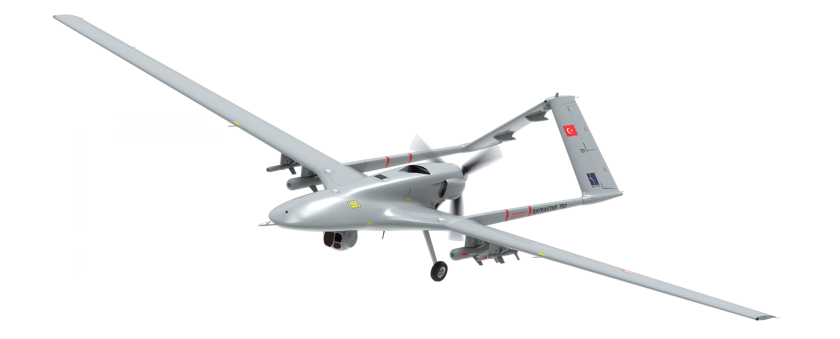
    Bayraktar - TB2 surveillance/attack drone (Photo: Baykartech)
    The Bayraktar TB2 surveillance/attack drone (Photo: Baykartech)

    Highlights from the Report

    Flexibility in the fighting force is needed, which affects the defense requirements for autonomous vehicles heading to the battlefield.

    Multiple speakers pointed to the Turkish Bayraktar TB2, a cost-effective combat-capable drone purchased and fielded by the Ukrainian armed forces that has been a game changer for Ukraine since the war began. While the drone is not top of the line, it was fielded quickly, required little training and could be fitted for a variety of purposes. As a result, “Nearly every speaker came prepared to discuss the need for developing multiple layers of flexibility around the U.S. fighting force,” Bull writes.

    An uncrewed vehicle that can be refitted for multiple missions of different types offers an inherent advantage for missions, and it requires supporting logistical infrastructure.

    Requirements include:

    • flexibility and disguise of role
    • ability to outfit to different technical and operating capabilities
    • flexibility to operate with different levels of human interaction
    • modularity to re-fit the drone around the mission
    • hardware-to-hardware modularity
    • software-to-hardware modularity.

    Download the report.

  • Hexagon to integrate AVVIR tools for construction workflows

    Hexagon to integrate AVVIR tools for construction workflows

    Photo: shironosov/iStock/Getty Images Plus/Getty Images
    Photo: shironosov/iStock/Getty Images Plus/Getty Images

    Hexagon AB, which offers digital-reality solutions combining sensor, software and autonomous technologies, will integrate AVVIR’s artificial-intelligence-powered technology stack into its portfolio of solutions that address challenges of the construction lifecycle.

    Since 2017, AVVIR has enabled intelligent, data-driven job sites that empower commercial, infrastructure and industrial construction professionals to reliably and safely deliver on schedule and within budget, Hexagon stated in a press release.

    AVVIR’s reality-analysis platform is focused on building information modeling (BIM). It is designed to improve project workflows, schedules and outcomes by leveraging onsite reality-capture data, enriched BIM models and artificial intelligence. The solution gives construction teams control with automated schedule tracking, cost and earned value analysis, installation issue detection, and an updated BIM with as-built conditions.

  • Ariane 6 — Galileo’s next ride — undergoes hot-fire tests

    Ariane 6 — Galileo’s next ride — undergoes hot-fire tests

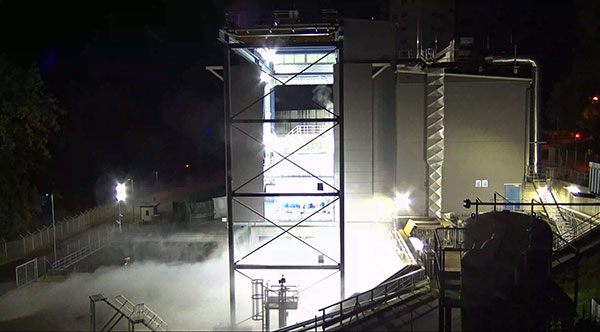
    The Ariane 6 launch vehicle program has taken a dramatic step towards first flight with the start on Oct. 5 of hot-fire tests of the rocket’s upper stage and its all-new Vinci engine, according to the European Space Agency (ESA).

    The tests are a significant step forward. They are being conducted using the specially built P5.2 test bench for engine and stage testing at the German Aerospace Center (DLR) in Lampoldshausen. The P5.2 test bench subjects the entire upper stage to operating conditions representative of a flight from Europe’s Spaceport in French Guiana, with the exception of vacuum and microgravity.

    New Vinci Engine

    Vinci, the upper stage engine of Ariane 6 fed by liquid hydrogen and oxygen, can be stopped and restarted multiple times — a critical capability for the complex missions demanded by launch customers today.

    The rocket can place several satellites into different orbits and de-orbit the upper stage, leaving a minimum of hazardous debris in space. Vinci also has been developed for reliability, simplicity and lower costs.

    Replacement Heavy Launcher

    This test series is a critical milestone on a development path that will soon see Ariane 6 replace Ariane 5 as ESA’s heavy launcher.

    For more than a quarter century, Ariane 5 has been a reliable partner for commercial, institutional and scientific clients. One of its most notable missions was the Dec. 25, 2021, flight that carried the NASA/ESA/CSA James Webb Space Telescope to its operational outpost in deep space.

    But Ariane 6 will be an even more versatile vehicle, strengthening Europe’s autonomy in accessing space.

    Auxiliary Power Unit

    The tests being run at Lampoldshausen are also evaluating an innovative auxiliary power unit (APU) that works in tandem with the Vinci engine and is instrumental to Ariane 6 upper-stage performance.

    To restart in space, earlier engines relied on large quantities of tanked helium to generate the necessary pressure and temperature in the propellant tanks and to ensure there are no bubbles in the fuel lines. However, the APU delivers these conditions using only small amounts of the cryogenic hydrogen and oxygen already carried in the main tanks.

    Heading to ESTEC

    The test series is being run by DLR and ArianeGroup, the Ariane 6 launcher prime contractor. When the test series is complete, the upper stage — integrated by ArianeGroup at its facility in Bremen, Germany — will be shipped to ESA’s ESTEC technical center in the Netherlands for stage separation and acoustic tests.

    Ultimately, the Lampoldshausen tests will investigate hardware behavior and system function of the complete stage with its tanks, engines and avionics.

    “The preparation for these hot firing tests is even more complex than for an actual launch,” said Ariane 6 launcher program manager Guy Pilchen. “Our colleagues in Lampoldshausen have decades of experience in rocket propulsion with extremely advanced test facilities. With ArianeGroup colleagues to control the upper stage and DLR people operating the test bench, we couldn’t ask for a better team.”

    Space independence for Europe

    ESA Director of Space Transportation Daniel Neuenschwander said that this new engine and the upper stage it powers are indispensable components of Ariane 6 and its objective — to guarantee that Europe maintains independent, competitive and sustainable access to space.

    “It’s a fact in the 21st century that Europeans depend on space for safety, prosperity and security,” Neuenschwander said. “Europe needs to work toward complete autonomy in accessing and operating in space. Ariane 6 is key to this, and we are eager to see the liftoff from Europe’s Spaceport in French Guiana.”

    Ariane 6 Vinci engine testing at DLR Lampoldshausen. (Photo: ESA)
    Ariane 6 Vinci engine testing at DLR Lampoldshausen. (Photo: ESA)
  • Global corporation VIAVI acquires Jackson Labs for PNT solutions

    Global corporation VIAVI acquires Jackson Labs for PNT solutions

    Said Jackson, President and CTO. (Photo: Jackson Labs)
    Said Jackson,
    President and CTO,
    Jackson Labs

    Global corporation VIAVI Solutions Inc. has completed the acquisition of Jackson Labs Technologies, a leader in positioning, navigation and timing (PNT) solutions for critical infrastructure serving both military and civilian applications.

    Jackson Labs develops and supplies modules, subsystems and box-level solutions that include front-end receivers, transcoders, rack-mounted equipment, and patented retrofit technology. Their broad customer base includes armed forces, defense contractors, energy distribution infrastructure, low-Earth-orbit (LEO) operators and 5G service providers.

    Jackson Labs’ next-generation M-code solutions complement and advance VIAVI’s timing and synchronization portfolio at a time when PNT requirements for defense, space, commercial aviation, transportation and telecommunication networks are expanding and becoming increasingly critical.

    “As telecommunications, avionics and mission-critical infrastructure adopt next-generation technology, legacy timing and synchronization protocols are no longer sufficient. Jackson Labs is a trusted provider of PNT solutions in these markets, and we look forward to addressing these opportunities together,” said Oleg Khaykin, president and CEO of VIAVI. “With this acquisition, we are continuing to drive operational scale via the addition of advanced technology and high-performance products that address market segments with strong growth and profitability.”

    “Being a part of VIAVI will significantly expand Jackson Labs Technologies’ market reach worldwide, and allow us to further deliver world-class solutions for the rapidly developing PNT landscape as it enters a new era,” said Said Jackson, CEO of Jackson Labs Technologies.

    DelMorgan & Co. acted as the exclusive financial advisor to Jackson Labs in connection with the transaction. Terms of the transaction are not being disclosed.

    About VIAVI

    VIAVI s a global provider of network test, monitoring and assurance solutions for communications service providers, enterprises, network equipment manufacturers, original equipment manufacturers, government and avionics. It helps customers harness the power of instruments, automation, intelligence and virtualization.

    VIAVI is also a leader in light management solutions for the anti-counterfeiting, consumer electronics, industrial, government and automotive markets.

    VIAVI operates offices throughout North, Central and South America, Europe, Africa, the Middle East, and the Asia-Pacific, including China and Japan.

  • India mandates NavIC support for smartphones, no timeline yet

    India mandates NavIC support for smartphones, no timeline yet

    Photo: MStudioImages/E+/Getty Images
    Photo: MStudioImages/E+/Getty Images

    The Indian government is pushing smartphone makers to sell devices that receive NavIC signals along with GPS.

    India originally stated NavIC would be required in smartphones sold starting in January 2023, according to Reuters, but strong reaction from smartphone manufacturers Apple, Xiaomi and Samsung apparently caused the government to push back or remove the deadline.

    A deadline of January 2023 would not allow enough time for smartphone makers to integrate NavIC-enabled receivers to their devices. Steps include redesign, securing parts, testing and assembly. Many smartphones sold in India by the companies are economy-level devices priced under US$200.

    The three tech giants met with government officials, seeking an extended target date of 2025, Reuters reported.

    However, India’s Ministry of Electronics & IT issued a statement via Twitter :

    India has been pushing for adoption of NavIC since at least 2021, while chipmaker Qualcomm has been producing NavIC-enabled modules since 2020.

    NavIC (Navigation with Indian Constellation) is the operational name for the Indian Regional Navigation Satellite System (IRNSS) developed by India’s space agency for military and commercial purposes. NavIC consists of eight satellites that cover the Indian mainland and the region extending up to 1,500 km from its boundaries.

    “NavIC can help in navigation on land, air, sea and also in disaster management,” Science & Technology Minister Jitendra Singh said in a press release. “NavIC satellites are placed at a higher orbit than the GPS of United States. NavIC satellites are placed in geostationary orbit (GEO) and geosynchronous orbit (GSO) with an altitude of about 36,000 km; GPS satellites are placed in medium earth orbit (MEO) with an altitude of about 20,000 km.”

    “NavIC uses dual-frequency bands, which improves accuracy of dual-frequency receivers by enabling them to correct atmospheric errors through simultaneous use of two frequencies,” Singh said. “It also helps in better reliability and availability because the signal from either frequency can serve the positioning requirement equally well.”

  • DJI Mavic 3 Enterprise drone launched for commercial work

    DJI Mavic 3 Enterprise drone launched for commercial work

    The portable drone has an RTK module for centimeter-level precision and a 56× zoom camera

    DJI has launched its Mavic 3 Enterprise Series, designed for business, government, education and public safety.

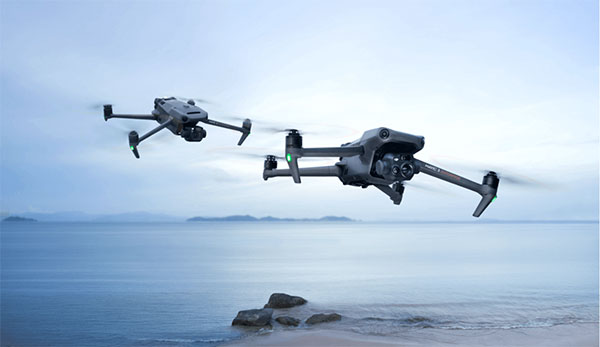
    The DJI Mavic 3E and DJI Mavic 3T are compact drones designed to provide professional users with safe and efficient aerial technology. Both drones are based on DJI’s flagship Mavic 3 series and have been designed to operate in a vast array of commercial missions.

    Portable and compact, the drones can be carried in one hand and deployed at a moment’s notice. Flight time is 45 minutes.

    Surveying tools. Both models have a real-time kinematic (RTK) module that enables surveying professionals to achieve centimeter-level accuracy with support for network RTK, custom network RTK services, and the D-RTK 2 Mobile Station.

    The D-RTK 2 Mobile Station is DJI’s upgraded high-precision GNSS receiver that supports all major global satellite navigation systems, providing real-time differential corrections.

    Safety Features. The Mavic 3 Enterprise series has improved obstacle sensing and navigation systems, including DJI AirSense, which receives ADS-B signals from traditional aircraft in the area to warn drone pilots of other air traffic nearby. The new improved DJI APAS system 5.0 for obstacle sensing with zero blind spots is supported by six omnidirectional fish-eye sensors.

    Cameras equipped. It integrates a 20-MP wide-angle camera with a 4/3 CMOS sensor with large 3.3 μm pixels that, together with Intelligent Low-Light Mode, offer significantly improved performance in dim conditions. Its powerful up-to-56x hybrid zoom camera has an equivalent focal length of 162mm for 12MP images. A mechanical shutter prevents motion blur and supports rapid 0.7-second interval shooting.

    Photo: DJI
    Photo: DJI

    The DJI Mavic 3E enables efficient mapping and surveying missions without the need for ground control points. Other fields that could use the drone include environmental and wildlife protection, construction, surveying, energy and public safety.

    The DJI Mavic 3T is engineered for aerial operations in firefighting, search and rescue, inspections and night missions. It has the same tele camera as Mavic 3E, a 48 MP camera with a 1/2” CMOS sensor, and a thermal camera with a Display Field of View (DFOV) of 61° and an equivalent focal length of 40mm with 640 × 512 px resolution.

    The Mavic 3T’s thermal camera supports point and area temperature measurement, high temperature alerts, color palettes, and isotherms to help professionals find hot spots and make quick decisions. With a simultaneous split-screen zoom, the Mavic 3T’s thermal and zoom cameras support 28× continuous side-by-side digital zoom for easy comparisons.

    Image transmission. With a maximum control range of 15 km, DJI O3 Enterprise Transmission enables the Mavic 3 Enterprise drones to fly further and transmit signals with higher stability, offering pilots greater peace of mind during flight. It provides a high frame rate live feed at 1080p/30 fps.

  • UAVOS successfully completes ApusDuo solar HAPS test flight

    UAVOS successfully completes ApusDuo solar HAPS test flight

    Photo: UAVOS
    Photo: UAVOS

    UAVOS has completed a successful test flight of the ApusDuo solar-powered high-altitude platform system (HAPS).  The test flight, at a European Flight Center, was conducted continuously for 11 hours and reached altitudes of 15,000 meters.

    The ApusDuo successfully achieved more than two dozen test points, including energy balance validation, power and propulsion performance, and propeller revolutions per minute evaluation. The team also tested aircraft motor control efficiency, which was refined following previous test flights.

    After operations in Europe, UAVOS plans to transport ApusDuo to Argentina. The company is accelerating preparations to perform the next phase of test flights in the stratosphere.

    ApusDuo is a stratospheric UAV running on solar power, and is meant to provide persistent local satellite-like services. Built with carbon-fiber composites, it can be landed, re-equipped with multitask payloads and re-deployed. It is also capable of flying autonomously from takeoff to landing and can be remotely operated from its ground-control station.