Category: Applications

  • Global GNSS constellations: Why 2 + 2 equals more than 4

    Global GNSS constellations: Why 2 + 2 equals more than 4

    The tremendous benefits of having four complete GNSS constellations

    In 2020, with the completion of China’s BeiDou-3 (aka BDS) and Europe’s Galileo, the number of available global navigation satellite system (GNSS) constellations doubled. 

    Analogously to the addition of GLONASS to GPS a quarter century earlier, but much more so, this sharp increase in the number of available satellites and frequencies greatly improved the precision of satellite-based positioning, the speed of first fix, and the confidence in the results — especially in GNSS-challenged places, such as under thick canopy and in deep urban canyons. 

    Additionally, this new ability to track three or four GNSS constellations makes the overall positioning solution more resilient to malicious RF interference (jamming and spoofing), to accidental GNSS service disruptions such as Galileo’s one-week service outage in July 2019, and to deliberate withholding of service such as might occur in times of war.

    While all this may make little practical difference to a driver needing to know which highway exit to take or to a pedestrian looking for the nearest pharmacy, it is very valuable in high-end applications, such as surveying and construction. In fact, surveyors who have transitioned to using all the available constellations are ecstatic.

    This month’s cover story, on the benefits of having four complete GNSS constellations, is in two parts. First, Oliver Montenbruck and Peter Steigenberger discuss “the practical relevance and implications of having four GNSS in parallel for both mass-market and high-end users.” Next, I present the comments of three surveyors and a receiver manufacturer:

    • Gavin Schrock, PLS, is a practicing land surveyor, the operator of a cooperative real-time GNSS network in Washington state, and a technology writer
    • James Richards is the senior land and utility surveyor at Benchmark Surveys in Venny Bridge, UK
    • Choice Sterling is the survey manager at Kiewit Corporation in Federal Way, Washington
    • Xiaohua Wen is the CEO and founder of Tersus GNSS, a manufacturer of GNSS surveying receivers based in Australia.
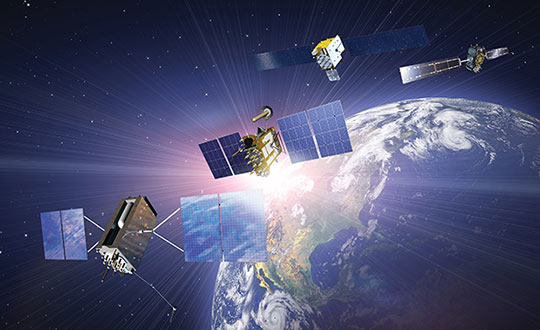
    (Satellites from left) GPS: In July 1995, GPS achieved full operational capability (FOC). GLONASS: In December 1995, the (then) Soviet system achieved FOC. BeiDou: On June 23, 2020, China launched the final satellite of the BeiDou-3 constellation. Galileo: The constellation has 21 usable satellites.(Credit: Satellites from public sources; background image: NASA/Chaykovsky Igor/Shutterstock.com)
    (Satellites from left) GPS: In July 1995, GPS achieved full operational capability (FOC). GLONASS: In December 1995, the (then) Soviet system achieved FOC. BeiDou: On June 23, 2020, China launched the final satellite of the BeiDou-3 constellation. Galileo: The constellation has 21 usable satellites.(Credit: Satellites from public sources; background image: NASA/Chaykovsky Igor/Shutterstock.com)

    See also

    GNSS today: A four-leaf clover, b and 

    How land surveyors grapple with rapid evolution, discussion with surveyor Gavin Schrock


    Thoughts from surveying experts

    James Richards
    Senior Land and Utility surveyor
    Benchmark Surveys, Venny Bridge, UK

    James Richards, Benchmark Surveys
    James Richards, Benchmark Surveys

    What kinds of surveying projects do you run?
    We run many different types of surveying projects. From small single-story bungalow extensions and redevelopment to development of new home sites of several hundred acres. We cover land, underground utility, and measured-building surveys of any size project, using the latest equipment in total stations, laser scanners, drones, GPS receivers, ground-penetrating radar (GPR) and electromagnetic location (EML).

    How have you transitioned to using multiple constellations?
    Ordnance Survey benchmarks in the UK are no longer maintained. Therefore, it has been a must to move forward with the surveying world and use multi-constellation GNSS equipment. We have stayed at the forefront of GNSS receivers, starting with a Topcon GRS1 then moving onto a Trimble R10 and a Topcon HiPer SR. Now, I feel we’ve taken another leap with the Trimble R12i, working in areas where we previously did not even consider using a GNSS receiver.

    How does the availability of four complete GNSS constellations, plus two regional ones, benefit your work?
    The availability of four complete GNSS constellations and two regional ones gives us more reliability as well as improved position and time accuracy in the data that we receive. It also gives us better coverage over the entire UK, including near buildings and under foliage. The Trimble R12i has 672 available channels, which makes it future-proof to new frequencies and additional space vehicles.


    Choice Sterling
    Survey manager, Kiewit Corporation
    Federal Way, Washington

    What kinds of surveying projects do you run?
    I am the survey manager on $1–3 billion mega projects, ranging from bridges and highways to tunnels and rail, including a couple of projects for the U.S. Department of Defense.

    How have you transitioned to using multiple constellations?
    The use of multiple constellations became available as we adopted technologies that could capitalize on their availability. Through the latest hardware and software, we have begun leveraging GNSS to a greater magnitude than we would have just a few years back.

    How does the availability of four complete GNSS constellations, plus two regional ones, benefit your work?
    Not long ago, the use of GPS for construction staking was an extremely risky proposition given its unreliability, primarily in the vertical component, and lack of confidence in its horizontal accuracy. With residuals exceeding most construction tolerances, GPS was primarily utilized for earthwork or to establish geodetic pairs that could then be traversed to establish control for more precise work. With the utilization of multiple GNSS constellations, we have gained confidence in the accuracy of our results and have started leveraging GPS for construction staking where we were once not willing to take the risk.

    Having the ability to leverage GPS under a canopy of trees or against structures or walls has proved invaluable when running traverses or levels, typically enabling us to use a single person rather than a two-person crew. Increased confidence in repeatability and accuracy while using GPS has been a game changer when working on projects where efficiency and cost management are of the greatest importance.


    Xiaohua Wen
    CEO and Founder, Tersus GNSS

    Xiaohua Wen, Tersus GNSS
    Xiaohua Wen, Tersus GNSS

    How have you transitioned to manufacturing multiple-constellation GNSS receivers?
    Early in 2016, we produced a GNSS receiver evolution road map to take advantage of GPS/GLONASS modernization, the continuing development of Galileo and QZSS, and the completion of BeiDou-3. In 2019, we released our current GNSS receiver, which has 576 tracking channels and supports all five major GNSS constellations (GPS, GLONASS, Galileo, BeiDou-3 and QZSS) and triple-band broadcasts (GPS L1+L2C+L2P+L5, GLO G1+G2+G3, GAL E1+E5a+E5b, BDS B1+B2a+B2b and QZSS L1+L2C+L5). We expect to release our next generation receiver, with 832 channels, in February 2022. It will support all available constellations (GPS, GLO, GAL, BDS, QZSS, IRNSS/NavIC, SBAS) and all civil signals, including the AltBoc and AceBoc.

    How does the availability of four complete GNSS constellations, plus two regional ones, benefit your end users?
    The most significant advantage of modern GNSS receivers is their robust high-accuracy performance with the aiding of the new constellations and signals, especially in harsh GNSS environments, such as deep canyons and heavy foliage. It greatly extended the RTK fix capability, and now reliable GNSS RTK fix solutions can be easily achieved in areas where it was impossible to do in the past.

    In the past, multipath always has been a problem for RTK GNSS receivers, as it might cause blunder errors. The improved RTK fix reliability based on robust RTK integrity monitoring takes advantage of the redundancy of observations to identify and isolate deteriorated observations and confirm the fixed result. Additionally, RTK achieves RTK fix solutions faster and maintains the RTK fix solutions easier with better accuracy than before.

    Compared to the dual-band (L1+L2) of GPS plus GLONASS, the triple-band (and multi-band) can allow long-range RTK capability, which can provide reliable RTK solutions with a remote GNSS base station far from the 20–30 km base and rover separation of the past. It also will provide more confidence in RTK positioning during the coming ionospheric disturbance peak in 2023.
  • How land surveyors grapple with rapid evolution

    How land surveyors grapple with rapid evolution

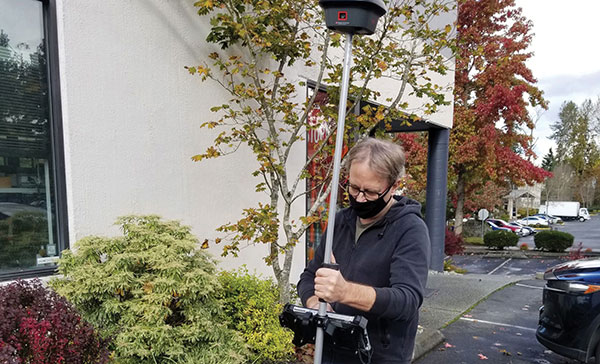
    Photo: Gavin Schrock
    Photo: Gavin Schrock

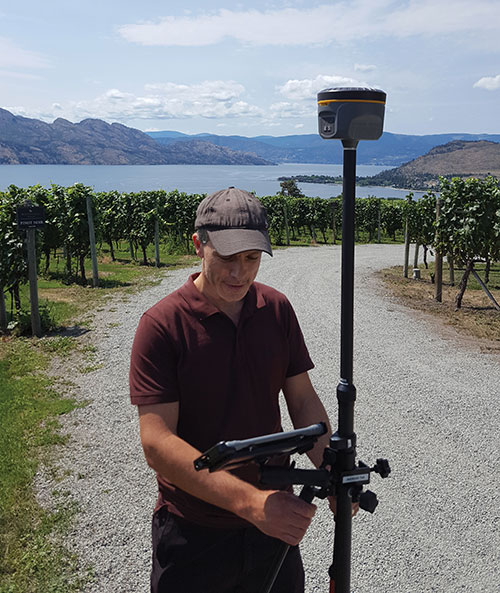
    Gavin Schrock, PLS, shared his thoughts on how the evolution of GNSS has affected surveying. Schrock is a practicing land surveyor, the operator of a cooperative real-time GNSS network in Washington state, and a technology writer.

    Gavin Schrock has been using satellite navigation since the early days of GPS and the Doppler-based Transit system before that. “I am a bit of a dinosaur,” he said. “What I find interesting about the evolution of GPS, especially when it went to multi-constellation, is that it instills more confidence in what somebody is doing, in several ways.”

    For commercial use of GPS, the first units were static and required post-processing. “If you were out in the wide open sky and could get your minimum of four to five satellites and observe enough data, you could process that and get outstanding precision — less than 3 cm in 3D in a reasonable amount of time with 95% confidence,” Schrock said. “Now, with more satellites, you can get it a lot faster and in more places.” Using certain procedures, early GPS adopters could get down to millimeters. “You can get that precision now, but you get there a heck of a lot faster.”

    An obstructed view of the sky, tree canopy, multipath and other factors limit where surveyors can use GNSS. One of the ways the new constellations and signals help, Schrock explained, is through the evolution of processing. “I like to call it the fourth wave of GNSS field equipment for high precision — for surveying, machine control and construction. In just the past few years, many of the manufacturers have had to put huge processors in their high-end rovers to process many more satellites and signals, as well as new RTK [real-time kinematic] engines with improved onboard multipath mitigation.”

    While some rovers built a decade ago could track and use many of these signals, this new wave of gear, with more powerful processing, takes much greater advantage of the multi-constellation. The updated interface control document (ICD) for BeiDou-3 was released just over two years ago; it may still take a lot of development work to enable older receivers to take advantage of it, if it is even possible, he said. By contrast, “Many newer units hit the ground running with full constellation capabilities.”

    “Much of the new wave can do amazing things in the way they can mix and match signals, though there are different approaches to this,” Schrock said. “They can do such things as processing many satellites and multiple signals from each, under one filter for a more robust solution. You might have L1, L2, L5, B3, E1, E5a, and E5b in the mix, to name a few. Then you have the alternative BOC modulation (AltBOC), where it is kind of processed together to give a wide lane solution. That can really bring in your high precision a lot faster and, in many cases, improve on the high precision that you used to get with your old rovers.”

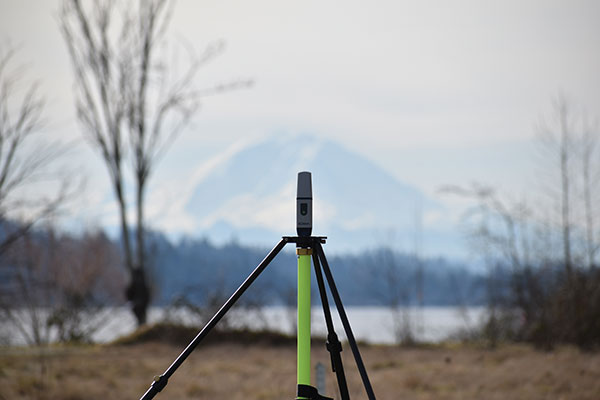
    Mount Rainier (above) serves as the backdrop for a field project by Schrock (right). (Photo: Gavin Schrock)
    Mount Rainier (above) serves as the backdrop for a field project by Schrock (right). (Photo: Gavin Schrock)

    How GLONASS Brought Change

    Surveyors using equipment more than four years old, which Schrock calls “legacy gear,” often cannot take full advantage of the availability of multiple constellations. “Years ago, there was a mini-boost when manufacturers began to include GLONASS; you suddenly had more satellites. Early GLONASS was a mess, but it got better. It remains a little noisy, but you have extra satellites. When you are trying to get a minimum of five satellites to do your RTK or your network RTK, we really struggled when it was GPS only. GLONASS changed that. You could work in many more places, without worrying about the time of day and looking up what the satellite’s availability was going to be and have to plan ahead.”

    The latest boost, thanks to the two new GNSS constellations, is “much more impactful” than the addition of GLONASS was, Schrock said. Galileo now has five or more usable signals, depending on how each manufacturer chooses to use them. In addition to the extra satellites, “you also have more modernized signals. They are not as noisy as the old GLONASS ones. GPS signals are still very clean, and about half of the GPS satellites now broadcast the L5 signal, which you can throw into the mix.”

    RTK units now can mix and match satellites from different constellations in outstanding ways, Schrock said. “The advantages are great when you are struggling in canopy. You still must be cautious, but you can check repeatability much more quickly.”

    field test of a South rover with MicroSurvey software. (Photo: Gavin Schrock)
    GNSS today: A four-leaf field test of a South rover with MicroSurvey software. (Photo: Gavin Schrock)

    In the old days, Schrock recalled, when surveyors used GPS only, carried giant receivers and huge antennas, and did long static sessions, they had to return to sites for repeat observations on different days and at different times.“The method was based on the premise that if you can repeat a solution with a different geometry, that gives you more confidence. Now you may have up to 40 satellites in view. In Asia, 50 in view is not uncommon, because they have India’s NavIC constellation and Japan’s QZSS in view as well. The rover will pick and choose the best ones to use for that solution. So now, instead of having to go back 40 minutes later or the next day to get a different geometry, in several of the manufacturers’ field software, you have a way to just ask it to pick different geometries.” Comparing these geometries to the results from repeated occupations on multiple days, Schrock saw no difference.

    Some users of the network he operates are “over the moon,” he said. One construction company told him multi-constellation fundamentally changed the way it approaches parts of their construction projects and cited the confidence factor. Adding GLONASS and Galileo to their mix, users told him “I’ve been missing out all these years. I should have gotten into this earlier!” Schrock has not received as much positive feedback from end users as within the past few years. “[Multi-constellation] has made a lot of difference, including in the way I approach my own field projects.”


  • DENSO and Brandmotion join on V2X integration

    DENSO and Brandmotion join on V2X integration

    Photo: jonathange/iStock/Getty Images Plus/Getty Images
    Photo: jonathange/iStock/Getty Images Plus/Getty Images

    Brandmotion LLC is collaborating with DENSO Products and Services Americas to offer a one-stop service to cities seeking to equip vehicles with advanced vehicle-to-everything (V2X) technology.

    DENSO is a global mobility supplier and Brandmotion develops vehicle integration for V2X deployments. By combining forces, the two companies are offering cities and agencies an easier path to vehicle integration for V2X deployment testing.

    V2X technology has been proposed by the U.S. Department of Transportation as the best way to address the chronic death toll on America’s roadways, with nearly 37,000 lives lost and a record 6,721 pedestrians killed at intersections in 2020. Many city managers and state transportation agencies are looking to deploy V2X technology regionally to reduce vehicle crashes and fatalities and improve pedestrian safety.

    The DENSO-Brandmotion partnership simplifies the process of equipping vehicles for long-term testing. Many cities have had to assemble the elements of a large vehicle V2X deployment manually, developing specifications and coordinating multiple vendors.

    Brandmotion has served the Tampa Connected Vehicle Pilot for five years and provided responsive professional-grade automotive integration and service capability. DENSO is the on-board unit (OBU) supplier to OEMs for phase 4 of Tampa’s pilot project, bringing true Tier 1 development capabilities to the project.

    The partnership will provide transportation agencies with the following vehicle-related deployment services:

    • the DENSO On Board Unit (OBU) platform (Hercules), which has the ability to run and process applications that support both cellular V2X (C-V2X) communications and dedicated short range communications (DSRC) in an automotive environment (while DSRC is still permitted by the U.S. Federal Communication Commission)
    • a standard set of applications, including blindspot/lane-change warning, electronic emergency brake light, forward crash warning, intersection movement assist, red light violation warning, and traffic signal priority
    • custom application development for specific agency application goals
    • thorough vehicle-specific installation planning, vehicle system design and validation
    •  small to large-scale installation and tech support.
  • Cohda Wireless adapts V2X solution for Mongolian mine

    Cohda Wireless adapts V2X solution for Mongolian mine

    Cohda Wireless logoIntelligent transport company Cohda Wireless is applying its vehicle positioning solution to the Oyu Tolgoi mine in Mongolia to drive safety and productivity.

    In its first use for mining, Cohda’s V2X-Locate technology is being deployed at the Oyu Tolgoi copper and gold mine, managed by Rio Tinto, to provide vehicle and personnel location accuracy.

    V2X-Locate was initially developed to solve vehicle positioning accuracy challenges inherent in the urban canyons of cities where large buildings, underground parking lots and tunnels interfere with GNSS signals. Using dedicated short-range communication (DSRC) signals, Cohda’s signal processing and positioning algorithms provide highly accurate vehicle position irrespective of GNSS availability or quality.

    Cohda Wireless is headquartered in Australia and has offices in Europe, the United States and China. Its V2X (Vehicle-To-Everything) technology connects vehicles with each other and with roadside infrastructure to create a cooperative and intelligent transport environment.

    The system can integrate and manage location data from multiple sensor types with sub-meter accuracy throughout the mine site, said Paul Gray, Cohda Wireless CEO. He called it a significant improvement on using a combination of disparate collision avoidance systems across the mining environment, as is usually the case.

    “When you have hundreds of vehicles and personnel operating in close proximity underground, a meter matters. And whilst the prevention of injury and death is always the top priority, we also know that the ability to visualize, optimize and monitor vehicles brings significant operational benefits and efficiencies,” Gray said.

    More than 200 mining vehicles of all types are being fitted with Cohda’s XBU-V specially adapted on-board units that connect vehicles to each other and to XBU-I roadside units installed in mine tunnels. Mining vehicles are fitted with a human-machine interface that will notify operators to warn them of potential collisions. More than 2,000 personnel will use V2X-Locate-compatible cap lamps, enabling time-of-flight analysis of wireless signals to resolve spatial locations.

  • DHS offers resources to protect critical infrastructure from GPS vulnerabilities

    DHS offers resources to protect critical infrastructure from GPS vulnerabilities

    DHS logoThe U.S. Department of Homeland Security (DHS) Science and Technology Directorate (S&T) has published a GPS Receiver Whitelist Development Guide and a new release of the Positioning, Navigation, and Timing (PNT) Integrity Library to protect against GPS spoofing.

    The free resources are intended to advance the design of PNT systems and increase resilience of critical infrastructure to PNT disruptions.

    The GPS Whitelist Development Guide presents a software assurance approach to addressing potential vulnerabilities and increasing reliability of GPS receivers. The guide addresses data-related requirements in the Resilient PNT Conformance Framework, which provides guidance for defining expected behaviors in resilient PNT equipment.

    “We hope this guide and related resources will help industry advance towards a cybersecurity-based approach to PNT resilience,” said S&T Technical Manager Ernest Wong.

    Originally released in March 2021 as open source on GitHub, the PNT Integrity Library provides users with a method to verify the integrity of the received GPS data. The update includes:

    • A compliance check on Interface Control Document (ICD) IS-GPS-200, which is a formal means of establishing, defining and controlling communication between the GPS space and other user systems; and
    • A Do-It-Yourself (DIY) Toolkit, which describes how a perspective end-user of the PNT Integrity Library can assemble a demonstrational toolkit with commercial-off-the-shelf (COTS) hardware.

    “Since GPS signals can be jammed or spoofed, critical infrastructure systems should not be designed with the assumption that GPS data will always be available or will always be accurate,” said S&T Project Manager Brannan Villee. “Application of these tools will provide increased security against GPS disruptions. However, DHS also recommends a holistic defense strategy that considers the integrity of the PNT data from its reception through its use in the supported system.”

  • ViaLite supports Raytheon with mission critical, extended length GPS over fiber

    ViaLite supports Raytheon with mission critical, extended length GPS over fiber

    ViaLite GPS Link: Blue OEM module and rack chassis card hardware formats shown. (Photos: ViaLite)
    ViaLite GPS Link: Blue OEM module and rack chassis card hardware formats shown. (Photos: ViaLite)

    ViaLite is supplying Raytheon Technologies with its GPS over Fiber Extension Kit for Microchip GPS servers. The kit provides mission-critical GPS timing and synchronization for systems requiring extremely accurate clock signals.

    Standard transmission distances for the extension kit can be up to 10 km, while solutions are available for distances as long as 50 km.

    “The ViaLite kit was chosen for its unique performance with Microsemi’s S650 timing server, along with our best-in-class quality, reliability and support,” said Craig Somach, ViaLite director of Sales North America.

    The ViaLite GPS link is designed to provide a remote GPS/GNSS signal or derived timing reference to equipment located where no signal is available, such as inside buildings or tunnels. By using optical fiber instead of traditional coaxial cable, extreme distances are possible with no radio frequency loss and zero introduction of noise.

  • Maxar 3D data integrated into Swedish fighter jet for GPS-denied navigation

    Maxar 3D data integrated into Swedish fighter jet for GPS-denied navigation

    Saab, the Swedish defense and security company, and Maxar recently demonstrated a solution to GNSS-denied navigation by integrating Maxar’s 3D Data and Precision 3D Registration (P3DR) technology into the fighter jet software for the Swedish Gripen E fighter jet.

    Saab develops and manufactures the fighter jet for Sweden and other countries.

    A camera on the jet captures a livestream of its flight path. Maxar’s P3DR compares that incoming livestream to the Maxar 3D Surface Model of the area stored on the jet. By matching scenes in the livestream to the 3D data in real time, P3DR can determine the jet’s precise location, enabling the pilot to navigate and carry out the mission without GPS.

    Maxar 3D Surface Model, immersive 3D data with superior accuracy and global coverage, offers a highly accurate representation of Earth. The data is produced with unique automated technology, delivered rapidly and with high precision. It is based on Maxar’s high-resolution, unclassified commercial satellite imagery, without the need for ground control points. Maxar’s 3D Surface Model product is a key input to the company’s Globe in 3D, a worldwide foundation of 3D data with resolution of 50 cm or better and 3 m accuracy in all dimensions.


    The chart across the top of the video indicates the accuracy of the P3DR matching of the livestream video to the Maxar 3D Surface Model. When the camera encounters clouds, it lowers the accuracy of P3DR’s match; however, as long as there is some view of the ground, the accuracy is relatively high.

    Maxar’s P3DR is a standalone software solution that automatically geo-registers imagery from any source to Maxar 3D reference data. This real-time capability enables navigation in a GPS-denied environment, safeguarding against signal jammers in an anti-access area denial (A2AD) environment.

    Saab put the GPS-denied navigation technique to the test with a Gripen flight demonstration over Sweden. The GIF below demonstrates how P3DR closely overlays the livestream image on the Maxar 3D Surface Model, allowing the pilot to understand where they are on the map.

    During the flight demonstration, the Gripen’s GPS receiver was on to monitor the accuracy of the results. The GPS receiver verified that the demonstration’s results were accurate.

    The Gripen E jet fighter built by Saab. (Photo: Saab)
    The Gripen E jet fighter built by Saab. (Photo: Saab)
  • RNT Foundation proposes attributes for resilient timing RFP

    RNT Foundation proposes attributes for resilient timing RFP

    Image: RNT Foundation
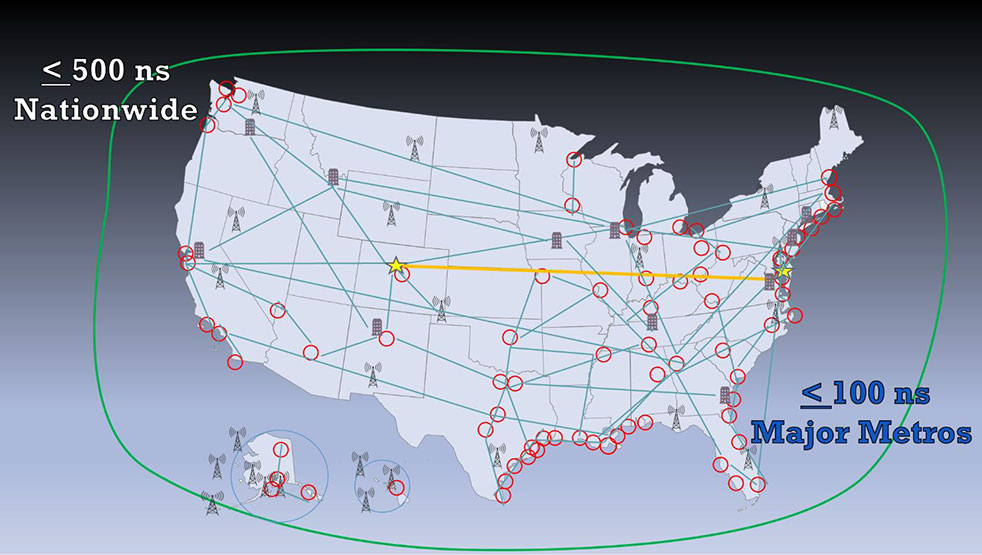
    A National Resilient Timing Architecture should include delivery by fiber and RF along with space-based, according to the RNT Foundation. (Image: RNT Foundation)

    The Resilient Navigation and Timing (RNT) Foundation has published a white paper proposing attributes for a government Request for Proposal (RFP) to acquire timing services.

    A National Resilient Timing Architecture – Now for an RFP!” builds upon the foundation’s October 2020 white paper “A Resilient National Timing Architecture.”

    Timing services, most of which are now sourced directly or indirectly from GPS, are essential for myriads of network, transportation, financial, industrial, and other applications. The National Timing Resilience and Security Act of 2018 (NTRSA) requires establishment of one or more systems to serve as alternatives and back up GPS timing.

    The RNT Foundation’s October 2020 white paper discusses how a national timing architecture fulfilling the requirements of NTRSA could be established relatively easily and inexpensively. It proposes that, rather than building its own system, the government contract for services with commercial providers.

    The new white paper outlines some of the requirements and evaluation criteria the government might use when acquiring timing services.

    Goals

    The paper postulates that the goal of such a procurement should be to establish a federal timing “backbone.” This would fulfill the requirements of NTRSA, which recognizes that timing is critical for many applications and is also the basis for most electronic positioning and navigation systems.

    Establishing this backbone will provide users with an alternative and a safety net for GPS disruptions, and at other times enable more resilient and reliable services. As a backbone, it would provide basic, foundational services upon which others would be able to build. The new services would be expected to:

    • support a wide variety of public and private applications across the nation
    • be entirely independent from and have minimal or no common failure modes with GPS and other GNSS
    • provide multiple and diverse methods of timing delivery
    • serve both fixed and mobile users.

    Regarding this last point, the paper notes that mobile devices must know their location before they can make use of timing signals. Thus, the selected system or combination of systems also will have to provide GPS-independent location information at a basic level to mobile users.

    Requirements

    Successful proposals, the paper envisions, will need to meet a number of requirements including

    • serving the entire U.S. land area, airspace, and coastal waters to about 200 miles offshore
    • enabling all fixed and mobile users to access at least one non-space-based source (to ensure no common failure modes with GPS/ GNSS)
    • timing accuracy in all locations to within 500 nanoseconds of universal coordinated time (UTC); this accuracy should be within 100 nanoseconds of UTC for the 50 largest metropolitan areas
    • one or more integrity measures to provide users confidence in system(s) accuracy
    • a very high rate of continuity and availability, similar to that of navigation beacons for aircraft
    • a performance monitoring and control system.

    Evaluation Criteria

    Fortunately for the government, numerous systems and companies are already able to provide the needed services. Deciding which to select will likely be a significant effort. Some of the evaluation criteria suggested by the RNT Foundation white paper are:

    Annual Cost – While cost will not be the only consideration in this acquisition, the government always has a responsibility to taxpayers to weigh it as an important factor.

    Infrastructure Required Per Unit of Coverage Area – This has been cited by the Department of Transportation as a very important consideration. Not only does the amount of infrastructure affect cost, but it also has implications for environmental and community impacts.

    Spectrum – Signal disruption by in-band and out-of-band transmissions has been a significant issue for GPS. New PNT wireless and radio-frequency services should pose as few spectrum concerns as possible. Spectrum band reservations, licenses, pre-allocated bands, other bands and adjacent band uses will all be given consideration.

    Penetration – While the government may not list this as a requirement, the ability of a service to reach underwater, underground and indoor locations will likely be desirable and part of proposal evaluation.

    Resilience – The vulnerability of GPS signals to disruption will undoubtedly make the resilience of potential backup and complementary systems a major issue. The RNT Foundation paper discusses two kinds of resilience – operational and recovery.

    Operational resilience is defined as “the ability of a system, combination of systems, or service to resist disruption (e.g.: jamming, spoofing, physical damage negatively impacting service).” One measure of resilience might be the energy needed to disrupt signals.

    Recovery resilience is described as “The speed and ease with which a service can return to normal operation” after a disruption.

    Cybersecurity – Similarly, cybersecurity is seen as having two components. The first is network security, defined as the degree to which systems are isolated from or connected to networks. Second is signal security, and is how well signals can be protected from infiltration and imitation.

    Endorsements for GPS Alternative Timing

    Since the “National Resilient Timing Architecture” white paper was issued in 2020, calls for GPS alternatives have intensified, and the white paper itself has received an important endorsement.

    On May 7, the telecommunications industry standards group Alliance for Telecommunications Industry Solutions (ATIS) vigorously supported federal funding for GPS alternatives. In letters to leaders in both houses of Congress, ATIS cited “the urgent need for funding the deployment and adoption of Alternative Positioning, Navigation, and Timing (PNT) Systems in U.S. critical infrastructure, including the U.S. telecom industry.”

    The need for federal support for timing and positioning backups for GPS was also supported by a two-year old study released by RAND Corporation in May. While the paper went to great lengths to argue against a duplicate GPS-like capability (something no one has supported to the best of our knowledge), it quietly suggested federal support for both a national timing system and location services to serve E-911 systems.

    Numerous recent media releases from U.S. Space Force have revealed serious military threats to GPS and other space-based systems. A variety of killer-satellites, lasers and other weapons have turned space from a sanctuary into a potential battle ground. While not specifically calling for alternatives to GPS, the Space Force announcements have made it clear the nation needs to “get the bullseye off GPS.” Establishing at least one terrestrial alternative system similar to those operated by our adversaries will make U.S. satellites and signals much less attractive targets, according to Greg Winfree, former assistant secretary at the U.S. Department of Transportation.

    Federal Funding Needed

    Federal funding for improving national timing was specifically supported by a group of CEOs and senior executives from major telecom companies. Acting as the National Security Telecommunications Advisory Committee (NSTAC), the group’s May report to President Biden discussed GPS vulnerabilities and threats, and urged establishment of a capability

    “…similar to that reflected in the Resilient Navigation and Timing Foundation’s paper entitled A Resilient National Timing Architecture. Further, to enhance the ability of commercial entities to afford leveraging this architecture, the Administration should appropriate sufficient funds to lay the foundation for creating this timing architecture, with the Federal Government being the first customer for what will ultimately become a resilient, interconnected network for PNT delivery.”

    Federal funding support is necessary, according to NSTAC, because free GPS services greatly suppress market demand for alternatives.


    Dana Goward is president of the Resilient Navigation and Timing (RNT) Foundation.

  • TomTom to use Vaisala’s road weather service to improve driver safety

    TomTom to use Vaisala’s road weather service to improve driver safety

    Photo: sommaiphoto/iStock/Getty Images Plus/Getty Images
    Photo: sommaiphoto/iStock/Getty Images Plus/Getty Images

    TomTom integrates Vaisala’s environmental data capabilities into its Hazard Warnings service to deliver time-critical alerts for road weather hazards

    Vaisala — a global leader in weather, environmental and industrial measurement — will bring its accurate insights and actionable road weather data to the TomTom Hazard Warnings service.

    TomTom Hazard Warnings creates time-critical signals that alert drivers and automated vehicles to safety-critical incidents as they happen. These incidents include traffic, weather and road hazards.

    “More than every fifth traffic accident is a result of inclement weather-related impacts, yet drivers often don’t receive real-time information about weather or driving conditions from their in-vehicle technology — even in new vehicle models,” said Petri Marjava, head of Automotive at Vaisala. “While TomTom has utilized our atmospheric weather data for years, our new arrangement equips its Hazard Warnings service with must-have predictive road weather information. Road weather data takes in-vehicle weather services to the next level by helping drivers stay safe while conveniently optimizing route and travel times in all weather conditions.”

    TomTom Hazard Warnings uses Vaisala’s data to deliver early warnings related to weather hazards, such as slippery roads, reduced visibility and strong winds. This data enables better route planning and notifies drivers to prepare and adjust for driving in poor conditions.

    In addition to general weather conditions and detailed point forecasts, Vaisala is now providing TomTom Hazard Warnings with road surface measurements and driving conditions forecasts.

    The road weather data Vaisala delivers covers continent-wide road networks across the United States and Europe to enhance driver safety, efficiency and convenience, with other geographical regions to follow.

  • Researchers develop new ionospheric scintillation model for GNSS

    Researchers develop new ionospheric scintillation model for GNSS

    The ionosphere is shown in purple and not-to-scale in this image. (Image: NASA’s Goddard Space Flight Center/Duberstein)
    The ionosphere is shown in purple and not-to-scale in this image. (Image: NASA’s Goddard Space Flight Center/Duberstein)

    Researchers have developed a new mathematical model to more accurately capture how ionospheric scintillation interferes with GNSS signals, reports EOS.

    The new model uses a Markov chain. The model’s parameters were drawn from data on actual signal disruptions caused by ionospheric scintillation above Hong Kong on March 2, 2014. The researchers compared its predictions with real-world data and found it accurately emulated the timing and duration of the actual signal disruptions and did so more accurately than an earlier model that did not use a Markov chain approach.


    Citation: “Markov Chain-Based Stochastic Modeling of Deep Signal Fading: Availability Assessment of Dual-Frequency GNSS-Based Aviation Under Ionospheric Scintillation” by Andrew K. Sun, Hyeyeon Chang, Sam Pullen, Hyosub Kil, Jiwon Seo, Y. Jade Morton and Jiyun Lee, Published in Space Weather, June 24, 2021. https://doi.org/10.1029/2020SW002655


    The team’s findings also suggest that dual-frequency GNSS signals can significantly counteract the disruptive effects of strong scintillation, specifically for aircraft navigation.

    In the future, this new modeling approach could be extended to improve understanding of other effects of ionospheric scintillation on GNSS signals, as well as their effects at other latitudes.

  • NOAA, Los Alamos release new data on ionosphere for PNT

    NOAA, Los Alamos release new data on ionosphere for PNT

    A new data source to help scientists better understand the ionosphere and its potential impact on communications and positioning, navigation and timing (PNT) is now available to the public.

    The data, which was collected by sensors on GPS satellites in 2018, was released through a collaborative effort by Los Alamos National Laboratory and the National Oceanic and Atmospheric Administration (NOAA).

    “Radio signals from satellite or ground-based transmitters can travel through the ionosphere or bounce off of it, so ionospheric conditions have the potential to disrupt communications depending on the density of electrons,” said Erin Lay, a remote-sensing scientist at Los Alamos who was a technical lead on the project. “This new set of data will help us better model and predict the behavior of the ionosphere and possibly improve the reliability of our communications and positioning, navigation, and timing services, which are critical for both everyday life and national security.”

    The ionosphere is the boundary between Earth’s atmosphere and space, stretching 40 to 250 miles above Earth’s surface. It is composed of tenuous atmosphere and charged particles (ions and electrons) that interact with traversing radio waves. The behavior of the ionosphere reacts to weather on Earth, such as thunderstorms, wind, and hurricanes, as well as space weather created by solar winds impacting Earth’s magnetic field.

    “NOAA’s Space Weather Prediction Center (SWPC) serves a huge customer base interested in space weather effects on communications and GPS-reliant technologies,” said Bill Murtagh, program coordinator at SWPC. “We expect access to these Los Alamos data sets to improve the development, validation, and testing of models used at SWPC for characterizing and forecasting ionospheric disturbances.”

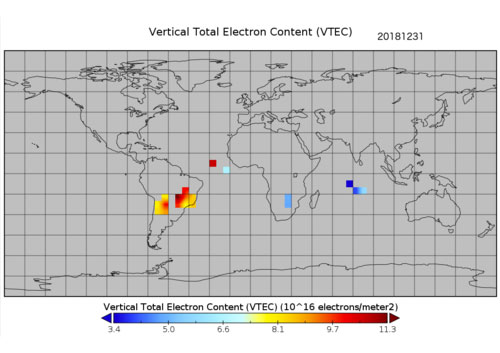
    Preview graphic. (Image: NOAA)
    Preview graphic. (Image: NOAA)

    The new data comes from unique measurements of lightning events, each of which produces a flash of radio waves that gets dispersed through the ionosphere before it is detected on satellite receivers. Each measured flash provides a snapshot of the ionospheric conditions at that instant, and many lightning measurements accumulated over time provide a unique view of ionospheric weather. This is the first-ever global set of ionospheric electron density data to use a naturally occurring source phenomena.

    Before this release, the data available to feed ionosphere models was primarily from arrays of ground-based receivers, which are limited because they only monitor fixed locations. According to Lay, “the new data is gathered from lightning that happens all over the world and will give scientists the opportunity to study the ionosphere in ways previously not possible.”

    The release of underutilized data sets was a priority established in the 2019 National Space Weather Strategy and Action Plan. Los Alamos processed the data from its radio-frequency sensors that are onboard GPS satellites and used for nuclear treaty monitoring, and then worked with a government interagency group, called the Space Weather Operations, Research and Mitigation (SWORM), to facilitate public release.

    NOAA’s National Centers for Environmental Information will host the data on existing sites that serve terrestrial weather and space weather resources.

    The ionosphere is shown in purple and not-to-scale in this image. (Image: NASA’s Goddard Space Flight Center/Duberstein)
    The ionosphere is shown in purple and not-to-scale in this image. (Image: NASA’s Goddard Space Flight Center/Duberstein)
  • RedTail delivers lidar for DoD explosive ordnance disposal

    RedTail delivers lidar for DoD explosive ordnance disposal

    RTL-450 (Photo: RedTail Lidar Systems)
    RTL-450 (Photo: RedTail Lidar Systems)

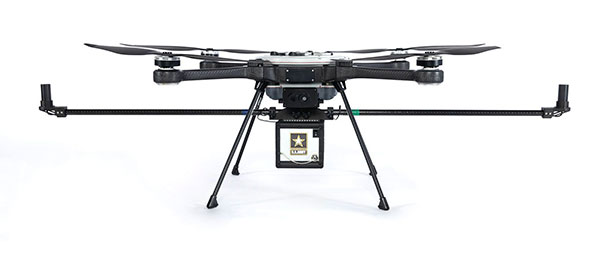
    RedTail Lidar RTL-450 integrated onto Teledyne FLIR SkyRaider for tactical operations

    RedTail Lidar Systems has delivered six lidar systems to the 707th Ordnance Company stationed at Joint Base Lewis-McChord. The systems will provide explosive ordnance disposal (EOD) technicians an opportunity to assess how lidar can be used to enhance their operations.

    The RedTail Lidar Systems RTL-450 was integrated onto the Teledyne FLIR SkyRaider unmanned aerial system (UAS) to address a broad range of the EOD community’s 3D mapping needs. Captain William R. Hartman, the commander of the 707th EOD Company, stated that the highlight of the testing was using the lidar system to map terrain.

    The RTL-450 also can be used to calculate crater volumes from improvised explosive device (IED) blasts, perform route planning for unmanned ground vehicles, aid in mission planning, and conduct surveillance. The 3D point clouds generated allow operating areas to be viewed from any perspective using the rotation and zoom capabilities provided within the viewer software.

    The underlying lidar technology used in the RTL-450 was licensed from the Army Research Laboratory (ARL). The micro-electromechanical (MEMS) mirror-based design provides enhanced 3D imagery suitable for applications where artificial intelligence and machine learning (AI/ML) algorithms can be used for target detection and classification, because of the high point density of the point clouds.

    The system can operate in either a raster scan mode for surveillance missions or a side-to-side line scan mode for area mapping while the UAS is flying. The intuitive command and control, high brightness display integrated into the ground control station (GCS), and real-time 3D map generation allows operators to begin mission planning and analysis even before the mapping or surveillance missions are completed.

    “Delivering these six lidar systems to EOD technicians for test and evaluation is a significant step forward in using MEMS mirror-based lidar technology to address a broad range of Department of Defense 3D mapping needs,” said said Brad DeRoos, president and CEO of RedTail Lidar Systems. In addition, this delivery represents a true success story in transitioning a technology out of a Department of Defense laboratory and back into the hands of military operators.”