Category: Applications

  • EGNOS Dream Now a Reality

    EGNOS demonstration equipment aboard a new Airbus A350 WXB.
    EGNOS demonstration equipment aboard an Airbus ATR-42. (Photo by Tim Reynolds)

    Toulouse, France, an aerospace city and the center of the French aerospace industry, was the birthplace of EGNOS, Europe’s satellite-based augmentation system (SBAS), in 1994. So it was appropriate that the first-ever EGNOS Flight Event was organized there in May by the European GNSS Agency (GSA) and the European Commission.

    EGNOS is the acronym for European Geostationary Navigation Overlay Service. It is also songe — the French word for “dream’”— spelled backwards and, according to Jean-Luc Moudenc, mayor of Toulouse, that is how the name originated.

    The dream is now very much a reality. Since its certification for civil aviation in 2011, EGNOS has made steady progress in implementation. Today, 111 airports in 15 countries across Europe benefit from EGNOS, and many more are preparing for implementation — 171 LPV (localizer performance with vertical guidance) and 86 BARO approaches are already certified for use.

    The EGNOS Flight Event was organized in collaboration with Airbus and brought together aviation media and other sector stakeholders for a briefing and demonstration of EGNOS, how it works, its benefits for aviation and a glimpse at its future.

    The state-of-the-art Airbus A350 WXB is the first wide-body airliner equipped with the SLS.
    The state-of-the-art Airbus A350 WXB is the first wide-body airliner equipped with the SLS. (Photo by Tim Reynolds)

    EGNOS for Airbus

    It was clear that Airbus sees integration of EGNOS, and SBAS generally, into the avionics of its product offerings, from helicopters to the giant Beluga transport plane, as very much part of the future.

    A highlight of the event was a “show and tell” with the Airbus A350 WXB — a real beauty of an airplane. Participants were given a tour of this new state-of-the-art wide-bodied airliner, including a simulation of an EGNOS-enabled LPV landing in the cockpit. Airbus test pilot Jean-Christophe Lair described the A350’s new Satellite-based Landing System (SLS) that works with SBAS such as EGNOS. This is the first time such a system has been installed on a wide-body airliner and will be supplied as a standard feature to all customers.

    EGNOS is fully integrated into a common harmonised landing system interface on the A350 — the SLS — that allows the pilot to fly precision approaches like an ILS with geometrical vertical guidance down to 200 feet. This new navigation system will allow Airbus users a wider range of solutions to optimise operations and increase accessibility without any compromise on safety.

    “All the systems look the same to the pilot — it is a seamless integration of EGNOS — so no human-factor issues,” said Jean-Christophe. Pilot feedback had been excellent with some 3,000 hours flown on LPV approaches using both EGNOS in Europe and WAAS in North America. “We have experienced no technical or operational issues with SBAS operations,” he claimed. “The SLS shows value every day that it is used.”

    SLS/LPV is operationally equivalent to CAT 1 ILS, but brings significant additional assets above the LPV minimum such as the secure coding of the final approach segment and the fact that the SBAS/ LPV vertical profile is geometric and fixed in space. The system can also be useful for creating en-route diversions and allows creation of instrumented approaches. Overall the SLS development on the A350 XWB had been a very positive experience he stated.

    Earlier Philippe Rollet, senior expert Air Traffic Management at Airbus, had said that “EGNOS was more important for helicopters than aircraft.” The enhanced EGNOS guidance enabling access to helipads in urban environments. “With EGNOS you can have a helipads everywhere and the system increases operational safety in bad weather,” he claimed. “For Airbus all new helicopter models will be EGNOS capable – it is the baseline for Airbus.”

    This enhanced access facility was demonstrated via the GSA-funded GARDEN project that is using EGNOS to enable increased safety and better access for helicopters, for example, enabling air ambulances to more easily access city centre hospitals. EGNOS implementation was demonstrated in the cockpit of an Airbus H175 multi-mission helicopter used as a test-bed for GARDEN.

    Technology at Work In Flight. EGNOS was also in action during a series of flights for the media using EGNOS for landing procedures on an ATR turboprop development craft. The plane was equipped with additional avionic displays in the main cabin, and this allowed the press to watch the technology at work without crowding out the pilots on the flight deck! The flight demonstration took off from Blagnac for a 15-minute circuit around the beautiful “pink” city of Toulouse before demonstrating an immaculate EGNOS LPV approach and landing.

    Earlier the “press pack” had also been taken on a tour of the massive assembly plant for the Airbus A380 double-decker airliner next to the airport. Well worth a visit if you are ever in the area! In fact, Toulouse is blessed with aerospace tourism attractions such as the City of Space.

    Expanding EGNOS?

    The media was welcomed to the event by GSA executive director Carlo des Dorides. He emphasised that EGNOS for aviation delivers high precision at low cost. “EGNOS is Europe’s first satellite navigation system — and already has a good success story to tell,” he said. “It helps aviation to be safer, greener and more efficient.” He highlighted EGNOS’s ability to deliver continuous integrity protection in compliance with ICAO standards allowing CAT 1 approaches with more than 99 percent availability.

    “Today 142 airports across Europe are benefitting from EGNOS, and the number is growing steadily,” he said. EGNOS’s success in aviation was also helping to spread the word for applications in other transport sectors such as maritime.

    With a near-term target of 500 runways to be EGNOS enabled in Europe, the support available for airports and operators wanting to benefit from EGNOS was emphasised by Gian Gherardo Calini, the head of market development at GSA. During 2015 the agency has allotted €6 million to co-fund projects to implement EGNOS in aviation. A similar amount had also been allocated in 2014. GSA provided technical and educational support for implementation as well as financial assistance.

    He saw the benefits being increased safety, operational enhancements, plus reduced cost and environmental impact. Widespread implementation would enable new point-to-point commercial airline opportunities.

    Key to Significant Growth. EGNOS could be the key to a significant growth in general aviation in Europe. “The need to install ILS made the business case for most general aviation airfield out of the question,” claimed Martin Robinson, senior vice president of the International Council of Aircraft Owner and Pilot Association (IAOPA). There are 4,649 aerodromes in Europe and some 50,000 general aviation aircraft operating from them. In comparison to the situation in the U.S., only a small percentage the aerodromes had been. Of course, the widespread uptake of WAAS in the U.S. is a clear result of a deliberate federal strategy.

    “There is definitely room for growth,” said Robinson. “EGNOS will help to provide greater access to aerodromes throughout Europe and to improve safety, but we need to be much quicker if we are to realise these benefits sooner.” He felt every general aviation airfield needed a clear business plan working towards EGNOS ability.

    There was some dispute about the exact cost of implementing an EGNOS approach as it varies from location to location, but in broad terms the one-off cost of implementation seems to be equivalent to the annual maintenance cost of on-the-ground ILS equipment. With these economics, wider uptake by regional airports in Europe should be a no-brainer; however, the go or no decision often came down to individuals, said Robinson. He believes European countries need to be more willing to support the European Commission in introducing the technology. Perhaps a more region-led approach is required?

    The French government line on EGNOS was given by David Comby of the French Ministry for Ecology, Sustainable Development and Energy, who said France sees EGNOS as essential part of the modernisation process for European airspace making flying safer, more efficient, greener and more cost effective. France was working hard on EGNOS implementation, and it was possible that all French runway ends (~200) would be equipped for EGNOS by 2018.

    EGNOS over Africa?

    The potential for expansion of EGNOS / SBAS across the globe is huge. Despite having to battle against a barrage of taxiing aircraft noise, Jean-Marc Piéplu Head of EGNOS Exploitation at GSA described the upgrade path for EGNOS from the current Version 2 to EGNOS V3. “Version three will feature new capabilities,” he said. “Dual-frequency and dual-constellation with both GPS and Galileo signals available.”

    In theory EGNOS V3 could provide EGNOS / SBAS coverage for aviation to more than 90 percent of the global land surface. Piéplu indicated that if the political will was there to implement, then this extension of coverage could be accomplished in 10 years. There were no outstanding technical issues. He also said that there were no current plans to use GLONASS signals with EGNOS.

    A key market could be Africa. Establishment of transport infrastructure is seen as a key enabler for sustainable development in the less-developed world, and SBAS-based infrastructure could provide a cost-effective solution to boost connectivity safely without having to invest in vulnerable ground-based equipment.

    Julien Lapie from the Agency for Air Navigation Safety in Africa and Madagascar (ASECNA) highlighted that over 40% of citizens in Africa were more than 250 miles from an ILS-equipped airport. Negotiations on use of EGNOS over Africa are ongoing, but could be completed as soon as 2016.

    As the not-so-subtle EGNOS advertising tag goes: It’s there. Use it.

  • Point Grey Adds High-Resolution Model to Grasshopper3 Camera Line

    Grasshopper3 GS3-U3-120S6 models by Point Grey.
    Grasshopper3 GS3-U3-120S6 models by Point Grey.

    High-performance digital camera maker Point Grey has added a new 12 MP CCD model to its Grasshopper3 USB3 Vision camera line. With high-resolution CCD image quality, high-dynamic range, and USB 3.0 interface, the Grasshopper3 is suited for a variety of demanding applications including industrial inspection, 3D scanning, microscopy and mobile mapping.

    The Grasshopper3 GS3-U3-120S6 models are based on color and monochrome versions of the 1-inch Sony ICX834 global shutter CCD sensor, which features 3.1 micron pixels and 4242 x 2830 image resolution running in dual-tap at 7 FPS. The ICX834 device uses Sony’s EXview HAD CCD II pixel architecture with improved quantum efficiency and near infrared response (NIR).

    EXview HAD CCD II also enables smaller pixel sizes while maintaining excellent imaging performance. This allows the high-resolution ICX834, with its 1-inch optical format, to be integrated into compact C-mount cameras like the Grasshopper3, and used with smaller, lower cost C-mount lenses.

    Grasshopper3 Like all Point Grey USB 3.0 cameras, the Grasshopper3 uses a proprietary USB 3.0 link layer and frame buffer-based architecture for optimal performance and reliability. The Grasshopper3 uses an advanced image processing pipeline to enable color interpolation, look up table, gamma correction, pixel binning and USB3 Vision support.

    “We’re excited to continue expanding our Grasshopper3 USB3 Vision family with even higher resolution sensors,” says Michael Gibbons, Director of Sales and Marketing at Point Grey. “This new 12 MP Grasshopper3 camera is Point Grey’s highest resolution machine vision camera to date. The ultra HD 4K Sony ICX834 CCD sensor achieves a higher sensitivity in the near infrared range (NIR) and offers better price performance than other high resolution cameras on the market.”

    The Grasshopper3 GS3-U3-120S6 is list priced at $3695/€2795 and is available to order now from Point Grey, its network of distributors and the online store (for North American, EU and Australian customers).

  • SPAN GNSS/INS Now Available on NovAtel’s SAASM Receivers

    SPAN GNSS/INS Now Available on NovAtel’s SAASM Receivers

    OEM625S with Logo
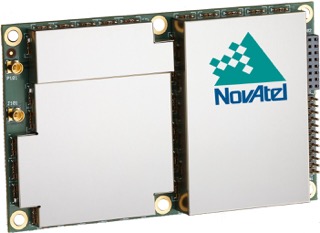
    NovAtel’s OEM625S GNSS board.

    NovAtel’s SPAN GNSS/INS technology is now available on the company’s OEM625S dual-frequency SAASM GPS plus civil RTK receiver. The addition of SPAN offers system developers with SAASM requirements the benefit of continuously available 3D positioning, velocity and attitude (roll, pitch, yaw) for their U.S. Department of Defense (DOD) applications.

    Authorized defense customers need access to the Precise Positioning Service (PPS) for DOD applications. When keyed, the existing OEM625S board level receiver provides an RTK PPS solution by taking the raw measurements from an L-3 XFACTOR SAASM and applying them to NovAtel’s industry leading RTK algorithm. SPAN technology couples NovAtel’s precision GNSS receivers with robust IMUs to provide a more reliable, stable solution, even during short periods of time when satellite signals are blocked or unavailable. The company offers a range of IMU options to meet the accuracy and size requirements for nearly any defense application.

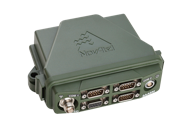
    NovAtel’s FlexPak-S enclosure.
    NovAtel’s FlexPak-S enclosure.

    SPAN technology is also available on NovAtel’s FlexPak-S enclosure, with multiple RS-232/RS422 serial ports for ease of integration.

  • Jedi Soliders: Army Working on Drone Hoverbike

    Jedi Soliders: Army Working on Drone Hoverbike

    The hoverbike, shown tethered for safety reasons, supports nearly 600 pounds, enough for soldiers and their heavy gear. (Photo: Malloy Aeronautics)
    The hoverbike, shown tethered for safety reasons, supports nearly 600 pounds, enough for soldiers and their heavy gear. (Photo: Malloy Aeronautics)

    Hover technology has long been depicted in movies like Star Wars and Back to the Future. Now the U.S. Army is teaming up with two companies to develop hoverbike technology — a cross between a motorcycle and a drone.

    SURVICE Engineering Co., a Belcamp, Md.-based defense firm, and U.K.-based Malloy Aeronautics, an aeronautical engineering firm, are developing the Hoverbike technology for the U.S. Department of Defense as part of an ongoing research and development contract with the U.S. Army Research Laboratory. The Hoverbike is being developed to operate as a new class of Tactical Reconnaissance Vehicle (TRV).

    The makers, Malloy Aeronautics, have a vision for the hoverbike beyond defense. “Its low cost and practical size lends itself to search and rescue, precision farming and cattle mustering, first-responder emergency services and cargo insertion of up to 120 kg (265 lbs) into confined spaces. We believe it would be ideal for ski and mountain rescue, airborne logistics and time-sensitive personnel insertion/extraction during major disasters,” the website says.

    As part of this strategic alliance, UK-based Malloy Aeronautics has established a U.S. office in Belcamp adjacent to Aberdeen Proving Ground to complete work on the Hoverbike. A model of the Hoverbike is on display at the Paris Air Show, which runs through June 21.

    Malloy's Drone3, a prototype of the hoverbike, was funded through a kickstarter campaign and is now being sold. According to Malloy's website, "A Californian customer of ours (Steve Mandel) received his Kickstarter Drone3 in February this year and emailed us yesterday with a photo of his new Drone3 in flight — with a new test pilot."
    Malloy’s Drone3, a prototype of the hoverbike, was funded through a kickstarter campaign and is now being sold. According to Malloy’s website, “A Californian customer of ours (Steve Mandel) received his Kickstarter Drone3 in February this year and emailed us yesterday with a photo of his new Drone3 in flight — with a new test pilot.” (Photo courtesy of Steve Mandel)

    With about 400 employees, SURVICE is a specialty engineering firm that has been providing R&D support for the U.S. Department of Defense and other industry sectors for more than 30 years.

    Formed in 2012, Malloy Aeronautics is an entrepreneurial aerospace company that develops, markets, and sells drones and Hoverbike technology to commercial and military markets.

    The video below shows the second-generation Hoverbike in a unmanned static hover. While makers say it’s capable of lifting a person of at least 100 kg, for safety and legal reasons the vehicle is being tested as a drone.

    “Establishing an office in Maryland was a clear business decision,” said Chris Malloy, managing director of Malloy Aeronautics. “The proximity to the Army Research Laboratory and U.S. defense decision makers, access to the world-class facilities through the laboratory’s Open Campus initiative, and the co-location with our strategic business partner, SURVICE Engineering, were all factors in favor of Maryland as the best choice for Malloy Aeronautics.”

    “Maryland companies do a tremendous amount of research and development (R&D) for the U.S. military,” said Jeff Foulk, SURVICE chief executive officer. “If there is a new military technology being developed, there’s a good chance that some aspect was designed, built or tested in Maryland.”

    The U.S. Army Research Laboratory is the nation’s premier laboratory for land forces and is part of the U.S. Army Research, Development and Engineering Command, which has the mission to develop technology and engineering solutions for America’s Soldiers.  RDECOM is a major subordinate command of the U.S. Army Materiel Command.

  • Sierra Wireless Offers Internet of Things Platform with GNSS

    Sierra Wireless Offers Internet of Things Platform with GNSS

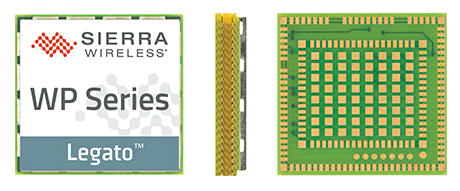
    The Sierra Wireless AirPrime WP Series.
    The Sierra Wireless AirPrime WP Series.

    Sierra Wireless has introduced its next generation of the AirPrime WP Series of smart wireless modules for the development of connected products and applications for the Internet of Things. The WP Series provides an integrated device-to-cloud architecture enabling IoT developers to build a Linux-based product using a single module that sends valuable user and product data to the cloud.

    AirPrime WP is part of Sierra’s new AirPrime smart portfolio, which includes:

    • AirPrime WP Series offering an application processor, GNSS receiver, and cellular modem with an optional ultra-low power mode that reduces power consumption by 200 times, opening up new use-case possibilities for cellular connectivity.
    • Legato Linux-based platform integrated directly into the application processor of the WP modules providing an open-source application framework and  professionally maintained Linux distribution.
    • Project mangOH open hardware reference design for the WP modules offering wireless, sensor, and cloud connectivity out-of-the-box to rapidly build prototypes.
    • AirVantage cloud and connectivity services providing device, application, and connectivity management as well as an IoT data platform securely integrated into the WP.

    “With the introduction of the new AirPrime WP Series modules, we have launched a powerfully integrated device-to-cloud architecture to make it easier for our customers to innovate,” said Dan Schieler, senior vice president, Embedded Solutions for Sierra Wireless. “With an application processor running the open source Legato platform, along with the AirVantage cloud for device and application management, and a new open hardware reference design, the latest WP Series modules enable developers to quickly build connected products using a single module to run all their applications.”

    The WP Series is interchangeable and completely footprint-compatible with the AirPrime HL Series, and is available in 3G and 4G LTE variants with 2G fallback on certain modules. Like the HL Series, the new WP Series modules can be soldered down or used with a socket, for flexibility in manufacturing and inventory management. The form factor, called CF3 (common flexible form factor), will be supported by Sierra Wireless through multiple generations of both WP and HL Series product lines, providing a secure migration path for customers through multi-year deployments.

    The next-generation AirPrime WP Series offers industry-leading ultra-low power mode for applications that need to prioritize power management over constant connectivity. This deep-sleep mode is designed for industrial solar- or battery-powered applications where constant connectivity is not required, opening up new use-cases for cellular connectivity where it was previously impractical.

    For OEMs and developers, the integration of processors and device software with wireless functionality can be complex and time-consuming, even more so when modifications are required for each region and each generation of the product. If location-based services are required, a GNSS receiver must be integrated as well. Furthermore, the data from the wireless connection, the connected asset, and its location must be aggregated and delivered to enterprise applications.

    The next-generation AirPrime WP Series is designed to address all of these issues. It offers an integrated processor and a GNSS receiver, reducing the number of components, integration time, and cost for developers. The Linux-based Legato platform running on the module’s processor provides the modem services needed to get the module communicating on a cellular network, plus an application framework and secured processing space to run third-party applications. Through Legato, AirPrime WP modules are pre-integrated with the AirVantage cloud for simple, secure configuration and management of the device and its data once deployed.

  • Aspen Avionics Acquires GPS OEM Company Accord Technology

    Aspen Avionics has acquired Accord Technology LLC from Accord India. Accord Technology will operate as an Aspen Avionics company continuing to supply Federal Aviation Administration (FAA) -approved OEM GPS solutions to the aerospace industry. Support of its current client base will carry on as usual with licensed production.

    “Accord’s expertise to design and develop solutions that meet NextGen and other performance-based navigation requirements, coupled with Aspen’s display offering, create the opportunity to provide unique solutions for all aerospace segments,” said John Uczekaj, president and chief executive officer, Aspen Avionics.

    “This is a perfect blending of two companies known for their innovative culture. Aspen and Accord share the same passion to develop aviation solutions that improve situational awareness and promote flight safety at an affordable price,” said Shenoy Raghavendra, Accord Technology chief executive officer.

    The transaction, announced today, was completed on June 19 using a combination of cash and securities. NEXA Capital Partners provided merger and acquisition financial advisory services to Aspen Avionics. Also acquired was AvValues LLC, also based in Phoenix. Accord Technology LLC is a joint venture of Accord Software & Systems Pvt. Ltd., Bangalore, India, and AvValues.

    Hal Adams, founder of AvValues, has been named executive vice president of business development for the combined companies. He will be driving new business to include growing the successful NexNav product line.

    “Our combination of innovation and capabilities is unmatched in the aviation industry with the potential to deliver even more affordable, intuitive fight deck and avionics solutions. This translates into meaningful benefits to owner/operators in all areas of manned and unmanned aviation,” said Adams, executive vice president of business development.

    Aspen Avionics is a leader in manufacturing glass cockpit displays for general aviation. Founded 10 years ago, more than 9,000 Aspen cockpit systems have been installed worldwide. Aspen Avionics is globally recognized for providing the general aviation marketplace with innovative and affordable products including its Evolution Flight Display System and Connected Panel  — the first certified wireless technology that communicates with onboard avionics systems.

    Founded in 2008, Accord Technology’s expertise lies in design, manufacture and support of GPS, with Satellite Based Augmentation Systems (SBAS) such as the USA’s Wide Area Augmentation System (WAAS), receivers and sensors for OEMs for all aerospace segments, on manned and unmanned platforms. Its NexNav GPS SBAS WAAS multiple-solutions product line revolves around three key receivers: NexNav Mini, NexNav MAX and the recently introduced NexNav Micro.


  • Autonomous Vehicles Face Privacy, Security and Liability Issues

    Chris Urmson, Google, speaks at ITS America on the future of the self-driving car.
    Chris Urmson, Google, speaks at ITS America on the future of the self-driving car.

    Plus: Resurgence in indoor location-based marketing, ITS America annual meeting report

    Autonomous vehicle technology has made industry-smart people pause and think what the consequences will be if cars and other platforms drive themselves. Will there be a huge increase in traffic when everyone decides to call their cars to grab a loaf of bread at a store? Many of these topics were discussed at the ITS America annual meeting held in Pittsburgh May 31-June 3. In other location news, there seems to be a resurgence in location-based marketing and indoor positioning conferences, leading one to believe that large retailers are finally taking notice.

    By Kevin Dennehy

    Kevin Dennehy
    Kevin Dennehy

    PITTSBURGH — Chris Urmson, Google’s self-driving cars director, told autonomous vehicle proponents what they wanted to hear during his keynote presentation at the recent Intelligent Transportation Society of America’s annual meeting here. He told them that self-driving vehicles will cut down on the 33,000 U.S. traffic deaths each year (“the equivalent of a 737 falling out of the sky five days a week,” he said) and save time and productivity wasted.

    Urmson also said his goal, and his team’s goal, at Google was to ensure son doesn’t have to get a driver’s license, a trend that has become popular with urbanized youth.

    The message was upbeat and timely for the crowd of government and university transportation attendees. However, liability issues continue to surround autonomous vehicle development.

    “In the end, you are always going to have that guy with the ’57 Chevy in his garage. How do you make the autonomous vehicle work with it? It’s akin to the horse and car,” said Ken Leonard, U.S. Transportation Department ITS Joint Program Office director.

    Urmson said he has had “long conversations with insurance companies.” He said that insurance companies are trying to accurately assess risk, and while the model may change, money will still flow, just through a different path.

    One ITS America panel discussed security and privacy issues surrounding connected and autonomous vehicles. One panelist said that while privacy may be dead, security is the real big deal with recent reports indicating that cars’ electronics can be compromised.

    Others believe it’s going to take more time than Google’s assertion that autonomous vehicles will be on the road in five years. “Lessons from the past temper our optimism. While air bags were patented in 1953, and were introduced on luxury models in the 1970s, it wasn’t until the 1990s before there were big penetrations,” said James Anderson, Rand Corp. senior behavioral scientist. “Key takeaways are automaker opposition about the liability [of new technology] and lack of consumer support.”

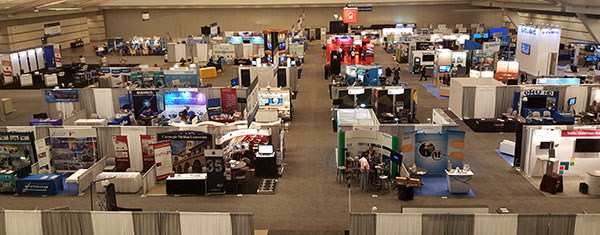
    The ITS America show floor before the crowds arrive.
    The ITS America show floor before the crowds arrive.

    Anderson said that yes, the lives saved will be a big driver of autonomous vehicles, but congestion will increase, making way for super commuting. “Public transit will also go through big changes. An economic disruption will occur — do you know how much New York City makes from parking alone?” he said. “Safety doesn’t sell in the early stages, as many benefits don’t go directly to the user.”

    Steve Bayless, ITS America vice president of technology, said the solution is not to kill all the lawyers, as there will be continued liability surrounding new in-car technology. “Embedded devices were developed at a time when they were not connected, but the environment has shifted around systems,” he said. “The systems are usually vulnerable because there are poor requirements. Companies have no explicit security policy, or it is poorly specified, or specified too late after design and development.”

    Uber Gets Into Autonomous Game

    The ITS America’s closing keynote speaker was Uber’s head of global public policy, Corey Owens, who said that one of the best cases for autonomous vehicles was the lack of use by consumers of their cars. “In some areas, owning a car is non-negotiable. But how little these cars are used — as many as 95 percent stand idle,” he said.

    Uber announced that Google former head of mapping, Brian McClendon, is joining the company as it develops its own navigation, mapping and transportation systems.

    It’s no secret that Uber is targeting continued autonomous vehicle interest, as it created an Advanced Technologies Center in Pittsburgh. It was also rumored that it was a bidder, with Baidu, to buy Nokia’s HERE digital mapping company. (See more on Baidu in Janice Partyka’s June blog.)

    One major company trying to find its way into connected vehicles, Xerox, exhibited at ITS America in the show’s Entrepreneurial Village. Xerox has installed its smart parking products in such systems as LA Express Park, ParkyIndy and others.

    Xerox has partnered with the University of Michigan Transportation Research Institute in Ann Arbor for testing connected and autonomous vehicles. The company is working with automotive OEMs on electronic tolls, parking, mobile payment and other projects, said David Cummins, Xerox senior vice president and managing director of parking and mobility solutions.

    The U.S. Department of Transportation booth at ITS America focused on the connected car.
    The U.S. Department of Transportation booth at ITS America focused on the connected car.

    Cummins moderated a panel where small companies talked about new technologies and applications like cities without bus stops where a bus is continually moving to the riders on demand.

    In terms of autonomous vehicle use, Cummins envisions an increase in ride-sharing over the next 5-10 years in urban areas. “Initially, there will be a spike in congestion [from autonomous vehicles]. But ultimately, there will be less car ownership,” he said.

    Thoughts on ITS America’s Annual Meeting

    ITS America celebrated its 25th annual meeting in Pittsburgh to an enthusiastic crowd of 2,000 attendees and 125 exhibitors. However, I am not sure if this conference has grown at all, despite claims it had the largest attendance last year (co-located with the larger, and more private-company-friendly, ITS World Congress in Detroit).

    Despite two decades of rhetoric that it is a private-public partnership, the meeting has the feel of a government and university gathering with a few private companies thrown in who want to do business with them. This is a sad thing, as ITS America has embraced the future of autonomous vehicles with excellent speakers.

    Having the meeting in the Bay Area next summer will be a good start to altering the perception that ITS America’s annual meeting is just a government show to “show-the-flag” for private companies.

    Mid-Year Report on Indoor Location

    Earlier this month, executives attended the Place Conference in New York to get an update on indoor location markets and technology for store chains, large department stores and malls. It was also a chance for technology vendors to show new capabilities that have recently reached the market, said Bruce Krulwich, Grizzly Analytics president, who has authored a report on 150 indoor positioning companies.

    Krulwich said, as the year reaches it’s the halfway point, new and more accurate systems are hitting the market. “This includes LED lighting-based systems from Acuity and GE Lighting, and proprietary radio technologies from companies like Quuppa, all of which deliver accuracy of around 10 centimeters with very fast response,” he said. “Some companies, including New York-based Spreo, are improving the quality using standard approaches, like beacons and motion sensing. They are achieving strong accuracy and responsiveness through software improvements. At the same time, hardware-based indoor location technologies, such as Ireland-based DecaWave’s chip and other UWB systems, are coming to market inside highly innovative consumer devices.”

    Going forward, the biggest challenge is moving from the lab to the real world, Krulwich said. “Deployments such as Game Stop stores and Taubman malls are great moves in this direction,” he said.

    In other location industry news:

    • Note to meeting organizers: Do your due diligence to ensure conference dates don’t overlap. Having two major transportation conferences on the same week was challenging to attend: ITS America Annual Meeting and Telematics-Detroit.
    • The brass at Nokia continue to court a consortium of German car makers to buy its HERE navigation business, according to Bloomberg. The consortium, which consists of Audi, BMW and Daimler, is hung up on the price tag of $4.5 billion — and the deadline for bidders has passed, according to the story.
  • Will China Win the Automated Vehicle Race?

    Janice Partyka
    Janice Partyka

    By Janice Partyka

    The race for the automated vehicle is on. This time, it’s not about whether automotive OEMs or tech will own the vehicle. It’s a battle between Baidu, China’s web giant, and Google, and it isn’t clear who will win. Baidu has announced it will launch an unmanned car in the second half of this year. Despite speculation that Baidu will be working with BMW, Baidu hasn’t announced its automotive partner. The Baidu vehicle will provide the flexibility of some conventional controls, such as pedals, coupled with automation, unlike Google’s approach of being completely autonomous, without pedals and steering wheel.

    One of the most practical uses of artificial intelligence is in the automated vehicle, as cars need to recognize and sort images they “see,” and make quick safety decisions. In a recent TED talk, Chris Urmson of Google revealed a few of the unusual things that Google cars have had to process while driving. The cars have successfully encountered a woman in an electric wheelchair chasing a duck on the road and a child driving a toy car in the road. I wouldn’t be surprised if there are some even weirder encounters that Google is shielding us from.

    Artificial intelligence is critical to the automated vehicle. This year Baidu won a prestigious international artificial intelligence competition at Stanford, but was just stripped of its title and barred from competing in 2016. Apparently, the Baidu team broke the rules on how many tests they could run. In the competition, computers had to recognize and sort images and classify objects into 1,000 different categories. The teams were allowed to run a limited number of tests to train their programs on identifying objects. The Baidu team exceeded the limits by submitting their program using different accounts. In an article in the New York Times, Jitendra Malik, an expert in computer vision, compared the actions of the Baidu team to drug use during a sports competition. “If you run a 9.5-second 100-meter sprint, but you are on steroids, then how can your result be trusted?” Malik said.

    Automated vehicles aren’t the only location market Baidu is aggressively pursuing. With technology from IndoorAtlas, Baidu has rolled out indoor location to 270 million active users of its map application. The solution uses mobile device technology to create geomagnetic maps of indoor places to enable indoor search and to power store and product search, as well as way-finding. A physical map of a building is uploaded into an app on a mobile device, like a smartphone. Using the app, a person walks all corridors in a building, thereby adding location positioning and creating a map.

    Let’s return to the topic of automated vehicles. Earlier this month, Uber suffered a blow when the California Labor Commissioner’s Office ruled that drivers are employees and not contractors, and therefore need to be so compensated. Taxi and limo services had been hurt by services like Uber, and they pressed for redress from what they felt was unfair competition.

    Like Uber, the automated vehicle market will likely hit intense push-back from a number of industries that will be disrupted. These include insurers, taxi and truck drivers, and personal injury and traffic litigation attorneys. These groups may try to build regulatory roadblocks for automated vehicles. And as their businesses may suffer, the automated vehicle industry needs to think now about how to mitigate the damage and create allies. With a completely different political process, Baidu may encounter no such resistance in China — quite an advantage. Perhaps Baidu will be first out of the gate, but may not be the long-term winner. Think Ford Sync.


  • Spectra Precision Offers Flexible GNSS Receiver for Surveyors

    Spectra Precision Offers Flexible GNSS Receiver for Surveyors

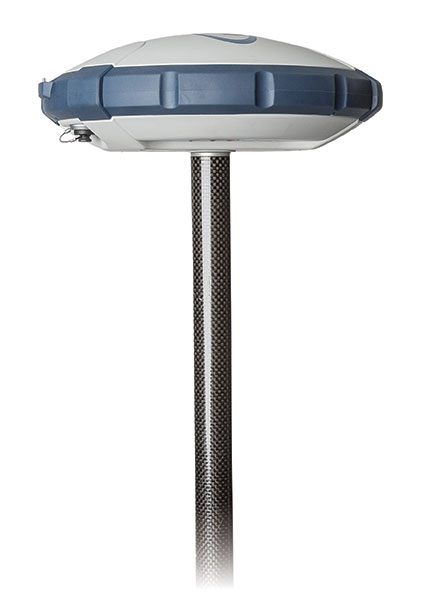
    Spectra Precision SP60.
    Spectra Precision SP60.

    Spectra Precision has introduced its new SP60 GNSS receiver. Designed to meet the evolving needs of surveyors, the SP60 is a versatile solution combining next generation Spectra Precision GNSS technology, a high level of configuration flexibility and an innovative design, the company said. The SP60 is part of Spectra Precision’s latest portfolio of GNSS receivers specifically designed for the mainstream survey and construction applications such as cadastral, topographic, control, stakeout and network RTK.  

    Spectra Precision SP60 features exclusive Z-Blade GNSS-centric technology running on a new-generation, 240-channel 6G chipset. The SP60 is capable of fully utilizing all 6 available GNSS systems (GPS, GLONASS, BeiDou, Galileo, QZSS and SBAS), but can also be configured to use only selected constellations in an RTK solution (GPS-only, GLONASS-only or BeiDou-only). With L-Band capability to enable CenterPoint RTX correction service, the SP60 GNSS receiver can deliver centimeter-level accuracy without terrestrial/cellular network availability. The receiver is optimized to provide high accuracy positioning performance worldwide.

    With its configuration flexibility, the SP60 is scalable and can be used in multiple configurations and operating modes from a simple post-processing solution to a network RTK or CenterPoint RTX capable rover. In addition, the optional transmit radio or embedded Long Range Bluetooth enables the SP60 receiver to be used as a base and rover system. This extended scalability allows surveyors to begin with a simple solution, and through hardware and firmware upgrades, adapt the SP60 to more complex survey jobs.

    The Spectra Precision SP60 is rugged and waterproof, yet compact, lightweight and ergonomic for ease of use in the field. The received also includes a patented inside-the-rod mounted UHF antenna. When the UHF transmit radio module is used, its UHF antenna remains protected inside the rugged rod, extending the radio range performance.

    “The Spectra Precision SP60 introduces a new level of configuration flexibility to the surveying market,” said Olivier Casabianca, business area director of Trimble’s Spectra Precision Division. “The SP60 was designed as an extremely versatile receiver, allowing surveyors to make it suitable for a specific surveying project, and then upgrade it to a more complex solution, when needed.”

  • Art Kalinski Reports from GEOINT 2015

    GEOINT-2015

    Editor’s Note:This week, Geointelligence Insider’s Art Kalinski reports from GEOINT 2015, being held in Washington, D.C., June 22-25.

    GEOINT 2015 is not your daddy’s geospatial conference. If there is a common theme to this convention, it’s the problem of too much data and not enough analysts, so there are many exhibitors addressing the issue with automated systems that merge the “man and machine,” taking advantage of the best capabilities of each.

    Introduction

     NGA Director Robert Cardillo on the Agency’s Strategy

    NGA Director Robert Cardillo discusses the agency’s new strategy at GEOINT 2015. Cardillo became the sixth director of the National Geospatial-Intelligence Agency in October 2014.

    A Demonstration of Esri’s ArcGIS Full Motion Video Add-In

    Geointelligence Insider’s Art Kalinski talks with Craig Cleveland, Esri solution engineer, about the ability to geo-register full motion video inside an ArcMap.

    Thad Allen Discusses eLoran at GEOINT 2015

    In this interview Admiral Thad Allen, former commandant of the U.S. Coast Guard, discusses PNT alternatives to GPS for navigation, including eLoran and the activation June 19 of a signal on an eLoran tower in preparation for a timing signal trial.

    Allan is an executive vice president at Booz Allen Hamilton, and a leader in the firm’s Departments of Justice and Homeland Security business in the civil market. In 2010, President Obama selected him to serve as the National Incident Commander for the unified response to the Deepwater Horizon oil spill in the Gulf of Mexico.

    Geoweb 3D Demonstration at GEOINT 2015

    Vincent Autieri, vice president and CEO of Geoweb 3D, explains the company’s 3D mapping engine.

    CACI Predictive Tool Using Social Media Discussed at GEOINT 2015

    Andrew Doyle, engineering senior manager of CACI, describes the EMBERS system, which uses social media to predict socially significant events such as protests or disease outbreaks.

  • Post-Show Report: GEO Business Sees Attendance Rise 25 Percent

    GEO Business 2015, which took place at the Business Design Centre in London May 27-28, report another successful show following its launch in 2014. Visitors were queuing to get in on the first day and the overall attendance was up 25 percent on the 2014 show. More than 2,000 people attended from 47 countries, positioning GEO Business as a truly international show, organizers said.

    A highlight of GEO Business show was the international exhibition with a bigger and improved layout from the 2014 launch show, incorporating an additional lower floor area and exhibitors from 20 different countries. Running alongside the exhibition was a conference that hosted presentations about projects and more than 140 free commercial workshops and outside demonstration sessions for hands-on product testing, which proved a real benefit to visitors with some sessions so packed there was standing room only.

    Caroline Hobden, Event Director for GEO Business, commented, “We have had so much positive feedback following the show and are thrilled to see such an increase in attendance in just a year since we launched the first show. We are keen to support the community through our annual show by offering an opportunity to share knowledge, promote cutting-edge commercial solutions and provide networking opportunities.”

    Derry Long, Business Development Manager of MBS Survey Software Ltd., was one of many who provided personal feedback after the event. “GEO Business is now the established show for everyone involved or interested in geospatial activities. Once again GEO Business delivered a top quality exhibition and conference that showcases the best that the geospatial community has to offer. We will be back next year.” 

    The GEO Business conference featured an exceptional line-up of presentations with updates about high profile projects and technologies. The keynote address by Kate Hall, director of the Built Environment at HS2, the UK’s proposed new high speed rail line, attracted much interest with an enlightening talk about how high quality geospatial and GIS data will form the core of rail travel in the future.  Other popular subjects included wearable GIS tools, future technologies, and BIM — with the second keynote address by Stephen Hamil, director of Design and Innovation at NBS National Building Specification, providing insight into BIM tools for digital planning and project management.

    Conference Chairman Graham Mills (chairman of Technics Group and past president of The Survey Association) reported a conference that was bustling with delegates, explaining, ”The conference perfectly represented the energy of the geospatial industry at the moment, with inspiring presentations to reflect all the opportunities of a growing community. I’m delighted to have achieved this through our 50 papers.”

    In addition to the exhibition, conference and workshops, GEO Business also hosted a lively social program with welcome drinks and a gala dinner which raised over £1700 for the charity MapAction. MapAction is on standby 365 days a year, ready to deploy skilled volunteers to the scene of a disaster within hours of an alert. The humanitarian mapping service they deliver can make the difference between life and death for survivors.

    Caroline Hobden, summarized, “With so much achieved at our second GEO Business event, we’re already looking forward to our 2016 event where we hope to reach an even greater level of success for the industry. GEO Business 2016 will once again return to the Business Design Centre on May 24-25, 2016 and we look forward to welcoming the industry once again.”   

  • Boundless Certifies Latest QGIS Release with OpenGeo Suite

    Boundless, provider of open source geospatial software and services, is offering support and interoperability of QGIS 2.8.2 with OpenGeo Suite 4.6, the most recent version of its enterprise geospatial software platform.

    Boundless will be discussing QGIS and OpenGeo Suite at GEOINT 2015 at Booth 2094, June 22-25.

    QGIS 2.8.2 is the newest version of the open source GIS desktop application. Boundless commercially supports and packages QGIS as part of OpenGeo Suite 4.6, the latest version of Boundless’ leading open source geospatial software stack, powering web, mobile, and desktop maps and applications across organizations large and small. With this release, Boundless certifies interoperability between QGIS 2.8.2 and OpenGeo Suite 4.6 and extends commercial support for the interoperability to all OpenGeo Suite Enterprise customers.

    In addition, Boundless announced the availability of several new custom QGIS plugins for Enterprise customers, designed to enhance the usability and functionality of QGIS. This release includes:

    • MGRS-Tools, which adds support for using Military Grid Reference System (MGRS) coordinates when working with a QGIS map
    • WebApp Builder, which enables QGIS users to easily build web-based applications

    QGIS and OpenGeo Suite Enterprise from Boundless provide open source geospatial software designed for cost-sensitive users who still have advanced mapping and deployment requirements. Organizations with complex Enterprise needs should no longer feel locked in to proprietary software with significant license costs in order to accomplish sophisticated projects, Boundless said.

    “Boundless is pleased to extend our support of QGIS as part of our commitment to making geospatial software available and easy to use for all,” noted Ann Johnson, Boundless CEO. “Every day we see more and more evidence of QGIS’s growing footprint, so we remain focused on meeting the demands of our customer base.”

    Boundless offers service packages and training to help customers and free users get the most from QGIS and their OpenGeo Suite deployment. Boundless also supports a variety of deployment options, including on-premise and cloud environments such as AWS and Microsoft Azure.,